
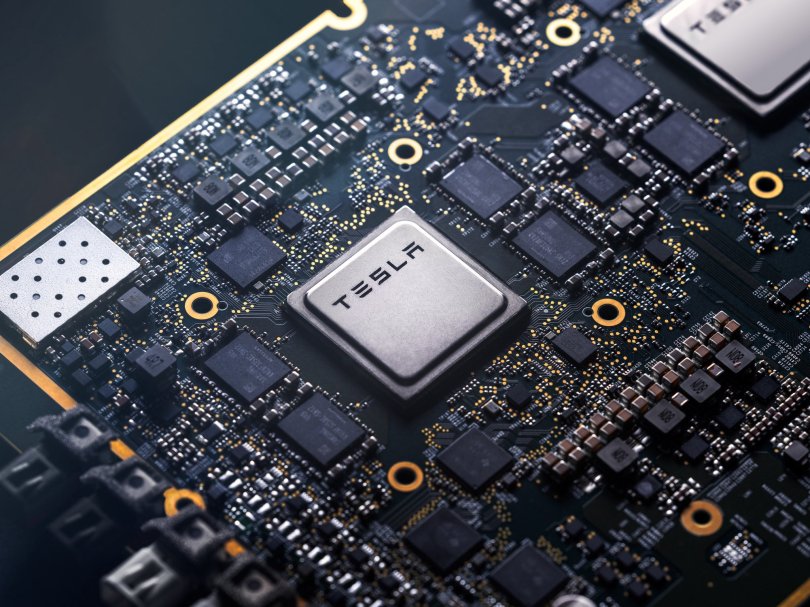
Tesla spotlights AI4 chip’s failover design
Tesla’s AI team has detailed the AI4 chip’s built-in redundancy, emphasising its role in maintaining uninterrupted performance in the event of potential hardware issues.
Two computers run in parallel
The system uses two computers that process data simultaneously and cross-verify results. If one detects an error, the other takes over instantly, supporting safe operation in dynamic environments. This setup draws from Tesla’s long-standing approach to autonomy hardware, where parallel computing mitigates single-point failures.
AI4 powers vehicles and Optimus robots
Deployed since 2023, the chip handles real-time computations for Full Self-Driving software in vehicles, processing camera feeds to enable navigation and decision-making. It also powers Optimus humanoid robots, providing the same capabilities for tasks requiring precise environmental awareness and rapid response.
Context of recent hardware updates
This emphasis on redundancy follows the 2025 recall that affected approximately 239,000 vehicles due to short-circuit issues in the AI4 computer and high failure rates reported by owners.
Tesla has also confirmed that references to a “Hardware 4.5” variant in January 2026 were the result of a labelling error; vehicles continue to receive the standard AI4 hardware. Development is advancing toward AI5, with limited production expected later in 2026.
 whatsuptesla.com