California – February 19, 2026 – A Tesla Cybertruck equipped with Full Self-Driving (FSD) autonomously managed a critical situation after its driver lost consciousness due to a severe allergic reaction, preventing a potential highway crash.
Tesla owner Rishi Vohra (@rishivohra on X) shared the incident in a firsthand account posted yesterday. While driving on the freeway, Vohra—having unintentionally fasted for 17 hours and taken medication—began feeling unwell during a phone call with his wife and suddenly became unresponsive.
With FSD engaged, the Cybertruck’s driver monitoring system detected the driver’s incapacitation. It immediately reduced speed, activated hazard lights, and guided the vehicle to a safe stop on the shoulder, avoiding any collision or risk to other road users.
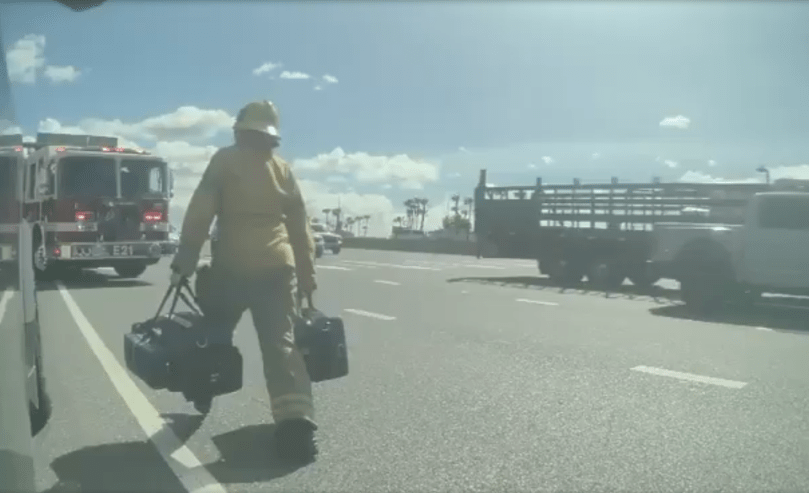
Vohra’s wife, noticing the sudden silence on the call, used the Life360 app to alert emergency services, who arrived quickly and provided initial care. Still prioritizing safety, Vohra allowed the vehicle to autonomously complete the drive to a nearby hospital using FSD while he rested. He entered the facility unaided, received overnight treatment, and was discharged the next day fully recovered.
In his post, Vohra expressed gratitude to his wife for her quick thinking and calm response, as well as to Elon Musk and the Tesla engineering team for developing what he called “life-saving technology” that intervenes when a driver cannot.
The account underscores the real-world safety capabilities of Tesla’s advanced driver-assistance features, particularly the system’s attentive monitoring and autonomous intervention during medical emergencies.
Primary Source:
Rishi Vohra’s original thread on X: Posted by @rishivohra (direct account of the incident, including timeline and personal details).
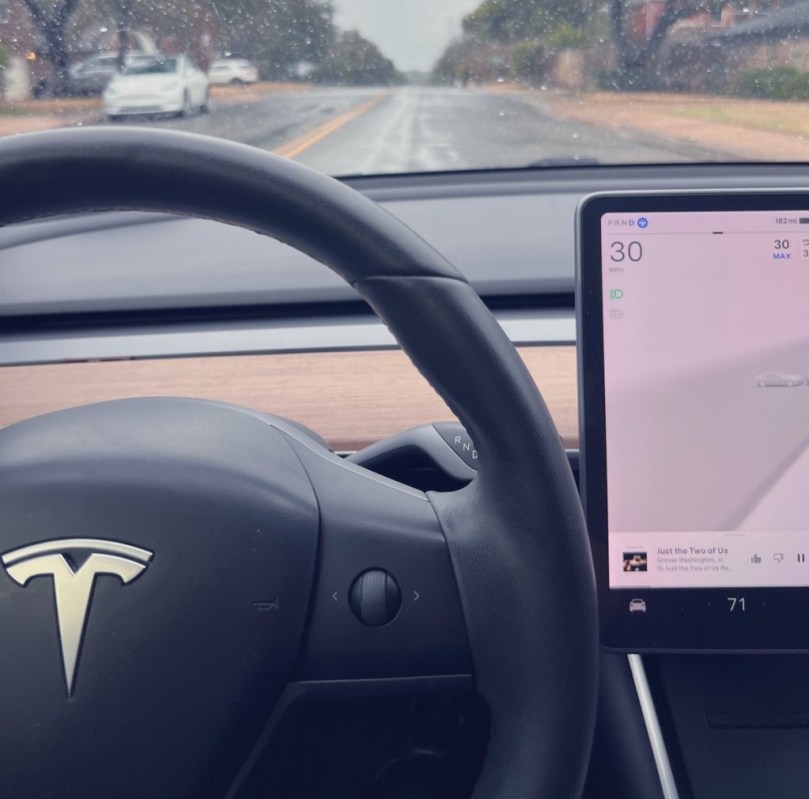
The rain gently falls on my windshield as I navigate the slick streets of Austin, Texas. It’s a somber reminder of the accidents I’ve witnessed on days like this, when human drivers struggle to maintain control in the downpour. But there’s hope on the horizon, as Tesla Autopilot promises to change the way we think about road safety and make days like this less treacherous.
The current state of road safety leaves much to be desired. On average, there is an accident every 750,000 miles when people drive on human pilot. This is a stark reminder that there is room for improvement.
In contrast, Tesla Autopilot has demonstrated remarkable success in reducing accidents. With an impressive record of just 1 accident for every 6 million miles driven, it is clear that this technology has the power to make our roads safer.
I am grateful for Elon Musk’s dedication and vision in developing this life-saving technology. His work has laid the foundation for a safer future, and we should all be thankful for his contribution.
As one driver among millions using Tesla Autopilot, I am proud to be part of this movement towards safer roads. My hope is that humanity continues to be blessed on a wide scale with the widespread adoption of Tesla’s technology.
Imagine a world where driving on human pilot is a rarity, and the majority of vehicles are equipped with Tesla Autopilot. This is not just a dream, but a reality that we can achieve through our collective efforts.
Let us come together to support the adoption of Tesla Autopilot and create a safer, more caring world for all. Together, we can make a difference and ensure that our roads are filled with love, kindness, and inspiration.
Gail Alfar, author. Exclusive to Gail Alfar. All Rights Reserved. My goal as an author and podcaster is to support Tesla (the most American vehicle manufacturer) and Elon Musk in both making life better on Earth for humans and becoming a space-fairing civilization.
FOR MEDIA USE ONLY News media is welcome to use my material in connection with a story or article. By downloading any content I create, you understand and hereby agree and represent that: (1) you are a member of the news media; (2) use of the content is in connection with a story or an article appearing in newspapers, periodicals, digital publications or television; (3) all images and rights thereto remain the property Gail Alfar.; and (4) use of the image is not for publication covers, advertising, promotion or otherwise for commercial purposes. Furthermore, use of any and all images and content appearing on this page must each include the notice “Courtesy of Gail Alfar” Use of materials copied from this website is at your own risk. You must obtain prior written consent from Gail Alfar for uses that exceed the above parameters.
Robert Scoble has been described as a “one-man media empire for all things cutting-edge consumer tech, especially AI and AR, and one of the most decent and interesting people to come across and a great friend to the AI Art community.”
When I heard Robert was coming to Austin to meet with some of the leading young minds in Artificial Intelligence to hash through the rapid advances in AI, I thought I’d invite him onto my Podcast. When I explained to Robert that my podcast would be about a 10-minute drive where I’d pick him up & bring him back and that we’d discuss FSD beta V11 he was quick to confirm.
We had a great time and the result is two special Podcasts to share with you!
A Ten-Minute Ride Around West Campus on FSD Beta V11
Robert: I love that you picked me up so I could see the latest version! I like the visualization on the screen, it’s more clear what it’s going to do and where it’s going to go and how it sees the world and what are the risks around you. It’s smoother and more fluid going through alleyways like we did at the beginning of the ride. It’s cool!
The road is random, or rather, the road is there but things happen on the road that are random like people in the middle of the road will stop you.
As we move through West Campus the Model Y encounters buses pulled over, people walking in the street, a bicyclist, and some miniature roundabouts. In every instance, the Tesla made perfect maneuvers in traffic and through roundabouts.
Robert Scoble’s Thoughts on Tesla Autonomy
I asked Robert what he thinks is interesting about the development of Tesla’s autonomous software and what stands out to him.
R: To me, it’s science fiction! I had a famous blog back in the 2000s where a lot of companies and a lot of technologies launched on my blog. I wrote about Silicon Valley innovation.
R: Yes! And so I saw the first Stanford autonomous car at Sanford University which won the DARPA (Defense Advanced Research Projects Agency) grand challenge and became the Google car. They bought the Stanford team, which became Waymo company, a competitor to this, but when I first saw it I thought it would never happen in my lifetime.
I thought it was too much science fiction. I thought the problems were too hard. I mean, back then an autonomous car couldn’t even drive on a road in the desert with no people around or bicycles. So, to watch this work, it’s like science fiction, right? It’s like wow, this is the future, that I’ve been talking about for a long time!
I explained to Robert how I notice this same excitement in the Tesla community, where people are so excited over Tesla’s autonomous driving. There’s a moment when the light bulb turns on and you realize, this is so much more than simple lane assist.
R: No, it’s not lane assist, it’s full-on! It’s driving and not making mistakes. I mean it makes a few mistakes here and there but it’s pretty good! And it’s not about how many mistakes it makes right now, you have to watch it work. It’s still not accurate enough to let it drive and (let the driver) go to sleep or not be involved at all or not have the driver be in the car at all or have your car go pick up some laundry or something like that.
G: Unless it’s a tried and true road that you’ve done multiple times?
R: No, the AI will get there but it will get there at a series of steps so it will just keep getting better every update and you have to watch how fast it’s getting better to know when it’s going to be perfect enough not to have a human involved, right? But you can see, it’s a lot closer than it was yesterday!
FSD Beta Begins Understanding Human Intentionality
Robert and I encountered a construction zone where the Tesla AI read a STOP and SLOW sign and obeyed when a worker waved the car ahead. The camera was not on to record this stunning event, so we talk a little about it. Robert explained this, saying how the AI is “understanding human intentionality by reading the gestures that a human has on the road, saying ‘hey – go through this intersection.”
I agree with Robert that V11 is more human-like and feels more flowy through an alley or around a lot of turns. “It’s more competent, more flowy. That’s the best way I can put it. But that’s not even the point. The point is, it’s here and maybe it’s not good enough to go to sleep yet on it but it does help people a lot and it’s really amazing. It’s the ‘how fast from here will it improve.’ My car is 5 years old already and it does this. In 5 more years, what is it going to do? It’s going to be perfect.”
While interviewing Robert during the Podcast in my Model Y the vehicle made a stunning move around a bus.
A Complex Maneuver
On our drive, we passed a city bus that was stopped at a bus stop and the Model Y gently eased over the double yellow lines to follow the flow of traffic safely around the bus. Robert noted, “The bus was a fraction of a lane in our lane (it stopped on the right side), that was a complex maneuver because it had to decide whether to go across a double yellow line or not, which could have horrible consequences (if it does it wrong), and then flow back into the full lane after it got by the bus. Just like a human being would do. It’s cool, it’s amazing!”
What powers this amazing technology is complex but simple!
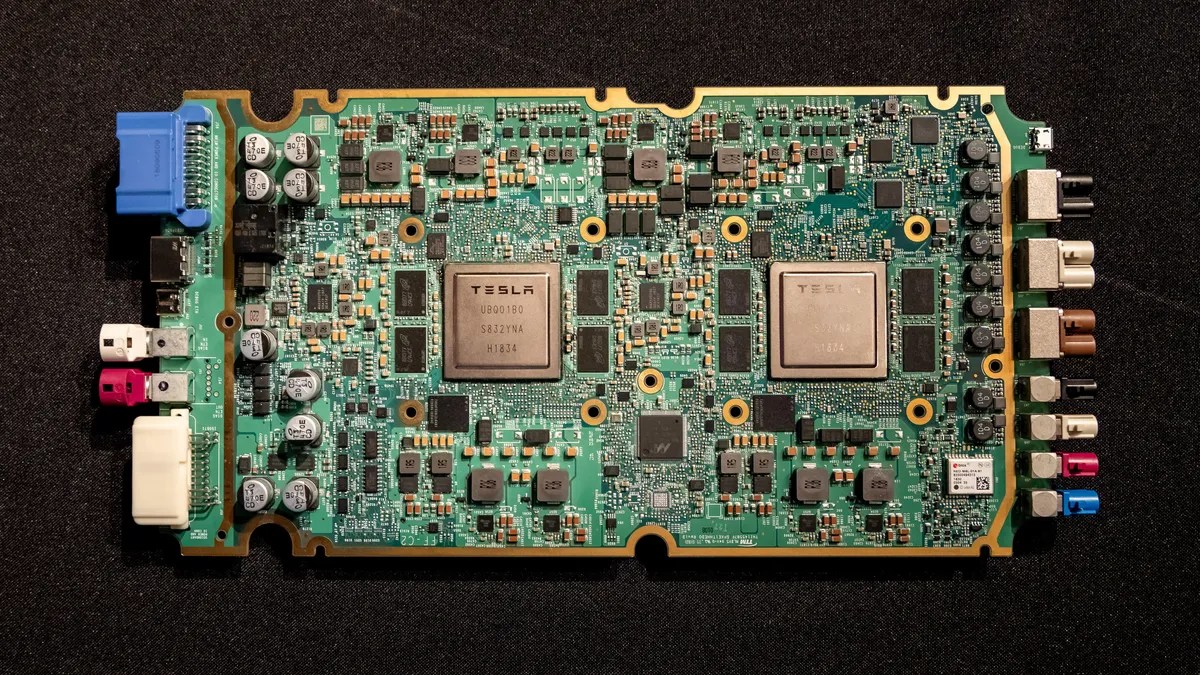
Tesla’s Small but Powerful Silicon Chip
“If you think about it, there’s a little piece of sand driving us around right now. Isn’t it crazy that a little piece of melted sand is driving us around right now?” Robert explained that the Tesla has two chips the size of a thumbnail in the Tesla. I’ll save this discussion for another blog post and it is incredible that such a tiny piece of technology can operate with such precision in complicated city like Austin!
Tesla Full Self-Driving Silicon Chip
About Gail’s Tesla Podcast
For those wondering, I do short interviews with people who are interested in Tesla’s technological advances and their effect on humanity. For now, I do all podcasts from within my vehicle while using FSD beta. My Podcasts are designed to be Twitter-only to support Twitter and produce content that is only on Twitter. You may watch the Podcast here, enjoy!
Bluebonnets under the Milky Way over the Texas Hill Country courtesy Shane Ware.
Gail Alfar, author. Exclusive to What’s Up Tesla – April 2, 2023. All Rights Reserved. My goal as an author is to support Tesla and Elon Musk in both making life better on earth for humans and becoming a space-fairing civilization.




 whatsuptesla.com