And it has been at least since 2016 when I first discovered Tesla and bought my first Model S. Subsequently sold both my Porsche and Mercedes and will never go back to ICE.
A Friend of mine has a Model 3 and a Mach E, they love them both. But on their recent road trip (that that did multiple times with the model 3 without any issues) they took the Mach E and had a terrible charging experience, whether speed issues, app issues, availability or broken…
My parents leased a GM EV. They spent 3 hours trying to find a working charger for the first time. They went to a tesla charging station and were amazed they said you just pulled up back in, plugged in, and walked away in less than a min.
@elonmusk Absolutely agree, Gail! The Tesla Supercharger network is perfect ☄️ honestly, it’s what gave me the confidence to switch to an EV in the first place. I love how I can just use the Trip Planner, and it maps out all the stops for me, down to how long I need to charge.…
Thanks to Tesla Charging team rural areas are staying charged
Yea I agree. I’ve been a part of the Tesla owner community for about 4 years now and I’ve watched how dense many locales within the US has become with Superchargers. On a recent road trip through the states there’s an abundance of Superchargers, even throughout rural areas… I’m…
Supercharging so good, some owners don’t even think twice about it
It was a priority for me when I purchased my first Tesla 6 years ago, now it’s all about FSD since I realize charging locally and on trips is a non issue for Teslas
Over the 4th of July holiday I took a road trip in my Model Y. This is one of many road trips I have enjoyed and yet it stands out as unique due to some wonderful people I met who love Tesla. Word of mouth travels fast, and this is how many people are aware of Tesla’s North American Charging Standard (NACS). People like the idea that other EVs will charge at Tesla Superchargers.
TESLA’S SUPERCHARGING INFRASTRUCTURE IS SOLID
Before I go into my experiences with Supercharging and my conversations with EV owners, I want to bring you back to Tesla Investor Day on March 1, 2023, which showcased how strong the Tesla Supercharging Network is. This Network is well prepared to provide charging to other electric vehicles.
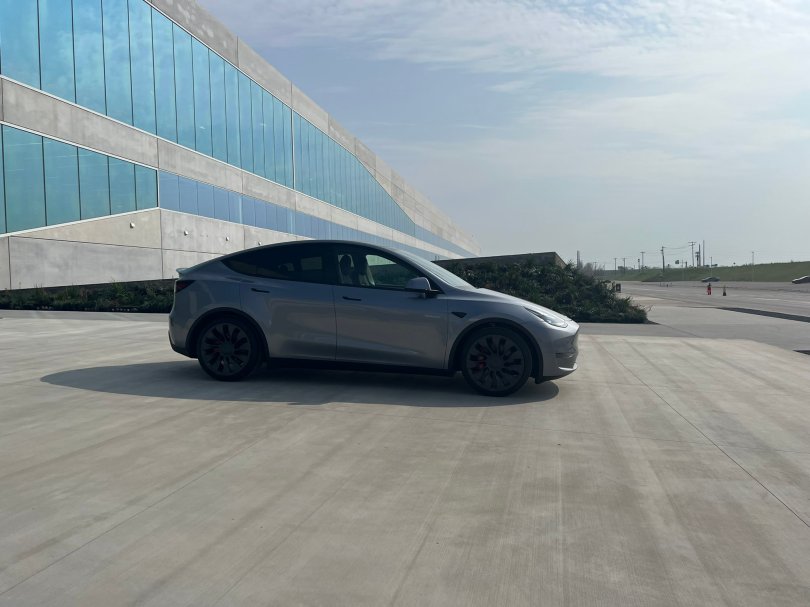
Tesla’s leaders gathered at Gigafactory Texas to present this important showcase. Rebecca Tinucci of Tesla’s Charging Infrastructure team explained,
“We think a lot about what it means to charge at home, even if that home is an apartment or condo, and we spend a lot of time thinking about what it means to charge away from home, including if that’s for daily commuting or if you’re going on a road trip.”
Tinucci explained that in 2022 Tesla provided 9 Terawatt hours of charging across various charging methods and over 50% of that was supplied by convenient AC home charging.
Tesla owners have always been able to access over 80,000 charging points and that includes 40,000 of Tesla’s Superchargers. Now this flourishing charging network will be open to other EVs who adopt the NACS.
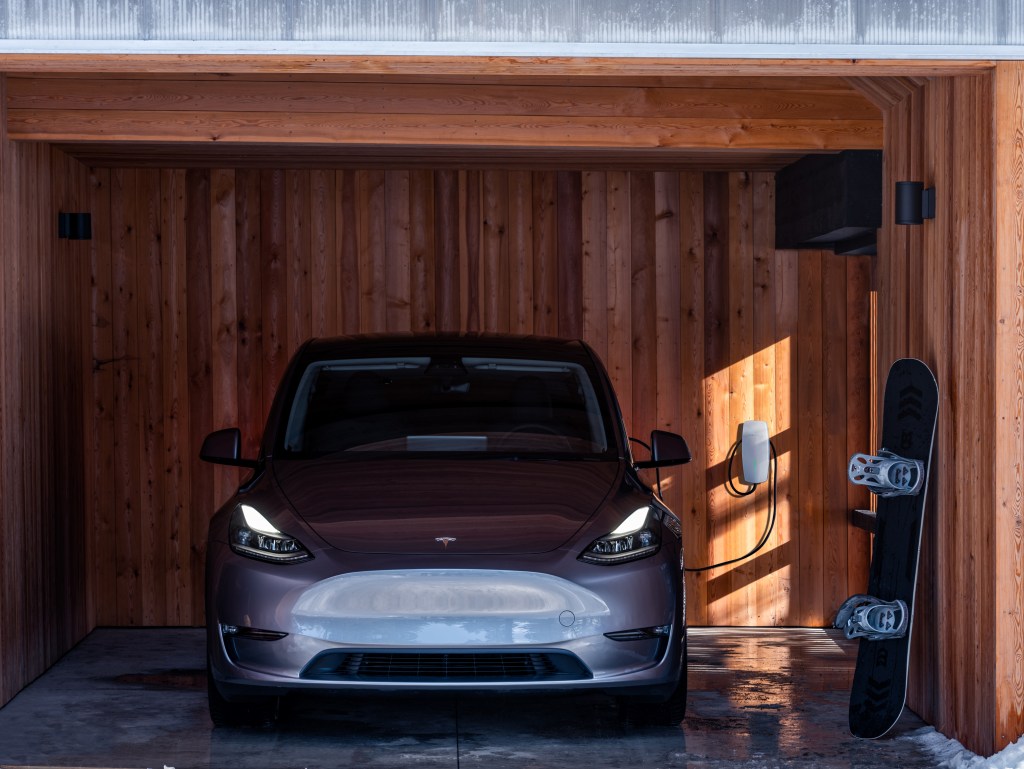
Tesla Model Y Charging at Home. Image Courtesy Tesla, Inc.
HOW DID TESLA GET SO GOOD AT SUPERCHARGING?
Only Tesla has dedicated countless hours and engineering talent to make electric vehicle charging an experience so delightful, that people love to talk about how good it is. Tinucci explains “Getting here has meant that we spent 10 years building charging infrastructure when basically no one else in the industry would do it, those 10 years have afforded us the opportunity to get pretty good at charging.”
For this reason, Tesla can depend on word-of-mouth advertising for its Supercharger Network. There are signs that other electric vehicle manufacturers may spend advertising dollars making their customers aware that their vehicles can access the Tesla Network however Tesla won’t have to spend a penny on advertising this. Instead, Tesla will invest every dollar into improving the Network.
LOWER COST PASSED TO THE CUSTOMER
Tesla’s mission is to accelerate the world’s transition to sustainable energy, so naturally costs to power your EV will cost less than filling up a gas tank. Tesla uses less expensive renewable energy to power Superchargers. These cost savings also come from Tesla’s approach to finding the most efficient ways to deploy Superchargers and vertically integrate the supply chain.
Tinucci explained, “First, we have the industry’s lowest deployment cost, our costs are often 20% if not 70% lower than alternatives, and that goes for both our supercharging hardware and deployments and our AC charging product lines.”
Tesla achieves this lower cost through being vertically integrated with manufacturing, and through engineering all of their own charging equipment. Tesla shares components across their different product lines and installs and operates all of its own charging sites. In Tanucci’s words, this has led Tesla to be “obsessed with finding ways to innovate around installation.”
TESLA INNOVATES THE WAY SUPERCHARGERS ARE INSTALLED
Tesla applies manufacturing expertise to how they deploy Supercharger sites.
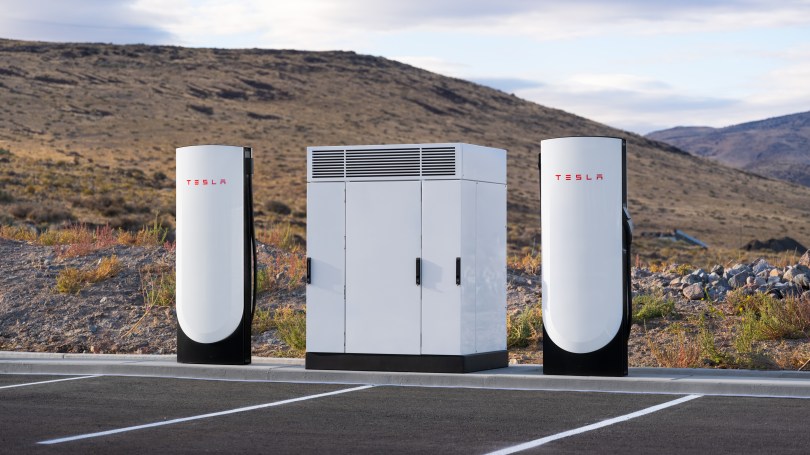
One example is that Tesla is pre-builds “Four post Supercharger units” at Gigafactory New York. Tinucci explained that Tesla ships these pre-built superchargers to the site and then uses a crane to put them into position, which saves 15% on deployment costs. A site can be installed in a matter of days, and once it’s operating, Tesla continues to manage it efficiently.
HOW DOES TESLA MANAGE SUPERCHARGER SITE UTILIZATION?
Tinucci explains how Tesla’s Trip Planner Software maximizes Supercharger site efficiency to lower cost,
“Over the last few years, we’ve been able to cut our per kilowatt hour cost by 40%, there are a lot of reasons for this but one of the top of the list is we focused on increasing our site utilization. Site utilization is just how many sessions or kilowatt hours can we push through a site or a post and basically doing that allows us to spread our cost over more sessions, thus, lower cost for kilowatt hour. But of course that’s easier said than done because when we push efficiency, of course, the risk is that we have a poor customer experience when we have a wait time at our sites.”
Tesla seeks the best customer experience possible and developed a solution for this with Trip Planner software.
Tinucci continued,
“This is where Trip Planner comes in. Trip Planner is our in-vehicle routing or navigation system. Other electric vehicle manufacturers, or some of them, have vehicle data. Other infrastructure providers have site data, but at Tesla we have both and what that allows us to do is to use Trip Planner to route vehicles towards available sites and away from congested sites so we can balance our utilization without risking wait time.”
Tinucci explained how the results of Tesla’s Trip Planner software speak for themselves since over the last few years Tesla has been able to drive up site utilization by 30% and that means lower per kilowatt hour cost while also cutting wait time in half.
Tinucci revealed that Tesla plans even more advancements with Trip Planner. Trip Planner will be moving to projecting site occupancy based on the understanding of what vehicles are currently routing to those sites. She explains that “Ultimately, the vision for Trip Planner is that it’s the air traffic controller for electric vehicle charging across all infrastructure on a global basis.” This will become more important in 2024 when other EVs start Supercharging in the Tesla Network.
QUICKER CHARGE TIMES
When I last Supercharged at Buc-ee’s in Waller, Texas, the 20 minutes went by so fast I did not have enough time to linger in the shops. It was enough to use the ladies’ room and buy lunch to avoid a $1/minute idle fee. I had to rush back to remove my Tesla from the post.
Tesla aims for even quicker charge times than this! Tunicci said, “We have shaved off 30% of our average supercharger sites time, or visit time, over the last few years. This is taking improvements on the hardware side with our software on our vehicles and on our infrastructure and we’re really excited to continue pushing this trend down.”
WHAT IT TAKES TO CHARGE A FULLY ELECTRIFIED FLEET
Do you know how much a Petawatt is? Petawatts is a unit of power equal to one quadrillion watts, and it’s used to estimate the immense amount of energy required in the future to charge all cars if they were electric.
Tesla aspires to a fully electrified, global fleet and that will take an enormous amount of energy. Nine Petawatt hours of charging will be needed on an annual basis. Tesla is preparing to meet that challenge by growing and maintaining a stellar charging experience.
Tinucci explains it this way, “While Tesla Charging certainly doesn’t have to supply all of that [9 Petawatts], it does require that for our part, we have a few new focuses in order to scale. First, if you want a fully electrified, global fleet, all of those vehicles have to have a great and reliable charging experience.”
In 2022, Tesla opened up its supercharging network on a global basis and now over 50% of Tesla’s superchargers in Europe are currently open to other electric vehicles. In 2024, get ready to see other EVs charging at Tesla Superchargers in the USA. Ford, General Motors, Mercedes-Benz, Polestar, Rivian, and Volvo will build EVs with Tesla’s easy-to-use and ergonomic North American Charging Standard (NACS). Expect to see most EVs built in 2025 to have the NACS. Until then, other EVs can access all Tesla Superchargers in the USA using an adapter.
TESLA CHARGING: RENEWABLE SOURCES & DAYTIME CHARGING
The second thing Tesla is doing is to ensure when they build out charging infrastructure, that it’s powered by renewable sources. Tanucci said,
“Over the last two years, we’ve procured enough renewable energy to offset the amount of charging we’ve provided to customers. As we look forward and we talk about this fully electrified fleet on a global basis, we want to make sure the demand for charging more closely follows when renewable sources are available.”
Tanucci continued, “We think the best way to go towards daytime charging is to install AC charging that is convenient and low-cost everywhere vehicles are typically parked throughout the day.” It comes as no surprise when Tanucci stated that Tesla Charging teams “are currently scaling to install AC charging everywhere vehicles charge during the day so we can power them from the new renewable sources.”
MY PERSONAL EXPERIENCES
I’d like to leave you with my experiences with Supercharging and my conversations with EV owners on my recent 4th of July trip to Galveston Island, Texas.
“I would love to charge my EQS in the Tesla Network! I hope it happens as soon as possible!”
My friend Chris, from Louisiana, drove a Mercedes-Benz EQS to Galveston Island for the 4th and is very excited to access Tesla Superchargers.
“I had no problems at all with staying charged on my drive moving to Houston from New Jersey. Gas stations are smelly and I don’t miss them!”
Another friend, a Model Y owner, shared his enthusiasm for how easy it was to travel and stay charged. I share his sentiments, and one of the reasons I bought a Tesla was to avoid the gas pump. Gas pumps bugged me for being clunky and often leaky. I remember raising the nozzle in the air so gas would not fall on my shoes. Yes, flammable, toxic gasoline would often be left on my car, hands, and feet. Thankfully, the future is electric!
Tesla Supercharging is one part of Elon Musk’s Master Plan Part 3. There is a long road ahead and we can help by using renewable energy and speaking up to policymakers to promote policy that will help, not hinder, Tesla and the amazing work their teams are doing.
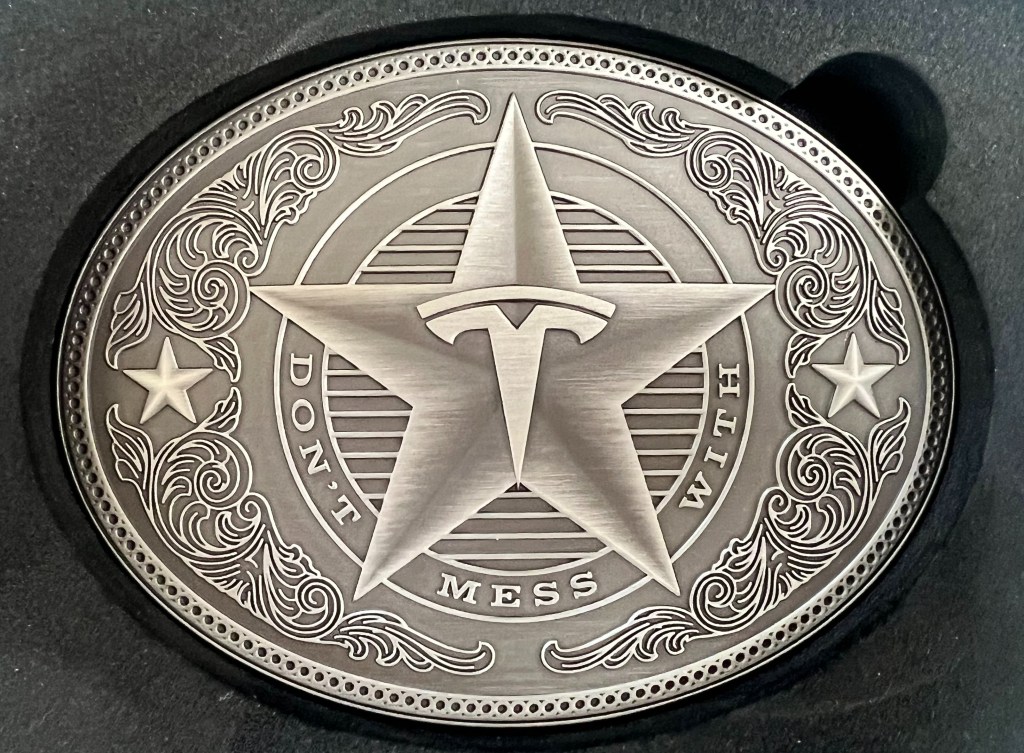
Don’t Mess With Tesla Belt Buckle.
Notes: See Official Tesla Youtube LIVE “2023 Investor Day.”
Thanks to the entire Tesla team and especially to Elon Musk for his engineering and leadership.
An article by Gail Alfar For What’s Up Tesla & Twitter Publishing from July 8, 2023.

 whatsuptesla.com