Elon Musk spoke for about 1 hour on a private Twitter Space on Saturday at about 4:15pm PT to an audience of over 7900 listeners. Tim Dodd, Everyday Astronaut was co-host. The Twitter Space was recorded and can be listened to by anyone who subscribes to Elon Musk.
“It was good to fly this vehicle so we can move on to more advanced designs. Booster 9 is more advanced.” – Elon Musk
Starship Test Flight 1 was an amazing success and the SpaceX team did a great job and there was a tremendous amount of valuable information learned. Elon explained, “We live on a planet with strong gravity and it takes a lot to leave our planet to get to Mars and Starship is a real path to get us to Mars, and that is mind-boggling. We need reasons to wake up in the morning and feel excited about the future.”
HIGHLIGHTS
Starship Test Flight 1 went better than expected
There was minimal launch pad damage
SpaceX will be ready in 6-8 weeks for Starship Test Flight 2
Some detailed notables as mentioned by Elon were,
“Three engines were chosen by the SpaceX system not to start, so the lift-off was with 30 engines as they were shut down due to not being healthy enough.”
“At T + 62 seconds there was some damage but Starship ran okay.”
“At T + 85 steering was lost on Starship.”
A big change is that Booster 9, which will be used in the next flight in 6-8 weeks will use electric motors instead of hydraulics. The electric motors will be more isolated and less likely to fail, “the engines will start faster, throttle up faster and leave the pad faster,” explained Elon.
“The goal for the next flight is to make it to staging, succeed in staging and go into orbit!” – Elon Musk
SOVIET N1 ROCKET
Elon also highlighted the Soviet Union’s N1 program. “The Soviets were onto their A-Game, they were fantastic and their motivation was maximized. Still, the N1 failed and never reached orbit. N1 is the closest to Starship of any Rocket that has ever flown. The cryogenic fuel is actually more risky than kerosene used by N1 and by Falcon 9. It was too expensive to continue, and was probably embarrassing on a national level (so they stopped the program).”
The Soviet N1 used kerosene-based rocket fuel in all three of its main stages. Falcon 9’s first stage incorporates nine Merlin engines and aluminum-lithium alloy tanks containing liquid oxygen and rocket-grade kerosene (RP-1) propellant. In contrast, Starship Super heavy booster is powered by 33 Raptor engines using sub-cooled liquid methane (CH4) and liquid oxygen (LOX).
Elon also explained a robust design as having isolated engines. The next launch will utilize Booster 9, which is exceptional as it has isolated engines.
“My expectation for the next flight is its more likely to reach orbit than not.” – Elon Musk
SPEAKERS
Asking some technical questions were @csi_starbase, John Krause, Mary Liz Bender, Zach Golden Joey Roulette, @Free_Space (Irene Klotz). So check them out!
Thanks to Elon Musk for hosting the Space! This article by Gail Alfar and was first published by Gail Alfar (me) on Twitter.
People await Starship first orbital Launch. Image by the author.
(April 22, 2023) S. Padre Island, Texas
I wanted to write about my first rocket launch. I realized that to best write for you, I had to talk to other people about their experiences. I’m sharing with you some of the beautiful conversations I had at Starship’s first orbital flight test launch. We’ll hear from a SpaceX enthusiast, an ex-NASA engineer, and a SpaceX engineer.
A DREAM COMES TRUE.
When Tesla announced the availability of the first version Model 3 sedan, Jim from Indiana was one of the first to reserve one. Since that date in 2017, Jim has closely been following Elon Musk’s companies and has been supportive of SpaceX. When he heard Starship would launch its first orbital test this year, he had a dream of going there with his daughter.
I saw Jim standing on Isla Blanca State Park beach with his wife, two children and another family friend. Jim’s passion and dedication to supporting SpaceX and its mission to make us multi-planetary is contagious. He wakes up every morning excited about the future!
“I knew I would bring my daughter, and when my wife found out she helped turn it into a family vacation for us all.”
I talked with him on the beach while his children played in the rolling waves at Isla Blanca State Park. Jim is one of many people who came to see the first Starship launch in person on April 20, 2023.
EX-NASA ENGINEER BELIEVES ELON MUSK WILL GET PEOPLE LIVING ON THE MOON.
Fred Becker, an ex-NASA Engineer would not have missed this launch for anything. Fred drove down from Indiana with his tiny Pomeranian in a little carrying pack. When Fred was 16 years old, he watched Apollo 16 land on the Moon on April 16. In a gentle voice, and with a slight sense of humor, Fred told me he wished the Starship launch had been on April 16.
We talked quite a bit, and I felt like I was talking to an old friend, Fred told me,
“NASA has been hamstrung by politics, but Elon Musk is not, for the most part.”
Fred shared with me that he knows Elon Musk is an incredibly amazing and kind person, and if “his mission is to get people living on the moon that’s going to happen.”
As I watched Fred walk away, I thought about how he explained to me that he had played a big role in designing and developing the space shuttle for NASA. Fred came alive when he explained to me his admiration for what Elon Musk is doing. I saw a spark light up in his eye.
There were a lot of NASA folks present at the Starship launch. SpaceX is opening up hope again to them that we will have people living on the moon and beyond!
WORKING FOR SPACEX.
I lingered at Isla Blanca for a while after the launch, the beach started to clear and began to fill up with happy families, kids, toys, and coconut-scented suntan lotion. As I started to walk back to the parking lot, I ran into Justin T., a SpaceX engineer. I asked him what his role was in Starship, and he was gracious enough to explain it to me in terms I could understand. He said he was responsible for connecting the fuel tanks to the Starship, it’s a lot more complicated than that, but I will tell you that he expressed he loved his job and the team he works with.
Justin told me he’s ready to get right back to work for the next launch. He told me he loves working at SpaceX and does not entertain any plans of leaving. He has found his passion and mission. It was incredible to hear him talk and to be able to thank him for his hard work. Without him, the launch would not have been the data-gathering success that it was.
MY THOUGHTS.
I’ve been to Starbase 6 times with most of my family. We’ve camped on the beach 3 times, which is pretty near to the Starship launch site!
When Starship launched, the vibrations in the air and the deep rumbling sound were much more profound than I could have imagined. I could feel the intense pressure in the core of my heart. This was my first launch to ever attend in person! One of my kids was there and when I turned around he had tears of joy streaming down his face. “It made me realize my life priorities!”
If Starship goes to Mars, we have a great chance of passing the great filter and becoming a multi-planetary civilization. If Starship doesn’t make it to Mars, if the program fails, it will still do one thing that is extremely valuable in the lives of people today: Give people hope where there wasn’t any before. Do you love waking up in the morning excited for the future? I know I do. This alone is justification enough for Starship.
───── ⋆⋅☆⋅⋆ ─────
“We choose to go to the moon in this decade and do the other things, not because they are easy, but because they are hard; because that goal will serve to organize and measure the best of our energies and skills, because that challenge is one that we are willing to accept, one we are unwilling to postpone, and one which we intend to win.” – President John F. Kennedy, Houston, Texas, September 12, 1962
Elon Musk was asked, “Why should we colonize Mars?”
“Being a multi-planet species and being out there among the stars is important for the long-term survival of humanity and that’s one reason, kind of like life insurance for life collectively, life as we know it. The part that I find personally most motivating is that it creates a sense of adventure and it makes people excited about the future. If you consider two futures: one where we are forever confined to Earth until eventually something terrible happens — or another future where we are out there on many planets, maybe even going beyond the solar system! I think that the second version is incredibly exciting and inspiring… and there need to be reasons to get up in the morning. You know, life cannot just be about solving problems, otherwise, what’s the point? There’s gotta be things that people find inspiring and make life worth living.” – Elon Musk
───── ⋆⋅☆⋅⋆ ─────
Starship First Orbital Flight. Image Courtesy Carlos Nunez
Article by Gail Alfar, please credit accordingly. Thanks to Fred Becker, SpaceX, Elon Musk, and Carlos Nunez Images. Original Article appears on Gail Alfar’s Twitter
Elon Musk with Michael Grimes at Morgan Stanley TMT Conference 2023. Image courtesy @anirvanc on Twitter
Morgan Stanley held this year’s TMT Conference in beautiful (and rainy!) San Francisco and Elon Musk spoke on March 7 about Twitter, X.com, Tesla and SpaceX. The talk was informative, hopeful, well thought out and funny! Of course you may listen to it online and you may also prefer to read Elon’s interviews so that is why I have transcribed (and categorized) the interview here on “What’s Up Tesla.”
I do this with many of Elon Musk’s talks for you. It is part of the goal of this publication to preserve these important talks in writing. A breakdown for your reference:
Twitter:
Mission , News happening in real-time
Public relations department?
Advertising’s incredible potential
Community Notes and the rigorous pursuit of truth
Proactively reducing child exploitation
Advertisers enjoy brand safety
A healthy national dialogue
Freedom of speech: hearing what you don’t want to hear
Twitter won’t always be a fractal rube goldberg machine
Cash flow
Starlink, X.com, Tesla and SpaceX’s Starlink and Starship:
Starlink: a case study in effective advertising
X.com as your everything app
Tesla Master Plan 3 and the next-gen vehicle
Starlink’s advantage
Starship orbital launch
The Mission of Twitter
Michael Grimes: (paraphrased) Where are you on the core principles of Twitter: Authentic, informative, entertaining, accurate, brand safe and democratic?
Elon Musk: “I think some of these are a little at odds, but ‘brand safe’ I think really means ‘where advertising is displayed’ or the advertiser gets to choose what material is near that advertising. If it’s some sort of… like a train accident or a war scene, then probably a family-friendly brand is not going to want to advertise right next to that. Or it can’t be like, ‘here’s a bleak war scene, would you like to buy a hamburger?’ it would be like, awkward, you know?
So that’s understandable you want to put advertising next to content where it makes sense. But the content in general needs to be authentic and informative even if it is controversial or jarring. I think people need to be able to choose, to some degree, what content they want to see. Of course, on Twitter, you can. But really we want it to be the fundamental place you go to, to learn what’s going on and get the real story.
The truth, the whole truth and it’s going to be more than, hahaha, I’d like to say nothing but the truth but that’s hard, (laughter) there’s going to be a lot of BS there too. There are going to be lies, for sure, but you want to have the truth and you want to bubble up the truth and be able to sort of sort it out… you really want truth with the least amount of error.”
News happens in real-time on Twitter
Elon Musk explains Twitter’s unique place as a real-time news source,
“Well, I’m sure many of you use Twitter. Everything on Twitter is happening in real-time.
So if you contrast that to what’s happening in a newspaper, they have to learn the information, propose an article to their editor, get it approved, write the article, get it edited, figure out which day it’s going to get published on, and so the thing that happened is being reported on 3-4 days, sometimes a week late. And if it happens on a weekend then it’s at least 3 days.
You know ChatGPT was huge news for several days on Twitter before there were any news articles about it in major publications. So when thinking about investing in things, you want to have information that is as timely and accurate as possible, there’s no better source than Twitter for that.” Elon Musk
Michael Grimes lamented on the fact that people need to be “default skeptical” of any news story about Twitter and assume it’s default wrong because “not only some journalists have an agenda but the source has an agenda and it’s so easy to go through the chain of inaccuracy or outright falsehood.” He asked Elon Musk if a public relations department was a consideration,
No, PR departments… no the right name for PR is propaganda. Maybe we should have a VP of propaganda, I think that’s more honest, and also a VP of witchcraft. (laughter) Those would be two great ones.
“If you pick up any given newspaper and read the whole thing and say, ‘how many of those stories are positive about anything at all?’ Almost none. So if something is newsworthy it is going to have a negative slant, whether it is positive or not. There’s like something in journalism that, they’ve been trained to basically never write a positive story about anything. Once and a while you see a puff piece but it’s rare. So anything that’s newsworthy will get written about, anything that’s written about will go through a negativity lense and so you, therefore, have a bizarrely negative view of the world if you draw your information from newspapers. This is simply a fact.” Elon Musk
Why advertising on Twitter has incredible potential
“So on Twitter, you can get a much more balanced positive-negative situation, it doesn’t have that bias quite as much. There’s probably still a little bit of negativity bias but much less so. I’m not sure what the legacy media does, I mean at this point, really, Twitter is, by the way, the #1 news app in the world. So in terms of what people download for news, it’s #1.
There are 500M active users. 250M daily users of which I’d say there are probably 180M significant daily users, where it’s a meaningful amount of time. The average amount of time people spend on Twitter of that 250M is about 1/2 an hour or so. The thing I think that is most interesting is about 120M to 130M hours of human attention per day on Twitter, every single day on average.
I think it comes to an interesting point which is, it’s startling how poorly monetized that is because you have to say, how valuable is that attention? 130M hours of human attention per day, of people that read. So these are generally the smartest people in the world, the most influential people in the world, and you have 130M hours of their time per day, that’s a lot!
Currently, Twitter makes about 5 or 6 cents per hour of that time. I think this is poorly monetized (laughter). Like, if I’m spending 2 hours a day on Twitter, whatever ads are coming through are getting my, or yours or everyone in the room’s attention, your time is incredibly valuable. The thing is, we need to actually serve ads that are relevant and useful and I think as we do that we can probably at least get it like 15 cents an hour or 20 cents an hour, a quarter?
I think the actual potential here for Twitter revenue is gigantic. And it’s going to be a win-win situation which is if you are served advertising that you find timely and relevant with products and services that are useful to you, that’s good for you and good for the advertiser. Advertising in the limit of relevance is content.” Elon Musk
Community Notes and the rigorous pursuit of truth
Michael Grimes asked how Community Notes can be used without being hijacked by either side of an issue or political spectrum. Elon Musk explained,
“There’s a White Paper on Community Notes that I recommend reading, in fact, I’ll tweet it out so that people can have easy access to it because it’s really quite a clever idea. Think of it like page rank for pages as applied to people, which is that as people build credibility in how they review notes, they build up enough credibility to actually write notes. Those notes are then rated by others, and depending upon the credibility of the people rating your notes, your credibility score gets affected. In order to be a notes contributor, you have to be a verified person. And it takes a while to get there; when you just start out, you will start off with no credibility score.
We actively look at any attempts to game the system and shut them down. If they’re determined to be not real people or if they seem to be brigading because there are deliberate attempts to manipulate Community Notes. We also make the Community Notes source code open and available, so you can basically see everything. You can see exactly how Community Notes is calculating things, and what changes are made to Community Notes and we’ll keep iterating and the goal is to have truth with the least amount of error.
There’s always like, ‘What is truth?’ Does someone really aspire to the truth? If they really aspire to the truth they must acknowledge that there is some probability that what they think is untrue. If somebody thinks that what they say is true with 100% probability, there’s a 100% probability they are lying. Truth must acknowledge error, and you aim to minimize the error over time, that’s what Community Notes is. I think also, once someone gets Community Noted, they think twice about being dissected in the future. You start getting noted a few times, and you think ‘Uh, oh!’
The important thing is that anyone can be noted, including me, and in fact, I wanted to make a note of being noted. The point is that if I can be noted, anyone can be noted, including advertisers. We’ve had a few cases where the advertising wasn’t accurate and it got noted. This, I think will be very helpful in truth in advertising. The goal is the rigorous pursuit of the truth, aspirationally the whole truth, and the least amount of untruth.” Elon Musk
Proactively reducing child exploitation on Twitter
“I’ve repeatedly said to the Trust & Safety team at Twitter that the #1 Priority, which will always be the #1 Priority no matter what, is ensuring that children are safe on Twitter, that there’s no child exploitation. So that is #1 priority always and forever.” Elon Musk
Elon Musk explained to Michael Grimes, “I’ve repeatedly said to the Trust & Safety team at Twitter that the #1 Priority, which will always be the #1 Priority no matter what, is ensuring that children are safe on Twitter, that there’s no child exploitation. So that is #1 priority always and forever.
What I’ve been told is that we’ve done more to eliminate [CSE material] on Twitter in the last four months than what has been done in the last ten years. It will continue to be our number one priority. A 100-fold reduction in CSE search patterns is pretty gigantic to say the least. It’s the absolute number one priority.”
Advertisers on Twitter enjoy brand safety
Elon Musk used the example of Disney. “With respect to brand safety, it really depends a lot on the brand. By the way, Disney is a major advertiser on Twitter worldwide. Apple is one of our biggest advertisers.
But Disney of course does not want to have one of their ads next to things that aren’t appropriate for a family audience. But there are other products that are kind of more R-rated if you will, so they’re more comfortable with advertising being in the equivalent of like a R-rated movie or something like that. So brand safety depends on what brand you’re talking about. Is it a family brand or a less family brand?
Advertisers can actually adjust what content they are comfortable having their advertising appear next to. The same is true on TV. The advertising that you’ll see at 7 pm is different than the advertising that you’ll see at midnight. We have the same functionality on Twitter, so it’s truly up to the advertiser where they want to put their content. But I think by far the most important thing is if the advertising is effective. That it is relevant and that it moves the needle for a company. Advertising relevance is the most gigantic thing.
This is going to sound totally bizarre but Twitter did not consider relevance in advertising until 3 months ago. In fact if you use Twitter for a long time, you should ask ‘how many products have you bought off Twitter?’ Probably zero! (laughter) Judging by the laughter, probably zero. And your time is incredibly valuable.”
Michael Grimes: Flamethrower, no one bought a flamethrower?
Elon Musk: Haha, its possible that they might have bought things from content-based tweets because the content that’s recommended is reasonably relevant but the advertising has not been. So as we shift towards advertising being relevant and timely, as I said, advertising that is relevant and timely is content. The time of 130M person-hours of the smartest people on earth is insanely valuable. Historically, with advertising being mostly irrelevant, we’ve been wasting peoples’ time and that’s not good. Going forward, Twitter will have very relevant and useful advertising. There will be a massive increase in revenue because it is now useful. So I’m very optimistic about the future. It’s been a very difficult 4 months, but I’m optimistic about the future.
Healthy national dialogue on Twitter
Elon Musk: I think the objective reality for anyone looking at Twitter for a long time was that Twitter had a massive thumb on the scale on the left side. Twitter would ban and suspend accounts on the right 10 times more than on the left. This is naturally what you would expect, frankly, because we are in San Francisco, which is deep deep blue.
So, Twitter was controlled by the far left. So the natural thing that would happen then was the suppression of moderates, not just suppression of the right but even suppression of moderate voices. But that’s not conducive to a healthy national dialogue.
In order to have a healthy national dialogue, you have to represent the whole country, and you have to represent everyone in other countries too. That’s the only way to have a Town Square.
Freedom of speech: hearing what you don’t want to hear
Elon Musk: There were disproportionately more accounts unsuspended and un-shadowbanned on the right because Twitter had a huge thumb on the scale in favor of the left. But if you say, ‘Have we been suspending accounts on the left? Have we been shadowbanning accounts on the left? No, no we haven’t.’ No, because exactly what I said we were doing which is to make it an even playing field and you know something is Freedom of Speech when you’re hearing speech from someone you don’t like and you don’t like what they’re saying.
Otherwise it’s not free speech. And if you don’t have that ability, then sooner or later that suppression of speech is going to be turned on you. It is a good sign if you’re seeing people you don’t like say things you don’t like. That is a good sign, not a bad sign… provided you can say your piece too! I think this is fundamental.
The reason I did the Twitter acquisition was not because I thought this would be some lucrative goldmine, and in fact, it has been arduous and difficult with being dumped on [by mainstream media] every day. That’s not the most fun thing in the world. But if we do not have a strong foundation of free speech, I fear for the future of our civilization. We must have this. That’s why I did it.
Twitter won’t always be a fractal rube goldberg machine
Elon Musk: The codebase is like a Rube Goldberg Machine and when you zoom in on one part of the Rube Goldberg Machine there’s another Rube Goldberg Machine and then there’s another one! That’s what I mean by the fractal. As you zoom in there’s another fractal and another fractal and a fractal Rube Goldberg Machine. It’s quite difficult to keep this thing running and then also difficult to advance the product because it is really overly complex. We’ll make what appears to be a small change somewhere that then causes a massive disruption. For example, yesterday we made what we thought was a small change, we want to be in full disclosure including gruesome details. There was what was supposed to be a small change to 1% of the Twitter user base ended up being a catastrophic event to 100% of the Twitter user base. We don’t have enough time to go into the details but there was a Boolean flag in the Twitter front end that should not have been there.
I’ll give you an example. At one point there was a problem with Twitter Spaces where suspended users were able to join conversations even though they were suspended and so we temporarily turned off access to Twitter Spaces which then made anyone who is using the Twitter Android App unable to like a tweet. Now how those things are connected is not clear, haha. So if you had an iOS app you could like tweets, if you’re on the Web app you could like tweets but not if you had an Android app because of Spaces.
There’s a lot of work behind the scenes and simplifying the code base, getting rid of extraneous features and enabling Twitter to evolve more rapidly in the future but it requires a lot of cleanup.
Looking forward to Twitter being cash flow positive
Michael Grimes: You’ve grown users [on Twitter] despite a lean engineering team and cutting out a data center.
Elon Musk: Yeah, I think on balance we’re doing okay. Just to give you a sense of where things were at the close of acquisition on October 29th, Twitter was tracking to a negative 3 Billion dollar a year burn rate and had 1 Billion in the bank. That’s a pretty dire situation.
If 2023 had been a normal year, Twitter would have done something on the order of 4.5 Billion in revenue and 4.5 Billion in cost, roughly break even, but when you add 1.5 Billion of debt servicing to that and a massive decline in advertising, some of it cyclic, some of it political, but call it at roughly a 50% decline in revenue, you’ve got over 3 Billion dollars negative. Twitter has some revenue that’s not advertising-based, data subscriptions and what-not, but in the absence of action, Twitter would have had 6 Billion in costs and 3 Billion in revenue so minus 3 Billion and there was 1 Billion in the bank, so it would have gone bankrupt in 4 months. Immediate and drastic action had to be taken, which was.
We actually have now cut the non-interest burn to roughly 1.5 Billion. So we’ve got 1.5 Billion of debt servicing and 1.5 Billion of expenditures. We went from 3 data centers to 2, and reduced our cloud expenditures significantly, while at the same time having the fastest product evolution in Twitter’s history. So overall, not bad. There have been a few bumps along the road obviously but this is to be expected. And now I think we have the opportunity to grow it into something quite spectacular. We had the highest total user minutes in Twitter history.
The real numer to care about is actually not the MDAU (Monetized daily active user) but its user time. How many total user hours per day do you have? That’s the real figure of merit because one could for example go to 300 Million daily active users but if they spent less time on the system cumulatively that would actually be a downgrade. Its how much human attention are you worth?
That’s why I think the really profound thing is what Twitter has is roughly 130 Million hours of the smartest most influential people on earth, every single day. There’s nothing else that has that. I mean there are social networks that have more users but they do not have the smart, influential people, they don’t have you!
Michael Grimes: After doing the math, Twitter is EBITDA (Earnings Before Interest, Taxes, Depreciation and Amortization) profitable today and then you’re looking for break even after debt services. When do you get to cash flow break even?
Elon Musk: Well it’s EBITDA profitable but the “D” is quite big! (laughter)
Michael Grimes: When do you get to cash flow break even after that “D”?
Elon Musk: This is where we need to focus on the “E” part. (laughter) Yeah, I hope we pay taxes. So like I said, we’re getting to the point where we’re close to having the total expenditures for the company excluding debt roughly equal to the debt. I think we’ll be there in Q2. I definitely don’t want to count chickens before they’re hatched or jinx it or anything but I think we’ve got a shot at being cash flow positive next quarter.
Twitter has huge advertiser value
Michael Grimes: Twitter has great advertiser value with 147 Billion global impressions of the World Cup 2022 conversation.
Elon Musk: What I say to advertisers and brands is ‘use Twitter yourself and believe what you see on Twitter, not what you read in the newspapers.’ Because what you see on Twitter is the real thing, and what you read in newspapers is not. And I’d like to thank Mark Read and WPP for their support and publicists and others that have stuck with us like Disney and Apple.
Michael Grimes: When do you introduce performance-based advertising and scale it?
Elon Musk: Performance-based advertising is really just advertising that is relevant, in fact we should realistically have zero nonperformance-based advertising.
We want advertising that matters, people’s attention is precious. We should not serve them ads that are annoying or irrelevant or strident or ugly. It was interesting you should mention White Lotus, I was talking today with David Zaslav, it was great, and he was like, ‘Why can’t we put a White Lotus trailer every time someone mentions White Lotus on Twitter?’ I’m like, ‘Absolutely!’
So one of the super-obvious but profound things that we’re doing is enabling keyword advertising so that can the keywords, like ‘White Lotus’ and if somebody mentions White Lotus, you put the White Lotus trailer there. I mean, that sounds very obvious.
We don’t need advanced AI for this one (laughter). It’s sort of just google Adwords that apply to tweets and the home timeline and replies and everywhere else because you often have sort of long, deep conversations with people going on talking about movies, TV, products and whatnot and that’s the perfect opportunity for advertisers to provide their message.
Starlink: A case study in effective advertising
Elon Musk: You know, if I think about something, for example, like Starlink, which does advertise in various media you want to advertise to users in a region that are not already saturated. So Starlink tends to be saturated in urban areas but it is not saturated in rural areas. What Starlink would like to do is say, ‘Please show the ad to rural users with a slow connection. And the simple message is, ‘Do you want faster internet for less money? Click. Probably you do. Twitter needs to be able to do a simple thing like that. And it will. It is already able to do that, we just haven’t fully rolled it out. So I think we’re around 20%-ish but by the end of this year almost all advertising should be reasonably relevant.
“Twitter is not a one way street, there’s continuous interaction. I think we can have a profoundly more useful advertising experience.” Elon Musk
Elon Musk: Even if you say nothing about that ad, after its dropped in the Twitter system and it has 10,000 views, you populate the parameter space of the ad and then you correlate the user parameter space and the ad parameter space and then you don’t need to do any demographic targeting because you could be like, say its a gardening ad or you could be 20, 30, 40, 70 years old, any sex, whatever, it doesn’t matter.
What matters is you like gardening and that’s the ad that should be shown. I think we can get away from the ad targeting by age range and sex in favor or targeting by interest. Alot of this demographic tageting was done coming from a TV or newspaper era where you don’t have interaction with the user, you just have to kind of guess because its a one way street in TV. But on Twitter its not a one way street, there’s continuous interaction. I think we can have a profoundly more useful advertising experience.
The everything app: X.com
Michael Grimes: Tell us about your vision for X, the everything app.
Elon Musk: I think its possible to create a very powerful finance experience basically. Paypal is kind of like a halfway version of what I think could be done in payments and finance. You want to be able to send money easily from one account on X / Twitter to another account effortlessly with one click. You want to be able to earn interest on the money, you want to be able to have debt so your interest can grow negative. Basically, I think it’s possible to become the biggest financial institution in the world just by providing people with convenience and payment options. We don’t have time to go into detail here except if we just make the app more and more useful, people will use it more and it will be great. I mean, you’ll see!
Michael Grimes: The Tesla team is nice and built out, the Twitter executive team is perhaps a bit leaner. Maybe there’s a meme that’s accurate.
Elon Musk: He does have a black turtleneck, haha! Do you need anything more? I don’t think so.
Michael Grimes: So when does that Twitter management team have that bench like you showcased at the Gigafactory?
Elon Musk: Well I think it takes a lot of time to build a strong management team. We built the Tesla management team over 20 years. I think Twitter is an easier problem than Tesla by a long shot. But it will take some time to build the team, probably a few years.
Tesla Master Plan 3 is a message of hope grounded in physical reality
Michael Grimes: You shared Master Plan 3 at the Gigafactory and the edit that came to my mind was ‘Master planet! after your first piece there in sustainable energy for all earth. Can you take us through that positive, optimistic, mathematically underpinned vision?
Elon Musk: Okay, there’s not a lot of time to do that but I guess the overall message is that we can absolutely turn earth into a sustainable energy economy, fully sustainable, using lithium-ion batteries, solar, wind, as well as geothermal, nuclear and other things but primarily it’ll be solar and wind and lithium-ion batteries.
And to our calculations, you need roughly 240 TeraWatt hours of lithium-ion batteries. Most of those will be iron phosphate for the primarily iron cathode which is a plentiful material. In fact, the #1 element on earth is actually iron — a little factoid. I think earth by mass is about 32% iron and about 30% oxygen and then everything else is miscellaneous. So we’re like a mighty rust ball. So, plenty of iron. Basically, the materials needed to make 240 TerraWatt hours of batteries are actually plentiful on earth. We don’t need to mow down the Amazon or anything like that!
We don’t need to do anything terrible to the environment to create 240 TerraWatt hours of batteries, in fact, there will be less mining required in a sustainable energy economy than is currently required. Really, this is a message of hope and optimism grounded in physical reality, it is not wishful thinking. We should be excited and inspired about the future.
And I am not suggesting complacency or anything like that and getting there faster is better than getting there slower, but we don’t need to live some terrible austere life and give up the things that we like. You can have the things that you like, in fact, even more of them, and the environment can be good. All the good things are possible, that’s what I’m saying.
We should be excited and optomistic about the future. We need to go build this, its a lot of work but you should not feel sad about the future regarding sustainable energy, it will happen! Elon Musk
Elon Musk: We should be excited and optimistic about the future. We need to go build this, its a lot of work but you should not feel sad about the future regarding sustainable energy, it will happen! We just want to make it happen faster rather than slower.
Tesla’s next generation vehicle
Michael Grimes: That was the first big takeaway, the next one that I had was your next phase of vertical integration, the relentless first principles thinking on vehicle design, battery design, factory optimization. Could you talk more on this?
Elon Musk: There’s a clear path to making a smaller vehicle that is roughly half the production cost and difficulty of our Model 3. That vehicle will really be used almost entirely in autonomous mode. The thing that is really gigantic for Tesla is autonomy and if people have used the Tesla full self driving and gave seen how rapidly the full self driving capability has been evolving, it should be obvious that that is by far the most profound thing.
Elon Musk: The total addressable market stuff, it’s like, guys, this is actually not the right way to think about it. Passenger vehicles right now only see about 10-12 hours of use per week. There’s 168 hours in a week, if those vehicle are autonomous they’re probably going to get used for 50-60 hours a week. That’s a 5x increase in the value of a car and it costs the same to make the car. At that point you basically have software margins in a hardware product, it’s the same. Total addressable market is everyone, all humans. Powerful.
Why Starlink’s speed is fast
Elon Musk: The Starlink team is doing an amazing job.
More than half the satellites in orbit right now are Starlink satellites. So if you add up all satellites launched cumulatively, they are less than Starlink. Starlink is currently providing global connectivity, you can get connectivity anywhere on earth from the most remote part of Antarctica to San Francisco. Anywhere. Full-level connectivity, high bandwidth, and low latency.
The latency is important because unless you’re in low earth orbit you cannot get a low latency. The geostationary satellites are very high, you’ve sort of got sometimes up to a second of latency from a geostationary satellite, all things inclusive. With Starlink satellites, we believe we can get the latency under 20 milliseconds.
For international communications, an interesting thing is that in fiber, light travels much slower than in air or vacuum. So in rough approximation, light travels about 300 kilometers per millisecond in air or vacuum but only just roughly over 200 kilometers per millisecond in fiber. So you’ve got roughly a 40% increase in speed of light going through the Starlink system than through fiber and it can also follow a more direct route.
Instead of following the coastline of the continents, it [Starlink] can actually have a more direct route. It’s a shorter route and inherently faster from a physics standpoint so it connects the world way better than fiber and is providing connectivity to people that either never had it before or where their options were extremely expensive or very low bandwidth.
So [Starlink] is helping out a lot of communities that never had access, especially when you consider that education is digital these days, that’s really how you can learn anything. You can basically learn anything for free on the internet if you have the internet! In terms of providing education abilities to remote communities, Starlink is doing a lot of good in that regard.
Starship going orbital
“We don’t want to be one of those lame, one-planet civilizations!” Elon Musk
Starship launch soon. Image courtesy Elon Musk.
Elon Musk: We’re getting ready for the first launch of Starship. This is a very difficult program. The rocket is roughly 2.5 times the thrust of a Saturn V so if and once it reaches orbit it will be by far the biggest rocket that reaches orbit, but more importantly it is designed to be the first reusable orbital rocket ever so that the key to extending life beyond earth is a fully and rapidly reusable orbital rocket.
This is a very hard problem given the constraints of earth. Earth has a thick atmosphere and strong gravity, it is literally barely possible to do this, that’s why its not been done before. We are getting close to our first orbital attempt of Starship, hopefully in the next month or so we’ll have our first attempt. I’m not saying it’ll get to orbit but I guarantee excitement. (audience laughter) It won’t be boring. I think it’s hopefully above a 50% chance of reaching orbit.
We’re building a whole series of Starships in South Texas and so I think we’ve got, hopefully, an 80% chance of reaching orbit this year. It will probably take up a couple more years to achieve full rapid reusability, which I can’t emphasize enough, is the profound breakthrough that is needed to extend life beyond earth because it lowers the cost of access to space by orders of magnitude. In the same way, let’s say there were no airplanes that were reusable, how expensive would air flight be? It would be insane. You’d have to buy a new airplane every time you flew somewhere and you’d have to tow a small airplane behind you for the return flight. That’s not going to scale.
So if things go well there, this vehicle could make life multi-planetary, that’s a really big deal. And it could make life on Mars real and that’s one of the great filters that any civilization has to pass through which is, ‘does this civilization become multi-planetary or not?’ This is one of the elements of the Fermi Paradox. I mean I sort of wonder that, if we are able to get to multi-planetary that will be a forcing function to improve spaceflight to become multi-stellar, to go to other star systems and I think we may discover that there are many long-dead one-planet civilizations. We don’t want to be one of those. We don’t want to be one of those lame, one-planet civilizations!
Austin at sunset, image courtesy Aeriel Austin, Instagram
Gail Alfar, Author, Military Veteran. Exclusive to What’s Up Tesla – March 12, 2023. All Rights Reserved. My goal as an author is to support Tesla (the most American vehicle manufacturer) and Elon Musk in both making life better on earth for humans and becoming a space-fairing civilization.
Support “What’s Up Tesla” and the important work done here. Contribute to Gail’s Coffee Fund! Thank you!
Arriving to Norway: Elon Musk on way to ONS 2022 Conference. cr. Jarle Aasland / Stavanger Aftenblad
Elon Musk spoke at the ONS 2022 Conference in Norway in a less than 25-minute interview with Xenia Wickett. I hope you will enjoy this as much as I have, its packed with so much important information. Elon got to the main points quickly, making this a fabulous interview.
Main Points in Interview
Thoughts About Trust (Twitter)
Taking The Set Of Actions That Are Most Likely To Lead To A Better Future
3 Pillars Of A Sustainable Energy Future: Sustainable Energy Generation, Stationary Battery Packs, Electric Vehicles
Sustainable Rocket Propellant
Looking Years Ahead At The Auto Industry
What Are The Limiting Factors Governing The Rate At Which We Can Transition To Sustainable Energy?
Update On Master Plan Part 3
Is There A Limiting Function To The Transition To Sustainable Energy?
China, Gigafactory Expansion, The Fundamental Good Of Tesla
Approach To Risk, The Riskiest Thing Is No Action
Ukraine
Caution in Developing Artificial Intelligence
Two Goals: Starship To Orbit And Self-Driving Cars
August 29, 2022 Elon Musk speaks at ONS Conference, Stavanger, Norway in an Interview with Xenia Wickett.
Of course, Elon started out warmly thanking the Norwegian people,
“Thank you for inviting me and it’s an incredible honor to be here. I love Norway. And I just want to thank the leaders and the people of Norway for their long-standing support of electric vehicles and sustainable energy. I just want the people of Norway to know, that hey you have really made a difference. So thank you!”
Thoughts About Trust (Twitter)
In response to “what do you think about trust?“ Elon said,
“That’s really quite a philosophical question, and one could wax on at length about that. (laughter asking if talking about Twitter?) I do think, with respect to information, generally, people want to know that the information they are receiving is accurate, that it is representative of the full picture, and they want to be able to believe what they read and not feel that it’s overly biased or at least understand the nature of the bias.
I think one of the key things to trust is transparency, and for people to really know or understand, if it’s a social media company, what the algorithm is. We should open-source the algorithm so people can know it and critique it, and so it’s not a black box. And then if there are any modifications done by people who are at that social media company, it should be clear and transparent, so it’s not hidden.
I believe in the free flow of ideas, and just generally erring on the side of free speech, within the boundaries of the law. You can’t go beyond that without being arrested I think.”
Set Of Actions That Are Most Likely To Lead To A Better Future
Elon Musk and Prime Minister (Jonas Gahr Støre) have lunch together at ONS. cr. Bjørn Shaogon / VG
“I don’t aim to disrupt for the sake of disrupting. It’s more like, what set of actions are more likely to lead to a better future? In order for humanity to have a compelling future for civilization, we must have a clear path to a sustainable energy future. That’s one of the things that I think everyone would agree with. I am not someone who would tend to demonize oil and gas, to be clear. This is necessary right now or civilization could not function. So I do think at this time, we actually need more oil and gas and not less. But simultaneously, moving as fast as we can to a sustainable energy economy. I thought the words of the Prime Minister were spot on. I am glad to hear that there is a large effort for ocean wind. That’s a massive untapped potential. I would say go even more than what the Prime Minister said frankly, I mean if you did a 100 x 100 array, of 10 MW systems, you would have 100-gigawatt capability. And then, you do need to combine that with stationary storage battery packs to buffer the energy, because sometimes the wind blows and sometimes it doesn’t blow, or it just blows hard. So you need to buffer it with stationary battery packs. Tesla and other companies are also making that.”
3 Pillars of Sustainable Energy Future: Sustainable Energy Generation, Stationary Battery Packs, Electric Vehicles
“The three pillars of a sustainable energy future are sustainable energy generation, which is hydro, geothermal, wind, and solar. I’m also pro-nuclear. I think we should really keep going with the nuclear plants. I know it’s an unpopular view in some quarters, and I think if you have a well-designed nuclear power plant, you should not shut it down. Especially right now.
But I try to say what I think is scientifically cogent, even if it is not popular. So the pillars are sustainable energy generation, but then you must also store the energy. The two main sources of sustainable energy, wind and solar, are intermittent, the wind doesn’t always blow and the sun doesn’t always shine. So you must buffer the energy in stationary battery packs. And then the third element obviously is electric vehicles. Electric cars, trucks, aircraft, boats. with the ironic exception of rockets.”
Sustainable Rocket Propellant
“We do have a plan for sustainably producing the rocket propellant, which is actually, almost 80% liquid oxygen. So liquid oxygen you can get obviously from the atmosphere. And then we are going with Methane fuel, which is 20% of the propellant, but that you can make also sustainably long term from CO2 and water, H2O which produces CH₄ and O₂ so that’s the sustainable long-term path for rocket propellant generation and that’s how it would have to be done on Mars, for example.
We do actually have some sustainable power generation for some of our propellant generation already, but it’s a small percentage now but will be a big percentage in the future.”
Car Industry Moving Rapidly Towards Electric
“I think we’ll see tremendous change over the next 5, 10, or 15 years. By 2030, I would say probably about half of all new cars will be electric. By 2035, it might be 80% or something like that. It could be even higher than those numbers, but the car industry is moving rapidly towards electric.
One country after another, and one state after another is making zero-emission mandates. California recently passed, I think, by 2035 all new cars can only be zero emission. So, clearly, the people of the earth, decided this is the way to go.
So we’ll see quite a tremendous change in that regard and if you look at Norway you will see kind of an advanced version of that because Norway has some of the highest, I believe Norway has gone to the majority are electric vehicles of new cars sold, which is great. Again, thank you! So, it’s pretty cool! (applause)”
What Are The Limiting Factors Governing Rate At Which We Can Transition To Sustainable Energy?
“What are the limiting factors governing the rate at which the world can transition to sustainable energy? I think it’s the rate at which one can grow battery production. So then, if you say, what are the constituents in the battery, in lithium-ion batteries? You’ve obviously got lithium, you’ve got the cathode, which is the main cathode materials are going to be metal, and that’s nickel, manganese, and iron. And on the anode side, it’s primarily carbon and graphite. So, in a sense, you’re sequestering a little bit of carbon in the battery, with some silicone added for energy density on the anode side. And then there’s the electrolytes and whatnot.
The main limitations are not that these metals are exceptionally rare, but that there’s a tremendous amount of processing equipment to take the ore and turn it into battery-grade materials. Because the battery grade anode and cathode have to be extremely pure in order for the battery to last for a long time. So, it’s sort of processing of those elements.”
Update on Master Plan Part 3
“I’m sort of writing this master plan part three, which is, what are the steps needed to scale sustainable energy, again, what are the limiting factors? And how can we potentially accelerate these? So hopefully, I’ll finish that in a month or two.”
In response to Xenis’s question, Can you give us a preview, what are the big steps, what are the gating functions? Elon said,
“Well, the materials that I mentioned are really essential. There’s not a raw material constraint, there’s actually a tremendous amount of Lithium. Lithium is almost everywhere, it’s one of the most common elements on earth, so is Iron, and so is Carbon. On the Iron you usually combine Phosphorus, so it’s Iron Phosphate (FePO4). So that will probably be the biggest chemistry that’s used. It’s not so much the raw materials as it is converting the raw materials into the highly purified form used in batteries. There’s a tremendous amount of processing that needs to happen for that at the sort of scale that is currently, you know, comparable to the oil and gas industry. The scale is just tremendous. So this is all happening, it’s happening fast. It’s just a question of what we could do to accelerate that, to go even faster. So this is happening, it’s just a question of when.”
Is There A Limiting Function To The Transition To Sustainable Energy?
Elon explains that he does not see a limiting function to the transition to sustainable energy, he explains it this way,
“I don’t see a limiting function, it’s really just, what actions can we take to have it be faster? And it’s going to be, increasing the rate at which we can convert the ore into battery-grade materials. hat will set the rate at which we can build electric vehicles and stationary battery packs to capture solar and wind.
What I’m saying, is this is an optimistic and positive message. I’m not suggesting at all, complacency. But just saying that things are moving in a good direction, and but obviously if we can make them go even faster that’s better.”
China, Gigafactory Expansion, The Fundamental Good Of Tesla
“Tesla is actually investing in production in China. so we have a large factory in Shanghai that we are continuing to expand outward and invest in the factory. We’re also investing in Europe with our factory just outside of Berlin. and in the US, with our factory just outside of Austin. [note: pictures of Austin factories appear at bottom of this article] We hope to announce a location for another Gigafactory perhaps later this year. So we’re going as fast as we can.
I’ve always said that the, I would say when you look at Tesla, the fundamental good that Tesla does, I think, sometimes it’s by profit, but rather by how many years will Tesla have accelerated the transition to sustainable energy? This is how I think one should look at it.
I think we have accelerated it to some degree already. You know, I think if it wasn’t for Tesla, the car industry would have transitioned to EVs much later.
It is an exponential curve, yes. Most people don’t know what an exponential curve means, but it’s a (moves hand in the upward direction). I think things are improving exponentially with respect to sustainable energy. but if we can make it go faster, all the better.
What will actually happen is, the transition from, it’s following an S curve. So you have an exponential increase, then linear, then logarithmic. (points hand into the air) that’s basically how any large industrial transition happens.”
Approach To Risk, The Riskiest Thing Is No Action
“I don’t sort of like, just arbitrarily seek risk. I think some things are risky, but if the stakes are important enough then you take the risk. (applause). The stakes are extremely important. Very fundamental to the future.
I think there are probably a lot of people in this room that do take a lot of risks. I literally just try to use the scientific method, frankly. What is the importance of the outcome? What is one risking, in order to achieve that outcome? Like I said, if the outcome is important enough, even if the probability of success is low, I think, still do it, in my view, some things are very important, and in order to have a good future, if we don’t do them then we are in big trouble, and so how much of a risk really is it? Because if we don’t take those actions we won’t have a good future. I think the riskiest thing would be no action.”
Ukraine
“We did have some guess that maybe there would be something happening in Ukraine, and so we did pre-position some STARLINK terminals there, just in case. And so that was helpful for the initial part of the invasion. And then we accelerated delivery of a lot of terminals within a few days of the invasion taking place and then the Ukrainian government tells me it’s been very helpful.
I do hope some peace can be achieved in Ukraine and Russia. I do think some thought should be given to, what’s the endgame there. I think the endgame will require some compromise on the part of both parties.”
Caution in Developing Artificial Intelligence
“Tesla‘s goal, from when we started it, has always been to accelerate sustainability, so that is still our primary goal by far. Our secondary goal is to solve at least real-world intelligence as it applies to self-driving cars, and then potentially with humanoid robots, so Tesla is in part an AI company and increasingly an AI company but it’s still primarily a sustainable energy company. I don’t think we need AI to solve sustainability. If that is happening, it might help us accelerate it.
I think we should also be cautious about AI, and just make sure that as we develop AI, that it does not get out of control, and that AI helps make the future better for humanity.
I think we should be more worried about AI‘s safety than we currently are. Especially, the future wars are going to be (and we’re seeing a taste of that with Ukraine), very much, drone wars. So if your drones are better than their drones, then you win, basically, it’s what will happen.”
Two Goals: Starship To Orbit And Self-Driving Cars
In response to the closing question, “what keeps you up at night?” Elon stated,
“I’m fundamentally a technologist, it’s kind of important, or an engineer, so, yes sometimes people call me a businessman, I have to do business, I have to have a group of people because I can’t just do this in a garage by myself.
But, I am fundamentally an engineer or a technologist and so the two technologies I am focused on trying to ideally, get done before the end of the year are getting our Starship to orbit, which I think is important for expanding consciousness beyond Earth and life beyond Earth. And then, having the Tesla cars be able to do self-driving. So have self-driving in wide release at least In the USA, and hopefully, potentially in Europe, depending on regulatory approval.”
CONCLUSION
Some of the main points made by Elon Musk in the Norway interview that really caught my attention:
Twitter algorithm should be open-source, and Elon believes in the free flow of ideas and free speech.
Elon explains that in order for humanity to have a compelling future for civilization, we must have a clear path to a sustainable energy future.
When asked what are the limiting factors governing the rate at which we can transition to sustainable energy? Elon explains that Lithium, Iron and Carbon are plentiful. He says, “The main limitations are not that these metals are exceptionally rare, but that there’s a tremendous amount of processing equipment to take the ore and turn it into battery-grade materials. Because the battery grade anode and cathode have to be extremely pure in order for the battery to last for a long time. So, it’s sort of processing of those elements.”
Similarly, Elon was asked again if there is a limiting function to the transition to sustainable energy, and he explains, “I don’t see a limiting function, it’s really just, what actions can we take to have it be faster? And it’s going to be, increasing the rate at which we can convert the ore into battery-grade materials. That will set the rate at which we can build electric vehicles and stationary battery packs to capture solar and wind.”
We are moved to action by Elon’s explanation of risk: He says, “Like I said, if the outcome is important enough, even if the probability of success is low, I think, still do it, in my view. some things are very important, and in order to have a good future, if we don’t do them then we are in big trouble, and so how much of a risk really is it? Because if we don’t take those actions we won’t have a good future. I think the riskiest thing would be no action.”
If you know Elon, he has warned us all about the dangers of AI many times before. Here is expresses great concern over developing artificial intelligence in the context of war. He cautions, “I think we should be more worried about AI’s safety than we currently are. Especially, the future wars are going to be (and we’re seeing a taste of that with the Ukraine), very much, drone wars. So if your drones are better than their drones, then you win, basically, it’s what will happen.”
As the world’s Technoking, Elon explains he is most driven to get Starship to orbit this year and have Tesla cars be able to do self-driving. “But, I am fundamentally an engineer or a technologist and so the two technologies I am focused on trying to ideally, get done before the end of the year are getting our Starship to orbit, which I think is important for expanding consciousness beyond Earth and life beyond Earth. And then, having the Tesla cars be able to do self-driving.”
Tesla Gigafactory near Austin, cathode plant seen in the distance at 12 o’clock. September 3, 2022. cr. Joe TegtmeyerTesla builds massive battery cathode plant next to Gigafactory Texas near Austin, Sept 3 cr. Tegtmeyer
Exclusive to What’s Up Tesla – This article was created by Gail Alfar with the goal to preserve this interview in text or written form for the purpose of 1. education and 2. preserving the brilliant insight and words of Elon Musk. All Rights Reserved. September 4, 2022
One-Time
Monthly
Yearly
Make a one-time donation to support What’s Up Tesla
Make a monthly donation to support What’s Up Tesla
It’s mid-August and school is starting up for many and this is a great time to read this inspiring essay by Elon Musk.
I hope you’ll relax with me and have a snack & a cold drink, may I suggest a KIND bar and a Coke Zero? This is what I enjoyed at Giga Texas right before briefly meeting Elon Musk and going on a tour of the gigafactory with brilliant Tesla engineers. I can tell you that after meeting Elon Musk, what he shares on Twitter is essentially the same as he talks about when meeting. He spoke about how important it is to get Starship into orbit and how important solving autonomy is.
I asked Elon if it was okay for me to take his picture, “Aren’t there already enough of me?”, “No, there isn’t one of you like this, alone, with Giga Texas in the background.”
Elon Musk is optimistic, lives with a sense of urgency, and takes action daily to make the future good. Yang Liu gave me permission to re-post this from his substack, Beijing Channel. 请用中文查看整篇文章。点击这里。 Elon Musk recognized Liu’s work in a tweet, “Reasonably accurate translation.”
BELIEVING IN TECHNOLOGY FOR A BETTER FUTURE 相信科技创造美好未来
Thank you for the invitation from China Cyberspace magazine. I am pleased to share with my Chinese friends some of my thoughts on the vision of technology and humanity.
As technology accelerates, it may one day surpass human understanding and control. Some are optimistic and some are pessimistic. But I believe that as long as we are not complacent and always maintain a sense of urgency, the future of humanity will be bright, driven by the power of technology. It is like a self-fulfilling prophecy: if humans want to make the future good, they should take action to make it good.
I want to do everything we can to maximize the use of technology to help achieve a better future for humanity. To that end, any area that contributes to a sustainable future is worthy of our investment.
Whether it’s Tesla, Neuralink, or SpaceX, these companies were all founded with the ultimate goal of enhancing the future of human life and creating as much practical value for the world as possible—Tesla to accelerate the world’s transition to sustainable energy, Neuralink for medical rehabilitation, SpaceX for making interstellar connections possible.
CLEAN ENERGY: THE FUTURE OF SUSTAINABILITY
Tesla Megapack and Solar. credit: Tesla
The starting point for my thinking about clean energy is how to create and store energy sustainably and for the long term, and how to provide a constant source of power for the future of productive life. In my view, the future of sustainable energy involves three components.
The generation of sustainable energy. The sun is like a giant fusion generator, from which mankind currently exploits a tiny amount of energy. In the long run, solar energy will become the main source of energy for human civilization. Of course, wind, hydroelectric, geothermal, and nuclear power are also useful energy supplements.
The storage of sustainable energy. Given the change of day and night and the change of weather, we need a lot of fixed battery banks to store solar and wind energy, because the sun does not shine all the time, and the wind does not blow all the time, energy needs to be stored in a large number of fixed battery banks.
Electrified transportation. Full electrification of transportation, including cars, planes, and ships. Electric rockets may be more difficult, but we may be able to manufacture the propellant used in rockets from sustainable energy sources. Eventually, the world economy will be run entirely by sustainable energy sources.
The world is on track for a sustainable energy transition, and humanity should continue to accelerate the process. The faster this transition is achieved, the less risk humanity poses to the environment and the more it will gain. When clean energy is available, carbon sequestration and desalination will be cheaper, climate change and water shortages will be solved, and when fossil fuels are out of the picture, the skies will be cleaner, the world will be quieter, the air will be fresher, and the future will be brighter.
Tesla Solar Roof. credit: Tesla
Solar power, battery packs, and electric vehicles paint a rosy picture. Next, we need to focus on the limiting factors. The electrification of cars has become a consensus among nations, but battery support on a terawatt-hour scale is needed to roll out pure electric vehicles around the globe. According to our estimates, the world needs about 300 TWh of battery storage to achieve a transition to sustainable energy. The biggest difficulty in advancing sustainable energy lies in the large-scale production of lithium battery cells. Specifically, from the mining and element refining to battery cells coming off of the production line and finally assembled into battery packs, this is a complex process that is restraining the rapid development of a sustainable energy economy.
As a pioneer and innovator focusing on energy innovation technology, Tesla was founded to solve the problem of energy innovation. On the one hand, we create integrated sustainable energy products from the three segments of energy: production, storage and use; on the other hand, we are committed to redefining battery manufacturing by innovating and developing advanced battery technology to remove restrictions on battery capacity.
I believe that the world will transition to a sustainable future through a combination of solar and wind energy plus battery storage and electric vehicles. I am pleased to see more and more companies joining this field. Chinese companies will be a force to be reckoned with in the cause of energy innovation.
HUMANOID ROBOTS: DOING WHAT HUMANS DO
Tesla humanoid robot prototype, Tesla Bot. credit: Barbara @bmt094
Today’s cars are increasingly like smart, web-connected robots on wheels. In fact, in addition to cars, humanoid robots are also becoming a reality, with Tesla launching a general-purpose humanoid robot (Tesla Bot) in 2021. The Tesla Bot is close to the height and weight of an adult, can carry or pick up heavy objects, walk fast in small steps, and the screen on its face is an interactive interface for communication with people. You may wonder why we designed this robot with legs. Because human society is based on the interaction of a bipedal humanoid with two arms and ten fingers. So if we want a robot to adapt to its environment and be able to do what humans do, it has to be roughly the same size, shape, and capabilities as a human.
Tesla Bots are initially positioned to replace people in repetitive, boring, and dangerous tasks. But the vision is for them to serve millions of households, such as cooking, mowing lawns, and caring for the elderly.
Achieving this goal requires that robots evolve to be smart enough and for us to have the ability to mass produce robots. Our “four-wheeled robots” – cars – have changed the way people travel and even live. One day when we solve the problem of self-driving cars (i.e., real-world artificial intelligence), we will be able to extend artificial intelligence technology to humanoid robots, which will have a much broader application than cars.
We plan to launch the first prototype of a humanoid robot this year and focus on improving the intelligence of that robot and solving the problem of large-scale production. Thereafter, humanoid robots’ usefulness will increase yearly as production scales up and costs fall. In the future, a home robot may be cheaper than a car. Perhaps in less than a decade, people will be able to buy a robot for their parents as a birthday gift.
It is foreseeable that with the power of robots, we will create an era of extreme abundance of goods and services, where everyone can live a life of abundance. Perhaps the only scarcity that will exist in the future is for us to create ourselves as humans.
Some of our Chinese friends may not be as familiar with Neuralink as with electric cars. These companies focus on developing computer-human brain fusion technologies, developing brain chips the size of coins, similar to wearable devices such as smartphones, except that they integrate more deeply with the user’s body—recording and stimulating brain activity through implants in the cerebral cortex.
At this stage, the technology is helping injured people on an individual level. We have received many saddening letters: a 25-year-old young man was in the prime of his life when he had a motorcycle accident that left him unable to eat on his own, which is a great grief for the individual and the family. In light of this, brain-machine interface technology will be focused on curing or alleviating brain injury and other related disorders in the years to come. For example, it could help restore sensory or motor function to limbs of those with spinal injuries and mental system disorders or allow quadriplegics to use their brains to easily operate computers or cell phones.
This technology can also improve a wider range of brain injury problems, whether these disorders are congenital or accidental, or caused by age and external stressors, including severe depression, morbid obesity, sleep problems, and underlying schizophrenia, all of which are expected to be alleviated by human-computer devices.
With the development of brain-machine interface technology, in the long term, this connection is expected to expand the channels of communication between the outside world and the human brain, “accessing” more brain regions and new neural data. This technology could allow humans to effectively integrate with artificial intelligence and ultimately expand new ways for humans to interact with the world, themselves and others. Even if the goal of human-machine integration is difficult to achieve, brain-machine interface technology could be of great value in the field of medical rehabilitation.
SPACE EXPLORATION: THE POSSIBILITY OF CROSS-PLANET HABITATS
SpaceX team, Starship, and booster in Starbase, Texas, Feb 16, 2022. credit Austin Barnard
Finally, my greatest hope is that humans create a self-sustaining city on Mars. Many people ask me why I want to explore outer space and turn humans into multi-planetary creatures. In the vast universe, human civilization is like a faint little candle, like a little shimmering light in the void. When the sun expands one day and the Earth is no longer habitable, we can fly to a new home in a spaceship. If humans can inhabit other planets, it means that they have passed one of the conditions of the great screening of the universe, then we will become interplanetary citizens, and human civilization will be able to continue.
The first step toward interplanetary habitat is to reduce the cost of travel, which is what SpaceX was founded to do – first by building recoverable rockets and then by building reusable mega-ships with ever-increasing carrying capacity. As of earlier this year, SpaceX had successfully reused 79 rockets to deliver cargo to the space station and send ordinary people into space. We have also designed and built the largest launch vehicle in history, the Starship, which can carry 100 passengers and supplies at a time. In the future, we plan to build at least 1,000 Starships to send groups of pioneers to Mars to build a self-sustaining city.
As technology continues to change lives at an accelerating pace and the world evolves, life is more than simply solving one problem after another. We all want to wake up in the morning full of anticipation for the future and rejoice in what is to come. I hope more people will join us in our fight to accelerate the world’s transition to sustainable energy. I also welcome more like-minded Chinese partners to join us in exploring clean energy, artificial intelligence, human-machine collaboration, and space exploration to create a future worth waiting for.
CONCLUSION
Elon Musk wrote about the future of humanity in four critical areas
1. Clean Energy. Elon Musk envisions a thriving future that is powered by the sun. “Eventually, the world economy will be run entirely by sustainable energy sources.”
2. Humanoid Robots, “The Tesla Bot is close to the height and weight of an adult, can carry or pick up heavy objects, walk fast in small steps, and the screen on its face is an interactive interface for communication with people.”
3. Neuralink’s great potential to improve physical and mental health and eventually serve millions of households, especially the elderly.
4. Space exploration is the last topic and Elon’s words describing his greatest hope inspire us, “In the future, we plan to build at least 1,000 Starships to send groups of pioneers to Mars to build a self-sustaining city.”
Underpopulation is very real, and Elon Musk has ideas on how to tackle this problem, you can read about what he thinks in my article, “Elon Musk: Discussion About Underpopulation,” which is highly acclaimed and noticed by Elon Musk who tweeted in response to it, “Children are essential to the future” on July 11, 2022.
Fun Sidestory: I am humbled and honored to have had the opportunity to get to know some of the Dogecoin community including Gary Lachance. I met Gary in Austin and I was excited to find out there were T-shirts with the Doge drone show from Cyber Rodeo and Texas Rodeo Doge shirts. Later when I was invited to meet Elon Musk at Giga Texas, I asked Gary if he had any extra shirts. Eventually, I met a friend of Gary’s in Austin who passed me a box of shirts and a ceramic tile. Elon received the Rodeo Doge and Drone Doge t-shirts and was appreciative and grateful for them.
Article by Gail Alfar. Exclusive to What’s Up Tesla – All Rights Reserved. August 21, 2022. Featured banner photo of Elon Musk in the Legendary Bomber Jacket on August 19, 2022, credit: Gail Alfar
One-Time
Monthly
Yearly
Make a one-time donation to support What’s Up Tesla
Make a monthly donation to support What’s Up Tesla
Raptor 2 featured in Charro days parade [photo courtesy whataboutit ]
In this blogpost, you’ll see how SpaceX -the most successful rocket manufacturing company in the USA- is closely involved with local students. I also share a brief scenario of what it might feel like to be a spacefaring civilization. Find a nice comfy chair, sit down, relax, and enjoy!
Star of the Parade: Raptor 2
Charro Days is a week-long celebration of friendship between the citizens of Brownsville, Texas and Matamoros, Tamaulipas along the Rio Grande. It began in 1938 to boost the economy and the spirits of the community suffering from the Great Depression and aftermath of a category 5 hurricane. This year marks the first one that SpaceX has participated.
Employees of SpaceX donned traditional Mexican costumes, built a float and rolled the superbly engineered Raptor 2 engine down Elizabeth Street. Using a huge LED screen showing Starship, and passing out small white SpaceX maracas, they gave the engine a proper introduction. This matters because Raptor 2 will carry Starship into orbit soon, and bring humans to the moon!
Free rides to all kids were provided by SpaceX. According to local club spokesperson from ‘Space X Girls’ there were about eight rides and the spaceship ride was the one that stood out the most. ‘I did see them [the kids] have so much fun’ said Space X Girls.
Elon Musk was seen with his 21-month-old son, X, enjoying a delicious festival treat called Spiropapas or spiral potatoes [fried potato cut in a spiral and stacked on a long stick]. Fans hope this will become the official food for SpaceX and Tesla.
I caught up with Jessica Tetreau-Kalifa [Commissioner, District 2], after the festival. "Charro Days," she says, "is an intricate celebration between three organizations. SpaceX caught us by surprise and was a major sponsor of all three. We were very excited to see how willing they were to contribute to the festivities."

She tells me that, "the best part was seeing how many children came to see the SpaceX float in the parade on Saturday. There were at least ten times as many children at Saturday’s parade than any year that I’ve participated in.  Mr. Musk has been incredibly generous to our students, so they really wanted to meet him and see him in person. It was very exciting that many kids did get to see and thank him personally."

Also, she adds, "Mr. Musk distributed 20 million dollars to schools for our students in Cameron County, 10 million dollars to the City of Brownsville for downtown revitalization, and other significant donations throughout the community."

We talk about the generosity of Elon Musk. "Just last week," she says, "he donated a Starship prototype to the Brownsville airport." She continues, "It’s incredible to see that Brownsville ISD students are now able to have access to technology, math, and science programs."

"The city was finally able to install much-needed lighting that makes our downtown area feel safer. Community members are able to venture out as a family during the night hours because it’s cleaner and safer."

"More than anything," she continues, "we appreciate the kindness, thoughtfulness, and generosity behind Mr. Musk's contributions to our community. He is a person that gives from his heart, and we are incredibly grateful to support and have him in our community."
Humans as a Spacefaring Civilization
When you were a kid, did you ever imagine autonomous flying cars, battles in space? I’d like to leave you thinking about a beautiful future, inspired by the Raptor 2 and Elon Musk. Here’s my updated vision of life for future humans,
Gathering in Spaceball City [Brownsville elected to be renamed in 2099] via supersonic rocket travel, are humans from all over earth.  There is a welcoming complex with as much or as little entertainment or information that anyone could want in order to learn about Mars, SpaceX and the glorious history of its founder, Elon Musk.

At Starbase, families rally around their beloved Mars-bound astonauts as they watch Starships launch elegantly to space.  Boosters return to earth, landing gracefully, as Starships glide effortlesssly among the stars and past the moon to the red planet.

Every single human, upon arrival to Mars, stops at a memorial called Thrawn. Thrawn, a statue similar to the Thinker, inspires the Martians to continue their mission to travel beyond Mars, to other galaxies.
Traditional folk dress combined with a celebration of space travel [credit Space X Girls]
Gail Alfar, Exclusive to What’s Up Tesla – All Rights Reserved, March 5, 2022
One-Time
Monthly
Yearly
Make a one-time donation to support What’s Up Tesla
Make a monthly donation to support What’s Up Tesla

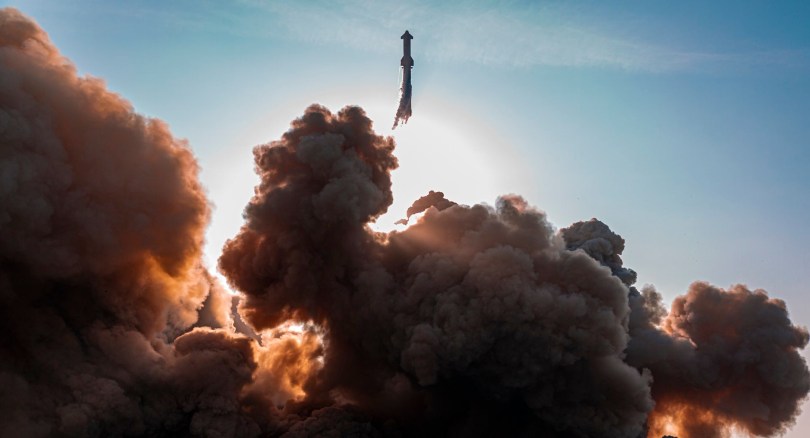


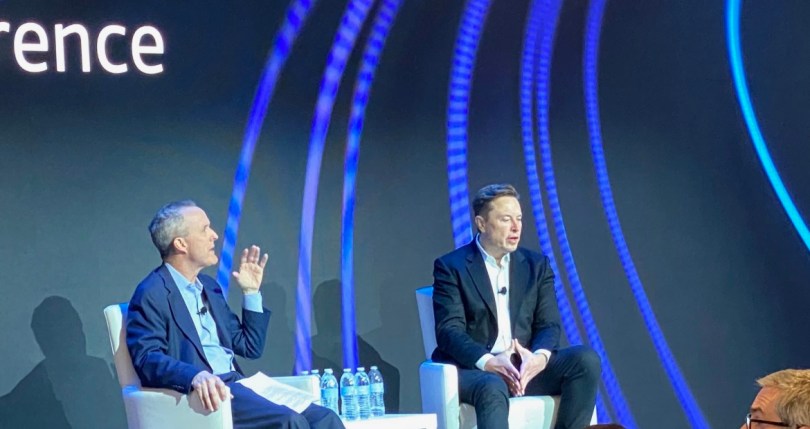
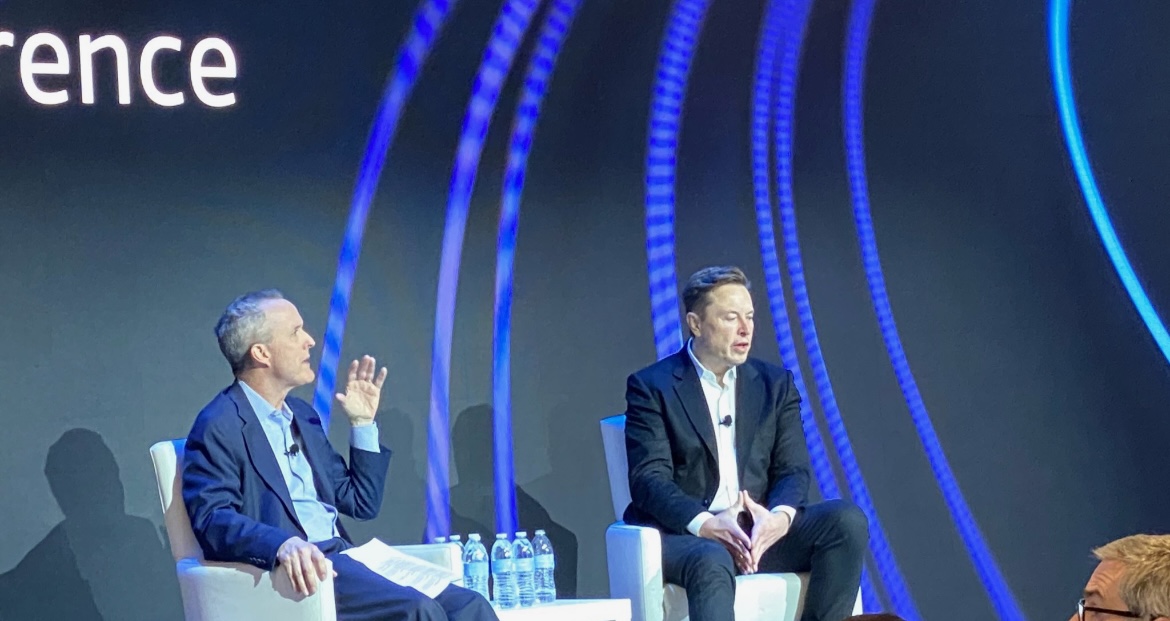


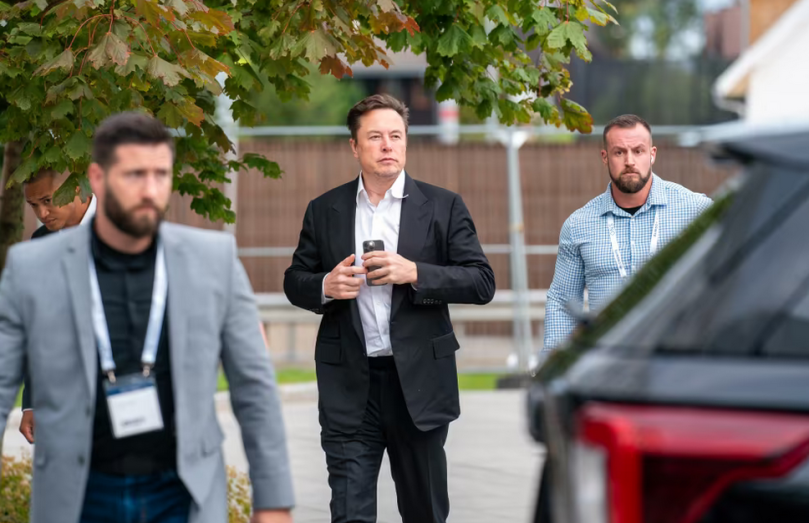
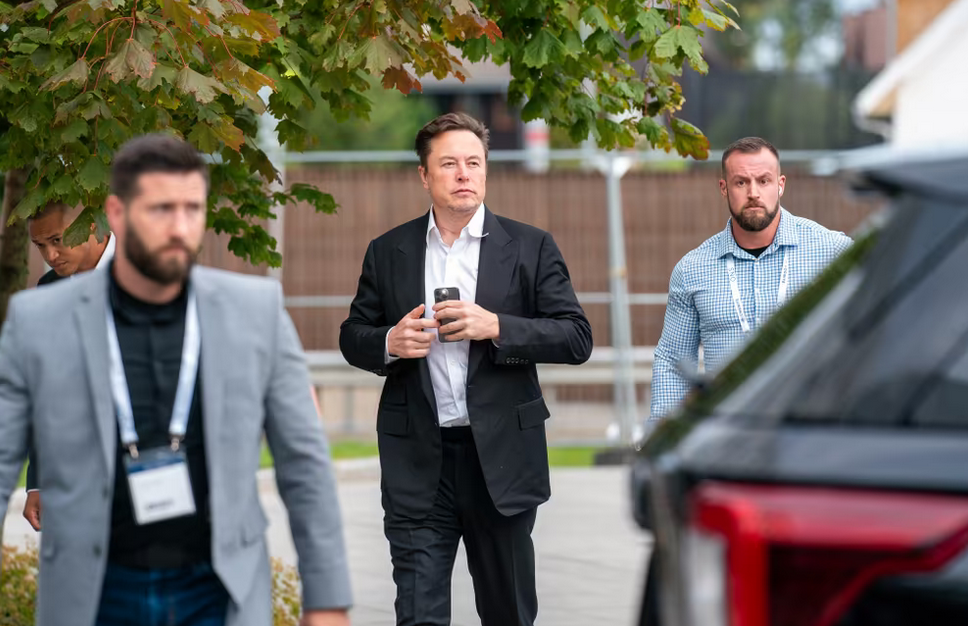
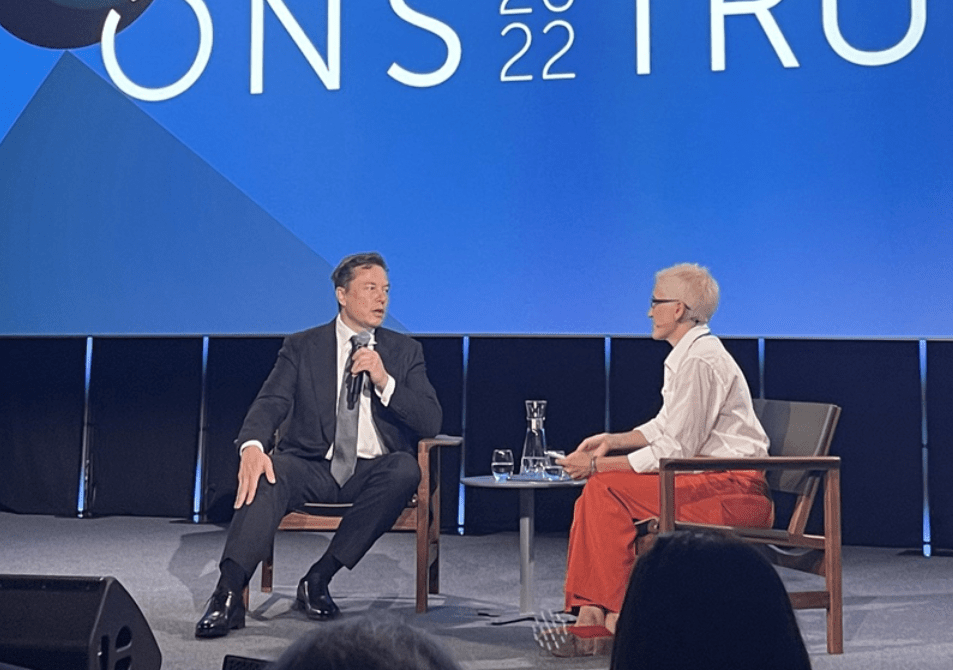
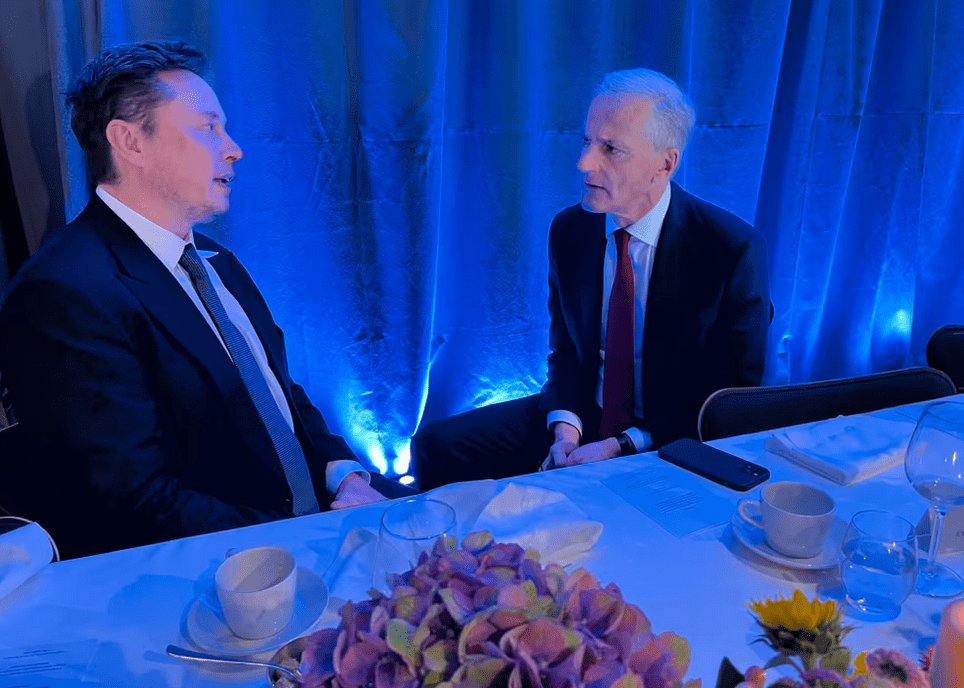
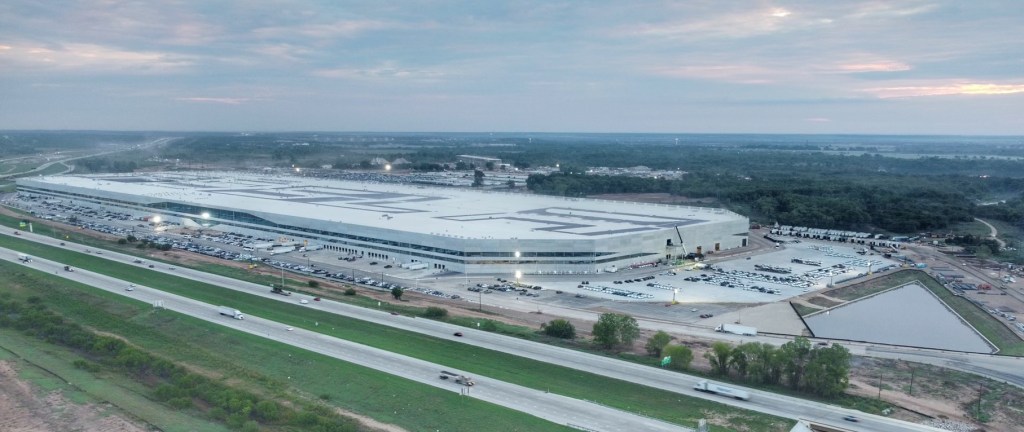
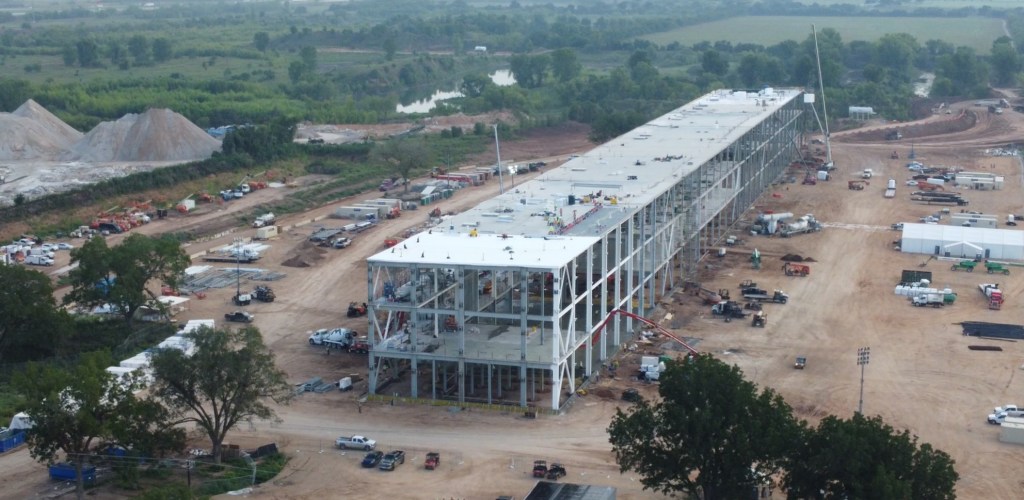
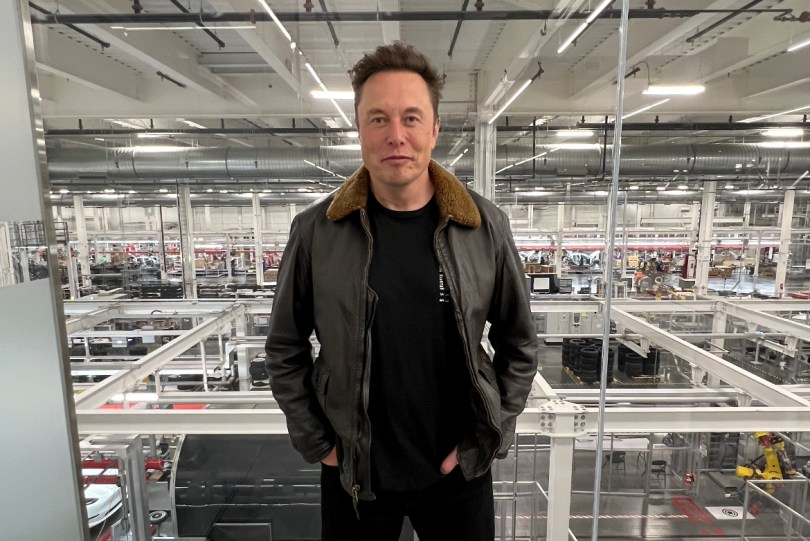

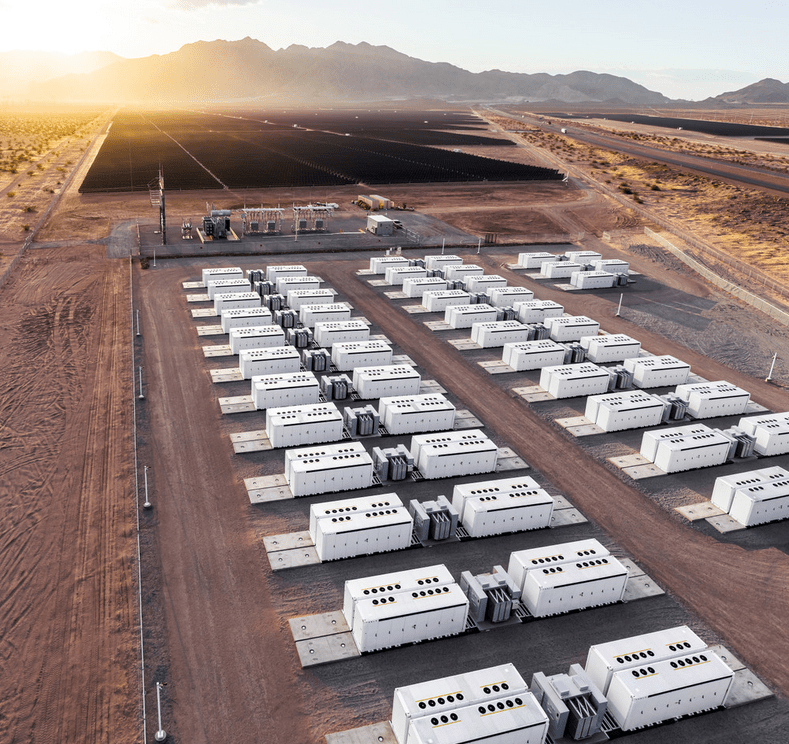
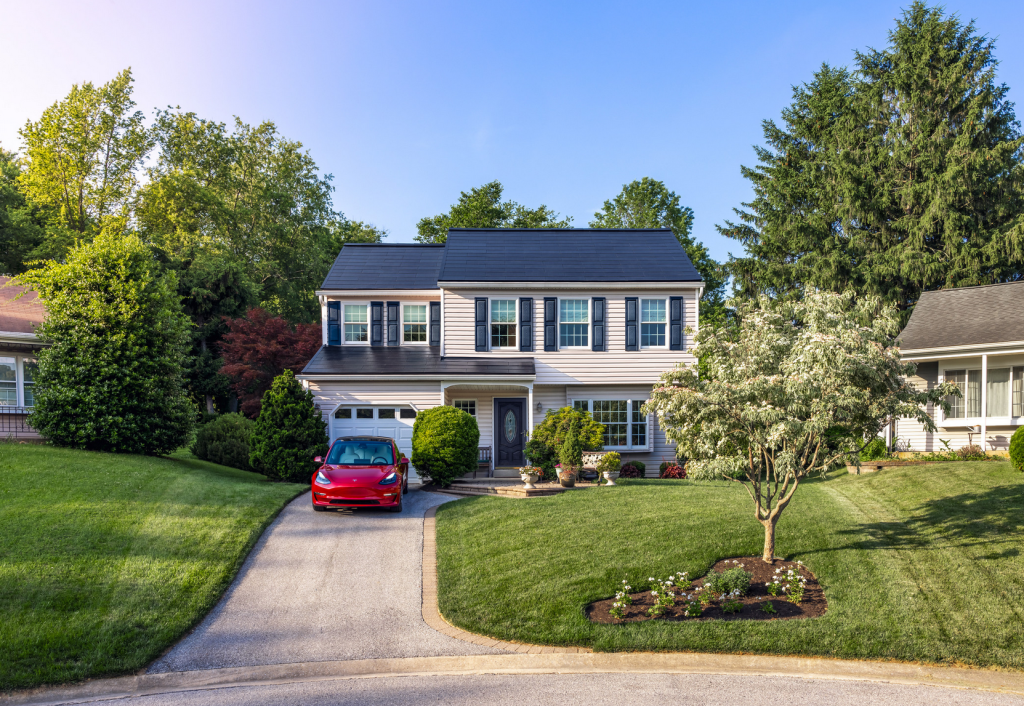
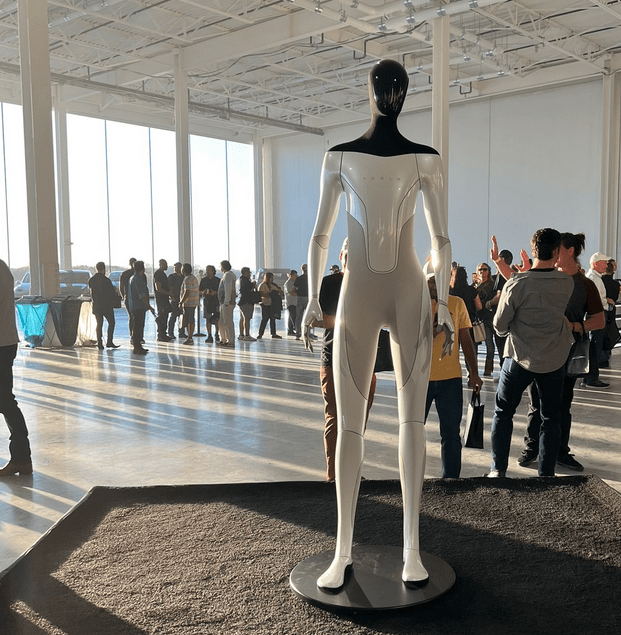
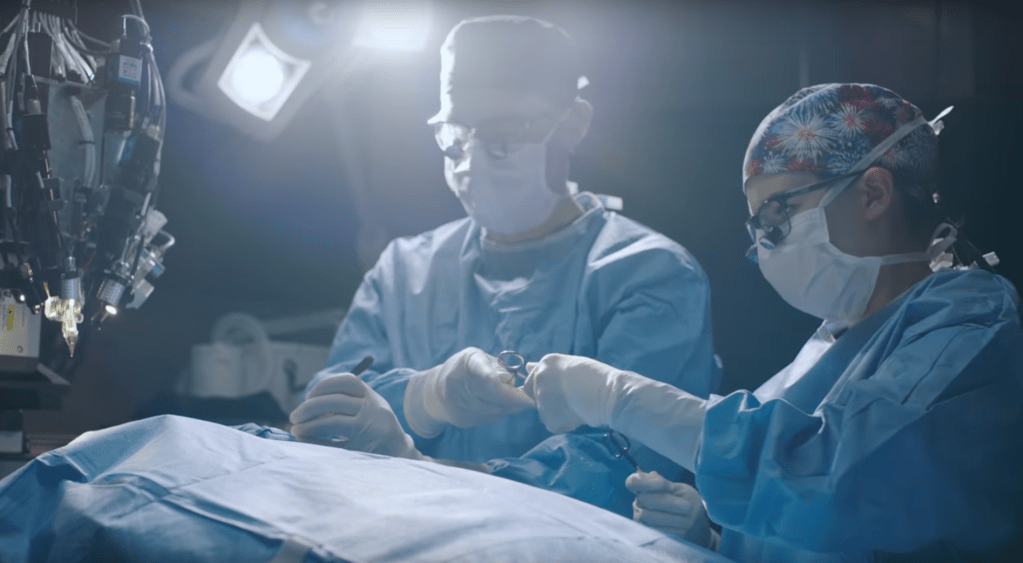
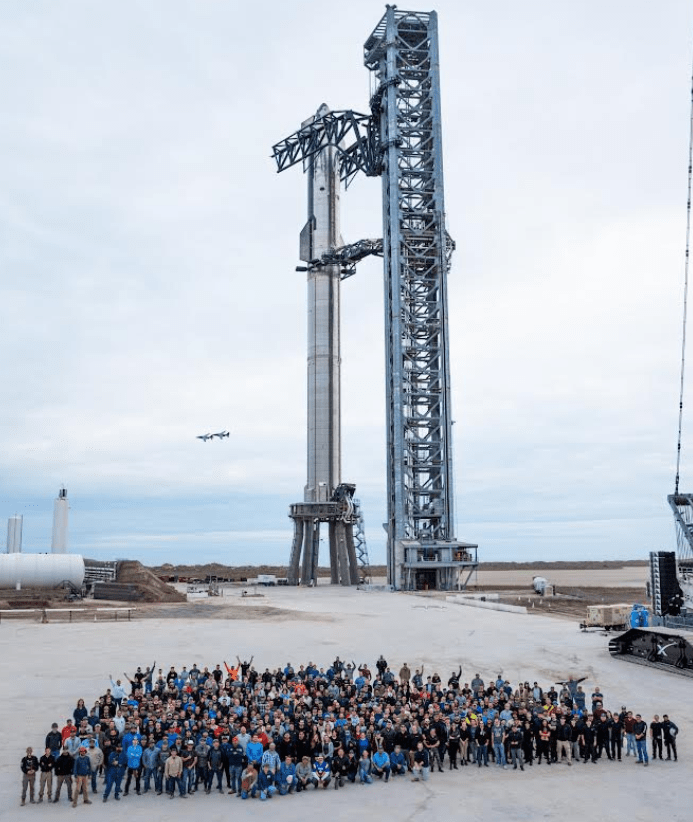
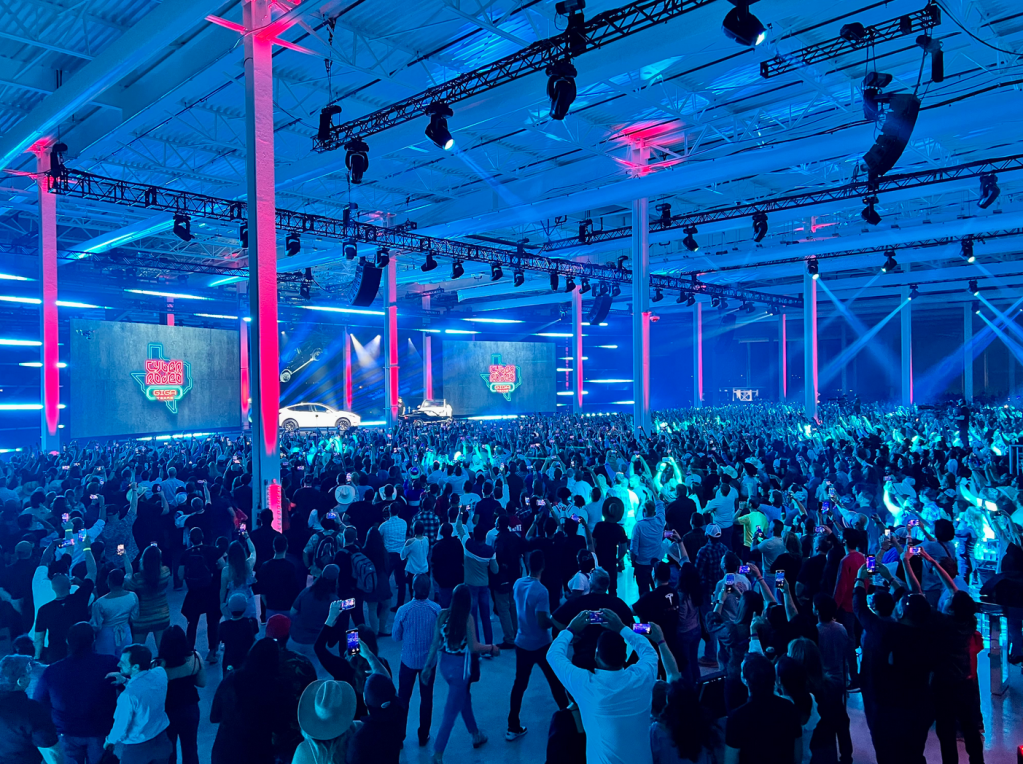



 whatsuptesla.com