What Elon Said About Turning Old HW3 Teslas into Robotaxis

(Austin, Texas) Every quarter I go through Tesla’s earnings calls for What’s Up Tesla, and there is a segment from yesterday’s April 22, 2026 Q1 call that stood out to me.

Elon Musk gave the clearest picture yet on what’s happening with older Hardware 3 (HW3) Model 3s, Model Ys, and other cars. He confirmed HW3 can’t reach unsupervised Full Self-Driving and laid out the upgrade path: new computer and new cameras.

But the part that fascinated me was when he talked about setting up microfactories in major cities because regular service centers simply can’t handle the volume. So take a little breather in your busy day. Let’s hang out for a few and walk through exactly what Elon said, plus my thoughts on what this could mean for timelines, jobs, costs, and the Robotaxi future, including a couple of ideas that popped into my head.

Elon Musk on the HW3 Upgrade Plan (Verbatim)

The question came up about how HW3 cars will ever get to unsupervised FSD. Elon was straightforward:

“Unfortunately, Hardware 3 — I wish it were otherwise, but Hardware 3 simply does not have the capability to achieve unsupervised FSD. We did think at one point it would have that, but relative to Hardware 4, it has only 1/8 of the memory bandwidth of Hardware 4, and memory bandwidth is one of the key elements needed for unsupervised FSD.”

Then came the practical plan for owners who bought FSD:

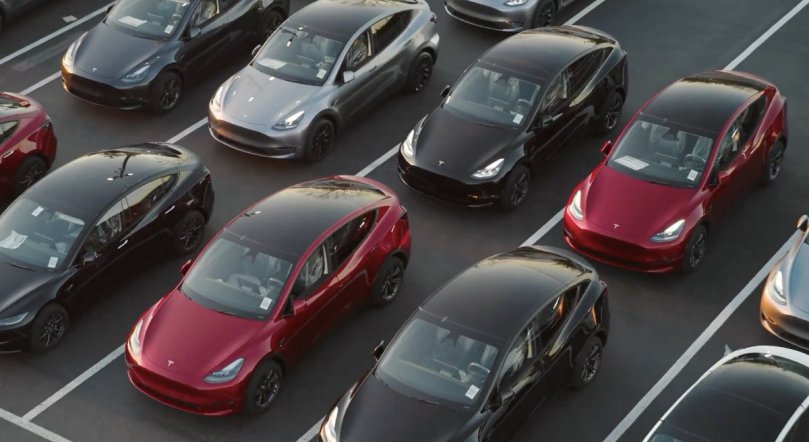
*“For customers that have bought FSD, what we’re offering is essentially a discounted trade-in for cars that have AI4 hardware, and we’ll also be offering the ability to upgrade the car to replace the computer — you also need to replace the cameras, unfortunately, to go to Hardware 4.

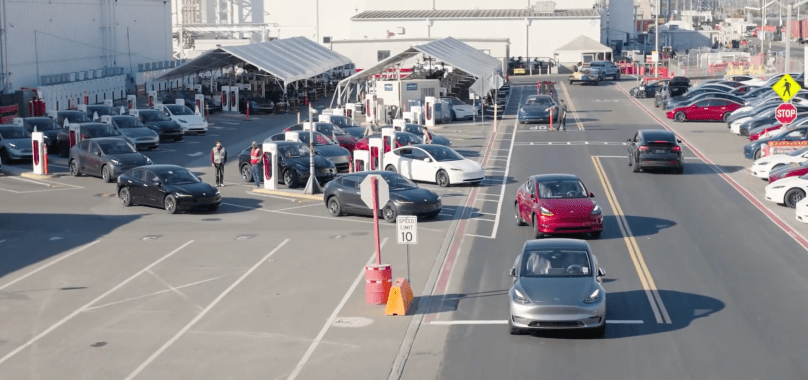
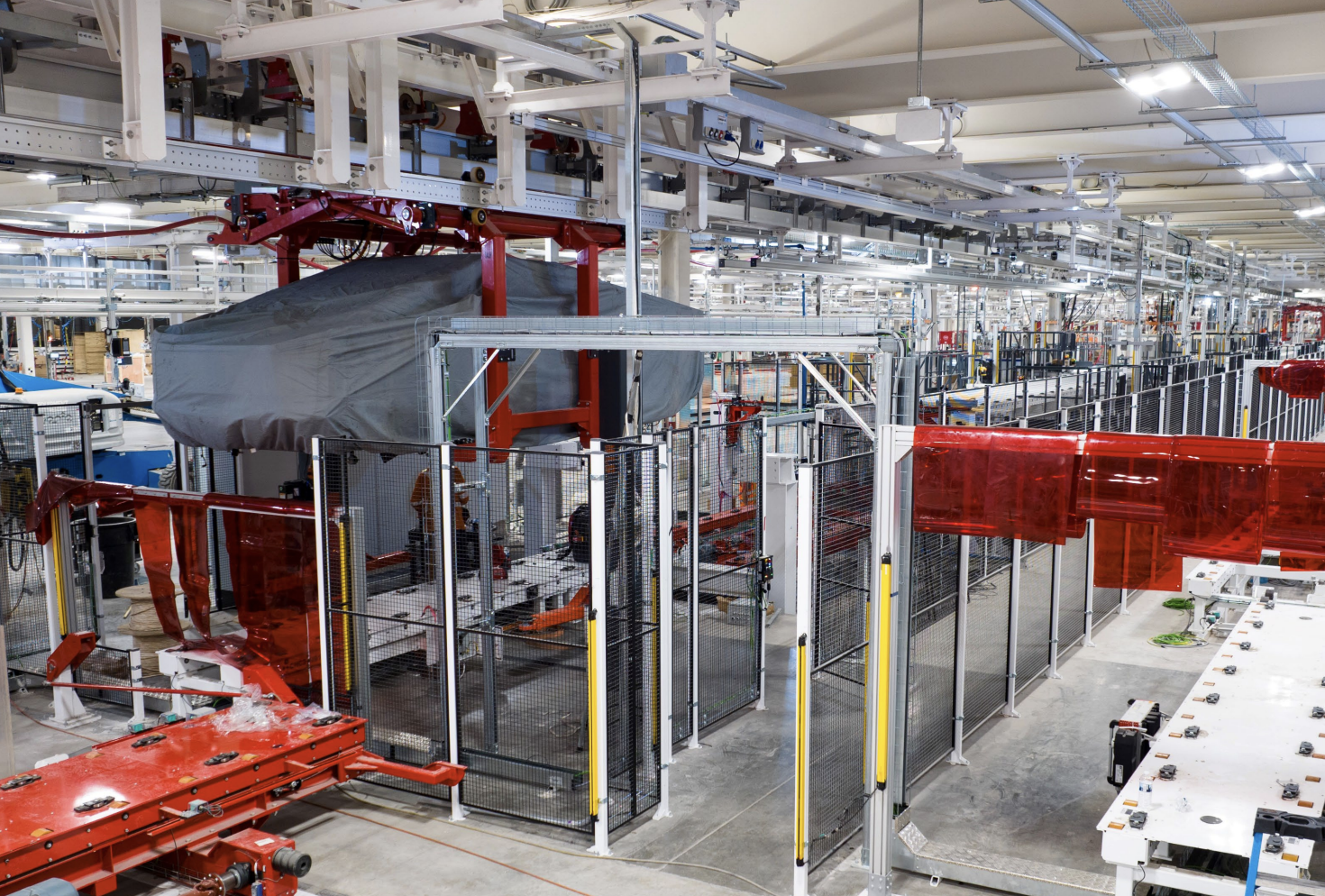
To do this efficiently, we’re going to have to set up microfactories or small factories in major metropolitan areas in order to do it efficiently. Because if it’s done just at the service center, it is extremely slow and inefficient. So we basically need like many production lines to make the change.

And I do think over time it’s going to make sense for us to convert all Hardware 3 cars to Hardware 4 because that’s what enables them to enter the Robotaxi fleet and have unsupervised FSD.”*

(Short note from the call: Ashok also mentioned a V14-lite build is still coming to HW3 cars in late June so supervised FSD keeps improving in the meantime.)

My Thoughts: Imagining the Microfactory Timeline

The microfactories and hardware upgrade (new computer and cameras) are being offered first to customers who bought FSD. However, Elon made it clear he sees this expanding over time:

“And I do think over time it’s going to make sense for us to convert all Hardware 3 cars to Hardware 4 because that’s what enables them to enter the Robotaxi fleet…”

So the program starts with FSD owners but is ultimately aimed at getting the entire old fleet Robotaxi-ready.

This feels like classic Tesla. Honest about the technical limits, then practical about fixing it at scale. The microfactories idea is huge. Here’s how I see it playing out (pure speculation based on how Tesla has rolled out other big projects):

Jobs boost for local economies

These won’t be giant Giga factories. They’ll be smaller microfactories or dedicated conversion lines in major metro areas. That means real local jobs, technicians, logistics teams, quality control, even small supply-chain roles, right in cities where Tesla owners live. It could be a nice economic win for places like Austin, LA, New York, Chicago, etc.

Pop-up tent style?

Elon has done quick-setup production lines before. Remember the famous pop-up tents he threw up in the Fremont parking lot during the early Model 3 ramp? Those temporary structures let Tesla crank out cars fast without waiting for permanent buildings. I could totally see the microfactories starting the same way: big white tents or modular setups that pop up quickly in parking lots or industrial zones near big cities. Fast, cheap, and scalable. Exactly Tesla’s style.

When will it actually happen?

My best guess: these microfactories start showing up once unsupervised FSD (or at least V15 on AI5) is fully proven and legal in more states, probably late 2026 or early 2027. Why? Because the whole point Elon mentioned is getting these cars into the Robotaxi fleet. No reason to rush the hardware swap until the software is truly ready and owners can start earning money (or Tesla can buy the upgraded cars back for the fleet).

Microfactories as Robotaxi certification stations

Here’s a vision I can’t stop thinking about: these microfactories could double as inspection and certification hubs for Tesla Robotaxi network.

Roll a HW3 car in for the hardware upgrade, and while they’re swapping the computer and cameras, the team also does a full interior and exterior check. Torn seats? Vape smell? Beer spills? The car wouldn’t pass for Robotaxi duty until it’s cleaned up and certified robot-ready. It would be the perfect one-stop shop: upgrade the brains and make sure the whole car meets initial fleet standards. Tesla could even offer a Robotaxi prep package that includes detailing and minor fixes so your upgraded car is immediately eligible to join the network (or be bought back by Tesla).

What about cost?

Elon could not possibly give specific numbers on the call. My rough guess based on past Tesla retrofits and how they’ve handled FSD commitments:

  • For owners who bought FSD, the retrofit (new computer and cameras) could end up being free or heavily discounted as part of honoring the original purchase.
  • For owners who didn’t buy FSD, it would likely be a paid upgrade.

Either way, even if it lands in the $2,000–$4,000 range, it’s still far cheaper than buying a new vehicle. And best of all, your existing Tesla stays yours with full unsupervised capability and the potential to earn money in the Robotaxi fleet.

Tesla desires to convert all HW3 cars over time.

The microfactories plan (possibly with pop-up tent speed and built-in certification) shows is fleshing out a plan for turning millions of existing vehicles into Robotaxis.

For the full call replay and transcript, head to Tesla IR ir.tesla.com or the Say Technologies Q&A page. The exact HW3 section is pure gold.

Thanks for reading, and keep believing in the mission!
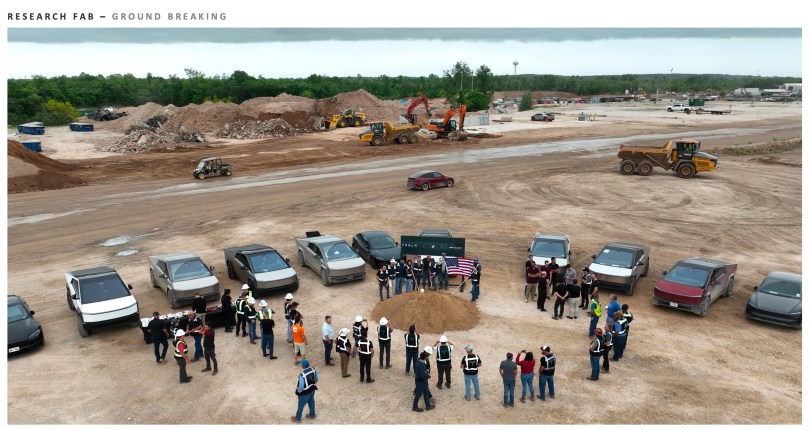
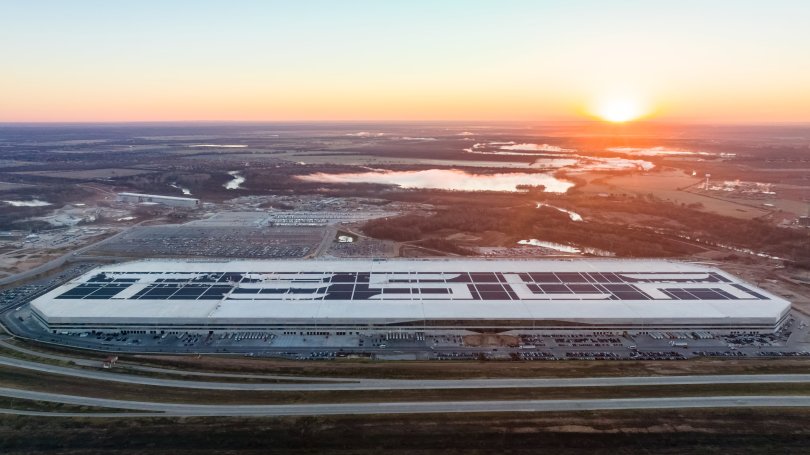
Research Fab Austin Groundbreaking

Tesla Q1 2026 Earnings Call: Elon Musk’s Vision for the AI & Robotics Future (April 22, 2026)

Date: April 22, 2026

Format: Audio-only webcast (Q&A via Say Technologies platform)

Focus: Strategic outlook on AI, autonomy, Optimus, Robotaxi, and massive future investments (financial details covered separately in Tesla’s Q1 Update deck).

Tesla held its Q1 2026 Financial Results and Q&A webcast on April 22, 2026. As always, the call provided invaluable direct insight into the company’s direction straight from CEO Elon Musk, alongside other executives. These moments are especially precious—capturing Elon’s unfiltered thinking on the ambitious projects that define Tesla’s next chapter.

Participants

  • Travis Axelrod, Head of Investor Relations (moderator)
  • Elon Musk, Co-Founder & CEO
  • Vaibhav Taneja, CFO
  • A number of other Tesla executives (specific names beyond the above not individually detailed in the public audio/webcast notes)

The session began with opening remarks from Elon, followed by brief comments from Vaibhav, then moved into Q&A drawn from retail investor submissions (via Say) and the queue.

High-Level Summary of Elon’s Key Themes

Elon described 2026 as “a very exciting year” defined by substantially higher capital expenditures to fuel growth in AI, manufacturing, vehicles, and especially robotics. He reiterated his long-held conviction that Optimus will be Tesla’s (and the world’s) biggest product ever.

Key emphases included:

  • Heavy investment in core tech (battery, powertrain, AI software/training, chip design) and supply chain strengthening.
  • Cautious, safety-first expansion of unsupervised Full Self-Driving and Robotaxi operations (zero incidents/injuries to date).
  • The classic “stretched-out S-curve” reality for new production ramps (Cybercab, Semi, Optimus).
  • Major AI hardware progress (AI5 taped out, AI6 and Dojo 3 already in discussion).
  • Optimus production starting slowly in Fremont later this year (repurposing lines after S/X), with meaningful ramp in 2027; V3 design nearly ready for demonstration.

He stressed that all Tesla vehicles remain autonomy-ready and incredible value, while energy storage demand (Megapack) remains very strong.

Verbatim: Elon Musk’s Opening Remarks

“Thank you. I think we’ve got a very exciting year ahead of us with 2026. We’re going to be substantially increasing our investments in the future, so you should expect to see a very significant increase in capital expenditures. I think it’s well justified for a substantially increased future revenue stream. Obviously, Tesla is not alone in this. I think you’ve seen in most, if not all, certainly the major technology companies substantially increasing their capital investments. We’re going to be doing the same. I think it’s going to pay off in a very big way.

We’re investing in and improving our core technologies, battery powertrain, AI software, AI training, chip design, laying the groundwork for significantly increased manufacturing production. We are also strengthening our supply chain across the board, batteries, energy, AI, silicon, everything.

Laying the groundwork, like I said, for what we expect to be a significant increase in vehicle production in the future. Of course, a very significant increase. Well, actually releasing Optimus, but increasing our internal production for testing, and then probably being able to have Optimus be useful outside of Tesla sometime next year. As you’ve heard me say a few times, I think Optimus will be our biggest product, not just Tesla’s biggest product ever, but probably the biggest product ever. I remain convinced of that conclusion.

On our vehicle side, it’s always, I think, worth noting that a Tesla car is incredible value for money, and they’re all autonomy-ready, depending on what part of the world you’re in. The supervised Full Self-Driving is getting extremely good. We have just started production of Cybercab, and we’ll begin production of our Tesla Semi soon.

Now, I should say, whenever you have a new product with a completely new supply chain, new everything, it’s always a stretched-out S curve, so you should expect that initial production of Cybercab and Semi will be very slow, but then ramping up, and going exponential towards the end of the year and certainly next year. In fact, we’ll be ramping up production of all vehicles, in all factories, to the best of our ability through the balance of this year.

On the energy front, the United States and the whole world will need a lot of energy storage to meet growing electricity demand. Demand for our Megapack is very strong. We’re excited to begin production of Megapack 3 later this year in our new world-class factory outside Houston.

For Full Self-Driving and Robotaxi, version 14.3 was a major architectural update, and we have a whole pipeline of major improvements to Full Self-Driving that we believe will lead to unsupervised Full Self-Driving being available anywhere in the world that it is legal to do so. Then there’s a version 15, hopefully by the end of this year, but certainly by early next year. That will be a complete overhaul of the software architecture, and will run on AI5. At that point, we’re really just increasing the safety level of FSD above human safety level even more, meaning I think even within version 14, we’re significantly safer than human, but V15 will take that to another level. We’ve expanded Robotaxi to Dallas and Houston, using the same software source in the Bay Area.

The limiting factor for expansion is really rigorous validation, making sure things are completely safe. We don’t want to have a single accidental injury with the expansion of Robotaxi, and we have, to the credit of the team, not had a single one to date.

Optimus, we’re preparing Fremont for start of production later this year with Optimus. Again, totally new supply chain, totally new technology, so therefore, the production S curve is always very slow in the beginning. We’ll ramp up to significant numbers next year, and we’re constructing a second Optimus factory at our Giga Texas location, and that will probably start production around summer next year. The V3 Optimus design is almost ready to demonstrate. I think we want to just make sure it’s polished. Like it works functionally, but there’s some aesthetic elements that need to be finalized, and I think probably middle of this year, we should be able to show it off. We’re also a little hesitant to show V3 off because we find our competitors do a frame-by-frame analysis whenever we release something and copy everything they possibly can. I think there’s some value to not showing new technology until it’s close to production.

Congratulations again to the Tesla AI chip team for taping out AI5. That’s going to be a great chip. I think probably the best AI inference chip for edge compute that exists. Certainly, I think unequivocally the best value for money. Team did a great job, and we already have a lot of momentum for designing AI6, and we’ve begun to discuss ideas for Dojo 3. This is all very exciting.

We’ve also finalized plans for the research chip fab on the Giga Texas campus, and we’ll start construction of that this year.

In conclusion, Tesla is working on a lot of large, ambitious projects. They’re all very challenging, but I think they’re going to be revolutionary. This is what the team does best, solve the hardest problems and build amazing products. I’d like to thank the Tesla team for all their hard work and thank you to all of our supporters.”

Selected Verbatim Highlights from Elon’s Q&A Responses

Elon fielded questions on production realities, timelines, safety, and AI architecture. Here are key excerpts (lightly contextualized for flow):

On Optimus V3 reveal, production start (Fremont S/X line transition), and ramp challenges: “Well, as I was saying, what we’ve found is that when we’ve unveiled various Optimus versions, we’ve found out our competitors literally do a frame-by-frame analysis and copy everything we’re doing. I think we want to push the Optimus 3 unveil maybe closer to production. Start of production is, we’re assuming, somewhere around the late July, August timeframe. … Frankly, if we’re able to go from stopping production on one line, dismantling that entire line, reinstalling a whole new line, and turning that on in a matter of 4 months, that is an insanely fast speed. I don’t think any other company on Earth has ever done that before… It is impossible to predict these things. When you have a brand-new product and an entirely new production line, and you have 10,000 unique items, all of which have to go right to ramp production, it’ll move as fast as the least lucky, slowest, dumbest part in the entire 10,000… Initial skills will be, obviously, we’re going to start with simple skills in the factory and then build up from there.”

On unsupervised FSD/Robotaxi expansion and safety: “Well, we certainly hope to have unsupervised FSD or Robotaxi operating in, I don’t know, a dozen or so states by the end of this year. Initially, we’re taking a very cautious approach… [we haven’t had any injuries and certainly no fatalities to date with the unsupervised FSD and Robotaxi expansion, and we want to keep it that way].”

On Optimus AI architecture (local intelligence + orchestration): “Well, we think we can put a lot of intelligence locally in the robot and it certainly needs to be enough intelligence that if the robot gets disconnected, like if it’s a bad cellular signal or there isn’t Wi-Fi, you know, Optimus can’t just get stuck. It needs to have enough local intelligence that it can still do useful things, even if it loses the connection, kind of like the car. The car does not need any cellular or Wi-Fi connection to be able to drive safely. Now, I guess you can think of like Optimus needs kind of a manager to tell it what to do, broadly speaking… so you know i think you need kind of a an orchestration ai which uh you know grok would be good for orchestration um and and then for you know for optimist’s voice you know having um a low latency intelligent voice ai grok is actually very good for that… But I would expect the amount of interaction apart from like the voice stuff and asking complicated questions of the robot that necessarily needs a large AI model to answer the Gronk would probably have about as much interaction with Optimus as a manager would have with the people on their team.”

(Additional topics included HW3 upgrade paths for unsupervised capability, broader AI chip progress, and the new research chip fab at Giga Texas.)

Closing Thoughts

The call reinforced Tesla’s pivot toward AI, autonomy, and humanoid robotics as the dominant long-term drivers, with near-term production ramps following realistic S-curve timelines and an unwavering focus on safety and execution. Elon’s direct words continue to provide the clearest window into that vision.

For the extremely detailed full transcript (including all speakers, operator notes, and every Q&A), check these reliable sources:

The Best Q&A Ever – Tesla Q4 2025 Earnings Call Highlights and Transcript

Posted by Gail Alfar | Austin, Texas | [Backdated: February 2, 2026]

I listened live to the Tesla Q4 2025 and Full Year 2025 Earnings Call on January 28, 2026, and wow — this one felt different. The energy was high, the vision was bold, and the Q&A session was hands-down the best I have ever heard. Elon and the team were clear, optimistic, and laser-focused on the massive opportunities ahead in autonomy, robotics, and energy.

If you’re new to my coverage, I love pulling out the key moments, sharing verbatim quotes from Elon, and adding my real-time thoughts as someone who drives with FSD every day here in Austin. Let’s dive in!

Elon Musk’s Opening Remarks (Full Verbatim)

Here’s the full transcription of Elon’s opening comments that I captured live (and cleaned up slightly for readability):

“Thanks, Travis. So we’ve updated the Tesla mission to Amazing Abundance. And this is intended to send a message of optimism about the future. I think we’re most likely headed to an exciting, amazing era of abundance. And I think with the continued growth of AI and robotics, I think we actually are headed to a future of universal high income. Not universal basic income, but universal high income.

There’s going to be a lot of change along the way, but that is what I see as the most likely outcome. So I think it makes sense to update Tesla’s mission to reflect that goal. Obviously, along the way, we are going to keep improving safety, driving down the cost of goods, and getting people access to anything they need without compromise.”

Key Highlights from the Call

  • Shift to Autonomy & Robotics: Tesla is winding down legacy Model S/X production to convert space at the Fremont factory into a line capable of producing up to 1 million Optimus robots per year. Optimus 3 is coming soon, and the focus is clearly moving toward humanoid robots at scale.
  • Robotaxi Progress in Austin: We’ve begun unsupervised (no safety monitor) Robotaxi rides for customers in Austin on a limited basis. The fleet is growing, and expansion to more cities (Dallas, Houston, Phoenix, Miami, Orlando, Tampa, Las Vegas) is planned for the first half of 2026. Elon noted the fleet is already “well over 500” vehicles carrying paid customers between Austin and the Bay Area.
  • FSD Adoption: Nearly 1.1 million paid FSD customers globally. Unsupervised FSD is already operating at 100% in testing, and Tesla is being very cautious with public rollout — but the progress is real and accelerating.
  • Energy Storage: Record deployments again. Energy continues to be a bright spot with strong revenue growth.
  • Overall Tone: Heavy emphasis on AI compute, in-house chip development, and preparing for the next phase of growth. Margins saw sequential improvement in automotive despite lower deliveries, and the long-term vision remains incredibly exciting.

The Best Q&A Ever – My Favorite Moments

This is where the call really shined. The questions were thoughtful, and Elon’s answers were direct, detailed, and full of optimism. Here are some standout excerpts with my live reactions:

  • On unsupervised Robotaxi rides in Austin: Elon confirmed they’ve started paid rides with no safety monitor and no chase car in parts of Austin. (As an Austin resident who’s been watching this closely, this felt like a huge milestone!)
  • On Optimus production: Converting Fremont lines to target a million units a year of Optimus 3. This could be transformative not just for Tesla, but for the entire economy.
  • On the future: Repeated emphasis on “Amazing Abundance” and universal high income through AI and robotics. Elon addressed doubters head-on but stayed confident in Tesla’s path.

The back-and-forth felt more open and energetic than previous calls — lots of laughter, clear data points, and a real sense that the team is excited about what’s coming in 2026 and beyond.

(If you want the complete word-for-word Q&A, the full professional transcripts are available here: Motley Fool Full Transcript Seeking Alpha Full Transcript)

My Take as an Austin Tesla Owner

Living in Austin and using FSD daily, this call hit home. Seeing unsupervised Robotaxi rides starting right here in my city makes the future close. The combination of autonomy + Optimus + energy storage is going to create opportunities we can barely imagine today.

Tesla is building the foundation for an era of abundance. I left the call feeling more optimistic than ever about what’s ahead for humanity.

Previous Tesla Earnings Write-Ups:

Thanks for reading, and let’s keep riding toward that amazing abundance together!

"I see a path. I'm not saying it's an easy path but I see a path of Tesla being the most valuable company in the world by far." - Elon Musk

Tesla’s Path Forward: Q4 2024 and FY 2024 Earnings Call (Elon’s Conversation)

Austin, Texas.

“I see a path. I’m not saying it’s an easy path but I see a path of Tesla being the most valuable company in the world by far.” – Elon Musk

In this article we’ll look at how Tesla’s value is immense, as what Tesla is building will improve efficiency in all areas of human life, and do it at scale, making it affordable. Elon Musk outlined much of this is in this Shareholder meeting, so although he did not make mention of Master Plan 3, this was a big progress report on Master Plan 3.

Elon’s conversation focused on manufacturing at scale, AI, and robotics. Note: This is the January 29, 2025, Tesla Annual Shareholder Earnings Call.

Elon is More that Doubling Investments in Tesla

“Doubling is not even enough. We made many critical investments in 2024 in manufacturing, AI and robotics that will bear immense fruit in the future.” – Elon Musk

When discussing Tesla’s Full Self-Driving (FSD) technology, Elon emphasized its market impact, saying, “I think the interest level from other manufacturers to license FSD will be extremely high once it is obvious that unless you have FSD, you’re dead.”

The Misconception of Easy Production vs. the Reality

Elon: “Yeah, prototypes are trivial basically. Prototypes are easy, production is there for many years. The problem is there’s like those who have never been involved in production or manufacturing somehow think that may — once you come up with some eureka design, that you magically can make 1 million units a year, and this is totally false. There needs to be some Hollywood story or where they show actually the problem is manufacturing.”

Hollywood Does Not Make Movies Like This, But They Should

Elon: “I’ve never even heard of one (Hollywood story that shows how to win at manufacturing). It just doesn’t fit the narrative. The Hollywood thing is like some lone inventor in a garage goes EUREKA! And suddenly, it files a patent, and suddenly, there’s millions of units. And like I’m listening to the guys, we’re missing really 99% of the story. One percent is — a product is 1% inspiration, 99% perspiration. Hollywood shows you the 1% inspiration and minus — but forgets about the 99% perspiration of actually figuring out how to make that initial prototype manufacturable and then manufacture at high volume such as reliable, low cost, consistent, and doesn’t break down all the time and that is 100 times more difficult at least than the prototype.”

Austin, Texas Will Experience Unsupervised Full Self-Driving as a Paid Service in June

“In fact, it could drive you. It’s a self-driving wolf.” – Elon Musk

Elon’s timeline was a surprise for many, as he plans to initially launch unsupervised FSD in Austin in June. For me personally, it makes sense. I live in Austin, use FSD everyday, it works astonishingly well!

“We’re going to be launching unsupervised full self-driving as a paid service in Austin in June.” – Elon Musk

Elon: “And I am like — setting up for what I think will be an epic 2026 and a ridiculous ’27 and ’28, ridiculously good. That is my prediction. As you know, very few people understand the value of self-driving and our ability to monetize the fleet. Some of these things I’ve said for quite a long time, and I know people have said, Well, Elon, the boy who cried like a wolf like several times. But I’m telling you, there’s a damn wolf this time and you can drive it. In fact, it could drive you. It’s a self-driving wolf.

For a lot of people, like their experience of Tesla Autonomy is like if it’s even a year old, if it’s even two years old, it’s like meeting someone when they’re like a toddler and thinking that they’re going to be a toddler forever. But obviously not going to be a toddler forever. They grow up. But if their last experience was like, Oh, FSD was a toddler. It’s like, well, it’s grown up now. Have you seen it? It’s like walks and talks. And that’s really what we’ve got.

And it’s difficult for people to understand this because human intuition is linear as opposed to what we’re seeing is exponential progress. So, that’s why my No. 1 recommendation for anyone who doubts is simply try it. Have you tried it? When’s the last time you tried it? And the only people who are skeptical, the only people who are skeptical are those who have not tried it.”

When addressing a question about discussions with other auto companies regarding the licensing of Tesla's FSD, Elon explained there is interest.

When addressing a question about discussions with other auto companies regarding the licensing of Tesla’s FSD, Elon explained there is interest.

Interest in Tesla’s Autonomous Tech

Elon: “Yeah. What we’re seeing is at this point, significant interest from a number of major car companies about licensing Tesla full self-driving technology.”

Analyzing Tesla’s Hardware

Elon: “What we’ve generally said is the best way to know what to do is take one of our cars apart. And then you can see where the placement of the cameras are, what the thermal needs are of the Tesla AI inference computer.”

Optimus Development Timeline

  • Elon: “With regard to Optimus, obviously, I’m making these revenue predictions that sound absolutely insane, I realize that. But they are — I think they will prove to be accurate. Now with Optimus, there’s a lot of uncertainty on the exact timing because it’s not like a train arriving at the station for Optimus. We are designing the train at the station and in real time while also building the tracks.”

Production Goals for Optimus:

  • Elon: “The normal internal plan calls for roughly 10,000 Optimus robots to be built this year. Will we succeed in building 10,000 exactly by the end of December this year? Probably not, but will we succeed in making several thousand? Yes, I think we will. Will those several thousand Optimus robots be doing useful things by the end of the year? Yes, I’m confident they will do useful things.”

Feedback Loop for Optimus Development

Elon: “Those Optimus in use at the Tesla factories for production design 1 will inform how we will change for production design 2, which we expect to launch next year.”

The Immense Scaling of Optimus

Elon: “And our goal is to ramp up Optimus production faster than maybe anything has ever been ramped, meaning like aspirationally in order of magnitude, ramp per year. Now if we aspire to an order of magnitude ramp per year, perhaps, we only end up with a half order of magnitude per year. But that’s the kind of growth that we’re talking about. It doesn’t take very many years before we’re making 100 million of these things a year if you go up by let’s say, a factor by 5x per year.”

How Tesla Solved Challenges in Developing Optimus

Elon: “But we do need to be — this is an entirely new supply chain, it’s entirely new technology. There’s nothing off the shelf to use. We tried desperately with Optimus to use any existing motors or any actuators, sensors. Nothing worked for a humanoid robot at any price.”

Custom Design for Optimus

Elon: “We had to design everything from physics-first principles to work for a humanoid robot and with the most sophisticated hand that has ever been made before by far. Optimus will be also able to play the piano and be able to thread a needle. I mean, this is the level of precision no one has been able to achieve. And so, it’s really something special.”

Future Value of Optimus to Tesla

Elon: “So, yes. And my prediction, long term, is that Optimus will be overwhelmingly the value of the company.”

Additional Statements on Optimus

Elon: “Optimus is not design-locked. So, let’s say like we’re designing the train as it’s going to — we’re redesigning the train as it’s going down the tracks while redesigning the tracks and the train stations.”

Vision for Optimus

  • Elon: “I’d like it to be the beginning of next year but maybe it’s more like the middle of next year,” (referring to the launch of an enhanced version of Optimus)
  • Elon: “The current line that we’re designing is for roughly 1,000 units a month of Optimus robots. The next line would be for 10,000 units a month. The line after that would be for 100,000 units a month.”
  • Elon: “I think probably with Version 2, it is a very rough guess because there’s so much uncertainty here, very rough guess that we start delivering Optimus robots to companies that are outside of Tesla in maybe the second half of next year, something like that.”
  • Elon: “But like I said, this is such an exponential ramp that it will go from no one’s receiving humanoid robots to these things like coming out like crazy. We can’t build enough. We’re always going to be in the — we can’t build enough situation. Demand will not be a problem even at a high price.”
  • Elon: “And then I said like, once we start — once we’re at a steady state of above 1 million units a year, I think the production — I’m confident at 1 million units a year, that the production cost of Optimus will be less than $20,000.”
  • Elon: “If you compare the complexity of Optimus to the complexity of a car, so just the total mass and complexity of Optimus is much less than a car. So, I would expect that at similar volumes to say the Model Y, which is over 1 million units a year, that you’d see Optimus be, I don’t know, half the cost or something like that.”
  • Elon: “What the price of Optimus is a different matter. The price of Optimus will be set by the market demand.”
Utility of Autonomous Cars

Utility of Autonomous Cars

“Once that car is autonomous, my rough estimate is that it is in use for at least a third of the hours per week, so call it, 50, maybe 55 hours of the week.” – Elon Musk

Current Utilization of Passenger Cars

Elon: “So, a car goes — a passenger car typically has only about 10 hours of utility per week out of 168, a very small percentage.”

Projected Increase in Car Utility with Autonomy

Elon: “Once that car is autonomous, my rough estimate is that it is in use for at least a third of the hours per week, so call it, 50, maybe 55 hours of the week. And it can be used for both cargo delivery and people delivery. So, even, let’s say, people are asleep but you can deliver packages in the middle of the night or resupply restaurants or whatever the case may be, whatever people need at all hours of the day or night.”

Economic Impact of Autonomous Vehicles

Elon: “That same asset, the thing that — these things that already exist with no incremental cost change, just a software update, now have five times or more the utility than they currently have. I think this will be the largest asset value increase in human history. Maybe there’s something bigger but I just don’t know what it is. And so, people who would look in the rearview mirror are looking for past precedent, except I don’t think there is one.”

Everyone Should Try Autonomous Driving

Elon: “So, look, the reality of autonomy is upon us. And I repeat my advice, try driving the car or let it drive you. So, now it works very well in the U.S., but of course, it will, over time, work just as well everywhere else.”

Tesla’s Growth Plans: Batteries

Elon: “Yes, so we’re working hard to grow our annual volumes. Our current constraint is battery packs this year but we’re working on addressing that constraint. And I think we will make progress in addressing that constraint. And then things are really going to go ballistic next year and really ballistic in ’27 and ’28.”

Advancement in Full-Self-Driving (FSD) Technology

Elon: “So, a bit more on full-self-driving. Our Q4 vehicle safety report shows continued year-over-year improvement in safety for vehicles. So, the safety numbers, if somebody has supervised full self-driving turned on or not, the safety differences are gigantic. And people have seen the immense improvement with Version 13, and with incremental versions in Version 13 and 14 is going to be yet another step beyond that, that is very significant. We launched the Cortex training cluster at Gigafactory Austin, which was a significant contributor to FSD advancement.”

Training Infrastructure for AI/Optimus Development

Elon: “And we continue to invest in training infrastructure out of Texas headquarters. So, the training needs for Optimus humanoid robot, are probably at least ultimately 10x of what is needed for the car, at least to get to the full range of useful role. You can say like how many different roles are there for a humanoid robot versus a car? A humanoid robot has probably 1,000 times more uses and more complex things than in a car. That doesn’t mean the training scales by 1,000 but it’s probably at 10x.”

Economic Potential of Optimus Robots

Elon: “Now you can do this progressively, so it doesn’t mean like Tesla’s going to spend like $500 billion in training computer because we will obviously train Optimus to do enough tasks to match the output of robots. And obviously, the cost of training is dropping dramatically with time. But it’s one of those things where I think long-term, Optimus has the potential to be north of $10 trillion in revenue, like it’s really bananas. So, that you can obviously afford a lot of training compute in that situation.”

Investment vs. Revenue in AI Training

Elon: “In fact, even $500 billion training compute in that situation will be quite a good deal. Yes, the future is going to be incredibly different from the past, that’s for sure. We live at this unbelievable inflection point in human history.”

Proof of Concept for Unsupervised FSD

Elon: “So, yes, so the proof is in the pudding. So, we’re going to be launching unsupervised full self-driving as a paid service in Austin in June. So, I talked to the team. We feel confident in being able to do an initial launch of unsupervised, no one in the car, full self-driving in Austin in June. We already have Teslas operating autonomously unsupervised full self-driving at our factory in Fremont, and we’ll soon be doing that at our factory in Texas.”

Operational Details of Autonomous Vehicles at Factories

Elon: “So, thousands of cars every day are driving with no one in them at our Fremont factory in California, that we’ll soon be doing that in Austin and then elsewhere in the world, the rest of our factories, which is pretty cool. And the cars aren’t just driving to exactly the same spot because, obviously, they want to collide at the same spot. The cars are actually programmed with where — with what lane they need to park into to be picked up for delivery. So, the drive from the factory end of line to their destination parking spot and to be picked up for delivery to customers and then doing this reliably every day, thousands of times a day.”

Timeline for Unsupervised FSD in Public

Elon: “It’s pretty cool. Like I said, these Teslas will be in the wild with no one in them in June in Austin. So, what I’m saying is this is not some far-off mythical situation. It’s literally five, six months away, five months away kind of thing.

Approach to Safety and Expansion

Elon: “And while we’re stepping — putting our toe in the water gently at first just to make sure everything is cool, our solution, our sort of solution is a generalized AI solution. It does not require high precision maps of locality. So, we just want to be cautious. It’s not that it doesn’t work beyond Austin. In fact, it does. We just want to put our toe in the water, make sure everything is OK, then put a few more toes in the water, then put a foot in the water with safety of the general public as and those in the car as our top priority.”

Energy Storage as a Critical Asset

Elon: “Regarding energy, energy storage is a big deal and will become — really super important, will become incredibly important in the future. And it is something that enables far greater energy output to the grid than is currently possible because the grids are — the vast majority of the grid has no energy storage capability.”

Impact of Energy Storage on Grid Efficiency

Elon: “So, they have to design the power plants for very high peaks and assuming that there’s no energy storage. Once you have grid energy storage and home-based energy storage, the actual total energy output per year of the grid is dramatically greater than people think. Maybe it’s at least double. This will drive the demand of stationary battery packs and especially the grid-scale ones to and saying basically as much demand as we can possibly make.”

Tesla’s Expansion of Big Battery Production: Shanghai and Another 3rd Factory

Elon: “So, we have our second factory, which is in Shanghai, that’s starting operation, and we’re building a third factory. So, we’re trying to ramp output of the stationary battery storage as quickly as possible.”

Balancing Battery Demand Between Sectors

Elon: “Now there is a challenge here where we have to be careful — that were not robbing from 1 pocket to take to another pocket because for a given gigawatt hours per year of the cell output, does it go into stationary applications or mobile applications? It can’t go both into both so we have to make that trade-off, yes. But overall, the demand for total gigawatt hours of batteries, whether mobile or stationary, that will grow in a very, very big way over time.

For context, Tesla navigates between:

  • Stationary Applications: These include batteries for energy storage solutions that support homes, businesses, and the grid, particularly vital for managing renewable energy sources like solar and wind, which produce energy intermittently.
  • Mobile Applications: Here, the focus is on electric vehicles, where batteries are essential for vehicle operation, directly impacting Tesla’s automotive business.

Elon metaphorically described the situation as “robbing from one pocket to take to another,” emphasizing the need for strategy to ensure neither sector suffers from resource scarcity. The decision on where to allocate batteries involves complex trade-offs based on current market demand, potential profitability, and strategic long-term goals.

Significance of 2025 in Tesla’s Timeline

Speaking of the year 2025, Elon said “In fact, I think it probably will be viewed ’25 as maybe the most important year in Tesla’s history.

Tesla’s Dominance in Real-World AI

Elon: “There is no company in the world that is as good in real-world AI as Tesla. I don’t even know who’s in second place. Like you say, like, who’s in the second place for real-world AI? I would need a very big telescope to see them. That’s how far behind they are.”

Tesla’s Q4 and Full Year Earnings Calls from 2021, 2022, 2023 by Gail Alfar

Future is Bright for Humanity: Tesla Q4 2023 Earnings Call

Tesla Q4 and FY2022 Earnings Call and Strength in Uncertain Times (Elon Musk’s talk)

Tesla Q4 2021 Earnings Call and the Long Road Ahead

My passion is Tesla. This is my fourth year writing about Tesla. No stopping in sight!

Gail Alfar, Image Credit Apple Lamps on X

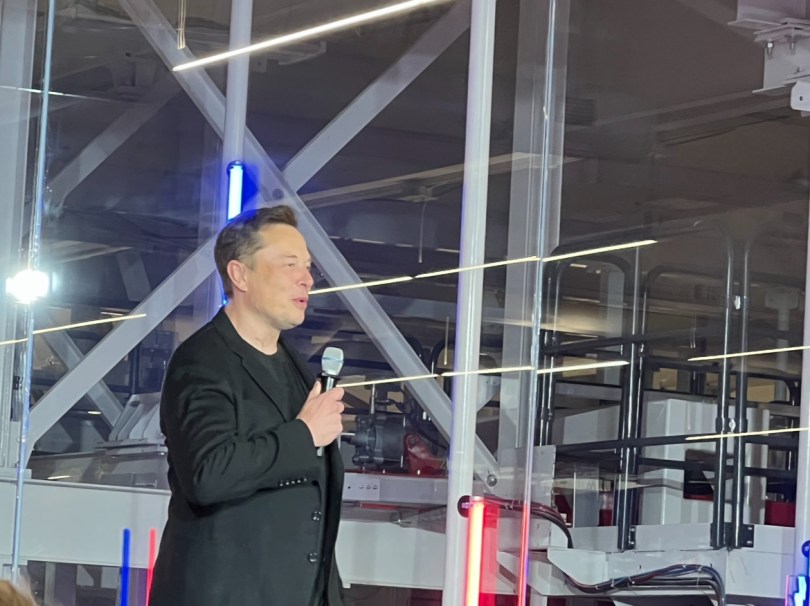
Gail Alfar, Image Credit Apple Lamps on X

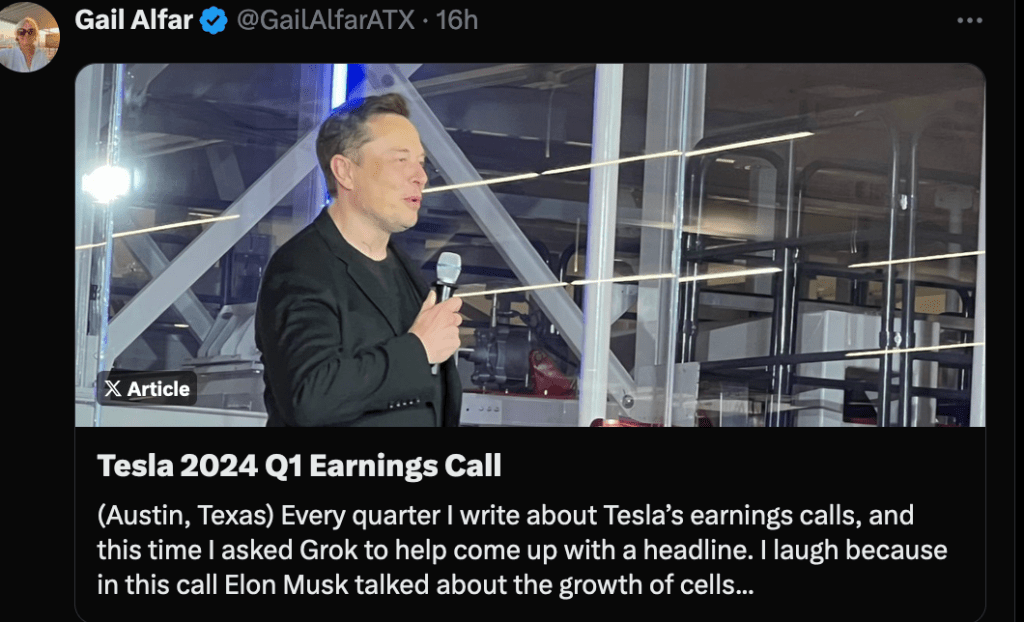
Tesla 2024 Q1 Earnings Call

(Austin, Texas) Every quarter I write about Tesla’s earnings calls, and this time I asked Grok to help come up with a headline. I laugh because in this call Elon Musk talked about the growth of cells into a baby. You’ll never guess the funny headline Grok came up with: “Tesla’s Metamorphosis: Elon Musk’s Plan for a Leaner, Meaner, and More Efficient Future”

This first earnings call of 2024 took place on April 23. I am highlighting some of the best and most interesting parts of the call for you. So take a little breather in your busy day. Let’s hang out for a few.

Tesla’s Roadmap

Elon talked, sharing his opening remarks at the start of the earnings call. He shared an inspiring vision for the future of all-electric and autonomous vehicles on earth. Despite facing various challenges, including global EV adoption pressure and other manufacturers’ shift towards plug-in hybrids, he said Tesla remains committed to its goal of electric vehicles dominating the market. Elon highlighted Tesla’s achievements and future plans, emphasizing rapid progress in AI and the expansion of Tesla’s AI infrastructure.

The Tesla team successfully navigated a tough environment in Q1, with energy storage deployments reaching an all-time high. Elon announced an acceleration in the launch of new models, including more affordable options, that will be produced on the current manufacturing lines. This welcome move is expected to increase vehicle production capacity to over 3 million units.

Regarding Full Self-Driving (FSD) Version 12, Elon expressed confidence in the vision-based approach with end-to-end neural networks as the solution for scalable autonomy. Tesla has reduced the subscription price to $99 per month to encourage more users to experience FSD.

Tesla’s core AI infrastructure is also undergoing significant expansion, with plans to install and commission 85,000 H100 computers by the end of the year. Elon stressed the importance of not only increasing the number of H100s but also ensuring their efficient use for training.

As with many Tesla earnings calls, some of the best information comes after the opening remarks! 

Biology Lesson in Tesla Restructuring

You may know that some employees were laid off from Tesla. Nearly 10% of the company. Elon explains the Tesla restructuring using a biology lesson, which most people loved hearing,

“We are not giving up anything that significant that I’m aware of. We’ve had a long period of prosperity from 2019 to now and so if a company sort of organizationally is 5% wrong per year that accumulates to 25% – 30% of inefficiency. 

We’ve made some corrections along the way, but it is time to re-organize the company for the next phase of growth. And you really need to re-organize it. 

It is just like a human when we start off as one cell and become a zygote, a blastocyst, and you start growing arms and legs and then briefly you have a tail and then you shed the tail and then you’re a baby and you know, you basically have to be different. 

The organism of a company is kind of like a creature growing and if you don’t reorganize it for different phases of growth, it will fail and you can’t have the same organizational structure if you’re 10 cells versus 100 versus 1 million versus 1 billion versus 1 trillion. 

We humans are around 35 trillion cells, it doesn’t feel like one person but you’re basically a walking cell colony of roughly 35 trillion cells depending on your body mass and about 3 times that number in bacteria. 

So, anyway, you’ve got to reorganize the company for a new phase of growth or it will fail to achieve that growth.”

Cybercabs: Ultimate Multitasking Machines – Earn Money While You Sleep and Share Your Ride with a Tap

On the call, Elon explained that in the future, you can add (or remove) your Tesla to the robotaxi network (using Tesla app) when you’re at work and you can choose to share your car with friends or family or 5-star customers only. 

The new term “Cybercab” was applied to this vehicle. I think this blends an iconic image (a cab) with the modernistic cyber mystique. This name has a charming vintage feel while also being easy to pronounce. Cybercab rolls off the tongue, while Robotaxi feels more awkward. 

Cars will soon work like elevators. You hop in, it takes you where you want, you don’t think twice about it. Tesla will be operating the fleet of Cybercabs and you will be able to decide if you want to have your Tesla inside the fleet for a day or a month or a year. 

To help explain the concept, Elon compared it to an AirBNB. 

“And something I should clarify is that Tesla will be operating the fleet. So, you can think of like how Tesla, think of it as combination of Airbnb and Uber meaning that there will be some number of cars that Tesla owns itself and operates in the fleet. There will be some number of cars and then there’ll be a bunch of cars where they’re owned by the end user. That end user can add or subtract their car to the fleet whenever they want, and they can decide if they want to only let the car be used by friends and family or only buy five-star users or by anyone at any time they could have the car come back to them and be exclusively theirs like an Airbnb.

You could rent out your guest room or not, any time you want.”

Tesla’s Idle Computing Revolution

Every Tesla car has a computer inside itself that’s capable of computing and inference. 

Elon hopes that one day soon you can opt to rent out your Tesla computer to do distributing inference whenever it’s idle, when you’re sleeping, for example. 

Elon envisions a future where the fleet of Tesla vehicles could collectively form a massive distributed inference system with their idle computing power. This would allow for efficient use of resources and potentially generate revenue for Tesla owners by participating in tasks like AI model training or other computational tasks. The idea is to leverage the vast number of Tesla vehicles worldwide, harnessing their collective computing power for various AI-related tasks.

The concept of distributed computing is not new, but applying it to a fleet of Tesla vehicles is a novel approach that could have significant implications for AI research, development, and deployment.

So, your Tesla can make money for you when you’re sleeping. This is analogous to Amazon’s Web Service which is currently the biggest cloud computing service provider in the world and the most profitable business segment for Amazon. Elon explained, “I think it’s analogous to Amazon Web Services, where people didn’t expect that AWS would be the most valuable part of Amazon when it started out as a bookstore. So, that was on nobody’s radar. But they found that they had excess compute because the compute needs would spike to extreme levels for brief periods of the year and then they had idle compute for the rest of the year. So, then what should they do to pull that excess compute for the rest of the year.

That’s kind of — yeah, monetize it. It seems like kind of a no-brainer to say, OK, if we’ve got millions and then tens of millions of vehicles out there where the computers are idle most of the time that we might well have them do something useful.”

Name any other car that has those potentials and capabilities. Let that sink in.

Elon’s Tesla Future: Increased Involvement

“Tesla constitutes the majority of my work time. I work every day of the week. I’m going to make sure Tesla is very prosperous.”  – Elon

Indeed, Elon or any of the executives at the earnings call are not obligated to answer questions. The format of the earnings call is a choice by Tesla. Being able to ask Elon Musk directly if he plans to remain involved in Tesla less in the next 3 years was a question that was asked. Elon is the heart and soul of the company, and Tesla, Inc. is like his own child. Of course, he will stay involved and maybe even increase his involvement. You see, Elon was always deeply passionate about autonomous cars and with this happening now, he is going to show MORE, and not less involvement.

“We are putting the actual auto in automobile.” – Elon

Elon is happy to always allow cars to have a bright future with autonomy at Tesla. If he IS VOTED out of the company one day, he will not support Optimus development which is out of his control because there is a risk that the robot could veer towards malice. For context, a judge in Delaware used her power to take away his shareholder-approved compensation plan. If that compensation is not legally returned to Elon, he will not own enough shares of Tesla to make an impact on Optimus development and he could even be pushed right out of the very company he built as a worst-case scenario.  

Autonomy: Tesla’s Future Licensing

In the future, 3 years ahead, the only cars that you will drive will be genuinely smart cars with autonomy. All cars will need to be smart cars or they will not be purchased. At that point, Tesla will license their autonomy software to all other surviving companies. Elon explains,

”Yeah. So, it is a case of having them use the same cameras and inference computer and licensing our software. Once it becomes obvious that if you don’t have this in a car, nobody wants your car. It’s a smart car. I still remember in fact, when Nokia was king of the hill, yeah, and the cellphone is crushing. And then I saw them come out with a smartphone that was a brick with limited functionality. And then the iPhone and Android, people still do not understand that all the phones are going to be that way. There’s not going to be any flip phones. There will be a niche product or home phone.” 

My thoughts

Tesla cars need to be affordable to the vast majority of people. Tesla is doing this and this is good news as more and more people will be able to afford to buy a Tesla. 

This price is already dropping right before our eyes. For example: My 2024 Model Y is vastly better than my 2022 Y and it cost me less to purchase by around $18,000! The single motor Model Y is only $29K with gas savings and with point of purchase $7500 rebate. An incredible value.

It is indeed exciting that we are headed for an electric vehicle and autonomous future!

Isn’t it crazy that many carmakers are pulling back on their investments in EVs? Only Tesla is investing the most in future growth. This includes their AI programs, production capacity, Supercharger & service networks as well as new product infrastructure. 

The future is not only electric but also autonomous. Since the launch of FSD V12 earlier this year, I have personally driven across Austin, Texas over 100 times and V12 is indeed an incredible advancement. I have now produced over 60 FSD Tesla podcast episodes (Gail’s Tesla Podcast), constantly spreading the word to my viewers (in the 100,000’s) about Tesla autonomy. I’ve shown that FSD Supervised is for every driver, no matter their knowledge of tech or their ability to understand how it actually works. In fact, if you want to just say that it works like magic, that’s totally acceptable because that is how I feel about it too!

Read the full article on X

Gail’s Tesla Podcast Episode No. 35: Tesla Q3 earnings call – 2023

FSD beta is real-world AI.

Tesla Q3 earnings call – 2023

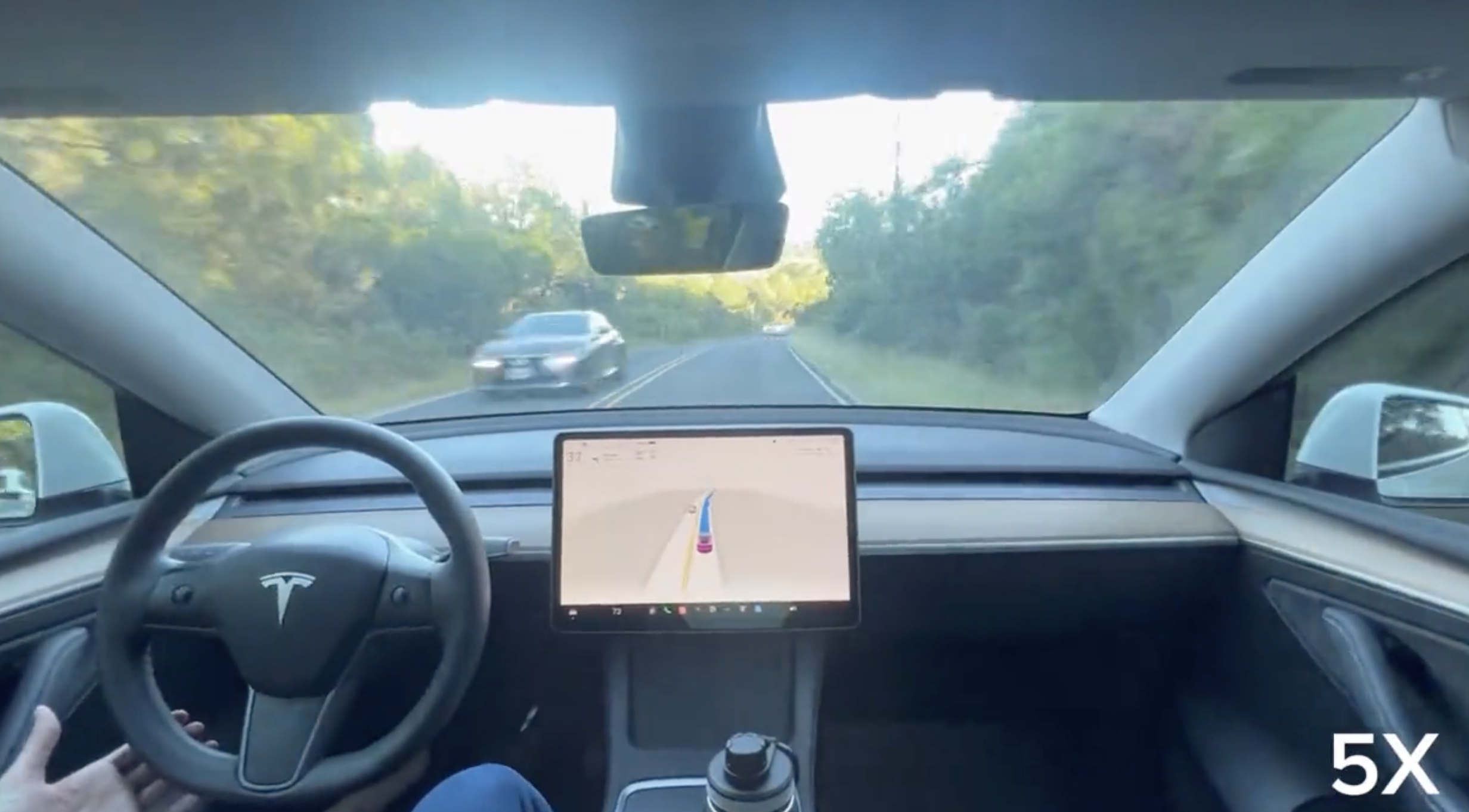
(Austin, Texas) In this episode, we will listen to some short clips of Elon Musk talk about Cybertruck and FSD beta progress (from the Tesla Q3 earnings call 2023) towards becoming available globally. All the while we’ll be experiencing a perfect drive during rush hour around Austin.

Safety around cyclists with Tesla AI

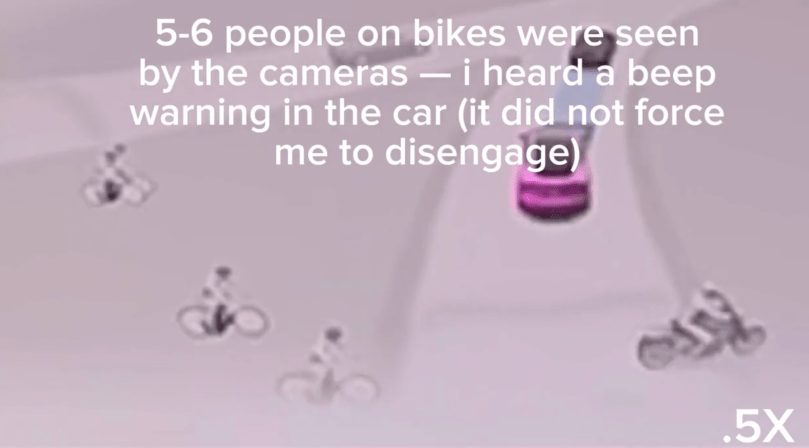
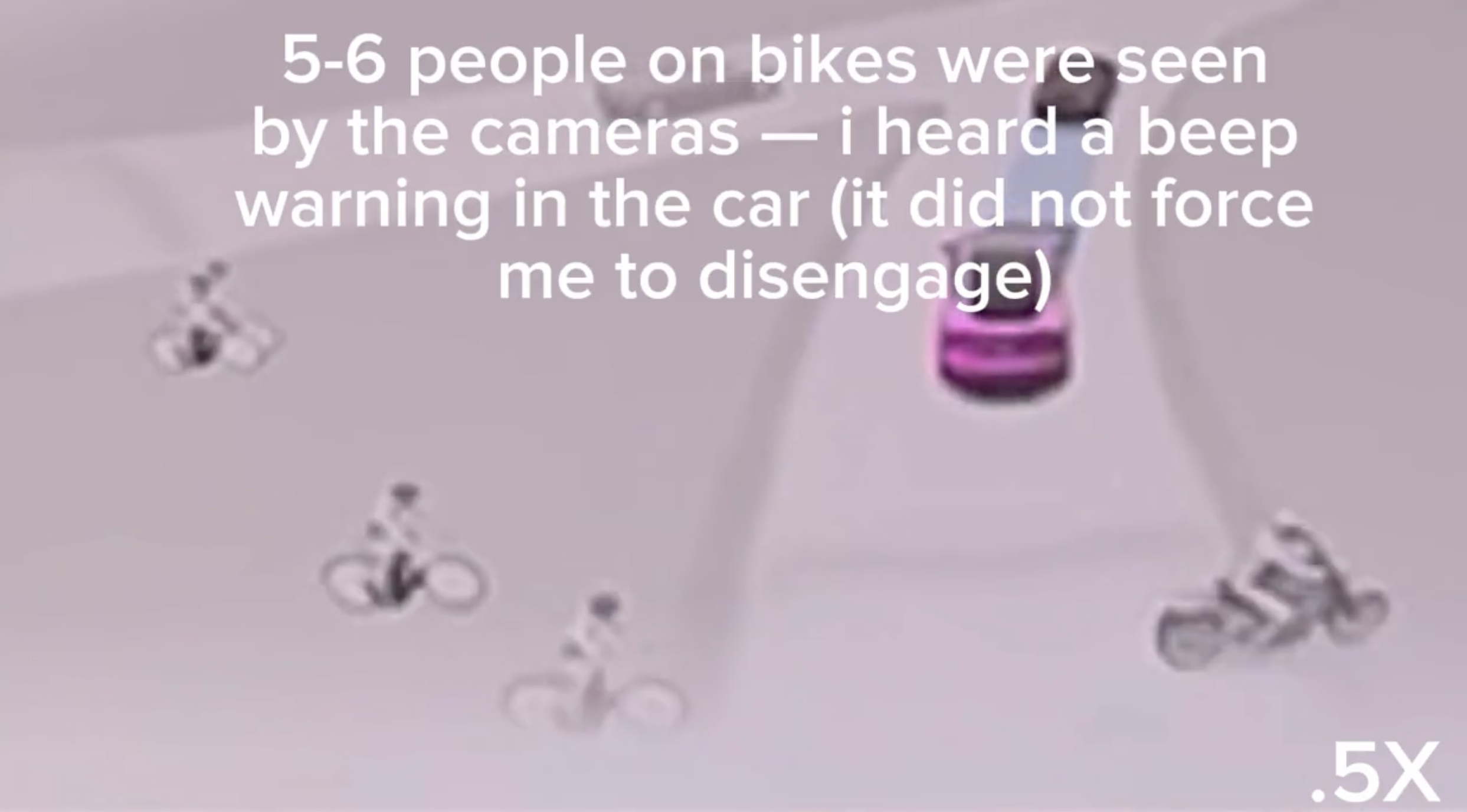
One striking portion of this podcast occurs when a bicycle team of at least 6 people moves quickly toward a crosswalk at the very same moment the Tesla (on FSD BETA) is approaching the crosswalk.

Tesla AI safety around bicycles.

The driver (me) hears a warning beep inside the Tesla, but there is no need to disengage. The FSD AI has seamlessly moved in front of the crosswalk while all cyclists safely pass behind the car.

Gail Alfar, author. Exclusive to What’s Up Tesla – All Rights Reserved. My goal as an author and podcaster is to support Tesla (the most American vehicle manufacturer) and Elon Musk in both making life better on Earth for humans and becoming a space-fairing civilization.

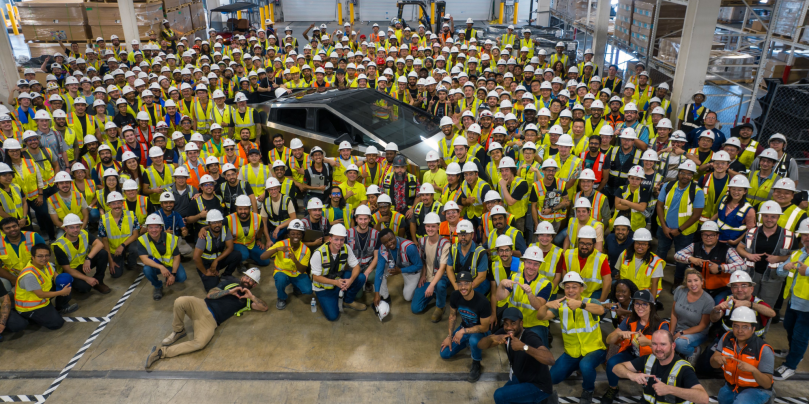
Cybertruck Engineering Team, Image Credit Tesla, Inc.

Tesla Q2 2023 Update: Master Plan 3 Progress

Tesla is doing a lot of good in this world, much of which was shared in the Tesla Q2 2023 Update on July 19, 2023. I hope you enjoy this article, and that it leaves you with optimism & hope for the future!

(Austin, Texas) On Investor Day 2023, Elon Musk and the Tesla team explained how a global sustainable economy is within reach through these six actions:

1. Repower the Existing Grid with Renewables 

2. Switch to Electric Vehicles 

3. Switch to Heat Pumps in Residential, Business & Industry 

4. Electrify High Temperature Heat Delivery and Hydrogen Production 

5. Sustainably Fuel Planes & Boats 

6. Manufacture the Sustainable Energy Economy

I’m confident that many companies around the world are making progress towards these actions and I believe Tesla is showing and leading the way! 

REPOWER THE EXISTING GRID WITH RENEWABLES 

Success is imminent in this arena. Thus far, ½ million Tesla Powerwalls have been installed on homes by customers. I personally installed 3 Powerwalls recently and am excited to be a part of what will make Texas become a strong force in the energy economy. I believe that being solid in energy, or defying the odds in these times of climate extremes, means Texas can lead. Last year, I spoke to the ERCOT board of directors in Texas, urging the leadership to do everything they can to promote Virtual Power Plants (VPPs) in Texas. I watched the Tesla Energy team spend years getting to the point where they are now in Texas. Tesla Electric started in Texas and will one day reach to all states. 

VPP regulatory challenges are hard, as mentioned during the Tesla Q2 2023 Update, and that cannot and does not stop Tesla Energy from meeting the challenges. The best case for VPPs is they are much cheaper and much faster to respond to grid weakness than traditional fossil fuel peakers. 

ENERGY AND SERVICES & OTHER BUSINESSES

Tesla has deployed 3653 MWh of energy storage Megapacks. This is an incredible 222% increase over last year, where 113 MWh were deployed. This is a testament to the incredible work of the Megapack manufacturing plant in Lathrop, California.

The current Tesla Electric pilot program for charging for Model 3 owners will expand to all Tesla owners in Texas later this year. 

SWITCH TO ELECTRIC VEHICLES 

Image Model Y credit Tesla, Inc.

When looking at the current business, Tesla’s number one priority is investment, and that includes investment AI and capacity expansion. The second top priority is to maximize volume in a way that can support expansion.

Has volume been expanding?  Yes, Elon Musk thanked Tesla owners for making the Model Y become a best-seller over cars like the Toyota Corolla. This is important, given Tesla is just getting started with production at scale because Tesla will maximize volume in a way that can support even more expansion. Tesla had the best-ever vehicle production and deliveries in a single quarter, with a total of 466,140 deliveries, and they are just getting started! 

— Remember, in Q2-2022 (just 12 months ago), there were a total of 254,695 vehicle deliveries.

To accelerate the switch to EVs, Tesla makes Full-Self driving (FSD) software and hardware available to other OEMs. It is now known that Tesla is in serious talks with another OEM to license their FSD software and hardware. This is exciting news as it means it will make that other carmaker an alluring competitor to other traditional gasoline cars. 

SUPERCHARGING AND THE NACS

As you may know, Supercharging in the Tesla Network is a seamless experience. The Tesla Charging standard – or the “NACS” is part of Tesla’s way to help accelerate the EV revolution. Many other automakers have already announced they will adopt the NACS so that their EVs can supercharge in the Tesla Network. This includes Ford, Mercedes, Rivian, Volva, Polestar, and Nissan! You’ll see a level playing field, meaning all EVs will be welcomed.  

Q3 is an important time for doing some critical upgrades to all of Tesla’s gigafactories. These upgrades will mean that production rates will improve dramatically.  

Elon explained the real-time pulse updates he gets. He said there are challenges in increasing interest rates, making it important to therefore decrease the price of the car to make up for increased interest rates. 

ROBOTAXI

Elon Musk carefully explained that “Every car may be worth 5X as much as today due to autonomy.”  He compared Robotaxi to Airbnb and discussed a step-change in history. 

Elon Musk on vehicle order intake: “Demand has roughly tracked production, which is what we aim for; we have real-time demand and real-time production data.”

Lars Moravy of Vehicle Engineering said there’s a misconception about giga castings, which are in Model 3 and Y. Giga casting is 3X faster and much cheaper. Collision repair is in a closed (in-house) loop so when collisions occur, inserts can be replaced in the castings and this is done often and easily. 

Elon commented that the referral program is and will continue to be effective. He also said that many people (potential customers) are not breaking even every month, and macroeconomic conditions are impossible to control. He’s correct, I have spoken to many people who struggle every day to meet bills. Elon is well aware of this and thankfully is engineering solutions for people.

Giga Texas 4680 battery cell production increased by 80% in Q2 over Q1. The Giga Texas team produced over 10M cells, there was a beautiful image shared of the team by the Tesla X account. 

Tesla is creating a unique Cybercell to bring energy density and cost improvements.  Drew Baglino, SVP of Powertrain and Energy Engineering at Tesla, said Tesla is scaling their Cybercell 4680 battery for use in Cybertruck.

Elon Musk has been key to Cybertruck’s engineering and development, walking the production line and driving it around Austin, Texas. He said Cybertruck is the first truck that we’re aware of that will have four doors, over a 6-foot bed, and will fit into a 20-foot garage. So, it’s sort of biggest on the outside, but it’s even bigger on the inside.” 

In more good news, Tesla has seen a reduction in pricing, across the across-the-board for all commodities, such as nickel, cobalt and graphite. This is good not only for Tesla but also for many other companies involved in the transition to a sustainable energy economy.

CONCLUSION

Finding ways to power our world with sustainable energy is necessary for maximum happiness for humanity. 

While short-term stock fluctuations are fun to play with, that’s like candy in a candy shop. The serious meat is accelerating the transition to a world economy that is powered by sustainable energy. That’s why this article is about what progress is being made towards Master Plan 3, as communicated by Elon Musk and Tesla leadership at the Q2, 2023 Update.

I am rooting for a continued switch to heat pumps in residential, business & industry, the electrification of high-temperature heat delivery and hydrogen production, and sustainably fueled planes & boats. 

Giga Texas Cybertruck Production Line, Image Credit Tesla, Inc.

Elon Musk recommends people follow @fintwit_news on X and look at the analysis by ARK Invest. Article by Gail Alfar, please credit accordingly. 

Tesla Q4 and FY2022 Earnings Call and Strength in Uncertain Times (Elon Musk’s talk)

Welcome back to my blog. It’s been 12 months since I first rented a shared office space to start “What’s Up Tesla.” I am committed to doing more to support the mission of Tesla and Elon Musk, as there is a long road ahead.  In the coming year, I’ll keep dedicating time to this blog and my Podcast as we watch Tesla move with success through uncertain times and prove they are the only OEM that will thrive in 2023 and beyond.