
Virtual Power Plants (VPPs). A solution for reliable and less expensive power for all.

DOE 71-page report, Pathways to Commercial Liftoff: Virtual Power Plants

(Austin, Texas) We need energy. Our daily lives, jobs, all our meals and entertainment rely on it. Without power, I would not have enjoyed my breakfast this morning of cripsy toast and steaming hot Chai tea! Demand for electricity in our world is rising after a decade of stagnation, and there is a pressing requirement to retire fossil fuel dependence. This blog post is about the Department of Energy’s (DOE) new groundbreaking 71-page report that outlines the future of energy: Virtual Power Plants (VPPs).

I love learning about the future of power generation and distribution and I think you will too. I have simplified the report, titled “Pathways to Commercial Liftoff: Virtual Power Plants” in this post.

The Energy Transition’s Game-Changer

Virtual Power Plants, or VPPs, may seem small, however they are poised to take center stage in the Energy Transition. At a time when the United States faces the monumental task of adding over 200 GW of peak demand power generation by 2030, and with the ambitious goal of achieving 100% clean electricity by 2035, VPPs offer a solid, and much needed, solution. By deploying 80-160 GW of VPPs within the next decade, we can triple the current scale of these powerhouses, supporting rapid electrification while simultaneously cutting grid costs.
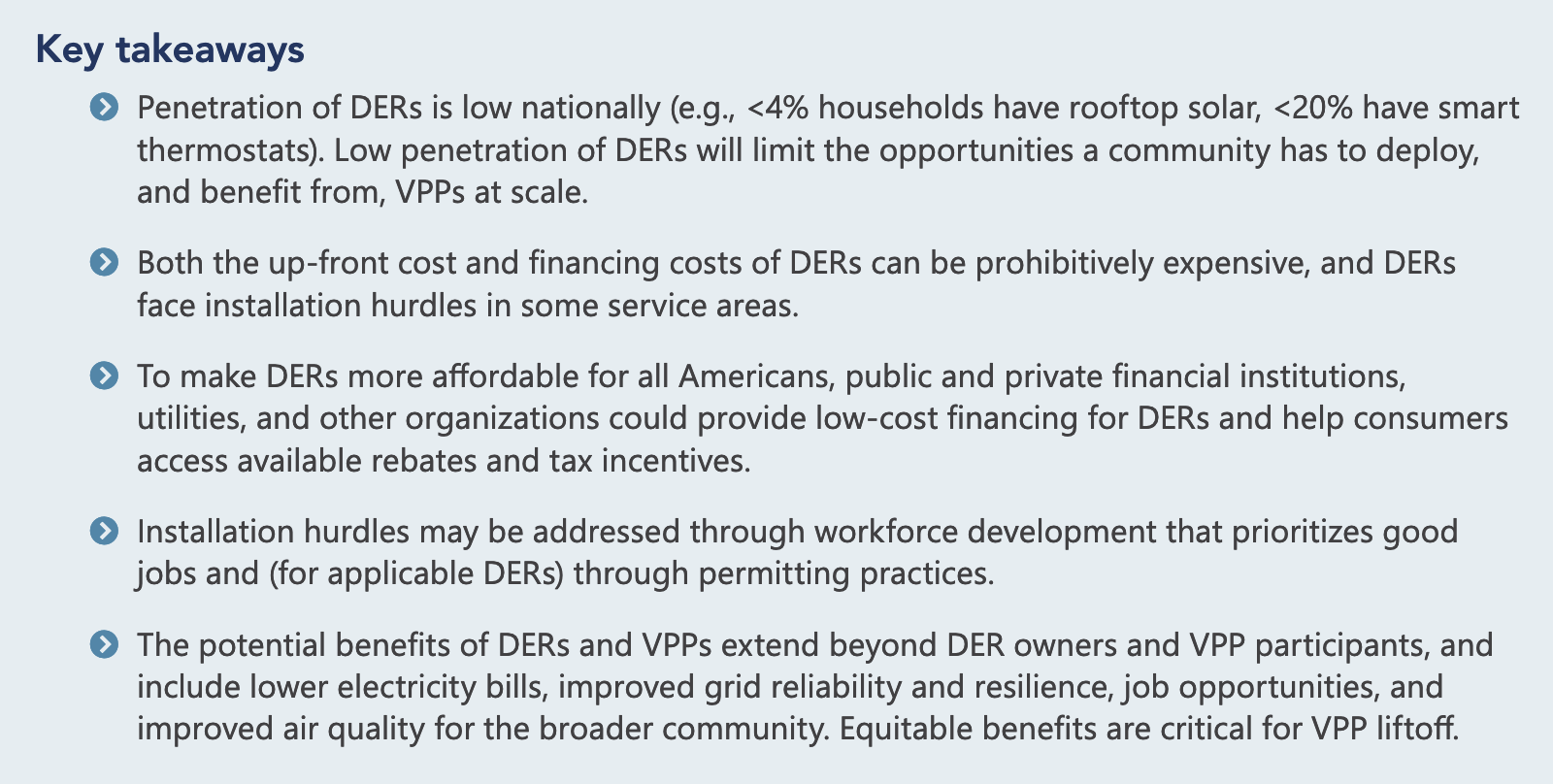
Expand DER adoption with equitable benefits, report, page 38

Breaking Down Transmission Interconnection Barriers

One of the most pressing concerns facing the power industry is the bottleneck in transmission interconnections, which averages a staggering five years. Enter VPPs. These innovative systems have the potential to alleviate this challenge by efficiently balancing supply and demand. By doing so, they can alleviate the strain on congested interconnection queues, ultimately speeding up the integration of clean energy sources.

Moreover, VPPs have the ability to curtail the need for constructing new transmission and distribution infrastructure. These costs are the fastest-growing component of the power sector, eclipsing energy and capacity expenses. As demand for electricity surges once again, meticulous management of transmission and distribution costs becomes paramount.

The Versatility of VPPs

VPPs are essentially aggregations of Distributed Energy Resources (DERs), such as rooftop solar panels, electric vehicles, smart buildings, and more. They operate on a utility scale, providing grid services that rival those of traditional power plants. While the current 30-60 GW of VPP capacity primarily serves as demand response programs, which manage DERs to balance electricity supply and demand, VPPs have the technical potential to do so much more!

VPPs are essentially aggregations of Distributed Energy Resources (DERs), such as rooftop solar panels, electric vehicles, smart buildings, and more. They operate on a utility scale, providing grid services that rival those of traditional power plants.

Beyond demand response, VPPs can reshape the landscape of the energy sector. They can shift EV charging times, dispatch excess energy back into the grid, and undertake a myriad of other functions that promise to revolutionize power distribution.

A Resilient Future

VPPs are not just about convenience; they are about sustainability and resilience. These systems can contribute to resource adequacy at a remarkably low cost, all while reducing emissions and air pollution. They empower communities to take control of their energy consumption, bringing in a new era of productivity.

For instance, imagine a VPP comprised of residential battery storage (think, Tesla Powerwalls), HVAC systems, and synchronous generators all providing peaking capacity at a fraction of the cost of natural gas, coal or oil peaker plants. The potential for efficiency and cost savings is staggering.
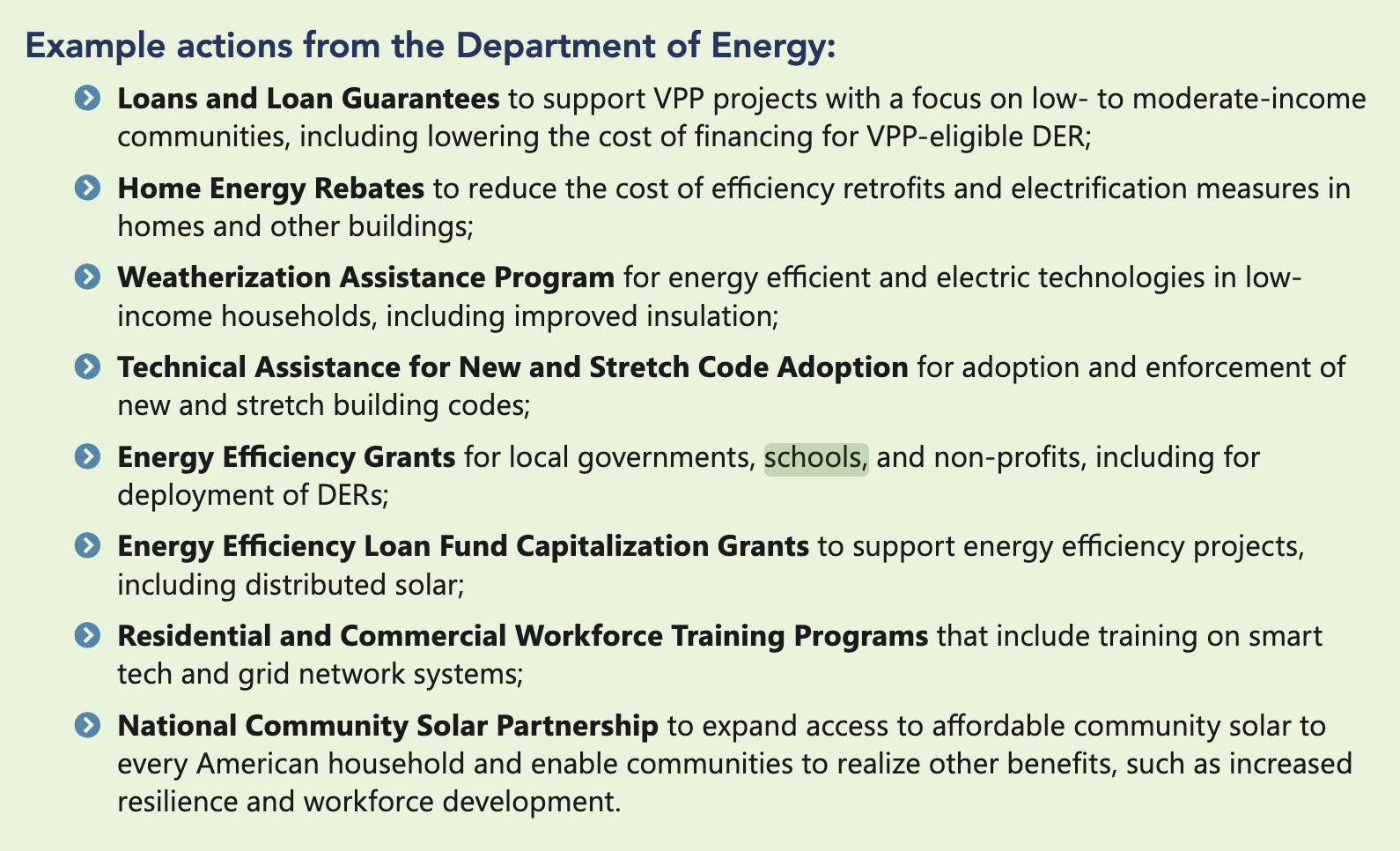
Examples of Action by the DOE. page 41 from the report.

Overcoming Regulatory Hurdles

Yet, despite their immense potential, VPPs face challenges. Limited integration into electricity system planning and market participation hampers their growth. Regulatory obstacles and a need for standardization have eroded confidence in VPPs’ among utilities.

Call to Action

The DOE’s report is more than just a glimpse into a promising future; it’s a call to action. The report outlines 5 imperatives:

expanding DER adoption,

simplifying VPP enrollment,

increasing standardization,

integrating VPPs into utility planning, and

integrating them into wholesale markets.

The report stresses the need for continued investments in next-generation DER and VPP technologies. In fact, the DOE and its collaborators have already initiated more than 20 programs designed to accelerate VPP deployment.

My thoughts

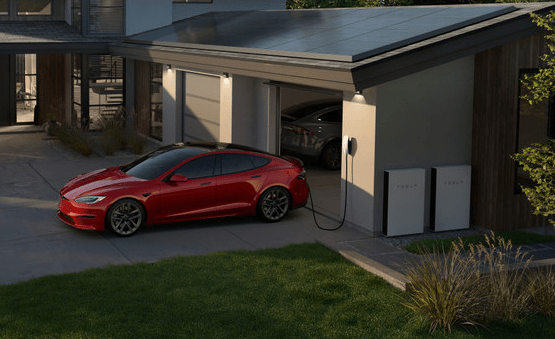
In summary, the DOE’s 71-page report is a good first start in creating a blueprint for all people and business enterprises to rethink how the grid operates. Among the many incentives listed, I would add that local utilities should encourage, not discourage lower costs for customers who are willing to spend money on installing solar and residential battery backup to their homes. Thus, the back-up switch should be adopted by all entities. Tesla’s backup switch saves time and money. You can read about how when the power went down in Austin, my lights stayed on!
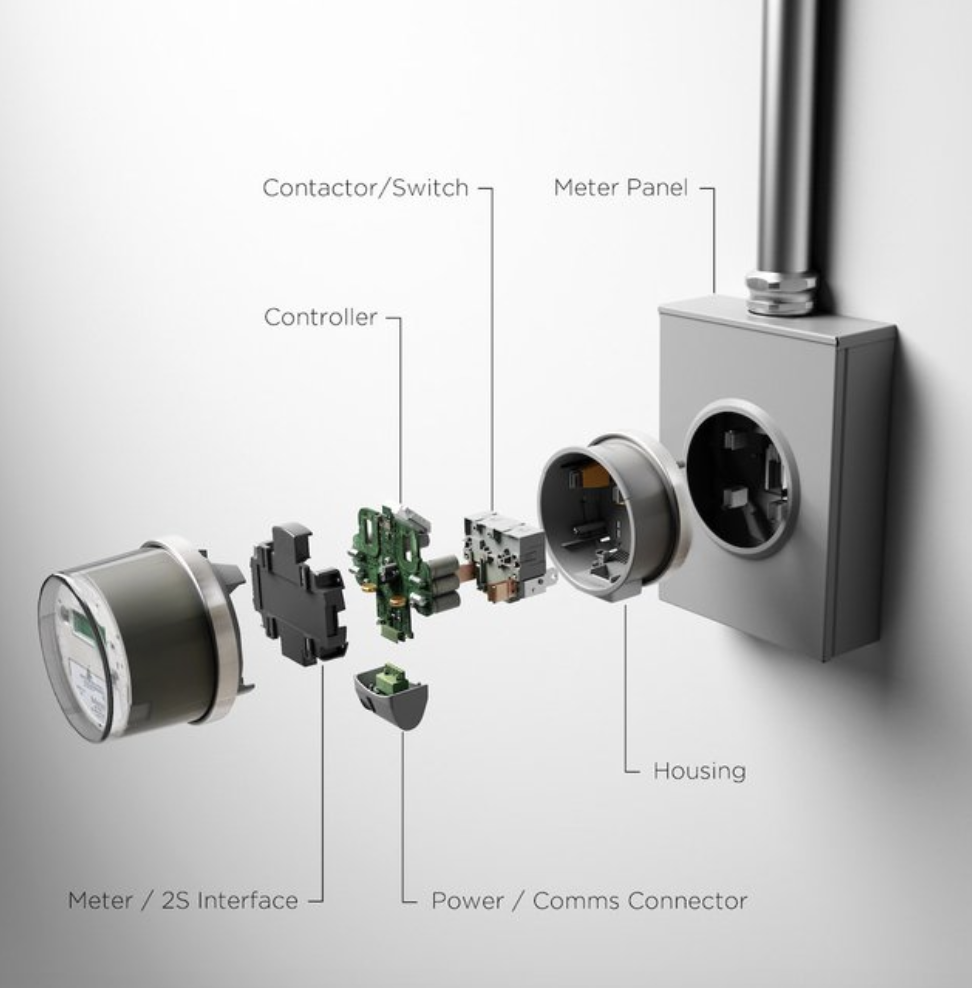
backup switch image courtesy Tesla, Inc.

For your family and mine, the future is bright, not dark and austere. Yes, we are running out of our earth’s quite limited recourse of all fossil fuels. But the sun is there every day, providing unending power that we just need to harness.
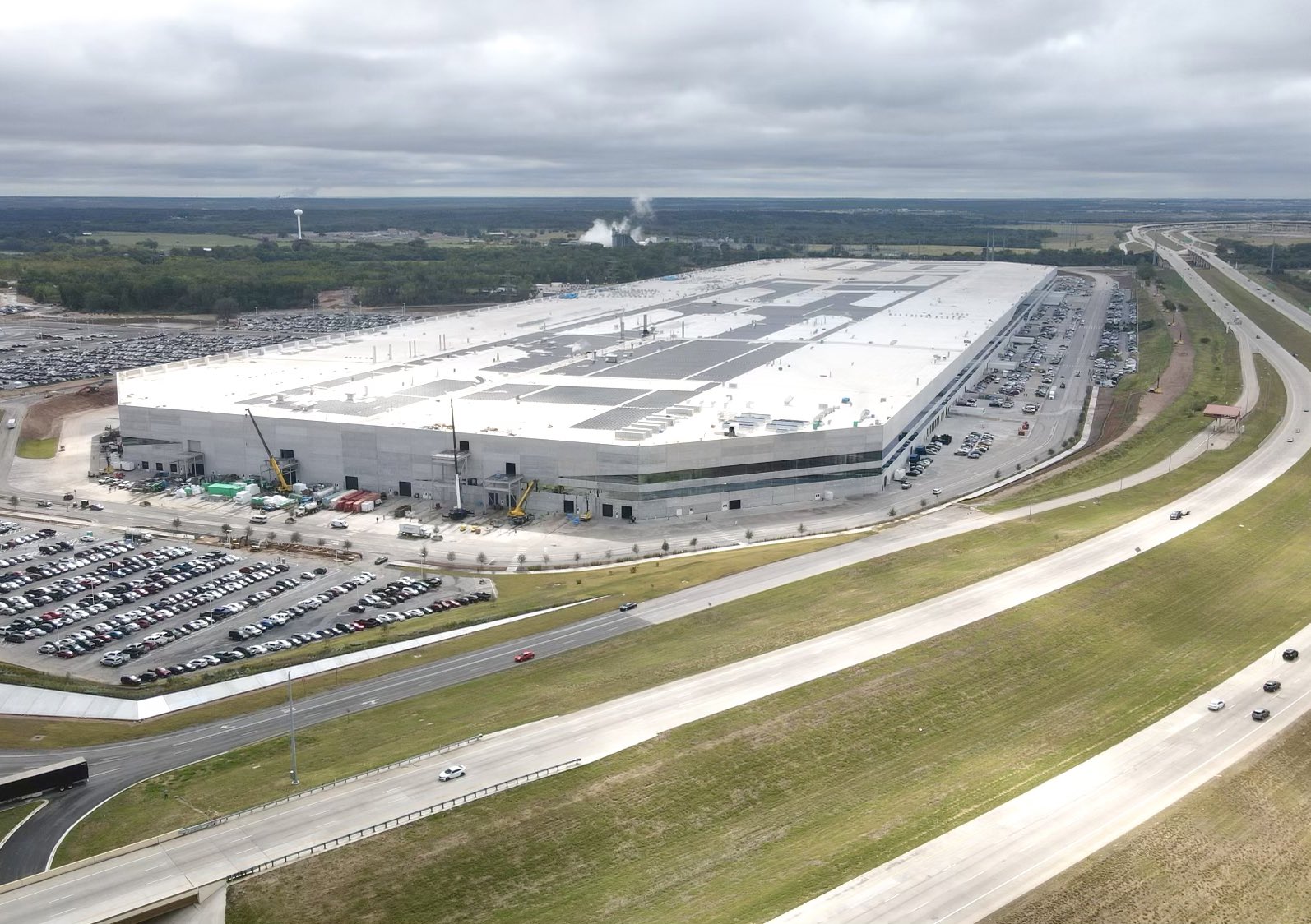
Solar Panels capture energy on top of Tesla Giga Texas

This article written by Gail Alfar, please credit accordingly. With special mention to TESLA ENERGY & Arushi Sharma Frank, Drew Baglino, and may others. Thank you to Tesla Energy for being amazing. Thank you to Elon Musk for giving Masterplan 3 to the people of earth. Images Courtesy Tesla, Inc.

Photo by Ana Toledo on Unsplash

Revolutionizing Puerto Rico’s Energy Landscape: A Triumph of Innovation and Progress

Castillo San Felipe del Morro, Calle Norzagaray, San Juan, Puerto Rico Publis by Zetong Li on Unsplash
Castillo San Felipe del Morro, Calle Norzagaray, San Juan, Puerto Rico by Zetong Li | Unsplash

Prepare to be amazed as Puerto Rico sets its course toward a future brimming with energy independence and sustainable growth. In a swift and impactful move, the Energy Bureau of the Public Service Regulatory Board of Puerto Rico has unleashed an era of transformation that promises to bring positive change to every doorstep on the island.

If you’re short on time but high on enthusiasm, this article is a concise breakdown of the remarkable legislative breakthrough.

Powering the Future with Clean Energy

Picture a Puerto Rico where clean energy is no longer a distant dream, but a reality that’s taking shape before our eyes. On August 11, 2023, the Energy Bureau issued a groundbreaking Order that set in motion a series of events bound to revolutionize how we harness power. This Order put into motion a process that would require LUMA Energy, LLC and LUMA Energy ServCo, LLC (collectively referred to as “LUMA”) to provide crucial information about the Emergency Demand Response (“Emergency DR”) Program.

Accelerating Renewable Energy Adoption

Fast forward to August 23, 2023, and history was made yet again. LUMA responded to the Energy Bureau’s call by submitting a Motion that detailed the costs associated with the Emergency DR Program. The plan is nothing short of ingenious: a surge in renewable energy adoption powered by solar panels on rooftops and wind farms along the coastlines. Imagine harnessing the sun’s rays and the ocean’s breezes to fuel our lives – a dream that’s now a step closer to reality.

Ensuring Resilience and Reliability

Gone are the days of power outages casting a shadow over Puerto Rico. The program’s design ensures resilience in the face of adversity. Microgrids will step in during emergencies, guaranteeing an uninterrupted power supply when the grid falters. This means quicker recovery times and stronger communities that can weather any storm.

Fostering Economic Prosperity

Hold onto your hats – the journey towards energy independence is also an economic boon! This masterstroke is projected to generate a wave of employment opportunities, boosting local economies. Skilled professionals will be at the forefront, building, operating, and maintaining the renewable energy infrastructure that’s about to change the game.

A Commitment to Communities

But it doesn’t stop at technology and economics. This visionary legislation places communities at its core. Education takes center stage, as residents will be informed about the benefits of renewable energy, fostering a deeper understanding of the world-changing shift underway.

Unveiling the Road Ahead

What’s next? Brace yourselves for the incredible journey ahead. As the Emergency DR Program unfolds, expect to see program terms issued through the PowerAdvocate platform, agreements between LUMA and participants, customer enrollment, and even a test event. The road to a sustainable future is paved with exciting milestones!

Your Role in the Revolution

It’s time to be part of the change. Join Puerto Rico on this thrilling journey towards energy independence and environmental harmony. As this historic endeavor takes flight, it’s not just about power sources; it’s about powering our lives, our communities, and our dreams.

Stay tuned for more updates on how Puerto Rico is turning a new leaf in the realm of energy. The island is poised to become a global example of innovation, resilience, and progress – a beacon of hope in a world that’s constantly evolving.

Read RESOLUTION AND ORDER | CASE NO: NEPR-Ml-2022-0001 | LUMA August 23, 2023, Motion Filing its Emergency Demand Response Program Cost and Timeline.

Photo by Ana Toledo on Unsplash
Puerto Rico by Ana Toledo on Unsplash
Transforming Energy Grids: Tesla's Milestones in the ADER Pilot Project. Image Courtesy Tesla, Inc.
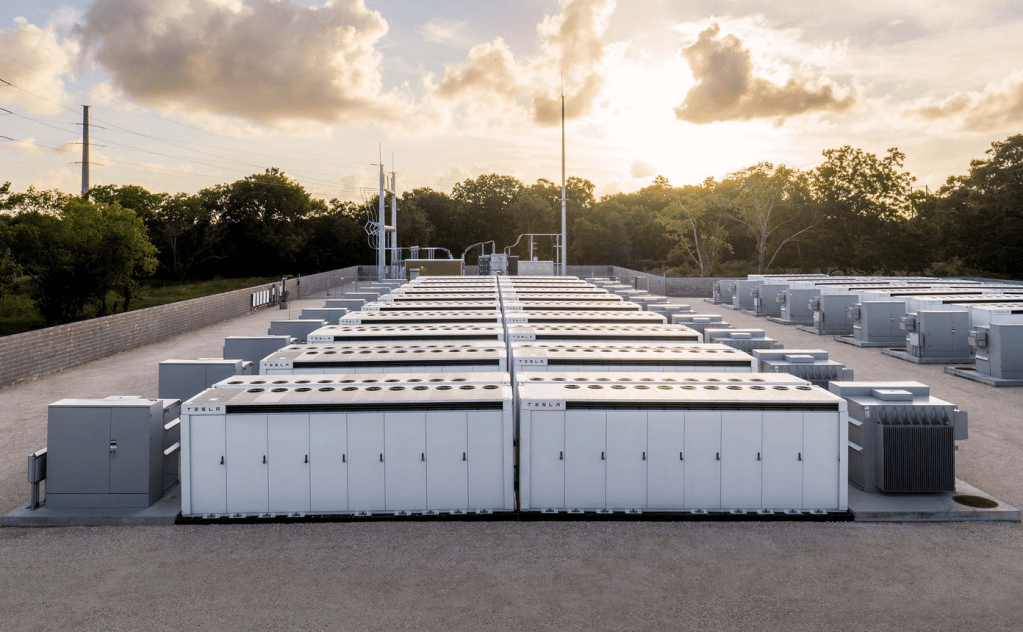
Transforming Energy Grids: Tesla’s Milestones in the ADER Pilot Project

Transforming Energy Grids: Tesla's Milestones in the ADER Pilot Project. Image Courtesy Tesla, Inc.

Transforming Energy Grids: Tesla’s Milestones in the ADER Pilot Project. Image Courtesy Tesla, Inc.

(Austin, Texas) In a world rapidly transitioning towards sustainable energy solutions, Tesla, Inc. has emerged as a pioneering force in reshaping the way we envision and utilize energy resources. The Electric Reliability Council of Texas (ERCOT) Aggregated Distributed Energy Resource (ADER) Pilot Project represents a significant step forward in this endeavor. In just under a year, Tesla has achieved remarkable milestones that are transforming the landscape of energy distribution and management. This article goes into some of the technical details and innovative strides taken by Tesla, Inc. in the first year of the ADER Pilot Project, highlighting the impact of this initiative on the future of all energy grids across the globe.

The ADER Pilot Project: A Groundbreaking Innovation

The ADER ERCOT Pilot Project is not just another energy initiative; it’s a groundbreaking innovation that challenges the norms of traditional energy generation and distribution. Unlike previous demand-side participation programs, the ADER Pilot Project introduces a population of distributed devices capable of being non-injectors of electricity during times of scarcity or grid need, with performance standards equivalent to conventional generation resources. This distinction marks a significant departure from the status quo in ERCOT.

Tesla’s Role in the Transformation

Tesla has played a pivotal role in driving this transformation. The company embarked on a journey to develop new processes that mirror the commercial and physical activity of traditional resources. This journey involved activities such as registration, telemetry, and asset/market operations for ADERs, which did not exist before the ADER Pilot Project. Tesla also developed an advanced ADER control system that anticipates availability and influences responses every five minutes. This control system ensures that the aggregated response aligns with customer expectations, surpassing the capabilities of traditional generation or storage resources.

Why the ADER Pilot Project Matters

The timing of the ADER Task Force’s work could not be more critical. Establishing the infrastructure and processes necessary for distributed devices to participate in grid operator dispatch is typically a multi-year endeavor. Texas stands ahead of the curve in laying the foundation for a future where grid-coordinated dispatch of distributed devices seamlessly integrates with traditional wholesale assets. This alignment is crucial for grid reliability and energy market competitiveness.

Key Milestones Achieved

  • Coordination with Transmission/Distribution Service Providers [TDSPs]: One of the primary objectives was to create a process to qualify DER customers for ADER participation. Distribution utilities played a crucial role in commissioning and operating ADERs, and a stable process has been established to identify potential participants, validate interconnections, maintain precise locations, and verify non-participation in overlapping demand response programs.
  • Communicating with Individual Devices: Tesla has been engaged in developing sophisticated communication protocols to verify ADER status in real-time and anticipate future capabilities to fulfill reserve obligations. This marks a significant step in improving the reliability and responsiveness of the grid.
  • Contribution to ERCOT’s Reliability Standard: Tesla has actively provided feedback on ERCOT’s development of a Reliability Standard. This standard includes metrics that consider the reliability contribution of ADERs and other DERs to the ERCOT grid, highlighting their importance in ensuring a stable energy supply.
  • Customer Engagement and Transparency: Transparency has been a key focus, with Tesla customers gaining a deep understanding of ERCOT prices, energy sellback rates, and grid conditions. Customers have been empowered with real-time data through the Tesla app, enhancing their awareness and engagement with the grid.
  • Measurement and Verification: The ADER Pilot Project tackled the challenge of measuring device response exclusive of other behind-the-meter activities. This achievement enhances the accuracy and reliability of ADERs’ participation in the grid.
  • Market Strategy: Tesla’s market strategy involves a dynamic approach, where customers are informed and engaged in real-time grid operations. Customers have the flexibility to provide grid services when needed, aligning with their preferences and needs.
  • Customer Incentives: Tesla introduced innovative incentives to encourage customer participation in ADERs. Customers receive monthly bill credits reflecting their participation, making the grid more accessible and economically beneficial.

Challenges and Future Needs

While the ADER Pilot Project has achieved significant milestones, it also highlights future challenges and needs. Key areas of concern include:

  • Economic Viability: Maintaining the infrastructure for ADERs at a small scale poses economic challenges. Future phases must address these concerns to enable broader participation.
  • Dispatchable Reliability Reserve Service (DRRS): The introduction of DRRS could impact the performance and revenue potential of ADERs. It’s crucial to ensure that ADERs remain economically viable in the evolving market landscape.
  • Third-Party Participation: Expanding ADER capabilities to third parties is essential for sustainability and scalability. The project should focus on enabling non-Tesla Electric customers to participate effectively.
  • Dynamic MPC/LPC: Continuous monitoring and reporting of ADER data are essential for maintaining optimal performance. Developing systems that capture the dynamic nature of distributed devices is a priority.
  • Refining Dispatch Control Systems: Further refinements in control systems are needed to ensure that ADERs consistently perform at or above the level of traditional resources.

The ADER ERCOT Pilot Project represents a significant leap towards a future where distributed energy resources function as virtual power plants (VPPs) on par with conventional resources. Tesla’s remarkable achievements in the first year of the project have demonstrated the potential of ADERs to enhance grid reliability, offer economic benefits to customers, and revolutionize the energy market. As challenges and opportunities continue to unfold, the ADER Pilot Project paves the way for a more sustainable and responsive energy grid, where every participant, from individual customers to large aggregators like Tesla, contributes to a cleaner and more reliable energy future.

References: Project No. 53911, available here:

These requirements are posted to the following webpage: https://www.ercot.com/mktrules/pilots/ader

Transforming Energy Grids: Tesla's Milestones in the ADER Pilot Project. Image Courtesy Tesla, Inc.
Transforming Energy Grids: Tesla’s Milestones in the ADER Pilot Project. Image Courtesy Tesla, Inc.

Article by Gail Alfar, please credit accordingly.

Texas’ ERCOT approved an Aggregated Distributed Energy Resource (DER) Pilot Project. What challenges lie ahead?

Texas is on track to see a much stronger energy grid. ERCOT’s Board of Directors approved an Aggregated Distributed Energy Resource (DER) Pilot Project. 

This article is about,

  • ERCOT’s support for the powerful Aggregated DER Pilot Project
  • Challenges:  Get competitive power providers to enroll customers, complete ERCOT approvals by January 2023, and send Megawatts to the grid by February 2023 and more!
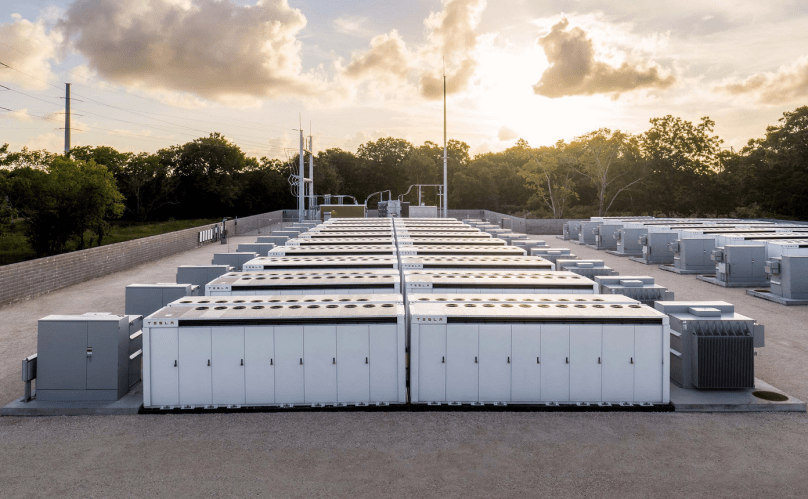
Tesla Megapacks, Angleton, Texas. Courtesy of Tesla, Inc.
When I first participated in a Workshop about Virtual Power Plants (VPPs) hosted by the Electric Reliability Council of Texas (ERCOT or Grid Operator) in May 2022, I learned Tesla created a successful VPP Pilot Program involving 64 Powerwall owners.

Source:  https://www.tesla.com/support/energy/powerwall/own/ercot-demo (accessed 10/23/2022)

Tesla presented the findings of that program to ERCOT in the VPP Workshop, and provided detailed data to ERCOT’s oversight agency, the Public Utility Commission of Texas (Commission) about the ability of small batteries to “paint over” the exact reliability signals provided by ERCOT and perform to the highest accuracy with those signals. I wrote about VPPs last June, “Tesla built a demonstration test in which 64 Tesla Powerwall battery owners participated in providing energy as an aggregate. The demo showed impressive performance, proving that there were no technical blocks to these owners providing power to the Texas grid.” 

Both ERCOT and utilities submitted filings on Tesla’s proposal to quickly integrate VPPs in an existing market program called Aggregated Load Resources.  With these stakeholders asking for a brand new market program to transition VPPs to the grid, and Tesla having proved the technology was ready and available today, the Commission supported an official Pilot that would allow companies like Tesla to actually get their customers compensated for the Megawatts they sent to the grid.  

ERCOT’s Landmark Support for Aggregated DER Pilot Project

Now Tesla is part of a much larger Pilot Program.  I was invited to make public comments on Oct 18 before the vote on this proposal, giving me 5 minutes to talk to people involved in decision-making at ERCOT. You can view my comments here

When the Board of Directors at ERCOT voted unanimously to approve the Aggregated Distributed Energy Resource (DER) Pilot Project, I knew we were witnessing history! 

This opens the way to allow all energy providers in Texas to choose to participate to aggregate energy stored in their customer’s Tesla Powerwalls, and deliver that energy to the grid during times of peak need.

Enrolling customers who have Tesla Powerwalls into VPPs also makes entire fleets of electricity customers smarter consumers in the days and hours before a weather crisis:  with more customers ready and able to switch from grid-sourced power to self-produced power or vice versa, automatically doing so in a VPP in real-time, responding to what the grid needs, means utilities will struggle less to find the demand reductions they need to keep critical feeders and neighborhood lights on.  

Tesla Powerwalls preparing for anticipated storm. credit James Locke.

CHALLENGES

The Aggregated Distributed Energy Resource Task Force (ADER Task Force) has an important responsibility. The ADER Task Force met monthly to assist ERCOT in developing the VPP program.  Members of the public are encouraged to participate. The Task Force is formed of 20 experts selected by the Commission and will convene for at least three years to build a strong DER pilot program. Jason Ryan is the Chair and Arushi Sharma Frank is the Vice Chair.

Pictured:  Jason Ryan (CenterPoint Energy, Houston) Arushi Sharma Frank (Tesla, Inc.) speak at an ADER Task Force monthly Workshop in Texas, open to the public. The co-sponsor of the ADER Task Force, Commissioner Will McAdams joins them for comments. 

ADER Task Force has monthly Workshops open to the public. The 1st Workshop was on Aug 17, the 2nd Workshop on Sept 12, and the 3rd Workshop was on Oct 12. 

Get Megawatts in the Market by February 2023

At the first ADER Task Force Workshop, Arushi explained the goal to get Megawatts in the Texas market, “One of the things that I want to mention is that the first goal for us as a team is to figure out what we do to get something done by the end of the year that will allow us to just get Megawatts in the market. All of the objectives we have are about studying the impact on the distribution system, studying reliability value, studying cost allocation, and studying the effectiveness of VPPs providing service to the grid. We’re not going to have that data if we don’t get the Megawatts in.” (The end-year goal has since moved to Feb 2023)

Phase One – ADER Pilot Program

The ADER Task Force is delivering on several objectives laid out in the sponsoring Texas Commission’s Memo.   These topics present challenges to overcome and also represent core success metrics that the ADER Task Force wants to build over the next three years.  

The ADER Task Force meetings have included materials shared with the public at every meeting (you can find them in Texas PUC Project Number 53911).  In the first of many quarterly reports the Task Force will file publicly, they shared challenges and insights that needed to be gained in “Phase 1” of the ADER Pilot Program: 

“1. Assess the operational benefits and challenges of ADERs and address those challenges to allow meaningful use of ADERs; 
2. Understand the impact of having ancillary services and energy delivered by ADERs and assess how ADERs can best be used to support reliability; 
3. Assess challenges to incentivizing competition and attracting broad ADER participation while ensuring adequate customer protections are in place;
4. Allow Distribution Service Providers (DSPs), the Commission, and others to study distribution system impacts of ADERs which inject to the grid; 
5. Evaluate the impacts to transmission system congestion management associated with the dispatch and settlement of ADERs at a zonal level; and 
6. Identify potential pilot project enhancements and study the need for and benefit of transitioning distribution-level aggregations to different levels of more granular dispatch and settlement and evaluate more complex use cases and business models.”

Source: Page 5, first ADER Task Force Quarterly Report, available at https://interchange.puc.texas.gov/Documents/53911_18_1241809.PDF 

Technical Challenges

In the October Workshop, Arushi explained some additional behind-the-scenes challenges faced that I was not aware of, related to integrating various distributed technologies customers have with multiple energy providers or utility systems.   “It is hard actually to do third-party integration for anything – I mean we still have iPhones and Androids with separate chargers – we can’t just plug one charger cable into the other product,  and the same is true for the most sophisticated inverter-based technology out there today. We do not have universal interoperability as a standard, and the closest thing that we’ve come to it as an industry, at least in this country, is 2030.5 and that is a big struggle [to implement] for OEMs and manufacturers of inverter- based products.”

In the early days of developing the ADER Pilot, Arushi also published a technical note explaining core challenges and guiding principles under which Texas will learn from by doing its first VPP program.  Those included: (i) understanding the impact of carrying ancillary services (grid reliability services like balancing demand and supply in real-time) on the distribution system (the low voltage lines carrying electricity from consumer homes) (ii) getting competition in VPP programs in competitive electricity choice areas of Texas (iii) understanding if there will ever be enough VPP batteries out there to cause congestion related to “exporting” energy back to the grid and how ERCOT will handle that (iv) how to help customers understand their compensation and ways to participate under new VPP programs, and (v) ensure that VPP programs can evolve and scale over time but remain simple and easy to understand for customers. 

CONCLUSION

The Electric Reliability Council of Texas (ERCOT) has a huge task, and that is to manage the flow of electric power to more than 26 million Texas customers — representing about 90 percent of the state’s electric load. ERCOT’s Board voted unanimously to approve the Aggregated Distributed Energy Resource (DER) Pilot Project, ushering in a new era for sustainable energy in Texas!  But, there are challenges and here are just a few,

  • Get competitive power providers to enroll customers.  This process should be simple and easy to understand for all customers.
  • Complete ERCOT approvals by January 2023
  • Send Megawatts to the grid by February 2023 

This article went into great detail and will be a great reference to anyone interested in either observing or participating in the growth of sustainable energy in Texas and beyond. 

Austin, Texas. Dawn of Liberty. Goddess of Liberty at Sunrise. Over the Texas State Capitol Building. Shot with special permission. Christopher Sherman

I would love to share four more interesting articles with you that relate to Tesla Energy!

What is ERCOT? The Electric Reliability Council of Texas (ERCOT) manages the flow of electric power to more than 26 million Texas customers — representing about 90 percent of the state’s electric load. 

Article Exclusive to What’s Up Tesla – October 23, 2022. All Rights Reserved. “My goal as an author is to support Tesla and Elon Musk in both making lives better on earth for humans and becoming a space-faring civilization.” – Gail Alfar Header Image is Courtesy of Tesla, Inc.

One-Time
Monthly
Yearly

Make a one-time donation to support What’s Up Tesla

Make a monthly donation to support What’s Up Tesla

Make a yearly donation to support What’s Up Tesla

Choose an amount

¤5.00
¤15.00
¤100.00
¤5.00
¤15.00
¤100.00
¤5.00
¤15.00
¤100.00

Or enter a custom amount

¤

Your contribution is appreciated.

Your contribution is appreciated.

Your contribution is appreciated.

DonateDonate monthlyDonate yearly
PUC Chairman Peter Lake and ERCOT CEO Pablo Vegas

Texas Public Utility Commission’s ADER Task Force: A Simplified Overview

PUC Chairman Peter Lake and ERCOT CEO Pablo Vegas

The Public Utility Commission of Texas is taking steps to enhance the state’s energy grid through the creation of an Aggregated Distributed Energy Resources (ADER) Pilot Task Force. This task force aims to make the energy system more reliable and efficient. Here’s a breakdown of what this means in simpler terms:

Formation of the ADER Task Force

The commission has set up a team called the ADER Task Force to launch a pilot project involving Aggregated Distributed Energy Resources. These resources are various forms of sustainable energy generation spread out across the grid. The goal is to improve the way they work together. During a workshop in July 2022, they collected input from different groups on how this task force should operate. 

Task Force Members

The commission has selected members for the task force, and they come from different parts of the energy industry. This includes companies that deliver electricity (Transmission and Distribution Service Providers), those that sell electricity (Retail Electric Providers), companies providing ADER services, and experts in energy technology and policies. There’s also a Vice Chair to help lead the group.

What the Task Force Will Do

The main job of the task force is to provide recommendations and support for a new program called the ERCOT ADER Pilot Program. ERCOT is the organization that manages Texas’ electricity grid. Here are the key tasks of the task force:

  • Recommendations: They’ll give advice on how the ADER Pilot Program should work based on certain principles and goals.
  • Governing Document: They’ll help create a document that outlines how the ADER Pilot Program will be run and suggest changes to the rules if needed.
  • Business Procedures: They’ll develop rules and agreements for companies to share information and services related to ADER customers.
  • Milestone Development: They’ll work with potential participants to set goals for the program and discuss any problems that come up.
  • Quarterly Reports: They’ll provide regular updates to the commission on how the program is going and suggest changes if necessary.

The task force will make sure that these changes benefit the electricity system and don’t harm it.

Task Force Participation

The task force has specific rules about who can be a member. There are representatives from different types of companies, and the Chair and Vice Chair are chosen by the commission. The group may also have liaisons from other organizations related to energy. Being on the task force doesn’t guarantee participation in the pilot program.

Meetings and Public Involvement

The task force will meet regularly, and the meetings will be open to the public. They will provide information in advance, allow public comments, and consider the opinions of others. There may also be additional technical meetings and public workshops.

Reports

The task force will create reports every few months. These reports will contain recommendations for changes to improve the energy system. The first report is due in September 2022 and will focus on the rules for the ADER Pilot Program.

Duration and Oversight

The task force will be active for the duration of the ADER Pilot Program, which is expected to last at least three years. The commission will review membership each year and can remove members who aren’t participating. If needed, they can fill empty positions.

Antitrust Rules

The commission is making sure that the task force members and others involved in its activities don’t engage in practices that break antitrust laws. They want everything to be fair and legal.

Families on a Texas Beach, Credit Tyler Nix - Unsplash
Families on a Texas Beach, Credit Tyler Nix – Unsplash

Article by Gail Alfar. Exclusive to What’s Up Tesla – This blog post was created utilizing STARLINK satellite services. All Rights Reserved. September 1, 2022. If you can support this blog financially, info is at “How You Can Support.”

As Batteries begin to replace fossil fuel power plants, what are 4 challenges to overcome?

Tesla Megapacks at Alaska’s Kenai Peninsula. Credit: Tesla

You are living in the early stages of the transition to clean energy.  In the coming years, expect most gas and coal peaker plants to close.  These will be replaced with battery storage of mostly solar energy. 

This article is about four challenges that will be overcome for this incredible transition to succeed.

UPDATE: Elon Musk saw this article on Twitter, and replied to it on July 25, 2022, calling it a “Good article.” I hope that you’ll enjoy it as well!

#1 Increasing Supply of Refined Lithium

There is currently not enough refined Lithium, and this provides a challenge in the transition to clean energy. Tesla is working to scale battery production with refined Lithium at Giga Nevada and the new Megafactory in Lathrop, California.

At the Q2 2022 Earnings call, Elon Musk emphasized the need for more refined Lithium, the component needed for batteries.  Elon said, 

“I’d like to, once again, urge entrepreneurs to enter the lithium refining business.”  Elon Musk

Elon Musk revealed in a recent interview with Johnna Crider that extremely pure battery-grade lithium hydroxide or lithium carbonate is needed to prevent breakdown in the battery cell, 

“For example, with lithium, it’s more lithium refinement than it is the actual mining. So you better take the ore that contains lithium, and you’ve got to refine it and get it to battery-grade lithium hydroxide or lithium carbonate. And it has to be extremely pure. Otherwise, you could have a breakdown in the cell.” Elon Musk

#2 Scaling Battery Manufacturing

Scaling battery production is a constant challenge as processes must always be flexible enough to improve.

Building batteries faster and at larger scale will occur in order for our world to transition to clean energy. Tesla is addressing this challenge and currently building batteries ranging in size from 13.5 kWh Powerwall to 3000 kWh (3 MWh) Megapack.  Large and small batteries are needed to combine with others to form massive power plants, replacing old-style gas and coal energy with solar. 

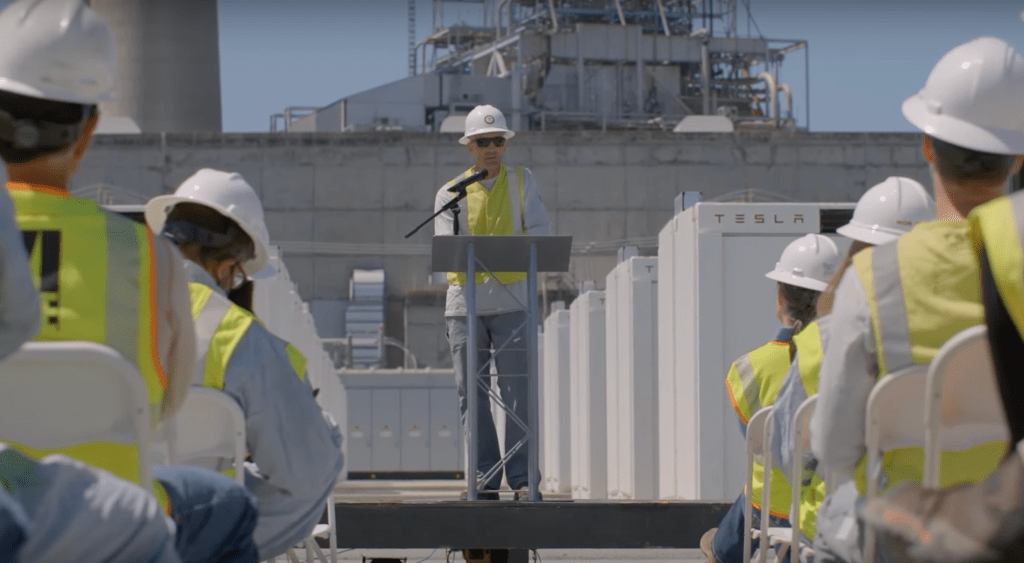
Tesla Energy Engineer Mike Snyder speaks against the backdrop of 256 Tesla Megapack battery units on 33 concrete slabs at Moss Landing

Mike Synder of Tesla Energy, spoke at the opening of Moss Landing Elkhorn Battery last month, saying Megafactory Lathrop will produce ~ 40 GW hours of Megapacks a year,

“The Megafactory fully ramped can produce up to 40 GW hours of Megapacks per year.  For context, 40 Gigawatt hours is approximately 50 of the projects you see behind us here, being produced each year here in California and really around the world.”

#3 Working with Existing Infrastructure to Streamline Clean Energy Installations

Tesla Megapacks, Angleton, Texas. cr: Tesla

It is difficult to integrate the existing older infrastructure seamlessly with Tesla’s new hardware and software system, and it has to be done.  Moss Landing near Monterey, California is a location known for decades as exclusively a gas peaker plant site. Thus, it contains physical infrastructure needed to wire energy to customers. Snyder spoke about this challenge,

“There’s a lot of work and figuring out how to integrate these large projects into our existing infrastructure.

As the projects become larger and larger and more powerful those problems become more nuanced and more complicated to solve, and we all have to work to do that together.

Its about landing the wires here at a critical substation, like Elkhorn, or it’s about assessing the grid impacts at different interconnection points in the grid.

All of those problems become much more interesting for engineers and much more complicated to solve, and we need to be doing that together.

And really, as we grow we need to collectively assess how best to leverage such a flexible, fast-acting, bidirectional resource like we’ve never really had. It’s truly an exciting time to be in the industry!”

#4 Updating Local Policy to Encourage Virtual Power Plants

As Tesla Energy works to meet the demand for battery storage systems with Megapacks, another way to meet demand is through aggregating together Tesla Powerwalls that individual people like you and I own to form Virtual Power Plants.

It takes time and effort to change old ways of thinking at state and local levels.  Tesla’s Energy Policy team is working in my home state of Texas to help get virtual power plants online.  I wrote about that last month in “Tesla’s Texas Virtual Power Plant ASAP.”  Although the process might seem slow as molasses in wintertime, eventually it will happen, and there are things you can do to support these efforts! (I list some at the end of this article).

It was a change in policy for PG&E to allow ~1500 California residents who own home Tesla Powerwall batteries to volunteer to join together to form a virtual power plant.  PG&E announced they will “call load management events for participating customers, directing their battery to discharge when there is high demand for electricity.” 

A positive policy change led to the “Emergency Load Reduction Program [ELRP]” which aims to discharge stored battery energy to the grid during high electricity demand. Tesla Powerwall owners are the foundation of this program. According to a news release, the ELRP is managed by PG&E, San Diego Gas & Electric, and Southern California Edison. 

These programs and similar ones will eventually be seen in many states and in countries around the world over time.

CONCLUSION

  • Having a constant and reliable source of refined grade lithium is a challenge.  This must be achieved in order to scale battery manufacturing.
  • Tesla Energy leader Mike Synder voiced the challenge of working with existing infrastructure.   “There’s a lot of work and figuring out how to integrate these large projects into our existing infrastructure. As the projects become larger and larger and more powerful those problems become more nuanced and more complicated to solve, and we all have to work to do that together.” 
  • Local policies are a challenge.  Transitioning to clean energy means giving up the old ways of relying on gas peaker plants.  Tesla Energy Policy team aims to continue to work with local policy leaders in order to speed up the transition to sustainable energy.

Here are a few ways you can help:

If you own a Tesla Powerwall, sign up to participate in a pilot program if it is available in your state.  Currently, Texas has a three-year pilot program in the planning stages!

Join the Bros. for Decarb. Their motto is “just a group of Bros who care about decarbonizing the global economy as fast, cheap and reliable as possible.”  They can be found on twitter and they also sell t-shirts with LFDECARB to subtly remind us that the Southeast is often ignored in DECARB.  All their profits go to @energyalabama

Photo in downtown Austin, Texas by Karsten Winegeart on Unsplash

I would love to share a few more interesting articles with you that relate to Tesla Energy!

Article by Gail Alfar. Exclusive to What’s Up Tesla – This blog post was created utilizing STARLINK satellite services. All Rights Reserved. July 24, 2022. If you can support this blog financially, info is at “How You Can Support.”

One-Time
Monthly
Yearly

Make a one-time donation to support What’s Up Tesla

Make a monthly donation to support What’s Up Tesla

Make a yearly donation to support What’s Up Tesla

Choose an amount

¤5.00
¤15.00
¤100.00
¤5.00
¤15.00
¤100.00
¤5.00
¤15.00
¤100.00

Or enter a custom amount

¤

Your contribution is appreciated.

Your contribution is appreciated.

Your contribution is appreciated.

DonateDonate monthlyDonate yearly

Tesla’s Texas Virtual Power Plant ASAP

Tesla Solar, Powerwalls, and Home Charging [credit: Tesla]

Hello and welcome back to “What’s Up Tesla.” I’m excited that the kids are out of school, and that summer has arrived.  Here in Texas, it seems every summer I hear a similar sentiment, “This one is going to be a hot one!”  This summer Texas could meet power demands better because Tesla is offering ERCOT an immediate solution.

Some weeks ago, Texans were warned by ERCOT, “With unseasonably hot weather driving record demand across Texas, ERCOT continues to work closely with the power industry to make sure Texans have the power they need. This afternoon, six power generation facilities tripped offline resulting in the loss of approximately 2,900 MW of electricity. At this time, all generation resources available are operating. We’re asking Texans to conserve power when they can by setting their thermostats to 78-degrees or above and avoiding the usage of large appliances (such as dishwashers, washers, and dryers) during peak hours.”

During this hot summer, Tesla is fully prepared to step in with a smart solution to the problem.  I learned details about this during a Workshop I attended on May 31. “Tesla Virtual Power Plant Workshop, Related to OBDRR041” was hosted by ERCOT and led by leaders at Tesla Energy.

Tesla Powerwall owners are an important and untapped resource for energy

Tesla battery storage at a home in Texas. Credit: MojoSusan

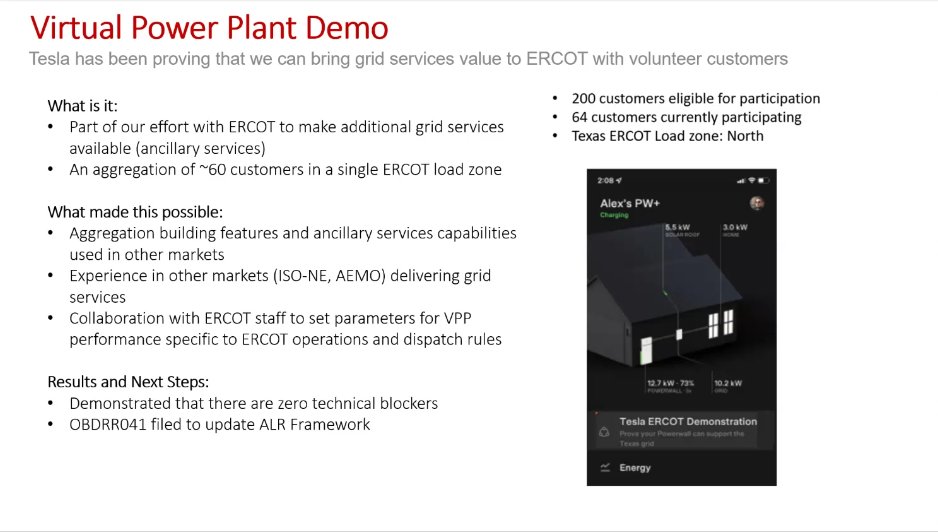
Tesla Powerall owners are an important but untapped resource for energy. Minor changes to ERCOT’s current practices can ensure a stable grid in Texas. Owners could act as an aggregate source of power, forming a Virtual Power Plant. Tesla built a demonstration test in which 64 Tesla Powerwall battery owners participated in providing energy as an aggregate. The demo showed impressive performance, proving that there were no technical blocks to these owners providing power to the Texas grid. 

“Nothing in Texas today lets homes behave like a hive mind and deliver clean MWs 24x 7 to the grid.” – Arushi Sharma Frank, Tesla Policy/Energy

Tesla is requesting for ERCOT to allow all interested Powerwall owners to contribute to the Texas grid as a combined cluster. All that is needed are minor changes to ERCOT’s current practices. Tesla’s slide presentation for their “Virtual Power Plant Workshop, Related to OBDRR041” was well done and informative.  I am sharing some of it here:

Problem Statement
Texas needs all available, affordable, dispatchable electric capacity/resources mobilized to address grid reliability challenges
Distributed energy resources are available today, but are unrealized dispatchable assets to ERCOT

Short-Term Solution
Minor changes to an existing, unutilized ERCOT market design concept developed 9 years ago, could immediately unlock grid reliability services from small distributed energy resources that can be dispatched as an "aggregation"

Tesla proved that it can bring grid services value to ERCOT with volunteer customers.
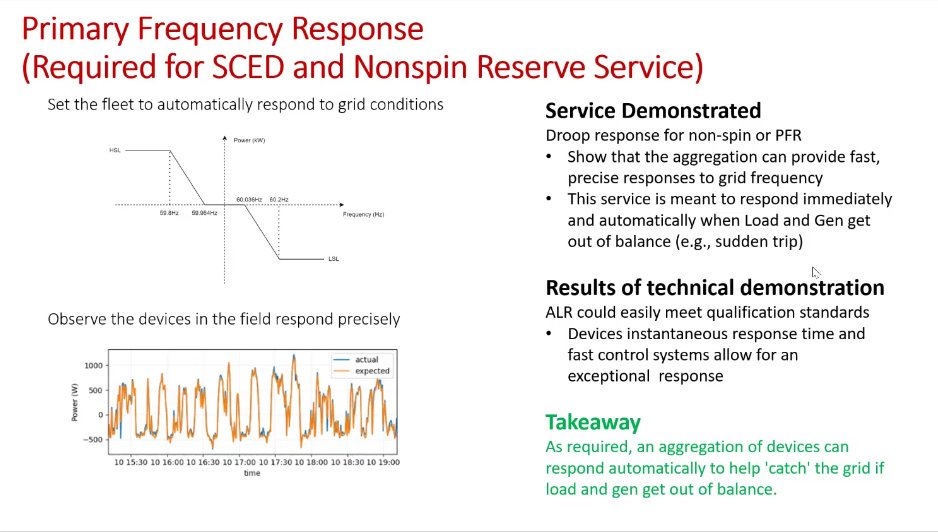
Tesla shows that distributed systems can respond in minutes or even seconds (faster than most gas or coal power plants).
These aggregated resources (batteries in this case) could also provide primary frequency response. The response is “immediate and automatic” to stabilize the grid.

In Summary

Tesla is offering a proven solution to the fragile Texas grid, currently operated by ERCOT. Tesla proved that their Virtual Power Plant can work extremely well. Their VPP can act fast, respond to load demand, and thus ensure that Texans’ energy needs are met. All that is needed is a small change in ERCOTS’ current practices for this to be a reality.

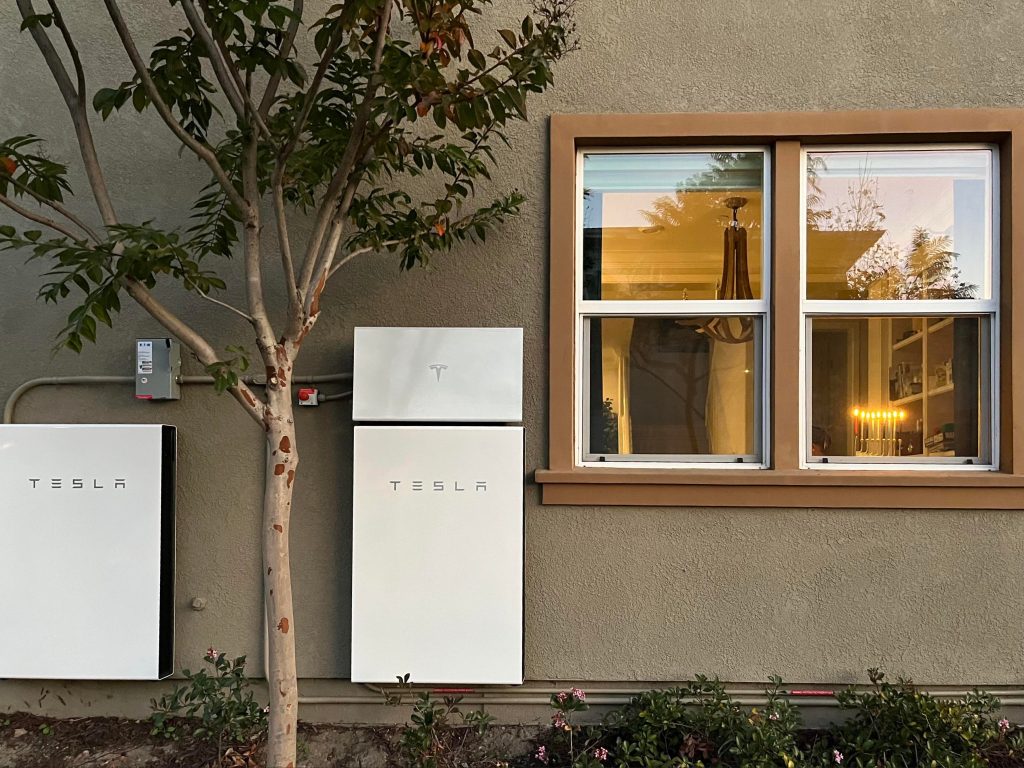
Tesla Powerwalls keep the lights on for Hannukah for one family. Credit: u/rocher

My thoughts

Tesla’s powerful energy software has precise capabilities to deliver stored energy to power a homeowner’s home and electric car, keep power stored up and also send energy to most local utilities for their use.  However, as Arushi Sharma Frank, Tesla Policy/Energy, explained clearly via twitter after the workshop, “Nothing in Texas today lets homes behave like a hive mind and deliver clean MWs 24x 7 to the grid.”  She explained that the main thing slowing down Tesla from unleashing this powerful lifesaving technology is “technical acrobatics.”

I listened to some of these “technical acrobatics” during the workshop, and as the minutes wore on, I was invited to comment.

I took the opportunity to explain that as a Texas-Registered Nurse, I am in the business of caring for families, some of whom were deeply affected by the last severe power outage in February 2021.  I explained that since Tesla has already demonstrated that they can provide power reliably through volunteer Tesla Powerwall owners, there should be no delay in allowing full participation as soon as possible. As a healthcare provider, I advocate for people in need. Having power is important to people’s health.

If you would like a closer look at Tesla’s excellent 24-Slide Presentation, the link is here. My article featuring Texas homeowners’ experience with Tesla Solar and Powerwalls is here.

Austin, Texas. credit unplash

Gail Alfar, [Edited by Sarah Alfar] Exclusive to What’s Up Tesla – This blogpost was created utilizing STARLINK satellite services. All Rights Reserved. June 4, 2022

One-Time
Monthly
Yearly

Make a one-time donation to support What’s Up Tesla

Make a monthly donation to support What’s Up Tesla

Make a yearly donation to support What’s Up Tesla

Choose an amount

¤5.00
¤15.00
¤100.00
¤5.00
¤15.00
¤100.00
¤5.00
¤15.00
¤100.00

Or enter a custom amount

¤

Your contribution is appreciated.

Your contribution is appreciated.

Your contribution is appreciated.

DonateDonate monthlyDonate yearly