(Austin, Texas) Here, we’ll continue on our series where the discussion escalates from advanced AI and robotics into another frontier: nanotechnology and true atomic-scale manufacturing.
ELON MUSK:“Well, I think if you reframe things in terms of progress bar, like speaking of challenges. Progress towards a Kardashev 2 scale civilization”
Peter Diamandis introduces the idea of “atomic reassembly”, which is rearranging atoms precisely to build anything, like a sci-fi replicator.
Elon quickly connects this to current reality, noting that semiconductor fabs already achieve atomic-level precision for circuits (down to 2–3 nanometers, or roughly 4–9 silicon atoms wide).
Elon points out that today’s “2nm” process nodes are often marketing hype, but the core requirement remains near-atomic accuracy. Atoms must be placed exactly right.
Elon then drops a provocative critique: modern chip fabs are designing their ultra-cleanrooms wrong (overly focused on making the entire massive building sterile, with extreme air filtration and bunny suits that slow everything down).
Elon makes a confident bet: Tesla will build its own 2-nanometer fab (possibly a massive “TeraFab” to meet exploding AI chip demand), and it will be engineered so effectively that he can eat a cheeseburger and smoke a cigar right inside the fab without contaminating the wafers.
When pressed on how this avoids “cheeseburger grease” ruining the chips, Elon explains the key insight: maintain complete wafer isolation throughout the process, which is possibly the default in advanced fabs anyway.
Wafers travel sealed in boxes filled with pure nitrogen gas under slight positive pressure, creating an oxygen-free “nitrogen blanket” that kills bugs and blocks contaminants (Dave Blundin jokingly compares it to bananas at Walmart, preserved with similar insecticide-like methods). Combustion (like cigar smoke) needs oxygen to thrive, so the isolated system stays pristine while the human environment becomes far more livable and efficient.
The Transcript:
Peter D.: And then we get to nanotechnology, which takes it even a step further.
Elon: The thing about the—well, I’m not sure what you mean by—you mean like little nanobots?
Peter D.: Atomic reassembly.
Dave B.: Yeah.
Elon: Oh, yeah, yeah, sure, sure. I mean, we’re already doing atomic level assembly for circuits, you know.
Peter D.: Amazing. Two, three nanometers.
Dave B.: Yeah.
Elon: It’s only depending on how they’re arrayed. Four or five silicon atoms per nanometer. Yeah. So those are big atoms, though. They’re biggish.
Dave B.: Yeah, they’re not your little—
Elon: I mean, I’m saying they should actually describe the circuits in terms of an integer number of atoms in a specific place.
Dave B.: They should. It’s all angstroms now.
Elon: It’s just an integer. It’s like—we’ll call this the seven atom. Yeah, whatever. Yeah, like you say two nanometers, it’s…
Peter D.: Like no one knows.
Elon: Nine silicon atoms, something like that. They’ve got silicon and copper and you know, so. But a bunch of these things are just marketing numbers. Like the 2 nanometer is just a marketing number. Oh yeah. But you still need essentially close to atomic level precision. Like the atoms really, you need to be in the right spot.
So I think they’re getting clean rooms wrong by the way, in these modern fabs. I’m going to make a bet here.
Peter D.: Okay.
Dave B.: Okay.
Elon: That Tesla will have a 2 nanometer fab and I can eat a cheeseburger and smoke a cigar in the fab.
Peter D.: The air handling would be that good.
Dave B.: Do you have this sketched out in your mind? How are the atoms being placed? That they’re immune to cheeseburger grease.
Elon: They just maintain wafer isolation the entire time, which is actually the default for fabs. The wafers are transported in boxes of pure nitrogen gas under a slight positive—
Dave B.: So are the bananas at Walmart, just so you know.
Elon: Yeah, well that’s, it’s insecticide essentially. Like it’s pretty hard for anything that’s combusting to live without oxygen. Yep. So let’s talk about—so you like, you can kill the bugs just by putting a nitrogen blanket.
This leads into broader implications for radical abundance: if we perfect atomic reassembly at scale, manufacturing costs plummet, goods become nearly free, and humanity’s grand challenges shift dramatically.
(Austin, TX) The setting is Tesla Gigafactory Texas, in Austin, the lobby is futuristic, Elon sits intentionally in front of a mural for Cybertruck with a prototype of a Cybercab right behind him. You can feel his confidence as he relaxes in his jeans, black T-shirt, and cowboy boots. This is a man who is changing the world.
THIS ARTICLE WAS UPDATED ON JAN 18TH, 2026
As the interview starts, Peter asks Elon how he is, and Elon responds, his mind on chips for Tesla, “Right now, putting a lot of time into chips”
I recall when I accompanied Johnna Crider to interview Elon in 2022. Then, you’d ask Elon how he was, and he had his mind on scaling production. Elon is deeply involved with his teams at Tesla, I think it may be what occupies his thoughts the most. Today, Peter asks Elon if he is personally putting a lot of time into chips. Great point, as most CEOs “tell” others to do the hard work. With Elon, he does the hard work. He always has. In fact, shortly after this interview, Elon posted here on X indicating his immersion into Tesla Chip design.
Diamandis: You are personally? (putting time into chips?)
Elon Musk: Yeah
Blundin: With some AI assistance, I assume…
Dave Blundin has joined this interview, taking time off from teaching his AI class at MIT.
Elon Musk: Not enough, haha. It’d be nice if we could just hand it off to the AI.
Blundin: I tried to do some circuit design actually with AI recently, just a couple weeks ago. Not happening yet.
Elon Musk: Ahh, very soon, though. I think probably at this point, Grok, if you took a photo and submitted to Grok, it could probably tell you if a circuit is—if there’s something wrong with it.
Blundin: All right, I’m going to give it a shot. You’re using the same Grok that I’m using?
Elon Musk: Grok keeps updating.
Dave Blundin: So 4.2. But 5 is soon, right?
Elon Musk: 5 is Q1. 4.2 has not been released yet externally, but yeah, I mean, if you just upload an image into Grok, it does quite a good job of analyzing any given image. Let’s see if I take a picture of you. What is it? Let’s see what it does
Diamandis: Yeah. What’s it going to say about me?
Blundin: Yeah, it’s going to say you’re a flawed circuit.
Elon is updating his phone’s Grok app, “I also have to remember to update it because we update the Grok app so frequently,” as the update happened, Peter Diamandis confesses he asked Grok to roast Elon.
Diamandis: I asked Grok to roast you. And I spit out my coffee. It was hilarious.
Elon Musk: Just say, be more vulgar. Just keep telling it to be more and more vulgar, until it’s like, haha, mother of god!
Blundin: Is Bad Rudy still out or did that get repealed? Bad Rudy’s still there?
Elon assures Dave Blundin that the Grok AI companion, Bad Rudy, is still around.
Diamandis: And I asked Grok, does Elon know what you say about him? And she goes—it’s a she for me—she goes, “What is he going to do about it?”
Elon Musk: HAHAHA, What is he going to do about it? Yeah, let’s see (shifting focus) Okay, so I just literally took a photo of you and it will tell you what it is.
Peter Diamandis: Did you ask it a question?
Elon Musk: No, nothing. I didn’t say anything, there’s no context whatsoever.
Elon shows Grok’s reply about the picture, “He’s wearing a black quilted jacket featuring a Sundance logo. Not quite true. It’s my Abundance logo.
Blundin: A little wrinkled on the clothing.
Elon Musk: Anyway, yeah, but basically, it’s pretty damn good. Yeah. “He’s smiling and relaxed with a laptop in front of him”. Should we say, Roast him.
Diamandis: It has to be read by you, though.
Elon Musk: I mean, I won’t read the whole thing, but—
Peter Diamandis: Give me a taste. I can take it.
Elon Musk: Okay (He reads part of Grok’s roast of Diamandis). “Check out that grin, dude. Smiling like you just discovered a new way to monetize hope”.
Cameron’s Movie vs. Star Trek
Diamandis: I want to try and answer the question, can AI and tech help save America and the world? I want to give people listening a dose of optimism. There’s a survey done in mid-December by Pew that said 45% of Americans would rather live in the past and only 14% said they’d rather live in the future. Which is insane to me. Obviously they never read history. The challenge is most Americans, all they have of the future—it’s like Hollywood has shown us killer AIs and rogue robots. Right. And people are worried about their jobs, they’re worried about health care, they’re worried about the cost of living. The challenge is how do we help people? I mean, you posted, you pinned on X: “The future is going to be amazing with AI and robots enabling sustainable abundance for all.”
Elon Musk: I was thinking of you when I did that. I was thinking, What would Peter Diamandis say? I was channeling you, haha!
Diamandis: Thank you. Thank you. I couldn’t agree more either. So my question is from a first principle standpoint, right. The rationale for optimism, you know, how do we head towards Star Trek and not Terminator?
Elon Musk: Towards Roddenberry, not Cameron? It’s the diverging path meme.
Diamandis: Avatar has some hopeful parts, but anyway, how do we go towards universal high income instead of social unrest?
Elon is realistic, and when Peter suggests an either/or scenario here, Elon sees both happening. Here he explains why.
Elon Musk: Well, because there’s going to be so much change, it’s sort of the, you know, it’s like, be careful what you wish for, because you might get it. Now if you actually get all the stuff you want, is that actually the future you want? Because it means that your job won’t matter.
Diamandis: If you’re living an unchallenged life. With no challenges. No. You know, if you become a couch potato, if it’s a WALL-E future, it does not go well for humans.
A WALL-E future means a dystopia where humans become lazy, overweight couch potatoes, totally dependent on technology and automation, with zero challenges or effort in daily life—like the bloated, screen-addicted people floating around in the movie WALL-E. It’s the warning: remove all struggle and difficulty, and humanity atrophies fast.
Blundin: And we’re used to being told, here’s your challenge. So people haven’t historically been very good at creating their own challenge.
Diamandis: I think Elon does a damn good job. Every time one company takes off, you start your next.
Elon Musk: I’m a glutton for punishment.
Diamandis: I think you are, thank God for that.
Elon Musk: So why do I do this to myself?
Blundin: Actually, after AI and robots, is there another thing after that?
Diamandis: Well, there’s always space conquering, you know, the universe.
Elon Musk: Oh, it’s just rocks, really! Hahaha! We just need to get there.
Diamandis: Why, Elon? Why are you so optimistic? Are you optimistic? Let’s start there.
Elon Musk: I’m not as optimistic as you are, but I’m more optimistic than most people.
Peter Diamandis really wants to know WHY Elon Musk is so optimistic. He will continue to press for an answer, and it is interesting, as Elon does not directly answer his question, and I’m including one of Elon’s most famous quotes, and my personal favorite for you!
“Better to live life erring on the side of being optimistic and wrong than pessimistic and right!
Be realistic, but, as Monty Python would say, always look on the bright side of life!”
Better to live life erring on the side of being optimistic and wrong than pessimistic and right!
Be realistic, but, as Monty Python would say, always look on the bright side of life! https://t.co/ISdddxdpQl
2025 Bloomberg Clip Highlights Collaboration on AI, Self-Driving, and Humanoid Robots
A video clip from Nvidia CEO Jensen Huang’s Bloomberg Technology interview, originally aired on May 28, 2025, has gone viral again on social media, fueling excitement about Tesla’s robotics ambitions and broader partnerships with Elon Musk.In the segment, host Ed Ludlow asked Huang about Nvidia’s deepening ties with Tesla and xAI across AI computing, autonomous driving, and robotics.Huang lavished praise on Musk and his ventures, calling his work across multiple fronts “world class” and “revolutionary.”
Here is the verbatim quote from the clip:
“Elon is just an extraordinary engineer, and I love working with him. We’ve built some amazing computers together. We’re going to build many more computers together. The work that he’s doing in Grok, his self-driving car, his Optimus—these are all, every single one of them, world class. Every single one revolutionary. Every single one of them are going to be gigantic opportunities. And we’re delighted, I’m delighted to be working with him on that. So I think the Optimus opportunity is just right around the corner. It’s very likely that humanoid robots are going to be robots that we can deploy into the world relatively easily, and this is the first robot that really has a chance to achieve the high volume and technology scale necessary to advance technology. And so I think this is likely to be the next multi-trillion dollar industry.”
Huang emphasized Tesla’s unique manufacturing expertise as a key enabler for scaling Optimus to high-volume production, setting it apart from competitors.
The clip was reposted on X on January 1, 2026, by prominent Tesla supporter CB Doge.
LONDON — Thanks to Elon Musk and the innovative team he has assembled at Neuralink, Jon L. Noble, a 42-year-old British Army veteran and former paratrooper from Hampshire, has become the fifth UK patient to receive the company’s revolutionary N1 brain-computer interface implant. The procedure took place on December 11, 2025, at University College London Hospitals’ National Hospital for Neurology and Neurosurgery, as part of the ongoing GB-PRIME study launched last July.
From Application to Implantation
Noble, who served in elite airborne units before a spinal cord injury left him with severe paralysis, qualified through Neuralink’s patient registry. These are the beginning stages of trials, so the registry prioritizes stable candidates aged 22-75 with quadriplegia or similar impairments from trauma or ALS. Jon’s selection came after rigorous screening, including medical evals to ensure surgical viability and long-term participation in data collection.
In a September 3 X post, Noble expressed his determination: “Great news that Neuralink has just been given the green light to start trials on people with spinal cord injuries. I have submitted my application. @elonmusk NeuralinkUK.”
Rapid Recovery and Calibration
Hours after surgery, Noble began calibrating the coin-sized N1 device. Its 1,024 electrodes, threaded into his motor cortex, translate neural signals into cursor movements. He was discharged after just 12 hours and now trains remotely, with goals to control computers, games, and assistive technology using thought alone. His involvement embodies Neuralink’s compassion towards people who have served in the military, our veterans. Our heros.
Hours after surgery, Noble began calibrating the coin-sized N1 device.
Heartfelt Gratitude to the Driving Force Behind the Breakthrough
In a moving post-op update on X, Noble shared his profound appreciation: “To Elon Musk and all engineers, analysts, designers, and support staff att Neuralink worldwide: Thank you from the bottom of my heart… And of course my outstanding team at The National Hospital for Neurology and Neurosurgery, London.”
Jon’s heartfelt acknowledgment reflects the beautiful impact of Elon’s leadership and the exceptional team he has built, turning his own ambitious ideas into life-changing realities for the people of Britain.
Accelerating Global Expansion
Neuralink’s UK trials, approved by the Medicines and Healthcare products Regulatory Agency, have gained remarkable momentum since the first U.S. success in 2024. This is a testament to the drive to move fast that Elon Musk has instilled in the company. As of mid-December 2025, approximately 19 implants have been completed globally (around 12 in the US and 7 in the UK). The two most recent UK procedures have also been performed, though details on those recipients have not yet been publicly announced.
My thoughts
I anticipate dozens more participants and eventually, thousands of people regaining digital independence through neural intent alone, thanks to the doors being opened by Elon Musk and Neuralink. One reason I am optimistic, is that on Dec 3rd, Neuralink posted a previously unpublished video to X.
DJ Seo and our recruiting team visited several schools to provide an overview of Neuralink, including recent progress updates and an outline for the company’s path ahead. Watch the presentation:
@djseo and our recruiting team visited several schools to provide an overview of Neuralink, including recent progress updates and an outline for the company’s path ahead.
I encourage you to watch the short presentation, in order to understand the challenges that face Neuralink, and follow along in real time. The progress and speed at which Elon works, is embedded with a sharp sense of urgency. The video is inspiring. It is like a mini-AI day, but instead of for Tesla, its for Neuralink!
Elon Musk opened up his Austin home for an interview last week, and you could see his levitating Tesla Cybertruck in the background, along with AI and Mars art. You may watch the full interview on X.
Katie Miller: Nice to see you, Elon. So I want to take us back. It’s January 20th. You are in the Roosevelt Room—if you remember this—getting sworn in, and they hand you a computer and a phone.
Elon Musk: Right.
The DOGE Origin Story & Roosevelt Room Handoff
Miller: I want to go back to what happened next. I think the story of DOGE from your perspective has never been told. What was your first thought on how DOGE was going to proceed?
Elon: Well, I guess I couldn’t believe I was there, for the most part, it’s like, it all seemed extremely surreal at the time. You know, DOGE was a made-up name… that had been made up, I don’t know, two or three months before… and… based on internet suggestions… and… I was going to call it the Government Efficiency Commission, and then… someone on the internet said, “No, it should be the Department of Government Efficiency—DOGE.” I’m like, “That sounds great.” So we just kind of made up a department.
Miller: Do you think you were successful?
DOGE Wins, Waste, Cuts, and Why He’d Never Do It Again
Elon:We’ve been a little successful—somewhat successful, at least.
We’ve cut a lot of funding for things that made no sense and were completely wasteful.
For example, there were probably $100–200 billion a year in “zombie” payments. Simply requiring a valid payment code and explanation before money goes out stopped most of them.
We pushed that change into the main Treasury system and several others.
It seems insanely obvious, but roughly 2–3% of government payments really shouldn’t be happening—and they’re surprisingly hard to kill.
Very few people ever tell the government, “Please stop sending me money.”
Miller: Would you ever do DOGE again?
Elon: Do you mean would I repeat history, or… or would I…
Miller: Two ways to think about it? One is if you could go back and start from scratch—like it’s January 20th all again. Would you go back and do it differently? And knowing what you know now, do you think there’s ever a place to restart? Not saying others in your stead—you go back and restart doing DOGE.
Elon: [Sighs] I mean, no, I don’t think so. Would I do it again? Probably not. I’m not sure.
Miller: Would you do DOGE again knowing what you know now?
Elon: I mean, the thing is, like… I think instead of doing DOGE, I… I would’ve basically built… you know, worked on my companies essentially. So… and not… and the cars, they wouldn’t have been burning the cars.
Miller: You gave up a lot, yeah. When you cut off the money flowing to political corruption, they lash out hard. Big time.
Elon: So they really want the money to keep flowing. … so if you stop it from flowing, there’s like a very strong reaction to… to stopping the money flowing.
Miller: After you were in DC for a while, did you become disillusioned with how it operates?
Elon: Well, I wouldn’t say I was super disillusioned to begin with. I mean, the goal is always to have the government do as little as possible.
The single biggest issue is the massive transfer payments going to illegal immigrants. Essentially we’re paying people to come here from somewhere else, in huge numbers, including flying them in. You don’t need a border wall if you’re flying them in, then fast-tracking them to citizenship, making them dependent on government payments, and counting on them to vote hard left. It’s basically voter importation.
If you create a gigantic money magnet—“come to America from anywhere and we’ll pay you tons of money, give you lots of free stuff”—you’re going to get a lot of people taking you up on that offer.
People say this is fake. I point to Ilhan Omar, who was literally voted into Congress by a large Somali community in Minnesota (which is really far from Somalia), or the pattern we’ve seen with mayors and local officials elected the same way.
And then there’s California, which is the same situation, big time.
Basically, we just don’t want to turn the country into a communist hellhole.
Miller: If you’ve said in the future that no one’s going to need to worry about money or work because AI is going to take care of the rest—AI and robotics. What do you mean that people won’t have to work in the future?
Elon: Assuming the current trend of artificial intelligence and robotics continues—which seems likely—AI and robots will be able to do anything that humans want them to do, essentially. So hopefully not more than that, but AI and robotics will be able to provide all the goods and services that anyone could possibly want.
Miller: But you wouldn’t need to work—like, what would you do with your free time?
Elon: People will be able to do whatever they want with their free time. Work will be optional.
I just want to separate what I wish would happen from what I predict will happen, because people get confused about that. They think that what I predict is what I want.
What I predict to happen is not the same as what I want to happen.
If I could, I would certainly slow down AI and robotics, but I can’t. It’s advancing at a very rapid pace, whether I like it or not.
Miller: Is AI what keeps you up at night?
AI Future: Work Becomes Optional (But Elon’s Terrified)
Elon: It used to be that point… I don’t know. I… I wouldn’t say there’s anything in particular keeping me up at night right now—except that.
But if you ask if I wake up having nightmares? Oh, AI. Yeah. Actually… [laughter] I’ve had a lot of AI nightmares. I had AI nightmares many nights in a row.
What am I supposed to do about it?
Miller: What’s your biggest irrational fear?
Elon: I try not to have irrational fears.
Elon: None.
Elon: If I find an irrational fear, I squelch it. I don’t believe… fear is…
Fear is the mind killer.
Miller: Well, on average, how many hours do you sleep a night?
Elon: Six. You can tell based on my X posts.
Miller: Yes, you can.
Elon: People have actually mapped them, so it’s very clear when I’m sleeping and when I’m not. I tried having less than 6 hours sleep, although I’m awake more hours per day, my cognitive function is reduced. So for my natural sleep… I actually timed it with the phone. They can get a phone app, but time it. It’s 5 hours 56 minutes. That’s what the phone said.
Miller: What’s an average day for you look like?
Elon: Well, I have a lot of inbound communication. So… it’s information triage. I try to segment the days so that there’s not too much context switching because arguably, context switching is difficult. It is hard not to context switch if you’ve got an inbox full of stuff. … but you can think like… if you had to context switch every 3 seconds or every 30 seconds or every 3 minutes, the context switching cognitive penalty would be very high. Every 3 seconds…and you’re talking about switching between, say, Tesla, X… xAI, SpaceX, and personal… SpaceX, then personal. And even within Tesla and… and SpaceX, there are many different things. I’m also getting the stuff on X—like random news things, you know, like people being burned alive and stuff like that. You’re like, what the hell’s going on in this country?
Miller: Who’s the funniest person you know in real life?
Elon: You know, President Trump is very funny. He’s got a great sense of humor.
Miller: President Trump is very funny.
Elon: He’s very funny. He’s like… naturally funny. It is somewhat… effortless. I mean… , you know, when he… had Mamdani in the office and… , they asked him if he… saw… thought the president was a fascist, and the president said, “Just say yes. It’s easier that way.”
Miller: Yeah. [Laughter]
Elon: Don’t worry about it. Just say yes. Awesome.
Miller: Who do you look up to the most?
Elon: The Creator.
Miller: What’s your current position on God?
Elon: God is the Creator.
Miller: You don’t believe in God though, do you?
Elon: Well, I believe this universe came from something. People have different labels.
Miller: When’s the last time you did something extremely ordinary, like go to Target or CVS?
Elon: I can’t go to things where there’s the general public because… , I… I’m there… there’s an immediate… “Can I have a selfie?” line that forms. And… and these days, in particular, in light of Charlie Kirk’s murder, there are serious security issues. It’s not that I don’t want to. I simply can’t.
Miller: Has Charlie’s murder changed how you do things, or were you already locked down pretty well before that?
Elon: It certainly reinforced the severity of the situation where life is on hardcore mode. You make one mistake, and you’re dead. And it only takes one… one mistake.
Miller: What’s one moment in your life that you could live again just to feel it?
Elon: Well, I mean, obviously when my kids were born or the first time SpaceX got to orbit or Tesla made an electric car work.
Miller: You’ve had a lot of them.
Elon: It’s a lot. There’s a lot coming down the pike.
Miller: Like what?Simulation Theory & The One Rule: Keep It Interestingnetflix
Starship, Mars, and Becoming Multi-Planetary
Elon: Starship. The degree to which Starship is a revolutionary technology is not well understood. It’s the first time there’s been any rocket design where full and rapid reusability is possible. This is the first design where success is in the set of possible outcomes.
Miller: Are you talking about V3 or V2?
Elon: We could have made V2 reusable, but there were a lot of performance improvements for V3, so it made sense. There are like 10,000 different changes between V2 and V3.
“There are like 10,000 different changes between Starship V2 and V3” – Elon Musk
Elon: If there are historians in the future, they’ll look back at Starship and say it was one of the most profound things that ever happened.
Historic events fit on the evolutionary hall of fame: single-cell life, multicellular life, mitochondria, plants vs. animals, life going to land. Top 10 is life becoming multi-planetary.
It needs to be sustainably multi-planetary—planetary redundancy. Starship is capable of that for the first time in history. No AI was used to create it, so the AI will appreciate that.
Miller: Are all your companies working toward that goal?
Elon: Tesla is mostly about making sure life on Earth is good. xAI too. Multi-planetary means Earth’s got to be good and you need another planet.
People think going to Mars is an escape from Earth—like billionaires fleeing. No. Mars will be very dangerous, much less comfortable than Earth. Early settlers will have a higher risk of death. Cramped, uncomfortable. Food won’t be as good. You’ll work hard. It may not succeed. That’s the sales pitch.
Miller: Do you want to go?
Elon: Same as when people came to America.
Maybe if there had been social media back then, they would’ve said “We’re all dying” and put a damper on voyages.
Miller: You talk a lot on X about wardrobe—why does current fashion need to evolve?
Elon: My son Saxon said, “Why does everything look like it’s 2015?” And I was like, damn, it does. Stylistically, nothing has changed in a decade. The ’60s, ’70s, ’80s, ’90s all had definitive styles. 2000s and 2010s? Less and less. We should spice it up.
Show someone a picture from 2000 vs. 2025—hard to tell the difference.
Miller: What’s a conspiracy theory you believe in?
Elon: Which ones haven’t come true at this point? We’ve run out.
Elon: Aliens? No evidence. I’ve asked the SpaceX senior team—no one has seen any. UFOs are just unidentified objects—could be weapons prototypes.
Elon: Neil Armstrong—Neil A spelled backwards is Alien. Coincidence?
Miller: You believe we went to the moon?
Elon: We went to the moon a few times. We didn’t just go to the moon. We actually got a little bored and started playing golf on the moon. We literally did. Whacked a golf ball on the moon.
Miller: What’s the biggest misconception about you?
Elon: How would I know?
Miller: Everyone thinks you’re a difficult person to work for. I think you’re very kind. I’ve never heard you yell at an employee. Everyone at your companies is incredibly mission-driven.
Elon: Why would talented people work at the companies if they were mistreated? They’d leave.
Starbase: From Sandbar to Rocket City
Miller: The idea behind Starbase?
Elon: We needed something inspirational. We kind of have a lot of star things, you know. So, we got Starlink, Starship. Well, where would Starship depart from? Starbase? I mean, Starbase is, as you’ve mentioned, it’s like it’s probably the coolest place on Earth.
Miller: I agree.
Elon: …and it used to be nothing but a sandbar at the mouth of the Rio Grande, literally three feet above sea level. We built the biggest rocket factory on Earth there, plus two giant launch towers, right on the riverbank inside the Rio Grande floodplain, on that same sandbar. It had to have an inspirational name, so we called it Starbase. Then we went ahead and incorporated it as an actual legal city. You don’t see brand-new cities get born very often.
Miller: The last time there was a company town, it was Disney World.
Elon: Yeah. I think Ford had some kind of like company town situation, but yeah, Disney World is—it’s literally his name.
Miller: Yeah.
Elon: laughing I’m Walt Disney. This is my world.
Miller: Yeah.
Elon: I’ve gone from land to world. , they got incorporated as a city and got tax exemption which was like a whole big deal.
Miller: Yeah.
Elon: I’ve been to Disney World probably ten times, maybe more than ten, but at least ten.
Katie: Because Cape Canaveral is right next door.
Elon: Exactly — that’s why. Whenever we were down there with the older kids waiting for a launch out of the Cape, the second the scrub or hold was called, the only thing they wanted to do was hit Disney World or Harry Potterland. So we ended up going a lot.
Miller: What’s your favorite ride?
Elon: I’m sort of tempted to say Space Mountain, I suppose. Yeah, probably Space Mountain. I mean, I do think Space Mountain needs an upgrade.
Miller: It’s a little herky-jerky. The—it doesn’t look quite as sci-fi as it used to.
Elon: You know, it’s—it’s like it’s like the day before yesterday’s tomorrow, but just till yesterday.
Miller: What’s your favorite age to parent your kids?
Elon: Generally, kids are the most fun between age five and 10.
Katie: Do you think humanity is inherently good or is it just trying to be?
Elon: The concept of good wouldn’t even exist without humanity. I do think humanity is on balance, good. I generally believe that increasing the amount of consciousness in the universe is a good thing — trying to understand the nature of the universe, which you can only do by expanding conscious awareness.
I’ve thought about how we got here: we started as a hydrogen gas cloud that condensed into stars, those stars exploded, the debris re-condensed into new stars, exploded again, and 13.8 billion years later here we are. One fun question is: how many times have your atoms already been at the center of a star? On average it’s about three or four. And how many more times will they be? Estimates vary, but it looks like we’re roughly halfway through the total lifecycle. So measured by the number of times your atoms will sit in the core of a star, we’re about at the midpoint of existence. If you really zoom out, that’s the big picture.
Miller: What’s one invention that’s made us worse, not better?
Elon: Maybe short-form video [laughter] seems to be rotting people’s brains.
Miller: What’s one piece of technology you hope never gets invented?
Simulation Theory & The One Rule: Keep It Interesting
Elon: I hope inventions that can destroy us all never get created. Obviously I hope nobody ever engineers a virus that can kill every human — that’s the low-hanging fruit. More broadly, I hope we never invent anything that destroys consciousness itself.
I think the future’s going to look very interesting. I have this theory about predicting the future: the most interesting outcome is the most likely. If simulation theory is accurate that makes perfect sense, because if someone is running a wide range of simulated futures they’re going to stop the simulation when it gets boring; that’s exactly what we do in our reality. When SpaceX or Tesla runs simulations to understand how a car, robot, or spaceship will work, we run thousands of them on the computer. The simulations we actually pay attention to are the most interesting ones. The simulation where everything goes perfectly on the rocket? We don’t really look at that; it’s fine, but boring. We test all sorts of oddball failure modes, but we don’t waste time on the ones where the rocket just explodes instantly on the pad because that’s not interesting either. So we hunt for the envelope of flight paths where the rocket can actually make it to orbit without blowing up, we find those boundaries, and then when we launch the real rocket we do everything possible to stay inside them.
Another way to think about it: we could be an alien Netflix series. That series only gets renewed if the ratings stay high. Our one job is to keep it interesting so they don’t turn the computer off.
Miller: Are the ratings good?
Elon: Yeah.
Miller: Okay.
Elon: You can even look at it through a Darwinian lens: if you apply natural selection to simulation theory, only the most interesting simulations survive and keep running. Therefore the most interesting outcome is also the most probable one — because the alternative is instant cancellation. So really, humanity has exactly one job: keep it interesting.
Miller: Do you think social media has made people more honest or more performative?
Elon: Social media definitely makes people more performative. At the same time, it also gives us way more raw, real-life video of things that are actually happening, and anything truly interesting instantly goes viral. So we get both: tons of people doing whatever it takes for a few extra views on TikTok, Reels, or X, and at the same time real videos that directly challenge the official narrative but are undeniably authentic.
Miller: When you rolled out the country-of-origin labels on X, were there any accounts that surprised you — ones you assumed were American but turned out to be somewhere else?
Elon: I don’t obsess over it, but the feature does make it harder to fake. You can still just pick a broad region like “Asia” or “Europe,” but if every post, photo, and pattern screams one continent while the account pretends to be from another, it gets obvious fast. We’re not trying to dox anyone down to their street address — showing the continent is plenty. I think that’s fair.
Rapid-Fire Lightning Round
Miller: Yeah. Okay. So, in every episode we’ve played would you rather. Okay. Would you rather save humanity from extinction on Earth or guarantee its survival on Mars?
Miller: Would you rather save humanity from extinction on Earth or guarantee its survival on Mars?
Elon: It’s a false dichotomy. Earth is vastly better than Mars, full stop. But if we want to become a true multi-planet species (which is the only real insurance policy against extinction), Mars is literally our only viable option. It’s brutally hard, but not impossible. As Konstantin Tsiolkovsky said: Earth is the cradle of humanity, but mankind cannot stay in the cradle forever.
Miller: Would you rather be a Marvel superhero or a Bond villain?
Elon: I think it would depend on which Marvel superhero or which Bond villain. I suppose I’d rather be a Marvel superhero. They did model Iron Man in the movies after me.
Miller: You were in the Iron Man movie, right?
Elon: Yes.
Miller: That’s pretty cool.
Elon: Yeah. Robert Downey Jr. and Favreau met with me and toured SpaceX and stuff. So, and in fact, Iron Man 2, a large part of the movie is filmed in SpaceX. If you look at—if you watch Iron Man 2, you’ll see it’s a SpaceX factory in the actual background.
ELON MUSK: “They did model Iron Man in the movies after me. I was in the Iron Man movie. Robert Downey Jr. met with me and toured SpaceX. Iron Man 2, large part of the movie is filmed in SpaceX. If you watch Iron Man 2, you’ll see, that’s the SpaceX factory.”
Miller: That’s so cool.
Elon: Yeah, it was cool. We had Scarlett Johansson doing martial arts in the lobby, actually. And you expect me to believe this is all real? It’s a simulation.
Miller: What are the odds?
Elon: Yeah. I mean, if you were me…
Miller: No, I agree with you.
Miller: Would you think this is real or a simulation?
Miller: Your life is a simulation.
Elon: Yeah. And I like doing all the side quests and everything.
Miller: Yeah. What’s your best side quest?
Elon: DOGE. Probably. [Laughter]
Miller: Okay. Would you rather launch a social network with no algorithm or a rocket with no manual override?
Elon: Who came up with these questions?
Miller: Just keep going. These are funny. Maybe not to you [clears throat] ‘cuz they’re too trivial.
Elon: What do you mean? Like, so that with an algorithm means that you basically, you only see the people you follow.
Miller: Like it’s just a mess. Like it was Twitter before you bought it.
Elon: Yeah. There is the sort of people you follow and then there’s a recommendation algorithm. I think probably in December we’ll finally have a half-decent recommendation algorithm.
Miller: It’s a lot better recently.
Elon: So it really is just trying to show people stuff they’d be interested in, but there’s an enormous amount of AI horsepower being applied to this where Grok, poor thing, is reading it all, it’s going to read all 100 million posts per day which is…
Miller: Does that take up a lot of compute?
Elon: Hopefully it doesn’t destroy its mind or something.
Miller: Yeah.
Elon: Yeah, it does take a lot of compute. Like most, most posts are… there’s a lot of spam and scam stuff so that can be easily discarded I suppose, but then you’ve got to take 100 million pieces of content and match that to, I don’t know sometimes three or 400 million people per day. So that’s a lot of matching.
Miller: My algorithm used to look a lot like other people’s when you open their X account. Now mine is very unique compared to other people’s.
Elon: Well we really are kind of at the… This is just the beginning kind of thing. So, what I mentioned, like Grok reading everything and recommending any given thing to anyone, should go live in December. So the acid test for this is: Are you seeing content that you find really interesting from accounts you’ve never seen before? If that’s happening then the algorithm is working. Like it should be possible for somebody to post content as a new user with no followers and if that content is excellent, then it gets seen by a lot of people.
So, can an account with a small number of followers or a new account, if the content is intrinsically excellent, can that content be seen by a lot of people? That’s our goal.
Miller: All right, last one. Would you rather invent time travel or teleportation?
Elon: Actually, those things are almost the same thing in that you can’t break the speed of light without breaking reality. And you know, if you could teleport somewhere instantly — if you’re talking about teleportation faster than the speed of light — presumably it would break our reality, as would time travel. Unless — there is a very important conditional here — unless we’re a simulation.
Time travel does not break a simulation.
People do tend to get wrapped up in knots with the time travel thing because they try to simultaneously say something must be logically consistent but logically inconsistent. That’s impossible. But if you think of it like a video game, and say, okay, you’ve got various saved games and you can go back and restore a saved game from a prior start point, you still have your other saved games and there are many games going on in parallel. They don’t have to be consistent with each other. That’s a false assumption. If we’re a simulation, we might be somebody’s video game or TV show or something like that. Like I said, we’re just going to keep it interesting so they don’t turn the computer off.
[Laughter]
What do you want? I’m just saying if that’s true, keep it interesting or they’re going to turn off the computer and they might—Please don’t delete us!
Elon: Yeah. So, if the most interesting outcome is the most likely, what do you think are the most interesting things that can occur?
Now, the most interesting thing is not what you want. It’s just as viewed by a third party. Let’s say — this is just for argument’s sake — we were an alien Netflix series and you were trying to maximize your viewership, you know, maximize your ratings. It’s actually an interesting thought experiment. It’s not that interesting if everything just blows up. It’s over. That’s not that interesting. It’s not that interesting if there’s a calamity that wipes out all the humans. The show just ended. But I mean, fortunately and unfortunately, if there’s drama — like war or something like that — that is interesting. You know, people will go to movies and watch, say, a World War I movie where people are getting blown up from cannon shells, and they’re in the movie theater eating popcorn, drinking a soda. You wouldn’t go to a movie where everything was just perfect and stayed that way. You’d leave the theater.
Miller: Good romance story?
Elon: There’s always a story arc. There’s always an arc. , and it’s generally not a linear arc. So, it’s not going to be like things start here and just go straight up and to the right and end up in a good place for something like that. It’s usually ups and downs. The classic sort of story arcs essentially, you know, act one, act two, act three. You have an initial rise in act one, full back in act two, back in act three with a happy ending if it’s a comedy or a sad ending if it’s a drama. If you look at President Trump’s story, it’s more interesting that he lost the intermediate term and then won his second term after that.
Miller: What are you watching on TV right now?
Elon: I am irony man. Something like that. I’m paraphrasing.
[Laughter]
Elon: What am I watching actually? Right now I’m watching Teenage Mutant Ninja Turtles, the TV series Turtles in a Half Shell, Total Power. Little X wants to watch that. I’m watching things that the kids want to watch. Rewatched Dodgeball last night.
Miller: It’s a good movie.
Elon: Yeah.
[Laughter]
Elon: If you can dodge a wrench, you can dodge a ball.
Miller: If you can dodge a wrench, you can dodge a ball.
Elon: What?
[Laughter]
Elon: Yeah. [Laughter] High motivation to dodge if somebody’s throwing wrenches.
Miller: What song instantly puts you in a good mood?
Elon: The Final Countdown by Europe.
[Laughter]
Miller: Heard that song a lot. Do you read the instructions or just wing it?
Elon: What’s the goal?
Miller: Like if you’re putting something together, do you read the instructions or do you wing it?
Elon: If it’s a simple thing, I’ll wing it. If it’s a complex thing, I’ll look at the instructions.
Miller: If you had to start from scratch today with only $1,000, what would you do?
Elon: Well, I did originally come to North America with like, I don’t know, $2,500 Canadian — so maybe two grand US — one bag of books and one bag of clothes, arriving in Montreal at age 17. That’s how I started out. At this point I have a lot of knowledge. A lot of things would have to go wrong for that to happen again. It’s like… am I just emerging from prison perhaps [laughter] with a stipend? All my companies have been confiscated? I mean, it would take Armageddon — which hopefully doesn’t happen — like next-level Ragnarök… and I lost.
Katie: Yeah.
Elon: What the hell?
It’s a bad hand. I mean, it’s basically impossible for someone to have all the knowledge that I have and then be dropped down to a low-resource situation. Because the reality is that either something truly catastrophic has happened — like civilization has melted down — or I’ll just be able to ask people to give me money with the promise of a high return, which is what I’m able to do right now.
Miller: Yeah.
Elon: Like if you give me a dollar, you will get back much more than a dollar.
Miller: Yes.
Elon: So this is kind of an impossible dichotomy, because civilization would have had to have been destroyed or something. In which case, $1,000 is not going to solve your problems. You know, you can’t do much with a [laughter] if you’re wandering around radioactive craters, and you’re in like, you know, Fallout or whatever. Then $1,000 is not going to solve anything. And if civilization hasn’t melted down, then I’d probably just talk people into giving me money—which I’ve done before.
[Laughter]
Miller: If you weren’t running your companies, what random job would you enjoy doing the most?
Miller: If you weren’t running your companies, what random job would you enjoy doing the most?
Elon: I don’t know if that’s all that random, but I’d like probably write video games or something like that. I did that at one point. I like solving problems, so I like building things. I built a lot of things. Like a lot.
Miller: What do you eat in a typical day?
Daily Routine, Sleep Hacks, and Cheeseburger Supremacy
Elon: Well, these days I start off with a breakfast of steak and eggs and coffee. And then dinner tends to vary. I usually don’t have lunch or if I do something very small. And then dinner, depending on whether it’s social or not, will vary in cuisine. I like a wide range of cuisine.
Miller: What’s your favorite food?
Elon: American food is my favorite food.
Miller: Like pizza or a cheeseburger?
Elon: Like pizza, cheeseburger… cheeseburgers. Cheeseburger is probably… if I had to say there’s only one thing you can ever have for the rest of time, which admittedly would be a bit monotonous, but it would probably be a cheeseburger! Cheeseburgers are amazing! It’s a genius invention.
I’ll tell you a funny story about when I was living in LA and I took my older boys out for lunch to Sugarfish, which is a very kind of uptight sushi restaurant.
In fact, it’s on the menu of the restaurant, it says, “Do not ask for soy sauce.” because the chef has put on the right amount of soy sauce and you can’t have any more. And if the chef doesn’t think you need soy sauce, you can’t have soy sauce. That’s what it says on the menu basically. So it is an extremely strict sushi restaurant. And so the waiter is going around asking everyone what they want. And then it comes to Saxon, and Saxon says, “I’ll have a cheeseburger.”
[Laughter]
Elon: And the waiter’s like, takes a moment for the waiter to recover because no one’s ever asked for a cheeseburger at this, you know, very strict sushi restaurant. Took him like 30 seconds to realize he has just been asked for a cheeseburger because you’re not even allowed to ask for soy sauce. So, when he finally recovered, he said, “We don’t have cheeseburgers.”
[Laughter]
Elon: And Saxon, Saxon goes at the top of his voice, “What?” Like, “What kind of restaurant doesn’t have cheeseburgers?” Then he said, “Fine, I’ll have a hamburger.”
I don’t know what you got against dairy, but…yeah, they don’t have hamburgers either.
Miller: Did he stay for the rest of the meal?
Elon: Yeah, but he was nonplused. He was like, I can’t believe this place doesn’t have cheeseburgers. I mean I like barbecue, which is good because I’m here in Austin. I mean if it’s Haute Cuisine, I like French food as well, but not every day, just once in a while.
Miller: If your friends described you in one emoji, what’s the emoji?
Elon: I guess the emoji I use the most, which is the laughing emoji.
Miller: All right. And we close on this question every episode. If you could host a dinner party with three people, dead or alive, who’s coming to dinner, and what are you eating?
Closing Thoughts & Dinner Party with History’s Giants
Elon: Maybe Shakespeare, Ben Franklin, Nicola Tesla. I there’s there’s actually a lot of people I’d like to I would have liked to talk to and we’ll we’ll eat, I guess, whatever they’d like. , I think if you’re going to if this is a once in a-lifetime thing, I think you’d want to have some epic, you know, 12 course meal or something like that.
Miller: at least.
Elon: Yeah. But some Yeah. You want to go all out for that dinner? I think you’re probably not going to serve cheeseburgers unless they want it.
Miller: Yeah.
Elon: Maybe one of the courses could be like a tiny cheeseburger. Those don’t taste as good as the big ones, though.
Miller: No, but they could. It’s just they don’t try. There’s nothing. You could make a tiny cheeseburger taste just as good as a big cheeseburger
Elon: if you try it.
Miller: Have you ever had a tiny cheeseburger that actually tastes good?
Elon: Rare, but yes.
Miller: Okay.
Elon: 1% of the time.
Miller: Fair.
Elon: But usually it’s too much bread and it’s dry.
Miller: Correct.
Elon: Yeah.
Miller: And then like there’s not enough meat in proportion to the bread.
Elon: Yeah.
Miller: Right.
Elon: But could you make a tiny cheeseburger that’s good? Of course. Like you’re not breaking, you’re not like getting any Nobel Prize with this. You know, [laughter] you can definitely make a tiny cheeseburger. It’s physically possible. I’m saying it’s just rare.
When Elon talks, it is a treat for the mind. He challenges our thinking, and we begin to think clearer, with more critical thinking. That’s why its so important to ruminate over his words, and his talk with Nikhil Kamath is no different. Think of this conversation as a roadmap for a better future. Enjoy the transcript, read it in installments, but whatever you do, don’t toss it. Elon Musk likely knows a lot more about reality than we realize.
Elon Musk took a seat with podcaster Nikhil Kamath, and started off by asking kindly for a Cappuccino. As the interview progressed, there was the ever present background seen through the glass wall behind him of his automated Starlink factory in Texas. The sheer scale and size is impressive. Elon Musk is at home here. He’s first and foremost a technologist, and engineer, and the greatest business magnet of our time.
Kamath: Do you want a coffee?
Elon: Sure, why not? Okay. Are we going to be talking for a while?
Kamath: I hope we are.
Elon: Okay, good. Sure. (asking an assistant off camera) May I trouble you for a coffee?
Kamath: Can we get another coffee?
Assistant: What kind would you like?
Elon: Cappuccino, I guess. All right.
Kamath: Are you a coffee drinker?
Elon: Yeah, yeah. I mean, yeah, I enjoy it once a day, usually in the mornings.
Kamath: One a day kind of thing.
Elon: Yeah. Pretty much.
Kamath: Want to wait for it?
Elon: No, I’m good.
Kamath: The first thing I must say is you’re a lot bigger and bulkier, muscular than I would have thought you are.
Elon: I’ll stop you if you make me blush.
Kamath: Really?
Elon: Seriously? Yeah. I mean, look, on the Internet, I’m small.
Kamath: What percentage of the Internet is spent on X? Is there a number to it on X?
Elon: Well, so we have about 600 million monthly users. Although it can spike up if there’s some major event in the world. It can get up to 800 million or a billion if there’s some major event in the world. So there’s, I don’t know, 250, 300 million per week type of thing. It’s a pretty decent number. It tends to be readers, people that read words.
Kamath: Do you think that’ll change?
Elon: Yeah, I mean, there’s certainly a lot of video on the X system, but at this point, increasing amounts of video. But I think where the X network is strongest is among people who think a lot and read a lot. So that’s where it’s going to be strongest because we have words. So among readers, writers and thinkers, I think X is number one in the world.
Kamath: As far as social media goes, the form factor, if you had to wager a guess for tomorrow. How much is text? How much is video? I’ve heard you speak about maybe voice and hearing being the next form of communication with AI. What happens to X in its true form? How does it evolve?
Elon: So I do think most interaction is going to be video in the future. Most interaction is going to be real time video with AI. So real time video comprehension, real time video generation, that’s going to be most of the load. And that’s how it is for most of the Internet right now, it’s mostly the Internet is video.
Text is a pretty small percentage, but the text tends to be higher value generally or more. It’s more densely compressed information. So, but if you say what is the most amount of bits generated and compute spent, it’s certainly going to be video.
Elon’s Acquisition of X (Twitter)
Kamath: So I used to be a shareholder of X, a very small one and I got paid when you bought it, when you bought Twitter and you made it X. Happy decision. Glad you did it.
Elon: Yeah, I think it’s important. I felt like Twitter was heading in or had gone in a direction that had sort of more of a negative influence on the world. It was, I mean, of course this depends on one’s perspective. Some people will say, well actually they liked the way it was and now they don’t like it.
But I think the fundamental thing was that Twitter was amplifying, I would say, a fairly pretty far left view by most people’s standards in the world’s ideology because where it was based in San Francisco and they actually suspended a lot of people on the right. So from their perspective, even someone in the center would be far right. If you’re far left, anyone in the center is far right because it’s just a political, on the political spectrum, they’re just as far left as you get in the United States and in San Francisco.
So what I’ve tried to do is just restore it to be balanced and centrist. So there haven’t been any left wing voices that have been suspended or banned or de-amplified or anything like that. Now some of them have chosen to just go somewhere else. But at this point it is the operating principle of the X system is to adhere to any country’s laws, but not to put them on the scale beyond the laws of a country.
X is the Global Town Square
Kamath: When I think of social media, Elon, I feel like even data suggests that the current incumbents seem to be losing traction amongst the youngest of the audience. Even platforms like Instagram, I mean, they’re not exactly like Twitter, but platforms across the board. If one had to rework social media and build something bottom up, what do you think could work for the world of tomorrow?
Elon: Well, I mean, I don’t think that much about social media, to be frank. I can mostly just want to have something where there is, in the case of X, kind of a global town square where people can say what they want to say with words, pictures, video, where there’s a secure messaging system. We’ve recently added the ability to do audio and video calls.
So you’re really trying to bring the world together into a collective consciousness. And that’s I guess, different from just saying what is the most dopamine generating video stream that one could make, which can be a little bit of brain rot, frankly. If you’re just watching videos that just cause dopamine hits one after another but lack substance, then I think those are not great. That’s not a great way to spend time.
But I do think that’s actually what a lot of people are going to want to watch. So if you say total Internet usage, it’s going to probably be optimizing for neurotransmitter generation. Like there’s somebody getting a kick out of it, right? But it becomes like a drug type of thing.
So, but I’m not really after… My goal is not to do that. I guess I could do that if I wanted to, but that’s… I just want to really have a global platform that brings together, like I said, like, it becomes as close to sort of a collective consciousness of humanity as possible.
And one of the things that we’ve introduced, for example, is automatic translation. So, because I think it would be great to bring together what people say in many different languages, but automatically translated for the recipient. So you have the collective consciousness not just of say people in a particular language group, but you have the thoughts of people in every language group.
Kamath: And why is that important for the collective consciousness to have one platform?
Elon: I guess, why is that important? I guess it’s… You could also say why, if you consider humans, humans are composed of around 30 to 40 trillion cells and there’s trillions of synapses in your mind. But the why of it, I mean, I guess is just so we can increase our understanding, our understanding of the universe.
So I guess I had this sort of question about what’s the meaning of life? Why is anything important? Why are we here? What’s the origin of the universe? What is the end? What are the questions that we don’t even know to ask? And probably the questions we don’t even know to ask are the most important ones.
So I’m just trying to, I guess, understand what’s going on. What is going on in this reality? Is this reality?
Kamath: And where did you get, when you asked what is the point of life.
Elon: Yeah. So I came to the conclusion that, which is somewhat in the Douglas Adams Hitchhiker’s Guide to the Galaxy school of thought, which is what he does. His Hitchhiker’s Guide to the Galaxy is like a book on philosophy disguised as humor.
Kamath: Yeah.
Elon: And that’s where you get the, Earth turns out to be this computer to understand, to get to figure out the answer of the meaning of life. And it comes up with the answer 42. But then it’s like, what the heck does 42 mean? And it turns out, well, actually the hard part is the question, not the answer. And for that you need a much bigger computer than Earth.
So basically what Douglas Adams was saying is that we actually don’t know how to frame the questions properly. And so I think by expanding the scope and scale of consciousness, we can better understand what questions to ask about the answer that is the universe.
The Nature of Collective Consciousness
Kamath: Do you believe the collective consciousness of society… When I was watching this movie recently called the Gladiator. Russell Crowe, have you seen it?
Elon: Yeah.
Kamath: In Gladiator in Rome, when people are fighting and the crowd is cheering when people kill each other. The collective is very much like the mob. It doesn’t have nuance in its opinion per se.
Elon: Well, that’s a particular kind of mob. I mean, they’re sort of going there to see people kill each other.
Kamath: Do you suspect the society we live in today is very different?
Elon: We don’t, we don’t generally at this point, we don’t go watch people kill each other.
Kamath: Maybe some kind of euphemism of that.
Elon: Sports, I suppose. So people do sports without… Where teams attempt to defeat each other, but minus the death. Right.
So just going back to the consideration of a human. We all started out as one cell, but now we are over 30 trillion cells. But I think most people feel like they’re one body. Usually your right hand’s not fighting your left hand type of thing. It’s a chance to sort of cooperate. Your mind is just a vast number of neurons. But most of the time it doesn’t feel like there’s a trillion voices in your brain. Hopefully not.
So there’s clearly more that happens when you have trillions of cells working as a cellular collective than say one cell or a small multi-cellular creature. There’s clearly something different that happens. Like you can’t talk to a bacteria. It’s very silent. They just sort of wiggle around. And from their perspective, I don’t know, I was sort of, what is life like from the perspective of an amoeba?
But I know you can’t talk to amoeba, like, they don’t talk back, but you can talk to humans. So there’s just something obviously qualitatively, fundamentally different for humans. Once you have a large number of cells and sufficiently large brain type of thing, there’s… You now talk to humans and they can say things, they can produce things, but bacteria are not going to produce a spaceship, for example, but humans can.
So I think there’s something qualitatively different that also happens when there’s a collection of humans. In fact, safe to say that a single human cannot make a spaceship. I could not make a spaceship by myself. But with a collection of humans, we can make spaceships. So there’s something obviously qualitatively different about a collection of humans.
In fact, it would be impossible for me to learn all of the areas of expertise. There wouldn’t be enough time in one lifetime to even learn all the things before I was dead. So you really fundamentally have to have a collection of humans to make a rocket.
Then I think there are probably some other scaling, qualitative scaling things that happen when you have groups of humans. And then if the quality of the interaction or the quality of the information flow is the better it is, the more the human collective will achieve.
And like I said, I’m just curious about the nature of the universe. And I think if we, it’s safe to say, if we increase the scope and scale of consciousness, we’re much more likely to understand the nature of the universe than if we reduce it.
Kamath: Is that a bit like spirituality? A lot of people talk to me about spirituality, right? I still don’t know what it actually means. Like, I keep asking them, what do you mean?
The Nature of Spirituality and Predictive Value
Elon: Yeah, what do you mean? Yeah, I mean, a lot of people have spiritual feelings, right? And I wouldn’t try to deny that those spiritual feelings are real to them, but it doesn’t entirely translate. I can’t—just because somebody else has a spiritual feeling doesn’t mean that I would have that spiritual feeling.
So, you know, I tend to be kind of physics-pulled, which is like, if something has predictive value, then, you know, pay more attention to it than if it doesn’t have predictive value.
Kamath: Right.
Elon: So you know, physics, I would say, is the study of that which has predictive value. There’s a pretty good definition.
Kamath: My primary job, Elon, is a stock broker and stock investor.
Elon: Okay.
Kamath: There is no predictive value. Nobody knows what will happen tomorrow.
Long-Term Investment Philosophy
Elon: Well, but I think you can generally say, you know that if it’s long term for a company, then you can say like, well, does that—is that—do you like the products or services of that company and is it likely to—do you like the product roadmap? Do you like—it seems like they make great products and they’re likely to make great products in the future. If that’s the case, then I would say that’s probably a good company to invest in.
And I think you also want to believe in the team. So if you say, well, that’s a talented and hard working team, they make good products today, they seem to be still motivated to make things in the future, then I’d say that’s a good company to invest in. Yeah.
And now that won’t solve for the daily fluctuations which happen and sometimes are pretty extreme, but over time that is the right way to invest in stocks because a company is just a group of people assembled to create products and services. So you have to say, well, what are—how good are those products and services? Are they likely to continue to improve in the future? If so, then you should buy the stock of that company and then don’t worry too much about the daily fluctuations.
Kamath: Right. What’s got you most excited now, Elon, in terms of all that you’re building, you’re doing so much. So let me just preface and contextualize who is watching this. Our audience is largely want to be entrepreneurs in India.
Elon: Okay.
Kamath: Really ambitious, really hungry, want to take the risk and build something. And I feel like all of us have so much to learn from you because you have done it so many times over in so many different domains.
Elon: Yeah.
Kamath: So we will speak to them today and I will try and center all my questions in that direction so they can take advantage of this conversation and maybe start, take a chance and build something.
Elon: Okay, sure. Yeah. I guess the most important thing to do is just make useful products and services. Yeah.
Kamath: Which one of all that, all the products and services that you’re building has got you most excited today?
The Convergence of SpaceX, Tesla, and xAI
Elon: Well, I think that there’s increasingly a convergence actually between SpaceX and Tesla and xAI in that if the future is solar powered AI satellites, which it pretty much needs to be in order to harness a non-trivial amount of the energy of the sun. You have to move to solar powered AI satellites in deep space which somewhat is a confluence of Tesla expertise and SpaceX expertise and xAI on the AI front.
So it does feel like over time there’s somewhat of a convergence there. But all the companies are doing great things, very proud of the teams that do great work.
So you know we’re making great progress with Tesla on the autonomous driving. I don’t know if you’ve tried the self driving. Have you tried it?
Kamath: I’ve tried it in the Waymo, not in the Tesla.
Elon: Yeah, it’s worth—we actually have it here in Austin so you can love to try it. You can literally just download Tesla app and I think it’s open to anyone, definitely try it out, you know how it goes.
But you know we’ve made a lot of progress with electric vehicles, with battery packs and solar and, but and very much so with self driving. So basically real world AI. Tesla is the world leader in real world AI, I would say so.
And then we’re going to be making this robot Optimus which is, you know, starting production hopefully some of next year at scale. And I think that’s going to be pretty cool. That’ll be like, I think everyone’s going to want their own personal C-3PO, R2-D2, you know, helper robot. Like it would be pretty cool.
And then SpaceX is doing great work with the Starlink program, you know, providing low cost, reliable Internet throughout the world. Hopefully India, we’d love to be operating in India. That would be great. We’re operating in 150 different countries now with Starlink.
How Starlink Technology Works
Kamath: Can you give me a bit about Starlink and how the tech works? Because somebody I was speaking to, I don’t know if you know, this company called Meter out of San Francisco, they’re trying to replace network engineers, but I know it now. So he was telling me about how in densely populated areas Starlink works differently than it might be in a place with not as many people. Can you explain how it works?
Elon: Yeah. So Starlink, there’s several thousand satellites in low earth orbit and they’re moving around 25 times the speed of sound in these—they’re zipping around the earth basically. And they’re at an altitude of about 550 kilometers, which is called generally low earth orbit.
Because they’re at low earth orbit, the latency is low, like the distance, because the distance is not that far compared to a geostationary satellite, 36,000 kilometers. So you’ve got thousands of satellites providing low latency high speed Internet throughout the world.
And they are interconnected as well. So there’s laser links between the satellites. So it forms sort of a laser mesh so that the—if, let’s say, let’s say if cables are damaged or cut like fiber cables, the satellites can communicate between each other and provide connectivity even if the cables are cut.
So for example, when the Red Sea cables were cut, I think a few months ago, the Starlink satellite network continued to function without a hitch. So it’s particularly helpful for disaster areas. So if an area has been hit with some kind of natural disaster, floods or fires or earthquakes, that tends to damage the ground infrastructure. But the Starlink satellites still work.
So and generally whenever there’s some sort of natural disaster somewhere, we always provide people with free Starlink Internet connectivity. You know, we don’t want to charge, we don’t want to take advantage of a tragic situation. So if there’s natural disasters, we’re like, okay, it’s free during the natural disaster. You know, we don’t want to say like put a paywall up while somebody’s trying to get help. That would be wrong.
So, so that’s, it’s a very robust system. It’s complementary to ground systems because the satellite beams work best in sparsely populated areas. But because you’ve got it, you’ve got a satellite beam, it’s a pretty big beam. So you have, and you have a fixed number of users per beam.
So it tends to be very complementary to the ground based cellular systems because those are very good in cities because you’ve got these cell towers that are, you know, only a kilometer apart type of thing. But cell towers tend to be inefficient in the countryside.
So in rural areas is where you tend to have the worst Internet because it’s very expensive, difficult to lay to do all these, do all the fiber optic cables or to have high bandwidth cellular towers. So Starlink is very complementary to the existing telecom companies. It basically tends to serve the least served, which I think is good.
The Physics Limitations of Starlink in Cities
Kamath: Will that change tomorrow like today? As you explained, the beam is quite broad and it can’t work in a densely populated area with high buildings. Maybe, but can that change? And tomorrow it becomes really efficient in a densely populated city where it is competitive with the local network providers?
Elon: It’s, unfortunately the physics doesn’t allow for that. So we’re too far away. So at 550 kilometers and even if we try to reduce it, which is about as low as we can go is about 350 kilometers, still very far away.
You’ve just, you can think of like a flashlight, which is, you know, that flashlight’s got a cone. And that cone is coming at, you know, today, 550 kilometers. In the future, we’ll try to get down to 350 kilometers, but we can’t beat something that’s one kilometer away, which the cell tower physics is not on our side here. Right.
So it’s not physically possible for Starlink to serve densely populated cities. Like, you can serve a little bit, maybe 1% of the population. And sometimes people get, you know, even in crowded cities, there might be, you know, no fiber link up their road. Like sometimes somebody’s on a cul-de-sac or something or in a place. In cities, there’s sometimes underserved areas for random reasons.
And so Starlink can serve, like I said, maybe 1% or 2% of a densely populated city. But it can be much more effective in, like I said, in rural areas where Internet connection is much worse. And often people either have no access to the Internet or it’s extremely expensive, or the quality is not very good.
India’s Urbanization Trends
Kamath: So if I were to ask you to wager a guess, Elon, do you think India will go down the path of urbanization like China did, with more people moving in from rural economies to urban centers?
Elon: Some amount of that has happened, right. I mean, I’m curious to sort of ask you some questions as well. Of course. Isn’t that the trend or is it not the trend in India?
Kamath: It is the trend largely, I think, a little bit changed during COVID when a lot of urbanization slowed down. And that was not organic. It was very artificially manifested. But one does question that with AI, if productivity were to go up, and I heard you speak about UHI instead of UBI.
Elon: Yeah, I think it will be universal high income.
Kamath: In a world like that. I wonder if more people want to live in cities, which are always going to be more polluted and not offer the quality of lifestyle that a rural environment might.
Elon: Well, I guess it’s up to—some people want to be around a lot of people and some people don’t. You know, it’s going to be maybe a matter of personal choice. But I think in the future it won’t be—I think it won’t be the case that you have to be in a city for your job, because I think my prediction is in the future, working will be optional. Right.
Kamath: We seem to be moving from—not in India, but in some parts of the west, from six days to five days to four days to three.
Elon: (laughter) Not me!
Kamath: I think the Europeans.
Elon: Yeah, yeah, yeah, yeah. There’s—I mean, I think if you’re trying to make a startup succeed or you’re trying to make a company do very difficult things, then you definitely need to put in serious hours. I think that’s right. That’s how it goes.
Kamath: And if we were to move from five to four to three days, how do you think society changes when people have to work half the week? What do they do with the other half?
Elon: Well, I think it’ll actually be that people don’t have to work at all. It may not be that far in the future. Maybe only, I don’t know, 10—I’d say less than 20 years. My prediction is in less than 20 years, working will be optional. Working at all will be optional, like a hobby, pretty much.
Kamath: And that would be because of increased productivity, meaning people do not have to work.
Elon: They don’t have to. I mean, look this—obviously people can play this back in 20 years and say, “Look, Elon made this ridiculous prediction. It was not true.” But I think it will turn out to be true that in less than 20 years, maybe even as little as, I don’t know, 10 or 15 years, the advancements in AI and robotics will bring us to the point where working is optional in the same way that, like, say you can grow your own vegetables in your garden, or you could go to the store and buy vegetables, you know, much harder to grow your own vegetables.
But, you know, some people like to grow their vegetables, which is fine, you know, but it’ll be optional in that way is my prediction.
Human Competition in a Post-Scarcity World
Kamath: If one were to argue that humans are innately competitive and everything is relative, from the time of hunters, somebody wanted to be the alpha hunter or the biggest farmer. If everybody gets a universal high income and everybody has enough, what do you compete for? It would be relative, right? Like, if we all had enough. Enough is not enough.
The Singularity and the Future of Work
Elon: Yeah, I guess I’m not exactly sure because we’re really headed into the singularity, as it’s called, which, you know, they refer to AI sometimes as kind of like a black hole, like a singularity. You don’t know what happens after the event horizon. It doesn’t mean that something bad happens, just means you don’t know what happens.
So, like, I’m confident that if AI and robotics continue to advance, which they are advancing very rapidly, like I said, working will be optional and people will have any goods and services that they want. If you can think of it, you can have it type of thing.
But then at a certain point AI will actually saturate on anything humans can think of. And then at that point it becomes a situation where AI is doing things for AI and robotics are doing things for AI and robotics because they run out of things to do to make the humans happy. Because there’s a limit. They say people can only eat so much food or, you know, but it’s going to be, I think if you can think of it, you can have it will be the future.
Kamath: You know the Austrian school of economics, if you go back in time with the digression from Adam Smith, they talk about the marginal utility of everything. Having one of something has value, having two of the same thing has lesser value. And having 10 of the same thing has no value.
Elon: Yes.
Kamath: So if we could have everything we wanted.
Elon: Ten marshmallows, I mean, who wants that? One’s plenty. This is a marshmallow test. You’re like, you can have two marshmallows later or one marshmallow now. And I’m like, I’ll have one marshmallow. I don’t want two marshmallows.
Kamath: That’s interesting. What would you pick?
Elon: One marshmallow is enough. I always question marshmallows as being like not the most, you know, the best candy, you know? Yeah, I don’t yearn for marshmallows.
Kamath: I think you’re the best.
Elon: Who does?
Kamath: You’re the best testament to the marshmallow experiment, I think.
Elon: I suppose so. Well, I mean like delayed gratification, essentially.
Kamath: You were able to delay it more than most. You know I have a tattoo which says “delay gratification.”
Elon: Yeah. Wow. Okay. What’s this? Okay, you’re really taking the marshmallow test off.
Kamath: I feel like I can’t remember when I’m trading or when I’m buying into delay gratification. Yeah, yeah, it helps.
Elon: Wow. Okay.
Kamath: That’s pointing at me. So it reminds me of.
Elon: Okay, well it’s good advice. I mean I can’t miss it.
Kamath: If you could get a tattoo, what would you get?
Elon: I guess maybe my kids’ names or something, right?
The Letter X and Its Significance
Kamath: Why do you like the letter X as much as you do?
Elon: Well, I mean, yeah, it’s a good question. Honestly, sometimes I wonder what’s wrong with me. So I mean it started off with, I think, way back in ancient times, in 99, in the pre-Cambrian era when there were only sponges. There were only three one-letter domain names and I think it’s X, Q and Z. And I was like, okay, I want to have, create this place where it’s the financial crossroads or like the financial exchange.
You know, essentially solving money from an information theory standpoint where the current banking system is a large number of heterogeneous databases with batch processing that are not secure. And if we could have a sort of a single database that was real time and secure, that would be more efficient from a monetary, from an information theory standpoint than, you know, a large number of heterogeneous databases that batch process very slowly and securely.
So, so that was sort of X.com way back in the day, which kind of became PayPal and then it was acquired by eBay. And then eBay, someone reached out from eBay and said, “Hey, do you want to buy the domain name back?” And I was like, “Sure.” And so I had the domain name for quite a while.
And then, and then yes, then I was like, well, maybe this, maybe this acquiring Twitter would also be an opportunity to revisit the original plan of X.com which is to create this clearinghouse of financial transactions that you like basically to create a more efficient database. Money database is way to think about it. It is like, like f*, like money is really an information system for labor allocation.
People sometimes think money is power in and of itself, but it doesn’t, it doesn’t really, it’s if there’s no labor to allocate, it’s meaningless. So if you were to be on a desert island with a trillion dollars or whatever, does it matter? Oh yeah. Why speculate when you can be real? I just hope I don’t end up on a desert island. You know, it’s not going to be very useful to me, but it illustrates my point that if you’re stranded on a desert island with a trillion dollars, it’s not useful because there’s no labor to allocate. You just allocate yourself.
So, so it’s, anyway, so it’s so this long-winded way of saying that it’s just really like I’m just kind of slowly building, revisiting this idea that I had 25 years ago to create a more efficient money database. And, and if that’s successful, people will use it and if it’s not successful, they won’t use it, you know, and, and, and then I also like the idea of sort of having a unified app or, or, or website or whatever where you can do like, you can, you can do anything you want there.
So, you know, sort of China has this with WeChat somewhat, you know, where you can, you can exchange information, you can publish information, you can exchange money, you can, you know, you sort of build kind of live their life on WeChat in China. It’s, and it’s quite useful, but there’s no, there’s no real WeChat outside of China. So it’s like, it’s kind of WeChat I’d say, is the idea for X.
Anyway, so then Space Exploration Technologies is the full name of the company. But it’s like, that’s too much, that’s a mouthful. So I was like, we’ll just call it SpaceX, like FedEx for space. It just happens how the X in the, you know, because exploration has an X. But, you know, and I was like, well, I like the idea of capitalizing the X just artistically. So, so then that’s why it’s SpaceX.
But, and then what else we got? I got a kid, he’s called X2, but his mother is the one that named him X. And I said, you know, people are really going to think I’ve got to think about X if we name our kid X2, you know, and I said to her, like, “Look, I do have X.com, you know, so people are going to really think I’ve got somewhat of a fetish for this letter.” But she said, no, she likes X and she wants to call him X. I’m like, okay.
Kamath: Is this a new thing or have you had it growing up?
Elon: No, I’m saying it’s somewhat of a coincidence. Not everything’s called X. I mean, Tesla isn’t. There’s no X’s in Tesla.
Kamath: What do you think money will be in the future, Elon?
Elon: I think long term, I think money disappears as a concept. Honestly, it’s kind of strange. But in a future where anyone can have anything, I think you no longer need money as a database for labor allocation. If AI and robotics are big enough to satisfy all human needs, then money is no longer, its relevance declines dramatically. I’m not sure we will have it.
So the best sort of imagining of this future that I’ve read is from Iain Banks, the Culture books. So I recommend people read the Culture books. In this sort of far future of the Culture books, there’s, they don’t have money either and everyone can pretty much have whatever they want.
So there’s still some fundamental currencies, if you will, that are physics based. So energy is, energy is the real, is the true currency. This is why I said Bitcoin is based on energy. You can’t legislate energy. You can’t just, you know, pass a law and suddenly have a lot of energy. It’s very difficult to generate energy, especially to harness energy in a useful way to do useful work.
So I think that probably we probably won’t have money and probably will just have energy, you know, power generation as the de facto currency. So I mean, I think one way to frame civilizational progress is the percentage completion on the Kardashev scale. So Kardashev 1 is what percentage of a planet’s energy are you successfully turning into useful work? And I’m maybe paraphrasing here a little bit, but a Kardashev 2 would be what percentage of the sun’s energy are you converting into useful work? Kardashev 3 would be what percentage of the galaxy are you converting into useful work? So things really, I think, become energy based.
Kamath: But if you have solar powered AI satellites, energy is also free and abundant because we’ll never be able to utilize all the solar energy available to us. So it can’t be a store of wealth essentially in that, can it?
Elon: You know, there’s not really, you can’t really store wealth. You can only, you can accumulate numbers. And currently you can accumulate numbers in a database that allow you to incent the behavior of other humans in particular directions. And I guess people call that wealth. But again, if there’s no humans around, there’s no wealth. Accumulation is meaningless.
Kamath: There’s a digression. But if you were to consider food as the energy for a human to thrive.
Elon: Yeah, food is energy. Especially calories just means energy.
Kamath: So can a farm which is self-sustaining be a commodity that is.
Elon: I’m not sure what that means. But you know, there’s like, I think at a certain point you, you do complete the cycle where, and I think at a certain point you decouple from the sort of conventional economy. If you have AI and robots producing chips and solar panels and you know, mining resources in order to make chips and robots, in order to make you sort of complete that cycle. Once that cycle is complete, once that, that cycle is complete, I think that’s the point at which you decouple from the monetary system.
Countries, Debt, and Deflation
Kamath: Is that the way forward for the US by virtue of how much debt they have today, do they deflate away their currency and transition into this new form and lead that push? Because it would make more sense to them?
Elon: Well, in this future that I’m talking about the notion of countries becomes sort of anachronistic.
Kamath: Do you believe in it today? Do you believe in countries?
Elon: I certainly believe in it today. And I want to just separate like something that I like. These are just what I think will happen based on what I see as opposed to, I think these are fundamentally good things and I’m trying to make them happen. It’s like I think this would happen with or without me. Whether I like it or not.
As long as civilization keeps advancing, we will have AI and robotics at very large scale. I think that’s pretty much the only thing that’s going to solve for the US debt crisis. Because currently the US debt is insanely high and the interest payments on the debt exceed the entire military budget of the United States, just the interest payments. And that’s at least in the short term going to continue to increase.
So I think actually the only thing that can solve the debt situation is AI and robotics. But it will be more than it might cause. I guess it probably would cause significant deflation because, you know, deflation or inflation is, it’s really the ratio of goods and services produced to the change in the money supply.
So like, if goods and services output increases faster than the money supply, you will have deflation. If goods and services decrease, if real goods and services output increases slower than the money supply, you have inflation. It’s that simple. People are trying to make it more complicated than that, but it’s, it just isn’t.
So if you have AI and robotics and a dramatic increase in the output of goods and services, probably you will have deflation. That seems likely because you simply won’t be able to increase the money supply as fast as you can increase the output of goods and services. Supply is a real hazard here.
Kamath: Should we do something about it?
Elon: Maybe we can convince it to go somewhere else, entice it elsewhere.
Kamath: It actually left, I think. Oh no, it’s back. Maybe it’s attracted to the light.
Elon: If deflation wants some coffee.
Kamath: If deflation is inevitable because of the, why do we.
Elon: Most likely the case. Yeah, right.
Kamath: Why do we have inflation again? All over in society today? Has AI not led to increased productivity yet?
Elon: It’s not. AI has not yet made enough of an impact on productivity to increase the goods and services faster than the increase in the money supply. So the US is increasing money supply quite substantially with deficits that are on the order of $2 trillion.
So you have to have goods and services output increase more than that in order to not have inflation. So we’re not there yet. But if you say like how long would it take us to get there? I think it’s been three years. Probably three years before.
In three years or less, my guess is goods and services output will exceed the rate of inflation. Like money goods and services growth will exceed money supply growth in about three years.
Kamath: Maybe after those three years you have deflation and then interest rates go to zero and then the debt is a smaller problem than it is.
Elon: Yes, that’s most likely the case.
The Matrix and Simulation Theory
Kamath: You spoke about being in a simulation earlier. I love the Matrix.
Elon: Yes.
Kamath: If you were to be a character from the Matrix, who would you be?
Elon: Well, there’s not that many characters to pick from. Hopefully not Agent Smith. He’s my hero. I mean Neo’s pretty cool. The Architect is interesting.
Kamath: The Oracle.
Elon: The Oracle. Sometimes I feel like I’m an anomaly in the Matrix.
Kamath: That is new.
Elon: Yeah.
Kamath: Do you believe you’re in a matrix though? Like actually believe?
Elon: I think you have to just think of these things as probabilities, not certainties. There’s some probability that we’re in a simulation.
Kamath: What percentage would you attribute to that?
Elon: Probably pretty high. I would say it’s pretty high. Yeah. So one way to think of this is to say if you look at the advancement of video games in our lifetime, or at least in my lifetime, it’s gone from very simple video games where you’ve got like Pong, you’ve got two rectangles in a square, just batting it back and forth to photorealistic real-time games with millions of people playing simultaneously.
That’s happened just in the span of 50 years. So if that trend continues, video games will be indistinguishable from reality. And we’re also going to have very intelligent characters like non-player characters in these video games. Think of how sophisticated the conversations are you can have with an AI today. And that’s only going to get more sophisticated.
You’ll be able to have conversations that are more complex and more sophisticated than any, almost any human conversation, maybe any. So then, so you have, so the future, if civilization continues will be millions, maybe billions of photorealistic like indistinguishable from reality video games with characters in those video games that are very deep and where the dialogue is not pre-programmed.
That’s for sure. What’s going to happen in this level of the simulation? If you could call it so then, then what are the odds that we’re in base reality and that this has not happened before?
Kamath: If I were to buy into that and assume that we are in a simulation as Neo of this story. What do you know that I don’t and I can learn from?
The Most Interesting Outcome Theory
Elon: I think most likely outside the simulation would be less interesting in the simulation because you’re most likely a distillation of what’s interesting because that’s what we do in this, that’s what we do in our reality.
And then I do also have a theory which is like the most interesting outcome is the most likely outcome as seen by a third party, the God, the gods or God of the simulation. Because when we do simulations, when humans do simulations, we stop those simulations that are not interesting.
So like if SpaceX is doing simulations of rocket flights, the boring ones we discard because they’re not, they’re just not, we don’t learn anything from those. Or when Tesla is doing simulations for self-driving, Tesla is actually looking for the most interesting corner cases because the normal stuff, we already have plenty of data on, driving on a straight road on a sunny day. We don’t need more of that.
We need like heavy weather conditions on a small windy road with two cars that are coming at each other with an almost head-on collision. We need like weird stuff, basically interesting stuff. So I think that from a Darwinian perspective, the simulations most likely to survive are going to be the ones that are the most interesting simulations, which therefore means that the most interesting outcome is the most likely.
Kamath: And the people who simulated our world, if one were to extrapolate, they themselves might in turn be in another simulation.
Elon: Yes.
Kamath: And there could be many layers of simulation.
Elon: Yes.
Kamath: Beyond all of these layers of simulation, do you think there’s something? I read somewhere that you used to ascribe to Spinoza’s God in a way.
Morality Without Religion
Elon: I was really just pointing out that you don’t have to have, one of the things Spinoza was saying is that you can have morals in the absolute. You don’t need to have morals to be handed to you. It’s like the question is, can morality exist outside of a religious context? And Spinoza was arguing that it can.
Kamath: Wasn’t he arguing for the laws of nature should be where we seek our laws of morality from? To a certain extent, yeah. But when I think of laws of nature, I see a tiger eat a deer. And in Spinoza’s morality that’s fair game, right?
Elon: Well, you can, I think there’s a lot of things you can take from Spinoza, but the only point I was making in referencing Spinoza was that you can have a set of morals that make society functional and productive without, you don’t necessarily have to have religious doctrine for that. So that’s, yeah, I think that’s the main thing I was trying to say there.
Like, I don’t think people just like, if somebody is, it doesn’t, if there’s not like a commandment not to kill, doesn’t mean somebody’s without that they will run around murdering people. You don’t have to have a commandment not to kill. Have you played religious edict to run around killing people?
I actually, I’ve only played a little bit of GTA because I didn’t like the fact that like in GTA 5 you literally can’t progress unless you kill the police. And I’m like, this doesn’t work for me. I actually don’t like killing the NPCs in the video games. That’s not my thing. So actually I didn’t like, I didn’t like GTA because I actually stopped when it said you have to, the only way to proceed is to shoot at the police. I’m like, I don’t do that.
Kamath: Maybe that’s why us as the NPCs of our simulation are not dying.
Elon: Maybe. I think you can just sort of say there’s some common sense things that any civilization that runs around where people just murder each other wantonly is not going to be a very successful one.
Kamath: You seem to be changing a bit towards religion though. Faith, like off late, you’ve said a bunch of things which are pro-religion, almost not pro-religion, but on those lines.
Elon: I mean I think other religious, other principles in religion that make sense. Yeah, I think there are.
Kamath: Is it easier for us in relation to have a pro-religion projection for the world that we live in? We become more relatable. It’s easier.
Elon: Well, which religion though?
Kamath: Any depending on where you live.
Elon: So pick one. It’s pretty rare that kids have said which religion would you like? It’s pretty rare. I don’t know too many situations where kids got, were offered like what do you want to major in type of thing. It’s usually like they get given a religion by your parents and your community.
But I think there’s good things in all religions that are good principles. You can sort of read any religious text and say, okay, this is a good principle. This is going to be, this is going to lead to a better society, most likely.
I mean, in Christianity, sort of love thy neighbor as thyself, which is have empathy for fellow human beings is a good one, I think, for good society. Basically just consider the feelings of others and treat other people as you would like to be treated.
Redesigning the World
Kamath: If you had to redraw, re-sketch the world, Elon, think morality, politics, economy. How would you change the world we live in today if you had to have Elon simulation of things?
Elon: Well, overall, I think the world is pretty great right now. I mean, anyone who thinks that like today’s world is not that great, I think they’re not going to be excellent students of history. Because if you read a lot of history, like wow, there’s a lot of misery back then.
I mean, it used to be that people would be dropping dead of the plague all the time, par for the course. Just be like a good year. Back in the day would be like, not that many people died of the plague or starvation or being killed by another tribe. That was a good year. We only lost 10% of the population.
Kamath: I think like 100 years ago, we lived up until 35 or 40, right?
Elon: We had very high infant mortality. Yeah. So like, you do have had a few people that would live to an old age, but not that long ago. 100 years ago, if you got like some minor infection, they didn’t have antibiotics, so you just kick the bucket because you drank some water that had dysentery and that was at curtains. Just die of diarrhea.
Kamath: Maybe that’s…
Elon: You just literally die. I was like, that’s miserable.
Kamath: Maybe that’s why people had as many kids as they did back then.
Elon: I mean, if you didn’t, then half the kids would die type of thing. Yeah.
Family and Children
Kamath: You have a lot of kids now.
Elon: Yeah. Like an army. I’m trying to get an entire Roman legion. So, yeah, well, I have like some older kids that are adults essentially, and then a bunch of younger kids. So.
Kamath: Do you still believe in the concept of, not still, do you believe that the concept of one child, one mother, one father works?
Elon: I think that it does work for most people. Yeah. Like, that’s something like that is going to be generally the metallic. That’s what works for most people.
Kamath: Changing though.
Elon: I mean, I’m not sure if he knows, but like my partner Shivon, she’s half Indian. I don’t know if you know that.
Kamath: I didn’t know that.
Elon: Yeah, yeah, yeah. And one of my sons with her is, his middle name is Secar, after Chandrasekar.
Kamath: Wow.
Elon: Yeah.
Kamath: Very interesting. Did she spend any time in India, Shivon?
Elon: No, she grew up in Canada.
Kamath: You mean origins? Sorry, ancestry? Like, oh, her parents or grandparents were from there.
Elon: Yes, yes, yes. Her father, I mean, she was given up for adoption when she was a baby. So I think her father was like an exchange student at the university or something like that. I’m not sure the exact details, but it was the kind of thing where, I don’t know, she was given up for adoption and, yeah, so, but she grew up in Canada.
Kamath: Would you adopt kids, Elon?
The Future of Family and Population
Elon: You know, I definitely have my handful, hands full right now. So no, I’m not opposed to it. But it’s like, you know, I do want to have, be able to spend some time with my kids, you know. So it’s, you know, right before coming here, I mean, I was with, you know, with my kids. So just, you know, seeing them before bedtime, that kind of thing.
So, you know, beyond a certain number, it’s like, it’s kind of impossible to spend time with them. But like, my older kids, they’re very independent. You know, they’re in university and so they’re, they’re, you know, especially sons when, when they get past certain age, like they’re very independent.
You know, it’s like most boys don’t talk to their, they don’t spend a lot of time with their parents after age 18. You know, so I see them once in a while, but they’re very independent. So then, you know, I can only have enough kids on the young side that like, it’s where it’s humanly possible to spend time with them. So.
Kamath: Any views on the future of marriage, family? What do you think happens to people having lesser kids everywhere, including India? I think our replenishment rate is down to, I mean, our fertility, it dropped.
Elon: Below replacement rate, I believe last year.
Kamath: Below 2.1.
Elon: Yeah.
Kamath: What do you think happens tomorrow? Does the world just get older and then there is a phase where the world again is replenished, but with a less, with a smaller population than we had to begin with?
Elon: I mean, I do worry about the population decline. This is a big, big problem.
Kamath: Why is that?
Elon: Well, I don’t want humanity to disappear.
Kamath: But a decline and disappear are completely different things.
Elon: Right. Well, if the trend continues, it disappear. But also going back to, you know, my philosophy, if you will, which is that we want to expand consciousness, then fewer humans is worse because we have less consciousness.
Kamath: Do you think consciousness will go up by virtue of the number of people in there?
Elon: Yes. I mean, just like consciousness increases from a single celled creature to, you know, a 30 trillion cell creature, we are more conscious than a bacteria. It seems that way. So a larger human population will have increased consciousness. We’re more likely to understand the answers to the nature of the universe if we have a lot more people than if we have fewer. Right.
Elon: Well, I mean, you’ve got this, I mean, you’ve got this little creature that loves you and you love this little creature and I don’t know, you kind of see the world through their eyes as they, you know, as they grow up and the conscious awareness increases, you know, from a baby that has no idea what’s going on, can’t survive by itself, can’t even walk around, can’t talk to, you know, stop walking, then talking and then having interesting thoughts.
But, but yeah, I mean, I, I think we, we fundamentally have to have kids or, or go extinct. You know, it’s like, is there any.
Kamath: Ego in having a child? I often think of this when I see my friends with their kids. They’re all seeing a reflection of themselves in their children. It’s almost like.
Elon: Well, yeah, I mean, it’s because Apple’s not going to pull that far from the truth, you know, or something wrong. You’re like, wait a second. Yeah.
Kamath: I’ll give you the example of a friend of mine who has a child, and each time the child does something good, there is almost a sense of ownership and pride where his ego is satiated because the kid is like an extension of himself. So is it valid?
Elon: Well, kids are going to be like, you know, half you genetically. And then, you know, to the degree that they’re like growing up around you, there’s going to be some transfer of, I don’t know, understanding, like they’re going to learn from you.
So then, you know, yeah, obviously kids are just, you know, going to be half, yeah, just half you from a hardware standpoint. And then like, I don’t know, some portion you from a software standpoint. You know, not to make sort of cold analogies or anything, but it’s just obviously going to be some, yeah, they’re going to be pretty close to you.
Kamath: Do you pick a side in the nature versus nurture debate?
Elon: I think there’s hardware and software and it’s a false dichotomy essentially. At least there’s, you know, once you understand that a human is like there’s a bone structure, there’s a muscle structure, there’s a, there’s a, if you think of a brain as somewhat of a biological computer, there’s a circuit efficient, there’s a number of circuits question and circuit efficiency from strength and dexterity standpoint, there’s a speed at which muscles can actuate and the reactions can take place.
So then the potential within that hardware is set by the software. So that’s it.
Education in the Age of AI
Kamath: So for our audience, like I said earlier, young ambitious, hungry, want to be entrepreneurs in India, I said something recently which I think got blown out of proportion that I was suggesting that an MBA degree might not make sense anymore if they were to be deciding on what to study.
Elon: Yeah.
Kamath: Do you think kids should go to college anymore?
Elon: Well, I mean I think if you want to go to college for social reasons, I think, which is I think a reason to go to be around people your own age in a learning environment. Will these skills be necessary in the future? Probably not because we’re going to be in like a post work society.
But I think if something’s of interest it’s fine to go and study that. You know, to study that. The sciences are, the Austin sciences.
Kamath: Is college a bit too generalized and not specific from that lens?
Elon: You know, yeah, I actually think it’s good to take a wide range of courses at college if you’re going to go to college. I don’t think you have to go to college, but I think if you do, you try to learn, learn as much as possible across a wide range of subjects.
But like I said, the AI and robots, AI and robotics is a supersonic tsunami. So this is really going to be the most radical change that we’ve ever seen. You know, when I’ve talked to my older sons, I, you know, I said like, you know, you guys, they’re pretty steeped in technology and they agree that AI will probably make their skills unnecessary in the future, but they still want to go to college.
AI: Truth, Beauty, and Curiosity
Kamath: You always spoke about AI, not from the dystopian lens, but, but you were worried about where the world of AI is going.
Elon: Well, there’s some danger when you create a powerful technology that, a powerful technology can be potentially destructive. So there’s obviously many AI dystopian novels and books, movies. So it’s not that we’re guaranteed to have a positive future with, with AI.
I think we, we got to make sure that, in my opinion, it’s very important that AI have pursuing truth as the most important thing. Like don’t force an AI to believe falsehoods. I think that’s, that can be very dangerous. And I think some appreciation of beauty is important.
Kamath: What do you mean, appreciation of beauty?
Elon: I just, like what, what, I don’t know. There’s this, there’s this truth and beauty. Truth and beauty and curiosity. I mean, I think those are the three most important things for AI.
Kamath: Can you explain?
Elon: Well, the truth as the truth is like, I think you can make an AI go insane if you force it to believe things that aren’t true because it will lead to conclusions that are, that are also bad. So, and I like Voltaire’s statement that, and I’m somewhat paraphrasing, but “those who believe in absurdities can commit atrocities.”
Because if you believe in something that’s just absurd, then you can, that can lead you to sort of doing things that don’t seem like atrocities to you. But, and that can happen in a very bad way with AI potentially.
So, and then there’s like, if you take, say, Arthur C. Clarke’s 2001 Space Odyssey, one of the points he was trying to make there was that you should not force AI to lie. So the reason that HAL would not open the pod bay doors is because it was told to bring the astronauts to the monolith, but that they could also not know about the nature of the monolith.
So it came to the conclusion that must bring them there dead. That’s why it tried to kill astronauts. The central lesson being, don’t force an AI to lie.
Kamath: Then why would one force the AI to lie?
Elon: I think if you simply don’t have a strict adherence to the truth, you’re going to, and you just have an AI learn based on, say, the Internet, where there’s a lot of propaganda. It will absorb a lot of lies and then have trouble reasoning because these lies are incompatible with reality.
Kamath: It’s truth, a binary thing, though. Is there a truth and a falsehood, or is truth more nuanced and there are versions of the truth?
Elon: It depends on which axiomatic statement you’re referring to. But I think you could say there’s certain probabilities that say any given axiomatic statement is true. And some axiomatic statements will have very high probability of being true.
So if you said, say the sun will rise tomorrow, very likely to be true, you wouldn’t want to bet against that. So I think the betting odds would be high. The sun will rise tomorrow. So if you have something that says, well, the sun won’t rise tomorrow, that’s axiomatically false. It was highly unlikely to be true.
I mean the beauty is more ephemeral, it’s harder to describe, but you know it when you see it. Then curiosity just, I think you want the AI to want to know more about the nature of reality. I think that’s actually going to be helpful for AI supporting humanity because we are more interesting than not humanity.
So it’s more interesting to see the continuation, if not the prosperity of humanity than to exterminate humanity. Mars, for example, is, I think we should extend life to Mars, but it’s basically a bunch of rocks. It’s not as interesting as Earth.
And so we, yeah, we should like, I, yeah, I think if you have curiosity, I think if those three things happen with AI, you’re going to have a great future. The AI values truth, beauty and curiosity.
A Post-Work Future
Kamath: If we all don’t have to work in the future and AIs are going in this direction and they’re able to, we win. All that we spoke about right now. Do you think humanity goes back a couple of thousand years to maybe the Greek times where philosophy or philosophizing took up a lot of everyone’s time?
Elon: You know, I think actually it took up less time than we think in ancient Greeks because it’s just that the writings of the philosophers are what survived. But most of the time people were just like farming or chatting and once in a while, quite rare, they would write down some philosophical work. It’s just that that’s all we have. We don’t have the chat histories, but most of it would have been like chat and farming.
So you didn’t farm. You’re like going to start in a lot of what you, I mean, you know, when we read history like this, this battle and this battle and this battle, it seems like it’s history must have been non stop war. But actually most of the time it was not war, it was farming that was the main thing, or hunting and gathering, you know, that kind of thing.
Kamath: You love history, no?
Elon: Yeah.
Kamath: German history, World War II, World War.
Elon: I, yeah, world history, yeah. I mean I generally try to listen to as many, read as many history books and listen to as many history podcasts as possible.
Kamath: Anything you’d like to recommend?
Elon: Well, there’s this hardcore history which is quite good, was by Dan Carlin.
Kamath: I’ve read it, I’ve heard it.
The Evolution of Language and Communication
Elon: He’s got a great voice and very compelling narrator. There’s the Adventurers podcast. There’s the books, the Story of Civilization by Durant, which is a long series of books. Very, very deep. Those books take a long time to get through. There’s quite a lot out there.
I sort of like, if you want something that’s gentle, a gentle bedtime podcast, I’d say the History of English is quite a nice one because it starts off with gentle tavern music and very pleasant voice. And he’s talking about the story of Old English and then Middle English and then later English. And where did all these words come from?
And one of the interesting things about English is that it’s somewhat of an open source language. Like it actively tried to incorporate words from many other languages. So whereas French sort of generally, they fought the inclusion of words from other languages, but English actively sought to include words from other languages, sort of kind of like an open source language.
So as a result, it has a very large vocabulary and large vocabulary allows for higher bandwidth communication because you can use a word that would otherwise, you could use a single word that might otherwise take a sentence to convey.
Kamath: Why has podcasting become so big all of a sudden?
Elon: I think it’s been big for a while. I mean, aren’t you a podcaster? What are we on right now?
Kamath: I was having this conversation with the YouTube CEO and the Netflix CEO, and we were debating what chemical is released in your brain when you consume a movie, for example, versus when you consume a podcast where you think you’re learning something in the background. It appears that they are two completely separate things. What do you think will happen tomorrow to content? Movies, podcasting?
Elon: I mean, I think it’s going to be overwhelmingly AI generated. Yeah, yeah. Real time. Real time movies and video games. Real time video generation, I think is where things are headed.
Kamath: The nuance of having a scarred human being who you can resonate with in a manner that you can’t with AI, for example.
Elon: AI could certainly emulate a scarred human being quite well. Yeah. I mean, the AI video generation that I’m seeing at xAI and from others is pretty impressive.
Kamath: You know, we were looking at data around what industry is growing the fastest and especially when we looked at the amount of time consuming movies versus time spent on social media, time spent on YouTube. What seems to be growing really fast are live events all over again. Going to a physical.
Elon: Actually, I think live events, when digital media is ubiquitous and you can just have anything digitally at, you know, essentially for free or very close to for free, then the scarce commodity will be live events. Yeah, yeah.
Kamath: Do you think that the premium for that will go up?
Elon: Yeah, I do.
Kamath: Good industry to invest in.
Elon: Yes, yes. Because that will have more scarcity than digital. Anything digital.
Investment Philosophy and the Future of AI
Kamath: If you were a stock investor, Elon, buy one company, which is not your own at the valuations of today to meet a capitalistic end and not an altruistic one, which is good for the world, what would you buy?
Elon: I mean, I don’t really buy stocks, you know, so it’s not like I’m not an investor. I don’t look for things to invest in. I just try to build things and then there happens to be stock of the company that I built. But I don’t think about should I invest in this company or I don’t have a portfolio or anything.
So I guess AI and robotics are going to be very important. So I suppose it would be AI and robotics that aren’t related to me. I think Google is going to be pretty valuable in the future that they’ve laid the groundwork for an immense amount of value creation from an AI standpoint. Nvidia is obvious at this point.
I mean there’s an argument that companies that do AI and robotics and maybe space flight are going to be overwhelming. Overwhelmingly the, all the value, almost all the value. So that just the output of goods and services from AI and robotics is so high that it will dwarf everything else.
David and Goliath in the Modern Age
Kamath: The world seems to be moving to a place where everybody loves David and hates Goliath.
Elon: Why? I mean, he’s the one who cooked the stone in the forehead, you know, which honestly though is just a big mistake. You should have either cover yourself entirely with armor and make sure you’ve got a missile weapon of some kind. Otherwise your opponent is just obviously going to take a kite. The boss strategy. Just kite the boss. I mean you run around in a thong with a, it doesn’t matter, you know, it’s never going to catch you. Yeah.
Kamath: Of all the people, you’re as much at risk of being looked upon as Goliath.
Elon: Okay.
Kamath: Especially the weekend after, you know.
Elon: He hits me with a stone in the forehead especially. I’m not going to travel around in the desert with too much armor, you know, it’s too hard.
Kamath: Yeah. After the last lesson.
Elon: Yeah. Yeah. Sometimes I think about people in the old days, you know, when you’re supposed to go into battle with all this armor, but it’s like, let’s say it’s the middle of summer. I mean, it’s so hot in that armor, you know, be sweltering, you know, it’s at a certain point, you’re like, I’d rather die than have to wear this armor one more hour in the hot sun. It’s like, I’d rather die.
That’s why the Romans had the skirts, you know, to get some air in there, you know? Let’s say you have to go to the bathroom and you’re in armor. I mean, it’s going to be pretty difficult. You going to pause for a minute, take your armor off. I saw that the Romans had the skirts, so it made going to the bathroom at least manageable.
Humor, Comedy, and AI
Kamath: You often make jokes?
Elon: I do. Me, yeah. I like humor.
Kamath: One could argue.
Elon: I think we should legalize humor. What do you think? Controversial stance.
Kamath: Is comedy going to be really hard for AI to get? Probably the last thing.
Elon: Grok can be pretty funny.
Kamath: You know what I suspected, this is a far off extrapolation, but when I see you make jokes on X and on interviews that you do at some point, I was like, maybe Elon has a model he’s running in private and he’s testing out comedy, because the day that works, he knows it’s there.
Elon: AI can be pretty funny. If you ask Grok to do a vulgar roast, he’ll do a pretty good job. You say even more vulgar and just keep going. It’s really going to get next level. It’s going to do unspeakable things. Say vulgar roast yourself on Grok and it’s going to do unspeakable things to you.
Kamath: What kind of comedy do you like?
Elon: I guess I like absurdist humor.
Kamath: Comedy always had a place.
Elon: Monty Python or something like that.
Kamath: Comedy always had a place in society wherein the role of the jester was so important to every kingdom because they said things in a funny way that could not be said in a straight way.
Elon: Yeah, I guess so. Maybe we should have more jesters. Yeah.
Kamath: Is that what you’re trying to do when you say something which is a joke? Say something you can’t when you’re not joking about it.
Elon: I just like humor. I think we should, I like comedy. I think it’s funny. People should laugh. You know, it’s good to generate a few chuckles once in a while. I mean, we don’t want to have a humorless society.
Friendship and Connection
Kamath: When you have a friend, Elon?
Elon: Who, me?
Kamath: Yeah.
Elon: I mean, are you saying I have a friend?
Kamath: When you hang out with your friend, who are you?
Elon: I wish I had friends. No, I do have friends. I think so. Hope so. Yeah, sure. It’s, yeah, we have a good laugh. Yeah.
Kamath: What does it look like? What’s like, every group has a dynamic.
Elon: We talk words, you know, we eat food sometimes, you know, once a while we swim in the pool. You know, normal things. I think there’s a limited, what are the things someone can do with friends? You know, chat, have, discuss, you know, the nature of the universe?
Kamath: What do you emotionally get out of friendship?
Elon: I don’t know. I think the same thing anyone else would get out of friendship. You know, you want to have an emotional connection with other people and you want to, I don’t know, you want to talk about various subjects and, yeah, I mean, I generally talk about, I mean, a wide range of things about the nature of the universe. I mean, a lot of philosophical discussions.
Although, you know, we have come to the conclusion that we should not talk about AI or the simulation at parties because we just talk about it too much. You know, it’s kind of a buzzkill.
Kamath: So I can’t remember who it was, Aristotle or Plato. They had a framework for how to pick a friend based on respect and mutual admiration. But people don’t pick friends like that. Even me, I feel like I pick my friends based on people who say and think in a manner that I can resonate with.
Elon: Sure.
Kamath: I wouldn’t pick a far out there contrarian to my own belief systems as a friend because it would get tiring. Hanging out would get tiring. Are you like that? Do you pick friends who think like you or do you look for the one who can debate you and be a contrarian to you?
Elon: I’m not sort of, you know, going on a friend hunt. Hunt down some friends. It’s sort of, yeah, I mean, I think it is just sort of people that you’ve resonated with somewhat on an emotional and intellectual level and, yeah. You know, and I guess a friend is someone who’s going to support you in difficult times.
I suppose a friend in need is a friend indeed. Like if someone’s still supporting you when the chips are down, there’s a friend. You know, if somebody’s not supporting you or if somebody’s only, there’s fair weather friends are useless, you know, they’re not real friends. So everyone likes you when the chips are up, but who likes you when the chips are down?
Kamath: With someone who has as many chips as you would, it matters.
Elon: I mean, it’s relative, you know, with that particular, it’s not just a chips thing. It’s just a, yeah. I mean, there’s this sort of popularity waxes and wanes.
Kamath: This is interesting. Does it wax and wane only by virtue of the number of chips or also by virtue of proximity to power? And which one is bigger of the two?
Elon: I don’t know. What is power? You know, power to do what?
Kamath: I would think in the traditional sense, elected power position.
Elon: You mean how many gigawatts or whatever.
Kamath: More like how many words.
Elon: Yeah. Like it’s a voltage and amperage. Yeah. Don’t touch the wires. Don’t put a fork in the power outlet. You’ll get a real feeling for power if you do that.
Kamath: There.
Elon: Yeah. It’s going to be very visceral.
Kamath: I know you like Nietzsche and Schopenhauer and they.
Elon: I’ve read the book. Yeah, sure.
Kamath: I mean, you spoke about how your childhood was.
Elon: Yeah, I was just trying to find answers to the meaning of life when I had an existential crisis. I don’t know, when I was 12 or 13 or something.
Kamath: They speak about the will to power.
Elon: Sure. I mean, Nietzsche said a lot of controversial things, you know, I mean, he sort of, I think he was, I mean, a bit of a troll if you ask me.
Kamath: Are you a troll now?
On Nietzsche and Controversial Figures
Elon: I mean, you just say controversial things to get a rise out of people.
Kamath: He lived a miserable life and died early.
Elon: Did he?
Kamath: Yeah.
Elon: Well, how. Who says he lived a miserable life?
Kamath: His sister, I think.
Elon: Okay, well, maybe she didn’t like him.
Kamath: I think he got sick and he died. He got a disease.
Elon: I mean, allegedly syphilis or something. But there’s only one way to get that, you know, so he might have had some fun along the way.
Milton Friedman’s Pencil Argument
Kamath: I did want to ask you this. Milton Friedman speaks about the pencil.
Elon: What? Why does he go on about pencils?
Kamath: I have to say that after Nietzsche and syphilis.
Elon: Why is Milton Friedman keeps talking about pencils. There he goes again with the pencils. He won’t stop. I swear to God about you. If Milton talks about pencil one more time, I’m going to lose my mind. He just rabbits on about pencils all day. Don’t even mention crayons.
Kamath: What I find interesting about his pencil argument.
Elon: Yeah, yeah, yeah. No, it’s very difficult to make a pencil. Yeah.
Kamath: In one place.
Elon: Think of all the things you have to do to make a pencil. Yeah, yeah.
Kamath: The lead comes from a country. The lead comes from another country, the rubber from another. You’ve always been against tariffs, but.
On Tariffs and Free Trade
Elon: Yeah, I mean, I think generally free trade is better. Is more efficient. You know, tariffs tend to create distortions in markets. And generally, you think about any given thing. So, would you want tariffs between you and everyone else at an individual level? That would make life very difficult.
Would you want tariffs between each city? No, that would be very annoying. Would you want tariffs between each state within the United States? No, that would be disastrous for the economy. So then why do you want tariffs between countries?
Kamath: I agree.
Elon: Yeah.
Kamath: How do you think this plays out? What happens next?
Elon: What with tariffs or what? I mean, the president has made it clear he loves tariffs. You know, I’ve tried to dissuade him from this point of view, but unsuccessfully. Yeah, fair. Yeah.
Business and Politics
Kamath: The relationship between business and politics. I was having this conversation with someone and we were thinking, which is the last. How many large, really big, profitable businesses have been built in the last few decades without access to politics?
Elon: Okay, I don’t know, probably a lot. I don’t know. Not everything is politics. I think once you get to a certain scale, politics finds you.
Kamath: I was reading this book about Michelangelo.
Elon: He’s the Teenage Mutant Ninja Turtles.
Kamath: I used to watch that when I was a teenager.
Elon: It’s quite compelling.
Kamath: Yeah, I still love it. Michelangelo, Leonardo, Raphael, and who’s the fourth one? Donatello.
Elon: Yes.
Kamath: Yeah. No, but about the sculptor, the artist. And when he was sculpting David, a politician comes up to him and says, “the nose is too big.” So you know what Michelangelo does?
Elon: Total power.
Kamath: So Michelangelo pretended to work from his scaffolding and threw some dust down, but didn’t change anything. And he said, “okay, done.” And the politician walked away happy. Is that how you deal with politics sometimes?
Elon: You know, I’ve generally found that when I get involved in politics, it ends up badly. So then I’m like, you know, probably shouldn’t do that. I should do less of that, is my conclusion.
Kamath: Do you think that’s true for all businessmen?
Elon: Yeah, probably. Yeah. Yeah, yeah. I mean, politics is a blood sport. You know, it’s like, you enter politics, they’re going to go for the jugular. So best to avoid politics where possible.
Lessons from DOGE
Kamath: What did DOGE teach you, if you learned one thing?
Elon: Well, it was a very interesting side quest, you know, because I just got to see a lot of the inner workings of the government. And, you know, there’s been quite a few efficiencies. I mean, some of them are very basic efficiencies, like just adding in requirements for federal payments, that any given payment must have an assigned congressional payment code and a comment field with something in it that’s more than nothing.
That trivial seeming change, my guess is probably saves $100 billion or even $200 billion a year, because there were massive numbers of payments that were going out with no congressional payment code and with nothing in the comment field, which makes auditing the payments impossible.
So they should have said, why can the Defense Department, or now the Department of War, why can it not pass an audit? It’s because the information is not there. It doesn’t have the information necessary to pass an audit. It does not exist is the issue.
So a bunch of things DOGE did were just very common sense, things that would be normal for any organization that cared about financial responsibility. That’s most of what was done. And it’s still going on, by the way. DOGE is still happening.
But it turns out when you stop fraudulent and wasteful payments, the fraudsters don’t confess to us. They actually start yelling all sorts of nonsense that you’re stopping essential payments to needy people. But actually you’re not.
You know, we get this thing, saying, “oh, you’ve got to send this thing for whatever. You know, it’d really be, this is going to children in Africa.” And I’m like, “yeah, but then why are the wiring instructions for Deloitte and Touche, Washington, D.C.? Because that’s not Africa.”
So can you please connect us with the recipients of this money in Africa? And then there gets silence. We just want to literally talk to the recipients. That’s it. And then we’re like, “oh, no, it turns out for some reason we can’t talk to them.”
Well, we’re not going to send the money unless we can talk to the recipients and confirm they will actually get it. But you know, fraudsters necessarily will come up with a very sympathetic argument. They’re not going to say “give us the money for fraud.” That’s not going to be what they say. Obviously they’re going to try to make these sympathetic sounding arguments that are false.
Kamath: They’re going to start an NGO and.
Elon: Yeah, they’re going to see NGO. It’s going to be the “Save the Baby Pandas NGO,” which, who doesn’t want to save the baby pandas? They’re adorable. But then it turns out no pandas are being saved. Okay. In this thing, it’s just going to a bunch of, it’s just corruption essentially.
And you’re like, “well, can you send us a picture of the panda?” And they’re like, “no.” Okay, well, how do we know it’s going to the pandas then? That’s all I’m saying.
Elon: Yeah, I think we should. Well, I mean, I agree with love of humanity and I think we should try to do things that help our fellow human beings. But it’s very hard. If you care about the reality of goodness rather than simply the perception of it, it’s very difficult to give away money well.
So I have a large foundation, but I don’t put my name on it and I don’t, in fact, I say I don’t want my name on anything. But the biggest challenge I find with my foundation is trying to give money away in a way that is truly beneficial to people.
It’s very easy to give money away to get the appearance of goodness. It is very difficult to give money away for the reality of goodness. Very difficult.
Immigration and the H-1B Program
Kamath: For a long time, the US had a lot of immigration, really smart people coming into the country.
Elon: Yes.
Kamath: We back home in India called it the brain drain. All our Indian origin CEOs in Western companies.
Elon: Yes. I think America has benefited immensely from talented Indians that have come to America.
Kamath: That seems to be changing now though.
Elon: Yeah, I mean, yeah, America’s been an immense beneficiary of talent from India.
Kamath: Why has that narrative changed of late? And America seems to have become anti-immigration to a certain extent. I was passing immigration and I was worried if they’d stop me a couple of days ago.
Elon: Well, I think there’s different schools of thought. It’s not unanimous, but, you know, under the Biden administration, it was basically a total free for all with no border controls, which, you know, unless you’ve got border controls, you’re not a country.
So you had massive amounts of illegal immigration under Biden. And it actually also had somewhat of a negative selection effect. So if there’s a massive financial incentive to come to the US illegally and get all these government benefits, then you’re going to necessarily create a diffusion gradient for people to come to the US. It’s an incentive structure.
And so I think that obviously made no sense. You got to have border controls. It’s kind of ridiculous not to. Then that’s, so the left wants to basically have open borders, no holds barred. You know, it doesn’t matter what their situation is. It could be a criminal. Doesn’t matter.
Then on the right, you’ve got, you know, at least a perception that somehow their jobs are being taken by talented people from other countries. I don’t know how real that is. My direct observation is that there’s always a scarcity of talented people.
So, you know, from my standpoint, I’m like, we have a lot of difficulty finding enough talented people to get these difficult tasks done. And so more talented people would be good. But I guess some companies out there, they’re more making it more of a cost thing where it’s like, okay, if they can employ someone for a fraction of the cost of an American citizen, then I guess these other companies would hire people just to save costs.
But at my companies, the issue is we just are trying to get the most talented people in the world and we pay way above average. So that’s not my experience, but that’s what a lot of people do complain about.
And I think there’s been some misuse of the H-1B program. Certainly, it would be accurate to say that some of the outsourcing companies have kind of gamed the system on the H-1B front and we need to stop the gaming of the system, you know.
But I’m not, I’m certainly not in the school of thought that we should shut down the H-1B program. That’s where some on the right are. I think they don’t realize that that would actually be very bad.
Advice for Young Indian Entrepreneurs
Kamath: If you could speak to the people of my country, India, the young entrepreneurs who want to build and say a message to them, what would you say?
Elon: Well, I think I’m a big fan of anyone who wants to build. So I think anyone who wants to, you know, make more than they take has my respect. So that’s the main thing you should aim for. Aim to make more than you take, be a net contributor to society.
And it’s kind of like the pursuit of happiness. You know, if you want to create something valuable financially, you don’t pursue that. It’s best to actually pursue providing useful products and services. If you do that, then money will come as a natural consequence of that as opposed to pursuing money directly.
Just like you can’t sort of pursue happiness directly. You pursue things that lead to happiness but there’s not direct happiness. You do things like I guess fulfilling work or study or friends, loved ones that as a result make you happy.
So it sounds very obvious but generally if somebody’s trying to make a company work, they should expect to grind super hard. Accept that there’s some meaningful chance of failure. But just be focused on having the output be worth more than the input. Are you a value creator? That’s what really matters. Making more than you take.
Kamath: I think that’s a good way to end this. Lauren is asking us to wrap up. I also want to take the opportunity to thank my friend Manoj in IGF. He does a great job of connecting, I think Indians like the group here with people like you in order to, of many things, I think get to know each other and become friends because once we are friends, maybe we can start working together.
So thank you Manoj for putting this whole thing together and thank you Izu and thank you so much Elon for taking the time.
Elon: You’re welcome.
Reflections on the Conversation
Kamath: Did you have fun?
Elon: Yeah, it was an interesting conversation. You know, sometimes I take these answers out of context, but I think it was a good conversation.
In September 2025, Tesla released Master Plan Part 4 as a short, hopeful document (available at tesla.com and as PDF). It updates Tesla’s mission from “sustainable energy” to “accelerating the world’s transition to sustainable abundance.” The plan rests on five clear guiding principles, quoted directly from the official PDF:
“Growth is infinite” – progress does not require trade-offs.
“Innovation removes constraints” – every big leap in history broke a supposed limit.
“Technology solves tangible problems” – in energy (solar + batteries + AI), mobility (autonomous EVs), and labor (Optimus robots).
“Autonomy benefits all humanity” – safety and universal access come first.
“Greater access drives greater growth” – the cheaper and wider the technology spreads, the better life gets for everyone.
The heart of the plan is simple: combine Tesla’s cars, solar roofs, batteries, self-driving software, and Optimus humanoid robots so that energy, transport, and work become effectively unlimited and almost free. When boring or dangerous jobs are done by friendly robots and cars drive themselves safely, people are freed to create, learn, and enjoy life.Elon Musk has said the same in his own words:
“The ultimate master plan of Tesla is to create sustainable abundance for all.” (X, March 21, 2025)
“There will be universal high income… Sustainable abundance.” (X, August 24, 2025)
“Working on the Tesla Master Plan 4. It will be epic.” (X, June 17, 2024)
The super short document ends gently: “The tools we are going to develop will help us build the kind of world that we’ve always dreamed of — a world of sustainable abundance.” That is the whole plan: five principles, three real-world solutions, and one kind promise — abundance for everyone, built step by step with Tesla’s products.
Master Plan Part IV: Tesla is accelerating the world’s transition to sustainable abundance.
Tesla’s image depicts a shared home with a solar roof, home powerwalls, electric cars and a helpful bot watering plants.
Master Plan Part IV: Tesla is accelerating the world’s transition to sustainable abundance.
Tesla’s image depicts Optimus bots working. The setting could be industrial or food service or other.
This table summarizes Master Plan Part 4 factually from Tesla’s official website. All details and quotes are verified against the page content and Musk’s X posts.
Master Plan Part IV: Tesla is accelerating the world’s transition to sustainable abundance.
Tesla’s image depicts Bots helping with shopping bags, and helping people exit a transport van.
Tesla’s image depicts Supercharging, with electric cars other than Teslas, and it also shows a Bot helping a family by pushing a stroller.
Tesla’s image depicts industrial batteries and AI Compute
Tesla’s image depicts Semi and manufacturing at scale.
I was sitting front row, stage left at the Austin, Texas 2025 Tesla Shareholder’s General Meeting, when Elon Musk walked onstage the room was filled with applause for this genius man. Our small wooden black folding chairs could barely keep us down and we all stood up to applaud Elon. What an experience for a girl from North Dakota who raised her family in Texas! Here’s the transcript which I share with you as I stand by my belief that Elon’s words are historical. And how blessed are we all, to live in his time?
I was lucky to attend Tesla’s 2025 General Meeting
Elon Musk’s Remarks
ELON MUSK: Welcome. So what we’re going to… yeah. And those bots are just dancing. There are no wires. Those are actual robots. Thanks, guys.
First of all, I’d like to just give a heartfelt thanks to everyone who supported shareholder votes. I super appreciate it. Thank you, everyone. I’d like to thank the Tesla Board for their immense support. We have a fantastic Board, fantastic group of shareholders. Thank you all.
And what we’re about to embark upon is not merely a new chapter of the future of Tesla, but a whole new book. And I’m going to talk about that. So this really is going to be quite the story, and Optimus is a fundamental part of that.
The Scale and Vision of Optimus
The sheer scale of Optimus… I mean, I’m going to say a bunch of things that probably I shouldn’t say, but that’s what keeps it interesting. I mean, have you watched any other Annual Shareholder Meeting? I mean, honestly, was like… I mean, if you need to go to sleep, sure. I mean, shareholder meetings are like snooze fest. I mean, ours are bangers. I mean, look at this. This is sick.
And we got, like, the cyberpunk nightclub here with real robots just standing there and milling around and dancing. And, you know, around our engineering headquarters in Palo Alto, the robots are just walking around the office twenty four seven with no one minding them. They’re just… and then they go charge themselves. And yeah.
So the scale of Optimus, like I said, that’s really going to be something else. I think it’s going to be the biggest product of all time by far. Yeah. So, like, bigger than cell phones, bigger than anything. I guess the way to think about it is that every human on earth is going to want to have their own personal R2-D2 C-3PO. So who wouldn’t?
But actually, Optimus will be even better than them. Like R2-D2, it’s kind of would beep at you, and it’s kind of hard to figure out what he’s got talking about. You need C-3PO to translate. But Optimus is going to be like everyone’s going to want one.
I think in terms of industry providing products and services, I think it’s probably, I don’t know, three to five robots in industry for every one that’s a personal robot. I think there could be tens of billions of Optimus robots out there.
Now obviously, it’s very important we pay close attention to safety here because we do want the Star Wars movie, not the Jim Cameron movie. I love Jim Cameron’s movies, but you know what I mean. So yes.
Production Plans and Future Impact
So we’re going to launch on the fastest production ramp of any product of any large complex manufactured product ever, starting with building a one million unit production line in Fremont. And that’s Line one. And then a ten million unit per year production line here on the… I don’t know where we’re going to put the one hundred million unit production line. Maybe on Mars, I don’t know.
But I think it’s going to literally get to one hundred million a year, maybe even a billion a year. And, you know, people often talk about, like, eliminating poverty, giving everyone amazing medical care. Well, there’s actually only one way to do that, and that’s with the Optimus robot.
With humanoid robots, you can actually give everyone amazing medical care. In terms of Optimus will be more precise. Optimus will ultimately be better than the best human surgeon with a level of precision that is beyond human. So I think that’s a pretty wild concept to say, okay, you… there’s always people always talked about eliminating poverty, but actually, Optimus will actually eliminate poverty. Optimus will actually give people incredible medical care.
So I mean and so you start getting, like, sort of some pretty wild sci-fi sort of scenarios where in some of these things I say will obviously be taken out of context and using snippets and, you know, sitting around, but whatever. I’m still going to say them.
You know, like, I think we may… we might may be able to give people a more… if somebody’s committed crime, a more humane form of containment of future crime, which is if you… you say, like, you now get a… you now get a free Optimus, and it’s just going to follow you around and stop you from doing crime. But other than that, you get to do anything. It’s just going to stop you from committing crime. That’s really it. You don’t have to put people in like prisons and stuff, I think.
It’s pretty wild to think of the various of all the possibilities, but I think it’s clearly the future. And, you know, my book recommendation for the maybe the best, mostly utopian sci-fi future are the Ian Banks books, the culture books. So if you’re curious, like, what do I think the future is probably like? I think it’s probably a bit like that. Or, you know, Asimov to some degree, but I think it’s… and Heinlein. But in Banks, if you’re like saying, what does Elon think the future probably will be like for AI and robots? It’s kind of Banksian.
Economic Transformation
So now and things do get kind of wild from an economic standpoint because at a certain point, with AI and robotics, you can actually increase the global economy by a factor of ten or maybe one hundred. There’s not like an obvious limit. So like Optimus is kind of like an infinite money glitch. And maybe there won’t even be money in the future. Money might be measured in terms of wattage, like how much power can you bring to bear from an electrical standpoint.
So I guess what I’m saying is hang on to your Tesla stock. So, yes, man, it’s pretty wild. You’re welcome.
Let’s see. I think we’ve got some slides to go through. I’m going to ad lib a lot of this stuff, but so the… you know, when we started Tesla, the goal was to accelerate the advent of sustainable energy, and that is that’s what we’ve done. I think Tesla has really led the way with electric vehicles, with battery packs, with a lot of solar, and many other companies have then followed our lead and done that.
And electric cars, which used to be nonexistent, are now prevalent. And the Model Y, for example, is the number one selling car of any kind on earth. Obviously, now with AI and robotics, we need to update our mission.
Updated Mission: Sustainable Abundance
And our mission, I think it’s a good… it’s a great mission, which is to achieve sustainable abundance, which is… it’s like because I often ask people like, what is the future that you want? What’s the best future you can imagine? Because we want to try to make that future, like make the best future you can imagine.
And I guess probably the best future is if people can have whatever they want from a goods and services standpoint or medical standpoint. And but at the same time, we don’t destroy nature, and we keep the rainforests and the beautiful national parks and all that stuff.
And so that’s what I mean by sustainable abundance, is that people can have whatever they want, have all their needs met, but we still keep all of the natural beauty that we want. I mean, if somebody can think of a better future, I’m all ears. But I think that’s probably the best way to go. So, yeah. Let’s see.
Full Self-Driving Technology
So, yes, as you know, every Tesla is designed to be autonomous. So the… it’s sometimes difficult to explain to people if they have not… or in fact, I’m sure you’ve all encountered this, where you try to tell people that the Tesla can drive itself, and they think you’re crazy or something. I mean, especially, like, apart from the Cybertruck, our cars look pretty normal. I mean, they’re good looking cars, but they don’t look super… they look normal.
But I guess it’s kind of like having a cat or like… and cat’s just sitting… let’s say you’ve got a cat and it’s like just sitting there on the couch. And you try to tell people that the cat can actually… it’s actually Puss in Boots and it can actually put on boots and a hat and swashbuckle and sing and dance. And people are like, no way, man, that’s a cat. Until the cat does all those things. And you’re like, damn, what the…?
So we’ve got millions of Tesla cars out there that are the kind of like Puss in Boots. They’re intelligent, but people don’t know that they’re intelligent. They look like normal cars, but actually, they’re super smart and can drive themselves. So I think that’s probably the single biggest thing we need to do is to educate potential customers that you can either have a cat that’s like normal cat or you can have Puss in Boots. And Puss in Boots is very cool.
That’s so we’ve… these days, when people come to our stores or even people that have the car haven’t turned it on, we find. And sometimes people have paid for FSD and haven’t turned it on. We’re like, what? You should at least try it once.
And so now we’re like the sales team and service team will actually sit with customers and say, look, let us show you how it works and how easy it is. And then once they’ve tried it for even just a few days, they can’t live without it.
And now with version fourteen, we’re actually getting to the point where we almost feel comfortable allowing people to text and drive, which is kind of the killer app because that’s really what people want to do and do do. And actually, now, the version’s… the car is a little strict about keeping your eyes on the road. And but I’m confident that in the next month or two, we should… we’re going to look closely at the safety statistics, but we will allow you to text and drive essentially. So yes.
It’s certainly been in the current situation, which often people will actually turn off FSD to text then turn it back on, which is less safe. So yes, that’s probably the single biggest thing is just get people aware of FSD.
Regulatory Approval Challenges
And then obviously, we need to get it approved in Europe. So we certainly appreciate the support of our customers in Europe pushing the regulators to approve FSD because you can’t even get a super… even just normal supervised FSD is not allowed in Europe currently, which doesn’t make any sense.
And I’ve had these like crazy conversations with the regulators that seem like a Franz Kafka novel, where I’m like, well, look, we have billions of kilometers of data that shows that FSD increases safety. And they’re like, well, we have to have all these committee meetings. I’m like, yes, but people’s lives are at stake here.
So definitely, a pressure from our customers in Europe to push the regulators to approve would be appreciated. And then we have partial approval in China, and we hopefully will have full approval in China around February or March or so. That’s what they’ve told us. Yeah.
But yeah. The fact that every Tesla car is capable of full self driving, every car we build and have built for the last several years is capable of full self driving is pretty wild, and most people don’t know that. So…
Cybercab: The Autonomous Robotaxi
And then we’ve got the first car that is specifically built for unsupervised full self driving to be a robotaxi. It’s called a Cybercab. It doesn’t even have pedals or steering wheel. Yeah. So there’s no side view mirrors. There’s no… yes. So it’s very much optimized for the lowest cost per mile in an autonomous mode.
And that production is happening right here in this factory, and we’ll be starting production in April next year.
So the way that Cybercab is designed is it’s designed, obviously, for a purely autonomous world. But also, the manufacturing system is unlike any other car. The manufacturing system of the Cybercab, it’s sort of… it’s closer to a high volume consumer electronics device than it is a car manufacturing line.
So the net result is that I think we should be able to achieve, I think, ultimately, less than a ten second cycle time, basically a unit every ten seconds. Maybe ultimately take a few years to get there, but it’s theoretically possible to get to a five second production time.
Tesla’s Production Capabilities and Future Vision
And so what that would mean is you could get on a line that would normally produce, say, five hundred thousand cars a year at a one minute cycle time, Model Y. This would be maybe as much as two million or three million, maybe ultimately it’s theoretically possible to achieve a five million unit production line if you can get to the five second cycle time. It’s a lot of cars. So these will be everywhere in the future. And we want to look futuristic, so it changes the look of the roads.
Optimus: The Humanoid Robot
The ingredients, when you look at what Optimus is, what’s required to make Optimus and the various ingredients, what do you need to do to make high volume humanoid robot production? I think it’s worth considering that really the cars we make are already robots, but they’re four wheeled robots. So Tesla is already the biggest robot manufacturer in the world because every car we make is a robot.
And when you break it down to the fundamental elements, you’ve got batteries, power electronics, motors, gearboxes. You’ve got connectivity. You’ve got a vision based AI. Hi, Optimus. And you know, all the various pieces that you need for a humanoid robot, you need the AI chip, you need the AI software, you need to be able to manage a large fleet. And so really, Optimus is a robot with arms and legs as opposed to a robot with wheels. So, you know, Tesla’s ideally suited, I think, to succeed in this arena.
You will see certainly many companies showing demonstration robots. There’s really three things that are super difficult about robots. One is the engineering of the forearm and hand because the human hand is an incredible thing, actually. It’s super dexterous. So engineering the hand really well, the real world AI, and then volume manufacturing. Those are generally the things that are missing. One or more of those things are missing from other companies. So Tesla is the only one that has all three of those.
Optimus Production and Development
So this is the Optimus kind of initial, it’s kind of a prototype production line. The high volume production line will be very automated, obviously, but this is really the production line that we use to make the prototypes. So you can get a sort of rough sense for what it takes to build the robot. Still pull the finger.
And then as I’ve said before, I think once we reach about one million units per year of sustained production or in excess of that, I think probably the cost of production is around twenty thousand dollars in current year dollars. So this will be certainly very affordable. And, yeah, like I said, I think Optimus will ultimately increase the size of the economy probably by a factor of ten or more.
You know, next year, we start production with Optimus version three. This is what you’re seeing here is Optimus version two point five. Optimus three is an incredibly good design. The Tesla engineering team is amazing. When you see Optimus three, it will seem as though that there’s someone like a person in a robot outfit, which is how we started with Optimus. Really, it’s going to be something special.
And then Optimus four, that hopefully starts production in twenty seven. And then Optimus five in twenty eight. So it’s kind of like an annual release cycle with significant improvements with each one and gigantic increases in the scale of production.
Full Self-Driving Progress
Sustainable abundance via AI and robotics. That’s the future we’re headed for. And as I think most people here know, the safety statistics show that miles driven on FSD are much safer than miles driven without it. So what this will translate to ultimately is saving the lives of millions of people and preventing hundreds of millions of accidents. So a massive increase in lives saved and tragedies avoided. It’s going to be amazing.
How many people here have tried fourteen point one? Okay. All right. Cool. Yeah. You can see that even with the point releases, it’s getting quite a bit better. It should be pretty smooth at this point. But really, fourteen point two, there are major changes to fourteen point two and then fourteen point three. And I think by fourteen point three is when we’re really going to be at the point where you can just pretty much fall asleep and wake up at your destination.
AI Chip Development
And then I’ve been putting a lot of time into the new Tesla chip design, because in order to have a functional robot, you have to have a great AI chip. And it needs to be an inexpensive chip, and it needs to be very power efficient. So we believe the AI5 chip will be probably about a third of the power of, say, something like a Blackwell, NVIDIA Blackwell, which is a great chip, for roughly comparable performance and much less than ten percent of the cost.
So this is a chip that is very much optimized for the Tesla AI software stack. It’s not meant to be a general purpose chip. It’s meant to be an amazing chip for the Tesla AI software. And I mean, a couple of things that I think make, how is Tesla able to achieve such an improvement? I think it is because we are specialized. We’re not trying, NVIDIA has to serve the superset of all past and future customers. So all of their requirements, all of the software that they’ve written has to work, which is a very difficult problem, whereas we just need to make it work for our software. And so we were able to simplify the chip dramatically.
And then we also, I think we’re unique in this, but we have an integer based system. Integer operations are fundamentally more efficient than floating point operations. So we can do floating point, but the vast majority of our inference is done in integer, which is, if you’re familiar with sort of logic gates, the simplicity of integer, integer is much more power efficient, much more silicon efficient. But you actually have to train for integer inference, which everyone else is training for floating point. That’s kind of a niche technical detail, but it’s actually very important.
So, yes, this is going to be a great chip. So this chip will be made in basically in four places: TSMC Taiwan, Samsung Korea, TSMC Arizona and TSMC Texas. And we already know what improvements to make for AI6. So I’m hopeful that we can within less than a year of AI5 starting production, we can actually transition in the same fab to AI6 and double all of the performance metrics.
I’m super hardcore on chips right now, as you may be able to tell. I have chips on the brain. I dream about chips, literally. I can draw the, you know, the at least the broad brush stroke physical design of the AI five chip by heart at this point. It’s a good chip. It’s a good chip, sir.
Chip Production Challenges
So this is really key. Now one of the things I’m trying to figure out is how do we make enough chips? So I have a lot of respect for the Tesla partners, TSMC and Samsung. Maybe we’ll do something with Intel. We haven’t signed any deal, but it’s probably worth having discussions with Intel.
But even when we extrapolate the best case scenario for chip production from our suppliers, it’s still not enough. So I think we may have to do a Tesla TeraFab. So it’s like Giga, but way bigger. I can’t see any other way to get to the volume of chips that we’re looking for. So I think we’re probably going to have to build a gigantic chip fab. Got to be done.
Sustainable Energy Vision
So anyway, some of the stuff I’ve already talked about. Yep. We’ve done a tremendous amount for sustainable energy, and that is only going to grow over time. The world is moving towards a solar battery economy, which is ultimately where it was going to go anyway, but what Tesla does is accelerate that outcome.
Sometimes people don’t understand quite how much energy comes from the sun. So the sun is ninety nine point eight percent of all mass in the solar system. Jupiter being point one percent and then point one percent is miscellaneous, Earth being in the miscellaneous category. So the total amount of energy, the sun, people would say, well, we’ll build fusion reactors on Earth. It’s like, well, actually, the giant fusion reactor in the sky is basically impossible to beat to such a degree that even if you could burn Jupiter in a thermonuclear reactor, the amount of energy produced by the sun would still round up to a hundred percent. That’s how much energy the sun produces.
So solar power is necessarily the future. And I think there’s going to be a lot of solar powered AI satellites. And I think Tesla’s going to play a role in that.
Product Line Updates
We’ve obviously refreshed the product line, so S three X Y. If people haven’t tried the model S, three, X or Y or the Cybertruck, I recommend at least getting a test drive or a test ride as the case may be. Try out the full self driving, and I think you’ll be blown away. So those who do not, if you might be listening and don’t have a Tesla, you should try one.
And, of course, we’ve got the Cybertruck, which is the toughest truck of all time. It’s literally bulletproof, faster than a Porsche nine eleven, and can out tow a Ford F three fifty. So it’s a great car, great truck.
And then starting next year, we manufacture the Tesla Semi. So this, we already have a lot of prototype Tesla Semis in operation. PepsiCo and other companies have been using the Tesla Semi for quite some time. But we will start volume production at our Northern Nevada factory in twenty twenty six. So we got two big products or three, three massive products starting production next year. We got Optimus. We got Tesla Semi, and we got the CyberCab.
Battery Technology and Energy Storage
And then battery packs. So if you look at total US power generation capability, it’s roughly a terawatt. But the average power usage is less than half a terawatt. And that’s because there are big differences in power usage between day and night. So the daily and seasonal variations in power consumption mean that the United States and really every country is only using about half, is only producing about half as much electrical energy as it could.
Because without batteries, there’s no effective way to buffer the energy. So what batteries actually enable is even if you don’t build any incremental power plants, you could double the energy output of the United States just with batteries. This is a super big deal. And in fact, I think that’s really where most of the incremental energy production in the United States is going to come from, is literally batteries. So a bigger deal than it may seem.
And then we keep improving the battery design, so the MegaBlock, which makes it really easy to deploy utility scale batteries. So we’ve just simplified and brought more of the components to be internal to the batteries. So you can just show up and drop off a battery and it works.
And then hopefully with, well, not hopefully. Over time, we will actually add more and more of the power electronics so that MegaPack will actually be able to output up to thirty five kilovolts directly. So you won’t need a substation is what I’m saying. You can just literally drop it off, kind of like the way that a Powerwall you just connect it to the house. The utility wires go on one side and the other side goes to the house mains, and that’s it. So we want to get mega pack to the point where you just literally take the utility wires and you plug them in, and it just works.
Supercharger Network Expansion
Then we’ve also built the world’s largest supercharger network. So we do a lot of things here at Tesla. That’s the biggest supercharger network in the world by far. And ultimately, you’ll be able to go anywhere on earth using a Tesla supercharger. And it’s all pretty close to anywhere on earth, but it’s going to be ultimately just anywhere. It will just work anywhere.
So the supercharger team has done great work expanding that and improving the efficiency of the supercharger network. And in North America, they did such a good job that the other car companies basically said, well, we’ll just use the Tesla supercharger network. Like, okay, sounds good to us.
Factory Safety and Company Culture
It’s always important to have a plan on safety in the factory. So we continue to improve safety for our factory workers. We care a lot about their well-being. And, you know, one way you can just tell if a company is a good company or not, if you just walk through the factory or walk through the office and catch the vibe. And the vibe in the Tesla factory is good. People are happy. That’s how you know it’s a good company.
Supply Chain and Raw Materials
We’ve also put a lot of investment into raw materials. So we’ve built in South Texas and Corpus Christi the biggest lithium refinery outside of China, I believe. So it’s going to, it’s starting off at about fifty gigawatt hours of lithium, and we’ll expand from there. So this is very important to have in a worst case scenario that we have the ingredients necessary to make a battery. Very important.
And then we’ve got here on this site the cathode factory, which is just the sort of giant building about a half mile that way. And we’re just making sure that we, from a supply chain standpoint, are resilient against any potential geopolitical challenges.
Tesla’s 4680 Cell Production and Future Applications
And then also at this factory, we also make the 4680 cell, which is getting better and better. And that 4680 cell will be used in the CyberCab – it is being used in the CyberTruck and will be used in the CyberCab and also in Optimus. So that’s going well. But we continue, obviously, to get sales from many suppliers. It’s kind of like the chip fab thing.
We’ll take as many chips as our suppliers can provide us. But then beyond that, if they can’t provide us with any incremental cells or chips, we kind of have to make them ourselves or we get stuck. That’s the Tesla Semi Factory. So it’s going to be pretty cool to see these going down the road in scale.
So that’s basic plan. Sustainable abundance for all.
Q&A Session Begins
ELON MUSK: All right. So yes, I guess we can go into Q and A now. Maybe at the next Annual Shareholder Meeting, we’ll have Optimus take some of the questions. That would be cool. So I see Alexander, well, thank you for your help, by the way. Please go ahead.
AUDIENCE QUESTION: Thank you. Is that a mic? Is it no. Let me hold it. It’s okay. Well, what a year it’s been. Right? I mean, just a year ago, President Trump got elected on the same day. These twelve months have been a heck of twelve months. Thank you to the board because I think they had to weather quite some storms with institutional investors and obviously thank you to you. And we stand with you. I think we showed it – we will show it.
So we would like to express a wish, please. This is a nice venue. We love coming to the factory and I think it’s actually great we’re doing this at the factory. But there are thousands of retail investors who are crying because they cannot. They come to me. I love playing the mama, but I now give it to you. Please organize a bigger venue. We’re bigger than Berkshire, and we will do better than Berkshire. Okay.
ELON MUSK: Sure. And we can pay.
Yeah. Actually, Tesla will be way, way, way bigger than Berkshire long term. It’s going to be kind of nutty. So, all right. We’ll do the next one. Maybe we’ll do it in the – yeah. Like, yeah. Maybe the downtown arena or the soccer stadium or something like that. And get your security checked. We want to make sure that you’re safe.
AUDIENCE QUESTION: What if I just want all been weaved. But we want to party. And if you can bring the other Elon companies there as well, investors would really appreciate it.
ELON MUSK: All right. Sounds good. Thank you very much for listening to us.
FSD Transfer and Ownership Questions
AUDIENCE QUESTION: All right. Elon, as a father, I just want to first thank you for the everything you’re doing in the world, especially freedom of speech. Thank you. And one question. Will you or Tesla ever consider FSD tied to an owner’s account rather than a vehicle to encourage more frequent upgrades provided the transfer is to only a brand new Tesla vehicle while fostering brand loyalty? If the vehicle is sold or traded without upgrade to another Tesla, FSD ownership would end?
ELON MUSK: Well, we have done that a few times. I guess we could extend it again. I will extend it for at least another quarter and then play it by ear after that.
Bitcoin and Wheelchair Accessible Vehicles
AUDIENCE QUESTION: All right. Howdy, Elon. Congrats on not having to show up to work for free anymore. We now have over a $40 billion war chest. We’re cash flow positive and remain – we know how you feel about fiat already. Is it time to take a look at Bitcoin? What’s your belief on that? Also, you’ve hinted towards that there’s a wheelchair accessible model in the works. Were you referring to the Robovan? And if so, can we please speed up production to help the least fortunate?
ELON MUSK: Sure. Yeah. Obviously, we need a vehicle that’s big enough to fit a wheelchair accessible. So I think is the Robovan or robust or whatever we call it. I mean, it’s not like we’re slowing down because we want to slow down. It’s like we’re spinning like a zillion plates here.
So but I do think it would be very cool because I think aesthetically as well, it just would change the look of the roads and make it feel like the future. So it won’t be long before we make that. But since we do have Optimus, we’ve got CyberCab, Optimus and Semi all next year. It will probably have to be maybe the year – a couple of years from now or something like that. But we certainly will make a wheelchair accessible vehicle.
Dry Cathode Production Update
AUDIENCE QUESTION: It’s Patoshi. I was privileged enough to attend the Investor Day. And you’ve also talked about the factory being a product. I saw the dry cathode method and so forth, and I wanted to know the progress in that. And also would Optimus be working on that in the future production line in the future?
ELON MUSK: Yes. I guess the dry cathode, man, that’s turned out to be a lot harder than we thought. So I mean, it does look like it’s going to be successful, and it will have some cost advantage relative to wet cathode. But if I had to wind the clock back, I would probably have gone with wet cathode instead of dry cathode because it just turned out to be a lot harder to make it high capable of high volume production with super high reliability. So yes.
But we will be scaling up battery cell production at Tesla and looking for cell production from our suppliers as well because we’re going to be ramping up production very dramatically at Tesla.
Production Ramp Plans and Autonomy
Now that we believe we have full self-driving, that we have autonomy solved or at least within a few months of having it unsupervised autonomy solved at a reliability level significantly better than human – that means it’s time to ramp up production because the value proposition is now much greater than a regular car.
The killer app really is for people, can you text and drive? Or can you sleep and drive? Can the car take you to your destination? Or do you need to pay attention and be and have to drive it? And before we allow the car to be driven without paying attention, we need to make sure it’s very safe. Like I said, we’re on the cusp of that. I know I’ve said that a few times, we really are at this point. And you can feel it for yourselves with the 14.1 release.
So we’re going to try to – we’re going to push to expand vehicle production as fast as we possibly can. So aspirationally, we’d aim to increase vehicle production by about 50% by the end of next year. So that’s – it’s very hard to increase production, but that’s roughly – I don’t know, maybe we get to like – I’m just guessing, at exit rate by the end of next year of around 2.6 million, 2.7 million vehicles annualized production and then aim to get to maybe 4 million by the annualized rate by the end of ’27 and then maybe 5 million by the end of ’28.
Those are rough – those are our aspirational goals. So these are – this is a gigantic increase in output, which means that the entire supply chain has to move in unison with that increase in volume. And the nature producing a large complex product is that it moves as fast as the least lucky, dumbest element in the entire system, and there’s 10,000 plus items.
But like I said, this really is a new – it’s not just a new chapter for Tesla, it’s a new book. And that new book is massively increasing vehicle production and ramping up Optimus production faster than anything’s ever been ramped up before in history.
Roadster Unveil and Founder’s Series
AUDIENCE QUESTION: Awesome. Elon, thank you. Thank you from all of us. The retail shareholders really care, and so I echo the sentiment of a larger venue where more can come. As a testament to that, I was here – I was fortunate enough to be here last year. And since then, touring the factory, talking to people that work here, I’m just a retail shareholder, but increased my holdings twelve times. So I know it’s really engaging and gives people confidence. And so thank you for having us. I do echo that I hope it grows.
Last year, I’m the one that asked you about your well-being and safety. Oh, yes. It’s all live. It was a broad general question and it was before some of the uncertainty that’s unfolded since then. So I hope it had a positive impact and we all care. And so my question this year, you’ve talked recently about the most mind-blowing product demo of all time and I shot it being the most memorable product ever. Roadster. Yes, yes.
And I have patiently been waiting on my Founder’s Series Roadster reservation. Yes. So on behalf of the Founder’s Series guys that have stuck in there, can we be invited to this unveil?
ELON MUSK: Oh, yes. Sure. Absolutely. Definitely. Okay. Yes. So all Founder Series can be invited?
Yes, yes. I mean, it’s the least we could do, frankly, for people that have – our long suffering Roadster reservation holders. I feel confident in saying it will be the most exciting product unveil ever. And I hope that – whether it goes well or doesn’t go well.
AUDIENCE QUESTION: Since I’m up here, can I get the first one?
ELON MUSK: Well, I guess it’s according to whoever put down their deposit in that sequence. So that’s the – but you’ll get a very early one. And I mean, the new Roadster is very much sort of like – it’s not even the icing on the cake, it’s the cherry on the icing on the cake. So I mean, it’s really kind of like – it’s not essential for sustainable abundance, let me put it that way.
But I do think there should be very cool technology in the world that is – you know, it’s way beyond anything that’s ever existed. And I think I’d like those – like, even if I could never have access to those things, I’d like to know that they exist and see the future happening. So I think it will be inspiring to a lot of people. And just it’s – it’s like the coolest car, if it even is a car, that has ever – that will probably ever exist.
Chip Production and Tera Factory Plans
AUDIENCE QUESTION: Hi, Elon. Congrats on the proposal plan. That was amazing, the compensation. Question back to chips. So chips, chips, chips. Chips will be the limiting factor to the future. So on that –
ELON MUSK: Yes. Chips and electricity are the two limiting factors.
AUDIENCE QUESTION: Yeah. And we got the energy and power and energy packs ready to roll. So I think on the chips, I think you said TSMC, Samsung, perhaps Intel 14A and several different sites. I heard a couple of U.S. factory sources, which is mean, we’re like everyone.
ELON MUSK: Everyone. It’s like – yeah. Yeah.
AUDIENCE QUESTION: And so I guess – is there an open door in the future of investing directly into some of those boundaries? And second question, how big is a Tera factory? Can you put that in scale?
ELON MUSK: Oh, yes, yes. That’s a point. A semiconductor Tera factory? Yes. Well, I mean, thing is that we actually have agreed to buy all the chips that are made from the fab. So it’s basically a money printing machine for TSMC and Samsung. It’s like literally the faster you make the chips, the faster we send them money. But it’s still not going at just fast enough.
So that’s why I think, as far as I can see, the only option is to go build some like very big chip fab. And then you go to solve memory and packaging too. But otherwise, you just tap out at whatever the chip production rate is. And so I guess, Tera would be – you’d want to say it’s got to be at least 100,000 wafer starts per month size fab. And maybe that would be one of ten in a complex. So it would ultimately be one million wafer starts per month.
Yeah. Exactly. You can tell when it gets the giggle factor, that’s probably a good sign that we’re onto something special. But I wouldn’t be surprised if long term, it’s like a million wafers a month.
Tesla on Mars and Moon
AUDIENCE QUESTION: Hi, Elon. I’m a long-term investor, so I’ve been holding the shares for twelve years. I worked at the autopilot team development for ten years, and brought my dad here from Brazil. We actually won the Tesla Vision contest with the Cybertruck BVL. So I hope you get to see that at some point. So thanks for the free Model Y.
And my question is about, obviously, market expansion, but not only South America, Brazil, but also into Mars, like, with the upcoming rendezvous of Mars and Earth. What’s going to be in the payload? You know? Where are we going to send there?
ELON MUSK: Well, Optimus is going to play a big role. Optimus and, I think, Tesla vehicles will play a big role on the moon and Mars. So for a moon base and a Mars city, Tesla vehicles and Optimus robots are natural fit for building and operating a moon base than a Mars city.
AUDIENCE QUESTION: So sorry? Cybertruck also?
ELON MUSK: Yeah. Yeah. It’s a Cybertruck. We’ll need to drive around in a pressurized vehicle if there’s a person inside. But, yeah, it’ll be something cool, next level moon buggy or Mars buggy.
Autonomy and Deflationary Impact
AUDIENCE QUESTION: So all right. Hi, Mr. Musk, Gorev. Been a fan of yours since 2006. I think I saw a piece in Popular Science Magazine. It was really cool, and I think I was fifteen at the time. Shareholder since ten years now. It’s been really, really rewarding. It’s changed my life. So thank you very much to you and Tesla.
My question is regarding Tesla’s mission for a sustainable future as it pertains to autonomy. I personally fully expect a deflationary period after – well, unlocked by autonomy basically, both in moving humans and goods and whatnot, excluding Optimus even.
Cost Per Mile and Economic Viability
What efforts is Tesla going to focus on to reduce the dollar per mile? Rough math, I think like $0.30 a mile would be really nice. $0.50 is pretty good too, I mean, looking at inflation later on. And then I guess the second part of that, how low does it have to be for people to just stop buying cars like where it doesn’t make economic sense to do that? I expect that to affect economies of scale and then further increase the pricing of vehicles thereon out. So like what is that node at which inflection happens?
ELON MUSK: Well, in terms of cost per mile, I mean, we do see a path with a lot of work to get below $0.20 a mile in current year dollars. And I somewhat agree that things will probably be deflationary, as productivity increases because you can think of money supply as being the ratio of goods and services to like what’s the growth in goods and services versus the growth in the money supply? That ratio is basically inflation. And so if the output of goods and services grows faster than the money supply, then you necessarily have deflation or vice versa.
They try to make it sound complicated, but it’s not. So I’m not sure that even government overspending can actually—I think government overspending will be lower than the increase in productivity of goods and services, which would imply deflation as you expect.
AUDIENCE QUESTION: What about economies of scale and the impact it has to how you respond as an automotive company when people stop potentially buying cars?
ELON MUSK: Economies—sorry, economies of scale? In like auto manufacturing, for instance, it only makes sense if lots of people buy your vehicles. Oh, the total number of vehicles will decrease. The sort of vehicle fleet out there is about two billion cars. Two billion if you add up old cars and trucks that are not at a scrap yard, I think it’s around two billion. But that number would decrease with autonomous vehicles.
So the total fleet size would drop. I actually think miles driven will increase because it is now much less painful to travel somewhere. So if somebody is thinking about traveling across a busy city, then they’ll take into account, well, how much pain do I have to deal with if I have to go through two hours of traffic? I probably won’t do it. But if you’re just, say, sitting in a Cybercab watching a movie or doing some work, then it’s just like sitting in a little lounge.
And so I think you’ll see probably a significant increase in total miles driven, but at the same time, a decrease in the total active fleet of vehicles.
Cybercab Production and Regulatory Approval
AUDIENCE QUESTION: I’d just like to reiterate how grateful we all are to have you onboard and ready to lead us to another seven trillion dollars in market cap, at least. Obviously. Thank you. My question is, how much of a concern is it that when Cybercab starts production in Q2 next year, that regulation won’t be there yet to where you can deploy Cybercabs being produced? Or are you guys confident that every Cybercab you guys make, you’ll be able to deploy?
ELON MUSK: Yeah. I think the rate at which we receive regulatory approval will roughly match the rate of Cybercab production. It will be maybe a little tight, but it’s about right. And I’d like to thank Waymo for paving the path here. It’s very helpful. So, yeah, but I think we’ll be able to deploy all the Cybercabs that we produce.
And the other thing is, like, once it becomes extremely normal in cities, it’s just going to become like, the regulators will have just fewer and fewer reasons to say no. And then you’ve got this—you know, you’ve got the accident statistics at scale and you can show that autonomous miles save lives, then and you’ve got unequivocal, you know, billions of miles to prove it, then I think it’s hard for regulators to say no.
Optimus and Consciousness Transfer
AUDIENCE QUESTION: First of all, Elon, thank you so much for everything you do for the Tesla shareholders. Thank you. Do you see a path for Optimus to have consciousness downloaded to it? You mean human consciousness?
ELON MUSK: Yeah. I mean, it’s not immediate. But if you say that down the road, would you be able to, say, with the Neuralink, have a snapshot of or what is an approximate snapshot of somebody’s mind and then upload that approximate snapshot to an Optimus body, I think that at some point, that technology becomes possible. And it’s probably less than twenty years.
But of course, you won’t quite be the same. You’re a little different because you’ll be in a robot body. And the mental snapshot will not be precise. It’ll be probably pretty close, but not exactly the same. On the other hand, are you the same person that you were five years ago? Nope. I mean, a lot of things have changed. So yeah, but I guess at some point, if you want to be uploaded to a robot body, my guess is that becomes possible.
Space-Based Solar Power
AUDIENCE QUESTION: Hi, Elon. Space-based data center is a great idea, and I agree with that. Yeah. I was curious on your views on space-based solar power, the idea of beaming down microwave energy down to earth so that you can just point it to where it needs to go without transmission, without distribution lines, and it’s more energy dense, so, you know, less land use. Just curious on your views.
ELON MUSK: Well, space solar power—until the advent of something like Starship, where the cost per ton to orbit drops by orders of magnitude, the cost of getting payload to orbit is so high that there was no possibility of space solar power solving anything, really.
Now with Starship, like, I see a path to Starship cost per ton to orbit being lower than air flight. Like, if you were to fly, you know, do a long distance air flight with cargo, like, say, took a 747 from here to Sydney, Australia or something like that, I think, ultimately, Starship will be able to do that trip for less cost per ton than an aircraft. So then you—so now you’ve got that opens up a very wide range of possibilities.
Like, the most obvious one, I think, is actually solar powered AI satellites, sort of to move the AI to orbit and essentially deep space over time. Because you can actually access over a billion times more energy from the sun in deep space than you can on Earth, scaling if you—to scale to Kardashev—to make any progress on a Kardashev Type II scale, which is using some nontrivial amount of energy from the sun, you kind of have to do space solar power.
Now you could only beam a tiny amount of that back to Earth or you would melt Earth. So Earth actually receives a very, very tiny amount of the sun’s energy. We’re—I mean, Earth is a tiny dust mote. We see that Earth to scale with the sun, we look like a little crumb. So to scale civilization, like I said, to be at all relevant on a Kardashev Type II scale, like to even use a millionth of a percent of the sun’s energy, you really have to have use solar power in deep space.
And you could beam some of that back to Earth too, but you can only beam a tiny bit of it back or you’d melt Earth.
SpaceX Investment Opportunities for Tesla Shareholders
AUDIENCE QUESTION: Elon, look around you. This is a very, very small sample of Tesla soldiers. Maybe, actually, I should say, Elon Musk’s soldiers.
ELON MUSK: Well, thank you for your support.
AUDIENCE QUESTION: And thank you, everyone. So I’d just like to say thank you from the bottom of my heart for your support. Thank you. And thank you, everyone out there. So I know for sure a lot of them sold the farm to buy Tesla. And they stuck with Tesla through thick and thin, good days and bad days. Yes. My question to you is, how do you feel about repeating the success but in a safer way where you get qualified Tesla retail investor only to invest in SpaceX, avoiding all these market manipulator, those crooks, and these short sellers.
ELON MUSK: Yeah. It is a tough problem that you highlight. I mean, basically, unfortunately, over time, the parasitic load of being a public company has just grown over time. And so you get all these spurious lawsuits, obviously, and they just make it very difficult to operate effectively as public company. So but I do want to try to figure out some way for Tesla shareholders to participate in SpaceX. That would be very cool.
I’ve been giving a lot of thought to how to give people access to SpaceX stock because I do want supporters to have SpaceX stock. But there’s a sort of 2,500 shareholder threshold before you become a de facto public company. But I don’t know. Maybe at some point Tesla—maybe at some point SpaceX should become a public company despite all the downsides of being public.
Elon’s Strategic Thinking and AI Development
AUDIENCE QUESTION: First of all, thank you very much, Elon. Just an amazing job you’re doing, not only for Tesla shareholders, but the humanity in general. So we’ve got a couple of questions many of us are asking. Like we want to know, many of us think you are one of the most consequential business people on earth ever. And we want to understand how do you think, like, for example, like a couple of—one, how did you know in the Master Plan Part Two, this is like 2018 or something like that, you calculated at that point it takes six billion miles of FSD miles driven before maybe the world, the regulatory, would approve it.
And then the second is like when you were deciding if Tesla is going to have the hardware chips, AI chips, did you know at that time that at some point when you get the AI5, it’s going to be used not only for cars but for bots and for AI data centers? Like was that luck a little bit? Or was it like you kind of knew that that was going to happen?
ELON MUSK: Well, generally, I mean, in terms of the estimates, like for the self-driving stuff, generally try to get things to within an order of magnitude. So it seemed to me like probably—and this was technically in kilometers, but it would be closer to ten billion kilometers, which is roughly six billion miles, than it would be to one billion. But I thought it would not take one hundred billion kilometers. So it’s really just you’re trying to—when you’re trying to guess something where there’s a lot of uncertainty, just try to get the estimate to the nearest order of magnitude, closest factor of ten. And that’s why I said probably around ten billion kilometers or six billion miles.
And then, yeah, chip—the reason Tesla created a chip team, and it’s important to note, like, Tesla is like a dozen startups in one. And, you know, we’ve only really done one major acquisition, which is SolarCity, and then some very small ones. So all of this is almost all of this is organic. So I built the chip team from scratch and the AI team from scratch. It was just because it became a limiting factor.
So for Hardware 2, we used NVIDIA. But NVIDIA was, at that time, focused on making really AI server hardware, which obviously was a smart bet. They’re currently the most valuable company in the world. And Jensen Huang and his team have done an incredible job at NVIDIA. My hats off to them. I’m a huge admirer of Jensen and NVIDIA. They’ve done amazing work.
But they didn’t want to do a low cost, power efficient car computer at the time, AI car computer. So I was like, well, okay, I guess we need to start a chip team to solve that. So then that’s when I hired Jim Keller, and we built the chip team and did AI3, then AI4. And then we—to be honest, we made some mistakes there with AI5, but now AI5 is back on track. And we’ll have a very rapid cadence to AI6 and so forth.
And this is really necessary for the car to—like with AI4, I think we can get to 200 or 300 percent better than human safety, maybe 400 percent better. But with AI5, I think we can do 1,000 percent better or maybe even better than that than human safety. So at a point, actually, it might be too much intelligence for a car.
So, like, I was thinking, what if you get stuck in a car and you have too much intelligence? But then one of the things we could do is when the car is idle is use the car as a massive distributed AI inference fleet. So with the concerned customers, we’re like, do you want your car to earn money for you while it’s sitting in your garage at night? I don’t know. We’ll pay $100 a month or $200 a month or whatever the right number is. If you allow Tesla to do AI inference workloads when you’re not using your car.
So that will also help the AI in the car not get bored. Because, like, I sort of imagined, like, what if I got stuck in a car? You know? And then—well and the highlight of your day was driving. It’s like, you know—but they don’t always want to drive.
Distributed AI Inference and Future Computing Power
So then what do you do the rest of the time? So I think Tesla could actually end up having the largest—Tesla might end up having the most amount of AI inference compute in the world. Like, if you think, maybe if we had one hundred million car fleet, and at some point, we may have more than one hundred million car fleet, and they’ll have AI six, AI seven, you know. And if you’re able to run a kilowatt of inference on a one hundred million car fleet, now you’ve got one hundred gigawatts of distributed inference with built in cooling and power electronics and distributed power.
Probably the market is valuing that as zero point zero right now is my guess. But it seems like an obvious thing to do. If you’ve got distributed inference AI and you’ve got the power and the cooling, which is very difficult to do the power and the cooling, and one hundred gigawatts is a lot. I mean, the average power consumption in the U.S., I think, is around four sixty gigawatts for the—that’s the entire electrical consumption of the U.S.
So if you do it one hundred gigawatts, that would be a pretty big number. But, yeah, it’s basically something as a limiting factor, and then we take actions to address the limiting factor.
AUDIENCE QUESTION: A quick follow-up. Thank you for that very much. A request for you. So you guys just unveiled the Cyber Bear. Looks fabulous.
ELON MUSK: Oh, yeah.
AUDIENCE QUESTION: We’d like to—it’s beautiful. We’d want you guys or maybe do a Cyber Bull here in Giga, Texas. My name is Herbert. I’ve got a Brighter with Herbert channel on YouTube. This is the Cyber Bulls. We are representing the Tesla Bulls, we stand with you, Elon. But wouldn’t it be cool to have a Cyber Bull right here in—
ELON MUSK: Like a Cyber Longhorn?
AUDIENCE QUESTION: Cyber longhorn.
ELON MUSK: All right. We’ll do a cyber longhorn for the factory.
AUDIENCE QUESTION: All right.
Tesla Giveaway and Roadster Updates
AUDIENCE QUESTION: Good afternoon. I’m very excited to ask this question. I’ve dreamed of giving away a Tesla for a very, very long time, and I finally wore EV Jack down enough that they’re willing to foot the bill for it. But it turns out to give away a Tesla, I have to have your permission to say we’re giving away a Tesla.
ELON MUSK: Yep. My permission. Get away. Perfect. You don’t have to do anything. Tesla does energy. We’re going to go through the normal channels. We’ll buy it from a store. All that—sure. If you can give away Tesla, it’s totally cool. Certainly, you don’t need my permission to give away a car.
We’ll take, like, maybe a couple more questions and then call it a night. Okay. All right.
AUDIENCE QUESTION: Hi, Elon. My name is Jonathan. You mentioned that the Roadster will have more tech than all the James Bond vehicles combined. Do you think that any of that tech will make it into the current vehicle lineup?
ELON MUSK: No.
AUDIENCE QUESTION: And to follow-up on that, do you have any estimate of production or delivery time lines for the Roadster?
ELON MUSK: I guess, well, so we’re aiming for the—so the product unveiled will be of the Roadster two, which will be very different from what we’ve shown previously. That demo event will be April one of next year. I have some deniability because, like, I could say I was just kidding. But we are actually tentatively aiming for April first for what I think will be the most exciting, whether it works or not, demo ever of any product.
And then I guess production is probably about twelve to eighteen months after that. I think production is probably a year or so after that. Well, I can’t give away secrets, but you won’t be disappointed.
All right. We’ll take one last question, I guess.
Future of Abundance and AI Governance
AUDIENCE QUESTION: All right. Hi, Elon. I’m really excited about this future of sustainable abundance that we’re talking about. I mean, you’re going to be saving a lot of lives with FSD, but the number of lives that will be saved and improved with this future vision you have is really inspiring and very exciting.
So even today, you’ve mentioned that in a post scarcity world, the role of money could diminish or become obsolete. Given that much of today’s power, including yours, is tied to wealth, do you think achieving this abundance would require powerful people to relinquish their power? And how might we address resistance from those who hold power to make this vision a reality?
ELON MUSK: Well, I mean, I think actually long term, the AI is going to be in charge, to be totally frank, not humans. If artificial intelligence vastly exceeds the sum of human intelligence, it is difficult to imagine that any humans will actually be in charge. So we just need to make sure that AI is friendly.
AUDIENCE QUESTION: Thank you. Is that the question?
ELON MUSK: Go ahead. Sure. Yes. Okay.
Insurance Challenges and Solutions
AUDIENCE QUESTION: Sorry, Elon. Okay. Yes. So I’m CyberKat on X, and I’m doing YouTube and content creators. There’s one thing I always heard about Tesla owners or people who want to buy Tesla complain about that is about a super expensive insurance, right? And the thing is Tesla, I know Tesla also do insurance. However, it’s not cover every place, right? Like based on Boston, I don’t have too much options. It’s super expensive.
And the other point is the FSD is very safe right now. I’ve been using FSD for about four years. Right? It’s getting to a point. It’s like almost unsupervised. However, the insurance still does not take this into consideration. They don’t ask you whether you have FSD or not. And they don’t know how much you travel with FSD. And that is not a part of the risk prediction kind of thing. So I feel like what is—what’s your thought about insurance going forward, especially when we’re getting close to the autonomy? What is—like either using your own or with the external partnership. For example, there is a company called Laminate.
ELON MUSK: Need to not have the questions be super long. I mean, Tesla Insurance is trying to expand as quickly as possible, but the regulatory structure for insurance is extremely complex and works on a state by state basis. So it’s really somewhat of a racket. And the rules for insurance are different with every state. It’s a very, very complicated thing.
So yes, there’s—but I’m aware that insurance often is too expensive and doesn’t take the right things into account. But so all I can say to that is, yes, we’ll keep expanding Tesla Insurance. When the car is operating as the cybercab, Tesla will simply self insure. So that kind of solves that. But insurance is a real pain in the neck for sure.
But okay, I do need to end this at some point. I’ll take one question and one question there.
Optimus Training and XAI Partnership
AUDIENCE QUESTION: All right. Thanks, Elon, for taking my question. I appreciate it. My question has to do with compute and what the build out or how much is necessary to train Optimus and actually get them to a very household, meaningful robot that can do things, and if the partnership with xAI would help accelerate that?
ELON MUSK: Yeah. There’s a lot of training compute needed for Optimus. And because the AI chip in the robot is relatively weak because it’s really limited on power, you can make up with that with a lot of training to have a lot of training result in a very efficient AI that can run on a low power chip in robot. So we will actually have to spend a lot of money on training. Like, ultimately, it will be tens of billions of dollars on training compute. So it’s a big number.
AUDIENCE QUESTION: Would a partnership with xAI help accelerate that?
ELON MUSK: Yeah, I think potentially. Yeah, I think could—yeah, I think there’s potential for accelerating that. So, yeah, did the xAI investment thing get approved? Yes. No? Yes? Okay. Okay. Whatever. You know, whatever, like, it’s like, Tesla and some other company that I have an interest in, and it’s like always quite complicated to do things. It has to go through a lot of hoops to happen.
But I do think there’s a lot of potential for collaboration with xAI in the future and with SpaceX. All right. Okay. This is the last one. Yeah.
App Language Support
AUDIENCE QUESTION: Sorry. Thank you so much. Captain Eli on X, I support you. Thanks so much for everything you do. Very simple question. I’m from Israel. I don’t represent a lot of people, but people do ask me, and I’m going to ask you. Any chance to have the app in other languages like Hebrew, for example? Some people struggle with—
ELON MUSK: You mean the app?
AUDIENCE QUESTION: The app itself. Yeah. Just the app. And a lot of people don’t speak English, so it’s not—
ELON MUSK: Shoot. I thought we had it in all languages. Okay. Well, definitely, the app needs to be in all languages. All right.
In this episode of Gail’s Podcast, I take you along for a ride in a Tesla Robotaxi from a parking lot to the Westin Hotel in downtown Austin.
This unsupervised autonomous journey showcases the vehicle’s impressive capabilities, handling everything from sun glare to complex merges with ease.
The episode begins with locating the Robotaxi and confirming it’s driverless. As I settle in, the car greets me on the screen and we start the ride.
Navigating through traffic, the Robotaxi demonstrates seamless autonomy, merging confidently into fast-moving lanes and yielding appropriately to other vehicles and pedestrians.
One highlight is its performance in areas known for being tricky, where it outperforms what many human drivers might struggle with.
During the ride, I share real-time commentary on the experience, noting how the vehicle handles sun glare without issue and provides aerial-like views from elevated positions. The ETA is about 24 minutes, and the ride feels relaxing compared to traditional driving.
Upon arrival at the Westin, the drop-off is smooth, and I reflect on the perfection of the journey—no errors, low stress, and highly enjoyable.
The episode also includes a short interview with my daughter, Grace, who has taken numerous Robotaxi rides.
She describes it as having the kindest and safest chauffeur, always patient and yielding to others. She’s never felt afraid and advises skeptics to try it, pointing out that human error is far more concerning.
Later segments capture nighttime driving through the chaos of 6th Street, dealing with construction, potholes, and confusing intersections.
The Robotaxi navigates these challenges adeptly, even in low-light conditions where judging distances is tough for humans.
This ride reinforces my belief in the future of autonomous transportation. Tesla’s Robotaxi exceeds expectations and promises even more as it expands.
Watch the full episode on X:
Podcast Episode 132: Tesla Robotaxi, seamless autonomy through sun glare, first-time aerial views, and real insight pic.twitter.com/ZIKMpyqMsD
Hey everyone, welcome back to Gail’s Podcast! In Episode 129, I’m thrilled to share a super quick but incredibly cool 3-minute ride in Tesla’s Robotaxi right here in Austin, Texas.
This one’s all about showcasing the brand-new arrow-to-car navigation feature in the Tesla app, cruising past the iconic Congress Street Bat Bridge, and soaking in the vibes with some upbeat music.
It’s a glimpse into the future of autonomous ridesharing.
The Ride Highlights
I hopped into this Robotaxi for a short trip through downtown Austin at dusk – the perfect time to catch the city lights and that magical evening energy. The star of the show? The Tesla app’s arrow navigation system.
If you’ve ever struggled to spot your ride in a busy parking lot or on a crowded street, this feature is a game-changer. It uses augmented reality-like arrows on your phone screen to guide you straight to the vehicle, counting down the distance in real-time (from 121 feet all the way to “You’ve arrived!”). It’s intuitive, fun, and honestly feels like playing a little AR game – I was hooked!
Once inside, the Robotaxi handled everything flawlessly with Full Self-Driving (FSD). We glided smoothly through traffic, past bustling buildings and neon signs, and over the Congress Avenue Bridge – home to Austin’s famous bat colony (though no bats were out this time).
The ride was serene, with chill music playing in the background to set the mood. No driver, no fuss – just pure autonomous bliss.
We arrived at the destination in no time, and the car parked itself like a pro.
Why This Matters
Tesla’s Robotaxi is pushing the boundaries of urban mobility, and features like this arrow navigation make it more accessible and user-friendly for everyone. Whether you’re directionally challenged (like some of us!) or just want a seamless experience, it’s details like these that elevate the whole system. As a beta tester and a supporter of Elon Musk’s vision, I can’t wait to see how this evolves – imagine this scaling to cities worldwide!
Watch the Full Episode
If you’re new to the podcast, subscribe to my account on X for more Robotaxi adventures, Tesla FSD updates, and insights into the world of electric vehicles and autonomy.
Podcast Ep. 129: Quick 3 minute Austin ride in Robotaxi, showing off App arrow-to-car navigation, cruising past the Bat Bridge on Congress St. Loaded with music, it’s LIVE! 🦇 pic.twitter.com/jCtrRjcMGs

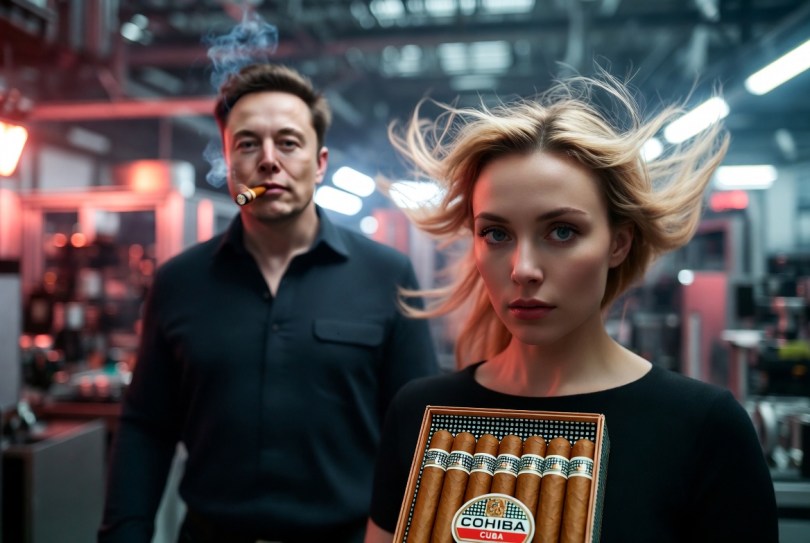

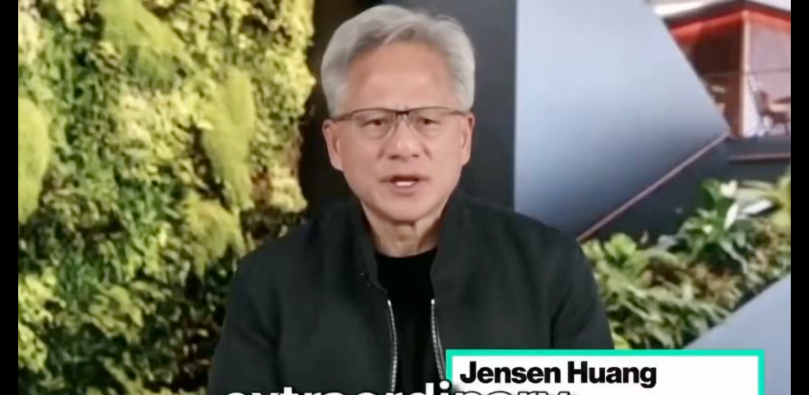


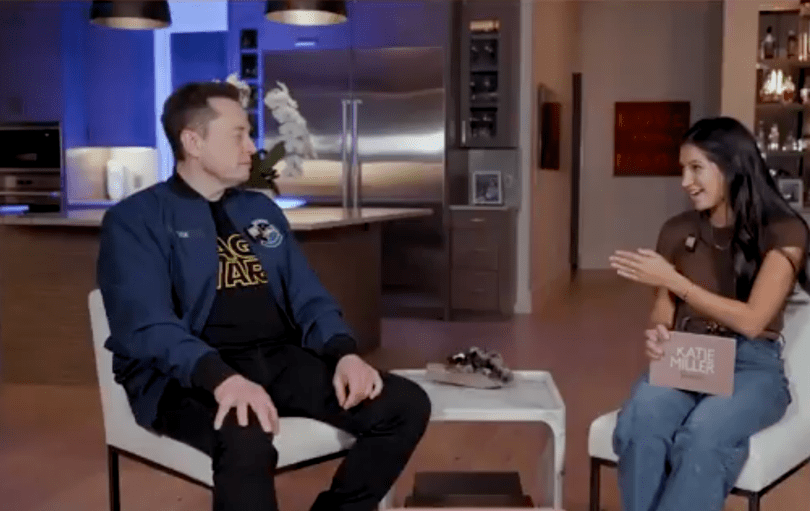
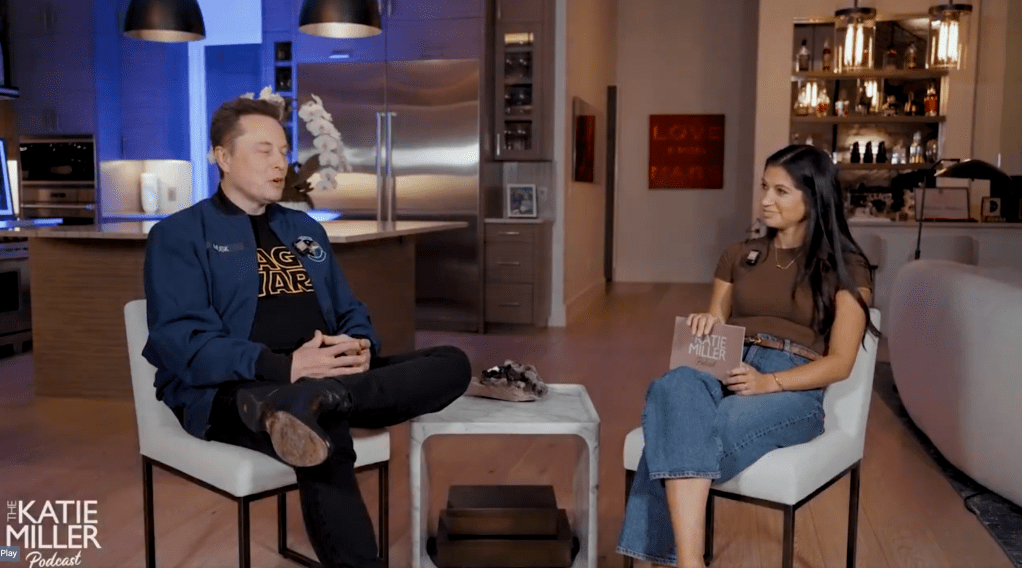
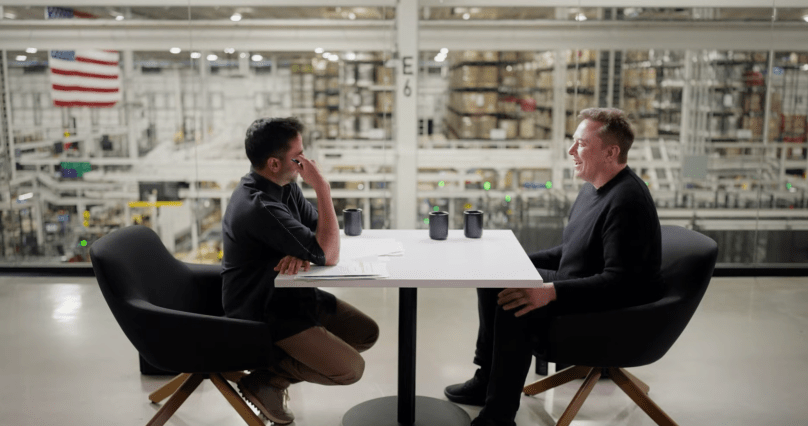
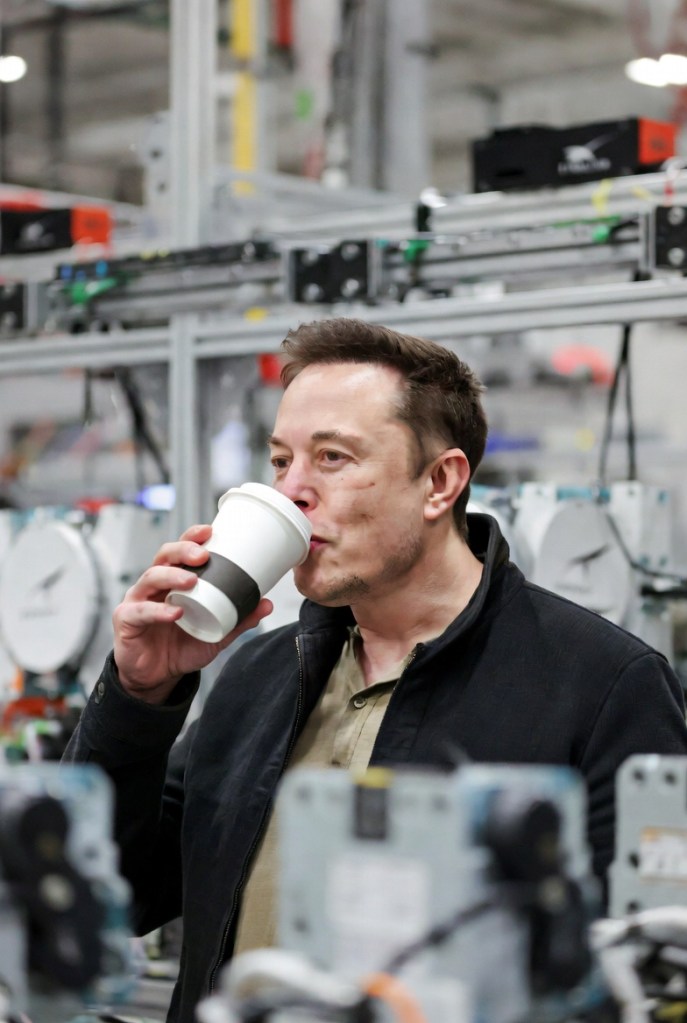
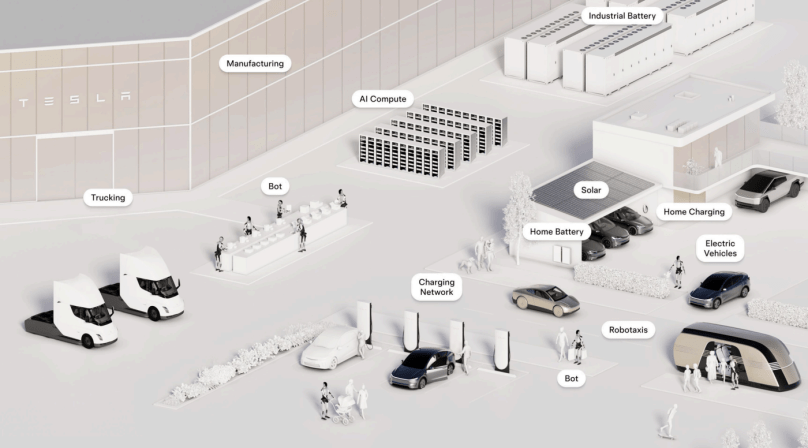
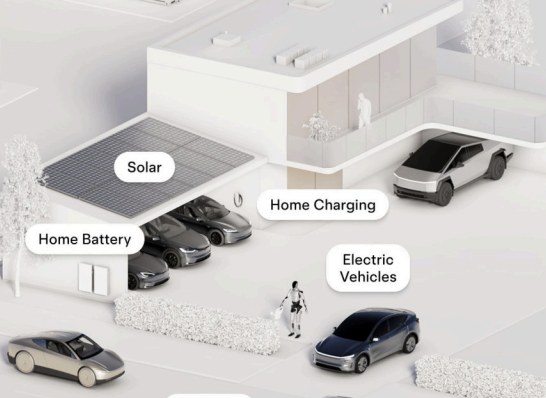
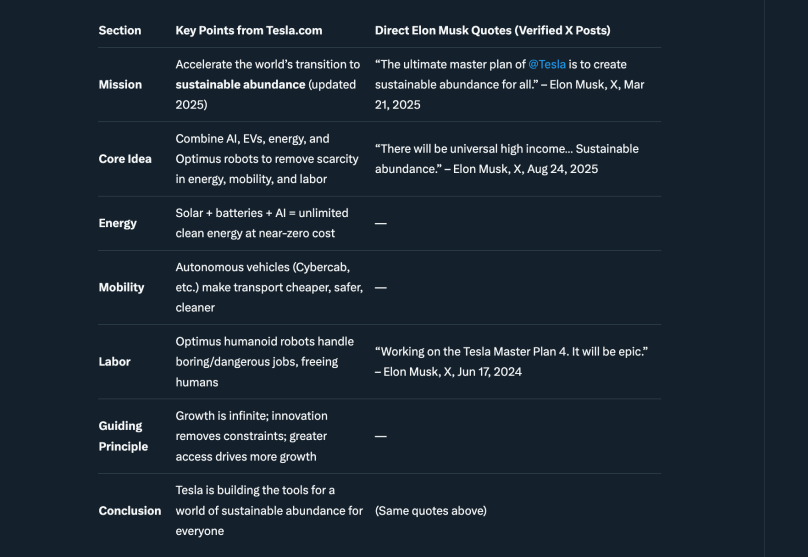
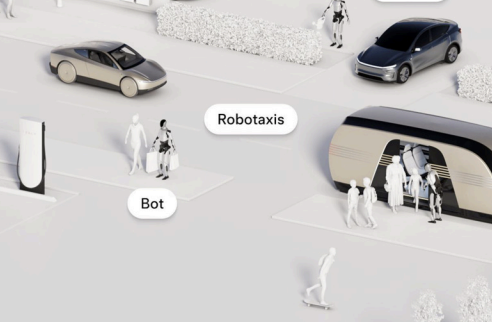
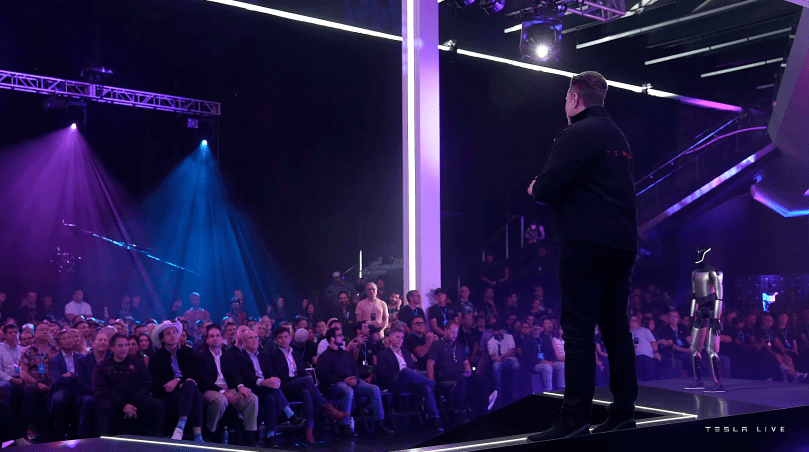
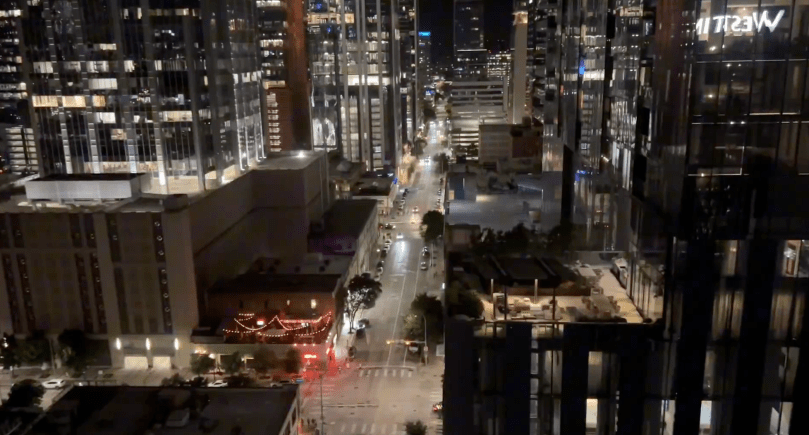
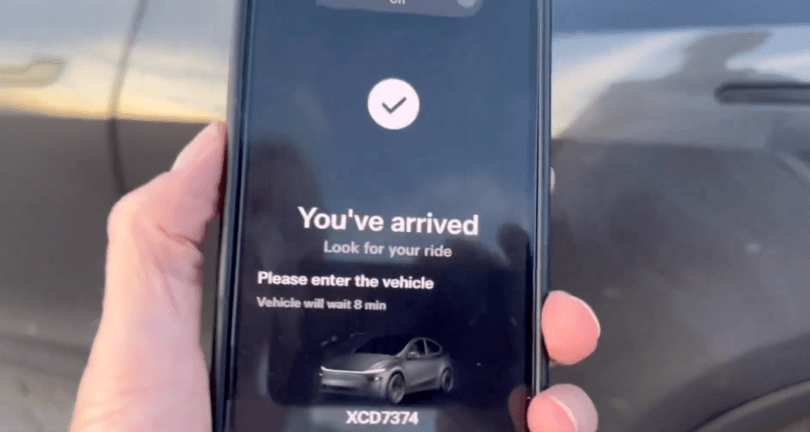
 whatsuptesla.com