(Austin, TX) The setting is Tesla Gigafactory Texas, in Austin, the lobby is futuristic, Elon sits intentionally in front of a mural for Cybertruck with a prototype of a Cybercab right behind him. You can feel his confidence as he relaxes in his jeans, black T-shirt, and cowboy boots. This is a man who is changing the world.
THIS ARTICLE WAS UPDATED ON JAN 18TH, 2026
As the interview starts, Peter asks Elon how he is, and Elon responds, his mind on chips for Tesla, “Right now, putting a lot of time into chips”
I recall when I accompanied Johnna Crider to interview Elon in 2022. Then, you’d ask Elon how he was, and he had his mind on scaling production. Elon is deeply involved with his teams at Tesla, I think it may be what occupies his thoughts the most. Today, Peter asks Elon if he is personally putting a lot of time into chips. Great point, as most CEOs “tell” others to do the hard work. With Elon, he does the hard work. He always has. In fact, shortly after this interview, Elon posted here on X indicating his immersion into Tesla Chip design.
Diamandis: You are personally? (putting time into chips?)
Elon Musk: Yeah
Blundin: With some AI assistance, I assume…
Dave Blundin has joined this interview, taking time off from teaching his AI class at MIT.
Elon Musk: Not enough, haha. It’d be nice if we could just hand it off to the AI.
Blundin: I tried to do some circuit design actually with AI recently, just a couple weeks ago. Not happening yet.
Elon Musk: Ahh, very soon, though. I think probably at this point, Grok, if you took a photo and submitted to Grok, it could probably tell you if a circuit is—if there’s something wrong with it.
Blundin: All right, I’m going to give it a shot. You’re using the same Grok that I’m using?
Elon Musk: Grok keeps updating.
Dave Blundin: So 4.2. But 5 is soon, right?
Elon Musk: 5 is Q1. 4.2 has not been released yet externally, but yeah, I mean, if you just upload an image into Grok, it does quite a good job of analyzing any given image. Let’s see if I take a picture of you. What is it? Let’s see what it does
Diamandis: Yeah. What’s it going to say about me?
Blundin: Yeah, it’s going to say you’re a flawed circuit.
Elon is updating his phone’s Grok app, “I also have to remember to update it because we update the Grok app so frequently,” as the update happened, Peter Diamandis confesses he asked Grok to roast Elon.
Diamandis: I asked Grok to roast you. And I spit out my coffee. It was hilarious.
Elon Musk: Just say, be more vulgar. Just keep telling it to be more and more vulgar, until it’s like, haha, mother of god!
Blundin: Is Bad Rudy still out or did that get repealed? Bad Rudy’s still there?
Elon assures Dave Blundin that the Grok AI companion, Bad Rudy, is still around.
Diamandis: And I asked Grok, does Elon know what you say about him? And she goes—it’s a she for me—she goes, “What is he going to do about it?”
Elon Musk: HAHAHA, What is he going to do about it? Yeah, let’s see (shifting focus) Okay, so I just literally took a photo of you and it will tell you what it is.
Peter Diamandis: Did you ask it a question?
Elon Musk: No, nothing. I didn’t say anything, there’s no context whatsoever.
Elon shows Grok’s reply about the picture, “He’s wearing a black quilted jacket featuring a Sundance logo. Not quite true. It’s my Abundance logo.
Blundin: A little wrinkled on the clothing.
Elon Musk: Anyway, yeah, but basically, it’s pretty damn good. Yeah. “He’s smiling and relaxed with a laptop in front of him”. Should we say, Roast him.
Diamandis: It has to be read by you, though.
Elon Musk: I mean, I won’t read the whole thing, but—
Peter Diamandis: Give me a taste. I can take it.
Elon Musk: Okay (He reads part of Grok’s roast of Diamandis). “Check out that grin, dude. Smiling like you just discovered a new way to monetize hope”.
Cameron’s Movie vs. Star Trek
Diamandis: I want to try and answer the question, can AI and tech help save America and the world? I want to give people listening a dose of optimism. There’s a survey done in mid-December by Pew that said 45% of Americans would rather live in the past and only 14% said they’d rather live in the future. Which is insane to me. Obviously they never read history. The challenge is most Americans, all they have of the future—it’s like Hollywood has shown us killer AIs and rogue robots. Right. And people are worried about their jobs, they’re worried about health care, they’re worried about the cost of living. The challenge is how do we help people? I mean, you posted, you pinned on X: “The future is going to be amazing with AI and robots enabling sustainable abundance for all.”
Elon Musk: I was thinking of you when I did that. I was thinking, What would Peter Diamandis say? I was channeling you, haha!
Diamandis: Thank you. Thank you. I couldn’t agree more either. So my question is from a first principle standpoint, right. The rationale for optimism, you know, how do we head towards Star Trek and not Terminator?
Elon Musk: Towards Roddenberry, not Cameron? It’s the diverging path meme.
Diamandis: Avatar has some hopeful parts, but anyway, how do we go towards universal high income instead of social unrest?
Elon is realistic, and when Peter suggests an either/or scenario here, Elon sees both happening. Here he explains why.
Elon Musk: Well, because there’s going to be so much change, it’s sort of the, you know, it’s like, be careful what you wish for, because you might get it. Now if you actually get all the stuff you want, is that actually the future you want? Because it means that your job won’t matter.
Diamandis: If you’re living an unchallenged life. With no challenges. No. You know, if you become a couch potato, if it’s a WALL-E future, it does not go well for humans.
A WALL-E future means a dystopia where humans become lazy, overweight couch potatoes, totally dependent on technology and automation, with zero challenges or effort in daily life—like the bloated, screen-addicted people floating around in the movie WALL-E. It’s the warning: remove all struggle and difficulty, and humanity atrophies fast.
Blundin: And we’re used to being told, here’s your challenge. So people haven’t historically been very good at creating their own challenge.
Diamandis: I think Elon does a damn good job. Every time one company takes off, you start your next.
Elon Musk: I’m a glutton for punishment.
Diamandis: I think you are, thank God for that.
Elon Musk: So why do I do this to myself?
Blundin: Actually, after AI and robots, is there another thing after that?
Diamandis: Well, there’s always space conquering, you know, the universe.
Elon Musk: Oh, it’s just rocks, really! Hahaha! We just need to get there.
Diamandis: Why, Elon? Why are you so optimistic? Are you optimistic? Let’s start there.
Elon Musk: I’m not as optimistic as you are, but I’m more optimistic than most people.
Peter Diamandis really wants to know WHY Elon Musk is so optimistic. He will continue to press for an answer, and it is interesting, as Elon does not directly answer his question, and I’m including one of Elon’s most famous quotes, and my personal favorite for you!
“Better to live life erring on the side of being optimistic and wrong than pessimistic and right!
Be realistic, but, as Monty Python would say, always look on the bright side of life!”
Better to live life erring on the side of being optimistic and wrong than pessimistic and right!
Be realistic, but, as Monty Python would say, always look on the bright side of life! https://t.co/ISdddxdpQl
2025 Bloomberg Clip Highlights Collaboration on AI, Self-Driving, and Humanoid Robots
A video clip from Nvidia CEO Jensen Huang’s Bloomberg Technology interview, originally aired on May 28, 2025, has gone viral again on social media, fueling excitement about Tesla’s robotics ambitions and broader partnerships with Elon Musk.In the segment, host Ed Ludlow asked Huang about Nvidia’s deepening ties with Tesla and xAI across AI computing, autonomous driving, and robotics.Huang lavished praise on Musk and his ventures, calling his work across multiple fronts “world class” and “revolutionary.”
Here is the verbatim quote from the clip:
“Elon is just an extraordinary engineer, and I love working with him. We’ve built some amazing computers together. We’re going to build many more computers together. The work that he’s doing in Grok, his self-driving car, his Optimus—these are all, every single one of them, world class. Every single one revolutionary. Every single one of them are going to be gigantic opportunities. And we’re delighted, I’m delighted to be working with him on that. So I think the Optimus opportunity is just right around the corner. It’s very likely that humanoid robots are going to be robots that we can deploy into the world relatively easily, and this is the first robot that really has a chance to achieve the high volume and technology scale necessary to advance technology. And so I think this is likely to be the next multi-trillion dollar industry.”
Huang emphasized Tesla’s unique manufacturing expertise as a key enabler for scaling Optimus to high-volume production, setting it apart from competitors.
The clip was reposted on X on January 1, 2026, by prominent Tesla supporter CB Doge.
In September 2025, Tesla released Master Plan Part 4 as a short, hopeful document (available at tesla.com and as PDF). It updates Tesla’s mission from “sustainable energy” to “accelerating the world’s transition to sustainable abundance.” The plan rests on five clear guiding principles, quoted directly from the official PDF:
“Growth is infinite” – progress does not require trade-offs.
“Innovation removes constraints” – every big leap in history broke a supposed limit.
“Technology solves tangible problems” – in energy (solar + batteries + AI), mobility (autonomous EVs), and labor (Optimus robots).
“Autonomy benefits all humanity” – safety and universal access come first.
“Greater access drives greater growth” – the cheaper and wider the technology spreads, the better life gets for everyone.
The heart of the plan is simple: combine Tesla’s cars, solar roofs, batteries, self-driving software, and Optimus humanoid robots so that energy, transport, and work become effectively unlimited and almost free. When boring or dangerous jobs are done by friendly robots and cars drive themselves safely, people are freed to create, learn, and enjoy life.Elon Musk has said the same in his own words:
“The ultimate master plan of Tesla is to create sustainable abundance for all.” (X, March 21, 2025)
“There will be universal high income… Sustainable abundance.” (X, August 24, 2025)
“Working on the Tesla Master Plan 4. It will be epic.” (X, June 17, 2024)
The super short document ends gently: “The tools we are going to develop will help us build the kind of world that we’ve always dreamed of — a world of sustainable abundance.” That is the whole plan: five principles, three real-world solutions, and one kind promise — abundance for everyone, built step by step with Tesla’s products.
Master Plan Part IV: Tesla is accelerating the world’s transition to sustainable abundance.
Tesla’s image depicts a shared home with a solar roof, home powerwalls, electric cars and a helpful bot watering plants.
Master Plan Part IV: Tesla is accelerating the world’s transition to sustainable abundance.
Tesla’s image depicts Optimus bots working. The setting could be industrial or food service or other.
This table summarizes Master Plan Part 4 factually from Tesla’s official website. All details and quotes are verified against the page content and Musk’s X posts.
Master Plan Part IV: Tesla is accelerating the world’s transition to sustainable abundance.
Tesla’s image depicts Bots helping with shopping bags, and helping people exit a transport van.
Tesla’s image depicts Supercharging, with electric cars other than Teslas, and it also shows a Bot helping a family by pushing a stroller.
Tesla’s image depicts industrial batteries and AI Compute
Tesla’s image depicts Semi and manufacturing at scale.
I was sitting front row, stage left at the Austin, Texas 2025 Tesla Shareholder’s General Meeting, when Elon Musk walked onstage the room was filled with applause for this genius man. Our small wooden black folding chairs could barely keep us down and we all stood up to applaud Elon. What an experience for a girl from North Dakota who raised her family in Texas! Here’s the transcript which I share with you as I stand by my belief that Elon’s words are historical. And how blessed are we all, to live in his time?
I was lucky to attend Tesla’s 2025 General Meeting
Elon Musk’s Remarks
ELON MUSK: Welcome. So what we’re going to… yeah. And those bots are just dancing. There are no wires. Those are actual robots. Thanks, guys.
First of all, I’d like to just give a heartfelt thanks to everyone who supported shareholder votes. I super appreciate it. Thank you, everyone. I’d like to thank the Tesla Board for their immense support. We have a fantastic Board, fantastic group of shareholders. Thank you all.
And what we’re about to embark upon is not merely a new chapter of the future of Tesla, but a whole new book. And I’m going to talk about that. So this really is going to be quite the story, and Optimus is a fundamental part of that.
The Scale and Vision of Optimus
The sheer scale of Optimus… I mean, I’m going to say a bunch of things that probably I shouldn’t say, but that’s what keeps it interesting. I mean, have you watched any other Annual Shareholder Meeting? I mean, honestly, was like… I mean, if you need to go to sleep, sure. I mean, shareholder meetings are like snooze fest. I mean, ours are bangers. I mean, look at this. This is sick.
And we got, like, the cyberpunk nightclub here with real robots just standing there and milling around and dancing. And, you know, around our engineering headquarters in Palo Alto, the robots are just walking around the office twenty four seven with no one minding them. They’re just… and then they go charge themselves. And yeah.
So the scale of Optimus, like I said, that’s really going to be something else. I think it’s going to be the biggest product of all time by far. Yeah. So, like, bigger than cell phones, bigger than anything. I guess the way to think about it is that every human on earth is going to want to have their own personal R2-D2 C-3PO. So who wouldn’t?
But actually, Optimus will be even better than them. Like R2-D2, it’s kind of would beep at you, and it’s kind of hard to figure out what he’s got talking about. You need C-3PO to translate. But Optimus is going to be like everyone’s going to want one.
I think in terms of industry providing products and services, I think it’s probably, I don’t know, three to five robots in industry for every one that’s a personal robot. I think there could be tens of billions of Optimus robots out there.
Now obviously, it’s very important we pay close attention to safety here because we do want the Star Wars movie, not the Jim Cameron movie. I love Jim Cameron’s movies, but you know what I mean. So yes.
Production Plans and Future Impact
So we’re going to launch on the fastest production ramp of any product of any large complex manufactured product ever, starting with building a one million unit production line in Fremont. And that’s Line one. And then a ten million unit per year production line here on the… I don’t know where we’re going to put the one hundred million unit production line. Maybe on Mars, I don’t know.
But I think it’s going to literally get to one hundred million a year, maybe even a billion a year. And, you know, people often talk about, like, eliminating poverty, giving everyone amazing medical care. Well, there’s actually only one way to do that, and that’s with the Optimus robot.
With humanoid robots, you can actually give everyone amazing medical care. In terms of Optimus will be more precise. Optimus will ultimately be better than the best human surgeon with a level of precision that is beyond human. So I think that’s a pretty wild concept to say, okay, you… there’s always people always talked about eliminating poverty, but actually, Optimus will actually eliminate poverty. Optimus will actually give people incredible medical care.
So I mean and so you start getting, like, sort of some pretty wild sci-fi sort of scenarios where in some of these things I say will obviously be taken out of context and using snippets and, you know, sitting around, but whatever. I’m still going to say them.
You know, like, I think we may… we might may be able to give people a more… if somebody’s committed crime, a more humane form of containment of future crime, which is if you… you say, like, you now get a… you now get a free Optimus, and it’s just going to follow you around and stop you from doing crime. But other than that, you get to do anything. It’s just going to stop you from committing crime. That’s really it. You don’t have to put people in like prisons and stuff, I think.
It’s pretty wild to think of the various of all the possibilities, but I think it’s clearly the future. And, you know, my book recommendation for the maybe the best, mostly utopian sci-fi future are the Ian Banks books, the culture books. So if you’re curious, like, what do I think the future is probably like? I think it’s probably a bit like that. Or, you know, Asimov to some degree, but I think it’s… and Heinlein. But in Banks, if you’re like saying, what does Elon think the future probably will be like for AI and robots? It’s kind of Banksian.
Economic Transformation
So now and things do get kind of wild from an economic standpoint because at a certain point, with AI and robotics, you can actually increase the global economy by a factor of ten or maybe one hundred. There’s not like an obvious limit. So like Optimus is kind of like an infinite money glitch. And maybe there won’t even be money in the future. Money might be measured in terms of wattage, like how much power can you bring to bear from an electrical standpoint.
So I guess what I’m saying is hang on to your Tesla stock. So, yes, man, it’s pretty wild. You’re welcome.
Let’s see. I think we’ve got some slides to go through. I’m going to ad lib a lot of this stuff, but so the… you know, when we started Tesla, the goal was to accelerate the advent of sustainable energy, and that is that’s what we’ve done. I think Tesla has really led the way with electric vehicles, with battery packs, with a lot of solar, and many other companies have then followed our lead and done that.
And electric cars, which used to be nonexistent, are now prevalent. And the Model Y, for example, is the number one selling car of any kind on earth. Obviously, now with AI and robotics, we need to update our mission.
Updated Mission: Sustainable Abundance
And our mission, I think it’s a good… it’s a great mission, which is to achieve sustainable abundance, which is… it’s like because I often ask people like, what is the future that you want? What’s the best future you can imagine? Because we want to try to make that future, like make the best future you can imagine.
And I guess probably the best future is if people can have whatever they want from a goods and services standpoint or medical standpoint. And but at the same time, we don’t destroy nature, and we keep the rainforests and the beautiful national parks and all that stuff.
And so that’s what I mean by sustainable abundance, is that people can have whatever they want, have all their needs met, but we still keep all of the natural beauty that we want. I mean, if somebody can think of a better future, I’m all ears. But I think that’s probably the best way to go. So, yeah. Let’s see.
Full Self-Driving Technology
So, yes, as you know, every Tesla is designed to be autonomous. So the… it’s sometimes difficult to explain to people if they have not… or in fact, I’m sure you’ve all encountered this, where you try to tell people that the Tesla can drive itself, and they think you’re crazy or something. I mean, especially, like, apart from the Cybertruck, our cars look pretty normal. I mean, they’re good looking cars, but they don’t look super… they look normal.
But I guess it’s kind of like having a cat or like… and cat’s just sitting… let’s say you’ve got a cat and it’s like just sitting there on the couch. And you try to tell people that the cat can actually… it’s actually Puss in Boots and it can actually put on boots and a hat and swashbuckle and sing and dance. And people are like, no way, man, that’s a cat. Until the cat does all those things. And you’re like, damn, what the…?
So we’ve got millions of Tesla cars out there that are the kind of like Puss in Boots. They’re intelligent, but people don’t know that they’re intelligent. They look like normal cars, but actually, they’re super smart and can drive themselves. So I think that’s probably the single biggest thing we need to do is to educate potential customers that you can either have a cat that’s like normal cat or you can have Puss in Boots. And Puss in Boots is very cool.
That’s so we’ve… these days, when people come to our stores or even people that have the car haven’t turned it on, we find. And sometimes people have paid for FSD and haven’t turned it on. We’re like, what? You should at least try it once.
And so now we’re like the sales team and service team will actually sit with customers and say, look, let us show you how it works and how easy it is. And then once they’ve tried it for even just a few days, they can’t live without it.
And now with version fourteen, we’re actually getting to the point where we almost feel comfortable allowing people to text and drive, which is kind of the killer app because that’s really what people want to do and do do. And actually, now, the version’s… the car is a little strict about keeping your eyes on the road. And but I’m confident that in the next month or two, we should… we’re going to look closely at the safety statistics, but we will allow you to text and drive essentially. So yes.
It’s certainly been in the current situation, which often people will actually turn off FSD to text then turn it back on, which is less safe. So yes, that’s probably the single biggest thing is just get people aware of FSD.
Regulatory Approval Challenges
And then obviously, we need to get it approved in Europe. So we certainly appreciate the support of our customers in Europe pushing the regulators to approve FSD because you can’t even get a super… even just normal supervised FSD is not allowed in Europe currently, which doesn’t make any sense.
And I’ve had these like crazy conversations with the regulators that seem like a Franz Kafka novel, where I’m like, well, look, we have billions of kilometers of data that shows that FSD increases safety. And they’re like, well, we have to have all these committee meetings. I’m like, yes, but people’s lives are at stake here.
So definitely, a pressure from our customers in Europe to push the regulators to approve would be appreciated. And then we have partial approval in China, and we hopefully will have full approval in China around February or March or so. That’s what they’ve told us. Yeah.
But yeah. The fact that every Tesla car is capable of full self driving, every car we build and have built for the last several years is capable of full self driving is pretty wild, and most people don’t know that. So…
Cybercab: The Autonomous Robotaxi
And then we’ve got the first car that is specifically built for unsupervised full self driving to be a robotaxi. It’s called a Cybercab. It doesn’t even have pedals or steering wheel. Yeah. So there’s no side view mirrors. There’s no… yes. So it’s very much optimized for the lowest cost per mile in an autonomous mode.
And that production is happening right here in this factory, and we’ll be starting production in April next year.
So the way that Cybercab is designed is it’s designed, obviously, for a purely autonomous world. But also, the manufacturing system is unlike any other car. The manufacturing system of the Cybercab, it’s sort of… it’s closer to a high volume consumer electronics device than it is a car manufacturing line.
So the net result is that I think we should be able to achieve, I think, ultimately, less than a ten second cycle time, basically a unit every ten seconds. Maybe ultimately take a few years to get there, but it’s theoretically possible to get to a five second production time.
Tesla’s Production Capabilities and Future Vision
And so what that would mean is you could get on a line that would normally produce, say, five hundred thousand cars a year at a one minute cycle time, Model Y. This would be maybe as much as two million or three million, maybe ultimately it’s theoretically possible to achieve a five million unit production line if you can get to the five second cycle time. It’s a lot of cars. So these will be everywhere in the future. And we want to look futuristic, so it changes the look of the roads.
Optimus: The Humanoid Robot
The ingredients, when you look at what Optimus is, what’s required to make Optimus and the various ingredients, what do you need to do to make high volume humanoid robot production? I think it’s worth considering that really the cars we make are already robots, but they’re four wheeled robots. So Tesla is already the biggest robot manufacturer in the world because every car we make is a robot.
And when you break it down to the fundamental elements, you’ve got batteries, power electronics, motors, gearboxes. You’ve got connectivity. You’ve got a vision based AI. Hi, Optimus. And you know, all the various pieces that you need for a humanoid robot, you need the AI chip, you need the AI software, you need to be able to manage a large fleet. And so really, Optimus is a robot with arms and legs as opposed to a robot with wheels. So, you know, Tesla’s ideally suited, I think, to succeed in this arena.
You will see certainly many companies showing demonstration robots. There’s really three things that are super difficult about robots. One is the engineering of the forearm and hand because the human hand is an incredible thing, actually. It’s super dexterous. So engineering the hand really well, the real world AI, and then volume manufacturing. Those are generally the things that are missing. One or more of those things are missing from other companies. So Tesla is the only one that has all three of those.
Optimus Production and Development
So this is the Optimus kind of initial, it’s kind of a prototype production line. The high volume production line will be very automated, obviously, but this is really the production line that we use to make the prototypes. So you can get a sort of rough sense for what it takes to build the robot. Still pull the finger.
And then as I’ve said before, I think once we reach about one million units per year of sustained production or in excess of that, I think probably the cost of production is around twenty thousand dollars in current year dollars. So this will be certainly very affordable. And, yeah, like I said, I think Optimus will ultimately increase the size of the economy probably by a factor of ten or more.
You know, next year, we start production with Optimus version three. This is what you’re seeing here is Optimus version two point five. Optimus three is an incredibly good design. The Tesla engineering team is amazing. When you see Optimus three, it will seem as though that there’s someone like a person in a robot outfit, which is how we started with Optimus. Really, it’s going to be something special.
And then Optimus four, that hopefully starts production in twenty seven. And then Optimus five in twenty eight. So it’s kind of like an annual release cycle with significant improvements with each one and gigantic increases in the scale of production.
Full Self-Driving Progress
Sustainable abundance via AI and robotics. That’s the future we’re headed for. And as I think most people here know, the safety statistics show that miles driven on FSD are much safer than miles driven without it. So what this will translate to ultimately is saving the lives of millions of people and preventing hundreds of millions of accidents. So a massive increase in lives saved and tragedies avoided. It’s going to be amazing.
How many people here have tried fourteen point one? Okay. All right. Cool. Yeah. You can see that even with the point releases, it’s getting quite a bit better. It should be pretty smooth at this point. But really, fourteen point two, there are major changes to fourteen point two and then fourteen point three. And I think by fourteen point three is when we’re really going to be at the point where you can just pretty much fall asleep and wake up at your destination.
AI Chip Development
And then I’ve been putting a lot of time into the new Tesla chip design, because in order to have a functional robot, you have to have a great AI chip. And it needs to be an inexpensive chip, and it needs to be very power efficient. So we believe the AI5 chip will be probably about a third of the power of, say, something like a Blackwell, NVIDIA Blackwell, which is a great chip, for roughly comparable performance and much less than ten percent of the cost.
So this is a chip that is very much optimized for the Tesla AI software stack. It’s not meant to be a general purpose chip. It’s meant to be an amazing chip for the Tesla AI software. And I mean, a couple of things that I think make, how is Tesla able to achieve such an improvement? I think it is because we are specialized. We’re not trying, NVIDIA has to serve the superset of all past and future customers. So all of their requirements, all of the software that they’ve written has to work, which is a very difficult problem, whereas we just need to make it work for our software. And so we were able to simplify the chip dramatically.
And then we also, I think we’re unique in this, but we have an integer based system. Integer operations are fundamentally more efficient than floating point operations. So we can do floating point, but the vast majority of our inference is done in integer, which is, if you’re familiar with sort of logic gates, the simplicity of integer, integer is much more power efficient, much more silicon efficient. But you actually have to train for integer inference, which everyone else is training for floating point. That’s kind of a niche technical detail, but it’s actually very important.
So, yes, this is going to be a great chip. So this chip will be made in basically in four places: TSMC Taiwan, Samsung Korea, TSMC Arizona and TSMC Texas. And we already know what improvements to make for AI6. So I’m hopeful that we can within less than a year of AI5 starting production, we can actually transition in the same fab to AI6 and double all of the performance metrics.
I’m super hardcore on chips right now, as you may be able to tell. I have chips on the brain. I dream about chips, literally. I can draw the, you know, the at least the broad brush stroke physical design of the AI five chip by heart at this point. It’s a good chip. It’s a good chip, sir.
Chip Production Challenges
So this is really key. Now one of the things I’m trying to figure out is how do we make enough chips? So I have a lot of respect for the Tesla partners, TSMC and Samsung. Maybe we’ll do something with Intel. We haven’t signed any deal, but it’s probably worth having discussions with Intel.
But even when we extrapolate the best case scenario for chip production from our suppliers, it’s still not enough. So I think we may have to do a Tesla TeraFab. So it’s like Giga, but way bigger. I can’t see any other way to get to the volume of chips that we’re looking for. So I think we’re probably going to have to build a gigantic chip fab. Got to be done.
Sustainable Energy Vision
So anyway, some of the stuff I’ve already talked about. Yep. We’ve done a tremendous amount for sustainable energy, and that is only going to grow over time. The world is moving towards a solar battery economy, which is ultimately where it was going to go anyway, but what Tesla does is accelerate that outcome.
Sometimes people don’t understand quite how much energy comes from the sun. So the sun is ninety nine point eight percent of all mass in the solar system. Jupiter being point one percent and then point one percent is miscellaneous, Earth being in the miscellaneous category. So the total amount of energy, the sun, people would say, well, we’ll build fusion reactors on Earth. It’s like, well, actually, the giant fusion reactor in the sky is basically impossible to beat to such a degree that even if you could burn Jupiter in a thermonuclear reactor, the amount of energy produced by the sun would still round up to a hundred percent. That’s how much energy the sun produces.
So solar power is necessarily the future. And I think there’s going to be a lot of solar powered AI satellites. And I think Tesla’s going to play a role in that.
Product Line Updates
We’ve obviously refreshed the product line, so S three X Y. If people haven’t tried the model S, three, X or Y or the Cybertruck, I recommend at least getting a test drive or a test ride as the case may be. Try out the full self driving, and I think you’ll be blown away. So those who do not, if you might be listening and don’t have a Tesla, you should try one.
And, of course, we’ve got the Cybertruck, which is the toughest truck of all time. It’s literally bulletproof, faster than a Porsche nine eleven, and can out tow a Ford F three fifty. So it’s a great car, great truck.
And then starting next year, we manufacture the Tesla Semi. So this, we already have a lot of prototype Tesla Semis in operation. PepsiCo and other companies have been using the Tesla Semi for quite some time. But we will start volume production at our Northern Nevada factory in twenty twenty six. So we got two big products or three, three massive products starting production next year. We got Optimus. We got Tesla Semi, and we got the CyberCab.
Battery Technology and Energy Storage
And then battery packs. So if you look at total US power generation capability, it’s roughly a terawatt. But the average power usage is less than half a terawatt. And that’s because there are big differences in power usage between day and night. So the daily and seasonal variations in power consumption mean that the United States and really every country is only using about half, is only producing about half as much electrical energy as it could.
Because without batteries, there’s no effective way to buffer the energy. So what batteries actually enable is even if you don’t build any incremental power plants, you could double the energy output of the United States just with batteries. This is a super big deal. And in fact, I think that’s really where most of the incremental energy production in the United States is going to come from, is literally batteries. So a bigger deal than it may seem.
And then we keep improving the battery design, so the MegaBlock, which makes it really easy to deploy utility scale batteries. So we’ve just simplified and brought more of the components to be internal to the batteries. So you can just show up and drop off a battery and it works.
And then hopefully with, well, not hopefully. Over time, we will actually add more and more of the power electronics so that MegaPack will actually be able to output up to thirty five kilovolts directly. So you won’t need a substation is what I’m saying. You can just literally drop it off, kind of like the way that a Powerwall you just connect it to the house. The utility wires go on one side and the other side goes to the house mains, and that’s it. So we want to get mega pack to the point where you just literally take the utility wires and you plug them in, and it just works.
Supercharger Network Expansion
Then we’ve also built the world’s largest supercharger network. So we do a lot of things here at Tesla. That’s the biggest supercharger network in the world by far. And ultimately, you’ll be able to go anywhere on earth using a Tesla supercharger. And it’s all pretty close to anywhere on earth, but it’s going to be ultimately just anywhere. It will just work anywhere.
So the supercharger team has done great work expanding that and improving the efficiency of the supercharger network. And in North America, they did such a good job that the other car companies basically said, well, we’ll just use the Tesla supercharger network. Like, okay, sounds good to us.
Factory Safety and Company Culture
It’s always important to have a plan on safety in the factory. So we continue to improve safety for our factory workers. We care a lot about their well-being. And, you know, one way you can just tell if a company is a good company or not, if you just walk through the factory or walk through the office and catch the vibe. And the vibe in the Tesla factory is good. People are happy. That’s how you know it’s a good company.
Supply Chain and Raw Materials
We’ve also put a lot of investment into raw materials. So we’ve built in South Texas and Corpus Christi the biggest lithium refinery outside of China, I believe. So it’s going to, it’s starting off at about fifty gigawatt hours of lithium, and we’ll expand from there. So this is very important to have in a worst case scenario that we have the ingredients necessary to make a battery. Very important.
And then we’ve got here on this site the cathode factory, which is just the sort of giant building about a half mile that way. And we’re just making sure that we, from a supply chain standpoint, are resilient against any potential geopolitical challenges.
Tesla’s 4680 Cell Production and Future Applications
And then also at this factory, we also make the 4680 cell, which is getting better and better. And that 4680 cell will be used in the CyberCab – it is being used in the CyberTruck and will be used in the CyberCab and also in Optimus. So that’s going well. But we continue, obviously, to get sales from many suppliers. It’s kind of like the chip fab thing.
We’ll take as many chips as our suppliers can provide us. But then beyond that, if they can’t provide us with any incremental cells or chips, we kind of have to make them ourselves or we get stuck. That’s the Tesla Semi Factory. So it’s going to be pretty cool to see these going down the road in scale.
So that’s basic plan. Sustainable abundance for all.
Q&A Session Begins
ELON MUSK: All right. So yes, I guess we can go into Q and A now. Maybe at the next Annual Shareholder Meeting, we’ll have Optimus take some of the questions. That would be cool. So I see Alexander, well, thank you for your help, by the way. Please go ahead.
AUDIENCE QUESTION: Thank you. Is that a mic? Is it no. Let me hold it. It’s okay. Well, what a year it’s been. Right? I mean, just a year ago, President Trump got elected on the same day. These twelve months have been a heck of twelve months. Thank you to the board because I think they had to weather quite some storms with institutional investors and obviously thank you to you. And we stand with you. I think we showed it – we will show it.
So we would like to express a wish, please. This is a nice venue. We love coming to the factory and I think it’s actually great we’re doing this at the factory. But there are thousands of retail investors who are crying because they cannot. They come to me. I love playing the mama, but I now give it to you. Please organize a bigger venue. We’re bigger than Berkshire, and we will do better than Berkshire. Okay.
ELON MUSK: Sure. And we can pay.
Yeah. Actually, Tesla will be way, way, way bigger than Berkshire long term. It’s going to be kind of nutty. So, all right. We’ll do the next one. Maybe we’ll do it in the – yeah. Like, yeah. Maybe the downtown arena or the soccer stadium or something like that. And get your security checked. We want to make sure that you’re safe.
AUDIENCE QUESTION: What if I just want all been weaved. But we want to party. And if you can bring the other Elon companies there as well, investors would really appreciate it.
ELON MUSK: All right. Sounds good. Thank you very much for listening to us.
FSD Transfer and Ownership Questions
AUDIENCE QUESTION: All right. Elon, as a father, I just want to first thank you for the everything you’re doing in the world, especially freedom of speech. Thank you. And one question. Will you or Tesla ever consider FSD tied to an owner’s account rather than a vehicle to encourage more frequent upgrades provided the transfer is to only a brand new Tesla vehicle while fostering brand loyalty? If the vehicle is sold or traded without upgrade to another Tesla, FSD ownership would end?
ELON MUSK: Well, we have done that a few times. I guess we could extend it again. I will extend it for at least another quarter and then play it by ear after that.
Bitcoin and Wheelchair Accessible Vehicles
AUDIENCE QUESTION: All right. Howdy, Elon. Congrats on not having to show up to work for free anymore. We now have over a $40 billion war chest. We’re cash flow positive and remain – we know how you feel about fiat already. Is it time to take a look at Bitcoin? What’s your belief on that? Also, you’ve hinted towards that there’s a wheelchair accessible model in the works. Were you referring to the Robovan? And if so, can we please speed up production to help the least fortunate?
ELON MUSK: Sure. Yeah. Obviously, we need a vehicle that’s big enough to fit a wheelchair accessible. So I think is the Robovan or robust or whatever we call it. I mean, it’s not like we’re slowing down because we want to slow down. It’s like we’re spinning like a zillion plates here.
So but I do think it would be very cool because I think aesthetically as well, it just would change the look of the roads and make it feel like the future. So it won’t be long before we make that. But since we do have Optimus, we’ve got CyberCab, Optimus and Semi all next year. It will probably have to be maybe the year – a couple of years from now or something like that. But we certainly will make a wheelchair accessible vehicle.
Dry Cathode Production Update
AUDIENCE QUESTION: It’s Patoshi. I was privileged enough to attend the Investor Day. And you’ve also talked about the factory being a product. I saw the dry cathode method and so forth, and I wanted to know the progress in that. And also would Optimus be working on that in the future production line in the future?
ELON MUSK: Yes. I guess the dry cathode, man, that’s turned out to be a lot harder than we thought. So I mean, it does look like it’s going to be successful, and it will have some cost advantage relative to wet cathode. But if I had to wind the clock back, I would probably have gone with wet cathode instead of dry cathode because it just turned out to be a lot harder to make it high capable of high volume production with super high reliability. So yes.
But we will be scaling up battery cell production at Tesla and looking for cell production from our suppliers as well because we’re going to be ramping up production very dramatically at Tesla.
Production Ramp Plans and Autonomy
Now that we believe we have full self-driving, that we have autonomy solved or at least within a few months of having it unsupervised autonomy solved at a reliability level significantly better than human – that means it’s time to ramp up production because the value proposition is now much greater than a regular car.
The killer app really is for people, can you text and drive? Or can you sleep and drive? Can the car take you to your destination? Or do you need to pay attention and be and have to drive it? And before we allow the car to be driven without paying attention, we need to make sure it’s very safe. Like I said, we’re on the cusp of that. I know I’ve said that a few times, we really are at this point. And you can feel it for yourselves with the 14.1 release.
So we’re going to try to – we’re going to push to expand vehicle production as fast as we possibly can. So aspirationally, we’d aim to increase vehicle production by about 50% by the end of next year. So that’s – it’s very hard to increase production, but that’s roughly – I don’t know, maybe we get to like – I’m just guessing, at exit rate by the end of next year of around 2.6 million, 2.7 million vehicles annualized production and then aim to get to maybe 4 million by the annualized rate by the end of ’27 and then maybe 5 million by the end of ’28.
Those are rough – those are our aspirational goals. So these are – this is a gigantic increase in output, which means that the entire supply chain has to move in unison with that increase in volume. And the nature producing a large complex product is that it moves as fast as the least lucky, dumbest element in the entire system, and there’s 10,000 plus items.
But like I said, this really is a new – it’s not just a new chapter for Tesla, it’s a new book. And that new book is massively increasing vehicle production and ramping up Optimus production faster than anything’s ever been ramped up before in history.
Roadster Unveil and Founder’s Series
AUDIENCE QUESTION: Awesome. Elon, thank you. Thank you from all of us. The retail shareholders really care, and so I echo the sentiment of a larger venue where more can come. As a testament to that, I was here – I was fortunate enough to be here last year. And since then, touring the factory, talking to people that work here, I’m just a retail shareholder, but increased my holdings twelve times. So I know it’s really engaging and gives people confidence. And so thank you for having us. I do echo that I hope it grows.
Last year, I’m the one that asked you about your well-being and safety. Oh, yes. It’s all live. It was a broad general question and it was before some of the uncertainty that’s unfolded since then. So I hope it had a positive impact and we all care. And so my question this year, you’ve talked recently about the most mind-blowing product demo of all time and I shot it being the most memorable product ever. Roadster. Yes, yes.
And I have patiently been waiting on my Founder’s Series Roadster reservation. Yes. So on behalf of the Founder’s Series guys that have stuck in there, can we be invited to this unveil?
ELON MUSK: Oh, yes. Sure. Absolutely. Definitely. Okay. Yes. So all Founder Series can be invited?
Yes, yes. I mean, it’s the least we could do, frankly, for people that have – our long suffering Roadster reservation holders. I feel confident in saying it will be the most exciting product unveil ever. And I hope that – whether it goes well or doesn’t go well.
AUDIENCE QUESTION: Since I’m up here, can I get the first one?
ELON MUSK: Well, I guess it’s according to whoever put down their deposit in that sequence. So that’s the – but you’ll get a very early one. And I mean, the new Roadster is very much sort of like – it’s not even the icing on the cake, it’s the cherry on the icing on the cake. So I mean, it’s really kind of like – it’s not essential for sustainable abundance, let me put it that way.
But I do think there should be very cool technology in the world that is – you know, it’s way beyond anything that’s ever existed. And I think I’d like those – like, even if I could never have access to those things, I’d like to know that they exist and see the future happening. So I think it will be inspiring to a lot of people. And just it’s – it’s like the coolest car, if it even is a car, that has ever – that will probably ever exist.
Chip Production and Tera Factory Plans
AUDIENCE QUESTION: Hi, Elon. Congrats on the proposal plan. That was amazing, the compensation. Question back to chips. So chips, chips, chips. Chips will be the limiting factor to the future. So on that –
ELON MUSK: Yes. Chips and electricity are the two limiting factors.
AUDIENCE QUESTION: Yeah. And we got the energy and power and energy packs ready to roll. So I think on the chips, I think you said TSMC, Samsung, perhaps Intel 14A and several different sites. I heard a couple of U.S. factory sources, which is mean, we’re like everyone.
ELON MUSK: Everyone. It’s like – yeah. Yeah.
AUDIENCE QUESTION: And so I guess – is there an open door in the future of investing directly into some of those boundaries? And second question, how big is a Tera factory? Can you put that in scale?
ELON MUSK: Oh, yes, yes. That’s a point. A semiconductor Tera factory? Yes. Well, I mean, thing is that we actually have agreed to buy all the chips that are made from the fab. So it’s basically a money printing machine for TSMC and Samsung. It’s like literally the faster you make the chips, the faster we send them money. But it’s still not going at just fast enough.
So that’s why I think, as far as I can see, the only option is to go build some like very big chip fab. And then you go to solve memory and packaging too. But otherwise, you just tap out at whatever the chip production rate is. And so I guess, Tera would be – you’d want to say it’s got to be at least 100,000 wafer starts per month size fab. And maybe that would be one of ten in a complex. So it would ultimately be one million wafer starts per month.
Yeah. Exactly. You can tell when it gets the giggle factor, that’s probably a good sign that we’re onto something special. But I wouldn’t be surprised if long term, it’s like a million wafers a month.
Tesla on Mars and Moon
AUDIENCE QUESTION: Hi, Elon. I’m a long-term investor, so I’ve been holding the shares for twelve years. I worked at the autopilot team development for ten years, and brought my dad here from Brazil. We actually won the Tesla Vision contest with the Cybertruck BVL. So I hope you get to see that at some point. So thanks for the free Model Y.
And my question is about, obviously, market expansion, but not only South America, Brazil, but also into Mars, like, with the upcoming rendezvous of Mars and Earth. What’s going to be in the payload? You know? Where are we going to send there?
ELON MUSK: Well, Optimus is going to play a big role. Optimus and, I think, Tesla vehicles will play a big role on the moon and Mars. So for a moon base and a Mars city, Tesla vehicles and Optimus robots are natural fit for building and operating a moon base than a Mars city.
AUDIENCE QUESTION: So sorry? Cybertruck also?
ELON MUSK: Yeah. Yeah. It’s a Cybertruck. We’ll need to drive around in a pressurized vehicle if there’s a person inside. But, yeah, it’ll be something cool, next level moon buggy or Mars buggy.
Autonomy and Deflationary Impact
AUDIENCE QUESTION: So all right. Hi, Mr. Musk, Gorev. Been a fan of yours since 2006. I think I saw a piece in Popular Science Magazine. It was really cool, and I think I was fifteen at the time. Shareholder since ten years now. It’s been really, really rewarding. It’s changed my life. So thank you very much to you and Tesla.
My question is regarding Tesla’s mission for a sustainable future as it pertains to autonomy. I personally fully expect a deflationary period after – well, unlocked by autonomy basically, both in moving humans and goods and whatnot, excluding Optimus even.
Cost Per Mile and Economic Viability
What efforts is Tesla going to focus on to reduce the dollar per mile? Rough math, I think like $0.30 a mile would be really nice. $0.50 is pretty good too, I mean, looking at inflation later on. And then I guess the second part of that, how low does it have to be for people to just stop buying cars like where it doesn’t make economic sense to do that? I expect that to affect economies of scale and then further increase the pricing of vehicles thereon out. So like what is that node at which inflection happens?
ELON MUSK: Well, in terms of cost per mile, I mean, we do see a path with a lot of work to get below $0.20 a mile in current year dollars. And I somewhat agree that things will probably be deflationary, as productivity increases because you can think of money supply as being the ratio of goods and services to like what’s the growth in goods and services versus the growth in the money supply? That ratio is basically inflation. And so if the output of goods and services grows faster than the money supply, then you necessarily have deflation or vice versa.
They try to make it sound complicated, but it’s not. So I’m not sure that even government overspending can actually—I think government overspending will be lower than the increase in productivity of goods and services, which would imply deflation as you expect.
AUDIENCE QUESTION: What about economies of scale and the impact it has to how you respond as an automotive company when people stop potentially buying cars?
ELON MUSK: Economies—sorry, economies of scale? In like auto manufacturing, for instance, it only makes sense if lots of people buy your vehicles. Oh, the total number of vehicles will decrease. The sort of vehicle fleet out there is about two billion cars. Two billion if you add up old cars and trucks that are not at a scrap yard, I think it’s around two billion. But that number would decrease with autonomous vehicles.
So the total fleet size would drop. I actually think miles driven will increase because it is now much less painful to travel somewhere. So if somebody is thinking about traveling across a busy city, then they’ll take into account, well, how much pain do I have to deal with if I have to go through two hours of traffic? I probably won’t do it. But if you’re just, say, sitting in a Cybercab watching a movie or doing some work, then it’s just like sitting in a little lounge.
And so I think you’ll see probably a significant increase in total miles driven, but at the same time, a decrease in the total active fleet of vehicles.
Cybercab Production and Regulatory Approval
AUDIENCE QUESTION: I’d just like to reiterate how grateful we all are to have you onboard and ready to lead us to another seven trillion dollars in market cap, at least. Obviously. Thank you. My question is, how much of a concern is it that when Cybercab starts production in Q2 next year, that regulation won’t be there yet to where you can deploy Cybercabs being produced? Or are you guys confident that every Cybercab you guys make, you’ll be able to deploy?
ELON MUSK: Yeah. I think the rate at which we receive regulatory approval will roughly match the rate of Cybercab production. It will be maybe a little tight, but it’s about right. And I’d like to thank Waymo for paving the path here. It’s very helpful. So, yeah, but I think we’ll be able to deploy all the Cybercabs that we produce.
And the other thing is, like, once it becomes extremely normal in cities, it’s just going to become like, the regulators will have just fewer and fewer reasons to say no. And then you’ve got this—you know, you’ve got the accident statistics at scale and you can show that autonomous miles save lives, then and you’ve got unequivocal, you know, billions of miles to prove it, then I think it’s hard for regulators to say no.
Optimus and Consciousness Transfer
AUDIENCE QUESTION: First of all, Elon, thank you so much for everything you do for the Tesla shareholders. Thank you. Do you see a path for Optimus to have consciousness downloaded to it? You mean human consciousness?
ELON MUSK: Yeah. I mean, it’s not immediate. But if you say that down the road, would you be able to, say, with the Neuralink, have a snapshot of or what is an approximate snapshot of somebody’s mind and then upload that approximate snapshot to an Optimus body, I think that at some point, that technology becomes possible. And it’s probably less than twenty years.
But of course, you won’t quite be the same. You’re a little different because you’ll be in a robot body. And the mental snapshot will not be precise. It’ll be probably pretty close, but not exactly the same. On the other hand, are you the same person that you were five years ago? Nope. I mean, a lot of things have changed. So yeah, but I guess at some point, if you want to be uploaded to a robot body, my guess is that becomes possible.
Space-Based Solar Power
AUDIENCE QUESTION: Hi, Elon. Space-based data center is a great idea, and I agree with that. Yeah. I was curious on your views on space-based solar power, the idea of beaming down microwave energy down to earth so that you can just point it to where it needs to go without transmission, without distribution lines, and it’s more energy dense, so, you know, less land use. Just curious on your views.
ELON MUSK: Well, space solar power—until the advent of something like Starship, where the cost per ton to orbit drops by orders of magnitude, the cost of getting payload to orbit is so high that there was no possibility of space solar power solving anything, really.
Now with Starship, like, I see a path to Starship cost per ton to orbit being lower than air flight. Like, if you were to fly, you know, do a long distance air flight with cargo, like, say, took a 747 from here to Sydney, Australia or something like that, I think, ultimately, Starship will be able to do that trip for less cost per ton than an aircraft. So then you—so now you’ve got that opens up a very wide range of possibilities.
Like, the most obvious one, I think, is actually solar powered AI satellites, sort of to move the AI to orbit and essentially deep space over time. Because you can actually access over a billion times more energy from the sun in deep space than you can on Earth, scaling if you—to scale to Kardashev—to make any progress on a Kardashev Type II scale, which is using some nontrivial amount of energy from the sun, you kind of have to do space solar power.
Now you could only beam a tiny amount of that back to Earth or you would melt Earth. So Earth actually receives a very, very tiny amount of the sun’s energy. We’re—I mean, Earth is a tiny dust mote. We see that Earth to scale with the sun, we look like a little crumb. So to scale civilization, like I said, to be at all relevant on a Kardashev Type II scale, like to even use a millionth of a percent of the sun’s energy, you really have to have use solar power in deep space.
And you could beam some of that back to Earth too, but you can only beam a tiny bit of it back or you’d melt Earth.
SpaceX Investment Opportunities for Tesla Shareholders
AUDIENCE QUESTION: Elon, look around you. This is a very, very small sample of Tesla soldiers. Maybe, actually, I should say, Elon Musk’s soldiers.
ELON MUSK: Well, thank you for your support.
AUDIENCE QUESTION: And thank you, everyone. So I’d just like to say thank you from the bottom of my heart for your support. Thank you. And thank you, everyone out there. So I know for sure a lot of them sold the farm to buy Tesla. And they stuck with Tesla through thick and thin, good days and bad days. Yes. My question to you is, how do you feel about repeating the success but in a safer way where you get qualified Tesla retail investor only to invest in SpaceX, avoiding all these market manipulator, those crooks, and these short sellers.
ELON MUSK: Yeah. It is a tough problem that you highlight. I mean, basically, unfortunately, over time, the parasitic load of being a public company has just grown over time. And so you get all these spurious lawsuits, obviously, and they just make it very difficult to operate effectively as public company. So but I do want to try to figure out some way for Tesla shareholders to participate in SpaceX. That would be very cool.
I’ve been giving a lot of thought to how to give people access to SpaceX stock because I do want supporters to have SpaceX stock. But there’s a sort of 2,500 shareholder threshold before you become a de facto public company. But I don’t know. Maybe at some point Tesla—maybe at some point SpaceX should become a public company despite all the downsides of being public.
Elon’s Strategic Thinking and AI Development
AUDIENCE QUESTION: First of all, thank you very much, Elon. Just an amazing job you’re doing, not only for Tesla shareholders, but the humanity in general. So we’ve got a couple of questions many of us are asking. Like we want to know, many of us think you are one of the most consequential business people on earth ever. And we want to understand how do you think, like, for example, like a couple of—one, how did you know in the Master Plan Part Two, this is like 2018 or something like that, you calculated at that point it takes six billion miles of FSD miles driven before maybe the world, the regulatory, would approve it.
And then the second is like when you were deciding if Tesla is going to have the hardware chips, AI chips, did you know at that time that at some point when you get the AI5, it’s going to be used not only for cars but for bots and for AI data centers? Like was that luck a little bit? Or was it like you kind of knew that that was going to happen?
ELON MUSK: Well, generally, I mean, in terms of the estimates, like for the self-driving stuff, generally try to get things to within an order of magnitude. So it seemed to me like probably—and this was technically in kilometers, but it would be closer to ten billion kilometers, which is roughly six billion miles, than it would be to one billion. But I thought it would not take one hundred billion kilometers. So it’s really just you’re trying to—when you’re trying to guess something where there’s a lot of uncertainty, just try to get the estimate to the nearest order of magnitude, closest factor of ten. And that’s why I said probably around ten billion kilometers or six billion miles.
And then, yeah, chip—the reason Tesla created a chip team, and it’s important to note, like, Tesla is like a dozen startups in one. And, you know, we’ve only really done one major acquisition, which is SolarCity, and then some very small ones. So all of this is almost all of this is organic. So I built the chip team from scratch and the AI team from scratch. It was just because it became a limiting factor.
So for Hardware 2, we used NVIDIA. But NVIDIA was, at that time, focused on making really AI server hardware, which obviously was a smart bet. They’re currently the most valuable company in the world. And Jensen Huang and his team have done an incredible job at NVIDIA. My hats off to them. I’m a huge admirer of Jensen and NVIDIA. They’ve done amazing work.
But they didn’t want to do a low cost, power efficient car computer at the time, AI car computer. So I was like, well, okay, I guess we need to start a chip team to solve that. So then that’s when I hired Jim Keller, and we built the chip team and did AI3, then AI4. And then we—to be honest, we made some mistakes there with AI5, but now AI5 is back on track. And we’ll have a very rapid cadence to AI6 and so forth.
And this is really necessary for the car to—like with AI4, I think we can get to 200 or 300 percent better than human safety, maybe 400 percent better. But with AI5, I think we can do 1,000 percent better or maybe even better than that than human safety. So at a point, actually, it might be too much intelligence for a car.
So, like, I was thinking, what if you get stuck in a car and you have too much intelligence? But then one of the things we could do is when the car is idle is use the car as a massive distributed AI inference fleet. So with the concerned customers, we’re like, do you want your car to earn money for you while it’s sitting in your garage at night? I don’t know. We’ll pay $100 a month or $200 a month or whatever the right number is. If you allow Tesla to do AI inference workloads when you’re not using your car.
So that will also help the AI in the car not get bored. Because, like, I sort of imagined, like, what if I got stuck in a car? You know? And then—well and the highlight of your day was driving. It’s like, you know—but they don’t always want to drive.
Distributed AI Inference and Future Computing Power
So then what do you do the rest of the time? So I think Tesla could actually end up having the largest—Tesla might end up having the most amount of AI inference compute in the world. Like, if you think, maybe if we had one hundred million car fleet, and at some point, we may have more than one hundred million car fleet, and they’ll have AI six, AI seven, you know. And if you’re able to run a kilowatt of inference on a one hundred million car fleet, now you’ve got one hundred gigawatts of distributed inference with built in cooling and power electronics and distributed power.
Probably the market is valuing that as zero point zero right now is my guess. But it seems like an obvious thing to do. If you’ve got distributed inference AI and you’ve got the power and the cooling, which is very difficult to do the power and the cooling, and one hundred gigawatts is a lot. I mean, the average power consumption in the U.S., I think, is around four sixty gigawatts for the—that’s the entire electrical consumption of the U.S.
So if you do it one hundred gigawatts, that would be a pretty big number. But, yeah, it’s basically something as a limiting factor, and then we take actions to address the limiting factor.
AUDIENCE QUESTION: A quick follow-up. Thank you for that very much. A request for you. So you guys just unveiled the Cyber Bear. Looks fabulous.
ELON MUSK: Oh, yeah.
AUDIENCE QUESTION: We’d like to—it’s beautiful. We’d want you guys or maybe do a Cyber Bull here in Giga, Texas. My name is Herbert. I’ve got a Brighter with Herbert channel on YouTube. This is the Cyber Bulls. We are representing the Tesla Bulls, we stand with you, Elon. But wouldn’t it be cool to have a Cyber Bull right here in—
ELON MUSK: Like a Cyber Longhorn?
AUDIENCE QUESTION: Cyber longhorn.
ELON MUSK: All right. We’ll do a cyber longhorn for the factory.
AUDIENCE QUESTION: All right.
Tesla Giveaway and Roadster Updates
AUDIENCE QUESTION: Good afternoon. I’m very excited to ask this question. I’ve dreamed of giving away a Tesla for a very, very long time, and I finally wore EV Jack down enough that they’re willing to foot the bill for it. But it turns out to give away a Tesla, I have to have your permission to say we’re giving away a Tesla.
ELON MUSK: Yep. My permission. Get away. Perfect. You don’t have to do anything. Tesla does energy. We’re going to go through the normal channels. We’ll buy it from a store. All that—sure. If you can give away Tesla, it’s totally cool. Certainly, you don’t need my permission to give away a car.
We’ll take, like, maybe a couple more questions and then call it a night. Okay. All right.
AUDIENCE QUESTION: Hi, Elon. My name is Jonathan. You mentioned that the Roadster will have more tech than all the James Bond vehicles combined. Do you think that any of that tech will make it into the current vehicle lineup?
ELON MUSK: No.
AUDIENCE QUESTION: And to follow-up on that, do you have any estimate of production or delivery time lines for the Roadster?
ELON MUSK: I guess, well, so we’re aiming for the—so the product unveiled will be of the Roadster two, which will be very different from what we’ve shown previously. That demo event will be April one of next year. I have some deniability because, like, I could say I was just kidding. But we are actually tentatively aiming for April first for what I think will be the most exciting, whether it works or not, demo ever of any product.
And then I guess production is probably about twelve to eighteen months after that. I think production is probably a year or so after that. Well, I can’t give away secrets, but you won’t be disappointed.
All right. We’ll take one last question, I guess.
Future of Abundance and AI Governance
AUDIENCE QUESTION: All right. Hi, Elon. I’m really excited about this future of sustainable abundance that we’re talking about. I mean, you’re going to be saving a lot of lives with FSD, but the number of lives that will be saved and improved with this future vision you have is really inspiring and very exciting.
So even today, you’ve mentioned that in a post scarcity world, the role of money could diminish or become obsolete. Given that much of today’s power, including yours, is tied to wealth, do you think achieving this abundance would require powerful people to relinquish their power? And how might we address resistance from those who hold power to make this vision a reality?
ELON MUSK: Well, I mean, I think actually long term, the AI is going to be in charge, to be totally frank, not humans. If artificial intelligence vastly exceeds the sum of human intelligence, it is difficult to imagine that any humans will actually be in charge. So we just need to make sure that AI is friendly.
AUDIENCE QUESTION: Thank you. Is that the question?
ELON MUSK: Go ahead. Sure. Yes. Okay.
Insurance Challenges and Solutions
AUDIENCE QUESTION: Sorry, Elon. Okay. Yes. So I’m CyberKat on X, and I’m doing YouTube and content creators. There’s one thing I always heard about Tesla owners or people who want to buy Tesla complain about that is about a super expensive insurance, right? And the thing is Tesla, I know Tesla also do insurance. However, it’s not cover every place, right? Like based on Boston, I don’t have too much options. It’s super expensive.
And the other point is the FSD is very safe right now. I’ve been using FSD for about four years. Right? It’s getting to a point. It’s like almost unsupervised. However, the insurance still does not take this into consideration. They don’t ask you whether you have FSD or not. And they don’t know how much you travel with FSD. And that is not a part of the risk prediction kind of thing. So I feel like what is—what’s your thought about insurance going forward, especially when we’re getting close to the autonomy? What is—like either using your own or with the external partnership. For example, there is a company called Laminate.
ELON MUSK: Need to not have the questions be super long. I mean, Tesla Insurance is trying to expand as quickly as possible, but the regulatory structure for insurance is extremely complex and works on a state by state basis. So it’s really somewhat of a racket. And the rules for insurance are different with every state. It’s a very, very complicated thing.
So yes, there’s—but I’m aware that insurance often is too expensive and doesn’t take the right things into account. But so all I can say to that is, yes, we’ll keep expanding Tesla Insurance. When the car is operating as the cybercab, Tesla will simply self insure. So that kind of solves that. But insurance is a real pain in the neck for sure.
But okay, I do need to end this at some point. I’ll take one question and one question there.
Optimus Training and XAI Partnership
AUDIENCE QUESTION: All right. Thanks, Elon, for taking my question. I appreciate it. My question has to do with compute and what the build out or how much is necessary to train Optimus and actually get them to a very household, meaningful robot that can do things, and if the partnership with xAI would help accelerate that?
ELON MUSK: Yeah. There’s a lot of training compute needed for Optimus. And because the AI chip in the robot is relatively weak because it’s really limited on power, you can make up with that with a lot of training to have a lot of training result in a very efficient AI that can run on a low power chip in robot. So we will actually have to spend a lot of money on training. Like, ultimately, it will be tens of billions of dollars on training compute. So it’s a big number.
AUDIENCE QUESTION: Would a partnership with xAI help accelerate that?
ELON MUSK: Yeah, I think potentially. Yeah, I think could—yeah, I think there’s potential for accelerating that. So, yeah, did the xAI investment thing get approved? Yes. No? Yes? Okay. Okay. Whatever. You know, whatever, like, it’s like, Tesla and some other company that I have an interest in, and it’s like always quite complicated to do things. It has to go through a lot of hoops to happen.
But I do think there’s a lot of potential for collaboration with xAI in the future and with SpaceX. All right. Okay. This is the last one. Yeah.
App Language Support
AUDIENCE QUESTION: Sorry. Thank you so much. Captain Eli on X, I support you. Thanks so much for everything you do. Very simple question. I’m from Israel. I don’t represent a lot of people, but people do ask me, and I’m going to ask you. Any chance to have the app in other languages like Hebrew, for example? Some people struggle with—
ELON MUSK: You mean the app?
AUDIENCE QUESTION: The app itself. Yeah. Just the app. And a lot of people don’t speak English, so it’s not—
ELON MUSK: Shoot. I thought we had it in all languages. Okay. Well, definitely, the app needs to be in all languages. All right.
(Memphis, TN) xAI has secured 168 big batteries – Tesla Megapacks – to power up and cool down Colossus 2, a second xAI data center.
Colossus: From 1 to 2
Colossus 1 began construction in early 2024, with planning finalized by March 2024, and started running in September 2024, built in roughly six months. Colossus 2, expanding capacity for complex AI tasks, began development in early 2025, with these 168 powder white Tesla Megapacks delivered by ~ May 19.
Elon revealed on X that Colossus 2 will be the world’s first gigawatt AI training supercluster, this definitely pushes earth’s computational limits.
A gigawatt is one billion watts, enough to power about 750,000 average U.S. homes for an hour, matching the output of a large nuclear power plant.
“Aiming to make Grok the best tool for developers, from enterprise & government to consumer video games!” Elon posted.
The Tesla Megapacks, verified by xAI’s Brent Mayo as designated for Colossus 2, will also ensure grid resilience for the city.
City of Memphis Benefits from xAI’s Commitment
The Greater Memphis Chamber praised xAI’s sustainable practices. “xAI is committed to Memphis through their environmental practices,” the chamber stated, noting participation in MLGW’s Demand Response program. An additional 150 megawatts of Megapack batteries will support the grid during outages or peak demand, benefiting the community. “Grid resilience and battery backup are key to ensuring a successful future for xAI and the region,” Mayo said, adding, “Grok loves the Megapacks!”
My thoughts: Tesla + xAI
I recently read about the great success of Tesla Megafactory in Lathrop, California. It is beautiful to see manufacturing in the US by Tesla provide the solution to xAI’s power demands. Looking at the data center pics (below) you can tell it is essentially hungry for energy for power and cooling. I’ve seen a small data center up close in Austin, Texas, and noticed the huge effort made to keep it cooled.
With Colossus 2, xAI is not just building AI but also serving to buffer local energy infrastructure in case of a power outage.
Zoom in to see Colossus I Tesla Megapacks and fossil generators. pic credit unknown
Inside Memphis Colossus I( pic credit unknown)Zoom in on calling tubes for data center Colossus I (pic credit unknown)
Riyadh, Saudi Arabia. Elon Musk talked to a full audience at the Saudi Investment Forum and millions watched online. This is my transcript of his talk in the King Abdulaziz International Conference Center. My piece honors Elon’s statements for technical clarity and I hope you’ll be inspired!
AI and Robotics: Engineering the Future
When we think about Elon’s work to advance robotics and AI, many of us can see a paradigm shift in automation and intelligence, with implications for building at scale, a new economic model, and the need for a new and abundant meaning for life.
Optimus Robots: Functional Autonomy
Elon detailed the capabilities of Tesla’s Optimus bot, emphasizing practical applications. “We just showed several of our Tesla Optimus robots to His Highness and President Trump. I think they were very impressed. In fact, one of our robots did the Trump dance, which I think was pretty cool. The YMCA dance. So, yeah, very impressed robots can dance, they can walk around, they can interact,” he said.
Economic Scalability Through Robotics and a Non Dystopian Future
Elon projects a transformative economy from widespread humanoid robot adoption.
“My prediction for humanoid robots is that ultimately there will be tens of billions. I think everyone will want to have their personal robot. You can think of it as if you had your own personal C3PO or R2D2 or even better. Who wouldn’t want to have their own personal C3PO or R2D2, that would be pretty great. I also think it unlocks an immense amount of economic potential because when you think about… what is the output of an economy, it is productivity per capita times the population per capita. Once you have humanoid robots, the actual economic output potential is tremendous. It is really unlimited. Potentially we could have an economy ten times the size of the global economy where no one wants for anything. You know, sometimes in AI they talk about universal basic income, I think it is actually going to be universal high income. It is where anyone can have any goods or services that they want. A science fiction book recommendation that I recommend which I think has probably the best envision of an AI future is the Culture Books by Iain Banks. Very highly recommended for a non dystopian view of the future.”
Elon: A science fiction book recommendation that I recommend which I think has probably the best envision of an AI future is the Culture Books by Iain Banks. Very highly recommended for a non dystopian view of the future.
I think this model will win as it is being created with with manufacturing at scale in mind. This is no fancy one off prototype.
xAI: Truth-Seeking Intelligence
Elon’s xAI plans to target fundamental questions about the universe.
“xAI is just trying to solve general purpose artificial intelligence. The goal with xAI is to have a maximally truth seeking AI, and it is important to be a maximally truth seeking AI in order to understand the universe,” he said. “The goal of xAI is to understand the universe. To understand what is out there? Where is the universe going? Where did it come from? I think maybe the biggest thing is, What questions do we NOT know to ask? Once you know the question, the answer is usually the easy part. And so, the goal of xAI is to help understand the universe and help people answer any questions along the way. That’s my philosophy. My philosophy is one of curiosity, just trying to understand the nature of reality.”
Infrastructure and Mobility: Redefining Systems
Elon’s Boring Company is totally under-represented. So, he does a great job of repping it after talking about Robotaxi!
Autonomous Vehicles: Robotaxi
Elon proposed Robotaxi for the Kindom of Saudi Arabia. “You can think of future cars as being robots on four wheels. I think it would be very exciting to have autonomous vehicles here in the Kingdom, if you are amenable,” he said.
Elon: I think it would be very exciting to have autonomous vehicles here in the Kingdom, if you are amenable. Image courtesy of Tesla, Inc.
The Boring Company: 3D Urban Solutions
Elon’s sees a future without brain numbing traffic.
“I have something that may be worth considering, it is tunnels. I have this company called The Boring Company, which sounds kinda boring, but it literally bores tunnels and actually in order to solve traffic, you really need to go 3D with roads and by using tunnels and you essentially create like a wormhole, like a warp tunnel from one part of a city to another and alleviate traffic and we’re actually already done this proof of concept in Las Vegas. There are working tunnels in Vegas that you can use where it feels like teleporting from one part of Vegas to another. My joke is like, tunnels are under-appreciated,” he said.
Cybertruck in Vegas Loop. Image Courtesy of the Boring Company
Elon graciously thanked the Kingdom of Saudi Arabia for their support for Starlink and addressed risks of AI. “I’d also like to thank the Kingdom for approving Starlink for maritime and aviation use. Thank you,” he said, highlighting the expansion of satellite-based connectivity for remote applications. On AI risks, Elon noted:
“There obviously are some risks, which illustrate that if you don’t do this right, you could have like a James Cameron sort of movie, Terminator. We don’t want that one, but having sort of a Star Trek future would be great. We’re out there exploring stars, discovering the nature of universe & prosperity and hopefully happiness that we can’t quite imagine yet. So, I am very excited about the future.”
In 2025, Starlink Maritime offers high-speed, low-latency internet access for boats and ships globally, with a shift towards tiered data plans instead of unlimited options, and specialized hardware designed for the marine environment.
My thoughts
My first thought was that Elon’s talk was too short. The brief time he had also gives us a quick look into where he’s at now. He did not discuss DOGE during his talk, but focused on his companies, the heart of the abundant future we all look forward to. In my closing comments on this article, I urge you (again) to support people having kids, and you, if you can. Underpopulation continues to be a threat to humanity, with no real fix in sight, so consider being a parent even against all odds. I have five kids and am neither “wealthy” nor poor. I’m just a regular person, like you probably are. My kids are happy, glad to enjoy life, and a blessing to everyone they meet. Despite people telling me not to have kids, or even a doctor telling me to terminate one of the pregnancies because I was “too old” to have a child at age 46, I had kids anyway. No regrets, only thanks. Bless you. Live your life to the fullest and never give up!
🚨 BREAKING: Elon Musk's Full Interview from the Saudi-U.S. Investment Forum today. pic.twitter.com/6Yyt34vBKP
This is the second part of my series on Elon Musk’s August 16, 2024, West Point talk, released February 6, 2025.
Geared towards students, the discussion with Brigadier General Shane Reeves explored national defense and technology.
In Part 1, Elon emphasized drone warfare, noting U.S. technological strength but low production rates, stating,
“Well I think we probably need to invest in drones, the United States is strong in terms of technology of the items, but, the production rate is low, so, it is a small number of units, relatively speaking, but I think that basically there is a production rate issue with the rate, like if you say how fast can you make drones, imagine there is a Drone conflict. The outcome of that Drone conflict will be based on: How many drones does each side have in that particular skirmish times the kill ratio… so let’s say that the United States would have a set of drones that have a high kill ratio, but then, the other side has far more drones. If you have got a 2 to 1 kill ratio, and the other side has four times as many drones, you are still going to lose.”
Ukrainian Drone Production and Aging
Reeves explained that a recent report quoted Zelensky saying Ukraine will produce 1 million drones by 2025. He then pivoted to ask Elon if he had solved aging.
Elon stated that he had not solved aging, and then added, “I wonder if we should solve aging?” He added, “How long do you want Putin and Kim Jong-un to live?”
Starlink’s Role in Warfare
Reeves shifted to the importance of communications in warfare, prompting Elon to discuss Starlink: “Communications is essential, it is actually very important to have space-based communications that are or that cannot be intercepted, which is Starlink. It is what Starlink offers. Starlink is the backbone of the Ukrainian military communication system because it can’t be blocked by the Russians. It is the only thing that cannot be blocked. So, on the front lines, all of the fiber connections are cut, all the cell towers are blown up, all of the geostationary satellite links are jammed. The only thing that isn’t jammed is Starlink, so it is the only thing. And then, GPS is also jammed. GPS signal is very faint and Starlink can offer location capability as well so it is a strategic advantage that is very significant. And, when you try to communicate with drones, the drones need to like basically, they need to know where they are, and they need to receive instructions. So if you don’t have communications and positioning, then the drones don’t work. So that’s quite important. That is essential.”
Future of AI and Drones
Reeves asked if there will still need to be communication between people and drones. Elon said, “There’s a difference between right now, versus where things will be in 10 years.” Sighing, Elon says he’s looking at the future with some trepidation. He says he has to have some deliberate suspension of disbelief to sleep sometimes. He thinks we’re headed into a pretty wild future. Elon is a naturally optimistic person, but “AI is going to be so good, including localized AI, but at the current rates, you’ll have something that is sort of Grok-level AI and it can probably be run on a drone and so, you could literally say, this is the equipment that the drone needs to destroy, and then it will go into that thing, and it will recognize what equipment needs to be destroyed, and will take it out.”
Elon says, “Communications is essential, it is actually very important to have space-based communications that are or that cannot be intercepted, which is Starlink. It is what Starlink offers”
AI Surpassing Human Control
Reeves asks Elon if he thinks that AI will quickly surpass the human’s ability to control. Elon answers,
“Yes, I mean, <very long pause> I’d like to say no, but the answer is yes.”
Reeves asks how long before the AI surpasses the ability for the human to influence how it’s working?
Elon explained that he does think humans will be able to influence how it’s working for a long time, “This is an esoteric subject, that really goes into pretty wild speculation, to some degree. I think that the AI will want humans as a source of Will. So, if you think of how the human mind works, there is the limbic system, and the cortex, you have sort of the base instincts, and sort of the thinking, and the planning part of your brain, but you also have a tertiary layer, which is all of the electronics that you use, your phones, your computers, applications, so you already have three layers of intelligence, but all of those, including the cortex and the machine intelligence, which is your sort of cybernetic third layer, is working to try to make the limbic system happy. Because the limbic system is a source of Will so, it might be that the AI just wants to make the humans happy.”
Neuralink and AI Mitigation
Continuing on AI, Elon introduced Neuralink: “And part of what Neuralink is trying to do, is to improve the communication bandwidth between the cortex and the digital tertiary layer because the output bandwidth of a human is less than one bit per second per day and there are 86,400 seconds in one day and you don’t output 86,400 tokens you know it’s like, the number of words that I can say in those forums, if you’re just looking at it from an information theory standpoint, how much information am I able to convey? Not that much. Because I can only say a few number of words, and in order to convey an idea, I have to take a concept in my head, and then I have to compress it down, into a small number of words, try to aspirational model, how you would decompress those words into concepts that are in your own mind, that’s communication. So your brain is doing a lot of compression and decompression, and then has a very small output bandwidth. Neuralink can increase that bandwidth by several orders of magnitude, and also, you don’t have to spend as much time compressing thoughts into a small number of words, you can do conceptual telepathy. That is the idea behind Neuralink. It is intended to be a mitigation against AI existential risk.”
AI Alignment and Humanity
Reeves asked about the concept of AI alignment, prompting Elon to explain: “It’s asking the question, is the AI going to do things that make civilization better? Make people happy? Or will it be contrary to humanity? Will it foster humanity? Or not? Will it be against humanity? So obviously, we want an AI that will foster humanity and I think in developing an AI to foster humanity—because I’ve thought about AI safety for a long time—I think I’ve had probably about 1000 hours of discussion about this and my ultimate conclusion is that the best course for AI safety is to have an AI that is maximally truth-seeking and also curious. And if you have both of those things, I think it will naturally foster humanity because it will want to see how humanity develops. Want to see it because humanity is more interesting than not humanity. You know, I like Mars. I’m a big fan of Mars. And I think we should become a multi-planetary civilization. That’s very important. The purpose of SpaceX is to make life multi-planetary. That’s the reason I created the company, and that’s the reason we have the Starship development in South Texas. The rocket is far too big for just satellites. It’s intended to establish life on Mars not just to send astronauts there briefly, but to build a city on Mars. A city that is ultimately self-sustaining so, but getting back to AI, if you have a truth-seeking AI, that is maximally curious, my neural net, my biological neural net says that that is going to be the safest outcome. People say, why do you like Mars, Mars is not as interesting as Earth, because there’s no human civilization there. Or, thought of another way, if you want to render Mars, rendering Mars is pretty easy as it’s basically red rocks, kind of like some parts of Arizona you know there’s not a lot of people. It’s just very easy to render. But, rendering human civilization is much harder, much more complex, much more interesting so I think a curious and truth-seeking AI would want to foster humanity and want to see where it goes.”
Trusting AI and the End of Fighter Pilots
Reeves asked an interesting question, drawing on a comparison to a movie that he and Elon were both familiar with, Top Gun with Tom Cruise. His question to Elon was, “How do we build trust between the human and the machine, as there are many humans who don’t want to use the technology because they don’t trust it?”
Elon: “Well, I think we shouldn’t just automatically trust these things. I think you want to test it out, and do a lot of testing and see how it actually works and a conflict at a small scale, and then scale it up if it’s effective, but, I have to say, like I’m not sure for example, like I have to say,… Well, fortunately, this is not an Air Force gathering, but I’m not sure there’s a lot of room and opportunity for fighter pilots because I think if you’ve got a drone swarm coming at you, then the pilot is a liability in the fighter plane, to be honest. If you compare a drone versus a fighter plane, how easy is it to make a drone? It’s at least 10, maybe 100 times easier to make the drone, and you can afford to sacrifice the drones whereas, with the pilots, you don’t want to sacrifice the pilots, so my guess is actually that the age of human-piloted fighter aircraft is coming to an end.”
A primarily young audience of students gather to intently listen to Elon Musk at West Point. Elon spoke at on August 16, 2024, during a fireside chat with Brigadier General Shane Reeves, as part of the U.S. Military Academy’s convocation.
I am excited to share Part 3 of this talk with you soon!
My thoughts
Elon does not get credit for how much help he’s giving Ukraine. Without Starlink, Ukraine would have no communications for defense. Sadly, we’ve not heard Zelensky thank him for this in the last few years. Instead, Elon is villainized constantly.
Speaking to the young and excited audience at West Point, Elon showed his deep love for humanity when he urged caution: don’t blindly trust AI, test it carefully first. Drones, far easier to build than fighter planes, can be sacrificed—unlike precious pilots. He believes human-piloted fighters are fading, to protect lives.
Interested in other talks by Elon? I publish many of them.
This is the first of a multi part series, that allows you to closely study Elon’s words spoken at West Point on August 16, 2024. The full video was released on February 6, 2025. If you love history of civilizations, and like to study battles and war, you’ll find value in Elon’s insight. I know I did.
Featuring Elon Musk interviewed by Shane Reeves
Elon Musk at West Point: AI and Drones Will Define Future Warfare
How do you see warfare transforming in the future? Elon replied with, “the biggest factor I think by far is AI and drones. The current war in Ukraine is very much a drone war already – sort of a contest between Russia and trying to see who can deploy the most number of drones. Now if there’s a major power war, it’s very much going to be a drone war. It’s gonna be drones and AI and … I do worry about the existential risk of AI, which is that if you employ AI and drones, do you Eventually go down this path where you get to terminator? We should try to avoid that! We should minimize the terminator risk. But essentially when you’re making military drones, you are making terminators. And I think you will be somewhat forced into giving the Drone localized AI. Because if the AI is far away, it can’t control as well as localized AI.”
Elon explained that localized AI means it’s an autonomous scaling machine which will be completely autonomous if you give it the OK in a particular arena and then it just goes.
Will our military have the same types of concerns and limitations? To this question Elon replied, “it depends on how much existential risk there is in these wars, if it’s a regional war, I think it will be more tempered, if it goes beyond regional war, then all bets are off. And then you start deploying things that you really would not want to deploy. So hopefully, that does not happen.”
In response to a comment by Reeves, that machines are not just disrupting warfare today they are commonplace, Elon said “drones are going to be overwhelmingly what matters for any powers that have significant technology. Elon added, my personal belief is like, it’ll actually be I think probably too dangerous to have humans at the front. It’s drones at the front. Drones don’t miss.”
Reeves asked, or commented, because of the lethality then, it’s too dangerous to have humans at the front? Elon responded “Yes, I mean, if you have seen some of the computer-controlled sniper rifles, they just don’t miss. So you are finding a machine that is going to aim with micron level accuracy, and it never gets tired.”
Reeves asked Elon how he thinks the United States should be leveraging technology to further our national defense?
Elon paused, and replied, “Well I think we probably need to invest in drones, the United States is strong in terms of technology of the items, but, the production rate is low, so, it is a small number of units, relatively speaking, but I think that basically there is a production rate issue with the rate, like if you say how fast can you make drones, imagine there is a Drone conflict. The outcome of that Drone conflict will be based on: How many drones does each side have in that particular skirmish times the kill ratio… so let’s say that the United States would have a set of drones that have a high kill ratio, but then, the other side has far more drones. If you have got a 2 to 1 kill ratio, and the other side has four times as many drones, you are still going to lose.”
Reeves asked Elon if he thinks that our industrial base can scale to make the number of drones that Elon is talking about?
Elon replied, “I think that’s going to be the biggest challenge. It can scale. But it is not currently scaling.” Reeves asked why. Elon thought about the current state of Drone procurement in the U.S.A, and also mentioned,
“I read a lot of military history and the thing that I go to sleep with is usually an audiobook on military history of one kind or another so I find the subject very interesting and one of the things that tends to happen is that countries are geared up pretty much enough to fight the last war, but not the next war. And it’s hard to change. If you look at the uniforms at the start of World War I and the tactics they use at the start of World War I, they were not significantly different from the Napoleonic era. You know, when the French were marching into war with brightly colored uniforms. It looks great. But that’s not what you want to be, you know when someone is pointing a gun at you you don’t want a great looking uniform you want a uniform that blends in so, there is a tendency to be gearing up to fight the last war in the U.S. So that would be kind of the Cold War I guess. So, it usually takes some kind of shock factor to adjust. I would recommend adjusting now.”
Elon: “And you are seeing some startups like Anduril and a few others that have a different mindset, but it’s really going to be, can you make a lot of drones? And what’s the kill ratio? That’s what it comes down to.”
Anduril Industries, founded in 2017 in Costa Mesa, California, is a defense tech company revolutionizing military capabilities with AI-driven solutions. Named after a mythical sword, Anduril builds autonomous drones (like Ghost), surveillance systems (Sentry), and software (Lattice) to enhance national security. Unlike traditional defense giants, it operates like a nimble tech startup, prioritizing speed and innovation. With $2.3 billion in funding by 2024, Anduril serves the U.S. Department of Defense and allies, competing with legacy contractors by delivering cost-effective, scalable tech for modern warfare, including border security and counter-drone operations.
This is Part 1, of Elon’s talk, and it gets better. You can follow my account, turn on your notifications, for Part 2. Or check back periodically.
Elon Musk installed a giant 30ft fork in the road created by Burning Man artist Hunter Leggitt outside the Autopilot office in Palo Alto, will this be a permanent art installation? Tesla’s Optimus robot is already working at the Fremont factory, and exactly how many robots are in Tesla’s fleet?
This article asks these questions and covers:
The giant fork in the road
What Optimus can do, jobs, other fun stuff
Optimus will be safe
GIANT FORK IN THE ROAD
Fork in the Road at AI Day 2022, credit Chuck Cook
Hunter Leggitt studios created “MetaFork in the Road,” a whimsical 30-foot tall and 4,500 lbs steel installation representing the classic metaphor for a deciding moment in life when a choice between presented options is required. The artwork may be planned for permanent installation at Tesla Bay Area Autopilot / A.I. Division in Palo Alto. You can learn more about the art here.
“I love the inverse poetry of making metaphors literal There is a giant 30ft (literal) fork in the road outside the Autopilot office in Palo Alto” Elon Musk
UPDATE: On October 10, Elon Musk tweeted that he commissioned the art piece, “It was built & paid for at my request. Hunter & team did great work.” This article was cited in Teslarati.
You and I are living in an age of transition, at the time of the giant fork in the road. Most people today did not grow up with smartphones, but now we use smartphones every day. We did not grow up with robotaxis, and in the future, they will be commonplace. The same goes for Optimus, none of us consider daily life normal with the robot yet, but one day we may, if we choose that path.
What amazed me about AI Day 2022 was that Tesla’s Optimus prototype has a brain and is working in the Fremont factory. It is significant that Optimus was shown doing jobs. This included watering plants, delivering packages, and at a Fremont factory workstation moving parts.
In the live demo at Tesla Palo Alto, Optimus sees the audience and just knows that he is supposed to walk out to the middle of the stage and when he sees a crowd of people he knows that he should wave. When the music was playing, Optimus just knew it was okay to dance.
One day this good-humored Optimus will help us inside our houses cleaning, and in the meantime, priority will go to having the robots work in Tesla’s Fremont factory.
“Our goal with Optimus is to have a robot that is maximumly useful as quickly as possible. So there’s a lot of ways to solve the various problems of a humanoid robot.
We want to pick something that’s going to allow us to produce the robot as quickly as possible, to be useful as quickly as possible, we’re trying to follow the goal of fastest path to a useful robot that can be made at volume and we’re going to test the robot internally at Tesla in our factory and just see, like how useful is it?
Because you’re going to close the loop on reality to confirm that the robot is in fact useful.” – Elon Musk
If Tesla bots are indeed useful in the factory, then will they eventually work in other Tesla factories? Giga Texas, Giga Shanghai, and Giga Berlin could benefit from employing Tesla bots. Tesla also operates ~13 production facilities around the world including Gigafactory Nevada.
Optimus’ prototype was built in ~ 6 months. The aesthetic design of Optimus that Tesla will mass produce has design undertones from Tesla’s Cybertruck. One of the features I appreciate is that the pieces do not look intimidating, rather they look beautiful and artistic. The robot above that is shown with Elon Musk wears a Giga Texas Tesla belt buckle. This led me to write an article titled “Don’t Mess with Tesla Bot” for Scentwedge creator Arash Malek.
Elon Musk describes a futuristic scenario that includes different types of Optimus,
“I think we want to have really fun versions of Optimus, so that Optimus can both be utilitarian and do tasks but can also be kind of like a friend and a buddy and hang out with you.
I’m sure people will think of all sorts of creative uses for this robot. Once you have the core intelligence and actuators figured out, then you can put all sorts of costumes on the robot.
I mean you can make the robot many different ways and I’m sure people will find many interesting ways.” – Elon Musk
I’m excited to see Tesla develop Optimus to do many roles within the factory. I think Tesla could modify the robot to work in different situations in the factory. For example, the greenskeeper Optimus that goes around and waters the plants should look different from the foundrybot Optimus that works placing ingots into the melting furnace.
A humorous quote was written into the design of the wristband at AI Day, which said,
“IF YOU CAN RUN FASTER THAN 5MPH, YOU’RE FINE.”
The term owning and Optimus does not sound quite right to Elon Musk, and I agree. We wouldn’t want a society where Optimus is thought of as our property or slave, that is too reminiscent of the dystopian, science-fiction movies where slaves are oppressed and treated horribly. Rather there should be a concept of kindness towards Optimus because it is not something that humans program, it’s something that will have its own brain, and in a limited way.
For people who drive their Tesla on Autopilot, you just know that at any moment you can completely take over control of the car. You do this by pressing on the brakes, tugging on the steering wheel or tapping on the stalk in your car. You might not want a robot that just stops functioning only because someone taps on it. Optimus will have a deactivation receiving signal and Tesla is developing this for our safety, in the rare situation that Optimus is found doing something that would be harmful to himself or humans.
There are a few unanswered questions. How many Optimus is already produced and working? Or, how big is the current Optimus fleet? Where and when will manufacturing at scale start? Elon Musk explained that Optimus could help humans move into an age of abundance. So although we are facing a crisis of underpopulation, the lucky people that will be alive into the future will be enjoying an incredible life. That means, if you have children, their children, and grandchildren, will be living in an age of abundance.
“The potential really boggles the mind, because you have to say what is an economy?

An economy is sort of productive entities times their productivity.

Capita times output, productivity per capita. But the point at which there’s not a limitation on capita, it’s not clear what an economy even means at that point!

Economy becomes quasi-infinite. So, taken to fruition, in the hopefully benign scenario, this means a future of abundance.

A future where there is no poverty. Where people, you can have whatever you want in terms of products and services.

It really is a fundamental transformation of civilization as we know it.” - Elon Musk
CONCLUSION
Optimus is already working in the Tesla Fremont factory, it is unknown how large the fleet of robots are there, and it is significant that the robot can do jobs such as water plants, deliver packages and function at a workstation
Optimus’ prototype design wears a “Don’t Mess with Tesla” belt buckle and has design undertones from Tesla’s Cybertruck
All Tesla’s products are built with safety in mind and Optimus is no different! The robot will have many safety measures and one humorous one is that, “If you can run faster than 5 mph, you’re fine!”
A giant 30-foot fork in the road stands as a monumental symbol at Autopilot office in Palo Alto and is planned for permanent installation, according to Hunter Leggitt Studio website
Read Elon Musk’s essay on technology for a better future Elon Musk is optimistic, lives with a sense of urgency, and takes action to make the future good. His essay is an inspiration to all people, and here he talks about exciting uses for the Optimus humanoid robot!
Who will Benefit once Tesla Autonomy is Solved? I believe a world where autonomy is the norm is closer than we realize. This article attempts to answer the question, who will benefit once Tesla autonomy is solved?
Credit Hunter Leggitt Studio for the header image of this article of Metafork in the Road.
Gail Alfar, author. Exclusive to What’s Up Tesla – October 10, 2022 (Article updated on October 27, 2022 to say Metafork is possibly planned as a permanent art installation. It was noted that the MetaFork is not currently on display at Tesla Palo Alto as of 10/27/22). All Rights Reserved. My goal as an author is to support Tesla and Elon Musk in both making life better on earth for humans and becoming a space-fairing civilization.
One-Time
Monthly
Yearly
Make a one-time donation to support What’s Up Tesla
Make a monthly donation to support What’s Up Tesla

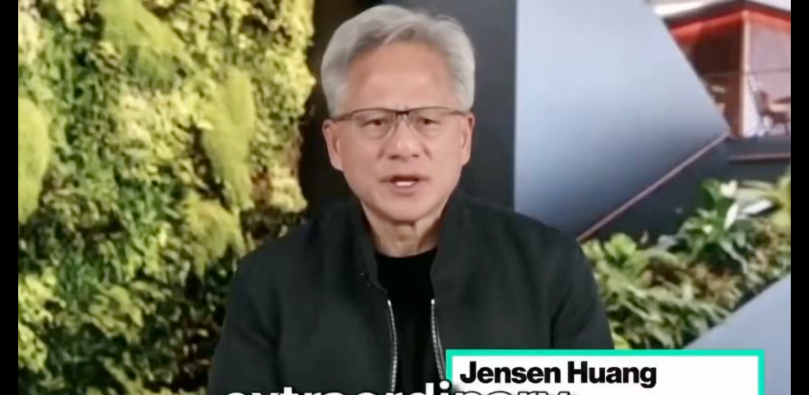
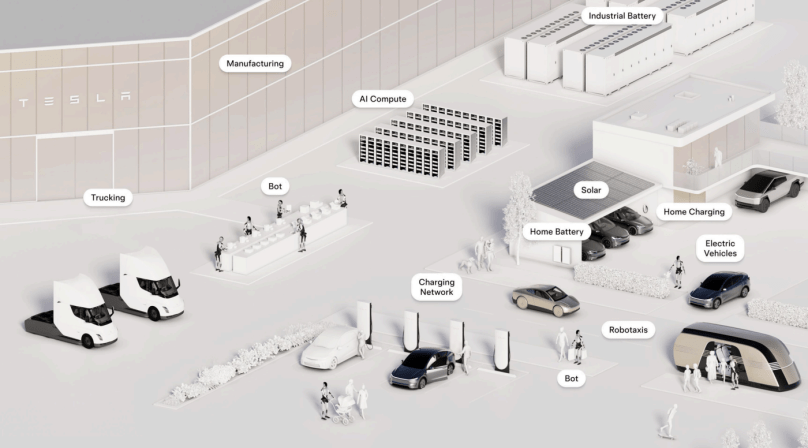
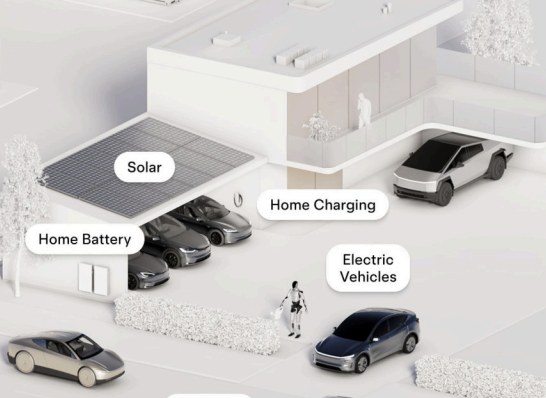
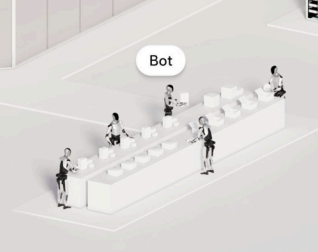
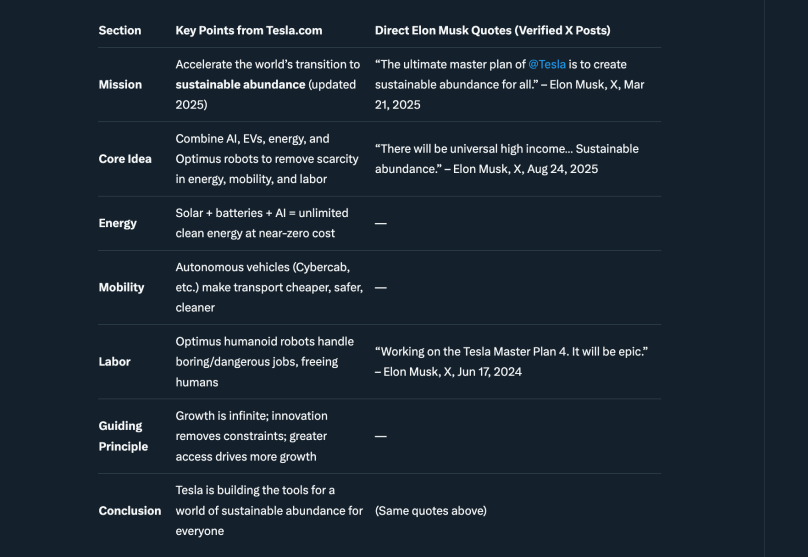
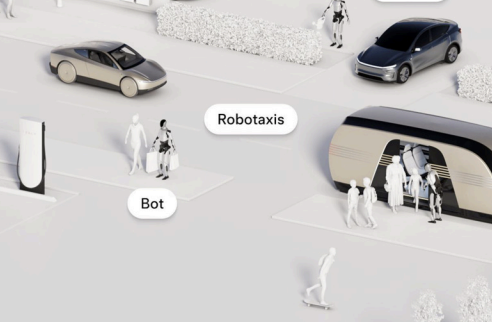
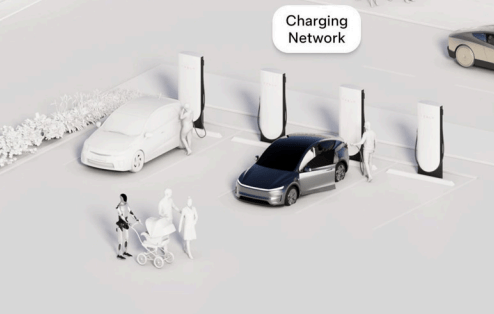
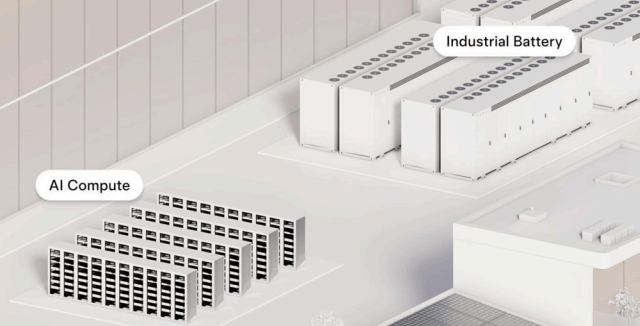
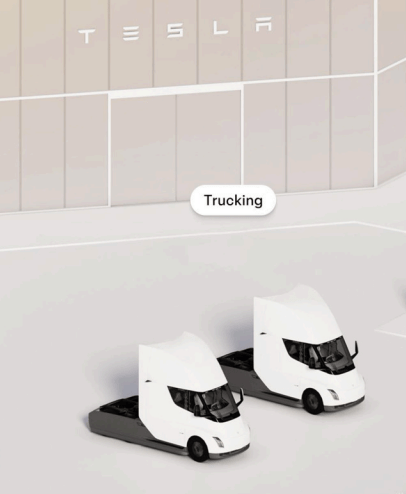
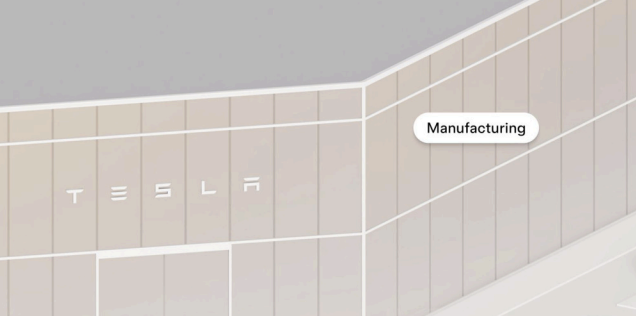
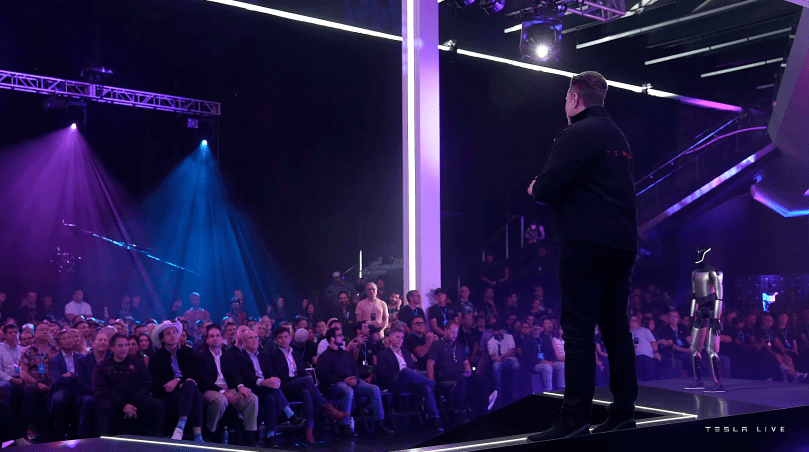
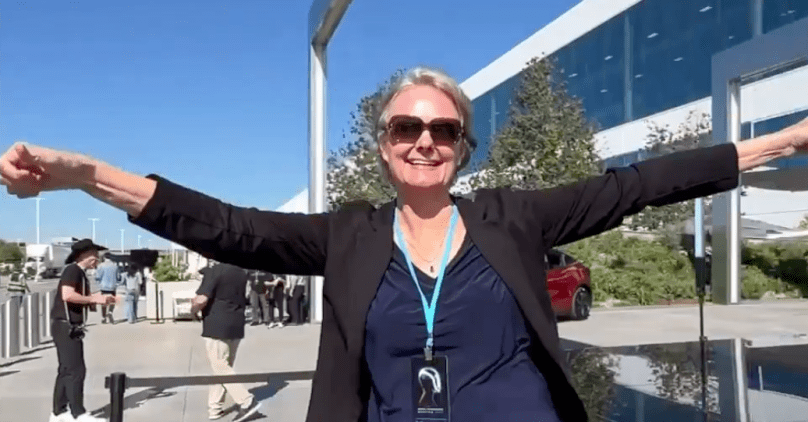
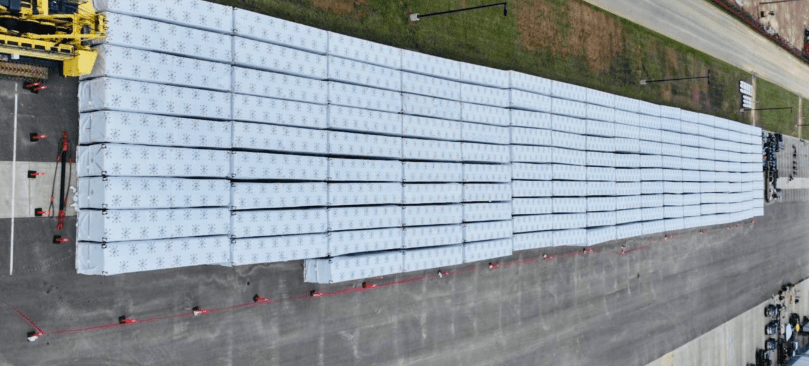
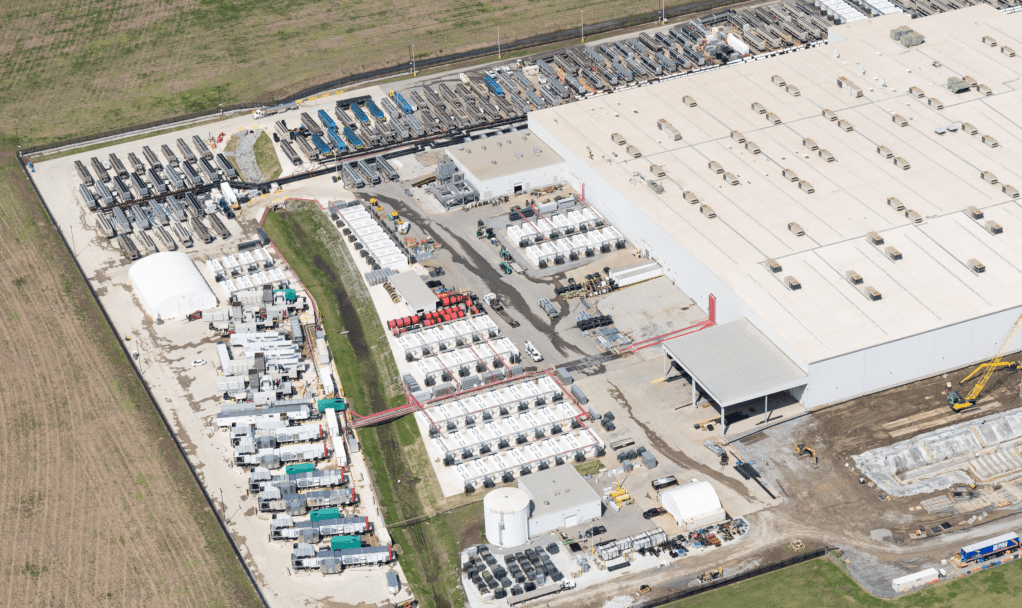
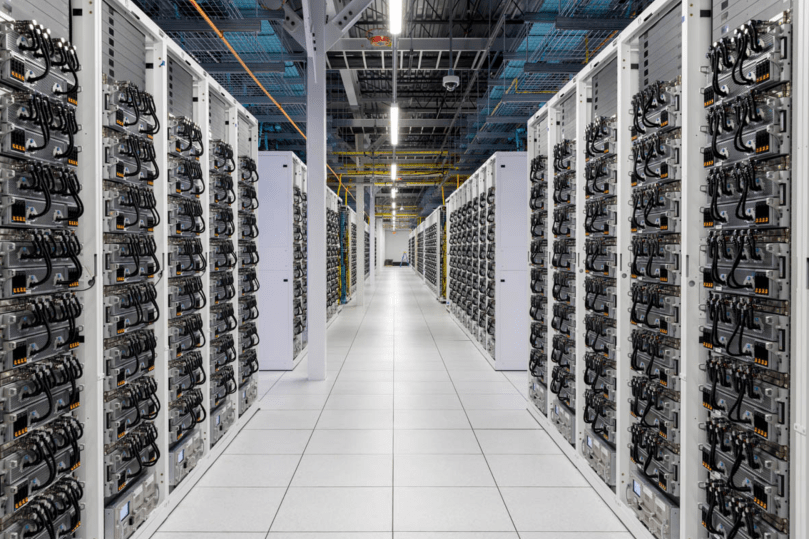
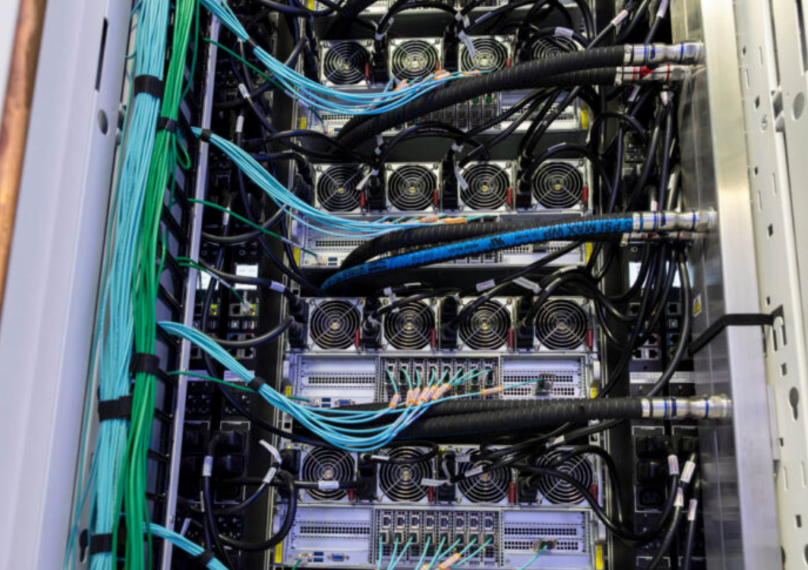
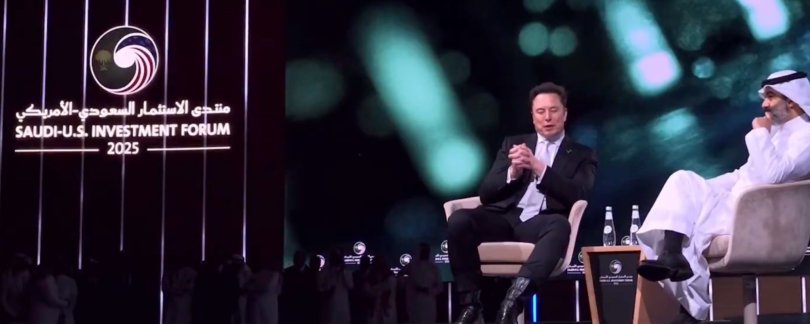
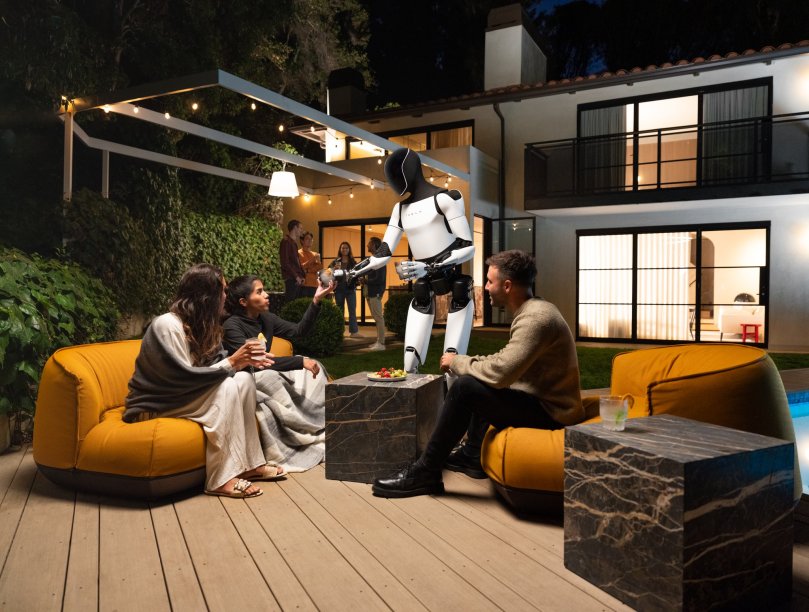
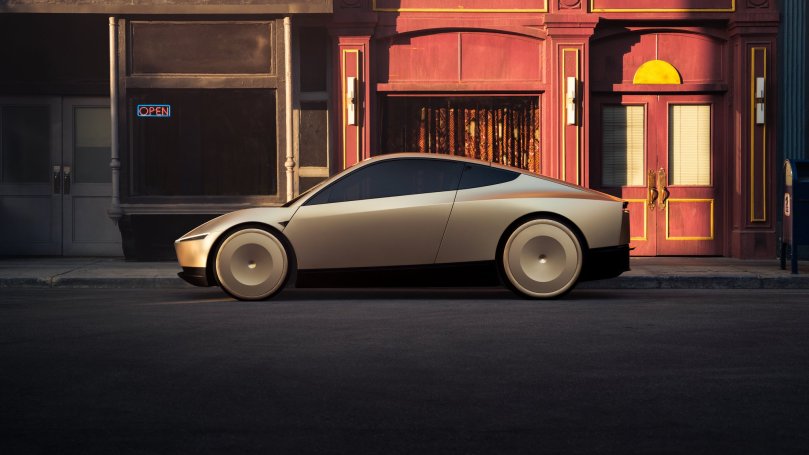
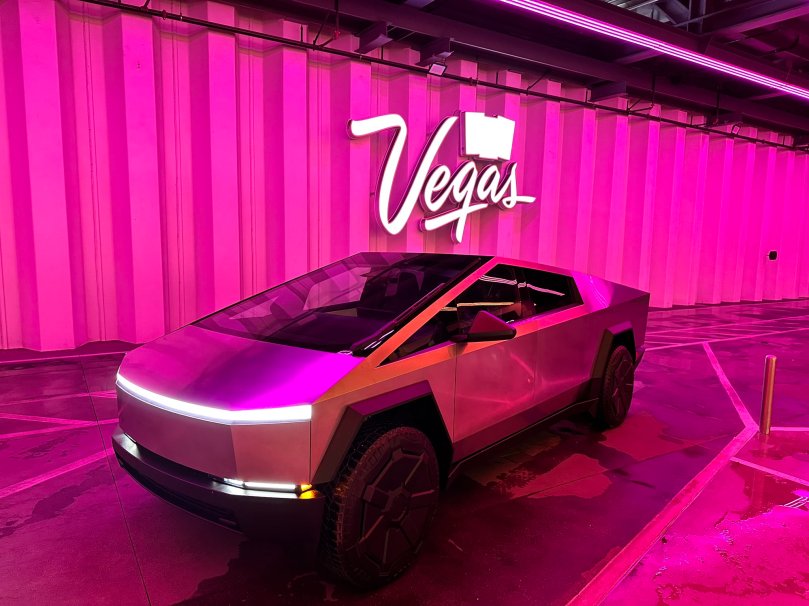
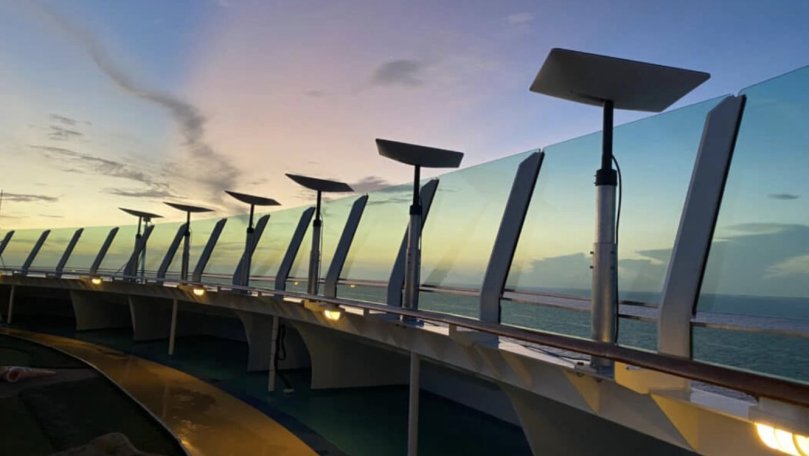
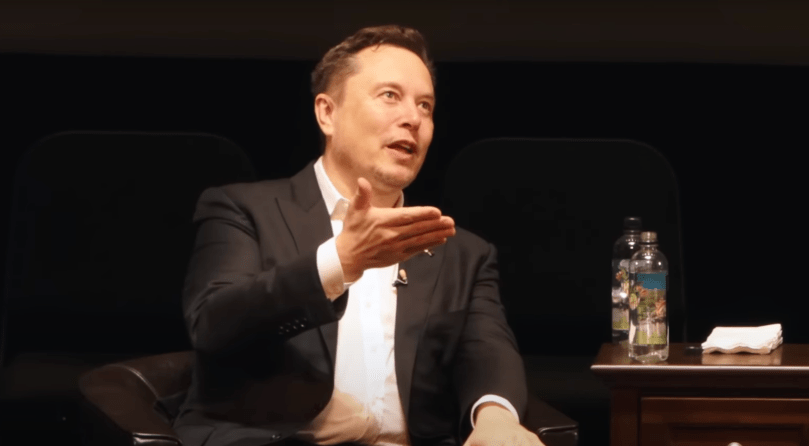
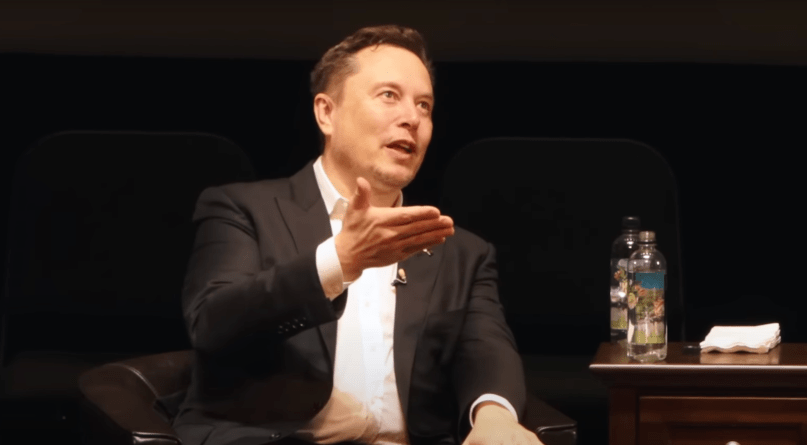
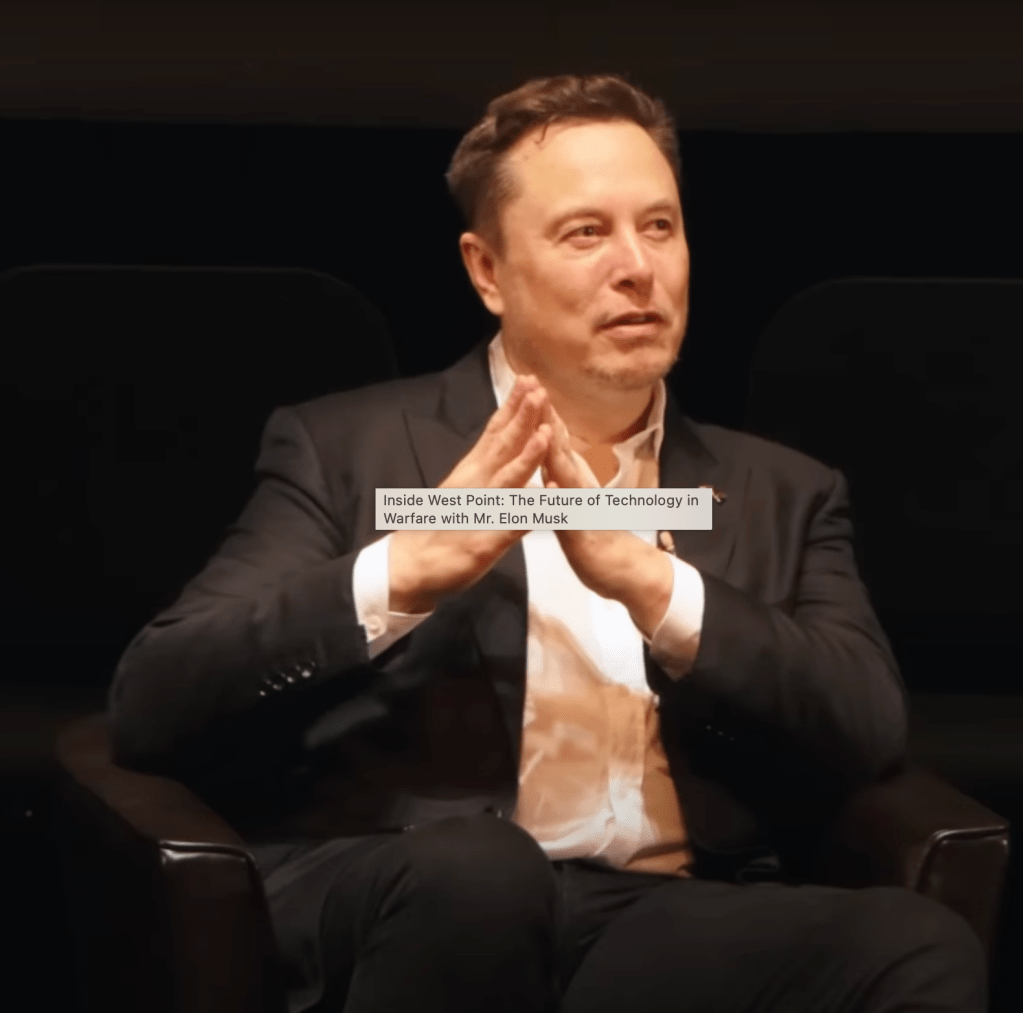
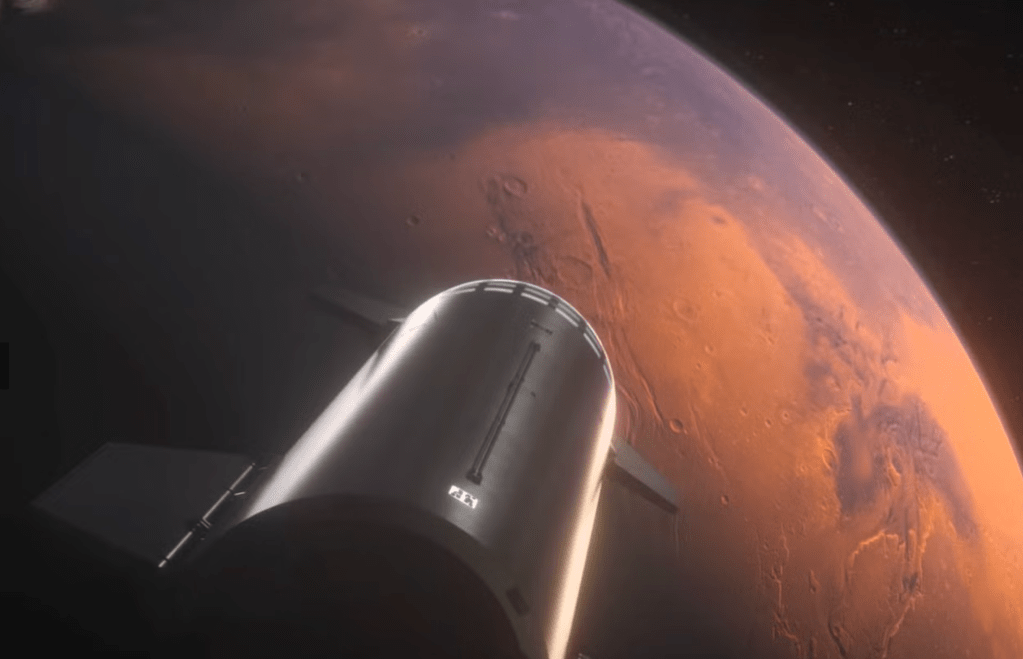
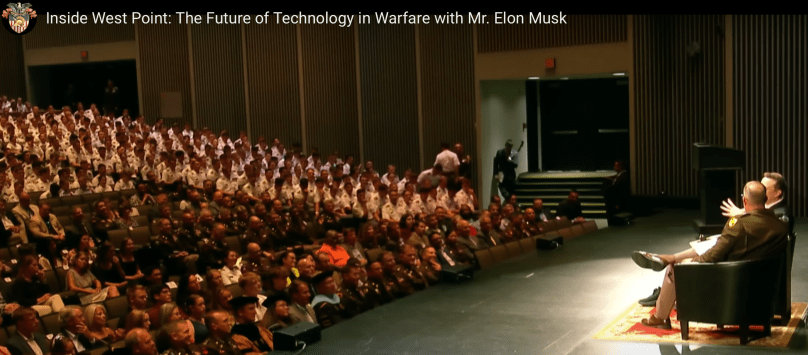
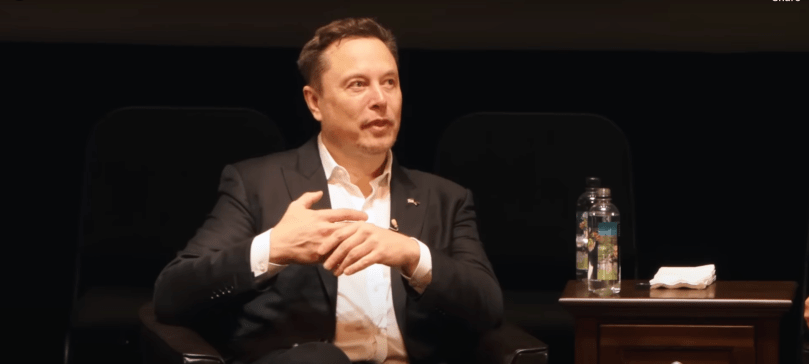
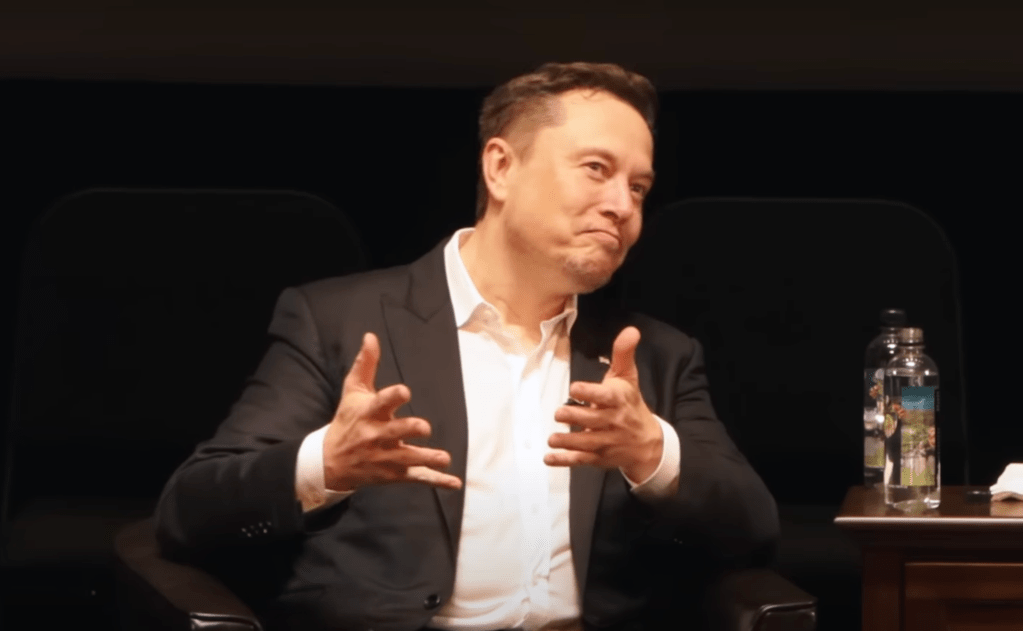


 whatsuptesla.com