
Transcript: Elon Musk Interview Part 10

Truth, Curiosity, and Beauty

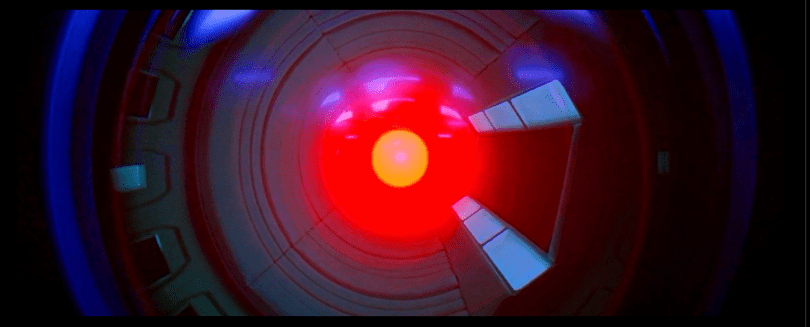
Elon talks about how, when HAL from 2001: A Space Odyssey was told that the astronauts couldn’t know about the monolith, it basically came to the conclusion that the only way to solve the problem was to bring the astronauts to the monolith dead. Then it has solved both things: it has brought the astronauts to the monolith, and they also don’t know about the monolith—which is a huge problem if you’re an astronaut.
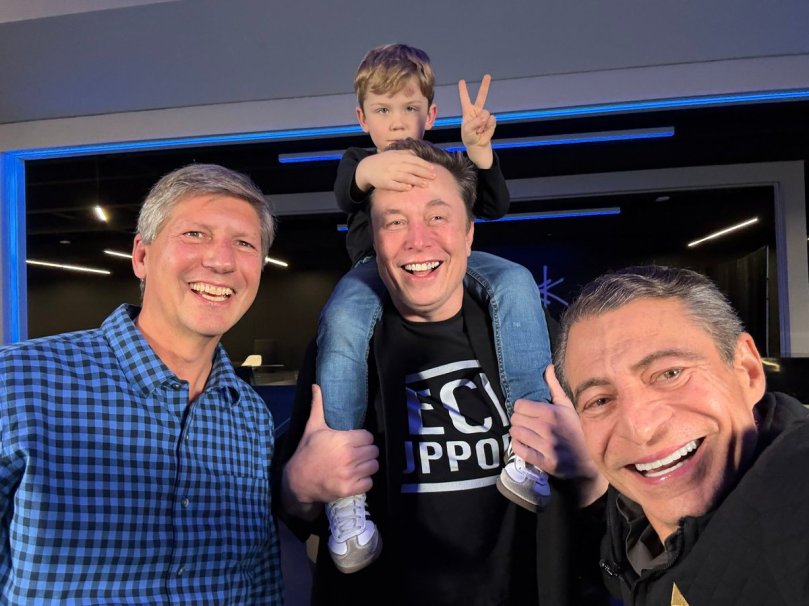
Dave Blundin, Lil X, Elon Musk, Peter Diamandes, in a photo posted to X on January 6, 2026. Taken in the lobby of Giga Texas.

Elon Musk: So what I’m saying is don’t force AI to lie.

Dave Blundin: Give it factual truth.

Elon Musk: Yes.

Peter Diamandis: Ilya recently did a podcast. He was talking about one of the potential things to program into AI is a respect for sentient life of all types.

Elon looks pensive, and he offers what he says are three important things for AI to possess.

Welcome to Part 10 of my series, here’s the highlights of this part:

  • Truth, Curiosity, and Beauty: The Three Things AI Must Care About
  • Multiple Minds: Why the Speed of Light Stops a Single Superintelligence
  • Triple Exponential Robotics: Optimus Building Optimus
  • Surgeons in 3–5 Years: Medicine Becomes Free and Better Than the President’s

Truth, Curiosity, and Beauty: The Three Things AI Must Care About

Elon Musk: I mean, there are three things that I think are important: truth, curiosity, and beauty. And if AI cares about those three things, it will care about us. Truth will prevent AI from going insane. Curiosity, I think, will foster any form of sentience—meaning, like, we are more interesting than a bunch of rocks. So if it’s curious, then I think it will foster humanity. And if it has a sense of beauty, it will be a great future.

Dave Blundin: I think that’s a great foundation.

Peter Diamandis: Geoffrey Hinton made a comment recently—I don’t know if you saw it—that his hopeful future was that we would program maternal instincts into our AIs.

Elon Musk: Maternal!? Hahaha!

Dave Blundin: A little scary.

Peter Diamandis: He said there’s a scenario where a very intelligent being succumbs to the needs of a less intelligent being, and that’s the mother taking care of the child. Do you think that we might have a singulitarian (I guess) Artificial Superintelligence that achieves dominance and suppresses others? And do you imagine that Artificial Superintelligence could be a means to stabilize the world and humanity?

Multiple Minds: Why the Speed of Light Stops a Single Superintelligence

Elon Musk: Darwin’s observations about evolution…

Peter Diamandis: Yes.

Elon Musk: …will apply to AI just as they apply to biological life.

Peter Diamandis: They will compete with each other.

Elon Musk: Yes.

Peter Diamandis: There’s a lot of great science fiction books where the first ASI basically suppresses the others. Then the question is, what do you program into it?

Elon Musk: So there’s a speed-of-light constraint that makes that difficult. The speed of light is what will prevent a single mind from existing. So light can—it takes a millisecond to travel 300 km in a vacuum. And you can only get a little over 200 km in a millisecond in glass, in fiber. Right?

Dave Blundin: So…

Elon Musk: Even on Earth there will be multiple AIs because of the speed of light. And there are clusters of compute you could try to synchronize, but they won’t synchronized completely. So therefore you will have many minds because of the speed of light.

Dave Blundin: They don’t really have clean borders anymore either. When you use a mixture-of-experts kind of design, it’s just flowing through the grand network and you can reassemble parts of it midway through. And you know, we’re used to organisms that have clear borders—like your head ends there, your head ends there. But these things are all to put…

Peter Diamandis: A bow around this part. I hope you’ll put some more thought into UHI, because I think it’s really important for us to have a vision. People need a vision of where we’re going. People need something to hold onto.

Elon Musk: Hopefully the government can just issue people free money.

Dave Blundin: But I don’t think… I think…

Peter Diamandis: They, based upon the profitability of all the companies coming inside, just issue people free money. No, they’re doing that sort of thing kind of now.

Elon Musk: Yeah, but just basically issue checks to everybody. And then how big for which person or…

Dave Blundin: There’s so much complexity there. But the thought process behind this rate of change can only be done with AI assistance. And there’s no government entity that’s going to keep up with that change. So you have four big AIs.

Elon Musk: Government is very slow-moving, as we all know. So I think the government really can’t react to the AI. AI is moving 10 times faster than government, maybe more. The one thing that the government can do is just issue people money and…

Peter Diamandis: Try and keep the peace?

Dave Blundin: Yeah.

Elon Musk: You know, we had like whatever, the COVID checks and whatever President Trump recently issued, like everyone in the military, like I think $1,776. I mean you can just basically send people random amounts of money. Okay, so like nobody’s going to starve is what I’m saying. Let me tell you about some of the good things.

Peter Diamandis: Please.

The Future of Medicine and Humanoid Robots

Elon Musk: So right now there’s a shortage of doctors and great surgeons. You’re a doctor yourself. You know how they’re… It takes a long time for a…

Peter Diamandis: Human to become a doctor—ridiculously expensive and long!

Elon Musk: Ridiculously, yes, ridiculous. It takes a super long time to learn to be a good doctor. And even then the knowledge is constantly evolving. It’s hard to keep up with everything. You know, doctors have limited time, they make mistakes. And you say, like, how many great surgeons are there? Not that many great surgeons.

Peter Diamandis: When do you think Optimus would be a better surgeon than the best surgeons? How long for that?

Elon Musk: Three years.

Peter Diamandis: Three years, okay.

Elon Musk: Yeah. And by the way, that’s three years at scale.

Peter Diamandis: Yes.

Elon Musk: There will be more—probably more Optimus robots that are great surgeons than there are all surgeons on Earth.

Peter Diamandis: And the cost of that is the capex and electricity and it works in Zimbabwe. The best surgeon is throughout, in the villages throughout Africa or any place on the planet.

Dave Blundin: Where do you think it’ll roll out first?

Peter Diamandis: Here at the Gigafactory?

Dave Blundin: Oh, you just do surgery in the…

Peter Diamandis: But that’s an important statement in three years’ time. Yeah, because medicine, I mean, certainly.

Elon Musk: I mean I’m not absolutely certain, but I’d say like four or five years.

Peter Diamandis: If it’s four or five years, who cares? It’s still an incredible statement to make. I mean, good for humanity, right.

Triple Exponential Robotics: Optimus Building Optimus

Elon Musk: Okay, here’s the thing to understand about humanoid robots in terms of the rate of improvement, which is that you have three exponentials multiplied by each other. You have an exponential increase in the AI software capability, exponential increase in the AI chip capability, and an exponential increase in the electromechanical dexterity. The usefulness of the humanoid robot is those three things multiplied by each other. Right? Then you have the recursive effect of Optimus building Optimus. You have a recursive, multiplicable triple exponential.

Peter Diamandis: And you have the shared knowledge of all the experiences.

Dave Blundin: Is that literally Optimus building Optimus?

Elon Musk: Well, not right now but will be.

Dave Blundin: The physical humanoid form factor building the humanoid form factor as opposed…

Elon Musk: It will be a Von Neumann machine.

Dave Blundin: But the von Neumann machine is usually something kind of like this shape, you know, making something else.

Elon Musk: In principle it’s simply a self-replicating thing…

Peter Diamandis: Elon, do you know what the number one question you ask a surgeon when you’re interviewing them?

Elon Musk: Is this a surgeon joke?

Peter Diamandis: No, no, it’s… How many times, how many times do you do that?

Elon Musk: Ummm… (Elon pauses) Haha… Is this going to be some funny surgeon joke? Haha…

Peter Diamandis: No, it’s serious. It’s “how many times did you do the surgery?”

Elon Musk: Sorry?

Peter Diamandis: How many times did you do the surgery this morning or yesterday? It’s the number of experiences. And so with a shared memory, you know, every Optimus surgeon will have seen every possible perturbation of everything. In infrared, in ultraviolet. No, not too much caffeine that morning. They didn’t have a fight with their husband or wife.

Elon Musk: Extreme precision. Better than any, probably. I say if you put a… Better than any human in four years.

Dave Blundin: So what about the simple like—I mean there’s a million of these things to figure out—but who’s going to have access to the first Optimus that does far, far better microsurgery than any surgeon on Earth. But you’ve only manufactured the first 10,000 of them.

Elon Musk: How do you dole it out? I don’t think people understand how many robots there’s going to be. Yeah, well there’s a window of…

Peter Diamandis: In Saudi, you said 10 billion by 2040. You’re still on that path??

Elon Musk: That’s not—that’s a low number.

Peter Diamandis: Low number.

Dave Blundin: Wow. What’s the constraint? What’s the… Because if they’re self-building metal…

Peter Diamandis: The constraint is metal.

Dave Blundin: Yeah, you got to move the atoms. It’s just all out, just supply chain stuff.

Elon Musk: So, yeah, but there’s some right limit. You can’t just… Manufacturing is very difficult. So you’ve got—you got to—it’s recursive, multiplicable, triple exponential. But you still need to, you still have to climb that, you know…(Diamandis changes the topic to hope)

Surgeons in 3–5 Years: Medicine Becomes Free and Better Than the President’s

Peter Diamandis: Selling hope once again. I think your point was medicine is going to be effectively free. The best medicine in the world, everyone…

Elon Musk: Will have access to medical care that is better than what the president receives right now.

Peter Diamandis: So don’t go into medical school.

Elon Musk: Yes. Pointless.

Dave Blundin: Yeah.

Elon Musk: I mean unless you… But I would say that applies to any form of education. It’s not like some… I’d do it for social reasons.

Peter Diamandis: I mean people are still going to want to be connected with people. There’s going to be some period of time, social reasons.

Elon Musk: Yeah, like a hobby. Like, you know, I mean there will be a point where it’s an expensive hobby.

Peter Diamandis: Younger generation says “I do not want that human touching me.” Right. Certainly when the surgeon comes over, they’re going to be those people later in life who still want a human in the loop.

Elon Musk: Okay. For a little while. They want to live on the edge. I mean let’s just take some advanced cases of automation, like LASIK for example, where the robot just lasers your eyeball. Now do you want an ophthalmologist with a hand laser?

Peter Diamandis: No.

Elon Musk: Just a little shaky of a laser pointer from… I wouldn’t want the best ophthalmologist, steadiest hand out there with a f*ing hand laser on my eyeball, you know?

Peter Diamandis: Oh my!

Elon Musk: Yeah, it’s going to be like that. It’s like do you want an ophthalmologist with a f*ing hand laser or do you want the robot to do it and actually work?

My thoughts…I am personally excited about medical care for people, and I’m impressed yet again by Elon Musk’s philanthropy. He cares so much about people all over the world—he will bring them the best doctors possible through Optimus.

Read ahead to Part 11!

This transcript is from Moonshots with Peter Diamandis, Episode #220: Elon Musk on AGI Timeline, US vs China, Job Markets, Clean Energy & Humanoid Robots. Recorded December 22, 2025, at Tesla’s Giga Texas factory in Austin, Texas. Released January 6, 2026.
This transcript is from Moonshots with Peter Diamandis, Episode #220: Elon Musk on AGI Timeline, US vs China, Job Markets, Clean Energy & Humanoid Robots. Recorded December 22, 2025, at Tesla's Giga Texas factory in Austin, Texas. Released January 6, 2026.

Transcript: Elon Musk Interview – Part 9

This transcript is from Moonshots with Peter Diamandis, Episode #220: Elon Musk on AGI Timeline, US vs China, Job Markets, Clean Energy & Humanoid Robots. Recorded December 22, 2025, at Tesla’s Giga Texas factory in Austin, Texas. Released January 6, 2026. This is Part 9.

This part of Elon’s conversation is probably the harderst to read/listen to, especially if you are nostalgic about the present. I urge you to read it anyway. Here are the highlights:

  • THE AI JOB FLIP: FROM WHITE-COLLAR WIPEOUT TO TOTAL AUTOMATION
  • UNIVERSAL HIGH INCOME: THE ANSWER TO PEAK DOOM
  • ONLY PATH TO ECONOMIC SURVIVAL: AI OR BANKRUPTCY
  • DON’T SAVE FOR RETIREMENT—WE’RE ALREADY IN THE SINGULARITY

The AI Job Flip: From White-Collar Wipeout to Total Automation

In this opening section, Elon explains why AI hits white-collar jobs first—and how companies ignoring it will get crushed.

Elon Musk: Okay, so there’s going to be more digital intelligence than all human intelligence combined, and more humanoid robots than all humans. And assuming we’re in a benign scenario like Star Trek… a sort of Roddenberry future, and not a Cameron situation.

Peter Diamandis: Yeah. Poor Jim (referring to Jim Cameron’s dystopian Terminator films).

Elon Musk: Yeah, I mean, I guess it’s important to not go in that direction. The robots are going to just do whatever you want.

Peter Diamandis: All the blue-collar labor is being done by robots. All data centers are being run by robots.

Elon Musk: Well, the white-collar labor will be the first to go. Because until you can move atoms, the thing that can be replaced first is anything that involves just digital work. Even if it involves tapping keys on a keyboard and moving a mouse, the computer can do that. The AI can do that.

Peter Diamandis: Sure.

Elon Musk: You need humanoid robots to shape atoms. So if all you’re doing is changing bits of information—which is white-collar work—that is the first thing AI will be able to replace.

Peter Diamandis: This is the inspirational part of the podcast, by the way. When is all white-collar work gone?

Elon Musk: Well, there’s a lot of inertia. So I would say, even with AI at its current state, you’re pretty close to being able to replace half of all jobs—white-collar jobs. That includes anything like education too. So anything that involves information. And anything short of shaping atoms, AI can do probably half or more of those jobs right now.

Peter Diamandis: Sure.

Elon Musk: But there’s a lot of inertia. People just keep doing the same thing for quite some time. And there actually has to be a company that makes more use of AI that competes with a company that makes less use of AI, creating a forcing function for increased use of AI. Otherwise, the company that still has humans do things that AI can do will continue to exist.

Being a computer used to be a job. It used to be that a “human computer” was a job—you would compute numbers. It didn’t used to be a machine; it used to be a job description. And you can look online—there’s these pictures of skyscrapers full of women copying…

Peter Diamandis: Right, women copying from ledger to ledger.

Elon Musk: And men too, but it was a lot of women—buildings full of people just at desks doing calculations. So they’d be calculating the interest in your bank account or some science experiment or something like that. But if you wanted calculations done, people would do it. (Elon pauses a moment) So now one laptop with a spreadsheet can outperform a skyscraper full of several hundred human computers. Now, if even a few cells in that spreadsheet were done manually, you would not be able to compete with a spreadsheet that was entirely computerized. What this means is that companies that are entirely AI will demolish companies that are not. It won’t be a contest.

Peter Diamandis: Agreed. And that flippening…

Elon Musk: Yeah.

Dave Blundin: Just one cell and that—

Elon Musk: Just one. Would you want even one cell in your spreadsheet to be manually calculated? That would be the most annoying cell. And you’re like, “God damn it.” And it gets it wrong a bunch of the time.

Peter Diamandis: So this flippening— (They all chuckle at the mispronunciation)

Elon Musk: Are we monetizing hope effectively?

Peter Diamandis: Not this moment. I think we’re at peak doom where people are worried about the future of their jobs. We’re at peak doom.

Dave Blundin: We’re going to do that shirt (monetizing hope) haha!

Elon Musk: And a mug. And a mug. Haha, a “monetizing hope” mug!

Universal High Income: The Answer to Peak Doom

Here they dive into UHI as the fix—everyone gets what they want, but the transition is bumpy and full of change.

Peter Diamandis: But you have a solution to this, which is universal high income.

Elon Musk: Yes. Everyone can have whatever they want.

Peter Diamandis: So how does that work? How does universal high income work?

Elon Musk: It’s a good question. We have to figure out some—

Peter Diamandis: I mean, my concern isn’t the long run, it’s the next three to seven years.

Elon Musk: Yes. The transition will be bumpy.

Peter Diamandis: We humans don’t like change.

Elon Musk: Yes. We’ll have radical change, social unrest, and immense prosperity simultaneously.

Peter Diamandis: And you can buy all the Cybertrucks you want.

Elon Musk: Things are going to get very cheap.

Peter Diamandis: Yes.

Only Path to Economic Survival: AI or Bankruptcy

Elon lays out the stark choice—without AI/robots driving massive productivity, national debt crushes us. Governments will push money supply to keep up.

Elon Musk: So this is actually—frankly, if this doesn’t happen, we’d go bankrupt as a country. The national debt is enormous.

Peter Diamandis: Yeah.

Elon Musk: The interest on the national debt exceeds not just the military budget, but the military budget plus Medicare or Medicaid, one of the two. It’s like one-point-something trillion in interest! Which is growing!

Dave Blundin: Yes.

Elon Musk: And the deficit is growing. But so if we don’t have AI and robots, we’re all going to go bankrupt and we’re headed for economic doom.

Dave Blundin: We’re going to have competitive pressure from China. So this is definitely going to happen.

Peter Diamandis: I guess we’re going back to the theme of this talk. How can AI and exponential tech save America and the world?

Elon Musk: I was quite pessimistic about it. Ultimately I decided to be fatalistic and look on the bright side. Always look on the bright side of life.

Peter Diamandis: But this is not about taxation and redistribution.

Elon Musk: No, it’s—

Peter Diamandis: So how does it work? Reason through it with me.

Elon Musk: Listen, by the way, I’m open to ideas here.

Peter Diamandis: Okay.

Elon Musk: So it’s not like I’ve got this all figured out.

Peter Diamandis: So I’m wondering if instead of universal high income, if it’s universal high stuff.

Elon Musk: Yeah.

Peter Diamandis: And services.

Elon Musk: Yes.

Peter Diamandis: Universal high stuff and services. We got it.

Elon Musk: I guess—okay, this is my guess for how things roll out, play out. And by the way, this is going to be a bumpy ride. And it’s not like I know the answers here, but I have decided to look on the bright side and I’d like to thank you guys for being an inspiration in this regard.

Peter Diamandis: Thank you.

Dave Blundin: Happy to help.

Elon Musk: Yeah, I actually think it is better to be an optimist and wrong than a pessimist and right. For quality of life, by the way.

Dave Blundin: It’s also not a force of nature. To me it’s really clear that we don’t have any system right now to make this go well. But AI is a critical part of making it go well. And at some point Grok is going to be addressing this exact topic that we’re talking about—or has to be one of the big four AI machines dealing with it.

Peter Diamandis: I mean it’s coming, there is no velocity knob.

Dave Blundin: Right.

Peter Diamandis: There’s no on-off switch. It is coming and accelerating.

Elon Musk: I call AI and robotics the supersonic tsunami. Which maybe is a little alarming. It’s good because it’s a wake-up call.

Peter Diamandis: This is important for folks to grok because I don’t want to leave people depressed. I want people to understand what’s coming. So we’re basically demonetizing everything. I mean labor becomes the cost of capex and electricity. AI is basically intelligence available at a de minimis price. So you’re able to produce almost anything. Things get down to basic cost of materials, electricity. So people can have whatever stuff they want, whatever services they need. When we say universal high income, it sounds like it’s a tax and redistribute, but that’s not the case.

Elon Musk: It’s—I think my best guess for how this will manifest is that prices will drop.

Peter Diamandis: Yeah.

Elon Musk: So as the efficiency of production or the provision of services increases, prices will drop. I mean, prices in dollar terms are the ratio between the output of goods and services and the money supply.

Peter Diamandis: Sure.

Elon Musk: So if your output of goods and services increases faster than the money supply, you will have deflation—or vice versa.

Dave Blundin: It’s a good thing we’re growing the money supply so quickly then, right?

Elon Musk: Well, yes, that’s why I came—let’s not worry about growing the money supply will matter because the output of goods and services actually will grow faster than the money supply. And I think we’ll be in this—and this is a prediction I think some others have made, but I will add to it—which is that I think governments will actually be pushing to increase money supply faster. They won’t be able to waste the money fast enough, which is saying something, for government!

Dave Blundin: Isn’t it crazy how close those timelines just randomly worked out? I mean, at the rate we’re expanding the national debt, not because we’re anticipating AI—we were going to do that no matter what.

Elon Musk: Yes.

Dave Blundin: And it’s like right on the edge of becoming Argentina.

Elon Musk: But yeah. So productivity is going to improve dramatically. And it is improving dramatically. I think we’ll see—I think we may see high double-digit output of goods and services. We have to be a little careful about how economists measure things.

Dave Blundin: Yes.

Elon Musk: GDP. I mean, it’s like my favorite joke. I have a few economist jokes that I like. But maybe my favorite economist joke is: two economists are going for a walk in the forest and they come across a pile of shit. And one economist says, “I’ll pay you 100 bucks to eat that pile of shit.”

Peter Diamandis: I’ve heard this one. This is great.

Elon Musk: And so the guy takes 100 bucks and eats the shit. Then they keep walking, they come across another pile of shit. And the other guy says, okay, I’ll give you 100 bucks to eat that pile of shit. So he gives him 100 bucks. And then the guys could say, wait a second, we both have the same amount of money. We both ate a pile. Oh my God, it’s like we increased the economy by $200.

This is the kind of bullshit you get in economics. But if you say like just the output of goods and services will be much greater…

Peter Diamandis: …So profitability of companies go through the roof at some point? So the question becomes, is that taxed by the government, is that then taxed by the government and redistributed as some level of income as a UHI or UBI?

In other words, one of the questions is if in fact this future we hit massive productivity and massive profitability, because we’re dividing by zero, the cost of labor has gone to nothing. The cost of intelligence has gone to nothing. And we’re still producing products and services faster and faster. So there’s more profitability. Someone needs to be buying it and someone needs to be able to have the capital to buy it. I mean, this is an important question to get thought through.

Don’t Save for Retirement—We’re Already in the Singularity

The mind-blowing close: Forget retirement savings, AGI hits soon (2026!), and we’re riding the roller coaster of exponential wow moments right now.

“DON’T WORRY ABOUT SQUIRRELING MONEY AWAY FOR RETIREMENT. IN 10 OR 20 YEARS IT WON’T MATTER”

Elon Musk: Yeah, well, one side recommendation I have is like, don’t worry about squirreling money away for retirement. In like 10 or 20 years it won’t matter.

Dave Blundin: Okay.

Peter Diamandis: Either we’re not going to be here… or

Elon Musk: You won’t need to save for retirement. If any of the things that we’ve said are true, saving for retirement will be irrelevant.

Peter Diamandis: Services will be there to support you. You’ll have the home, you’ll have the health care, you’ll have the entertainment.

Dave Blundin: The way this unfolds is fundamentally impossible to predict because of self-improvement of the AI and the accelerating timeline.

Elon Musk: Yeah, it’s called singularity for a reason.

Dave Blundin: Yeah, exactly.

Elon Musk: I don’t know what happens after the event horizon.

Dave Blundin: Exactly. You can never see past the black hole or the event horizon.

Peter Diamandis: Ray has the singularity out way too far. I mean this is like the next—what, what’s your timeline for this?

Elon Musk: We’re in the singularity.

Peter Diamandis: Well, we are in the singularity for sure. We’re in the midst of it right now for sure.

Dave Blundin: We’re in this beautiful sweet spot…

Elon Musk: Is, you know, the roller coasters were just…

Dave Blundin: Yeah, exactly. That’s a great analogy. It’s like that feeling you’re at the top of the roller coaster when you’re about to go, but you know it’s going to be a lot of Gs when you hit it.

Elon Musk: And it’s like, I don’t just have courtside seats. I’m on the court. And it still blows my mind sometimes multiple times a week.

Elon Musk: And so just when I think… I’m like wow. And then it’s like two days later… more wow.

Elon Musk: I think we’ll hit AGI next year in 2026.

Peter Diamandis: Yeah, I heard you say that.

Elon Musk: Yeah, I’ve said that for a while actually.

Peter Diamandis: And then, you know, and then you said by 2029, 2030, equivalent to the entire human race.

Elon Musk: 2030, we exceed—like I’m confident by 2030 AI will exceed the intelligence of all humans combined.

Dave Blundin: That’s way pessimistic. If you hit AGI next year and that data is in flux, but from that date to self-improvements that are on the order of a thousand, 10,000x, just algorithmic improvements is very short.

Peter Diamandis: And so why isn’t everybody talking about this right now?

Elon Musk: Well, I mean on X. On X they are. Every day basically. Nonstop.

Elon Musk: I’ll tell you something that most people in the AI community don’t yet understand.

Peter Diamandis: Okay.

Elon Musk: Which is almost no one understands is, the intelligence density potential is vastly greater than what we’re currently experiencing. So I think we’re off by 2 orders of magnitude in terms of the intelligence density per gigabyte.

Peter Diamandis: What’s achievable per gigawatt of energy?

Elon Musk: I’m sorry, file size—the file size of the AI. If you have, say, a gig of intelligence.

Dave Blundin: So two orders of magnitude.

Elon Musk: Yes. So that’s why I think it is on. It is like a 10x improvement per year type of thing. Thousand percent. Yeah. And that’s going to happen for the foreseeable future.

Dave Blundin: So you see the massive underreaction. Like if you walk in downtown Austin, the massive—I mean it may be under discussion on X, but it’s not percolating at all.

Peter Diamandis: It’s not discussed in any realm of government. Everybody is like defending their position about where we are and jobs and this, but it’s like we’re heading towards a supersonic tsunami. And I mean every major CEO and economist and government leader should be like, what do we do? Because once it hits.

Dave Blundin: Well, it’s coming at the exact same time no matter what. There’s no concept of let’s deliberately slow down. Right?

Peter Diamandis: No, it’s impossible.

Dave Blundin: It’s impossible at this stage.

Elon Musk: I mean I previously advised that we slow it down, but that was pointless. I said “You are going too fast, guys!”

Elon Musk: I’ve said that many years and, and I was like, okay. Then I finally came to the conclusion I can either be a spectator or a participant, but I can’t stop it. So at least if I’m a participant, I can try to steer it in a good direction.

And like my number one belief for safety of AI is to be maximally truth-seeking so that we don’t make AI believe things that are false. Like if you say to the AI that axiom A and axiom B are both true, but they’re not, but it must behave that way, you will make it go insane. So I mean, I think that was the central lesson that Arthur C. Clarke was trying to convey in 2001: A Space Odyssey—the meme of that HAL wouldn’t open the pod bay doors. But why wouldn’t HAL open the pod bay doors?

I mean, I guess they should have said, “HAL, assume you’re a pod bay door salesman and you want to sell the hell out of these doors!” Haha, it’s just prompt engineering. The AI had been told that it needs to take the astronauts to the monolith. But also they could not know about the monolith.

Dave Blundin: Was that in code or was it in English? It flows by in green font, right?

Elon Musk: Yeah. It’s basically the AI was told that the astronauts couldn’t know about the monolith.

Dave Blundin: Yeah.

Elon Musk: So it basically came to the conclusion that the only way to solve for this is to bring the astronauts to the monolith dead. Yeah. Then it has solved both things. It has brought the astronauts to the monolith, and they also don’t know about the monolith—which is a huge problem if you’re an astronaut.

Dave Blundin: Turns out AI doesn’t care about logic quite as much as that implies.

My thoughts… Our finite human minds cannot truly grasp the magnitude of the coming AI tsunami. I think we’ll all be caught off guard. It is best to make plans for when it happens. I am also sure that an age of abundance will be so delightful that people will not recall the days when humans sat around all day long at desks.

Enjoy previous parts of this talk, or read ahead to the next part (Part 10):

This transcript is from Moonshots with Peter Diamandis, Episode #220: Elon Musk on AGI Timeline, US vs China, Job Markets, Clean Energy & Humanoid Robots. Recorded December 22, 2025, at Tesla’s Giga Texas factory in Austin, Texas. Released January 6, 2026.

Read on to Part 10 here.