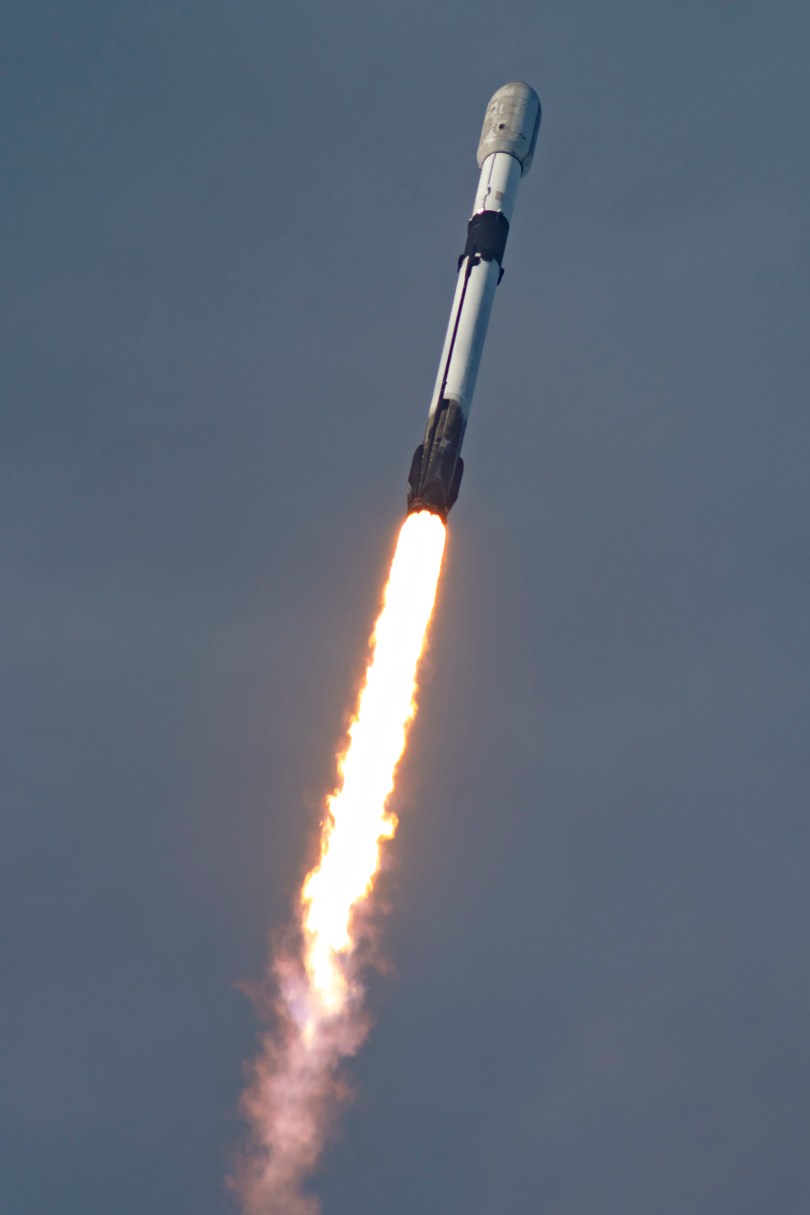
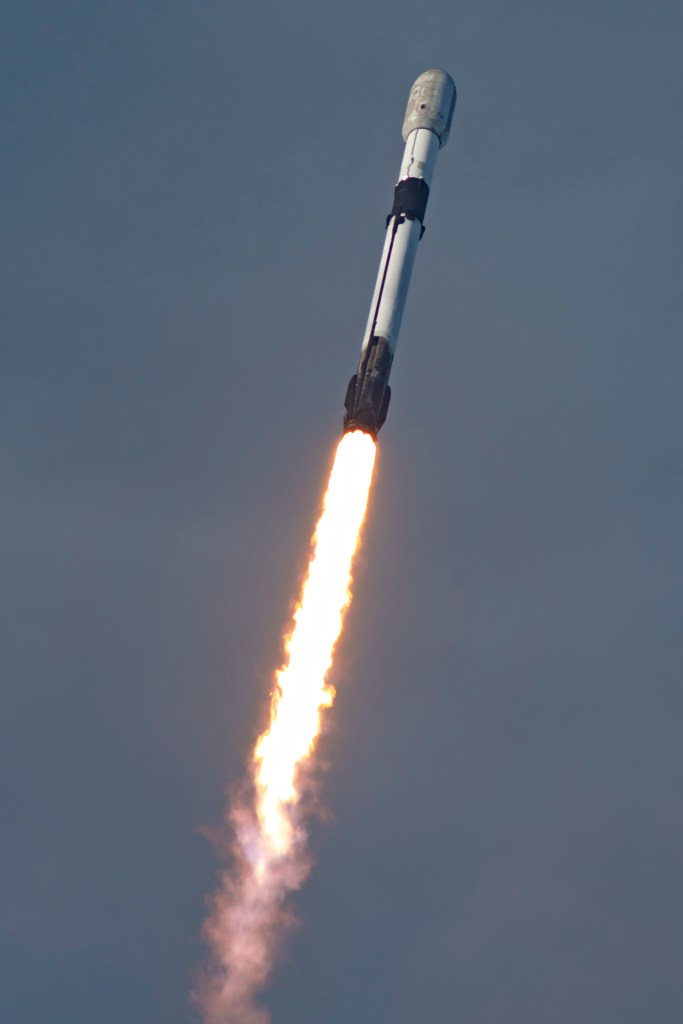
On March 30, 2026, a SpaceX Falcon 9 first-stage booster completed its 34th successful launch and landing after sending another group of Starlink satellites into orbit. That single-rocket record highlights how far reusable technology has come and how quickly it is making space more accessible than ever before.
The story behind that achievement started with an important advantage. When Elon Musk founded SpaceX in 2002, he brought no formal aerospace engineering background to the project. Instead of seeing that as a gap, Elon turned his outsider perspective into one of the company’s greatest strengths. Free from the usual industry assumptions, he and the early team approached every problem with first-principles thinking, asking the questions others had stopped asking and building from the ground up with fresh ideas.
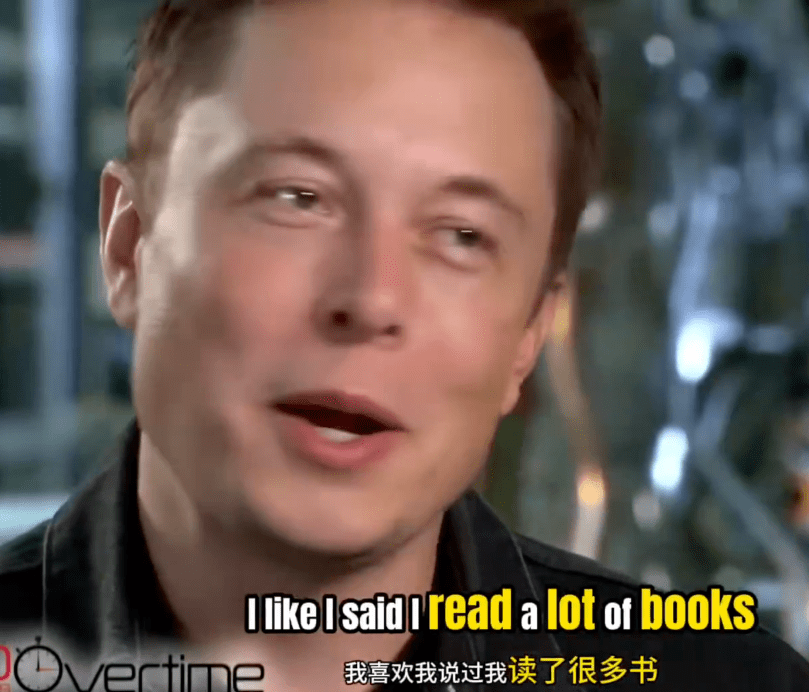
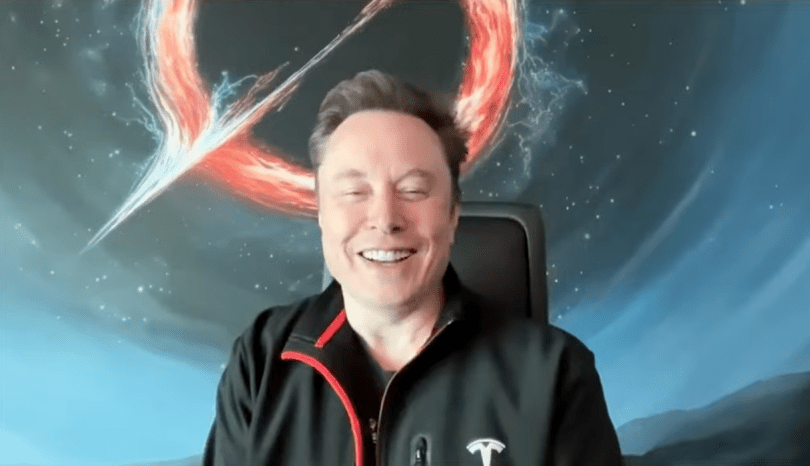
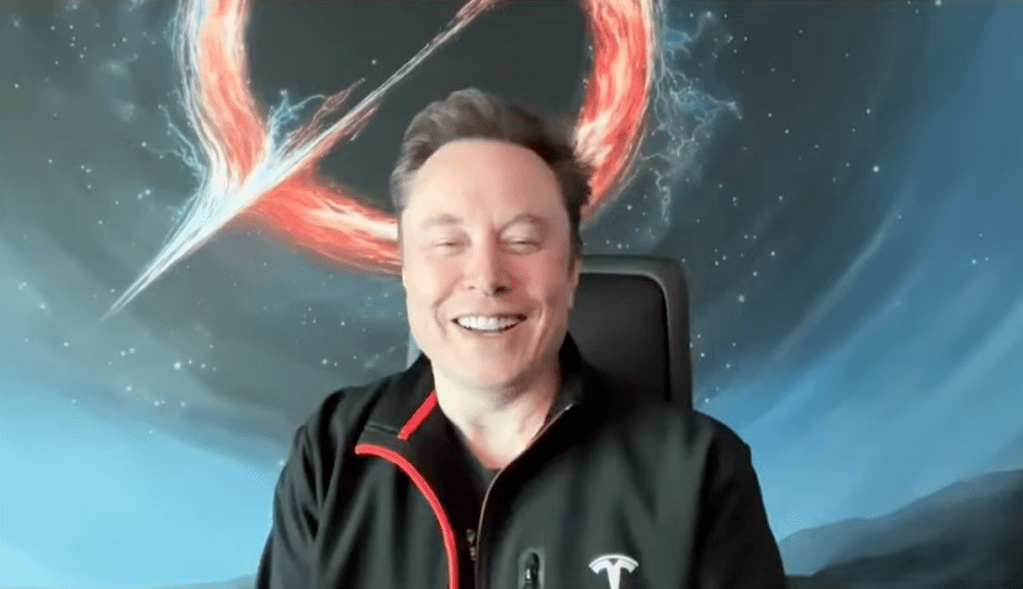
Elon Musk explains how coming from outside the aerospace industry gave SpaceX the freedom to make radical breakthroughs. “I like I said I read a lot of books.” A reminder that self-learning and questioning assumptions open doors for the next generation. Image credit: Screenshot from Overtime interview
Those fresh eyes proved valuable right away. The first three Falcon 1 launches between 2006 and 2008 did not succeed. Rather than giving up, the team treated each flight as valuable data, made fast adjustments, and kept moving forward. On September 28, 2008, the fourth launch worked perfectly. That commitment to rapid learning turned reusability into reality and cut launch costs by more than 80 percent, opening the door to more frequent and affordable missions.
Elon recently highlighted exactly why that outsider approach mattered. In a 2015 interview he shared again on X, he explained how stepping outside traditional aerospace training allowed the team to challenge old limits. He said, “Indeed, it was because I was not from the aerospace industry that SpaceX made such radical breakthroughs. Same for Tesla. Those in the industry would have if they could have.”
Indeed, it was *because* I was not from the aerospace industry that SpaceX made such radical breakthroughs. Same for Tesla.
Readers on X quickly agreed. People coming from different fields often spot possibilities that those inside the industry have learned to accept as impossible.
For kids today, this record is more than just cool rocket news. It is a clear reminder that you do not need a specific degree or the “perfect” background to help shape the future. Whether you enjoy science class, building projects in your garage, writing code, playing sports, or simply wondering how things work, SpaceX shows what is possible when you stay curious and keep learning from every step. Hard work, smart questions, and the willingness to try again after a setback can open doors that once looked closed.
As Elon said in another interview, “I read a lot of books, talked to a lot of people, and I have a great team”. The path to success is more open than people will often lead you to think.
SpaceX’s latest milestone proves that bold ideas and steady effort turn “impossible” into “already done.” The next breakthrough in AI, energy, medicine, or any field you care about could start with someone exactly like you, someone who chooses to keep asking the questions everyone else stopped asking long ago. The sky is not the limit. It is just the beginning.
A SpaceX Falcon 9 booster powers skyward with its record 34th launch, carrying Starlink satellites to orbit. This reusability milestone showcases what fresh thinking and rapid iteration can achieve. Photo credit: SpaceX
Many people might be ready to hand over car keys for good at age 93. And Dan Doyle’s mother is doing the opposite and she’s doing it beautifully.
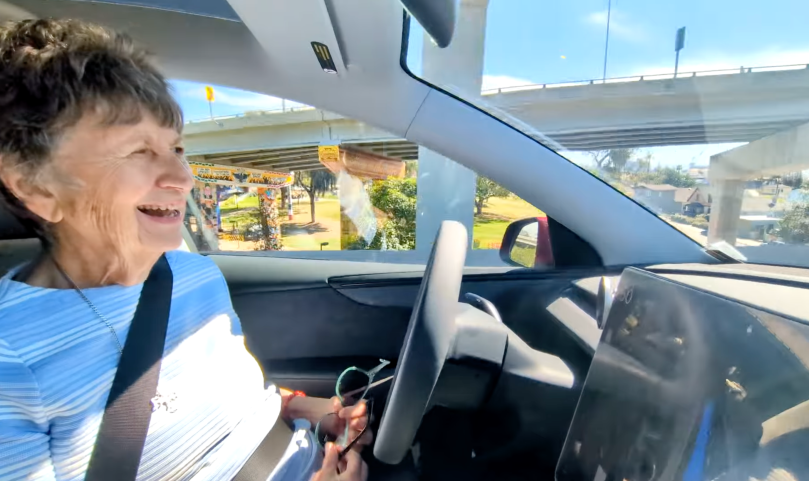
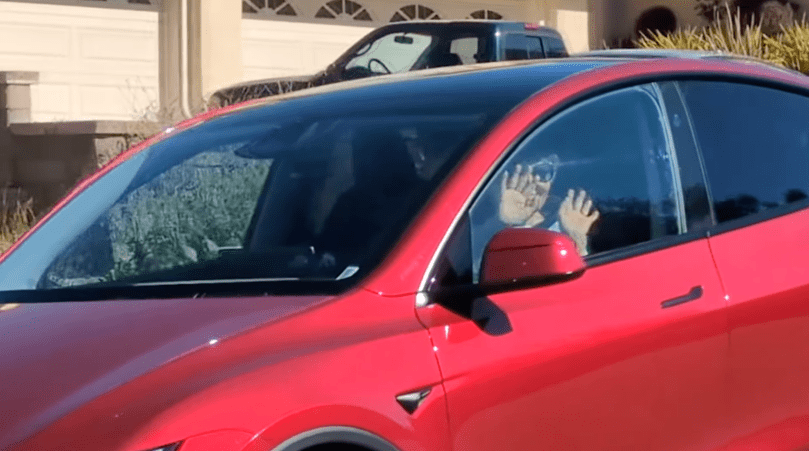
In a lovely video posted on Dan Doyle’s Family Channel, we get to see Dan’s 93-year-old mom behind the wheel of her brand-new Tesla Model Y with Full Self-Driving (FSD). The footage shows her relaxed and smiling as the car smoothly handles real roads, including the scenic Coronado Bridge drive.
When Dan asks how one of her recent trips went, her simple, perfect response is: “Uneventful.”
That single word says so much. For many seniors, longer drives often come with growing anxiety and fatigue. But with FSD doing the hard work, those worries melt away.
During one drive, Dan playfully tells the car, “Hey, if the worship isn’t good, could you go a little slower?” The Tesla’s Grok voice (Ara) replies with humor: “Huh? Nice one. Hope the worship rocks so we don’t have to slow down.”
Laughing and smiling, his mom immediately adds, “I love that lady.”
Later, while enjoying gelato together, Dan asks, “Life is good, right Mom?” Her bright smile says it all: “Life is good.”
As Dan shares in the video:
“Although she has always been a good driver, my mom can now drive without the fear or fatigue that can naturally come with age. No more relying on others for every trip. No more feeling stuck. This is true mobility.”
The story was first shared on X by citizen journalist Sawyer Merritt, and Dan later confirmed on his X account that his mom still holds a valid driver’s license and owns two other vehicles. She’s simply enjoying the freedom her new Tesla brings.
That's a valid question… She can drive…. She has her driver's license, she owns two other vehicles and simply switched over to this one. She's been driving her whole life and she's doing wonderfully. My mother is amazing!
As someone who uses FSD every day myself, especially lately while recovering from a third-degree ankle sprain, I can personally relate to how meaningful this technology is. When your body isn’t cooperating, having a car that can reliably and safely handle the driving gives you back a piece of your independence.
This is what FSD looks like in real life: not just futuristic tech, but a quiet, powerful tool that helps real people, including a joyful 93-year-old woman, keep living life on their own terms.
Sometimes the most important stories are the simplest ones.
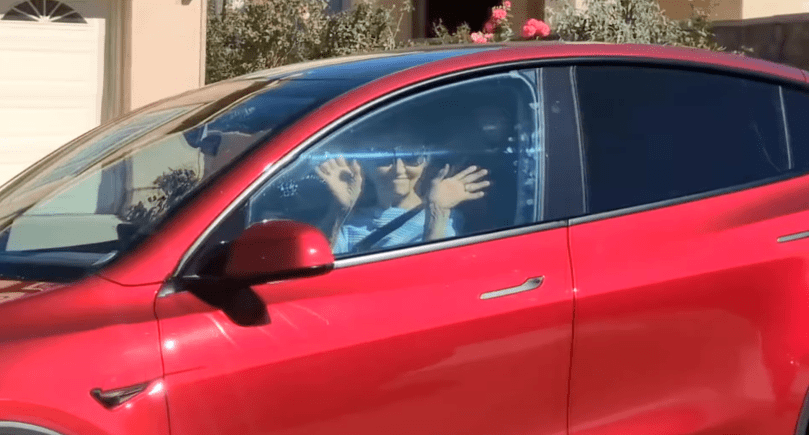
Joyful 93-year-old mom smiling while using Tesla FSD. ‘Life is good,’ she says from the driver’s seat of her Tesla Model Y.
Tesla Model Y with Full Self-Driving smoothly navigating suburban roads for a confident 93-year-old senior driver.
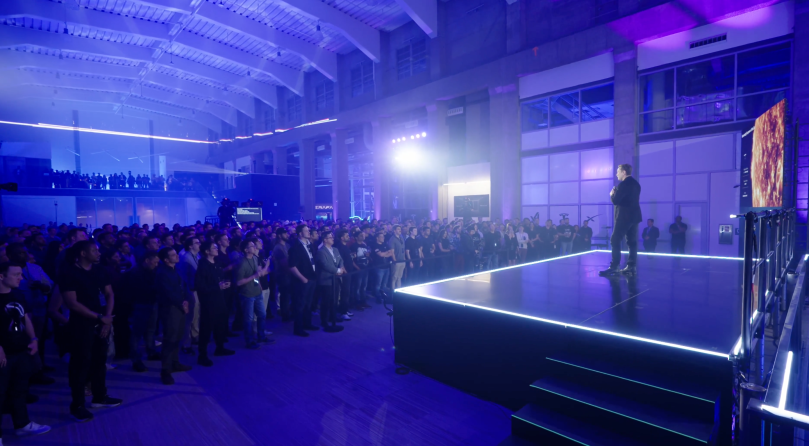
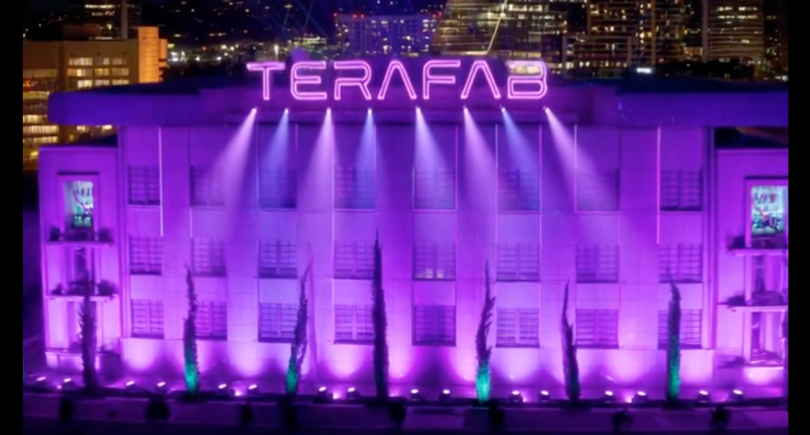
Elon Musk gave a warm, inviting talk about Terafab to a packed, cheering crowd at the historic Seaholm Power Plant in Austin around 8 p.m. on March 21, 2026,
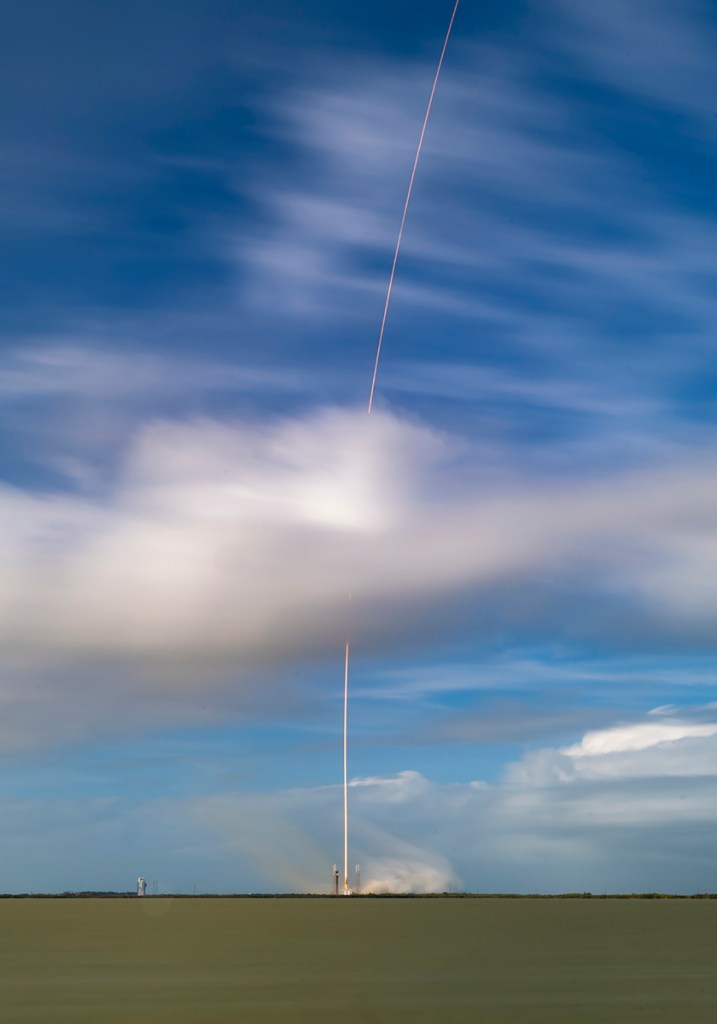
Elon Musk is one of the most caring and approachable people on Earth, and he gave a warm, inviting talk about Terafab to a packed, cheering crowd at the historic Seaholm Power Plant in Austin. While he spoke around 8 p.m. on March 21, 2026, the city outside was treated to a magnificent blue laser beam that appeared over the entire sky—so striking that a local news station immediately sent out a reporter to cover it. Here is my verbatim transcript of his talk.
Elon Musk:
We have a profoundly important announcement to make, which is the most epic chip-building exercise in history by far.
This is really going to take it to the next level—a level probably people aren’t even contemplating right now. This is not in their context. I would call this sort of an out-of-context problem. So we’re going to adjust the context by a few orders of magnitude here.
Let’s see. It’s a joint effort.
[button press sound]
I’m pressing the button, but the button’s not working. Oh, there we go. Okay.
We aspire to be a galactic civilization. So I think the future that everyone—well, most people, I think would agree—is the most exciting one where we are out there among the stars, where we are not forever confined to one planet, that we become a multi-planet species. Like the best science fiction that you’ve ever read, you know, Star Trek or Iain Banks or Asimov or Heinlein. And we want to make that real. Yeah. Not just fiction. Turn science fiction into science fact. That’s the glorious, exciting future that I certainly look forward to.
It’s worth considering how you would rate civilizations. There was a physicist—I think he was Russian—in the ’60s, Kardashev, and he thought about at a high level how you would classify any given civilization. He said, well, if you’re Type One, you’re using most of the energy of your planet. And we actually still have quite a ways to go to be properly a Type One. We’re still using a tiny fraction of the sun’s energy that reaches our planet.
The Earth only receives about half a billionth of the sun’s energy. So the sun is truly enormous. The sun is 99.8% of all mass in the solar system. So sometimes people will ask me, like, what about other power sources on Earth like fusion on Earth? Well, that is unfortunately very small because the sun is 99.8% of mass in the solar system and Jupiter is about 0.1% and Earth is in the miscellaneous category. We are, I think as Carl Sagan might have said, Earth is like a tiny dust mote in a vast darkness—very, very small. The sun is enormous.
So the way to actually scale civilization is to scale power in space. This is necessarily true because we actually capture such a tiny amount of the sun’s energy on Earth because we’re just this tiny dust mote. Another way to think of it is roughly like electricity production on Earth of all of civilization is only about a trillionth of the sun’s energy. Which means if you increase civilizational power output by a million, you would still only be a millionth of the sun’s energy.
It’s awe-inspiring to consider that, just how tiny we are in the grand scheme of things. We often get sort of caught up in these sort of squabbles on Earth that are really very sort of minor things when you consider the grandness of the universe. I think it is important actually to consider the grandness of the universe and what we can do that is much greater than what we’ve done before, as opposed to worrying about sort of small squabbles on Earth type of thing. Not much point in that! We want to be a civilization that expands to the galaxy with spaceships that anyone can go anywhere they want at any time. That would be epic. And have a city on the moon, cities on Mars, populate the solar system, and send spaceships to other star systems. That sounds like the best possible future.
(applause)
So to do that, we need to harness the power of the sun. A Terafab, while it is enormous—a terawatt of compute per year is enormous by our civilizational standards—is still just one step along the way to being even a Kardashev II level civilization. You’re not even registering as a Kardashev III. So it’s a very big thing by current human standards, but still small in the grand scheme. But it’s very difficult for humans.
To accomplish this very difficult goal really requires a combination of efforts from SpaceX, xAI, and Tesla working together to create this epic Terafab project.
And Tesla, xAI, and SpaceX have all done amazing things that people did not think would be done before. There’s the Giga Texas fab here. There’s the Optimus robot that’s being built. There’s a global supercharging network. There’s really quite a lot.
It wasn’t that long ago when people thought electric cars wouldn’t amount to anything. There were basically no electric cars for sale when Tesla started. People said it was impossible, and now Tesla is making 2 million electric cars a year.
Then xAI, although it’s a new company, now part of SpaceX, has also built the first gigawatt-scale compute cluster in record time. Jensen Huang from Nvidia said he’d never seen anything built so fast in his life before. So, a great compliment from Nvidia.
And then SpaceX… well, you already know. The reusable rockets—people said the reusable rockets weren’t possible, and even if you did them, they wouldn’t be economically feasible. So we did them, and then we made them economically feasible. Now we’ve landed over 500 times. Then we did the Falcon Heavy, and now we’re doing Starship.
Starship is a critical piece of the puzzle because in order to scale compute and scale power, you have to go to space, which means that you need massive payload to space and Starship will enable that.
[Shows picture of scale]
This gives you a sense of scale. We’ve got Optimus there for scale. Optimus is about 5’11”, so it gives you a sense of the size of the Starship V3 rocket. Starship V4 will be much longer. Starship V4 will make Starship V3 look kind of short.
We’ll expand with Starship V3 to 200 tons of payload to orbit, up from 100 tons—we’ll start with V3. You can see that this is just a rough approximation of the mini version of the AI sat. That’s roughly 100 kW. It shows the solar panels and the radiator to scale.
For some reason, there’s been a bizarre debate about radiators in space. It’s safe to say SpaceX knows how to do heat rejection in space with 10,000 satellites in orbit—we might know a thing or two. You can see the radiator is quite small relative to the solar panels.
We call it the minisat since that’s just 100 kW. We expect future satellites to probably go to the megawatt range.
(applause)
In order to get to the terawatt of compute per year, you need about 10 million tons to orbit per year at 100 kW per ton. We’re confident this is feasible—like, no new physics or impossible things are required to get there.
I’m confident that SpaceX will get to 10 million tons to orbit per year. Then we’re building up to a terawatt of solar, which will solve the power generation problem.
The key missing ingredient is therefore a terawatt of compute. This announcement is about solving the key missing ingredient.
To give you a sense of what we’re talking about, the current output of AI compute is roughly 20 gigawatts per year. This chart explains why we need to build the Terafab, because all of the rest of the output from Earth is about 2% of what we need.
[Shows chart]
If you add up all the fabs on Earth combined, they’re only about 2% of what we need for the Terawatt Project, or Terafab project.
We certainly want our existing supply chain, to be clear. We’re very grateful to Samsung, TSMC, Micron, and others, and we would like them to expand as quickly as they can. We will buy all of their chips—I’ve said these exact words to them.
But there’s a maximum rate at which they’re comfortable expanding, and that rate is much less than we would like. So we either build the Terafab or we don’t have the chips. And we need the chips. So we’re going to build the Terafab.
We’re starting with an advanced technology fab here in Austin. I believe Governor Abbott is in the audience. I’d like to thank Governor Abbott and the state of Texas for their support.
(applause)
In the advanced technology fab, we will have all of the equipment necessary to make a chip of any kind—logic or memory—and we will also have all of the equipment necessary to make the lithography masks. In a single building, we can create a lithography mask, make the chip, test the chip, make another mask, and have an incredibly fast recursive loop for improving the chip design.
To the best of my knowledge, this does not exist anywhere in the world. Where you’ve got everything necessary that you need to build logic, memory, do packaging and test it, and then do the masks, improve the masks, and just keep looping it. We’re not going to just do conventional compute in this. I think there’s some very interesting new physics that I’m confident will work—just a question of when.
We’re really going to push the limit of physics in compute and we’re going to try a bunch of wild and crazy things which you can do if you’ve got that fast iteration loop. I can’t emphasize enough the importance of being able to make a chip, test it, and then change the design, do another one, and have that in a single building.
I think that our recursive improvement with that situation is probably an order of magnitude better than anything else in the world.
(applause)
So, broadly speaking, we expect to make two kinds of chips. One will be optimized for edge inference. So that’ll be used primarily in Optimus and in the cars but especially in Optimus because I expect the humanoid robots to be made 10 to 100 times more than the volume of cars. So if vehicle production on Earth is about 100 million vehicles a year and I expect humanoid robot production to be somewhere between a billion and 10 billion units a year. So it’s a lot. Tesla’s going to make a very significant percentage of those, is our goal!
And then we need a high-power chip that is designed for space that takes into account the more difficult environment in space where you’ve got high power, you’ve got high-energy ions, photons, you got electron buildup. It’s a hostile environment in space. So you want to design the chip, you want to optimize it for space and you also want to generally run it a little hotter than you would normally run a chip on Earth to minimize the radiator mass. So there are just a bunch of constraints that you would design something differently in space than you would on the ground.
For the space compute, my guess is that is the vast majority of the compute because you’re power-constrained on Earth. That’s why I think it’s probably 100 to 200 gigawatts a year of terrestrial chips and probably on the order of a terawatt of chips in space—just because of power constraints on the ground. Space has this advantage that it’s always sunny. It’s very nice.
I actually think that the cost of deploying AI in space will drop below the cost of terrestrial AI much sooner than most people expect. I think it may be only two or three years before it is actually lower cost to send AI chips to space than it is on the ground. Because in space you don’t need much in the way of batteries. It’s always sunny. And the solar power you get, you’re going to get at least five or more times the solar power you get in space versus the ground, because you don’t have atmospheric attenuation or a day-night cycle or seasonality, and you’re always normal to the sun. So you’re really maximizing the solar power at that point. And this space solar actually costs less than terrestrial solar because you don’t need heavy glass or framing to protect it from extreme weather events.
So as soon as the cost to orbit drops to a low number, it immediately makes extremely compelling sense to put AI in space. It becomes a no-brainer, basically. Moreover, as you go to space, you get increased economies of scale and things get easier over time. Whereas, as you try to put more and more power on the ground, you run out of space and you start using up the easy spots and then you get next-level NIMBY—nobody wants the thing in their backyard. So actually increasing power on Earth becomes harder over time and more expensive over time but in space it becomes actually cheaper and easier over time. These are very important points.
What you just saw there was, because of course you’re asking, what’s on your mind, is well, what do you do after a Terafab? Don’t think small. Well, yeah, good point. So, you know, how do you get to a petawatt? That is the obvious next question. And you get there by having an electromagnetic mass driver on the moon with robots with Optimi and obviously lots of humans. And with that you can send a petawatt, you can create a petawatt of compute and send that to deep space. Because the moon has no atmosphere and has one-sixth of Earth gravity, so you can—you don’t need rockets on the moon. You can literally accelerate it to escape velocity from the surface and that dramatically drops the cost once again of harnessing power and enables you to go a thousand times bigger than a terawatt.
For sure, the future I want to see—I want us to live long enough to see the mass driver on the moon because that’s going to be incredibly epic. That should hopefully get us to a millionth of the sun’s energy at least. It’s humbling to think about that, but a millionth of the sun’s energy would be a million times bigger than Earth’s economy. So it’s good from that perspective. You expand beyond that to the planets, to the other stars, and create the most exciting possible future that I can imagine.
This looks a bit like the opening of Idiocracy with a Mike Judge unlocking an age of amazing abundance. Yeah. Obviously, the elements of that are sustainable energy, space travel, and AI and robotics that bring amazing abundance to everyone. It’s really the only path to amazing abundance: AI and robotics. Which is not to say it can’t go wrong. Hopefully, you know, but I think it’ll probably go right and it’ll be a future that you love. It’s the best future I can think of at least.
And then we go beyond the moon, beyond Mars, and we sail through the rings of Saturn. Now, wouldn’t it be amazing if you could buy a trip to Saturn? Or frankly, if you just have a trip to Saturn. I think things will just be free in the future. It sounds nuts, but you know, if you’ve got an AI robotics economy that is anywhere close to a million times the size of the current Earth economy, literally any need you possibly want can be met. If you can think of it, you can have it.
So I think Iain Banks in his Culture books has it pretty much right, where there actually isn’t money in the future and there’s abundance for everyone. If you can think of it, you can have it. That’s it. Which means anyone could have a trip to Saturn. It won’t be, you know, just a few people. If you want it, you can have it.
Help us design incredible chips and make incredible chips and build a terawatt of chips, a terawatt of solar, and 10 million tons to orbit per year. Thank you.
Announcing TERAFAB: the next step towards becoming a galactic civilization https://t.co/xTA70LOU0e
On 23 March 2026, Daniel Geiger posted a 22-second screen-recording that quietly went viral. The California driver, who is deaf, showed his Tesla’s Full Self-Driving feature automatically detecting an approaching ambulance’s lights, pulling over safely and stopping, all before the vehicle reached him. “I’m deaf and can’t hear sirens,” he wrote, “but my Tesla FSD pulled over instantly for an ambulance. … This is why FSD is huge for deaf drivers: it ‘hears’ what I can’t and keeps everyone safer.”
Geiger is an ordinary working professional, not an influencer or company employee. A Long Island native from Moriches, New York, he played college lacrosse at Sacred Heart University (class of 2005) and earned a degree in Information Technology. He now lives in Auburn, California, and works as an IT security specialist for the California Department of Social Services. On social media he talks about sports, state taxes, potholes and, occasionally, how technology intersects with disability.
I'm deaf and can't hear sirens, but my Tesla FSD pulled over instantly for an ambulance. I caught it on the app screen record. This is why FSD is huge for deaf drivers: it “hears” what I can't and keeps everyone safer. 🚑🤖 #Tesla#FSD#DeafCommunity#Accessibilitypic.twitter.com/LDZbt5QJPT
The incident occurred on 23 March 2026 during a normal drive in the greater Sacramento area. The car’s multimodal sensors (cameras plus the audio-siren detection rolled out in late 2024) handled the situation smoothly. Geiger simply shared the app recording to illustrate one benefit for deaf drivers.
For Americans the context is immediate. Under California Vehicle Code 21806, drivers must yield the right of way to any emergency vehicle using lights and siren: move to the right edge of the road and stop until it passes. Failure to do so is an infraction carrying a base fine of about $490 plus one point on your DMV record. Similar “move-over” or yield laws exist in every state because seconds can mean lives. Deaf drivers follow the same rules but cannot hear the siren that usually alerts everyone else. Geiger’s video shows how one vehicle system can fill that sensory gap while still obeying the same traffic laws everyone else must follow.
He posted the clip because he wanted to highlight a practical safety tool, not to sell cars. The response from other deaf drivers and everyday motorists suggests the story resonated beyond brand loyalty: it showed technology quietly making an existing legal obligation easier to meet for people who otherwise rely on visual cues alone.
On March 21, 2026, at the historic Seaholm Power Plant in Austin, Elon Musk unveiled Terafab: a $20–25 billion semiconductor factory, the result of cooperation between Tesla, SpaceX, and xAI. The stated objective: to produce more than one terawatt of computing power per year, equivalent to nearly the entire current electric power capacity of the United States.
Eighty percent of this capacity would be dedicated to orbital data centers, powered by space-based solar energy via SpaceX launchers. The remainder would supply Tesla’s autonomous vehicles, Optimus humanoid robots, and xAI’s artificial intelligence models. Musk summed it up bluntly: “Either we build Terafab, or we won’t have the chips.”
This project marks a new stage in the vertical integration of the entrepreneur’s companies. While no formal rapprochement has been confirmed, the pooling of resources between a publicly traded company (Tesla) and a private enterprise (SpaceX) is fueling speculation about a deeper merger. Analysts such as Gary Black warn of dilution risks for Tesla shareholders and regulatory obstacles.
For Europe, which is investing heavily through the Chips Act to reduce its dependence on Asian foundries, Terafab illustrates both a threat and a strategic question. An unprecedented concentration of computing capacity in private American hands could disrupt global supply chains. Musk, for his part, presents the project as a response to Earth’s energy limits and a means of ensuring that human knowledge can survive beyond the planet.
The challenges remain immense: Tesla and SpaceX have no experience manufacturing 2-nanometer chips, the capital expenditure is colossal, and timelines remain unclear. The market reacted cautiously: Tesla’s share price barely moved.
Whether Terafab succeeds or not, one thing is clear: Musk’s ecosystem is evolving toward unprecedented industrial integration. Europe, which has always believed in large collective adventures—Airbus, Ariane, ITER—is watching this new form of private competition closely. The future will show whether it can respond.
Austin will have an advanced technology fab. TERAFAB location is TBD. Elon confirmed it is far too massive for Giga Texas and would dwarf everything there combined. Multiple sites are being evaluated, as it requires thousands of acres and over 10 GW of power at full scale. https://t.co/RV6Sj2JJuSpic.twitter.com/LPGKXKaatC
Tesla CEO Elon Musk just dropped news: the long-awaited next-gen Tesla Roadster will be unveiled “hopefully next month, probably in late April.” He called it a “banger next-level” vehicle, directly tying it back to the groundbreaking 2008 original that launched Tesla’s electric revolution. Far from any reason for doubt, this is a genuinely hopeful moment, a celebration of high performance that fills many with hope to deliver powerful acceleration and speed.
In a wide-ranging January 2026 interview on the Moonshots podcast with Peter Diamandis and Dave Blundin, Elon made the new Roadster vision clear. “Safety is not the main goal,” he explained. If maximum safety is your top priority, this is not the car for you. The Roadster is built for pure fun and thrill instead. He also stressed it won’t be the cheapest vehicle Tesla makes, because that isn’t the objective either. The goal is simple: create the best of the last great human-driven cars, a pure performance machine that puts smiles on faces.
The goal is simple: create the best of the last great human-driven cars, a pure performance machine that puts smiles on faces.
Hints dropped in that conversation (and reinforced by the CEO’s recent posts) are being monitored by many. Base performance is already staggering: approximately 1.9-second 0-60 mph acceleration, a top speed over 250 mph, and impressive range. Add the optional SpaceX cold-gas thruster package and you’re looking at sub-1-second sprints, possible short-hover capability, and driving experiences that feel straight out of science fiction.
The base model is expected to start around $200,000, positioning it as a more accessible luxury sports car compared to traditional hypercars in its class (many of which start well above $300,000–$500,000). The SpaceX thruster upgrade will add a significant premium for those seeking the ultimate extremes, but the core Roadster remains a thrilling entry into next-level electric performance without the ultra-exotic price tag.
NEWS: Tesla has filed new trademark applications for its next-generation Roadster, hinting that the unveil is drawing closer.
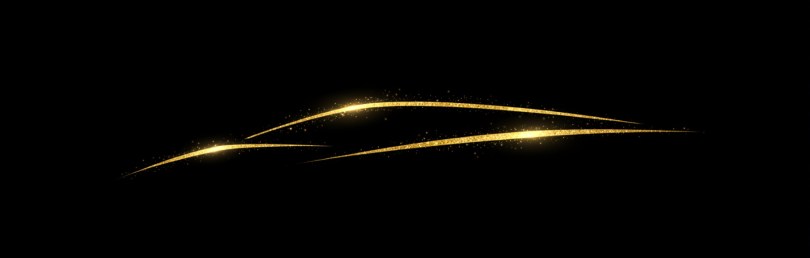
The first application includes a stylized “Roadster” wordmark, while the second includes what seems to be the Roadster’s new design.
This isn’t going to be another typical car launch. Sometimes we all need a joyful reminder that electric vehicles can be wildly exciting. The Roadster will give drivers that pure, exhilarating connection to the road while staying zero-emission and sustainable. Late April can’t come soon enough and when the new Roadster arrives, it will quietly show that Tesla’s products are not hype, they may be late, but they always come through.
My first time driving the first gen Roadster – June 2024 at the Tesla Takeover Europe Event 😀 pic.twitter.com/XlsHDmrR0Q
On March 11, 2026, Elon surprised us all with an appearance at the 2026 Abundance Summit in Los Angeles. In this talk with Peter Diamandis, Elon shared his latest thoughts on Grok 4.20, the hard takeoff of AI, Optimus robot timelines, explosive economic growth, and humanity’s path to universal high income and post-scarcity abundance. Here is my full transcript with Key Takeaways at the end!
Peter Diamandis: So, first off, congratulations on the merger of SpaceX and xAI — bold move going to power humanity’s first Dyson swarm. I’m curious: what’s your timeline for launching these data centers and how much bandwidth do you think you can get in the first year? Give us a sense of the speed at which you’re going to be making this happen.
Elon Musk: Yeah, so SpaceX is in the quiet period. I can’t actually tell you things. That would cause problems.
Peter Diamandis: I appreciate that. And I can’t wait to see the speed. You know, we had a conversation here on Monday with Eric Schmidt and with one of the leads from one of the other hyperscalers. I won’t mention who, but I’m curious where you feel we are in recursive self-improvement. Are we there? Do you see Grok doing recursive self-improvement at this point? And what’s the timeline for AGI and ASI?
Elon Musk: Yeah, I think we’ve been in recursive improvement for a while here. If you mean recursive self-improvement without a human in the loop, is that what you mean?
Peter Diamandis: I do. I am on the AI software side.
Elon Musk: I mean humans are gradually getting less and less in the loop on the recursive self-improvement. So you know every successive model is built by the one before it. So that is happening to a large degree but it’s not yet fully automated. It may be there at the end of this year but not later than next year.
Peter Diamandis: And do you see a hard takeoff at that point?
Elon Musk: We’re in the hard takeoff. Right now.
Peter Diamandis: Okay. Yes.
Elon Musk: I mean, at this point I go to sleep there’s some massive AI breakthrough and when I wake up there’s another one.
Peter Diamandis: Yes. Yeah. It’s hard to keep track, honestly. So, it’s a bit of a head spinner. Yeah. Well, I think a lot of the head spinning is happening from you, too.
Elon Musk: Yeah. Well, you know, Grok’s doing pretty well, and in some metrics, by some metrics, it’s the best, for example, it’s the best at predicting things, which, you know, is arguably the best metric for intelligence. The new Grok 4.20 is really good. We’re currently behind on coding. The reason I was a bit late for this was that I was just in a giant sort of all-hands on coding just going through all of the things that need to happen to essentially catch up and exceed our competitors on coding. Which I think we’ll do. I feel we should probably get there by the middle of this year.
I think people don’t quite understand just how much intelligence there will be or you know, just how far it will exceed human intelligence to a degree that is impossible to fully understand.
You can certainly imagine a situation where, let’s say, if let’s say, a million times more energy is harnessed than all of Earth’s current electricity usage, that would still only be roughly a millionth of the sun’s energy output.
So essentially if you increase Earth’s economy by a factor of a million it’s still roughly a trillion. Since we’re a trillionth of the sun’s energy, if you increase Earth’s economy in terms of electricity usage by roughly a million, you will be roughly 1 millionth only of the sun’s energy harnessed.
But what is it? What is an economy or an intelligence using a million times more electricity than all of our civilization. What does it think about or look like or do? It’s going to be something pretty magnificent. The challenge will be even vaguely appreciating that level of intelligence. But it’s safe to say it will solve everything you can possibly think of. Longevity being, surely, one of them!
Peter Diamandis: And, I do enjoy your unrelenting optimism. Haha, you’ve taken it to heart, monetizing hope, which is pretty funny, how you came up with that one!
Elon Musk: It was Grok’s marketing advice to me when you roasted me on the podcast. Haha, Grok was roasting you and saying you should monetize hope! But hey, it is better than monetizing misery, I suppose!
Elon Musk (continuing): AI and robots increase the economic output by so many orders of magnitude, that we cannot possibly comprehend it.
Peter Diamandis: We’re likely in a very short time to become a microscopic minority of intelligence on this planet.
Elon Musk: Yes, not even on this planet, in the solar system. Because you know your best case outcome for Earth for intelligence is roughly 1 billionth of the sun’s energy. That’s your best case outcome, if you generate intelligence only on Earth.
Peter Diamandis: Intercept it, right?
Elon Musk: Yes. Because roughly one half a billionth of the sun’s energy hits Earth and that’s the vast majority of energy that’s out there that we can access. So really the intelligence in the solar system will be many orders of magnitude greater than the intelligence on earth itself.
Peter Diamandis: Can I ask you a question, Elon? How far out can you see? How many years out can you make reasonable predictions?
Elon Musk: It’s hard to predict the path exactly, especially because often things are kind of an S-curve or a series of S-curves where it starts off slow, grows exponentially, hits a linear zone, and then goes logarithmic. That generally has been what I’ve seen with the breakthroughs in AI.
AI, for example… you’ll have some breakthrough. It’ll do an S-curve, and then it looks like it’s just going to go to infinity, but then you hit logarithmic returns until there’s another breakthrough. So progress in AI is just a sort of series of, you know, sort of overlapping S-curves or connected S-curves.
Peter Diamandis: I mean there was a point where you could probably predict out a decade or two decades. What are your thoughts now?
Elon Musk: Yeah. Okay. This is going to sound pretty crazy.
Peter Diamandis: It’s okay. We’ve been talking crazy all week…
Elon Musk: I’m not sure you are a receptive audience to wild prognostications.
Peter Diamandis: Yes.
Elon Musk: Um… (very long pause) I’d say the economy is 10 times the current size in 10 years. Greater than… that’s really saying something.
Peter Diamandis: Okay. Yeah, you had said, triple-digit growth in five plus years from now on, GDP and 10x the economy.
Elon Musk: I feel like that’s a 10x in roughly 10 years. I feel that’s actually a fairly comfortable prediction — obviously if there’s like World War III or something, that could put a kink in those plans. But in the absence of World War III, if current trends continue, I would say the economy will grow 10x in 10 years. And we’ll have a base on the moon! And we’ll have people on Mars.
Peter Diamandis: And we’ll have mass drivers on the moon!
Elon Musk: I think so, I think we’ll have mass drivers on the moon in 10 years.
Peter Diamandis: I love it, Gerard K. O’Neill’s vision being fulfilled. We had four robots on stage here this year at the Abundance Summit. I look forward to Optimus. I’m curious about the Optimus 3 timeline, in particular, when can I buy one or two? When do you expect it to go into commercial sale, or will you be leasing it?
Elon Musk: Well, we’re in the final stages of completion of Optimus 3, which is really going to be by far the most advanced robot in the world. Nothing’s even close. In fact, I haven’t even seen any demos of robots that are as good as Optimus 3, frankly. Maybe they’re out there or secret or something, I don’t know. And I have to make sure I’m saying things that are reasonably public, of course, but we’re streaming this on X, so this is pretty public and accurate. Yeah. I think we’ll start production on Optimus 3 this summer, but very slow at first, like the classic S-curve ramp of manufacturing units versus time. Then probably reach high-volume production around summer next year. And then we’ll have Optimus 4 design next year. I try to release a new improved robot design every year.
Peter Diamandis: When Dave Blundin and I were at the Gigafactory, it was an extraordinary experience! 11.5 million square feet for Tesla, and then I think you said you’re building out 9.5 million square feet for Optimus there as well, which is extraordinary.
Elon Musk: Let’s call it 10 million square feet, round numbers. Yeah, that’ll be quite a new factory design too. Like, it is different from other factories.
Peter Diamandis: How far before we have robots building robots? You’ve automated so much of the Gigafactory already, where humans are playing a smaller role. Will the robots just take over the roles humans have now?
Elon Musk: We still have a lot of humans building things. Um, you know, Tesla direct employees who are building things uh, or like basically people in the factory are either building or managing people who are building, is roughly 100,000. So we have a lot of people. Tesla’s total headcount is around 150k, of which 2/3s are, you know, in the factory in one form or another. And then our suppliers, there’s probably maybe a million or two million people in our suppliers type of thing. So it’s a lot of people. Um, what we do expect is that the output per person at Tesla becomes very very high. So we’re not planning any layoffs or reductions in personnel. In fact, we will increase our headcount. But the output per human at Tesla is going to get nutty high. Like, you can’t even believe it.
Peter Diamandis: When we were together, we discussed sustainable abundance on our podcast, and you reinforced the idea of a coming age of universal high income, which has become a point of discussion beyond UBI. I’m wondering if you have any thoughts on how we get there. And more importantly, we talked about a timeframe of civil unrest, like maybe 2, 3, 4, or 5 years, with probably a lot of COVID-like checks in the interim until we reach demonetization and deflation that leads to UHI. Any more reflections on that? People really need that hope and vision.
Elon Musk: Yeah, to be clear, I don’t think we should be complacent. We do need to be careful because the future has a range of possible outcomes, and not all are great. But at this point I agree with you: it’s likely to be great. Probably 80% likely, maybe more. And I do think we’ll have universal high income. We’re basically just going to issue money to people because the output of goods and services will so far exceed the money supply that you’ll have deflation — deflation is simply the ratio of goods/services output to money supply. If growth of goods and services far outpaces money supply growth, which I predict it will, then deflation happens.
Yes. A lot of people will spin up new companies, compete fiercely, drive prices down, and accelerate deflation faster and faster.
Basically, AI and robots will make so much stuff and provide so many services that they’ll run out of things to do for humans. There’s only so much humans can even express wanting. Go back to my example: at a million times the Earth’s current economy, you’ve long since saturated all human desire. Even at a thousand times, you probably already saturate anything people can think of wanting.
Peter Diamandis: Yeah.
Elon Musk: So do you think the value of money significantly decreases? Will we go post-capitalist? Yeah, I think money stops being relevant at some point. It’s probably something like a Star Trek culture future. And AI down the road won’t use human currency, it’ll just care about power, mass, wattage, and tonnage. Yeah…
Key Takeaways
AI & Intelligence Explosion
We’re already in the “hard takeoff” — breakthroughs are happening overnight while we sleep.
Recursive self-improvement is well underway (humans stepping back gradually); full automation of the AI loop expected by end of 2026 or no later than 2027.
Grok 4.20 already leads in prediction (a top intelligence metric), coding catching up fast — expect it to surpass competitors by mid-2026.
Future intelligence will be orders of magnitude beyond humans, potentially using a million times more energy than today’s civilization… but still just a tiny fraction of the sun’s output.
Economy & Abundance
10× economic growth in the next 10 years (to ~2036), with triple-digit GDP growth possible in 5+ years (assuming no WW3).
AI + robots will drive deflation so extreme we get Universal High Income (UHI) as an interim step.
Eventually a Star Trek-style post-scarcity world where money becomes irrelevant — robots/AI produce far more than humans can consume, saturating all desires. “Basically, AI and robots will make so much stuff… they’ll run out of things to do for humans.”
Robotics & Tesla
Optimus 3 is in final stages (most advanced robot on the planet right now). Production starts summer 2026 (slow ramp), high-volume by summer 2027. Optimus 4 design coming next year with yearly upgrades.
New 10-million-square-foot factory just for Optimus. Huge productivity boost per person — no mass layoffs expected (Tesla headcount ~150k + suppliers).
Space & Long-Term Vision
SpaceX + xAI merger path toward humanity’s first Dyson swarm (details limited by quiet period).
Moon base + people on Mars in ~10 years; mass drivers on the Moon too.
Overall intelligence will scale to solar-system level, solving everything from longevity to energy limits. 80%+ chance of a truly great future.
Elon’s standout quotes we noted
“We’re in the hard takeoff. Right now.”
“The economy is 10 times the current size in 10 years.”
“AI and robots increase the economic output by so many orders of magnitude that we cannot possibly comprehend it.”
My Take
Other AI companies are motivated by profit, but this is not Elon’s ambition. He’s already the wealthiest man on Earth — no one comes close. But also, no one comes close to putting into action the very things that will preserve consciousness.
Watch Elon Musk appearance at the 2026 Abundance Summit in Los Angeles on X by Steven Mark Ryan.
Elon Musk’s Epic New Interview Today (AI & Robots)
Tesla and xAI team up on a project that watches screens, clicks mice, and thinks smart and will potentially take over repetitive office tasks without fancy servers.
Elon Musk posted early this morning (March 11, 2026) that Macrohard, also called Digital Optimus, is now a joint xAI-Tesla project, tied to Tesla’s investment in xAI.
In his own words on X:
“Macrohard or Digital Optimus is a joint xAI-Tesla project, coming as part of Tesla’s investment agreement with xAI.
Grok is the master conductor/navigator with deep understanding of the world to direct digital Optimus, which is processing and actioning the past 5 secs of real-time computer screen video and keyboard/mouse actions. Grok is like a much more advanced and sophisticated version of turn-by-turn navigation software.
You can think of it as Digital Optimus AI being System 1 (instinctive part of the mind) and Grok being System 2. (thinking part of the mind).
This will run very competitively on the super low cost Tesla AI4 ($650) paired with relatively frugal use of the much more expensive xAI Nvidia hardware. And it will be the only real-time smart AI system. This is a big deal.
In principle, it is capable of emulating the function of entire companies. That is why the program is called MACROHARD, a funny reference to Microsoft. No other company can yet do this.”
In non-tech speak: Elon basically said, “We’re building AI employees that can sit at a computer, look at the screen, use the mouse/keyboard, think smart, and handle big chunks of white-collar work—and we can do it affordably on hardware that’s already being mass-produced for cars.”
It’s not out yet for everyone to buy or use. This is fresh news today, and it is the next step in his vision where AI takes over boring/repetitive desk jobs so people can focus on more creative or human stuff.
What This Means for Customer Service, HR, or Any Desk Job
Picture this: You’re in customer support. A ticket comes in. It is the same question as yesterday. Instead of typing the same replies over and over, an AI watches the screen, pulls up the customer’s info, fills out forms, sends standard responses, escalates only when needed, and logs everything. All in real time, like a coworker who’s always alert.
Or in HR: Screening resumes, scheduling interviews, updating records, validating job eligibility, processing time off. These are tasks that eat hours and could get handled automatically, freeing you for the people parts like coaching employees or handling sensitive talks.
The “hands” (Digital Optimus) watch the last 5 seconds of your screen video and your clicks/typing, then act fast on simple steps. Grok (the brain) understands the bigger picture, like company rules, customer history, or what “urgent” really means. Grok guides every move.
It runs on cheap Tesla hardware ($650 AI4 module, the same tech in cars for self-driving) plus a bit of cloud power from xAI. No giant expensive servers required for each user. That’s why Elon says it’s a big deal, it is why he says no one else does real-time screen AI this cheaply.
Does It Use Cameras?
Yes, the system processes “real-time computer screen video,” meaning it captures whatever is displayed on your monitor (like a screenshot stream every few moments). It doesn’t need an extra physical webcam pointed at you or the room; it works purely from the digital screen output, keyboard inputs, and mouse movements. No face-scanning or office surveillance. Just watching the computer itself to understand and act on what’s happening.
More Growth Ahead
This could quietly become huge for offices everywhere. Repetitive tasks in support, admin, data entry, or reporting get automated, boosting productivity without layoffs. This will give more time for meaningful work.
With Tesla building the hardware in Austin at Giga Texas and xAI pushing the smarts, expect demos and rollouts to pick up speed. For folks in customer service or HR, this might soon feel like having an extra team member who’s never late and doesn’t need breaks.
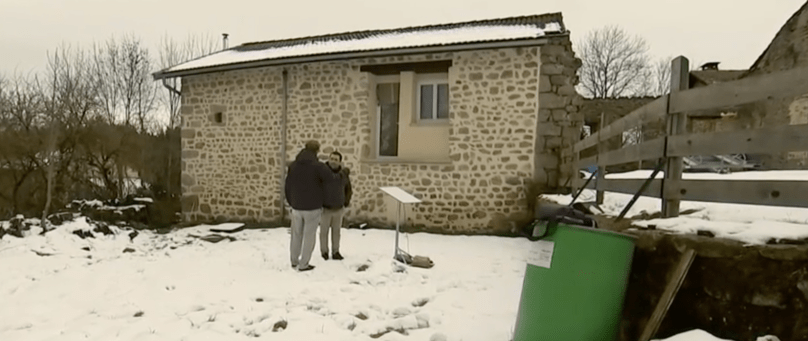
The TF1 20H news team led by Guillaume Bertrand, Stefan Iorgulescu and Guillaume Frixon first showed how the picturesque but remote village of Chomelix in France’s Haute-Loire department had been fighting with very poor internet for years. This small commune of around 480 inhabitants, including several hamlets classified as digital white zones, struggled daily with connections too weak for effective telework, children’s online education, or even routine administrative procedures.
Resident Romain dealt with these frustrations for nearly ten years. “Before, I was stuck at 8 megas,” he said. Mayor Roselyne Beyssac saw the real toll this was taking on families and local businesses trying to stay competitive.
Starlink’s Mobile Kits Deliver Instant Transformation
Starlink’s new mobile and portable satellite kits completely turned the situation around. These compact, backpack-friendly systems paired with flexible roaming plans now deliver fast, reliable internet almost anywhere in France’s rural areas.
The results have been outstanding. Romain’s download speeds jumped all the way to 346 Mbps. Video calls became seamless, streaming works perfectly, and online government services run without issues. Local hotels and other small businesses can finally manage bookings and communications reliably. The independent TF1 coverage beautifully documented how this technology has significantly reduced the sense of isolation in the area.
This kind of story is exactly why Starlink is the number one humanitarian service across the planet, it reaches people and places that traditional networks have long ignored.
The innovation keeps gaining global attention. Starlink is currently making headlines at the Mobile World Congress in Barcelona, where even a flower company called KDDI has put up a booth proudly saying they use Starlink, as first reported by SE Robinson on X.
STARLINK: SpaceX has taken over the Mobile World Congress (MWC) 2026 in Barcelona. They have announced their new Starlink Mobile, new European D2C partnerships, multiple partners are shouting out their alliances.
Elon Musk, thank you from the bottom of my heart. Your extraordinary vision and determination with Starlink are bringing genuine hope, opportunity, and modern connectivity to the most remote corners of the world. Rural France is just one of many places being transformed thanks to you.
Sources:
TF1 20H Reportage by Guillaume Bertrand, Stefan Iorgulescu and Guillaume Frixon, February 2025
TF1 Info – “J’étais à 8 mégas, j’en suis à 346”, 27 November 2025
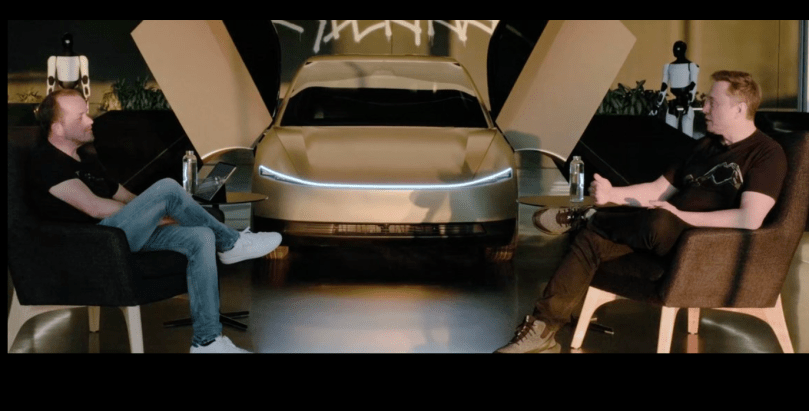
In this exclusive 23-minute interview with Giga Berlin plant manager André Thierig, Elon Musk reveals Tesla’s plans, including Cybercab & Optimus production in Europe, Full Self-Driving launching in the Netherlands on March 20, and his bold prediction of “Tesla factories on the moon” and the now-viral line: “Hold on to your TSLA stock… it’s going to be worth a lot!”
André Thierig: Welcome, Elon, and thanks for taking the time. I really understand that time is precious. There are a ton of things to do to build a world of amazing abundance. I can hardly imagine what is on your mind — SpaceX, Starlink, AI, safe AI for the future, autopilot, so many things. But what is in your view still exciting about Tesla and why?
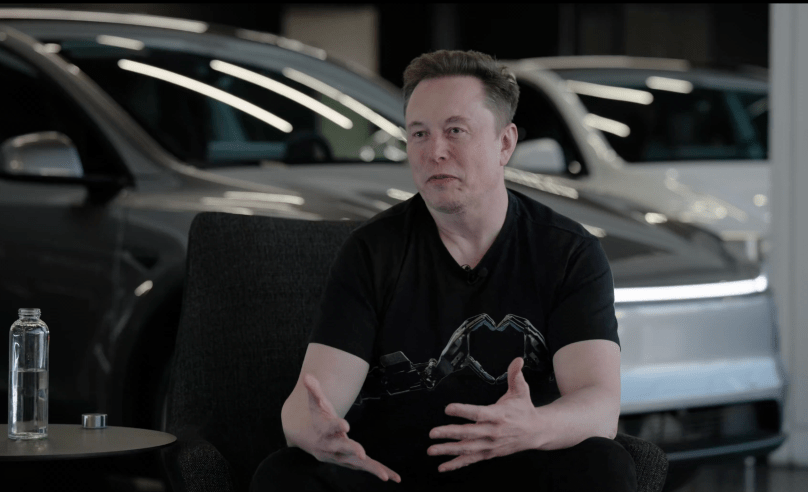
Elon Musk in the lobby at Tesla Giga Texas, February, 2026
Elon Musk: Well, I think Tesla is one of the most exciting companies in the world. It is perhaps the most exciting, but Tesla and SpaceX are the two most exciting companies. We are obviously expanding production and making more cars. We are going to roll out Tesla Full Self-Driving, which is really an AI-driven car. It’s AI software that drives the car, just by looking, like a human does. Tesla has the most advanced real-world AI and hopefully it will be approved soon in Europe. We were told by the authorities that it will be approved on March 20th in the Netherlands. I think people in Europe are going to be pretty blown away by how good the Tesla car AI is. This year it will be the case that from a technical standpoint you will be able to fall asleep in the Tesla and wake up at your destination. That is very exciting.
We have the Optimus program, which is going to be the first humanoid robot. Sometimes people ask what it would be used for. Who would not want their own personal C-3PO or R2-D2? Optimus can take care of your kids, walk the dog, or take care of elderly parents. Well, Optimus can do those things. That is very exciting. We have started production of the Tesla Cybercab here at Giga Texas and we will go to volume production in April.
If things go well, we would probably manufacture Cybercab in Europe and also manufacture Optimus in Europe. We have the Tesla Semi heavy truck that will be coming to Europe hopefully next year. There are so many things happening, it’s a long list!
Oh, and battery cell production… we are going to start making battery cells at Giga Berlin. We have the Tesla lithium refinery that started up in Texas and the Tesla nickel cathode refinery that started up in Austin. This year, there are a tremendous number of things happening. We have five factories starting volume production this year, five major production lines. We look forward to extending that to Europe as well.
Tesla’s Vision for the Next 10–20 Years: Factories on the Moon!
André Thierig: Tesla has done nothing less than really transforming a whole industry. Without Tesla taking that brave step to electrify mobility, the industry would not be where it is today. What would you want people to say about Tesla in 10 or 20 years from now?
Elon Musk: In 20 years, I would say Tesla has factories on the moon, actually!. I see a very prosperous future for Tesla. It is difficult to predict anything in 20 years, but if you look 5 to 10 years ahead, Tesla has an extremely bright future. I would say, hold on to your Tesla stock, it is going to be worth a lot, I think, that’s my bet!
André Thierig: Coming back to the present, you are always very well informed. If you look at the European industry, especially the automotive sector or even the German industry, what do you think about it? What do you believe are the main reasons for their current state?
Elon Musk on the European Automotive Industry
Elon Musk: I think there has not been enough innovation. Automotive innovation has been relatively low, the cars being produced are very much like the cars produced five years ago. There are not big differences. For 20-plus years I have said the automotive industry needs to go toward electrification. This would be true even without environmental concerns. An electric vehicle is a fundamentally better architecture than a gasoline combustion vehicle. It is much simpler, more efficient, quieter, and there is no pollution within cities. All ground transport should be electric. And I think all ships and airplanes should be electric.
The automotive industry has strongly resisted electrification and dragged its feet, and they have had to be pushed there by government. Whenever they have had the opportunity to reduce making electric vehicles, they’ve done so. This is not a good strategy. It doesn’t make sense.
Making vehicles autonomous is critical. I think about 10 years ago I said that in the future, any vehicle that is not electric and autonomous… like if you are riding in a vehicle that you have to drive yourself and it’s gasoline powered, it will be like riding a horse and using a flip phone. Which is to say that there are still some people that ride horses. It’s just rare. And some people somewhere are still using flip phones, but there aren’t many, and it’s going to be a niche thing. So, the future does not contain combustion vehicles, and there will be very few vehicles that are not autonomous. The future is autonomous electric vehicles. And so, if the automotive industry does not move in that direction, they will be left out.
André Thierig: So it doesn’t really sound like we could be learning much from legacy auto makers…and I guess we really should be focusing on what ourselves, or what we believe the future looks like, right?
Elon Musk: Yes, well, you can always learn something from some competitor. But strategically, they are just headed in the direction of the dinosaurs. So they are not headed to a good place. You know, dinosaurs are not around anymore. We’re certainly going down a different path. Like I said, electric and autonomous… to me it’s been blindingly obvious for 20-plus years. What I found with competitors in the automotive industry is, it’s not that they are going to steal our ideas. You can’t cram a good idea down their throat. Like if you say, “you must take this good idea!” They won’t steal our ideas, because you cannot even force-feed them our good ideas. That’s my experience. So we need to do what’s logical, what’s sensible. You know, at Tesla we’re essentially creating the future. And it’s a good future!
André Thierig: We are building the future, they just build cars!
Elon Musk: Yes. It’s a good future, it’s a future with electric vehicles that don’t emit poison gas, literally. They’re quiet, efficient, and autonomous. Like I said, instead of being stuck in traffic driving through busy roads, people sometimes fall asleep or have a medical emergency. And if you’re driving yourself on the Autobahn going super fast and you have a seizure, heart attack, or something like that, then you could die. But if the car is autonomous, it can take you to a hospital. In fact, this has actually happened many times with Tesla cars.
Giga Berlin Memories and the Path to Massive Expansion
André Thierig: Six years ago we broke ground and four years ago we started production. What are your greatest memories of Giga Berlin and the people here?
Elon Musk: First of all, I would like to say thank you very much to everyone who helped build Giga Berlin. Thank you, André, and thank you to the whole team. We have built an amazing factory in a very short period of time and reached high-volume production with good quality and good cost control. I am very proud of Giga Berlin and all the people in it.
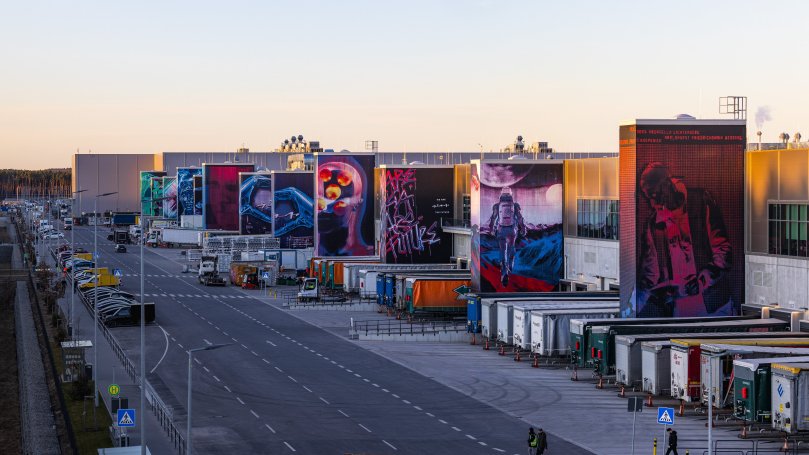
It’s cool! I like the art too, and that people have some fun!
Graffiti Art at Tesla Giga Berlin
Elon Musk: Coming to work should be something you look forward to. You come to work with people you enjoy working with, and you are doing useful things—you’re making things. I have a lot of respect for makers. Like, you actually make something; you build something useful that people enjoy. I’m a big fan of makers. There are a lot of people who—they do not make things, and I don’t know—they don’t make things or they don’t provide useful services. Whereas, I have huge respect for people who make things and provide useful services. It’s an honest day’s work.
André Thierig: If you have a vision for Giga Berlin, what would it be? And what would have to happen for it to come true?
Elon Musk: Ideally, we would significantly expand production at Giga Berlin. We would do high-volume production of battery cells, probably also the cathode, the anode, and lithium. We would become vertically integrated and produce things like the Cybercab or Optimus and other products that Tesla will develop. The exciting vision for the future of Giga Berlin is massively expanding it to do many more projects.
André Thierig: Do you have any advice for the team at Giga Berlin to work toward that vision?
Elon Musk: Things certainly get harder if there are outside organizations pushing Tesla in the wrong direction. If outside organizations make things very difficult in Giga Berlin, it is difficult to say that we would expand. We are not going to shut down the factory, but we are not going to expand it either, realistically.
Elon Musk: A favorite factory is like saying what is your favorite child. I love factories. I think a lot of people these days, they don’t love factories, or they haven’t been to a factory, whereas I walk the line in every factory and I’m a big fan of factories. I love them! Haha!
André Thierig: It’s a great place to be!
Elon Musk: Yeah. It’s where you make things that have good utility; people love the product. You’re building a product people love, and that’s great!
Giga Berlin is an awesome factory. The vibe is cool; to walk around is cool. It’s very clean and quite beautiful inside and outside. People seem quite happy. We are making cars and soon battery cells and hopefully many more things. It is one of the coolest factories in the world, really!
Employee: Which is the next product we will be building here in Giga Berlin?
Elon Musk: There are a lot of exciting possibilities. We have started spooling up production of the battery cell and we will be expanding production of the Model Y, especially as we get approval for supervised full self-driving. From the next major product standpoint, most likely the Tesla Cybercab. There are also possibilities of Tesla Optimus and the Tesla Semi heavy truck. Like, Tesla has a lot of products coming out, so there’s a lot of potential.
If things go well, we would expand Giga Berlin to whatever the most that we could. Assuming that the authorities are supportive, and the people are supportive, then we would expand to probably make it the biggest factory complex in Europe.
Employee: When do you realistically think we can have Optimus in the Gigafactories so we do not have to worry about ergonomics?
Elon Musk: Well, we have to be really careful about that one. I don’t want people to be worried about their jobs, you know. So, the honest answer for AI and robotics is: long-term, working will be optional. Long-term—which is 10 years from now or less—if you want to work, you can. It will be like growing vegetables in your garden, or you can get them from the store. It’s optional to grow vegetables in your garden, but some people still like to do it. It’s extra work to grow your own vegetables, but people enjoy the process. That’s going to be how work is in the future. It will be like: “You can work if you want to.”
Employee: How can we make sure that the adoption of new technologies like Optimus reach countries in the third world?
Elon Musk: First we have to succeed in making a useful robot. This is a hard thing to solve. Nobody has solved making a truly useful humanoid robot. So you have to make it useful, then you have to scale production. And its an entirely new supply chain. With Optimus we’ve had to design the whole robot from physics first principles. We’re designing every motor, every gear. The hands are extremely difficult to design. A properly dexterous robot hand is very difficult. One of the hardest things to engineer, and then we can scale production. At first Optimus will do small tasks, and then it will get gradually more sophisticated.
I think, eventually, Optimus could do medical work like surgery and everyone in the world would get better medical care than anyone receives today, from a human.
André Thierig: What advice would you give young people for life?
Elon Musk: Be on the side of optimism. It is better to be optimistic and wrong than pessimistic and right. Your quality of life will be much better. I would urge people to be excited about the future. I am excited about the future! I am confident the future will not be boring. Let me put it that way: it’s going to be very interesting. I think it is most likely to be great!
In terms of general advice, I guess I’d invite people to learn as much as possible, read a lot of books, try a lot of things, and find a job you can enjoy. I guess—enjoy life, but working is also a part of enjoying life. I think if people derive satisfaction from building things, then Tesla is an awesome place to be because we build things! We make useful products, and that’s a great thing.
André Thierig: What is the most inspiring moment in your life?
Elon Musk: You know, I guess when my kids were born, that would be the most inspiring moment of my life. Um, you know, in terms of work stuff, I guess it’s when we had the first production Roadster at Tesla. On the rocket side, first time getting to orbit, getting the rocket to come back and land was pretty cool. Self-driving technology has been pretty inspiring too. I mean, the first time somebody experiences self-driving, where they are just sitting there and the car takes them all the way from their home to their work, and parks, it’s mind-blowing!
André Thierig: Yes! It is. I am using it all the time when I am in the US.
Elon Musk: It’s like magic!
André Thierig: Thank you so much for your time.
Elon Musk: Once again to the people of Giga Berlin, Dankeschön.

 whatsuptesla.com