430 MW of Proof: Puerto Rico’s Battery Revolution Starts Now

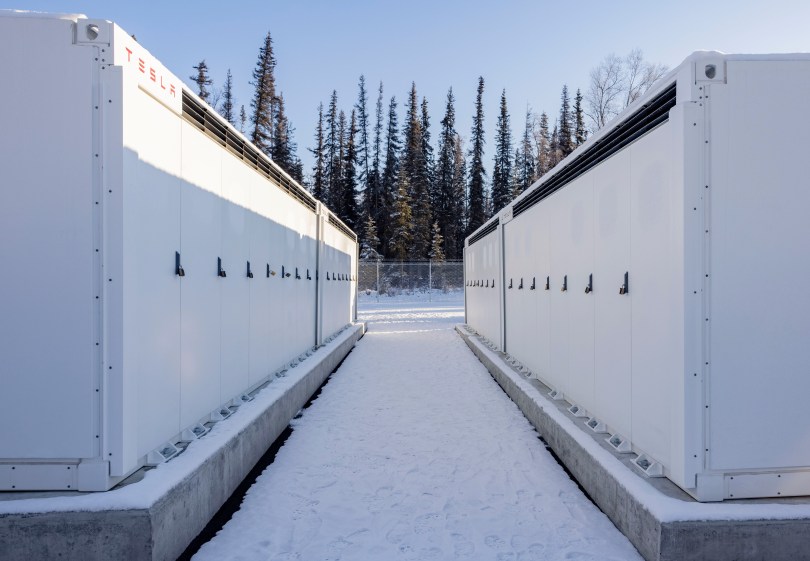
San Juan, 5 December 2025. The first ship carrying Tesla Megapacks slipped into San Juan’s industrial port yesterday. No speeches, no ribbon-cutting, just 40-foot powder-white boxes that quietly begin the end of Puerto Rico’s decade-long blackout nightmare.

Eight years after Maria wiped out 100 % of the grid, the island is deploying the largest battery rollout in its history: 430 MW of instant power and 1.72 GWh of storage across six plants. Total cost $767 million, paid entirely with pre-allocated FEMA/HUD recovery funds. Zero new taxes, zero new debt.

Tesla won the contract the old-fashioned way: an open international bid in October 2024 against 130 competitors. Best total cost of ownership, fastest delivery, highest round-trip efficiency. As Elon once said, “The best part is no part.” Here the only subsidy is the one physics already gave lithium-ion – no special handouts were needed because the tech is simply that good.

The first containers are already rolling north to Cambalache in Arecibo, where 68 Megapacks will add 52 MW / ~208 MWh beside an aging oil plant. When solar over-produces at noon or a hurricane knocks out lines at midnight, the batteries respond in milliseconds – no spinning reserve, no smoke, no fuel trucks racing through flooded roads.

Elon’s other favorite line fits perfectly: “I’d rather be optimistic and wrong than pessimistic and right.” This project is optimism made hardware. 

By 2027 the island expects up to 90% improved grid stability and up to $100 million a year saved on diesel alone.

For anyone who has ever modeled a grid, sized a frequency response curve, or watched a peaker plant burn $150/barrel oil in real time, this hits home. 

It’s not charity. It’s not politics. It’s engineering eating a 60-year-old problem and turning it into clean electrons.

Puerto Rico just became the proof point many of us have been waiting for: when the hardware is finally good enough, resilience becomes cheaper than fragility.

The lights are about to stay on. Not because someone wished it, but because someone built it. And that feels pretty darn good.
Elon Musk’s Megapacks: Empowering Belgium’s Grid Resilience

Elon Musk’s Master Plan for Global Energy

Elon Musk has long championed a sustainable energy revolution, assuring us, “Earth will move to a sustainable energy economy, and it will happen in your lifetime.” His Tesla Master Plan Part 3 outlined the scale: “The world needs 30 terawatts of renewable power, and 240 TWh of energy storage capacity” to bridge intermittency and foster abundance. Elon emphasizes batteries’ pivotal role, noting, “My personal opinion is that as we improve the energy density of the batteries, you’ll see all transportation go [electric].” He adds, “The energy storage business is growing like wildfire, with strong demand for both Megapack and Powerwall.” This vision is materializes in projects worldwide, proving energy investment equals reliability. And Tesla is building bug batteries at scale in both the US and China.

Harmignies: Innovative Reuse

In Harmignies, Belgium, an old CBR cement factory that once produced white cement until its 2014 closure, now hosts an energy hub. Led by Energy Solutions Group (ESG), the Benelux’s top independent green power producer, this site exemplifies Musk’s push for integrated storage. Tesla supplies the 75 MW/300 MWh Megapack system with 82 units, operational since late September 2025.

Elon highlights such tech’s impact: “Megapack will carry a lot of the world’s load in energy, as it allows power plants to run continuously.” Grid operator Elia integrates it, storing wind and solar surplus for four hours of steady output during failures.

Defying Nature’s Fury with Smart Tech

Wallonia, Belgium’s southern region, faces volatile weather. Storm Amy in early October 2025 unleashed winds over 100 km/h, causing hours-long blackouts and at least three Europe-wide deaths; communications faltered in northern France, Belgium, and beyond. Yet, the Megapacks disconnected from the grid and ran autonomously, sustaining connected operations. Storm Benjamin’s late-October sequel, with 90 km/h gusts amplifying chaos in Brussels, saw the system prevent €500,000 in losses.

Elon underscores solar-battery synergy: “Solar will be the single largest source of electricity generation.” He says, “Truly massive battery tonnage is coming,” to handle such demands.

Fueling Industry and Securing Livelihoods

These factories power Wallonia’s aeronautics, chemicals, and advanced sectors, producing aircraft parts and specialty plastics vital to supply chains. ESG’s €85 million investment balances loads, upholding uptime.

Elon envisions a global scale: “About 1 TWh total batteries have ever been produced. We need to get up to about 15-20 TWh’s produced annually.” He adds, “At 1TW+, solar/battery is the only realistic option,” for gigawatt demands. Here, battery hardware protects jobs and assets, aligning with one of Tesla’s goals to create stunning solar roofs with seamlessly integrated battery storage.

United in Progress: Partners and Horizons

“This goes beyond storage; it’s engineered reliability,” says a Sweco engineer, from the premier European sustainable infrastructure consultancy. ESG leads, backed by KBC Bank (senior loan), Wallonie Entreprendre (junior loan/regional investor), Spie (electrical), Yuso (management), House of Projects (PM), Loyens & Loeff (legal), and investors Patronale Life, Alpha, SFPIM.

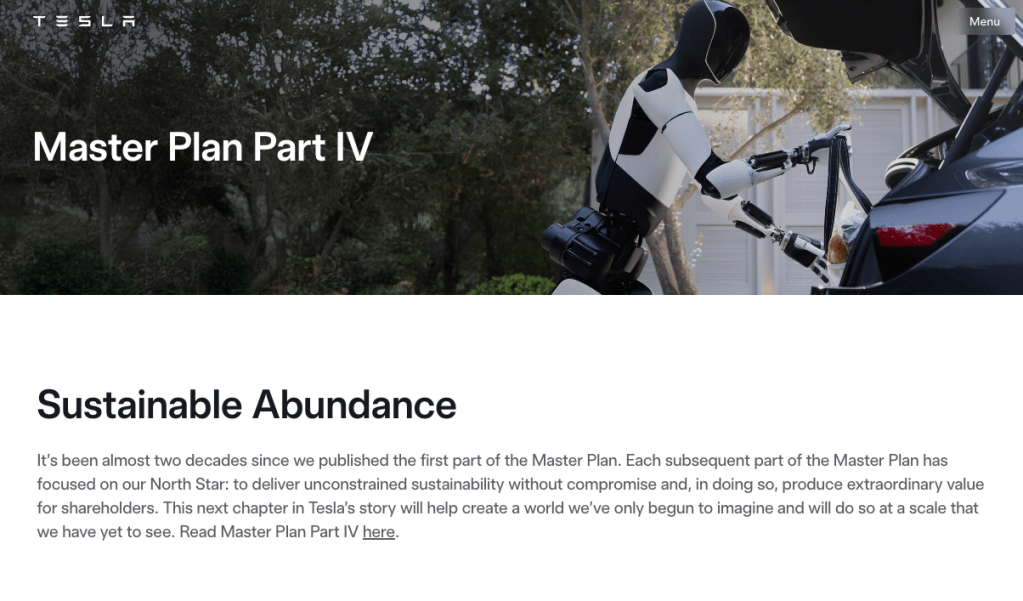
Elon said “Master Plan 3 was too complex… but described how all of Earth could move to sustainable energy. Master Plan 4 will be concise.”

Indeed, Master Plan 4 is concise, and you can fread about it here.

xAI POWERS COLOSSUS 2 WITH 168 TESLA MEGAPACKS

xAI POWERS COLOSSUS 2 WITH 168 TESLA MEGAPACKS

(Memphis, TN) xAI has secured 168 big batteries – Tesla Megapacks – to power up and cool down Colossus 2, a second xAI data center.

Colossus: From 1 to 2

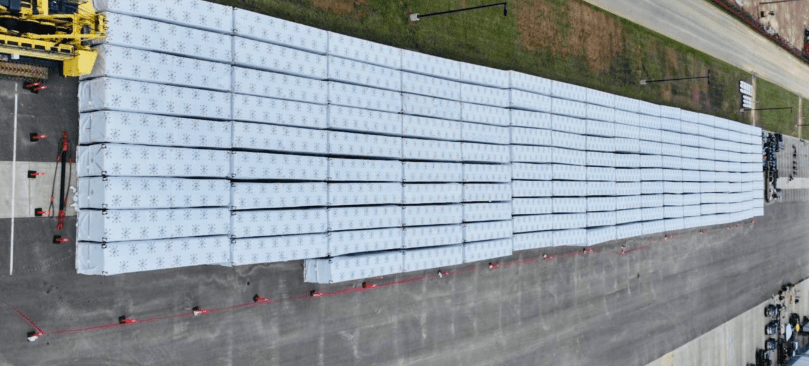
Colossus 1 began construction in early 2024, with planning finalized by March 2024, and started running in September 2024, built in roughly six months. Colossus 2, expanding capacity for complex AI tasks, began development in early 2025, with these 168 powder white Tesla Megapacks delivered by ~ May 19.

Colossus 2 is Massive

Elon revealed on X that Colossus 2 will be the world’s first gigawatt AI training supercluster, this definitely pushes earth’s computational limits.

A gigawatt is one billion watts, enough to power about 750,000 average U.S. homes for an hour, matching the output of a large nuclear power plant.

“Aiming to make Grok the best tool for developers, from enterprise & government to consumer video games!” Elon posted.

The Tesla Megapacks, verified by xAI’s Brent Mayo as designated for Colossus 2, will also ensure grid resilience for the city.

City of Memphis Benefits from xAI’s Commitment

The Greater Memphis Chamber praised xAI’s sustainable practices. “xAI is committed to Memphis through their environmental practices,” the chamber stated, noting participation in MLGW’s Demand Response program. An additional 150 megawatts of Megapack batteries will support the grid during outages or peak demand, benefiting the community. “Grid resilience and battery backup are key to ensuring a successful future for xAI and the region,” Mayo said, adding, “Grok loves the Megapacks!”

My thoughts: Tesla + xAI

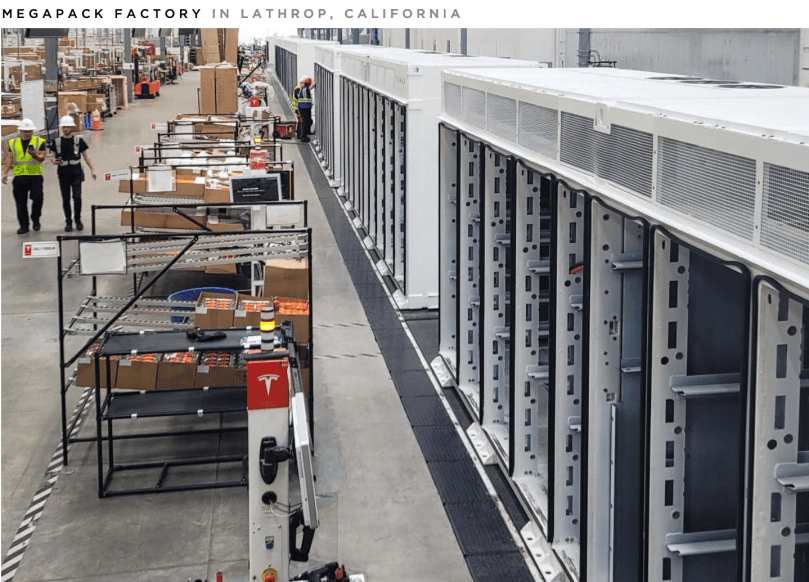
I recently read about the great success of Tesla Megafactory in Lathrop, California. It is beautiful to see manufacturing in the US by Tesla provide the solution to xAI’s power demands. Looking at the data center pics (below) you can tell it is essentially hungry for energy for power and cooling. I’ve seen a small data center up close in Austin, Texas, and noticed the huge effort made to keep it cooled.

With Colossus 2, xAI is not just building AI but also serving to buffer local energy infrastructure in case of a power outage.

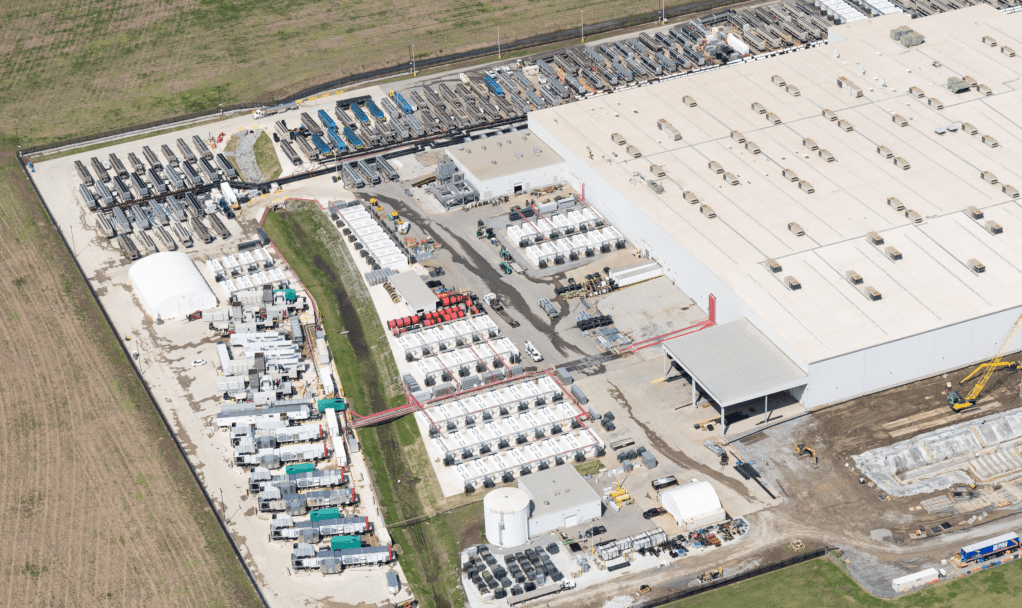
Zoom in to see Colossus I Tesla Megapacks and fossil generators. pic credit unknown

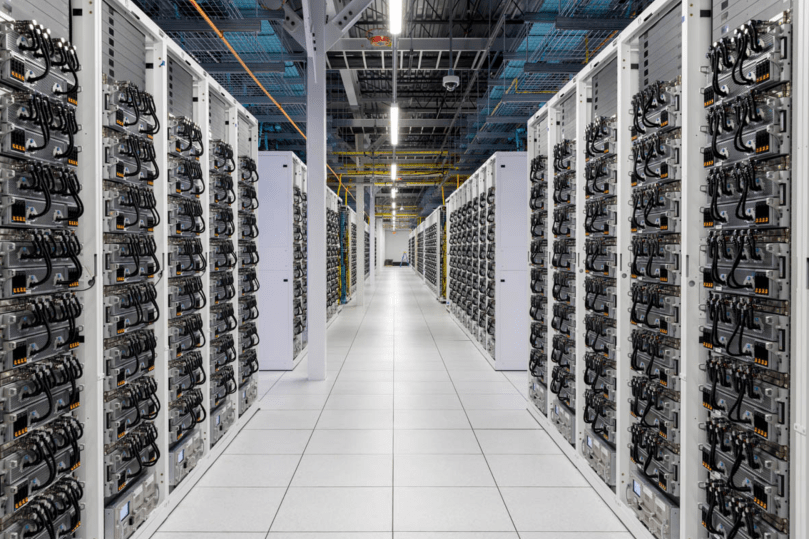
Inside Memphis Colossus I( pic credit unknown)
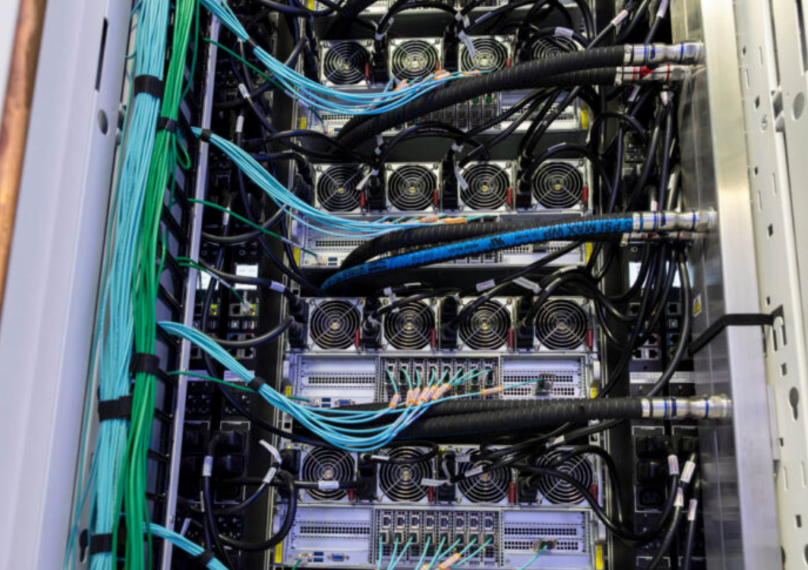
Zoom in on calling tubes for data center Colossus I (pic credit unknown)