(Austin, Texas) On a sunny day in June, I activated Tesla FSD beta in my Model Y and supervised the vehicle as it crossed through downtown Austin and into the famous Meullar neighborhood of Austin. This area was once the home of Austin’s only airport. I watched as it was relocated to Southeast Austin and then the Meuller area emerged as a healthcare center with Dell Children’s Hospital and the must-see Austin Children’s Museum. I spent many many hours with my 5 kids in that museum, visiting it often. Additionally, I worked many long hours at the Children’s Hospital. Now, Mueller is one of the most desirable places to live in Austin!
I hope you like this Podcast Episode No. 16 as I aim to show you the charm of Meuller, the amazing capabilities of FSD beta in the Model Y, and Safety Settings in the Tesla.
Safety Settings
Dashcan settings are part of Safety Settings. I show how to activate this at 09:25 in the video. You can also activate “Cabin Overheat Protection,” as I show in the video. Please explore all settings in your Tesla and especially focus on safety settings. If you ever have an accident you’ll want to go back and see what your cameras have saved. Additionally, you are more likely to prevent an accident when you activate more of the safety settings. Happy driving and enjoy the podcast!
Gail’s Tesla Podcast #16 FSD Beta in Austin, Mueller area and a look at Safety settings ⚡️🚘⚡️ pic.twitter.com/HSsvaYe6pE
Gail Alfar, author. Exclusive to What’s Up Tesla – All Rights Reserved. My goal as an author and podcaster is to support Tesla (the most American vehicle manufacturer) and Elon Musk in both making life better on Earth for humans and becoming a space-fairing civilization.
Hardworking, dedicated, future-driven, committed, fearless… these are adjectives that describe the amazing Tesla team, and Elon Musk. These qualities are paying off as Tesla is ranked #1 in leading the transition to EVs.
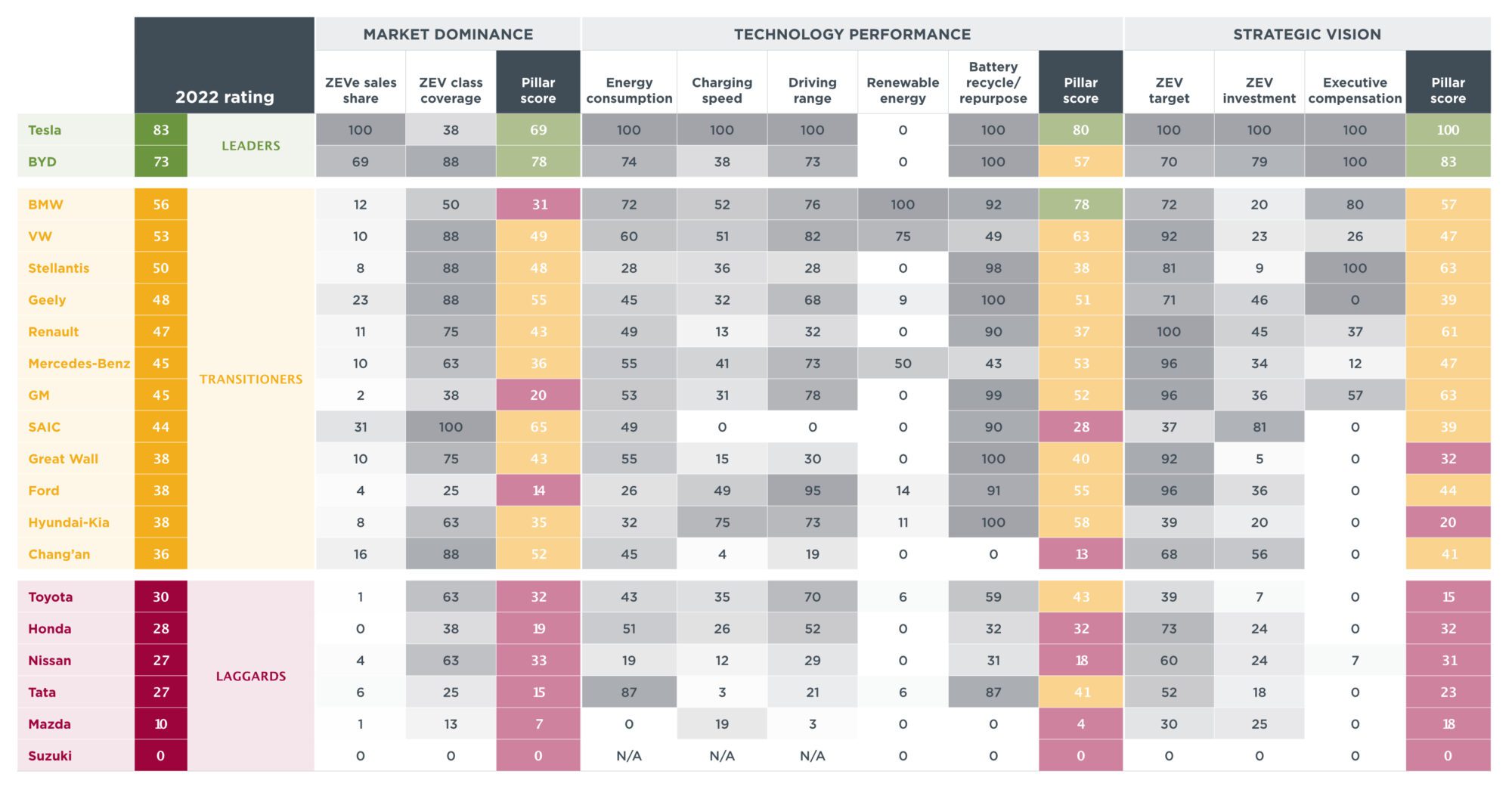
The International Council on Clean Transportation (ICCT) released its report on May 31 revealing Tesla and BYD at the top of ratings for leading the transition to electric vehicles.
The top 20 manufacturers in the world were analyzed for overall ratings based on 10 custom-built metrics, which identified the leaders, the transitioners, and the laggards in transitioning to zero-emission vehicles (ZEV). Tesla had the highest scores in Technology Performance, scoring a perfect 100 in Energy Consumption, Charging Speed, Driving Range, and Battery recycle/repurpose.
Tesla’s strategic vision did not go unnoticed
Tesla was the only automaker that scored a perfect 100/100 in Strategic Vision for ZEV target, Investment, and Executive Compensation.
Among the laggards are Tata headquartered in India, and Japanese automakers Toyota, Honda, Nissan, Mazda, and Suzuki.
These automakers scored in the bottom third.
Table. Overall scores, The Global Automaker Rating 2022. Credit: International Council on Clean Transportation.
My take is that Tesla has and continues to put forth extraordinary effort at building EVs at scale. Tesla continues to expand Fremont factory, Giga Shanghai, Giga Berlin, Giga Nevada and Giga Texas. This shows that Tesla has thought about how to speed up and scale production to meet the global demand for good-quality electric vehicles. Tesla furthers this strategy by building their own batteries. Soon, Tesla will be refining Lithium (in Texas) and building more affordable vehicles in Mexico.
To read the ICCT report in full click here. Many thanks to the entire Tesla team for their dedication to the mission to accelerate the world to sustainable energy and their commitment to not being complacent. This article by Gail Alfar first appeared on Twitter, please credit accordingly.
(Austin, Texas) If you’re in Texas & taking delivery of your new Model 3 between May 26 and June 30, 2023 then you are in for some good luck!
Tesla Electric has unveiled a sweet home charging plan and qualifying customers in Texas will seamlessly charge their new Model 3 at home and have their overnight charging fee waived for a year.
UNVEILING THE TESLA ELECTRIC HOME CHARGING PLAN
Tesla Electric has gone above and beyond to cater to the needs of Texas Tesla owners. With the charging plan, eligible customers can seamlessly charge their new Model 3 at home without incurring any overnight charging fees for an entire year.
This plan provides financial savings & also eliminates the hassle of locating and utilizing charging stations, giving owners freedom and convenience. I expect this plan will expand soon.
To take advantage of this remarkable opportunity right now, Texas residents must meet specific eligibility criteria. Those who are taking delivery of a new Model 3 between May 26 and June 30, 2023, fall within the qualifying window. Link on details below.
This limited offer is an amazing chance for Texas Tesla owners to save money and maximize the benefit of owning an EV while minimizing their carbon footprint
THE FUTURE OF SUSTAINABLE TRANSPORTATION
The introduction of the Tesla Electric Home Charging Plan reinforces the strong commitment Tesla has to accelerate the transition to sustainable energy. By incentivizing home charging, Tesla aims to simplify the charging process and promote the use of renewable energy sources.
I expect this plan to roll out to more Tesla owners over time.
SEIZING OPPORTUNITY
If you are a lucky Texas resident patiently awaiting the arrival of your new Model 3, do seize the opportunity. Participating in Tesla Electric Home Charging Plan means you will enjoy the convenience of charging your vehicle overnight at home, free of charge, for an entire year.
Gail Alfar and Dirty Tesla on FSD Beta drive for Gail’s Tesla Podcast, May 2023
Austin, Texas
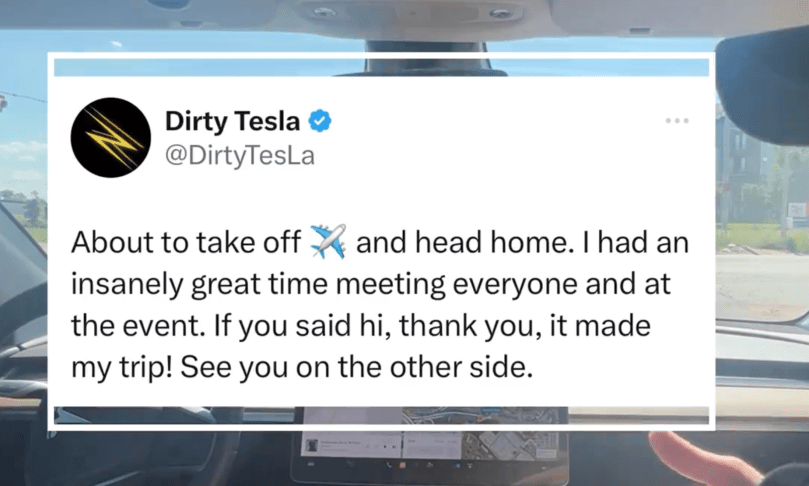
One of the pleasures of owning a Tesla or planning to buy one is the proliferation of videos online that feature how great FSD beta is. If you have not yet heard of Dirty Tesla, he’s a fabulous video creator on the X app, and he has published many videos with his expert commentary.
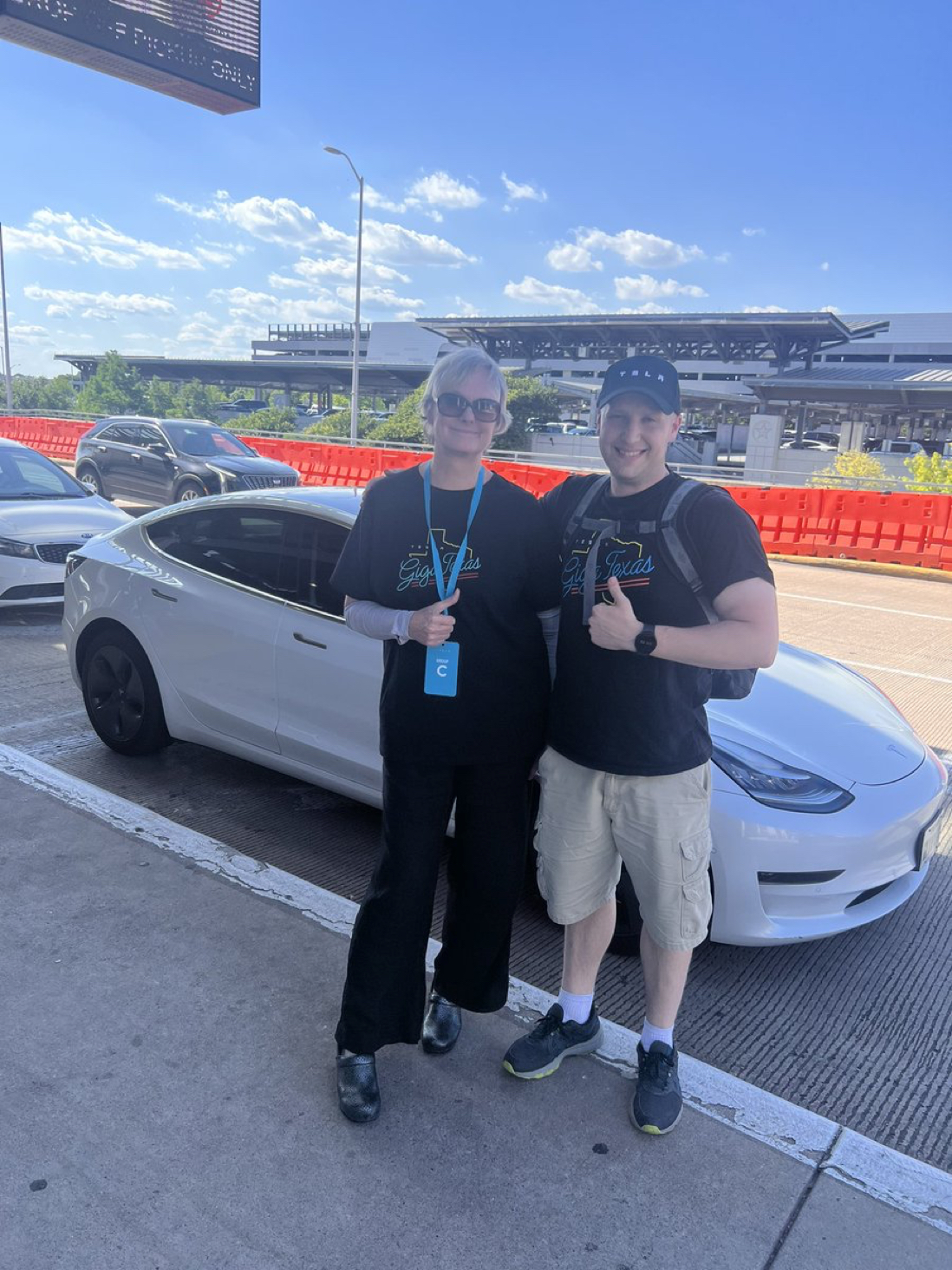
Join Dirty Tesla and Gail Alfar as they head across the city of Austin, Texas, to the Austin Airport using FSD beta. Dirty Tesla has fabulous observations and I think you will enjoy the ride!
Gail’s Tesla Podcast #15 —> FSD beta to Airport Guest: @DirtyTesLa joins us for rush hour traffic trip w/ ~ 100 wild observations on FSDbeta! pic.twitter.com/tkzULnkqlX
Gail Alfar, author. Exclusive to What’s Up Tesla – All Rights Reserved. My goal as an author and podcaster is to support Tesla (the most American vehicle manufacturer) and Elon Musk in both making life better on Earth for humans and becoming a space-fairing civilization.
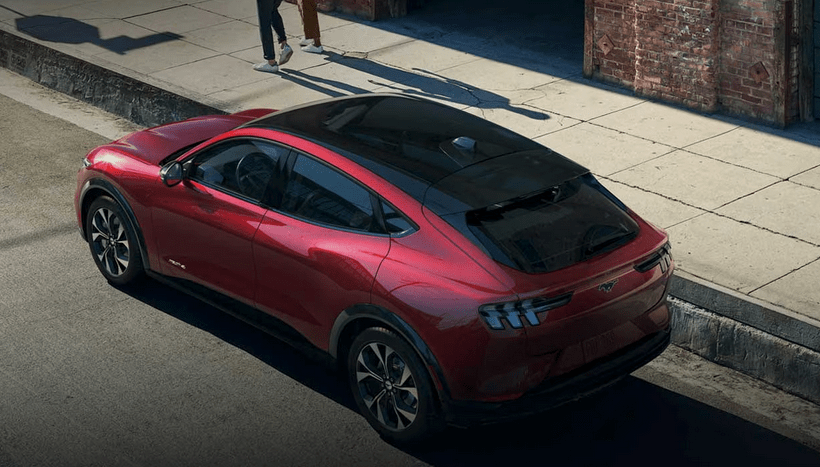
(Austin, Texas) In a significant move towards accelerating the adoption of electric vehicles and supporting sustainable transportation, Tesla and Ford have announced a strategic partnership.
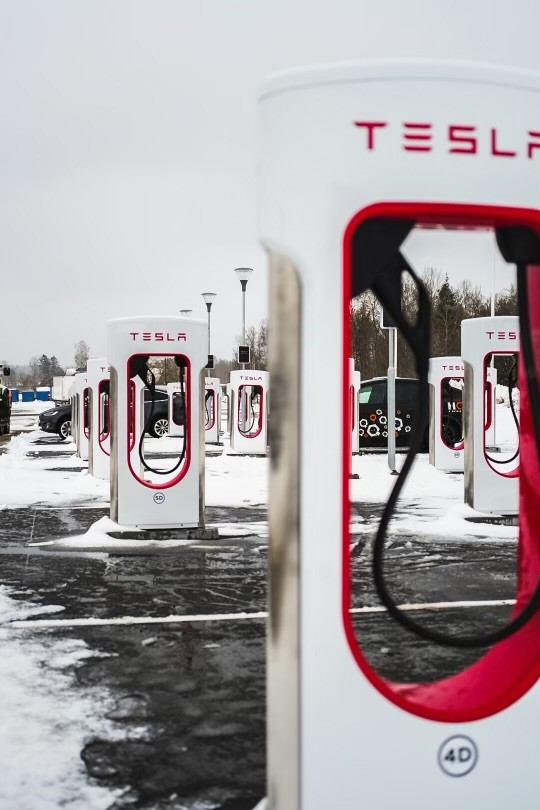
Elon Musk shared his vision for the Tesla Supercharger Network on a live Twitter Space.
Tesla’s North American Charging Standard (NACS) has been described as an easily adoptable interface, positioning it as a potential public standard. This article looks at the details of this collaboration, highlighting Elon Musk’s statements and Tesla’s perspective on the NACS.
TESLA’S COMMITMENT TO COLLABORATION AND EQUAL FOOTING AT SUPERCHARGERS
Jim Farley announced that,
“In early 2024 all Ford EV existing and future customers will have access to 12,000 Tesla high speed Superchargers across the USA.”
Farley also said one year later, Ford EVs will have the North American Charging Standard (NACS) interface.
Ford has been working with the Tesla team and Farley thanked Elon for that.
EARLY NEXT YEAR YOU’LL SEE FORD’S EVS CHARGING ALONGSIDE TESLA VEHICLES
During the discussion with Jim Farley, CEO of Ford, on the Twitter Space, Elon spoke regarding the Tesla Supercharger Network. Elon emphasized,
“We don’t want the Tesla Supercharger Network to be like a walled garden, we want it to be something that is supportive of electrification and sustainable transport in general.”
Elon expressed appreciation for Ford’s interest in partnering with Tesla on this front and affirmed the Tesla team’s intention to provide full support to Ford, ensuring that they are on equal footing at Tesla Superchargers.
I can personally attest that in Texas there is plenty of room for more vehicles to charge at Buc-ee’s locations!
NACS: A STRAIGHTFORWARD AND POTENTIALLY PUBLIC STANDARD
Tesla’s North American Charging Standard (NACS) has gained attention for its flexibility and compatibility. Described as a purely electrical and mechanical interface, NACS remains agnostic to use case and communication protocol.
This versatility makes it straightforward to adopt across different EV models. Notably, Tesla has made the design and specification files of the NACS available for download, actively engaging with relevant standards bodies to establish its charging connector as a potential public standard.
This move reflects Tesla’s outstanding commitment to promoting interoperability and widespread adoption of charging infrastructure.
Is the Tesla-Ford Partnership Revolutionizing EV Adoption and Sustainable Transport?
Yes! The partnership between Tesla and Ford signifies a huge stride towards accelerating EV adoption and promoting sustainable transport.
Living in Texas, where pick-up trucks dominate the roads, I have firsthand experience that highlights the pressing need to accelerate the adoption of EVs. I drive across Austin daily, and am surrounded by combustion engine cars and pick-up trucks. Texas is known as Truck Country by some.
I can’t help but reflect on the tremendous work required to transition to a more sustainable transportation system. In light of this, the announcement of the partnership between Tesla and Ford struck me as a brilliant move.
From my perspective, Tesla, with its exceptional engineering talent, is demonstrating philanthropy by sharing its expertise to support Ford and advance the cause of electrification.
Tesla’s NACS offers a straightforward and potentially public standard that fosters compatibility and interoperability among different charging connectors. As these initiatives unfold, the future of electric mobility becomes increasingly promising, with shared efforts aimed at building a beautiful, greener and more sustainable economy.
───── ⋆⋅☆⋅⋆ ─────
Article by Gail Alfar, please credit accordingly. Images Courtesy Tesla, Inc. and Ford, Inc.
Elon Musk will hire a 3rd party organization to investigate Tesla’s supply chain for Cobalt, a rare mineral in order to assure shareholders and others that Tesla does not exploit child labor in any way. Elon was asked, during the Q/A portion of the shareholder’s meeting on May 16, 2023, to do this, and he agreed.
I had the honor of attending the meeting in person and I saw firsthand when Elon said this from the stage. He emphasized that the phones we all use have more Cobalt than Tesla’s batteries, and that he’s thinking of installing webcams at the mines to make sure no child is ever harmed.
I turned to Eliza Bleu for a little more understanding on this issue, as she had been asking me recently about Tesla’s supply chain and I had referred her to some information from Tesla’s recent Investor’s Day, summed up well in a tweet by Martin Viecha, Tesla Investor Relations,
“If you want just one takeaway from Investor Day, make it this one: A sustainable economy will result in *less* mining/extraction than we currently do. *Zero* rare earths are needed for this transition. Too many smart people I know believe the opposite.” – Martin Viecha
In addition, Elon Musk has also emphasized how clean Tesla’s supply chain is for it’s batteries. Tesla’s Lithium and Iron based batteries do not contain any Cobalt, while those made with Nickel use a very small amount of Cobalt as a binder.
Please watch Tesla’s videos on Investor DayandShareholder Meeting 2023 for reference. Also, Tesla’s next gen motor will require ZERO rare earth minerals. Less mining and extraction are also needed for a clean energy future as compared to a fossil fuel based economy.
MY INTERVIEW WITH ELIZA BLEU
Gail: Do you find that company CEOs are willing to face the challenge of creating a clean supply chain for rare earth minerals like cobalt?
Eliza Bleu: I’ve found that there is a vast difference between what CEOs are being told and the in-depth research that has been done by folks like Siddharth Kara, author of “Cobalt Red,” on the ground. It would be incredible if CEOs sought the truth and worked aggressively to find solutions!
Gail: When you heard that Elon Musk is going to hire a third-party organization to do this for Tesla, what was your first reaction?
EB: I’m a survivor advocate, so any little glimmer of hope brings a tear of joy to my eye. I take a moment to enjoy the positive progress before I think about the long road ahead. I applaud Mr. Musk for making those statements. I believe that he will follow through and continue to set the industry standard.
Gail: What is your expectation, for companies that use a lot of rare earth minerals, like companies that produce the phones that we use every day? Do you think they will continue to use components in their products that require rare earth minerals?
EB: The time has come for this conversation to fully see the light of day. I expect tech companies to seek the truth about their supply chains from start to finish. The entire industry will move away from cobalt eventually but between now and then there should be drastic measures to ensure that child labor and human exploitation is not used. Even when companies move away from cobalt it won’t repair the damage done to the Congolese people. It also won’t account for the labor trafficking and human exploitation in other parts of the supply chain. Apple is notoriously bad in this way.
The tech industry is uniquely positioned to provide those that work in the mines with basic needs like electricity, water and PPE. The brightest minds in the world can prioritize these issues. I’m grateful for Tesla’s commitment. I have hope around this issue and the first step is getting everyone to admit that there is a problem industry wide. The next step is to cut through the PR nonsense and to put humans over profits. The future of technology is bright but it cannot be built on the backs of children.
Tesla is one company among many that uses cobalt. I hope that Mr. Musk’s commitment sparks a long overdue industry wide conversation.
CONCLUSION
Despite challenges, there is hope that other CEOs will confront the issue of clean supply chains for rare earth minerals like cobalt.
Elon Musk’s decision to involve a third-party organization for Tesla sets a positive example, and it is crucial for the entire industry to engage in transparent discussions and prioritize human well-being over profits to drive meaningful change.
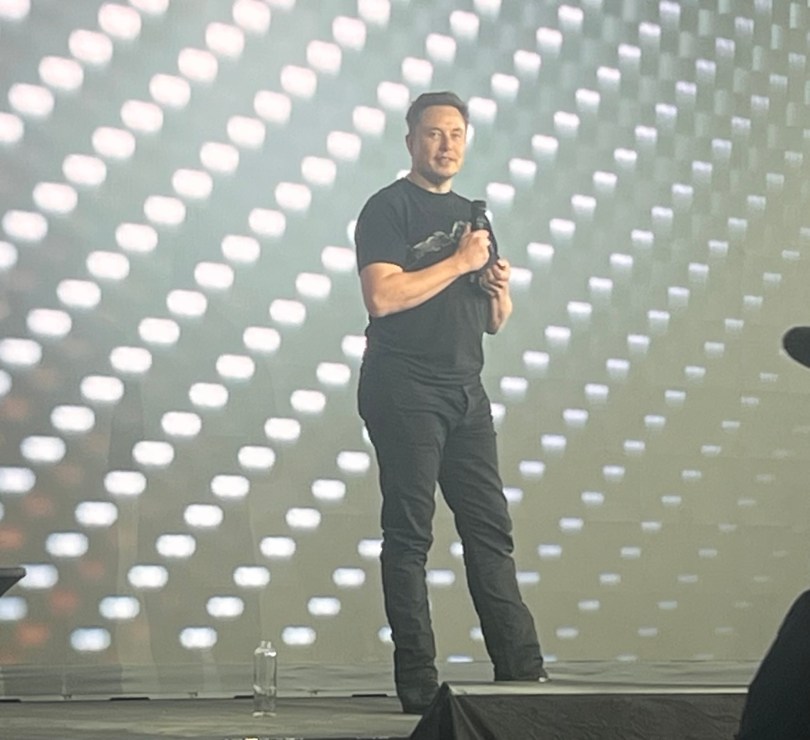
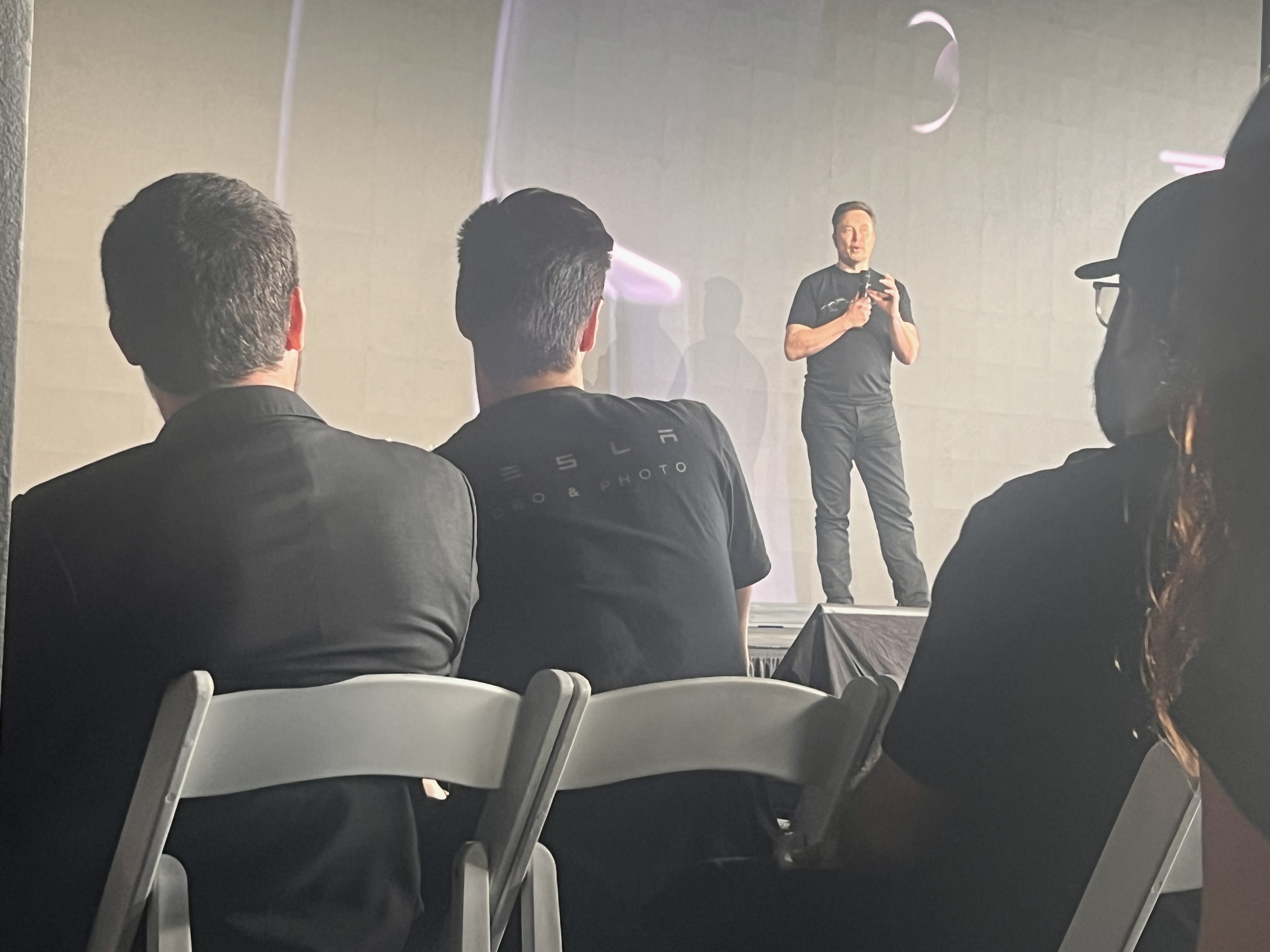
Elon Musk talks at Tesla 2023 Shareholder Meeting. Image by the author.
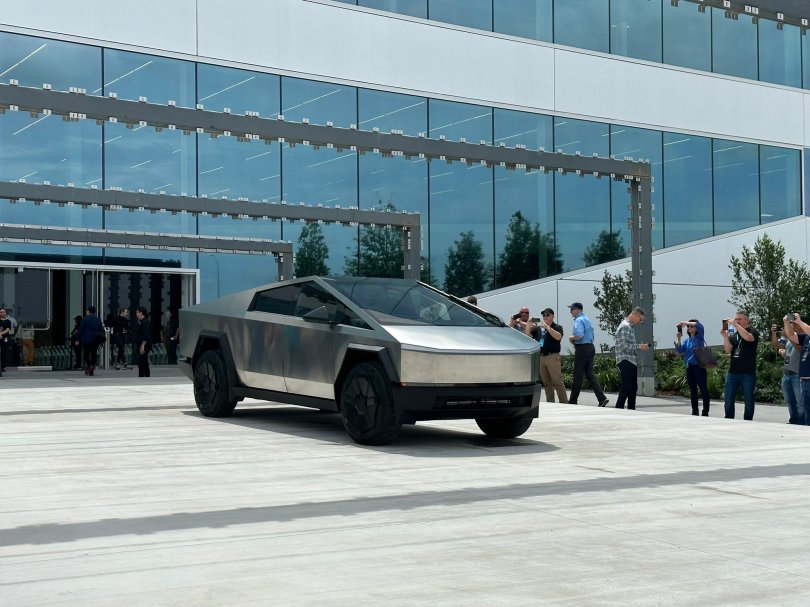
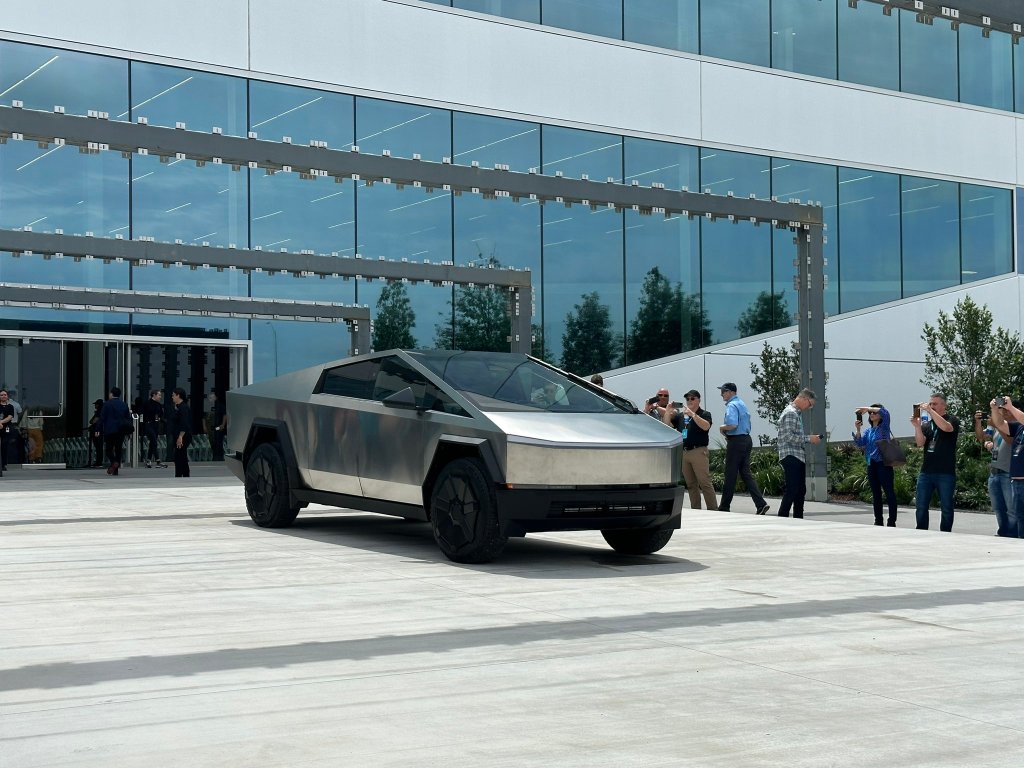
Cybertruck, 2023 Shareholder’s Meeting. Photo Courtesy Sarah Alfar.
(May 20, 2023 Austin, Texas)
“The goal is to give people hope, realistic hope, and simply to say that there is a path to a fully sustainable global economy, that we are on that path, that we are accelerating that path, and so long as we don’t get complacent about it, it will happen.” – Elon Musk at Shareholder Meeting on Master Plan 3
At the heart of Tesla’s success lies Elon Musk, the incredible Tesla team, and a dedicated community of individuals who are passionate about the company and its mission.
For this article, you’ll get to come along with me to the shareholders meeting and we’ll start in the line of cars and then meet some awesome people! Let’s set the time machine back to May 16, 2023, and hop in my Tesla.
IMAGINING YOU ARE WITH ME AT THE SHAREHOLDER’S MEETING
Joining a long line of cars, we are very close to Gigafactory Texas and we see production at scale in action in front of us. Numerous deliveries on large, semi flatbeds are pouring in as we wait, car carriers leave the factory loaded with new Model Y. The battery cathode plant and die shop are huge. The employee parking lot is overflowing.
You get the window seat once we’re on the bus ride to the entrance. The bus lumbers off around the Gigafactory. I say I could do this ride over again 50 times and you tell me I’m a little extreme (I disagree, haha).
We see a holding lot filled with Model Y as far as the eye can see. Model Y are charging at a George Jetson style charging bay shaded by solar panels. Next up, a loading lot where inspections are being done, then cars line up to wait for their turn onto a car carrier. There are long lines of car carriers.
You pass several employee parking lots, they are bigger than you expected.
The tour bus drives closer to the Gigafactory, and a cool shadow is cast over the bus as you gaze up. We both gasp. The bus feels tiny as we crane our necks to look up to the rooftop. The roof is covered with solar panels that spell out “TESLA,” but you already know that from when you flew into Austin.
While we wait to tour the Tesla Semi, a graffiti artist is creating Cybertruck art on the side of a shipping container. The day is perfect, 80 degree weather, a few puffy clouds, we’re lucky to be here!
You think you almost lost me after the Semi tour but then find me ogling the Cybertruck and the German-made Model Ys on the other side of the street. The size of the truck is bigger than you expect. The Berlin Model Y paint is glamorous under the sun to say the least!
TOUR
As we enter the Gigafactory Tour, it’s apparent it’s in full production and did not shut down at all for this event, rather it looks like it’s under an even higher pace than imagined. Employees are actively working on model Y, and the production line is visible and moving along fast. We hear occasional happy beeps from Model Y under production and it sounds like they’re saying, “hey, I’m glad you came to see us.”
We’re able to see the ground floor and then climb up stairs to the second floor and look down, which is incredible. The factory is so big and everything looks so clean and everybody working looks like they have purpose and order in what they do.
As a tour guide instructs us on the manufacturing processes in a video, you and I are more interested in listening to the sounds in the factory and watching the production line below, it’s an all inspiring vision, seeing these vehicles being brought to production at scale, and being there in person, is an experience that feels like the future. It inspires us to think about how incredible it is to be a part of Tesla’s success just by being a supporter and investor.
Reality kicks us in the face while the security guard says “hey ma’am, your tour is leaving.”
༛༛ ༛ ༛༺༻༛ ༛ ༛༛
I hope this gave you a feel for if you had been at the Tesla shareholder Meeting. For the remainder of this article, I’ll introduce you to three inspiring people I had conversations with.
FROM TESLA OWNER TO INVESTOR
Winston was wearing a Longhorn shirt and the “Don’t Mess with Tesla” belt buckle which caught my eye. He and his daughter Anne were waiting in line at the Tesla store.
Winston told me he bought a Model 3 in 2020. He said the minute he stepped into his Tesla, the experience was so incredible that right away, knew he needed to invest.
He now uses FSDbeta all over Houston, and he would not travel around any other way.
I told him I had also used FSD beta in Houston and it was flawless. (My Podcast #14 is all in Baytown & Houston)
WITNESSING THE NEW EVOLUTION OF NORMALCY
I always respect the confidentiality and privacy of Tesla employees, so I’ll just briefly share with you what one employee said while keeping him private. Without mentioning his position at Tesla, I can say he looked at Tesla with a blend of optimism and amazement. He told me he loves working at Tesla and compared it to what he knew about car manufacturing before he was hired. As a kid, he grew up in Detroit and his father worked in automotive manufacturing. He would visit the factory and remembers it for the awful smell of toxic fumes.
At Tesla, “you can actually walk through it and breathe clean air. It doesn’t even seem like a car factory at times. I am experiencing the new evolution of normalcy.”
SUPPORT FOR ELON MUSK FROM NORTH CAROLINA
Just outside the Tesla Gigafactory, near some oak trees, there was a handful of food and beverage trucks. I ordered a grilled cheese sandwich and a slushie and looked for a shady place to eat. This is how I met the Whitley family. Dan Whitley’s love for Elon and Tesla was evident in his commitment to being a part of the Tesla mission.
Dan explained to me that he supports Elon Musk because, “I think he’s a believable person and I think he’s got a kind heart and I believe in his mission and believe in him and just try to support him the best I can.” Laughing, Dan said, “And I’ve got 8 Tesla’s so I’m supporting him!” I asked if this was normal for N. Carolina, and he said. “The company spoke to me, they have a good mission and I want to support them.”
CONCLUSION
The conversations I had with people at the shareholder meeting offer a glimpse into the passion and devotion people have for Tesla and in the vision of Elon Musk. for some, it even made them rethink their future. William Cross from Connecticut was at the Shareholder Meeting. I caught up with him later, and he told me how the experience left an impact on him. “It really made me rethink what I’m doing here. I fell in love with the South. I want to learn more and one day work for Tesla or SpaceX.”
The company Tesla as a whole inspires many people, and Elon is highly respected and supported by many. When you hear negative talk about Elon Musk, please realize that is a small minority. A small, very vocal minority. They, in no way, represent what most people truly think.
༛༛ ༛ ༛༺༻༛ ༛ ༛༛
Article by Gail Alfar. please credit accordingly. Thanks to Tesla for being amazing. Thanks to Elon Musk and all my subscribers and readers on Twitter who support my writing in many different ways, I appreciate you very much. Video Courtesy @Tesla Inc., Pic credits Sarah Alfar and Greggortruck.
(Houston, Texas) Welcome to Houston and the Baytown area on Tesla FSD beta!
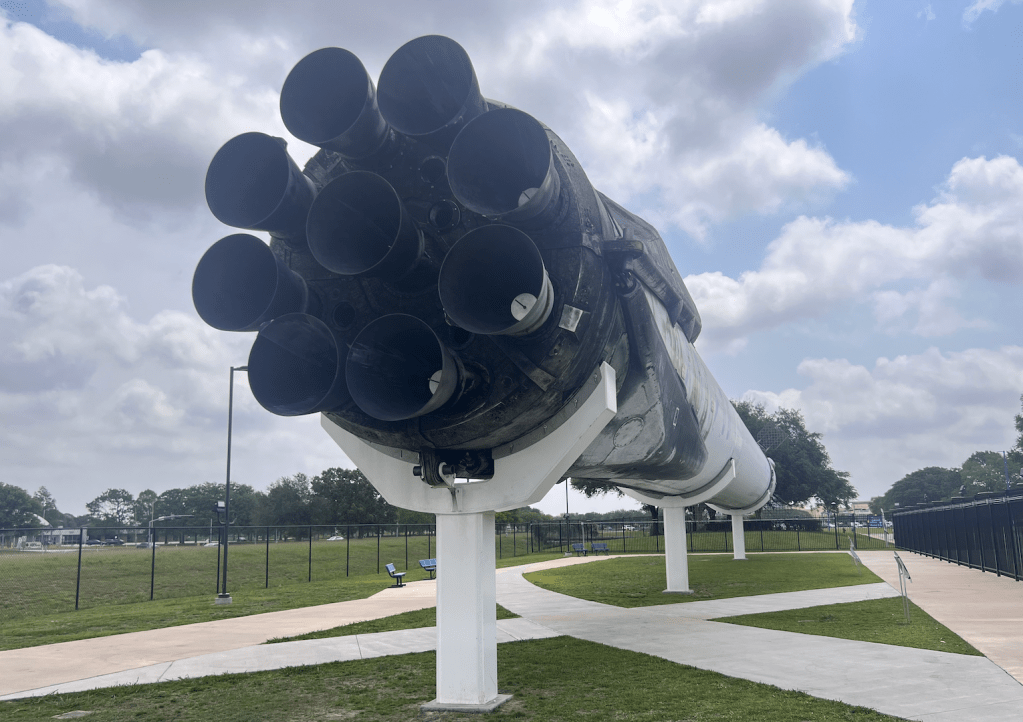
Come along as we go inside a huge Gastby-like mansion and then hop back in the Tesla to take FSD beta over to the Houston Space Center to visit the Falcon 9 booster on display there.
You’ll enjoy this video as it not only features the best autonomous software on earth in a car, but it also features views of Houston from atop high roads and bridges. I have tried to put together a very special video for you. I believe this is one of my best episodes. Enjoy!
Gail’s Tesla Podcast #14 fSDbeta to a 🎩 Gatsby mansion and visit 🚀 Falcon 9 at the Space Center & Baytown Texas oil country 🛢️ pic.twitter.com/gKygWdztr2
Children playing soccer in the shadow of oil refineries in Houston
One interesting part of my journey on FSD beta into the Houston area was the overarching dominance of oil refining in the city. Homes, soccer fields, communities, stores, and roads, all exist near massive oil refineries. The pictures I did not share lie in my head. They are of the countless roads and bridges that are stained with streaks of black soot. The black lines can’t be cleaned and are a result of burn-off from the refineries. One friend of mine who grew up in South Texas across the street from a refinery tells me that many many people he knew suffered from bad health because of this. Of course, we still need a lot of oil to keep the gears running in our world. And soon, hopefully, in your lifetime, we will see a global economy based on fully sustainable energy.
You can read more about that in my blog post about Elon Musk’s Master Plan 3, linked below this article. Have a lovely day!
Gail Alfar, author. Exclusive to What’s Up Tesla – All Rights Reserved. My goal as an author and podcaster is to support Tesla (the most American vehicle manufacturer) and Elon Musk in both making life better on Earth for humans and becoming a space-fairing civilization.
There’s a lot of talk about whether someone should make their next car a Tesla. I’m like you in that I work hard for my paycheck, and there are few products I have purchased that truly give me Joy!
My Tesla is one of them!
I’m sharing my experience of buying a Tesla with you and walking with you through the steps.
Save with Gail's Referral. Order Tesla products with Gail's Referral Link to earn cash off your order plus exclusive referral benefits. ts.la/gail74884
FIRST DRIVE
The deciding factor for me was the demo drive. Tesla gave me a demo car on a Saturday morning after a nightfall of rain. The roads were sparkling and the car was pristine and I accelerated up a steep hill and around curves while the car held onto the road like rails. I had to adjust back to my combustion car after that and I missed the Tesla so much.
REASONS A TESLA MAKES SENSE
I wanted a Tesla, and I had to sell my husband on it because he wanted to wait.
I emphasized to him how Tesla rates #1 in Safety and Aces all the crash tests.
I told him how little we would pay to power the Tesla – about $6 – $12 at the Tesla Superchargers and only about $30 a month to charge at night at home.
I also let him know about destination charging for when we travel. Destination chargers let you slow charge for free at many hotels overnight.
HOW LONG WILL IT TAKE TO GET YOUR TESLA?
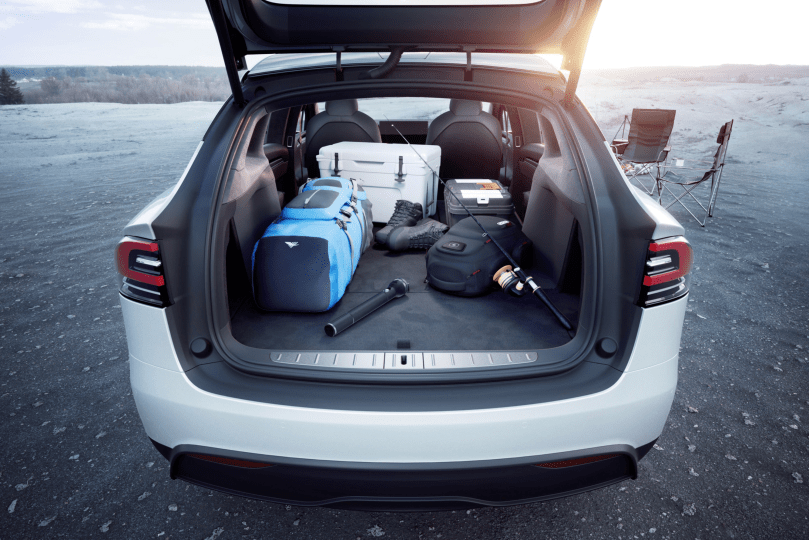
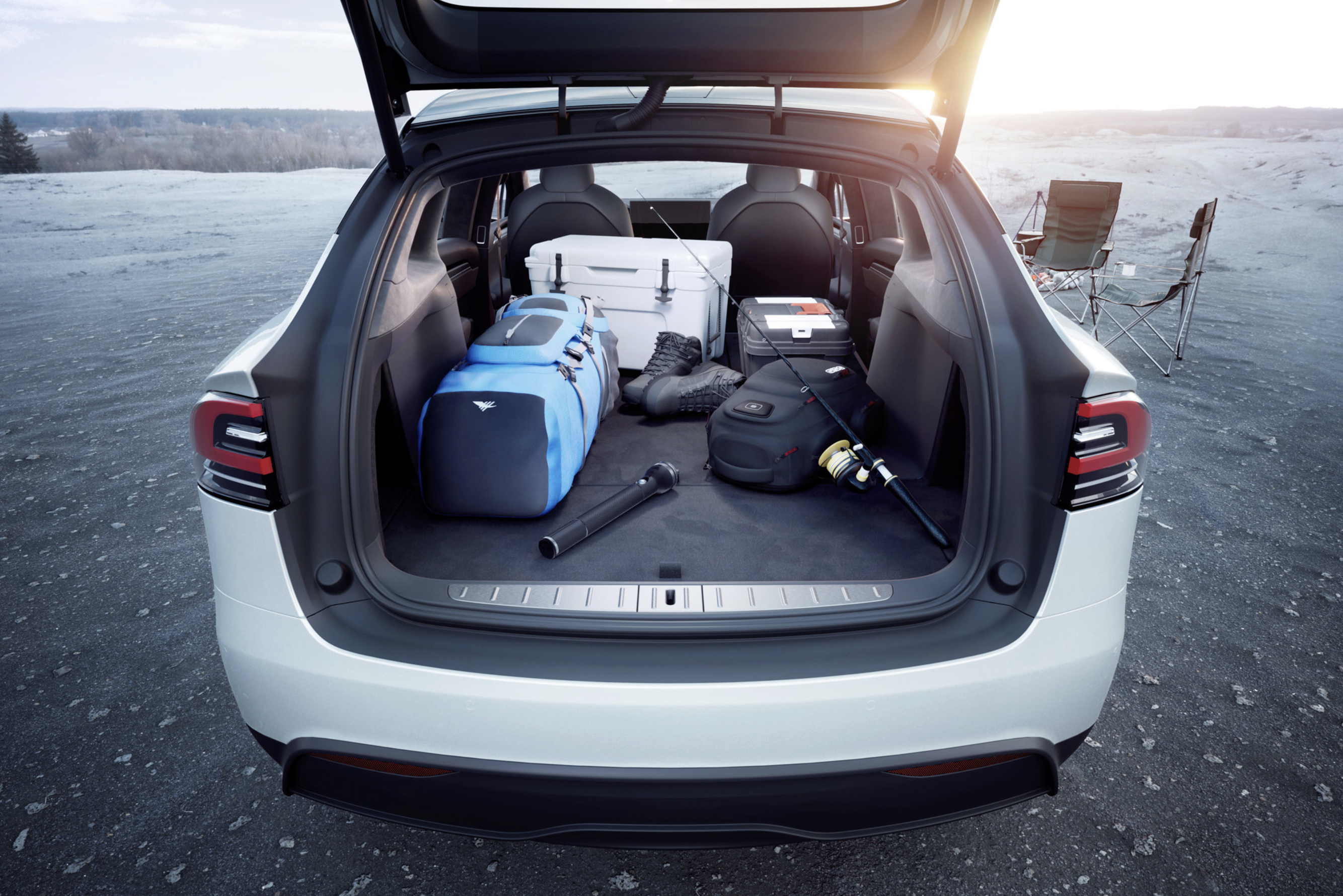
Tesla Model Y 7 Seater, Image Courtesy Tesla, Inc.
I suggest you order your Tesla on the premise that you will take delivery in one week. When I got my finances in order (I used a credit union, and Tesla also has a finance option), I went ahead and placed a new order for a Model Y. Ours was delivered a month later. I have heard that ordering a Model Y 7-Seater SUV may take longer (see image above) but is well worth the wait!
My friend recently ordered a Model 3 and Tesla scheduled delivery for the next week. Delivery times vary, and the important part is that you are ready with your financing, and trade-in and have planned out your charging routine ahead of time.
TESLA WILL LET YOU TRADE IN YOUR OLD GAS CAR
Tesla will take your old gas car off your hands.
When you place your order for your Tesla, they will ask you if you have a vehicle to trade in.
My best advice is for you to compare Tesla’s offer to another car buyer’s offer. You can go with the highest bidder.
Save with Gail's Referral. Order Tesla products with Gail's Referral Link to earn cash off your order plus exclusive referral benefits. ts.la/gail74884
TESLA’S EASY TASK LIST IS MADE FOR YOU
When I ordered my Tesla, I received “tasks” from Tesla to complete in stages.
Tesla does their best to make this painless and it is worth having 1) finances prepared ahead of time and 2) how you’ll insure the vehicle planned out. I recommend Tesla insurance as you can opt into it right from the Tesla App and their rates are usually lower. It activates right away and you can change out of it later if you have to.
RECEIVING THE BEAUTIFUL VEHICLE, FINAL STEPS
As a Texas resident, I went to the County Tax office to pay the taxes on the vehicle. The Tax Office held the license plate for the Tesla until I was paid up (this was in Oct. 2022 and may change).
It is hard to explain how awesome it feels to own a Tesla! It seems almost too good to be true!
In a future article, I’ll write about getting to know your Tesla. It took me a while to get fully comfortable with my Tesla because it is very different from a combustion car!
Save with Gail's Referral. Order Tesla products with Gail's Referral Link to earn cash off your order plus exclusive referral benefits. ts.la/gail74884
People await Starship first orbital Launch. Image by the author.
(April 22, 2023) S. Padre Island, Texas
I wanted to write about my first rocket launch. I realized that to best write for you, I had to talk to other people about their experiences. I’m sharing with you some of the beautiful conversations I had at Starship’s first orbital flight test launch. We’ll hear from a SpaceX enthusiast, an ex-NASA engineer, and a SpaceX engineer.
A DREAM COMES TRUE.
When Tesla announced the availability of the first version Model 3 sedan, Jim from Indiana was one of the first to reserve one. Since that date in 2017, Jim has closely been following Elon Musk’s companies and has been supportive of SpaceX. When he heard Starship would launch its first orbital test this year, he had a dream of going there with his daughter.
I saw Jim standing on Isla Blanca State Park beach with his wife, two children and another family friend. Jim’s passion and dedication to supporting SpaceX and its mission to make us multi-planetary is contagious. He wakes up every morning excited about the future!
“I knew I would bring my daughter, and when my wife found out she helped turn it into a family vacation for us all.”
I talked with him on the beach while his children played in the rolling waves at Isla Blanca State Park. Jim is one of many people who came to see the first Starship launch in person on April 20, 2023.
EX-NASA ENGINEER BELIEVES ELON MUSK WILL GET PEOPLE LIVING ON THE MOON.
Fred Becker, an ex-NASA Engineer would not have missed this launch for anything. Fred drove down from Indiana with his tiny Pomeranian in a little carrying pack. When Fred was 16 years old, he watched Apollo 16 land on the Moon on April 16. In a gentle voice, and with a slight sense of humor, Fred told me he wished the Starship launch had been on April 16.
We talked quite a bit, and I felt like I was talking to an old friend, Fred told me,
“NASA has been hamstrung by politics, but Elon Musk is not, for the most part.”
Fred shared with me that he knows Elon Musk is an incredibly amazing and kind person, and if “his mission is to get people living on the moon that’s going to happen.”
As I watched Fred walk away, I thought about how he explained to me that he had played a big role in designing and developing the space shuttle for NASA. Fred came alive when he explained to me his admiration for what Elon Musk is doing. I saw a spark light up in his eye.
There were a lot of NASA folks present at the Starship launch. SpaceX is opening up hope again to them that we will have people living on the moon and beyond!
WORKING FOR SPACEX.
I lingered at Isla Blanca for a while after the launch, the beach started to clear and began to fill up with happy families, kids, toys, and coconut-scented suntan lotion. As I started to walk back to the parking lot, I ran into Justin T., a SpaceX engineer. I asked him what his role was in Starship, and he was gracious enough to explain it to me in terms I could understand. He said he was responsible for connecting the fuel tanks to the Starship, it’s a lot more complicated than that, but I will tell you that he expressed he loved his job and the team he works with.
Justin told me he’s ready to get right back to work for the next launch. He told me he loves working at SpaceX and does not entertain any plans of leaving. He has found his passion and mission. It was incredible to hear him talk and to be able to thank him for his hard work. Without him, the launch would not have been the data-gathering success that it was.
MY THOUGHTS.
I’ve been to Starbase 6 times with most of my family. We’ve camped on the beach 3 times, which is pretty near to the Starship launch site!
When Starship launched, the vibrations in the air and the deep rumbling sound were much more profound than I could have imagined. I could feel the intense pressure in the core of my heart. This was my first launch to ever attend in person! One of my kids was there and when I turned around he had tears of joy streaming down his face. “It made me realize my life priorities!”
If Starship goes to Mars, we have a great chance of passing the great filter and becoming a multi-planetary civilization. If Starship doesn’t make it to Mars, if the program fails, it will still do one thing that is extremely valuable in the lives of people today: Give people hope where there wasn’t any before. Do you love waking up in the morning excited for the future? I know I do. This alone is justification enough for Starship.
───── ⋆⋅☆⋅⋆ ─────
“We choose to go to the moon in this decade and do the other things, not because they are easy, but because they are hard; because that goal will serve to organize and measure the best of our energies and skills, because that challenge is one that we are willing to accept, one we are unwilling to postpone, and one which we intend to win.” – President John F. Kennedy, Houston, Texas, September 12, 1962
Elon Musk was asked, “Why should we colonize Mars?”
“Being a multi-planet species and being out there among the stars is important for the long-term survival of humanity and that’s one reason, kind of like life insurance for life collectively, life as we know it. The part that I find personally most motivating is that it creates a sense of adventure and it makes people excited about the future. If you consider two futures: one where we are forever confined to Earth until eventually something terrible happens — or another future where we are out there on many planets, maybe even going beyond the solar system! I think that the second version is incredibly exciting and inspiring… and there need to be reasons to get up in the morning. You know, life cannot just be about solving problems, otherwise, what’s the point? There’s gotta be things that people find inspiring and make life worth living.” – Elon Musk
───── ⋆⋅☆⋅⋆ ─────
Starship First Orbital Flight. Image Courtesy Carlos Nunez
Article by Gail Alfar, please credit accordingly. Thanks to Fred Becker, SpaceX, Elon Musk, and Carlos Nunez Images. Original Article appears on Gail Alfar’s Twitter









 whatsuptesla.com