CATCHING THE GIANT ROCKET

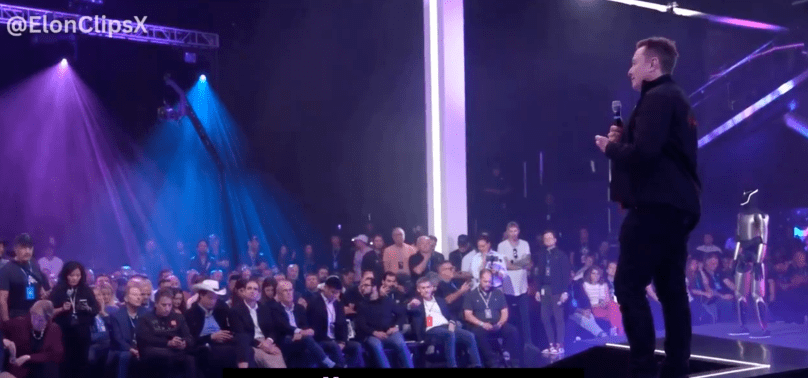
Elon Musk: Congrats to the SpaceX team on catching the giant rocket!

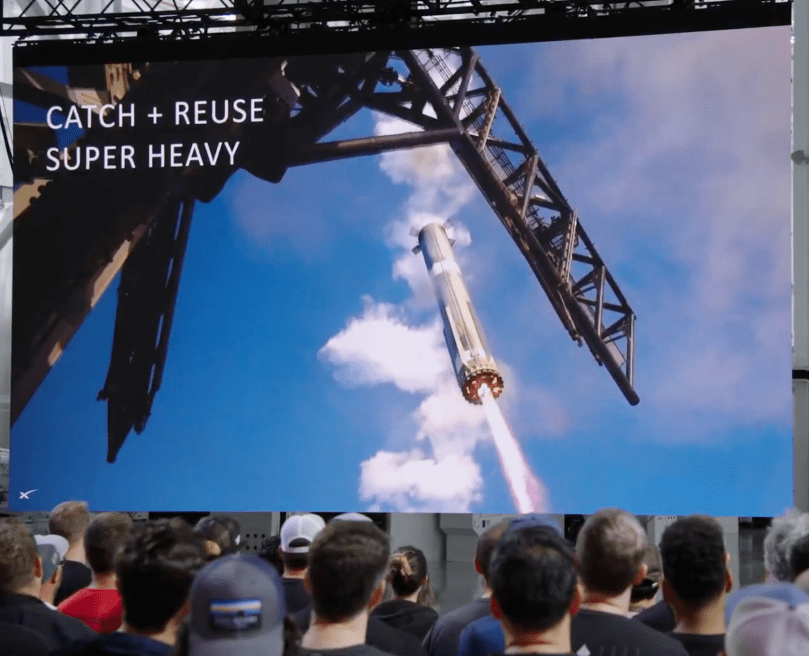
Elon: It’s mind-blowing that the SpaceX team has caught the largest flying object ever made multiple times using a novel method of catching it with giant chopsticks!

[SpaceX employees and Elon pause to watch a video showing the booster, with fiery engines, descending through space, adjusting, and being caught with chopsticks.]

Elon: Have you ever seen that before?

[The video is awe-inspiring. Elon congratulates his team, calling it quite an achievement. Everyone cheers; it’s an emotional moment.]

Elon: We catch it this way, which has never been done before, to make the rocket rapidly reusable. If the super heavy booster, 30 feet in diameter, landed with legs on a pad, we’d have to pick it up, stow the legs, and move it back to the launch pad, which is difficult.

But catching it with the same tower that places it in the launch mount is the best for rapid reuse. It’s caught by the arms that placed it, then set back in the launch ring immediately. In principle, the super heavy booster can be reflown within an hour of landing. It returns in five or six minutes, gets caught, placed back, refilled with propellant in 30 to 40 minutes, and a ship placed on top. It could refly every hour or two.

Image Courtesy SpaceX, Inc and source Elon Musk’s Mars 2026 company talk.

BECOMIMG A MULTIPLANETARY CIVILIZATION

“Progress is measured by the timeline to establishing a self-sustaining civilization on Mars”

Elon: With each launch, especially early on, we learn more about what’s needed to make life multiplanetary and improve Starship to take hundreds of thousands, if not millions, to Mars.

Ideally, we can take anyone who wants to go and bring all equipment necessary to make Mars self-sustaining, so Mars can grow by itself.

Worst-case scenario, we reach the point where Mars can continue to grow even if supply ships from Earth stop for any reason.

At that point, we’ve achieved civilization resilience, where Mars could rescue Earth or vice versa.

Having two self-sustaining planets is incredibly important for long-term survival. A multi-planet civilization is likely to last ten times longer than a single-planet one because of risks like World War III, meteors, or supervolcanoes. With two planets, we keep going, then move beyond Mars to the asteroid belt, Jupiter’s moons, and other star systems, making science fiction reality. To achieve this, we need rapidly reusable rockets to keep the cost per ton to Mars as low as possible. That’s essential. We need rapidly reliable rockets—it’s like a pirate’s “Rrrr”: rapidly reusable, reliable rockets!

Image Courtesy SpaceX, Inc and source Elon Musk’s Mars 2026 company talk.

On May 29, 2025, Elon Musk delivered a visionary speech at Starbase, Texas, the newly incorporated city and SpaceX’s hub for revolutionizing space travel. This transcript captures Musk’s electrifying address, detailing Starbase’s evolution from a sandbar to a powerhouse for building the world’s largest rockets. He highlights breakthroughs like rapidly reusable rockets, the Raptor 3 engine, and orbital propellant transfer, all pivotal for a self-sustaining Mars civilization. With vivid descriptions of catching boosters with “giant chopsticks” and plans for a million-ton Mars transfer, Musk inspires a future where anyone can visit Starbase or journey to Mars.

Elon Musk’s Vision for a Multiplanetary Future: Starbase and the Road to Mars, May 2025

On May 29, 2025, Elon Musk delivered his company speech at Starbase, Texas, the newly incorporated city and SpaceX’s hub for space travel to Mars. This transcript, which I have worked hard on to bring you accuracy, captures Elon’s valuable and historical words.

Elon details Starbase’s evolution from a sandbar to a powerhouse for building the world’s largest rockets. Elon highlights breakthroughs like rapidly reusable rockets, Raptor 3 engine, and orbital propellant transfer plans, all critical for a self-sustaining Mars civilization. With vivid descriptions of catching boosters with “giant chopsticks” and plans for a million-ton Mars transfer, our hero Elon inspires a future where anyone can visit Starbase or journey to Mars.

Elon Musk: The gateway to Mars. Here we are at the newly incorporated Starbase, Texas. This is the first new city made in America in, I think, quite a few decades. At least that’s what I’m told. It’s a very cool name, named because it’s where we’re going to develop the technology necessary to take humanity, civilization, and life as we know it to another planet for the first time in the 4.5 billion-year history of Earth.

[Lots of cheering. Elon shows a short video of the history of Starbase. He talks along with the images.]

Elon: We started with basically nothing. Starbase started as a sandbar with nothing.

[The video shows a prototype rocket and two open tents.]

Elon: Even those little things we built. That’s the original Mad Max rocket!

[Looking at the rocket from 2019, six years ago, the camera pans around it. The sun hits the side, revealing a gorgeous, surreal piece of steel.]

Elon: You know, lighting is very important for that Mad Max rocket.

[Elon is smiling, with his hand in a determined fist. He’s not afraid of silence; this is a tribute to that incredible rocket. Many employees in the audience may not have seen it in person; it’s six years old. Some may have been in high school at the time.]

Elon: Not long ago, there was basically nothing here. In about five or six years, thanks to the incredible work of the SpaceX team, we’ve built a small city. We built two gigantic launchpads and a gigantic rocket factory for a gigantic rocket. The cool thing is, anyone watching can come visit because our entire production facility and launch site are on a public highway. Anyone in South Texas can see the rocket up close, see the factory, and anyone interested in the largest flying object on Earth can drive down the public highway and see it! Pretty cool!

[Video progresses to Starbase 2025.]

Elon: We’re now at the point where we can produce a ship roughly every two or three weeks. We don’t always produce a ship every two or three weeks because we’re making design upgrades, but ultimately we’re aiming for the ability to produce 1,000 ships a year, so three ships a day.

[On the video, birds chirp, water glistens, and a hovercraft pulls gently away from Starbase Beach.]

Elon (smiling): That’s our hovercraft. We’re driving the booster down the road to the launch site. You see the Megabays. The cool thing for those watching is you can literally come here, drive down the road, and see it. This is the first time in history that’s been possible. That highway on the left is public. You can just come and see it, which I recommend. It’s very inspiring.

[Elon points to a render of a massive building.]

Elon: There’s a person next to it that looks like a tiny ant. That’s our Giga Bay! We’re expanding integration to produce 1,000 per year. The Giga Bay hasn’t been built yet, but we’re building it. It’s a truly enormous structure, one of the biggest in the world by some measures, designed for 1,000 Starships per year. We’re also building a Giga Bay in Florida, so we’ll have two facilities—one in Texas and one in Florida. It’s difficult to gauge the size of these buildings because you need a human for scale. When you see how tiny a human is next to it, you realize how enormous it is.

BUILD COMPARISON

Elon: When we look at our build comparison in vehicles per year, Boeing and Airbus make airplanes, but Starship will probably make as many Starships for Mars as Boeing and Airbus make commercial airplanes. This is an enormous scale, and each Starship is bigger than a 747 or an A380. In terms of Starlink satellites, version three satellites, we’ll make on the order of 5,000 per year, and at some point, closer to 10,000 per year. Those Starlink V3 satellites are roughly the size of a 737 (unfurled). They compare to the B-24 bomber in World War II. The scale of production is still small compared to Tesla.

[A large chart appears, showing Tesla’s massively scaled production: currently 1,773,443 cars per year.]

Elon: Tesla will probably double or triple that volume in the future. It puts things into perspective that it’s possible to build a vast number of interplanetary Starships. Even when comparing tonnage, Tesla and other car companies produce far more complex manufactured tonnage than SpaceX, showing it’s achievable. These numbers, while insanely high by traditional space standards, are achievable because they’ve been achieved in other industries.

Progress is measured by the timeline to establishing a self-sustaining civilization on Mars.

Elon: With each launch, especially early on, we learn more about what’s needed to make life multiplanetary and improve Starship to take hundreds of thousands, if not millions, to Mars. Ideally, we can take anyone who wants to go and bring all equipment necessary to make Mars self-sustaining, so Mars can grow by itself. Worst-case scenario, we reach the point where Mars can continue to grow even if supply ships from Earth stop for any reason. At that point, we’ve achieved civilization resilience, where Mars could rescue Earth or vice versa. Having two self-sustaining planets is incredibly important for long-term survival. A multi-planet civilization is likely to last ten times longer than a single-planet one because of risks like World War III, meteors, or supervolcanoes. With two planets, we keep going, then move beyond Mars to the asteroid belt, Jupiter’s moons, and other star systems, making science fiction reality. To achieve this, we need rapidly reusable rockets to keep the cost per ton to Mars as low as possible. That’s essential. We need rapidly reliable rockets—it’s like a pirate’s “Rrrr”: rapidly reusable, reliable rockets!

Congrats to the SpaceX team on catching the giant rocket.

Elon: It’s mind-blowing that the SpaceX team has caught the largest flying object ever made multiple times using a novel method of catching it with giant chopsticks!

[SpaceX employees and Elon pause to watch a video showing the booster, with fiery engines, descending through space, adjusting, and being caught with chopsticks.]

Elon: Have you ever seen that before?

[The video is awe-inspiring. Elon congratulates his team, calling it quite an achievement. Everyone cheers; it’s an emotional moment.]

Elon: We catch it this way, which has never been done before, to make the rocket rapidly reusable. If the super heavy booster, 30 feet in diameter, landed with legs on a pad, we’d have to pick it up, stow the legs, and move it back to the launch pad, which is difficult. But catching it with the same tower that places it in the launch mount is the best for rapid reuse. It’s caught by the arms that placed it, then set back in the launch ring immediately. In principle, the super heavy booster can be reflown within an hour of landing. It returns in five or six minutes, gets caught, placed back, refilled with propellant in 30 to 40 minutes, and a ship placed on top. It could refly every hour or two.

The next goal is to catch the ship.

Elon: We haven’t done this yet, but we will.

[A video shows a render of a Starship gently caught by chopsticks.]

Elon: We hope to demonstrate this later this year, maybe in two or three months. The ship would be placed on the booster, refilled, and flown again. The ship takes longer because it orbits Earth a few times until the ground track returns to the launchpad. It’s intended to be reflown multiple times per day.

RAPTOR 3

Elon: This is the new Raptor 3, an awesome engine! Big hand to the Raptor team. Raptor 3 requires no basic heat shield, saving mass and improving reliability. A small fuel leak will leak into the flaming plasma and not matter, unlike a boxed engine where it’s scary. It’ll take a few tries, but it’ll massively increase payload capability, efficiency, and reliability. It’s alien technology. Industry experts thought an incomplete Raptor 3 picture wasn’t firing, but it was at unprecedented efficiency.

[Lots of cheers and applause.]

Elon: That’s one clean engine. We simplified the design, incorporated secondary fluid circuits and electronics into the structure, so everything is contained and protected. It’s a marvel of engineering.

PROPELLANT TRANSFER

Elon: A key technology for Mars is orbital propellant transfer, like aerial refueling for airplanes, but for rockets. It’s never been done but is technically feasible. Two Starships get together; one transfers fuel and oxygen—almost 80% oxygen, just over 20% fuel. A Starship with payload goes to orbit, others refill its propellant, and then it departs for Mars or the Moon. We hope to demonstrate this next year.

PLASMAJET TESTING

Elon: Mars’ atmosphere is ~95% CO2. The heat shield entering Mars encounters more than twice the atomic oxygen compared to Earth. Developing a reusable orbital heat shield is extremely difficult. Even the Shuttle’s required months of refurbishment. Only advanced ceramics, glass, aluminum, or carbon-carbon survive reentry stresses without eroding or cracking. This will be the first reusable orbital heat shield, needing extreme reliability. It’ll take years to hone, but it’s achievable within physics. Mars’ CO2 atmosphere becomes plasma, producing more free oxygen than Earth’s (~20% oxygen), oxidizing the heat shield. We test rigorously in a CO2 atmosphere for both Earth and Mars.

MARS ENTRY HEATSHIELD

Elon: Derived from Starship’s current heat shield, we want the same structure and material for Earth and Mars to test hundreds of times on Earth before Mars, ensuring reliability.

NEXT GEN STARSHIP

[The video shows a taller, majestic Starship.]

Elon: Next-generation Starships have improvements. It’s taller, with a better interstage between ship and booster. Struts allow flame from hot staging—lighting ship engines while booster engines fire—to exit easily, and we bring the interstage back instead of discarding it.

SUPER HEAVY

  • HEIGHT (m) 72.3
  • PROPELLANT CAPACITY (t) 3650
  • LIFTOFF THRUST (tf) 8240

[Excited reaction from SpaceX engineers due to increased propellant capacity and thrust.]

Elon: A little taller, from 69 meters to 72 meters. Propellant capacity may push to 3,700 tons, long-term maybe 4,000 tons. Liftoff thrust will keep rising, ultimately close to 10,000 tons. The booster looks naked because Raptor 3 engines don’t need a heat shield, standing in flaming plasma. It’s lighter and looks amazing.

STARSHIP

  • HEIGHT (m) 52.1
  • PROPELLANT CAPACITY (t) 1550
  • THRUST (tf) 1600

Elon: The ship is longer, more capable, moving to 1,550 tons of propellant, likely 20% more long-term. The heat shield is sleeker, with smooth boundaries, no jagged tiles. It looks sleek. This version has six engines, but a future version will have nine. Starship version three achieves all key elements. New technology takes three major iterations to work well. With Raptor 3 and Starship/Booster version 3, we’ll achieve a rapidly reusable, reliable rocket with orbital refilling—everything needed to make life multiplanetary. We aim to launch version three by year-end.

FUTURE STARSHIP

[An image of three Starships shows progress and future plans.]

Elon: The left is current, the middle is by year-end, and the right is long-term. The future Starship is 142 meters tall (current: 121 meters, next-gen: 124.4 meters). The middle version will be Mars-capable, followed by performance improvements. Like Falcon 9, we’ll make it longer and increase payload. By year-end, it’ll be capable of making life multiplanetary, then we’ll hone efficiency, reduce cost per ton and per person to Mars, and make it so anyone can move to Mars to build a new civilization. It’s the best adventure possible.

[Lots of applause.]

Elon: Ultimately, we’ll have 42 engines, as prophesied by Douglas Adams in The Hitchhiker’s Guide to the Galaxy. The answer to life’s meaning is 42, so the Starship stack will have 42 engines.

[Lots of applause.]

MASS TO ORBIT

Elon: It’s remarkable—200 tons payload to orbit with full reusability, twice the Saturn V Moon rocket’s capability, which was fully expendable. Starship is fully reusable.

MOON BASE ALPHA

Elon: Without reusability, Starship would have ~400 tons to orbit. It’s a big rocket needed for multiplanetary life. Along the way, we could have a Moon base like Moonbase Alpha, a gigantic science station for universe research.

MARS TRANSFER WINDOWS

Elon: You can go to Mars every 26 months. The next opportunity is November–December next year, in ~18 months. We’ll try for it, with a 50-50 chance if we figure out orbital refilling in time. If achieved, we’ll launch the first uncrewed Starship to Mars by year-end.

[Lots of applause.]

Elon: The distance to Mars is ~1,000 times farther than the Moon. You create an elliptical orbit with Earth at one point and Mars at the other, timing the ellipse to intersect Mars. This is shown on Starlink Wi-Fi routers. Starlink funds Mars missions. Thanks to everyone supporting Starlink—you’re helping make humanity a space civilization.

CANDIDATE BASE LOCATIONS

Elon: We’re looking at the Arcadia region, a lead candidate due to ice for water and suitable terrain. It’s my daughter’s name, too (smiling). First Starships will gather critical data.

Elon: First flights will send Optimus robots to explore and prepare for humans. If we launch by year-end, arriving in 2027, it’ll be epic to see Optimus on Mars. Two years later, if landings succeed, we’ll send humans to build infrastructure. We might do two robot landings before humans, just to be safe.

MARS 2028

Elon: Develop power generation, mining, construction, propellant generation, habitats, communications, and more.

[Elon shows an awe-inspiring picture of Optimus bots on a construction beam above Mars.]

COMMUNICATIONS ON MARS

Elon: We’ll use a Starlink version for Mars Internet. Even at light speed, communication takes 3.5–22 minutes due to Mars’ position. High-bandwidth communication is challenging, but Starlink will achieve it.

HUMANS ON MARS

Elon: Subsequent missions will carry more people and thousands of tons of cargo, laying groundwork for a permanent presence. The goal is to make Mars self-sustaining quickly. Launch pads may be farther for safety. Mars needs lots of solar power. Initially, you’ll need Mars suits and glass domes until terraforming.

Elon: We aim to transfer over 1 million tons per Mars window for a serious civilization.

SPACEPORTS

Elon: We’ll need many spaceports. With transfer windows, 1,000–2,000+ ships gather in orbit like Battlestar Galactica, then depart. Mars needs hundreds of landing pads to handle thousands of inbound ships.

Elon: This is an incredible city on another planet, a new world. Martians can rethink civilization—government, rules, everything. It’s up to them. Let’s get it done!

Image Model 3 Courtesy Tesla, Inc.

5 Star Safety with Love: Tesla

Driving a Tesla is an investment in your good health as it is the kindest vehicle you can own for safety. The

Euro NCAP deemed the 2025 Model 3 (all models) one of the safest cars, with a 5 star rating. This is a huge achievement for Tesla and means it is safest by 4 metrics:

2025 Model 3 achieved score of 90% for adult occupants, 93% for children, 89% for vulnerable road users, and 87% for safety systems -- a 5-star safety rating!
2025 Model 3 achieved score of 90% for adult occupants, 93% for children, 89% for vulnerable road users, and 87% for safety systems — a 5-star safety rating!

You can drive the lowest cost Tesla – which is the Rear Wheel Drive Long Range – and benefit from this 5 star safety.

On a personal note, the 2020 Model 3 RWD was our families first Tesla. We traded in our gas sedan, and later sold our family minivan, and we were a one-car family for about 18 months. Saving a lot of money, we raised 5 kids, with 1 car during that time. People ask how we did it. We planned out our schedule every day/week.

Often my husband chauffeured me to work and back, while we found that our kids needed lots of rides, but the times we ALL had to be one place together was pretty rare and if it did occur, we figured out a way. I’ll never regret the sacrifices we made to own a Tesla. It has brought us all joy, happiness, and a priceless safety like nothing else can.

Image Model 3 Courtesy Tesla, Inc.
Image of Tesla V4 Supercharger Courtesy of Tesla, Inc.

Tesla’s Supercharger Network is the Ultimate: 6 Owners Share

Tesla’s Supercharger network is a large and efficient charging network for all EVs, and it’s reliable uptime makes long-distance travel effortless.

Hearing the enthusiasm and personal experiences from customers speaks for itself – customers know best!

The Gold Standard

Never going back to ICE

NACS outshines other options

Seamlessly can charge non-Tesla EVs

Tesla Trip Planner

Why buy anything else?

Thanks to Tesla Charging team rural areas are staying charged

Martha and Luna state facts

Supercharging so good, some owners don’t even think twice about it

Overall Tesla is the best!

Welcome, Bunny!

Ian reflects on the critical importance of the SC network

Image in header Courtesy of Tesla, Inc.

Image of Tesla V4 Supercharger Courtesy of Tesla, Inc.

Cybertruck image Courtesy of Tesla, Inc.

EXPERIENCE SOME TESLA LOVE FOR 48 HOURS

Tesla is currently allowing for 48 hour long demo drives of Model Y, Model 3 and Cybertruck.

I confirmed that all three vehicles are available on the Tesla website in my city of Austin, Texas. Multiple users on X also confirmed they have already booked 48 hour drives in their cities.

This vibes well with Tesla’s history of refraining from spending millions on TV or other ads for its vehicles. “Butts in seats” is one of the best ways to really experience a Tesla.

A traditional demo drive is only 30 minutes.

On a personal note, when I did a 30 minutes drive in late 2019, I experienced a Model 3 Performance. That afternoon had just seen light showers. The hills were deep green, and Capitol of Texas Highway was splendid with slightly wet pavement. I will never forget the sheer joy of the acceleration as I pulled away from a pack of sluggish gas cars. Heading up an incline, the car just kept up a steady acceleration. When I returned the car, I wondered, “do they track my test drive in the Tesla store?” So far as I know, I was free to safely drive as I chose to.

One month later, I ordered my first Tesla!

Tesla Drive

Cybertruck image Courtesy of Tesla, Inc.
xAI POWERS COLOSSUS 2 WITH 168 TESLA MEGAPACKS

xAI POWERS COLOSSUS 2 WITH 168 TESLA MEGAPACKS

(Memphis, TN) xAI has secured 168 big batteries – Tesla Megapacks – to power up and cool down Colossus 2, a second xAI data center.

Colossus: From 1 to 2

Colossus 1 began construction in early 2024, with planning finalized by March 2024, and started running in September 2024, built in roughly six months. Colossus 2, expanding capacity for complex AI tasks, began development in early 2025, with these 168 powder white Tesla Megapacks delivered by ~ May 19.

Colossus 2 is Massive

Elon revealed on X that Colossus 2 will be the world’s first gigawatt AI training supercluster, this definitely pushes earth’s computational limits.

A gigawatt is one billion watts, enough to power about 750,000 average U.S. homes for an hour, matching the output of a large nuclear power plant.

“Aiming to make Grok the best tool for developers, from enterprise & government to consumer video games!” Elon posted.

The Tesla Megapacks, verified by xAI’s Brent Mayo as designated for Colossus 2, will also ensure grid resilience for the city.

City of Memphis Benefits from xAI’s Commitment

The Greater Memphis Chamber praised xAI’s sustainable practices. “xAI is committed to Memphis through their environmental practices,” the chamber stated, noting participation in MLGW’s Demand Response program. An additional 150 megawatts of Megapack batteries will support the grid during outages or peak demand, benefiting the community. “Grid resilience and battery backup are key to ensuring a successful future for xAI and the region,” Mayo said, adding, “Grok loves the Megapacks!”

My thoughts: Tesla + xAI

I recently read about the great success of Tesla Megafactory in Lathrop, California. It is beautiful to see manufacturing in the US by Tesla provide the solution to xAI’s power demands. Looking at the data center pics (below) you can tell it is essentially hungry for energy for power and cooling. I’ve seen a small data center up close in Austin, Texas, and noticed the huge effort made to keep it cooled.

With Colossus 2, xAI is not just building AI but also serving to buffer local energy infrastructure in case of a power outage.

Zoom in to see Colossus I Tesla Megapacks and fossil generators. pic credit unknown

Inside Memphis Colossus I( pic credit unknown)
Zoom in on calling tubes for data center Colossus I (pic credit unknown)

Qatar Economic Forum Interview with Genius Elon Musk (transcript)

“We are coming for those who organized the violence & death threats against Tesla. Remember this statement” – Elon Musk

Bloomberg: Hello, everyone, and Elon. Welcome to Qatar Economic Forum. How are you?

Elon Musk: Thank you for having me. I’m fine. How are you?

Bloomberg: Very well, thank you. Pleased to have you with us. Some in the audience in Doha have backed you financially over the years. Since 2022, much has changed. You’re running multiple companies and have a government role. I’ll move between topics to cover a lot. That’s okay?

Elon: That’s correct.

Bloomberg: You’re a CEO and government advisor. Tell me about your week. How’s your time split?

Elon: I travel a lot. Silicon Valley yesterday morning, LA evening, Austin now, D.C. tomorrow. Dinner with the President tomorrow night, Cabinet meetings, then back to Silicon Valley Thursday.

Bloomberg: Is it still one to two days a week on government work?

Elon: Yeah, that’s correct.

The Best Leadership: Tesla

Bloomberg: What does that mean for your corporate life? Tesla faced blowback recently. What’s your plan to turn around declining sales, and when will it happen?

Elon: It’s already turned around.

Bloomberg: Evidence? April sales in Europe show significant declines.

Elon: Europe’s our weakest market. We’re strong elsewhere, sales are doing well. No anticipated shortfall. Stock market sees it—over a trillion in market cap. It’s turned around.

Bloomberg: Still down in Europe compared to last year.

Elon: True for all manufacturers. No exceptions.

Bloomberg: You face a significant problem in Europe. Tesla’s aspirational, tied to the climate crisis. Now some drive with stickers saying, “I bought this before we knew Elon was crazy.”

Elon: Some buy because of how they view me. Lost some sales on the left, gained on the right. Sales are strong, no demand issue. Stock price near all-time highs shows things are fine.

Dedication to Tesla’s Master Plan

Bloomberg: How committed are you to Tesla? Will you be CEO in five years?

Elon: Short of dying, yes.

Bloomberg: Does your pay package affect your decision?

Elon: Not for this forum. Compensation should match incredible work. I’m confident Delaware activist rulings won’t affect future compensation.

Bloomberg: The judge struck down your $56 billion package, now valued at $100 billion. Are you relaxed about future pay? Is your Tesla commitment independent of pay?

Elon: No.

Bloomberg: So pay is relevant to your commitment?

Elon: Sufficient voting control to avoid being ousted by activists matters most. It’s about reasonable control, not money, especially with humanoid robots. Let’s move on.

Political Challenges

Bloomberg: Did Tesla’s recent challenges feel personal?

Elon: Yes.

Bloomberg: Did it make you regret your political endeavors?

Elon: I did what was needed. The violent reaction—threats, damage to my companies—was wrong. Those responsible will face justice.

Bloomberg: You’re referring to attacks on Tesla showrooms?

Elon: Burning cars, showrooms—unacceptable. Perpetrators and their funders will go to prison.

Bloomberg: Some in Europe turned against Tesla due to your politics, not violence. Wouldn’t you acknowledge that?

Elon: Objecting politically is fine. Violence, death threats, effigies aren’t. Legacy media justifying it is unconscionable.

SpaceX

Bloomberg: SpaceX. You said at West Point the future of warfare is AI and drones. Do you see SpaceX moving into weaponized drones?

Elon: SpaceX builds rockets, satellites, Internet terminals, not drones. We dominate space launch—90% of mass to orbit this year. Starlink’s 80% of active satellites, providing global connectivity. It lifts people out of poverty. We’ve declined weapons programs.

Vision for Starlink’s Growth

Bloomberg: Will SpaceX or Starlink go public soon?

Elon: Starlink may go public in the future.

Bloomberg: Time frame?

Elon: No rush. Public listing adds overhead, lawsuits. Shareholder derivative lawsuits in the U.S. need reform—they’re absurd.

Bloomberg: Will you push Trump to change this before a Starlink IPO?

Elon: Needs 60 Senate votes. Democrats won’t support it due to plaintiff’s bar influence. Texas’s law helps at the state level.

OpenAI, Grok and AI Regulation: Referees

Bloomberg: AI. You’re in this with Grok, co-founded OpenAI, left, and now have a lawsuit against them. Status?

Elon: I named OpenAI for open-source, nonprofit. Funded $50 million. They’re turning it for-profit, closed-source. Like a nonprofit for the Amazon becoming a lumber company. Lawsuit continues.

Bloomberg: They’ve partly walked back restructuring. No difference to you?

Elon: Just media talk. I’ll see them in court.

Bloomberg: You said in 2022 the U.S. needs an AI regulator like the FDA or FAA. Now you lean toward cutting regulation. Changed your mind?

Elon: No. Regulators are like referees. Too many in old fields like automotive, aerospace. AI is under-regulated—needs a few referees for public safety, not an army.

Transformative Government Advisory Role

Bloomberg: Your government role. You have billions in federal contracts, mostly SpaceX, and DOGE insider knowledge. Conflict of interest?

Elon: No. Advisors with economic interests are common. I have no formal power. If any contract was improper, it’d be front-page news. It’s not.

Bloomberg: Your competitors—Boeing, Blue Origin, Rocket Lab. DOGE’s access to their affairs could give insight. Conflict?

Elon: We review for relevance, value for money. Recommendations go to Secretaries, posted transparently on

doge.gov

, X. No accusations of conflict.

Bloomberg: Starlink’s sought globally, critical in Ukraine. Bloomberg reported South Africa bending rules for Starlink before Ramaphosa’s White House visit. Conflict?

Elon: No. South Africa’s racist laws are the issue. Mandela wanted equality. I can’t operate Starlink there because I’m not black. That’s wrong.

Bloomberg: Looks like they’re bending rules for you.

Elon: Does that seem right to you?

Bloomberg Dodges the Question

Bloomberg: Those rules aimed for economic equality. They’ve found a workaround.

Elon: Answer: Does it seem right?

Specifically, after Bloomberg raises the issue of South Africa bending rules for Starlink, Elon responds: “No, of course not. First of all, you should be questioning why are there racist laws in South Africa? That’s the first problem. That’s what you should be attacking. It’s improper for there to be racist laws in South Africa. The whole idea with what Nelson Mandela, who was a great man, proposed, was that all races should be on an equal footing in South Africa. That’s the right thing to do. Not to replace one set of racist laws with another set of racist laws, which is utterly wrong and improper. So that’s the deal, that all races should be treated equally and there should be no preference given to one or the other. Whereas there are now 140 laws in South Africa that give. That basically give strong preference to, if you’re black, South African and not otherwise. And so now I’m in this absurd situation where I was born in South Africa but cannot get a license to operate in Starlink because I’m not black.”

Bloomberg: Not for me to answer. About DOGE savings—pre-election, you said $2 trillion. Now

doge.gov

says $170 billion. What happened?

Elon: Absurd to expect instant $2 trillion. DOGE advises, doesn’t dictate. Progress is incredible.

Bloomberg: Is $2 trillion still the aim?

Elon: Savings depend on Congress, executive support. DOGE’s progress is excellent.

Bloomberg: You said $4 billion/day, but that won’t reach $2 trillion by July. Still the aim?

“The ability of DOGE to operate is a function of whether the government, and this includes the Congress, is willing to take our advice. We are not the dictators of the government. We are the advisors, and so we can, we can advise, and the progress we’ve made thus far, I think, is incredible. DOGE team has done incredible work, but the magnitude of the savings is proportionate to the support we get from Congress and from the executive branch of the government in general. So we’re not the dictators, we are the advisors. But thus far, as advisors, the DOGE team, to their credit, has made incredible progress.” – Elon

Elon: You’re trapped in a journalist’s dialogue tree. DOGE is advisory, not dictatorial. $170 billion saved is historic. More to come.

“There are 140 laws in South Africa that basically give strong preference to you if you are a Black South African and not otherwise.” – Elon Musk

Championing Efficient Governance

Bloomberg: Cutting waste is good. On USAID, Bill Gates said cuts could cost millions of lives. You called him out. Have you checked the data?

Elon: Gates, tied to Epstein, has no credibility. USAID claims lack evidence. Useful parts transferred to State Department. Much is fraud, graft.

Bloomberg: *PEPFAR, credited with saving 26 million lives, was frozen, partially waived. *UNAIDS says discontinuation could cause 4 million AIDS deaths by 2029. Gates might not be wrong.

Elon: AIDS medication program continues. Your premise is wrong. Another example?

Bloomberg: Not in entirety. UNAIDS lists disrupted services, like Lenacapavir rollout. They’d welcome your review.

Elon: If true, I’ll fix it.

Shaping a Bold Political Future

Bloomberg: Midterms spending. You spent heavily last election. Continue at that level?

Elon: Less in the future.

Bloomberg: Why?

Elon: I’ve done enough. Will spend if needed.

Bloomberg: Influence beyond U.S. How often do you speak to Putin?

Elon: Once, five years ago, on a video call.

Bloomberg: Only time? You mentioned challenging Putin to single combat.

Elon: That was an X post, not a call. Wall Street Journal is nonsense.

Bloomberg: I read widely, giving you a chance to respond. Thanks for clarifying.

Elon: Legacy media lies.

Revolutionizing Technology for Humanity

Bloomberg: Grok said your hardest challenge is managing ventures amid crises. Is this a pivotal year?

Elon: Every year’s pivotal. Starship’s full reusability, Neuralink’s telepathy and blindsight implants, AI superintelligence, Tesla’s unsupervised autonomy—all breakthroughs this year. I’m a technologist first.

Bloomberg: Elon, thank you for joining us at Qatar Economic Forum.

My thoughts

My thoughts are in this thread on X.

*Note (these acronyms were referred to in the interview)

  • ITAR: Used once as “ITAR,” referring to International Traffic in Arms Regulations. Not spelled out.
  • USAID: Used as “USAID,” referring to United States Agency for International Development. Not spelled out.
  • PEPFAR: Used as “PEPFAR,” referring to President’s Emergency Plan for AIDS Relief. Not spelled out.
  • UNAIDS: Used as “UNAIDS,” referring to Joint United Nations Programme on HIV/AIDS. Not spelled out.

Elon Musk’s Talk at Saudi Investment Forum: Advancing Robotics, AI, and Infrastructure

Riyadh, Saudi Arabia. Elon Musk talked to a full audience at the Saudi Investment Forum and millions watched online. This is my transcript of his talk in the King Abdulaziz International Conference Center. My piece honors Elon’s statements for technical clarity and I hope you’ll be inspired!

AI and Robotics: Engineering the Future

When we think about Elon’s work to advance robotics and AI, many of us can see a paradigm shift in automation and intelligence, with implications for building at scale, a new economic model, and the need for a new and abundant meaning for life.

Optimus Robots: Functional Autonomy

Elon detailed the capabilities of Tesla’s Optimus bot, emphasizing practical applications. “We just showed several of our Tesla Optimus robots to His Highness and President Trump. I think they were very impressed. In fact, one of our robots did the Trump dance, which I think was pretty cool. The YMCA dance. So, yeah, very impressed robots can dance, they can walk around, they can interact,” he said.

Economic Scalability Through Robotics and a Non Dystopian Future

Elon projects a transformative economy from widespread humanoid robot adoption.

“My prediction for humanoid robots is that ultimately there will be tens of billions. I think everyone will want to have their personal robot. You can think of it as if you had your own personal C3PO or R2D2 or even better. Who wouldn’t want to have their own personal C3PO or R2D2, that would be pretty great. I also think it unlocks an immense amount of economic potential because when you think about… what is the output of an economy, it is productivity per capita times the population per capita. Once you have humanoid robots, the actual economic output potential is tremendous. It is really unlimited. Potentially we could have an economy ten times the size of the global economy where no one wants for anything. You know, sometimes in AI they talk about universal basic income, I think it is actually going to be universal high income. It is where anyone can have any goods or services that they want. A science fiction book recommendation that I recommend which I think has probably the best envision of an AI future is the Culture Books by Iain Banks. Very highly recommended for a non dystopian view of the future.”

Elon: A science fiction book recommendation that I recommend which I think has probably the best envision of an AI future is the Culture Books by Iain Banks. Very highly recommended for a non dystopian view of the future.

I think this model will win as it is being created with with manufacturing at scale in mind. This is no fancy one off prototype.

xAI: Truth-Seeking Intelligence

Elon’s xAI plans to target fundamental questions about the universe.

“xAI is just trying to solve general purpose artificial intelligence. The goal with xAI is to have a maximally truth seeking AI, and it is important to be a maximally truth seeking AI in order to understand the universe,” he said. “The goal of xAI is to understand the universe. To understand what is out there? Where is the universe going? Where did it come from? I think maybe the biggest thing is, What questions do we NOT know to ask? Once you know the question, the answer is usually the easy part. And so, the goal of xAI is to help understand the universe and help people answer any questions along the way. That’s my philosophy. My philosophy is one of curiosity, just trying to understand the nature of reality.”

Infrastructure and Mobility: Redefining Systems

Elon’s Boring Company is totally under-represented. So, he does a great job of repping it after talking about Robotaxi!

Autonomous Vehicles: Robotaxi

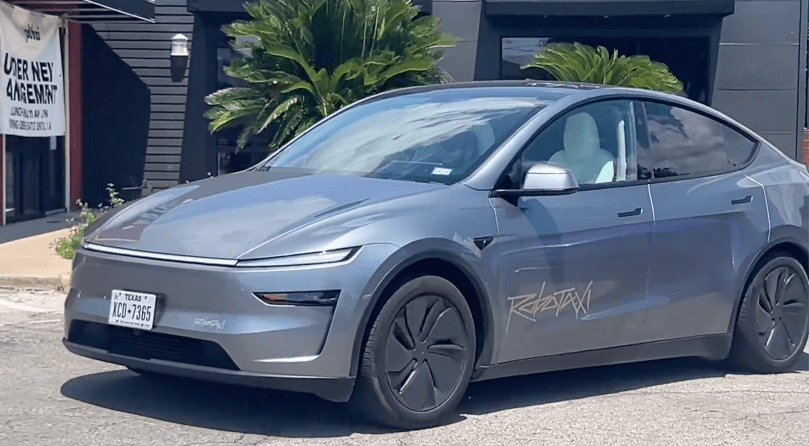
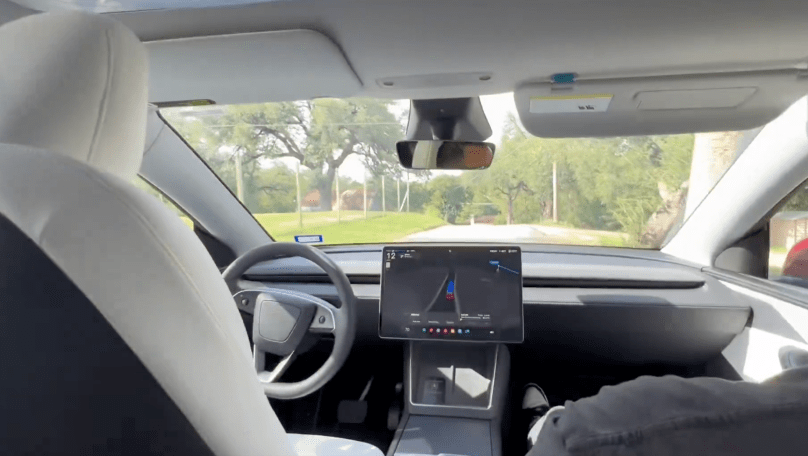
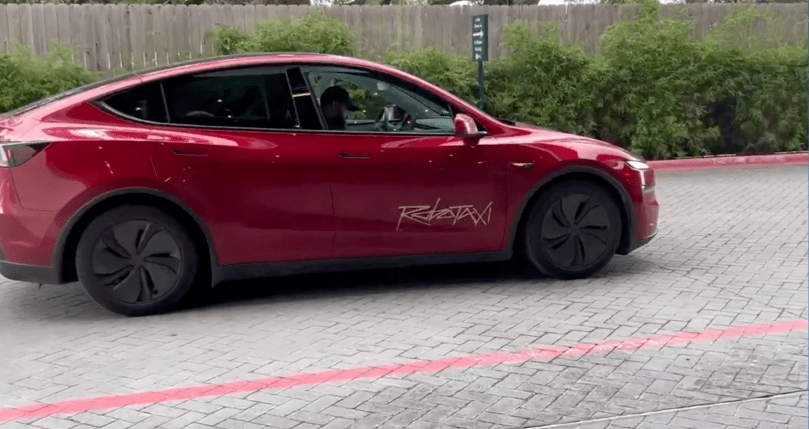
Elon proposed Robotaxi for the Kindom of Saudi Arabia. “You can think of future cars as being robots on four wheels. I think it would be very exciting to have autonomous vehicles here in the Kingdom, if you are amenable,” he said.

Elon: I think it would be very exciting to have autonomous vehicles here in the Kingdom, if you are amenable. Image courtesy of Tesla, Inc.

The Boring Company: 3D Urban Solutions

Elon’s sees a future without brain numbing traffic.

“I have something that may be worth considering, it is tunnels. I have this company called The Boring Company, which sounds kinda boring, but it literally bores tunnels and actually in order to solve traffic, you really need to go 3D with roads and by using tunnels and you essentially create like a wormhole, like a warp tunnel from one part of a city to another and alleviate traffic and we’re actually already done this proof of concept in Las Vegas. There are working tunnels in Vegas that you can use where it feels like teleporting from one part of Vegas to another. My joke is like, tunnels are under-appreciated,” he said.

Cybertruck in Vegas Loop. Image Courtesy of the Boring Company

Starlink and AI Risk Mitigation

Elon graciously thanked the Kingdom of Saudi Arabia for their support for Starlink and addressed risks of AI. “I’d also like to thank the Kingdom for approving Starlink for maritime and aviation use. Thank you,” he said, highlighting the expansion of satellite-based connectivity for remote applications. On AI risks, Elon noted:

“There obviously are some risks, which illustrate that if you don’t do this right, you could have like a James Cameron sort of movie, Terminator. We don’t want that one, but having sort of a Star Trek future would be great. We’re out there exploring stars, discovering the nature of universe & prosperity and hopefully happiness that we can’t quite imagine yet. So, I am very excited about the future.”

In 2025, Starlink Maritime offers high-speed, low-latency internet access for boats and ships globally, with a shift towards tiered data plans instead of unlimited options, and specialized hardware designed for the marine environment.

My thoughts

My first thought was that Elon’s talk was too short. The brief time he had also gives us a quick look into where he’s at now. He did not discuss DOGE during his talk, but focused on his companies, the heart of the abundant future we all look forward to. In my closing comments on this article, I urge you (again) to support people having kids, and you, if you can. Underpopulation continues to be a threat to humanity, with no real fix in sight, so consider being a parent even against all odds. I have five kids and am neither “wealthy” nor poor. I’m just a regular person, like you probably are. My kids are happy, glad to enjoy life, and a blessing to everyone they meet. Despite people telling me not to have kids, or even a doctor telling me to terminate one of the pregnancies because I was “too old” to have a child at age 46, I had kids anyway. No regrets, only thanks. Bless you. Live your life to the fullest and never give up!

CARSON CITY, NEVADA - SEPTEMBER 4: Elon Musk, CEO of Tesla Motors, addresses an enthusiastic crowd at the Nevada State Capitol on September 4, 2014. Alongside Governor Sandoval, Musk revealed plans for the Tesla Gigafactory, a groundbreaking battery factory in Nevada poised to power electric vehicles and generate 6,500 jobs. (Photo by Max Whittaker/Getty Images)

Tesla Time Capsule Revisiting Elon Musk’s Visionary Talks

Gigafactory Nevada: Elon Musk’s 2014 Triumph!

Welcome to Tesla Time Capsule: Revisiting Musk’s Visionary Talks, where we pause for a moment to remember the pivotal moments that shaped Tesla through the lens of Elon Musk’s great talks. Our journey begins in September 2014, when Elon stood outside Nevada’s state capitol in Carson City to announce the Tesla Gigafactory—a daring move that would redefine electric vehicles. With a standing ovation echoing behind him, Elon unveiled a vision for a massive, sustainable battery factory to power affordable EVs. Tesla’s mission to transform the world was palpable. This wasn’t just about building a factory; it was about betting on a future where clean energy wins. In this article, we’ll look at the context, break down Elon’s speech, and explore why the Gigafactory became a cornerstone of Tesla’s rise.

Context: Why Nevada, Why 2014?

In 2014, Tesla was no longer a scrappy startup but a strong player with the Model S gaining traction. Yet, to deliver a mass-market electric vehicle—like the upcoming Model 3—Tesla needed batteries, and lots of them. Lithium-ion battery production was dominated by Asia, and costs were a barrier to affordability. Enter the Nevada Gigafactory: a audacious plan to build the world’s largest battery plant, , and control Tesla’s destiny.

Nevada wasn’t the only contender. At the time, states like Texas, New Mexico. and Arizona offered hefty incentives, but Nevada’s agility, business-friendly environment, and Governor Brian Sandoval’s support tipped the scales. On September 4, 2014, Musk took the stage to explain why Nevada was the perfect home for this game-changing project, captivating a crowd eager for economic and environmental progress.

Elon’s Vision: A “Get-Things-Done” State

Gratitude and Nevada’s Edge Elon opened with heartfelt thanks, setting a collaborative tone:

“Thank you for coming. I’d like to start by thanking Governor Sandoval and the Nevada Legislature for their support. I think people should know that this was not about the biggest incentive package; it wasn’t just about the incentives.”

Elon explained what made Nevada stand out:

“What the people of Nevada have created is a state where you can be very agile, where you can do things quickly and get things done. It is a real ‘get-things-done’ state. That was a fundamental and important part of the decision.”

This wasn’t just flattery. Musk emphasized Nevada’s ability to move fast—crucial for a factory that had to be ready to produce battery packs by the Model 3’s launch. His words resonated with the crowd, framing Nevada as a partner in Tesla’s mission.

The Gigafactory’s Purpose: Powering Tesla’s Mission

A Factory for the Future Elon didn’t mince words about the high stakes:

“This factory is very important to the future of Tesla because, without it, we can’t produce the mass-market car. In order to produce a high-volume, affordable, compelling electric car, which has been the mission of Tesla from the beginning, the Gigafactory is vital.”

This was Tesla’s moonshot: a factory to make EVs accessible to millions, not just the elite. Elon underscored timing and efficiency:

“We had to ask where we would have high confidence that this factory would be ready on time, so that when we are ready to produce the vehicle, the factory is ready to produce the battery packs. That was truly the most important thing.”

By tying the Gigafactory to Tesla’s core mission, Elon made it clear: this wasn’t just a factory—it was the key to a sustainable future.

The Scale: Why “Gigafactory”?

Bigger Than the Rest Elon’s art deco flair for the dramatic shone when he explained the name:

“Perhaps it’s worth highlighting the sheer scale of the Gigafactory and why we even call it the Gigafactory. It will be the biggest lithium-ion battery factory in the world, surpassing the combined production capability of all lithium-ion factories in China, Korea, Japan, and elsewhere.”

This wasn’t hyperbole. The Gigafactory aimed to produce more batteries than the entire global output of 2013, a staggering ambition that left the crowd buzzing. Musk’s vision wasn’t just about meeting demand—it was about rewriting the rules of battery production.

CARSON CITY, NEVADA - SEPTEMBER 4: Elon Musk, CEO of Tesla Motors, addresses an enthusiastic crowd at the Nevada State Capitol on September 4, 2014. Alongside Governor Sandoval, Musk revealed plans for the Tesla Gigafactory, a groundbreaking battery factory in Nevada poised to power electric vehicles and generate 6,500 jobs. (Photo by Max Whittaker/Getty Images)
CARSON CITY, NEVADA – SEPTEMBER 4: Elon Musk, CEO of Tesla Motors, addresses an enthusiastic crowd at the Nevada State Capitol on September 4, 2014. Alongside Governor Sandoval, Musk revealed plans for the Tesla Gigafactory, a groundbreaking battery factory in Nevada poised to power electric vehicles and generate 6,500 jobs. (Photo by Max Whittaker/Getty Images)

A Factory with Flair: Design and Sustainability

Art Deco Diamond in the Desert Elon revealed a surprising detail: the Gigafactory would be as beautiful as it was functional:

“We are taking care to ensure that it looks good and fits in with its surroundings. The factory will be shaped like a diamond. To fit better into the environment, we shaped it like a diamond, and it is aligned to true north so that we can map out where the equipment will be by GPS.”

The diamond shape wasn’t just aesthetic—it minimized environmental disruption. Elon’s nod to “romantic” practicality charmed the audience:

“I think it sounds kind of romantic to say it’s shaped like a diamond and aligned to true north, but there are practical reasons for it as well.”

CARSON CITY, NEVADA – SEPTEMBER 4: Elon Musk, CEO of Tesla Motors, addresses an enthusiastic crowd at the Nevada State Capitol on September 4, 2014. Alongside Governor Sandoval, Musk revealed plans for the Tesla Gigafactory, a groundbreaking battery factory in Nevada poised to power electric vehicles and generate 6,500 jobs. (Photo by Max Whittaker/Getty Images)

Self-Sustaining Power

Sustainability was non-negotiable:

“This factory will produce its own energy through a combination of geothermal, solar, and wind power. It will generate all the energy it needs, making it a self-contained factory.”

This commitment to zero-carbon energy underscored Tesla’s ethos, earning cheers from an environmentally conscious crowd.

An Invitation to Witness History

Open to the Public Elon closed with a promise:

“We’re going to ensure that people can visit it, look at it, and check it out because it will be worth seeing.”

This wasn’t just a factory—it was a symbol of progress, open for the world to see. The crowd’s standing ovation reflected their excitement and he kept his word, with close friend John Stringer visiting the factory just a week ago!

Postscript: The Gigafactory’s Lasting Impact

The 2014 Gigafactory announcement was more than a speech—it was a turning point. By 2025, Gigafactory Nevada has become a powerhouse, producing batteries for millions of Tesla vehicles and energy storage systems like Powerwall. It sparked economic growth in Nevada, creating thousands of jobs and proving Musk’s bet was right. This talk showcased Elon at his best: visionary, practical and brief, and unrelentingly ambitious. As we look back, it’s clear the Gigafactory wasn’t just about batteries—it was about building a future where clean energy is the norm. What part of your life has Tesla made better? Feel free to share your thoughts with others on X, I often discuss these historical pieces with my kids/family over dinner, etc. I’ll be writing more Tesla Time Capsule stories in the future.

More from Tesla Time Capsule

Explore other moments in Tesla’s history through Elon Musk’s visionary talks:

  • The Gigafactory Gamble: Elon Musk’s 2014 Nevada Triumph (You are here)
  • Coming Soon: Tesla’s Next Milestone (Stay tuned for my next historical Elon talk about Tesla!)