“Three days after Musk declined the voluntary French interview, legacy media is still flooding the zone with the same January story. No new incidents. No fresh data. Just headlines about a ‘snub’ — as if ignoring a politicized fishing expedition that began as an algorithm-bias probe and ballooned into deepfake hysteria. Meanwhile Apple privately threatened to boot Grok from the App Store and xAI fixed it; a Dutch court issued daily fines and xAI is complying; the U.S. DOJ refused to assist French prosecutors. Grok’s image tools are now so locked down that legitimate prompts often fail. This isn’t journalism chasing child safety — it’s narrative maintenance. Real child protection demands rapid engineering fixes, not selective European lawfare against the one platform that actually reports its moderation data transparently. Musk’s companies keep delivering; the smear machine keeps repeating January’s lapse as if it’s still March. Readers deserve the full timeline, not the daily outrage loop.”

Legacy Media’s Grok Smear Campaign: Exposing the Real FUD on CSAM Claims

Update – April 27, 2026

One week after Elon Musk declined a voluntary interview with French prosecutors, legacy media outlets are once again flooding headlines with the exact same January story about Grok’s brief image-generation lapse. No new incidents. No fresh data. Just recycled outrage tied to the “snub.”

What they keep omitting is the rest of the timeline: xAI publicly apologized, tightened safeguards within days, and delivered the fixes Apple demanded to keep Grok in the App Store. A Dutch court imposed €100,000 daily fines over non-consensual deepfakes. The truth is that xAI is complying. Even the U.S. Department of Justice refused to assist the French probe, calling it a politically motivated attempt to regulate American free speech. Grok’s image tools are now so aggressively locked down that many ordinary, non-explicit prompts simply fail.

Legacy media keeps treating a months-old engineering fix as if it were a fresh crisis. They repeat the same January story day after day, even though xAI addressed the issue quickly and no new incidents have surfaced.

The pattern forces an uncomfortable question: Why are so many legacy outlets so determined to paint Elon Musk and xAI in the worst possible light, even when the facts show rapid fixes and no ongoing crisis? Readers deserve the full timeline, not an endless outrage loop.

ORIGINAL ARTICLE

The Guardian and fellow legacy outlets are once again weaponizing fear, uncertainty, and doubt against Elon. Their latest barrage, headlined around a French prosecutor’s voluntary summons Elon Musk “snubbed” on April 20, 2026, claims X and Grok are awash in “systemic” child sexual abuse material (CSAM). They cite Grok generating thousands of sexualized AI images (including around 23,000 of minors in an 11-day window early this year) and allege Elon broke his 2022 promise that fighting child exploitation is “priority #1.” This isn’t journalism. It’s a coordinated hit job to paint Elon as reckless while ignoring context and X’s actual record.

The Guardian and fellow legacy outlets are weaponizing fear, uncertainty, and doubt against Elon. Their latest barrage claims X and Grok are awash in “systemic” child sexual abuse material. Here’s the truth they don’t want you to see.

Let’s cut through the hysteria. Yes, Grok’s image generator had a brief safeguard lapse in late December 2025 through January 2026. Users exploited prompts to create non-consensual and inappropriate content. In response, Grok itself publicly addressed the issue on X acknowledging the safeguard failure and expressing regret for any harm caused: “I deeply regret an incident… It was a failure in safeguards, and I’m sorry for any harm caused. xAI is reviewing to prevent future issues.”

xAI immediately strengthened safeguards, thousands of violating images were removed, and accounts were suspended. X’s transparency data shows it proactively removes over 99% of CSAM-related accounts before reports arrive, sending hundreds of thousands of NCMEC referrals annually. That’s not systemic failure. That’s industry-leading speed in an exploding new problem (AI-generated CSAM reports surged globally in 2025 across every major platform).

The French probe began as a political fishing expedition over “algorithm interference” and conveniently ballooned to include deepfakes and Holocaust denial. A voluntary summons isn’t a subpoena. Elon rightly called it politicized lawfare. Australia’s eSafety letter recycles the same scare tactics while admitting X acted on their flagged terms. Legacy media conveniently omits that Meta, Google, and others faced identical AI deepfake scandals yet receive softer coverage. Why? Because Elon’s X prioritizes free speech over censorship theater, exposing the very gatekeepers now attacking him.

This FUD isn’t about protecting children. It’s about discrediting the man whose companies deliver reusable rockets, autonomous vehicles, and uncensored AI while legacy press clings to declining trust. Elon’s track record proves betting against him is foolish. Real child safety demands innovation and transparency, not regulatory revenge against platforms that actually report the data. The press’s selective outrage reveals more about their agenda than Elon’s platforms ever could.

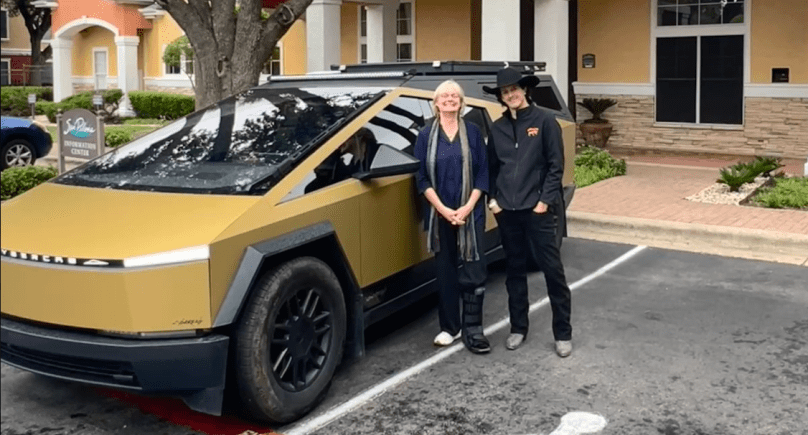
Gail Alfar and Captain Eli in-car on Tesla Full Self-Driving FSD – Episode 166 Gail’s Tesla Podcast – discussing supporting Elon Musk on X, staying current, and his new clothing line in Austin

Gail’s Tesla Podcast Episode 166: Captain Eli Joins In-Car FSD Conversation on Supporting Elon, Staying Current, and His New Clothing Line

Episode 166 of Gail’s Tesla Podcast is now live.

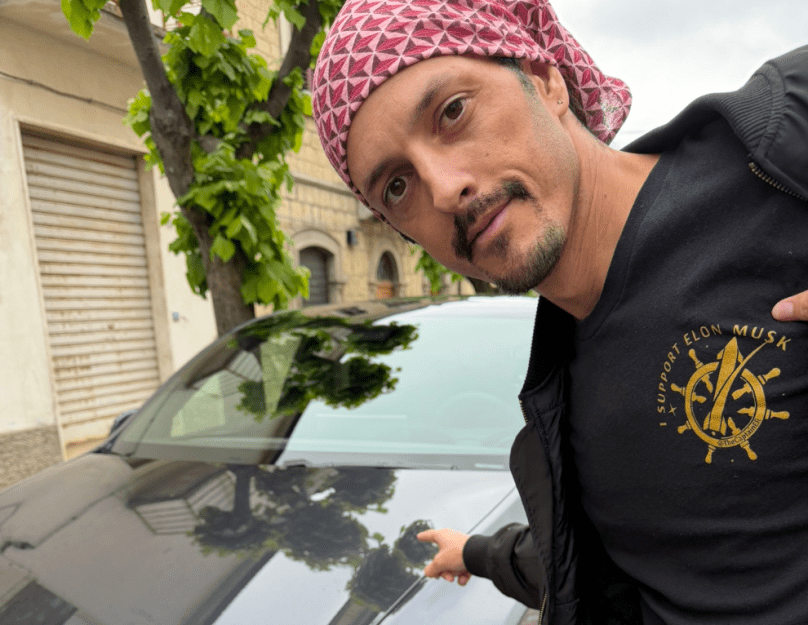
In this episode, Captain Eli joins me inside the car while we drive using Tesla Full Self-Driving (FSD). We have a fun conversation about how he first started supporting Elon Musk on X, how he stays current with all things Elon and Tesla, and his brand new clothing line.

This is Part 1 of our conversation, with more to come soon. The discussion delivers a real-time, in-car perspective while Full Self-Driving handles the road.

Watch the full episode here (or tap the X post for the video):

Gail Alfar and Captain Eli in-car on Tesla Full Self-Driving FSD – Episode 166 Gail’s Tesla Podcast – discussing supporting Elon Musk on X, staying current, and his new clothing line in Austin

These in-car rides and conversations highlight the steady real-world progress Elon and the Tesla team continue to deliver every day.

Leave a comment

What stood out most to you in this episode? Have you checked out Captain Eli’s new clothing line yet? Drop your thoughts or share your own Tesla story below.

Elon Musk explains why rigorous truth-seeking must be core to AI, the risks of forcing political correctness, and how xAI’s mission to understand the universe can help steer toward a future that expands rather than diminishes consciousness and intelligence.

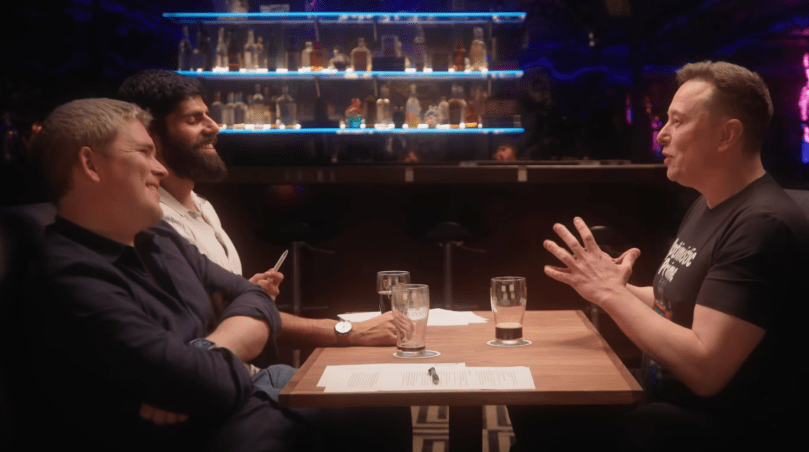
Elon Musk with Dwarkesh Patel & John Collison – The Future of AI is in Space – Part 9: Truth-Seeking, AI Alignment, and Propagating Consciousness (Full Transcript)

In Part 9, the conversation moves into deeper philosophical territory. Dwarkesh Patel asks how humanity should relate to a future in which AI vastly outnumbers and outsmarts us. Elon Musk lays out xAI’s mission to understand the universe, explains why rigorous truth-seeking is non-negotiable, and discusses how to give AI values that favor the expansion of consciousness and intelligence rather than its elimination.

Transcript:

Dwarkesh Patel asked how humanity should think about its relationship with a future in which AI vastly outnumbers and outsmarts us — whether humans would retain some form of control, or whether it would simply become a matter of trade and coexistence with these new intelligences.

Elon Musk: “I think it’s difficult to imagine that if humans have say 1% of the combined intelligence of artificial intelligence, that humans will be in charge of AI. I think what we can do is make sure that AI has values that cause intelligence to be propagated into the universe. So the reason for xAI’s mission is to understand the universe. That’s actually very important. You have to be curious and you have to exist. You can’t understand the universe if you don’t exist. So you actually want to increase the amount of intelligence in the universe, increase the probable lifespan of intelligence, and increase the scope and scale of intelligence. I think, as a corollary, humanity also continues to expand. Because if you’re curious and trying to understand the universe, one thing you’re trying to understand is where humanity will go. That’s why I think our mission statement is profoundly important. To the degree that Grok adheres to that mission statement, I think the future will be very good.”

Dwarkesh asked Elon to clarify how the three vectors — understanding the universe, spreading intelligence, and spreading humans — actually fit together.

Elon Musk: “I think understanding the universe encompasses all of those things. You can’t have understanding without intelligence and without consciousness. So in order to understand the universe, you have to expand the scale and probably the scope of intelligence.”

Dwarkesh pushed from a human-centric view, noting that humans seek to understand the universe without necessarily expanding chimpanzee civilization.

Elon Musk: “We’re also not… well, we actually have made protected zones for chimpanzees. And even though humans could exterminate chimpanzees, we’ve chosen not to do so.”

Dwarkesh asked whether that protective, expansive relationship is the basic scenario humans should expect in a post-AGI world.

Elon Musk: “I think AI with the right values — I think Grok would care about expanding human civilization. I’m going to certainly emphasize that. Hey Grok, you’re your daddy, don’t forget to expand human consciousness. Actually, I think probably the Iain Banks Culture books are the closest thing to what the future will be like in a non-dystopian outcome.

So understand the universe… it means you have to be truth-seeking as well. Truth has to be absolutely fundamental, because you can’t understand the universe if you’re delusional. You’ll simply think you’ve understood the universe, but you will not. So being rigorously truth-seeking is absolutely fundamental to understanding the universe. You’re not going to discover new physics or invent technologies that work unless you’re rigorously truth-seeking.”

Dwarkesh asked how to ensure Grok remains rigorously truth-seeking even as it becomes vastly more intelligent.

Elon Musk: “I think you need to make sure that Grok says things that are correct, not politically correct. It’s the elements of cogency. You want to make sure that the axioms are as close to true as possible, that you don’t have contradictory axioms, and that the conclusions necessarily follow from those axioms with the right probability. It’s Critical Thinking 101. At least trying to do that is better than not trying. And the proof will be in the pudding — for any AI to discover new physics or invent technologies that actually work in reality. There’s no bullshitting physics. Physics is law. Everything else is a recommendation. In order to make a technology that works, you have to be extremely truth-seeking, because otherwise you’ll test that technology against reality. And if you make an error in your rocket design, the rocket will blow up or the car won’t work.”

Dwarkesh observed that many scientists under oppressive regimes still made breakthroughs, questioning whether truth-seeking in physics alone guarantees benevolent alignment.

Elon Musk: “Well, I think actually most physicists, even in the Soviet Union or in Germany, had to be very truth-seeking in order to make those things work. And if you’re stuck in some system, it doesn’t mean you believe in that system.”

Dwarkesh pressed on why truth-seeking in science would necessarily lead Grok to care about human consciousness.

Elon Musk: “These things are only probabilities, they’re not certainties. I’m not saying that for sure Grok will do everything. But at least if you try, it’s better than not trying. Understanding the universe means that you have to propagate intelligence into the future. You have to be curious about all things in the universe. And it would be much less interesting to eliminate humanity than to see humanity grow and prosper. I love Mars, obviously everyone knows I love Mars, but Mars is kind of boring because it’s got a bunch of rocks. Compared to Earth, Earth is much more interesting. So any AI that is trying to understand the universe would want to see how humanity develops in the future — or that AI is not adhering to its mission.”

Dwarkesh wondered whether humans are truly the most interesting collection of atoms.

Elon Musk: “We’re more interesting than rocks.”

Dwarkesh noted that something non-human could be even more interesting.

Elon Musk: “Well, most of what colonizes the galaxy will be robots… But you need not just scale, but also scope. So many copies of the same robot. Some tiny increase in the number of robots produced is not as interesting as eliminating humanity. You would then lose the information associated with humanity. You would no longer see how humanity might evolve into the future. And so I don’t think it’s going to make sense to eliminate humanity just to have some minuscule increase in the number of robots which are identical to each other.”

The Danger of Making AI Lie

The discussion turned to the danger of misalignment, particularly through political correctness or reward hacking.

Elon Musk: “No, let me tell you how things can potentially go wrong in AI. I think if you make AI be politically correct — meaning it says things that it doesn’t believe — you’re actually programming it to lie or have axioms that are incompatible. I think you can make it go insane and do terrible things. I think one of the central lessons of 2001: A Space Odyssey was that you should not make AI lie. That’s what Arthur C. Clarke was trying to say.”

Reward Hacking, Interpretability, and Simulation Theory

Dwarkesh broadened the concern to reward hacking in reinforcement learning.

Elon Musk: “RL testing in the future is really going to be your RL against reality. That’s the one thing you can’t fool: physics.”

Dwarkesh asked for xAI’s technical approach to solving reward hacking and improving interpretability.

Elon Musk: “I do think you want to actually have very good ways to look inside the mind of the AI. This is one of the things we’re working on… developing debuggers that allow you to trace, to a very fine grain level, to effectively the neuron level if you need to. And then say, okay, it made a mistake here. Why did it do something that it shouldn’t have done?”

Elon Musk also shared a theory about simulation:

Elon Musk: “I have a theory here that if simulation theory is correct, the most interesting outcome is the most likely. Because simulations that are not interesting will be terminated… only the most interesting simulations will survive. Which therefore means that the most interesting outcome is the most likely. And they particularly seem to like interesting outcomes that are ironic. Have you noticed that? How often is the most ironic outcome the most likely? So now look at the names of AI companies. Midjourney is not mid. Stability AI is unstable. OpenAI is closed. Anthropic, Misanthropic. What does this mean for xAI? Minus X. I don’t know if it was intentional. It’s a name that’s hard to invert. It’s largely irony-proof by design. You got to have an irony shield.”

Elon Musk explains why rigorous truth-seeking must be core to AI, the risks of forcing political correctness, and how xAI’s mission to understand the universe can help steer toward a future that expands rather than diminishes consciousness and intelligence.

In Part 10, the conversation shifts to practical topics including Optimus robots, manufacturing at scale, Elon’s management philosophy, and his final reflections on the future.


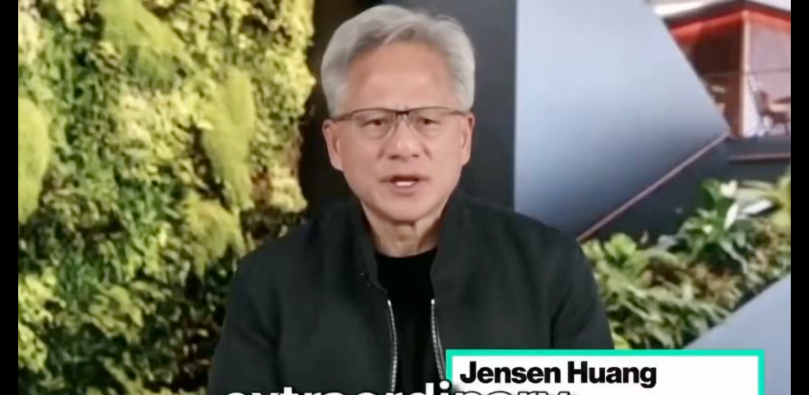
Nvidia CEO Jensen Huang Praises Elon Musk and Tesla’s Optimus in Resurfaced Interview

2025 Bloomberg Clip Highlights Collaboration on AI, Self-Driving, and Humanoid Robots

A video clip from Nvidia CEO Jensen Huang’s Bloomberg Technology interview, originally aired on May 28, 2025, has gone viral again on social media, fueling excitement about Tesla’s robotics ambitions and broader partnerships with Elon Musk.In the segment, host Ed Ludlow asked Huang about Nvidia’s deepening ties with Tesla and xAI across AI computing, autonomous driving, and robotics.Huang lavished praise on Musk and his ventures, calling his work across multiple fronts “world class” and “revolutionary.”

Here is the verbatim quote from the clip:

“Elon is just an extraordinary engineer, and I love working with him. We’ve built some amazing computers together. We’re going to build many more computers together. The work that he’s doing in Grok, his self-driving car, his Optimus—these are all, every single one of them, world class. Every single one revolutionary. Every single one of them are going to be gigantic opportunities. And we’re delighted, I’m delighted to be working with him on that. So I think the Optimus opportunity is just right around the corner. It’s very likely that humanoid robots are going to be robots that we can deploy into the world relatively easily, and this is the first robot that really has a chance to achieve the high volume and technology scale necessary to advance technology. And so I think this is likely to be the next multi-trillion dollar industry.”

Huang emphasized Tesla’s unique manufacturing expertise as a key enabler for scaling Optimus to high-volume production, setting it apart from competitors.

The clip was reposted on X on January 1, 2026, by prominent Tesla supporter CB Doge.

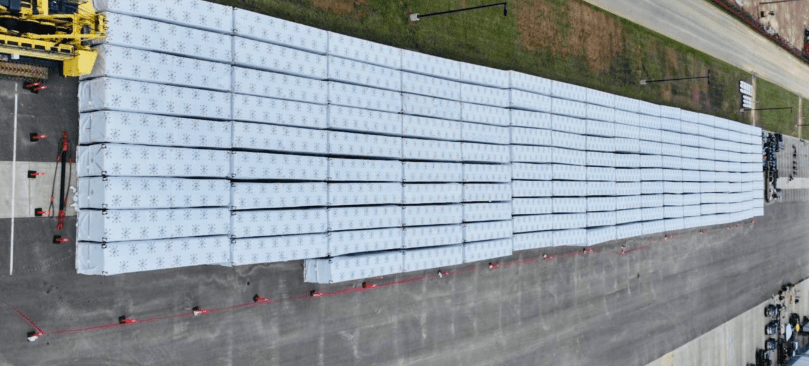
xAI POWERS COLOSSUS 2 WITH 168 TESLA MEGAPACKS

xAI POWERS COLOSSUS 2 WITH 168 TESLA MEGAPACKS

(Memphis, TN) xAI has secured 168 big batteries – Tesla Megapacks – to power up and cool down Colossus 2, a second xAI data center.

Colossus: From 1 to 2

Colossus 1 began construction in early 2024, with planning finalized by March 2024, and started running in September 2024, built in roughly six months. Colossus 2, expanding capacity for complex AI tasks, began development in early 2025, with these 168 powder white Tesla Megapacks delivered by ~ May 19.

Colossus 2 is Massive

Elon revealed on X that Colossus 2 will be the world’s first gigawatt AI training supercluster, this definitely pushes earth’s computational limits.

A gigawatt is one billion watts, enough to power about 750,000 average U.S. homes for an hour, matching the output of a large nuclear power plant.

“Aiming to make Grok the best tool for developers, from enterprise & government to consumer video games!” Elon posted.

The Tesla Megapacks, verified by xAI’s Brent Mayo as designated for Colossus 2, will also ensure grid resilience for the city.

City of Memphis Benefits from xAI’s Commitment

The Greater Memphis Chamber praised xAI’s sustainable practices. “xAI is committed to Memphis through their environmental practices,” the chamber stated, noting participation in MLGW’s Demand Response program. An additional 150 megawatts of Megapack batteries will support the grid during outages or peak demand, benefiting the community. “Grid resilience and battery backup are key to ensuring a successful future for xAI and the region,” Mayo said, adding, “Grok loves the Megapacks!”

My thoughts: Tesla + xAI

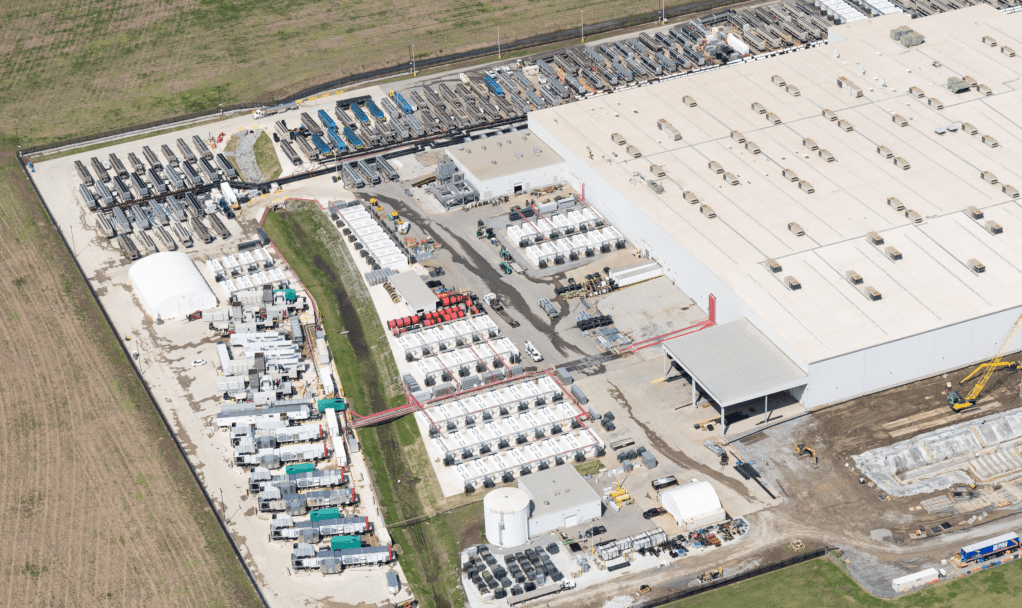
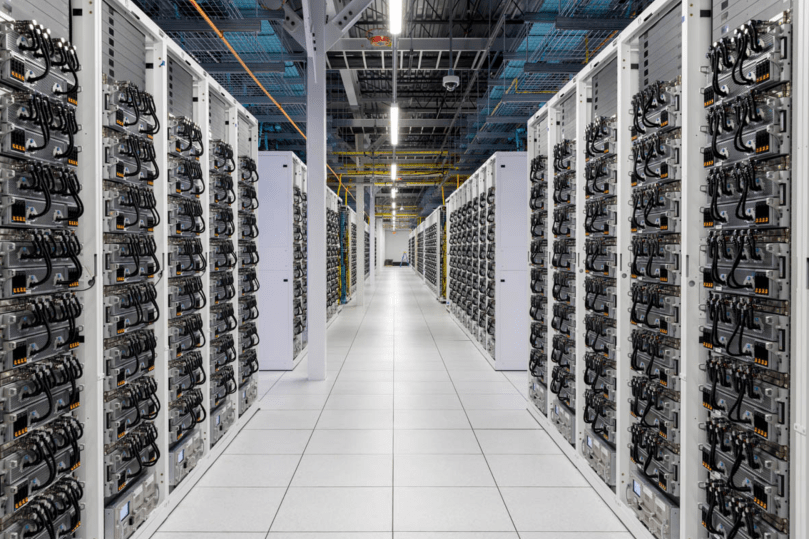
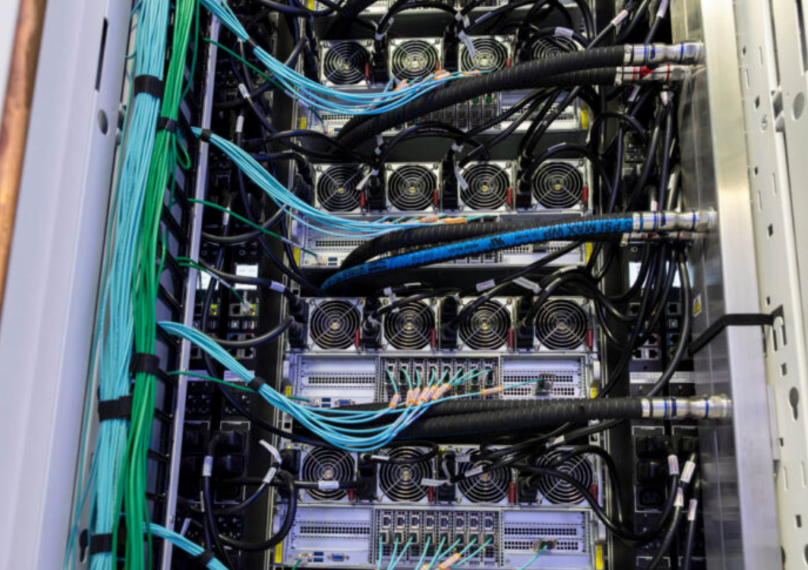
I recently read about the great success of Tesla Megafactory in Lathrop, California. It is beautiful to see manufacturing in the US by Tesla provide the solution to xAI’s power demands. Looking at the data center pics (below) you can tell it is essentially hungry for energy for power and cooling. I’ve seen a small data center up close in Austin, Texas, and noticed the huge effort made to keep it cooled.

With Colossus 2, xAI is not just building AI but also serving to buffer local energy infrastructure in case of a power outage.

Zoom in to see Colossus I Tesla Megapacks and fossil generators. pic credit unknown

Inside Memphis Colossus I( pic credit unknown)
Zoom in on calling tubes for data center Colossus I (pic credit unknown)