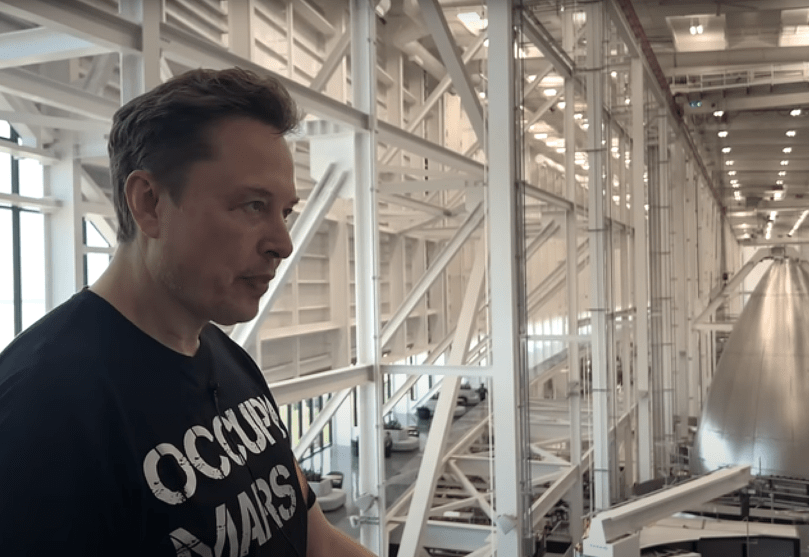
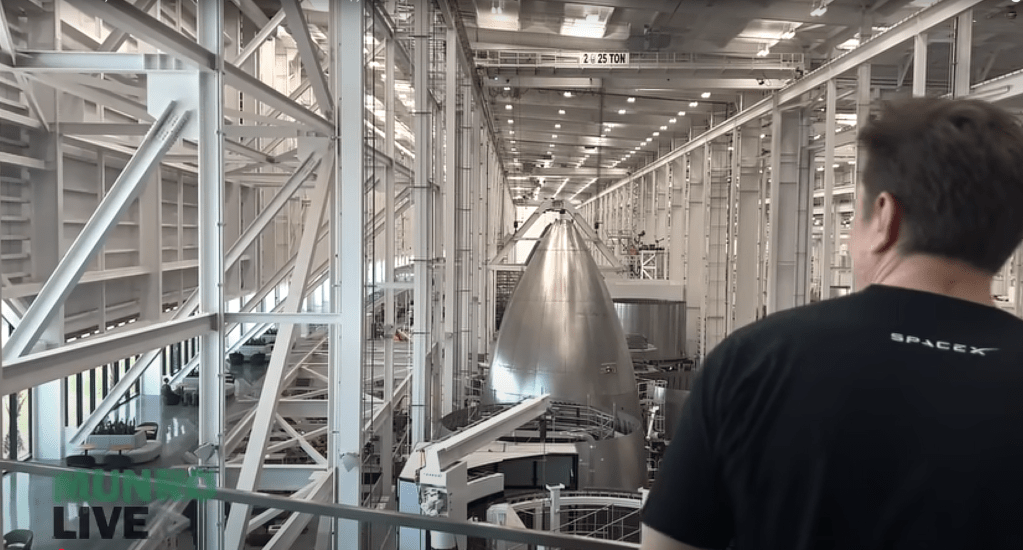
On May 29, 2025, Elon Musk delivered a visionary speech at Starbase, Texas, the newly incorporated city and SpaceX’s hub for revolutionizing space travel. This transcript captures Musk’s electrifying address, detailing Starbase’s evolution from a sandbar to a powerhouse for building the world’s largest rockets. He highlights breakthroughs like rapidly reusable rockets, the Raptor 3 engine, and orbital propellant transfer, all pivotal for a self-sustaining Mars civilization. With vivid descriptions of catching boosters with “giant chopsticks” and plans for a million-ton Mars transfer, Musk inspires a future where anyone can visit Starbase or journey to Mars.

Elon Musk’s Vision for a Multiplanetary Future: Starbase and the Road to Mars, May 2025

On May 29, 2025, Elon Musk delivered his company speech at Starbase, Texas, the newly incorporated city and SpaceX’s hub for space travel to Mars. This transcript, which I have worked hard on to bring you accuracy, captures Elon’s valuable and historical words.

Elon details Starbase’s evolution from a sandbar to a powerhouse for building the world’s largest rockets. Elon highlights breakthroughs like rapidly reusable rockets, Raptor 3 engine, and orbital propellant transfer plans, all critical for a self-sustaining Mars civilization. With vivid descriptions of catching boosters with “giant chopsticks” and plans for a million-ton Mars transfer, our hero Elon inspires a future where anyone can visit Starbase or journey to Mars.

Elon Musk: The gateway to Mars. Here we are at the newly incorporated Starbase, Texas. This is the first new city made in America in, I think, quite a few decades. At least that’s what I’m told. It’s a very cool name, named because it’s where we’re going to develop the technology necessary to take humanity, civilization, and life as we know it to another planet for the first time in the 4.5 billion-year history of Earth.

[Lots of cheering. Elon shows a short video of the history of Starbase. He talks along with the images.]

Elon: We started with basically nothing. Starbase started as a sandbar with nothing.

[The video shows a prototype rocket and two open tents.]

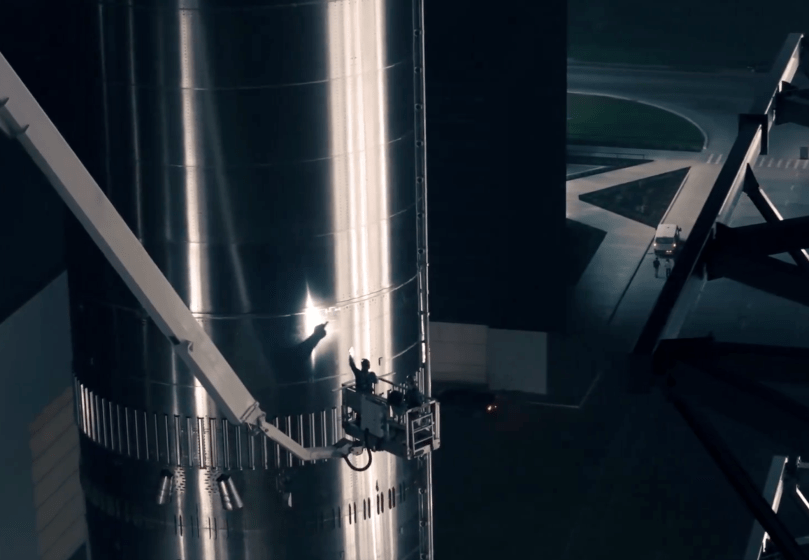
Elon: Even those little things we built. That’s the original Mad Max rocket!

[Looking at the rocket from 2019, six years ago, the camera pans around it. The sun hits the side, revealing a gorgeous, surreal piece of steel.]

Elon: You know, lighting is very important for that Mad Max rocket.

[Elon is smiling, with his hand in a determined fist. He’s not afraid of silence; this is a tribute to that incredible rocket. Many employees in the audience may not have seen it in person; it’s six years old. Some may have been in high school at the time.]

Elon: Not long ago, there was basically nothing here. In about five or six years, thanks to the incredible work of the SpaceX team, we’ve built a small city. We built two gigantic launchpads and a gigantic rocket factory for a gigantic rocket. The cool thing is, anyone watching can come visit because our entire production facility and launch site are on a public highway. Anyone in South Texas can see the rocket up close, see the factory, and anyone interested in the largest flying object on Earth can drive down the public highway and see it! Pretty cool!

[Video progresses to Starbase 2025.]

Elon: We’re now at the point where we can produce a ship roughly every two or three weeks. We don’t always produce a ship every two or three weeks because we’re making design upgrades, but ultimately we’re aiming for the ability to produce 1,000 ships a year, so three ships a day.

[On the video, birds chirp, water glistens, and a hovercraft pulls gently away from Starbase Beach.]

Elon (smiling): That’s our hovercraft. We’re driving the booster down the road to the launch site. You see the Megabays. The cool thing for those watching is you can literally come here, drive down the road, and see it. This is the first time in history that’s been possible. That highway on the left is public. You can just come and see it, which I recommend. It’s very inspiring.

[Elon points to a render of a massive building.]

Elon: There’s a person next to it that looks like a tiny ant. That’s our Giga Bay! We’re expanding integration to produce 1,000 per year. The Giga Bay hasn’t been built yet, but we’re building it. It’s a truly enormous structure, one of the biggest in the world by some measures, designed for 1,000 Starships per year. We’re also building a Giga Bay in Florida, so we’ll have two facilities—one in Texas and one in Florida. It’s difficult to gauge the size of these buildings because you need a human for scale. When you see how tiny a human is next to it, you realize how enormous it is.

BUILD COMPARISON

Elon: When we look at our build comparison in vehicles per year, Boeing and Airbus make airplanes, but Starship will probably make as many Starships for Mars as Boeing and Airbus make commercial airplanes. This is an enormous scale, and each Starship is bigger than a 747 or an A380. In terms of Starlink satellites, version three satellites, we’ll make on the order of 5,000 per year, and at some point, closer to 10,000 per year. Those Starlink V3 satellites are roughly the size of a 737 (unfurled). They compare to the B-24 bomber in World War II. The scale of production is still small compared to Tesla.

[A large chart appears, showing Tesla’s massively scaled production: currently 1,773,443 cars per year.]

Elon: Tesla will probably double or triple that volume in the future. It puts things into perspective that it’s possible to build a vast number of interplanetary Starships. Even when comparing tonnage, Tesla and other car companies produce far more complex manufactured tonnage than SpaceX, showing it’s achievable. These numbers, while insanely high by traditional space standards, are achievable because they’ve been achieved in other industries.

Progress is measured by the timeline to establishing a self-sustaining civilization on Mars.

Elon: With each launch, especially early on, we learn more about what’s needed to make life multiplanetary and improve Starship to take hundreds of thousands, if not millions, to Mars. Ideally, we can take anyone who wants to go and bring all equipment necessary to make Mars self-sustaining, so Mars can grow by itself. Worst-case scenario, we reach the point where Mars can continue to grow even if supply ships from Earth stop for any reason. At that point, we’ve achieved civilization resilience, where Mars could rescue Earth or vice versa. Having two self-sustaining planets is incredibly important for long-term survival. A multi-planet civilization is likely to last ten times longer than a single-planet one because of risks like World War III, meteors, or supervolcanoes. With two planets, we keep going, then move beyond Mars to the asteroid belt, Jupiter’s moons, and other star systems, making science fiction reality. To achieve this, we need rapidly reusable rockets to keep the cost per ton to Mars as low as possible. That’s essential. We need rapidly reliable rockets—it’s like a pirate’s “Rrrr”: rapidly reusable, reliable rockets!

Congrats to the SpaceX team on catching the giant rocket.

Elon: It’s mind-blowing that the SpaceX team has caught the largest flying object ever made multiple times using a novel method of catching it with giant chopsticks!

[SpaceX employees and Elon pause to watch a video showing the booster, with fiery engines, descending through space, adjusting, and being caught with chopsticks.]

Elon: Have you ever seen that before?

[The video is awe-inspiring. Elon congratulates his team, calling it quite an achievement. Everyone cheers; it’s an emotional moment.]

Elon: We catch it this way, which has never been done before, to make the rocket rapidly reusable. If the super heavy booster, 30 feet in diameter, landed with legs on a pad, we’d have to pick it up, stow the legs, and move it back to the launch pad, which is difficult. But catching it with the same tower that places it in the launch mount is the best for rapid reuse. It’s caught by the arms that placed it, then set back in the launch ring immediately. In principle, the super heavy booster can be reflown within an hour of landing. It returns in five or six minutes, gets caught, placed back, refilled with propellant in 30 to 40 minutes, and a ship placed on top. It could refly every hour or two.

The next goal is to catch the ship.

Elon: We haven’t done this yet, but we will.

[A video shows a render of a Starship gently caught by chopsticks.]

Elon: We hope to demonstrate this later this year, maybe in two or three months. The ship would be placed on the booster, refilled, and flown again. The ship takes longer because it orbits Earth a few times until the ground track returns to the launchpad. It’s intended to be reflown multiple times per day.

RAPTOR 3

Elon: This is the new Raptor 3, an awesome engine! Big hand to the Raptor team. Raptor 3 requires no basic heat shield, saving mass and improving reliability. A small fuel leak will leak into the flaming plasma and not matter, unlike a boxed engine where it’s scary. It’ll take a few tries, but it’ll massively increase payload capability, efficiency, and reliability. It’s alien technology. Industry experts thought an incomplete Raptor 3 picture wasn’t firing, but it was at unprecedented efficiency.

[Lots of cheers and applause.]

Elon: That’s one clean engine. We simplified the design, incorporated secondary fluid circuits and electronics into the structure, so everything is contained and protected. It’s a marvel of engineering.

PROPELLANT TRANSFER

Elon: A key technology for Mars is orbital propellant transfer, like aerial refueling for airplanes, but for rockets. It’s never been done but is technically feasible. Two Starships get together; one transfers fuel and oxygen—almost 80% oxygen, just over 20% fuel. A Starship with payload goes to orbit, others refill its propellant, and then it departs for Mars or the Moon. We hope to demonstrate this next year.

PLASMAJET TESTING

Elon: Mars’ atmosphere is ~95% CO2. The heat shield entering Mars encounters more than twice the atomic oxygen compared to Earth. Developing a reusable orbital heat shield is extremely difficult. Even the Shuttle’s required months of refurbishment. Only advanced ceramics, glass, aluminum, or carbon-carbon survive reentry stresses without eroding or cracking. This will be the first reusable orbital heat shield, needing extreme reliability. It’ll take years to hone, but it’s achievable within physics. Mars’ CO2 atmosphere becomes plasma, producing more free oxygen than Earth’s (~20% oxygen), oxidizing the heat shield. We test rigorously in a CO2 atmosphere for both Earth and Mars.

MARS ENTRY HEATSHIELD

Elon: Derived from Starship’s current heat shield, we want the same structure and material for Earth and Mars to test hundreds of times on Earth before Mars, ensuring reliability.

NEXT GEN STARSHIP

[The video shows a taller, majestic Starship.]

Elon: Next-generation Starships have improvements. It’s taller, with a better interstage between ship and booster. Struts allow flame from hot staging—lighting ship engines while booster engines fire—to exit easily, and we bring the interstage back instead of discarding it.

SUPER HEAVY

  • HEIGHT (m) 72.3
  • PROPELLANT CAPACITY (t) 3650
  • LIFTOFF THRUST (tf) 8240

[Excited reaction from SpaceX engineers due to increased propellant capacity and thrust.]

Elon: A little taller, from 69 meters to 72 meters. Propellant capacity may push to 3,700 tons, long-term maybe 4,000 tons. Liftoff thrust will keep rising, ultimately close to 10,000 tons. The booster looks naked because Raptor 3 engines don’t need a heat shield, standing in flaming plasma. It’s lighter and looks amazing.

STARSHIP

  • HEIGHT (m) 52.1
  • PROPELLANT CAPACITY (t) 1550
  • THRUST (tf) 1600

Elon: The ship is longer, more capable, moving to 1,550 tons of propellant, likely 20% more long-term. The heat shield is sleeker, with smooth boundaries, no jagged tiles. It looks sleek. This version has six engines, but a future version will have nine. Starship version three achieves all key elements. New technology takes three major iterations to work well. With Raptor 3 and Starship/Booster version 3, we’ll achieve a rapidly reusable, reliable rocket with orbital refilling—everything needed to make life multiplanetary. We aim to launch version three by year-end.

FUTURE STARSHIP

[An image of three Starships shows progress and future plans.]

Elon: The left is current, the middle is by year-end, and the right is long-term. The future Starship is 142 meters tall (current: 121 meters, next-gen: 124.4 meters). The middle version will be Mars-capable, followed by performance improvements. Like Falcon 9, we’ll make it longer and increase payload. By year-end, it’ll be capable of making life multiplanetary, then we’ll hone efficiency, reduce cost per ton and per person to Mars, and make it so anyone can move to Mars to build a new civilization. It’s the best adventure possible.

[Lots of applause.]

Elon: Ultimately, we’ll have 42 engines, as prophesied by Douglas Adams in The Hitchhiker’s Guide to the Galaxy. The answer to life’s meaning is 42, so the Starship stack will have 42 engines.

[Lots of applause.]

MASS TO ORBIT

Elon: It’s remarkable—200 tons payload to orbit with full reusability, twice the Saturn V Moon rocket’s capability, which was fully expendable. Starship is fully reusable.

MOON BASE ALPHA

Elon: Without reusability, Starship would have ~400 tons to orbit. It’s a big rocket needed for multiplanetary life. Along the way, we could have a Moon base like Moonbase Alpha, a gigantic science station for universe research.

MARS TRANSFER WINDOWS

Elon: You can go to Mars every 26 months. The next opportunity is November–December next year, in ~18 months. We’ll try for it, with a 50-50 chance if we figure out orbital refilling in time. If achieved, we’ll launch the first uncrewed Starship to Mars by year-end.

[Lots of applause.]

Elon: The distance to Mars is ~1,000 times farther than the Moon. You create an elliptical orbit with Earth at one point and Mars at the other, timing the ellipse to intersect Mars. This is shown on Starlink Wi-Fi routers. Starlink funds Mars missions. Thanks to everyone supporting Starlink—you’re helping make humanity a space civilization.

CANDIDATE BASE LOCATIONS

Elon: We’re looking at the Arcadia region, a lead candidate due to ice for water and suitable terrain. It’s my daughter’s name, too (smiling). First Starships will gather critical data.

Elon: First flights will send Optimus robots to explore and prepare for humans. If we launch by year-end, arriving in 2027, it’ll be epic to see Optimus on Mars. Two years later, if landings succeed, we’ll send humans to build infrastructure. We might do two robot landings before humans, just to be safe.

MARS 2028

Elon: Develop power generation, mining, construction, propellant generation, habitats, communications, and more.

[Elon shows an awe-inspiring picture of Optimus bots on a construction beam above Mars.]

COMMUNICATIONS ON MARS

Elon: We’ll use a Starlink version for Mars Internet. Even at light speed, communication takes 3.5–22 minutes due to Mars’ position. High-bandwidth communication is challenging, but Starlink will achieve it.

HUMANS ON MARS

Elon: Subsequent missions will carry more people and thousands of tons of cargo, laying groundwork for a permanent presence. The goal is to make Mars self-sustaining quickly. Launch pads may be farther for safety. Mars needs lots of solar power. Initially, you’ll need Mars suits and glass domes until terraforming.

Elon: We aim to transfer over 1 million tons per Mars window for a serious civilization.

SPACEPORTS

Elon: We’ll need many spaceports. With transfer windows, 1,000–2,000+ ships gather in orbit like Battlestar Galactica, then depart. Mars needs hundreds of landing pads to handle thousands of inbound ships.

Elon: This is an incredible city on another planet, a new world. Martians can rethink civilization—government, rules, everything. It’s up to them. Let’s get it done!

xAI POWERS COLOSSUS 2 WITH 168 TESLA MEGAPACKS

xAI POWERS COLOSSUS 2 WITH 168 TESLA MEGAPACKS

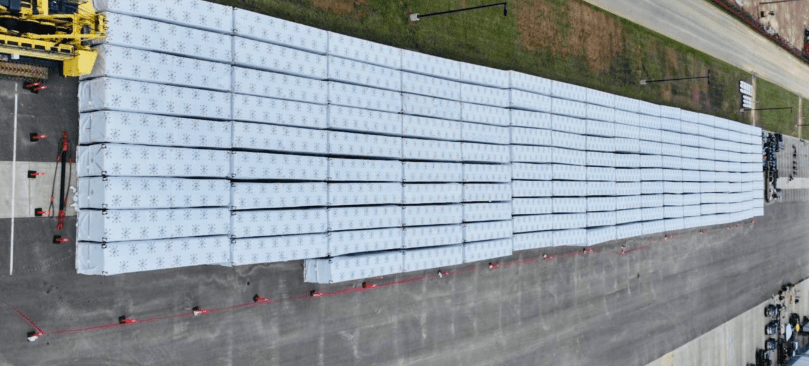
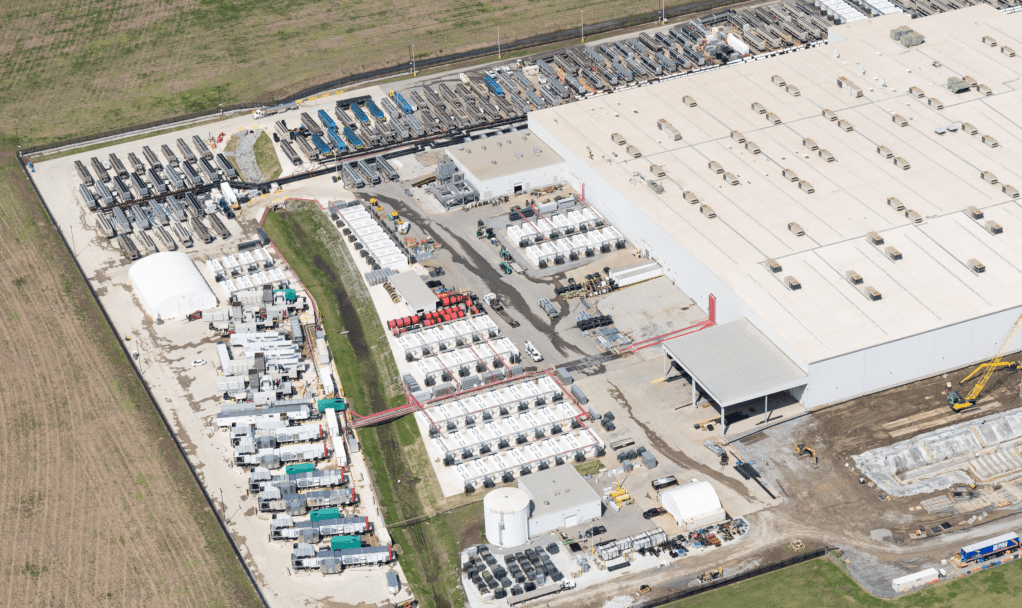
(Memphis, TN) xAI has secured 168 big batteries – Tesla Megapacks – to power up and cool down Colossus 2, a second xAI data center.

Colossus: From 1 to 2

Colossus 1 began construction in early 2024, with planning finalized by March 2024, and started running in September 2024, built in roughly six months. Colossus 2, expanding capacity for complex AI tasks, began development in early 2025, with these 168 powder white Tesla Megapacks delivered by ~ May 19.

Colossus 2 is Massive

Elon revealed on X that Colossus 2 will be the world’s first gigawatt AI training supercluster, this definitely pushes earth’s computational limits.

A gigawatt is one billion watts, enough to power about 750,000 average U.S. homes for an hour, matching the output of a large nuclear power plant.

“Aiming to make Grok the best tool for developers, from enterprise & government to consumer video games!” Elon posted.

The Tesla Megapacks, verified by xAI’s Brent Mayo as designated for Colossus 2, will also ensure grid resilience for the city.

City of Memphis Benefits from xAI’s Commitment

The Greater Memphis Chamber praised xAI’s sustainable practices. “xAI is committed to Memphis through their environmental practices,” the chamber stated, noting participation in MLGW’s Demand Response program. An additional 150 megawatts of Megapack batteries will support the grid during outages or peak demand, benefiting the community. “Grid resilience and battery backup are key to ensuring a successful future for xAI and the region,” Mayo said, adding, “Grok loves the Megapacks!”

My thoughts: Tesla + xAI

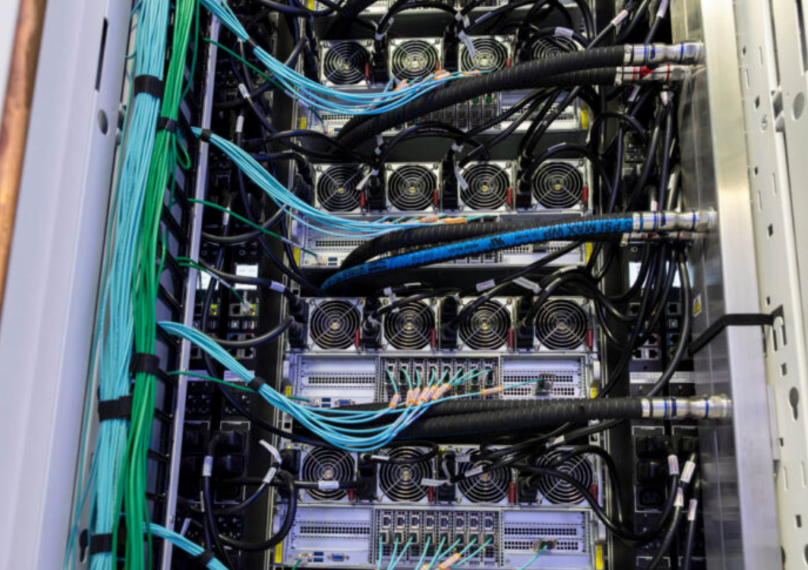
I recently read about the great success of Tesla Megafactory in Lathrop, California. It is beautiful to see manufacturing in the US by Tesla provide the solution to xAI’s power demands. Looking at the data center pics (below) you can tell it is essentially hungry for energy for power and cooling. I’ve seen a small data center up close in Austin, Texas, and noticed the huge effort made to keep it cooled.

With Colossus 2, xAI is not just building AI but also serving to buffer local energy infrastructure in case of a power outage.

Zoom in to see Colossus I Tesla Megapacks and fossil generators. pic credit unknown

Inside Memphis Colossus I( pic credit unknown)
Zoom in on calling tubes for data center Colossus I (pic credit unknown)
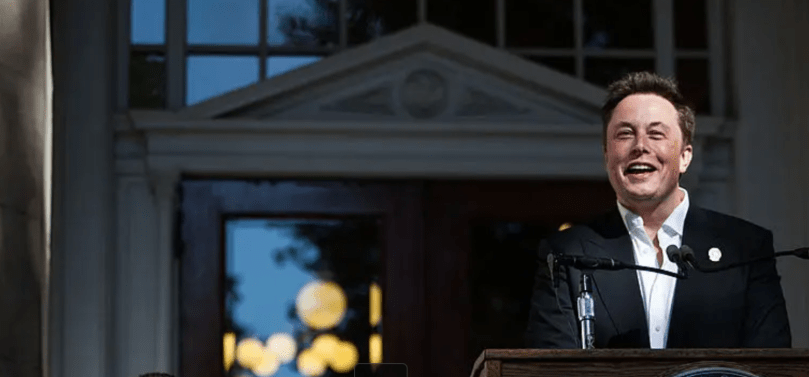
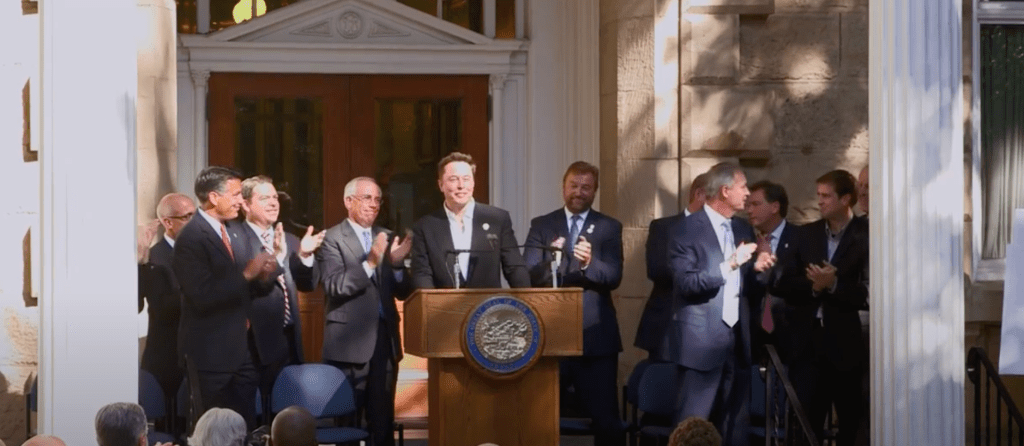
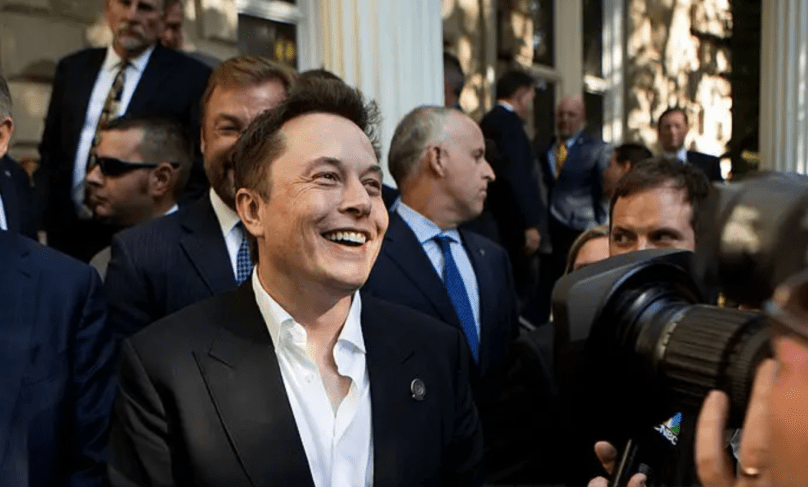
CARSON CITY, NEVADA - SEPTEMBER 4: Elon Musk, CEO of Tesla Motors, addresses an enthusiastic crowd at the Nevada State Capitol on September 4, 2014. Alongside Governor Sandoval, Musk revealed plans for the Tesla Gigafactory, a groundbreaking battery factory in Nevada poised to power electric vehicles and generate 6,500 jobs. (Photo by Max Whittaker/Getty Images)

Tesla Time Capsule Revisiting Elon Musk’s Visionary Talks

Gigafactory Nevada: Elon Musk’s 2014 Triumph!

Welcome to Tesla Time Capsule: Revisiting Musk’s Visionary Talks, where we pause for a moment to remember the pivotal moments that shaped Tesla through the lens of Elon Musk’s great talks. Our journey begins in September 2014, when Elon stood outside Nevada’s state capitol in Carson City to announce the Tesla Gigafactory—a daring move that would redefine electric vehicles. With a standing ovation echoing behind him, Elon unveiled a vision for a massive, sustainable battery factory to power affordable EVs. Tesla’s mission to transform the world was palpable. This wasn’t just about building a factory; it was about betting on a future where clean energy wins. In this article, we’ll look at the context, break down Elon’s speech, and explore why the Gigafactory became a cornerstone of Tesla’s rise.

Context: Why Nevada, Why 2014?

In 2014, Tesla was no longer a scrappy startup but a strong player with the Model S gaining traction. Yet, to deliver a mass-market electric vehicle—like the upcoming Model 3—Tesla needed batteries, and lots of them. Lithium-ion battery production was dominated by Asia, and costs were a barrier to affordability. Enter the Nevada Gigafactory: a audacious plan to build the world’s largest battery plant, , and control Tesla’s destiny.

Nevada wasn’t the only contender. At the time, states like Texas, New Mexico. and Arizona offered hefty incentives, but Nevada’s agility, business-friendly environment, and Governor Brian Sandoval’s support tipped the scales. On September 4, 2014, Musk took the stage to explain why Nevada was the perfect home for this game-changing project, captivating a crowd eager for economic and environmental progress.

Elon’s Vision: A “Get-Things-Done” State

Gratitude and Nevada’s Edge Elon opened with heartfelt thanks, setting a collaborative tone:

“Thank you for coming. I’d like to start by thanking Governor Sandoval and the Nevada Legislature for their support. I think people should know that this was not about the biggest incentive package; it wasn’t just about the incentives.”

Elon explained what made Nevada stand out:

“What the people of Nevada have created is a state where you can be very agile, where you can do things quickly and get things done. It is a real ‘get-things-done’ state. That was a fundamental and important part of the decision.”

This wasn’t just flattery. Musk emphasized Nevada’s ability to move fast—crucial for a factory that had to be ready to produce battery packs by the Model 3’s launch. His words resonated with the crowd, framing Nevada as a partner in Tesla’s mission.

The Gigafactory’s Purpose: Powering Tesla’s Mission

A Factory for the Future Elon didn’t mince words about the high stakes:

“This factory is very important to the future of Tesla because, without it, we can’t produce the mass-market car. In order to produce a high-volume, affordable, compelling electric car, which has been the mission of Tesla from the beginning, the Gigafactory is vital.”

This was Tesla’s moonshot: a factory to make EVs accessible to millions, not just the elite. Elon underscored timing and efficiency:

“We had to ask where we would have high confidence that this factory would be ready on time, so that when we are ready to produce the vehicle, the factory is ready to produce the battery packs. That was truly the most important thing.”

By tying the Gigafactory to Tesla’s core mission, Elon made it clear: this wasn’t just a factory—it was the key to a sustainable future.

The Scale: Why “Gigafactory”?

Bigger Than the Rest Elon’s art deco flair for the dramatic shone when he explained the name:

“Perhaps it’s worth highlighting the sheer scale of the Gigafactory and why we even call it the Gigafactory. It will be the biggest lithium-ion battery factory in the world, surpassing the combined production capability of all lithium-ion factories in China, Korea, Japan, and elsewhere.”

This wasn’t hyperbole. The Gigafactory aimed to produce more batteries than the entire global output of 2013, a staggering ambition that left the crowd buzzing. Musk’s vision wasn’t just about meeting demand—it was about rewriting the rules of battery production.

CARSON CITY, NEVADA - SEPTEMBER 4: Elon Musk, CEO of Tesla Motors, addresses an enthusiastic crowd at the Nevada State Capitol on September 4, 2014. Alongside Governor Sandoval, Musk revealed plans for the Tesla Gigafactory, a groundbreaking battery factory in Nevada poised to power electric vehicles and generate 6,500 jobs. (Photo by Max Whittaker/Getty Images)
CARSON CITY, NEVADA – SEPTEMBER 4: Elon Musk, CEO of Tesla Motors, addresses an enthusiastic crowd at the Nevada State Capitol on September 4, 2014. Alongside Governor Sandoval, Musk revealed plans for the Tesla Gigafactory, a groundbreaking battery factory in Nevada poised to power electric vehicles and generate 6,500 jobs. (Photo by Max Whittaker/Getty Images)

A Factory with Flair: Design and Sustainability

Art Deco Diamond in the Desert Elon revealed a surprising detail: the Gigafactory would be as beautiful as it was functional:

“We are taking care to ensure that it looks good and fits in with its surroundings. The factory will be shaped like a diamond. To fit better into the environment, we shaped it like a diamond, and it is aligned to true north so that we can map out where the equipment will be by GPS.”

The diamond shape wasn’t just aesthetic—it minimized environmental disruption. Elon’s nod to “romantic” practicality charmed the audience:

“I think it sounds kind of romantic to say it’s shaped like a diamond and aligned to true north, but there are practical reasons for it as well.”

CARSON CITY, NEVADA – SEPTEMBER 4: Elon Musk, CEO of Tesla Motors, addresses an enthusiastic crowd at the Nevada State Capitol on September 4, 2014. Alongside Governor Sandoval, Musk revealed plans for the Tesla Gigafactory, a groundbreaking battery factory in Nevada poised to power electric vehicles and generate 6,500 jobs. (Photo by Max Whittaker/Getty Images)

Self-Sustaining Power

Sustainability was non-negotiable:

“This factory will produce its own energy through a combination of geothermal, solar, and wind power. It will generate all the energy it needs, making it a self-contained factory.”

This commitment to zero-carbon energy underscored Tesla’s ethos, earning cheers from an environmentally conscious crowd.

An Invitation to Witness History

Open to the Public Elon closed with a promise:

“We’re going to ensure that people can visit it, look at it, and check it out because it will be worth seeing.”

This wasn’t just a factory—it was a symbol of progress, open for the world to see. The crowd’s standing ovation reflected their excitement and he kept his word, with close friend John Stringer visiting the factory just a week ago!

Postscript: The Gigafactory’s Lasting Impact

The 2014 Gigafactory announcement was more than a speech—it was a turning point. By 2025, Gigafactory Nevada has become a powerhouse, producing batteries for millions of Tesla vehicles and energy storage systems like Powerwall. It sparked economic growth in Nevada, creating thousands of jobs and proving Musk’s bet was right. This talk showcased Elon at his best: visionary, practical and brief, and unrelentingly ambitious. As we look back, it’s clear the Gigafactory wasn’t just about batteries—it was about building a future where clean energy is the norm. What part of your life has Tesla made better? Feel free to share your thoughts with others on X, I often discuss these historical pieces with my kids/family over dinner, etc. I’ll be writing more Tesla Time Capsule stories in the future.

More from Tesla Time Capsule

Explore other moments in Tesla’s history through Elon Musk’s visionary talks:

  • The Gigafactory Gamble: Elon Musk’s 2014 Nevada Triumph (You are here)
  • Coming Soon: Tesla’s Next Milestone (Stay tuned for my next historical Elon talk about Tesla!)
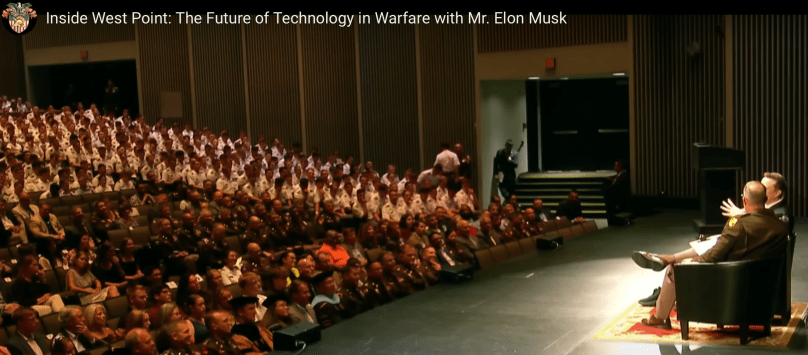
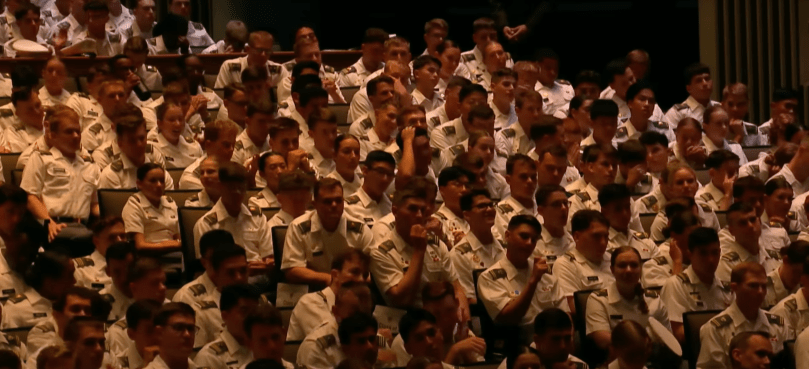
A primarily young audience of students gather to intently listen to Elon Musk at West Point. Elon spoke at on August 16, 2024, during a fireside chat with Brigadier General Shane Reeves, as part of the U.S. Military Academy’s convocation.

Elon at West Point: Drones, Space, and Leadership Lessons (Part 3)

Welcome to Part 3 of my series on Elon’s August 16, 2024, West Point talk, released on February 6, 2025. If you missed the earlier parts, you can catch up here: Part 1 and Part 2.

In this final installment, Brigadier General Shane Reeves explores in detail the future of warfare, the role of space, and Elon’s approach to leadership and innovation.

Drones and the Battlefield: A New Reality

Reeves asked Elon about integrating technology with human pilots and its implications for warfare. Elon responded:

“At the front of the battle line, it’s just going to be drones. Any humans caught in that crossfire are going to be killed.”

Elon elaborated, painting a vivid picture of drone warfare:

“If you’ve got drones constantly scanning—thousands of them, maybe a million, like Ukraine’s planning—you don’t want to be there trying to take out drones with an assault rifle. It’s not a good situation.”

He proposed an unexpected countermeasure:

“If you go fully analog with mechanical controls and do an electromagnetic pulse (EMP) blast, you could take out all electronics. A fully analog fighter plane could be a role—like a Tom Cruise movie where he flies an analog aircraft, and all the drones fall from the sky.”

Elon Musk inspires West Point graduates, "Try. Just try thinking of interesting ideas. Read about many fields and cross-fertilize ideas. For example, SpaceX used automotive mass-manufacturing techniques, and Tesla applied space industry materials optimization. That's a superpower."
Elon Musk inspires West Point graduates, “Try. Just try thinking of interesting ideas. Read about many fields and cross-fertilize ideas. For example, SpaceX used automotive mass-manufacturing techniques, and Tesla applied space industry materials optimization. That’s a superpower.”

Building Trust with Industry

Reeves raised concerns about industry reluctance to develop technology for the Department of Defense, emphasizing the need for trust with the industrial base and society. Elon, a solid supporter of the military, responded:

“I’m very pro-military, to be clear.” (Met with loud applause.)

He drew parallels to historical shifts:

“If there’s a significant conflict, the US industrial base will switch quickly to military production, just as it did in World War II. Will it be quick enough? I don’t know. AI and drones—that’s the future of warfare.”

Space: The Ultimate High Ground

On the role of space in warfare, Elon was emphatic:

“Space is the ultimate high ground. It’s big. Real big. Earth is like a tiny dust mote floating in space.”

He stressed the importance of space-based communications:

“Ground-based communications—fiber optics, cell towers—will be destroyed. All you’ve got are analog radios and space-based data communications. GPS is easily jammed because it’s a weak signal. A next-generation positioning system is critical.”

Elon also touched on space-based weaponry:

“You could have kinetic weapons—like tungsten cannonballs, known as rods from God—or space-based lasers. Starlink technically has lasers, but they’re low-powered… for now.” (Laughter)

Leadership: The Cavalry Captain Must Ride

Reeves connected military history to Elon’s businesses, asking about the traits he seeks in leaders. Elon emphasized technical competence:

“If someone’s leading a complex engineering project, they must be good at engineering. They don’t need to be the best, but they must be competent. It’s like a cavalry captain who can’t ride a horse—great in every way, but falls off in battle. That’s not inspiring.”

Elon critiqued leadership mismatches:

“Take Boeing’s CEO—he’s got a degree in accounting. If you’re running an airplane company, you should know how airplanes work, how they’re designed. That’s vital.”

Fostering Innovation

Reeves asked how Elon cultivates innovative intuition. Elon suggested:

“Try. Just try thinking of interesting ideas. Read about many fields and cross-fertilize ideas. For example, SpaceX used automotive mass-manufacturing techniques, and Tesla applied space industry materials optimization. That’s a superpower.”

On balancing caution and risk, Elon said:

“If you’re not failing sometimes, you’re not trying hard enough. Nobody bats 1000, but you can’t bat zero either.”

Elon’s First-Principles Algorithm

Elon shared a practical framework for problem-solving:

“1. Make the requirements less dumb. Even if they come from the smartest person, they’re still dumb. Military procurement often starts with excessive requirements. 2. Delete parts or process steps. If you’re not adding back 10% of what you deleted, you haven’t deleted enough. 3. Optimize what remains. 4. Go faster. 5. Automate—only after the above steps.”

He cautioned against common pitfalls:

“Smart engineers often optimize things that shouldn’t exist—like perfecting a cloth biplane when we need jet airplanes.”

Elon gives great advice on fostering learning: “Curiosity. Read as much as possible, learn across fields, and apply critical thinking to everything you’re told.”

Curiosity: The Key Attribute

As the interview closed, Reeves asked Elon for the one attribute critical for future officers. Elon’s answer was succinct:

“Curiosity. Read as much as possible, learn across fields, and apply critical thinking to everything you’re told.”

Elon concluded with a powerful metaphor:

“America is like Atlas holding up the free world, and you—the graduating class—are the arms of Atlas.”

Applause erupts.

My Thoughts

Elon’s West Point talk was a masterclass in his visionary thinking, he made sense of the reality of modern warfare and combines it with practical leadership expectations.

IMPORTANT: Elon’s emphasis on drones and space as the future of conflict is a wake-up call for military strategists.

NOTE: Elon’s insistence on curiosity and first-principles problem-solving resonates most. Our world is rapidly changing, and Elon’s call for leaders who are technically competent and relentlessly curious is a blueprint for success—not just in warfare, but in any field.

As you reflect on his words, perhaps you will be struck by the urgency of adapting to this new era while staying grounded in critical thinking and innovation.

Tesla Model Y 2025 FSD review Launch Series Tesla Model Y test drive autonomous driving

Gail’s Tesla Podcast on 𝕏 Episode No. 115: New Tesla Model Y 2025 Review: Why I Rate It 10 Stars

Watch This Tesla Model Y Conquer the Road with FSD!

In episode 115 of my podcast, I dive into the freshly redesigned Tesla Model Y 2025 Launch Series—a car so impressive it earns a perfect 10 stars from me!

I got a rare chance to test drive and film this beauty, inside and out, showcasing why it’s a must-try for Tesla owners. From its jaw-dropping Full Self-Driving (FSD) performance to clever features like the frunk drain plug and emergency door release, this Model Y conquers the road like no other. Watch the full episode exclusively on X [here] and see why I’m urging everyone to activate FSD!

Standout Features That Wow: Emergency Release, Frunk, and More

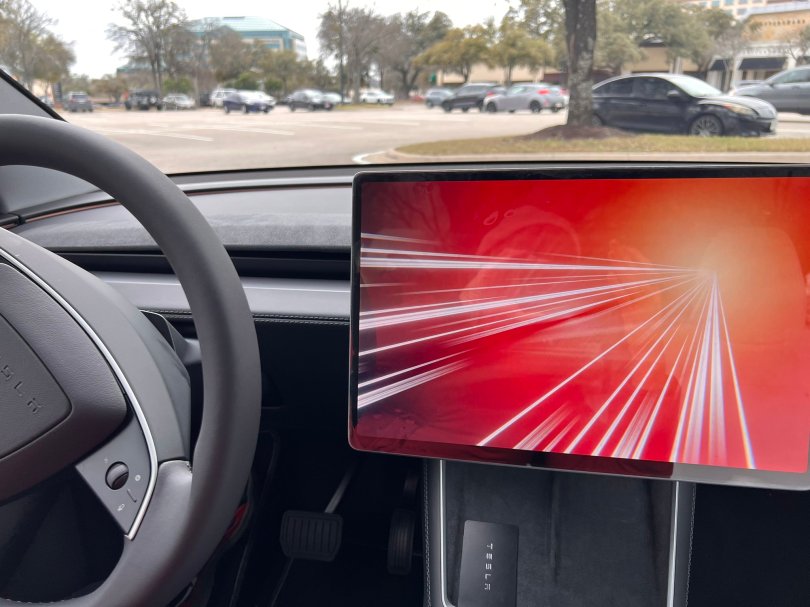
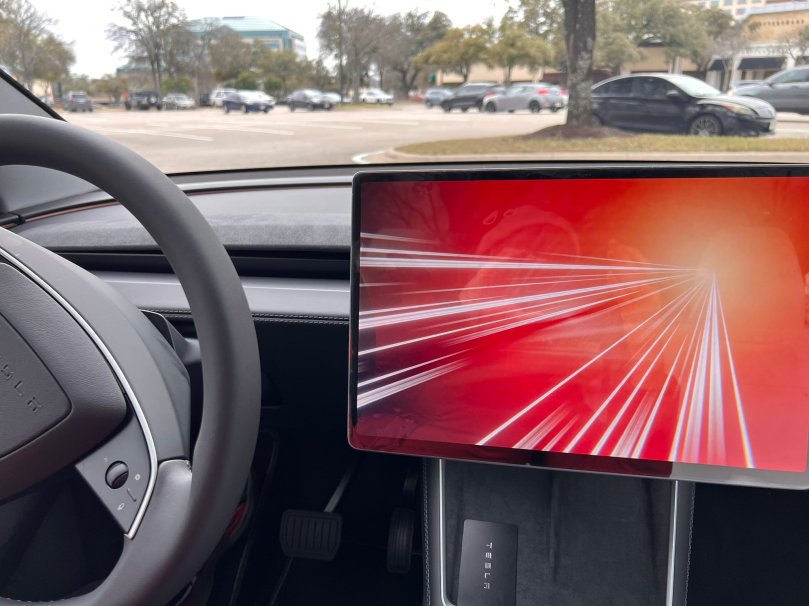
Right out of the gate (00:12), I highlight the emergency door release—smartly tucked in the back door pocket for safety. Then at 00:18, there’s the frunk drain plug—a game-changer for party planners using ice that needs to drain. The Launch Series screen graphic (00:30) dazzles with its crisp visualization, while the “door thunk” (00:38 and 03:27) proves this car’s build quality with that satisfying, solid sound. Steering wheel control buttons and stalks (00:59) make driving intuitive, and the camera views (01:29) pop onto the screen effortlessly. Oh, and the automatic parking feature (01:47)? It’s like the car’s showing off—it nails tight spots with zero stress.

Tesla Model Y 2025 FSD review Launch Series Tesla Model Y test drive autonomous driving
Tesla Model Y 2025 Launch Series Tesla

FSD Steals the Show: Why I Say Always Use It

At 02:46, I explain why FSD is non-negotiable for Model Y owners. During my West Austin test drive, this car tackled tricky roads autonomously—think sharp turns and busy traffic—flawlessly. The middle console (02:08) and spacious interior (02:20) make every ride comfy, but it’s FSD that elevates it to 10-star territory. Whether it’s self-parking or navigating safely, I’ve never felt more confident behind the wheel—or rather, letting the car take it. Tesla owners, if you’ve got FSD and aren’t using it, episode 115 will change your mind. Activate it and feel the magic.

Stunning Design and Final Thoughts

The exterior shines too—those sleek rear lights (04:10) and Launch Series puddle lights (05:23) scream premium. The trunk’s open/close function (04:33) is smooth, and seat belts (05:03) pull just right. At 03:38, I share more thoughts: this Model Y doesn’t just drive; it redefines driving. It’s packed with upgrades—same price as the old Model Y—yet feels like a steal. Watch episode 115 on X [here] to see this amazing car in action. For media and credits, stick around ‘til 05:42. Tesla had built a road-conquering masterpiece!

The exterior shines too—those sleek rear lights (04:10) and Launch Series puddle lights (05:23) scream premium. The trunk’s open/close function (04:33) is smooth, and seat belts (05:03) pull just right. At 03:38, I share more thoughts: this Model Y doesn’t just drive; it redefines driving. It’s packed with upgrades—same price as the old Model Y—yet feels like a steal. Watch episode 115 on X [here](insert your link) to see this amazing car in action. For media and credits, stick around ‘til 05:42. Trust me, this Tesla’s a road-conquering masterpiece!FOR MEDIA USE ONLY News media is welcome to use my material in connection with a story or article. By downloading any content I create, you understand and hereby agree and represent that: (1) you are a member of the news media; (2) use of the content is in connection with a story or an article appearing in newspapers, periodicals, digital publications or television; (3) all images and rights thereto remain the property Gail Alfar.; and (4) use of the image is not for publication covers, advertising, promotion or otherwise for commercial purposes. Furthermore, use of any and all images and content appearing on this page must each include the notice “Courtesy of Gail Alfar” Use of materials copied from this website is at your own risk. You must obtain prior written consent from Gail Alfar for uses that exceed the above parameters.

Gail’s Tesla Podcast on 𝕏 Episode No. 102: Pasta|Bar

Austin, Texas, December 12, 2024

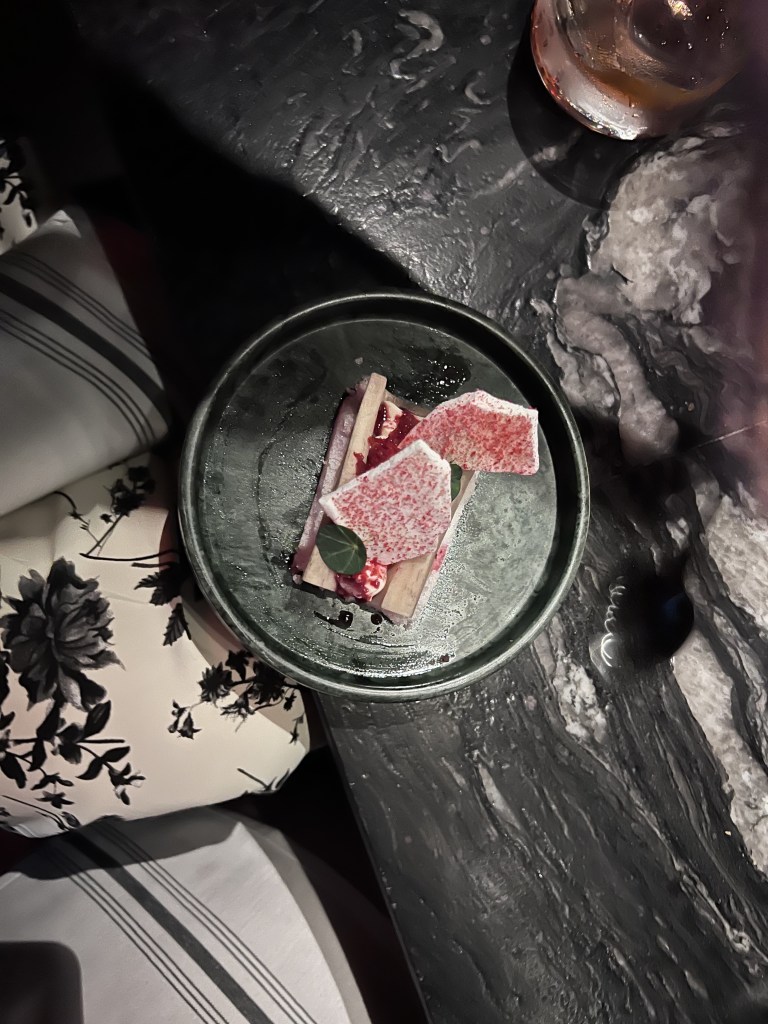
I let Tesla FSD drive me to Austin’s Pasta Bar for a celebration and the meal was like a masterclass in good food.

Pasta Bar Delicious Food Pics~

FOR MEDIA USE ONLY News media is welcome to use my material in connection with a story or article. By downloading any content I create, you understand and hereby agree and represent that: (1) you are a member of the news media; (2) use of the content is in connection with a story or an article appearing in newspapers, periodicals, digital publications or television; (3) all images and rights thereto remain the property Gail Alfar.; and (4) use of the image is not for publication covers, advertising, promotion or otherwise for commercial purposes. Furthermore, use of any and all images and content appearing on this page must each include the notice “Courtesy of Gail Alfar” Use of materials copied from this website is at your own risk. You must obtain prior written consent from Gail Alfar for uses that exceed the above parameters.

Gail’s Tesla Podcast on 𝕏 Episode No. 97: Dancing to YMCA

Nov. 14, 2024 – Austin, Texas

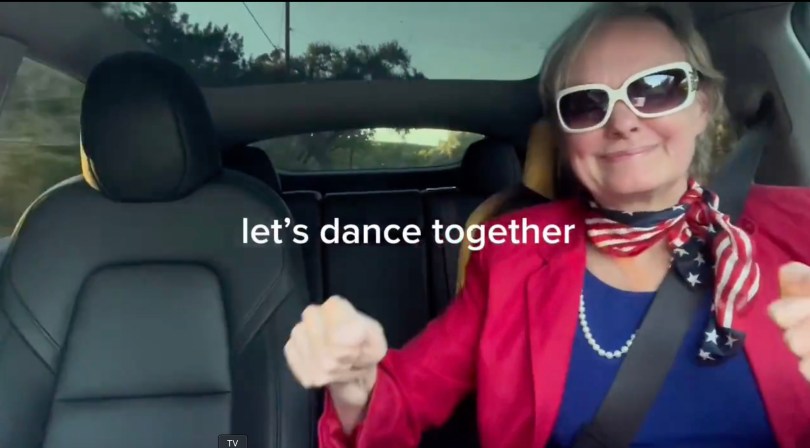
This is podcast episode 97, we’re in Model Y, celebrating Trump’s victory and the new Department of Government Efficiency.

I’ve added clips of Trump dancing and Elon dancing!

FOR MEDIA USE ONLY News media is welcome to use my material in connection with a story or article. By downloading any content I create, you understand and hereby agree and represent that: (1) you are a member of the news media; (2) use of the content is in connection with a story or an article appearing in newspapers, periodicals, digital publications or television; (3) all images and rights thereto remain the property Gail Alfar.; and (4) use of the image is not for publication covers, advertising, promotion or otherwise for commercial purposes. Furthermore, use of any and all images and content appearing on this page must each include the notice “Courtesy of Gail Alfar” Use of materials copied from this website is at your own risk. You must obtain prior written consent from Gail Alfar for uses that exceed the above parameters.

Gail’s Tesla Podcast on 𝕏 Episode No. 96: TOSV’s John Stringer

Nov. 11, 2024 – Austin, Texas

On Elon Musk

We believe in the extraordinary value of every moment of Elon Musk’s time.

On underpopulation

John has 4 kids and I have 5. We discuss family, parenting, and ways to solve underpopulation.

Join the conversation on X, create an account on X if you do not already have one, and follow me there for the best experience and communication.

FOR MEDIA USE ONLY News media is welcome to use my material in connection with a story or article. By downloading any content I create, you understand and hereby agree and represent that: (1) you are a member of the news media; (2) use of the content is in connection with a story or an article appearing in newspapers, periodicals, digital publications or television; (3) all images and rights thereto remain the property Gail Alfar.; and (4) use of the image is not for publication covers, advertising, promotion or otherwise for commercial purposes. Furthermore, use of any and all images and content appearing on this page must each include the notice “Courtesy of Gail Alfar” Use of materials copied from this website is at your own risk. You must obtain prior written consent from Gail Alfar for uses that exceed the above parameters.

Gail’s Podcast on 𝕏 Episode No. 92: Starbase Symphony, Mars, Wine, Lighthouses, and Light Shows

(Starbase, Texas) Greetings, Earthlings! Welcome to Episode 92 of our cosmic journey into the heart of innovation, where we’re not just reaching for the stars but are downright throwing a party among them at Starbase. This episode, we’re taking you on a whimsical ride through the universe, with a terrestrial twist.

Starbase: Not Just Rockets and Rockets

Starbase isn’t your average industrial park; it’s more like if Willy Wonka decided to get into rockets instead of chocolate. Here, we’re exploring the otherworldly aspects beyond the usual rocket launches. Imagine lounging at Starbase as the sun dips below the horizon, a glass of fine wine in hand, discussing none other than the colonization of Mars. It’s like a high-brow cocktail party, but with more spacesuits.

A Toast to Mars with Elon Musk

In this episode, see what it’s like to dream of Mars over a glass of wine. It’s not just about the science; it’s about the human spirit’s thirst for adventure. We ponder if Martian vineyards could be next on Elon Musk’s list of innovations – because, why not? A good Pinot Noir does wonders for the soul, even in space. Even Elon Musk called our experience “otherworldly”

The Tale of the Lighthouse with Jessica Tetreau

Now, let’s talk about a lighthouse story that’s as captivating as a space odyssey. The lighthouse, metaphorically speaking, has stood as a beacon of hope, navigation, and stories untold. Here at Starbase, we weave a tale that intertwines this symbol of guidance with our journey to the stars, because even astronauts need something to steer by.

Sapphire’s Cosmic Light Show

And for the grand finale, we present to you Sapphire – not the gem, but the light show. It’s as if Starbase decided to throw a rave for the universe itself, with lights dancing to the rhythm of the cosmos. This isn’t just a visual spectacle; it’s a celebration of light, innovation, and human ingenuity.

Thank You, Starbase Community

A massive shout-out to @JessicaTetreau and everyone who makes Starbase not just a place of work, but a vibrant community. You folks are the real stars here, and we mean that in the most literal sense.

Join Us

So, grab your spacesuit, your favorite bottle of vino, and maybe a flashlight (for the lighthouse stories), and join us for this 6 and 1/2 minute escapade into the wonders of Starbase. Tune into Podcast 92 on 𝕏, where we’re not just talking about the future; we’re living it, one star at a time.

Remember, in the vast expanse of the universe, every light show, every story, and every sip of wine brings us a little closer to understanding our place in this grand cosmic dance. Cheers to the stars and the stories they inspire!

FOR MEDIA USE ONLY News media is welcome to use my material in connection with a story or article. By downloading any content I create, you understand and hereby agree and represent that: (1) you are a member of the news media; (2) use of the content is in connection with a story or an article appearing in newspapers, periodicals, digital publications or television; (3) all images and rights thereto remain the property Gail Alfar.; and (4) use of the image is not for publication covers, advertising, promotion or otherwise for commercial purposes. Furthermore, use of any and all images and content appearing on this page must each include the notice “Courtesy of Gail Alfar” Use of materials copied from this website is at your own risk. You must obtain prior written consent from Gail Alfar for uses that exceed the above parameters.

Gail’s Podcast on 𝕏 Episode No. 90: Conversation with Anthony Gomez of Rocket Ranch

(Starbase, Texas) I travelled to South Texas to Starbase home of SpaceX to interview both Anthony Gomez and also Jack Beyer. You can see my interview with Jack here.

Anthony Gomez operates Rocket Ranch, which is a welcoming establishment with all the amenities you need for your visit to Starbase, Texas. He’s used of hosting people from around the world who come for launches and also stay for the in-between times. This interview shows the industrious side of him in his fast response to improving the Ranch after a storm.

FOR MEDIA USE ONLY News media is welcome to use my material in connection with a story or article. By downloading any content I create, you understand and hereby agree and represent that: (1) you are a member of the news media; (2) use of the content is in connection with a story or an article appearing in newspapers, periodicals, digital publications or television; (3) all images and rights thereto remain the property Gail Alfar.; and (4) use of the image is not for publication covers, advertising, promotion or otherwise for commercial purposes. Furthermore, use of any and all images and content appearing on this page must each include the notice “Courtesy of Gail Alfar” Use of materials copied from this website is at your own risk. You must obtain prior written consent from Gail Alfar for uses that exceed the above parameters.