
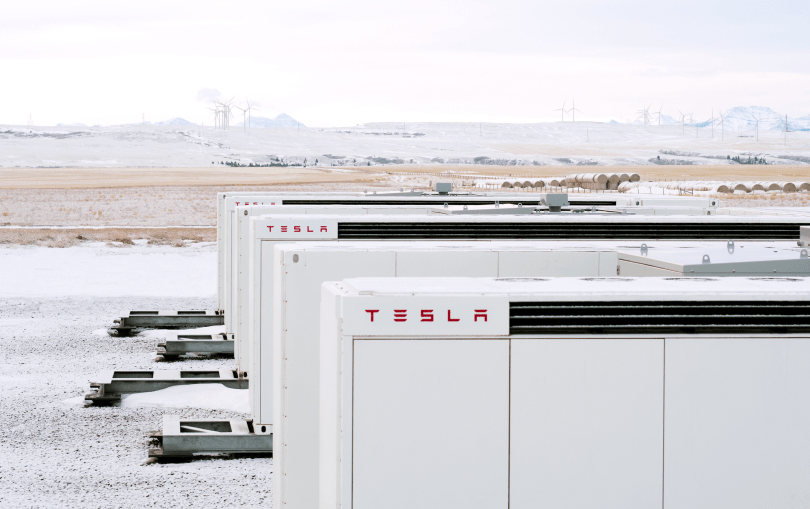
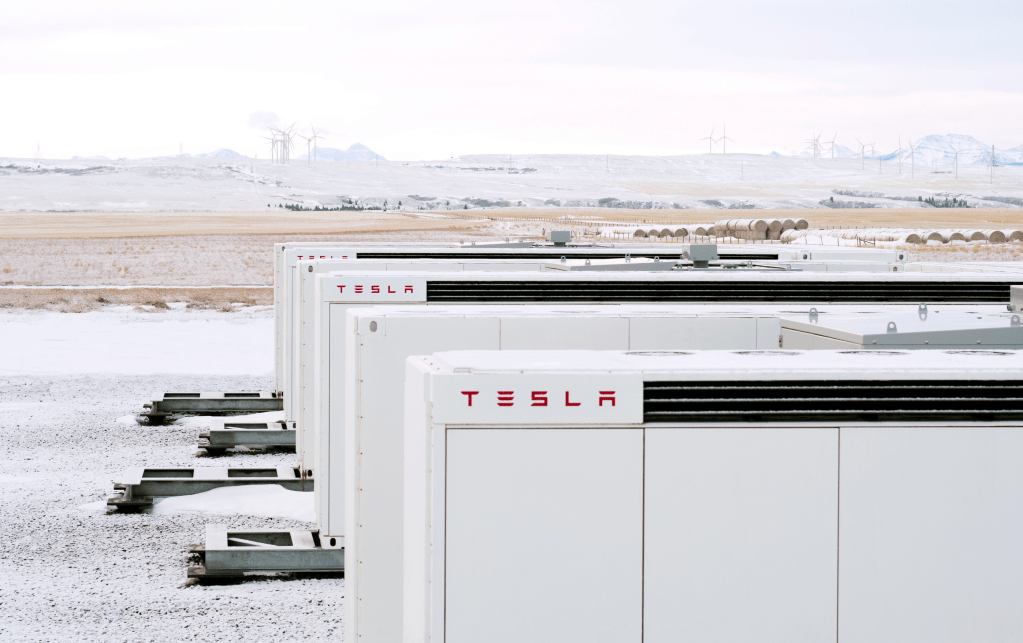
You are living in the early stages of the transition to clean energy. In the coming years, expect most gas and coal peaker plants to close. These will be replaced with battery storage of mostly solar energy.
This article is about four challenges that will be overcome for this incredible transition to succeed.
UPDATE: Elon Musk saw this article on Twitter, and replied to it on July 25, 2022, calling it a “Good article.” I hope that you’ll enjoy it as well!
#1 Increasing Supply of Refined Lithium
There is currently not enough refined Lithium, and this provides a challenge in the transition to clean energy. Tesla is working to scale battery production with refined Lithium at Giga Nevada and the new Megafactory in Lathrop, California.
At the Q2 2022 Earnings call, Elon Musk emphasized the need for more refined Lithium, the component needed for batteries. Elon said,
“I’d like to, once again, urge entrepreneurs to enter the lithium refining business.” Elon Musk
Elon Musk revealed in a recent interview with Johnna Crider that extremely pure battery-grade lithium hydroxide or lithium carbonate is needed to prevent breakdown in the battery cell,
“For example, with lithium, it’s more lithium refinement than it is the actual mining. So you better take the ore that contains lithium, and you’ve got to refine it and get it to battery-grade lithium hydroxide or lithium carbonate. And it has to be extremely pure. Otherwise, you could have a breakdown in the cell.” Elon Musk
#2 Scaling Battery Manufacturing
Scaling battery production is a constant challenge as processes must always be flexible enough to improve.
Building batteries faster and at larger scale will occur in order for our world to transition to clean energy. Tesla is addressing this challenge and currently building batteries ranging in size from 13.5 kWh Powerwall to 3000 kWh (3 MWh) Megapack. Large and small batteries are needed to combine with others to form massive power plants, replacing old-style gas and coal energy with solar.
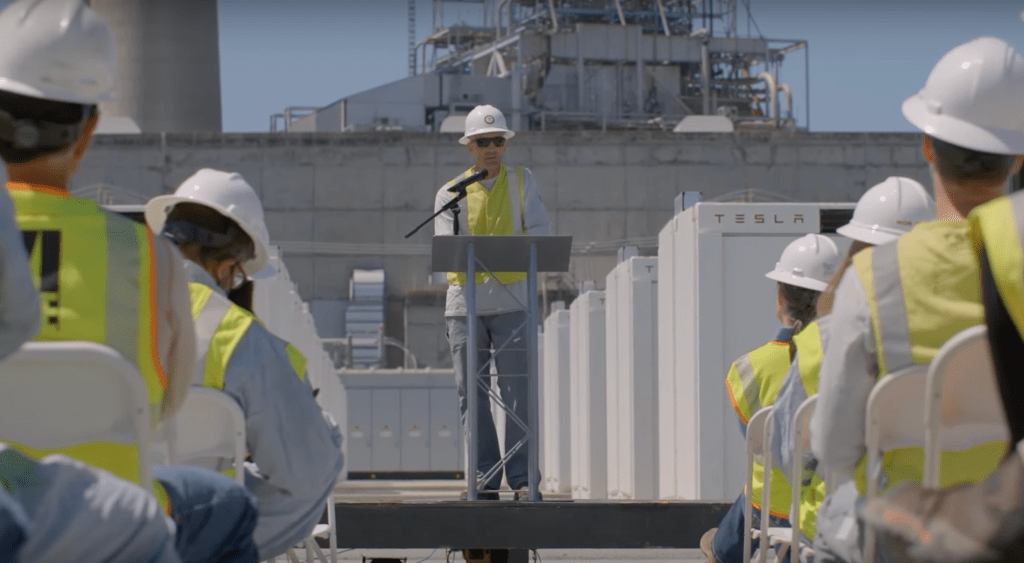
Mike Synder of Tesla Energy, spoke at the opening of Moss Landing Elkhorn Battery last month, saying Megafactory Lathrop will produce ~ 40 GW hours of Megapacks a year,
“The Megafactory fully ramped can produce up to 40 GW hours of Megapacks per year. For context, 40 Gigawatt hours is approximately 50 of the projects you see behind us here, being produced each year here in California and really around the world.”
#3 Working with Existing Infrastructure to Streamline Clean Energy Installations
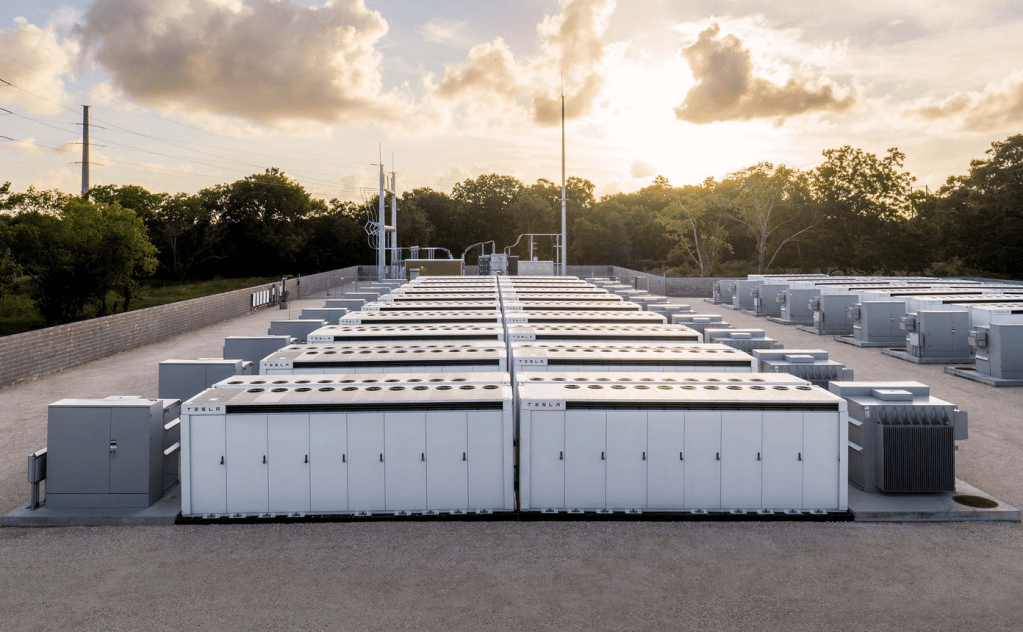
It is difficult to integrate the existing older infrastructure seamlessly with Tesla’s new hardware and software system, and it has to be done. Moss Landing near Monterey, California is a location known for decades as exclusively a gas peaker plant site. Thus, it contains physical infrastructure needed to wire energy to customers. Snyder spoke about this challenge,
“There’s a lot of work and figuring out how to integrate these large projects into our existing infrastructure.
As the projects become larger and larger and more powerful those problems become more nuanced and more complicated to solve, and we all have to work to do that together.
Its about landing the wires here at a critical substation, like Elkhorn, or it’s about assessing the grid impacts at different interconnection points in the grid.
All of those problems become much more interesting for engineers and much more complicated to solve, and we need to be doing that together.
And really, as we grow we need to collectively assess how best to leverage such a flexible, fast-acting, bidirectional resource like we’ve never really had. It’s truly an exciting time to be in the industry!”
#4 Updating Local Policy to Encourage Virtual Power Plants
As Tesla Energy works to meet the demand for battery storage systems with Megapacks, another way to meet demand is through aggregating together Tesla Powerwalls that individual people like you and I own to form Virtual Power Plants.
It takes time and effort to change old ways of thinking at state and local levels. Tesla’s Energy Policy team is working in my home state of Texas to help get virtual power plants online. I wrote about that last month in “Tesla’s Texas Virtual Power Plant ASAP.” Although the process might seem slow as molasses in wintertime, eventually it will happen, and there are things you can do to support these efforts! (I list some at the end of this article).
It was a change in policy for PG&E to allow ~1500 California residents who own home Tesla Powerwall batteries to volunteer to join together to form a virtual power plant. PG&E announced they will “call load management events for participating customers, directing their battery to discharge when there is high demand for electricity.”
A positive policy change led to the “Emergency Load Reduction Program [ELRP]” which aims to discharge stored battery energy to the grid during high electricity demand. Tesla Powerwall owners are the foundation of this program. According to a news release, the ELRP is managed by PG&E, San Diego Gas & Electric, and Southern California Edison.
These programs and similar ones will eventually be seen in many states and in countries around the world over time.
CONCLUSION
- Having a constant and reliable source of refined grade lithium is a challenge. This must be achieved in order to scale battery manufacturing.
- Tesla Energy leader Mike Synder voiced the challenge of working with existing infrastructure. “There’s a lot of work and figuring out how to integrate these large projects into our existing infrastructure. As the projects become larger and larger and more powerful those problems become more nuanced and more complicated to solve, and we all have to work to do that together.”
- Local policies are a challenge. Transitioning to clean energy means giving up the old ways of relying on gas peaker plants. Tesla Energy Policy team aims to continue to work with local policy leaders in order to speed up the transition to sustainable energy.
Here are a few ways you can help:

If you own a Tesla Powerwall, sign up to participate in a pilot program if it is available in your state. Currently, Texas has a three-year pilot program in the planning stages!
Join the Bros. for Decarb. Their motto is “just a group of Bros who care about decarbonizing the global economy as fast, cheap and reliable as possible.” They can be found on twitter and they also sell t-shirts with LFDECARB to subtly remind us that the Southeast is often ignored in DECARB. All their profits go to @energyalabama

I would love to share a few more interesting articles with you that relate to Tesla Energy!
- Tesla Autobidder explains Tesla’s software that interfaces with your Home Powerwall and potential energy markets
- Energy Reliability from Big Batteries for Texas and Beyond gives you some background on the developments related to Tesla Energy in Texas
- Tesla’s Texas Virtual Power Plant ASAP details how Tesla is offering a proven solution to the fragile Texas grid currently operated by ERCOT. Tesla has proved that its Virtual Power Plant can work extremely well.
Article by Gail Alfar. Exclusive to What’s Up Tesla – This blog post was created utilizing STARLINK satellite services. All Rights Reserved. July 24, 2022. If you can support this blog financially, info is at “How You Can Support.”
Make a one-time donation to support What’s Up Tesla
Make a monthly donation to support What’s Up Tesla
Make a yearly donation to support What’s Up Tesla
Choose an amount
Or enter a custom amount
Your contribution is appreciated.
Your contribution is appreciated.
Your contribution is appreciated.
DonateDonate monthlyDonate yearly whatsuptesla.com