SpaceX’s Starlink Quietly Rewrites the Future of Global Farming and Your Morning Coffee May Never Taste the Same

While Wall Street buzzes with talk of a possible 2026 SpaceX IPO that could value Elon Musk’s rocket and satellite empire at $1 trillion or more, the company’s most revolutionary product is already changing lives 550 kilometers below its orbiting constellation.

Starlink, the world’s first mass-market satellite internet service built and launched entirely by SpaceX’s own Falcon 9 rockets and operated by a private fleet of over 8,000 satellites, is proving once again why Elon’s vertically integrated vision is unmatched in modern industry.

In about four years since starting commercial service, SpaceX has gone from landing rockets on drone ships to delivering gigabit-speed, low-latency internet to the most unreachable corners of the planet, places where traditional telecom giants never bothered to lay a single cable.

Elon himself has always been blunt about Starlink’s mission: it was never meant to fight Comcast or Vodafone in downtown Manhattan or Milan. “Physics doesn’t allow us to win in dense cities,” he told Indian billionaire Nikhil Kamath this year, but out where nobody else can reach, Starlink is unbeatable!

And “unbeatable” is exactly the word now being used by farmers, offshore oil platforms, Antarctic research stations, and airline passengers who, for the first time in history, enjoy better internet at 40,000 feet or in the middle of the Amazon than many suburban neighborhoods did a decade ago.

The numbers speak for themselves: more than 8 million Starlink terminals shipped, service in over 150 countries, and a growth curve that would make any Silicon Valley unicorn blush — all funded by the same company that sends astronauts to the International Space Station and is building the largest rocket in human history.

With Starship flights ramping up and analysts projecting a potential SpaceX public offering as early as next year, the same reusable rocket techn that makes Starlink launches dirt-cheap is about to make Elon’s company one of the most valuable enterprises ever created.

But perhaps the purest example of what this all means in the real world is happening right now on a quiet hillside in southeastern Brazil.

Your Coffee

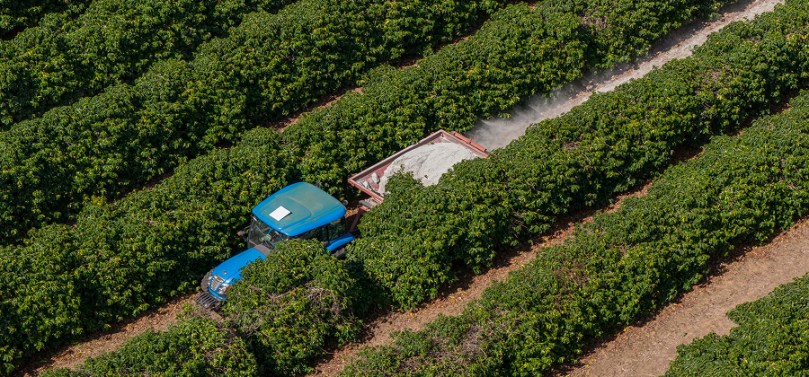
At Fazenda Luciana — a specialty-coffee estate in Santo Antônio da Alegria, São Paulo state, owner João Paulo Silva de Freitas used to lose entire days because a broken harvester in a distant field couldn’t be reported until someone physically drove back to the farmhouse office.

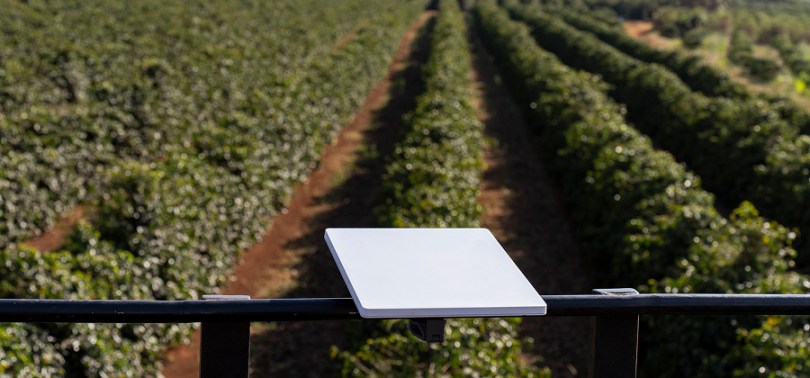
Today, multiple Starlink minis blanket the property. Real-time video calls, soil-sensor data, drone mapping, and remote gate control are now as normal as the morning mist rolling over the coffee trees.

The result? Higher yields, fewer accidents, dramatically better security, and most importantly for coffee lovers, beans that are harvested and processed at the absolute peak of ripeness.

Fazenda Luciana grows high-quality specialty Arabica coffee, and while specific scores for their lots aren’t publicly detailed in recent reviews, Brazilian estates like this often produce beans in the 85+ range on international scales, making them among the finest available.

From orbit to your cup… only Elon’s SpaceX could make that possible.

SpaceX’s Starlink Quietly Rewrites the Future of Global Farming — and Your Morning Coffee May Never Taste the Same

Sandy Munro and Elon Musk Interview Transcript

I hope this article finds you well and that you have a moment to absorb the awesome words of Elon Musk. Whenever I read Elon’s words, it is like getting a high voltage injection of happiness and inspiration.

The video was originally posted on X but has since been deleted, so this highlights the importance of preserving such conversations. If this interview is also removed from YouTube, it risks being lost in history. That’s why documenting the remarkable words of Elon Musk, the greatest genius of our time, is critical. I’ve documented many of Elon’s talks.

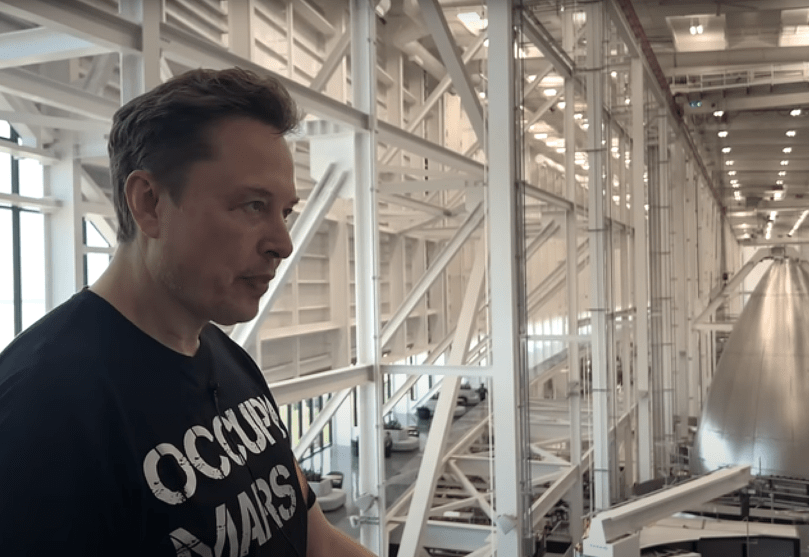
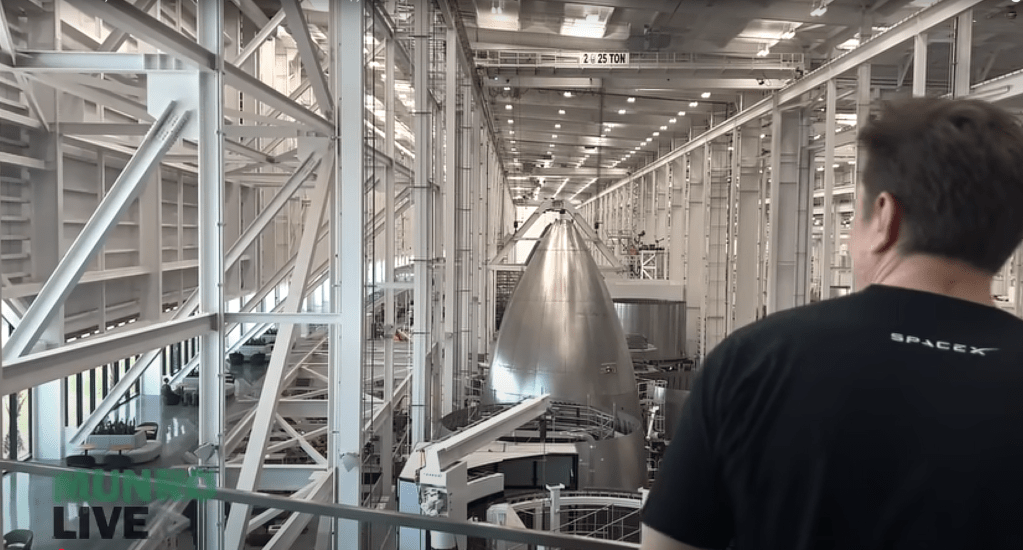
Sandy Munro: Hey, boys and girls, and all technical kind of people as well! Thanks so much for joining us. I’m here again with Mr. Elon Musk. Elon, it’s great to see you! By the way, I gotta tell you, the last time I was here, there were dirt floors. This building is absolutely amazing now—six months?!

Elon Musk: Yeah, take a look. There are some really nice touches, like that mezzanine area over there.

Elon Musk: The team can work in the office here. One of the things I like is making sure engineering and production are closely connected. That way, engineering isn’t up in some ivory tower, disconnected from the problems on the production floor. When engineering is right here, you walk out, see the production floor, and can actually see where you’ve designed something that’s difficult to manufacture. You can see the pain in the factory—where things aren’t getting made, what’s choking the production line. We have the same setup in Hawthorne for Falcon 9 and Dragon.

Sandy Munro: I was looking around in here, and I haven’t seen much going on, but I’m assuming that has to do with everything else that’s happening. I mean, you’ve got interviews every two minutes—that’s amazing!

Elon Musk: Actually, I’m only doing four interviews, and you’re one of them.

Sandy Munro: Well, you know what? I’m very, very grateful, I really am. But I’d like to get into some of the other technical stuff—your build area or whatnot is brilliant. I was asked to make comments to somebody else that’s making rocket ships, and I said, “You’re doing them sideways, why? Why aren’t you doing them vertically? You’ll never get them around.” And yet, everything here is so perfect. I mean, you didn’t get this idea from Boeing, because they make them horizontally as well.

Elon Musk: Yeah, we make Falcon 9 horizontally. I guess you can do it either way, horizontal or vertical. If it’s horizontal, you need things to keep the barrel sections round; otherwise, they just flatten out on you. But if you’re going to do the sections vertically, you need a lot of roof height. You can see how the factory progresses from a lower roof height to a medium roof height to a high roof height. So, you can really do it either way. Basically, you just need 9-meter rounding rings, which are kind of unwieldy. And we’re trying to design this with what, by rocket standards, is a high production rate.

Sandy Munro: That’s my next question, actually. What is your production rate per year?

Elon Musk: We’re aiming for 1,000 ships per year long-term. A thousand ships per year, and each one of those ships is the largest flying object ever made.

Sandy Munro: That’s pretty impressive. “Occupy Mars” You’ve got it on your shirt—gotta be okay. So, I can see how you can launch, and I can see how you might get there in a hurry. So, two questions I’ve got: One is propulsion. Are you going to be using ionic propulsion for the craft that’s actually going to head for Mars?

Elon Musk: Not currently, no. The amount we could speed up the journey with ion propulsion is very low. Ion thrusters have such low thrust, and to get that high specific impulse, you need a lot of energy. So, you’d have to unfurl massive solar panels and then stow them for entry. We don’t currently plan to use ion thrusters, but that could be a future optimization, maybe. If you want to get there faster, you’d need a higher transfer velocity from Earth. But then you’re going to need to use a lot of atmospheric braking or some amount of propulsive braking when you get to Mars. So your payload drops dramatically unless you coast all the way there, your payload drops quite a bit. Ultimately, you could see a path to turning a six-month journey into a three-month journey, but you would probably cut your payload by four.

Sandy Munro: So, the other thing is, okay, let’s say you get entry into the Martian atmosphere—or lack thereof…

Elon Musk: It’s similar to Earth at 100,000 feet. Most of the slowing down, even for Earth’s atmospheric reentry, occurs at 100,000 feet atmospheric density or above. Mars’ atmospheric density is about one percent that of Earth, but that’s actually plenty for getting to sonic velocity, maybe a little below subsonic.

Sandy Munro: So, okay, touchdown. Are you going to have thrusters to slow the craft?

Elon Musk: Oh, yes. For landing on Mars, Starship would land using thrusters with the Raptor engines, and it would land with a lot of payload. It’s different from Earth, where it’s delivering satellites to orbit and coming back much lighter. But if it’s going to Mars, it’s landing with maximum payload.

Sandy Munro: And that’s where I’m kind of like, are you going to have anything else to slow it down?

Elon Musk: Well, it’s just heat shield and thrusters.

Sandy Munro: Yeah.

Elon Musk: You do need quite a lot of propellant to slow it down because it’s coming in heavy with maximum payload. To your point earlier, the atmospheric density is only one percent that of Earth. So, you’re lucky if you can get subsonic on Mars, but you can certainly get the vast majority of the kinetic energy taken out with the atmosphere. And so, you’re going to need a lot more propellant than we need on Earth, because your terminal velocity is still going to be, you know, Mach 1-ish. And you’re heavy, so you’re going to need a lot more propellant to land.

Sandy Munro: So, how many… I’m assuming the first shot to Mars is not going to have people on it. You’re going to have to drop stuff for them and whatnot.

THE FIRST MISSIONS TO MARS ARE ALL ABOUT LANDING SAFELY

Elon Musk: The first missions to Mars are all about making sure the rocket can land safely. So, the first missions are focused on confirming that we can land without generating more craters on Mars. We want the crater count on Mars to stay constant—no new craters. As long as we don’t increment the crater count on Mars, and we feel confident that future missions are safe for people, then we would send people. You only get to do this every two years, roughly, because Earth and Mars align every 26 months for a launch window. So, you really have a small number of opportunities in our lifetime—maybe 15 or 20.

Sandy Munro: So, I was just wondering about that window. How many would you shoot up in that brief window you’ve got? Would you send four or five?

Elon Musk: Ultimately, we’ll send thousands.

Sandy Munro: No, I mean for the first one.

Elon Musk: It depends on how many rockets we have ready. The next Mars window is only 18 months from now. To send something to Mars, we still have to solve a lot of technical problems, and we’ve got to refill propellant in orbit. So, it’s going to be close as to whether we’re able to send test rockets to Mars by the end of next year. We might not make it, but we might. I’d say 50/50 right now. And we’d send, I don’t know, three to five, something like that.

Sandy Munro: That’s what I thought. I was interviewed a while ago, and I said five. That’s what I’d think—you’re going to send five up.

Elon Musk: That depends on how many we have.

HUMANITY’S PLANETARY BACKUP PLAN

Sandy Munro: I’ve got one last question, because she’s going like this [Sandy swirls his hand]. Have you got anything you’d like to tell the audience that no one has asked about yet?

Elon Musk: Well, I guess it’s worth repeating—people often ask why we’re doing this, because sometimes people are puzzled as to why we’re doing it. The reason we’re doing it is to make life, consciousness, multi-planetary, so as to preserve the future of civilization and consciousness, and to protect life as we know it. There’s always some chance of something going wrong on Earth. Overall, I am optimistic about earth, and I think if there’s even just a one percent chance of life and consciousness as we know it being annihilated on Earth, you’d want to protect against that by having a second planet to back up the biosphere and ensure the continuity of life and consciousness. This is the first time in Earth’s 4.5-billion-year history that this has been possible, so we should take advantage of this window while it’s still open. We don’t want to be complacent and assume a constant upward trajectory of civilization. Hopefully that happens, but it might not. This is about protecting the future of life itself.

Sandy Munro: As far as I’m concerned, that’s admirable. I think it’s a great idea. By the way, I like the idea of having children as well.

Elon Musk: No kids, no humans, no humanity.

Sandy Munro: Anyway, thank you again. I really appreciate it. Thank you. Good luck.

Transcript ends.

NOTE: In this third exclusive interview, Sandy and Elon Musk discuss SpaceX’s unique technical prowess, manufacturing methodology, and mission to occupy Mars.

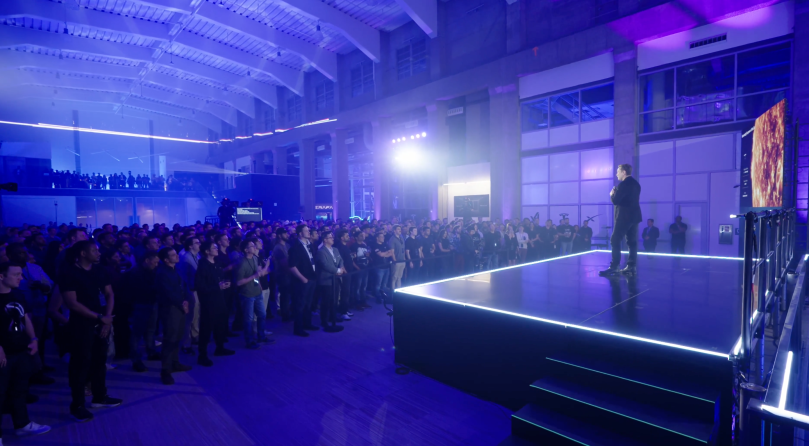
On May 29, 2025, Elon Musk delivered a visionary speech at Starbase, Texas, the newly incorporated city and SpaceX’s hub for revolutionizing space travel. This transcript captures Musk’s electrifying address, detailing Starbase’s evolution from a sandbar to a powerhouse for building the world’s largest rockets. He highlights breakthroughs like rapidly reusable rockets, the Raptor 3 engine, and orbital propellant transfer, all pivotal for a self-sustaining Mars civilization. With vivid descriptions of catching boosters with “giant chopsticks” and plans for a million-ton Mars transfer, Musk inspires a future where anyone can visit Starbase or journey to Mars.

Elon Musk’s Vision for a Multiplanetary Future: Starbase and the Road to Mars, May 2025

On May 29, 2025, Elon Musk delivered his company speech at Starbase, Texas, the newly incorporated city and SpaceX’s hub for space travel to Mars. This transcript, which I have worked hard on to bring you accuracy, captures Elon’s valuable and historical words.

Elon details Starbase’s evolution from a sandbar to a powerhouse for building the world’s largest rockets. Elon highlights breakthroughs like rapidly reusable rockets, Raptor 3 engine, and orbital propellant transfer plans, all critical for a self-sustaining Mars civilization. With vivid descriptions of catching boosters with “giant chopsticks” and plans for a million-ton Mars transfer, our hero Elon inspires a future where anyone can visit Starbase or journey to Mars.

Elon Musk: The gateway to Mars. Here we are at the newly incorporated Starbase, Texas. This is the first new city made in America in, I think, quite a few decades. At least that’s what I’m told. It’s a very cool name, named because it’s where we’re going to develop the technology necessary to take humanity, civilization, and life as we know it to another planet for the first time in the 4.5 billion-year history of Earth.

[Lots of cheering. Elon shows a short video of the history of Starbase. He talks along with the images.]

Elon: We started with basically nothing. Starbase started as a sandbar with nothing.

[The video shows a prototype rocket and two open tents.]

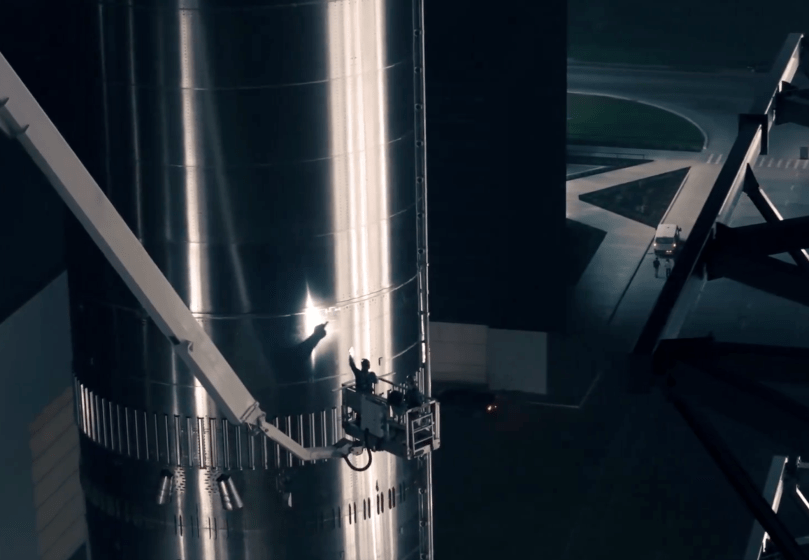
Elon: Even those little things we built. That’s the original Mad Max rocket!

[Looking at the rocket from 2019, six years ago, the camera pans around it. The sun hits the side, revealing a gorgeous, surreal piece of steel.]

Elon: You know, lighting is very important for that Mad Max rocket.

[Elon is smiling, with his hand in a determined fist. He’s not afraid of silence; this is a tribute to that incredible rocket. Many employees in the audience may not have seen it in person; it’s six years old. Some may have been in high school at the time.]

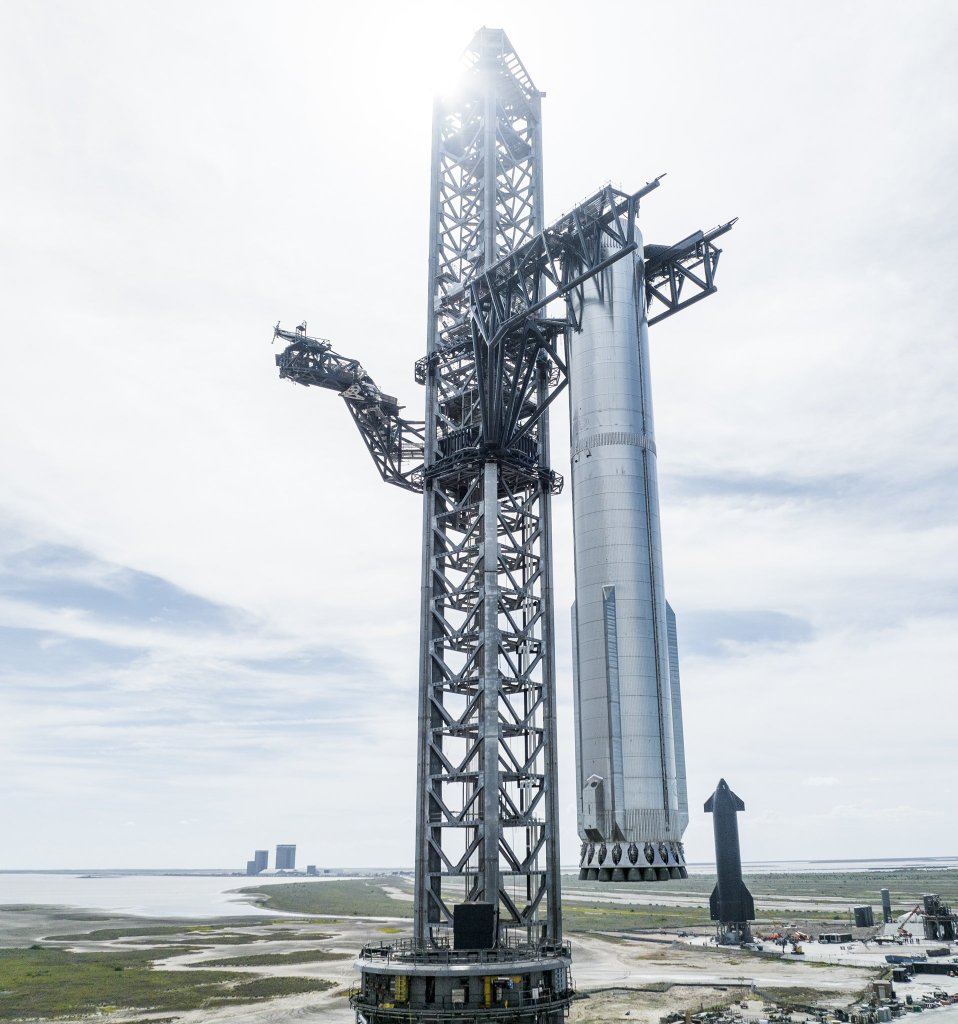
Elon: Not long ago, there was basically nothing here. In about five or six years, thanks to the incredible work of the SpaceX team, we’ve built a small city. We built two gigantic launchpads and a gigantic rocket factory for a gigantic rocket. The cool thing is, anyone watching can come visit because our entire production facility and launch site are on a public highway. Anyone in South Texas can see the rocket up close, see the factory, and anyone interested in the largest flying object on Earth can drive down the public highway and see it! Pretty cool!

[Video progresses to Starbase 2025.]

Elon: We’re now at the point where we can produce a ship roughly every two or three weeks. We don’t always produce a ship every two or three weeks because we’re making design upgrades, but ultimately we’re aiming for the ability to produce 1,000 ships a year, so three ships a day.

[On the video, birds chirp, water glistens, and a hovercraft pulls gently away from Starbase Beach.]

Elon (smiling): That’s our hovercraft. We’re driving the booster down the road to the launch site. You see the Megabays. The cool thing for those watching is you can literally come here, drive down the road, and see it. This is the first time in history that’s been possible. That highway on the left is public. You can just come and see it, which I recommend. It’s very inspiring.

[Elon points to a render of a massive building.]

Elon: There’s a person next to it that looks like a tiny ant. That’s our Giga Bay! We’re expanding integration to produce 1,000 per year. The Giga Bay hasn’t been built yet, but we’re building it. It’s a truly enormous structure, one of the biggest in the world by some measures, designed for 1,000 Starships per year. We’re also building a Giga Bay in Florida, so we’ll have two facilities—one in Texas and one in Florida. It’s difficult to gauge the size of these buildings because you need a human for scale. When you see how tiny a human is next to it, you realize how enormous it is.

BUILD COMPARISON

Elon: When we look at our build comparison in vehicles per year, Boeing and Airbus make airplanes, but Starship will probably make as many Starships for Mars as Boeing and Airbus make commercial airplanes. This is an enormous scale, and each Starship is bigger than a 747 or an A380. In terms of Starlink satellites, version three satellites, we’ll make on the order of 5,000 per year, and at some point, closer to 10,000 per year. Those Starlink V3 satellites are roughly the size of a 737 (unfurled). They compare to the B-24 bomber in World War II. The scale of production is still small compared to Tesla.

[A large chart appears, showing Tesla’s massively scaled production: currently 1,773,443 cars per year.]

Elon: Tesla will probably double or triple that volume in the future. It puts things into perspective that it’s possible to build a vast number of interplanetary Starships. Even when comparing tonnage, Tesla and other car companies produce far more complex manufactured tonnage than SpaceX, showing it’s achievable. These numbers, while insanely high by traditional space standards, are achievable because they’ve been achieved in other industries.

Progress is measured by the timeline to establishing a self-sustaining civilization on Mars.

Elon: With each launch, especially early on, we learn more about what’s needed to make life multiplanetary and improve Starship to take hundreds of thousands, if not millions, to Mars. Ideally, we can take anyone who wants to go and bring all equipment necessary to make Mars self-sustaining, so Mars can grow by itself. Worst-case scenario, we reach the point where Mars can continue to grow even if supply ships from Earth stop for any reason. At that point, we’ve achieved civilization resilience, where Mars could rescue Earth or vice versa. Having two self-sustaining planets is incredibly important for long-term survival. A multi-planet civilization is likely to last ten times longer than a single-planet one because of risks like World War III, meteors, or supervolcanoes. With two planets, we keep going, then move beyond Mars to the asteroid belt, Jupiter’s moons, and other star systems, making science fiction reality. To achieve this, we need rapidly reusable rockets to keep the cost per ton to Mars as low as possible. That’s essential. We need rapidly reliable rockets—it’s like a pirate’s “Rrrr”: rapidly reusable, reliable rockets!

Congrats to the SpaceX team on catching the giant rocket.

Elon: It’s mind-blowing that the SpaceX team has caught the largest flying object ever made multiple times using a novel method of catching it with giant chopsticks!

[SpaceX employees and Elon pause to watch a video showing the booster, with fiery engines, descending through space, adjusting, and being caught with chopsticks.]

Elon: Have you ever seen that before?

[The video is awe-inspiring. Elon congratulates his team, calling it quite an achievement. Everyone cheers; it’s an emotional moment.]

Elon: We catch it this way, which has never been done before, to make the rocket rapidly reusable. If the super heavy booster, 30 feet in diameter, landed with legs on a pad, we’d have to pick it up, stow the legs, and move it back to the launch pad, which is difficult. But catching it with the same tower that places it in the launch mount is the best for rapid reuse. It’s caught by the arms that placed it, then set back in the launch ring immediately. In principle, the super heavy booster can be reflown within an hour of landing. It returns in five or six minutes, gets caught, placed back, refilled with propellant in 30 to 40 minutes, and a ship placed on top. It could refly every hour or two.

The next goal is to catch the ship.

Elon: We haven’t done this yet, but we will.

[A video shows a render of a Starship gently caught by chopsticks.]

Elon: We hope to demonstrate this later this year, maybe in two or three months. The ship would be placed on the booster, refilled, and flown again. The ship takes longer because it orbits Earth a few times until the ground track returns to the launchpad. It’s intended to be reflown multiple times per day.

RAPTOR 3

Elon: This is the new Raptor 3, an awesome engine! Big hand to the Raptor team. Raptor 3 requires no basic heat shield, saving mass and improving reliability. A small fuel leak will leak into the flaming plasma and not matter, unlike a boxed engine where it’s scary. It’ll take a few tries, but it’ll massively increase payload capability, efficiency, and reliability. It’s alien technology. Industry experts thought an incomplete Raptor 3 picture wasn’t firing, but it was at unprecedented efficiency.

[Lots of cheers and applause.]

Elon: That’s one clean engine. We simplified the design, incorporated secondary fluid circuits and electronics into the structure, so everything is contained and protected. It’s a marvel of engineering.

PROPELLANT TRANSFER

Elon: A key technology for Mars is orbital propellant transfer, like aerial refueling for airplanes, but for rockets. It’s never been done but is technically feasible. Two Starships get together; one transfers fuel and oxygen—almost 80% oxygen, just over 20% fuel. A Starship with payload goes to orbit, others refill its propellant, and then it departs for Mars or the Moon. We hope to demonstrate this next year.

PLASMAJET TESTING

Elon: Mars’ atmosphere is ~95% CO2. The heat shield entering Mars encounters more than twice the atomic oxygen compared to Earth. Developing a reusable orbital heat shield is extremely difficult. Even the Shuttle’s required months of refurbishment. Only advanced ceramics, glass, aluminum, or carbon-carbon survive reentry stresses without eroding or cracking. This will be the first reusable orbital heat shield, needing extreme reliability. It’ll take years to hone, but it’s achievable within physics. Mars’ CO2 atmosphere becomes plasma, producing more free oxygen than Earth’s (~20% oxygen), oxidizing the heat shield. We test rigorously in a CO2 atmosphere for both Earth and Mars.

MARS ENTRY HEATSHIELD

Elon: Derived from Starship’s current heat shield, we want the same structure and material for Earth and Mars to test hundreds of times on Earth before Mars, ensuring reliability.

NEXT GEN STARSHIP

[The video shows a taller, majestic Starship.]

Elon: Next-generation Starships have improvements. It’s taller, with a better interstage between ship and booster. Struts allow flame from hot staging—lighting ship engines while booster engines fire—to exit easily, and we bring the interstage back instead of discarding it.

SUPER HEAVY

  • HEIGHT (m) 72.3
  • PROPELLANT CAPACITY (t) 3650
  • LIFTOFF THRUST (tf) 8240

[Excited reaction from SpaceX engineers due to increased propellant capacity and thrust.]

Elon: A little taller, from 69 meters to 72 meters. Propellant capacity may push to 3,700 tons, long-term maybe 4,000 tons. Liftoff thrust will keep rising, ultimately close to 10,000 tons. The booster looks naked because Raptor 3 engines don’t need a heat shield, standing in flaming plasma. It’s lighter and looks amazing.

STARSHIP

  • HEIGHT (m) 52.1
  • PROPELLANT CAPACITY (t) 1550
  • THRUST (tf) 1600

Elon: The ship is longer, more capable, moving to 1,550 tons of propellant, likely 20% more long-term. The heat shield is sleeker, with smooth boundaries, no jagged tiles. It looks sleek. This version has six engines, but a future version will have nine. Starship version three achieves all key elements. New technology takes three major iterations to work well. With Raptor 3 and Starship/Booster version 3, we’ll achieve a rapidly reusable, reliable rocket with orbital refilling—everything needed to make life multiplanetary. We aim to launch version three by year-end.

FUTURE STARSHIP

[An image of three Starships shows progress and future plans.]

Elon: The left is current, the middle is by year-end, and the right is long-term. The future Starship is 142 meters tall (current: 121 meters, next-gen: 124.4 meters). The middle version will be Mars-capable, followed by performance improvements. Like Falcon 9, we’ll make it longer and increase payload. By year-end, it’ll be capable of making life multiplanetary, then we’ll hone efficiency, reduce cost per ton and per person to Mars, and make it so anyone can move to Mars to build a new civilization. It’s the best adventure possible.

[Lots of applause.]

Elon: Ultimately, we’ll have 42 engines, as prophesied by Douglas Adams in The Hitchhiker’s Guide to the Galaxy. The answer to life’s meaning is 42, so the Starship stack will have 42 engines.

[Lots of applause.]

MASS TO ORBIT

Elon: It’s remarkable—200 tons payload to orbit with full reusability, twice the Saturn V Moon rocket’s capability, which was fully expendable. Starship is fully reusable.

MOON BASE ALPHA

Elon: Without reusability, Starship would have ~400 tons to orbit. It’s a big rocket needed for multiplanetary life. Along the way, we could have a Moon base like Moonbase Alpha, a gigantic science station for universe research.

MARS TRANSFER WINDOWS

Elon: You can go to Mars every 26 months. The next opportunity is November–December next year, in ~18 months. We’ll try for it, with a 50-50 chance if we figure out orbital refilling in time. If achieved, we’ll launch the first uncrewed Starship to Mars by year-end.

[Lots of applause.]

Elon: The distance to Mars is ~1,000 times farther than the Moon. You create an elliptical orbit with Earth at one point and Mars at the other, timing the ellipse to intersect Mars. This is shown on Starlink Wi-Fi routers. Starlink funds Mars missions. Thanks to everyone supporting Starlink—you’re helping make humanity a space civilization.

CANDIDATE BASE LOCATIONS

Elon: We’re looking at the Arcadia region, a lead candidate due to ice for water and suitable terrain. It’s my daughter’s name, too (smiling). First Starships will gather critical data.

Elon: First flights will send Optimus robots to explore and prepare for humans. If we launch by year-end, arriving in 2027, it’ll be epic to see Optimus on Mars. Two years later, if landings succeed, we’ll send humans to build infrastructure. We might do two robot landings before humans, just to be safe.

MARS 2028

Elon: Develop power generation, mining, construction, propellant generation, habitats, communications, and more.

[Elon shows an awe-inspiring picture of Optimus bots on a construction beam above Mars.]

COMMUNICATIONS ON MARS

Elon: We’ll use a Starlink version for Mars Internet. Even at light speed, communication takes 3.5–22 minutes due to Mars’ position. High-bandwidth communication is challenging, but Starlink will achieve it.

HUMANS ON MARS

Elon: Subsequent missions will carry more people and thousands of tons of cargo, laying groundwork for a permanent presence. The goal is to make Mars self-sustaining quickly. Launch pads may be farther for safety. Mars needs lots of solar power. Initially, you’ll need Mars suits and glass domes until terraforming.

Elon: We aim to transfer over 1 million tons per Mars window for a serious civilization.

SPACEPORTS

Elon: We’ll need many spaceports. With transfer windows, 1,000–2,000+ ships gather in orbit like Battlestar Galactica, then depart. Mars needs hundreds of landing pads to handle thousands of inbound ships.

Elon: This is an incredible city on another planet, a new world. Martians can rethink civilization—government, rules, everything. It’s up to them. Let’s get it done!

Gail’s Podcast on 𝕏 Episode No. 92: Starbase Symphony, Mars, Wine, Lighthouses, and Light Shows

(Starbase, Texas) Greetings, Earthlings! Welcome to Episode 92 of our cosmic journey into the heart of innovation, where we’re not just reaching for the stars but are downright throwing a party among them at Starbase. This episode, we’re taking you on a whimsical ride through the universe, with a terrestrial twist.

Starbase: Not Just Rockets and Rockets

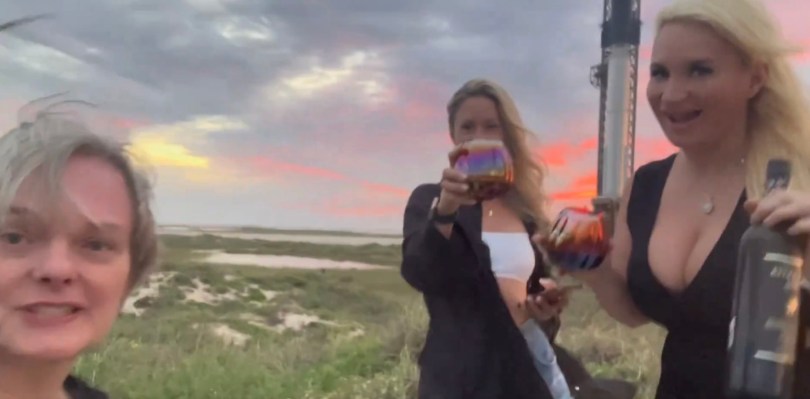
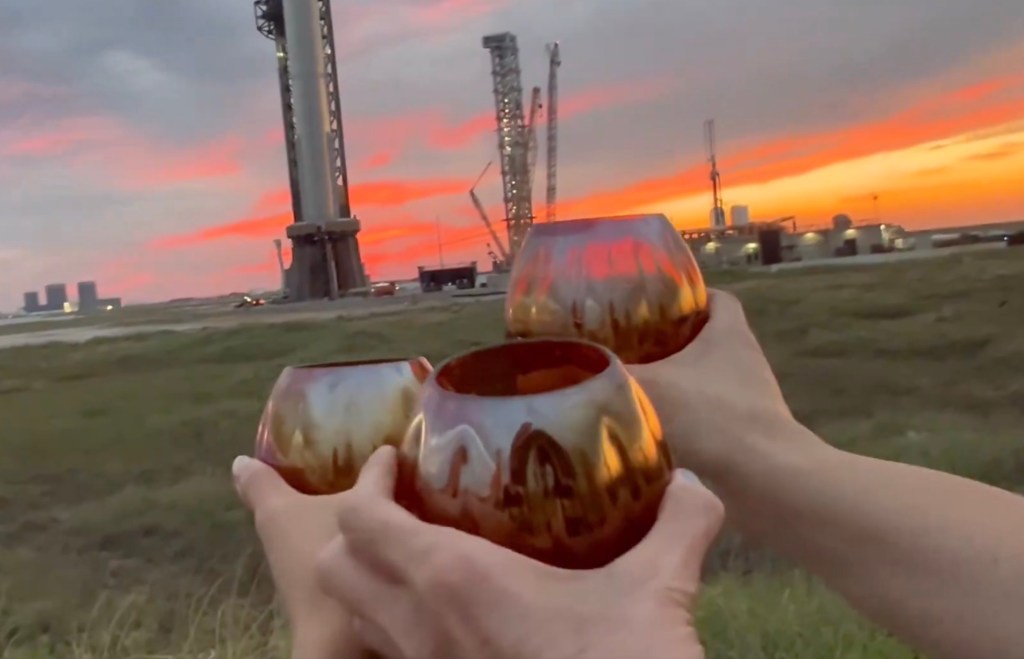
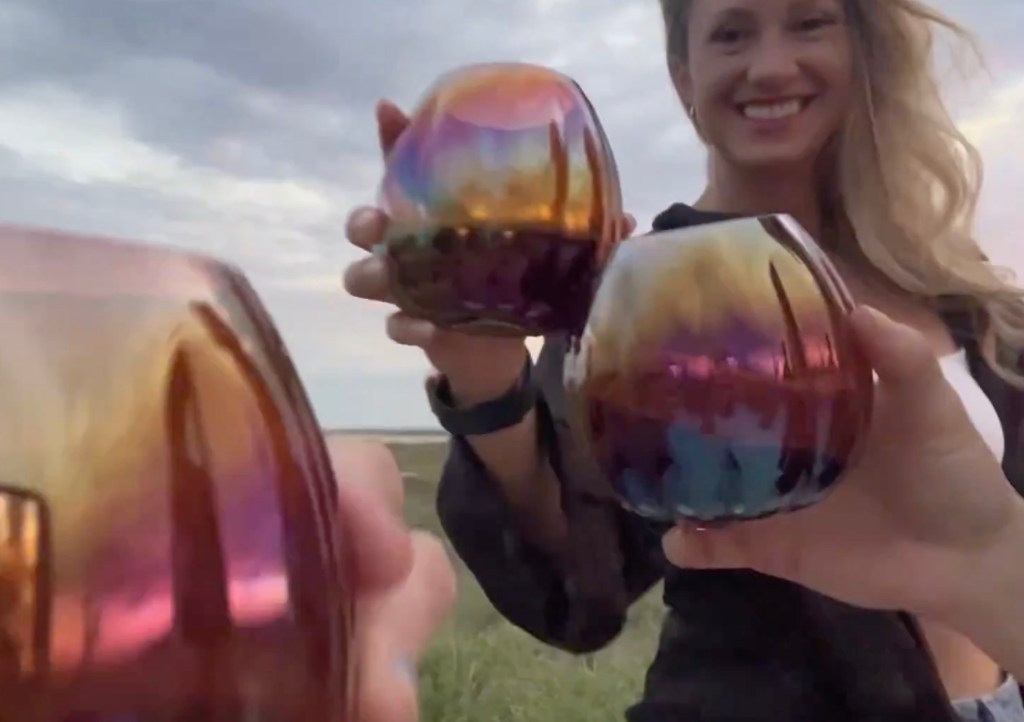
Starbase isn’t your average industrial park; it’s more like if Willy Wonka decided to get into rockets instead of chocolate. Here, we’re exploring the otherworldly aspects beyond the usual rocket launches. Imagine lounging at Starbase as the sun dips below the horizon, a glass of fine wine in hand, discussing none other than the colonization of Mars. It’s like a high-brow cocktail party, but with more spacesuits.

A Toast to Mars with Elon Musk

In this episode, see what it’s like to dream of Mars over a glass of wine. It’s not just about the science; it’s about the human spirit’s thirst for adventure. We ponder if Martian vineyards could be next on Elon Musk’s list of innovations – because, why not? A good Pinot Noir does wonders for the soul, even in space. Even Elon Musk called our experience “otherworldly”

The Tale of the Lighthouse with Jessica Tetreau

Now, let’s talk about a lighthouse story that’s as captivating as a space odyssey. The lighthouse, metaphorically speaking, has stood as a beacon of hope, navigation, and stories untold. Here at Starbase, we weave a tale that intertwines this symbol of guidance with our journey to the stars, because even astronauts need something to steer by.

Sapphire’s Cosmic Light Show

And for the grand finale, we present to you Sapphire – not the gem, but the light show. It’s as if Starbase decided to throw a rave for the universe itself, with lights dancing to the rhythm of the cosmos. This isn’t just a visual spectacle; it’s a celebration of light, innovation, and human ingenuity.

Thank You, Starbase Community

A massive shout-out to @JessicaTetreau and everyone who makes Starbase not just a place of work, but a vibrant community. You folks are the real stars here, and we mean that in the most literal sense.

Join Us

So, grab your spacesuit, your favorite bottle of vino, and maybe a flashlight (for the lighthouse stories), and join us for this 6 and 1/2 minute escapade into the wonders of Starbase. Tune into Podcast 92 on 𝕏, where we’re not just talking about the future; we’re living it, one star at a time.

Remember, in the vast expanse of the universe, every light show, every story, and every sip of wine brings us a little closer to understanding our place in this grand cosmic dance. Cheers to the stars and the stories they inspire!

FOR MEDIA USE ONLY News media is welcome to use my material in connection with a story or article. By downloading any content I create, you understand and hereby agree and represent that: (1) you are a member of the news media; (2) use of the content is in connection with a story or an article appearing in newspapers, periodicals, digital publications or television; (3) all images and rights thereto remain the property Gail Alfar.; and (4) use of the image is not for publication covers, advertising, promotion or otherwise for commercial purposes. Furthermore, use of any and all images and content appearing on this page must each include the notice “Courtesy of Gail Alfar” Use of materials copied from this website is at your own risk. You must obtain prior written consent from Gail Alfar for uses that exceed the above parameters.

Gail’s Podcast on 𝕏 Episode No. 91: Your Guide to Visiting Starbase Texas

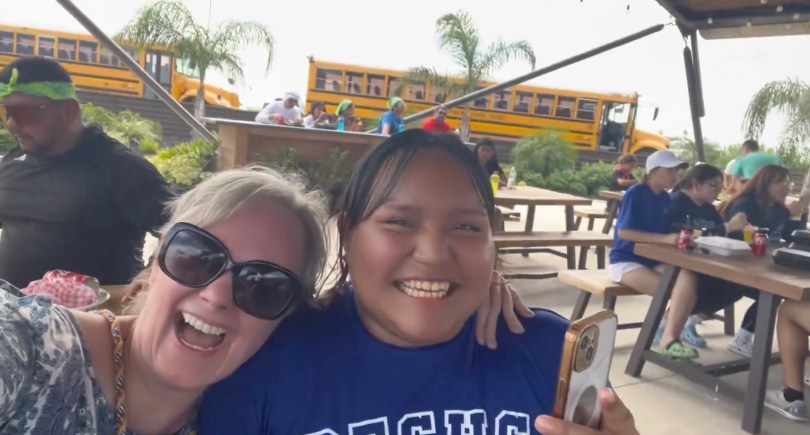
Ever wondered how to visit Starbase Texas? Here’s a simple yet impactful way: join the annual Boca Chica Beach cleanup.

The Experience

@BigImpactHumans and I dove into this year’s event, and here’s what unfolded:

  • Community Gathering: The beach was alive with volunteers, all united for a cleaner environment, right in the shadow of Starbase.
  • SpaceX’s Support: Beyond just the cleanup, SpaceX offered lunch, making it a memorable day with a side of space excitement.
  • Learning and Bonding: Insights into marine conservation were shared, turning a cleanup into an educational outing.

Why Attend?

  • Family-Friendly: It’s a perfect blend of family fun and environmental responsibility, with the added thrill of being near space tech.
  • Exclusive Peek: It’s like getting VIP access to Starbase, a rare chance to be close to where space history is being made.

Tune into Podcast 91 on 𝕏 for the full scoop. See you at the beach next year!

FOR MEDIA USE ONLY News media is welcome to use my material in connection with a story or article. By downloading any content I create, you understand and hereby agree and represent that: (1) you are a member of the news media; (2) use of the content is in connection with a story or an article appearing in newspapers, periodicals, digital publications or television; (3) all images and rights thereto remain the property Gail Alfar.; and (4) use of the image is not for publication covers, advertising, promotion or otherwise for commercial purposes. Furthermore, use of any and all images and content appearing on this page must each include the notice “Courtesy of Gail Alfar” Use of materials copied from this website is at your own risk. You must obtain prior written consent from Gail Alfar for uses that exceed the above parameters.

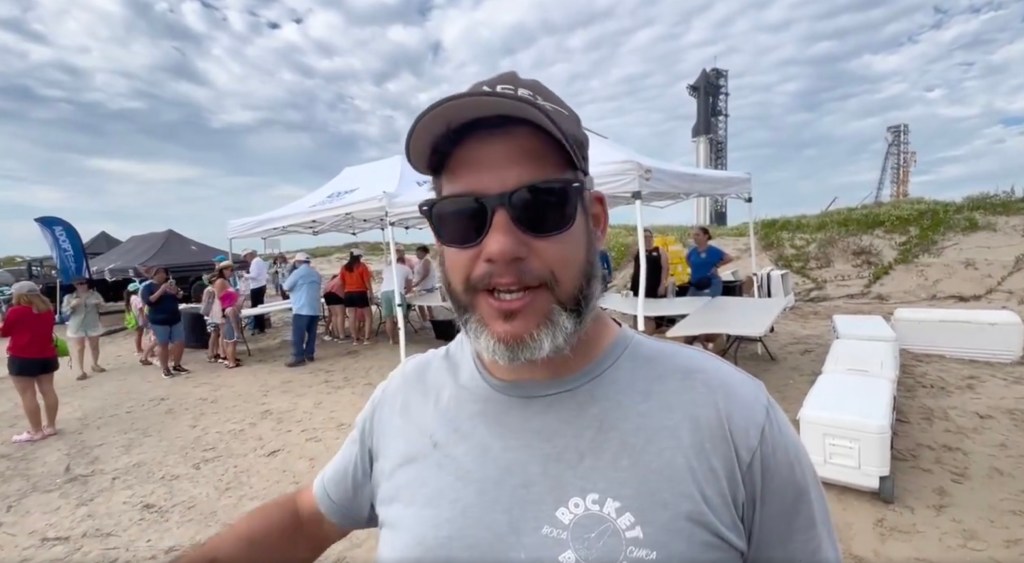
Gail’s Podcast on 𝕏 Episode No. 90: Conversation with Anthony Gomez of Rocket Ranch

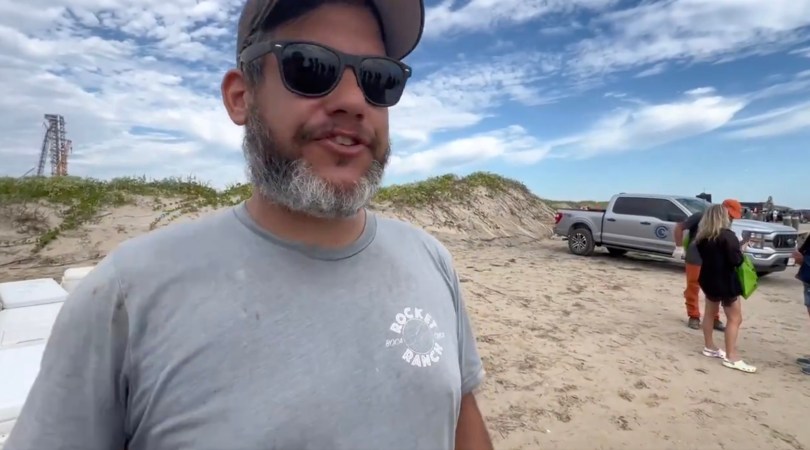
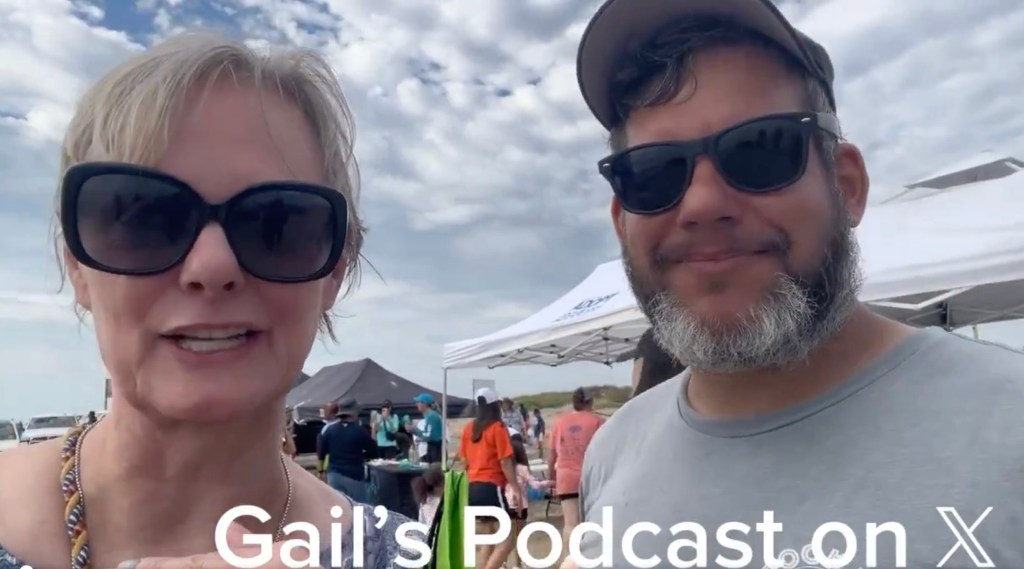
(Starbase, Texas) I travelled to South Texas to Starbase home of SpaceX to interview both Anthony Gomez and also Jack Beyer. You can see my interview with Jack here.

Anthony Gomez operates Rocket Ranch, which is a welcoming establishment with all the amenities you need for your visit to Starbase, Texas. He’s used of hosting people from around the world who come for launches and also stay for the in-between times. This interview shows the industrious side of him in his fast response to improving the Ranch after a storm.

FOR MEDIA USE ONLY News media is welcome to use my material in connection with a story or article. By downloading any content I create, you understand and hereby agree and represent that: (1) you are a member of the news media; (2) use of the content is in connection with a story or an article appearing in newspapers, periodicals, digital publications or television; (3) all images and rights thereto remain the property Gail Alfar.; and (4) use of the image is not for publication covers, advertising, promotion or otherwise for commercial purposes. Furthermore, use of any and all images and content appearing on this page must each include the notice “Courtesy of Gail Alfar” Use of materials copied from this website is at your own risk. You must obtain prior written consent from Gail Alfar for uses that exceed the above parameters.

Prior to Starship Launch 2, Elon Musk discussed his vision in an interview at the IAC Space Conference 

(4-5 minute read)

The inside of Starship’s cargo space is grandiose, like a futuristic cathedral. It’s science fiction becoming reality and it will get humanity to Mars!

While attending the first launch test of Starship out of Starbase, Texas last April, I realized how urgent the task of getting to orbit is for Elon Musk, the SpaceX team, and some former NASA employees I spoke to. 

Elon talked at the International Astronautical Congress (IAC) Space Conference 2023 and shared insights about Starship. Here are the noteworthy highlights:

Rapid Refueling and Reusability: The Cornerstone of Starship

Elon emphasized that the grandiosity of Starship’s cargo area is not just for show. Rather, it’s a testament to the spacecraft’s revolutionary design focused on full and rapid reusability. Musk explained that Starship’s enormous size is driven by its ambitious goal: to establish a permanent base on the Moon and even create a city on Mars. This commitment to reusability sets a new standard for space exploration.

When Elon was asked to give the audience a sense of the size of the cargo-carrying portion of Starship, he said “When you step into the Starship fairing or payload volume, it looks like a cathedral! It looks absurd, frankly. It’s like – this is ridiculously gigantic! That was my first impression when I first went up there in a man lift and climbed through the little hole for the Starship initial rough prototype, I was like… What have we done?? This thing is ridiculously big! -laughter- this actually can be great for Science, though.”

A Revolutionary Approach to Booster Recovery

Elon explains the importance of what many have come to call, mechazilla, “We have a giant custom-designed tower with massive mechanical arms, that will literally try to catch the booster and catch the ship, which, sounds insane, I mean I have not seen a science fiction movie that has done this. But, in theory, it should work.”

One of the most unconventional aspects of SpaceX’s plan for Starship is the use of mechazilla to catch both the booster and the ship after launch. Musk admitted that this approach might sound like something out of science fiction, but it holds the promise of revolutionizing rocket recovery and reuse. With the right licenses and permissions from the FAA, SpaceX aims to achieve the milestone of recovering the booster using the tower’s arms within a year, potentially before 2025.

Elon explained to the audience at the IAC Space Conference, “With Starship, actually, more profound than the size, is the fact that it is designed to be fully and rapidly reusable. The reason for the absurd size is that we are trying to build something that is capable of creating a permanent base on the moon and a city on Mars. That’s why it’s so large. Otherwise, we could make it much smaller.” 

Revealing more details, Elon explained, “In terms of catching it, for the ship‘s side, we actually want to make sure that it comes in fully intact, and lands at a precise location. before we try to catch it at the launch site because we. are taking every precaution we can so that we do not risk any human lives. or have destruction of property. So, when you see the ship able to have a precise-looking landing on the water, that’s when we will try to catch the ship with the tower.”

Starbase, Texas: The Epicenter of Launch Operations

Elon Musk reinforced the significance of Starbase, Texas, as the primary launch and booster return location. It’s here where the first launches and booster recoveries will occur, solidifying Starbase’s role in SpaceX’s ambitious plans for space exploration. 

Regarding the upcoming second launch test, Elon explained “There’s a ton of new technology in this rocket,” he also elaborated on the biggest risk, “The ship is designed to re-enter and has a heat shield. We think it’ll work, but we aren’t sure it’ll work. So if it doesn’t work, we want it to not work over the Pacific, which is quite a large body of water with almost no people on it.” The plan is to have Starship splash down somewhere near to Hawaii. 

Unprecedented Efficiency in Propellant Usage

SpaceX’s commitment to efficiency was highlighted by Musk when he stated that the Starship booster would return to the launch site in an astounding 4 to 5 minutes. This represents a major leap forward in propellant usage and marks a substantial step toward sustainable space travel.

Starlink Satellite Deployment: Revolutionizing Internet Connectivity

SpaceX’s Starlink project, aimed at global internet connectivity, could see the deployment of Starlink version three satellites as early as 2024. Satellite deployment could happen before SpaceX solves reentry and landing challenges. Satellites can be deployed without directly addressing those challenges, as they don’t reenter Earth’s atmosphere after being placed in orbit. 

Collaboration for Space Science

Musk unveiled a collaboration with UC Berkeley on a Space Telescope boasting an enormous lens, which could significantly enhance space science capabilities. This venture promises to unlock new discoveries and insights about our galaxy. Elon said,“So, one of the exciting projects that we are working with is with Berkeley on a Space Telescope that has an enormous lens, past 7 or 8 meters in diameter. The lens was meant for a ground-based satellite but you can then take that same satellite and put it in orbit, its capabilities are greatly enhanced because you don’t have the obfuscation of the atmosphere. So that’s why the Hubble, which is actually a fairly small telescope, can do better than any historical ground satellite, especially individual spectrum, so we’re very excited about what we can do for Space Science.”

Starship: A Versatile Transport System

Elon Musk described Starship as a generalized transport system capable of taking humanity anywhere within the solar system. It’s not limited to just lunar or Martian missions; instead, it’s a gateway to exploring the entire cosmos.

Elon Musk’s talk at the IAC Space Conference was interesting and I will link to it below this article so you may listen to it in it’s entirety. SpaceX, an American company, is at the forefront of space exploration, pushing the boundaries of what is achievable and setting the stage for an exciting future where humans will become multiplantary!

WATCH THE INTERVIEW HERE ON X LIVE! IAC on X

Article by Gail Alfar, please credit accordingly. Have a lovely night under the glittery stars.

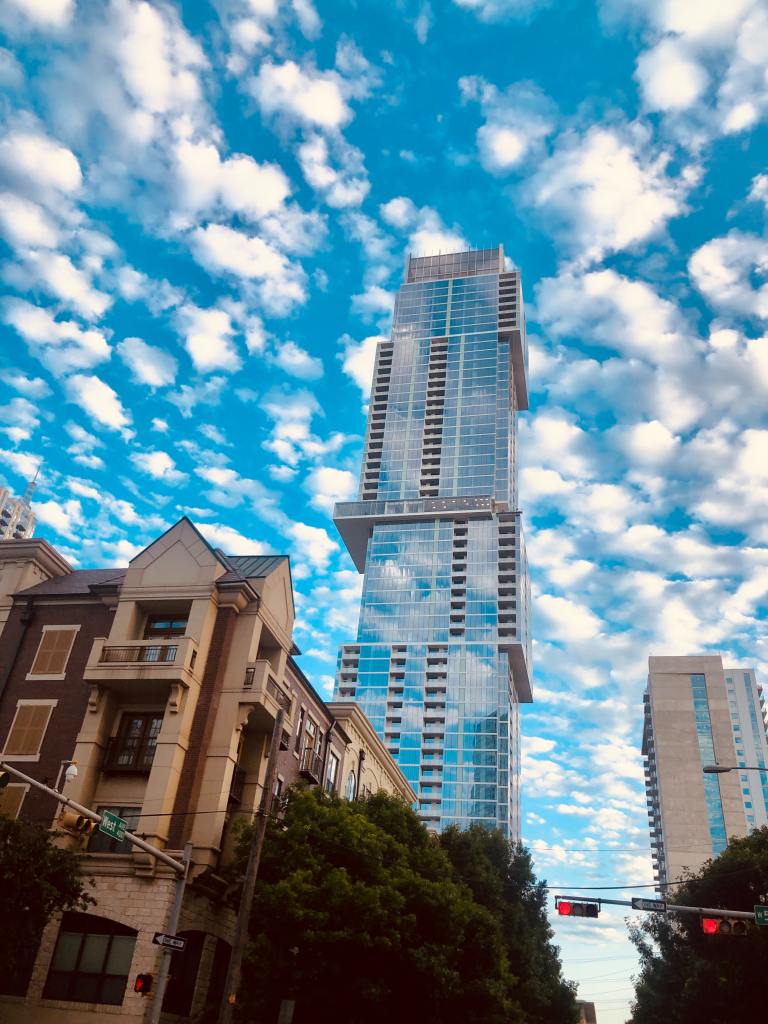
Austin, Texas downtown.

Read Elon Musk’s essay on technology for a better future

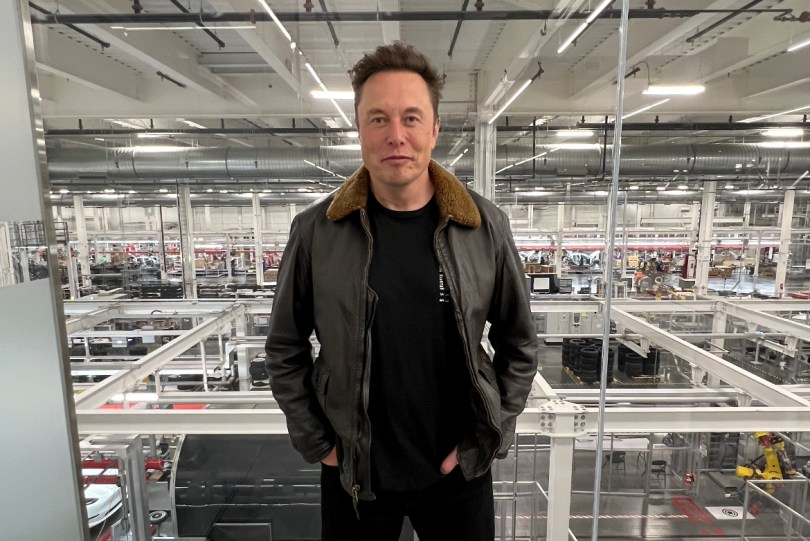
Elon Musk, Legendary Bomber Jacket, Gigafactory Texas, August 19, 2022. credit: Gail Alfar

It’s mid-August and school is starting up for many and this is a great time to read this inspiring essay by Elon Musk.

I hope you’ll relax with me and have a snack & a cold drink, may I suggest a KIND bar and a Coke Zero? This is what I enjoyed at Giga Texas right before briefly meeting Elon Musk and going on a tour of the gigafactory with brilliant Tesla engineers. I can tell you that after meeting Elon Musk, what he shares on Twitter is essentially the same as he talks about when meeting. He spoke about how important it is to get Starship into orbit and how important solving autonomy is.

I asked Elon if it was okay for me to take his picture, “Aren’t there already enough of me?”, “No, there isn’t one of you like this, alone, with Giga Texas in the background.”

Elon Musk is optimistic, lives with a sense of urgency, and takes action daily to make the future good. Yang Liu gave me permission to re-post this from his substack, Beijing Channel. 请用中文查看整篇文章。点击这里。 Elon Musk recognized Liu’s work in a tweet, “Reasonably accurate translation.”

BELIEVING IN TECHNOLOGY FOR A BETTER FUTURE 相信科技创造美好未来

Thank you for the invitation from China Cyberspace magazine. I am pleased to share with my Chinese friends some of my thoughts on the vision of technology and humanity.

As technology accelerates, it may one day surpass human understanding and control. Some are optimistic and some are pessimistic. But I believe that as long as we are not complacent and always maintain a sense of urgency, the future of humanity will be bright, driven by the power of technology. It is like a self-fulfilling prophecy: if humans want to make the future good, they should take action to make it good.

I want to do everything we can to maximize the use of technology to help achieve a better future for humanity. To that end, any area that contributes to a sustainable future is worthy of our investment.

Whether it’s Tesla, Neuralink, or SpaceX, these companies were all founded with the ultimate goal of enhancing the future of human life and creating as much practical value for the world as possible—Tesla to accelerate the world’s transition to sustainable energy, Neuralink for medical rehabilitation, SpaceX for making interstellar connections possible.

CLEAN ENERGY: THE FUTURE OF SUSTAINABILITY

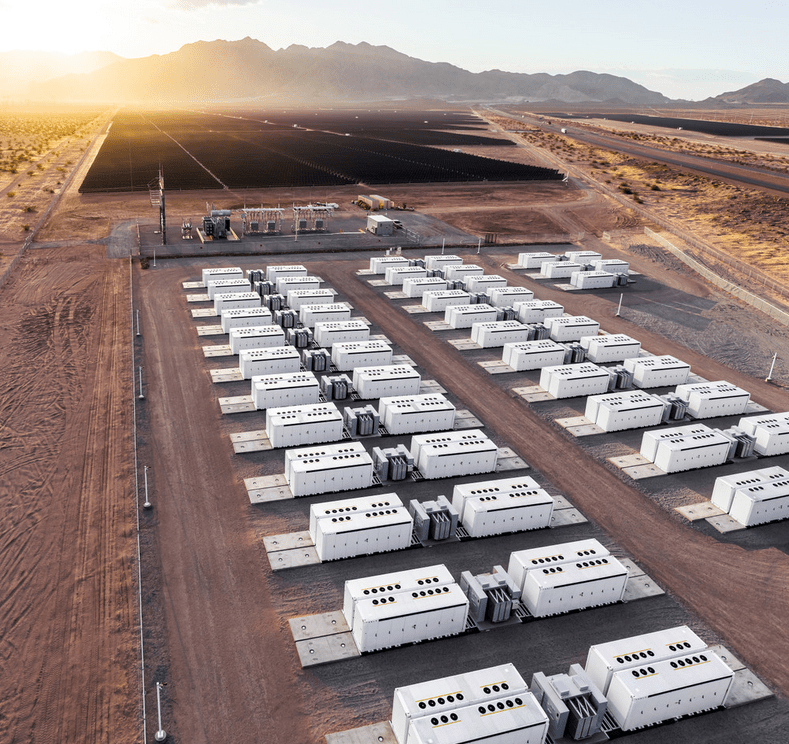
Tesla Megapack and Solar. credit: Tesla

The starting point for my thinking about clean energy is how to create and store energy sustainably and for the long term, and how to provide a constant source of power for the future of productive life. In my view, the future of sustainable energy involves three components.

The generation of sustainable energy. The sun is like a giant fusion generator, from which mankind currently exploits a tiny amount of energy. In the long run, solar energy will become the main source of energy for human civilization. Of course, wind, hydroelectric, geothermal, and nuclear power are also useful energy supplements.

The storage of sustainable energy. Given the change of day and night and the change of weather, we need a lot of fixed battery banks to store solar and wind energy, because the sun does not shine all the time, and the wind does not blow all the time, energy needs to be stored in a large number of fixed battery banks.

Electrified transportation. Full electrification of transportation, including cars, planes, and ships. Electric rockets may be more difficult, but we may be able to manufacture the propellant used in rockets from sustainable energy sources. Eventually, the world economy will be run entirely by sustainable energy sources.

The world is on track for a sustainable energy transition, and humanity should continue to accelerate the process. The faster this transition is achieved, the less risk humanity poses to the environment and the more it will gain. When clean energy is available, carbon sequestration and desalination will be cheaper, climate change and water shortages will be solved, and when fossil fuels are out of the picture, the skies will be cleaner, the world will be quieter, the air will be fresher, and the future will be brighter.

Tesla Solar Roof. credit: Tesla

Solar power, battery packs, and electric vehicles paint a rosy picture. Next, we need to focus on the limiting factors. The electrification of cars has become a consensus among nations, but battery support on a terawatt-hour scale is needed to roll out pure electric vehicles around the globe. According to our estimates, the world needs about 300 TWh of battery storage to achieve a transition to sustainable energy. The biggest difficulty in advancing sustainable energy lies in the large-scale production of lithium battery cells. Specifically, from the mining and element refining to battery cells coming off of the production line and finally assembled into battery packs, this is a complex process that is restraining the rapid development of a sustainable energy economy.

As a pioneer and innovator focusing on energy innovation technology, Tesla was founded to solve the problem of energy innovation. On the one hand, we create integrated sustainable energy products from the three segments of energy: production, storage and use; on the other hand, we are committed to redefining battery manufacturing by innovating and developing advanced battery technology to remove restrictions on battery capacity.

I believe that the world will transition to a sustainable future through a combination of solar and wind energy plus battery storage and electric vehicles. I am pleased to see more and more companies joining this field. Chinese companies will be a force to be reckoned with in the cause of energy innovation.

HUMANOID ROBOTS: DOING WHAT HUMANS DO

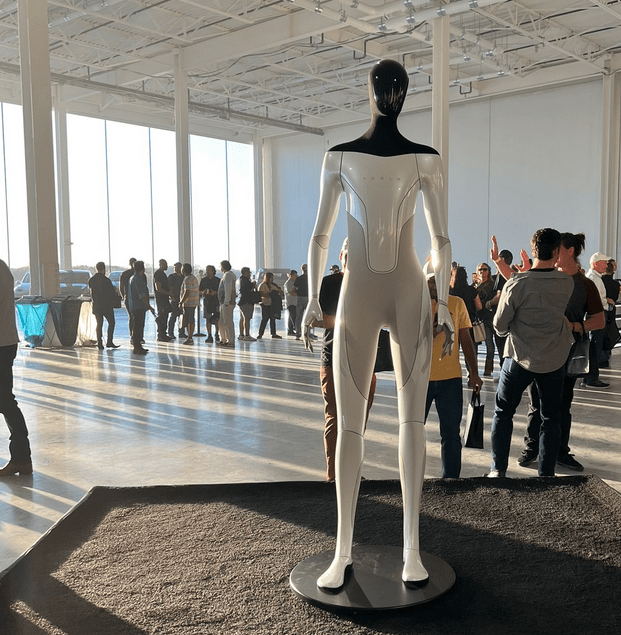
Tesla humanoid robot prototype, Tesla Bot. credit: Barbara @bmt094

Today’s cars are increasingly like smart, web-connected robots on wheels. In fact, in addition to cars, humanoid robots are also becoming a reality, with Tesla launching a general-purpose humanoid robot (Tesla Bot) in 2021. The Tesla Bot is close to the height and weight of an adult, can carry or pick up heavy objects, walk fast in small steps, and the screen on its face is an interactive interface for communication with people. You may wonder why we designed this robot with legs. Because human society is based on the interaction of a bipedal humanoid with two arms and ten fingers. So if we want a robot to adapt to its environment and be able to do what humans do, it has to be roughly the same size, shape, and capabilities as a human.

Tesla Bots are initially positioned to replace people in repetitive, boring, and dangerous tasks. But the vision is for them to serve millions of households, such as cooking, mowing lawns, and caring for the elderly.

Achieving this goal requires that robots evolve to be smart enough and for us to have the ability to mass produce robots. Our “four-wheeled robots” – cars – have changed the way people travel and even live. One day when we solve the problem of self-driving cars (i.e., real-world artificial intelligence), we will be able to extend artificial intelligence technology to humanoid robots, which will have a much broader application than cars.

We plan to launch the first prototype of a humanoid robot this year and focus on improving the intelligence of that robot and solving the problem of large-scale production. Thereafter, humanoid robots’ usefulness will increase yearly as production scales up and costs fall. In the future, a home robot may be cheaper than a car. Perhaps in less than a decade, people will be able to buy a robot for their parents as a birthday gift.

It is foreseeable that with the power of robots, we will create an era of extreme abundance of goods and services, where everyone can live a life of abundance. Perhaps the only scarcity that will exist in the future is for us to create ourselves as humans.

NEURALINK: EMPOWERING THE DISABLED

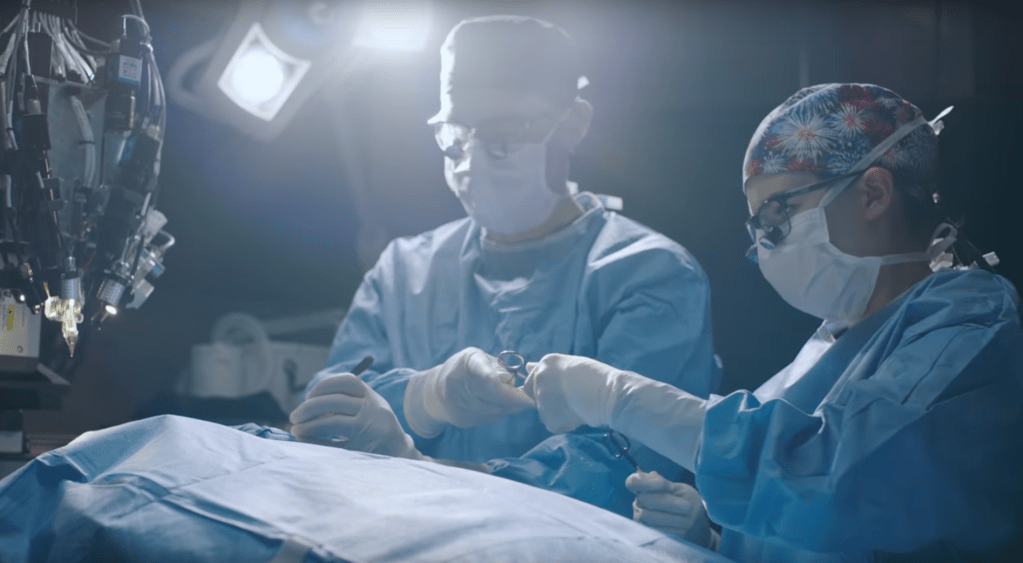
Image credit: Neuralink

Some of our Chinese friends may not be as familiar with Neuralink as with electric cars. These companies focus on developing computer-human brain fusion technologies, developing brain chips the size of coins, similar to wearable devices such as smartphones, except that they integrate more deeply with the user’s body—recording and stimulating brain activity through implants in the cerebral cortex.

At this stage, the technology is helping injured people on an individual level. We have received many saddening letters: a 25-year-old young man was in the prime of his life when he had a motorcycle accident that left him unable to eat on his own, which is a great grief for the individual and the family. In light of this, brain-machine interface technology will be focused on curing or alleviating brain injury and other related disorders in the years to come. For example, it could help restore sensory or motor function to limbs of those with spinal injuries and mental system disorders or allow quadriplegics to use their brains to easily operate computers or cell phones.

This technology can also improve a wider range of brain injury problems, whether these disorders are congenital or accidental, or caused by age and external stressors, including severe depression, morbid obesity, sleep problems, and underlying schizophrenia, all of which are expected to be alleviated by human-computer devices.

With the development of brain-machine interface technology, in the long term, this connection is expected to expand the channels of communication between the outside world and the human brain, “accessing” more brain regions and new neural data. This technology could allow humans to effectively integrate with artificial intelligence and ultimately expand new ways for humans to interact with the world, themselves and others. Even if the goal of human-machine integration is difficult to achieve, brain-machine interface technology could be of great value in the field of medical rehabilitation.

SPACE EXPLORATION: THE POSSIBILITY OF CROSS-PLANET HABITATS

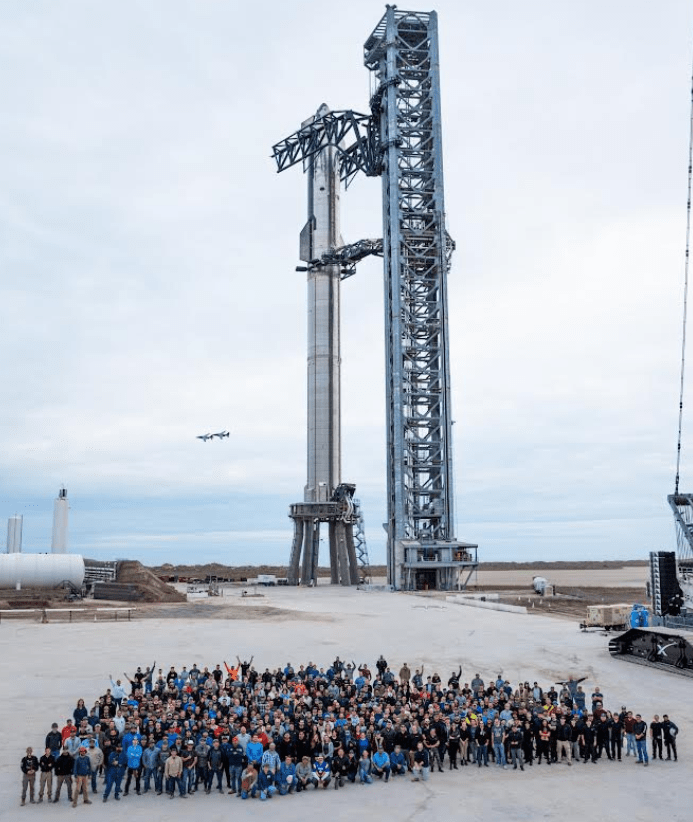
SpaceX team, Starship, and booster in Starbase, Texas, Feb 16, 2022. credit Austin Barnard

Finally, my greatest hope is that humans create a self-sustaining city on Mars. Many people ask me why I want to explore outer space and turn humans into multi-planetary creatures. In the vast universe, human civilization is like a faint little candle, like a little shimmering light in the void. When the sun expands one day and the Earth is no longer habitable, we can fly to a new home in a spaceship. If humans can inhabit other planets, it means that they have passed one of the conditions of the great screening of the universe, then we will become interplanetary citizens, and human civilization will be able to continue.

The first step toward interplanetary habitat is to reduce the cost of travel, which is what SpaceX was founded to do – first by building recoverable rockets and then by building reusable mega-ships with ever-increasing carrying capacity. As of earlier this year, SpaceX had successfully reused 79 rockets to deliver cargo to the space station and send ordinary people into space. We have also designed and built the largest launch vehicle in history, the Starship, which can carry 100 passengers and supplies at a time. In the future, we plan to build at least 1,000 Starships to send groups of pioneers to Mars to build a self-sustaining city.

As technology continues to change lives at an accelerating pace and the world evolves, life is more than simply solving one problem after another. We all want to wake up in the morning full of anticipation for the future and rejoice in what is to come. I hope more people will join us in our fight to accelerate the world’s transition to sustainable energy. I also welcome more like-minded Chinese partners to join us in exploring clean energy, artificial intelligence, human-machine collaboration, and space exploration to create a future worth waiting for.

CONCLUSION

Elon Musk wrote about the future of humanity in four critical areas

1. Clean Energy. Elon Musk envisions a thriving future that is powered by the sun. “Eventually, the world economy will be run entirely by sustainable energy sources.”

2. Humanoid Robots, “The Tesla Bot is close to the height and weight of an adult, can carry or pick up heavy objects, walk fast in small steps, and the screen on its face is an interactive interface for communication with people.”

3. Neuralink’s great potential to improve physical and mental health and eventually serve millions of households, especially the elderly.

4. Space exploration is the last topic and Elon’s words describing his greatest hope inspire us, “In the future, we plan to build at least 1,000 Starships to send groups of pioneers to Mars to build a self-sustaining city.”

Photo Cyber Rodeo. credit Ross Gerber

Underpopulation is very real, and Elon Musk has ideas on how to tackle this problem, you can read about what he thinks in my article, “Elon Musk: Discussion About Underpopulation,” which is highly acclaimed and noticed by Elon Musk who tweeted in response to it, “Children are essential to the future” on July 11, 2022.

Fun Sidestory: I am humbled and honored to have had the opportunity to get to know some of the Dogecoin community including Gary Lachance. I met Gary in Austin and I was excited to find out there were T-shirts with the Doge drone show from Cyber Rodeo and Texas Rodeo Doge shirts. Later when I was invited to meet Elon Musk at Giga Texas, I asked Gary if he had any extra shirts. Eventually, I met a friend of Gary’s in Austin who passed me a box of shirts and a ceramic tile. Elon received the Rodeo Doge and Drone Doge t-shirts and was appreciative and grateful for them.

Article by Gail Alfar. Exclusive to What’s Up Tesla – All Rights Reserved. August 21, 2022. Featured banner photo of Elon Musk in the Legendary Bomber Jacket on August 19, 2022, credit: Gail Alfar

One-Time
Monthly
Yearly

Make a one-time donation to support What’s Up Tesla

Make a monthly donation to support What’s Up Tesla

Make a yearly donation to support What’s Up Tesla

Choose an amount

¤5.00
¤15.00
¤100.00
¤5.00
¤15.00
¤100.00
¤5.00
¤15.00
¤100.00

Or enter a custom amount

¤

Your contribution is appreciated.

Your contribution is appreciated.

Your contribution is appreciated.

DonateDonate monthlyDonate yearly

Honoring SpaceX Raptor 2

Raptor 2 featured in Charro days parade [photo courtesy whataboutit ]

In this blogpost, you’ll see how SpaceX -the most successful rocket manufacturing company in the USA- is closely involved with local students. I also share a brief scenario of what it might feel like to be a spacefaring civilization. Find a nice comfy chair, sit down, relax, and enjoy!

Star of the Parade: Raptor 2

Charro Days is a week-long celebration of friendship between the citizens of Brownsville, Texas and Matamoros, Tamaulipas along the Rio Grande. It began in 1938 to boost the economy and the spirits of the community suffering from the Great Depression and aftermath of a category 5 hurricane. This year marks the first one that SpaceX has participated.

Employees of SpaceX donned traditional Mexican costumes, built a float and rolled the superbly engineered Raptor 2 engine down Elizabeth Street. Using a huge LED screen showing Starship, and passing out small white SpaceX maracas, they gave the engine a proper introduction. This matters because Raptor 2 will carry Starship into orbit soon, and bring humans to the moon!

Free rides to all kids were provided by SpaceX. According to local club spokesperson from ‘Space X Girls’ there were about eight rides and the spaceship ride was the one that stood out the most. ‘I did see them [the kids] have so much fun’ said Space X Girls.

Elon Musk was seen with his 21-month-old son, X, enjoying a delicious festival treat called Spiropapas or spiral potatoes [fried potato cut in a spiral and stacked on a long stick]. Fans hope this will become the official food for SpaceX and Tesla.

I caught up with Jessica Tetreau-Kalifa [Commissioner, District 2], after the festival. "Charro Days," she says, "is an intricate celebration between three organizations. SpaceX caught us by surprise and was a major sponsor of all three. We were very excited to see how willing they were to contribute to the festivities." 

She tells me that, "the best part was seeing how many children came to see the SpaceX float in the parade on Saturday. There were at least ten times as many children at Saturday’s parade than any year that I’ve participated in.  Mr. Musk has been incredibly generous to our students, so they really wanted to meet him and see him in person. It was very exciting that many kids did get to see and thank him personally." 

Also, she adds, "Mr. Musk distributed 20 million dollars to schools for our students in Cameron County, 10 million dollars to the City of Brownsville for downtown revitalization, and other significant donations throughout the community."

We talk about the generosity of Elon Musk. "Just last week," she says, "he donated a Starship prototype to the Brownsville airport." She continues, "It’s incredible to see that Brownsville ISD students are now able to have access to technology, math, and science programs."

"The city was finally able to install much-needed lighting that makes our downtown area feel safer. Community members are able to venture out as a family during the night hours because it’s cleaner and safer." 

"More than anything," she continues, "we appreciate the kindness, thoughtfulness, and generosity behind Mr. Musk's contributions to our community. He is a person that gives from his heart, and we are incredibly grateful to support and have him in our community." 

Humans as a Spacefaring Civilization

When you were a kid, did you ever imagine autonomous flying cars, battles in space? I’d like to leave you thinking about a beautiful future, inspired by the Raptor 2 and Elon Musk. Here’s my updated vision of life for future humans,

Gathering in Spaceball City [Brownsville elected to be renamed in 2099] via supersonic rocket travel, are humans from all over earth.  There is a welcoming complex with as much or as little entertainment or information that anyone could want in order to learn about Mars, SpaceX and the glorious history of its founder, Elon Musk.  

At Starbase, families rally around their beloved Mars-bound astonauts as they watch Starships launch elegantly to space.  Boosters return to earth, landing gracefully, as Starships glide effortlesssly among the stars and past the moon to the red planet.

Every single human, upon arrival to Mars, stops at a memorial called Thrawn. Thrawn, a statue similar to the Thinker, inspires the Martians to continue their mission to travel beyond Mars, to other galaxies. 

Traditional folk dress combined with a celebration of space travel [credit Space X Girls]

Gail Alfar, Exclusive to What’s Up Tesla – All Rights Reserved, March 5, 2022

One-Time
Monthly
Yearly

Make a one-time donation to support What’s Up Tesla

Make a monthly donation to support What’s Up Tesla

Make a yearly donation to support What’s Up Tesla

Choose an amount

¤5.00
¤15.00
¤100.00
¤5.00
¤15.00
¤100.00
¤5.00
¤15.00
¤100.00

Or enter a custom amount

¤

Your contribution is appreciated.

Your contribution is appreciated.

Your contribution is appreciated.

DonateDonate monthlyDonate yearly