On May 29, 2025, Elon Musk delivered a visionary speech at Starbase, Texas, the newly incorporated city and SpaceX’s hub for revolutionizing space travel. This transcript captures Musk’s electrifying address, detailing Starbase’s evolution from a sandbar to a powerhouse for building the world’s largest rockets. He highlights breakthroughs like rapidly reusable rockets, the Raptor 3 engine, and orbital propellant transfer, all pivotal for a self-sustaining Mars civilization. With vivid descriptions of catching boosters with “giant chopsticks” and plans for a million-ton Mars transfer, Musk inspires a future where anyone can visit Starbase or journey to Mars.

Elon Musk’s Vision for a Multiplanetary Future: Starbase and the Road to Mars, May 2025

On May 29, 2025, Elon Musk delivered his company speech at Starbase, Texas, the newly incorporated city and SpaceX’s hub for space travel to Mars. This transcript, which I have worked hard on to bring you accuracy, captures Elon’s valuable and historical words.

Elon details Starbase’s evolution from a sandbar to a powerhouse for building the world’s largest rockets. Elon highlights breakthroughs like rapidly reusable rockets, Raptor 3 engine, and orbital propellant transfer plans, all critical for a self-sustaining Mars civilization. With vivid descriptions of catching boosters with “giant chopsticks” and plans for a million-ton Mars transfer, our hero Elon inspires a future where anyone can visit Starbase or journey to Mars.

Elon Musk: The gateway to Mars. Here we are at the newly incorporated Starbase, Texas. This is the first new city made in America in, I think, quite a few decades. At least that’s what I’m told. It’s a very cool name, named because it’s where we’re going to develop the technology necessary to take humanity, civilization, and life as we know it to another planet for the first time in the 4.5 billion-year history of Earth.

[Lots of cheering. Elon shows a short video of the history of Starbase. He talks along with the images.]

Elon: We started with basically nothing. Starbase started as a sandbar with nothing.

[The video shows a prototype rocket and two open tents.]

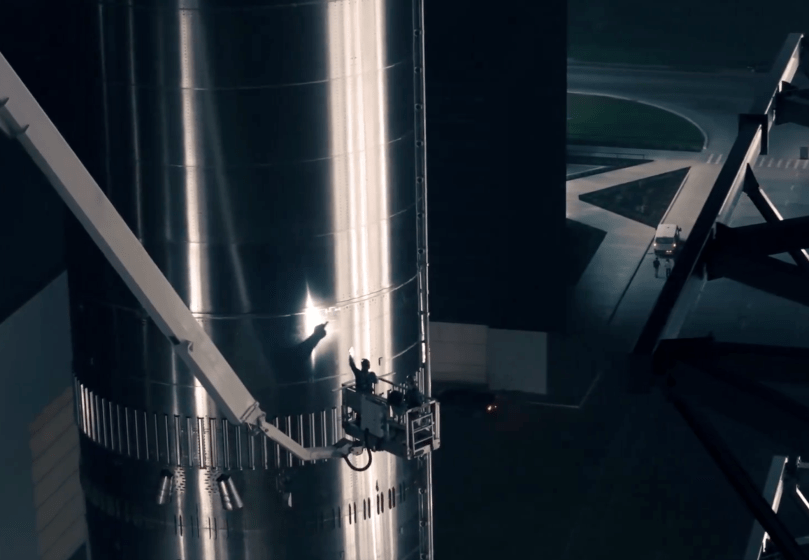
Elon: Even those little things we built. That’s the original Mad Max rocket!

[Looking at the rocket from 2019, six years ago, the camera pans around it. The sun hits the side, revealing a gorgeous, surreal piece of steel.]

Elon: You know, lighting is very important for that Mad Max rocket.

[Elon is smiling, with his hand in a determined fist. He’s not afraid of silence; this is a tribute to that incredible rocket. Many employees in the audience may not have seen it in person; it’s six years old. Some may have been in high school at the time.]

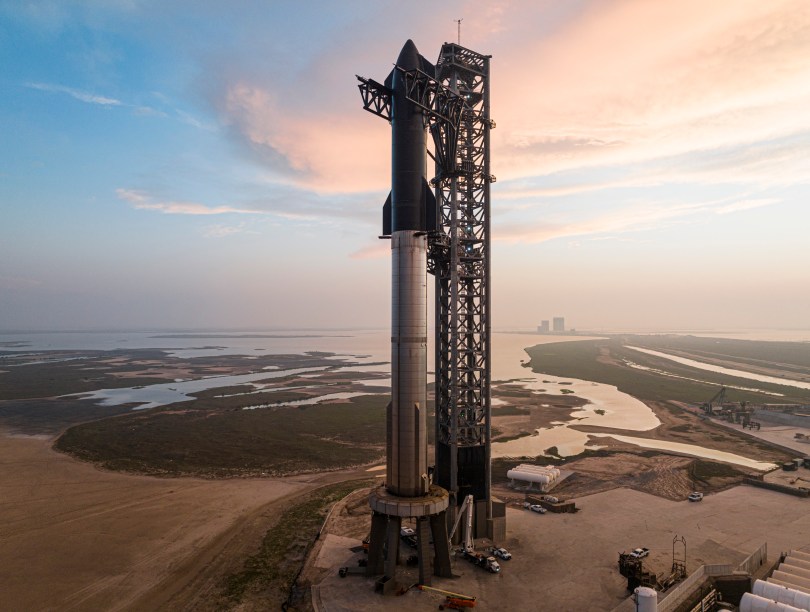
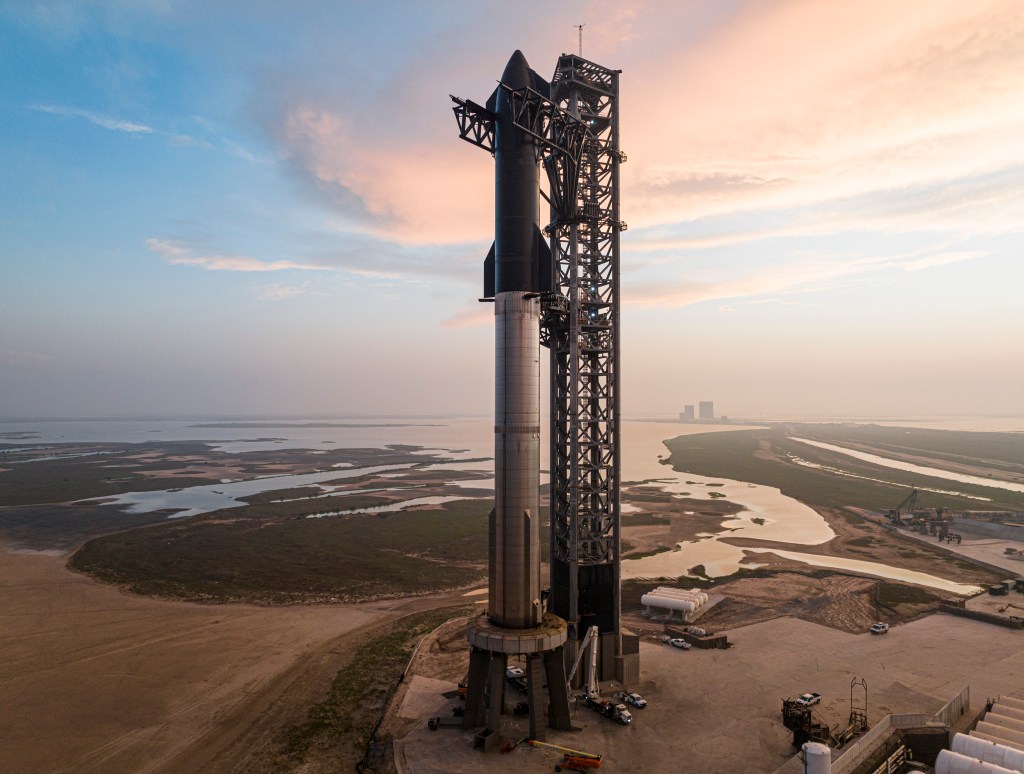
Elon: Not long ago, there was basically nothing here. In about five or six years, thanks to the incredible work of the SpaceX team, we’ve built a small city. We built two gigantic launchpads and a gigantic rocket factory for a gigantic rocket. The cool thing is, anyone watching can come visit because our entire production facility and launch site are on a public highway. Anyone in South Texas can see the rocket up close, see the factory, and anyone interested in the largest flying object on Earth can drive down the public highway and see it! Pretty cool!

[Video progresses to Starbase 2025.]

Elon: We’re now at the point where we can produce a ship roughly every two or three weeks. We don’t always produce a ship every two or three weeks because we’re making design upgrades, but ultimately we’re aiming for the ability to produce 1,000 ships a year, so three ships a day.

[On the video, birds chirp, water glistens, and a hovercraft pulls gently away from Starbase Beach.]

Elon (smiling): That’s our hovercraft. We’re driving the booster down the road to the launch site. You see the Megabays. The cool thing for those watching is you can literally come here, drive down the road, and see it. This is the first time in history that’s been possible. That highway on the left is public. You can just come and see it, which I recommend. It’s very inspiring.

[Elon points to a render of a massive building.]

Elon: There’s a person next to it that looks like a tiny ant. That’s our Giga Bay! We’re expanding integration to produce 1,000 per year. The Giga Bay hasn’t been built yet, but we’re building it. It’s a truly enormous structure, one of the biggest in the world by some measures, designed for 1,000 Starships per year. We’re also building a Giga Bay in Florida, so we’ll have two facilities—one in Texas and one in Florida. It’s difficult to gauge the size of these buildings because you need a human for scale. When you see how tiny a human is next to it, you realize how enormous it is.

BUILD COMPARISON

Elon: When we look at our build comparison in vehicles per year, Boeing and Airbus make airplanes, but Starship will probably make as many Starships for Mars as Boeing and Airbus make commercial airplanes. This is an enormous scale, and each Starship is bigger than a 747 or an A380. In terms of Starlink satellites, version three satellites, we’ll make on the order of 5,000 per year, and at some point, closer to 10,000 per year. Those Starlink V3 satellites are roughly the size of a 737 (unfurled). They compare to the B-24 bomber in World War II. The scale of production is still small compared to Tesla.

[A large chart appears, showing Tesla’s massively scaled production: currently 1,773,443 cars per year.]

Elon: Tesla will probably double or triple that volume in the future. It puts things into perspective that it’s possible to build a vast number of interplanetary Starships. Even when comparing tonnage, Tesla and other car companies produce far more complex manufactured tonnage than SpaceX, showing it’s achievable. These numbers, while insanely high by traditional space standards, are achievable because they’ve been achieved in other industries.

Progress is measured by the timeline to establishing a self-sustaining civilization on Mars.

Elon: With each launch, especially early on, we learn more about what’s needed to make life multiplanetary and improve Starship to take hundreds of thousands, if not millions, to Mars. Ideally, we can take anyone who wants to go and bring all equipment necessary to make Mars self-sustaining, so Mars can grow by itself. Worst-case scenario, we reach the point where Mars can continue to grow even if supply ships from Earth stop for any reason. At that point, we’ve achieved civilization resilience, where Mars could rescue Earth or vice versa. Having two self-sustaining planets is incredibly important for long-term survival. A multi-planet civilization is likely to last ten times longer than a single-planet one because of risks like World War III, meteors, or supervolcanoes. With two planets, we keep going, then move beyond Mars to the asteroid belt, Jupiter’s moons, and other star systems, making science fiction reality. To achieve this, we need rapidly reusable rockets to keep the cost per ton to Mars as low as possible. That’s essential. We need rapidly reliable rockets—it’s like a pirate’s “Rrrr”: rapidly reusable, reliable rockets!

Congrats to the SpaceX team on catching the giant rocket.

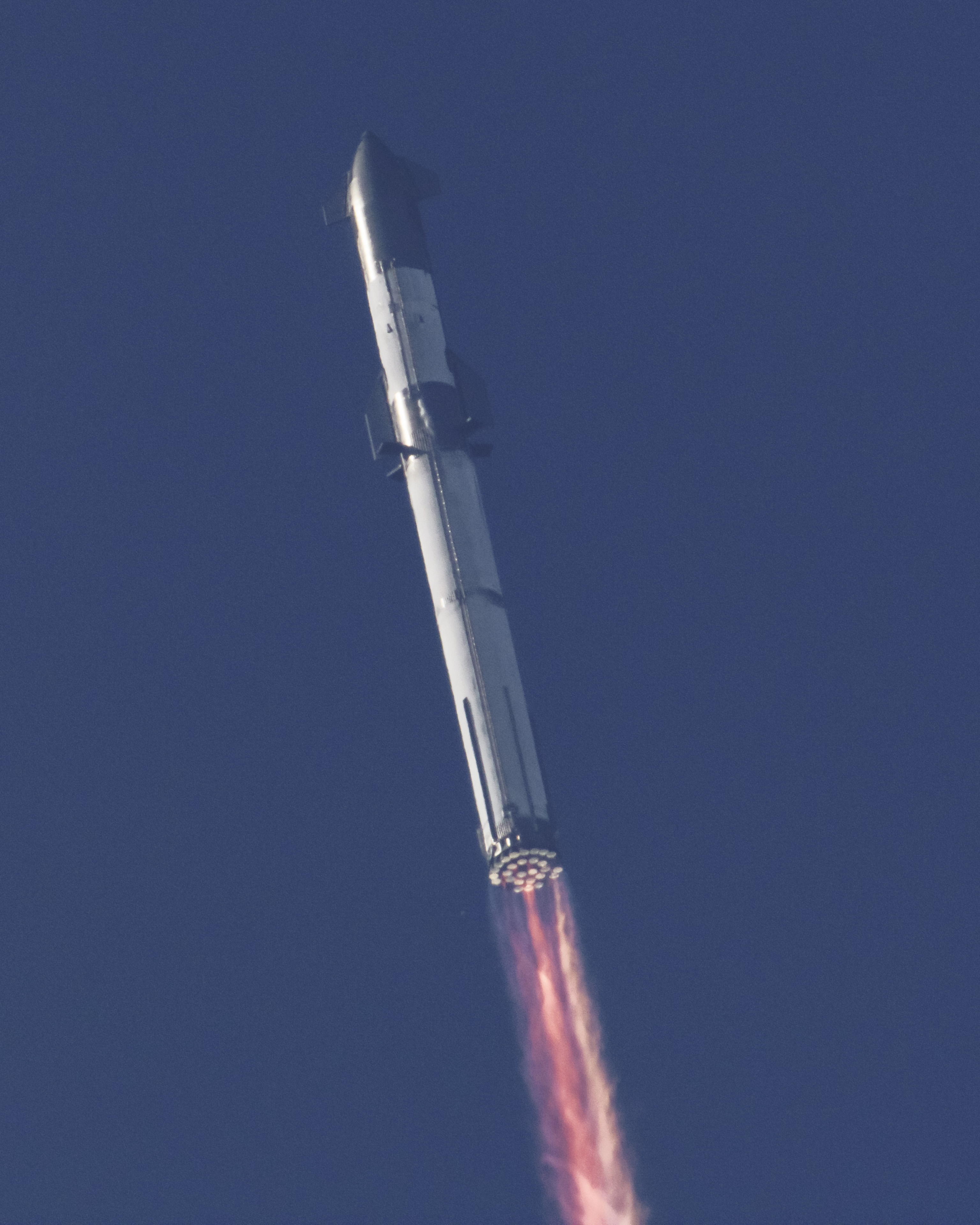
Elon: It’s mind-blowing that the SpaceX team has caught the largest flying object ever made multiple times using a novel method of catching it with giant chopsticks!

[SpaceX employees and Elon pause to watch a video showing the booster, with fiery engines, descending through space, adjusting, and being caught with chopsticks.]

Elon: Have you ever seen that before?

[The video is awe-inspiring. Elon congratulates his team, calling it quite an achievement. Everyone cheers; it’s an emotional moment.]

Elon: We catch it this way, which has never been done before, to make the rocket rapidly reusable. If the super heavy booster, 30 feet in diameter, landed with legs on a pad, we’d have to pick it up, stow the legs, and move it back to the launch pad, which is difficult. But catching it with the same tower that places it in the launch mount is the best for rapid reuse. It’s caught by the arms that placed it, then set back in the launch ring immediately. In principle, the super heavy booster can be reflown within an hour of landing. It returns in five or six minutes, gets caught, placed back, refilled with propellant in 30 to 40 minutes, and a ship placed on top. It could refly every hour or two.

The next goal is to catch the ship.

Elon: We haven’t done this yet, but we will.

[A video shows a render of a Starship gently caught by chopsticks.]

Elon: We hope to demonstrate this later this year, maybe in two or three months. The ship would be placed on the booster, refilled, and flown again. The ship takes longer because it orbits Earth a few times until the ground track returns to the launchpad. It’s intended to be reflown multiple times per day.

RAPTOR 3

Elon: This is the new Raptor 3, an awesome engine! Big hand to the Raptor team. Raptor 3 requires no basic heat shield, saving mass and improving reliability. A small fuel leak will leak into the flaming plasma and not matter, unlike a boxed engine where it’s scary. It’ll take a few tries, but it’ll massively increase payload capability, efficiency, and reliability. It’s alien technology. Industry experts thought an incomplete Raptor 3 picture wasn’t firing, but it was at unprecedented efficiency.

[Lots of cheers and applause.]

Elon: That’s one clean engine. We simplified the design, incorporated secondary fluid circuits and electronics into the structure, so everything is contained and protected. It’s a marvel of engineering.

PROPELLANT TRANSFER

Elon: A key technology for Mars is orbital propellant transfer, like aerial refueling for airplanes, but for rockets. It’s never been done but is technically feasible. Two Starships get together; one transfers fuel and oxygen—almost 80% oxygen, just over 20% fuel. A Starship with payload goes to orbit, others refill its propellant, and then it departs for Mars or the Moon. We hope to demonstrate this next year.

PLASMAJET TESTING

Elon: Mars’ atmosphere is ~95% CO2. The heat shield entering Mars encounters more than twice the atomic oxygen compared to Earth. Developing a reusable orbital heat shield is extremely difficult. Even the Shuttle’s required months of refurbishment. Only advanced ceramics, glass, aluminum, or carbon-carbon survive reentry stresses without eroding or cracking. This will be the first reusable orbital heat shield, needing extreme reliability. It’ll take years to hone, but it’s achievable within physics. Mars’ CO2 atmosphere becomes plasma, producing more free oxygen than Earth’s (~20% oxygen), oxidizing the heat shield. We test rigorously in a CO2 atmosphere for both Earth and Mars.

MARS ENTRY HEATSHIELD

Elon: Derived from Starship’s current heat shield, we want the same structure and material for Earth and Mars to test hundreds of times on Earth before Mars, ensuring reliability.

NEXT GEN STARSHIP

[The video shows a taller, majestic Starship.]

Elon: Next-generation Starships have improvements. It’s taller, with a better interstage between ship and booster. Struts allow flame from hot staging—lighting ship engines while booster engines fire—to exit easily, and we bring the interstage back instead of discarding it.

SUPER HEAVY

  • HEIGHT (m) 72.3
  • PROPELLANT CAPACITY (t) 3650
  • LIFTOFF THRUST (tf) 8240

[Excited reaction from SpaceX engineers due to increased propellant capacity and thrust.]

Elon: A little taller, from 69 meters to 72 meters. Propellant capacity may push to 3,700 tons, long-term maybe 4,000 tons. Liftoff thrust will keep rising, ultimately close to 10,000 tons. The booster looks naked because Raptor 3 engines don’t need a heat shield, standing in flaming plasma. It’s lighter and looks amazing.

STARSHIP

  • HEIGHT (m) 52.1
  • PROPELLANT CAPACITY (t) 1550
  • THRUST (tf) 1600

Elon: The ship is longer, more capable, moving to 1,550 tons of propellant, likely 20% more long-term. The heat shield is sleeker, with smooth boundaries, no jagged tiles. It looks sleek. This version has six engines, but a future version will have nine. Starship version three achieves all key elements. New technology takes three major iterations to work well. With Raptor 3 and Starship/Booster version 3, we’ll achieve a rapidly reusable, reliable rocket with orbital refilling—everything needed to make life multiplanetary. We aim to launch version three by year-end.

FUTURE STARSHIP

[An image of three Starships shows progress and future plans.]

Elon: The left is current, the middle is by year-end, and the right is long-term. The future Starship is 142 meters tall (current: 121 meters, next-gen: 124.4 meters). The middle version will be Mars-capable, followed by performance improvements. Like Falcon 9, we’ll make it longer and increase payload. By year-end, it’ll be capable of making life multiplanetary, then we’ll hone efficiency, reduce cost per ton and per person to Mars, and make it so anyone can move to Mars to build a new civilization. It’s the best adventure possible.

[Lots of applause.]

Elon: Ultimately, we’ll have 42 engines, as prophesied by Douglas Adams in The Hitchhiker’s Guide to the Galaxy. The answer to life’s meaning is 42, so the Starship stack will have 42 engines.

[Lots of applause.]

MASS TO ORBIT

Elon: It’s remarkable—200 tons payload to orbit with full reusability, twice the Saturn V Moon rocket’s capability, which was fully expendable. Starship is fully reusable.

MOON BASE ALPHA

Elon: Without reusability, Starship would have ~400 tons to orbit. It’s a big rocket needed for multiplanetary life. Along the way, we could have a Moon base like Moonbase Alpha, a gigantic science station for universe research.

MARS TRANSFER WINDOWS

Elon: You can go to Mars every 26 months. The next opportunity is November–December next year, in ~18 months. We’ll try for it, with a 50-50 chance if we figure out orbital refilling in time. If achieved, we’ll launch the first uncrewed Starship to Mars by year-end.

[Lots of applause.]

Elon: The distance to Mars is ~1,000 times farther than the Moon. You create an elliptical orbit with Earth at one point and Mars at the other, timing the ellipse to intersect Mars. This is shown on Starlink Wi-Fi routers. Starlink funds Mars missions. Thanks to everyone supporting Starlink—you’re helping make humanity a space civilization.

CANDIDATE BASE LOCATIONS

Elon: We’re looking at the Arcadia region, a lead candidate due to ice for water and suitable terrain. It’s my daughter’s name, too (smiling). First Starships will gather critical data.

Elon: First flights will send Optimus robots to explore and prepare for humans. If we launch by year-end, arriving in 2027, it’ll be epic to see Optimus on Mars. Two years later, if landings succeed, we’ll send humans to build infrastructure. We might do two robot landings before humans, just to be safe.

MARS 2028

Elon: Develop power generation, mining, construction, propellant generation, habitats, communications, and more.

[Elon shows an awe-inspiring picture of Optimus bots on a construction beam above Mars.]

COMMUNICATIONS ON MARS

Elon: We’ll use a Starlink version for Mars Internet. Even at light speed, communication takes 3.5–22 minutes due to Mars’ position. High-bandwidth communication is challenging, but Starlink will achieve it.

HUMANS ON MARS

Elon: Subsequent missions will carry more people and thousands of tons of cargo, laying groundwork for a permanent presence. The goal is to make Mars self-sustaining quickly. Launch pads may be farther for safety. Mars needs lots of solar power. Initially, you’ll need Mars suits and glass domes until terraforming.

Elon: We aim to transfer over 1 million tons per Mars window for a serious civilization.

SPACEPORTS

Elon: We’ll need many spaceports. With transfer windows, 1,000–2,000+ ships gather in orbit like Battlestar Galactica, then depart. Mars needs hundreds of landing pads to handle thousands of inbound ships.

Elon: This is an incredible city on another planet, a new world. Martians can rethink civilization—government, rules, everything. It’s up to them. Let’s get it done!
Prior to Starship Launch 2, Elon Musk discussed his vision in an interview at the IAC Space Conference 

(4-5 minute read)

The inside of Starship’s cargo space is grandiose, like a futuristic cathedral. It’s science fiction becoming reality and it will get humanity to Mars!

While attending the first launch test of Starship out of Starbase, Texas last April, I realized how urgent the task of getting to orbit is for Elon Musk, the SpaceX team, and some former NASA employees I spoke to. 

Elon talked at the International Astronautical Congress (IAC) Space Conference 2023 and shared insights about Starship. Here are the noteworthy highlights:

Rapid Refueling and Reusability: The Cornerstone of Starship

Elon emphasized that the grandiosity of Starship’s cargo area is not just for show. Rather, it’s a testament to the spacecraft’s revolutionary design focused on full and rapid reusability. Musk explained that Starship’s enormous size is driven by its ambitious goal: to establish a permanent base on the Moon and even create a city on Mars. This commitment to reusability sets a new standard for space exploration.

When Elon was asked to give the audience a sense of the size of the cargo-carrying portion of Starship, he said “When you step into the Starship fairing or payload volume, it looks like a cathedral! It looks absurd, frankly. It’s like – this is ridiculously gigantic! That was my first impression when I first went up there in a man lift and climbed through the little hole for the Starship initial rough prototype, I was like… What have we done?? This thing is ridiculously big! -laughter- this actually can be great for Science, though.”

A Revolutionary Approach to Booster Recovery

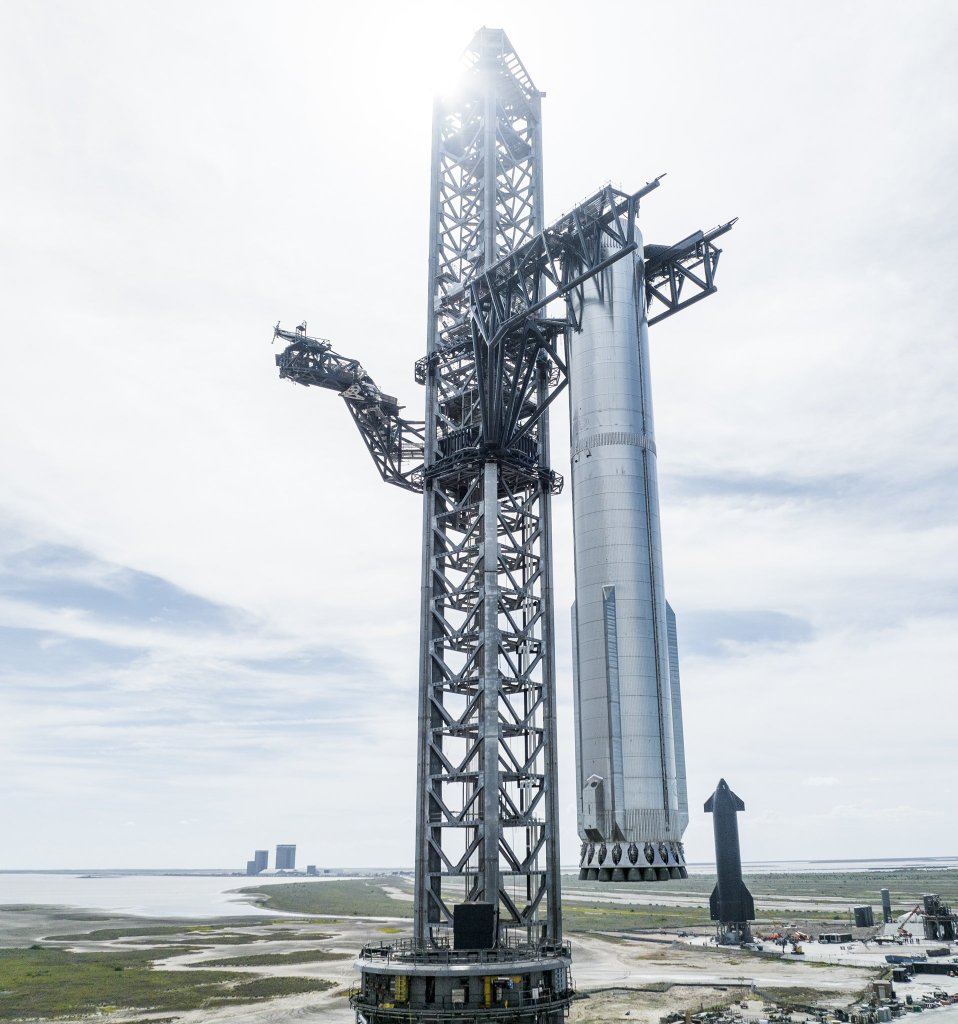
Elon explains the importance of what many have come to call, mechazilla, “We have a giant custom-designed tower with massive mechanical arms, that will literally try to catch the booster and catch the ship, which, sounds insane, I mean I have not seen a science fiction movie that has done this. But, in theory, it should work.”

One of the most unconventional aspects of SpaceX’s plan for Starship is the use of mechazilla to catch both the booster and the ship after launch. Musk admitted that this approach might sound like something out of science fiction, but it holds the promise of revolutionizing rocket recovery and reuse. With the right licenses and permissions from the FAA, SpaceX aims to achieve the milestone of recovering the booster using the tower’s arms within a year, potentially before 2025.

Elon explained to the audience at the IAC Space Conference, “With Starship, actually, more profound than the size, is the fact that it is designed to be fully and rapidly reusable. The reason for the absurd size is that we are trying to build something that is capable of creating a permanent base on the moon and a city on Mars. That’s why it’s so large. Otherwise, we could make it much smaller.” 

Revealing more details, Elon explained, “In terms of catching it, for the ship‘s side, we actually want to make sure that it comes in fully intact, and lands at a precise location. before we try to catch it at the launch site because we. are taking every precaution we can so that we do not risk any human lives. or have destruction of property. So, when you see the ship able to have a precise-looking landing on the water, that’s when we will try to catch the ship with the tower.”

Starbase, Texas: The Epicenter of Launch Operations

Elon Musk reinforced the significance of Starbase, Texas, as the primary launch and booster return location. It’s here where the first launches and booster recoveries will occur, solidifying Starbase’s role in SpaceX’s ambitious plans for space exploration. 

Regarding the upcoming second launch test, Elon explained “There’s a ton of new technology in this rocket,” he also elaborated on the biggest risk, “The ship is designed to re-enter and has a heat shield. We think it’ll work, but we aren’t sure it’ll work. So if it doesn’t work, we want it to not work over the Pacific, which is quite a large body of water with almost no people on it.” The plan is to have Starship splash down somewhere near to Hawaii. 

Unprecedented Efficiency in Propellant Usage

SpaceX’s commitment to efficiency was highlighted by Musk when he stated that the Starship booster would return to the launch site in an astounding 4 to 5 minutes. This represents a major leap forward in propellant usage and marks a substantial step toward sustainable space travel.

Starlink Satellite Deployment: Revolutionizing Internet Connectivity

SpaceX’s Starlink project, aimed at global internet connectivity, could see the deployment of Starlink version three satellites as early as 2024. Satellite deployment could happen before SpaceX solves reentry and landing challenges. Satellites can be deployed without directly addressing those challenges, as they don’t reenter Earth’s atmosphere after being placed in orbit. 

Collaboration for Space Science

Musk unveiled a collaboration with UC Berkeley on a Space Telescope boasting an enormous lens, which could significantly enhance space science capabilities. This venture promises to unlock new discoveries and insights about our galaxy. Elon said,“So, one of the exciting projects that we are working with is with Berkeley on a Space Telescope that has an enormous lens, past 7 or 8 meters in diameter. The lens was meant for a ground-based satellite but you can then take that same satellite and put it in orbit, its capabilities are greatly enhanced because you don’t have the obfuscation of the atmosphere. So that’s why the Hubble, which is actually a fairly small telescope, can do better than any historical ground satellite, especially individual spectrum, so we’re very excited about what we can do for Space Science.”

Starship: A Versatile Transport System

Elon Musk described Starship as a generalized transport system capable of taking humanity anywhere within the solar system. It’s not limited to just lunar or Martian missions; instead, it’s a gateway to exploring the entire cosmos.

Elon Musk’s talk at the IAC Space Conference was interesting and I will link to it below this article so you may listen to it in it’s entirety. SpaceX, an American company, is at the forefront of space exploration, pushing the boundaries of what is achievable and setting the stage for an exciting future where humans will become multiplantary!

WATCH THE INTERVIEW HERE ON X LIVE! IAC on X

Article by Gail Alfar, please credit accordingly. Have a lovely night under the glittery stars.

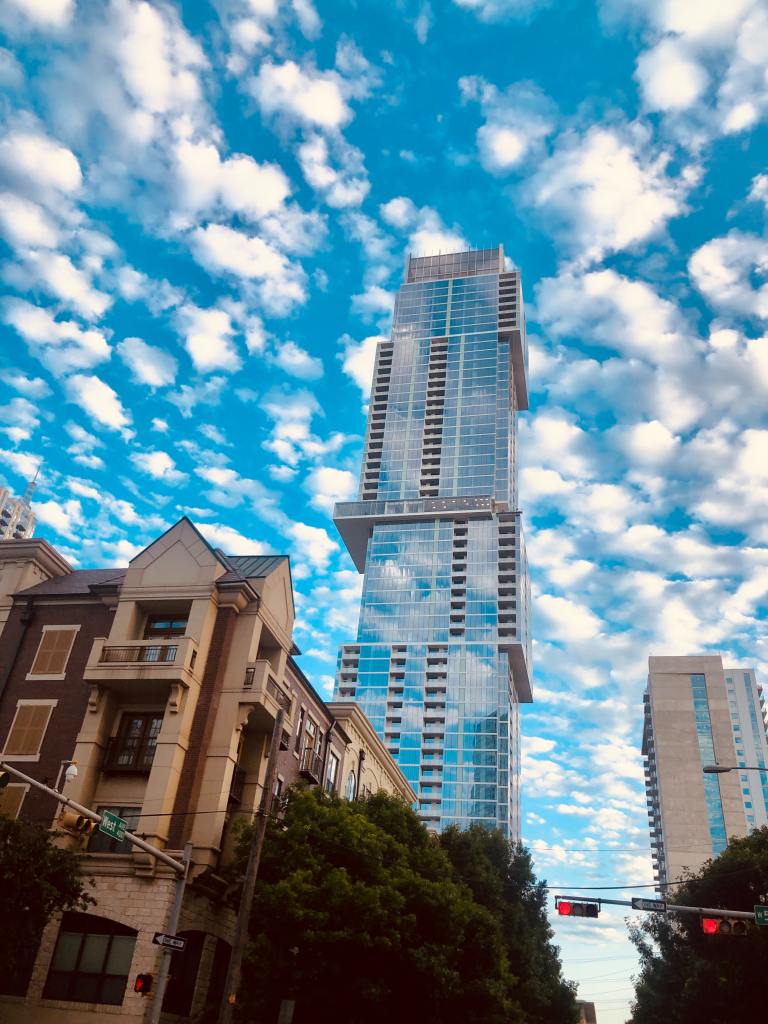
Austin, Texas downtown.

Starship Launch Test One, April 20, 2023. Image Courtesy SpaceX.

Elon Musk’s Talk About Starship and Starlink

Starship Launch Test One, April 20, 2023. Image Courtesy SpaceX.

“Space is very big.  Space is bigger than people realize.  

You can put a lot up in Space.”  – Elon Musk

While in Italy, Elon Musk graciously took the time to share an update about Starship and Starlink. I attended the first Starship launch, and I join many other people in being very excited about this update. Elon’s dedication to communicating is notable, as he attempted to host a Twitter Space on two previous days but had to stop due to connection issues. I listened live to this third attempt hosted by Ashlee Vance. I am sharing the highlights of Elon’s talk which includes the late-breaking news that hot staging will be used. Elon explains hot staging in this article.  

How Starlink is Helping Small Business: Railroads vs. Horse and Wagon

Amidst clinking dishes, pouring water, and the occasional singing Italian voice, Elon explained how the cost to orbit is much reduced with Falcon 9.  He explained how numerous small satellite companies have been greatly helped, by Falcon 9, to create a business through the low cost to get their company satellites into orbit. 

To better illustrate the low cost of transport, Elon used the example of early train rails,

“In a way it’s sort of like the Union Pacific railroad across the US where it’s like back when the early businesses were popping up in California, now you’ve got a railroad and previously you had to drag a wagon over the Sierras or the Rockies.  

The point is, once you enable world-class transport you also enable a lot of companies to create interesting businesses because it is no longer prohibitively expensive to get to orbit.”

Starship and Falcon 9

Getting to orbit is hard, Elon explains,

“I think it’s worth identifying the difference between space and orbit, most people think of those as synonymous, but getting to Space is easy, and getting to orbit is hard.

Getting to orbit is much harder than getting to Space, which is somewhat arbitrarily defined as a 100 km altitude, but you still have an atmosphere at 100 km, it’s over 60 miles.” 

It is extremely hard to get Starship into orbit, with its massive height of about 400 feet and mass of 5000 tons.  And yet Elon remains on course to pursue that SpaceX mission of colonizing Mars. In fact, today Starship is humanity’s only hope to become multi-planetary. 

The Space Station

Elon continued, 

“If you immediately get to Space and you have no velocity you will fall back down just like a cannonball. Going up is all about orbit.

Space Station is somewhat of a misnomer because it is anything but stationary. The Space Station is moving around Earth at 17,000 miles an hour. The Space Station is moving roughly 12X faster than a bullet from an assault rifle, right now. And it goes around the earth every hour and a half, roughly every 90 minutes. So I wouldn’t call that stationery.  It’s basically not a Space Station.” 

Space is Big

One of my favorite parts of Elon’s talk today was when he brought listeners into the world we know from the Hitchhiker’s Guide to the Galaxy. He said,

“Space is very big.  Space is bigger than people realize.  You can put a lot up in Space. Think of the Earth as a sphere but being in orbit is basically a vast number of Earth’s surfaces, like a series of concentric spheres, and they’re not filled with debris, they’re filled with nothing.”  


Elon explained that with coordination, satellites can be placed at different orbit levels so they will not interfere with other satellites or collide.  He explained satellites can be maneuvered to avoid even coming close to anything else. Communication is important to make sure various countries have coordination between various satellite positions.  For example, the Starlink satellite orbit is unique, and other satellites will never be put into that same orbit.  

SpaceX Does not Worry About the Competition

“Anyone who spends time thinking about the competition is wasting their mental energy.” – Elon Musk

Elon Musk said SpaceX does not think about the “competition.” Instead of worrying about the competition, Elon and his team at SpaceX think about how they can make Starlink better and the Rockets better. He explains this using the example of sports.  If you see a runner look back at the other runners right before he crosses the finish line then he’ll lose the race. 

SpaceX has launched competitors’ satellites into orbit (since Soyuz stopped) indicating that SpaceX is supportive of competitors. 

For example, on May 20, 2023, SpaceX launched a demonstration satellite for OneWeb’s second-generation broadband constellation. OneWeb is considered a competitor to Starlink. COSMO-SkyMed was launched for the Italian Space Agency in January 2021. See Rocket Launch live’s website for an up-to-date list of each SpaceX mission.

SpaceX’s Global Lead

I am amazed that 80% of all payload from Earth going to orbit will likely be brought there by SpaceX. Elon explained that China will put about 10% into orbit, and the rest of the world will put about 8-9% into orbit. “This year, if our luck holds, we’ll do 80% of Earth mass to orbit.  That’s the key metric.” 

Starship’s Significant Late Breaking Change: Hot Staging

Elon carefully explained that there are well over 1000 changes between the last Starship flight on April 20 (see video attached from SpaceX) and the upcoming launch test. Because of these changes, the next flight has a possible 60% higher probability to get into orbit.

“It depends on how well we do at stage separation.” 

Elon revealed that a late-breaking change has been made for the next Starship launch, which is planned for about 6 weeks from now. 

Hot staging will be used.  The upper stage engines are lighted while the first stage of booster stage engines are still on. SpaceX will shut down most of the engines on the booster, leaving just a few running, and then at the same time, start the engines on the ship (or upper stage). This obviously results in blasting the boosters then you’ve got to protect the top of the booster from getting incinerated by the upper stage engines.  

Never Stop Thrusting

In Soviet rocket history, hot staging has been used. There is a meaningful payload to orbit advantage with hot staging that is, conservatively, about a 10% improvement in payload to orbit.

Elon explains, 

“With hot staging, you basically just never stop thrusting! The moment the rocket stops thrusting it’s engine, it starts falling back to earth. You don’t want to be coasting or be in a situation where the engines are not on because you just immediately start falling back to earth, unless you are already in orbit. You want to have a nonstop thrust situation. 

Basically, you want to start the ship engines before you completely shut down the booster engines.  In order to do this we actually have to have vents or the super hot plasma from the upper stage engines are going to go somewhere so we’re adding an extension to the booster which is almost all vent essentially.  So that allows the upper stage engine to go through the vented extension of the booster and not just blow itself up.  This is the most risky thing for the next flight, I think.”  

This explains why protective shielding will be added to the top of the booster.

I could hear the concern in Elon’s voice when he mentioned to the interviewer (Ashlee Vance) that there are a lot of variables that are outside of his control when it comes to the next Starship launch test. The amount of work needed to prepare for this test is massive. The team at SpaceX must be working around the clock to prepare for this launch.  Blood, sweat and tears go into every aspect.  Starbase is hot, humid, and the work is very physical.  

Elon continued, explaining time is needed to get the launch pad ready with 2 thick plates of steel, welded together with water-cooling layers sandwiched in. 

“Think of it like a gigantic upside-down showerhead. It’s going to blast water upwards while the rocket is over the pad to counteract the massive amount of heat from the booster. The booster is the world’s biggest cutting torch, with a massive amount of heat and force. The pad is overkill on the steel sandwich and the concrete, but it should leave the pad in much better shape than last time. We’ll also be doing a higher thrust weight so it will spend less time on the ground.”

If you are interested in Elon’s deep technical dive into more changes to Starship, please see the interview on Vance’s Twitter account, “The Rise of Commercial Space with me and Elon Musk” and go to 43:10 to begin. I won’t add in the technicalities due to most people will glaze over, unless they are that 1 in 1000 rare engineer. 

I am thankful that Elon had time to connect with the Space community and others on a Saturday afternoon.  I listened from Austin, Texas while he was in Italy.  Listeners were there from all over the world.  Millions are inspired by Starship.  Starship is humanity’s only hope to become a spacefaring civilization.  If you are like me, this makes you excited to get up in the morning!

Starship Launch Test One, April 20, 2023. Image Courtesy SpaceX.

Article by Gail Alfar, first appeared on Gail’s Twitter account as an original article. Please credit Gail Alfar accordingly.