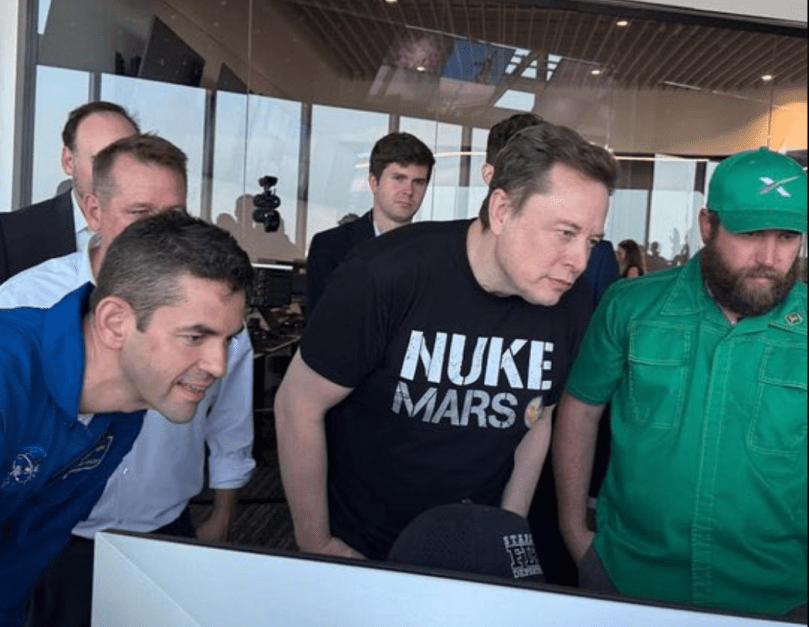
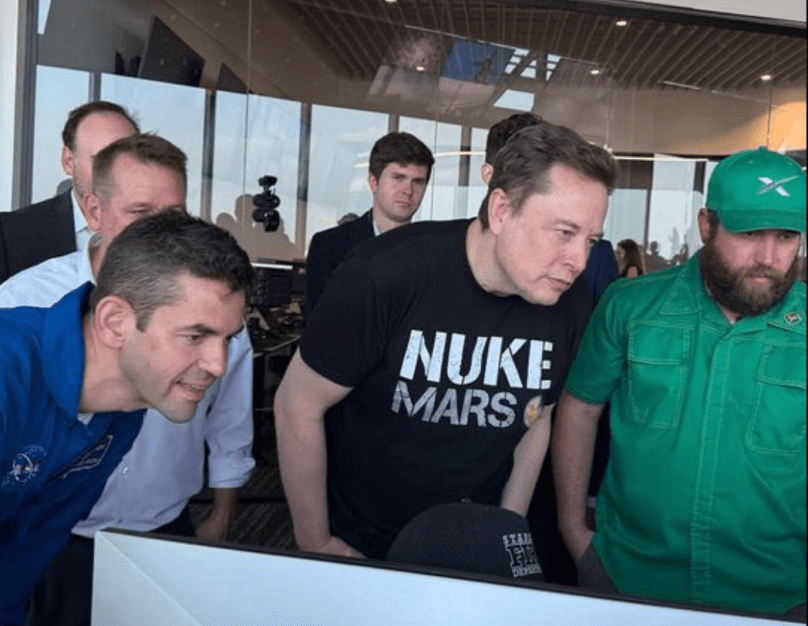
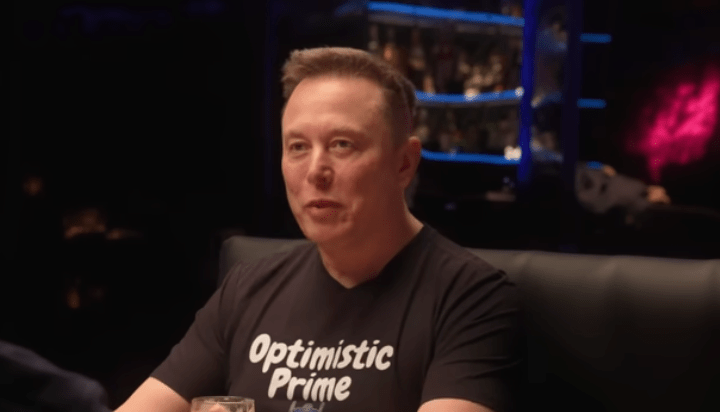
Elon Musk portant son célèbre t-shirt « Nuke Mars » observe le test de vol intégré réussi de Starship Version 3 (IFT-12) aux côtés des membres de l’équipe SpaceX, dont Jared en contrôle de mission.

Elon Musk : Un visionnaire sous le feu des critiques – Pourquoi les dernières attaques passent à côté de l’essentiel

Au cours des deux dernières semaines, certains médias français ont amplifié des récits dépeignant Elon Musk comme vaincu au tribunal contre OpenAI, embourbé dans des enquêtes judiciaires sur X, et « furieux » face aux choix de casting à Hollywood. Ces narratifs le présentent comme erratique ou problématique. Pourtant, un examen plus attentif révèle un schéma d’outrage sélectif contre l’un des bâtisseurs les plus ambitieux de l’humanité, tandis que ses entreprises réalisent des avancées historiques.

Le Procès OpenAI : Une Position Philosophique, Pas une Défaite

Elon a cofondé OpenAI avec une mission claire : une IA sûre et ouverte pour le bénéfice de l’humanité. Il a alerté tôt sur les dérives vers le profit et les systèmes fermés. Bien que la récente décision du jury soit décevante, elle n’efface pas la validité de ses préoccupations, surtout alors qu’OpenAI se précipite vers une IPO à but lucratif avec le soutien massif de Microsoft. Le procès d’Elon a mis en lumière de vraies questions de gouvernance. Elon a déjà annoncé qu’il ferait appel de la décision devant la Ninth Circuit Court of Appeals en Californie. (Les vrais visionnaires défient les intérêts puissants ; l’histoire leur donne souvent raison.)

L’Enquête Française sur X : Liberté d’Expression contre Application Sélective

L’enquête française sur X concernant la modération de contenus, avec menaces de mandats d’arrêt, cible Elon pour avoir ouvert la plateforme à des voix diverses. Elon s’est défendu publiquement contre ce qu’il perçoit comme un acharnement politique.

Les critiques ignorent commodément que, avant Elon Musk, Twitter prenait de l’argent et du soutien gouvernemental de la part des gouvernements en échange de la permission de la censure. En fait, c’était vraiment de la censure sournoise. Des documents internes des Twitter Files montrent que le FBI a versé plus de 3,4 millions de dollars à l’ancien Twitter (entre 2019 et début 2021) pour le temps passé par son équipe Safety, Content & Law Enforcement à traiter les demandes des forces de l’ordre liées à la modération de contenus. Voir les révélations documentées ici.

Elon a délibérément rompu avec ce modèle le jour où il a acquis l’entreprise en octobre 2022. Il a immédiatement mis fin à tous ces arrangements de remboursement gouvernementaux, démantelé les équipes dédiées SCALE de modération qui traitaient les paiements, et éliminé complètement la pratique. X fonctionne désormais avec une dépendance nulle à tout financement gouvernemental lié à la modération de contenus. La plateforme publie des rapports de transparence annuels détaillés montrant exactement comment elle gère les demandes des forces de l’ordre tout en priorisant une transparence maximale et la quête de vérité plutôt que la censure.

Polémiques Culturelles et Titres Outrés

Les rapports sur les critiques d’Elon concernant le casting dans L’Odyssée de Christopher Nolan ont été présentés comme « haineux ». Elon s’oppose depuis longtemps aux quotas DEI forcés qui privilégient l’identité au mérite et à l’intégrité narrative. Questionner les choix artistiques défend l’excellence dans le storytelling. L’indignation des médias français contraste vivement avec les éloges pour les exploits d’ingénierie d’Elon.

La Vraie Histoire : Un Progrès Inarrêtable

Pendant que les critiques de salon se concentrent sur les procès et les tweets, les entreprises d’Elon livrent des résultats :

  • SpaceX prépare une introduction en bourse historique, avec des valorisations vers les trillions et des timelines ambitieuses pour Mars. Des médias français comme Le Monde et Les Echos saluent à juste titre son caractère spectaculaire.
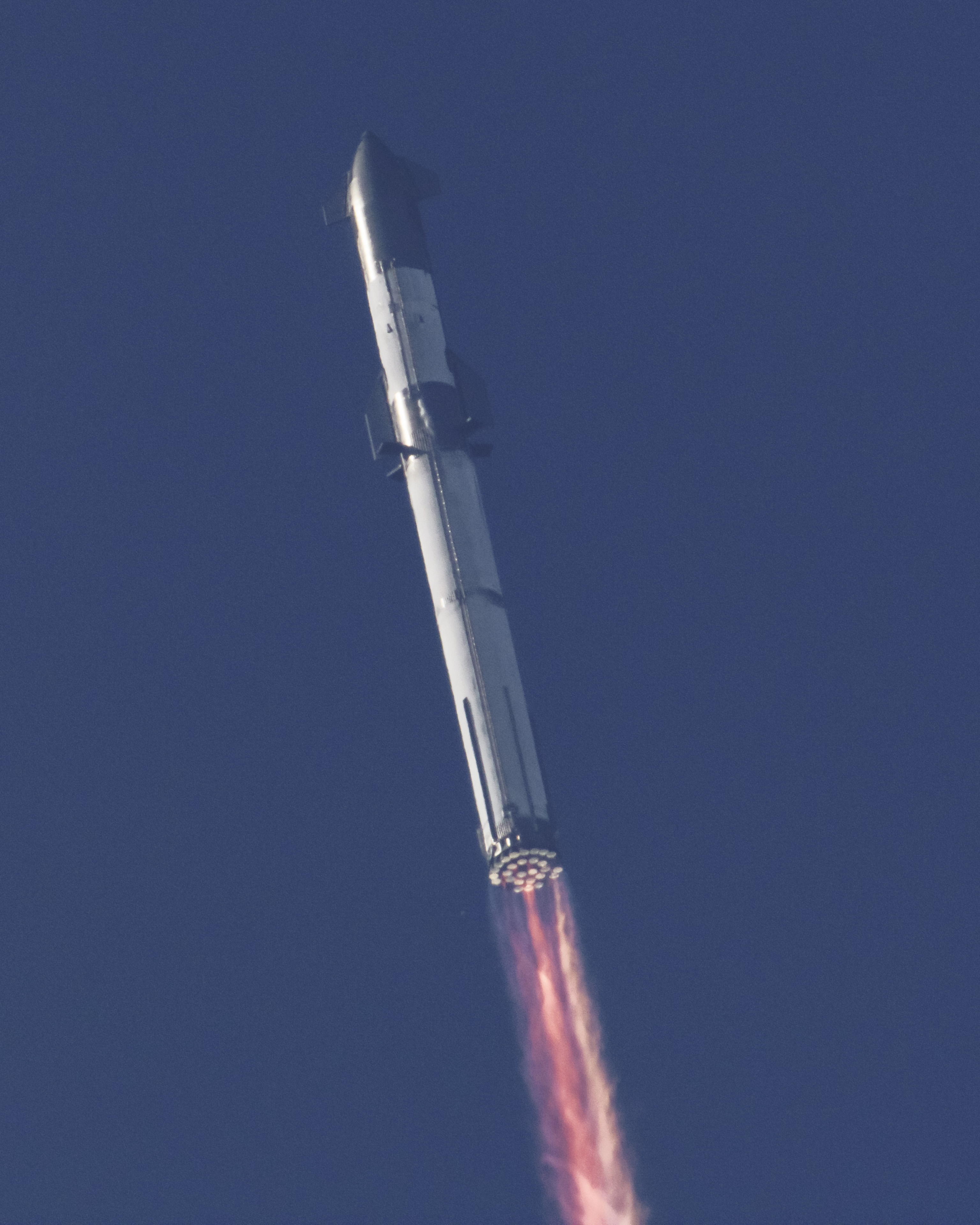
  • Le récent test de vol intégré de Starship Version 3 (IFT-12) a validé des avancées critiques dans l’architecture de propulsion Raptor 3, incluant des variantes à plus forte poussée au niveau de la mer et en version vide, un volume accru des réservoirs de propergol et des systèmes de contrôle de réaction améliorés, tout en démontrant un hot-staging nominal, le déploiement d’un satellite factice en orbite et une rentrée contrôlée de précision avec amerrissage. Ces résultats marquent un progrès décisif vers la réutilisabilité complète et rapide du système de lancement super-lourd de 18 millions de livres de poussée et les capacités de transfert de propergol en orbite nécessaires aux architectures durables lunaires et martiennes. La direction de la NASA et les principaux experts aérospatiaux ont publiquement salué les données de vol itératives et la maturation du système.
  • Tesla continue de renforcer sa position à la fois dans les véhicules électriques et dans le stockage d’énergie à l’échelle du réseau en France. L’entreprise déploie des systèmes de stockage par batterie Megapack à grande échelle, notamment le projet de 240 MW / 480 MWh à Cernay-lès-Reims avec TagEnergy et le projet de 100 MW / 200 MWh à Cheviré près de Nantes. Ces installations exploitent la plateforme de gestion énergétique Autobidder de Tesla pour l’optimisation du réseau en temps réel et la régulation de fréquence. Parallèlement, Tesla a atteint un jalon mondial avec l’activation de son 80 000e stall Supercharger sur une station V4 étendue majeure en France, dotée de canopées solaires et d’une architecture de charge haute puissance.
Elon Musk portant son célèbre t-shirt « Nuke Mars » observe le test de vol intégré réussi de Starship Version 3 (IFT-12) aux côtés des membres de l’équipe SpaceX, dont Jared en contrôle de mission.

Il emploie des dizaines de milliers de personnes, a payé les impôts les plus élevés de l’histoire des États-Unis — plus de 11 milliards de dollars en une seule année — et SpaceX a effectué 165 lancements en 2025 seulement, acheminant plusieurs équipages de quatre astronautes chacun vers l’ISS via Dragon, tandis que la Chine n’en a envoyé aucun vers l’ISS et que la Russie n’en a acheminé qu’une poignée via Soyuz au cours des 24 derniers mois.

En fin de compte, les récits amplifiés par certains médias français au cours des deux dernières semaines continuent de dépeindre Elon Musk comme erratique ou problématique.

Pourtant, un examen plus attentif révèle un schéma d’outrage sélectif contre l’un des bâtisseurs les plus ambitieux de l’humanité, tandis que ses entreprises réalisent des avancées historiques.


elon musk, starship, ift-12, spacex, mission control, nuke mars, mars colonization, starship v3, rocket launch, elon musk starship, elon musk team, jared spacex, reusable rocket

Elon Musk: Visionary Under Fire – Why the Latest Attacks Miss the Bigger Picture

In the past two weeks, certain French outlets have amplified stories portraying Elon Musk as defeated in court against OpenAI, entangled in judicial probes over X, and “enraged” over Hollywood casting choices. These narratives paint him as erratic or problematic.

Yet a closer look reveals a pattern of selective outrage against one of humanity’s most ambitious builders, while his companies achieve historic breakthroughs.

The OpenAI Lawsuit: A Philosophical Stand, Not a Defeat

Elon co-founded OpenAI with a clear mission: safe, open AI for humanity’s benefit. He warned early about profit-driven shifts and closed systems. Although the recent jury decision is disappointing, it does not erase the validity of his concerns, especially as OpenAI races toward a for-profit IPO with massive Microsoft backing. Elon’s suit highlighted real governance questions.

Elon has already announced he will appeal the ruling to the Ninth Circuit Court of Appeals in California. (True visionaries challenge powerful interests; history often vindicates them.)

French Investigation into X: Free Speech vs. Selective Enforcement

France’s probe into X over content moderation, with threats of warrants, targets Elon for platforming diverse voices. Elon has publicly defended against what he sees as politically motivated overreach.

Critics conveniently ignore that before Elon Musk, Twitter was taking some government money and support from governments in return for allowing censorship. In fact, it really was underhanded censorship. Internal documents from the Twitter Files show the FBI paid pre-Musk Twitter over $3.4 million (between 2019 and early 2021) for staff time processing law-enforcement and content-moderation requests through its Safety, Content & Law Enforcement division. See the documented revelations here.

Elon deliberately broke from this model the day he acquired the company in October 2022. He immediately ended all such government reimbursement arrangements, dismantled the dedicated SCALE moderation teams that had processed the payments, and eliminated the practice entirely. X now operates with zero reliance on any government funding tied to content moderation. The platform publishes detailed annual Transparency Reports showing exactly how it handles law-enforcement requests while prioritizing maximum transparency and truth-seeking over censorship.

Cultural Spats and “Outrage” Headlines

Reports of Elon criticizing casting in Christopher Nolan’s The Odyssey were framed as “hateful.” Elon has long opposed forced DEI quotas that prioritize identity over merit and storytelling integrity. Questioning artistic choices defends excellence in storytelling.

French media’s pearl-clutching contrasts sharply with praise for Elon’s engineering feats.

The Real Story: Unstoppable Progress

While armchair critics focus on lawsuits and tweets, Elon’s companies deliver:

  • SpaceX is preparing a landmark IPO, with valuations soaring toward trillions and ambitious Mars timelines. French outlets like Le Monde and Les Echos rightly call it spectacular.
  • The recent integrated flight test of Starship Version 3 (IFT-12) has validated critical advancements in the Raptor 3 propulsion architecture including higher-thrust sea-level and vacuum variants, increased propellant tank volume, and improved reaction-control systems while demonstrating nominal hot-staging, orbital dummy-satellite deployment, and a precision controlled re-entry splashdown. These results mark decisive progress toward rapid full reusability of the 18-million-pound-thrust super-heavy lift system and the in-orbit propellant-transfer capabilities required for sustainable lunar and Martian architectures. NASA leadership and leading aerospace experts have publicly commended the iterative flight data and system maturation.
  • Tesla continues to strengthen its position in both electric vehicles and grid-scale energy storage in France. The company is deploying large-scale Megapack battery energy storage systems including the 240 MW / 480 MWh project in Cernay-lès-Reims with TagEnergy and the 100 MW / 200 MWh Cheviré project near Nantes. These installations leverage Tesla’s Autobidder energy management platform for real-time grid optimization and frequency regulation. In parallel, Tesla achieved a global milestone with the activation of its 80,000th Supercharger stall at a major expanded V4 station in France featuring solar canopies and high-power charging architecture.
elon musk, starship, ift-12, spacex, mission control, nuke mars, mars colonization, starship v3, rocket launch, elon musk starship, elon musk team, jared spacex, reusable rocket
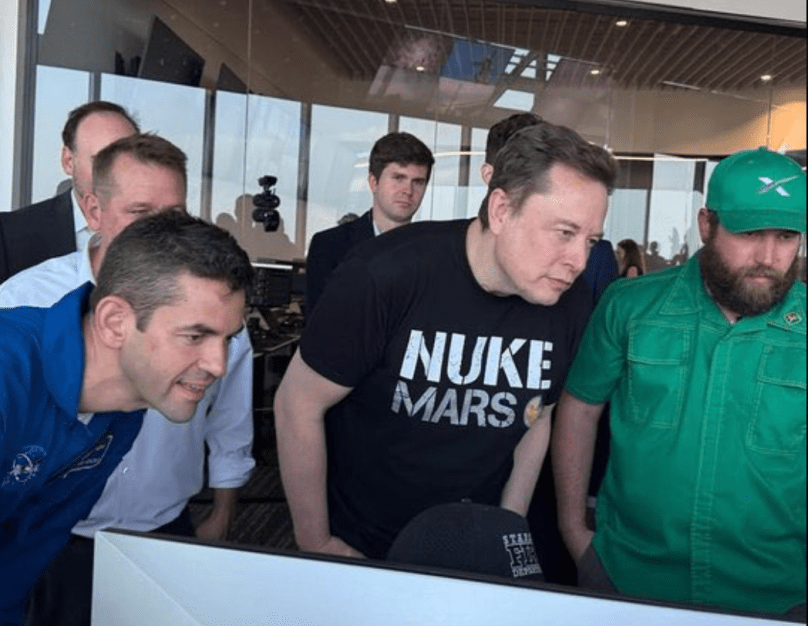
Elon Musk in his iconic “Nuke Mars” t-shirt watches the successful Starship Version 3 (IFT-12) integrated flight test alongside SpaceX team members including Jared from mission control.

He employs tens of thousands, has paid the highest taxes of anyone in the history of the US — over $11 billion in a single year — and SpaceX has conducted 165 launches in 2025 alone, bringing multiple crews of four astronauts each to the ISS via Dragon, while China has brought up none to the ISS and Russia has brought up only a handful via Soyuz in the past 24 months.

Ultimately, the stories amplified by certain French outlets over the past two weeks continue to portray Elon Musk as erratic or problematic.

Yet a closer look reveals a pattern of selective outrage against one of humanity’s most ambitious builders, while his companies achieve historic breakthroughs.

Elon Musk joined the Samson Smart Mobility Summit in Israel remotely at 2:30 AM Austin time. Full verbatim transcript covering FSD, robotaxis, Optimus, Starship, Neuralink, and abundance. Key takeaways + My Take from Austin.

Elon Musk Remote Talk at 2026 Samson Smart Mobility Summit in Israel: Full Verbatim Transcript

May 18, 2026 — Elon Musk made a surprise remote appearance at the 9th International Samson Smart Mobility Summit in Israel. Despite it being 2:30 AM in Austin, he joined the stage virtually and delivered thoughtful answers on Full Self-Driving, robotaxis, Optimus, Starship, Neuralink, and humanity’s path toward universal high income and abundance.

Here is my full verbatim transcript (carefully stitched from @CBDoge, Sawyer Merritt, and the video itself):

Host (Daniela Geromar-Galiot): We’re absolutely thrilled to have you joining us here today at the 9th International Samson Smart Mobility Summit in Israel, a country that shares your spirit of relentless innovation.

Elon Musk: Thank you for having me. I would be there in person, but we gotta get this SpaceX IPO going pretty soon. So I’m happy to answer any questions you may have or whatever would be interesting.

Host: Perfect. So Tesla has spent years developing the vision and technology for smart mobility. Now that you’re moving from testing, what is the biggest challenge in scaling this technology to millions of users around the world?

Elon Musk: In terms of having self-driving be ubiquitous… I think we’re making steady progress. The Tesla Full Self-Driving software, which is really just AI and cameras, we don’t use radars or LIDAR or anything like that. It’s really trying to drive the car in the same way that a human drives the car, which humans primarily drive the car with vision and with a biological neural net. We take the same approach with our vehicles, which is a digital neural net and cameras. I expect this approach to ultimately be at least an order of magnitude safer than humans driving.

I’m not sure if we have approval for this in Israel. I think we may have, or we will get it soon hopefully and you’ll be able to experience it for yourself.

It is quite magical, because the car feels like it is sentient. It actually feels like it’s alive. And you can actually, as we improve the software, you can feel the sentience growing in the car. It feels alive.

And I think we already have some vehicles operating with no people inside and no safety monitors in three cities in Texas, and probably will be widespread in the U.S. by end of this year, and hopefully in Israel too.

Host: Thank you. We look forward to that.

Elon Musk: The world is going to have a lot of robots in the future, and what Tesla makes is effectively four-wheeled robots right now.

And in the future we’ll also be having humanoid robots. You’re seeing a lot of startups with humanoid robots. My prediction is that there’ll be far more robots, like intelligent robots, in the world than there will be people, and I think this is most likely to be a good thing. We always want to be a little paranoid, or certainly not complacent about the safety of robots, but I think it will usher in an age of not universal basic income, but universal high income.

Host: Right, thank you… And I think we have one of your robots out here in the exhibition, so that’s also a lot of fun for everybody here. Go and take a look.

Elon Musk: Optimus subprime, haha!

Host: Exactly. When you think about, let’s say, the most exciting development or breakthrough that you’re working on right now, what do you think would be the one that people aren’t talking enough about enough?

Elon Musk: Well, I guess people are mostly aware of the rockets that SpaceX does. This Starship rocket, which we are now in version 3 of, will, I think, achieve full and rapid reusability. This is the fundamental breakthrough necessary to make life multi-planetary, to extend consciousness beyond Earth, and have self-sustaining cities, self-growing cities on the Moon, Mars, and elsewhere in the solar system.

This is really quite a profound breakthrough, and we might succeed in doing that this year. The critical factor being full and rapid reuse of all parts of the rocket. That’s a much bigger deal than people would realize. When that technology is developed, that’ll be a fork in the road in human history, where we can become a spacefaring civilization, a multi-planet species, and I think that’s an incredibly exciting thing.

Elon Musk: Perhaps to some degree there is also, not many people are aware of Neuralink, which is creating a cybernetic interface to AI from your brain.

It has enabled people who have completely lost their brain-body connection to speak again and to use their computer and their phone and we believe it will enable people to walk again… because you can take the signals from the brain, from the motor cortex and if somebody has, say, a severe spinal injury, you could transmit those signals to a second neural implant and reanimate the body so that people can use their limbs. We think at some point they can live a normal life by effectively bridging the signal from the brain to past the point in the spine where damage has occurred.

These are pretty wild things that are possible. And then later this year we expect to do our first implant for what we call “blindsight,” where even if somebody has lost both eyes or lost the optic nerve or perhaps has never seen, even if they were blind at birth, it will give them initially limited vision, but I think over time very precise vision, perhaps superhuman.

So restoring control of people who are tetraplegics and restoring sight are pretty big deals. Those sort of Jesus-level technologies, you know… miracles. Yes, exactly. Miracles of science

Host: . Miracles! Yeah. Great, thank you!

Host: I have another question about the automotive world. If I bring it back to smart mobility. When you look past the immediate rollouts of FSD, what does the ultimate endgame for smart mobility look like in 10 or 20 years from now? I mean, what is the grand vision that still keeps you up at night when we talk about mobility?

Elon Musk: Well, at this point the path to cars driving is an order of magnitude safer than humans is very clear, and I think it’s not really a question mark. So I’m not sure if this really keeps me up at night because the path is just so obviously there.

Five years from now, or certainly ten years from now, probably 90% of all distance driven will be driven by the AI in a self-driving car. It will be quite a niche thing in 10 years to actually be driving your own car, because the car will drive you.

I think there will also be humanoid robots that are pretty much everywhere. And I think it would be pretty cool because who wouldn’t want their own personal C-3PO, R2-D2 — but even better than that! And I think everyone is going to want one, maybe two.

Host: A terminator?

Elon Musk: Well, hopefully not. We should always be concerned about such a thing because yeah, Terminator is one of the possible outcomes. I think it’s an unlikely one, but it’s not impossible. And so we should always be careful to make sure that robots are safe.

This is why I actually think we’re headed to a future of amazing abundance. You can think of the output of the economy as productivity per capita times the population. And if the robots are extremely productive, and there are a lot of them, you’re effectively going to have an economy that will be maybe 10 or even 100 times bigger than what it is today. And that’s why I think it is going to be a future of universal high income, where pretty much anyone can have whatever they want.

There are larger questions of meaning. How do we derive meaning in a world where AI and robots can do anything better than what we can do? Because that is probably where we’re headed. But I think people will still find ways to have meaning.

And sometimes it’s like, what is the future that you want? Or what do you think the future is? What’s the best picture you can possibly imagine? And a lot of people are a little surprised by that question. Because, let’s say you are praying to God and you ask for a given future. Well, what future do you want God to give you?

Probably a future where there is an amazing abundance for all, where everybody has incredible medical care and in fact anything can be cured. No one is hungry. People are free to do what they would like. I think that’s probably the best future.

Host: And peace, peace and love!

Elon Musk: Well yeah. I always worry about it becomes some dystopian version of that, you know. But certainly love — I mean, I think we want a future with that seems like a no-brainer. Peace is an interesting one because sometimes the price for complete peace may be maybe too high, because complete peace may require too much suppression of the people. So perhaps there is peace to some degree but not completely. Ideally there’s not like a large-scale war of course. But you know, you have to think about these questions kind of deeply. Do you want a world where there’s no conflict? But how do you achieve a world where there is no conflict at all without some form of suppression?

So my guess is probably people would want a future with some conflict, not total peace, but nothing… not a serious war perhaps. But these are interesting philosophical questions. What future would you like?

Host: Do you have a message to the Israeli innovators here?

Elon Musk: Honestly, I’m a huge admirer of the innovation coming out of Israel. I think it is objectively true that Israel punches far above its weight for population. I think, probably number one My hat is off to Israel for how much incredible innovation per capita. Israel must be number one by far in the world!

Host: Thank you so much. Before you go, I would like to invite Israel’s Minister of Transport and Road Safety, Brigadier General Miri Regev, to join our conversation…

Minister Miri Regev: Thank you Elon, you are great! We love you! I see that you are tired! it’s wonderful to have you with us even remotely.

Elon Musk: Thank you. It’s about 2:30 in the morning here in Austin, Texas, and thank you for having me! It was a pleasure, thank you! so I’m going to get some sleep, I really appreciate the invitation and looking forward to seeing progress in Israel.

Host & Minister: Thank you Elon! (Audience applause)

Host (wrap-up): That was Elon Musk joining us remotely from Austin…

Key Takeaways

Full Self-Driving & Robotaxis

  • Vision-only FSD (no radar or LIDAR) already feels “sentient” and is running unsupervised in Texas cities. I have taken many unsupervised Model Y Robotaxi here in my city of Austin, Texas.
  • Widespread U.S. robotaxi deployment expected by end of 2026, with Israel to follow soon after.
  • In 10 years, ~90% of all miles driven will be by AI — personally driving your own car will become a niche activity.

Robots & Abundance

  • Far more intelligent robots than humans expected in the future.
  • Tesla’s current cars are “four-wheeled robots”; Optimus humanoid robots are coming next.
  • Shift from Universal Basic Income → Universal High Income as robots drive massive economic growth (10x–100x bigger economy).

Starship & Multi-Planetary Life

  • Starship Version 3 targeting full & rapid reusability this year.
  • Critical step toward self-sustaining cities on the Moon, Mars, and beyond. we are at a “fork in the road in human history.”

Neuralink & Medical Miracles

  • Already restoring speech and device control for patients.
  • Upcoming “blindsight” trials later this year could restore (and eventually enhance) vision.
  • Described as “Jesus-level technologies.”

Praise for Israel

  • Elon called Israel #1 in the world for innovation per capita and said the country “punches far above its weight.”

Elon’s Standout Quotes

  • “It is quite magical, because the car feels like it is sentient. It actually feels like it’s alive.”
  • “We might succeed in doing that this year… That’ll be a fork in the road in human history.”
  • “Innovation per capita, Israel’s must be number one by far in the world.”
  • “10 years from now, probably 90% of all distance driven will be driven by the AI in a self-driving car.”

My Take

I’m in awe that Elon stayed up until the wee hours of the morning, 2:30 AM his time, to do this interview. I woke up to phone notifications form CB Doge and Sawyer Merritt sharing clips of the interview. Perhaps the biggest treat of the whole thing was a podcast episode that Elon also shared around the same time from Steven Mark Ryan. Please watch it (it is super short) and you’ll get the real picture of all the phenominal things Elon does!

Steven Mark Ryan also shared an edited cleaned up version of this very interview.

If you haven’t seen it yet, go watch it. It captures the energy perfectly.

On May 29, 2025, Elon Musk delivered a visionary speech at Starbase, Texas, the newly incorporated city and SpaceX’s hub for revolutionizing space travel. This transcript captures Musk’s electrifying address, detailing Starbase’s evolution from a sandbar to a powerhouse for building the world’s largest rockets. He highlights breakthroughs like rapidly reusable rockets, the Raptor 3 engine, and orbital propellant transfer, all pivotal for a self-sustaining Mars civilization. With vivid descriptions of catching boosters with “giant chopsticks” and plans for a million-ton Mars transfer, Musk inspires a future where anyone can visit Starbase or journey to Mars.

Elon Musk’s Vision for a Multiplanetary Future: Starbase and the Road to Mars, May 2025

On May 29, 2025, Elon Musk delivered his company speech at Starbase, Texas, the newly incorporated city and SpaceX’s hub for space travel to Mars. This transcript, which I have worked hard on to bring you accuracy, captures Elon’s valuable and historical words.

Elon details Starbase’s evolution from a sandbar to a powerhouse for building the world’s largest rockets. Elon highlights breakthroughs like rapidly reusable rockets, Raptor 3 engine, and orbital propellant transfer plans, all critical for a self-sustaining Mars civilization. With vivid descriptions of catching boosters with “giant chopsticks” and plans for a million-ton Mars transfer, our hero Elon inspires a future where anyone can visit Starbase or journey to Mars.

Elon Musk: The gateway to Mars. Here we are at the newly incorporated Starbase, Texas. This is the first new city made in America in, I think, quite a few decades. At least that’s what I’m told. It’s a very cool name, named because it’s where we’re going to develop the technology necessary to take humanity, civilization, and life as we know it to another planet for the first time in the 4.5 billion-year history of Earth.

[Lots of cheering. Elon shows a short video of the history of Starbase. He talks along with the images.]

Elon: We started with basically nothing. Starbase started as a sandbar with nothing.

[The video shows a prototype rocket and two open tents.]

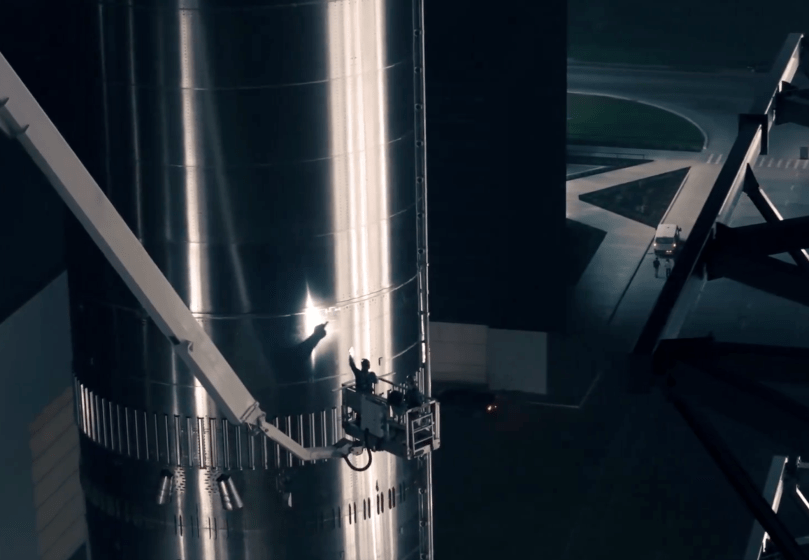
Elon: Even those little things we built. That’s the original Mad Max rocket!

[Looking at the rocket from 2019, six years ago, the camera pans around it. The sun hits the side, revealing a gorgeous, surreal piece of steel.]

Elon: You know, lighting is very important for that Mad Max rocket.

[Elon is smiling, with his hand in a determined fist. He’s not afraid of silence; this is a tribute to that incredible rocket. Many employees in the audience may not have seen it in person; it’s six years old. Some may have been in high school at the time.]

Elon: Not long ago, there was basically nothing here. In about five or six years, thanks to the incredible work of the SpaceX team, we’ve built a small city. We built two gigantic launchpads and a gigantic rocket factory for a gigantic rocket. The cool thing is, anyone watching can come visit because our entire production facility and launch site are on a public highway. Anyone in South Texas can see the rocket up close, see the factory, and anyone interested in the largest flying object on Earth can drive down the public highway and see it! Pretty cool!

[Video progresses to Starbase 2025.]

Elon: We’re now at the point where we can produce a ship roughly every two or three weeks. We don’t always produce a ship every two or three weeks because we’re making design upgrades, but ultimately we’re aiming for the ability to produce 1,000 ships a year, so three ships a day.

[On the video, birds chirp, water glistens, and a hovercraft pulls gently away from Starbase Beach.]

Elon (smiling): That’s our hovercraft. We’re driving the booster down the road to the launch site. You see the Megabays. The cool thing for those watching is you can literally come here, drive down the road, and see it. This is the first time in history that’s been possible. That highway on the left is public. You can just come and see it, which I recommend. It’s very inspiring.

[Elon points to a render of a massive building.]

Elon: There’s a person next to it that looks like a tiny ant. That’s our Giga Bay! We’re expanding integration to produce 1,000 per year. The Giga Bay hasn’t been built yet, but we’re building it. It’s a truly enormous structure, one of the biggest in the world by some measures, designed for 1,000 Starships per year. We’re also building a Giga Bay in Florida, so we’ll have two facilities—one in Texas and one in Florida. It’s difficult to gauge the size of these buildings because you need a human for scale. When you see how tiny a human is next to it, you realize how enormous it is.

BUILD COMPARISON

Elon: When we look at our build comparison in vehicles per year, Boeing and Airbus make airplanes, but Starship will probably make as many Starships for Mars as Boeing and Airbus make commercial airplanes. This is an enormous scale, and each Starship is bigger than a 747 or an A380. In terms of Starlink satellites, version three satellites, we’ll make on the order of 5,000 per year, and at some point, closer to 10,000 per year. Those Starlink V3 satellites are roughly the size of a 737 (unfurled). They compare to the B-24 bomber in World War II. The scale of production is still small compared to Tesla.

[A large chart appears, showing Tesla’s massively scaled production: currently 1,773,443 cars per year.]

Elon: Tesla will probably double or triple that volume in the future. It puts things into perspective that it’s possible to build a vast number of interplanetary Starships. Even when comparing tonnage, Tesla and other car companies produce far more complex manufactured tonnage than SpaceX, showing it’s achievable. These numbers, while insanely high by traditional space standards, are achievable because they’ve been achieved in other industries.

Progress is measured by the timeline to establishing a self-sustaining civilization on Mars.

Elon: With each launch, especially early on, we learn more about what’s needed to make life multiplanetary and improve Starship to take hundreds of thousands, if not millions, to Mars. Ideally, we can take anyone who wants to go and bring all equipment necessary to make Mars self-sustaining, so Mars can grow by itself. Worst-case scenario, we reach the point where Mars can continue to grow even if supply ships from Earth stop for any reason. At that point, we’ve achieved civilization resilience, where Mars could rescue Earth or vice versa. Having two self-sustaining planets is incredibly important for long-term survival. A multi-planet civilization is likely to last ten times longer than a single-planet one because of risks like World War III, meteors, or supervolcanoes. With two planets, we keep going, then move beyond Mars to the asteroid belt, Jupiter’s moons, and other star systems, making science fiction reality. To achieve this, we need rapidly reusable rockets to keep the cost per ton to Mars as low as possible. That’s essential. We need rapidly reliable rockets—it’s like a pirate’s “Rrrr”: rapidly reusable, reliable rockets!

Congrats to the SpaceX team on catching the giant rocket.

Elon: It’s mind-blowing that the SpaceX team has caught the largest flying object ever made multiple times using a novel method of catching it with giant chopsticks!

[SpaceX employees and Elon pause to watch a video showing the booster, with fiery engines, descending through space, adjusting, and being caught with chopsticks.]

Elon: Have you ever seen that before?

[The video is awe-inspiring. Elon congratulates his team, calling it quite an achievement. Everyone cheers; it’s an emotional moment.]

Elon: We catch it this way, which has never been done before, to make the rocket rapidly reusable. If the super heavy booster, 30 feet in diameter, landed with legs on a pad, we’d have to pick it up, stow the legs, and move it back to the launch pad, which is difficult. But catching it with the same tower that places it in the launch mount is the best for rapid reuse. It’s caught by the arms that placed it, then set back in the launch ring immediately. In principle, the super heavy booster can be reflown within an hour of landing. It returns in five or six minutes, gets caught, placed back, refilled with propellant in 30 to 40 minutes, and a ship placed on top. It could refly every hour or two.

The next goal is to catch the ship.

Elon: We haven’t done this yet, but we will.

[A video shows a render of a Starship gently caught by chopsticks.]

Elon: We hope to demonstrate this later this year, maybe in two or three months. The ship would be placed on the booster, refilled, and flown again. The ship takes longer because it orbits Earth a few times until the ground track returns to the launchpad. It’s intended to be reflown multiple times per day.

RAPTOR 3

Elon: This is the new Raptor 3, an awesome engine! Big hand to the Raptor team. Raptor 3 requires no basic heat shield, saving mass and improving reliability. A small fuel leak will leak into the flaming plasma and not matter, unlike a boxed engine where it’s scary. It’ll take a few tries, but it’ll massively increase payload capability, efficiency, and reliability. It’s alien technology. Industry experts thought an incomplete Raptor 3 picture wasn’t firing, but it was at unprecedented efficiency.

[Lots of cheers and applause.]

Elon: That’s one clean engine. We simplified the design, incorporated secondary fluid circuits and electronics into the structure, so everything is contained and protected. It’s a marvel of engineering.

PROPELLANT TRANSFER

Elon: A key technology for Mars is orbital propellant transfer, like aerial refueling for airplanes, but for rockets. It’s never been done but is technically feasible. Two Starships get together; one transfers fuel and oxygen—almost 80% oxygen, just over 20% fuel. A Starship with payload goes to orbit, others refill its propellant, and then it departs for Mars or the Moon. We hope to demonstrate this next year.

PLASMAJET TESTING

Elon: Mars’ atmosphere is ~95% CO2. The heat shield entering Mars encounters more than twice the atomic oxygen compared to Earth. Developing a reusable orbital heat shield is extremely difficult. Even the Shuttle’s required months of refurbishment. Only advanced ceramics, glass, aluminum, or carbon-carbon survive reentry stresses without eroding or cracking. This will be the first reusable orbital heat shield, needing extreme reliability. It’ll take years to hone, but it’s achievable within physics. Mars’ CO2 atmosphere becomes plasma, producing more free oxygen than Earth’s (~20% oxygen), oxidizing the heat shield. We test rigorously in a CO2 atmosphere for both Earth and Mars.

MARS ENTRY HEATSHIELD

Elon: Derived from Starship’s current heat shield, we want the same structure and material for Earth and Mars to test hundreds of times on Earth before Mars, ensuring reliability.

NEXT GEN STARSHIP

[The video shows a taller, majestic Starship.]

Elon: Next-generation Starships have improvements. It’s taller, with a better interstage between ship and booster. Struts allow flame from hot staging—lighting ship engines while booster engines fire—to exit easily, and we bring the interstage back instead of discarding it.

SUPER HEAVY

  • HEIGHT (m) 72.3
  • PROPELLANT CAPACITY (t) 3650
  • LIFTOFF THRUST (tf) 8240

[Excited reaction from SpaceX engineers due to increased propellant capacity and thrust.]

Elon: A little taller, from 69 meters to 72 meters. Propellant capacity may push to 3,700 tons, long-term maybe 4,000 tons. Liftoff thrust will keep rising, ultimately close to 10,000 tons. The booster looks naked because Raptor 3 engines don’t need a heat shield, standing in flaming plasma. It’s lighter and looks amazing.

STARSHIP

  • HEIGHT (m) 52.1
  • PROPELLANT CAPACITY (t) 1550
  • THRUST (tf) 1600

Elon: The ship is longer, more capable, moving to 1,550 tons of propellant, likely 20% more long-term. The heat shield is sleeker, with smooth boundaries, no jagged tiles. It looks sleek. This version has six engines, but a future version will have nine. Starship version three achieves all key elements. New technology takes three major iterations to work well. With Raptor 3 and Starship/Booster version 3, we’ll achieve a rapidly reusable, reliable rocket with orbital refilling—everything needed to make life multiplanetary. We aim to launch version three by year-end.

FUTURE STARSHIP

[An image of three Starships shows progress and future plans.]

Elon: The left is current, the middle is by year-end, and the right is long-term. The future Starship is 142 meters tall (current: 121 meters, next-gen: 124.4 meters). The middle version will be Mars-capable, followed by performance improvements. Like Falcon 9, we’ll make it longer and increase payload. By year-end, it’ll be capable of making life multiplanetary, then we’ll hone efficiency, reduce cost per ton and per person to Mars, and make it so anyone can move to Mars to build a new civilization. It’s the best adventure possible.

[Lots of applause.]

Elon: Ultimately, we’ll have 42 engines, as prophesied by Douglas Adams in The Hitchhiker’s Guide to the Galaxy. The answer to life’s meaning is 42, so the Starship stack will have 42 engines.

[Lots of applause.]

MASS TO ORBIT

Elon: It’s remarkable—200 tons payload to orbit with full reusability, twice the Saturn V Moon rocket’s capability, which was fully expendable. Starship is fully reusable.

MOON BASE ALPHA

Elon: Without reusability, Starship would have ~400 tons to orbit. It’s a big rocket needed for multiplanetary life. Along the way, we could have a Moon base like Moonbase Alpha, a gigantic science station for universe research.

MARS TRANSFER WINDOWS

Elon: You can go to Mars every 26 months. The next opportunity is November–December next year, in ~18 months. We’ll try for it, with a 50-50 chance if we figure out orbital refilling in time. If achieved, we’ll launch the first uncrewed Starship to Mars by year-end.

[Lots of applause.]

Elon: The distance to Mars is ~1,000 times farther than the Moon. You create an elliptical orbit with Earth at one point and Mars at the other, timing the ellipse to intersect Mars. This is shown on Starlink Wi-Fi routers. Starlink funds Mars missions. Thanks to everyone supporting Starlink—you’re helping make humanity a space civilization.

CANDIDATE BASE LOCATIONS

Elon: We’re looking at the Arcadia region, a lead candidate due to ice for water and suitable terrain. It’s my daughter’s name, too (smiling). First Starships will gather critical data.

Elon: First flights will send Optimus robots to explore and prepare for humans. If we launch by year-end, arriving in 2027, it’ll be epic to see Optimus on Mars. Two years later, if landings succeed, we’ll send humans to build infrastructure. We might do two robot landings before humans, just to be safe.

MARS 2028

Elon: Develop power generation, mining, construction, propellant generation, habitats, communications, and more.

[Elon shows an awe-inspiring picture of Optimus bots on a construction beam above Mars.]

COMMUNICATIONS ON MARS

Elon: We’ll use a Starlink version for Mars Internet. Even at light speed, communication takes 3.5–22 minutes due to Mars’ position. High-bandwidth communication is challenging, but Starlink will achieve it.

HUMANS ON MARS

Elon: Subsequent missions will carry more people and thousands of tons of cargo, laying groundwork for a permanent presence. The goal is to make Mars self-sustaining quickly. Launch pads may be farther for safety. Mars needs lots of solar power. Initially, you’ll need Mars suits and glass domes until terraforming.

Elon: We aim to transfer over 1 million tons per Mars window for a serious civilization.

SPACEPORTS

Elon: We’ll need many spaceports. With transfer windows, 1,000–2,000+ ships gather in orbit like Battlestar Galactica, then depart. Mars needs hundreds of landing pads to handle thousands of inbound ships.

Elon: This is an incredible city on another planet, a new world. Martians can rethink civilization—government, rules, everything. It’s up to them. Let’s get it done!

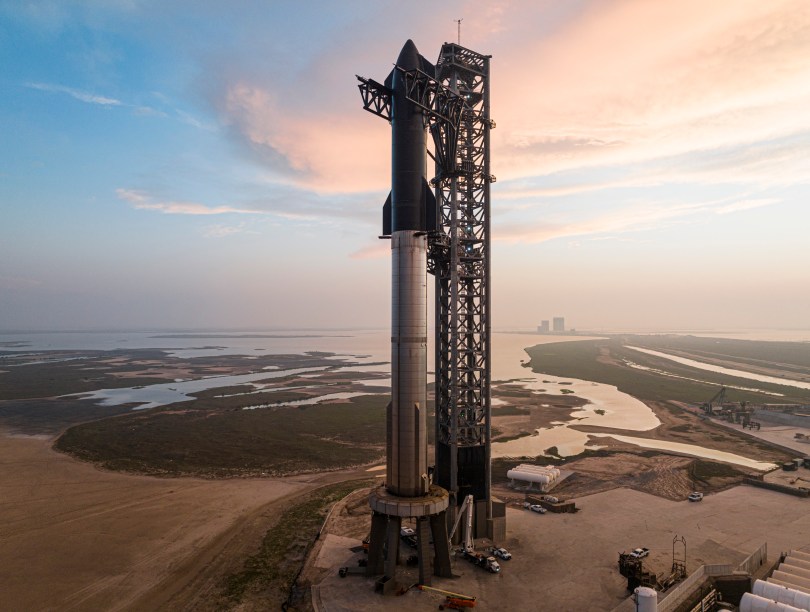
Starship Launch Test One, April 20, 2023. Image Courtesy SpaceX.

Elon Musk’s Talk About Starship and Starlink

Starship Launch Test One, April 20, 2023. Image Courtesy SpaceX.

“Space is very big.  Space is bigger than people realize.  

You can put a lot up in Space.”  – Elon Musk

While in Italy, Elon Musk graciously took the time to share an update about Starship and Starlink. I attended the first Starship launch, and I join many other people in being very excited about this update. Elon’s dedication to communicating is notable, as he attempted to host a Twitter Space on two previous days but had to stop due to connection issues. I listened live to this third attempt hosted by Ashlee Vance. I am sharing the highlights of Elon’s talk which includes the late-breaking news that hot staging will be used. Elon explains hot staging in this article.  

How Starlink is Helping Small Business: Railroads vs. Horse and Wagon

Amidst clinking dishes, pouring water, and the occasional singing Italian voice, Elon explained how the cost to orbit is much reduced with Falcon 9.  He explained how numerous small satellite companies have been greatly helped, by Falcon 9, to create a business through the low cost to get their company satellites into orbit. 

To better illustrate the low cost of transport, Elon used the example of early train rails,

“In a way it’s sort of like the Union Pacific railroad across the US where it’s like back when the early businesses were popping up in California, now you’ve got a railroad and previously you had to drag a wagon over the Sierras or the Rockies.  

The point is, once you enable world-class transport you also enable a lot of companies to create interesting businesses because it is no longer prohibitively expensive to get to orbit.”

Starship and Falcon 9

Getting to orbit is hard, Elon explains,

“I think it’s worth identifying the difference between space and orbit, most people think of those as synonymous, but getting to Space is easy, and getting to orbit is hard.

Getting to orbit is much harder than getting to Space, which is somewhat arbitrarily defined as a 100 km altitude, but you still have an atmosphere at 100 km, it’s over 60 miles.” 

It is extremely hard to get Starship into orbit, with its massive height of about 400 feet and mass of 5000 tons.  And yet Elon remains on course to pursue that SpaceX mission of colonizing Mars. In fact, today Starship is humanity’s only hope to become multi-planetary. 

The Space Station

Elon continued, 

“If you immediately get to Space and you have no velocity you will fall back down just like a cannonball. Going up is all about orbit.

Space Station is somewhat of a misnomer because it is anything but stationary. The Space Station is moving around Earth at 17,000 miles an hour. The Space Station is moving roughly 12X faster than a bullet from an assault rifle, right now. And it goes around the earth every hour and a half, roughly every 90 minutes. So I wouldn’t call that stationery.  It’s basically not a Space Station.” 

Space is Big

One of my favorite parts of Elon’s talk today was when he brought listeners into the world we know from the Hitchhiker’s Guide to the Galaxy. He said,

“Space is very big.  Space is bigger than people realize.  You can put a lot up in Space. Think of the Earth as a sphere but being in orbit is basically a vast number of Earth’s surfaces, like a series of concentric spheres, and they’re not filled with debris, they’re filled with nothing.”  


Elon explained that with coordination, satellites can be placed at different orbit levels so they will not interfere with other satellites or collide.  He explained satellites can be maneuvered to avoid even coming close to anything else. Communication is important to make sure various countries have coordination between various satellite positions.  For example, the Starlink satellite orbit is unique, and other satellites will never be put into that same orbit.  

SpaceX Does not Worry About the Competition

“Anyone who spends time thinking about the competition is wasting their mental energy.” – Elon Musk

Elon Musk said SpaceX does not think about the “competition.” Instead of worrying about the competition, Elon and his team at SpaceX think about how they can make Starlink better and the Rockets better. He explains this using the example of sports.  If you see a runner look back at the other runners right before he crosses the finish line then he’ll lose the race. 

SpaceX has launched competitors’ satellites into orbit (since Soyuz stopped) indicating that SpaceX is supportive of competitors. 

For example, on May 20, 2023, SpaceX launched a demonstration satellite for OneWeb’s second-generation broadband constellation. OneWeb is considered a competitor to Starlink. COSMO-SkyMed was launched for the Italian Space Agency in January 2021. See Rocket Launch live’s website for an up-to-date list of each SpaceX mission.

SpaceX’s Global Lead

I am amazed that 80% of all payload from Earth going to orbit will likely be brought there by SpaceX. Elon explained that China will put about 10% into orbit, and the rest of the world will put about 8-9% into orbit. “This year, if our luck holds, we’ll do 80% of Earth mass to orbit.  That’s the key metric.” 

Starship’s Significant Late Breaking Change: Hot Staging

Elon carefully explained that there are well over 1000 changes between the last Starship flight on April 20 (see video attached from SpaceX) and the upcoming launch test. Because of these changes, the next flight has a possible 60% higher probability to get into orbit.

“It depends on how well we do at stage separation.” 

Elon revealed that a late-breaking change has been made for the next Starship launch, which is planned for about 6 weeks from now. 

Hot staging will be used.  The upper stage engines are lighted while the first stage of booster stage engines are still on. SpaceX will shut down most of the engines on the booster, leaving just a few running, and then at the same time, start the engines on the ship (or upper stage). This obviously results in blasting the boosters then you’ve got to protect the top of the booster from getting incinerated by the upper stage engines.  

Never Stop Thrusting

In Soviet rocket history, hot staging has been used. There is a meaningful payload to orbit advantage with hot staging that is, conservatively, about a 10% improvement in payload to orbit.

Elon explains, 

“With hot staging, you basically just never stop thrusting! The moment the rocket stops thrusting it’s engine, it starts falling back to earth. You don’t want to be coasting or be in a situation where the engines are not on because you just immediately start falling back to earth, unless you are already in orbit. You want to have a nonstop thrust situation. 

Basically, you want to start the ship engines before you completely shut down the booster engines.  In order to do this we actually have to have vents or the super hot plasma from the upper stage engines are going to go somewhere so we’re adding an extension to the booster which is almost all vent essentially.  So that allows the upper stage engine to go through the vented extension of the booster and not just blow itself up.  This is the most risky thing for the next flight, I think.”  

This explains why protective shielding will be added to the top of the booster.

I could hear the concern in Elon’s voice when he mentioned to the interviewer (Ashlee Vance) that there are a lot of variables that are outside of his control when it comes to the next Starship launch test. The amount of work needed to prepare for this test is massive. The team at SpaceX must be working around the clock to prepare for this launch.  Blood, sweat and tears go into every aspect.  Starbase is hot, humid, and the work is very physical.  

Elon continued, explaining time is needed to get the launch pad ready with 2 thick plates of steel, welded together with water-cooling layers sandwiched in. 

“Think of it like a gigantic upside-down showerhead. It’s going to blast water upwards while the rocket is over the pad to counteract the massive amount of heat from the booster. The booster is the world’s biggest cutting torch, with a massive amount of heat and force. The pad is overkill on the steel sandwich and the concrete, but it should leave the pad in much better shape than last time. We’ll also be doing a higher thrust weight so it will spend less time on the ground.”

If you are interested in Elon’s deep technical dive into more changes to Starship, please see the interview on Vance’s Twitter account, “The Rise of Commercial Space with me and Elon Musk” and go to 43:10 to begin. I won’t add in the technicalities due to most people will glaze over, unless they are that 1 in 1000 rare engineer. 

I am thankful that Elon had time to connect with the Space community and others on a Saturday afternoon.  I listened from Austin, Texas while he was in Italy.  Listeners were there from all over the world.  Millions are inspired by Starship.  Starship is humanity’s only hope to become a spacefaring civilization.  If you are like me, this makes you excited to get up in the morning!

Starship Launch Test One, April 20, 2023. Image Courtesy SpaceX.

Article by Gail Alfar, first appeared on Gail’s Twitter account as an original article. Please credit Gail Alfar accordingly.


Honoring SpaceX Raptor 2

Raptor 2 featured in Charro days parade [photo courtesy whataboutit ]

In this blogpost, you’ll see how SpaceX -the most successful rocket manufacturing company in the USA- is closely involved with local students. I also share a brief scenario of what it might feel like to be a spacefaring civilization. Find a nice comfy chair, sit down, relax, and enjoy!

Star of the Parade: Raptor 2

Charro Days is a week-long celebration of friendship between the citizens of Brownsville, Texas and Matamoros, Tamaulipas along the Rio Grande. It began in 1938 to boost the economy and the spirits of the community suffering from the Great Depression and aftermath of a category 5 hurricane. This year marks the first one that SpaceX has participated.

Employees of SpaceX donned traditional Mexican costumes, built a float and rolled the superbly engineered Raptor 2 engine down Elizabeth Street. Using a huge LED screen showing Starship, and passing out small white SpaceX maracas, they gave the engine a proper introduction. This matters because Raptor 2 will carry Starship into orbit soon, and bring humans to the moon!

Free rides to all kids were provided by SpaceX. According to local club spokesperson from ‘Space X Girls’ there were about eight rides and the spaceship ride was the one that stood out the most. ‘I did see them [the kids] have so much fun’ said Space X Girls.

Elon Musk was seen with his 21-month-old son, X, enjoying a delicious festival treat called Spiropapas or spiral potatoes [fried potato cut in a spiral and stacked on a long stick]. Fans hope this will become the official food for SpaceX and Tesla.

I caught up with Jessica Tetreau-Kalifa [Commissioner, District 2], after the festival. "Charro Days," she says, "is an intricate celebration between three organizations. SpaceX caught us by surprise and was a major sponsor of all three. We were very excited to see how willing they were to contribute to the festivities." 

She tells me that, "the best part was seeing how many children came to see the SpaceX float in the parade on Saturday. There were at least ten times as many children at Saturday’s parade than any year that I’ve participated in.  Mr. Musk has been incredibly generous to our students, so they really wanted to meet him and see him in person. It was very exciting that many kids did get to see and thank him personally." 

Also, she adds, "Mr. Musk distributed 20 million dollars to schools for our students in Cameron County, 10 million dollars to the City of Brownsville for downtown revitalization, and other significant donations throughout the community."

We talk about the generosity of Elon Musk. "Just last week," she says, "he donated a Starship prototype to the Brownsville airport." She continues, "It’s incredible to see that Brownsville ISD students are now able to have access to technology, math, and science programs."

"The city was finally able to install much-needed lighting that makes our downtown area feel safer. Community members are able to venture out as a family during the night hours because it’s cleaner and safer." 

"More than anything," she continues, "we appreciate the kindness, thoughtfulness, and generosity behind Mr. Musk's contributions to our community. He is a person that gives from his heart, and we are incredibly grateful to support and have him in our community." 

Humans as a Spacefaring Civilization

When you were a kid, did you ever imagine autonomous flying cars, battles in space? I’d like to leave you thinking about a beautiful future, inspired by the Raptor 2 and Elon Musk. Here’s my updated vision of life for future humans,

Gathering in Spaceball City [Brownsville elected to be renamed in 2099] via supersonic rocket travel, are humans from all over earth.  There is a welcoming complex with as much or as little entertainment or information that anyone could want in order to learn about Mars, SpaceX and the glorious history of its founder, Elon Musk.  

At Starbase, families rally around their beloved Mars-bound astonauts as they watch Starships launch elegantly to space.  Boosters return to earth, landing gracefully, as Starships glide effortlesssly among the stars and past the moon to the red planet.

Every single human, upon arrival to Mars, stops at a memorial called Thrawn. Thrawn, a statue similar to the Thinker, inspires the Martians to continue their mission to travel beyond Mars, to other galaxies. 

Traditional folk dress combined with a celebration of space travel [credit Space X Girls]

Gail Alfar, Exclusive to What’s Up Tesla – All Rights Reserved, March 5, 2022