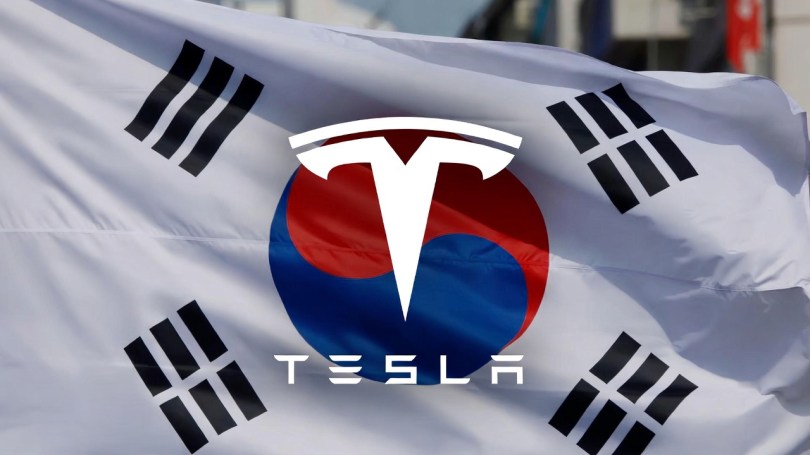
Tesla is recruiting AI chip design engineers to accelerate its in-house hardware for autonomous driving, robotics, and massive data centers. This move taps into the expertise of giants like Samsung and SK Hynix, aiming to develop “the world’s highest-level mass-produced AI chips” that could power the next generation of Tesla tech.
For U.S. Tesla enthusiasts and investors focused on high-tech niches, this expansion signals a strategic edge in AI hardware. Tesla’s Full Self-Driving (FSD) system, Optimus humanoid robots, and Dojo supercomputers all rely on custom AI processors – and sourcing talent from Korea could help Tesla scale production massively, potentially challenging NVIDIA’s dominance in the space. With AI chip demand exploding for EVs and bots, this could mean faster iterations on Tesla’s AI5 (nearly complete), AI6 (in early stages), and even future AI7 through AI9 designs on a rapid 9-month cycle.
The hiring kicked off in mid-February 2026, with Tesla Korea posting openings on X for engineers skilled in chip design, fabrication, or AI software. Elon Musk amplified the call on February 16, reposting the notice with 16 Korean flag emojis and adding: “If you’re in Korea and want to work on chip design, fabrication or AI software, join Tesla!” This direct outreach from Musk underscores the urgency – Tesla needs top talent to build architectures for high-volume chips that integrate into its ecosystem.
Interested candidates should email Ai_Chips@Tesla.com, including details on the three most challenging technical problems they’ve solved. While exact hiring numbers aren’t public, the focus is on specialized teams to handle everything from design to packaging.
This aligns with Tesla’s existing partnerships, like the $16.5 billion deal with Samsung to produce next-gen A16 chips at facilities including Hwaseong in Korea and even Taylor, Texas – bringing production closer to U.S. operations. Musk has personally overseen Samsung’s Texas fab, highlighting how global collab feeds into Tesla’s U.S.-centric innovation.
Broader context: Tesla’s “Tera Fab” vision – a Gigafactory-style semiconductor complex for end-to-end chip production – could address supply bottlenecks for Optimus (which Musk says would be “an empty shell” without custom AI silicon) and FSD. This comes amid Tesla’s $2 billion investment in xAI, tying into Musk’s interconnected empire of Tesla, SpaceX, and xAI.
For U.S. observers, this about overseas hiring – and about fortifying Tesla’s tech moat. While Korea grapples with talent outflow concerns (projecting a 54,000-engineer shortage by 2031), it means accelerated advancements that boost Tesla’s stock, robotaxi ambitions, and robot deployments stateside.
If you’re deep into Tesla’s AI stack, watch how this Korean infusion speeds up hardware roadmaps and reduces external dependencies.
- Sources
- Teslarati: https://www.teslarati.com/tesla-korea-ai-chip-design-engineer-hiring-elon-musk
- The Korea Herald: https://www.koreaherald.com/article/10677730
- Korea JoongAng Daily: https://koreajoongangdaily.joins.com/news/2026-02-18/business/industry/Elon-Musk-directly-courts-Korean-chip-engineers-in-X-post/2525786
- Benzinga: https://www.benzinga.com/markets/tech/26/02/50634348/tesla-expands-ai-chip-design-efforts-to-south-korea-actively-recruits-engineers
- Elon Musk’s X post (February 2026): https://x.com/elonmusk/status/2023516129457758483
 whatsuptesla.com