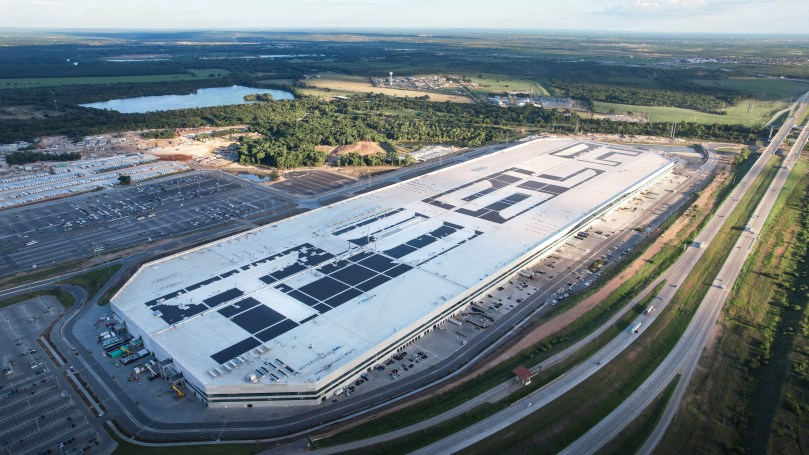
Tesla Cybertruck Delivery Event Invitation. Image Courtesy, Tesla, Inc.
(Austin, Texas)
Recently, someone told me that all car companies have enthusiasts. “Tesla is nothing special, really.” False.
Tesla is something special. No other company is like Tesla in that it is not “just” a car company.
Only Tesla has supporters that are so numerous that a lottery must be conducted to ensure the Cybertruck Delivery Event is not so overcrowded that it violates the country fire code.
Why is there such a desire by so many people to see Tesla succeed? Why are there so many investors who support the company and care so much about Elon Musk?
The answer is complex. Some bought a Tesla vehicle, and at that very moment, they just knew Tesla is a rare and unexpected phenomenon.
Some care deeply about accelerating the transition of our world to sustainable energy. They own shares of TSLA.
I also know of some people employed at Tesla. The job has brought blessings to their family in many ways.
Regardless of the reason for loving the company, Tesla and its leadership, especially Elon Musk, want to mark milestones with celebrations with supporters.
The invitation by Tesla says, “Join us at Gigafactory Texas on Thursday, November 30, 2023, to celebrate the first deliveries of Cybertruck.”
Of course, Tesla does not have to put forth the effort these kind of events require. Tesla does it out of love for humanity.
Elon Musk speaks at these events and live streams all such events. His talks inspire people. His talks get people excited, and motivated, they are milestones not only for Tesla, but creators of memories for many people.
I think Tesla is deserving of this fantastic support, and I think that shareholders are amazing people. Owning even one share, or hundreds, is an act of trust in what Tesla will accomplish for years to come.
The Cybertruck Delivery Event is November 30, 2023, in Austin, Texas.
Image Courtesy Tesla, Inc.
Gail Alfar, author. Exclusive to What’s Up Tesla – All Rights Reserved. My goal as an author and podcaster is to support Tesla (the most American vehicle manufacturer) and Elon Musk in both making life better on Earth for humans and becoming a space-fairing civilization.
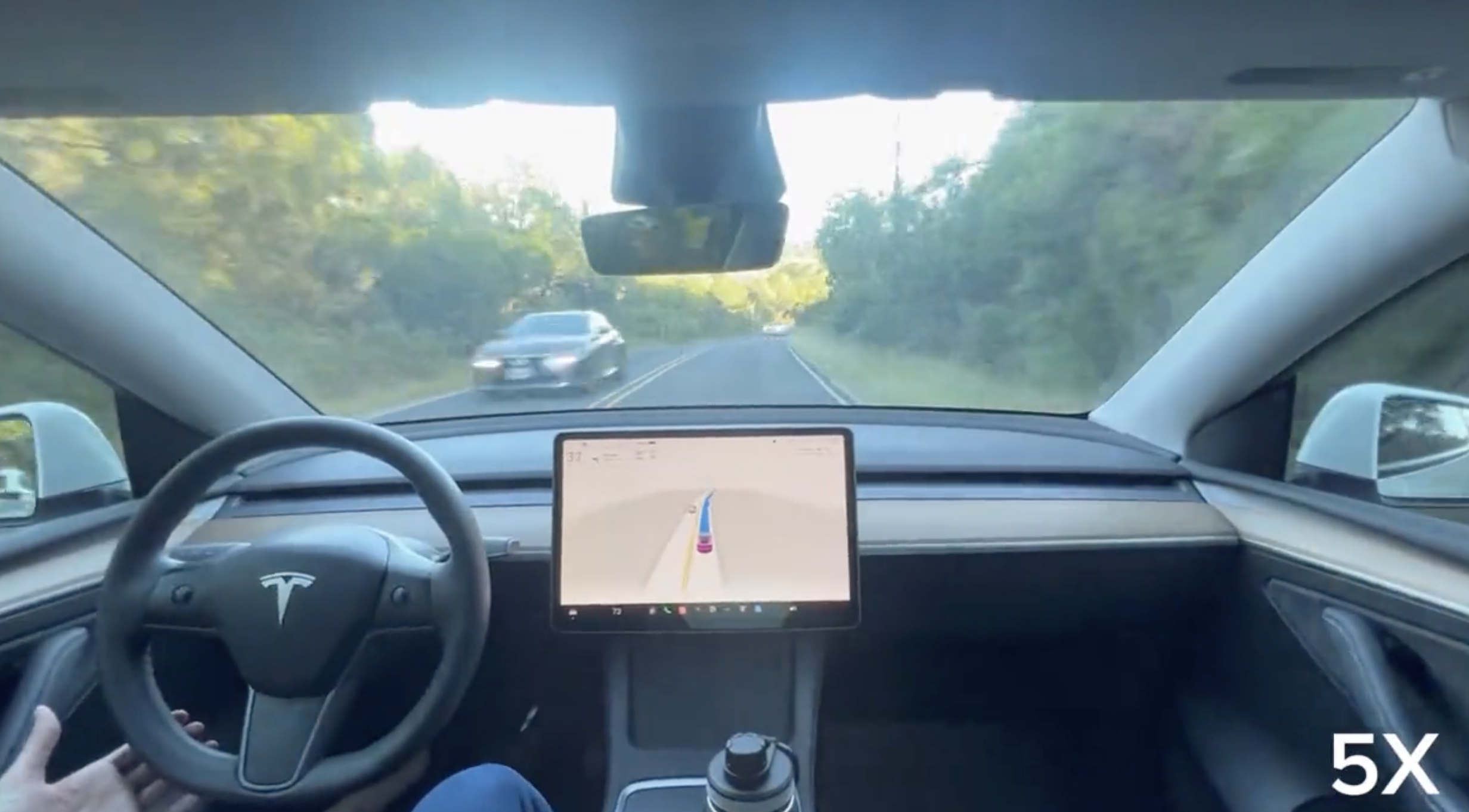
(Austin, Texas) For this episode, Model Y is running FSD beta version 11.4.7.3 and the roads are wet because a rainstorm occurred just prior to the recording of the Podcast.
Toll Roads
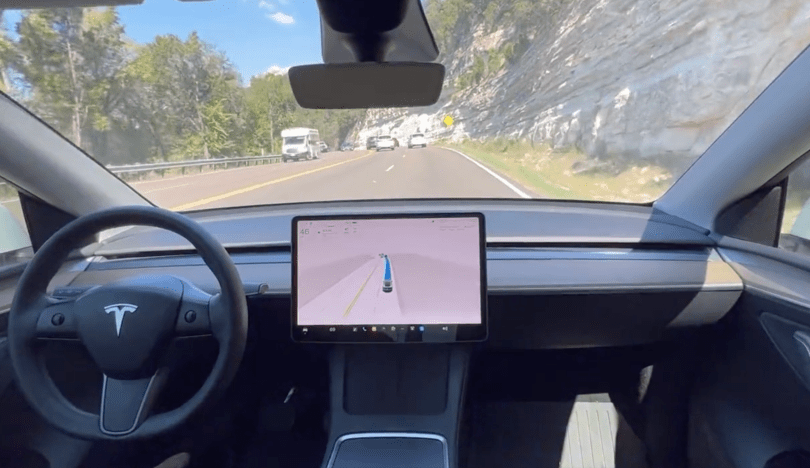
What stands out in this episode on 11.4.7.3 is how well the AI manages to get onto a Toll Road. The vehicle moves smoothly in the video through the Toll entrance, it slows but does not stop. Following this, there’s a slightly complicated fork where it must move to the left. Watch as it performs this swift move. Once on the Toll, the software has good control, while the driver does adjust the speed on the hand controller a few times to keep up with the fast speed of the other drivers.
Would you like to know what it’s like to drive in Austin Texas after a severe thunderstorm? This is a 99% zero disengagement ride, with an interesting disengagement at a Toll exit. Enjoy episode 36 — FSD Beta v11.4.7.3 pic.twitter.com/km3OJG99Bf
For the one disengagement, and this is applicable to FSD beta version 11.4.7.3 (Tesla AI is constantly prompting owners to update new versions of software), the driver approaches the Toll exit booth and the AI is quickly approaching the blocked Toll lane, so the driver simply disengages and takes over.
I will emphasize that if you see this now, you should expect for certain that Tesla will work to improve and update the autonomous safttware to where it will conquer Toll Roads in every way. All FSD beta testers sign to agree they will fastidiously supervise the car when FSD is engaged.
My thoughts
I enjoy the challenges. I laugh because if Tesla AI was perfect already, I could not be here, enjoying testing it in the very early years. Tesla Autonomy must become 100X safer and better than the best human driver. Safety is critical. Tesla AI is never judged using the same litmus test as human drivers are judged by. When AGI is achieved, it will be by Tesla. Having the best AI team in the world, means the standards are higher and so are the stakes. Tesla will succeed.
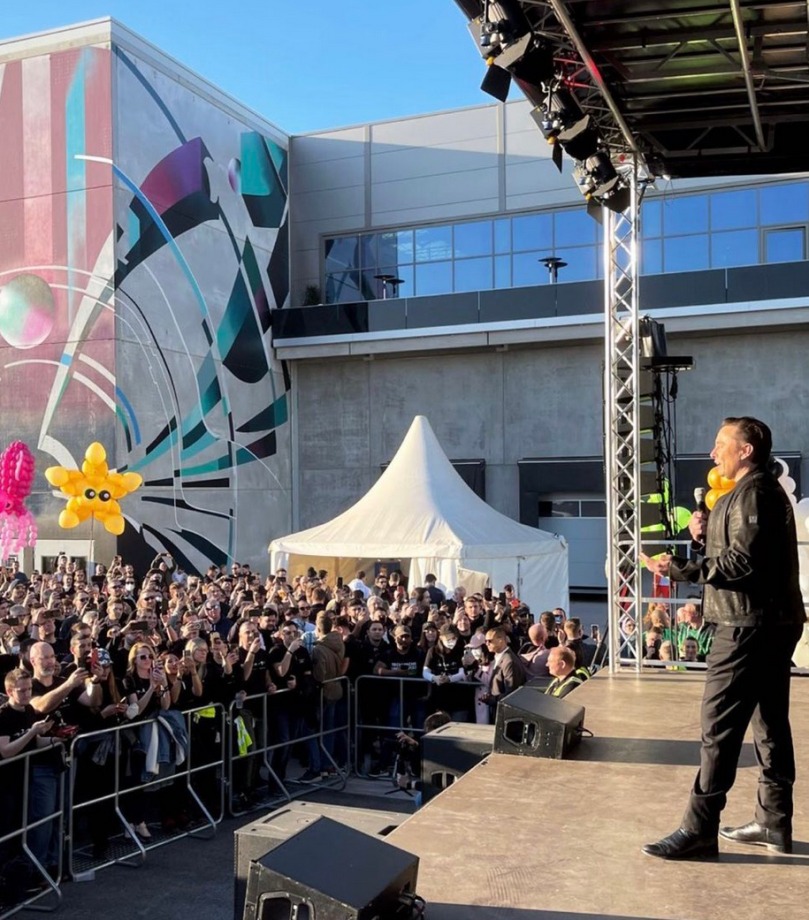
Elon Musk talks to the team in Berlin, encouraging them and congratulating them on the extraordinary success of Gigafactory Berlin.
Gail Alfar, author. Exclusive to What’s Up Tesla – All Rights Reserved. My goal as an author and podcaster is to support Tesla (the most American vehicle manufacturer) and Elon Musk in both making life better on Earth for humans and becoming a space-fairing civilization.
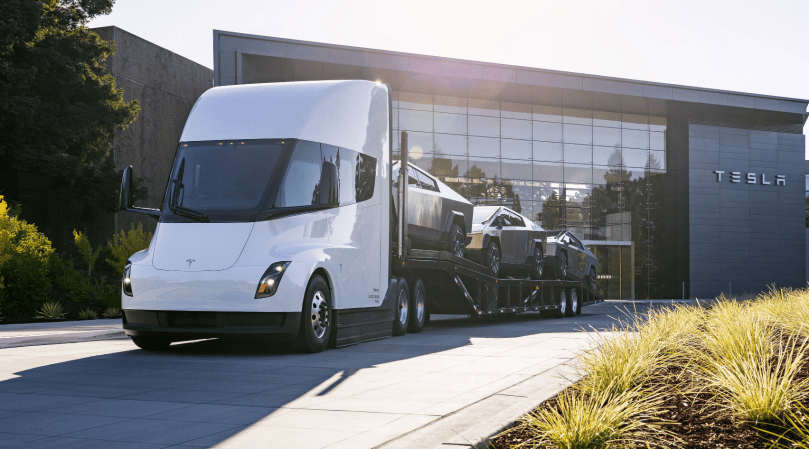
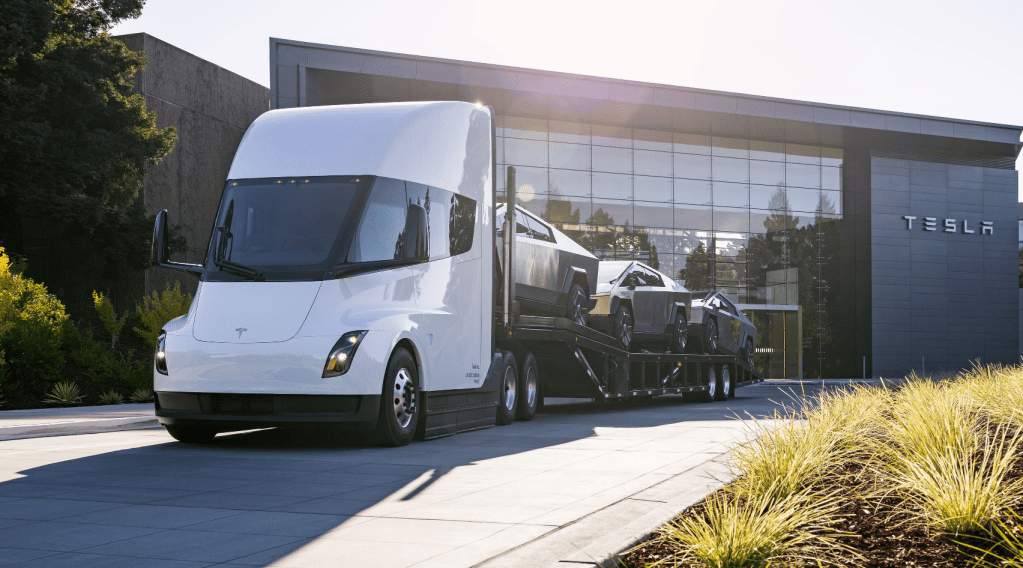
Image Courtesy Tesla, Inc. Cybertrucks arriving at Tesla AI and Engineering HQ in Palo Alto.
(Austin, Texas) This blog post highlights the Tesla Q3 earnings call in which Elon Musk spoke. This is a historical livestream because it signifies the first-ever earnings call that was livestreamed on X. The Q2 earnings call was live-streamed on Twitter on July 19, 2023. On July 23, 2023, Elon Musk rebranded Twitter to X, marking the historical day with a beautifully lit X atop the HQ in SF.
The second reason this earnings call is historical is because it hailed in the official delivery date of Tesla’s anticipated Cybertruck. November 30 was announced at the date slated for the first delivery. This momentous occasion is planned to be marked with a short celebration at Giga Texas, in which an undisclosed number of people will be invited, and the event will be livestreamed on X to the world.
On Wednesday, October 18, Elon Musk and top executives gathered in the conference room of Giga Texas and commenced the earnings call at 4:30pm CT.
NEW FACTORIES ARE A PRIORITY AND FSD BETA HAS LOGGED OVER .5 BILLION MILES
Elon Musk began by stating Tesla is prioritizing the “ramp-up of new factories”, and he believes there’s meaningful room for improvement. He then talks about Autopilot
Elon: “Regarding Autopilot and AI, our vehicle has now driven over 0.5 billion miles with FSD Beta, Full Self-driving Beta, and that number is growing rapidly. We recently completed a 10,000 GPU cluster of H100s. We think we’re probably bringing it into operation faster than anyone’s ever brought that much compute per unit time into production since training is the fundamental limiting factor on progress with full self-driving and vehicle autonomy.
We’re also seeing significant promise with FSD V12. This is the end-to-end AI where it’s a photon count in, controls out, or, you can think of it as there’s just a large midstream coming in and a tiny bit stream going out, impressing reality into a very small set of outputs, which is actually kind of how humans work. The vast majority of human data input is optics from our eyes. And so, we are like the car: Photons, and controls out with all that’s in the middle.
It’s interesting to think about that. We will continue to invest significantly in AI development as this is really the massive game changer, and I mean, success in this regard in the long term, I think has the potential to make Tesla the most valuable company in the world by far. If you have fully autonomous cars at scale and fully autonomous humanoid robots that are truly useful, it’s not clear what the limit is. Regarding energy storage, we deployed four-gigawatt hours of energy storage products in Q3.”
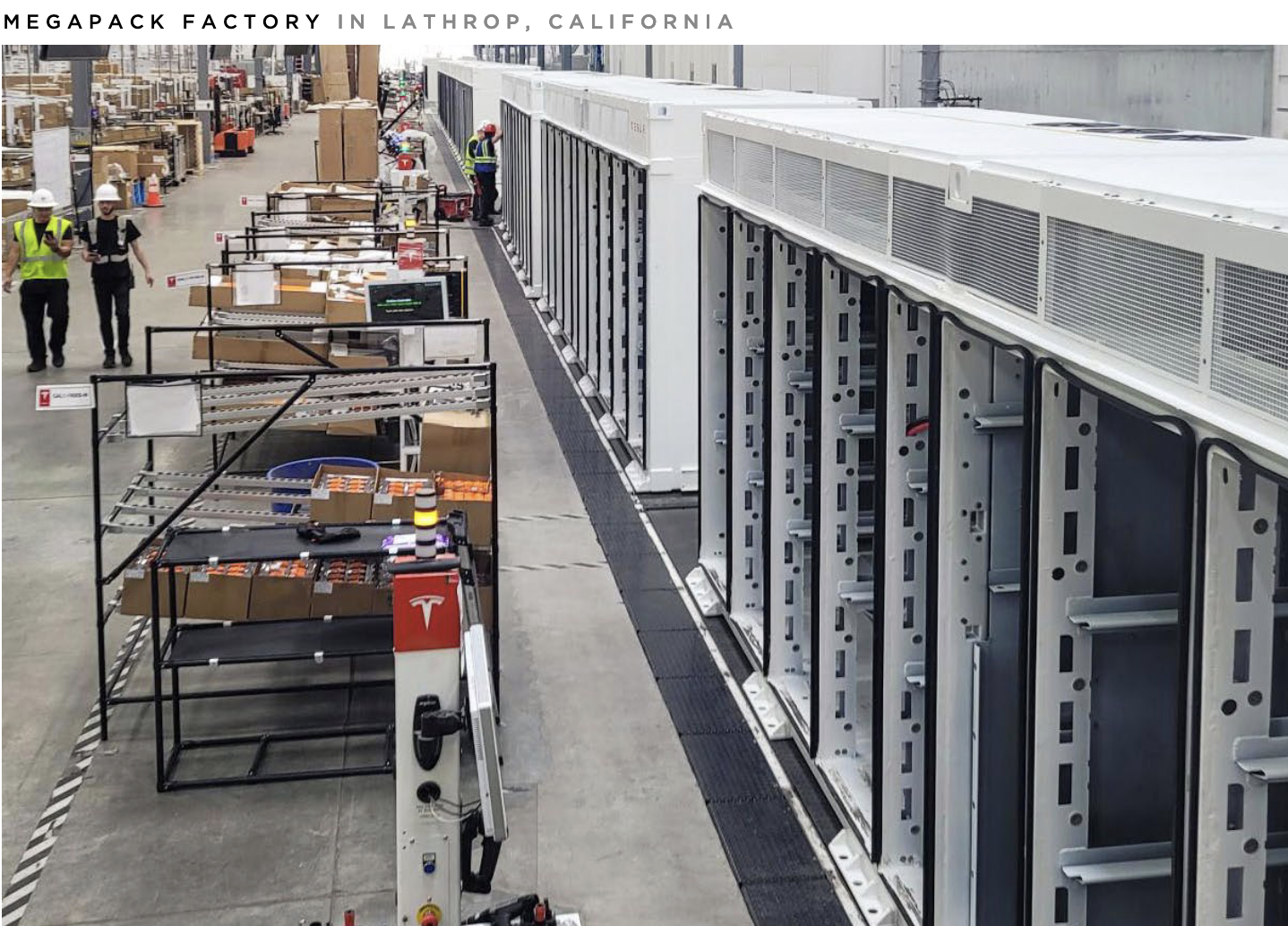
Tesla Lathrop Megapack Factory.
ENERGY AND SERVICE NOW CONTRIBUTE OVER $0.5 BILLION TO QUARTERLY PROFIT
Elon continued,
“And as this business grows, the Energy division is becoming our highest-margin business. Energy and service now contribute over $0.5 billion to quarterly profit.
CYBERTRUCK FIRST DELIVERIES SLATED FOR NOVEMBER 31
ELON: “The Cybertruck, a lot of people are excited about Cybertruck. I am too.
I’ve driven the car. It’s an amazing product. I do want to emphasize that there will be enormous challenges in reaching volume production with the Cybertruck and then in making a Cybertruck cash flow positive. This is simply normal for when you’ve got a product with a lot of new technology or any brand-new vehicle program, but especially one that is as different and advanced as the Cybertruck, you will have problems proportionate to how many new things you’re trying to solve at scale.
So, I just want to emphasize that one. I think this is potentially our best product ever. And I think it is our best product ever. It is going to require immense work to reach volume production and be cash flow positive at a price that people can afford.
Often, people do not understand what is truly hard. That’s why I say prototypes are easy. Production is hard. People think it’s the idea or you make a prototype.
You design a car. And as soon as designing car is — just anyone can do it. It does require taste. It does require effort to design a prototype.
But this difficulty going from a prototype to volume production is like 10,000% harder to get to volume production than to make the prototype in the first place. And then it is even harder than that to reach positive cash flow. That is why there have not been new car start-ups that have been successful for 100 years apart from Tesla. So, I just want to temper expectations for Cybertruck.
It’s a great product, but financially, it will take, I don’t know, a year to 18 months before it is a significant positive cash flow contributor. I wish there was some way for that to be different, but that’s my best guess. So, really, the demand is off the charts. We have over 1 million people who have reserved the car.
So, it’s not a demand issue, but we have to make it, and we need to make it at a price that people can afford.
In conclusion, we continue to focus on ramping production while maintaining positive cash flow, and we continue to target or expect to have around 1.8 million vehicle deliveries as stated earlier this year. The Tesla AI team is, I think, one of the world’s best, and I think it is actually by far the world’s best when it comes to real-world AI.
But I’ll say this again, Tesla has the best real-world AI team on earth, period, and it’s getting better.
And lastly, I wanted to thank all of our employees who are making a lot of extra effort during uncertain times. Thank you very much for your hard work and the impact that you’re making.”
During all Tesla earnings calls, questions are taken from both investors and analysts. What follows are Elon’s responses to the questions.
Retail Investor: How many Cybertruck deliveries do you anticipate for 2024?
Elon: “It’s difficult to make an accurate guess at this point. Going back to what I said earlier, the ramp is going to be extremely difficult. And like I said, there’s no way around that. If you try to make — if we just try to do some copycat vehicle design, of which there are literally 200 models that are slight variations on a theme in the combustion engine world, just a distinction without a difference, then it’s really not that hard.
But if you want to do something radical and innovative and something really special like the Cybertruck, it is extremely difficult because there’s nothing to copy. You have to invent not just the car but the way to make the car. So, the more uncharted the territory, the less predictable the outcome. Now, I can say that if you say, well, where will things end up, I think we’ll end up with roughly 0.25 million Cybertrucks a year, but we’re not — I don’t think we’re going to reach that output rate next year.
I think we’ll probably reach it sometime in 2025. That’s my best guess.”
Investor: Could you provide an update on capacity expansion plans for factories in Berlin and Austin, and the opening schedule of Giga Mexico?
Elon: “And in Mexico, we’re laying the groundwork to begin construction and doing all the long lead items, but I think we want to just get a sense of the global economy before we go full tilt on the Mexico factory. I am worried about the high-interest rate environment that we’re in.
I just can’t emphasize this enough, that the vast majority of people buying a car is about the monthly payment. And as interest rates rise, the proportion of that monthly payment that is interest increases naturally.”
ELON MUSK’S CONCERN OVER LACK OF AFFORDABILITY
If interest rates remain high or if they go even higher, it’s that much harder for people to buy a car. They simply can’t afford it. And we are tracking, I believe, at this point for Model Y to be the best-selling car out, not just in revenue but in unit value. If you compare that to the other vehicles that are No. 2 and No. 3 and whatnot, they cost much less than our car. So, we’re just hitting a law of large numbers situation here.
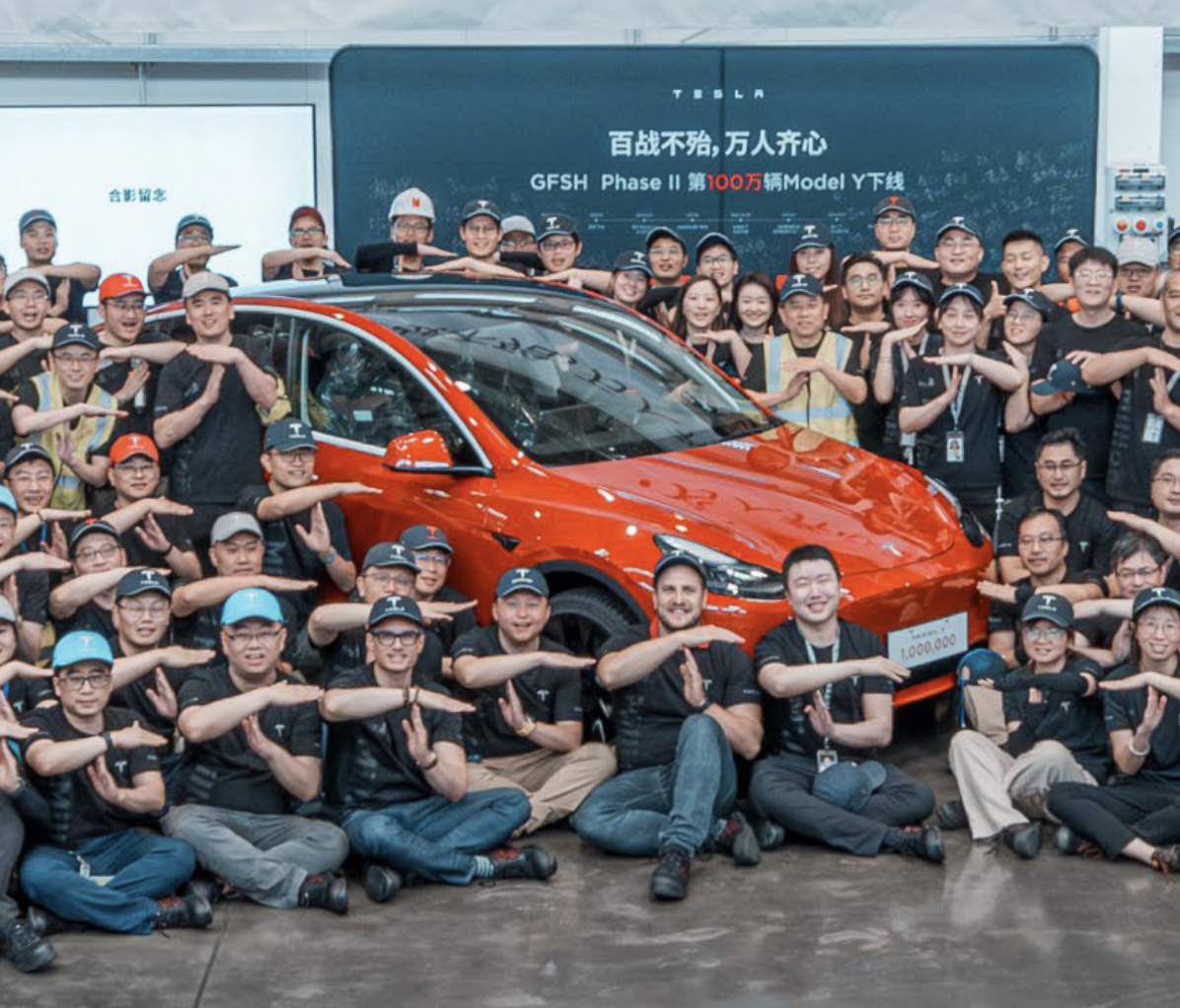
Telsa Giga Shanghai builds it’s 1 Millionth Tesla Model Y.
I know people want us to advertise. We are advertising. I think there is some — something — there is something to be gained on the advertising front. I don’t think it’s anything, but informing people of a car that is great but they cannot afford doesn’t really help. So, that is really the thing that must be sold, is to make the car affordable, or the average person cannot buy it for any amount of money. They can’t afford it. They can’t afford it, so this is a great deal.”
Investor: Do you have an approximate timeline in mind for Robotaxi, driven or nondriven? What excites you most about how this project is progressing?
Elon: “Well, robotaxi is necessarily nondriven. I guess I’m very excited about our progress with autonomy, the end-to-end, nothing but net. Self-driving software is amazing, drives me around Austin with no interventions. So, it’s clearly the right move.
OPTIMUS WILL LEARN HOW TO DO THINGS SIMPLY BY LOOKING
So, it’s really pretty amazing. And obviously, that same software and approach will enable Optimus to be useful things and enable Optimus to learn how to do things simply by looking. So, extremely exciting in the long term. As I mentioned before, given that economic output is a number of people times productivity, if you no longer have a constraint on people, effectively, you’ve got a humanoid robot that can do as much as you’d like, your economy is wisely infinite or infinite for all intents and purposes.
So, I don’t think anyone is going to do it better than Tesla by a long shot. Boston Dynamics is impressive, but their robot lacks a brain.
You also need to be able to design the humanoid robot in such a way that it can be mass manufactured.
And then at some point, the robots will manufacture the robots. Now, obviously, we need to make sure that it’s a good place for humans in the future. We do not create some variance of the terminator outcome. So, we’re going to put a lot of effort into localized control of the humanoid robot.
So, basically, anyone will be able to shut it off locally, and you can’t change that even if you put in a software update, you can’t change that. It has to be hard-coded.”
Investor: Why was the price dropped on FSD if it is getting better and robotaxi is expected so soon?
Elon: “Well, we just wanted to make it more affordable as more people try it. Yes, I think, over time, the price of FSD will increase proportionate to its value. So, with regard to the current price, think of it as a kind of a temporary low.”
Investor: Mercedes is accepting legal liability for when it’s Level 3 autonomous driving system drive pilot is active. Is Tesla planning to accept legal liability for FSD? And if so, when?
Elon: “Well, there’s a lot of people that assume we have legal liability judging by the lawsuits. We’re certainly not being let off the hook on that front whether we’d like to or wouldn’t like to.
I think some people understand the profundity of the Tesla AI system. Mostly, it’s very, very few. It’s basically baby AGI. It has to understand reality in order to drive, baby AGI.”
Investor: Will Optimus be working on Gigafactory lines next year? If so, how many would you guess will be deployed?
Elon: “I think at this point, we are not ready to discuss details of the Optimus program, but we will make — provide periodic updates online. So, as you can see, Optimus, a year ago, could barely walk and now it can do Yoga. So, a few years from now, it can probably do Ballet.”
FSD BETA NOT YET READY TO BE DEPLOYED GLOBALLY
Investor: Neural Net path planning represents a significant advance in capability and safety for FSD. What steps is Tesla taking to make this technology available outside the U.S.?
Elon: “Yeah. Our approach has been that the more places we’re trying to make it work, the harder the problem is. So, the reason we don’t do it in all countries simultaneously is that it would take much longer to make it work anywhere at all. So, that’s why it’s just North America.
And also, for most parts of the world, you have to get approval before deploying things, whereas in the U.S., you can deploy things at risk or at least you take liability for what you’re deploying. Most countries require some sort of extensive approval program. We only want to go through that extensive approval program when we think it’s kind of ready for prime time in that country. I apologize it’s not in those countries, but we keep plenty of ways to make it better.
And it really needs to drive such that it exceeds the — even unsupervised, significantly exceeds the probability of entry of a human or significantly better, a lower probability of entry than a human by far. I think we’re tracking to that point very quickly. Obviously, in the past, I’ve been overly optimistic about this. The reason I’ve been overly optimistic is that the progress tends to sort of look like a log curve, which is that you have kind of rapid initial improvements that if you were to extrapolate that looks rapid fairly linear rate of improvement, you get to self-driving quite quickly, but then the rate of improvement curves over logarithmically as such to asymptote.
That’s not happened several times. I would characterize our progress in real-world AI as a series of stacked log curves. I think that’s also true in other parts of AI, like AI Lens and whatnot, a series of stacked log curves. Each log curve is higher than the last one.
So, if you keep stacking them, keep stacking logs, you eventually get to FSD.”
THE COMPLEXITY OF CYBERTRUCK EXPLAINED
Analyst Will Stein, Truist Securities asked if Elon expected a slow start for the Cybertruck until its third year, and is he expects a similar ramp-up timeline for the NextGen platform, and is there a reason to be more optimistic or pessimistic about it?
Elon: “Yeah. I mean, to be clear, it’s not really the third year of production. It’s kind of like the 18th month of production is roughly my guess. So, it’s just that they happen — it will happen — is that the — it starts this year, spans next year, and gets to 2025.
So, technically, there are three calendar years in there, but there’s actually only 18 months, not three years. I would be very disappointed if it took us — and that would be shocking if it took us three years. But 18 months from initial deliveries to have — to reach volume and reach prosperity with an immense — I can’t tell you how much the blood, sweat, and tears level required to achieve. That is just staggering.
I have been through it many times. And here we go again. There is unique complexity to Cybertruck.I mean, we dug our own grave with the Cybertruck. You know, nobody, in general, probably nobody digs a grave better than themselves. Cybertruck’s one of those special products that comes along only once in a long while.
And special products that come along once in a long while are just incredibly difficult to bring to market to reach volume, to be prosperous. It’s fundamental to the nature of the newness. So, now the sort of high-volume, low-cost smaller vehicle is actually much more conventional.
We’re doing everything possible to simplify [Cybertruck] in order to achieve a units-per-minute level that is unheard of in the auto industry. Just to be clear, it will be cool, but it’s utilitarian. It’s not meant to, you know, fill you with magic. It’s to get you from A to B. It will be still beautiful, but it’s utility.”
Pierre Ferragu, New Street Research enquired about how Tesla plans to approach the different tiers and pricing of FSD, considering that not everyone may be interested in the ultimate Robotaxi version, and there could be a simplified version available earlier from a technical perspective. How will this affect the financial contribution of FSD over time and increase its adoption?
Elon: “Yeah. I mean, a fully autonomous vehicle, I think, Pierre, your sort of the economics of autonomous vehicle are truly astounding in a positive way. When you look at passenger vehicles today, they only get about 10 to 12 hours of usage per week. If you drive an hour and a half a day on average, that’s roughly 10 hours a week out of 168 hours.
And then there’s also you’re going to have parking and insurance. You got to take care of the car. It’s like there’s a lot of overhead. So, I mean, yes, it’s like the economics of the system are just insanely positive given that the car — like all of the cars we’re making and have made for a while, we believe, are capable of full autonomy.
So, then if you’re able to increase the utility of that car by a factor of five, which only means that it’s being used for maybe 50 hours a week out of 168, that still assumes less than a third of the hours of the week it is doing something useful. You’ve increased the value of that by five, but it still costs the same, like you have something — then we’re a hardware company with software margins.
Rod Lache, Wolfe Researchasked how Elon is thinking about price elasticity just at this point in this macro environment.
Elon: “I think that there’s very significant price elasticity. I mean, to be totally frank, if our car costs the same as a RAV4, nobody would buy a RAV4 or at least they’re very unlikely to. It’s worth noting that a lot of these incentives like the tax credit and whatnot, they’re actually very difficult for the average person to access because they — most people do not have $10,000 or even $7,500 burning a hole in their bank account.
A lot of, a large number of people are living paycheck to paycheck, and with a lot of debt. They’ve got credit card debt, mortgage debt. So, yes, that’s a reality for most people. It’s sometimes difficult for people who are high income and I’d say high to be like someone who’s earning over $200,000 a year to understand what life is like for someone who is earning $50,000 or $60,000 or $70,000 a year, which is most people.
So, like for a lot of people, like this tax credit just — they can’t front $7,500 for 18 months or even six months to get the tax credit, and they actually don’t in some cases, even have that $7,500 in taxes. So, it’s really just the best regard to people is how much money they have to pay immediately and how much per month. That’s it. I think you stop right there.
And that far is still much more expensive than a RAV4 when you look at it that way.”
COMPASSION, AND UNDERSTANDING FOR HARD-WORKING PEOPLE: TESLA WILL NEVER SAY, “LET THEM EAT CAKE”
Elon continued, showing compassion and understanding for working people.
Elon: “Honestly, I would say this somewhat correlates with the Why doesn’t everyone work from home crowd?
I’m like — I mean, this is like some real Marie Antoinette vibes from people who say why is there no work from home. What about all the people that have to come to the factory and build the cars or all the people that have to go to the restaurant and make your food and deliver your food? It’s like what are you talking about? I mean, how detached from reality does the work-from-home crowd have to be? While they take advantage of all those who cannot work from home. So, I mean, you have to say like why did I sleep in the factory so many times? Because it mattered.
So, I just can’t emphasize again how important cost is — it’s not an optional thing for most people. It is a necessary thing. We have to make our cars more affordable that people can buy it. And I keep harping on this interest thing, but I mean, it just raises the cost of the car.
I mean, we’re looking in internal analysis, which we think is more or less on track that when you look at the cost — or the price reductions we’ve made in, say, the Model Y, and you compare that to how much people’s monthly payment has risen due to interest rates, the price of the Model Y is almost unchanged. The thing that matters is how much money do people have to put down and do they literally have that in their bank account or their check balance and then what is the monthly payment? And it doesn’t matter how, if that monthly payment is principal interest or whatever, it’s just a number, and that number has to not cause their bank account to go negative. So, going from near-zero interest rates to kind of the current very high-interest rates, the actual monthly payment is basically the same.
It’s just a bunch more of it is going to interest. And there are some incremental challenges beyond that, which is the difficulty of getting credit at all has increased. And so, the number of people who simply cannot get credit, period, even if they’ve got a job and everything is solid, the banks are a little gun shy on handing out credit, given that a bunch of them kicked the bucket earlier this year. Digital banks still exist. Well, if your bank does not exist, you have to establish a relationship with a new bank. And so, a lot of regional banks died, and I mean, even Credit Suisse, I mean, geez, that was a shocker! A 160-year-old-ish Swiss institution that doesn’t exist anymore.
That’s mind-blowing. And I think there are still quite a few shoes to drop on the bad credit situation. I mean, commercial real estate obviously is in terrible shape. Credit card debt has been rising significantly.
The credit card interest rates are usurious. It’s over 20% interest rates, meaning like — which over time is just it becomes obviously extremely punishing because if somebody’s paying 20% interest on their credit cards, means they cannot pay them off. You can’t pay them off and you’re still accruing interest of 20%, you’re at best headed to a bad place.”
George Gianarikas, Canaccord Genuity asks what factors will drive the cost per vehicle down in future quarters and if it is primarily due to scale, factory utilization, material cost reductions, or technologies like Gigacasting. He also asks if radar is being offered as an option in some Model Ys in China, and if so, why?
Elon: “We’ve not included radar. We have radar as — a Tesla-designed radar is an experiment in Model S and X. That’s it. We’ll see whether that experiment is worth it, but there are no plans to integrate radar into 3 or Y.
Just as humans drive well, and in fact, an excellent human driver can drive with amazing safety simply with their eyes, the car will far exceed the average human safety just with visual by far because, I mean, the car is looking at all directions all at once. We don’t have eyes on the back of my head. And the computer never gets tired and never gets distracted, get drunk, hopefully. And so, radar is… what really matters is how much does it affect the probability of an accident.
And in order for the radar to be effective, you have to be able to do radar-only braking — you have to do actions that are radar-only. Otherwise, you get this disambiguation problem between vision and radar. That’s why we actually turned off the radar in cars historically that we had — all 3 and Y used to have radar, but we turned it off because the radar actually generated more noise than signal. Now, the Tesla-designed radar is a high-resolution radar that has some potential to be useful, but the jury is still very much out on whether that is in fact the case.”
ELON COMPARES COST REDUCTION TO GAME OF THRONES
Elon: “It’s like Game of Thrones but pennies. I mean, first approximation, if you’ve got a $40,000 car, and roughly 10,000 items in that car, that means each thing, on average, costs $4. So, in order to get the cost down, say, by 10%, you have to get $0.40 out of each part on average. It is a game of pennies. We’ve done it many, many times. And even something as simple as a sticker, like there are too many stickers internally in the car that nobody ever sees. There’s something as simple as a QR code. You may think, well, putting a QR code on a part. We don’t just put them on there, like, well, are we actually going to use that QR code? Inevitably, somehow, the QR code doesn’t go on properly, or you can’t read it properly, and it stops the line. So, it does feel like digging a tunnel with a spoon at times. Very much escaping prison.
TESLA WILL NOT SACRIFICE QUALITY NOR SAFETY, EVER
But there’s not like some accidentally – you know, some brick of gold that we’ve got left in the car, unfortunately. We’re trying to be very rigorous about improving the quality and capability of the car because it’s like any fool can reduce the cost of a car by making it worse and just deleting functionality and capability and that’s how I call this sort of any fool like, if you want to lose weight and you said, well, I need to lose over 15 pounds right away, well, you could chop your arm off, but then you’re sitting with one arm. You know, you’re still fat.
So, sort of like, yes, you actually have to eat less food and work out. That’s the actual way. And doctor’s advice. Yeah.
It’s not super fun because food is delicious. And personally, I’m not, I don’t love working out. I know say do. I wish I did, but I don’t.
Unless moving the mouse consists of working out. In which case, I love moving the mouse.”
Colin Langan, Wells Fargo Securities asked if Tesla can continue at a 50% CAGR without Giga Mexico, where would that come from, and if Giga Mexico could get delayed indefinitely.
Elon: “No, we’re definitely making the factory in Mexico. We feel very good about that. We put a lot of effort into looking at different locations, and we feel very good about that location, and we are going to build a factory there. And it’s going to be great.
The question is really just one of timing. And there’s going to be a broken record on the interest front. It’s just the interest rates have to come down. Like if interest rates keep rising, you just fundamentally reduce affordability.
It is just the same as increasing the price of the car. So, I just don’t have visibility into — if you can tell me what the interest rates are, I can tell you when we should build the factory. We’re going to build it. And I mean, I think we’ll start the initial phases of construction next year.
WHY ELON MUSK IS CAUTIOUS WITH TESLA, INC., A REFLECTION ON TESLA’S NEAR-BRUSH WITH BANKRUPTCY IN 2009
But I am still somewhat scarred by 2009 when General Motors and Chrysler went bankrupt. While that’s now 14 years ago, it’s — that is seared into my mind with a branding iron because Tesla was just hanging on by a thread during that entire time and we closed a financing round 2008 at 6 p.m. December 24, Christmas Eve. And if we had not closed that financing round, we would have bounced payroll two days after Christmas.
Why is Elon Musk cautious with Tesla? “But I am still somewhat scarred by 2009 when GM & Chrysler went bankrupt. While that’s 14 y ago, it’s seared into my mind with a branding iron. Tesla was hanging on by a thread during that time, we closed a financing round 2008 at 6 p.m. December 24, Christmas Eve. If we had not closed that financing round, we would have bounced payroll two days after Christmas” – Elon Musk explains this at Q3 2023 TSLA earnings call.
So, we actually closed that around the last hour, the last day that it was possible, stressful to say the least, and then barely made it through 2009. I don’t want to be going at top speed into uncertainty. A lot of wars going on in the world obviously as well, and we have room here [Giga Texas]. We have 2,000 acres here. We’re actually only occupying a tiny corner of the land that we have. So, we could technically do all the scaling just here. So, I mean, personnel is our biggest challenge and that’s the greater Austin area only has, generously, the greater Austin area only has 2 million people. So, people are moving here and they’re willing to move here, but there is somewhat of a housing crisis. They have got to live somewhere.
TESLA IS A STRONG SHIP, THE WEAKER SHIPS WILL SINK IN THE STORM
So, yes. I don’t know. I mean, I’m just curious. Like I just, I’m not saying things will be bad. I’m just saying they might be. And I think like Tesla is an incredibly capable ship, but we need to make sure that if the macroeconomic conditions are stormy, even the best ship is still going to have tough times. The weaker ships will sink.
We’re not going to sink. But even a great ship in a storm has challenges. Now, that storm will apply to everyone, not just us and not just the auto industry. It will apply to everyone, I think.
So, apart from necessary sort of staples like food and stuff, but I don’t know. If interest rates start coming down, we will accelerate.
If anybody’s got any good guesses on this, I’d love to be less wrong. And I apologize if I’m perhaps more paranoid than I should be because that might also be the case because I have PTSD from 2009 big time. And 2017 through 2019 was not a picnic either. That was very tough going.
So, the auto industry is also somewhat cyclic because people hesitate to buy a new car if there’s uncertainty in the economy. So, product companies do very well in good economic times, and they don’t do as well in tough economic times, whereas if somebody is selling bread, then I think that people still eat bread. We need bread. We need to eat all the time. But new cars, you don’t have to have new cars.”
Vaibhav Tanejam Tesla’s Chief Financial Officer added, “Especially if there are wars going on and then that impacts your sentiment.” and Elon agreed, “Yes. I mean, people are reading about wars all over the world at this — buying a new car tends to not be front of mind.”
My Thoughts
Elon Musk has a deep level of commitment to increase the happiness of humanity and if Tesla should make hasty or unwise financial decisions, with disregard to the consequences, there well could be a risk of danger or bankruptcy.
Clearly, the cost of ramping up Cybertruck is manageable, but would the cost of immediately commencing the build of Giga Mexico on top of Cybertruck ramp be equally manageable? Why start something when there clearly is no rush? If the housing issue in Austin can get closer to being solved, then it will clear the way for more production at Giga Texas. I believe Austin can solve its housing issues. Austin is currently building an abundance of housing units. Since Giga Texas is not being built up (as before), these talented construction crews can shift towards building more housing in Austin. Thus, the jobs remain, and the housing issues are alleviated. Every time I see a new freeway being constructed, or a housing complex being erected, I actually recognize the same cranes, geo-pier tools, cement trucks, etc. that were previously used to build at 1 Tesla Road. The housing issue is being solved, every day.
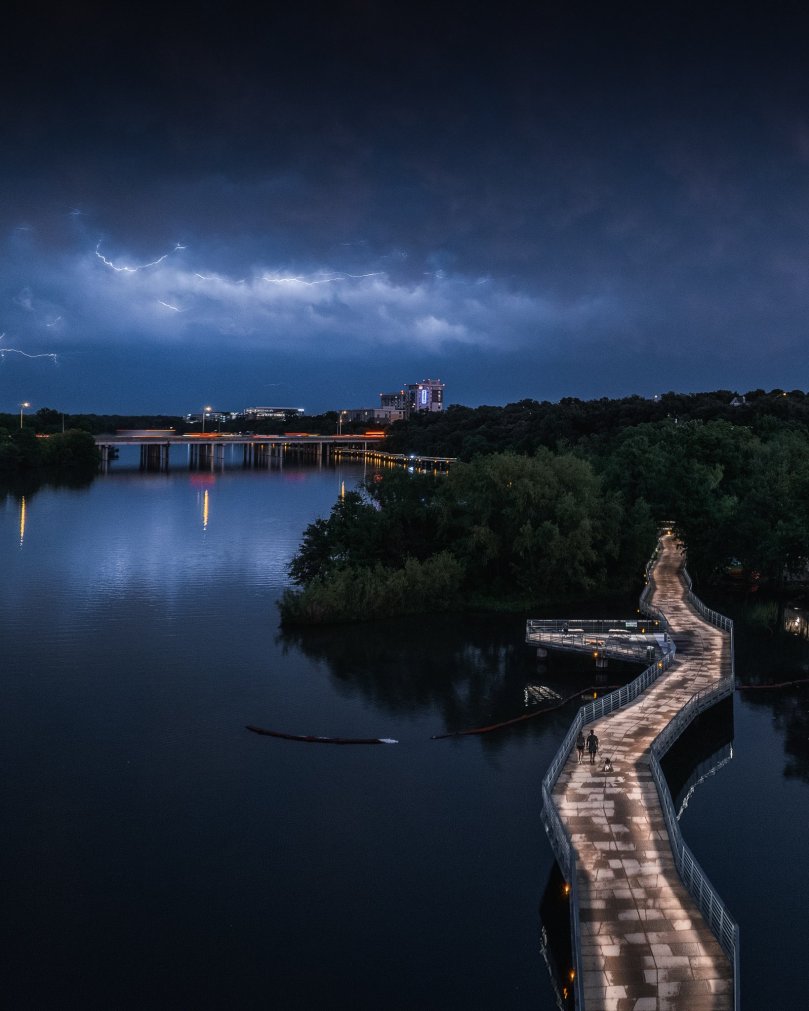
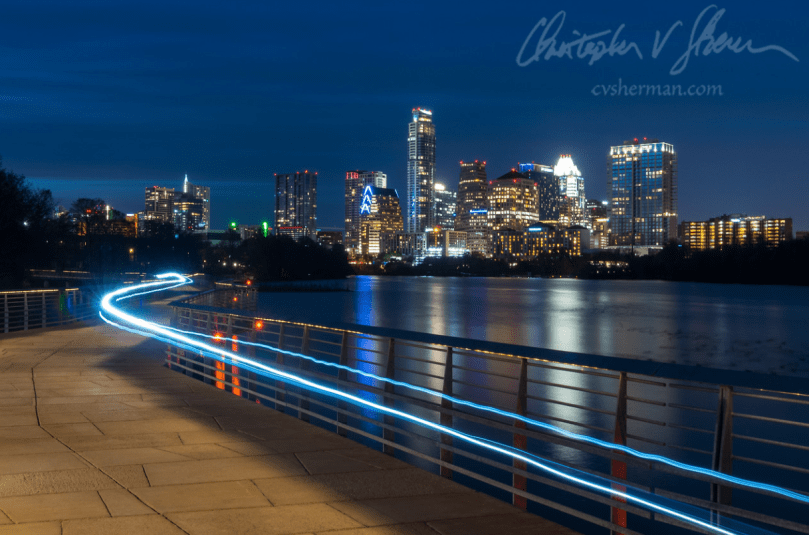
Austin Texas electric night, photo Courtesy Shane Ware.
Gail Alfar, Author, US Army Military Veteran and Sharpshooter. Exclusive to What’s Up Tesla – October 21, 2023. All Rights Reserved. My goal as an author is to support Tesla (the most American vehicle manufacturer) and Elon Musk in both making life better on Earth for humans and becoming a space-fairing civilization.
(Austin, Texas) In this short blog post, I’ll explain the IRS Federal Electric Vehicle (EV) Tax Credit program, set to improve Jan ‘24 with an upfront tax credit that will reduce the price to the consumer at point of purchase. This is important for Tesla, Inc. to be able to qualify, as in order to distribute as many EVs as possible in the fastest manner, more people with lower incomes must be able to buy a Tesla.
These changes will allow eligible U.S. residents to enjoy an upfront $7500 tax credit when purchasing qualifying EVs. The effects could be marked, as thousands of customers will also owe less money in loans, an important factor in achieving mass distribution of EVs for the lowest amount of debt.
There is growing optimism that Tesla, Inc. may find a way to qualify for this credit for your Model Y or Model 3, even though Tesla doesn’t fit the traditional “dealer” mold.
Starting on January 1, 2024, U.S. residents can leverage the new EV tax credit right at the point of sale. This means that if you meet specific criteria, including your adjusted gross income, you can instantly reduce the cost of your electric vehicle purchase. It is important to carefully consider eligibility.
Eligibility Criteria for the Tax Credit
To qualify for the tax credit, you should:
– Buy the EV for personal use, not for resale.
– Primarily use the EV in the United States.
– Ensure that your modified adjusted gross income (AGI) does not exceed the following limits:
– $300,000 for married couples filing jointly
– $225,000 for heads of households
– $150,000 for all other filers
You can use your modified AGI from the year you take delivery of the vehicle or the preceding year, whichever is less. If your modified AGI falls below the threshold in either of the two years, you can claim the credit. Importantly, with the upfront tax credit, there is no lower income limit, which means the tax credit applies to all income levels.
Furthermore, if the taxes you owe are less than the tax credits you transfer, the IRS offers an extra benefit. If the transferred credit amount is greater than your actual tax liability for that year, you won’t have to repay the excess. To put it simply, if you give away more in tax credits than you owe in taxes, you get to keep the extra credits.
How to Obtain the Tax Credit
To access the EV tax credit:
1. Select your Tesla Model 3, Model Y, or other qualifying EV.
2. Visit the manufacturer’s website or a local showroom to make your purchase. Confirm that Tesla, Inc. has been cleared to participate in the IRS program
3. During the purchase process, you’ll have the option to transfer the EV tax credit to the manufacturer, who will apply the credit directly to your vehicle’s purchase price.
Qualifying Electric Vehicles
The IRS program is open to various electric vehicles, including Tesla’s Model 3 and Model Y. These vehicles meet the required price range and adhere to specific criteria:
– 100% Built and Manufactured in the USA
– Batteries composed of at least 50% components from the United States or countries with a free trade agreement with the USA
– 40% of the battery’s critical minerals are sourced from the United States or countries with a free trade agreement with the USA
Looking to the Future
As we anticipate the implementation of the new EV tax credit program, it’s clear that Tesla, Inc. operates differently from traditional dealerships. It’s primarily recognized as an electric vehicle manufacturer and typically sells vehicles directly to consumers or through its company-owned stores.
Yet, there is a growing hope that Tesla, Inc. may find a pathway to qualify for the $7500 upfront credit as detailed in the article. The definition of a ‘dealer’ in the passage refers to entities licensed to engage in vehicle sales, and Tesla’s innovative approach to electric vehicle distribution could potentially align with the evolving landscape of EV incentives.
My Thoughts
I advocate that Tesla, Inc. should endeavor to make this option viable for all 50 States and U.S. territories, however challenging it may be, it is important.
The IRS’s new EV tax credit program, effective starting January 1, 2024, is a game-changer for those interested in owning Tesla Model 3 or Y. The upfront tax credit significantly reduces the cost of owning an EV, making it an option for a broader range of income levels.
Please note that the details provided in this article are for illustration purposes. For the most accurate and up-to-date information on the qualifications and requirements, consult the IRS Fact Sheet at [IRS Fact Sheet](https://www.irs.gov/pub/taxpros/fs-2023-08.pdf) and the US Department of Energy’s website.
Gail Alfar, Author, US Army Military Veteran and Sharpshooter. Exclusive to What’s Up Tesla – October 20, 2023. All Rights Reserved. My goal as an author is to support Tesla (the most American vehicle manufacturer) and Elon Musk in both making life better on Earth for humans and becoming a space-fairing civilization.
(Austin, Texas) In this episode, we will listen to some short clips of Elon Musk talk about Cybertruck and FSD beta progress (from the Tesla Q3 earnings call 2023) towards becoming available globally. All the while we’ll be experiencing a perfect drive during rush hour around Austin.
Safety around cyclists with Tesla AI
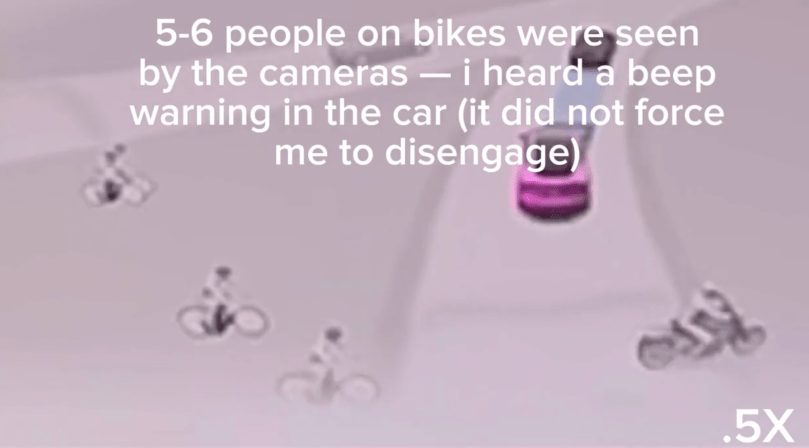
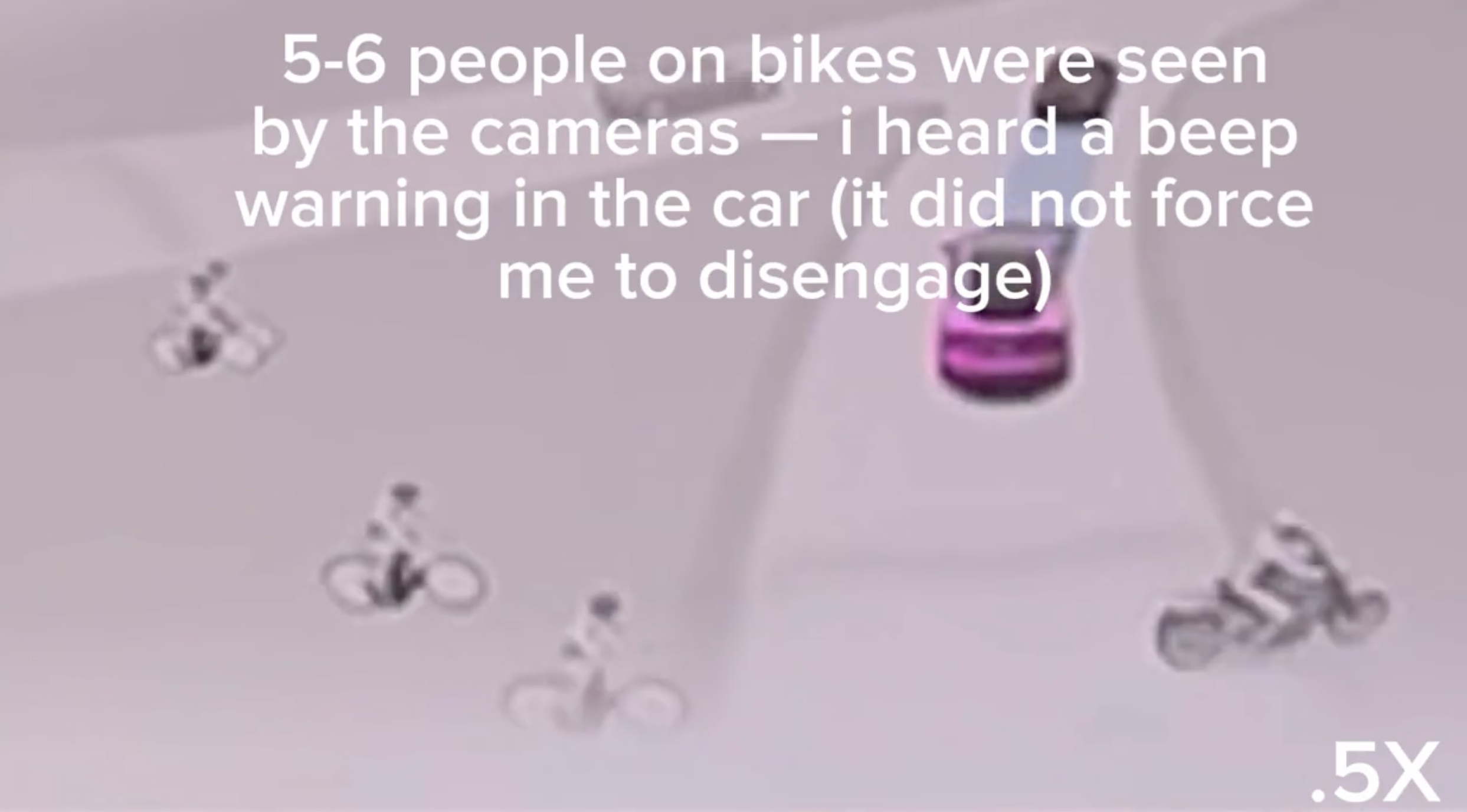
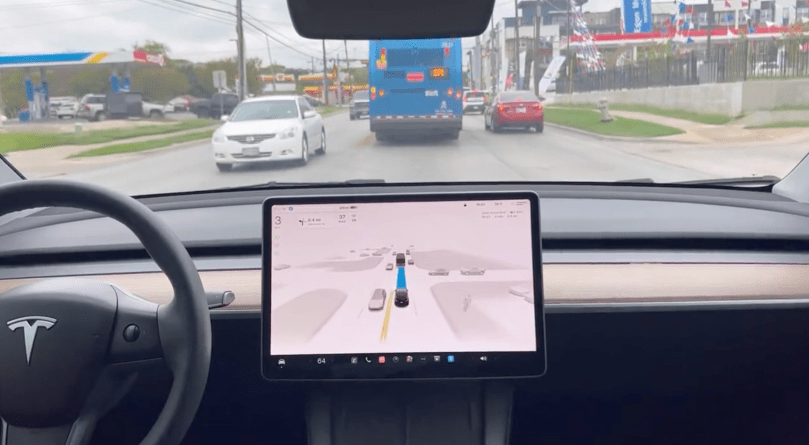
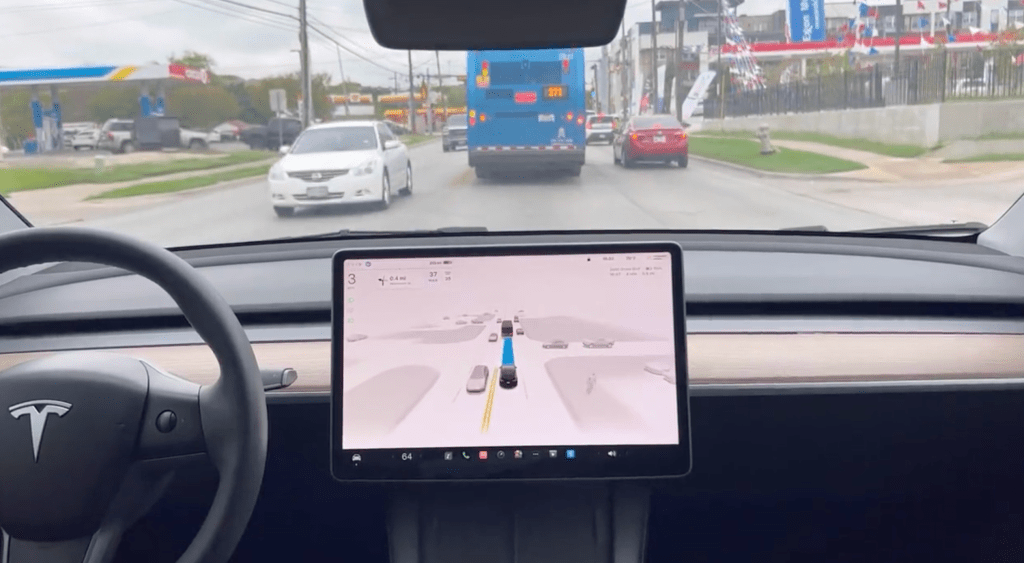
One striking portion of this podcast occurs when a bicycle team of at least 6 people moves quickly toward a crosswalk at the very same moment the Tesla (on FSD BETA) is approaching the crosswalk.
Tesla AI safety around bicycles.
The driver (me) hears a warning beep inside the Tesla, but there is no need to disengage. The FSD AI has seamlessly moved in front of the crosswalk while all cyclists safely pass behind the car.
Welcome to my 35th podcast episode, we will listen to some clips from Q3 Tesla earnings call, as well as experience a zero disengagement drive through challenging traffic in atx. Enjoy and have a great night! 🌙 pic.twitter.com/3jecmLUdHr
Gail Alfar, author. Exclusive to What’s Up Tesla – All Rights Reserved. My goal as an author and podcaster is to support Tesla (the most American vehicle manufacturer) and Elon Musk in both making life better on Earth for humans and becoming a space-fairing civilization.
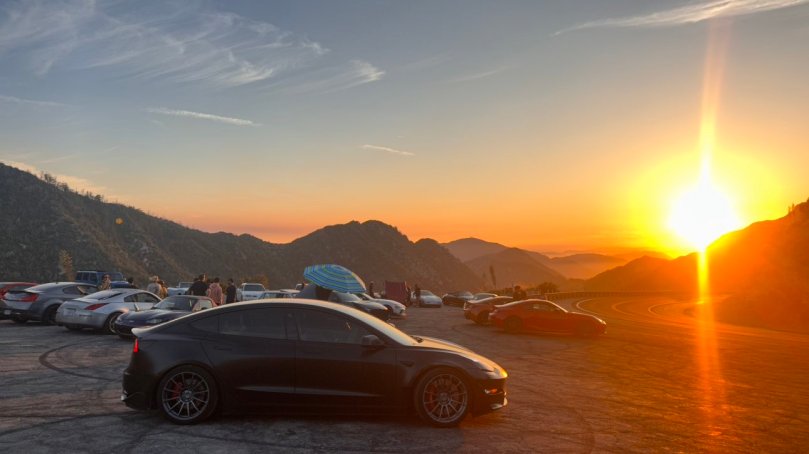
Gail Alfar Podcast No. 34Image Courtesy Zach on X @blkmdl3
Gail Alfar, author. Exclusive to What’s Up Tesla – All Rights Reserved. My goal as an author and podcaster is to support Tesla (the most American vehicle manufacturer) and Elon Musk in both making life better on Earth for humans and becoming a space-fairing civilization.
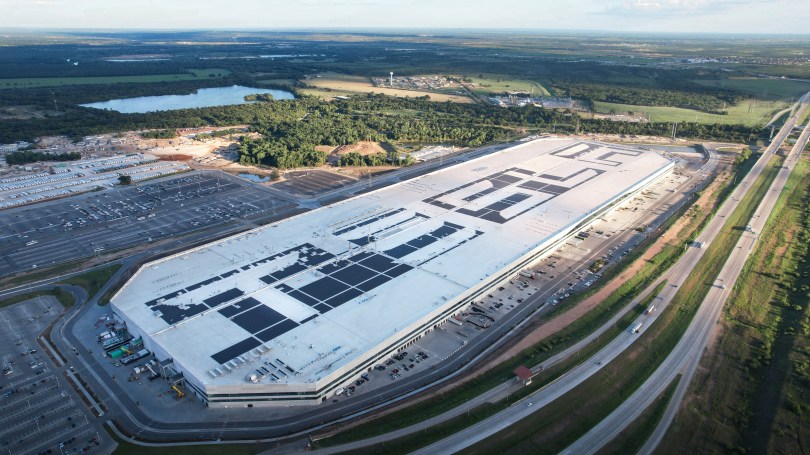
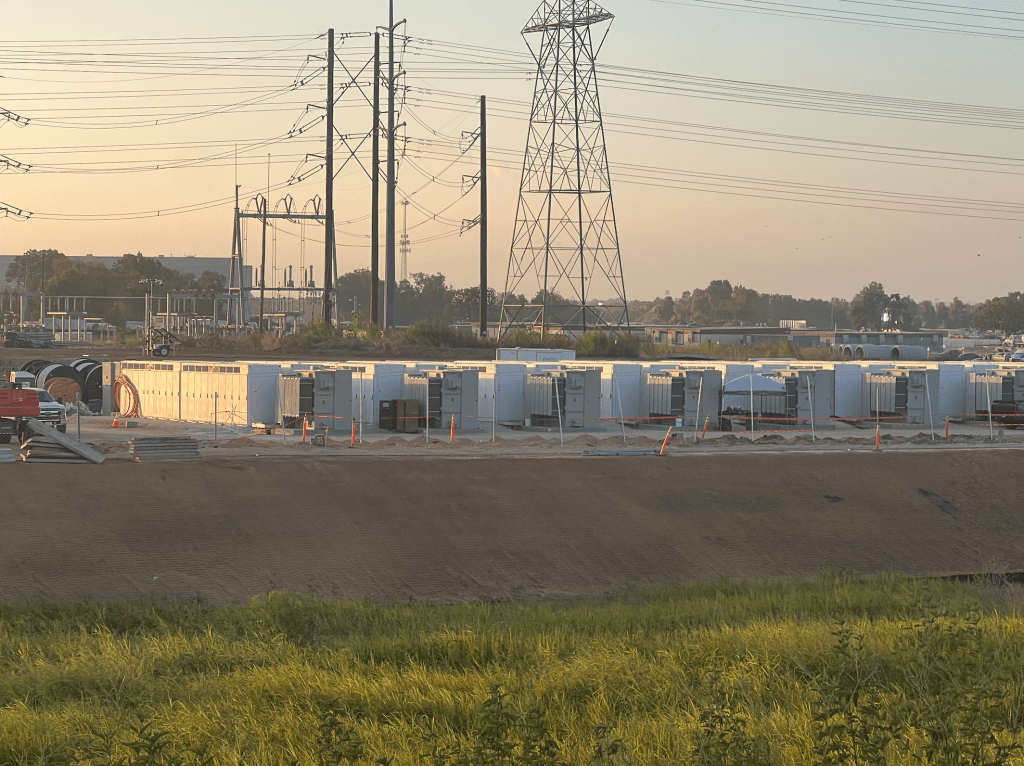
(Austin, Texas) Big battery storage sits adjacent to one of the largest buildings in the world that we know as Giga Texas. These batteries are Megapacks and there are 68 of them.
On Oct 11, we found out in an informal reply to ERCOT from the official Tesla Megapack affiliate account that these Megapacks will be supporting the Texas grid in the upcoming freezing cold winter.
Typically in Texas, January and February are the coldest months of the year. Storm Uri took place in February 2021, and it is appropriate to expect that there will be ice and freezing temperatures again in January or February 2024.
These amazing Megapacks will be serving the Lonestar state, providing 125 MW of backup energy to the entire Texas grid, not just the Austin area or the Houston area, but rural areas as well.
The Texas grid is managed by ERCOT and every corner of the state is interconnected and can be supported by these Tesla Megapacks in the event of severe freezing temperatures.
What’s what’s even more beautiful, is that the solar panels on top of Giga Texas are harnessing in clean energy from the sun, and then that energy is being stored in these 68 Megapacks every day.
Additionally, Tesla announced that they are building another 40 MW of big battery storage for Texas, but did not release details, but it is noteworthy, as the more battery storage there is, the better.
My take is that Megapacks are the best solution in Texas at this time because they provide backup storage at zero upfront investment cost to the consumer.
The clean energy stored in Megapacks, are an optimal solution, helping all people, regardless, of where they live, in the state of Texas, keeping the lights on and saving lives. In tragic storm Uri, in 2021, my family and many others, lived through 7 days of loss of power and frozen pipes, and although we survived, the tragic death toll was 246 people in the state of Texas.
Looking forward let’s hope that everybody stays safe and enjoys a warm, comfortable winter, and not have to worry about the lights going off, the water turning off, and freezing cold temperatures even inside of dwellings. Everybody should have a warm place to stay safe even in the coldest of days!
This article is a message of thanks to Tesla for doing great work to protect Texans this coming winter.
This article written by a Texan for you with much love. I hope you stay warm and safe every winter and fully enjoy the cold weather with the holidays coming up! By Gail Alfar, please credit accordingly.
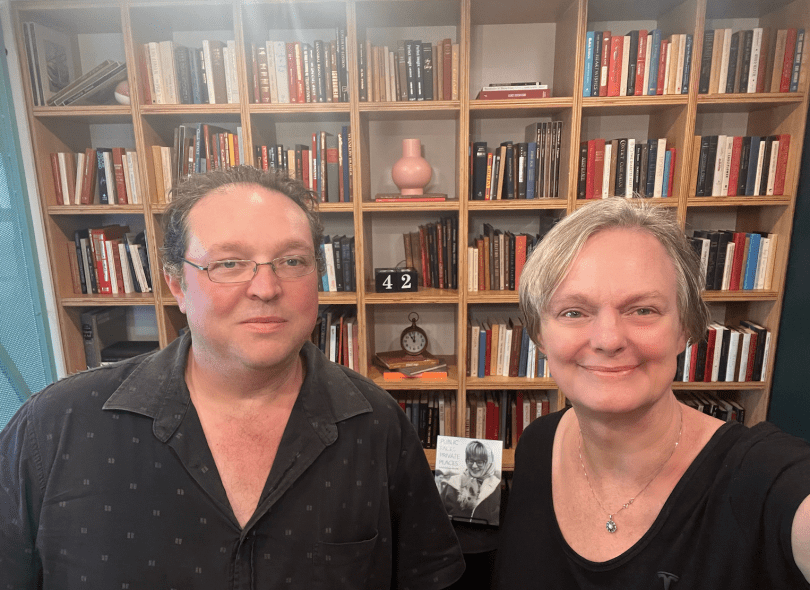
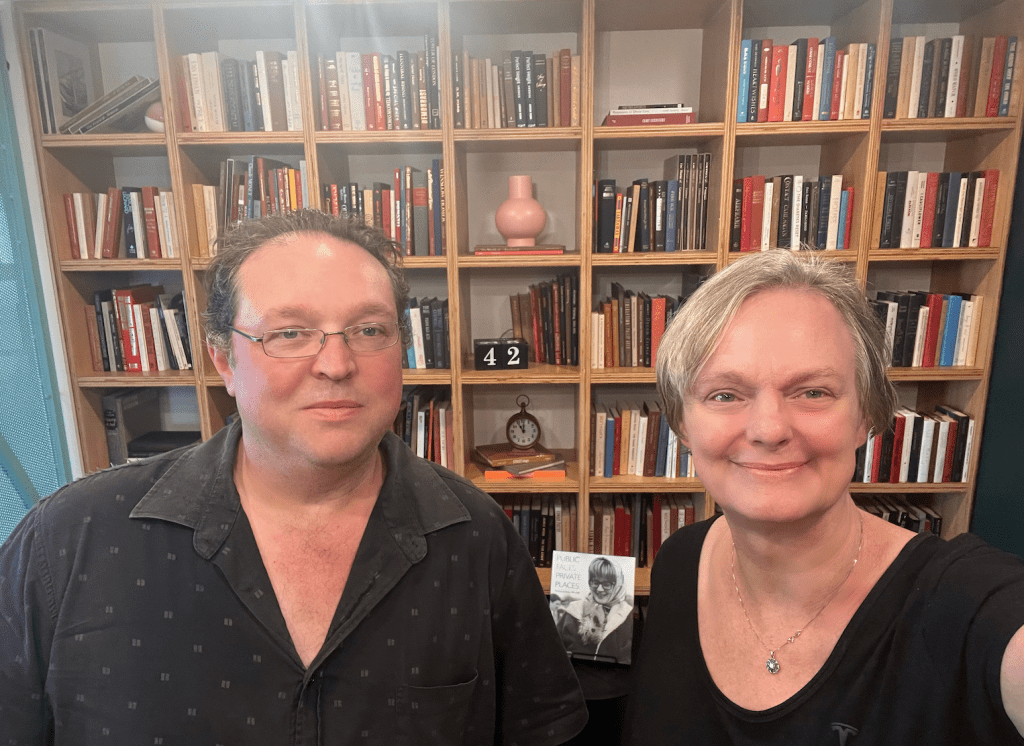
Millin Bear and Gail Alfar interview in Austin, Texas.
(Austin, Texas)
This is the 33rd Gail’s Tesla Podcast episode. We are having a conversation with Millin Bear, and then going on a drive on FSD beta 11.4.7.2 in the lovely Westside of Austin, Texas to Pease Park, home of Eeyore’s Birthday Party.
It is interesting to note that Tesla’s beautiful Cybertruck has not only inspired Millin Bear to create a business (CyberTruckRentalsUSA.com) , it has served as a catalyst for many other businesses. All said, if there is a shortage of trucks produced by Ford, Inc. in Kentucky or elsewhere due to the strikes mandated by the UAW, Cybertruck will play an even bigger role in filling the demand for reliable utility vehicles.
Join us for a fun and relaxing podcast!
This is the 33rd Gail’s Tesla Podcast episode. We are having a conversation with Millin Bear, and then going on a drive on FSD beta 11.4.7.2 Join us for a fun and relaxing podcast!
01:31 Gail interviews Millin 02:28 Tesla Colorizer
02:36 FSDbeta Westside Austin
04:20 Turo vs. Cybertruck rentals
06:00 FSD beta version 11.4.7.2 downtown
07:19 Encounter with many Cruise cars
07:50 discussion of cruise vehicles.
09:00 discussion of Australian road rules.
10:00 FSD trip to Pease Park.
10:30 right turn obliterated challenge.
12:10 discussion about FSDbeta in Australia.
13:13 comparing Australian roads to roads in the USA.
14:00 challenging unprotected left turn “madness”
15:00 arriving at Pease Park, the home of Eeyore’s birthday party
15:32 Successful, narrow, busy road challenge
15:12 Tesla moves over to allow another car through
15:35 Tesla navigates through congestion at Pease Park
17:15 unprotected left turn.
17:45 FSD doing a better job than if a visitor drove manually.
19:17 why FSDbeta might be safer for tourists visiting the USA (then driving without it)
20:33 ROUNDABOUT
21:54 NHTSA, rolling stop “ban”
As you will see form the interview, there is a lot of excitement around the Cybertruck vehicle that Tesla has worked so painstakingly to build.
Hike & Bike Trail of East Austin, Colorado River, Courtesy CVSherman
Gail Alfar, author. Exclusive to What’s Up Tesla – All Rights Reserved. My goal as an author and podcaster is to support Tesla (the most American vehicle manufacturer) and Elon Musk in both making life better on Earth for humans and becoming a space-fairing civilization.
Tesla FSD Beta version 11.4.7.2 takes you through canyon roads, around hairpin turns and up to Mount Bonnell in Austin.
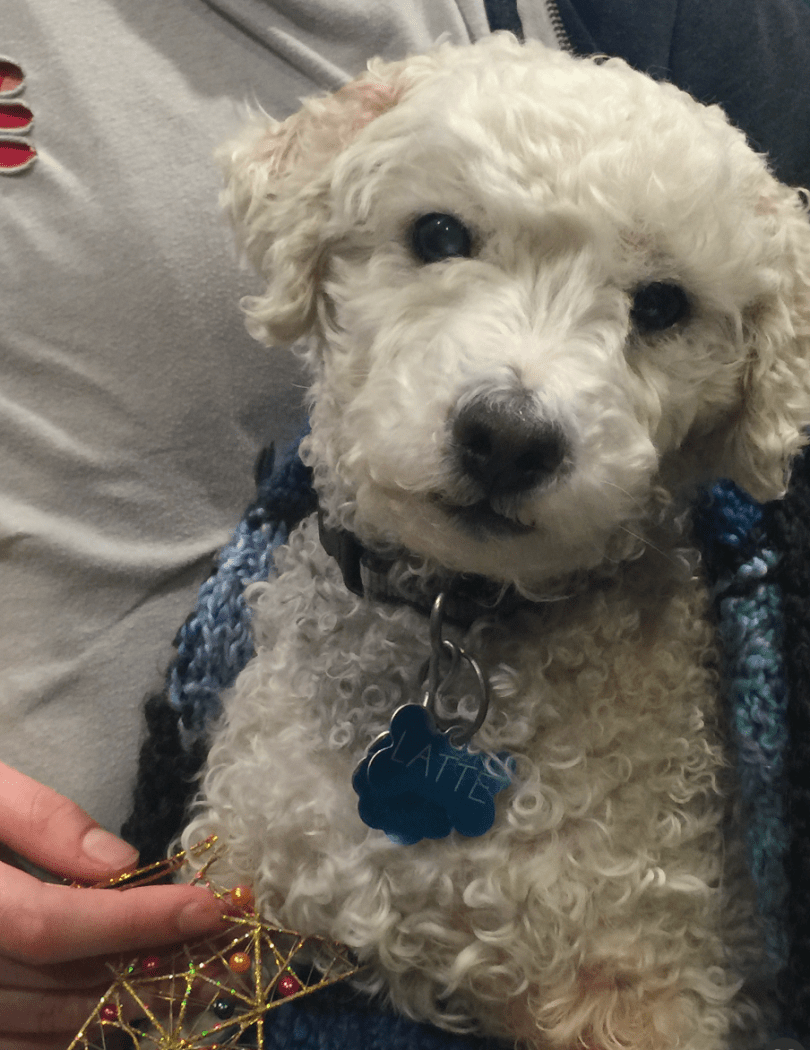
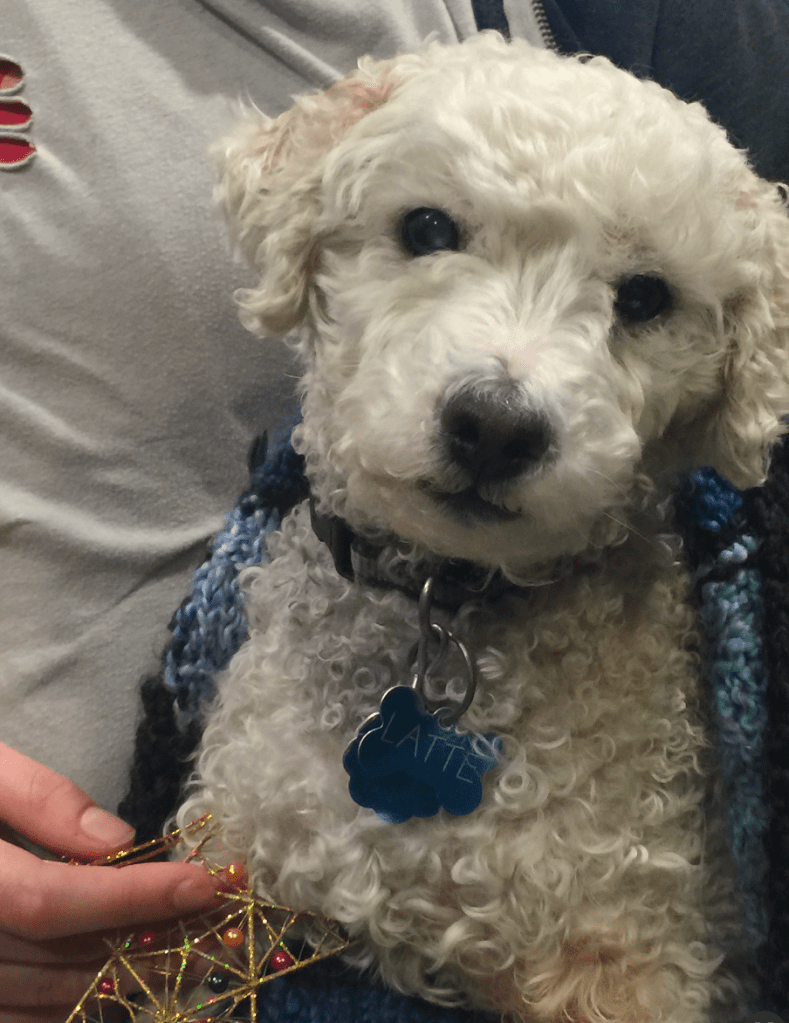
This is my 32nd Podcast, and it is dedicated to my dog Latte RIP 2013-2023. Latte loved going to Mount Bonnell with its pretty views, the interesting people, and the many other dogs there. I wanted to do this podcast in his memory.
Tesla FSD beta version 11.4.7.2 takes you through canyon roads, around hairpin turns and up to Mount Bonnell in Austin. This is my 32nd Podcast, and it is dedicated to my dog Latte RIP 2013-2023 🐶🐾 pic.twitter.com/vDn2bowK86
Gail Alfar, author. Exclusive to What’s Up Tesla – All Rights Reserved. My goal as an author and podcaster is to support Tesla (the most American vehicle manufacturer) and Elon Musk in both making life better on Earth for humans and becoming a space-fairing civilization.
Gail Alfar on Tesla FSD beta on Austin’s 2222 Road.
(Austin, Texas)
This was a hard day for our family, we lost our beloved dog, Latte, today. He was a wonderful and loyal little guy, thankfully, he had a good run in his life. I wanted to do a podcast in his honor, so I did one to a place that he once loved, Mount Bonnell on the West side of Austin, Texas. I also went to a BBQ spot where he (of course) loved getting rib bones from when they were available.
Come with me on this drive that includes a series of hairpin turns on very narrow and often unpainted roads.
Tesla FSD beta version 11.4.7.2 takes you through canyon roads, around hairpin turns and up to Mount Bonnell in Austin. This is my 32nd Podcast, and it is dedicated to my dog Latte RIP 2013-2023 🐶🐾 pic.twitter.com/vDn2bowK86
Apologies for getting the podcast numbers a little mixed up, this was the 32nd Podcast, though I labeled it the 31st one!
This drive is on Tesla FSD beat version 11.4.7.2
Users on X sent me condolences
When I shared on X that my dog passed away, I was comforted by over 175 people posting condolences and sharing their own thoughts and prayers. This was unexpected.
Send a little thought today – just lost my sweet dog – he was a good & loving creature that our whole family will miss 👋🏻 bye bye Latte 💔 miss you
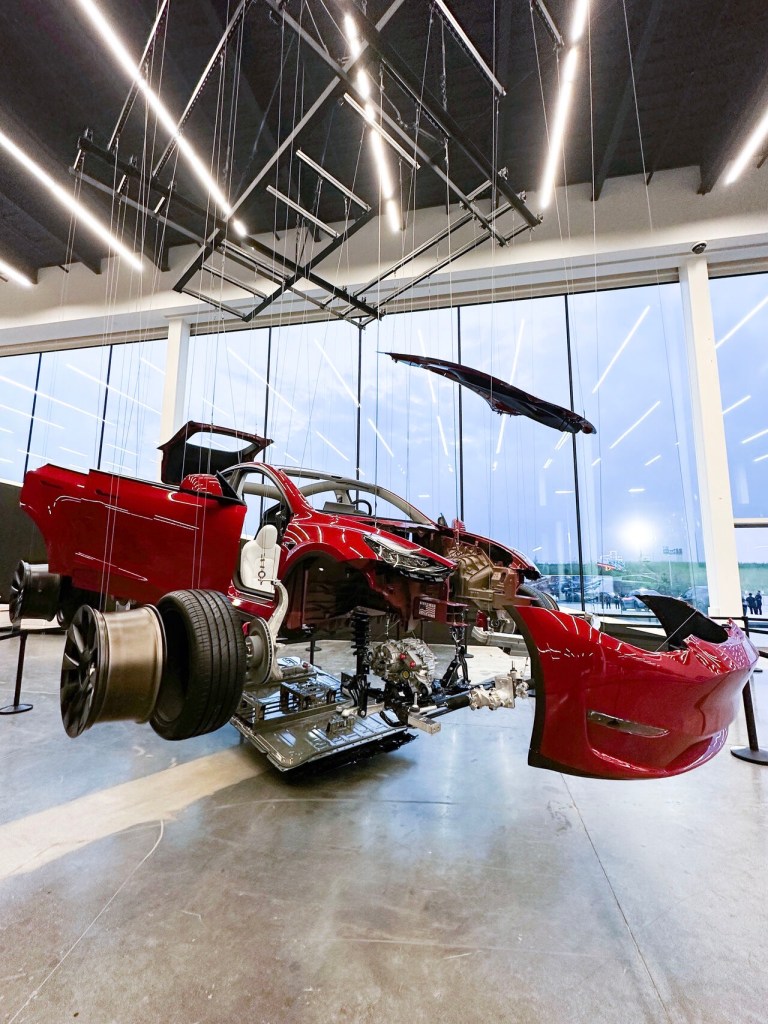
An incredible deconstructed Tesla Model Y. Image credit, Gail Alfar
Gail Alfar, author. Exclusive to What’s Up Tesla – All Rights Reserved. My goal as an author and podcaster is to support Tesla (the most American vehicle manufacturer) and Elon Musk in both making life better on Earth for humans and becoming a space-fairing civilization.