By Gail Alfar
October 8, 2023
What’s Up Tesla | Gail’s Tesla Podcast
In the shadow of the horrific October 7th attacks and the escalating conflict that followed, our Texas State Capitol became a focal point for passionate rallies and counter-rallies. Mainstream media headlines often reduce complex human stories to stark binaries. As someone who values truth-seeking—whether covering groundbreaking advancements at Tesla and SpaceX or diving into real-world events—I felt called to do something different: practice a little citizen journalism.
Armed with nothing more than curiosity, respect, and my camera, I headed to the Capitol grounds to have direct conversations with people on the ground. What unfolded was one of the most meaningful and eye-opening experiences I’ve had in a long time.
The Interviews
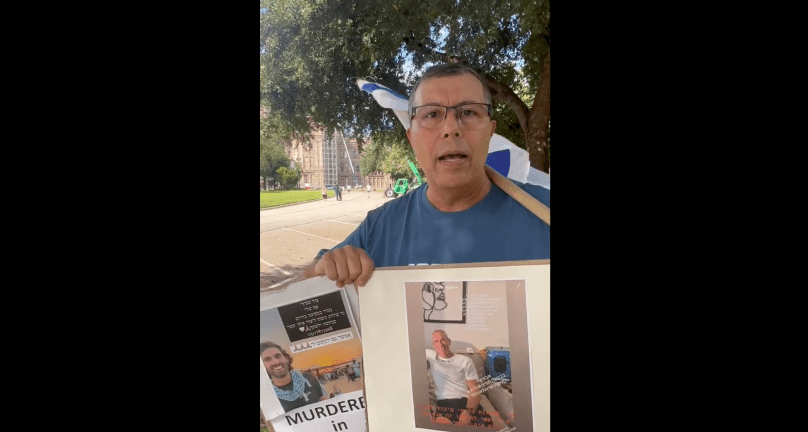
I spoke with an Israeli man who had lost family members in the attacks. He stood there holding handmade posters featuring photos of the missing and murdered—faces of loved ones last seen near Kibbutz Beeri and other communities near the Gaza border. His pain was raw and visible. He spoke of the personal devastation, the fear, and his hopes for peace even amid unimaginable grief. Seeing the posters up close, reading the names and the desperate “MISSING” signs, brought the human cost into sharp focus in a way no news report ever could.
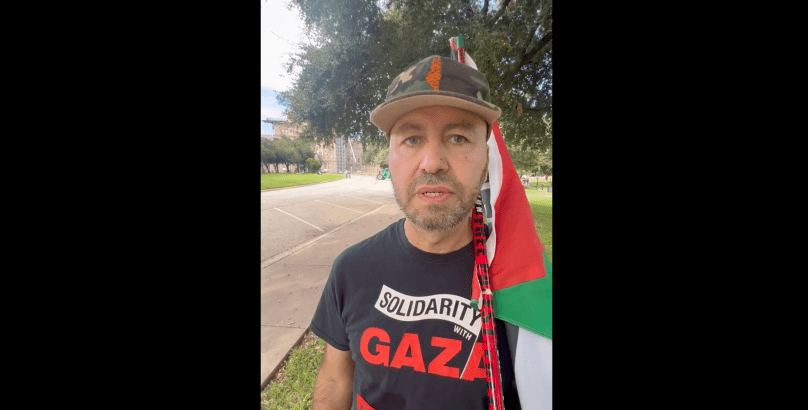
Then I turned to a Palestinian man who had helped organize the rally that day. Draped in a Palestinian flag and wearing a shirt calling for solidarity with Gaza and an end to the occupation, he shared his perspective on the suffering of his people, the history he carries, and the urgency of the moment. His voice carried the weight of generations of displacement and conflict.
Both conversations were civil, emotional, and deeply human. I didn’t edit for sensationalism or push an agenda—I simply listened. And I learned more in those short exchanges than from hours of cable news. These weren’t abstract “sides.” They were fathers, brothers, sons, and community members carrying real pain, real fears, and real hopes.
You can watch the full, unfiltered interview here:
This is the beauty (and responsibility) of citizen journalism. Platforms like X allow ordinary people to capture primary-source conversations and share them directly with the world, bypassing gatekeepers and spin.
Elon Musk’s Reply and the Deeper Truth
Shortly after I posted the video, Elon Musk replied with a simple but profound statement:
“An eye for an eye leaves everyone blind”
His words cut straight to the heart of the matter. I responded in kind:
“as the blind are mopping blood off the floor, the children are asking if they’ll see their fathers again — tragic on both sides”
That exchange stayed with me. It captures the terrible arithmetic of endless retaliation: no one wins, and the most vulnerable—the children on both sides—pay the price in ways that echo for generations. Whether Israeli or Palestinian, no parent should have to explain why their child will never see their father again. No child should grow up asking that question.
The interviews reinforced what I already suspected: there is profound suffering and legitimate grievance on both sides of this conflict. But this was the day after the killing of many Israelis. It seemed very tone deaf to be out there en force to promote Hamas. There are extremists on the left who do not represent the majority of people, but they carry a loud microphone and have a big email list. Hamas’s barbaric attacks must be condemned without hesitation.
Why This Matters
As the host of Gail’s Tesla Podcast and author at What’s Up Tesla, most of my work focuses on innovation, sustainable energy, space exploration, and the future we’re building. But truth-seeking isn’t limited to technology. It applies to how we understand our fellow human beings, especially when emotions run high and narratives harden. We must understand that there is indeed, especially on college campuses, a war AGAINST American Culture. It is a war that we’ll pay very dearly for if we lose it.
What I witnessed at the Capitol was a microcosm of something larger: people desperate to make a point of supporting Palestine because it is better to have empathy for killers like Hamas even when it is a very normal response to have empathy for the Israeli people and their families who must endure the death of their loved ones. Why can’t Israeli people have their pain acknowledged? I found it painful to see them that day, facing hordes of pro-Hamas college students. It made no sense to me, I was so dismayed at the lack of compassion. Texas showed its best side by protecting free speech that day, allowing these voices to exist in the same public space without descending into chaos.
My hope is simple. May we all find the courage to listen to the pain of Israeli people before we judge. May we see the child asking for their father on either side of this tragedy and recognize that our shared humanity does not mean we ever accept that a culture that would murder gay people and may we remember that revenge only ever leaves more blind people mopping blood off the floor.
Gail Alfar is a Texas-based writer, podcaster, and citizen journalist. Follow her work at whatsuptesla.com and on X @gailalfaratx.

