Gail has a bachelor of art in film/radio/tv and a bachelor of science in nursing
She has worked for years caring for all ages of people with many diagnoses in over 5 hospitals and schools around the texas hill country
Originally from north dakota, she is now based in austin and writes about sustainable energy for the website she created ‘What’s up Tesla’ and 'What's up Twitter' and maintains her nursing practice
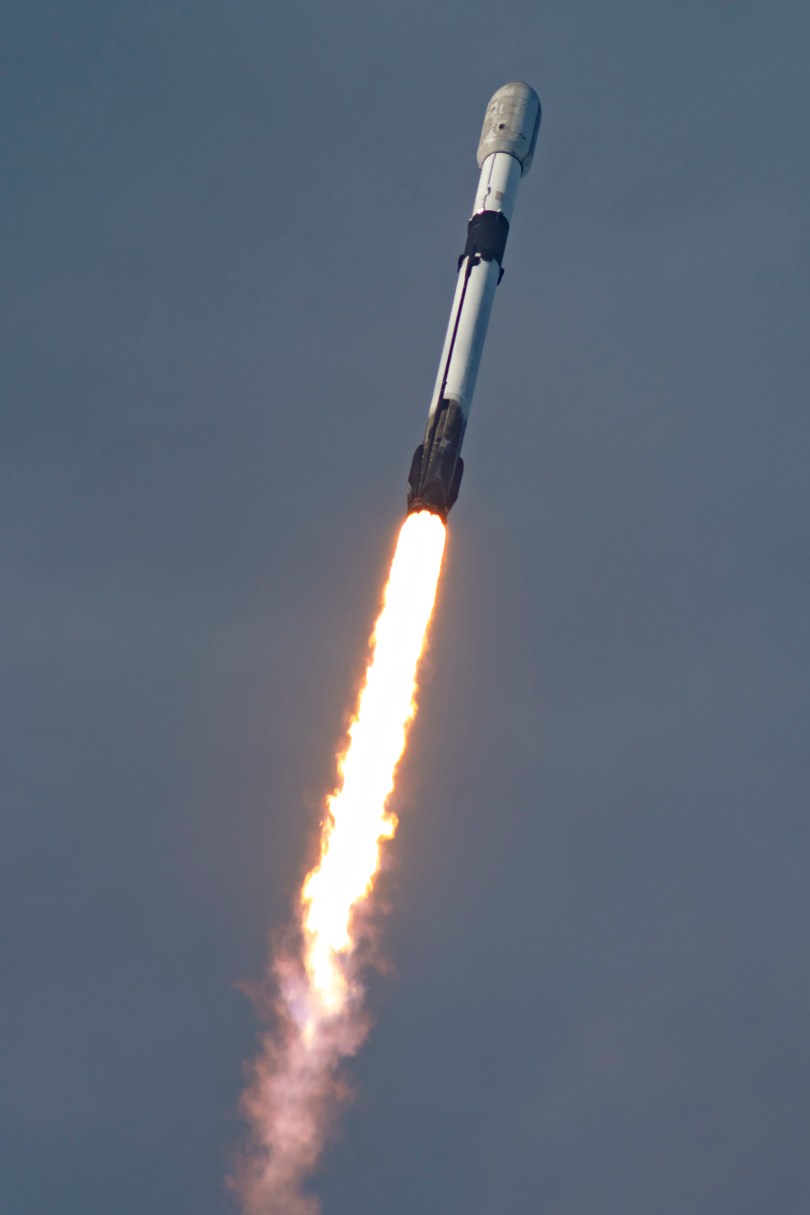
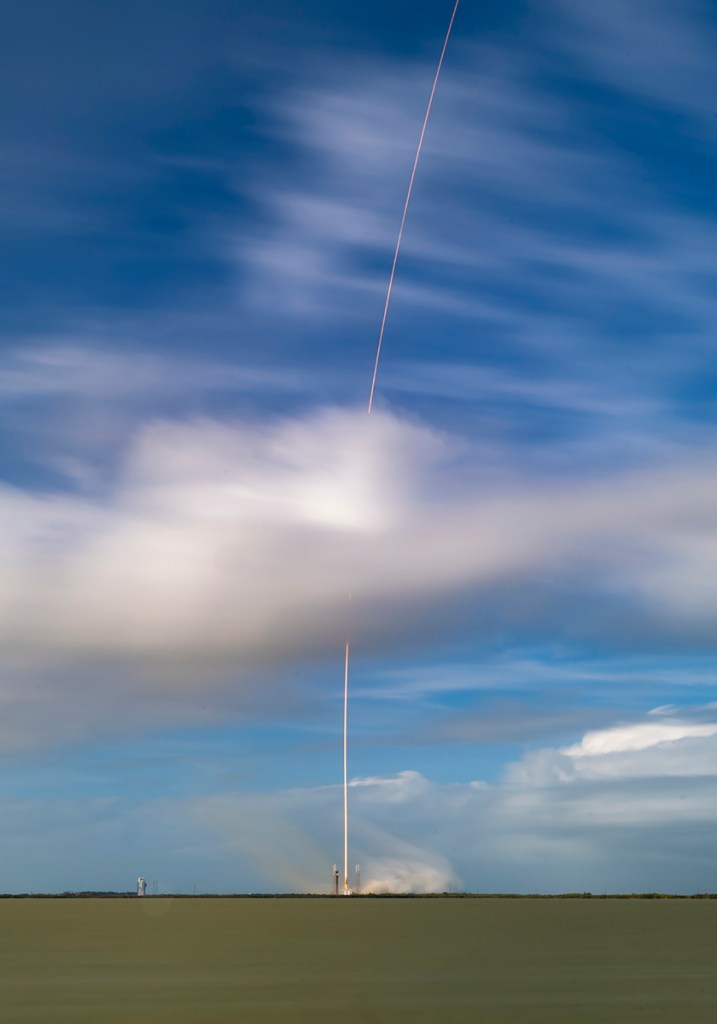
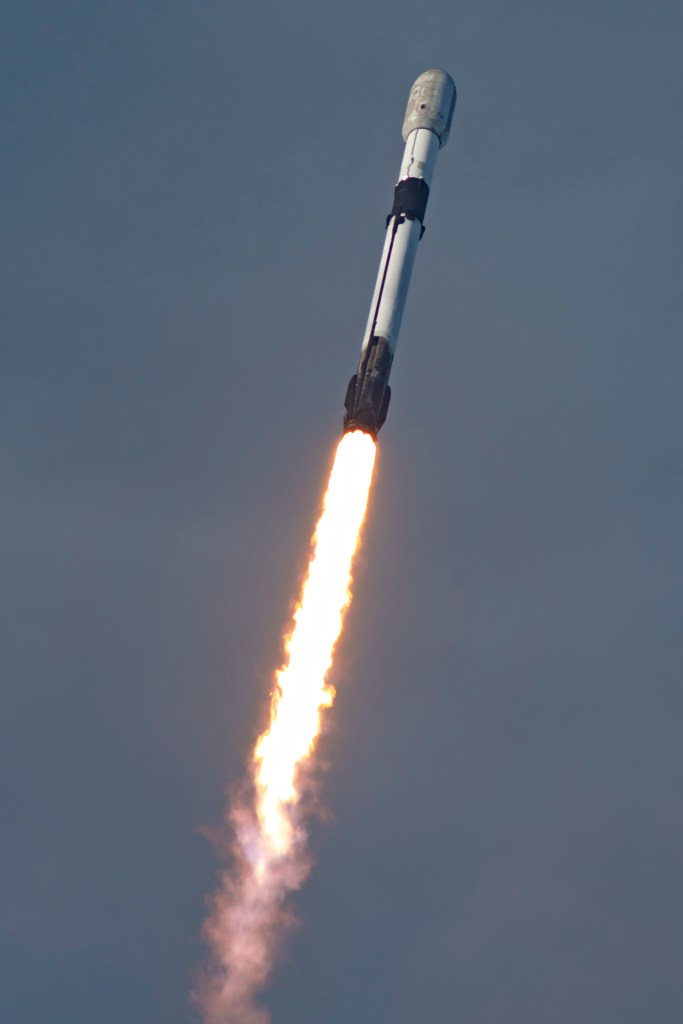
On March 30, 2026, a SpaceX Falcon 9 first-stage booster completed its 34th successful launch and landing after sending another group of Starlink satellites into orbit. That single-rocket record highlights how far reusable technology has come and how quickly it is making space more accessible than ever before.
The story behind that achievement started with an important advantage. When Elon Musk founded SpaceX in 2002, he brought no formal aerospace engineering background to the project. Instead of seeing that as a gap, Elon turned his outsider perspective into one of the company’s greatest strengths. Free from the usual industry assumptions, he and the early team approached every problem with first-principles thinking, asking the questions others had stopped asking and building from the ground up with fresh ideas.
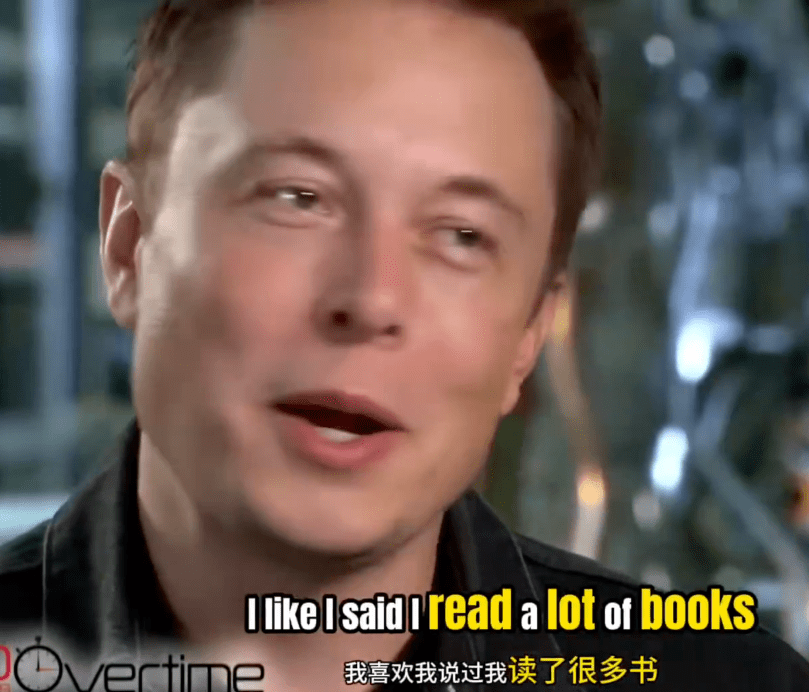
Elon Musk explains how coming from outside the aerospace industry gave SpaceX the freedom to make radical breakthroughs. “I like I said I read a lot of books.” A reminder that self-learning and questioning assumptions open doors for the next generation. Image credit: Screenshot from Overtime interview
Those fresh eyes proved valuable right away. The first three Falcon 1 launches between 2006 and 2008 did not succeed. Rather than giving up, the team treated each flight as valuable data, made fast adjustments, and kept moving forward. On September 28, 2008, the fourth launch worked perfectly. That commitment to rapid learning turned reusability into reality and cut launch costs by more than 80 percent, opening the door to more frequent and affordable missions.
Elon recently highlighted exactly why that outsider approach mattered. In a 2015 interview he shared again on X, he explained how stepping outside traditional aerospace training allowed the team to challenge old limits. He said, “Indeed, it was because I was not from the aerospace industry that SpaceX made such radical breakthroughs. Same for Tesla. Those in the industry would have if they could have.”
Indeed, it was *because* I was not from the aerospace industry that SpaceX made such radical breakthroughs. Same for Tesla.
Readers on X quickly agreed. People coming from different fields often spot possibilities that those inside the industry have learned to accept as impossible.
For kids today, this record is more than just cool rocket news. It is a clear reminder that you do not need a specific degree or the “perfect” background to help shape the future. Whether you enjoy science class, building projects in your garage, writing code, playing sports, or simply wondering how things work, SpaceX shows what is possible when you stay curious and keep learning from every step. Hard work, smart questions, and the willingness to try again after a setback can open doors that once looked closed.
As Elon said in another interview, “I read a lot of books, talked to a lot of people, and I have a great team”. The path to success is more open than people will often lead you to think.
SpaceX’s latest milestone proves that bold ideas and steady effort turn “impossible” into “already done.” The next breakthrough in AI, energy, medicine, or any field you care about could start with someone exactly like you, someone who chooses to keep asking the questions everyone else stopped asking long ago. The sky is not the limit. It is just the beginning.
A SpaceX Falcon 9 booster powers skyward with its record 34th launch, carrying Starlink satellites to orbit. This reusability milestone showcases what fresh thinking and rapid iteration can achieve. Photo credit: SpaceX
Many people might be ready to hand over car keys for good at age 93. And Dan Doyle’s mother is doing the opposite and she’s doing it beautifully.
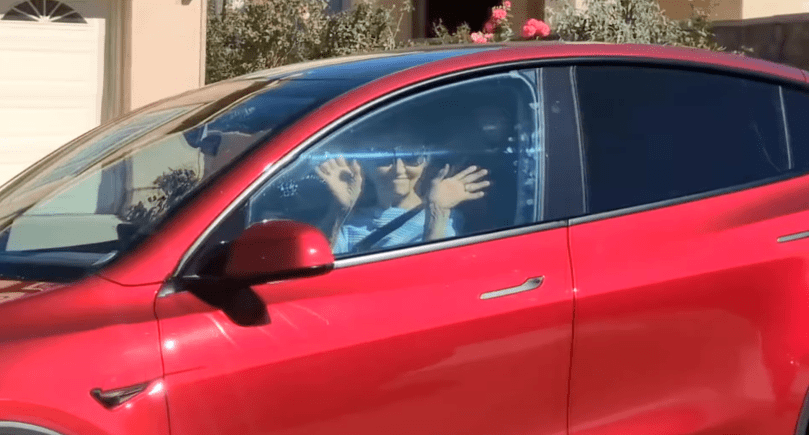
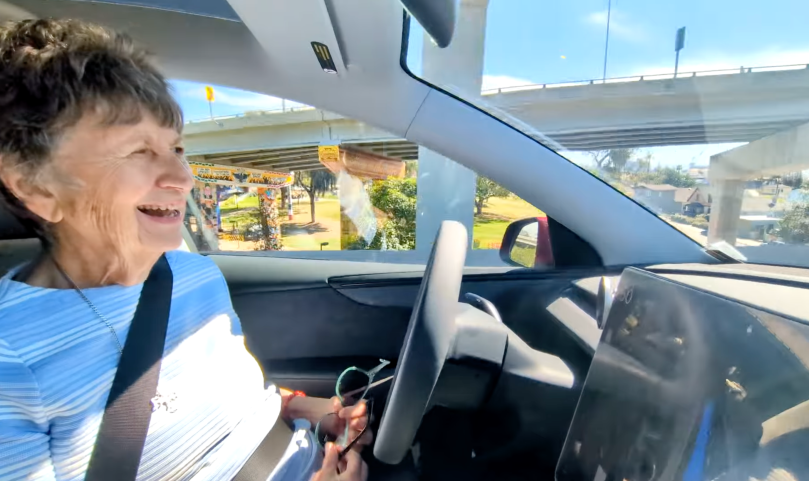
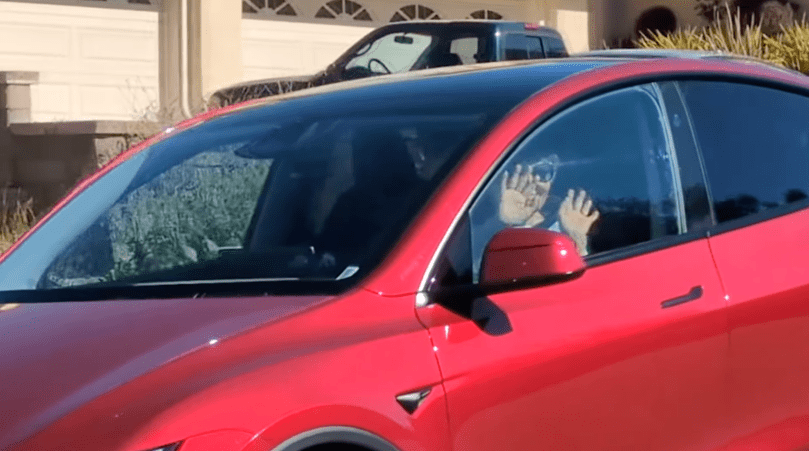
In a lovely video posted on Dan Doyle’s Family Channel, we get to see Dan’s 93-year-old mom behind the wheel of her brand-new Tesla Model Y with Full Self-Driving (FSD). The footage shows her relaxed and smiling as the car smoothly handles real roads, including the scenic Coronado Bridge drive.
When Dan asks how one of her recent trips went, her simple, perfect response is: “Uneventful.”
That single word says so much. For many seniors, longer drives often come with growing anxiety and fatigue. But with FSD doing the hard work, those worries melt away.
During one drive, Dan playfully tells the car, “Hey, if the worship isn’t good, could you go a little slower?” The Tesla’s Grok voice (Ara) replies with humor: “Huh? Nice one. Hope the worship rocks so we don’t have to slow down.”
Laughing and smiling, his mom immediately adds, “I love that lady.”
Later, while enjoying gelato together, Dan asks, “Life is good, right Mom?” Her bright smile says it all: “Life is good.”
As Dan shares in the video:
“Although she has always been a good driver, my mom can now drive without the fear or fatigue that can naturally come with age. No more relying on others for every trip. No more feeling stuck. This is true mobility.”
The story was first shared on X by citizen journalist Sawyer Merritt, and Dan later confirmed on his X account that his mom still holds a valid driver’s license and owns two other vehicles. She’s simply enjoying the freedom her new Tesla brings.
That's a valid question… She can drive…. She has her driver's license, she owns two other vehicles and simply switched over to this one. She's been driving her whole life and she's doing wonderfully. My mother is amazing!
As someone who uses FSD every day myself, especially lately while recovering from a third-degree ankle sprain, I can personally relate to how meaningful this technology is. When your body isn’t cooperating, having a car that can reliably and safely handle the driving gives you back a piece of your independence.
This is what FSD looks like in real life: not just futuristic tech, but a quiet, powerful tool that helps real people, including a joyful 93-year-old woman, keep living life on their own terms.
Sometimes the most important stories are the simplest ones.
Joyful 93-year-old mom smiling while using Tesla FSD. ‘Life is good,’ she says from the driver’s seat of her Tesla Model Y.
Tesla Model Y with Full Self-Driving smoothly navigating suburban roads for a confident 93-year-old senior driver.
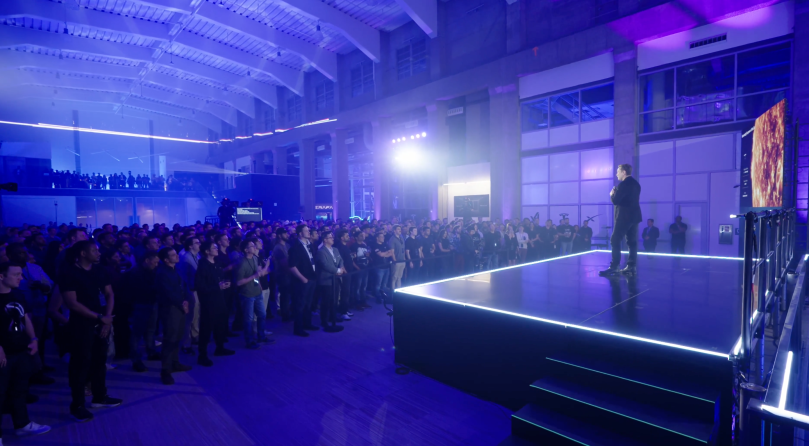
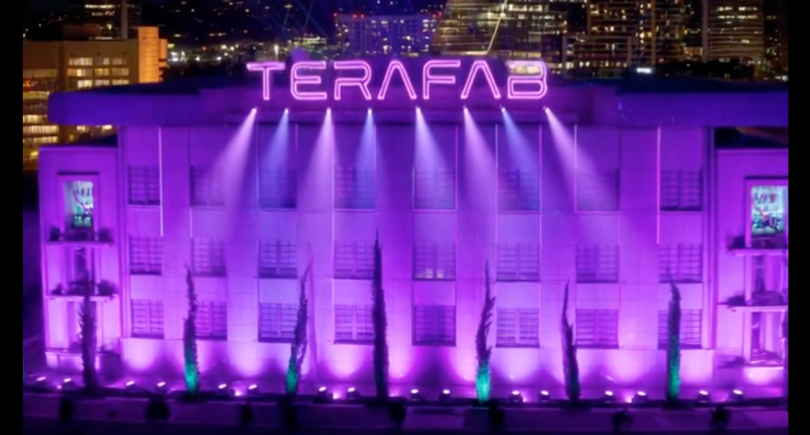
Elon Musk gave a warm, inviting talk about Terafab to a packed, cheering crowd at the historic Seaholm Power Plant in Austin around 8 p.m. on March 21, 2026,
Elon Musk is one of the most caring and approachable people on Earth, and he gave a warm, inviting talk about Terafab to a packed, cheering crowd at the historic Seaholm Power Plant in Austin. While he spoke around 8 p.m. on March 21, 2026, the city outside was treated to a magnificent blue laser beam that appeared over the entire sky—so striking that a local news station immediately sent out a reporter to cover it. Here is my verbatim transcript of his talk.
Elon Musk:
We have a profoundly important announcement to make, which is the most epic chip-building exercise in history by far.
This is really going to take it to the next level—a level probably people aren’t even contemplating right now. This is not in their context. I would call this sort of an out-of-context problem. So we’re going to adjust the context by a few orders of magnitude here.
Let’s see. It’s a joint effort.
[button press sound]
I’m pressing the button, but the button’s not working. Oh, there we go. Okay.
We aspire to be a galactic civilization. So I think the future that everyone—well, most people, I think would agree—is the most exciting one where we are out there among the stars, where we are not forever confined to one planet, that we become a multi-planet species. Like the best science fiction that you’ve ever read, you know, Star Trek or Iain Banks or Asimov or Heinlein. And we want to make that real. Yeah. Not just fiction. Turn science fiction into science fact. That’s the glorious, exciting future that I certainly look forward to.
It’s worth considering how you would rate civilizations. There was a physicist—I think he was Russian—in the ’60s, Kardashev, and he thought about at a high level how you would classify any given civilization. He said, well, if you’re Type One, you’re using most of the energy of your planet. And we actually still have quite a ways to go to be properly a Type One. We’re still using a tiny fraction of the sun’s energy that reaches our planet.
The Earth only receives about half a billionth of the sun’s energy. So the sun is truly enormous. The sun is 99.8% of all mass in the solar system. So sometimes people will ask me, like, what about other power sources on Earth like fusion on Earth? Well, that is unfortunately very small because the sun is 99.8% of mass in the solar system and Jupiter is about 0.1% and Earth is in the miscellaneous category. We are, I think as Carl Sagan might have said, Earth is like a tiny dust mote in a vast darkness—very, very small. The sun is enormous.
So the way to actually scale civilization is to scale power in space. This is necessarily true because we actually capture such a tiny amount of the sun’s energy on Earth because we’re just this tiny dust mote. Another way to think of it is roughly like electricity production on Earth of all of civilization is only about a trillionth of the sun’s energy. Which means if you increase civilizational power output by a million, you would still only be a millionth of the sun’s energy.
It’s awe-inspiring to consider that, just how tiny we are in the grand scheme of things. We often get sort of caught up in these sort of squabbles on Earth that are really very sort of minor things when you consider the grandness of the universe. I think it is important actually to consider the grandness of the universe and what we can do that is much greater than what we’ve done before, as opposed to worrying about sort of small squabbles on Earth type of thing. Not much point in that! We want to be a civilization that expands to the galaxy with spaceships that anyone can go anywhere they want at any time. That would be epic. And have a city on the moon, cities on Mars, populate the solar system, and send spaceships to other star systems. That sounds like the best possible future.
(applause)
So to do that, we need to harness the power of the sun. A Terafab, while it is enormous—a terawatt of compute per year is enormous by our civilizational standards—is still just one step along the way to being even a Kardashev II level civilization. You’re not even registering as a Kardashev III. So it’s a very big thing by current human standards, but still small in the grand scheme. But it’s very difficult for humans.
To accomplish this very difficult goal really requires a combination of efforts from SpaceX, xAI, and Tesla working together to create this epic Terafab project.
And Tesla, xAI, and SpaceX have all done amazing things that people did not think would be done before. There’s the Giga Texas fab here. There’s the Optimus robot that’s being built. There’s a global supercharging network. There’s really quite a lot.
It wasn’t that long ago when people thought electric cars wouldn’t amount to anything. There were basically no electric cars for sale when Tesla started. People said it was impossible, and now Tesla is making 2 million electric cars a year.
Then xAI, although it’s a new company, now part of SpaceX, has also built the first gigawatt-scale compute cluster in record time. Jensen Huang from Nvidia said he’d never seen anything built so fast in his life before. So, a great compliment from Nvidia.
And then SpaceX… well, you already know. The reusable rockets—people said the reusable rockets weren’t possible, and even if you did them, they wouldn’t be economically feasible. So we did them, and then we made them economically feasible. Now we’ve landed over 500 times. Then we did the Falcon Heavy, and now we’re doing Starship.
Starship is a critical piece of the puzzle because in order to scale compute and scale power, you have to go to space, which means that you need massive payload to space and Starship will enable that.
[Shows picture of scale]
This gives you a sense of scale. We’ve got Optimus there for scale. Optimus is about 5’11”, so it gives you a sense of the size of the Starship V3 rocket. Starship V4 will be much longer. Starship V4 will make Starship V3 look kind of short.
We’ll expand with Starship V3 to 200 tons of payload to orbit, up from 100 tons—we’ll start with V3. You can see that this is just a rough approximation of the mini version of the AI sat. That’s roughly 100 kW. It shows the solar panels and the radiator to scale.
For some reason, there’s been a bizarre debate about radiators in space. It’s safe to say SpaceX knows how to do heat rejection in space with 10,000 satellites in orbit—we might know a thing or two. You can see the radiator is quite small relative to the solar panels.
We call it the minisat since that’s just 100 kW. We expect future satellites to probably go to the megawatt range.
(applause)
In order to get to the terawatt of compute per year, you need about 10 million tons to orbit per year at 100 kW per ton. We’re confident this is feasible—like, no new physics or impossible things are required to get there.
I’m confident that SpaceX will get to 10 million tons to orbit per year. Then we’re building up to a terawatt of solar, which will solve the power generation problem.
The key missing ingredient is therefore a terawatt of compute. This announcement is about solving the key missing ingredient.
To give you a sense of what we’re talking about, the current output of AI compute is roughly 20 gigawatts per year. This chart explains why we need to build the Terafab, because all of the rest of the output from Earth is about 2% of what we need.
[Shows chart]
If you add up all the fabs on Earth combined, they’re only about 2% of what we need for the Terawatt Project, or Terafab project.
We certainly want our existing supply chain, to be clear. We’re very grateful to Samsung, TSMC, Micron, and others, and we would like them to expand as quickly as they can. We will buy all of their chips—I’ve said these exact words to them.
But there’s a maximum rate at which they’re comfortable expanding, and that rate is much less than we would like. So we either build the Terafab or we don’t have the chips. And we need the chips. So we’re going to build the Terafab.
We’re starting with an advanced technology fab here in Austin. I believe Governor Abbott is in the audience. I’d like to thank Governor Abbott and the state of Texas for their support.
(applause)
In the advanced technology fab, we will have all of the equipment necessary to make a chip of any kind—logic or memory—and we will also have all of the equipment necessary to make the lithography masks. In a single building, we can create a lithography mask, make the chip, test the chip, make another mask, and have an incredibly fast recursive loop for improving the chip design.
To the best of my knowledge, this does not exist anywhere in the world. Where you’ve got everything necessary that you need to build logic, memory, do packaging and test it, and then do the masks, improve the masks, and just keep looping it. We’re not going to just do conventional compute in this. I think there’s some very interesting new physics that I’m confident will work—just a question of when.
We’re really going to push the limit of physics in compute and we’re going to try a bunch of wild and crazy things which you can do if you’ve got that fast iteration loop. I can’t emphasize enough the importance of being able to make a chip, test it, and then change the design, do another one, and have that in a single building.
I think that our recursive improvement with that situation is probably an order of magnitude better than anything else in the world.
(applause)
So, broadly speaking, we expect to make two kinds of chips. One will be optimized for edge inference. So that’ll be used primarily in Optimus and in the cars but especially in Optimus because I expect the humanoid robots to be made 10 to 100 times more than the volume of cars. So if vehicle production on Earth is about 100 million vehicles a year and I expect humanoid robot production to be somewhere between a billion and 10 billion units a year. So it’s a lot. Tesla’s going to make a very significant percentage of those, is our goal!
And then we need a high-power chip that is designed for space that takes into account the more difficult environment in space where you’ve got high power, you’ve got high-energy ions, photons, you got electron buildup. It’s a hostile environment in space. So you want to design the chip, you want to optimize it for space and you also want to generally run it a little hotter than you would normally run a chip on Earth to minimize the radiator mass. So there are just a bunch of constraints that you would design something differently in space than you would on the ground.
For the space compute, my guess is that is the vast majority of the compute because you’re power-constrained on Earth. That’s why I think it’s probably 100 to 200 gigawatts a year of terrestrial chips and probably on the order of a terawatt of chips in space—just because of power constraints on the ground. Space has this advantage that it’s always sunny. It’s very nice.
I actually think that the cost of deploying AI in space will drop below the cost of terrestrial AI much sooner than most people expect. I think it may be only two or three years before it is actually lower cost to send AI chips to space than it is on the ground. Because in space you don’t need much in the way of batteries. It’s always sunny. And the solar power you get, you’re going to get at least five or more times the solar power you get in space versus the ground, because you don’t have atmospheric attenuation or a day-night cycle or seasonality, and you’re always normal to the sun. So you’re really maximizing the solar power at that point. And this space solar actually costs less than terrestrial solar because you don’t need heavy glass or framing to protect it from extreme weather events.
So as soon as the cost to orbit drops to a low number, it immediately makes extremely compelling sense to put AI in space. It becomes a no-brainer, basically. Moreover, as you go to space, you get increased economies of scale and things get easier over time. Whereas, as you try to put more and more power on the ground, you run out of space and you start using up the easy spots and then you get next-level NIMBY—nobody wants the thing in their backyard. So actually increasing power on Earth becomes harder over time and more expensive over time but in space it becomes actually cheaper and easier over time. These are very important points.
What you just saw there was, because of course you’re asking, what’s on your mind, is well, what do you do after a Terafab? Don’t think small. Well, yeah, good point. So, you know, how do you get to a petawatt? That is the obvious next question. And you get there by having an electromagnetic mass driver on the moon with robots with Optimi and obviously lots of humans. And with that you can send a petawatt, you can create a petawatt of compute and send that to deep space. Because the moon has no atmosphere and has one-sixth of Earth gravity, so you can—you don’t need rockets on the moon. You can literally accelerate it to escape velocity from the surface and that dramatically drops the cost once again of harnessing power and enables you to go a thousand times bigger than a terawatt.
For sure, the future I want to see—I want us to live long enough to see the mass driver on the moon because that’s going to be incredibly epic. That should hopefully get us to a millionth of the sun’s energy at least. It’s humbling to think about that, but a millionth of the sun’s energy would be a million times bigger than Earth’s economy. So it’s good from that perspective. You expand beyond that to the planets, to the other stars, and create the most exciting possible future that I can imagine.
This looks a bit like the opening of Idiocracy with a Mike Judge unlocking an age of amazing abundance. Yeah. Obviously, the elements of that are sustainable energy, space travel, and AI and robotics that bring amazing abundance to everyone. It’s really the only path to amazing abundance: AI and robotics. Which is not to say it can’t go wrong. Hopefully, you know, but I think it’ll probably go right and it’ll be a future that you love. It’s the best future I can think of at least.
And then we go beyond the moon, beyond Mars, and we sail through the rings of Saturn. Now, wouldn’t it be amazing if you could buy a trip to Saturn? Or frankly, if you just have a trip to Saturn. I think things will just be free in the future. It sounds nuts, but you know, if you’ve got an AI robotics economy that is anywhere close to a million times the size of the current Earth economy, literally any need you possibly want can be met. If you can think of it, you can have it.
So I think Iain Banks in his Culture books has it pretty much right, where there actually isn’t money in the future and there’s abundance for everyone. If you can think of it, you can have it. That’s it. Which means anyone could have a trip to Saturn. It won’t be, you know, just a few people. If you want it, you can have it.
Help us design incredible chips and make incredible chips and build a terawatt of chips, a terawatt of solar, and 10 million tons to orbit per year. Thank you.
Announcing TERAFAB: the next step towards becoming a galactic civilization https://t.co/xTA70LOU0e
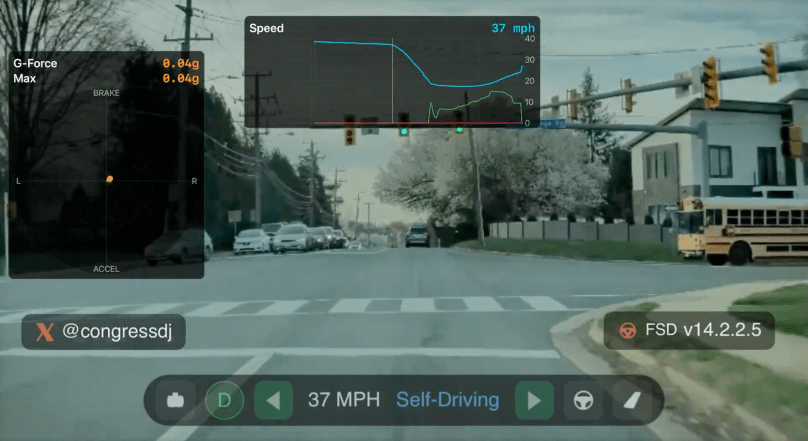
Northern Virginia, March 25, 2026. A yellow school bus carrying children rolled aggressively toward a red light at an intersection near Chain Bridge Road, while a Tesla using FSD (Supervised) approached on green. In a matter of seconds, the car’s advanced driver-assistance system detected the threat and braked sharply. The vehicles stopped short of a collision. No one was hurt.
The driver of the car, a Washington DC-area resident and father whose own children ride school buses, shared the dashcam footage on X that afternoon. Posting under the handle @congressdj, he described the moment with quiet exasperation. “The bus was in a full roll,” he wrote in follow-up replies. “About to run that light… blew past the white line with prejudice.” With thousands of miles of experience using the system known as Full Self-Driving (Supervised), he insisted this was no phantom reaction. “It was a legitimate life save for these children,” he added. The video, complete with telemetry showing a peak of 0.82g of braking force, quickly drew hundreds of thousands of views.
Tesla FSD saves a school bus full of children! My Model Y Performance braked so hard that everything on my seats ended up on the floor.
It infuriates me that school bus drivers are allowed to be this bad at driving.
School buses are trusted daily with the most precious cargo: children. In the United States, they transport millions of pupils each year; similar fleets operate across France, Italy and the rest of Europe. Yet the same roads that carry them are shared with cars, trucks and the occasional hurried driver. Parents everywhere recognise the quiet worry that accompanies the morning and afternoon routes. A moment’s inattention on the part of any professional at the wheel can ripple into something far larger.
The video has prompted the usual online debate. Some viewers saw an over-reaction, others a textbook example of technology stepping in when human reflexes might not. The poster, however, kept the focus where it belongs: on the children inside the bus. “With kids that ride school buses, this really infuriates me,” he noted.
This incident offers a gentle reminder that even seasoned professional drivers can have an off moment. Yet it also carries quiet hope. Artificial intelligence is proving it can help protect our most vulnerable road users, the children who ride school buses each day. Companies like Tesla, one of Elon Musk’s ventures, and others are showing what is possible when technology acts as an extra, vigilant layer of safety, stepping in during those critical split seconds when human error occurs. These innovations point the way toward journeys that are safer and more reassuring for families everywhere.
In the end, the children on board reached school safely, unaware of the close call, ready for lessons, laughter and whatever the day might bring. That ordinary, joyful outcome is reason enough for a small, satisfied smile and optimism about the safer roads the future can bring for families everywhere. 🚸
Just days ago, a video from Neuralink set social media and scientific circles alight: an ALS patient named Kenneth Shock, once robbed of speech, now thinking words that the implant instantly translates into his own voice. The clip, part of the newly launched VOICE trial, offered a glimpse of restored autonomy for those silenced by illness. Yet for many it also served as a powerful reminder of quieter, earlier breakthroughs, like the one that began two years ago with Noland Arbaugh.
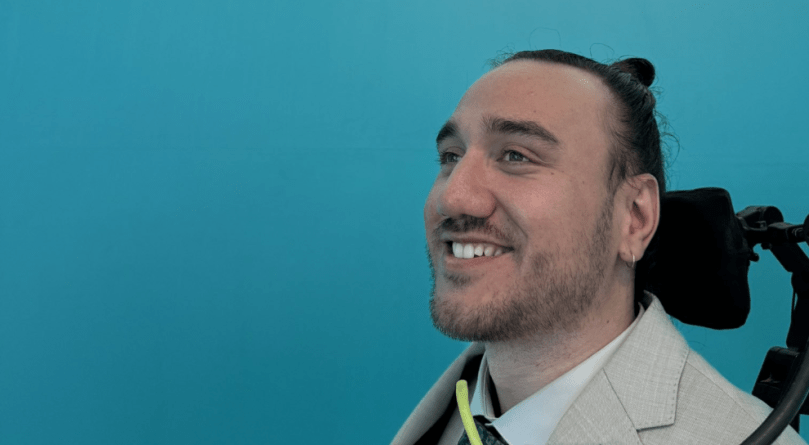
In January 2024, the then-paralysed 29-year-old American became the first person to receive a Neuralink brain implant. A robot-guided surgery threaded more than a thousand ultra-fine electrodes into his motor cortex, bypassing the spinal injury from a diving accident that had left him quadriplegic. There was little fanfare, only cautious hope.
Today, in March 2026, Noland is not merely coping; he is living with a freedom he once believed lost forever. He moves a cursor with thought alone. He raids in World of Warcraft for hours, no controller required. He types lecture notes for his neuroscience studies and earns top grades. Everyday acts that once demanded caregivers like email, digital art, even switching on lights, now flow directly from intention. “The freedom is addictive,” he says. “Science fiction that somehow became my everyday reality.”
This is no overnight miracle. Early months brought technical setbacks, notably the retraction of some electrode threads. Software updates and refined surgery have since steadied performance. Neuralink now counts 21 implant recipients worldwide; participants are demonstrating ever-greater control over cursors, robotic arms and virtual keyboards, some reaching typing speeds approaching 40 words per minute.
Noland’s public appearances have given the technology a human face. In mid-March he travelled to Detroit to speak at a special-education gathering, telling educators and schoolchildren how the implant bridges mind and machine and how his faith and technology together unlock what once seemed impossible. Local leader Mike Cox, called the talk the afternoon’s highlight, praising Noland’s “indomitable spirit, neuron by neuron.”
Saw @ModdedQuad speak Wednesday as part of the Special Education Summit at Yeshiva Beth Yehudah, which brought together education professionals who help special education students of all abilities develop their potential.
A month earlier, at Dubai’s World Governments Summit, he calmly took the stage during the panel “Are We Ready for Human 2.0?”. “People come first,” he told world leaders. “We’re helping with disabilities now; questions of enhancement come later.”
Honored to attend the @WorldGovSummit in Dubai! Only the first day and I’ve already seen some fascinating discussions about the future.
Tune in tomorrow (February 4) at 9:35 AM GST/ 00:35 AM EST to see my panel discuss Human 2.0. pic.twitter.com/dprofPz44j
Such stories arrive at a delicate moment. In Europe, regulators remain rightly cautious. The EU’s medical-device rules and AI Act subject high-risk brain-computer interfaces to stringent oversight on safety, data privacy and long-term effects. While American trials advance, bureaucratic caution on this side of the Atlantic has slowed access. Critics ask essential questions: should private companies lead such intimate interventions, and what safeguards will prevent future misuse or unequal access?
Yet the lived reality of patients like Noland underscores the promise. Before the implant, simple independence felt out of reach; today he says the device “didn’t just give me a new way to use a computer — it gave me a new way to live.” From icy conference halls in Michigan to gleaming stages in Dubai, he continues to show what is already possible: agency reclaimed, one thought at a time.
The recent attention around Kenneth Shock’s voice does not eclipse Noland’s journey; it illuminates it. Two years on, Neuralink’s work remains experimental, imperfect, and rich with profound philosophical questions about the frontier between human and machine. But for those whose bodies have failed them, it is already delivering something deeply human: the chance to be heard, to create, and to participate fully in the world again.
If one small chip can begin to turn paralysis into possibility, the years ahead will test not only the limits of technology, but our collective willingness to embrace its gifts responsibly and with hope.
On 23 March 2026, Daniel Geiger posted a 22-second screen-recording that quietly went viral. The California driver, who is deaf, showed his Tesla’s Full Self-Driving feature automatically detecting an approaching ambulance’s lights, pulling over safely and stopping, all before the vehicle reached him. “I’m deaf and can’t hear sirens,” he wrote, “but my Tesla FSD pulled over instantly for an ambulance. … This is why FSD is huge for deaf drivers: it ‘hears’ what I can’t and keeps everyone safer.”
Geiger is an ordinary working professional, not an influencer or company employee. A Long Island native from Moriches, New York, he played college lacrosse at Sacred Heart University (class of 2005) and earned a degree in Information Technology. He now lives in Auburn, California, and works as an IT security specialist for the California Department of Social Services. On social media he talks about sports, state taxes, potholes and, occasionally, how technology intersects with disability.
I'm deaf and can't hear sirens, but my Tesla FSD pulled over instantly for an ambulance. I caught it on the app screen record. This is why FSD is huge for deaf drivers: it “hears” what I can't and keeps everyone safer. 🚑🤖 #Tesla#FSD#DeafCommunity#Accessibilitypic.twitter.com/LDZbt5QJPT
The incident occurred on 23 March 2026 during a normal drive in the greater Sacramento area. The car’s multimodal sensors (cameras plus the audio-siren detection rolled out in late 2024) handled the situation smoothly. Geiger simply shared the app recording to illustrate one benefit for deaf drivers.
For Americans the context is immediate. Under California Vehicle Code 21806, drivers must yield the right of way to any emergency vehicle using lights and siren: move to the right edge of the road and stop until it passes. Failure to do so is an infraction carrying a base fine of about $490 plus one point on your DMV record. Similar “move-over” or yield laws exist in every state because seconds can mean lives. Deaf drivers follow the same rules but cannot hear the siren that usually alerts everyone else. Geiger’s video shows how one vehicle system can fill that sensory gap while still obeying the same traffic laws everyone else must follow.
He posted the clip because he wanted to highlight a practical safety tool, not to sell cars. The response from other deaf drivers and everyday motorists suggests the story resonated beyond brand loyalty: it showed technology quietly making an existing legal obligation easier to meet for people who otherwise rely on visual cues alone.
On March 21, 2026, at the historic Seaholm Power Plant in Austin, Elon Musk unveiled Terafab: a $20–25 billion semiconductor factory, the result of cooperation between Tesla, SpaceX, and xAI. The stated objective: to produce more than one terawatt of computing power per year, equivalent to nearly the entire current electric power capacity of the United States.
Eighty percent of this capacity would be dedicated to orbital data centers, powered by space-based solar energy via SpaceX launchers. The remainder would supply Tesla’s autonomous vehicles, Optimus humanoid robots, and xAI’s artificial intelligence models. Musk summed it up bluntly: “Either we build Terafab, or we won’t have the chips.”
This project marks a new stage in the vertical integration of the entrepreneur’s companies. While no formal rapprochement has been confirmed, the pooling of resources between a publicly traded company (Tesla) and a private enterprise (SpaceX) is fueling speculation about a deeper merger. Analysts such as Gary Black warn of dilution risks for Tesla shareholders and regulatory obstacles.
For Europe, which is investing heavily through the Chips Act to reduce its dependence on Asian foundries, Terafab illustrates both a threat and a strategic question. An unprecedented concentration of computing capacity in private American hands could disrupt global supply chains. Musk, for his part, presents the project as a response to Earth’s energy limits and a means of ensuring that human knowledge can survive beyond the planet.
The challenges remain immense: Tesla and SpaceX have no experience manufacturing 2-nanometer chips, the capital expenditure is colossal, and timelines remain unclear. The market reacted cautiously: Tesla’s share price barely moved.
Whether Terafab succeeds or not, one thing is clear: Musk’s ecosystem is evolving toward unprecedented industrial integration. Europe, which has always believed in large collective adventures—Airbus, Ariane, ITER—is watching this new form of private competition closely. The future will show whether it can respond.
Austin will have an advanced technology fab. TERAFAB location is TBD. Elon confirmed it is far too massive for Giga Texas and would dwarf everything there combined. Multiple sites are being evaluated, as it requires thousands of acres and over 10 GW of power at full scale. https://t.co/RV6Sj2JJuSpic.twitter.com/LPGKXKaatC
Low-Earth orbit is a crazy-busy highway with thousands of satellites moving at insane speeds. One wrong move, and debris could snowball into Kessler syndrome, wrecking orbits for years.
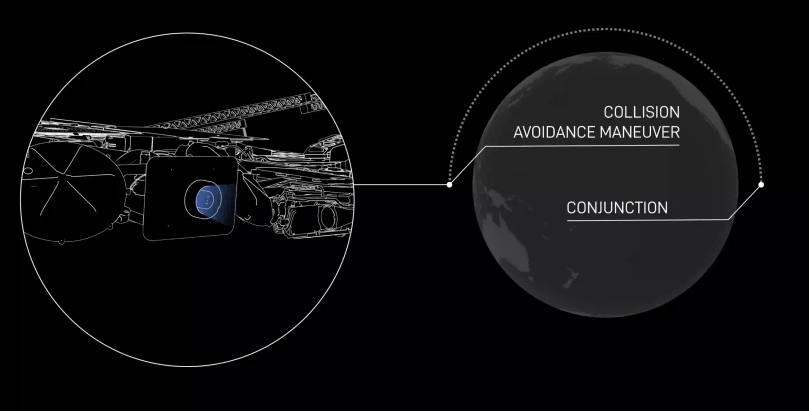
Enter Stargaze, SpaceX’s smart fix announced in late January 2026. They repurposed the tiny star-tracking cameras on 10,116 active Starlink satellites right now (that’s roughly 30,000 sensors total, and yes, they just crossed the 10,000 mark a few days ago) to spot nearby objects.
Result? About 30 million observations every single day. This is way more frequent than ground radars that only check sporadically and take hours to warn about risks.
Stargaze crunches the data in near real-time, spots sneaky maneuvers fast, and spits out collision alerts (Conjunction Data Messages) in minutes instead of hours. Starlink has already dodged hundreds of thousands of potential crashes autonomously; this makes everything way easier and safer.
The killer part: it’s completely free for any satellite operator worldwide. No fees, no paywall. Closed beta started right after the reveal; wider access rolled out this spring, meaning right now in March 2026.
SpaceX isn’t charging because safer orbits benefit everyone (including their own fleet). It’s like one company volunteering to be the air-traffic controller for low Earth orbit and saying, “Come join in and share your flight plans too.”
Tesla is about to break ground on Terafab, its brand-new U.S. semiconductor fab built to crank out AI5 processors and beyond at massive scale. This is classic Elon: full vertical integration to power Robotaxi, Optimus, and the entire autonomous future without waiting on anyone else.
The timing couldn’t be better. Demand for these high-performance AI chips is exploding, and Tesla’s own silicon (co-designed with its software stack) will crush bottlenecks that TSMC and Samsung simply can’t handle long-term. Elon has always said bold bets beat waiting around, and this one is pure genius.
Elon Musk (@elonmusk) – March 14, 2026 “Terafab Project launches in 7 days”
(89K likes, 11K reposts, 85M views — the internet lost its mind, as it should!)
Like him or not, Elon just keeps delivering. While I wait for the groundbreaking photos, I’m slowly recovering from a tough fall that left me unable to walk for now. With physical therapy, ice packs, healing foods, and the occasional slice of artisan apple pie for the soul, I’m making steady progress every day. Nothing says “future is bright” like resilience, recovery, and Tesla scaling AI hardware at warp speed. 🚀🥧
Tesla CEO Elon Musk just dropped news: the long-awaited next-gen Tesla Roadster will be unveiled “hopefully next month, probably in late April.” He called it a “banger next-level” vehicle, directly tying it back to the groundbreaking 2008 original that launched Tesla’s electric revolution. Far from any reason for doubt, this is a genuinely hopeful moment, a celebration of high performance that fills many with hope to deliver powerful acceleration and speed.
In a wide-ranging January 2026 interview on the Moonshots podcast with Peter Diamandis and Dave Blundin, Elon made the new Roadster vision clear. “Safety is not the main goal,” he explained. If maximum safety is your top priority, this is not the car for you. The Roadster is built for pure fun and thrill instead. He also stressed it won’t be the cheapest vehicle Tesla makes, because that isn’t the objective either. The goal is simple: create the best of the last great human-driven cars, a pure performance machine that puts smiles on faces.
The goal is simple: create the best of the last great human-driven cars, a pure performance machine that puts smiles on faces.
Hints dropped in that conversation (and reinforced by the CEO’s recent posts) are being monitored by many. Base performance is already staggering: approximately 1.9-second 0-60 mph acceleration, a top speed over 250 mph, and impressive range. Add the optional SpaceX cold-gas thruster package and you’re looking at sub-1-second sprints, possible short-hover capability, and driving experiences that feel straight out of science fiction.
The base model is expected to start around $200,000, positioning it as a more accessible luxury sports car compared to traditional hypercars in its class (many of which start well above $300,000–$500,000). The SpaceX thruster upgrade will add a significant premium for those seeking the ultimate extremes, but the core Roadster remains a thrilling entry into next-level electric performance without the ultra-exotic price tag.
NEWS: Tesla has filed new trademark applications for its next-generation Roadster, hinting that the unveil is drawing closer.
The first application includes a stylized “Roadster” wordmark, while the second includes what seems to be the Roadster’s new design.
This isn’t going to be another typical car launch. Sometimes we all need a joyful reminder that electric vehicles can be wildly exciting. The Roadster will give drivers that pure, exhilarating connection to the road while staying zero-emission and sustainable. Late April can’t come soon enough and when the new Roadster arrives, it will quietly show that Tesla’s products are not hype, they may be late, but they always come through.
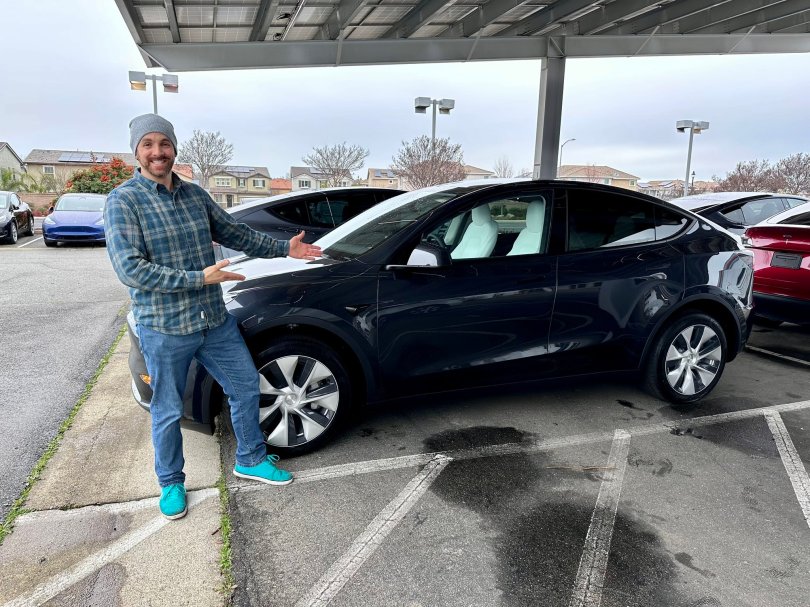
My first time driving the first gen Roadster – June 2024 at the Tesla Takeover Europe Event 😀 pic.twitter.com/XlsHDmrR0Q
 whatsuptesla.com