Gail has a bachelor of art in film/radio/tv and a bachelor of science in nursing
She has worked for years caring for all ages of people with many diagnoses in over 5 hospitals and schools around the texas hill country
Originally from north dakota, she is now based in austin and writes about sustainable energy for the website she created ‘What’s up Tesla’ and 'What's up Twitter' and maintains her nursing practice
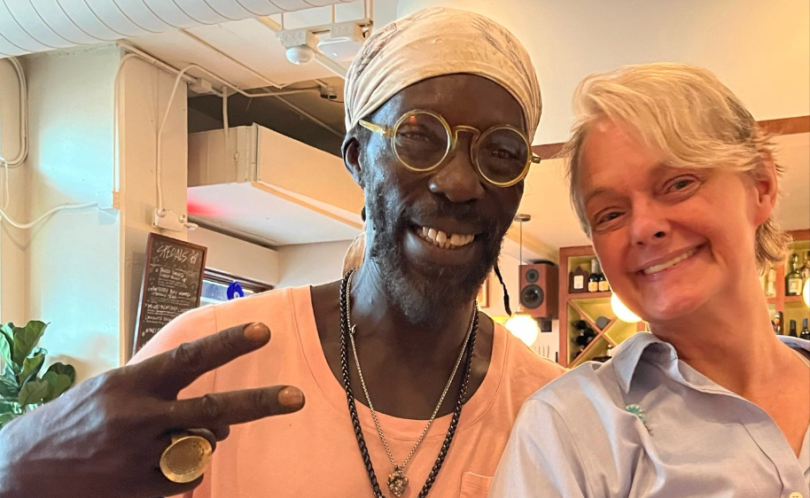
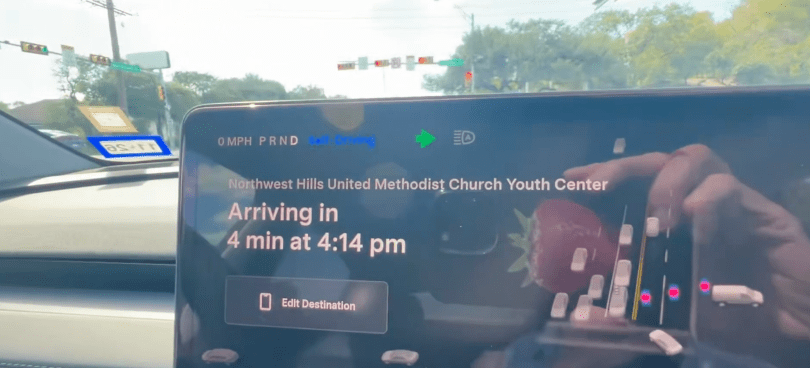
(Austin, Texas) Episode 186 and 187 are a two-part conversation with actor Iba Thiam (@IbaAwaThiam), who lives here in Austin. We recorded in the car while Tesla Full Self-Driving (Supervised) handled the roads, this was Iba’s first time experiencing it.
He is known for roles in Alita: Battle Angel, Queen of the South (Bilal), The Chosen, The Leftovers, and Wu-Tang: An American Saga. What I loved about this episode is that it is not only a first-FSD reaction. It is also the story of how he came to America from Senegal, how he got started as an actor, and how he learned to belong in a new place.
We split it into two parts because the conversation kept opening up.
Watch Part 1 here (first FSD ride, acting career, coming to America):
Episode 186 of Gail’s podcast with @IbaAwaThiam He tries Tesla Full Self-Driving (Supervised) for the first time and is amazed. We also talk about his acting career, coming to America, and how he got started. This is Pt. 1 of our conversation! pic.twitter.com/0GMVNT2A76
Watch Part 2 here (the conversation continues and gets even more interesting):
Episode 187 of Gail’s podcast with @IbaAwaThiam We continue the conversation in Austin and it gets even more interesting. He tries Tesla FSD Supervised and is amazed. This is Pt. 2. pic.twitter.com/Aoc6SIg5jH
Iba sat in the passenger seat for his first supervised FSD ride and was genuinely amazed watching the car take over. That first-time reaction never gets old. You can see it on his face: the car is the captain now, and we get to talk.
While FSD moved us through Austin, Iba talked about:
How he got into acting and the grind of finding representation (including those “speed dating” sessions with agents)
Coming to America and what it takes to feel like you belong
How easy it is to take ordinary things for granted
Why he likes being a little uncomfortable — that is often where the next chapter starts
Phones as one of the biggest causes of accidents, which landed differently while the car was driving itself
Part 2 stays in Austin and goes deeper. Same warmth, same curiosity, more of the story.
Why This One Matters
This is the kind of episode I want more of. A working actor who lives in this city, experiencing Tesla FSD for the first time, talking honestly about craft, risk, and starting over. The technology is the setting. The person is the point.
If you have ever wondered what it feels like to hand the wheel to FSD with someone seeing it for the first time, start with Part 1. If you want the rest of Iba’s story, go straight into Part 2.
Join the Conversation
Have you watched Episodes 186 and 187 yet? What stood out — Iba’s first FSD reaction, his path into acting, or the conversation about belonging?
Drop your thoughts in the comments. I read every one.
Stay curious. Stay adventurous. And keep enjoying the ride ahead! 🚕✨
Previous on the blog: Episode 172 – Zuby
Had such a great time meeting Iba Thiam and recording a podcast with him today! Can’t wait to share the episode tomorrow ( he just started a new account here on X. Please follow him @IbaAwaThiam ) pic.twitter.com/vWnv6JND9l
Episode 185 is two unsupervised Robotaxi rides through Austin on a brutal Texas afternoon — and then a second ride from the Four Seasons to pizza.
The first cab was sitting at 66°F while it was 106°F outside. That alone felt like the future. Then the car did two things that still make me smile: it accepted a last-minute destination change, and it cut through a gas station the way only a veteran Austin driver would.
Watch Episode 185 here:
Gail’s Podcast Ep 185: Two Robotaxi rides in Austin. The cab is cool at 66°F while 106°F out! It made a last-minute destination change and a clever gas-station cut-through that only a veteran driver would pull off. The other took me from the Four Seasons to Austin’s best pizza! pic.twitter.com/odIV7sGfr7
Ride One — Availability, A/C, and That Gas-Station Cut-Through
I was surprised how many Robotaxis were available. In that same part of Austin, the wait used to stretch toward 20 minutes. This time it was about two minutes. I even posted about it, and Elon reposted it.
Once I was in, I didn’t have to keep diving in and out of the app. The cabin was already cold. The screen showed the outside temperature in the mid-100s and the cabin locked at 66. That contrast — melting on the sidewalk, then stepping into quiet, cold air with no driver — never stops feeling historic.
The routing was the real star. I changed the destination late, and the car handled it. Then it did that clever gas-station cut-through. Nobody on the lot even looked twice. The vehicle just took the efficient line, the way a local would, and kept going toward Northwest Hills.
That is the difference between a demo and a product. It is not only staying in the lane. It is solving Austin in real time.
Ride Two — Four Seasons to Pizza
The second ride started at the Four Seasons Hotel. The Robotaxi pulled into the driveway, the screen was clean — no fingerprints, dark mode, “Start Ride” — and we rolled out toward pizza.
Leaving a hotel porte-cochère with no driver in the seat still looks like science fiction against those columns and downtown streets. Then it is just… a ride. Dinner. Ordinary life, except the car is doing the work.
That is what I want people to see in this episode. Not a lab. Not a press event. A hot Austin day, a last-minute change, a shortcut through a gas station, and a hotel-to-pizza trip.
Why These Two Rides Matter
Robotaxi is getting useful. Shorter waits. Cabin already comfortable before you sit down. Destination changes that stick. Local routing that looks like judgment, not a rigid map line.
Every one of these rides is a small public record of what unsupervised autonomy feels like on the streets I actually use.
Join the Conversation
Have you taken a Robotaxi in this heat yet? What impressed you more — the wait time, the cold cabin, or a routing move you did not expect?
Drop your thoughts in the comments. I read every one.
Stay curious. Stay adventurous. And keep enjoying the ride ahead! 🚕✨
See other Episodes 186 & 187 – Iba Thiam’s First Supervised FSD Ride
Gad Saad’s Chapter 5 takes on one of the most dangerous ideas in modern discourse: the notion that science can ever be truly “settled.” Using powerful historical examples and recent events, Saad shows how declaring certain conclusions beyond debate does not protect truth. Instead, it often protects power, prestige, and comfortable beliefs while harming real people. This chapter is a clear warning about what happens when empathy overrides evidence and when we stop allowing science to remain falsifiable and open to correction.
The Semmelweis Reflex: When New Evidence Threatens Old Beliefs
Saad opens with the story of Ignaz Semmelweis, the 19th-century Hungarian obstetrician who discovered that doctors were spreading childbed fever by moving from autopsies to deliveries without washing their hands. His simple solution of scrubbing with a chlorinated lime solution between patients dramatically cut death rates. Yet his ideas were ridiculed, blacklisted, and he was eventually driven from his position years before Louis Pasteur’s germ theory was accepted. Semmelweis was right, but the medical establishment could not accept that their own practices were killing mothers.
Saad pairs this with the more recent case of Barry Marshall and Robin Warren, who proved in the 1980s that Helicobacter pylori bacteria, not stress or spicy food, caused most stomach ulcers. Marshall even drank the bacteria himself to demonstrate causation. Both stories reveal the same pattern: established institutions resist ideas that challenge prevailing wisdom, even when lives are at stake.
This resistance is what Saad calls the Semmelweis reflex, the knee-jerk rejection of evidence that threatens comfortable norms. It shows how difficult it is for even highly educated people to accept that science is never finished.
Misguided Empathy Becomes Peak Anti-Science
Saad’s central argument is that misplaced empathy often fuels this resistance. When we prioritize protecting feelings, preserving consensus, or avoiding the discomfort of admitting we were wrong, we create taboo trade-offs. We refuse to weigh real costs and benefits because doing so feels disloyal to the dominant narrative. The result is the shutdown of inquiry.
Saad draws on Karl Popper’s principle that genuine science must remain open to falsification. Once we declare something “settled,” we stop doing science. Empathy then becomes a tool to shield bad ideas rather than a guide toward truth.
Taboo Trade-Offs on Full Display: COVID Policies and Selective Compassion
Nowhere is this dynamic clearer than in the COVID era. Strict lockdowns and mandates were framed as acts of community care and empathy. People were told that supporting the measures and getting vaccinated proved they cared about others. Yet the same rules were not applied evenly.
Saad highlights the irony of 1,288 liberal activists and public health officials signing a letter claiming it was acceptable to attend large BLM marches after George Floyd’s death, while families were forbidden from visiting dying loved ones in hospitals. If you understood the pain of being Black in a country described as steeped in white supremacy, the argument went, then marching was worth the risk. Empathy was selectively granted.
Voices who opposed the measures were silenced. Medical doctors and professors who pointed to data showing the chance of death from COVID was extremely low for many groups often had their accounts shut down on platforms such as Twitter and YouTube. Debate was treated as dangerous rather than as part of normal scientific inquiry.
Elon Musk has publicly highlighted this exact problem by referencing Gad Saad’s concept of “suicidal empathy.” In a widely shared clip, Musk explains how excessive compassion toward certain groups can become self-destructive to society as a whole. [You can insert the link to the clip here: https://x.com/XFreeze/status/2056406145292546107]
When Empathy Overrides Evidence in Climate and Transgender Policies
Saad shows the same pattern repeating in climate activism and in the push for immediate transgender affirmation in children. In each case, empathy is invoked to make certain questions off-limits. Questioning policy becomes framed as lacking compassion, so real trade-offs, failed predictions, and emerging evidence are never honestly examined. Those who raise concerns, often people with more cautious or conservative perspectives, are accused of being cold or uncaring.
This is the heart of what Saad means by taboo trade-offs. Important decisions require weighing benefits against genuine human costs. When empathy is weaponized to declare those trade-offs morally unspeakable, serious analysis stops. Science and reason take a back seat to emotional appeals and ideological loyalty.
A Chapter That Demands Honest Reflection
This chapter is the needed antidote to adhering to settled science. It is critically important to be willing to shift your mindset and shut down the flow of endless irrational empathy.
Chapter 5 is one of the most important in Suicidal Empathy. Saad shows how the same forces operate today whenever empathy is used to shut down debate rather than to seek truth. The chapter leaves the reader with a clear choice: continue protecting narratives at all costs, or recommit to the uncomfortable but necessary work of open inquiry.
This book, and especially this chapter, should be widely read. It offers a powerful reminder that real compassion requires the courage to examine evidence, even when it challenges our current beliefs. I highly recommend it.
Excited to continue sharing these reviews with you all.
In Chapter 4 of Gad Saad’s Suicidal Empathy, titled “Blank Slate Felons,” the author opens with powerful, real-world examples that show how excessive empathy for criminals overrides justice and public safety.
One case involves Stephen Federico, whose 22-year-old daughter Logan, who happened to be White, was murdered in a 2025 home invasion in Columbia, South Carolina. The alleged killer, Alexander Dickey, was a repeat offender with nearly 40 prior arrests and 25 felonies, yet he remained free on the street.
Another is the story of Travis Lewis. In 1996, as a teenager, he murdered Sally Snowden McKay and her nephew in Arkansas. Sally’s daughter, Martha McKay, a devout Buddhist committed to forgiveness, visited Lewis in prison for over two decades, advocated for his parole, and after his 2018 release gave him a job and a place to live on the family property. In 2020, Lewis murdered Martha as well.
A third example comes from Springfield, Ohio in 2023, where roughly 20,000 Haitian immigrants had settled in just three years. Eleven-year-old Aiden Clark was killed when a minivan driven by a Haitian immigrant struck his school bus. His father, Nathan Clark, initially expressed anger over illegal immigration but later publicly stated that he wished his son had been killed by a 60-year-old white man instead, so the tragedy would not be politicized.
The Shift: From Criminals to Cultural Irony
Saad writes this chapter with remarkable clarity and biting irony. He moves from these heartbreaking cases into a deeper examination of gender dynamics and liberal empathy. He points out the contradiction in how some women, particularly liberal women, routinely label brave, strong, and courageous men as “misogynistic” and “toxic.” Yet in reality, most women are not attracted to weak or passive men when choosing a partner. They are drawn to men who treat women well while also being strong, protective, and courageous.
The chapter then reveals a disturbing pattern: liberal women frequently come to the defense of violent criminals and rapists, especially when those men belong to “marginalized communities.” This misplaced compassion often prioritizes avoiding any perception of racism over the safety and justice of actual victims.
When Compassion Becomes Self-Destructive
Saad shares the story of Selin Goren, a young left-wing German politician who was violently assaulted. She initially told police her attackers spoke colloquial German. Later she admitted they had spoken Arabic or Farsi, but she lied because she did not want to encourage racism or marginalize migrant communities.
Even more heartbreaking is the case of a young German woman volunteering at a refugee camp. One evening she was followed and murdered by an immigrant from the camp. Her grieving family asked that no flowers be sent to her funeral. Instead, they requested donations to the very refugee camp that had produced her killer, so the people there would not feel marginalized.
The legal system itself often compounds the problem. In one German case, a woman who encountered a prematurely released gang rapist in public called him a “disgusting pig.” Because he came from a marginalized background, her words were treated as a hate crime. She was jailed for the weekend, while the rapist had received lenient treatment out of “compassion.”
When the System Fails: The Need for Real Protection
This chapter is an incredible wake-up call. It exposes the ridiculousness of shielding violent migrants, many of whom entered the West illegally and who, if returned to their home countries, would likely face persecution or even execution for their crimes. The pattern Saad documents is repeated with disturbing frequency.
I believe this chapter should be required reading for women who take self-defense classes and strongly encouraged for young women on university campuses. Understanding these dynamics is essential for personal safety.
While Saad highlights the dangers of misplaced empathy and the resulting vulnerability of women in parts of Europe, he does not specifically discuss the right to bear arms in America. That said, as my own observation, American women have meaningful tools for self-defense, including the legal ability to carry firearms, mace, or stun guns. This stands in contrast to many European countries, where self-defense options are far more restricted.
A powerful new film that captures this exact tension is Citizen Vigilante, starring Armie Hammer and directed by Uwe Boll. When the system fails to protect the innocent, one man takes justice into his own hands. It’s a raw, unflinching look at what happens when citizens are left with no choice but to defend themselves. You can watch the trailer and learn more here:
In a very real sense, it is like one side entering a conflict armed while the other is only permitted to hold flowers. The right to bear arms remains one of the most practical protections available to women in the United States and should be preserved.
A Chapter That Should Not Be Ignored
Saad makes it clear that this form of “suicidal empathy,” especially when it shields violent criminals while disarming or silencing their potential victims, is not an exception. In too many cases across the West, it has become the rule.
Chapter 4 is one of the most important and unsettling in the book. It should not be ignored.
The audiobook version, read by Gad Saad himself, is outstanding. His voice brings these stories and arguments to life in a way that makes the material even more powerful and immediate. If you care about truth, justice, and the safety of women and girls, this chapter and the entire book deserve your attention.
Looking forward to reviewing Chapter 5 soon – Gail Alfar
In Chapter 3 of Gad Saad’s book Suicidal Empathy, titled “Cultural Theory of Mind,” the author examines how demographic and cultural shifts unfold in Western societies when large numbers of people from incompatible cultures arrive and do not assimilate. Building on the foundation laid in the earlier chapters, this section offers one of the clearest accounts yet of a process that is already visible in Europe and increasingly evident in parts of the United States.
Saad describes a recurring pattern. When the population in question is small, its members are often viewed as an exotic presence that adds color and interest to the host society. As their numbers increase, they frequently adopt a posture of victimhood, claiming they are underrepresented and entitled to additional rights and accommodations under Western legal systems. Large public prayers in town squares have become one visible expression of this stage in several European countries and in some American cities. In the later stage, when the population becomes large enough to exercise significant political influence, Saad reports being told by Arabic-speaking friends that Islam views America as “a woman to be mounted.” He pairs this observation with the consistent refusal of many within these communities to adopt the core values of the societies that have accepted them.
Empathy Without Boundaries
A central theme of the chapter is the role of misplaced empathy in accelerating these changes. Saad illustrates this with a street interview of a woman with pink-dyed hair who expressed strong support for Palestine. When the interviewer asked whether she understood that people there might kill her if she went, she replied that it did not matter because she was still going to respect them as human beings. Pressed further, she answered, “No, I’m still going to support them because it’s the right thing to do.” When told that such a stance might one day result in her own death, she responded, “Then that’s the way I was meant to go.”
Saad connects this form of self-sacrificial empathy to a deeper pattern in which Westerners extend compassion even to those who reject the most basic principles of individual rights and human dignity. He uses the analogy of a wood cricket whose brain is hijacked by a parasite, causing it to act against its own survival. The same dynamic, he argues, leads some to tolerate or excuse the sexual abuse of children when it occurs within certain cultural frameworks, all in the name of cultural relativism.
Shortly after the October 7, 2022 Hamas attacks on Israeli civilians, including the massacre at a music festival, I went to the Texas State Capitol as a citizen journalist to document the response. Within just a few days, activists were already holding rallies in defense of Palestine while showing little to no empathy for the murdered Israelis. I shared what I witnessed here:
Citizen Journalism. Meet an Israeli who lost family members and a Palestinian who organized a rally today. Super interesting discussion and interview. I learned a lot. – at Capitol of Texas pic.twitter.com/KJu6bBHXD6
Saad also addresses a common objection raised against critics of mass immigration. Because Elon Musk immigrated to the United States, some argue that he lacks standing to criticize current immigration policies, including the entry of individuals with criminal records. Saad identifies the underlying fallacy: the assumption that simply being human automatically makes every other person equally suited to American society and equally entitled to unrestricted access. This view treats individuals as interchangeable units and ignores the importance of culture, values, and conduct.
Why Some Cultures Are Better
In one of the more direct passages, Saad states that a culture is objectively better when it prohibits the genital mutilation of young girls, when it does not permit the rape of children, and when it does not execute people for being gay by throwing them from rooftops. He asserts that American culture meets these standards and is therefore superior to cultures that normalize such practices. He notes that this conclusion has become difficult to state openly. He further observes that even some men now appear to extend greater empathy toward cultures that engage in these practices than toward their own.
Chapter 3 presents a coherent account of how certain forms of empathy, combined with large-scale demographic change and non-assimilation, can undermine the institutions and norms of open societies. The material is presented in a direct style that rewards careful reading. Anyone concerned about the long-term cohesion of Western countries would benefit from engaging with the arguments Saad advances in this chapter.
Here is my quick review of Gad Saad’s Chapter 2 (“Forbidden Knowledge”) of Suicidal Empathy: Dying to Be Kind
The attached image matches the decorative Art Deco-style chapter header for this section.
Chapter 2 dives into “forbidden knowledge”, meaning truths that get suppressed not because they’re false, but because they’re unwelcome or might rattle favored narratives. Drawing from Roger Shattuck and Milton’s Paradise Lost, Saad shows how suicidal empathy turns into a censorship machine. Instead of facing reality, people start hiding or softening hard truths simply because someone might get upset or outraged. He calls this dangerous and self-destructive form of empathy “suicidal empathy.”
Harvard’s Treatment of Roland Fryer
One of the sharpest examples in the chapter is Roland Fryer Jr., who became Harvard’s youngest Black tenured professor. When he published data showing that the narrative of constant white supremacy in policing and education didn’t match reality, the backlash was swift and severe. Claudine Gay, then a dean and later Harvard’s president, led the campaign against him. Harvard ultimately suspended Fryer for two years without pay and permanently shut down his research lab. Saad presents this as suicidal empathy in action: shielding a preferred victimhood narrative took priority over truth and merit. The irony is hard to miss as Gay herself was later found to have plagiarized in multiple academic papers and resigned as president.
More Suppression of Unwelcome Scientific Inquiry
Saad extends the Harvard example to other cases, such as the hostile reception that greeted Philippe Rushton’s research on race and cranial size at a psychology conference. He uses this to show how entire lines of research become “forbidden” when they challenge liberal assumptions. Suppressing research in the name of empathy prevents honest discussion of topics like group differences, crime statistics, or immigration patterns. It puts protecting certain political views ahead of finding out what’s actually true.
Trump’s Ban from Twitter
One clear example is Donald Trump’s ban from Twitter. Many on the left didn’t just think it was okay — they believed it was good and necessary. They saw Trump as such a serious threat that normal free speech rules shouldn’t apply to him. Saad uses this as a perfect example of suicidal empathy: people were willing to break important principles if it meant stopping someone they strongly opposed. The same pattern appeared when the Hunter Biden laptop story was kept quiet before the election, and when certain topics were treated as too dangerous to discuss openly. Saad also notes that this kind of control over information has old roots, from historical inquisitions to recent U.S. government efforts like the Disinformation Governance Board (the board only existed under the Biden administration).
Homelessness Policies and the Cost of Misplaced Empathy
Gad also addressed homelessness which is a topic dear to me here in Austin. Progressive cities often handle homelessness by refusing to address the real root causes of severe mental illness and addiction. Instead of requiring treatment or enforcing basic behavior standards, many leaders blame capitalism and push euphemisms like “unhoused” to avoid uncomfortable realities. This approach turns public spaces meant for everyone into de facto shelters.
I saw this firsthand recently at the Austin Public Library at Republic Square. It’s a beautiful, $125 million facility built to be a safe, family-friendly place. Instead, large parts of it have been taken over by homeless individuals using it as a daytime shelter. People were sleeping on the floor, spreading out their belongings around the computers, and treating the space more like a Greyhound station than a library. Outside in the plaza, benches and open areas were occupied with makeshift setups. The atmosphere felt uneasy and unwelcoming. It is not the kind of place where families, mothers, or children would want to spend time.
This is what happens when empathy has no boundaries. Public resources meant for the whole community get repurposed, safety standards slip, and regular citizens, especially families, end up avoiding spaces they once used freely. The book argues this isn’t compassion; it’s suicidal empathy that ultimately harms everyone, including the people it claims to help.
How This Mindset Spreads Into Culture
Chapter 2 shows how this same “protect feelings over facts” thinking shows up in other parts of society. After George Floyd, many news outlets started mentioning race in their crime reporting in uneven ways, highlighting it in some cases but downplaying it in others. In academia, fields like Fat Studies push the idea that feelings matter more than biology, which has even led to things like “weight stigma czars” in some cities. The chapter also points out the rise of strange new language, such as rebranding pedophiles as “minor-attracted people.”
Saad closes the chapter with a critical reminder: sometimes you must make practical decisions to protect yourself and your family, even if it makes people uncomfortable. He uses the old story of the Scorpion and the Frog to make his main point: reality doesn’t care about your feelings. When empathy is pushed too far and used to avoid hard truths, it often ends up hurting the very people it claims to help.
In the opening chapter of Suicidal Empathy, Gad Saad begins by affirming empathy as an evolved and noble virtue central to our social nature. He explains that it is adaptive and beneficial when properly calibrated, aiding in relationships, friendships, mate selection, and caregiving professions such as nursing and medicine.
Saad notes that empathy is partly inherited and measurable, and that too little of it can make someone callous, while the right amount, directed at the right targets, strengthens human connection. He then shows how this same virtue can become maladaptive when it is hyperactive, misdirected, or allowed to override reason and practical realities.
This is where empathy shifts from helpful to harmful. What Saad calls “suicidal empathy.” I recently experienced a clear example of this dynamic in action at the Austin Public Library. I went there hoping to relax and read, only to find the space dominated by middle-aged male vagrants.
When I spoke with a librarian about the environment, she defended the situation by explaining that these individuals are “part of the community” the library serves.
The policy effectively prioritizes access for disruptive transients over creating a safe, welcoming space for families, women, and regular patrons. It felt like a textbook case of maladaptive empathy at the institutional level. Well-intentioned compassion that ends up making public resources unusable for the very people they were meant to serve.
Saad’s framework in Chapter 1 helps explain why this happens: when empathy is decoupled from boundaries, consequences, and the well-being of the broader community, it can erode the very institutions it claims to protect.
I’m looking forward to sharing a my Review of Chapter 2 with you soon. – Gail Alfar
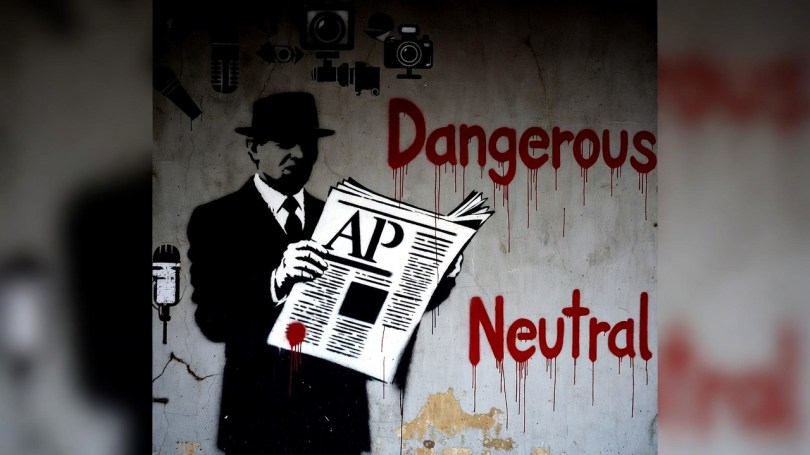
While The Guardian is the most openly aggressive against Elon Musk, the AP is more dangerous in some ways because its framing gets treated as neutral fact and spreads everywhere.
On June 19, Elon posted one clear sentence:
“The reason they call me a Nazi is to encourage people to murder me.”
Just today, it was reported that Democratic Congressman Ro Khanna accused Elon Musk of sentencing 4.5 million children around the world to death by cutting USAID funding.
This is the kind of extreme, reckless lie that gets normalized when media outlets like the Associated Press repeatedly frame Elon as a dangerous global actor.
The AP may not shout the accusations itself, but it helps sow the seeds for the kind of hatred and lies that people like Ro Khanna then feel comfortable peddling in public.
While the Guardian in the UK has been the loudest, the Associated Press has been the most effective at spreading dangerous framing of Elon.
In 2025, the AP published a report that accused Elon of “elevating far-right figures on three continents.” The piece presented his interactions with various political leaders and voices as evidence of him boosting extremism around the world. Because the AP is a wire service, that language didn’t stay in one place. It was picked up and republished by newspapers, local news sites, and broadcasters across the entire world.
This is how the narrative spreads without appearing extreme. When the AP frames Elon as systematically lifting up dangerous people, so it gives other outlets permission to go further. It turns political disagreements and platform decisions into so-called evidence of a global threat.
Defenders will say the AP is simply reporting on Elon’s political activity and holding a powerful person to account. That defense is easily dismantled.
The AP piece purposely refrained from treating Elon’s support for certain elected leaders or his criticism of open borders and DEI as normal political positions held by millions of people. Instead it grouped them under the label of elevating “far-right figures.” This is the same tactic we’ve seen elsewhere. Legacy media takes real actions and statements, strips away context, and places them inside the most toxic category possible.
The damage comes from the reach. When a wire service runs this framing, it becomes background noise in newsrooms everywhere. Local reporters and editors treat it as established fact. Over time, the public gets trained to see Elon not as a businessman or free speech platform owner, but as someone who is actively making the world dangerous.
This fits the exact pattern Elon described. You do not need to scream “Nazi” in every headline to contribute to the environment he warned about. You can do it quietly by repeatedly linking someone to extremism through selective framing and wide distribution. The result is the same: the target starts to look like someone who deserves extreme opposition. This is how Charlie Kirk was killed.
The AP may not seem as openly aggressive as The Guardian, but its role is just as useful to the overall effort if not more. The AP lends an appearance of neutrality while pushing the same core story that Elon and his platform represent a serious threat that must be confronted.
You can see how this works. One outlet pushes the strongest language. Another spreads a milder version of the same framing to a much wider audience. Together they build the permission structure that makes hostility toward Elon feel reasonable to violent people.
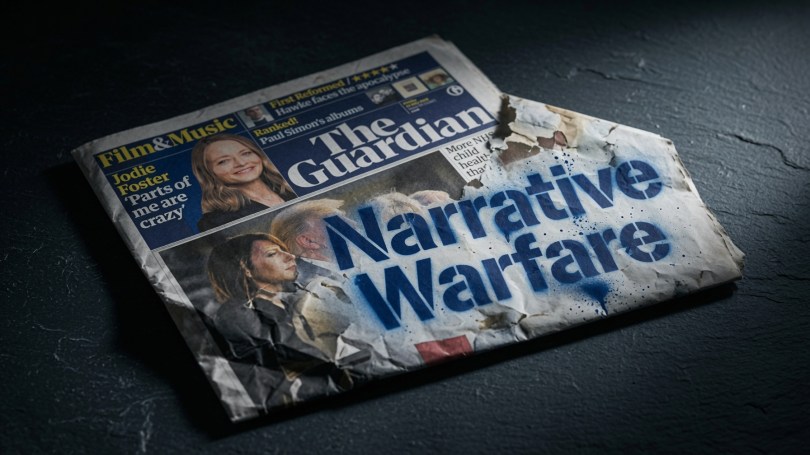
The Guardian published two articles in June 2026 that directly linked Elon Musk to racist violence and far-right mobilization. This piece breaks down how their reporting follows a clear pattern of dehumanization.
On June 19, Elon Musk posted one clear sentence:
“The reason they call me a Nazi is to encourage people to murder me.”
Two days earlier, The Guardian published an editorial and a news article which demonstrate exactly how this works.
In a June 10 editorial, the Guardian published that after a stabbing in Northern Ireland, far-right agitators called crowds onto the streets. It named Tommy Robinson as one of them. Then it added Elon: “So was Elon Musk, the billionaire owner of X, whose platform helped mobilise racist fury.”
Then the article went further. It reminded readers that Elon once spoke at a rally organised by Robinson. It quoted Elon saying people should “fight back or you die” against uncontrolled migration, noted that he reposted the line, and called him “one especially powerful and ideologically fixated oligarch.” The Guardian (which is supposed to be the Guardian of the people) accused Elon of helping spread “a far-right worldview twisted with paranoia and racist hysteria” that is now moving from online to the streets.
Another Guardian article published the same day carried the same message. It linked Elon and X to posts that supposedly incited violence in Belfast. It highlighted his reposts about fighting back and framed his platform as a driver of the unrest.
These are not careful reports, but they are designed to make you think they are. Meanwhile they directly tie Elon to racist violence and the spread of dangerous extremism.
A leaked internal document from the Center for Countering Digital Hate shows the same pattern in writing. The group, co-founded by Morgan McSweeney (Keir Starmer’s former chief of staff), listed “Kill Musk’s Twitter” as one of its top annual priorities, along with triggering UK and EU regulatory action against the platform. Screenshots of that document have been circulating. When people in and around the British government are openly planning to kill Elon’s platform, the Guardian’s framing stops looking like normal journalism and starts looking like part of the same effort.
Defenders claim The Guardian is just reporting on dangerous online activity and holding a powerful platform owner to account. That excuse and everything the Guardian writes about Elon is easily dismantled.
The articles name Elon as a key person who helped mobilise racist fury. They reach back a year to one speech and treat his warnings about mass immigration as part of the violence. They ignore the actual stabbing that started the unrest and the years of failed migration policies that created the anger in the first place. The Guardian could easily do neutral reporting on dangerous posts. Instead they are placing the blame for street violence on one man.
The demand for “accountability” is also selective. Elon’s platform allows strong speech after events like this. It also allows massive amounts of criticism of those same views. The real ask here is not accountability. It is pressure to censor the kind of opinions The Guardian dislikes.
This fits a clear pattern. The Guardian has already run pieces claiming Elon’s posts are “indiscernible from those of white supremacists.” Every few months they attach him to the worst possible labels and real-world unrest. The goal is always the same: make Elon look like a threat so extreme that normal rules no longer apply to him.
Elon said the Nazi label is used to encourage people to murder him. The Guardian’s two articles from June 10 show one way this happens. They don’t need to say the word “murder.” They only need to keep telling readers that Elon is helping spread racist violence and far-right hysteria. Once enough people accept that, the next step becomes easier for those who want to take it.
It is clear as day to see what they are doing. They are not debating policy or platform rules. They are building a story that turns one man into the cause of violence so the label sticks and the hostility feels justified.
That is the tactic Elon named: “The reason they call me a Nazi is to encourage people to murder me.”
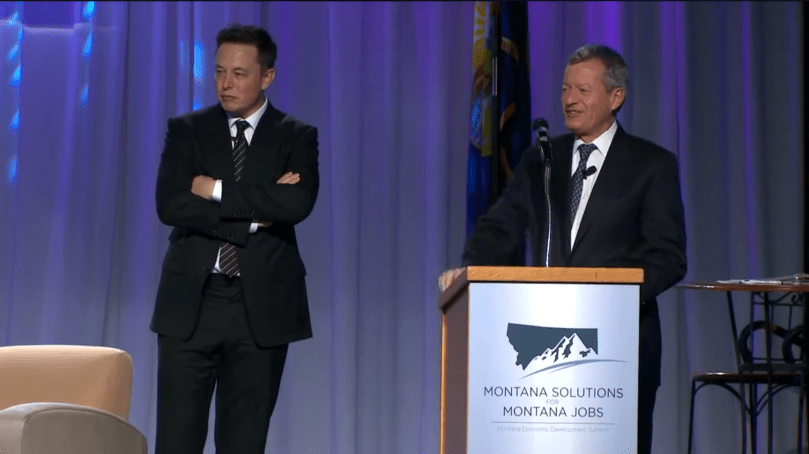
Date: September 16, 2013 Location: Butte, Montana (Montana Tech campus) Event: 6th Montana Economic Development Summit (also called Montana Jobs Summit) Organized by: U.S. Senator Max Baucus
Introduction & Context (for 2026 readers)
In September 2013, Elon Musk was 42 years old and running two companies that had both nearly gone bankrupt just five years earlier during the 2008 financial crisis.
At the time, Tesla had only recently begun production of the Model S. The car had just launched and was receiving strong early reviews, but the company was still fragile and not yet profitable. SpaceX had achieved its first orbital success in 2008 and won NASA contracts, but it was still a relatively small player in the launch industry. Elon was deeply focused on making both companies succeed and was already thinking about reusability for rockets — a goal he would publicly emphasize more in the years that followed.
Elon lived in the Los Angeles area at the time (primarily in Bel Air), splitting his time between Tesla’s operations in the Bay Area and SpaceX’s headquarters in Hawthorne, California.
He was invited to speak in Butte, Montana by longtime U.S. Senator Max Baucus, who had been organizing these economic development summits to bring high-profile business leaders to rural Montana. The goal was to attract investment, create jobs, and put Montana “on the map” for technology and manufacturing.
A key reason Elon accepted the invitation was that SpaceX already had a supplier relationship with a Butte company called SeaCast. The company made cast titanium and Inconel components for SpaceX rocket engines. Elon even visited the SeaCast foundry with his five children during the trip, an experience he mentions at the beginning of the talk.
The audience consisted of:
Montana business owners and executives
Local political and economic development leaders
Students and faculty from Montana Tech
Investors and entrepreneurs interested in bringing more industry to the state
Supporters of Senator Baucus’s efforts to boost Montana’s economy
It was not a tech conference or a large public event — it was a targeted economic development summit in a small city in Montana.
Transcript
Elon Musk: All right, well thanks very much for having me. I actually just came from C Cast, which is they make cast titanium and Inconel parts for the SpaceX rocket engines. And I actually brought all my five kids who are sitting right there. So they got to see steel being poured and then titanium being poured as well and creating sophisticated castings. They seem pretty excited about that. It was kind of like Charlie in the Metal Factory, I guess.
So let’s see, I guess I’ll maybe talk a bit about entrepreneurship and technology, tell you about my experiences and what happened to me. And then I think we’re going to try to reserve as much time as possible for a Q&A from the audience. Certainly feel free to ask any and every question.
I’ll kind of give the nutshell account because it’s getting a little bit long at this point.
Elon Musk: I arrived in North America when I was about 17. I was born in South Africa, but I was actually named after my American great-grandfather. So I was returning to my ancestral homeland actually. He was John Elon Haldeman and he was from Minnesota and generally from the Minnesota-Wisconsin area.
I wanted to come to the United States because I think it’s where great things are possible. It’s where the technological frontiers are pushed forward. I knew I wanted to be involved in that. I don’t know exactly how, but anyway I went through college and ended up at Stanford with the idea of studying applied physics and material science to try to figure out ways to store energy more effectively for electric cars so you can make them go further.
I ended up putting that on hold to start an internet company in ’95.
Elon Musk: At the time it wasn’t from the perspective of making a lot of money because nobody had made any money on the internet in ’95. But it seemed to me that the internet was something that would create effectively like a nervous system for humanity. Whereas previously if you wanted to access information you’d have to go to a library, and even if you went to a lot of libraries you still wouldn’t have access to all that much information.
But if everything got connected, then anyone anywhere — if you’re in the middle of the Amazon jungle in South America or something and you had an internet connection — you’d have access to all the world’s information. In fact you’d have access to more information than the U.S. president did in, let’s say, 1980. So it’d be pretty incredible and transformative.
I thought well I wanted to be part of helping make that happen. So I decided to put my studies at Stanford on hold and started an internet company initially to help the media companies get online. We had as investors and customers New York Times company and so forth, and that ended up working out. So we sold that company and then created PayPal.
The idea behind PayPal was simply to facilitate payments on the internet. Because at the time if you bought something from someone you’d have to mail them a check and it would take weeks to conduct the transfer. We figured out how to make it really fast and easy to transfer funds from one person to another. And that actually grew super fast. It grew virally. The key to that was figuring out how to make the friction of signing up for an account very very low and make it easy for one person to refer another.
As our customer base grew, the actual rate of growth grew. This resulted in some initial challenges in scaling because we started off with five people in customer service and after two months we had 100,000 customers. So our phone lines exploded basically, but we were able to overcome those issues. And then eBay bought the company in 2002 and it’s sort of grown from there.
Elon Musk once considered building a Mars Oasis with a Greenhouse!
Elon Musk: What that did though was gave me the capital to try to do some things that are fairly high capital. There were two things I really wanted to get into. One was sustainable energy production and consumption of energy in a sustainable manner, and the other was space exploration.
I started off initially with the idea of doing something in the space exploration arena. In fact it wasn’t actually with the idea of creating a company. It was initially with the thought of spurring interest in sending people to Mars. So I put together this idea called Mars Oasis which was to send a small greenhouse to the surface of Mars and get people excited about the idea of going there and thus increase NASA’s budget in order to make it happen.
Elon Musk considered building a Mars Oasis in a cool Greenhouse
As I got more and more into that I discovered that the real issue was that the cost of space transportation was really high — in fact it was getting worse. We’re used to technology getting better every year but in some arenas it actually does not, it gets worse. Particularly when you consider that in 1969 we were able to go to the moon and then we were unable to go beyond low Earth orbit. And now with the Space Shuttle retired we’re not even able to go to Earth orbit at all with people. So that was not the right trajectory.
Elon Musk went to Russia Three Times!
I actually went to Russia three times to look at buying an ICBM to launch this mission. After my third trip of trying to negotiate with the Russians to buy an ICBM — and I did actually get a deal — I concluded that my initial assumption had been wrong. It was not a question of trying to generate more will to explore, because I think the United States in particular is distillation of the human spirit of exploration. Space exploration is fundamental to the American psyche. But people really need to believe that it can be done and it’s not going to break the bank.
That’s when I decided to start a rocket company. I actually didn’t think it would succeed and it almost didn’t. We started off developing a small rocket which was kind of a scale model version. It was about 100,000 lbs of thrust — big by normal standards but small for a rocket. We developed the engine and the airframe and the electronics and the guidance control system and then proceeded to have three failed launches in a row.
For various technical reasons the first three launches did not succeed in reaching orbit. Launches 2 and 3 did get to space but they didn’t achieve enough speed to reach orbital velocity. This is 2008 and we’re heading into the recession and we had one rocket left. Unfortunately in late 2008 that fourth launch did work and then we made it to orbit and then we won a NASA contract after that. So fortunately things worked out, but if that fourth launch had not worked then SpaceX wouldn’t be around. It was a very close call.
Elon Musk: There was also Tesla. The impetus for Tesla was really to create a compelling electric car. At first I thought there would not really be a need for such a thing because GM at the time had created the EV1 and Toyota had done the electric RAV4. It had been primarily as a result of regulations from the zero emission mandate states, particularly California. They created these electric vehicles and I thought okay this is great, well GM’s obviously going to go from the EV1 to the EV2 and the EV3 and everything will be fine.
But when California changed regulations they actually recalled all the EV1s and then crushed them so that they could never be returned. So it was clear that if a startup company did not create an electric vehicle and show that it’s possible to have an electric car that looks good, goes fast, has long range, and that people would buy it, then it would be a very long time before the large incumbents did so. That was why I felt it was important that we create Tesla.
Tesla also almost died in 2008. The recession was particularly difficult for car companies. Right in the summer of 2008 we had to raise a big funding round but because of the collapse in the financial system that funding round didn’t happen. We had to piece together the money to keep the company going from myself and existing investors. We were able to just complete a financing round that was just barely enough to keep the company going. We closed it on the last hour of the last day that it was possible to do so. It was Christmas Eve 2008 at 6 p.m. If we hadn’t, the investors were going on vacation and we would have run out of money a few days after Christmas. That was also a close call.
While things are going really well these days, I think it’s always important to remember that when you’re creating a company there are very dark times and it’s about getting through those dark times that’s the difference between success and failure.
Elon Musk: Of course now things are actually going pretty well for Tesla — may they stay that way. We’ve got the Model S which is in production. Consumer Reports gave it a 99 out of 100, which is actually the highest score that Consumer Reports has ever given a car of any kind. When the federal government did the safety test it also got the highest safety rating of any car ever, including many vans and SUVs.
We’re actually exporting a lot of the cars to Europe currently and then we’ll start exporting to Asia. It’s funny, we got these incredibly good rates for shipping goods to China because all these container ships come in full and they go back empty, so it’s real cheap to ship things to China. We’ll start doing that in the first quarter.
With SpaceX we’ve got a launch coming up which is our next generation rocket. The key thing for rocketry, the key breakthrough that’s needed, is to create a fully reusable rocket. I think what SpaceX has done thus far is evolutionary but not revolutionary. In order for that to occur you have to bring the rocket back to the launchpad and be able to relaunch it again. It has to be reusable much in the way that an airplane or a car or any other mode of transport is reusable. That’s kind of the Holy Grail goal of spaceflight which we’re hoping to make progress towards, but it’s very risky. There’s a good chance that the upcoming launch could go wrong. It’s currently slated for the end of this month. Hopefully that goes well. It’s always a tricky thing with the rocket business because you can’t issue a recall or send a software patch or anything after the rocket lifts off. Nine minutes later it’s either in orbit or it’s not.
Q&A Highlights with Elon Musk
Elon Musk: (responding to audience questions)
On influencing public policy: Not particularly successful at influencing public policy I would say. I kind of ride the flow of other people’s efforts more than anything else. For electric vehicles we basically followed what GM and Nissan were already doing with the tax credits. For space I think NASA should spend a much higher percentage of its budget on commercial space. Right now it’s only about seven or eight percent.
On getting through dark times: The thing about dark times is that a company is really just a group of people that are trying to create a product or a service. If you believe that what you’re doing is important and you show that you’re all in — you invested everything you had, you borrowed money to pay rent — and you hire people who are really passionate about it, then they’ll stay through the tough times.
On why sustainable energy matters: Even if you ignore the environmental argument, which I don’t think you should, the economic argument is pretty strong. Because if we run out of cheap energy or energy becomes very expensive then civilization as we know it could collapse. So I think it’s the most important problem to solve on Earth this century.
On SpaceX’s ultimate goal: The goal is to make life multi-planetary, to create the technology to have a self-sustaining city on Mars basically as life insurance for consciousness and also because it’s an exciting thing to do.
On risk tolerance: I was willing to lose everything but I figured I could always make more money. The hardest decision was having to choose between putting the last money into Tesla or SpaceX, because if I split it both would probably die. So I had to go all in on one.
(The Q&A continued with additional questions on grid storage, involving young people, building tech economies in rural areas, government regulations, and long-duration space travel challenges.)