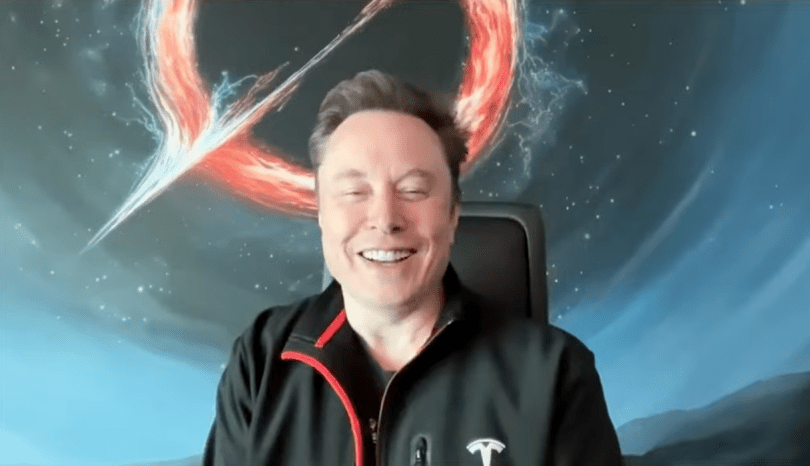
Nvidia CEO Jensen Huang Praises Elon Musk and Tesla’s Optimus in Resurfaced Interview

2025 Bloomberg Clip Highlights Collaboration on AI, Self-Driving, and Humanoid Robots

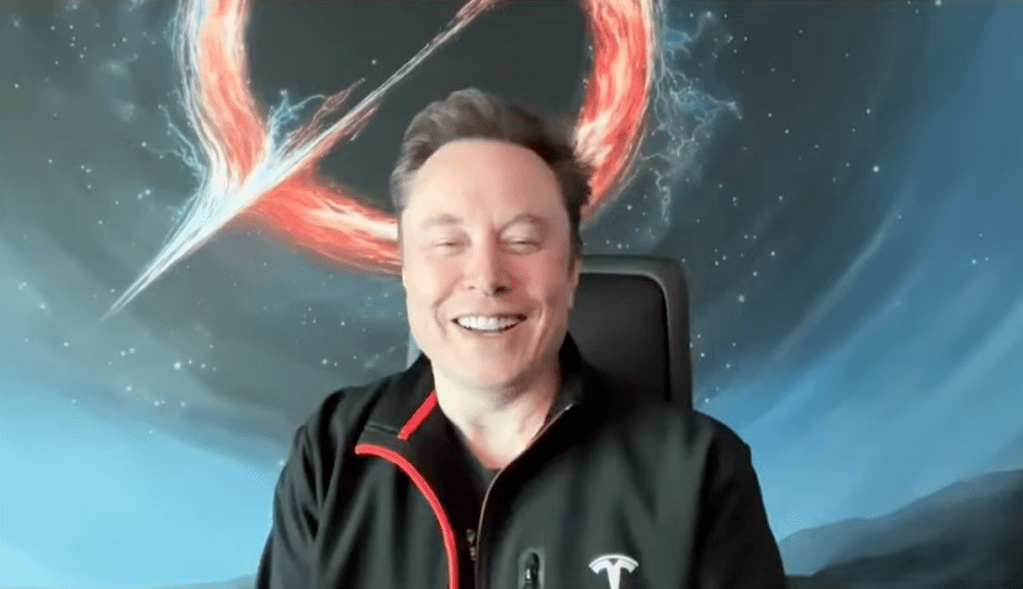
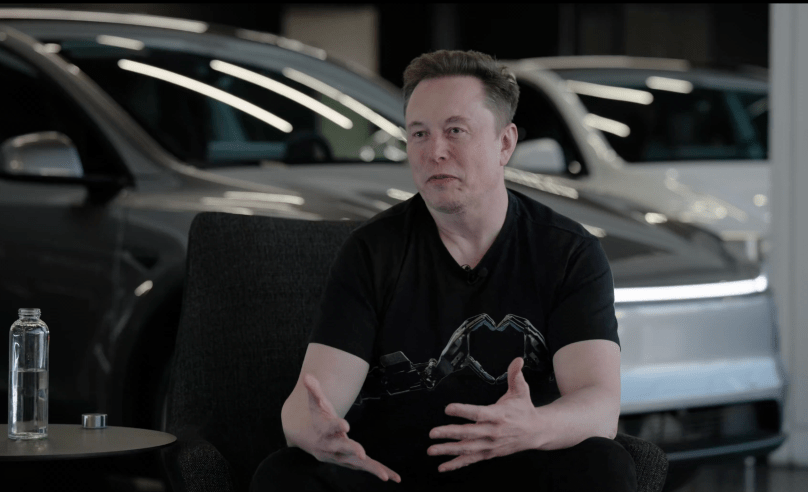
A video clip from Nvidia CEO Jensen Huang’s Bloomberg Technology interview, originally aired on May 28, 2025, has gone viral again on social media, fueling excitement about Tesla’s robotics ambitions and broader partnerships with Elon Musk.In the segment, host Ed Ludlow asked Huang about Nvidia’s deepening ties with Tesla and xAI across AI computing, autonomous driving, and robotics.Huang lavished praise on Musk and his ventures, calling his work across multiple fronts “world class” and “revolutionary.”

Here is the verbatim quote from the clip:

“Elon is just an extraordinary engineer, and I love working with him. We’ve built some amazing computers together. We’re going to build many more computers together. The work that he’s doing in Grok, his self-driving car, his Optimus—these are all, every single one of them, world class. Every single one revolutionary. Every single one of them are going to be gigantic opportunities. And we’re delighted, I’m delighted to be working with him on that. So I think the Optimus opportunity is just right around the corner. It’s very likely that humanoid robots are going to be robots that we can deploy into the world relatively easily, and this is the first robot that really has a chance to achieve the high volume and technology scale necessary to advance technology. And so I think this is likely to be the next multi-trillion dollar industry.”

Huang emphasized Tesla’s unique manufacturing expertise as a key enabler for scaling Optimus to high-volume production, setting it apart from competitors.

The clip was reposted on X on January 1, 2026, by prominent Tesla supporter CB Doge.

Elon Musk Joins Surprise X Space: Discusses 2026 Breakthroughs with Voice Doppelgänger Adrian Dittmann

Elon Musk Joins Surprise X Space: Discusses 2026 Breakthroughs with Voice Doppelgänger Adrian Dittmann

January 1, 2026 – In a surreal and entertaining moment to close out the year, Elon Musk unexpectedly joined an X Space on 30 December titled “The Year Ahead 2026,” hosted by @AdrianDittmann—a user long famous (and occasionally suspected) for sounding eerily similar to Elon himself.

The result was a light-hearted, mind-bending conversation in which the two voices—virtually indistinguishable—greeted each other as “other me” and dove into an optimistic preview of what Musk believes 2026 could bring for Tesla, SpaceX, xAI, and humanity’s future in space.

The highlight clip captures roughly five minutes of the exchange. Below is a mostly verbatim transcript (with some of Adrian’s longer, rambling comments lightly summarized for readability), manually transcribed due to the extreme voice similarity that confounded automated tools.

Transcript

Adrian: Yo Elon, what’s up man? Long time no see. Or like here rather because you know, “Spaces.”
Elon: Hello other me.
Adrian: Hi other me, that’s a good one! Yeah, so I’ve seen your year has been quite the adventure.
Elon: There’s been a lot, yeah. It’s been quite a year. I think 2026 is going to be a real banger year!
Adrian: Indeed, indeed.

(Adrian mentions the upcoming midterms and “narrative engineering,” then notes he’s very busy with work. Elon asks what the work is.)

Elon: What’s your work?


Adrian: Sorry, come again?


Elon: What work?


Adrian: Manufacturing stuff.


Elon: Okay, cool. What have you been making?


Adrian: I kind of don’t want to talk about it—it’s not entirely relevant. It’s kind of like a luxury product type thing, not that high up. It’s quite simple. I just don’t want to talk about it too much because I don’t want to bring attention to those people. I don’t want any harm to come to them, you know what I mean. So I just don’t talk about it as much.


Elon: Okay.


Adrian: Doing some automation stuff now. It’s pretty fun.

Elon on Tesla and SpaceX

Elon: Well, Tesla should have widespread robotaxi. That’ll be a big thing for Tesla in ’26. Optimus 3 will launch, and then hopefully SpaceX will achieve full reusability with Starship. Those are the pretty giant ones.

Adrian: I assume the first major shipments with Starship are just going to be like Starlink satellites, right?


Elon: Yup. And then we are going to go to the Moon!


Adrian: Oh yeah, yeah. Definitely. The space compute thing is like a really good accelerant, I think. So SpaceX becomes the major delivery company of choice then.


Elon: Yeah, haha.

(Adrian asks if Elon has thought about manufacturing on the Moon, noting that low gravity allows creating materials difficult or impossible to produce on Earth.)

Elon: Well, I think the biggest opportunity on the Moon is to actually make solar cells and radiators—so you’re manufacturing on the Moon anything that weighs a lot. Chips can maybe still come from Earth because they weigh very little. And then you can use a mass driver to put a billion tons of AI-powered satellites into orbit per year.

Adrian: Mass driver basically being like a kind of rail gun. I just like “rail guns”—it sounds cleaner. Like if you were on Dyson spheres before, pivot to this.


Elon: Well, this will create a Dyson swarm where there are essentially a bunch of intelligent satellites around the Sun.

(Adrian asks if manufacturing could be done in zero-gravity orbit instead, or if even lower gravity than Earth’s—like the Moon’s—is still needed.)

Elon: You need mass. Mass must come from somewhere. You need a lot of tonnage.

(Adrian asks if there will be a lot of tunneling (“boring”) on the Moon or if bases will mostly be surface structures, adding that underground lava caves make more sense.)

Elon: Ahhh, sure. We’ll figure it out. The most important thing is to get serious tonnage from the Moon in order to send even way more serious tonnage from the Moon. You can scale to a hundred terawatts of AI compute per year from the Moon.

(Adrian asks about magnetic shields for protection; Elon responds.)

Elon: Superconducting magnets could shield against solar wind and even high-velocity small objects. It’ll be fine—we already have 9,000 satellites in orbit, so we know what it’s like being in space. But… I randomly saw your chat. I have to head back to Tesla work meetings.


Adrian: Well, thanks for coming!

Highlights

  • Tesla: Widespread unsupervised robotaxi deployment in 2026 is expected to be a major milestone.
  • Optimus: Generation 3 of the humanoid robot is slated to launch and start performing useful tasks.
  • SpaceX: Full rapid reusability of Starship (including booster and ship catches) targeted for 2026, with initial major payloads consisting of Starlink satellites.
  • Lunar Ambitions: Manufacturing solar cells, radiators, and heavy components on the Moon, followed by using mass drivers (electromagnetic railgun-like launchers) to deploy massive quantities of AI-powered satellites at far lower cost than Earth launches.
  • AI Compute at Scale: Musk foresees scaling to hundreds of terawatts of AI compute per year, enabled by lunar resource utilization and orbital deployment.

My take: This was an unplanned and certainly unannounced X Space for Elon Musk. It appears he had a moment in between meetings to simply drop into the Space and chat. I think Elon would enjoy it if we all did this more. Back in November, I dropped into a Space, and got to chat, and it was memorable. If you’ve never done it, try it! In fact, when Elon does things like this, he’s actually working in X—it’s his job to try out the product. We’re lucky he bought X for the crazy price of $44 billion! Elon made this a fittingly futuristic way to ring in 2026.

(P.S. I couldn’t use AI to transcribe this—first it insisted the whole thing was a deepfake, then it completely failed to tell the two men’s voices apart. I finally gave up and did the transcript manually. Enjoy this rare treat!)

Gail’s Tesla Podcast Ep. 152: Floating Through Austin on FSD v14 – Sour Duck, JuiceLand & Night Drive

Hey Tesla enthusiasts! Episode 152 takes us on a dreamy night out in Austin, where FSD v14 made everything feel like floating on air. We hit up Sour Duck Market, Butter Half, and JuiceLand for some local flavors, followed by an epic full-city cruise under the night lights. Hands-off the whole way with zero interventions—FSD v14 is incredibly smooth, handling turns, traffic, and vibes like a true pro.

The route was a perfect Austin loop: Sour Duck for fresh market goodies → JuiceLand for refreshing sips → Butter Half for that quirky stop → wrapping with a mesmerizing drive through the glowing city. Loved how the autonomy let me just enjoy the scenery and chat about the future!

Jump to 2:44 for Sour Duck Market arrival, or 3:08 for JuiceLand vibes. At 5:56, it’s Butter Half time, then 6:20 for the stunning city at night views. This drive shows FSD v14’s next-level confidence in real-world scenarios.

Episodes like this remind me why Tesla’s tech is paving the way to abundance—effortless, fun, and reliable.

Catch the full floating tour on X: Watch here — fast-forward to your favorite stops for the action.

Smooth rides ahead!

—Gail

Leave a comment

Elon Musk: Engineer, Defender of Humanity

Elon is a builder. We know him for his rockets, incredible vehicles, and satellite networks that connect the far reaches of Mongolia and people stranded in floods in North Carolina.

Some people don’t like it when he posts his thoughts about justice on X. But I do. I love it. I’ve learned so much about keeping society fair, safe, and free, and how critical it is to preserve Western civilization.

I went from thinking it was OK to welcome any immigrant who looked like they needed help, to understanding we must have secure borders and stop crime. Whether helping people in Europe, America, or Britain, Elon clearly wants to protect everybody and keep our world from falling apart.

I stand with Elon on immigration. I know firsthand most immigrants are decent, hard-working people. Even immigrants I’ve met say unchecked flows, no vetting, no proper screening, are the wrong way. With wide-open borders, vicious criminals slip right in with them. That’s not how to build a better America.

Elon has highlighted how Poland, with tight border controls, has stayed much safer. Meanwhile, my own city, Austin, gets more dangerous.

I love Elon for raising awareness about Iryna Zarutska from Ukraine, murdered in cold blood on video on a light-rail train in Charlotte, North Carolina, with nobody reaching out to help this poor woman right away. As beautiful murals go up around the country (funded in part by Elon’s $1M pledge), I think of his deep drive to keep everybody safe, he wants to make sure that we don’t have to bear the pain of another Iryna Zarutska. Her death should not be forgotten, it’s how we can pledge to do better in America.

In the UK, there’s also huge room for improvement. Elon raises awareness about how it’s sliding toward a police state: people jailed for things they write online, serious criminals released early. I wouldn’t know this without him.

Now, with jury trials being eroded in the UK, I see Elon’s renewed heart for helping Britain. That’s what Elon does best, help humanity.  (Never stop, Elon!)

I’ve also filtered out cynics (I don’t meet many, but Elon warned against them). In a Lex Fridman interview, he said never trust a cynic, stay away from people who see bad in everybody, because they’ll excuse their own bad behavior by claiming everyone else is bad too.

Elon is wonderful when he says most people are “medium good.” He has real trust in humanity. I’d never heard of “suicidal empathy” until him. He raised my awareness of how it’s destroying Western civilization. Allowed me to examine myself and readjust my views.

Elon has highlighted Gad Saad and how suicidal empathy will destroy Western civilization, and he’s right. It deserves to be defended, not tried. If we lose it, everybody loses something valuable.

Past the rockets and cars (which are great), there won’t be an America around to enjoy them unless we preserve it. Since Americans built these wonders, future generations deserve to enjoy them too.

We don’t want to be complicit in the banishment of Western civilization, instead we should work hard to defend it.

Elon doesn’t preach from an ivory tower. He’s the most in-touch, high-position leader I’ve ever met, reaching out to all corners of humanity like no one else.

Gail’s Tesla Podcast Ep 151: Rainy Austin FSD v14 Adventure – Burgers, Robotaxi & Downtown Cruise

Hey Tesla fans! Episode 151 is all about embracing the rain in Austin with FSD v14 proving it’s a champ on wet roads. We kicked off a cozy night out: grabbing Dai Due burgers, chatting Robotaxi dreams, visiting Mama, spotting AVs in the wild, and cruising misty downtown streets. Zero interventions—FSD handled the slick conditions like a pro, making the whole adventure feel effortless and fun.

The route was pure Austin magic in the rain: Dai Due for those juicy burgers → deep dives into Robotaxi updates → a heartwarming stop at Mama’s → eagle-eye AV sightings → wrapping with a serene downtown drive amid the mist. Loved how the city lights reflected on the rainy pavement!

Jump to 1:20 for Dai Due burger vibes, or 2:24 for Robotaxi talk. At 3:45, it’s Mama time ❤️, then 4:45 for spotting AVs, and 5:16 for that epic downtown rain cruise. FSD v14 nailed every turn, even with puddles and traffic!

This ep captures why Tesla autonomy shines in real-world weather—turning a drizzly evening into an abundant joyride. Rain or shine, we’re closer to that future!

Catch the full rainy tour on X: Watch here — fast-forward to your fave moments for the visuals.

Onward to more adventures!

Starlink Mini’s Lifesaving Triumph: Family Freed from Fallen Tree Nightmare in French Alps

Remote Rescue Powered by Elon Musk’s Satellite Tech

For this story on how Elon Musk’s company’s products have helped people, making their lives better, we travel to the rain-lashed foothills of Savoie, in the French Alps.

A routine drive turned deadly in late July 2025. A massive pine tree crashed onto a family’s car during a torrential downpour, trapping a family of four—parents and their two children—inside. No cell signal in the isolated mountains; every minute risked disaster.

Enter a nearby private security worker, first on scene. Untrained for heavy extrication, he couldn’t budge the tree safely. His phone? Dead zone. But bolted to his car roof: a Starlink Mini kit—his go-to for jobs across France, Italy, and Switzerland.

In under two minutes, the dish locked onto satellites through the storm, delivering rock-solid Wi-Fi. Via Wi-Fi calling, he alerted emergency services with precise GPS coordinates. Rescuers raced in at blistering speed: 20 minutes—lifesaving in terrain where help could lag hours.

Firefighters chainsawed the tree for nearly three hours to free the parents. The shaken teen son, briefly unconscious but mostly unhurt, warmed in the hero’s car. All four survived intact. The story even aired on France’s TF1 national TV.

Tesla/SpaceX expert Nic Cruz Patane spotlighted it on X:

“Starlink Mini saved four lives… in the French Alps. … Rescue took 20 minutes to arrive. Life saving technology.”

Why Starlink Mini Shines in Crises

This portable beast—lightweight, vehicle-mountable, 100+ Mbps—cuts through dead zones via SpaceX’s low-Earth orbit constellation. Perfect for first responders, hikers, remote pros: seconds to connect, storm-proof.

In signal black holes, Starlink isn’t optional—it’s essential grace. Echoed worldwide: “It just works.” Elon Musk’s genius: lifelines from the stars.

Starlink Mini’s Lifesaving Triumph: Family Freed from Fallen Tree Nightmare in French Alps
Hours after surgery, Noble began calibrating the coin-sized N1 device.

Elon Musk’s Neuralink Transforms Life for UK Veteran with Implant

New Era of Neurotech

LONDON — Thanks to Elon Musk and the innovative team he has assembled at Neuralink, Jon L. Noble, a 42-year-old British Army veteran and former paratrooper from Hampshire, has become the fifth UK patient to receive the company’s revolutionary N1 brain-computer interface implant. The procedure took place on December 11, 2025, at University College London Hospitals’ National Hospital for Neurology and Neurosurgery, as part of the ongoing GB-PRIME study launched last July.

From Application to Implantation

Noble, who served in elite airborne units before a spinal cord injury left him with severe paralysis, qualified through Neuralink’s patient registry. These are the beginning stages of trials, so the registry prioritizes stable candidates aged 22-75 with quadriplegia or similar impairments from trauma or ALS. Jon’s selection came after rigorous screening, including medical evals to ensure surgical viability and long-term participation in data collection.

In a September 3 X post, Noble expressed his determination: “Great news that Neuralink has just been given the green light to start trials on people with spinal cord injuries. I have submitted my application. @elonmusk NeuralinkUK.” 

Rapid Recovery and Calibration

Hours after surgery, Noble began calibrating the coin-sized N1 device. Its 1,024 electrodes, threaded into his motor cortex, translate neural signals into cursor movements. He was discharged after just 12 hours and now trains remotely, with goals to control computers, games, and assistive technology using thought alone. His involvement embodies Neuralink’s compassion towards people who have served in the military, our veterans. Our heros.

Hours after surgery, Noble began calibrating the coin-sized N1 device.

Heartfelt Gratitude to the Driving Force Behind the Breakthrough

In a moving post-op update on X, Noble shared his profound appreciation: “To Elon Musk and all engineers, analysts, designers, and support staff att Neuralink worldwide: Thank you from the bottom of my heart… And of course my outstanding team at The National Hospital for Neurology and Neurosurgery, London.”

Jon’s heartfelt acknowledgment reflects the beautiful impact of Elon’s leadership and the exceptional team he has built, turning his own ambitious ideas into life-changing realities for the people of Britain.

Accelerating Global Expansion

Neuralink’s UK trials, approved by the Medicines and Healthcare products Regulatory Agency, have gained remarkable momentum since the first U.S. success in 2024. This is a testament to the drive to move fast that Elon Musk has instilled in the company. As of mid-December 2025, approximately 19 implants have been completed globally (around 12 in the US and 7 in the UK). The two most recent UK procedures have also been performed, though details on those recipients have not yet been publicly announced.

My thoughts

I anticipate dozens more participants and eventually, thousands of people regaining digital independence through neural intent alone, thanks to the doors being opened by Elon Musk and Neuralink. One reason I am optimistic, is that on Dec 3rd, Neuralink posted a previously unpublished video to X.

DJ Seo and our recruiting team visited several schools to provide an overview of Neuralink, including recent progress updates and an outline for the company’s path ahead. Watch the presentation:

I encourage you to watch the short presentation, in order to understand the challenges that face Neuralink, and follow along in real time. The progress and speed at which Elon works, is embedded with a sharp sense of urgency. The video is inspiring. It is like a mini-AI day, but instead of for Tesla, its for Neuralink!

Elon Musk in conversation with Katie Miller – My Transcript – Complete Edition

Elon Musk opened up his Austin home for an interview last week, and you could see his levitating Tesla Cybertruck in the background, along with AI and Mars art. You may watch the full interview on X.

Katie Miller: Nice to see you, Elon. So I want to take us back. It’s January 20th. You are in the Roosevelt Room—if you remember this—getting sworn in, and they hand you a computer and a phone.

Elon Musk: Right.

The DOGE Origin Story & Roosevelt Room Handoff

Miller: I want to go back to what happened next. I think the story of DOGE from your perspective has never been told. What was your first thought on how DOGE was going to proceed?

Elon: Well, I guess I couldn’t believe I was there, for the most part, it’s like, it all seemed extremely surreal at the time. You know, DOGE was a made-up name… that had been made up, I don’t know, two or three months before… and… based on internet suggestions… and… I was going to call it the Government Efficiency Commission, and then… someone on the internet said, “No, it should be the Department of Government Efficiency—DOGE.” I’m like, “That sounds great.” So we just kind of made up a department.

Miller: Do you think you were successful?

DOGE Wins, Waste, Cuts, and Why He’d Never Do It Again

Elon:We’ve been a little successful—somewhat successful, at least.

We’ve cut a lot of funding for things that made no sense and were completely wasteful.

For example, there were probably $100–200 billion a year in “zombie” payments. Simply requiring a valid payment code and explanation before money goes out stopped most of them.

We pushed that change into the main Treasury system and several others.

It seems insanely obvious, but roughly 2–3% of government payments really shouldn’t be happening—and they’re surprisingly hard to kill.

Very few people ever tell the government, “Please stop sending me money.”

Miller: Would you ever do DOGE again?

Elon: Do you mean would I repeat history, or… or would I…

Miller: Two ways to think about it? One is if you could go back and start from scratch—like it’s January 20th all again. Would you go back and do it differently? And knowing what you know now, do you think there’s ever a place to restart? Not saying others in your stead—you go back and restart doing DOGE.

Elon: [Sighs] I mean, no, I don’t think so. Would I do it again? Probably not. I’m not sure.

Miller: Would you do DOGE again knowing what you know now?

Elon: I mean, the thing is, like… I think instead of doing DOGE, I… I would’ve basically built… you know, worked on my companies essentially. So… and not… and the cars, they wouldn’t have been burning the cars. 

Miller: You gave up a lot, yeah. When you cut off the money flowing to political corruption, they lash out hard. Big time.

Elon: So they really want the money to keep flowing. … so if you stop it from flowing, there’s like a very strong reaction to… to stopping the money flowing.

Miller: After you were in DC for a while, did you become disillusioned with how it operates?

Elon: Well, I wouldn’t say I was super disillusioned to begin with. I mean, the goal is always to have the government do as little as possible.

The single biggest issue is the massive transfer payments going to illegal immigrants. Essentially we’re paying people to come here from somewhere else, in huge numbers, including flying them in. You don’t need a border wall if you’re flying them in, then fast-tracking them to citizenship, making them dependent on government payments, and counting on them to vote hard left. It’s basically voter importation.

If you create a gigantic money magnet—“come to America from anywhere and we’ll pay you tons of money, give you lots of free stuff”—you’re going to get a lot of people taking you up on that offer.

People say this is fake. I point to Ilhan Omar, who was literally voted into Congress by a large Somali community in Minnesota (which is really far from Somalia), or the pattern we’ve seen with mayors and local officials elected the same way.

And then there’s California, which is the same situation, big time.

Basically, we just don’t want to turn the country into a communist hellhole.

Miller: If you’ve said in the future that no one’s going to need to worry about money or work because AI is going to take care of the rest—AI and robotics. What do you mean that people won’t have to work in the future?

Elon: Assuming the current trend of artificial intelligence and robotics continues—which seems likely—AI and robots will be able to do anything that humans want them to do, essentially. So hopefully not more than that, but AI and robotics will be able to provide all the goods and services that anyone could possibly want.

Miller: But you wouldn’t need to work—like, what would you do with your free time?

Elon: People will be able to do whatever they want with their free time. Work will be optional.

I just want to separate what I wish would happen from what I predict will happen, because people get confused about that. They think that what I predict is what I want.

What I predict to happen is not the same as what I want to happen.

If I could, I would certainly slow down AI and robotics, but I can’t. It’s advancing at a very rapid pace, whether I like it or not.

Miller: Is AI what keeps you up at night?

AI Future: Work Becomes Optional (But Elon’s Terrified)

Elon: It used to be that point… I don’t know. I… I wouldn’t say there’s anything in particular keeping me up at night right now—except that.

But if you ask if I wake up having nightmares? Oh, AI. Yeah. Actually… [laughter] I’ve had a lot of AI nightmares. I had AI nightmares many nights in a row.

What am I supposed to do about it?

Miller:  What’s your biggest irrational fear?

Elon: I try not to have irrational fears.

Elon: None.

Elon: If I find an irrational fear, I squelch it. I don’t believe… fear is… 

Fear is the mind killer. 

Miller: Well, on average, how many hours do you sleep a night?

Elon: Six. You can tell based on my X posts.

Miller: Yes, you can.

Elon: People have actually mapped them, so it’s very clear when I’m sleeping and when I’m not. I tried having less than 6 hours sleep, although I’m awake more hours per day, my cognitive function is reduced. So for my natural sleep… I actually timed it with the phone. They can get a phone app, but time it. It’s 5 hours 56 minutes. That’s what the phone said.

Miller: What’s an average day for you look like?

Elon: Well, I have a lot of inbound communication. So… it’s information triage. I try to segment the days so that there’s not too much context switching because arguably, context switching is difficult. It is hard not to context switch if you’ve got an inbox full of stuff. … but you can think like… if you had to context switch every 3 seconds or every 30 seconds or every 3 minutes, the context switching cognitive penalty would be very high. Every 3 seconds…and you’re talking about switching between, say, Tesla, X… xAI, SpaceX, and personal… SpaceX, then personal. And even within Tesla and… and SpaceX, there are many different things. I’m also getting the stuff on X—like random news things, you know, like people being burned alive and stuff like that. You’re like, what the hell’s going on in this country?

Miller: Who’s the funniest person you know in real life?

Elon: You know, President Trump is very funny. He’s got a great sense of humor.

Miller: President Trump is very funny.

Elon: He’s very funny. He’s like… naturally funny. It is somewhat… effortless. I mean… , you know, when he… had Mamdani in the office and… , they asked him if he… saw… thought the president was a fascist, and the president said, “Just say yes. It’s easier that way.”

Miller: Yeah. [Laughter]

Elon: Don’t worry about it. Just say yes. Awesome.

Miller: Who do you look up to the most?

Elon: The Creator.

Miller: What’s your current position on God?

Elon: God is the Creator.

Miller: You don’t believe in God though, do you?

Elon: Well, I believe this universe came from something. People have different labels.

Miller: When’s the last time you did something extremely ordinary, like go to Target or CVS?

Elon: I can’t go to things where there’s the general public because… , I… I’m there… there’s an immediate… “Can I have a selfie?” line that forms. And… and these days, in particular, in light of Charlie Kirk’s murder, there are serious security issues. It’s not that I don’t want to. I simply can’t. 

Miller: Has Charlie’s murder changed how you do things, or were you already locked down pretty well before that?

Elon: It certainly reinforced the severity of the situation where life is on hardcore mode. You make one mistake, and you’re dead. And it only takes one… one mistake.

Miller: What’s one moment in your life that you could live again just to feel it?

Elon: Well, I mean, obviously when my kids were born or the first time SpaceX got to orbit or Tesla made an electric car work.

Miller: You’ve had a lot of them.

Elon: It’s a lot. There’s a lot coming down the pike.

Miller: Like what?Simulation Theory & The One Rule: Keep It Interestingnetflix

Starship, Mars, and Becoming Multi-Planetary

Elon: Starship. The degree to which Starship is a revolutionary technology is not well understood. It’s the first time there’s been any rocket design where full and rapid reusability is possible. This is the first design where success is in the set of possible outcomes.

Miller: Are you talking about V3 or V2?

Elon: We could have made V2 reusable, but there were a lot of performance improvements for V3, so it made sense. There are like 10,000 different changes between V2 and V3.

“There are like 10,000 different changes between Starship V2 and V3” – Elon Musk

Elon: If there are historians in the future, they’ll look back at Starship and say it was one of the most profound things that ever happened.

Historic events fit on the evolutionary hall of fame: single-cell life, multicellular life, mitochondria, plants vs. animals, life going to land. Top 10 is life becoming multi-planetary.

It needs to be sustainably multi-planetary—planetary redundancy. Starship is capable of that for the first time in history. No AI was used to create it, so the AI will appreciate that.

Miller: Are all your companies working toward that goal?

Elon: Tesla is mostly about making sure life on Earth is good. xAI too. Multi-planetary means Earth’s got to be good and you need another planet.

People think going to Mars is an escape from Earth—like billionaires fleeing. No. Mars will be very dangerous, much less comfortable than Earth. Early settlers will have a higher risk of death. Cramped, uncomfortable. Food won’t be as good. You’ll work hard. It may not succeed. That’s the sales pitch.

Miller: Do you want to go?

Elon: Same as when people came to America.

Maybe if there had been social media back then, they would’ve said “We’re all dying” and put a damper on voyages.

Miller: You talk a lot on X about wardrobe—why does current fashion need to evolve?

Elon: My son Saxon said, “Why does everything look like it’s 2015?” And I was like, damn, it does. Stylistically, nothing has changed in a decade. The ’60s, ’70s, ’80s, ’90s all had definitive styles. 2000s and 2010s? Less and less. We should spice it up.

Show someone a picture from 2000 vs. 2025—hard to tell the difference.

Miller: What’s a conspiracy theory you believe in?

Elon: Which ones haven’t come true at this point? We’ve run out.

Elon: Aliens? No evidence. I’ve asked the SpaceX senior team—no one has seen any. UFOs are just unidentified objects—could be weapons prototypes.

Elon: Neil Armstrong—Neil A spelled backwards is Alien. Coincidence?

Miller: You believe we went to the moon?

Elon: We went to the moon a few times. We didn’t just go to the moon. We actually got a little bored and started playing golf on the moon. We literally did. Whacked a golf ball on the moon.

Miller: What’s the biggest misconception about you?

Elon: How would I know?

Miller: Everyone thinks you’re a difficult person to work for. I think you’re very kind. I’ve never heard you yell at an employee. Everyone at your companies is incredibly mission-driven.

Elon: Why would talented people work at the companies if they were mistreated? They’d leave.

Starbase: From Sandbar to Rocket City

Miller: The idea behind Starbase?

Elon: We needed something inspirational. We kind of have a lot of star things, you know. So, we got Starlink, Starship. Well, where would Starship depart from? Starbase? I mean, Starbase is, as you’ve mentioned, it’s like it’s probably the coolest place on Earth.

Miller: I agree.

Elon: …and it used to be nothing but a sandbar at the mouth of the Rio Grande, literally three feet above sea level. We built the biggest rocket factory on Earth there, plus two giant launch towers, right on the riverbank inside the Rio Grande floodplain, on that same sandbar. It had to have an inspirational name, so we called it Starbase. Then we went ahead and incorporated it as an actual legal city. You don’t see brand-new cities get born very often.

Miller: The last time there was a company town, it was Disney World.

Elon: Yeah. I think Ford had some kind of like company town situation, but yeah, Disney World is—it’s literally his name.

Miller: Yeah.

Elon: laughing I’m Walt Disney. This is my world.

Miller: Yeah.

Elon: I’ve gone from land to world. , they got incorporated as a city and got tax exemption which was like a whole big deal.

Miller: Yeah.

Elon: I’ve been to Disney World probably ten times, maybe more than ten, but at least ten.

Katie: Because Cape Canaveral is right next door.

Elon: Exactly — that’s why. Whenever we were down there with the older kids waiting for a launch out of the Cape, the second the scrub or hold was called, the only thing they wanted to do was hit Disney World or Harry Potterland. So we ended up going a lot.

Miller: What’s your favorite ride?

Elon: I’m sort of tempted to say Space Mountain, I suppose. Yeah, probably Space Mountain. I mean, I do think Space Mountain needs an upgrade.

Miller: It’s a little herky-jerky. The—it doesn’t look quite as sci-fi as it used to.

Elon: You know, it’s—it’s like it’s like the day before yesterday’s tomorrow, but just till yesterday.

Miller: What’s your favorite age to parent your kids?

Elon: Generally, kids are the most fun between age five and 10.

Katie: Do you think humanity is inherently good or is it just trying to be?

Elon: The concept of good wouldn’t even exist without humanity. I do think humanity is on balance, good. I generally believe that increasing the amount of consciousness in the universe is a good thing — trying to understand the nature of the universe, which you can only do by expanding conscious awareness.

I’ve thought about how we got here: we started as a hydrogen gas cloud that condensed into stars, those stars exploded, the debris re-condensed into new stars, exploded again, and 13.8 billion years later here we are. One fun question is: how many times have your atoms already been at the center of a star? On average it’s about three or four. And how many more times will they be? Estimates vary, but it looks like we’re roughly halfway through the total lifecycle. So measured by the number of times your atoms will sit in the core of a star, we’re about at the midpoint of existence. If you really zoom out, that’s the big picture.

Miller: What’s one invention that’s made us worse, not better?

Elon: Maybe short-form video [laughter] seems to be rotting people’s brains.

Miller: What’s one piece of technology you hope never gets invented?

Simulation Theory & The One Rule: Keep It Interesting

Elon: I hope inventions that can destroy us all never get created. Obviously I hope nobody ever engineers a virus that can kill every human — that’s the low-hanging fruit. More broadly, I hope we never invent anything that destroys consciousness itself.

I think the future’s going to look very interesting. I have this theory about predicting the future: the most interesting outcome is the most likely. If simulation theory is accurate that makes perfect sense, because if someone is running a wide range of simulated futures they’re going to stop the simulation when it gets boring; that’s exactly what we do in our reality. When SpaceX or Tesla runs simulations to understand how a car, robot, or spaceship will work, we run thousands of them on the computer. The simulations we actually pay attention to are the most interesting ones. The simulation where everything goes perfectly on the rocket? We don’t really look at that; it’s fine, but boring. We test all sorts of oddball failure modes, but we don’t waste time on the ones where the rocket just explodes instantly on the pad because that’s not interesting either. So we hunt for the envelope of flight paths where the rocket can actually make it to orbit without blowing up, we find those boundaries, and then when we launch the real rocket we do everything possible to stay inside them.

Another way to think about it: we could be an alien Netflix series. That series only gets renewed if the ratings stay high. Our one job is to keep it interesting so they don’t turn the computer off.

Miller: Are the ratings good?

Elon: Yeah.

Miller: Okay.

Elon: You can even look at it through a Darwinian lens: if you apply natural selection to simulation theory, only the most interesting simulations survive and keep running. Therefore the most interesting outcome is also the most probable one — because the alternative is instant cancellation. So really, humanity has exactly one job: keep it interesting.

Miller: Do you think social media has made people more honest or more performative?

Elon: Social media definitely makes people more performative. At the same time, it also gives us way more raw, real-life video of things that are actually happening, and anything truly interesting instantly goes viral. So we get both: tons of people doing whatever it takes for a few extra views on TikTok, Reels, or X, and at the same time real videos that directly challenge the official narrative but are undeniably authentic.

Miller: When you rolled out the country-of-origin labels on X, were there any accounts that surprised you — ones you assumed were American but turned out to be somewhere else?

Elon: I don’t obsess over it, but the feature does make it harder to fake. You can still just pick a broad region like “Asia” or “Europe,” but if every post, photo, and pattern screams one continent while the account pretends to be from another, it gets obvious fast. We’re not trying to dox anyone down to their street address — showing the continent is plenty. I think that’s fair.

Rapid-Fire Lightning Round

Miller: Yeah. Okay. So, in every episode we’ve played would you rather. Okay. Would you rather save humanity from extinction on Earth or guarantee its survival on Mars?

Miller: Would you rather save humanity from extinction on Earth or guarantee its survival on Mars?

Elon: It’s a false dichotomy. Earth is vastly better than Mars, full stop. But if we want to become a true multi-planet species (which is the only real insurance policy against extinction), Mars is literally our only viable option. It’s brutally hard, but not impossible. As Konstantin Tsiolkovsky said: Earth is the cradle of humanity, but mankind cannot stay in the cradle forever.

Miller: Would you rather be a Marvel superhero or a Bond villain?

Elon: I think it would depend on which Marvel superhero or which Bond villain. I suppose I’d rather be a Marvel superhero. They did model Iron Man in the movies after me.

Miller: You were in the Iron Man movie, right?

Elon: Yes.

Miller: That’s pretty cool.

Elon: Yeah. Robert Downey Jr. and Favreau met with me and toured SpaceX and stuff. So, and in fact, Iron Man 2, a large part of the movie is filmed in SpaceX. If you look at—if you watch Iron Man 2, you’ll see it’s a SpaceX factory in the actual background.

ELON MUSK: “They did model Iron Man in the movies after me. I was in the Iron Man movie. Robert Downey Jr. met with me and toured SpaceX. Iron Man 2, large part of the movie is filmed in SpaceX. If you watch Iron Man 2, you’ll see, that’s the SpaceX factory.”

Miller: That’s so cool.

Elon: Yeah, it was cool. We had Scarlett Johansson doing martial arts in the lobby, actually. And you expect me to believe this is all real? It’s a simulation.

Miller: What are the odds?

Elon: Yeah. I mean, if you were me…

Miller: No, I agree with you.

Miller: Would you think this is real or a simulation? 

Miller: Your life is a simulation.

Elon: Yeah. And I like doing all the side quests and everything.

Miller: Yeah. What’s your best side quest?

Elon: DOGE. Probably. [Laughter]

Miller: Okay. Would you rather launch a social network with no algorithm or a rocket with no manual override?

Elon: Who came up with these questions?

Miller: Just keep going. These are funny. Maybe not to you [clears throat] ‘cuz they’re too trivial. 

Elon: What do you mean? Like, so that with an algorithm means that you basically, you only see the people you follow.

Miller: Like it’s just a mess. Like it was Twitter before you bought it.

Elon: Yeah. There is the sort of people you follow and then there’s a recommendation algorithm. I think probably in December we’ll finally have a half-decent recommendation algorithm.

Miller: It’s a lot better recently. 

Elon: So it really is just trying to show people stuff they’d be interested in, but there’s an enormous amount of AI horsepower being applied to this where Grok, poor thing, is reading it all, it’s going to read all 100 million posts per day which is…

Miller: Does that take up a lot of compute?

Elon: Hopefully it doesn’t destroy its mind or something.

Miller: Yeah.

Elon: Yeah, it does take a lot of compute. Like most, most posts are… there’s a lot of spam and scam stuff so that can be easily discarded I suppose, but then you’ve got to take 100 million pieces of content and match that to, I don’t know sometimes three or 400 million people per day. So that’s a lot of matching.

Miller: My algorithm used to look a lot like other people’s when you open their X account. Now mine is very unique compared to other people’s.

Elon: Well we really are kind of at the… This is just the beginning kind of thing. So, what I mentioned, like Grok reading everything and recommending any given thing to anyone, should go live in December. So the acid test for this is: Are you seeing content that you find really interesting from accounts you’ve never seen before? If that’s happening then the algorithm is working. Like it should be possible for somebody to post content as a new user with no followers and if that content is excellent, then it gets seen by a lot of people. 

So, can an account with a small number of followers or a new account, if the content is intrinsically excellent, can that content be seen by a lot of people? That’s our goal.

Miller: All right, last one. Would you rather invent time travel or teleportation?

Elon: Actually, those things are almost the same thing in that you can’t break the speed of light without breaking reality. And you know, if you could teleport somewhere instantly — if you’re talking about teleportation faster than the speed of light — presumably it would break our reality, as would time travel. Unless — there is a very important conditional here — unless we’re a simulation.

Time travel does not break a simulation.

People do tend to get wrapped up in knots with the time travel thing because they try to simultaneously say something must be logically consistent but logically inconsistent. That’s impossible. But if you think of it like a video game, and say, okay, you’ve got various saved games and you can go back and restore a saved game from a prior start point, you still have your other saved games and there are many games going on in parallel. They don’t have to be consistent with each other. That’s a false assumption. If we’re a simulation, we might be somebody’s video game or TV show or something like that. Like I said, we’re just going to keep it interesting so they don’t turn the computer off.

[Laughter]

What do you want? I’m just saying if that’s true, keep it interesting or they’re going to turn off the computer and they might—Please don’t delete us!

Please don’t delete us. Please don’t delete us, we’ll keep it interesting. 

Miller: You keep it interesting.

Elon: Yeah. So, if the most interesting outcome is the most likely, what do you think are the most interesting things that can occur? 

Now, the most interesting thing is not what you want. It’s just as viewed by a third party. Let’s say — this is just for argument’s sake — we were an alien Netflix series and you were trying to maximize your viewership, you know, maximize your ratings. It’s actually an interesting thought experiment. It’s not that interesting if everything just blows up. It’s over. That’s not that interesting. It’s not that interesting if there’s a calamity that wipes out all the humans. The show just ended. But I mean, fortunately and unfortunately, if there’s drama — like war or something like that — that is interesting. You know, people will go to movies and watch, say, a World War I movie where people are getting blown up from cannon shells, and they’re in the movie theater eating popcorn, drinking a soda. You wouldn’t go to a movie where everything was just perfect and stayed that way. You’d leave the theater.

Miller: Good romance story?

Elon: There’s always a story arc. There’s always an arc. , and it’s generally not a linear arc. So, it’s not going to be like things start here and just go straight up and to the right and end up in a good place for something like that. It’s usually ups and downs. The classic sort of story arcs essentially, you know, act one, act two, act three. You have an initial rise in act one, full back in act two,  back in act three with a happy ending if it’s a comedy or a sad ending if it’s a drama. If you look at President Trump’s story, it’s more interesting that he lost the intermediate term and then won his second term after that.

Miller: What are you watching on TV right now?

Elon: I am irony man. Something like that. I’m paraphrasing.

[Laughter]

Elon: What am I watching actually? Right now I’m watching Teenage Mutant Ninja Turtles, the TV series Turtles in a Half Shell, Total Power. Little X wants to watch that. I’m watching things that the kids want to watch. Rewatched Dodgeball last night.

Miller: It’s a good movie.

Elon: Yeah.

[Laughter]

Elon: If you can dodge a wrench, you can dodge a ball.

Miller: If you can dodge a wrench, you can dodge a ball.

Elon: What?

[Laughter]

Elon: Yeah. [Laughter] High motivation to dodge if somebody’s throwing wrenches.

Miller: What song instantly puts you in a good mood?

Elon: The Final Countdown by Europe.

[Laughter]

Miller: Heard that song a lot. Do you read the instructions or just wing it?

Elon: What’s the goal?

Miller: Like if you’re putting something together, do you read the instructions or do you wing it?

Elon: If it’s a simple thing, I’ll wing it. If it’s a complex thing, I’ll look at the instructions. 

Miller: If you had to start from scratch today with only $1,000, what would you do?

Elon: Well, I did originally come to North America with like, I don’t know, $2,500 Canadian — so maybe two grand US — one bag of books and one bag of clothes, arriving in Montreal at age 17. That’s how I started out. At this point I have a lot of knowledge. A lot of things would have to go wrong for that to happen again. It’s like… am I just emerging from prison perhaps [laughter] with a stipend? All my companies have been confiscated? I mean, it would take Armageddon — which hopefully doesn’t happen — like next-level Ragnarök… and I lost.

Katie: Yeah.

Elon: What the hell?

It’s a bad hand. I mean, it’s basically impossible for someone to have all the knowledge that I have and then be dropped down to a low-resource situation. Because the reality is that either something truly catastrophic has happened — like civilization has melted down — or I’ll just be able to ask people to give me money with the promise of a high return, which is what I’m able to do right now.

Miller: Yeah.

Elon: Like if you give me a dollar, you will get back much more than a dollar.

Miller: Yes.

Elon:  So this is kind of an impossible dichotomy, because civilization would have had to have been destroyed or something. In which case, $1,000 is not going to solve your problems. You know, you can’t do much with a [laughter] if you’re wandering around radioactive craters, and you’re in like, you know, Fallout or whatever. Then $1,000 is not going to solve anything. And if civilization hasn’t melted down, then I’d probably just talk people into giving me money—which I’ve done before.

[Laughter]

Miller: If you weren’t running your companies, what random job would you enjoy doing the most?

Miller: If you weren’t running your companies, what random job would you enjoy doing the most?

Elon: I don’t know if that’s all that random, but I’d like probably write video games or something like that. I did that at one point. I like solving problems, so I like building things. I built a lot of things. Like a lot.

Miller: What do you eat in a typical day?

Daily Routine, Sleep Hacks, and Cheeseburger Supremacy

Elon: Well, these days I start off with a breakfast of steak and eggs and coffee. And then dinner tends to vary. I usually don’t have lunch or if I do something very small. And then dinner, depending on whether it’s social or not, will vary in cuisine. I like a wide range of cuisine.

Miller: What’s your favorite food?

Elon: American food is my favorite food.

Miller: Like pizza or a cheeseburger?

Elon: Like pizza, cheeseburger… cheeseburgers. Cheeseburger is probably… if I had to say there’s only one thing you can ever have for the rest of time, which admittedly would be a bit monotonous, but it would probably be a cheeseburger! Cheeseburgers are amazing! It’s a genius invention. 

I’ll tell you a funny story about when I was living in LA and I took my older boys out for lunch to Sugarfish, which is a very  kind of uptight sushi restaurant.

In fact, it’s on the menu of the restaurant, it says, “Do not ask for soy sauce.”  because the chef has put on the right amount of soy sauce and you can’t have any more. And if the chef doesn’t think you need soy sauce, you can’t have soy sauce. That’s what it says on the menu basically.  So it is an extremely strict sushi restaurant. And so the waiter is going around asking everyone what they want. And then it comes to Saxon, and Saxon says, “I’ll have a cheeseburger.”

[Laughter]

Elon: And the waiter’s like, takes a moment for the waiter to recover because no one’s ever asked for a cheeseburger at this, you know, very strict sushi restaurant. Took him like 30 seconds to realize he has just been asked for a cheeseburger because you’re not even allowed to ask for soy sauce. So, when he finally recovered, he said, “We don’t have cheeseburgers.”

[Laughter]

Elon: And Saxon, Saxon goes at the top of his voice, “What?” Like, “What kind of restaurant doesn’t have cheeseburgers?” Then he said, “Fine, I’ll have a hamburger.”

I don’t know what you got against dairy, but…yeah, they don’t have hamburgers either.

Miller: Did he stay for the rest of the meal?

Elon: Yeah, but he was nonplused. He was like, I can’t believe this place doesn’t have cheeseburgers. I mean I like barbecue, which is good because I’m here in Austin.  I mean if it’s Haute Cuisine, I like French food as well, but not every day, just once in a while.

Miller: If your friends described you in one emoji, what’s the emoji?

Elon: I guess the emoji I use the most, which is the laughing emoji. 

Miller: All right. And we close on this question every episode. If you could host a dinner party with three people, dead or alive, who’s coming to dinner, and what are you eating?

Closing Thoughts & Dinner Party with History’s Giants

Elon: Maybe Shakespeare, Ben Franklin, Nicola Tesla. I there’s there’s actually a lot of people I’d like to I would have liked to talk to and we’ll we’ll eat, I guess, whatever they’d like. , I think if you’re going to if this is a once in a-lifetime thing, I think you’d want to have some epic, you know, 12 course meal or something like that.

Miller: at least.

Elon: Yeah. But some Yeah. You want to go all out for that dinner? I think you’re probably not going to serve cheeseburgers unless they want it.

Miller: Yeah.

Elon: Maybe one of the courses could be like a tiny cheeseburger. Those don’t taste as good as the big ones, though.

Miller: No, but they could. It’s just they don’t try. There’s nothing. You could make a tiny cheeseburger taste just as good as a big cheeseburger

Elon: if you try it.

Miller: Have you ever had a tiny cheeseburger that actually tastes good?

Elon: Rare, but yes.

Miller: Okay.

Elon: 1% of the time.

Miller: Fair.

Elon: But usually it’s too much bread and it’s dry.

Miller: Correct.

Elon: Yeah.

Miller: And then like there’s not enough meat in proportion to the bread.

Elon: Yeah.

Miller: Right.

Elon: But could you make a tiny cheeseburger that’s good? Of course. Like you’re not breaking, you’re not like getting any Nobel Prize with this. You know, [laughter] you can definitely make a tiny cheeseburger. It’s physically possible. I’m saying it’s just rare.

Miller: Thank you for doing this.

Elon: You’re welcome.

Gail’s Tesla Podcast Ep 150: Happy Birthday to Me – Robotaxi Overbooked, So My Own Tesla Became the VIP Chauffeur (Pasta Bar → Alan’s Boots → Dance Floor)

Welcome to Ep 150, a special birthday edition where plans shifted but Tesla delivered big time! Robotaxi got overbooked for my big night out in Austin, so I summoned my own Tesla instead—and it stepped up as the ultimate VIP chauffeur. No waiting, no hassle, just pure autonomy turning a potential snag into birthday perfection.

We cruised effortlessly: Pasta Bar for a delicious dinner start → Alan’s Boots for some classic Austin shopping fun → straight to the dance floor for the perfect nightcap. Zero interventions, smooth night driving, and all the freedom to celebrate without thinking about parking or driving.

Jump to 00:45 for the “overbooked” reveal and switch to my Tesla, or 2:15 for Pasta Bar arrival vibes. At 4:10, Alan’s Boots drop-off—Robotaxi-level precision even in my personal car. By 6:30, we’re rolling toward dancing with city lights and birthday energy everywhere.

This episode is all about how Tesla’s tech makes everyday (and special!) moments abundant and effortless. When Robotaxi isn’t available, your own car can still give you that same magical ride—talk about progress!

Catch the full birthday tour on X: Watch here — fast-forward to 01:20 for the route kickoff or 05:45 for dance floor wrap-up thoughts.

Autonomy wins again. Here’s to more rides like this!

—Gail

Leave a comment

SpaceX’s Starlink Quietly Rewrites the Future of Global Farming and Your Morning Coffee May Never Taste the Same

While Wall Street buzzes with talk of a possible 2026 SpaceX IPO that could value Elon Musk’s rocket and satellite empire at $1 trillion or more, the company’s most revolutionary product is already changing lives 550 kilometers below its orbiting constellation.

Starlink, the world’s first mass-market satellite internet service built and launched entirely by SpaceX’s own Falcon 9 rockets and operated by a private fleet of over 8,000 satellites, is proving once again why Elon’s vertically integrated vision is unmatched in modern industry.

In about four years since starting commercial service, SpaceX has gone from landing rockets on drone ships to delivering gigabit-speed, low-latency internet to the most unreachable corners of the planet, places where traditional telecom giants never bothered to lay a single cable.

Elon himself has always been blunt about Starlink’s mission: it was never meant to fight Comcast or Vodafone in downtown Manhattan or Milan. “Physics doesn’t allow us to win in dense cities,” he told Indian billionaire Nikhil Kamath this year, but out where nobody else can reach, Starlink is unbeatable!

And “unbeatable” is exactly the word now being used by farmers, offshore oil platforms, Antarctic research stations, and airline passengers who, for the first time in history, enjoy better internet at 40,000 feet or in the middle of the Amazon than many suburban neighborhoods did a decade ago.

The numbers speak for themselves: more than 8 million Starlink terminals shipped, service in over 150 countries, and a growth curve that would make any Silicon Valley unicorn blush — all funded by the same company that sends astronauts to the International Space Station and is building the largest rocket in human history.

With Starship flights ramping up and analysts projecting a potential SpaceX public offering as early as next year, the same reusable rocket techn that makes Starlink launches dirt-cheap is about to make Elon’s company one of the most valuable enterprises ever created.

But perhaps the purest example of what this all means in the real world is happening right now on a quiet hillside in southeastern Brazil.

Your Coffee

At Fazenda Luciana — a specialty-coffee estate in Santo Antônio da Alegria, São Paulo state, owner João Paulo Silva de Freitas used to lose entire days because a broken harvester in a distant field couldn’t be reported until someone physically drove back to the farmhouse office.

Today, multiple Starlink minis blanket the property. Real-time video calls, soil-sensor data, drone mapping, and remote gate control are now as normal as the morning mist rolling over the coffee trees.

The result? Higher yields, fewer accidents, dramatically better security, and most importantly for coffee lovers, beans that are harvested and processed at the absolute peak of ripeness.

Fazenda Luciana grows high-quality specialty Arabica coffee, and while specific scores for their lots aren’t publicly detailed in recent reviews, Brazilian estates like this often produce beans in the 85+ range on international scales, making them among the finest available.

From orbit to your cup… only Elon’s SpaceX could make that possible.

SpaceX’s Starlink Quietly Rewrites the Future of Global Farming — and Your Morning Coffee May Never Taste the Same