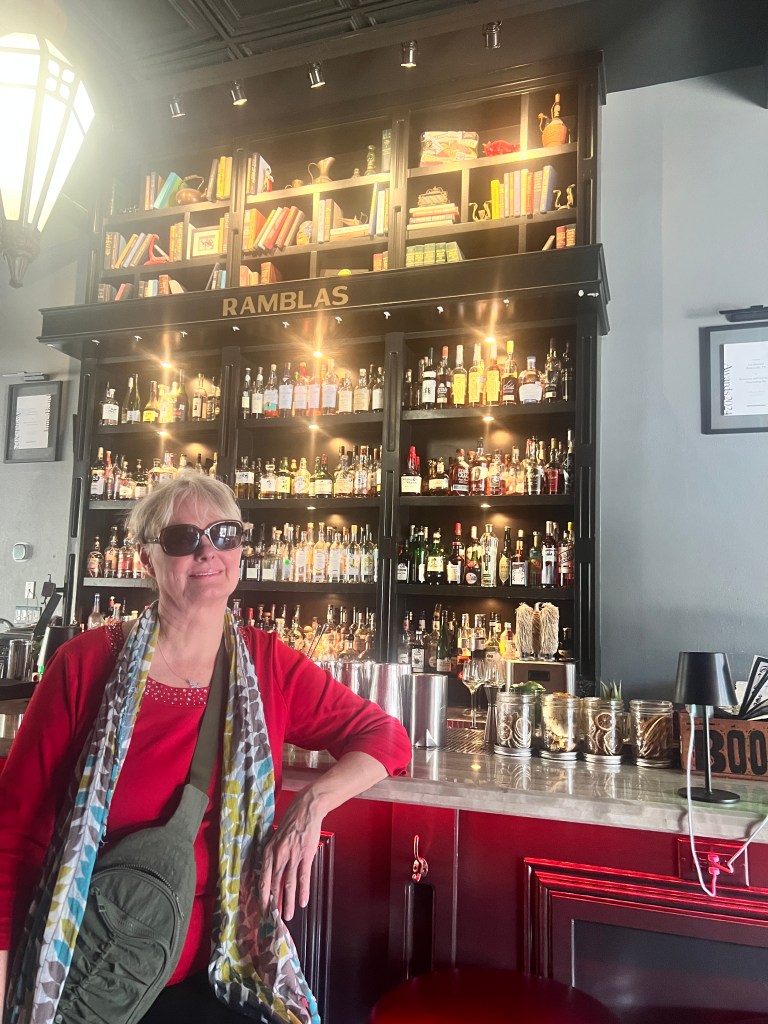
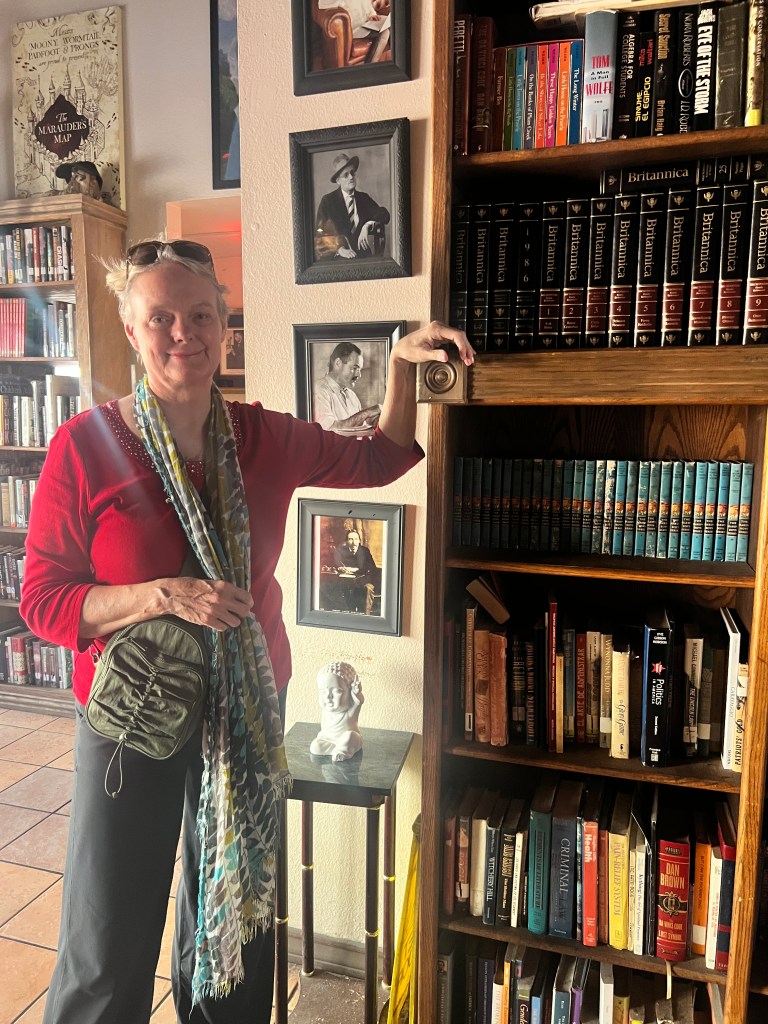
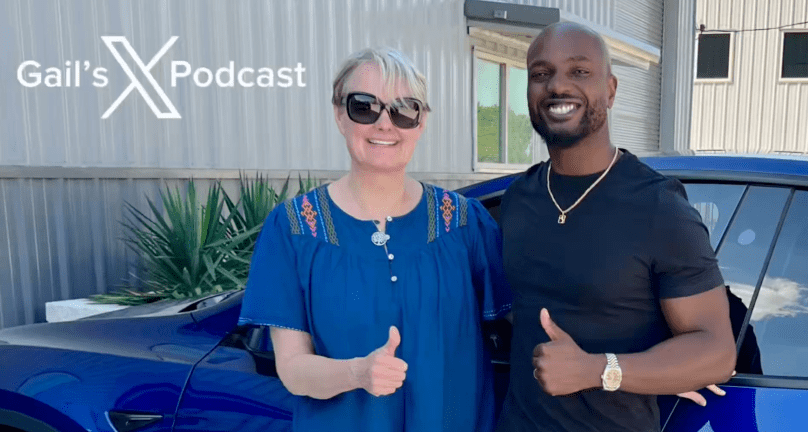
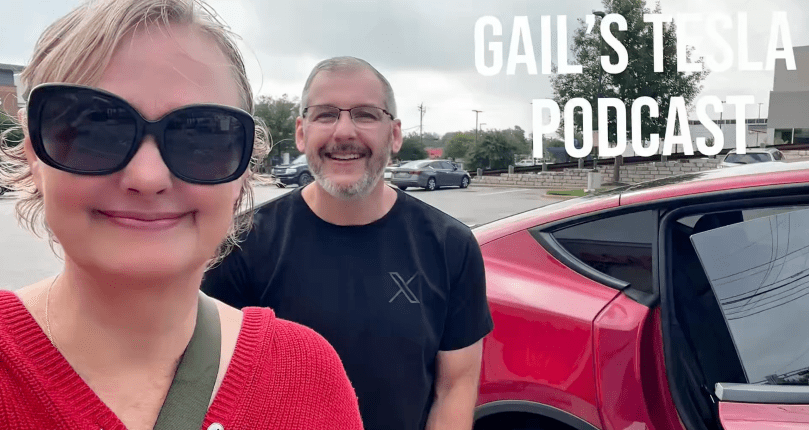
Gail has a bachelor of art in film/radio/tv and a bachelor of science in nursing
She has worked for years caring for all ages of people with many diagnoses in over 5 hospitals and schools around the texas hill country
Originally from north dakota, she is now based in austin and writes about sustainable energy for the website she created ‘What’s up Tesla’ and 'What's up Twitter' and maintains her nursing practice
On March 21, 2026, at the historic Seaholm Power Plant in Austin, Elon Musk unveiled Terafab: a $20–25 billion semiconductor factory, the result of cooperation between Tesla, SpaceX, and xAI. The stated objective: to produce more than one terawatt of computing power per year, equivalent to nearly the entire current electric power capacity of the United States.
Eighty percent of this capacity would be dedicated to orbital data centers, powered by space-based solar energy via SpaceX launchers. The remainder would supply Tesla’s autonomous vehicles, Optimus humanoid robots, and xAI’s artificial intelligence models. Musk summed it up bluntly: “Either we build Terafab, or we won’t have the chips.”
This project marks a new stage in the vertical integration of the entrepreneur’s companies. While no formal rapprochement has been confirmed, the pooling of resources between a publicly traded company (Tesla) and a private enterprise (SpaceX) is fueling speculation about a deeper merger. Analysts such as Gary Black warn of dilution risks for Tesla shareholders and regulatory obstacles.
For Europe, which is investing heavily through the Chips Act to reduce its dependence on Asian foundries, Terafab illustrates both a threat and a strategic question. An unprecedented concentration of computing capacity in private American hands could disrupt global supply chains. Musk, for his part, presents the project as a response to Earth’s energy limits and a means of ensuring that human knowledge can survive beyond the planet.
The challenges remain immense: Tesla and SpaceX have no experience manufacturing 2-nanometer chips, the capital expenditure is colossal, and timelines remain unclear. The market reacted cautiously: Tesla’s share price barely moved.
Whether Terafab succeeds or not, one thing is clear: Musk’s ecosystem is evolving toward unprecedented industrial integration. Europe, which has always believed in large collective adventures—Airbus, Ariane, ITER—is watching this new form of private competition closely. The future will show whether it can respond.
Austin will have an advanced technology fab. TERAFAB location is TBD. Elon confirmed it is far too massive for Giga Texas and would dwarf everything there combined. Multiple sites are being evaluated, as it requires thousands of acres and over 10 GW of power at full scale. https://t.co/RV6Sj2JJuSpic.twitter.com/LPGKXKaatC
Low-Earth orbit is a crazy-busy highway with thousands of satellites moving at insane speeds. One wrong move, and debris could snowball into Kessler syndrome, wrecking orbits for years.
Enter Stargaze, SpaceX’s smart fix announced in late January 2026. They repurposed the tiny star-tracking cameras on 10,116 active Starlink satellites right now (that’s roughly 30,000 sensors total, and yes, they just crossed the 10,000 mark a few days ago) to spot nearby objects.
Result? About 30 million observations every single day. This is way more frequent than ground radars that only check sporadically and take hours to warn about risks.
Stargaze crunches the data in near real-time, spots sneaky maneuvers fast, and spits out collision alerts (Conjunction Data Messages) in minutes instead of hours. Starlink has already dodged hundreds of thousands of potential crashes autonomously; this makes everything way easier and safer.
The killer part: it’s completely free for any satellite operator worldwide. No fees, no paywall. Closed beta started right after the reveal; wider access rolled out this spring, meaning right now in March 2026.
SpaceX isn’t charging because safer orbits benefit everyone (including their own fleet). It’s like one company volunteering to be the air-traffic controller for low Earth orbit and saying, “Come join in and share your flight plans too.”
Tesla is about to break ground on Terafab, its brand-new U.S. semiconductor fab built to crank out AI5 processors and beyond at massive scale. This is classic Elon: full vertical integration to power Robotaxi, Optimus, and the entire autonomous future without waiting on anyone else.
The timing couldn’t be better. Demand for these high-performance AI chips is exploding, and Tesla’s own silicon (co-designed with its software stack) will crush bottlenecks that TSMC and Samsung simply can’t handle long-term. Elon has always said bold bets beat waiting around, and this one is pure genius.
Elon Musk (@elonmusk) – March 14, 2026 “Terafab Project launches in 7 days”
(89K likes, 11K reposts, 85M views — the internet lost its mind, as it should!)
Like him or not, Elon just keeps delivering. While I wait for the groundbreaking photos, I’m slowly recovering from a tough fall that left me unable to walk for now. With physical therapy, ice packs, healing foods, and the occasional slice of artisan apple pie for the soul, I’m making steady progress every day. Nothing says “future is bright” like resilience, recovery, and Tesla scaling AI hardware at warp speed. 🚀🥧
In this episode, I hopped into a Robotaxi and rode straight to SXSW in Austin. The autonomous drive was smooth and confident as we moved through city streets, delivering another strong example of Tesla’s real-world FSD progress in Texas.
At the event I spent time with both Optimus and the Cybercab. The displays looked impressive under bright Texas sunshine during the day and equally striking with starlight views at night. I also recorded rare interviews with David Moss and Josh West — two dedicated voices in the Tesla community who shared their perspectives on autonomy and the future of abundance.
This episode captures practical Robotaxi use, up-close looks at Tesla’s latest robotics and vehicle tech, and thoughtful conversations about where the technology is headed right now.
Watch the full episode here (or tap the X post for the video):
Ep 164 is here! Jump in Robotaxi to go to SXSW and hang with Optimus & Cybercab for this podcast. The best sunshine and starlight views! Plus rare interviews with David Moss & Josh West. In a world racing toward abundance, are you rooting for Tesla? ❀・。・✿・゜✭・。・❀ pic.twitter.com/tIoXtJ5p60
These clips show the steady advancements Elon and the Tesla team continue to deliver every day — from everyday autonomous rides to next-generation robots and vehicles already appearing in public.
Leave a comment
What stood out most to you in this episode? Have you taken a Robotaxi ride yet or seen Optimus in person? Are you excited about Tesla’s push toward abundance? Drop your thoughts or your own Tesla story below.
Tesla Cybercab Robotaxi open door view during Gail’s autonomous ride to SXSW in Austin, Texas. Real-world FSD in action – spacious interior and sunny downtown streets captured in Episode 164 of Gail’s Tesla Podcast.
Tesla CEO Elon Musk just dropped news: the long-awaited next-gen Tesla Roadster will be unveiled “hopefully next month, probably in late April.” He called it a “banger next-level” vehicle, directly tying it back to the groundbreaking 2008 original that launched Tesla’s electric revolution. Far from any reason for doubt, this is a genuinely hopeful moment, a celebration of high performance that fills many with hope to deliver powerful acceleration and speed.
In a wide-ranging January 2026 interview on the Moonshots podcast with Peter Diamandis and Dave Blundin, Elon made the new Roadster vision clear. “Safety is not the main goal,” he explained. If maximum safety is your top priority, this is not the car for you. The Roadster is built for pure fun and thrill instead. He also stressed it won’t be the cheapest vehicle Tesla makes, because that isn’t the objective either. The goal is simple: create the best of the last great human-driven cars, a pure performance machine that puts smiles on faces.
The goal is simple: create the best of the last great human-driven cars, a pure performance machine that puts smiles on faces.
Hints dropped in that conversation (and reinforced by the CEO’s recent posts) are being monitored by many. Base performance is already staggering: approximately 1.9-second 0-60 mph acceleration, a top speed over 250 mph, and impressive range. Add the optional SpaceX cold-gas thruster package and you’re looking at sub-1-second sprints, possible short-hover capability, and driving experiences that feel straight out of science fiction.
The base model is expected to start around $200,000, positioning it as a more accessible luxury sports car compared to traditional hypercars in its class (many of which start well above $300,000–$500,000). The SpaceX thruster upgrade will add a significant premium for those seeking the ultimate extremes, but the core Roadster remains a thrilling entry into next-level electric performance without the ultra-exotic price tag.
NEWS: Tesla has filed new trademark applications for its next-generation Roadster, hinting that the unveil is drawing closer.
The first application includes a stylized “Roadster” wordmark, while the second includes what seems to be the Roadster’s new design.
This isn’t going to be another typical car launch. Sometimes we all need a joyful reminder that electric vehicles can be wildly exciting. The Roadster will give drivers that pure, exhilarating connection to the road while staying zero-emission and sustainable. Late April can’t come soon enough and when the new Roadster arrives, it will quietly show that Tesla’s products are not hype, they may be late, but they always come through.
My first time driving the first gen Roadster – June 2024 at the Tesla Takeover Europe Event 😀 pic.twitter.com/XlsHDmrR0Q
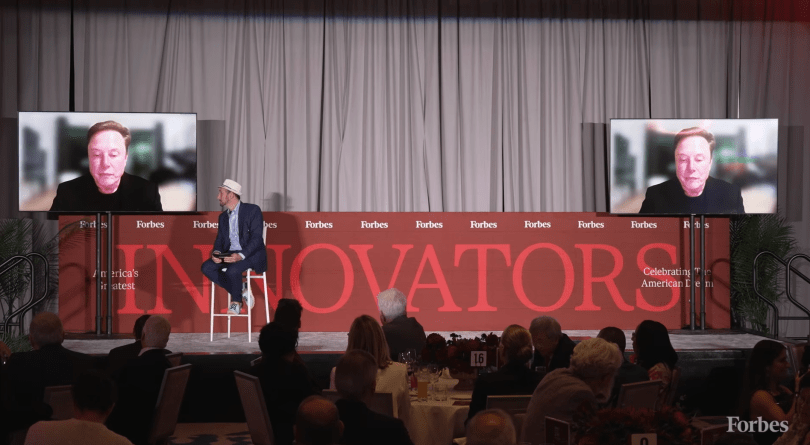
On March 11, 2026, Elon surprised us all with an appearance at the 2026 Abundance Summit in Los Angeles. In this talk with Peter Diamandis, Elon shared his latest thoughts on Grok 4.20, the hard takeoff of AI, Optimus robot timelines, explosive economic growth, and humanity’s path to universal high income and post-scarcity abundance. Here is my full transcript with Key Takeaways at the end!
Peter Diamandis: So, first off, congratulations on the merger of SpaceX and xAI — bold move going to power humanity’s first Dyson swarm. I’m curious: what’s your timeline for launching these data centers and how much bandwidth do you think you can get in the first year? Give us a sense of the speed at which you’re going to be making this happen.
Elon Musk: Yeah, so SpaceX is in the quiet period. I can’t actually tell you things. That would cause problems.
Peter Diamandis: I appreciate that. And I can’t wait to see the speed. You know, we had a conversation here on Monday with Eric Schmidt and with one of the leads from one of the other hyperscalers. I won’t mention who, but I’m curious where you feel we are in recursive self-improvement. Are we there? Do you see Grok doing recursive self-improvement at this point? And what’s the timeline for AGI and ASI?
Elon Musk: Yeah, I think we’ve been in recursive improvement for a while here. If you mean recursive self-improvement without a human in the loop, is that what you mean?
Peter Diamandis: I do. I am on the AI software side.
Elon Musk: I mean humans are gradually getting less and less in the loop on the recursive self-improvement. So you know every successive model is built by the one before it. So that is happening to a large degree but it’s not yet fully automated. It may be there at the end of this year but not later than next year.
Peter Diamandis: And do you see a hard takeoff at that point?
Elon Musk: We’re in the hard takeoff. Right now.
Peter Diamandis: Okay. Yes.
Elon Musk: I mean, at this point I go to sleep there’s some massive AI breakthrough and when I wake up there’s another one.
Peter Diamandis: Yes. Yeah. It’s hard to keep track, honestly. So, it’s a bit of a head spinner. Yeah. Well, I think a lot of the head spinning is happening from you, too.
Elon Musk: Yeah. Well, you know, Grok’s doing pretty well, and in some metrics, by some metrics, it’s the best, for example, it’s the best at predicting things, which, you know, is arguably the best metric for intelligence. The new Grok 4.20 is really good. We’re currently behind on coding. The reason I was a bit late for this was that I was just in a giant sort of all-hands on coding just going through all of the things that need to happen to essentially catch up and exceed our competitors on coding. Which I think we’ll do. I feel we should probably get there by the middle of this year.
I think people don’t quite understand just how much intelligence there will be or you know, just how far it will exceed human intelligence to a degree that is impossible to fully understand.
You can certainly imagine a situation where, let’s say, if let’s say, a million times more energy is harnessed than all of Earth’s current electricity usage, that would still only be roughly a millionth of the sun’s energy output.
So essentially if you increase Earth’s economy by a factor of a million it’s still roughly a trillion. Since we’re a trillionth of the sun’s energy, if you increase Earth’s economy in terms of electricity usage by roughly a million, you will be roughly 1 millionth only of the sun’s energy harnessed.
But what is it? What is an economy or an intelligence using a million times more electricity than all of our civilization. What does it think about or look like or do? It’s going to be something pretty magnificent. The challenge will be even vaguely appreciating that level of intelligence. But it’s safe to say it will solve everything you can possibly think of. Longevity being, surely, one of them!
Peter Diamandis: And, I do enjoy your unrelenting optimism. Haha, you’ve taken it to heart, monetizing hope, which is pretty funny, how you came up with that one!
Elon Musk: It was Grok’s marketing advice to me when you roasted me on the podcast. Haha, Grok was roasting you and saying you should monetize hope! But hey, it is better than monetizing misery, I suppose!
Elon Musk (continuing): AI and robots increase the economic output by so many orders of magnitude, that we cannot possibly comprehend it.
Peter Diamandis: We’re likely in a very short time to become a microscopic minority of intelligence on this planet.
Elon Musk: Yes, not even on this planet, in the solar system. Because you know your best case outcome for Earth for intelligence is roughly 1 billionth of the sun’s energy. That’s your best case outcome, if you generate intelligence only on Earth.
Peter Diamandis: Intercept it, right?
Elon Musk: Yes. Because roughly one half a billionth of the sun’s energy hits Earth and that’s the vast majority of energy that’s out there that we can access. So really the intelligence in the solar system will be many orders of magnitude greater than the intelligence on earth itself.
Peter Diamandis: Can I ask you a question, Elon? How far out can you see? How many years out can you make reasonable predictions?
Elon Musk: It’s hard to predict the path exactly, especially because often things are kind of an S-curve or a series of S-curves where it starts off slow, grows exponentially, hits a linear zone, and then goes logarithmic. That generally has been what I’ve seen with the breakthroughs in AI.
AI, for example… you’ll have some breakthrough. It’ll do an S-curve, and then it looks like it’s just going to go to infinity, but then you hit logarithmic returns until there’s another breakthrough. So progress in AI is just a sort of series of, you know, sort of overlapping S-curves or connected S-curves.
Peter Diamandis: I mean there was a point where you could probably predict out a decade or two decades. What are your thoughts now?
Elon Musk: Yeah. Okay. This is going to sound pretty crazy.
Peter Diamandis: It’s okay. We’ve been talking crazy all week…
Elon Musk: I’m not sure you are a receptive audience to wild prognostications.
Peter Diamandis: Yes.
Elon Musk: Um… (very long pause) I’d say the economy is 10 times the current size in 10 years. Greater than… that’s really saying something.
Peter Diamandis: Okay. Yeah, you had said, triple-digit growth in five plus years from now on, GDP and 10x the economy.
Elon Musk: I feel like that’s a 10x in roughly 10 years. I feel that’s actually a fairly comfortable prediction — obviously if there’s like World War III or something, that could put a kink in those plans. But in the absence of World War III, if current trends continue, I would say the economy will grow 10x in 10 years. And we’ll have a base on the moon! And we’ll have people on Mars.
Peter Diamandis: And we’ll have mass drivers on the moon!
Elon Musk: I think so, I think we’ll have mass drivers on the moon in 10 years.
Peter Diamandis: I love it, Gerard K. O’Neill’s vision being fulfilled. We had four robots on stage here this year at the Abundance Summit. I look forward to Optimus. I’m curious about the Optimus 3 timeline, in particular, when can I buy one or two? When do you expect it to go into commercial sale, or will you be leasing it?
Elon Musk: Well, we’re in the final stages of completion of Optimus 3, which is really going to be by far the most advanced robot in the world. Nothing’s even close. In fact, I haven’t even seen any demos of robots that are as good as Optimus 3, frankly. Maybe they’re out there or secret or something, I don’t know. And I have to make sure I’m saying things that are reasonably public, of course, but we’re streaming this on X, so this is pretty public and accurate. Yeah. I think we’ll start production on Optimus 3 this summer, but very slow at first, like the classic S-curve ramp of manufacturing units versus time. Then probably reach high-volume production around summer next year. And then we’ll have Optimus 4 design next year. I try to release a new improved robot design every year.
Peter Diamandis: When Dave Blundin and I were at the Gigafactory, it was an extraordinary experience! 11.5 million square feet for Tesla, and then I think you said you’re building out 9.5 million square feet for Optimus there as well, which is extraordinary.
Elon Musk: Let’s call it 10 million square feet, round numbers. Yeah, that’ll be quite a new factory design too. Like, it is different from other factories.
Peter Diamandis: How far before we have robots building robots? You’ve automated so much of the Gigafactory already, where humans are playing a smaller role. Will the robots just take over the roles humans have now?
Elon Musk: We still have a lot of humans building things. Um, you know, Tesla direct employees who are building things uh, or like basically people in the factory are either building or managing people who are building, is roughly 100,000. So we have a lot of people. Tesla’s total headcount is around 150k, of which 2/3s are, you know, in the factory in one form or another. And then our suppliers, there’s probably maybe a million or two million people in our suppliers type of thing. So it’s a lot of people. Um, what we do expect is that the output per person at Tesla becomes very very high. So we’re not planning any layoffs or reductions in personnel. In fact, we will increase our headcount. But the output per human at Tesla is going to get nutty high. Like, you can’t even believe it.
Peter Diamandis: When we were together, we discussed sustainable abundance on our podcast, and you reinforced the idea of a coming age of universal high income, which has become a point of discussion beyond UBI. I’m wondering if you have any thoughts on how we get there. And more importantly, we talked about a timeframe of civil unrest, like maybe 2, 3, 4, or 5 years, with probably a lot of COVID-like checks in the interim until we reach demonetization and deflation that leads to UHI. Any more reflections on that? People really need that hope and vision.
Elon Musk: Yeah, to be clear, I don’t think we should be complacent. We do need to be careful because the future has a range of possible outcomes, and not all are great. But at this point I agree with you: it’s likely to be great. Probably 80% likely, maybe more. And I do think we’ll have universal high income. We’re basically just going to issue money to people because the output of goods and services will so far exceed the money supply that you’ll have deflation — deflation is simply the ratio of goods/services output to money supply. If growth of goods and services far outpaces money supply growth, which I predict it will, then deflation happens.
Yes. A lot of people will spin up new companies, compete fiercely, drive prices down, and accelerate deflation faster and faster.
Basically, AI and robots will make so much stuff and provide so many services that they’ll run out of things to do for humans. There’s only so much humans can even express wanting. Go back to my example: at a million times the Earth’s current economy, you’ve long since saturated all human desire. Even at a thousand times, you probably already saturate anything people can think of wanting.
Peter Diamandis: Yeah.
Elon Musk: So do you think the value of money significantly decreases? Will we go post-capitalist? Yeah, I think money stops being relevant at some point. It’s probably something like a Star Trek culture future. And AI down the road won’t use human currency, it’ll just care about power, mass, wattage, and tonnage. Yeah…
Key Takeaways
AI & Intelligence Explosion
We’re already in the “hard takeoff” — breakthroughs are happening overnight while we sleep.
Recursive self-improvement is well underway (humans stepping back gradually); full automation of the AI loop expected by end of 2026 or no later than 2027.
Grok 4.20 already leads in prediction (a top intelligence metric), coding catching up fast — expect it to surpass competitors by mid-2026.
Future intelligence will be orders of magnitude beyond humans, potentially using a million times more energy than today’s civilization… but still just a tiny fraction of the sun’s output.
Economy & Abundance
10× economic growth in the next 10 years (to ~2036), with triple-digit GDP growth possible in 5+ years (assuming no WW3).
AI + robots will drive deflation so extreme we get Universal High Income (UHI) as an interim step.
Eventually a Star Trek-style post-scarcity world where money becomes irrelevant — robots/AI produce far more than humans can consume, saturating all desires. “Basically, AI and robots will make so much stuff… they’ll run out of things to do for humans.”
Robotics & Tesla
Optimus 3 is in final stages (most advanced robot on the planet right now). Production starts summer 2026 (slow ramp), high-volume by summer 2027. Optimus 4 design coming next year with yearly upgrades.
New 10-million-square-foot factory just for Optimus. Huge productivity boost per person — no mass layoffs expected (Tesla headcount ~150k + suppliers).
Space & Long-Term Vision
SpaceX + xAI merger path toward humanity’s first Dyson swarm (details limited by quiet period).
Moon base + people on Mars in ~10 years; mass drivers on the Moon too.
Overall intelligence will scale to solar-system level, solving everything from longevity to energy limits. 80%+ chance of a truly great future.
Elon’s standout quotes we noted
“We’re in the hard takeoff. Right now.”
“The economy is 10 times the current size in 10 years.”
“AI and robots increase the economic output by so many orders of magnitude that we cannot possibly comprehend it.”
My Take
Other AI companies are motivated by profit, but this is not Elon’s ambition. He’s already the wealthiest man on Earth — no one comes close. But also, no one comes close to putting into action the very things that will preserve consciousness.
Watch Elon Musk appearance at the 2026 Abundance Summit in Los Angeles on X by Steven Mark Ryan.
Elon Musk’s Epic New Interview Today (AI & Robots)
My heart is full after putting together Episode 163: officially titled “If You’re Not on FSD What Are You Doing!?”
This one is packed with real-life Tesla magic happening right now in Austin, Texas. I took you along for the ride (literally!) as we spotted coal miners in Austin, cruised through downtown, and enjoyed three smooth, confident, unsupervised Robotaxi rides that show exactly why the future of abundance is already here.
From heading out to catch a Robotaxi (“check it out we’re heading to go catch a robo taxi i hope”), soaking in those pretty Texas roads, napping in the back seat like it’s the most natural thing in the world, to navigating busy city streets with zero interventions — the autonomy is buttery smooth and getting better every day. You’ll see thoughtful little touches too, like the open-the-trunk button right in the app (Tesla really does think of everything). And yes, we even had a moment wondering why certain features weren’t showing up yet on the screen — classic real-world FSD adventure!
These aren’t just clips. They’re your moments in a world of coming abundance ❀・🎶・゜✭・。・✿・。・゜✭・。・❀ — everyday freedom, joy, and proof that if you’re not on FSD yet… what are you doing!? No driver, no stress, just Tesla delivering safe, fun, life-changing rides.
Watch the full episode here (or tap the X post for the video):
Gail’s Tesla Podcast Ep 163: If you’re not on FSD what are you doing!? Coal miners in Austin. Downtown and 3 Robotaxi rides Your moments in a world of coming abundance ❀・🎶・゜✭・。・✿・。・゜✭・。・❀ pic.twitter.com/x6ddX1ThNN
These clips are glimpses of the abundance future Elon and the Tesla team are building every single day. From family adventures to downtown errands, Robotaxi (and FSD) is already making life easier, safer, and way more fun.
Leave a comment
What did you think of the episode? Are you on FSD yet? Have you taken a Robotaxi ride? Drop your favorite moment or your own Tesla story below.
Tesla and xAI team up on a project that watches screens, clicks mice, and thinks smart and will potentially take over repetitive office tasks without fancy servers.
Elon Musk posted early this morning (March 11, 2026) that Macrohard, also called Digital Optimus, is now a joint xAI-Tesla project, tied to Tesla’s investment in xAI.
In his own words on X:
“Macrohard or Digital Optimus is a joint xAI-Tesla project, coming as part of Tesla’s investment agreement with xAI.
Grok is the master conductor/navigator with deep understanding of the world to direct digital Optimus, which is processing and actioning the past 5 secs of real-time computer screen video and keyboard/mouse actions. Grok is like a much more advanced and sophisticated version of turn-by-turn navigation software.
You can think of it as Digital Optimus AI being System 1 (instinctive part of the mind) and Grok being System 2. (thinking part of the mind).
This will run very competitively on the super low cost Tesla AI4 ($650) paired with relatively frugal use of the much more expensive xAI Nvidia hardware. And it will be the only real-time smart AI system. This is a big deal.
In principle, it is capable of emulating the function of entire companies. That is why the program is called MACROHARD, a funny reference to Microsoft. No other company can yet do this.”
In non-tech speak: Elon basically said, “We’re building AI employees that can sit at a computer, look at the screen, use the mouse/keyboard, think smart, and handle big chunks of white-collar work—and we can do it affordably on hardware that’s already being mass-produced for cars.”
It’s not out yet for everyone to buy or use. This is fresh news today, and it is the next step in his vision where AI takes over boring/repetitive desk jobs so people can focus on more creative or human stuff.
What This Means for Customer Service, HR, or Any Desk Job
Picture this: You’re in customer support. A ticket comes in. It is the same question as yesterday. Instead of typing the same replies over and over, an AI watches the screen, pulls up the customer’s info, fills out forms, sends standard responses, escalates only when needed, and logs everything. All in real time, like a coworker who’s always alert.
Or in HR: Screening resumes, scheduling interviews, updating records, validating job eligibility, processing time off. These are tasks that eat hours and could get handled automatically, freeing you for the people parts like coaching employees or handling sensitive talks.
The “hands” (Digital Optimus) watch the last 5 seconds of your screen video and your clicks/typing, then act fast on simple steps. Grok (the brain) understands the bigger picture, like company rules, customer history, or what “urgent” really means. Grok guides every move.
It runs on cheap Tesla hardware ($650 AI4 module, the same tech in cars for self-driving) plus a bit of cloud power from xAI. No giant expensive servers required for each user. That’s why Elon says it’s a big deal, it is why he says no one else does real-time screen AI this cheaply.
Does It Use Cameras?
Yes, the system processes “real-time computer screen video,” meaning it captures whatever is displayed on your monitor (like a screenshot stream every few moments). It doesn’t need an extra physical webcam pointed at you or the room; it works purely from the digital screen output, keyboard inputs, and mouse movements. No face-scanning or office surveillance. Just watching the computer itself to understand and act on what’s happening.
More Growth Ahead
This could quietly become huge for offices everywhere. Repetitive tasks in support, admin, data entry, or reporting get automated, boosting productivity without layoffs. This will give more time for meaningful work.
With Tesla building the hardware in Austin at Giga Texas and xAI pushing the smarts, expect demos and rollouts to pick up speed. For folks in customer service or HR, this might soon feel like having an extra team member who’s never late and doesn’t need breaks.
My heart is full after putting together Episode 162 — officially titled “Robotaxi We Love You!”
This one is a celebration of real, unsupervised Robotaxi rides happening right now in Texas. I’ve pulled together 10 minutes of pure Robotaxi magic captured from June 2025 all the way to the present, smooth, confident, life-changing autonomy that just keeps getting better. No driver, no interventions, just Tesla delivering freedom and joy ride after ride.
Here’s the breakdown of the 8 segments so you can jump to your favorites (video is linked in the X post below!):
0:00 – Part 1: Intro where I explain the journey — 10 minutes of Robotaxi footage spanning from June 2025 to now, showing how far we’ve come with unsupervised rides!
2:09 – Part 2: Riding with the amazing LilHumanBigImpact in a Robotaxi, then heading over to Giga Texas to soak in the majestic sight of those three flags waving proudly: Tesla, Texas, and USA! 🇺🇸🤖
2:36 – Part 3: Two Robotaxis rolling together — plus one brilliantly avoiding a bird mid-flight. Talk about awareness and grace! 🐦
5:10 – Part 4: Sweet moment with Captain Eli taking his very first Robotaxi ride — the excitement on his face says it all!
6:10 – Part 5: Owen Sparks having fun pretending to “steal” a purse from the trunk of a Robotaxi — hilarious and totally wholesome Tesla kid energy!
7:32 – Part 6: Back with LilHumanBigImpact, this time she’s ordering a Robotaxi herself — watching the next generation take control of the future is everything!
9:02 – Part 7: A gorgeous, very very old BMW 2002 rolls by — I adore classic cars like this one too, what a beautiful contrast to the cutting-edge Robotaxis around it!
9:25 – Part 8: Cybertruck nailing parallel parking in Austin, then cruising in San Francisco while we spot the vibrant flower market — that little mini Cybertruck sighting made my day! 🌸🚜
Watch the full episode here (or tap the X post for the video):
Gail’s TESLA Podcast Ep. 162: Robotaxi We Love You! 8-Segment Rides in Texas Plus mini Cybertruck spot in SF 🥰 timestamps for reference:⁰0:00 Part 1 and 2:09 Part 2⁰2:36 Part 3 and 5:10 Part 4⁰6:10 Part 5 and 7:32 Part 6⁰9:02 Part 7 plus 9:25 Part 8 pic.twitter.com/jIXn4ROrDy
These clips aren’t just rides; they’re glimpses of the abundance future Elon and the Tesla team are building every single day. From family adventures to everyday magic, Robotaxi is already here making life easier, safer, and way more fun.
In the rolling vineyards of Cernay-lès-Reims, where the ancient soil has nourished Chardonnay, Pinot Noir, and Pinot Meunier for centuries, a new kind of guardian has arrived.
France’s largest battery storage system: 240 megawatts of power and 480 megawatt-hours of capacity… is coming online, not through government decree or taxpayer largesse, but through the visionary engineering of Tesla and the private partnership with TagEnergy.
As the company posted on X:
"Megapack + Autobidder will soon be online in the east of France! The 240 MW / 480 MWh Cernay-lès-Reims site is being developed by TagEnergy and will be one of the largest batteries in France. Tesla is providing full scope Engineering, Procurement and Construction (EPC) and the site will be operated using Tesla's Autobidder trading platform."
Megapack + Autobidder will soon be online in the east of France!
The 240 MW / 480 MWh Cernay-lès-Reims site is being developed by TagEnergy and will be one of the largest batteries in France
Tesla is providing full scope Engineering, Procurement and Construction (EPC) and the… pic.twitter.com/8VAjE4PqhN
This is more than infrastructure. It is philanthropy in its purest modern form. Elon Musk’s technology offered freely to humanity, stabilizing the grid with intelligence rather than ideology.
The Megapacks charge from France’s own decarbonized abundance: steady nuclear power at night, wind from the north and Grand Est, solar from the south. Carefully monitored and maintained Tesla Megapacks store surplus power cleanly, release it precisely when needed, and protect the delicate alchemy of Champagne’s cellars and fermentations from the slightest interruption.
French wine and cheese have long stood as unmatched treasures of Western civilization with velvety Bordeaux, bold Roquefort, creamy Camembert, and crystalline Chablis. These precious treasures are imitated worldwide yet never equaled.
Tesla Autobidder
Now Tesla’s Autobidder AI platform stands as their silent sentinel, ensuring that this irreplaceable heritage endures through the uncertainties of a changing climate.
In an age of grand promises, Elon continues to deliver quietly a transformative reality.
The Cernay-lès-Reims project is not merely a battery. It is a gift: proof that bold private innovation can safeguard both the planet and the most elegant expressions of human culture.