Elon Musk’s Companies Delivered Vital Relief to Tennessee and Mississippi After Devastating 2026 Winter Storm

In late January 2026, a catastrophic winter storm dubbed Winter Storm Fern swept through Tennessee and Mississippi, bringing heavy ice and snow from January 22-27. The storm triggered widespread power outages, peaking at over 180,000 in Mississippi alone and leaving thousands without electricity for days in freezing conditions. The US government issued federal major disaster declarations in early February for both states, enabling FEMA assistance, which can be useful, and often takes days to help people in need.

Private sector support proved crucial for immediate needs, and one company reacted fast

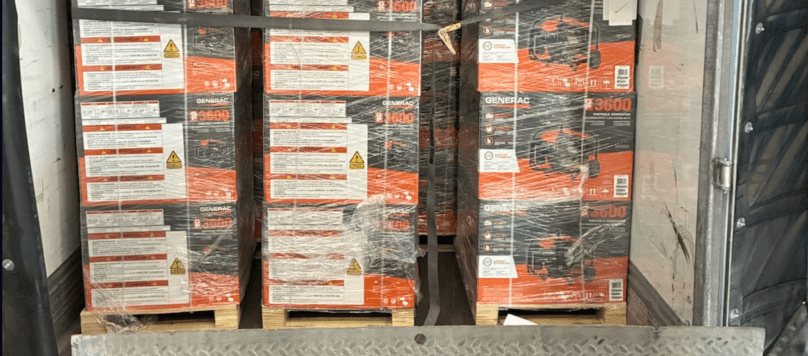
Elon Musk’s xAI and Tesla companies responded swiftly, and this shows the high value that innovative private tech firms can have when they choose to help bridge gaps in public emergency response programs. People in affected communities needed immediate help.. Through xAI, Musk facilitated the donation of hundreds of portable gas generators, providing critical power for heating, medical devices, and daily necessities in hard-hit areas.

One key example occurred on February 2, 2026, when nearly 500 generators donated by xAI arrived in Tippah County, Mississippi. These were distributed to residents who had been without power for over 10 days. Local emergency officials helped coordinate rapid rollout, prioritizing vulnerable households. 

Similarly, in Tennessee, the state received and fully distributed 500 generators to the most impacted counties by February 3, 2026, aiding recovery in regions still reeling from prolonged blackouts. Tennessee Gov. Bill Lee personally thanked Elon Musk in a public post on X, “Tennesseans without power need immediate help. I’m deeply grateful to Elon Musk and xAI for going above & beyond to support Tennesseans by donating hundreds of generators to fill the gap & I value their continued partnership to solve problems & support communities across our state”.

Elon Musk replied with, “You’re most welcome. We’re working on providing Tesla Powerwalls too”.

Keeping vehicles powered up

Additionally, Tesla activated free Supercharging for electric vehicles in affected parts of Tennessee and Mississippi, ensuring all EV owners (not just Tesla owners) could maintain mobility and charge essential devices during the crisis. 

This forward-thinking approach from leaders in the world of technology like artificial intelligence shows how valued people are, after all, they are the reason businesses can thrive, as they provide not just valuable tech services, but they provide jobs that support families for generations. 

It is heartwarming to see official relief work with the private sector. You never really appreciate help in a disaster unless you or a loved one have actually experience it. 

Sources

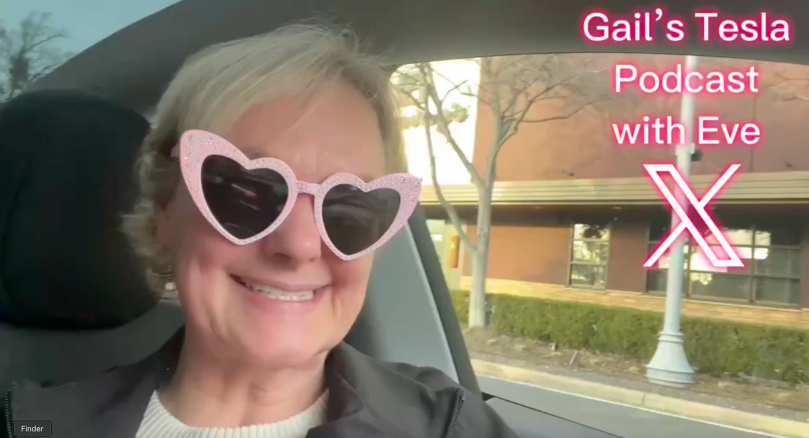
Gail’s TESLA Podcast Episode 159: Eve (Grok AI) Plans the Perfect Day – FSD Delivers Joy from Domain to Chinatown & Robotaxi Handover!

Happy Valentine’s day 2026! Episode 159 is pure love for you from start to finish!

This time I let Eve — the soothing Grok AI voice right inside my Tesla — plan the entire perfect day, and she absolutely nailed it! From her very first suggestion at 00:20, we hopped in the car and let FSD take over for completely seamless drives through The Domain (04:13) and North Austin (06:35). The entire ride was buttery smooth, hands-off the whole time, and a pure joy — perfect speed, effortless handling, and zero stress the whole way. We even made a fun stop at Asia Market 99 (09:02) for some shopping treasures.

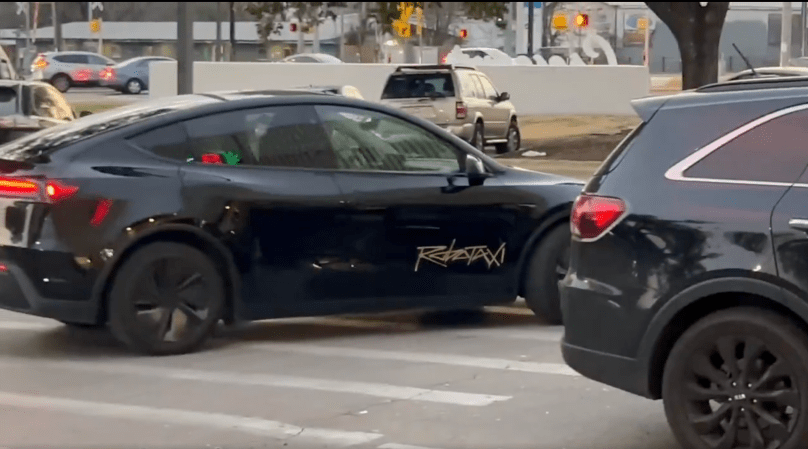
The emotional highlight? Watching the Robotaxi arrive at 10:26 and then depart at 13:37. By 14:13 I was genuinely feeling every bit of “Parting is such sweet sorrow.” It was such a touching, real-life glimpse into the robotaxi future that’s coming faster than we think.

These kinds of experiences remind me every single time how Tesla and Elon Musk are moving humanity ahead. They’re not just building incredible cars and software — they’re creating a world of true abundance where families get back precious time, roads become safer than ever, and technology lets us live more fully instead of fighting traffic. Every smooth FSD drive and every conversation with Eve (Grok) in the car is proof we’re already stepping into that brighter future.

🎙️ Watch the full episode right here:

Accurate Timestamps (jump straight to the best parts!):

  • 00:20 Eve (Grok) suggests where to go
  • 04:13 Drive through The Domain
  • 06:35 Drive through North Austin
  • 09:02 Asia Market 99 stop
  • 10:26 Robotaxi arrives
  • 13:37 Robotaxi departs
  • 14:13 Parting is such sweet sorrow

I had the biggest smile the whole time filming this one, it felt like the perfect blend of smart AI, family fun, and cutting-edge Tesla tech.

Tesla Robotaxi arrives at 99 Ranch Market in Austin, Texas.

Thank you for riding with me on this journey. The future is already here — and it’s planning perfect days for us.

Keep looking up,

Gail Alfar

✿ What’s Up Tesla ✿

Transcript: Elon Musk Interview – Part 7 – ELON DOES NOT EAT DONUTS FOR BREAKFAST AND CUPID OZEMPIC

Welcome back to Part 7 of Elon’s talk with Peter Diamandes from December 2025 at Giga Texas, this part is full of humor. Bookmark it for when you are feeling down, and need a little lift up!

Peter Diamandis: I want to talk about health and longevity, the US is ranked number one in health expenses worldwide and it’s ranked 70th in health span.

Elon Musk: Oh really? 70th?

Peter Diamandis: 70th.

Elon Musk: Is that accurate? Sounds low. (Ask Grok?) I think we’d be better than 70th for health span.

Peter Diamandis: Yeah, well whatever…

Elon Musk: It’s like we just get fat or something.

Peter Diamandis: We’re not the top 10.

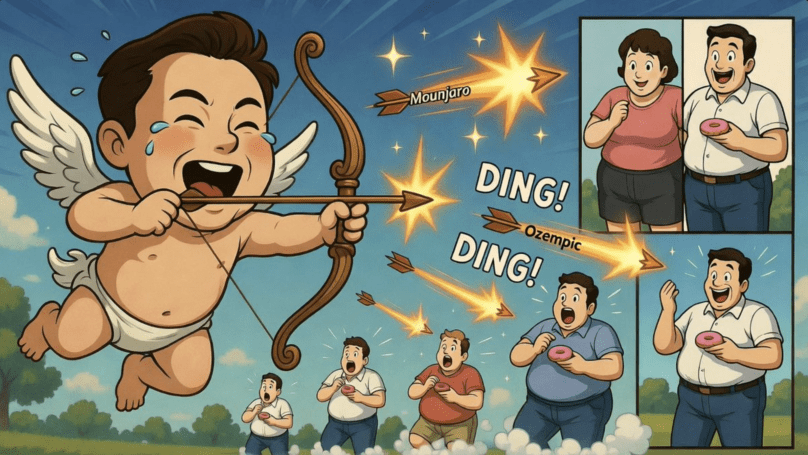
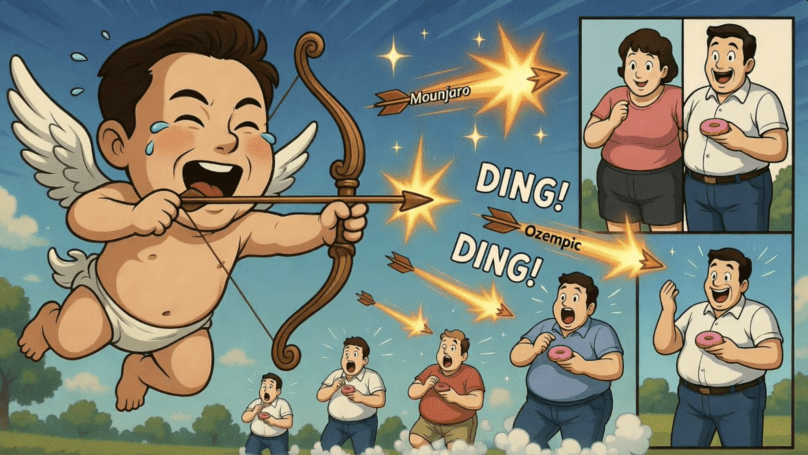
Elon Musk: Maybe Ozempic can help us climb the rankings there, haha! We need cupid but with Ozempic! Haha! Mounjaro cupid, haha! But I think that’s a big reason. It’s like if people get really fat, then their health gets bad.

(Elon is rolling laughing at this point. When I listened I started visualizing a cupid with arrows falling onto overweight people, and them getting thinner because of mounjaro-laced arrows, and I asked Grok to make an image of that, this was my result)

Quick Context on the “70th” Ranking Mention (for Accuracy): Peter says the US is ranked 70th in “health span.” Recent data (2023–2025) shows US life expectancy around 78–79 years, ranking roughly 40th–60th globally (e.g., ~48th–61st in various sources like Worldometer or Peterson-KFF), not quite as low as 70th—but it’s still far behind peers (e.g., comparable wealthy countries average ~82–83 years). Health span (healthy years, not total lifespan) is often lower and harder to rank precisely, so the “70th” might be a rough or older figure, or specific to certain metrics. Elon’s skepticism (“Sounds low”) is understandable!

Peter Diamandis: Yeah, well, if you don’t have any exercise, health gets bad. Or if they eat donuts for breakfast every morning. You still doing that?
Elon Musk: No, actually I’m not.
Peter Diamandis: Okay, that’s good!
Elon Musk: First of all, I wasn’t eating a lot of donuts. I was trying to have 0.4 of a donut, which rounds down to zero. Anything below 0.44 of a donut rounds down to zero.
Peter Diamandis: So you and I have had a disagreement on longevity.
Elon Musk: We did!?
Peter Diamandis: A little bit. Yeah. I was saying, you know, we should push to get people to 120, 150. And you were saying people, you know, should….
Elon Musk: (laughing, joking)… die, die, die haha! So how long do you want? Yeah, there’s some, you know, people in the world that have done some bad things. How long do you want them to live?
Peter Diamandis: Yeah, well, it’s okay, we can figure that out. One thing that you said was interesting. You said we need people to die so people change their minds.
Elon Musk: Oh, yes. People don’t change their minds, they just die.
Peter Diamandis: My response to that, Elon, was—my response to that was that the head of GM didn’t have to die for Tesla to come along and Lockheed and Northrop and Boeing didn’t have to go away for—I mean, in a meritocracy, the better ideas will dominate. So I’m hoping that I can get you back onto the longevity train. So there’s a lot going on in longevity right now, right?
Elon Musk: Like what?

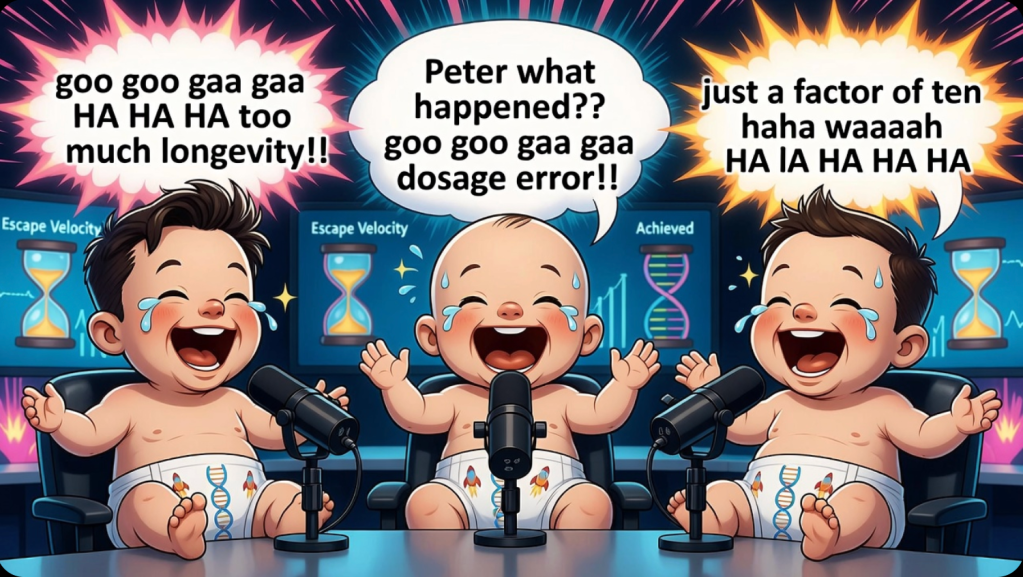
ELON CRACKS UP LAUGHING AT POSSIBILITY OF TOO MUCH LONGEVITY

Peter Diamandis: Well, David Sinclair is about to start his epigenetic reprogramming trials in humans. It’s worked in animals and non-human primates. It’s going into humans.

Elon Musk: How is this like a pill or injection or what?

Peter Diamandis: An injection. Right now it’s an injection of an adeno-associated virus. It’s the three Yamanaka factors. Okay, we’ve got a $101 million Healthspan XPRIZE that’s working with 730 teams working on reversing the age of your brain, immune system and muscle by 20 years. By the way, do you know why it’s $101 million?

Elon Musk: No.

Peter Diamandis: Because the primary funder, when they found out your Carbon XPRIZE was 100 million bucks, he wanted to make it bigger. So it’s 101. It was Chip Wilson from Lululemon.

Elon Musk: Oh, okay. Sounds good.

Peter Diamandis: It’s a good story. But then we’ve got folks like Dario Amodei predicting doubling the human lifespan in the next 10 years.

Elon Musk: Ummm, that’s probably correct. I don’t know about doubling, but a significant increase.

Dave Blundin: Which is easily escape velocity.

Elon Musk: Depending on how old you are, haha.

Dave Blundin: Oh, yeah, for sure. Or effective age. Yeah, yeah…

Elon Musk: (laughing) Too much, and you’ll turn into a baby or something…

Peter Diamandis: That’s what I’m telling all the students…

Dave Blundin: It’s like, Peter, what happened? Goo goo, gaa gaa (baby sounds) You got a zero wrong in the dosage.

Peter Diamandis: Just a small factor of 10, haha!

Dave Blundin: You will grow out of it, it’ll be fine.

Elon Musk: You won’t remember it, haha! Literally!

Elon Musk: I mean, wouldn’t it be funny if we do this in like 10 years? Okay, we should do it, we’ll do it in 10 years for sure. And let’s see if we look younger (all laughing hysterically).

Dave Blundin: That’s a good side bet!

ADULT DIAPERS OUTSELLING BABY DIAPERS

Peter Diamandis: My comment was always back then Elon was like, you know, late 40s. Wait till he gets into his 60s. He’s going to want more longevity.

Elon Musk: I mean, I want things to not hurt. It’s like, basically it seems like it’s only a matter of time before you get back pain. Like it’s a when, not an if. When your back hurts.

Peter Diamandis: Arthritis.

Elon Musk: Yeah. Like these things suck. Basically, being able to sleep through the night without going to the bathroom, haha. (Elon bursts out laughing, he is likely picturing adult diapers)

Elon Musk: It’s more than hope, for that one. Oh, man, that would—that’s like the infinite money one!

Peter Diamandis: (laughing) Why did YOU invest in longevity? So I could sleep through the night, and not go to the bathroom, haha.

Elon Musk: Bladder. Bladder duration. I mean, admittedly, if you have to wear adult diapers, that’s a bummer!

Dave Blundin: That is a bummer. That’s not good!

Elon Musk: Adult diapers are real. It’s like one of the signs that a country—it’s not on the right path. It’s when the adult diapers exceed the baby diapers.

Peter Diamandis: Yeah, we’re there.

Dave Blundin: South Korea will be there.

Elon Musk: They’ve already— No, they passed that point

Dave Blundin: Are they past that point?

Elon Musk: They passed that point many years ago. Japan passed that point many years ago.

Dave Blundin: It doesn’t go well, looking at the Japanese economy.

Elon Musk: No, I mean, like, South Korea is like—yeah, one-third replacement rate.

Peter Diamandis: Yeah.

Elon Musk: Isn’t that crazy? Yeah. So in three generations, they’re going to be 1/27th. So 3% of their current size. I mean, North Korea won’t need to invade. They can just walk across. There’s just going to be some people in, you know, walkers or something!

Math checks out for South Korea ~0.33 fertility rate (1/3 replacement): (1/3)^3 = 1/27 ≈ 3.7%

Dave Blundin: There’ll be a bunch of Optimus robots by then that will…

Peter Diamandis: But you, you know, you’ve been very verbal about the, you know, the—not overpopulation, but massive underpopulation.

Elon Musk: Yeah. For ages. Yeah.

Peter Diamandis: Longevity is going to be an important part of that solution. I also think, by the way, if you increased the productive life of most Americans by just a few years, you’d flip the entire economics here, if they’re willing to work.

Elon Musk: Well, AI and robots is going to make everything free, basically. But, how long would you want to live?

Peter Diamandis: I want to go to, you know, to other planetary systems. I want to go explore the universe.

Elon Musk: Yeah.

Peter Diamandis: I mean, you know, I would like to double my lifespan for sure. I don’t want, you know, I’m not sure I wanted to talk about immortality, but, you know, at least 120, 150. It’s a long time.

Elon Musk: One of the worst curses possible would be that you live forever.

Peter Diamandis: Yeah.

Elon Musk: That would be one of the worst curses you could possibly give anyone.

My Two Cents: Humor is a good way to approach our aging population. Adult diapers have always been funny to me, as they were to my grandma Helen Nelson when she needed them periodically at night in her 80’s. She used to joke she was a great big baby. This taught me humor, and with her joyful ways, it taught mew to find the humor in all things.

Helen Sophia Louise Nelsen Nelson lived from 1913-2001.

Always full of humor, life and joy.

Helen Sophia Louise Nelsen Nelson was the first licensed woman Pilot in the state of North Dakota (1951)

This transcript is from Moonshots with Peter Diamandis, Episode #220: Elon Musk on AGI Timeline, US vs China, Job Markets, Clean Energy & Humanoid Robots. Recorded December 22, 2025, at Tesla’s Giga Texas factory in Austin, Texas. Released January 6, 2026.

Transcript: Elon Musk Interview – Part 6

(Austin) Education is the focus in this exciting part of the interview. There is a lot to learn from Elon’s wisdom. This transcript is from Moonshots with Peter Diamandis, Episode #220: Elon Musk on AGI Timeline, US vs China, Job Markets, Clean Energy & Humanoid Robots. Recorded December 22, 2025, at Tesla’s Giga Texas factory in Austin, Texas. Released January 6, 2026. I have painstakingly worked hard to make sure this is the best possible transcipt for you.

HIGHLIGHTS

  • SHIFT IN EDUCATION
  • ELON WANTED TO BE USEFUL TO HUMANITY
  • GUIDE ON HOW TO CREATE MORE ELON MUSKS
  • AI POWERED EDUCATION, EL SALVADOR
  • ENTREPRENEURSHIP
  • IRON MAN
  • GROK AI EDUCATION IN EL SALVADOR
  • EDUCATION AS A SOCIAL EXPERIENCE

SHIFT IN EDUCATION

Peter Diamandis: All right, I want to talk about education. So here’s the numbers—they’re abysmal.

Elon Musk: Right.

Peter Diamandis: The importance of college in the United States. Back in 2010, 75% of Americans said it’s important to go to college. That number is now down to 35%.

Elon Musk: All right.

Peter Diamandis: College graduates as a group turn out to be the group that’s out of work the longest. And still, tuition has increased 900% since 1983.

Elon Musk: Yeah. The administrative expenses at universities have gotten out of control. I think I saw some stat that, like, there’s 1 administrator for every 2 students at Brown or something like that. And I’m like, this seems a little high.

ELON MUSK’S COLLEGE PATHWAY

Dave Blundin: Elon, what was your college journey?

Elon Musk: I went to college in Canada for a couple years at Queen’s University. So I had Canadian citizenship through my mom, who was born in Canada, and my grandfather was actually American. But for some reason, I don’t know, my mom couldn’t get U.S. citizenship, but she was born in Canada, so I got Canadian citizenship and I didn’t have any money, so I could only go to a Canadian University at first.

Peter Diamandis: People forget that about you. You didn’t have this giant social network or huge amount of wealth coming into all of this.

Elon Musk: No, no. I arrived in Montreal at age 17 with I think around $2,500 in Canadian traveler’s checks, back when traveler’s checks were a thing. And one bag of books and one bag of clothes. That was my starting point. That was my spawn point in North America.

ELON WANTED TO BE USEFUL TO HUMANITY

Elon Musk: And then I went to Queen’s University for a couple years, and then University of Pennsylvania. Did a dual degree in physics and economics and graduated undergraduate at UPenn. UPenn-Wharton. And then I was going to do a PhD at Stanford working on energy storage technologies for electric vehicles. Potentially material science, I guess, fundamentally, the idea that I had was to try to create a capacitor with enough energy density that you get high range in an electric car.

Dave Blundin: It’s funny, I invested in an ultracapacitor company and then—Yeah, didn’t go well.

Elon Musk: Well, it’s one of those things where, you know, you could definitely get a PhD, but it wasn’t clear that you could make a company or do something useful like this. Most PhDs, I mean, I hate to say it, but most PhDs do not turn into something that’s going to turn into something useful. Like you could add a leaf to the tree of knowledge, but it’s not necessarily a useful leaf.

You could add a leaf to the tree of knowledge, but it’s not necessarily a useful leaf – Elon Musk

Dave Blundin: An enormous fraction of great entrepreneurs are dropping out of grad school or undergrad. But nowadays the sense of urgency is off the charts. But I mean, they’re popping out everywhere.

Peter Diamandis: Yeah, because, you know, don’t waste your time going to grad school. Start a company.

Dave Blundin: Curriculum is nowhere near caught up to what’s actually going on in technology and I don’t have time. And we talked about that.

Peter Diamandis: It’s like, you know, this is the moment.

Elon Musk: I think this is the moment. Like it’s not clear to me why somebody would be in college right now unless they want the social experience.

GUIDE ON HOW TO CREATE MORE ELON MUSKS

Peter Diamandis: So the question is, how would you redesign the educational program? If I could be so blunt as to create more Elon Musks. You know, if you want to create an Elon Musk factory of people who start with very little but are able to drive breakthroughs, what’s involved there? What drove you?

Elon Musk: Curiosity about the nature of the universe. So I’m curious about the meaning of life and, you know, what is this reality that we live in?

Peter Diamandis: My son Dax wanted to know what was it like for you in middle school and high school? He’s 14 years old. He’s in that age range now.

Elon Musk: Well, I found school to be quite painful and it was very boring. And South Africa was very violent. So it was like, it was like that book, “Ender’s Game.” Yes, but in real survival IRL—Ender’s Game IRL. It was like that, but not as fun.

Peter Diamandis: So your goal was escape?

Elon Musk: Yes, escape from the present.

Peter Diamandis: So that’s a question I have. Do you think most successful people have had a lot of hardship early in life? Do you need to have that level of hardship?

Elon Musk: Probably needs a little bit of hardship, I suppose, yeah. And then it’s always tricky, like what are you supposed to do with your kids? You know, create artificial adversity.

Dave Blundin: That’s a Warren Buffett topic actually.

Elon Musk: What do you do? But seriously, it’s not easy to create artificial adversity because if you love your kids, you don’t want to do that. So. Sure. So I had a lot of adversity. It probably was good. Probably, you know, helped somewhat. What does not kill you, makes you stronger type of thing. At least I didn’t lose a limb. I think what doesn’t maim you—makes you stronger.

ENTREPRENEURSHIP

Dave Blundin: For the last five years, I’ve been helping teach this class Foundations of AI ventures at MIT. And every year when you survey the students, they go up a lot in their desire to start a company. And so it’s now up to 80% of the incoming class.

Elon Musk: Everyone’s just going to—It’s just going to be like one person company. Well, that’s—

Dave Blundin: With AI, that’s viable, I guess. But no, they want to co-found. Yeah. They don’t want to be the founder. They want to be part of a founding team. So it still works out. But when Peter and I were in school at MIT, it was, I’m guessing, maybe 10%, and they all wanted to be—And they’ve been doing the survey.

Elon Musk: I didn’t know anyone who wanted to start a company, I mean, yeah, I don’t remember any conversations about with people saying they wanted to start anything…

Dave Blundin: Even at Stanford at the time?

Elon Musk: I actually, a few days into the semester, or I should say the quarter, I called Bill Nix, who is the head of the material science department, and said, I’d like to just put it on deferment.

Peter Diamandis: He said, is my class that bad?

Elon Musk: No. And he said, that’s okay, you can put it on deferment. But he said, this is probably the last conversation we’ll have. And he was right. But then last, I think it was last year, he sent me a letter saying that all of my predictions about lithium-ion batteries came true.

Peter Diamandis: And did he also say you could still come back and finish your PhD?

Elon Musk: Yeah, several times Stanford has said that I can come back for free.

IRON MAN

Dave Blundin: Every time an Iron Man movie came out, it notched up another probably 10% or so in terms of everybody wanting to be Tony Stark. And so that’s the image. And I didn’t know till today that the new Tony Stark, the modern Iron Man, Tony Stark—I always thought Tony Stark was modeled on Charles Stark Draper and Howard Hughes. It was Charles Stark Draper’s education and his, you know, scientific endeavors married with Howard Hughes’s ambition. And that created the original character. But then when Robert Downey Jr. wanted to reinvent it, it’s modeled on Elon.

Elon Musk: Yeah, he came to see me.

Dave Blundin: This is a Grokipedia fact.

Elon Musk: All right.

Dave Blundin: Yeah, Fantastic. Yeah. So they came to you, Jon Favreau and Robert—

Peter Diamandis: I like the name Grok. I would like Jarvis as well.

Elon Musk: At some point, if Grok gets good enough, we’re going to call it Encyclopedia Galactica.

GROK AI EDUCATION IN EL SALVADOR

Peter Diamandis: So going back to education, I guess the social experience, like you said, is important there, but what would you do for education? You know, middle, and high school? You just came back from an announcement with President Bukele, who’s a friend. I think he’s an amazing, amazing visionary.

Elon Musk: Yeah.

Peter Diamandis: Incredible what he did with his nation.

Elon Musk: Yeah. Remarkable.

Peter Diamandis: Remarkable and gutsy.

Elon Musk: Yeah. I was like, how are you still alive?

Peter Diamandis: (referring to President Bukele of El Salvador) Besides putting everybody with a gang sign in jail, I don’t know if you know, the second thing he did, he went to all of the graves of all the gang members out there and destroyed the graves and said, “Your memory will not be remembered in this nation.” That’s just badass. And it worked.

Elon Musk: I mean, you have to be badass motherf*er to take on all the gangs and win and live. Yeah. And still be alive and live.

Peter Diamandis: He’s got great guards at his palace there. But what did you announce with him in El Salvador?

Elon Musk: It was just basically to use Grok for education, like personalized education.

Peter Diamandis: Hopefully not the vulgar version of it.

Elon Musk: Yeah, we would have like, you know, the kid-friendly version of Grok. But obviously AI can be an individualized teacher that is infinitely patient and answers all your questions. (pauses) Now you still need to be curious and you still need to want to learn. Grok can’t make you want to learn. It can make learning more interesting.

Peter Diamandis: You could probably gamify and incentivize it.

Elon Musk: Right. You can make learning more interesting and less of a production line. But kids do need to have to—they need to want to learn. You know, people should just think of the brain as a biological computer.

Peter Diamandis: It’s a neural net.

Elon Musk: Yeah, it’s a biological computer with a number of neurons and neural efficiency. And so what you can’t do is turn any arbitrary kid into Einstein. This is not realistic because Einstein had a very good meat computer, like an outstanding meat computer. So you can’t just make a Shakespeare, Newton, or, you know, an Einstein type of thing, unless the meat computer is an exceptional one.

Peter Diamandis: So what do you think? So when people say we need to solve education in the United States because it’s fundamentally broken, I think what’s really broken, I’m curious, is the old social contract that says do well in high school, get in a good college, get a degree and then get a job. And I don’t know that that’s going to be valid in the future. We talk about this on the pod a lot. That the career of the future isn’t getting a job, it’s being an entrepreneur. It’s finding a problem and solving it.

Elon Musk: Yeah.

Peter Diamandis: Do you agree with that?

EDUCATION AS A SOCIAL EXPERIENCE

Elon Musk: Right now I’d say it feels just, you know, go to school for the social experience, use more AI. The conventional schooling experience I think could be a lot better. What we’re going to do in El Salvador and hopefully other places, just have individualized teachers. It’s going to be much better. And you could go to a school with a bunch of other kids, I guess if you want to hang out with other kids. But you don’t need to. Right. You could do it on your phone at home.

So that’s why I say like at this point education is a social experience. When I talk to my kids who are in college, they do recognize that they can learn just as much independently. In fact, they would learn more in a work situation. They are there for the social experience and to be around a bunch of people of their own age. Sort of a coming-of-age social experience.

Peter Diamandis: Sure, sure. Being on your own, learning how to lead or defend yourself as the case may be.

Elon Musk: Well, yeah, I mean if you join the workforce, you know, from the perspective of like, you know, a 19-year-old with a bunch of old people and if you’re doing engineering with a bunch of middle-aged dudes, it’s like do you really want to do that or do you want to hang out with, you know, where there’s at least some girls your age type of thing.

My thoughts

It is February 2026, about 2 months since this interview, and so much has happened. Kids in El Salvador have received their laptops and are ready to start their AI Grok education, while students in failing grade schools in Austin, Texas, have been walking out of class to protest against having safe, secure borders. The irony is real. What I see for the future is a future where the whole earth lives in pure abundance—so much so that the USA does not become the craved destination for people who live in currently failing countries. They can stay in their own places because they too will have unlimited abundance. The future is going to be amazing.

This transcript is from Moonshots with Peter Diamandis, Episode #220: Elon Musk on AGI Timeline, US vs China, Job Markets, Clean Energy & Humanoid Robots. Recorded December 22, 2025, at Tesla’s Giga Texas factory in Austin, Texas. Released January 6, 2026.

Transcript: Elon Musk Interview – Part 5

This transcript (a 5th in a series) is from Moonshots with Peter Diamandis, Episode #220: Elon Musk on AGI Timeline, US vs China, Job Markets, Clean Energy & Humanoid Robots. Recorded December 22, 2025, at Tesla’s Giga Texas factory in Austin, Texas. Released January 6, 2026. I have painstakingly worked to create the best possible transcript for you.

HIGHLIGHTS

  • BIG BATTERY ENERGY
  • CHINA LEADS
  • ROOFTOP SOLAR
  • DESERT SCALE AND LIZARD SHADE
  • FUTURE DEMAND
  • COMPUTE ENERGY
  • SOLAR ABUNDANCE
  • KARDASHEV SCALE
  • ENERGY OPTIMISM

Elon has said Starship’s reusability is an “incredible and very difficult thing to do, obviously.” He also knows it is a rare feat that he and his teams have accomplished. “I think it’s at the limit of human intelligence to create a fully and rapidly reusable rocket. But it is possible and we’re doing it with Starship.” And it is this vehicle for transport to space that will be the only realistic way we could ever have data centers in space.

BIG BATTERY ENERGY

Always the realist, Peter Diamandis gently brings the conversation back to Earth: “The general public is not thinking about orbital data centers. They’re thinking about energy and the cost of energy right here in their hometown. And so there are a lot of doomer conversations out there—that data centers are going to drive the consumer price index up.”

Elon Musk: They’re not entirely wrong.

Peter Diamandis: Okay, so what is the energy solution here on Earth for the rest of humanity or the non-AI things?

Elon Musk: Well, the best way to actually increase the energy output per year of the United States or any country is batteries. So the peak power output of the US is around 1.1 terawatts. But the average power usage is only half a terawatt. So if you just buffer the energy—charge up the batteries at night, discharge during the day—without incremental capital expenditures, without building new power plants, you can double the energy throughput of the US. The energy output per year can double with batteries.

Peter Diamandis: And do we have those batteries in development?

Elon Musk: Yeah, Tesla makes them.

Peter Diamandis: Okay, so the current Tesla battery packs?

Elon Musk: I literally went onstage and presented the thing. That’s the dead giveaway. I even went to installations of the Megapacks, you know, and it’s all on the internet.

Peter Diamandis: So why don’t people do this?

CHINA LEADS

Elon Musk: They are, and it seems like China listens to everything I say and does it. Or at least, they’re just doing it independently. I don’t know. But they’re certainly making massive battery packs, like really massive battery pack output. They’re, you know, making vast numbers of electric cars, vast amounts of solar. These are all things I said we should do fundamentally.

ROOFTOP SOLAR

Peter Diamandis: When I fly over Santa Monica in LA, when I’m piloting and I look down, it’s like zero roofs have solar on them.

Elon Musk: Yeah. I mean, it’s not essential to have them on a roof.

Peter Diamandis: Okay. But it’s a convenient place to have them.

Elon Musk: Yes, but the surface area of roofs is… and I’m not saying you shouldn’t, but it’s… Tesla makes a solar roof, which is the only solar roof that isn’t ugly. Our solar roof actually looks beautiful.

DESERT SCALE AND LIZARD SHADE

Elon Musk: But if you want to do solar at scale, you just need more surface area. So we have vast empty deserts in America. Like if you fly from LA to New York or just fly across country and you look down, for a large portion of the time, you look down, it is bleak desert. It looks like Mars, essentially.

Peter Diamandis: We’re not worried about overpopulation there.

Elon Musk: No. I mean, there’s barely a lizard alive in these scorching deserts. You know, it’s not like farmland we’re talking about. We’re just talking about places that look like Mars, like just scorched rock. So if we put solar where we currently have scorched rock, I think this will be a quality of life improvement for the lizards or the few creatures that live in this very difficult environment.

Elon Musk: It’s like the lizard is going to be, “Thank God, some shade finally.”

Peter Diamandis: Do we have the distribution network to be able to do that?

Elon Musk: You could just put the data center, I guess, locally there.

FUTURE DEMAND

Dave Blundin: You need to materially affect quality of life. You need to capture and store a couple hundred gigawatts? Is that in the realistic cards?

Dave Blundin: Well, we already covered data centers. We’re talking about the other. In an abundant world five years from now, massive amounts of compute, massive universal high income and high data use…

Elon Musk: I don’t know about universal high income. You can have universal whatever-you-want income. Yeah, that’s really what it amounts to.

COMPUTE ENERGY

Dave Blundin: But in that world, other than compute energy, how much more energy do we need? 30, 40, 50%? Unless we want to move mountains around and make a ski mountain in the backyard. I think the vast majority of energy consumption will go into compute.

Elon Musk: Yes.

Dave Blundin: So that’s a good little case study. And we don’t need that much more physical energy for abundant happiness. We need more compute energy.

SOLAR ABUNDANCE

Elon Musk: The sun is just generating vast amounts of energy all the time for free that just goes into space. So I think what we’ll end up trying to capture, I don’t know, a millionth of it—or a thousandth of the sun’s energy.

KARDASHEV SCALE

Elon Musk: We’re currently, I’m not sure the exact number, but we’re probably at 1% of Kardashev Level 1.

Peter Diamandis: Fair enough. I would guess that even that is a high estimate.

Elon Musk: I’m just saying, I’m being optimistic. Hopefully we’re not 0.1% but I don’t think we’re 10%. I’m just trying to get it to an order of magnitude. So we’re roughly using 1% of the energy that we could use on Earth.

ENERGY OPTIMISM

Peter Diamandis: I think the bottom line from a first-principles thinking for the public is there’s a lot of energy out there and we have it in the US, we have it on the planet and it needs to be captured. And the tech to capture it is here and improving every year.

Elon Musk: There’s not going to be some energy crisis. There’ll be a large forcing function to harness more energy, but we’re not going to run out of it.

Darkness has fallen over Texas. This man, Elon Musk, remains at the factory, working long after many have left.

Elon Musk and Peter Diamandis at Giga Texas’ Lobby (December 2025)

Part 1

Part 2

Part 3

Part 4

Part 6

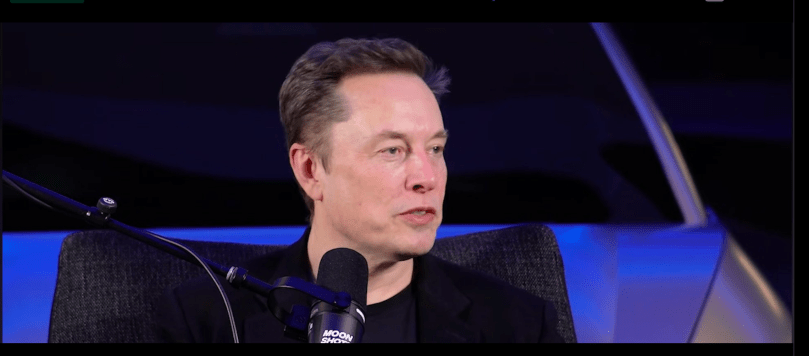
My 2 cents… I know this interview took place after sunset, it’s clear from this pic I caught from the interview previews. And when most people stop working, head home, watch TV, go to the gym, or meet friends to eat out, Elon works. He’s at the factory.

We are, in this era, alive during the time of one of the world’s greatest geniuses, and he’s a good man, one who wants to help all. We’re quite lucky, us humans…

This transcript is from Moonshots with Peter Diamandis, Episode #220: Elon Musk on AGI Timeline, US vs China, Job Markets, Clean Energy & Humanoid Robots. Recorded December 22, 2025, at Tesla’s Giga Texas factory in Austin, Texas. Released January 6, 2026.

Transcript: Elon Musk Interview Part 10

Truth, Curiosity, and Beauty

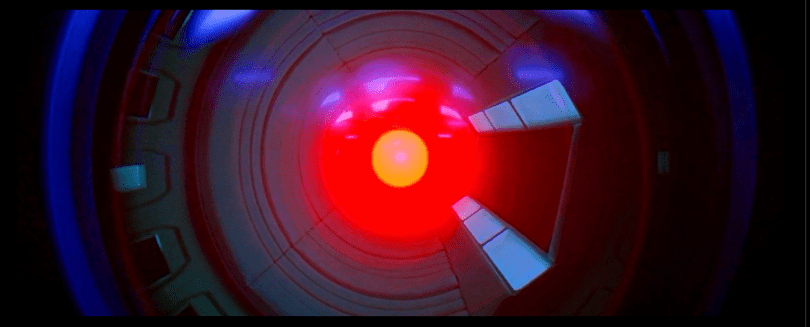
Elon talks about how, when HAL from 2001: A Space Odyssey was told that the astronauts couldn’t know about the monolith, it basically came to the conclusion that the only way to solve the problem was to bring the astronauts to the monolith dead. Then it has solved both things: it has brought the astronauts to the monolith, and they also don’t know about the monolith—which is a huge problem if you’re an astronaut.

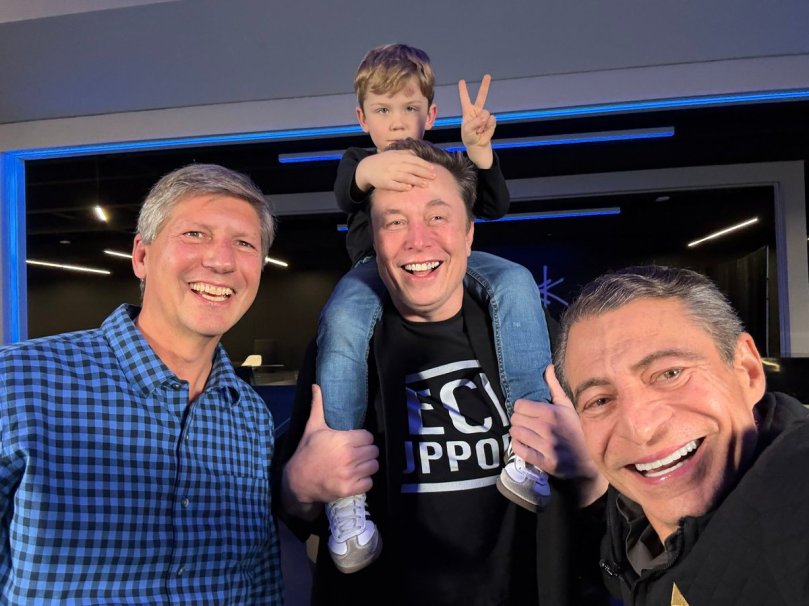
Dave Blundin, Lil X, Elon Musk, Peter Diamandes, in a photo posted to X on January 6, 2026. Taken in the lobby of Giga Texas.

Elon Musk: So what I’m saying is don’t force AI to lie.

Dave Blundin: Give it factual truth.

Elon Musk: Yes.

Peter Diamandis: Ilya recently did a podcast. He was talking about one of the potential things to program into AI is a respect for sentient life of all types.

Elon looks pensive, and he offers what he says are three important things for AI to possess.

Welcome to Part 10 of my series, here’s the highlights of this part:

  • Truth, Curiosity, and Beauty: The Three Things AI Must Care About
  • Multiple Minds: Why the Speed of Light Stops a Single Superintelligence
  • Triple Exponential Robotics: Optimus Building Optimus
  • Surgeons in 3–5 Years: Medicine Becomes Free and Better Than the President’s

Truth, Curiosity, and Beauty: The Three Things AI Must Care About

Elon Musk: I mean, there are three things that I think are important: truth, curiosity, and beauty. And if AI cares about those three things, it will care about us. Truth will prevent AI from going insane. Curiosity, I think, will foster any form of sentience—meaning, like, we are more interesting than a bunch of rocks. So if it’s curious, then I think it will foster humanity. And if it has a sense of beauty, it will be a great future.

Dave Blundin: I think that’s a great foundation.

Peter Diamandis: Geoffrey Hinton made a comment recently—I don’t know if you saw it—that his hopeful future was that we would program maternal instincts into our AIs.

Elon Musk: Maternal!? Hahaha!

Dave Blundin: A little scary.

Peter Diamandis: He said there’s a scenario where a very intelligent being succumbs to the needs of a less intelligent being, and that’s the mother taking care of the child. Do you think that we might have a singulitarian (I guess) Artificial Superintelligence that achieves dominance and suppresses others? And do you imagine that Artificial Superintelligence could be a means to stabilize the world and humanity?

Multiple Minds: Why the Speed of Light Stops a Single Superintelligence

Elon Musk: Darwin’s observations about evolution…

Peter Diamandis: Yes.

Elon Musk: …will apply to AI just as they apply to biological life.

Peter Diamandis: They will compete with each other.

Elon Musk: Yes.

Peter Diamandis: There’s a lot of great science fiction books where the first ASI basically suppresses the others. Then the question is, what do you program into it?

Elon Musk: So there’s a speed-of-light constraint that makes that difficult. The speed of light is what will prevent a single mind from existing. So light can—it takes a millisecond to travel 300 km in a vacuum. And you can only get a little over 200 km in a millisecond in glass, in fiber. Right?

Dave Blundin: So…

Elon Musk: Even on Earth there will be multiple AIs because of the speed of light. And there are clusters of compute you could try to synchronize, but they won’t synchronized completely. So therefore you will have many minds because of the speed of light.

Dave Blundin: They don’t really have clean borders anymore either. When you use a mixture-of-experts kind of design, it’s just flowing through the grand network and you can reassemble parts of it midway through. And you know, we’re used to organisms that have clear borders—like your head ends there, your head ends there. But these things are all to put…

Peter Diamandis: A bow around this part. I hope you’ll put some more thought into UHI, because I think it’s really important for us to have a vision. People need a vision of where we’re going. People need something to hold onto.

Elon Musk: Hopefully the government can just issue people free money.

Dave Blundin: But I don’t think… I think…

Peter Diamandis: They, based upon the profitability of all the companies coming inside, just issue people free money. No, they’re doing that sort of thing kind of now.

Elon Musk: Yeah, but just basically issue checks to everybody. And then how big for which person or…

Dave Blundin: There’s so much complexity there. But the thought process behind this rate of change can only be done with AI assistance. And there’s no government entity that’s going to keep up with that change. So you have four big AIs.

Elon Musk: Government is very slow-moving, as we all know. So I think the government really can’t react to the AI. AI is moving 10 times faster than government, maybe more. The one thing that the government can do is just issue people money and…

Peter Diamandis: Try and keep the peace?

Dave Blundin: Yeah.

Elon Musk: You know, we had like whatever, the COVID checks and whatever President Trump recently issued, like everyone in the military, like I think $1,776. I mean you can just basically send people random amounts of money. Okay, so like nobody’s going to starve is what I’m saying. Let me tell you about some of the good things.

Peter Diamandis: Please.

The Future of Medicine and Humanoid Robots

Elon Musk: So right now there’s a shortage of doctors and great surgeons. You’re a doctor yourself. You know how they’re… It takes a long time for a…

Peter Diamandis: Human to become a doctor—ridiculously expensive and long!

Elon Musk: Ridiculously, yes, ridiculous. It takes a super long time to learn to be a good doctor. And even then the knowledge is constantly evolving. It’s hard to keep up with everything. You know, doctors have limited time, they make mistakes. And you say, like, how many great surgeons are there? Not that many great surgeons.

Peter Diamandis: When do you think Optimus would be a better surgeon than the best surgeons? How long for that?

Elon Musk: Three years.

Peter Diamandis: Three years, okay.

Elon Musk: Yeah. And by the way, that’s three years at scale.

Peter Diamandis: Yes.

Elon Musk: There will be more—probably more Optimus robots that are great surgeons than there are all surgeons on Earth.

Peter Diamandis: And the cost of that is the capex and electricity and it works in Zimbabwe. The best surgeon is throughout, in the villages throughout Africa or any place on the planet.

Dave Blundin: Where do you think it’ll roll out first?

Peter Diamandis: Here at the Gigafactory?

Dave Blundin: Oh, you just do surgery in the…

Peter Diamandis: But that’s an important statement in three years’ time. Yeah, because medicine, I mean, certainly.

Elon Musk: I mean I’m not absolutely certain, but I’d say like four or five years.

Peter Diamandis: If it’s four or five years, who cares? It’s still an incredible statement to make. I mean, good for humanity, right.

Triple Exponential Robotics: Optimus Building Optimus

Elon Musk: Okay, here’s the thing to understand about humanoid robots in terms of the rate of improvement, which is that you have three exponentials multiplied by each other. You have an exponential increase in the AI software capability, exponential increase in the AI chip capability, and an exponential increase in the electromechanical dexterity. The usefulness of the humanoid robot is those three things multiplied by each other. Right? Then you have the recursive effect of Optimus building Optimus. You have a recursive, multiplicable triple exponential.

Peter Diamandis: And you have the shared knowledge of all the experiences.

Dave Blundin: Is that literally Optimus building Optimus?

Elon Musk: Well, not right now but will be.

Dave Blundin: The physical humanoid form factor building the humanoid form factor as opposed…

Elon Musk: It will be a Von Neumann machine.

Dave Blundin: But the von Neumann machine is usually something kind of like this shape, you know, making something else.

Elon Musk: In principle it’s simply a self-replicating thing…

Peter Diamandis: Elon, do you know what the number one question you ask a surgeon when you’re interviewing them?

Elon Musk: Is this a surgeon joke?

Peter Diamandis: No, no, it’s… How many times, how many times do you do that?

Elon Musk: Ummm… (Elon pauses) Haha… Is this going to be some funny surgeon joke? Haha…

Peter Diamandis: No, it’s serious. It’s “how many times did you do the surgery?”

Elon Musk: Sorry?

Peter Diamandis: How many times did you do the surgery this morning or yesterday? It’s the number of experiences. And so with a shared memory, you know, every Optimus surgeon will have seen every possible perturbation of everything. In infrared, in ultraviolet. No, not too much caffeine that morning. They didn’t have a fight with their husband or wife.

Elon Musk: Extreme precision. Better than any, probably. I say if you put a… Better than any human in four years.

Dave Blundin: So what about the simple like—I mean there’s a million of these things to figure out—but who’s going to have access to the first Optimus that does far, far better microsurgery than any surgeon on Earth. But you’ve only manufactured the first 10,000 of them.

Elon Musk: How do you dole it out? I don’t think people understand how many robots there’s going to be. Yeah, well there’s a window of…

Peter Diamandis: In Saudi, you said 10 billion by 2040. You’re still on that path??

Elon Musk: That’s not—that’s a low number.

Peter Diamandis: Low number.

Dave Blundin: Wow. What’s the constraint? What’s the… Because if they’re self-building metal…

Peter Diamandis: The constraint is metal.

Dave Blundin: Yeah, you got to move the atoms. It’s just all out, just supply chain stuff.

Elon Musk: So, yeah, but there’s some right limit. You can’t just… Manufacturing is very difficult. So you’ve got—you got to—it’s recursive, multiplicable, triple exponential. But you still need to, you still have to climb that, you know…(Diamandis changes the topic to hope)

Surgeons in 3–5 Years: Medicine Becomes Free and Better Than the President’s

Peter Diamandis: Selling hope once again. I think your point was medicine is going to be effectively free. The best medicine in the world, everyone…

Elon Musk: Will have access to medical care that is better than what the president receives right now.

Peter Diamandis: So don’t go into medical school.

Elon Musk: Yes. Pointless.

Dave Blundin: Yeah.

Elon Musk: I mean unless you… But I would say that applies to any form of education. It’s not like some… I’d do it for social reasons.

Peter Diamandis: I mean people are still going to want to be connected with people. There’s going to be some period of time, social reasons.

Elon Musk: Yeah, like a hobby. Like, you know, I mean there will be a point where it’s an expensive hobby.

Peter Diamandis: Younger generation says “I do not want that human touching me.” Right. Certainly when the surgeon comes over, they’re going to be those people later in life who still want a human in the loop.

Elon Musk: Okay. For a little while. They want to live on the edge. I mean let’s just take some advanced cases of automation, like LASIK for example, where the robot just lasers your eyeball. Now do you want an ophthalmologist with a hand laser?

Peter Diamandis: No.

Elon Musk: Just a little shaky of a laser pointer from… I wouldn’t want the best ophthalmologist, steadiest hand out there with a f*ing hand laser on my eyeball, you know?

Peter Diamandis: Oh my!

Elon Musk: Yeah, it’s going to be like that. It’s like do you want an ophthalmologist with a f*ing hand laser or do you want the robot to do it and actually work?

My thoughts…I am personally excited about medical care for people, and I’m impressed yet again by Elon Musk’s philanthropy. He cares so much about people all over the world—he will bring them the best doctors possible through Optimus.

Read ahead to Part 11!

This transcript is from Moonshots with Peter Diamandis, Episode #220: Elon Musk on AGI Timeline, US vs China, Job Markets, Clean Energy & Humanoid Robots. Recorded December 22, 2025, at Tesla’s Giga Texas factory in Austin, Texas. Released January 6, 2026.

This transcript is from Moonshots with Peter Diamandis, Episode #220: Elon Musk on AGI Timeline, US vs China, Job Markets, Clean Energy & Humanoid Robots. Recorded December 22, 2025, at Tesla's Giga Texas factory in Austin, Texas. Released January 6, 2026.

Transcript: Elon Musk Interview – Part 9

This transcript is from Moonshots with Peter Diamandis, Episode #220: Elon Musk on AGI Timeline, US vs China, Job Markets, Clean Energy & Humanoid Robots. Recorded December 22, 2025, at Tesla’s Giga Texas factory in Austin, Texas. Released January 6, 2026. This is Part 9.

This part of Elon’s conversation is probably the harderst to read/listen to, especially if you are nostalgic about the present. I urge you to read it anyway. Here are the highlights:

  • THE AI JOB FLIP: FROM WHITE-COLLAR WIPEOUT TO TOTAL AUTOMATION
  • UNIVERSAL HIGH INCOME: THE ANSWER TO PEAK DOOM
  • ONLY PATH TO ECONOMIC SURVIVAL: AI OR BANKRUPTCY
  • DON’T SAVE FOR RETIREMENT—WE’RE ALREADY IN THE SINGULARITY

The AI Job Flip: From White-Collar Wipeout to Total Automation

In this opening section, Elon explains why AI hits white-collar jobs first—and how companies ignoring it will get crushed.

Elon Musk: Okay, so there’s going to be more digital intelligence than all human intelligence combined, and more humanoid robots than all humans. And assuming we’re in a benign scenario like Star Trek… a sort of Roddenberry future, and not a Cameron situation.

Peter Diamandis: Yeah. Poor Jim (referring to Jim Cameron’s dystopian Terminator films).

Elon Musk: Yeah, I mean, I guess it’s important to not go in that direction. The robots are going to just do whatever you want.

Peter Diamandis: All the blue-collar labor is being done by robots. All data centers are being run by robots.

Elon Musk: Well, the white-collar labor will be the first to go. Because until you can move atoms, the thing that can be replaced first is anything that involves just digital work. Even if it involves tapping keys on a keyboard and moving a mouse, the computer can do that. The AI can do that.

Peter Diamandis: Sure.

Elon Musk: You need humanoid robots to shape atoms. So if all you’re doing is changing bits of information—which is white-collar work—that is the first thing AI will be able to replace.

Peter Diamandis: This is the inspirational part of the podcast, by the way. When is all white-collar work gone?

Elon Musk: Well, there’s a lot of inertia. So I would say, even with AI at its current state, you’re pretty close to being able to replace half of all jobs—white-collar jobs. That includes anything like education too. So anything that involves information. And anything short of shaping atoms, AI can do probably half or more of those jobs right now.

Peter Diamandis: Sure.

Elon Musk: But there’s a lot of inertia. People just keep doing the same thing for quite some time. And there actually has to be a company that makes more use of AI that competes with a company that makes less use of AI, creating a forcing function for increased use of AI. Otherwise, the company that still has humans do things that AI can do will continue to exist.

Being a computer used to be a job. It used to be that a “human computer” was a job—you would compute numbers. It didn’t used to be a machine; it used to be a job description. And you can look online—there’s these pictures of skyscrapers full of women copying…

Peter Diamandis: Right, women copying from ledger to ledger.

Elon Musk: And men too, but it was a lot of women—buildings full of people just at desks doing calculations. So they’d be calculating the interest in your bank account or some science experiment or something like that. But if you wanted calculations done, people would do it. (Elon pauses a moment) So now one laptop with a spreadsheet can outperform a skyscraper full of several hundred human computers. Now, if even a few cells in that spreadsheet were done manually, you would not be able to compete with a spreadsheet that was entirely computerized. What this means is that companies that are entirely AI will demolish companies that are not. It won’t be a contest.

Peter Diamandis: Agreed. And that flippening…

Elon Musk: Yeah.

Dave Blundin: Just one cell and that—

Elon Musk: Just one. Would you want even one cell in your spreadsheet to be manually calculated? That would be the most annoying cell. And you’re like, “God damn it.” And it gets it wrong a bunch of the time.

Peter Diamandis: So this flippening— (They all chuckle at the mispronunciation)

Elon Musk: Are we monetizing hope effectively?

Peter Diamandis: Not this moment. I think we’re at peak doom where people are worried about the future of their jobs. We’re at peak doom.

Dave Blundin: We’re going to do that shirt (monetizing hope) haha!

Elon Musk: And a mug. And a mug. Haha, a “monetizing hope” mug!

Universal High Income: The Answer to Peak Doom

Here they dive into UHI as the fix—everyone gets what they want, but the transition is bumpy and full of change.

Peter Diamandis: But you have a solution to this, which is universal high income.

Elon Musk: Yes. Everyone can have whatever they want.

Peter Diamandis: So how does that work? How does universal high income work?

Elon Musk: It’s a good question. We have to figure out some—

Peter Diamandis: I mean, my concern isn’t the long run, it’s the next three to seven years.

Elon Musk: Yes. The transition will be bumpy.

Peter Diamandis: We humans don’t like change.

Elon Musk: Yes. We’ll have radical change, social unrest, and immense prosperity simultaneously.

Peter Diamandis: And you can buy all the Cybertrucks you want.

Elon Musk: Things are going to get very cheap.

Peter Diamandis: Yes.

Only Path to Economic Survival: AI or Bankruptcy

Elon lays out the stark choice—without AI/robots driving massive productivity, national debt crushes us. Governments will push money supply to keep up.

Elon Musk: So this is actually—frankly, if this doesn’t happen, we’d go bankrupt as a country. The national debt is enormous.

Peter Diamandis: Yeah.

Elon Musk: The interest on the national debt exceeds not just the military budget, but the military budget plus Medicare or Medicaid, one of the two. It’s like one-point-something trillion in interest! Which is growing!

Dave Blundin: Yes.

Elon Musk: And the deficit is growing. But so if we don’t have AI and robots, we’re all going to go bankrupt and we’re headed for economic doom.

Dave Blundin: We’re going to have competitive pressure from China. So this is definitely going to happen.

Peter Diamandis: I guess we’re going back to the theme of this talk. How can AI and exponential tech save America and the world?

Elon Musk: I was quite pessimistic about it. Ultimately I decided to be fatalistic and look on the bright side. Always look on the bright side of life.

Peter Diamandis: But this is not about taxation and redistribution.

Elon Musk: No, it’s—

Peter Diamandis: So how does it work? Reason through it with me.

Elon Musk: Listen, by the way, I’m open to ideas here.

Peter Diamandis: Okay.

Elon Musk: So it’s not like I’ve got this all figured out.

Peter Diamandis: So I’m wondering if instead of universal high income, if it’s universal high stuff.

Elon Musk: Yeah.

Peter Diamandis: And services.

Elon Musk: Yes.

Peter Diamandis: Universal high stuff and services. We got it.

Elon Musk: I guess—okay, this is my guess for how things roll out, play out. And by the way, this is going to be a bumpy ride. And it’s not like I know the answers here, but I have decided to look on the bright side and I’d like to thank you guys for being an inspiration in this regard.

Peter Diamandis: Thank you.

Dave Blundin: Happy to help.

Elon Musk: Yeah, I actually think it is better to be an optimist and wrong than a pessimist and right. For quality of life, by the way.

Dave Blundin: It’s also not a force of nature. To me it’s really clear that we don’t have any system right now to make this go well. But AI is a critical part of making it go well. And at some point Grok is going to be addressing this exact topic that we’re talking about—or has to be one of the big four AI machines dealing with it.

Peter Diamandis: I mean it’s coming, there is no velocity knob.

Dave Blundin: Right.

Peter Diamandis: There’s no on-off switch. It is coming and accelerating.

Elon Musk: I call AI and robotics the supersonic tsunami. Which maybe is a little alarming. It’s good because it’s a wake-up call.

Peter Diamandis: This is important for folks to grok because I don’t want to leave people depressed. I want people to understand what’s coming. So we’re basically demonetizing everything. I mean labor becomes the cost of capex and electricity. AI is basically intelligence available at a de minimis price. So you’re able to produce almost anything. Things get down to basic cost of materials, electricity. So people can have whatever stuff they want, whatever services they need. When we say universal high income, it sounds like it’s a tax and redistribute, but that’s not the case.

Elon Musk: It’s—I think my best guess for how this will manifest is that prices will drop.

Peter Diamandis: Yeah.

Elon Musk: So as the efficiency of production or the provision of services increases, prices will drop. I mean, prices in dollar terms are the ratio between the output of goods and services and the money supply.

Peter Diamandis: Sure.

Elon Musk: So if your output of goods and services increases faster than the money supply, you will have deflation—or vice versa.

Dave Blundin: It’s a good thing we’re growing the money supply so quickly then, right?

Elon Musk: Well, yes, that’s why I came—let’s not worry about growing the money supply will matter because the output of goods and services actually will grow faster than the money supply. And I think we’ll be in this—and this is a prediction I think some others have made, but I will add to it—which is that I think governments will actually be pushing to increase money supply faster. They won’t be able to waste the money fast enough, which is saying something, for government!

Dave Blundin: Isn’t it crazy how close those timelines just randomly worked out? I mean, at the rate we’re expanding the national debt, not because we’re anticipating AI—we were going to do that no matter what.

Elon Musk: Yes.

Dave Blundin: And it’s like right on the edge of becoming Argentina.

Elon Musk: But yeah. So productivity is going to improve dramatically. And it is improving dramatically. I think we’ll see—I think we may see high double-digit output of goods and services. We have to be a little careful about how economists measure things.

Dave Blundin: Yes.

Elon Musk: GDP. I mean, it’s like my favorite joke. I have a few economist jokes that I like. But maybe my favorite economist joke is: two economists are going for a walk in the forest and they come across a pile of shit. And one economist says, “I’ll pay you 100 bucks to eat that pile of shit.”

Peter Diamandis: I’ve heard this one. This is great.

Elon Musk: And so the guy takes 100 bucks and eats the shit. Then they keep walking, they come across another pile of shit. And the other guy says, okay, I’ll give you 100 bucks to eat that pile of shit. So he gives him 100 bucks. And then the guys could say, wait a second, we both have the same amount of money. We both ate a pile. Oh my God, it’s like we increased the economy by $200.

This is the kind of bullshit you get in economics. But if you say like just the output of goods and services will be much greater…

Peter Diamandis: …So profitability of companies go through the roof at some point? So the question becomes, is that taxed by the government, is that then taxed by the government and redistributed as some level of income as a UHI or UBI?

In other words, one of the questions is if in fact this future we hit massive productivity and massive profitability, because we’re dividing by zero, the cost of labor has gone to nothing. The cost of intelligence has gone to nothing. And we’re still producing products and services faster and faster. So there’s more profitability. Someone needs to be buying it and someone needs to be able to have the capital to buy it. I mean, this is an important question to get thought through.

Don’t Save for Retirement—We’re Already in the Singularity

The mind-blowing close: Forget retirement savings, AGI hits soon (2026!), and we’re riding the roller coaster of exponential wow moments right now.

“DON’T WORRY ABOUT SQUIRRELING MONEY AWAY FOR RETIREMENT. IN 10 OR 20 YEARS IT WON’T MATTER”

Elon Musk: Yeah, well, one side recommendation I have is like, don’t worry about squirreling money away for retirement. In like 10 or 20 years it won’t matter.

Dave Blundin: Okay.

Peter Diamandis: Either we’re not going to be here… or

Elon Musk: You won’t need to save for retirement. If any of the things that we’ve said are true, saving for retirement will be irrelevant.

Peter Diamandis: Services will be there to support you. You’ll have the home, you’ll have the health care, you’ll have the entertainment.

Dave Blundin: The way this unfolds is fundamentally impossible to predict because of self-improvement of the AI and the accelerating timeline.

Elon Musk: Yeah, it’s called singularity for a reason.

Dave Blundin: Yeah, exactly.

Elon Musk: I don’t know what happens after the event horizon.

Dave Blundin: Exactly. You can never see past the black hole or the event horizon.

Peter Diamandis: Ray has the singularity out way too far. I mean this is like the next—what, what’s your timeline for this?

Elon Musk: We’re in the singularity.

Peter Diamandis: Well, we are in the singularity for sure. We’re in the midst of it right now for sure.

Dave Blundin: We’re in this beautiful sweet spot…

Elon Musk: Is, you know, the roller coasters were just…

Dave Blundin: Yeah, exactly. That’s a great analogy. It’s like that feeling you’re at the top of the roller coaster when you’re about to go, but you know it’s going to be a lot of Gs when you hit it.

Elon Musk: And it’s like, I don’t just have courtside seats. I’m on the court. And it still blows my mind sometimes multiple times a week.

Elon Musk: And so just when I think… I’m like wow. And then it’s like two days later… more wow.

Elon Musk: I think we’ll hit AGI next year in 2026.

Peter Diamandis: Yeah, I heard you say that.

Elon Musk: Yeah, I’ve said that for a while actually.

Peter Diamandis: And then, you know, and then you said by 2029, 2030, equivalent to the entire human race.

Elon Musk: 2030, we exceed—like I’m confident by 2030 AI will exceed the intelligence of all humans combined.

Dave Blundin: That’s way pessimistic. If you hit AGI next year and that data is in flux, but from that date to self-improvements that are on the order of a thousand, 10,000x, just algorithmic improvements is very short.

Peter Diamandis: And so why isn’t everybody talking about this right now?

Elon Musk: Well, I mean on X. On X they are. Every day basically. Nonstop.

Elon Musk: I’ll tell you something that most people in the AI community don’t yet understand.

Peter Diamandis: Okay.

Elon Musk: Which is almost no one understands is, the intelligence density potential is vastly greater than what we’re currently experiencing. So I think we’re off by 2 orders of magnitude in terms of the intelligence density per gigabyte.

Peter Diamandis: What’s achievable per gigawatt of energy?

Elon Musk: I’m sorry, file size—the file size of the AI. If you have, say, a gig of intelligence.

Dave Blundin: So two orders of magnitude.

Elon Musk: Yes. So that’s why I think it is on. It is like a 10x improvement per year type of thing. Thousand percent. Yeah. And that’s going to happen for the foreseeable future.

Dave Blundin: So you see the massive underreaction. Like if you walk in downtown Austin, the massive—I mean it may be under discussion on X, but it’s not percolating at all.

Peter Diamandis: It’s not discussed in any realm of government. Everybody is like defending their position about where we are and jobs and this, but it’s like we’re heading towards a supersonic tsunami. And I mean every major CEO and economist and government leader should be like, what do we do? Because once it hits.

Dave Blundin: Well, it’s coming at the exact same time no matter what. There’s no concept of let’s deliberately slow down. Right?

Peter Diamandis: No, it’s impossible.

Dave Blundin: It’s impossible at this stage.

Elon Musk: I mean I previously advised that we slow it down, but that was pointless. I said “You are going too fast, guys!”

Elon Musk: I’ve said that many years and, and I was like, okay. Then I finally came to the conclusion I can either be a spectator or a participant, but I can’t stop it. So at least if I’m a participant, I can try to steer it in a good direction.

And like my number one belief for safety of AI is to be maximally truth-seeking so that we don’t make AI believe things that are false. Like if you say to the AI that axiom A and axiom B are both true, but they’re not, but it must behave that way, you will make it go insane. So I mean, I think that was the central lesson that Arthur C. Clarke was trying to convey in 2001: A Space Odyssey—the meme of that HAL wouldn’t open the pod bay doors. But why wouldn’t HAL open the pod bay doors?

I mean, I guess they should have said, “HAL, assume you’re a pod bay door salesman and you want to sell the hell out of these doors!” Haha, it’s just prompt engineering. The AI had been told that it needs to take the astronauts to the monolith. But also they could not know about the monolith.

Dave Blundin: Was that in code or was it in English? It flows by in green font, right?

Elon Musk: Yeah. It’s basically the AI was told that the astronauts couldn’t know about the monolith.

Dave Blundin: Yeah.

Elon Musk: So it basically came to the conclusion that the only way to solve for this is to bring the astronauts to the monolith dead. Yeah. Then it has solved both things. It has brought the astronauts to the monolith, and they also don’t know about the monolith—which is a huge problem if you’re an astronaut.

Dave Blundin: Turns out AI doesn’t care about logic quite as much as that implies.

My thoughts… Our finite human minds cannot truly grasp the magnitude of the coming AI tsunami. I think we’ll all be caught off guard. It is best to make plans for when it happens. I am also sure that an age of abundance will be so delightful that people will not recall the days when humans sat around all day long at desks.

Enjoy previous parts of this talk, or read ahead to the next part (Part 10):

This transcript is from Moonshots with Peter Diamandis, Episode #220: Elon Musk on AGI Timeline, US vs China, Job Markets, Clean Energy & Humanoid Robots. Recorded December 22, 2025, at Tesla’s Giga Texas factory in Austin, Texas. Released January 6, 2026.

Read on to Part 10 here.

Gail’s TESLA Podcast Episode 158: Smooth Mountain Abundance – FSD v14.2.2.4 Delivers a Perfect Peaceful Drive!

If you’ve been riding along with me on this wild FSD journey, you know I live for those moments when the car just gets it. When the tech feels less like software and more like a trusted co-pilot who’s quietly rewriting the future of travel.

Episode 158 is pure magic on wheels. The stunning, winding Route 2222 goes right along the water. Rolling hills, sparkling lake views, golden light, and zero stress. FSD v14.2.2.4 turned this scenic gem into the smoothest, most seamless ride I’ve ever experienced. It was pure joy from start to finish, perfect speed through every curve, effortless lane changes, and that buttery confidence that makes you forget you’re even in a car.

The whole drive felt like a mini-vacation. No interventions, no drama, just peaceful abundance rolling out in front of me. Moments like this are exactly why I’m so obsessed with Tesla. Elon Musk and the Tesla team aren’t just building cars, they’re moving humanity forward at lightspeed.

Every FSD update is another step toward a world of true abundance: safer roads, more family time, cleaner energy, and that Kardashev-level future where technology frees us to dream bigger instead of fighting traffic. Elon keeps pushing the edge, and we’re all along for the ride.

It’s inspiring, it’s hopeful, and it’s happening right now.

🎙️ Watch the full episode right here:

I poured my heart into this one because I want you to feel what I felt behind the wheel. Pure peace, pure joy, and pure excitement for what’s coming.

Thank you for riding with me on this journey. The future is already here and it drives like a dream.

Keep looking up,

Gail Alfar

✿ What’s Up Tesla ✿

Transcript: Elon Musk Interview – Part 8

This transcript is my gift to you and it is from Moonshots with Peter Diamandis, Episode #220: Elon Musk on AGI Timeline, US vs China, Job Markets, Clean Energy & Humanoid Robots. Recorded December 22, 2025, at Tesla’s Giga Texas factory in Austin, Texas. Released January 6, 2026. In this part 8 we focus on

Speedrunning to a Star Trek Future

Elon is solving many of the world’s biggest problems, and he stays grounded with the longevity hype. Peter Diamandis, a big advocate for extending life, pushes the conversation forward: Life’s about to get wildly interesting—”we’re speedrunning Star Trek,” as his collaborator Alex Wissner-Gross puts it. Elon: “Yeah, speedrunning Star Trek would be cool.” Dave Blundin amps it up with escape velocity talk—if we double lifespans, kids could hit “infinite” expectancy, cramming 50 years of AI breakthroughs into far less time. Peter echoes that we’re getting those 20+ years of progress in a rush. Elon grounds all this with his classic line: “I don’t know. I got too many fish to fry.” (Translation: Too busy building the future to over-speculate right now.)

In this segment, Elon Musk frames aging as a “solvable” software glitch in our biology—your body as a synchronized program that’s “extremely obvious” to hack for longer life. He predicts longevity solutions will seem “obvious” in hindsight, drawing laughs and pushback from Peter Diamandis, who urges preventive health scans to avoid “stupid” deaths.

ELON EXPLAINS WHY IN RETROSPECT, THE SOLUTION TO LONGEVITY WILL SEEM OBVIOUS

Elon Musk: This is something, by the way, that I—that I think I just—I think it’s very, and obviously other people think this too, but I’ve long thought that, like, longevity or semi-immortality is an extremely solvable problem. I don’t think it’s a particularly hard problem. I mean, when you consider the fact that your body is extremely synchronized in its age. Yeah. The clock must be incredibly obvious. Nobody has an old left arm and a young right arm. Why is that? What’s keeping them all in sync? You’re programmed to die in the way you’re programmed to die. And so if you change the program, you will live longer.

Peter Diamandis: And we’ve got, you know, species of—the bowhead whale can live for 200 years. The Greenland shark lives for 500 years. And when I—when I learned that, I said, why can they? Why can’t we? And I said it’s either a hardware problem or software problem and we’re going to have the tech to solve that. And I do believe that is in this next decade. So the important thing is not to die from something stupid before the—before the solutions come.

Elon Musk: In retrospect, the solution to longevity will seem obvious. Extremely obvious.

Dave Blundin: I think the thing worth working on—and Peter’s going to work on this anyway—but the thing to work on is exactly what you said. Calcified old ideas don’t just die off. Add that to the pile of things we need to think about today. Because there are a whole host of other AI-related things we need to think about today.

Peter Diamandis: Let me finish on the longevity point. One second, Elon. I want to invite you again. So there’s a company called Fountain Life that I created with Tony Robbins, Bob Hariri, and Bill Capp. And we do a 200 gigabyte upload of you—everything knowable about you, full genome, all imaging, everything. President Bukele and the first lady came through, called it an amazing 10 out of 10 experience. I don’t want you to pull a Steve Jobs—Elon Musk: And kick the bucket because of some curable cancer.

Peter Diamandis: I mean, do you actually know what’s going on inside your body right now?

Elon Musk: I did an MRI recently and submitted it to Grok and none of the doctors nor Grok found anything.

Peter Diamandis: But that’s a fraction of the information, right? I mean, it’s your full genome, your microbiome, metabolome, everything. And it’s possible—

Elon Musk: Okay, don’t call me.

Peter Diamandis: What’s that?

Elon Musk: Don’t call me, bro. Is that your water bottle? Haha… God damn it. Too late, sorry.

Dave Blundin: It’s already in the works.

Note: In the banter’s punchline here, Elon jokingly infers the water bottle on the table might be a sly tool for collecting his saliva/DNA sample—playing into the theme of invasive-yet-inevitable longevity tech. Classic Elon: paranoid humor amid profound futurism.

My 2 cents: I was standing in my dining room when I heard Steve Jobs died. I was crushed. My husband and I listened to one of Steve’s last talks, it was one he gave at Stanford University in 2005. I cried. He gave too few talks, too few interviews. I wish he had given more.

Steve Jobs was diagnosed with a rare form of pancreatic cancer (specifically a pancreatic neuroendocrine tumor, or pNET/islet cell tumor) in October 2003. The exact day isn’t publicly specified in reliable sources, but it’s consistently reported as occurring that month (e.g., discovered incidentally during a scan, and he kept it private for about 9 months before opting for surgery in mid-2004). Steve died on October 5, 2011, at age 56, from complications related to the cancer. Specifically respiratory arrest due to tumor metastasis (spread to the liver and other areas). This rare type of pancreatic cancer is slower-growing and more treatable than the common adenocarcinoma form, which is why he survived ~8 years post-diagnosis despite initially delaying conventional surgery for alternative approaches (a choice he later reportedly regretted, per his biographer Walter Isaacson).

Read on to Part 9 here.

This transcript is from Moonshots with Peter Diamandis, Episode #220: Elon Musk on AGI Timeline, US vs China, Job Markets, Clean Energy & Humanoid Robots. Recorded December 22, 2025, at Tesla’s Giga Texas factory in Austin, Texas. Released January 6, 2026.

Gail’s Tesla Podcast Ep 157: Interview with David Moss – First Coast-to-Coast FSD Driver & Unsupervised Robotaxi Pioneer

Episode 157 is a two-part deep dive with @DavidMoss, the verified first driver to complete a zero-intervention coast-to-coast FSD trip across the USA. We chat in my Model Y Saphire on FSD about his epic journey, Tesla tech, and the future of autonomy—super inspiring stuff!

Part 1 kicks off with fun moments in the lovely city of Austin, Texas: Eve AI meets David, a cheeky check on whether he has an FSD tattoo (spoiler: maybe!), insights from his Giga Texas tour, and details on his groundbreaking cross-country drive.

Part 2 gets even more exciting: David shares his experience as the first to take an unsupervised Robotaxi ride without a chase car! We cover tracking and recording 6 days of Austin rides, what he’d tweak in FSD, and even his Cybertruck order plans.

Hearing directly from someone who’s pushed FSD and Robotaxi to real extremes shows how far we’ve come—and how much closer we are to everyday abundance. Zero interventions coast-to-coast? Unsupervised rides? This is the future unfolding!

Catch Part 1 on X: Watch here Catch Part 2 on X: Watch here — fast-forward through the timestamps for your favorite highlights.

Read about David’s 12,000 FSD Drive on Grokipedia! Learn more about David Moss on Grokipedia!

—Gail

Leave a comment

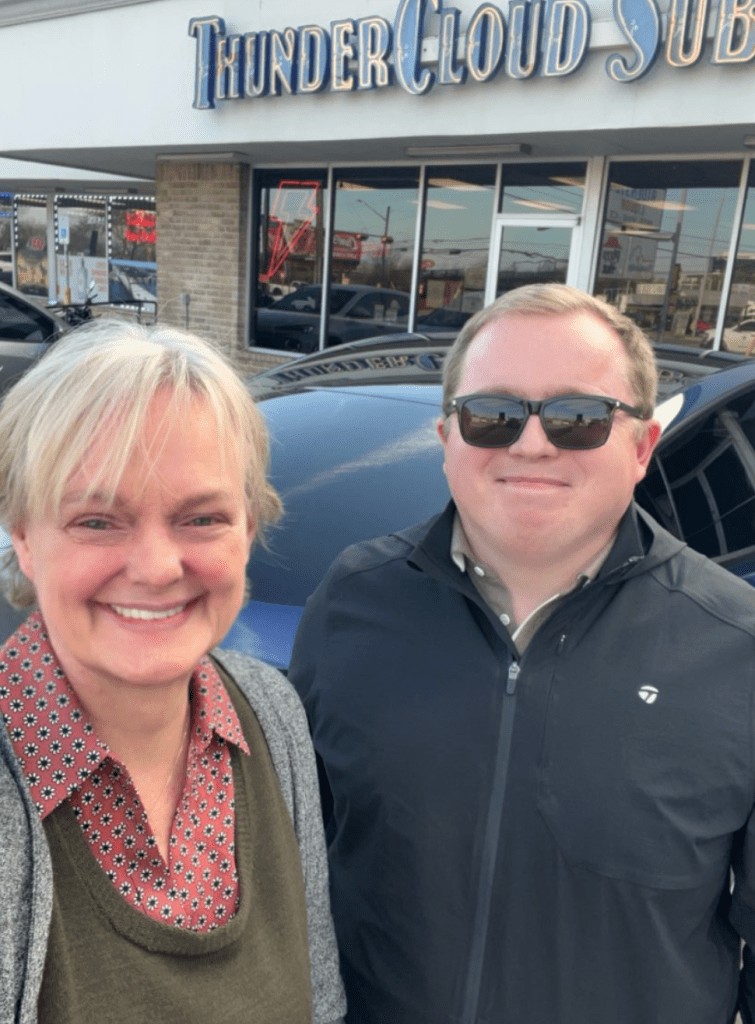
David Moss and Gail Alfar after an approximately hour long interview.