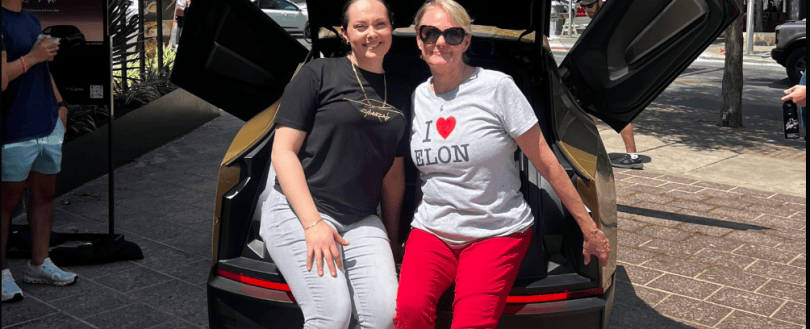
Gail’s Tesla Podcast Episode 185: Two Robotaxi Rides in Austin — 66°F Cabin, 106°F Outside

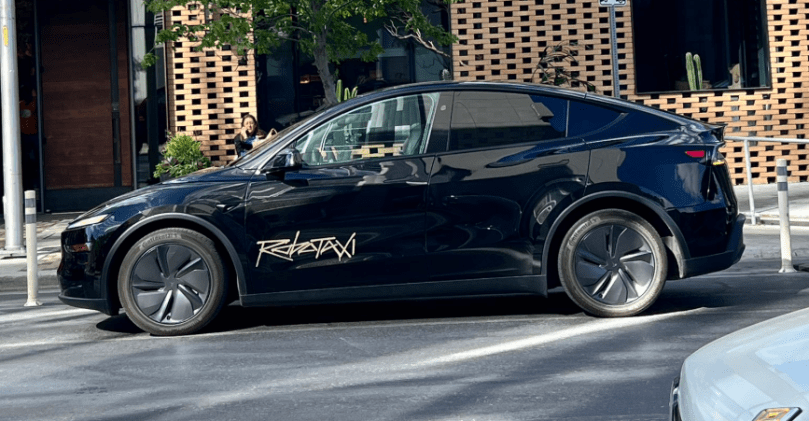
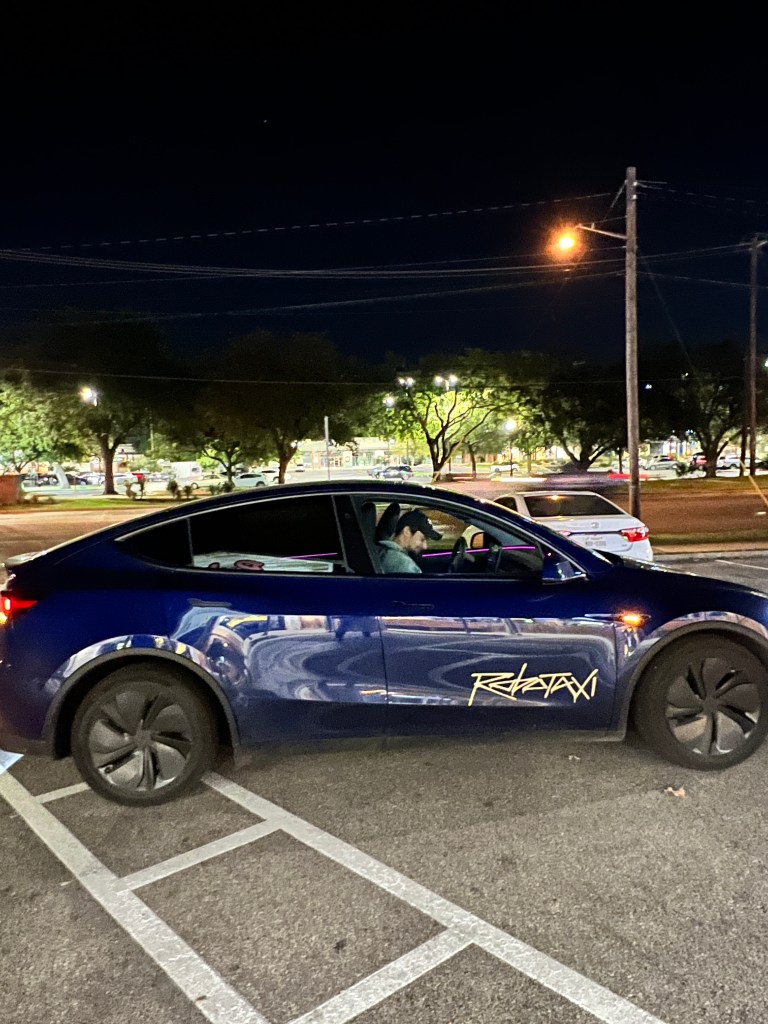
Episode 185 is two unsupervised Robotaxi rides through Austin on a brutal Texas afternoon — and then a second ride from the Four Seasons to pizza.

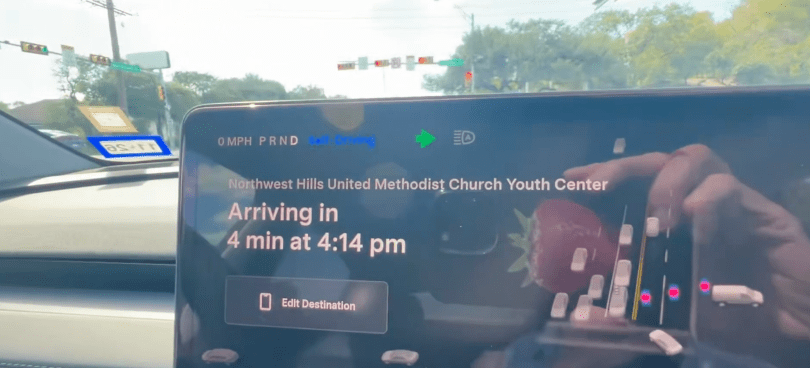
The first cab was sitting at 66°F while it was 106°F outside. That alone felt like the future. Then the car did two things that still make me smile: it accepted a last-minute destination change, and it cut through a gas station the way only a veteran Austin driver would.

Watch Episode 185 here:

Ride One — Availability, A/C, and That Gas-Station Cut-Through

I was surprised how many Robotaxis were available. In that same part of Austin, the wait used to stretch toward 20 minutes. This time it was about two minutes. I even posted about it, and Elon reposted it.

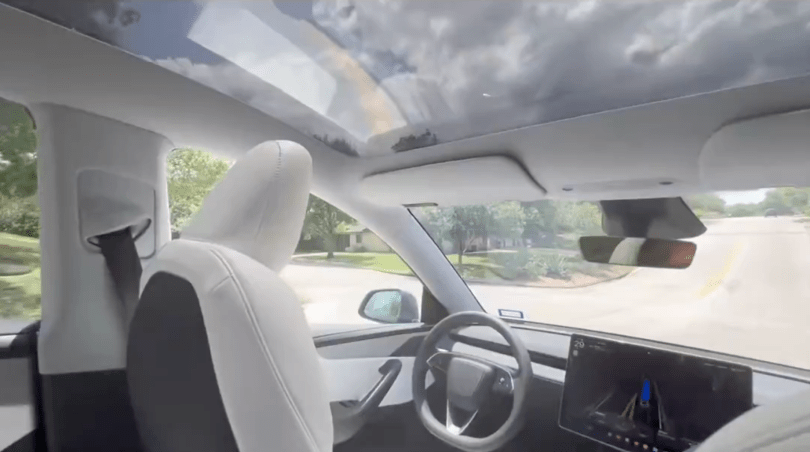
Once I was in, I didn’t have to keep diving in and out of the app. The cabin was already cold. The screen showed the outside temperature in the mid-100s and the cabin locked at 66. That contrast — melting on the sidewalk, then stepping into quiet, cold air with no driver — never stops feeling historic.

The routing was the real star. I changed the destination late, and the car handled it. Then it did that clever gas-station cut-through. Nobody on the lot even looked twice. The vehicle just took the efficient line, the way a local would, and kept going toward Northwest Hills.

That is the difference between a demo and a product. It is not only staying in the lane. It is solving Austin in real time.

Ride Two — Four Seasons to Pizza

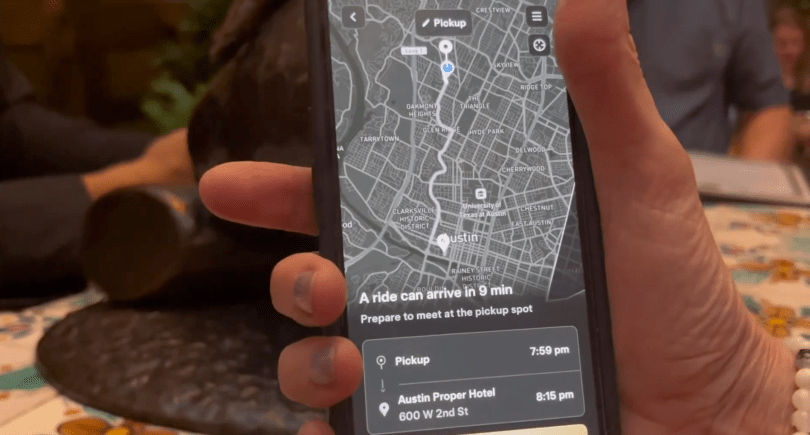
The second ride started at the Four Seasons Hotel. The Robotaxi pulled into the driveway, the screen was clean — no fingerprints, dark mode, “Start Ride” — and we rolled out toward pizza.

Leaving a hotel porte-cochère with no driver in the seat still looks like science fiction against those columns and downtown streets. Then it is just… a ride. Dinner. Ordinary life, except the car is doing the work.

That is what I want people to see in this episode. Not a lab. Not a press event. A hot Austin day, a last-minute change, a shortcut through a gas station, and a hotel-to-pizza trip.

Why These Two Rides Matter

Robotaxi is getting useful. Shorter waits. Cabin already comfortable before you sit down. Destination changes that stick. Local routing that looks like judgment, not a rigid map line.

Every one of these rides is a small public record of what unsupervised autonomy feels like on the streets I actually use.

Join the Conversation

Have you taken a Robotaxi in this heat yet? What impressed you more — the wait time, the cold cabin, or a routing move you did not expect?

Drop your thoughts in the comments. I read every one.

Stay curious. Stay adventurous. And keep enjoying the ride ahead! 🚕✨

See other Episodes 186 & 187 – Iba Thiam’s First Supervised FSD Ride

Gail’s Tesla Podcast Episode 169: My Second Unsupervised Model Y Robotaxi Ride Through Austin – Real-Time Thoughts on This Wild Piece of History

April 24, 2026

Episode 169 of Gail’s Tesla Podcast is live, and I couldn’t be more excited to share it with you!

This time I climbed back into a Tesla Model Y running in full unsupervised Robotaxi mode for my second journey through Austin streets. Camera rolling the whole way, I captured my genuine, moment-by-moment reactions as the car took care of everything on its own. Downtown Austin energy, a stop at Starbucks on Riverside Drive, smooth navigation through real traffic — it felt like another chapter of living history. And the vibe? Straight-up gold Tesla energy all the way.

Watch the full ride and my unfiltered real-time commentary here:

In the episode you’ll hear me chatting away as the car handles downtown streets, eases through traffic, and elegantly solves a specific maneuvering situation near the coffee shop. One feeling kept coming up for me: “I just feel really safe and relaxed.” No stress, no hovering over imaginary pedals, only the simple pleasure of being a passenger in a vehicle that clearly understands its world.

What This Ride Revealed About the Technology We’re Actually Living With

There’s a special kind of wonder that comes from experiencing autonomy not in a polished demo video, but on the exact streets you drive every day. What made this second ride feel so capable, so natural, didn’t happen by accident. Several deep, compounding strengths showed up in quiet but powerful ways.

The car perceives everything through its cameras alone. No bulky extra sensors, no spinning LiDAR on the roof, no radar arrays like Waymo, just a clean, elegant vehicle reading the visual world the way humans do. That choice creates a system that feels integrated rather than bolted-on, and it performed beautifully in the mixed lighting, tree cover, and urban clutter of Austin.

That visual intelligence is trained on something no one else has at anywhere near this scale: billions of miles of real driving data collected from Teslas all over the world. The situations I saw today — busy intersections, pedestrians, cyclists, tight spots — aren’t rare edge cases in a simulator. They’re variations the AI has already studied thousands of times in similar real-world conditions. You can feel that collective experience in how confidently and proactively it drives.

Equally important is how it makes decisions. The autonomy stack uses end-to-end neural networks that map raw camera input straight to smooth vehicle controls. There’s no layer of brittle if-then rules trying to anticipate every possibility. The result is driving that feels holistic and context-aware — exactly what you want when the car has to resolve a real parking or departure challenge on the fly, the way it did for me near Riverside Drive.

None of this capability appears without serious computational horsepower dedicated to training on massive video datasets. Purpose-built infrastructure for processing driving data at enormous scale has made it possible to turn raw fleet experience into rapidly improving intelligence. Every unsupervised mile contributes to the next leap forward.

It also matters that this intelligence lives inside a vehicle platform that was designed for deep, continuous integration. The Model Y has evolved alongside the autonomy software through years of over-the-air updates. That tight coupling between hardware and software — refined on the road, not just in the lab — is what lets the car feel responsive and reliable instead of hesitant or overcautious.

What stands out most is the clear destination the work has been pointed toward all along: genuine unsupervised operation on ordinary public roads. Not perpetual supervision, not limited geofenced zones, but the confidence to let the vehicle handle complex, dynamic city driving without a safety driver present. Feeling that trust validated in practice — relaxed in the passenger seat while the car just… handles it — turns “someday” into something you can experience today.

And because the system keeps learning, the car I rode in yesterday is already smarter than the one from last month. Fleet-wide updates roll out regularly, folding lessons from rides just like this one into every vehicle. It’s a living technology that gets better with use rather than one that ships and then slowly ages.

As I finished this ride, that forward-looking excitement was everywhere — the same gold Cybercab energy that has me genuinely counting down to purpose-built robotaxi vehicles designed from the ground up for joyful, efficient, autonomous mobility. The unsupervised rides we’re taking right now in current models are the essential bridge to that next chapter.

These in-car episodes aren’t just tech demos for me. They’re a way of documenting a transformation I get to live inside my own city and sharing the real wonder (and occasional delighted “wait… it just did that?!” moments) with all of you who are following along.

If you haven’t watched yet, pour yourself something nice and take the ride with me. Then come back and tell me in the comments:

  • What stood out most to you in this episode?
  • Did any particular moment make the progress feel especially real?
  • Have you tried an unsupervised Robotaxi ride yourself, or are you as excited as I am about where this is all heading?

I read every single comment and I’m grateful for this community. The journey is so much richer when we share it.

Stay curious. Stay adventurous. And keep watching the road ahead — it’s getting more interesting every single week. 🚕✨


Tags: #Tesla #FSD #Robotaxi #UnsupervisedDriving #GailsTeslaPodcast #AustinTexas #AutonomousVehicles #Cybercab

Previous episode: Episode 168 – Elon Musk Reposts Viral Robotaxi Narrow Street U-Turn


What Elon Said About Turning Old HW3 Teslas into Robotaxis

(Austin, Texas) Every quarter I go through Tesla’s earnings calls for What’s Up Tesla, and there is a segment from yesterday’s April 22, 2026 Q1 call that stood out to me.

Elon Musk gave the clearest picture yet on what’s happening with older Hardware 3 (HW3) Model 3s, Model Ys, and other cars. He confirmed HW3 can’t reach unsupervised Full Self-Driving and laid out the upgrade path: new computer and new cameras.

But the part that fascinated me was when he talked about setting up microfactories in major cities because regular service centers simply can’t handle the volume. So take a little breather in your busy day. Let’s hang out for a few and walk through exactly what Elon said, plus my thoughts on what this could mean for timelines, jobs, costs, and the Robotaxi future, including a couple of ideas that popped into my head.

Elon Musk on the HW3 Upgrade Plan (Verbatim)

The question came up about how HW3 cars will ever get to unsupervised FSD. Elon was straightforward:

“Unfortunately, Hardware 3 — I wish it were otherwise, but Hardware 3 simply does not have the capability to achieve unsupervised FSD. We did think at one point it would have that, but relative to Hardware 4, it has only 1/8 of the memory bandwidth of Hardware 4, and memory bandwidth is one of the key elements needed for unsupervised FSD.”

Then came the practical plan for owners who bought FSD:

*“For customers that have bought FSD, what we’re offering is essentially a discounted trade-in for cars that have AI4 hardware, and we’ll also be offering the ability to upgrade the car to replace the computer — you also need to replace the cameras, unfortunately, to go to Hardware 4.

To do this efficiently, we’re going to have to set up microfactories or small factories in major metropolitan areas in order to do it efficiently. Because if it’s done just at the service center, it is extremely slow and inefficient. So we basically need like many production lines to make the change.

And I do think over time it’s going to make sense for us to convert all Hardware 3 cars to Hardware 4 because that’s what enables them to enter the Robotaxi fleet and have unsupervised FSD.”*

(Short note from the call: Ashok also mentioned a V14-lite build is still coming to HW3 cars in late June so supervised FSD keeps improving in the meantime.)

My Thoughts: Imagining the Microfactory Timeline

The microfactories and hardware upgrade (new computer and cameras) are being offered first to customers who bought FSD. However, Elon made it clear he sees this expanding over time:

“And I do think over time it’s going to make sense for us to convert all Hardware 3 cars to Hardware 4 because that’s what enables them to enter the Robotaxi fleet…”

So the program starts with FSD owners but is ultimately aimed at getting the entire old fleet Robotaxi-ready.

This feels like classic Tesla. Honest about the technical limits, then practical about fixing it at scale. The microfactories idea is huge. Here’s how I see it playing out (pure speculation based on how Tesla has rolled out other big projects):

Jobs boost for local economies

These won’t be giant Giga factories. They’ll be smaller microfactories or dedicated conversion lines in major metro areas. That means real local jobs, technicians, logistics teams, quality control, even small supply-chain roles, right in cities where Tesla owners live. It could be a nice economic win for places like Austin, LA, New York, Chicago, etc.

Pop-up tent style?

Elon has done quick-setup production lines before. Remember the famous pop-up tents he threw up in the Fremont parking lot during the early Model 3 ramp? Those temporary structures let Tesla crank out cars fast without waiting for permanent buildings. I could totally see the microfactories starting the same way: big white tents or modular setups that pop up quickly in parking lots or industrial zones near big cities. Fast, cheap, and scalable. Exactly Tesla’s style.

When will it actually happen?

My best guess: these microfactories start showing up once unsupervised FSD (or at least V15 on AI5) is fully proven and legal in more states, probably late 2026 or early 2027. Why? Because the whole point Elon mentioned is getting these cars into the Robotaxi fleet. No reason to rush the hardware swap until the software is truly ready and owners can start earning money (or Tesla can buy the upgraded cars back for the fleet).

Microfactories as Robotaxi certification stations

Here’s a vision I can’t stop thinking about: these microfactories could double as inspection and certification hubs for Tesla Robotaxi network.

Roll a HW3 car in for the hardware upgrade, and while they’re swapping the computer and cameras, the team also does a full interior and exterior check. Torn seats? Vape smell? Beer spills? The car wouldn’t pass for Robotaxi duty until it’s cleaned up and certified robot-ready. It would be the perfect one-stop shop: upgrade the brains and make sure the whole car meets initial fleet standards. Tesla could even offer a Robotaxi prep package that includes detailing and minor fixes so your upgraded car is immediately eligible to join the network (or be bought back by Tesla).

What about cost?

Elon could not possibly give specific numbers on the call. My rough guess based on past Tesla retrofits and how they’ve handled FSD commitments:

  • For owners who bought FSD, the retrofit (new computer and cameras) could end up being free or heavily discounted as part of honoring the original purchase.
  • For owners who didn’t buy FSD, it would likely be a paid upgrade.

Either way, even if it lands in the $2,000–$4,000 range, it’s still far cheaper than buying a new vehicle. And best of all, your existing Tesla stays yours with full unsupervised capability and the potential to earn money in the Robotaxi fleet.

Tesla desires to convert all HW3 cars over time.

The microfactories plan (possibly with pop-up tent speed and built-in certification) shows is fleshing out a plan for turning millions of existing vehicles into Robotaxis.

For the full call replay and transcript, head to Tesla IR ir.tesla.com or the Say Technologies Q&A page. The exact HW3 section is pure gold.

Thanks for reading, and keep believing in the mission!

Gail’s TESLA Podcast Ep. 162: Robotaxi We Love You! 8-Segment Rides in Texas + mini Cybertruck spot in SF

My heart is full after putting together Episode 162 — officially titled “Robotaxi We Love You!”

This one is a celebration of real, unsupervised Robotaxi rides happening right now in Texas. I’ve pulled together 10 minutes of pure Robotaxi magic captured from June 2025 all the way to the present, smooth, confident, life-changing autonomy that just keeps getting better. No driver, no interventions, just Tesla delivering freedom and joy ride after ride.

Here’s the breakdown of the 8 segments so you can jump to your favorites (video is linked in the X post below!):

  • 0:00 – Part 1: Intro where I explain the journey — 10 minutes of Robotaxi footage spanning from June 2025 to now, showing how far we’ve come with unsupervised rides!
  • 2:09 – Part 2: Riding with the amazing LilHumanBigImpact in a Robotaxi, then heading over to Giga Texas to soak in the majestic sight of those three flags waving proudly: Tesla, Texas, and USA! 🇺🇸🤖
  • 2:36 – Part 3: Two Robotaxis rolling together — plus one brilliantly avoiding a bird mid-flight. Talk about awareness and grace! 🐦
  • 5:10 – Part 4: Sweet moment with Captain Eli taking his very first Robotaxi ride — the excitement on his face says it all!
  • 6:10 – Part 5: Owen Sparks having fun pretending to “steal” a purse from the trunk of a Robotaxi — hilarious and totally wholesome Tesla kid energy!
  • 7:32 – Part 6: Back with LilHumanBigImpact, this time she’s ordering a Robotaxi herself — watching the next generation take control of the future is everything!
  • 9:02 – Part 7: A gorgeous, very very old BMW 2002 rolls by — I adore classic cars like this one too, what a beautiful contrast to the cutting-edge Robotaxis around it!
  • 9:25 – Part 8: Cybertruck nailing parallel parking in Austin, then cruising in San Francisco while we spot the vibrant flower market — that little mini Cybertruck sighting made my day! 🌸🚜

Watch the full episode here (or tap the X post for the video):

These clips aren’t just rides; they’re glimpses of the abundance future Elon and the Tesla team are building every single day. From family adventures to everyday magic, Robotaxi is already here making life easier, safer, and way more fun.

Gail’s Tesla Podcast Ep 157: Interview with David Moss – First Coast-to-Coast FSD Driver & Unsupervised Robotaxi Pioneer

Episode 157 is a two-part deep dive with @DavidMoss, the verified first driver to complete a zero-intervention coast-to-coast FSD trip across the USA. We chat in my Model Y Saphire on FSD about his epic journey, Tesla tech, and the future of autonomy—super inspiring stuff!

Part 1 kicks off with fun moments in the lovely city of Austin, Texas: Eve AI meets David, a cheeky check on whether he has an FSD tattoo (spoiler: maybe!), insights from his Giga Texas tour, and details on his groundbreaking cross-country drive.

Part 2 gets even more exciting: David shares his experience as the first to take an unsupervised Robotaxi ride without a chase car! We cover tracking and recording 6 days of Austin rides, what he’d tweak in FSD, and even his Cybertruck order plans.

Hearing directly from someone who’s pushed FSD and Robotaxi to real extremes shows how far we’ve come—and how much closer we are to everyday abundance. Zero interventions coast-to-coast? Unsupervised rides? This is the future unfolding!

Catch Part 1 on X: Watch here Catch Part 2 on X: Watch here — fast-forward through the timestamps for your favorite highlights.

Read about David’s 12,000 FSD Drive on Grokipedia! Learn more about David Moss on Grokipedia!

—Gail

Leave a comment

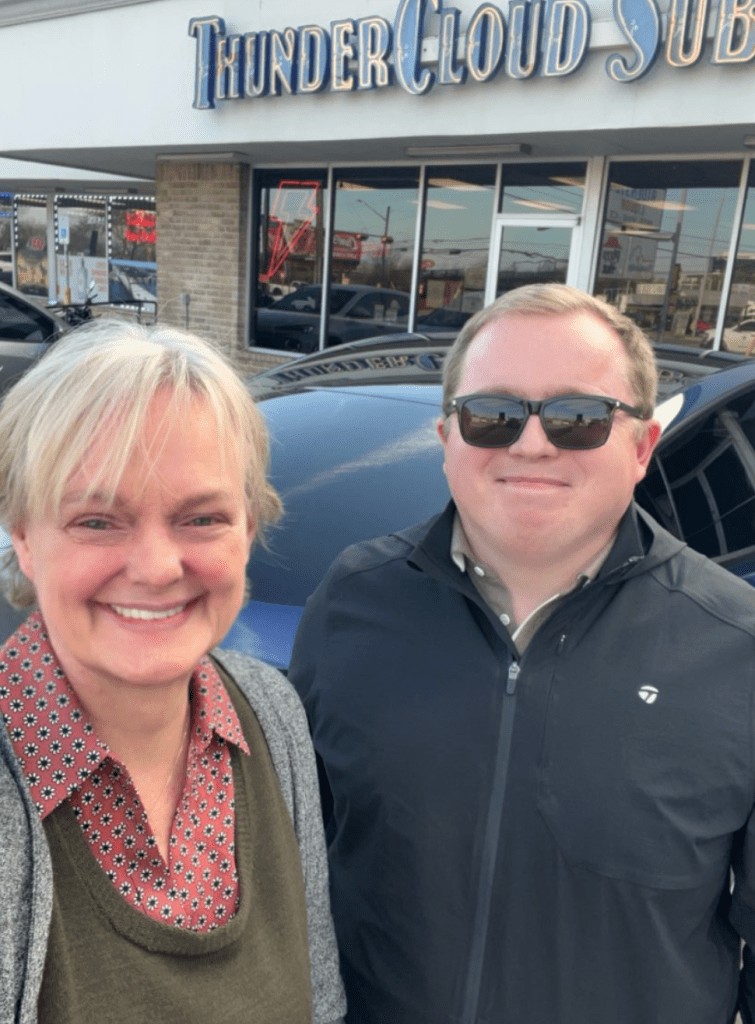
David Moss and Gail Alfar after an approximately hour long interview.

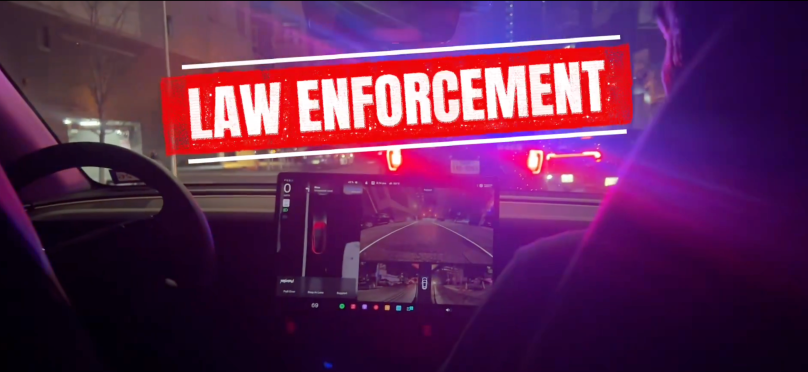
Gail’s Tesla Podcast Ep 156: Real-World Robotaxi Test – Stuck Behind Law Enforcement, Robotaxi Solves It

Episode 156 is a real-world showcase of Robotaxi handling an unexpected edge case in Austin: getting stuck behind a law enforcement vehicle blocking the road. Instead of frustration, we see smart autonomy in action—hitting support, getting quick response, and the system figuring out a safe reroute (including a clever alley maneuver) with zero manual input needed. It’s a perfect demo of how Tesla Rideshare Support and Robotaxi tech turn potential delays into seamless progress.

The ride starts normally but quickly hits the snag: police lights flashing, lane blocked. We press support at 00:45, Tesla Rideshare Support responds by 01:57 with accurate status (they can see everything via cameras and even monitor remotely), and by 4:20 we’re heading to Jazz (our destination spot—looks like a fun night out with live music vibes!). The Robotaxi assesses options, suggests backing up or alley routing, confirms safely, and gets us moving again while support confirms we’re already on our way.

This ep highlights huge improvements: support is fast, proactive, and informed—no more explaining from scratch. Robotaxi adapts intelligently, avoiding risks like double yellow lines or hazards, and resolves issues in real time. Super impressive for everyday reliability.

Catch the full Robotaxi test on X: Watch here — fast-forward to 00:45 for the support button press or 01:57 for the response magic.

Abundance in motion—Robotaxi keeps delivering!

—Gail

Leave a comment

Gail’s Tesla Podcast Ep. 149: Robotaxi for the Nights You Want German Beer AND Midnight Churros

Welcome to Ep 149, where we’ll do a few cruises around Austin for night eats via Robotaxi. We’ll start with a Whole Foods pickup → Koko’s Bavarian brews → San Ginés churros.

No parking drama, just seamless autonomy with friends. Jump to 00:51 for “Start Ride” or 1:08 for beer hall arrival.

At 00:10, Whole Foods start—Robotaxi on the way!

Night Hop Breakdown

Kicked off at Whole Foods, a legendary Austin grocery store, summoned white Model Y (quick wait). Smooth ride to Koko’s Bavarian—festive lights, sausages, beers and a Christmas Market. Hopped to Chocolatería San Ginés for midnight churros by the fireside—flawless nav through traffic.

Friends along for laughs; interiors spotless, and of course, the Robotaxi visualization is in gold!

At 2:29, churro delight—Robotaxi nails the drops.

Tech Takeaways

  • Autonomy Wins: Effortless urban hops; handles night crowds, turns perfectly.
  • Convenience Perks: Door-to-door, no parking hunts—ideal for multi-stop nights.
  • Fleet Fresh: Clean rides, intuitive screens; music syncs fun.
  • Night Mode: Solid low-light performance, safe pulls.
  • Abundance Vibes: Affordable, fun freedom.

Catch the full tour on X—fast-forward to 01:30 for ride views or 05:00 for wrap-up and this itme, there’s BONUS content at the end feat. the 2025 Tesla Shareholder’s Meeting!

—Gail

At the Royal Blue Grocery in East Ausitn

Gail’s Tesla Podcast Ep. 148: Robotaxi for the Nights You DON’T Want to Drive (or Park)

Welcome back to my podcast blog! Ep 148 hops through Austin’s night scene via Robotaxi: We hit De Nada tacos 456 cocktailsTexas BBQ. No driving, no parking—pure autonomy bliss. There’s also bonus content at the end of the video – you’ll come inside the Giga Texas factory lobby to see what is featured for tour groups.

Little mishap: We bought a special bottle of wine at the Royal Blue Grocery in East Austin, and accidentally left it at the Grocery. When we hopped into our Robotaxi we forgot about it. Later that night, we suddenly remembered it, so about an hour later we had our Model Y bring us back to Royal Blue... and the wine was still, there, on the patio, outside, no one had taken it! 

I hope you’ll imagine you are here with me in the video for seamless rides, spotless interiors, and night vibes; jump to 00:31 where a human thanks the robotaxi (without realizing its a robot!) and 00:45 for driverless confirmation or 04:01 for a perfect pull-up to 456, and watch it drift off into the Austin night!

Night Out Breakdown

Kicked off at Rudy’s with Grace Alfar, summoning a white Model Y Robotaxi. Immaculate inside, sunset in Austin to De Nada for tacos. Quick hop to 456 for cocktails—handled traffic cones, crowds flawlessly.

BBQ finale via blue Robotaxi; navigated night streets, precise stops. Total freedom from parking hunts.

At 05:02, wrapping the night in a blue beauty (see below) —flawless rides all evening.

Tech Takeaways

  • Effortless Autonomy: Driverless perfection; smooth urban navigation, cones, turns.
  • Interior Vibes: Clean, spacious; music syncing for fun rides.
  • No-Park Perks: Drop-offs at doors—ideal for bar hops, events.
  • Fleet Variety: White, blue models; quick summons, reliable.
  • Night Handling: Excellent in low light, traffic; safer than manual.

Catch the full adventure on X—fast-forward to 00:08 for ride start or 04:54 for night highlights.

—Gail

OUR LAST RIDE OF THE NIGHT…

Gail’s Tesla Podcast Ep. 147: Austin Night Vibes – Three Robotaxi Rides Unlocked!

Ep 147 dives into fresh Robotaxi access in Austin—three rides: Blue (00:15, $5/4mi), Red (05:22, $1.76/0.76mi), Liquid Silver (07:53, $5.25/4.25mi). Total: 9.01mi for $12.01 ($1.33/mi). Ride-along footage covers city tours, clean interiors, and seamless autonomy. Jump to 00:46 for spa-like vibes or 06:26 for dead-end mastery.

Video of Ep 147 Robotaxi rides

At 00:23, greeting the blue star with white roses—first time!

Night Ride Breakdown

Started at Central Market area in Austin, summoned blue Robotaxi (26min wait). Immaculate, spa-scented interior. Cruised 6th St (Dirty 6th), Christmas bars, and pulled over smoothly. Hit Skip Jack for oysters—small portions, but vibe on point.

Quick red hop (6min wait) to next spot. Black seats, stunning red exterior. Handled dead-end turnaround flawlessly—better than human drivers.

Final silver ride (14min wait) to burgers. Best yet, effortless navigation.

At 06:29, challenge accepted: Robotaxi nails the dead-end escape.

Tech Takeaways

  • Pricing Efficiency: $1.25/mi (blue), $2.32/mi (red, short hop), $1.24/mi (silver). Dynamic fares beat parking hassles.
  • Interior Quality: Spotless, black seats in newer fleet; feels like a luxury spa.
  • Autonomy Highlights: Gold trail viz, pull-over on demand (may loop blocks), urban handling (6th St crowds, dead ends).
  • Tourist Perks: No parking stress—perfect for Austin explorers.
  • Totals: 9.01mi, $12.01—affordable abundance.

Catch the full rides on X—fast-forward to 00:27 for rose gifting or 07:22 for fleet praise.

—Gail

Exploring Austin in Robotaxi: Episode 145 – Check out Nixta Taqueria and Techo Mezcaleria

In the latest installment of Gail’s Podcast, we dive into the real-world performance of Tesla’s Robotaxi during an evening of trying out newly opened spots in the heart of the city. Recorded on November 5, 2025, this episode captures three autonomous rides that prove the tech’s reliability under pressure. Despite bustling streets and peak-hour chaos, every trip was smooth, spotless, and stress-free.

Ride One: Seamless Pickup and Navigation

The adventure kicks off with a quick summon from a residential spot. The Robotaxi arrives promptly, gliding through local neighborhoods with precise lane handling. Visuals show the FSD interface plotting a 19-minute route, avoiding parked cars and pedestrians effortlessly. No interventions needed – just chill vibes as we head to Nixta Taqueria, a brand new local place to eat great food.

A Perfect Robotaxi Ride: Tackling Traffic and Turns

Mid-episode, we tackle denser urban flow. Clips highlight the vehicle’s adaptive speed in stop-and-go conditions, with the dash screen displaying real-time decisions. A highlight: navigating a busy intersection at dusk, where the system anticipates a merging van flawlessly. Clean interior and quiet operation make it feel like a personal chauffeur, even amid honking horns and streetlights.

We emerge into the streets of Austin to visit newly opened Techo Mezcaleria & Agave Bar, at 2201 Manor Rd, Austin, TX 78722.

There is no better way to explore the city of Austin in celebration of its people and food, than by Robotaxi. It is the cheapest and safest way to go.