
April 24, 2026
Episode 169 of Gail’s Tesla Podcast is live, and I couldn’t be more excited to share it with you!
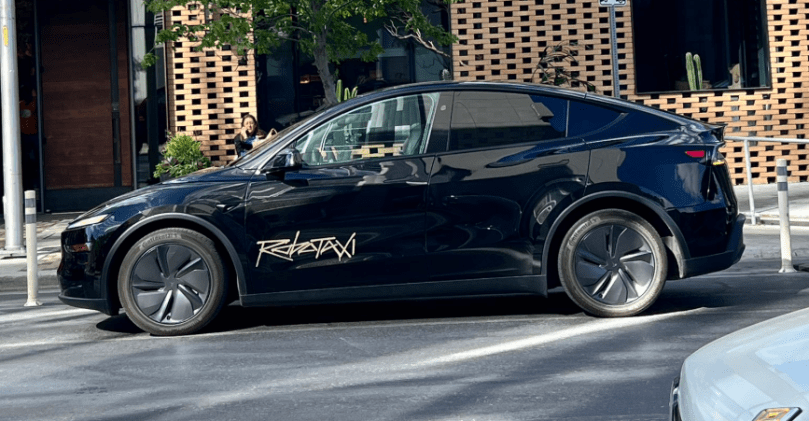
This time I climbed back into a Tesla Model Y running in full unsupervised Robotaxi mode for my second journey through Austin streets. Camera rolling the whole way, I captured my genuine, moment-by-moment reactions as the car took care of everything on its own. Downtown Austin energy, a stop at Starbucks on Riverside Drive, smooth navigation through real traffic — it felt like another chapter of living history. And the vibe? Straight-up gold Tesla energy all the way.
Watch the full ride and my unfiltered real-time commentary here:
In the episode you’ll hear me chatting away as the car handles downtown streets, eases through traffic, and elegantly solves a specific maneuvering situation near the coffee shop. One feeling kept coming up for me: “I just feel really safe and relaxed.” No stress, no hovering over imaginary pedals, only the simple pleasure of being a passenger in a vehicle that clearly understands its world.
What This Ride Revealed About the Technology We’re Actually Living With
There’s a special kind of wonder that comes from experiencing autonomy not in a polished demo video, but on the exact streets you drive every day. What made this second ride feel so capable, so natural, didn’t happen by accident. Several deep, compounding strengths showed up in quiet but powerful ways.
The car perceives everything through its cameras alone. No bulky extra sensors, no spinning LiDAR on the roof, no radar arrays like Waymo, just a clean, elegant vehicle reading the visual world the way humans do. That choice creates a system that feels integrated rather than bolted-on, and it performed beautifully in the mixed lighting, tree cover, and urban clutter of Austin.
That visual intelligence is trained on something no one else has at anywhere near this scale: billions of miles of real driving data collected from Teslas all over the world. The situations I saw today — busy intersections, pedestrians, cyclists, tight spots — aren’t rare edge cases in a simulator. They’re variations the AI has already studied thousands of times in similar real-world conditions. You can feel that collective experience in how confidently and proactively it drives.
Equally important is how it makes decisions. The autonomy stack uses end-to-end neural networks that map raw camera input straight to smooth vehicle controls. There’s no layer of brittle if-then rules trying to anticipate every possibility. The result is driving that feels holistic and context-aware — exactly what you want when the car has to resolve a real parking or departure challenge on the fly, the way it did for me near Riverside Drive.
None of this capability appears without serious computational horsepower dedicated to training on massive video datasets. Purpose-built infrastructure for processing driving data at enormous scale has made it possible to turn raw fleet experience into rapidly improving intelligence. Every unsupervised mile contributes to the next leap forward.
It also matters that this intelligence lives inside a vehicle platform that was designed for deep, continuous integration. The Model Y has evolved alongside the autonomy software through years of over-the-air updates. That tight coupling between hardware and software — refined on the road, not just in the lab — is what lets the car feel responsive and reliable instead of hesitant or overcautious.
What stands out most is the clear destination the work has been pointed toward all along: genuine unsupervised operation on ordinary public roads. Not perpetual supervision, not limited geofenced zones, but the confidence to let the vehicle handle complex, dynamic city driving without a safety driver present. Feeling that trust validated in practice — relaxed in the passenger seat while the car just… handles it — turns “someday” into something you can experience today.
And because the system keeps learning, the car I rode in yesterday is already smarter than the one from last month. Fleet-wide updates roll out regularly, folding lessons from rides just like this one into every vehicle. It’s a living technology that gets better with use rather than one that ships and then slowly ages.
As I finished this ride, that forward-looking excitement was everywhere — the same gold Cybercab energy that has me genuinely counting down to purpose-built robotaxi vehicles designed from the ground up for joyful, efficient, autonomous mobility. The unsupervised rides we’re taking right now in current models are the essential bridge to that next chapter.
These in-car episodes aren’t just tech demos for me. They’re a way of documenting a transformation I get to live inside my own city and sharing the real wonder (and occasional delighted “wait… it just did that?!” moments) with all of you who are following along.
If you haven’t watched yet, pour yourself something nice and take the ride with me. Then come back and tell me in the comments:
- What stood out most to you in this episode?
- Did any particular moment make the progress feel especially real?
- Have you tried an unsupervised Robotaxi ride yourself, or are you as excited as I am about where this is all heading?
I read every single comment and I’m grateful for this community. The journey is so much richer when we share it.
Stay curious. Stay adventurous. And keep watching the road ahead — it’s getting more interesting every single week. 🚕✨
Tags: #Tesla #FSD #Robotaxi #UnsupervisedDriving #GailsTeslaPodcast #AustinTexas #AutonomousVehicles #Cybercab
Previous episode: Episode 168 – Elon Musk Reposts Viral Robotaxi Narrow Street U-Turn


[…] Previous episode: Episode 169 – My Second Unsupervised Model Y Robotaxi Ride […]
LikeLike