Living in Austin, the epicenter of Tesla’s innovations, I’ve been following the evolution of autonomous driving for some time.
If you’re into cutting-edge mobility or just curious about how robots might soon chauffeur us around, this episode is a must-watch. As someone who’s navigated Austin’s traffic daily, seeing this tech in action feels like a glimpse into a smoother, smarter future right here in our city.
What Makes Episode 131 Stand Out?
Clocking in at around 3.5 minutes, it’s a concise yet captivating video demo that showcases the Robotaxi in real-world scenarios – right here in Texas.
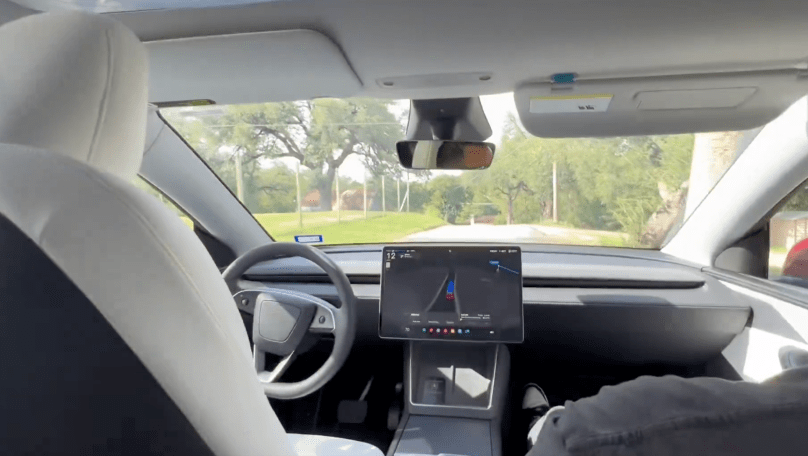
The episode kicks off with the Robotaxi arriving at a pickup point, and the Tesla Robotaxi pulls up smoothly to residential areas, navigating curves, and handling intersections with ease. Inside, the interface is intuitive: a large touchscreen displays navigation, estimated fares, and trip details. One highlight is the adaptive pricing – fares adjust dynamically based on demand or route efficiency, making it potentially cheaper than traditional rideshares.
Throughout the video, I demonstrate effortless features like:
Seamless Pickups and Drop-offs: The car arrives precisely, parks safely, and even handles changes mid-ride. In one scene, the drop-off location is updated while on a family call, showing how flexible the system is for real-life interruptions.
Interior Comfort: Shots of the spacious cabin include cup holders with drinks (shoutout to that pink water bottle – Austin summer essentials!), emphasizing a relaxed, hands-free experience.
Autonomous Navigation: The Robotaxi maneuvers through parking lots, stops at signs, and avoids obstacles without a hitch. It’s all powered by Tesla’s FSD tech, highlighting safety and precision in everyday drives.
Our city of Austin is Tesla’s playground – with Giga Texas nearby and constant FSD testing on our roads, Robotaxi will revolutionize how we get around. Imagine hailing a driverless ride to avoid I-35 traffic or zipping to South Congress for tacos without parking hassles. Gail’s demo shows fares as low as $1.35 for short trips, which could undercut Uber and make sustainable transport accessible for everyone. Plus, with adaptive pricing, peak hours might not sting as much.
Episode 131: Tesla Robotaxi is seamless autonomy with adaptive fares and effortless journeys pic.twitter.com/vrut7tzVN3
Hey everyone, welcome back to Gail’s Podcast! In Episode 129, I’m thrilled to share a super quick but incredibly cool 3-minute ride in Tesla’s Robotaxi right here in Austin, Texas.
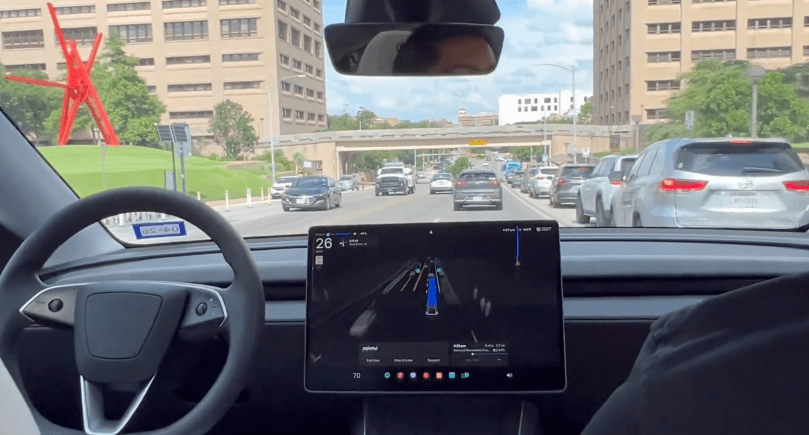
This one’s all about showcasing the brand-new arrow-to-car navigation feature in the Tesla app, cruising past the iconic Congress Street Bat Bridge, and soaking in the vibes with some upbeat music.
It’s a glimpse into the future of autonomous ridesharing.
The Ride Highlights
I hopped into this Robotaxi for a short trip through downtown Austin at dusk – the perfect time to catch the city lights and that magical evening energy. The star of the show? The Tesla app’s arrow navigation system.
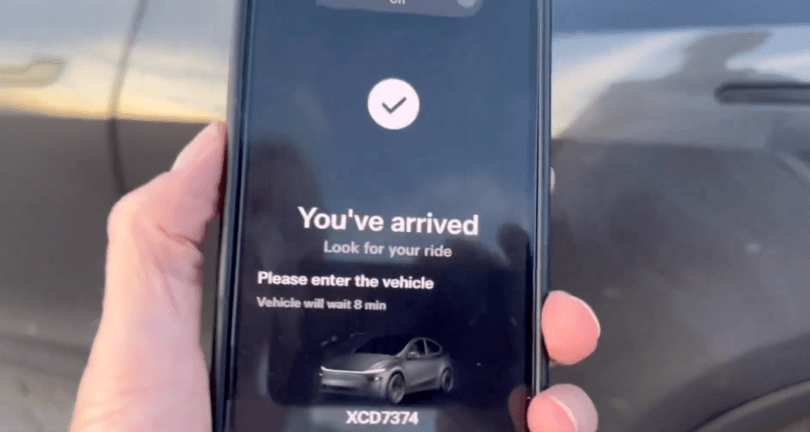
If you’ve ever struggled to spot your ride in a busy parking lot or on a crowded street, this feature is a game-changer. It uses augmented reality-like arrows on your phone screen to guide you straight to the vehicle, counting down the distance in real-time (from 121 feet all the way to “You’ve arrived!”). It’s intuitive, fun, and honestly feels like playing a little AR game – I was hooked!
Once inside, the Robotaxi handled everything flawlessly with Full Self-Driving (FSD). We glided smoothly through traffic, past bustling buildings and neon signs, and over the Congress Avenue Bridge – home to Austin’s famous bat colony (though no bats were out this time).
The ride was serene, with chill music playing in the background to set the mood. No driver, no fuss – just pure autonomous bliss.
We arrived at the destination in no time, and the car parked itself like a pro.
Why This Matters
Tesla’s Robotaxi is pushing the boundaries of urban mobility, and features like this arrow navigation make it more accessible and user-friendly for everyone. Whether you’re directionally challenged (like some of us!) or just want a seamless experience, it’s details like these that elevate the whole system. As a beta tester and a supporter of Elon Musk’s vision, I can’t wait to see how this evolves – imagine this scaling to cities worldwide!
Watch the Full Episode
If you’re new to the podcast, subscribe to my account on X for more Robotaxi adventures, Tesla FSD updates, and insights into the world of electric vehicles and autonomy.
Podcast Ep. 129: Quick 3 minute Austin ride in Robotaxi, showing off App arrow-to-car navigation, cruising past the Bat Bridge on Congress St. Loaded with music, it’s LIVE! 🦇 pic.twitter.com/jCtrRjcMGs
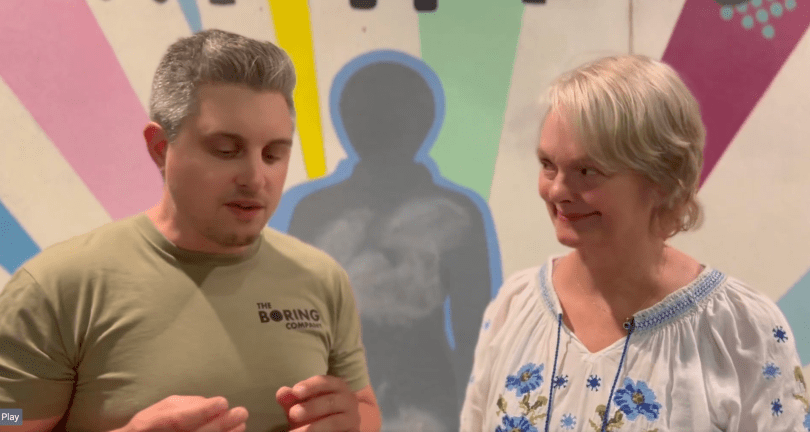
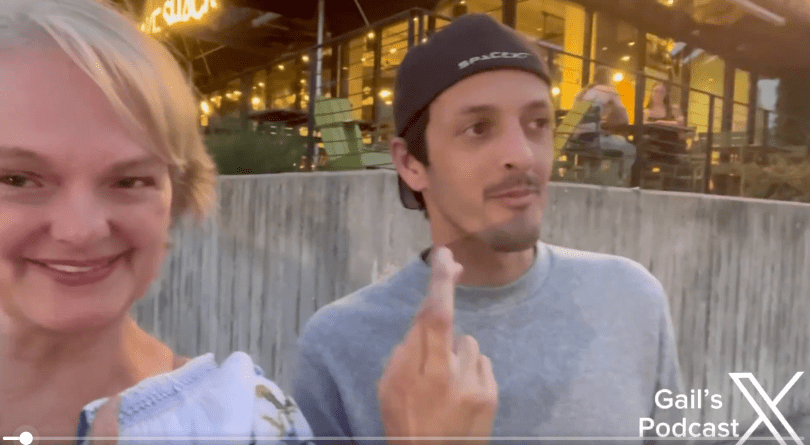
Welcome to the full scoop on Episode 128 of Gail’s Tesla Podcast, where I talked with the unstoppable Alexander Kristensen. Alexander flew all the way from southern Sweden to Austin just to chat about his epic campaign to bring Tesla’s Full Self-Driving (FSD) to the streets of Stockholm. If you’re into tech revolutions, bureaucratic drama, and saving lives on the road, this one’s for you.
The Setup: From Sweden to Austin Vibes
He’s not from Stockholm (my bad on the intro slip-up – he’s from the south of Sweden), but he’s laser-focused on getting FSD approved there.
Elon Musk himself noticed his project, which is all about pushing the city to greenlight testing, validation, and eventual rollout of FSD for everyday Swedes. We dove right in, starting with his mind-blowing first ride on FSD here in the States.Alexander shared: “I came here from my friend… He picked me up from the airport. We kind of got a look at FSD for the first time. Never driven on FSD, driven on autopilot which is allowed in Europe.” His buddy punched in the hotel address, and boom – the car handled everything from airport chaos to lobby drop-off. No interventions needed. Then, the next day, Alexander hopped in the driver’s seat for some city traffic action. “I’m not… I don’t need to do anything. I’ve never driven in the U.S. before… The car just took us there so.” As someone who’s part Swedish (shoutout to my heritage!), I was geeking out. Austin’s freewheeling vibe makes FSD feel like second nature, but Sweden? Total opposite.
The Bureaucratic Buzzkill: Why Sweden’s Saying “Nej” to FSD
Here’s where it gets real. Alexander broke down the red tape holding back progress. In the U.S. (Austin), the default is “yes” – innovate first, regulate. But in Sweden, it’s “no” until you prove it’s safer than safe. Tesla applied to test FSD with a safety driver (just like our Supervised FSD here), and they got the thumbs-up from the national Transport Administration. But the local Stockholm government? Flat-out “no.” Why? It’s all politics. The current left-leaning crew – Social Democrats and the Green Party (the ones pushing EVs) – control the Traffic Board. Alexander’s plan? Rally votes for the opposition in the 2026 elections (September, mark your calendars if you’re Swedish!). Get tech-savvy folks in power who see FSD’s potential. “We gotta cast our votes on them… on the candidates that are more technical,” he said.And let’s talk safety – the real heart of this. Alexander nailed it: FSD could slash accident risks by 9-10 times compared to manual driving.
Drawing from Tesla’s data and real-world stats, it’s a game-changer. He compared it to Volvo’s 1959 invention of the three-point seatbelt, which they made standard in all cars. “FSD is the next three-point seatbelt… And like now we are saying no to the next 3 points… What is wrong with your brains with people? Come on!”
Bureaucracy gone wild is blocking life-saving tech. As Alexander put it, Sweden prioritizes traffic safety above all, so denying FSD – which is safer – is straight-up counterproductive.
First Impressions and the Future of Autonomy in Europe
Alexander’s fresh eyes on FSD were gold. Coming from a place where even basic autopilot is the max, he was blown away by how it navigated unfamiliar U.S. roads. “Some time I was like, is the car gonna do the right thing here?”
Spoiler: It did, every time.
We wrapped with me hyping his hustle: “All Swedish people are very lucky to have this guy. He is fighting for the good fight… He wants people to be safe.” Alexander shrugged off potential hate – he’s in it for the win. Elections bring drama, but hey, progress ain’t easy.
Final Thoughts: Let’s Make Autonomy Global Watch the interview here!
Alexander Kristensen jets from Sweden to Austin to discuss the latest on Stockholm’s FSD push. Enjoy this conversation on Sweden’s autonomous driving future. Episode 128 is LIVE! 🚗 pic.twitter.com/e6Qwyf0WLQ
Episode 128 is a wake-up call for how politics and tech collide. If Sweden can flip the script, it could pave the way for Europe-wide FSD adoption, saving lives and supercharging sustainable transport. Big thanks to Alexander for the insights, and shoutouts to the crew:
@LinkN01 (great meeting you!),
@TheCaptainEli for the intro,
@RimaSukhadia on camera,
@JohnChr08117285 for the FSD demo, and
@Muskstaycalm plus the gang.This episode is under 8 minutes and pure inspiration. If you’re in Sweden, join the push! Everywhere else? Activate FSD Supervised and feel the future.
I’m excited to share Episode 127 of Gail’s Tesla Podcast, where I take my friend, Eli (@TheCaptainEli on X), who travelled from Israel, on his very first Robotaxi ride right here in Austin, Texas.
What started as a simple evening outing turned into an unforgettable adventure filled with surprises.
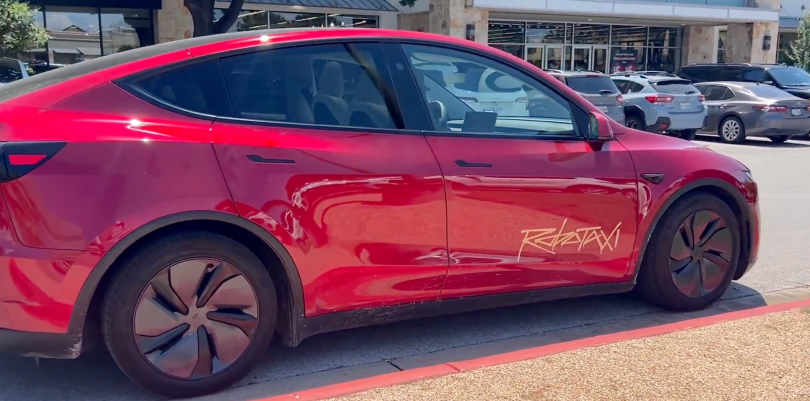
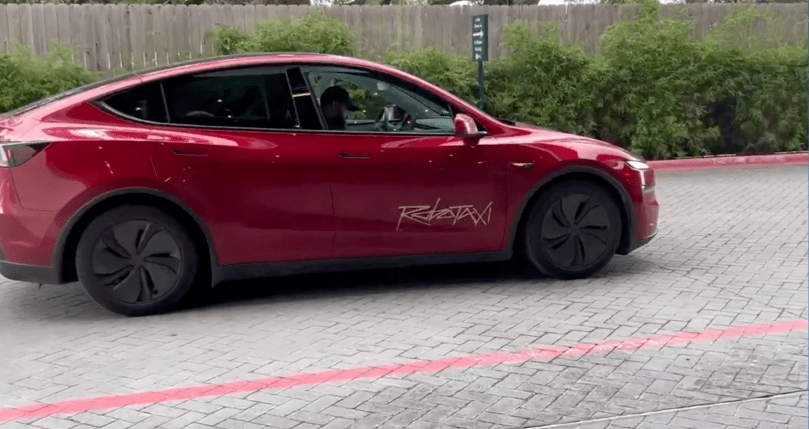
We hopped into a brilliant RED Tesla Robotaxi, and set off into the night. Almost immediately, we noticed another Robotaxi trailing us closely— was it a coincidence, or something more coordinated?
We were puzzled and intrigued as it even waited for us at a traffic light. The real jaw-dropper came at the end when our Robotaxi flawlessly parked itself in a 2-hour spot, a feature we hadn’t seen before.
The ride was smooth, safe, and a testament to how far Tesla’s Full Self-Driving technology has come.
Captain Eli’s reactions were priceless—he was amazed by the seamless navigation through Austin’s bustling streets, the intuitive interface, and the overall futuristic feel. We chatted about everything from the tech behind Robotaxi to its potential impact on urban mobility.
If you’re curious about the future of transportation, check out the full episode video on X here. It’s about 7 minutes of pure excitement!
🚗 Took @TheCaptainEli on his first Robotaxi ride in Austin. We’re puzzled as it trails another Robotaxi and amazed when it parks in a 2-hour spot—a first! Episode 127 is LIVE pic.twitter.com/hHVKuF2kl4
I’m currently Beta testing the Robotaxi in Austin, Texas, and looking forward to wide release of this incredible product from Tesla made here in Austin!
Hey everyone, Gail here – your go-to early Robotaxi tester, Tesla FSD podcaster, and professional poaster! If you’ve been following my adventures on X, you know I’m all about Tesla. Episode 126 of my Robotaxi series is a wild one. I took Tesla’s autonomous beast for a spin through the heart of Austin, Texas, and let me tell you: this thing handled the University of Texas campus like a pro, conquered a ridiculously steep driveway, paused for a feathered friend, and even had a brief meeting with another Tesla Robotaxi.
The Setup: Hailing the Future
I summoned Robotaxi via the app (who needs to drive when AI can do it better?), and within minutes, out cab came. No driver small talk, no awkward radio choices – just autonomy. This is Full Self-Driving (FSD) beta in action, with a safety rider on board for those extra peace-of-mind vibes during testing. I headed to Hancock Recreation Center, right through the bustling UT campus. You’ll notice on the screen, the estimated arrival was 4:32 PM.
Spoiler: It nailed it.
Zipping Through UT: Pedestrians, Buses, and Zero Stress
As we cruised into the University of Texas area, the real test began. Picture this: pedestrians darting across paths, buses lumbering along as expected and traffic that’s equal parts chaotic and charming. My Robotaxi? Cool, both with the AC inside and the relaxed vibe. . It seamlessly shifted lanes, prepped for left turns on busy streets, and even adjusted speed when a big Austin Metro bus cut in front. I couldn’t help but narrate the whole thing (check the video below – I turned it into a mini-podcast episode on the fly). One highlight? We passed under a pedestrian bridge and navigated around more buses than I could count. It got me thinking: How long until these empty daytime buses get replaced by fleets of efficient, Robotaxis? Safer for everyone, cheaper for society, and zero emissions. Elon Musk and the Tesla team are onto something revolutionary here – rethinking not just cars, but entire transit systems.
The Steep Challenge: Hancock’s Hill of Doom
Now, for the pièce de résistance: the driveway up to Hancock Recreation Center. If you’ve been there, you know what I’m talking about – it’s steeper than many rollercoaster drops! I held my breath as we approached, but the Robotaxi swung left with precision, letting another car go first in a super polite move (take notes, human drivers). Then, up we went: smooth acceleration, no scraping, no drama. We pulled into the parking lot, dodging golfers and a guy with his cart, and parked right on time. As the ride ended and I gathered my stuff, the Robotaxi gently rolled away… and slowed down for a bird in the road. A BIRD! That’s next-level AI empathy right there. Safety isn’t just about avoiding crashes; it’s about protecting all life on the road.
Watch the Full Adventure
Don’t just take my word for it – dive into the action yourself. Here’s the video from my X post, embedded for your viewing pleasure:
🚗 Robotaxi rocks Austin! Zipping through UT campus, tackling a steep golf course, pausing for a bird, and meeting another Robotaxi. Episode 126 is LIVE! pic.twitter.com/ifa1QEZfdF
Rides like this aren’t just fun – they’re a glimpse into a world where traffic jams are history, accidents are rare, and getting around is effortless. As a beta tester, I’m blown away by how far Tesla’s tech has come. From interacting with other autonomous vehicles to handling urban unpredictability, it’s clear we’re on the brink of something massive. If you’re in Austin, keep an eye out for these bad boys – and if you’re not, stay tuned because Robotaxis are coming to a city near you soon. Would you hop in a driverless Tesla tomorrow? Drop your thoughts in the comments below, and don’t forget to subscribe to my podcast for more episodes. Robo dreams are real, y’all! Until next ride, Gail Alfar Writer, Podcaster, and Mom of Five Great Kids!
Riding a Tesla Robotaxi in Austin —check out first-timer reactions from Liam McNamara as we zip from golf course to hospital in the expanded zone! You’ll also hear Liam’s dad talk about his first ride!
Ep 125 of Gail’s Podcast is live! 🎙️ Riding a Tesla Robotaxi in Austin —first-timer reactions as we zip from golf course to hospital in the expanded zone! Austin, Texas pic.twitter.com/2e5p9eVz9o
FOR MEDIA USE ONLY News media is welcome to use my material in connection with a story or article. By downloading any content I create, you understand and hereby agree and represent that: (1) you are a member of the news media; (2) use of the content is in connection with a story or an article appearing in newspapers, periodicals, digital publications or television; (3) all images and rights thereto remain the property Gail Alfar.; and (4) use of the image is not for publication covers, advertising, promotion or otherwise for commercial purposes. Furthermore, use of any and all images and content appearing on this page must each include the notice “Courtesy of Gail Alfar” Use of materials copied from this website is at your own risk. You must obtain prior written consent from Gail Alfar for uses that exceed the above parameters.
Summoning Tesla Robotaxi in Austin—zipping to coffee shops, the fish aquarium, and more, with seamless pickup changes on the fly! Austin, Texas
Watch here:
Ep 124 of Gail’s Podcast is live! 🎙️ Summoning Tesla Robotaxi in Austin—zipping to coffee shops, the fish aquarium, and more, with seamless pickup changes on the fly! Austin, Texas pic.twitter.com/t8wO4KGx6j
FOR MEDIA USE ONLY News media is welcome to use my material in connection with a story or article. By downloading any content I create, you understand and hereby agree and represent that: (1) you are a member of the news media; (2) use of the content is in connection with a story or an article appearing in newspapers, periodicals, digital publications or television; (3) all images and rights thereto remain the property Gail Alfar.; and (4) use of the image is not for publication covers, advertising, promotion or otherwise for commercial purposes. Furthermore, use of any and all images and content appearing on this page must each include the notice “Courtesy of Gail Alfar” Use of materials copied from this website is at your own risk. You must obtain prior written consent from Gail Alfar for uses that exceed the above parameters.
Austin, Texas. Join my daughter Grace and I on a Tesla Robotaxi trip to Freddo coffee shop ATX and the Yeti store. We’ll also stop by the Embassy Suites Hotel on Congress where we’ll show someone their very first glimpse of a Robotaxi!
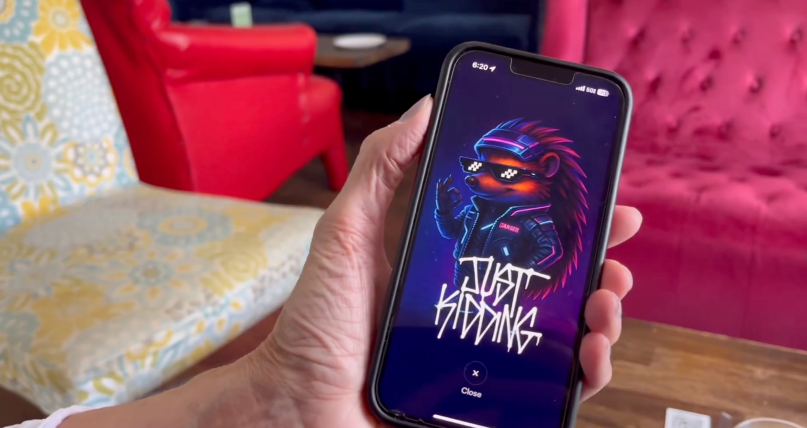
We also discover that the Robotaxi takes NO TIPS. Instead a cute hedgehog pops on the phone screen to say, “JUST KIDDING.”
Watch here:
Ep 123 of Gail’s Podcast is here! 🎙️ We’re inviting you to join us on a Tesla Robotaxi trip to Freddo ATX and Yeti in Austin, Texas pic.twitter.com/8knVml9f1x
FOR MEDIA USE ONLY News media is welcome to use my material in connection with a story or article. By downloading any content I create, you understand and hereby agree and represent that: (1) you are a member of the news media; (2) use of the content is in connection with a story or an article appearing in newspapers, periodicals, digital publications or television; (3) all images and rights thereto remain the property Gail Alfar.; and (4) use of the image is not for publication covers, advertising, promotion or otherwise for commercial purposes. Furthermore, use of any and all images and content appearing on this page must each include the notice “Courtesy of Gail Alfar” Use of materials copied from this website is at your own risk. You must obtain prior written consent from Gail Alfar for uses that exceed the above parameters.
Last week, my commute to work across Austin using Tesla Full Self Driving Beta version 10.69.2 was flawless! I continue to experience this daily.
I believe a world where autonomy is the norm is closer than we realize. This article attempts to answer the question, who will benefit once Tesla autonomy is solved?
Anyone who is unable or does not want to own a car
The Elderly and other People in need
Commercial Industry
Mars building team
Millions of people will avoid fatalities and injuries
Tesla Humanoid Robot
Anyone who is unable or does not want to own a car
Tesla S Interior, credit, Tesla Gallery
“Self-driving electric cars will be all that matters. Gas car without autonomy will be like riding a horse & using a flip phone. That still happens, but it’s niche.” July 2022 – Elon Musk
Three of my kids use Uber to get to work and school instead of owning a car, but the cost is high for this service. Going to work daily in a shared autonomous vehicle (a dedicated Robotaxi) will cost much less than today’s Uber or Lyft because an autonomous vehicle will not have to have a person at the wheel.
When costs to commute in dedicated Robotaxis become low enough, it can follow that many people will decide not to buy a vehicle.
The commute as we know it can be transformed when autonomy is solved.
Tim Urban tweeted, “The big story is hard to see when you’re inside of it. We’re all this wrong about something right now.” Tim quoted a newspaper clip from December 2000 from the Daily Mail which read “Internet may be just a passing fad as millions give up on it.” The article cited ‘experts’ from the Virtual Society project, which published a report saying that “predictions that the Internet would revolutionize the way society works have proved wildly inaccurate.”
So, as weird as it may sound, it may become niche to own a car at all in the future. Can we imagine a future where the majority of vehicles are autonomous?
“When the car is FSD without supervision, ie Robotaxi, you’ll be able to earn far more than monthly lease/loan cost by allowing others to use it. Managing a small fleet of Robotaxis will be a career for many & much better than driving a single car. “ October 2019 – Elon Musk
The Elderly and Other People in Need
I reached out to several Tesla owners and others for ideas, and many agree that when Tesla autonomy is solved, it can benefit the elderly and the disabled.
“I am completely blind, and would love to walk you through an average day, and how many times an autonomous vehicle would be of assistance.” rlloken

“It will give the elderly greater independence for longer.  Also opens doors for the physically disabled folks who might not be able to drive currently.”  Wanda Hudson

“People with physical disabilities and medical conditions such as seizure disorders & visual impairment would greatly benefit from such incredible technology. And those who depend on others to get places. For many, it will be independence they never experienced before.” IheartTesla
Tesla autonomy has to be able to work on roads that the car hasn’t been on before and in situations where there is no connectivity. This will help many people who live in rural areas to gain independence if they cannot own a car.
War situations put people in great danger and autonomous vehicles could help bring supplies and rescue people. Tesla autonomy has to be able to work in millions of unpredictable situations and that will include places with unrest.
Commercial Industry
Tesla Semi, credit, Tesla Gallery
Autonomous Tesla Semi will be a huge benefit to businesses and allow the trucker to perform other valuable tasks instead of tedious driving.
Autonomy will lead to lower costs for production and delivery of all goods and food throughout the entire supply chain. Delivering these essentials will be less expensive.
Mars Building Team
Credit Arash Malik Cybertruck is like a Mars Rover for Earth.
Elon Musk tweeted right after the official Cybertruck unveiling in Nov 2019,
“Tesla Cybertruck (pressurized edition) will be official truck of Mars.”
I believe that in our lifetime, humans will travel to Mars. When the Mars building team gets there they can all benefit from autonomous Cybertrucks that will help deliver and haul in extreme conditions. In this sense, these heavy-duty vehicles can protect human lives and help build the first outpost on Mars.
Just as there is a small window of opportunity for humans to make it to Mars, there is also a similar small window of time where full autonomy can be solved. Now is that time.
Millions of People will Avoid Fatalities and Injuries
Every day Tesla gets closer to solving autonomy, and we see vehicle safety improvements. Tesla does not intend to create autonomy that is specific to keeping a car in its lane or even lane changes. Autonomy for Tesla is a generalized solution.
"I definitely want talented people who are working on AI to consider working at Tesla because I think we’re solving an important part of AI, and one that can ultimately save millions of lives and prevent tens of millions of serious injuries by driving an order of magnitude safer than people.”
Elon Musk (at 2022 Sharholder's Meeting)
If you have ever taken care of kids you know how frightening it is when a child runs into a busy street. It is heartbreaking to hear about a life ending in a car crash.
There were 35,766 fatalities and 1,593,390 injuries from crashes in 2020 (source data NHTSA) There were a total of 5,982 pedestrian fatalities from being struck by a car (source data NHTSA). Distracted driving led to 3,142 deaths in 2020, NHTSA reported, “The number of fatalities in distraction-affected crashes, i.e., a crash involving at least one driver who was distracted, was 3,142 or 8.1 percent of all fatalities in 2020. This represents a 0.7-percent increase from 3,119 in 2019.” – Overview of Motor Vehicle Crashes 2020
Tesla expects the safety level of autonomous cars to be 10 times safer than non-autonomous cars.
Safety is emphasized in this excerpt from Tesla’s blog,
“In the US, there is one automotive fatality every 86 million miles across all vehicles from all manufacturers.
For Tesla, there is one fatality, including known pedestrian fatalities, every 320 million miles in vehicles equipped with Autopilot hardware.
If you are driving a Tesla equipped with Autopilot hardware, you are 3.7 times less likely to be involved in a fatal accident.
Tesla Autopilot does not prevent all accidents – such a standard would be impossible – but it makes them much less likely to occur.
It unequivocally makes the world safer for the vehicle occupants, pedestrians and cyclists.
No one knows about the accidents that didn’t happen, only the ones that did.
The consequences of the public not using Autopilot, because of an inaccurate belief that it is less safe, would be extremely severe.
There are about 1.25 million automotive deaths worldwide.
If the current safety level of a Tesla vehicle were to be applied, it would mean about 900,000 lives saved per year.
We expect the safety level of autonomous cars to be 10 times safer than non-autonomous cars.”
When Elon Musk spoke at the ONS 2022 conference in Norway, he emphasized the importance of having Tesla cars being able to do self-driving when he answered the question, “what keeps you up at night?” he stated,
“But I am fundamentally an engineer or a technologist and so the two technologies I am focused on to ideally, get done before the end of the year are getting our Starship to orbit, which I think is important for expanding consciousness beyond earth and life beyond Earth. And then, having the Tesla cars being able to do self driving. So have self driving and wide release at least In the USA, and hopefully, potentially in Europe, depending on regulatory approval.” – Elon Musk
Tesla is developing a helpful humanoid robot that will rely on the same technology that is available in every vehicle. At Tesla AI Day 2021, Elon Musk said,
It's around 5’ 8”, has sort of a screen where the head is for useful information, it’s otherwise basically got an autopilot system in it so its got cameras, about eight cameras, full self-driving computer, and makes use of all of the same tools that we use in the car.

Things that I think are really hard about having a useful humanoid robot is, can it navigate through the world without being explicitly trained?  I mean without explicit line-by-line instructions?
Tesla AI Day Part 2 on September 30 will be very interesting as it will reveal the incredible progress as well as the challenges of building a humanoid robot whose purpose is to help humans in a world built by humans.
CONCLUSION
This quote from Tim Urban invites us all to imagine the future. “The big story is hard to see when you’re inside of it. We’re all this wrong about something right now.”
When Tesla Autonomy is solved, people of all ages can benefit. This article highlights these 6 ways:
The elderly and also the many talented people with disabilities that make it so they cannot drive
People who live in areas of unrest or war and even in rural areas
All of us because we depend on the commercial industry and its supply chain. When this becomes driven by autonomy, it will usher in a new era
We will go to Mars one day, and having an autonomous fleet of pressurized Cybertrucks there will help get the hard work done
Fatalities and injuries will be reduced by a large margin, saving millions of lives. Tesla expects the safety level of autonomous cars to be 10 times safer than non-autonomous cars
People will benefit from a high-functioning Telsa bot fleet, which relies on the same tools as Tesla cars
This article is part one of a series. It is written before “Tesla AI Day II.” We’ll look at this question again after the September 30 event. Tesla and SpaceX remain the top two most desirable places to work for engineers and hire some of the smartest people in the world to work on their AI Team.
Exclusive to What’s Up Tesla – This article was created by Gail Alfar with the goal to inspire you to support the important advancement of generalized autonomy as a force for good. The header photo is by @BLKMDL3 with permission. All Rights Reserved. September 18, 2022
One-Time
Monthly
Yearly
Make a one-time donation to support What’s Up Tesla
Make a monthly donation to support What’s Up Tesla



 whatsuptesla.com