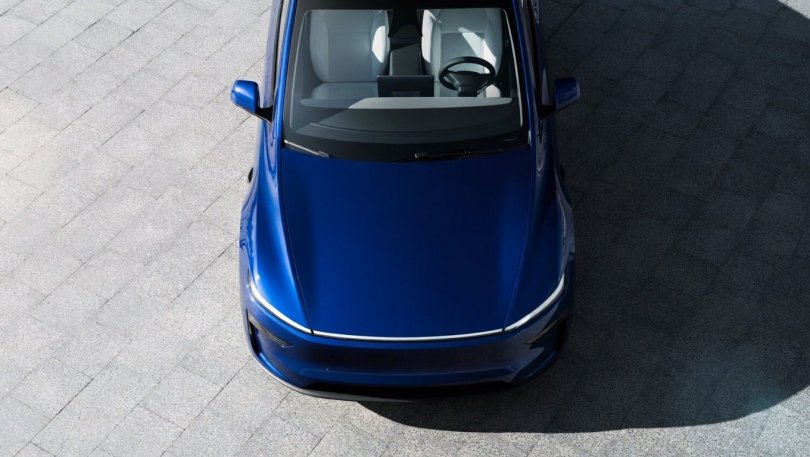
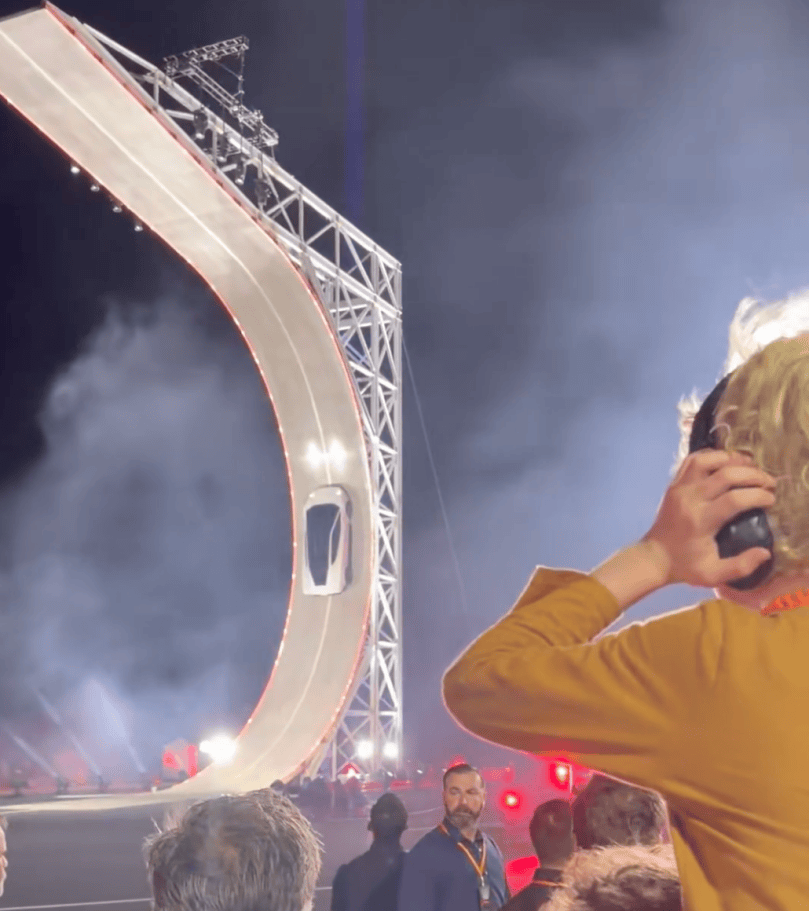
(McGregor, Texas) I drove to the outskirts of the Tesla Roadster reveal last night to be close to the historic event, the last of the cars Tesla will build that will be designed for manual driving by a human. Elon said, “Life cannot just be about solving one miserable problem after another. There need to be things that inspire you, that make you glad to wake up in the morning”.
Elon Musk has long been a man who wants to max out happiness for the general population. The Roadster does that, and you can bet people will love going to future events that feature this wild car with its thruster and suction stunts. I recall as a kid people lining up in stadiums to see Evel Knievel jump over a line of cars. People will be beyond excited to see the Tesla Roadster do this.
One writer, M.C.A. Hogarth, put it well when he said that not everything is about whether you can imagine it being useful to you. He is correct: with art, things are lovingly created simply for the act of making them.
Hogarth goes on to write (and I reference him because Elon Musk chose to highlight his words): “we do not know if what we’ll learn will make your toaster work better and you will never realize it because you take for granted that things get better without thinking through how that happens”.
Elon knows that he will not inspire people with everyday toasters, or a “Tesla” phone, but he knows he CAN inspire some kid, somewhere, with a real car that can drive upside down. This is the reason for the Roadster.
Despite the grind of daily life and the routines and obligations that kids often have, I know there will be many kids who will see the videos shared from the event by Tesla, and even by people I consider friends from the Tesla community. These people’s videos will start to spread, and everybody will see them.
When Elon said that he knew we would need real people there to prove it really happened, he was right. This DID happen last night. It WAS reality. It was super cool. It WILL inspire minds and bring them great excitement. What a huge gift to us all. Thanks to Elon Musk. He was once a kid too, who found excitement. Thankfully he made it to the US where he could build great things like this Roadster.
Adding a compilation of posts here by people who shared their videos from their iphones from the actual event!
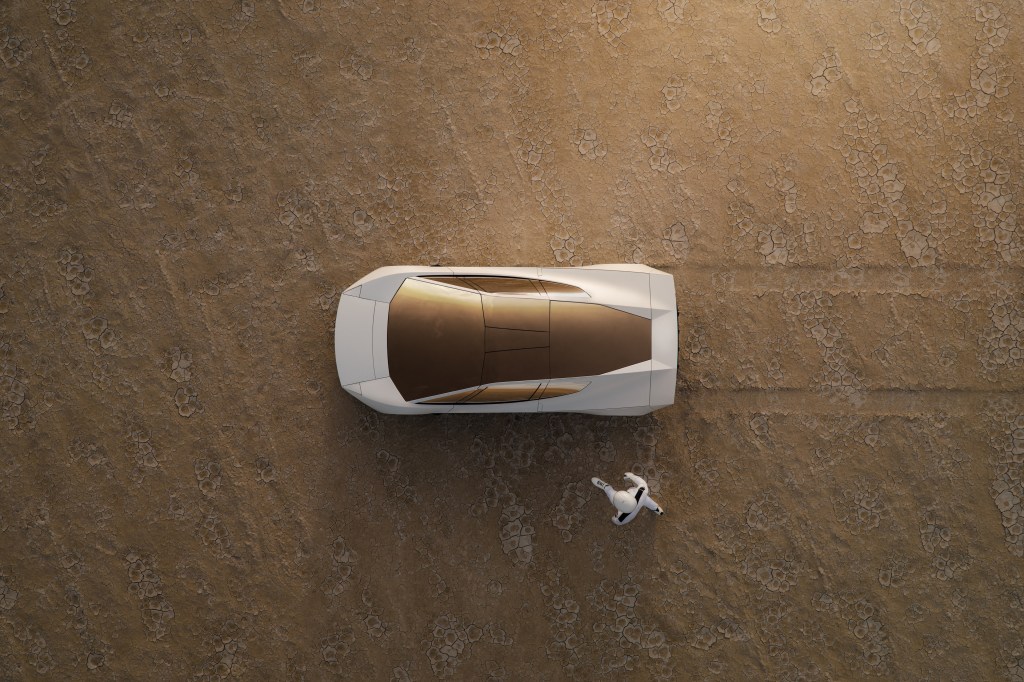
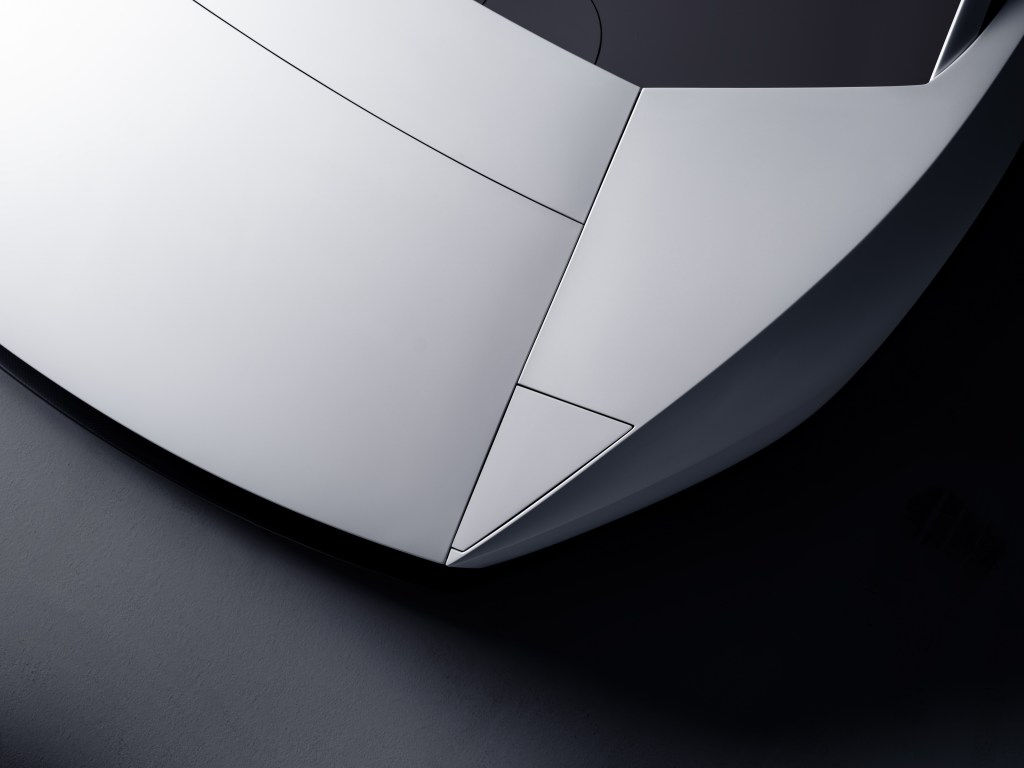
Here are newly released images of the Roadster (there are many more) for media usage by the Tesla Media website, below shows off the Gold Glazed tinted glass.
Tesla Roadster has Gold Glazed tinted glass mimicking the copper coating of spacesuit visors, with subtle titanium accents. Image courtesy Tesla, Inc.
Above shows the Ano White paint, which is an aerospace-derived finish w/ UV & cryogenic protection, electrostatic dissipation & corrosion resistance. Concealed headlights are another asset, bringing a a minimalist, highly technical form. My old Mazda RX7 had this and seeing it on the Roadster just makes perfect sense!
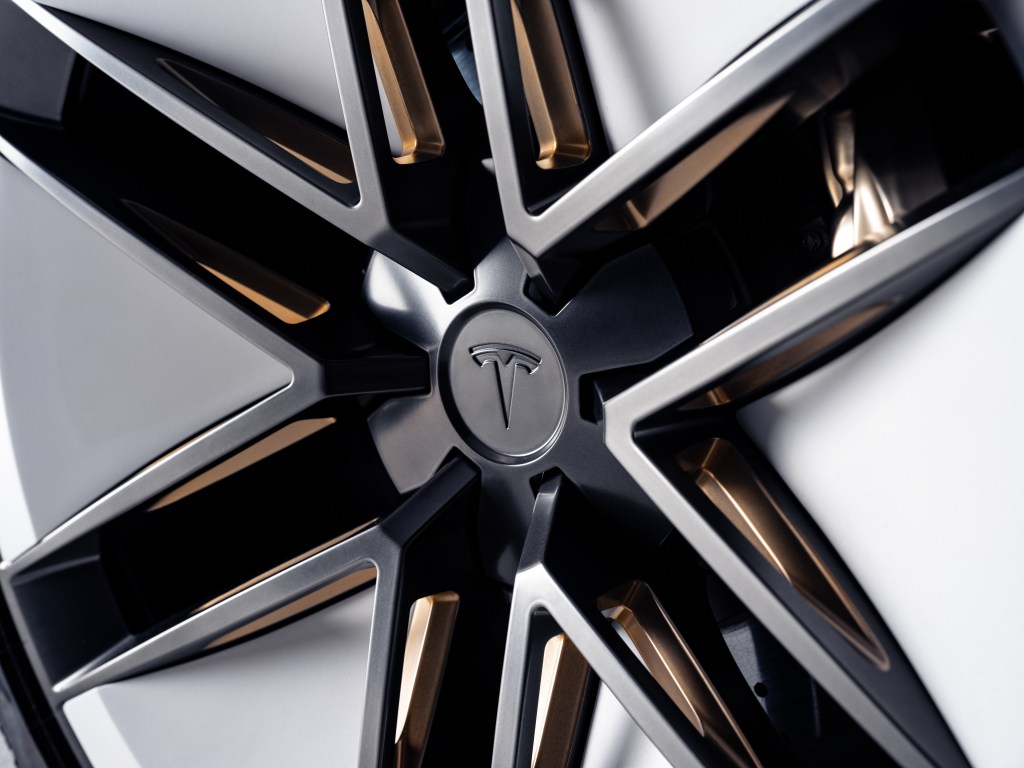
Below is a close-up of the super light wheels w/ thin spokes that reinforce structural strength when earthbound.
Thanks for reading. I’m Gail Alfar. I write about Elon Musk, Tesla, SpaceX, and the things that make the future feel real. You can find me on X at @gailalfaratx and on Gail’s Tesla Podcast.
This is an independent personal account. All opinions are my own.
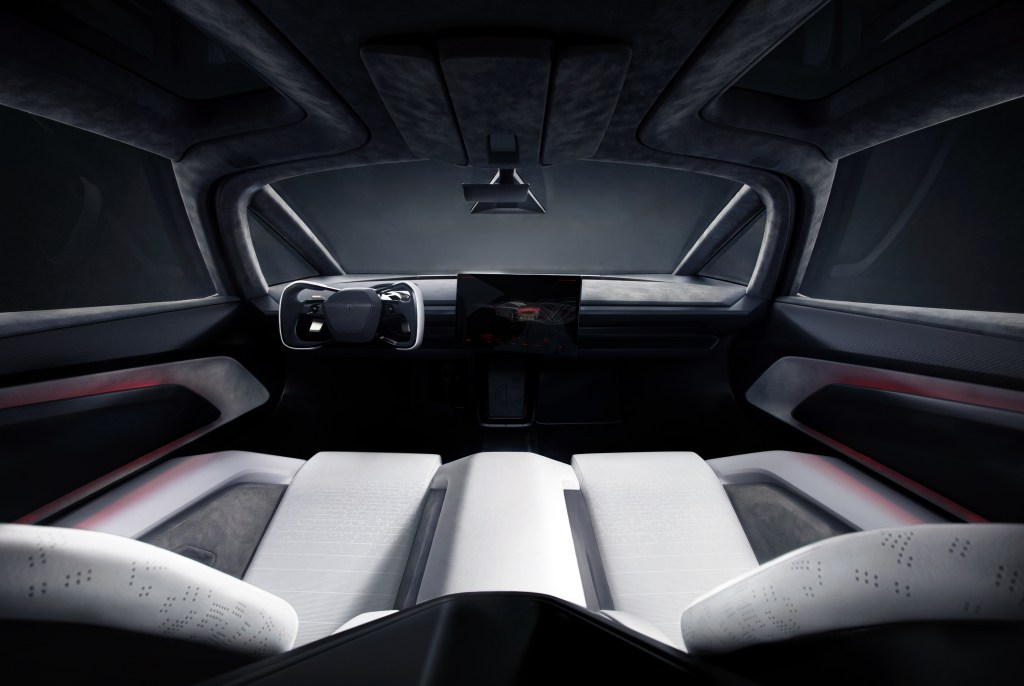
Interior of the Roadster
For the interior of the Roadster, Tesla explains, “Interior– Ultrawhite interior w/ gray microsuede detailing & seat bolsters for added grip – Manual controls & a fixed seat position reduce overall vehicle mass – Lightweight, high-strength materials throughout, including magnesium, titanium & carbon fiber help reduce it further This allows Roadster to respond to driver inputs almost instantly”.
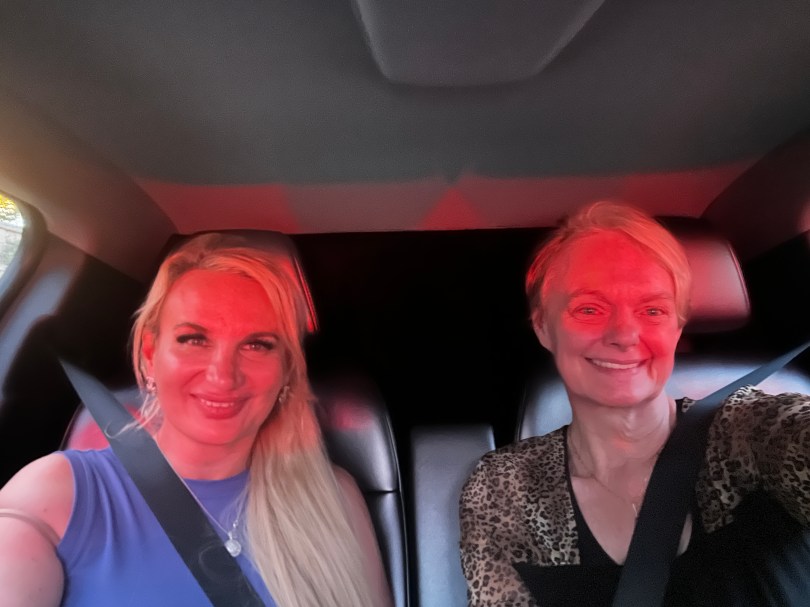
Austin, Texas. Episode 193 of Gail’s Tesla Podcast is now live.
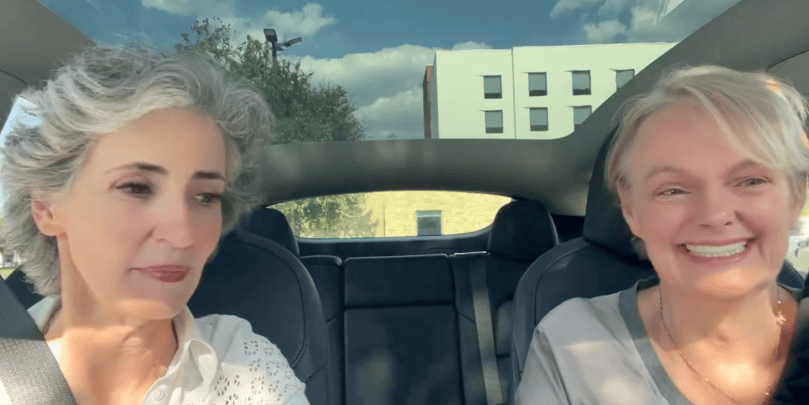
This is a conversation with Alexandra Merz, known to many in the Tesla community as @TeslaBoomerMama. We talked about what people would gain if they understood Elon Musk better. This is one of my favorite conversations.
In the episode we cover her perspective as a long-time retail shareholder, her background, and the practical value of looking past the noise to see the actual work.
Outline summary:
Opening conversation while riding in Austin
Alexandra’s path and interest in Tesla
Discussion of what clearer understanding of Elon Musk changes for people (retail shareholders, the public, and the mission)
Reflections on Tesla beyond the car company framing
Personal notes and shared observations from the ride
Watch the full episode here (or tap the X post for the video with captions):
Gail’s Tesla Podcast Ep 193: Alexandra Merz (@TeslaBoomerMama). Beloved by all in the Tesla community! We talked about what people would gain if they understood Elon Musk better. This is one of my favorite conversations! ❤️ pic.twitter.com/stDoeXrGzA
This is an interview with Jessica Tetreau of Brownsville. She shares the story of Mary Yturria, the longtime Brownsville philanthropist and matriarch who once owned a portion of the land SpaceX recently acquired.
That acquisition is part of the agreement in which SpaceX is contributing up to $220 million toward major water and wastewater infrastructure projects for the city and its people, expected to add roughly 18 million gallons of pure, healthy water per day of capacity.
In this warm conversation, Jessica talks about her friendship with Mary Yturria (who lived into her late 90s), visiting the landfill area herself, and her perspective as a local business owner (Car Wash Plus) on the changes and the water solution for Brownsville.
Outline summary of the episode:
Opening in the Cybercab / ride context
Jessica’s personal connection to Mary Yturria: friendship, lunches, and admiration for her as a Brownsville matriarch
Mary Yturria’s ownership of part of the land near the landfill / Port of Brownsville area that SpaceX acquired
Jessica’s own visit to the landfill site and observations
Local viewpoint on SpaceX’s water infrastructure commitment (wastewater reclamation + Southmost Regional Water Authority expansion) in exchange for the jurisdictional change
Discussion of the practical impact on Brownsville’s water future and community response
Closing reflections on Elon/SpaceX engineers and excitement about the outcome
Watch the full episode here (or tap the X post for the video with captions):
Podcast Ep. 190 In this amazing interview with @JessicaTetreau she tells the story of Brownsville matriarch Mary Yturria. She once owned a portion of the land that SpaceX recently acquired in exchange for bringing miraculously clean water to the city of Brownsville. pic.twitter.com/fvQHROUwpp
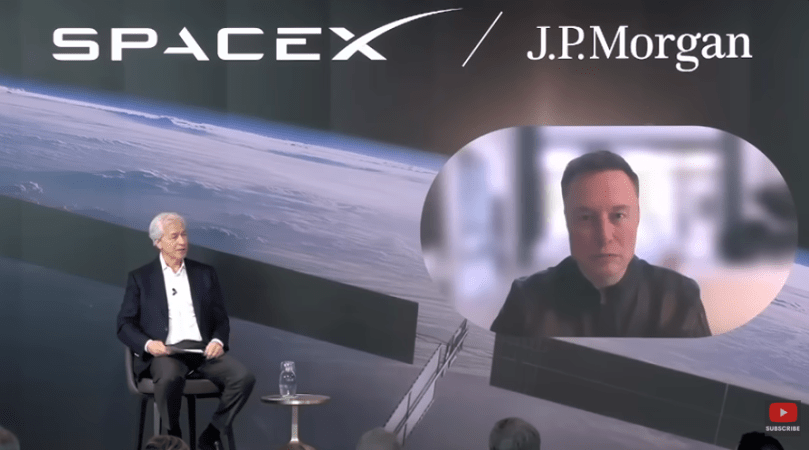
June 5, 2026 — Elon Musk made a virtual appearance at a special JPMorgan investor event hosted by CEO Jamie Dimon at the bank’s global headquarters in New York as part of the SpaceX IPO Roadshow. Elon joined live (remotely) to discuss SpaceX’s upcoming IPO, the massive capital-intensive growth phase ahead, Starlink V3 and beyond, space-based AI data centers, harnessing “star power” for energy, the Moon-to-Mars roadmap, Starship reusability, Terafab chip ambitions, AI strategy with Grok, and building strong teams/culture. It was a wide-ranging, optimistic conversation about why now is the right time for SpaceX to go public and help make humanity multi-planetary.
Here is my full verbatim transcript (carefully stitched from the YouTube video with captions enabled, cross-checked against available sources including Singju Post for maximum accuracy and cleaned for readability while preserving natural speech patterns, repetitions, and tone):
Welcome and Maye Musk Introduction
Host: Elon, welcome to JP Morgan’s headquarters. You’re on the 51st floor, which is about the equivalent of nowhere near where you go generally in space, but as high as we can get in New York City. But before we get started with you and Jamie, we had a very special guest that wanted to welcome you here this afternoon. And so your mother, Maye Musk, is here to welcome you.
Elon Musk: Great.
Host: Maye, please stand up. I don’t think you can see me or everybody here.
Maye Musk: They can see you. Yes, he can. This is your part.
Elon Musk: I actually can’t see my mom, but I can hear her certainly. Okay.
Maye Musk: What I’d like to say is when you were 3 years old and I told people I have a genius son, they would roll their eyes… And then when you said you wanted to start with rockets, then I rolled my eyes. And then you did it. And so this is just a great party here and we’re celebrating.
Elon Musk: Sounds good. Love you so much.
Maye Musk: Love you too.
Host: One proud mama.
Jamie Dimon: So let me, Elon, welcome you. It’s a real privilege to have you here on this momentous occasion. It is new for us, but it’s an important thing — the trajectory of American innovation. We’re here live: 3,500 people, our top individual investors around the world in 100 branches. There are 350 people here, 3,500 around the country. This is a very unique thing, by the way, because Elon has spoken to me about democratizing finance. This is part of it — treating individual investors the same way institutions are treated and hedge funds and all those things. My view is it’s a wonderful thing to do. Elon, very brave by the way because I would never let my mother speak publicly when I was in the room. God knows what she would have said.
Elon Musk: God knows what she would have said. I had no idea she was there actually.
Jamie Dimon: Elon is the Edison of our time. I remember visiting Elon in Tesla like 15 years ago. A whole new way of building cars, vertical integration which had not been anything remote from what our car companies are doing. Now you have SpaceX. I visited the SpaceX factory in California and it’s exceptional to have more than 650 rockets. You told me one today putting satellites in space. You have 9,000, almost 10,000 Starlink satellites up there. Starlink 3 is coming which is a whole new generation which hopefully will replace some of these undersea cables. It’s been an extraordinary 24 years watching Elon grow over time and now making a massive leap into the future. So welcome. Elon, I have 10 questions for you. So I want to make sure I get to each one. Some of them came from folks here. They’re all important, but one just to start is: why SpaceX public now? Because you had choices. You didn’t have to. Why now?
Why Take SpaceX Public Now?
Elon Musk: Yeah. I’ve been asked for many years about taking SpaceX public. So it’s probably been, I don’t know, almost 10 years that people have been suggesting to me that I should take SpaceX public. We’ve been positive cash flow for quite a long time — I think since around 2014-2015 — and we’ve been self-funding. In fact, in our private equity rounds they actually have not been fundraising rounds. They’ve been liquidity rounds for investors and employees because we give everyone at the company stock, and SpaceX has actually bought back stock in most of our sort of funding events.
So what’s different about now is a number of things, but we are embarking on a significant growth phase — like a capital growth phase — where we’re going to put in orbit probably 100,000 satellites, or probably over 100,000 satellites just for communications. And these will be Version 3 and beyond versus Version 2 and Version 1 that are currently in orbit. Version 3 is, depending on how you count it, 10 to 20 times more capable than the Version 2 satellite. And there were three chips that the SpaceX chip design team taped out that are specific to this, that are far beyond state-of-the-art, which means it’s 100 times more bandwidth than the SpaceX Starlink system currently offers and also half the latency because the altitude will be about half.
I think it will actually be the highest bandwidth, lowest latency means of communicating. And the future with AI and robots is actually going to require a lot more bandwidth than we currently use. Because you can imagine what’s the bandwidth of a human? The peak bandwidth of a human is a few hundred bits per second, but bandwidth of a computer can be a trillion bits a second. So the appetite for bandwidth of AI and compute, AI and robots, is going to be enormous.
And then we’re also doing the AI data centers in space, which is another massive capital endeavor. But I think it’ll be the primary means by which AI can be expanded. It’s increasingly difficult to build power plants on the ground. There are very few people who want a power plant in their backyard. So if we wanted to, say, double the electricity usage of the United States, which is on average about 500 gigawatts, we would have to build about twice as many power plants, which I don’t think most communities are super excited about.
But actually, if we go to space, we can go far beyond the electricity generation of Earth. In fact, this is going to sound crazy, but you could actually increase harnessed energy by a factor of a million and still be using much less than a millionth of the Sun’s energy. Current human civilization uses much less than a trillionth of the Sun’s energy output, which is humbling to think about. We’re really a tiny dust mote in a vast darkness, and the Sun is enormous. The Sun is 99.8% of all mass in the solar system, and most of the remaining is Jupiter.
Sometimes people ask me — and I’m maybe going a little wide-ranging in this answer because you just asked me why you’re going public now, and I’m talking about the Sun’s power output. A bit of a long-winded answer. But it is important. Some of these things are important because people sometimes wonder what’s the future of energy generation. And I can say that it is absolutely solar power — or maybe a better word for solar power is star power. It’s the power of a star. And the crazy thing is that if you burnt all mass in the solar system that was not the Sun, the amount of energy produced by the Sun would still round up to 100%. Because the Sun is 99.8% of the mass of the solar system. Even if you teleported two more Jupiters from another solar system and burnt them too, the Sun would round up to 100%. It’s very much the Sun, and you could scale to a million times Earth’s economy in space in terms of harnessed power — which is a good proxy for economic output — and still be much less than a millionth of the Sun’s energy, which is humbling really to think about how tiny we are, and this is just one star among many. So I guess the TL;DR would be: we’re embarking on a massive new growth phase and we need capital for that.
Jamie Dimon: Okay. Number two. Another thing is the revenue — like I also feel pretty good about the revenue projections, but before, revenue was a little unstable, but now I feel like the revenue is much more predictable.
Elon Musk: Yeah.
Jamie Dimon: I always learn listening to you, I guarantee you. So I mean, people hear about multi-planetary species, travel to space — one of the most exciting ideas in human history. Can you explain the bridge that you speak about? I’ve heard you talk about from the Earth to the Moon to Mars.
Moon to Mars Roadmap
Elon Musk: Yeah. So you don’t necessarily have to go through the Moon to get to Mars. I just think that we can build a self-growing city on the Moon faster than we could do so on Mars. And there’s also the potential, if you say you want to scale far beyond what you can do from Earth, that because the Moon has no atmosphere and about 1/6th Earth’s gravity, you can use an electromagnetic accelerator — a rail gun or mass driver. Basically, you don’t need to use rockets to do AI data centers into deep space from the Moon. You can literally just shoot them like a rail gun type of thing. And you can manufacture the solar power and radiators on the Moon from Moon materials. That would allow scaling potentially to beyond a thousand terawatts a year, which is a truly staggering number. Like I think we can do probably somewhere around 1 terawatt per year of AI space compute from Earth, but we can do a thousand terawatts or more from the Moon. And like I said, we can also make a Moon base. And I think it would be pretty cool if you could vacation on the Moon. That would be the most epic vacation. Not everybody wants to go to the Moon, but I think a lot of people do. I think it would be pretty amazing — obviously provided you could do so safely and come back safely and everything — but I think that will be possible in the future. And then Mars is another step beyond that. Mars is a whole planet with gravity much closer to that of Earth. And it has an atmosphere, albeit thin. And if you warm up Mars, you could one day make Mars like Earth — meaning with liquid oceans and life and where you could walk outside without a space suit type of thing. So Mars is, I call it, a fixer-upper of a planet, but it’s got a lot of potential.
Key Takeaways
SpaceX IPO & Massive Growth Phase
SpaceX has been cash-flow positive and largely self-funding for years. Prior rounds focused on liquidity for employees and investors.
Going public now to fuel a huge capital-intensive expansion: 100,000+ Starlink satellites (V3+), space AI data centers, and multi-planetary infrastructure.
Starlink V3, Bandwidth & AI Future
V3 satellites offer dramatically higher capability, bandwidth, and lower latency.
Essential for the coming explosion in AI/robot compute demand.
Space Energy (“Star Power”) & Orbital AI Data Centers
Terrestrial power plant expansion faces huge social and practical limits.
Space-based solar and AI compute offer near-unlimited scaling potential.
Moon-to-Mars Roadmap
Moon as a faster path to self-sustaining presence and a launch platform for deep-space assets.
Mars as the ultimate long-term home with terraforming potential.
Starship, Chips & Broader Vision
Full rapid reusability on Starship is a historic milestone.
Vertical integration into advanced chip production (Terafab) to support orbital AI ambitions and reduce U.S. semiconductor vulnerabilities.
Elon’s Standout Quotes
“We’re really a tiny dust mote in a vast darkness… The Sun is 99.8% of all mass in the solar system.”
“It is absolutely solar power — or maybe a better word for solar power is star power. It’s the power of a star.”
“Version 3 is… 10 to 20 times more capable… 100 times more bandwidth.”
On the Moon: “I think it would be pretty cool if you could vacation on the Moon. That would be the most epic vacation.”
“Mars is a fixer-upper of a planet, but it’s got a lot of potential.”
My Take
I’m always struck by Elon’s generosity with his time and vision, even when it means late nights. The surprise appearance by Maye Musk was such a warm, human highlight — a proud mom moment that perfectly set the tone. This conversation really underscores that SpaceX going public isn’t just about rockets; it’s about scaling AI, energy, and making life multi-planetary. As someone who follows these developments closely from Austin, this one feels like another Elon Musk Master PLAN! Excited to see how the IPO roadshow and Starlink V3 progress unfold!
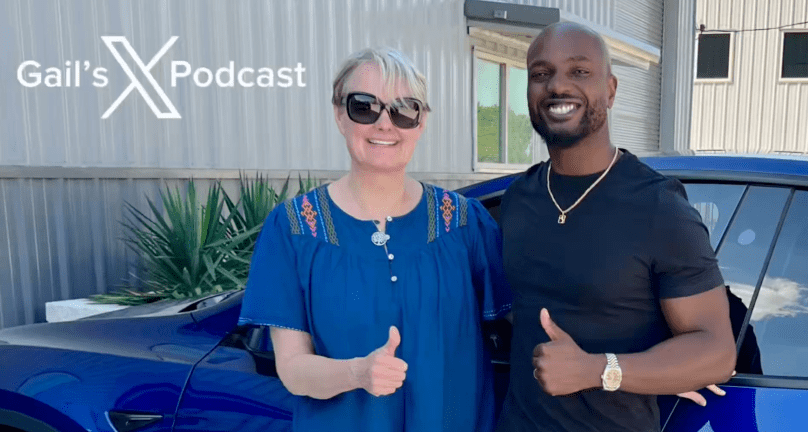
Episode 172 with the one and only Zuby (@ZubyMusic) has already surpassed 1 million views on X — and for good reason. Fresh off a flight from Dubai, Zuby hopped into my Tesla for his very first supervised FSD (Full Self-Driving) experience in Austin. What started as an in-car chat quickly became one of the most engaging and widely shared conversations we’ve had.
We split it into two parts because the discussion was so rich. Part 1 covers his global perspective, culture shock, and a powerful take on the biggest myth about masculinity. Part 2 dives into free speech, what it was like meeting Elon Musk in the early days after the Twitter acquisition, and why he keeps his rap music “squeaky clean.”
Watch Part 1 here (the viral ride):
Episode 172 Part 1 is live! Fresh off the plane from Dubai, Zuby (@ZubyMusic) has his first supervised FSD ride in Austin. He discusses his global experiences and the biggest myth about masculinity. Drop a listen ❤️ (Pt 2 soon!) pic.twitter.com/6n5SkhIR7q
Watch Part 2 here (free speech, Elon, and clean rap):
Episode 172 Part 2 is live! Zuby (@ZubyMusic) breaks down free speech, what it was like meeting Elon Musk in the early months after he bought Twitter, and why he keeps his rap music squeaky clean. Full episode (Pt 1 + 2) now complete ❤️ pic.twitter.com/vmCSCI7ljX
Zuby brought a truly global lens to the table. Having lived across the UK, Saudi Arabia, and traveled extensively, he shared how different cultures shape our views — and how travel can be the ultimate cure for ignorance and narrow-mindedness.
His first reaction to FSD was priceless: pure amazement at watching the car drive itself while we chatted. “This would have been considered impossible even within our own lifetimes,” he noted. It was a beautiful reminder of how far the technology has come and how it feels to experience it for the first time.
The conversation on masculinity was especially powerful. Zuby challenged the modern narrative that masculinity itself is a problem. Instead, he argued that many issues attributed to “toxic masculinity” actually stem from an absence of healthy, channeled masculinity — and that boys need strong, positive male role models to thrive.
In Part 2, things got even more fascinating as he opened up about meeting Elon Musk shortly after the Twitter acquisition and his philosophy on creating clean, positive rap music in a genre often filled with negativity.
A Conversation That Hit Different
This episode felt special from the start. Zuby’s wisdom, humor, and no-nonsense perspective combined perfectly with the unique setting of cruising Austin streets on FSD. Listeners clearly felt it too — the views exploded, and the comments poured in with people loving the mix of tech wonder and deep life insights.
Whether you’re here for the FSD ride reactions, the cultural wisdom, or Zuby’s refreshing take on masculinity and free speech, this one delivers.
Join the Conversation
Have you watched Episode 172 yet? What stood out to you most — Zuby’s first FSD experience, his thoughts on masculinity, or his stories about meeting Elon?
Drop your thoughts in the comments below. I read every single one!
And if you haven’t subscribed or followed along yet, now’s the perfect time. This is exactly why I love doing these in-car podcasts — real conversations with remarkable people in remarkable settings.
Thank you to everyone who watched, shared, and engaged. Over a million views is wild, and I’m incredibly grateful.
Stay curious. Stay adventurous. And keep riding with us. 🚕✨
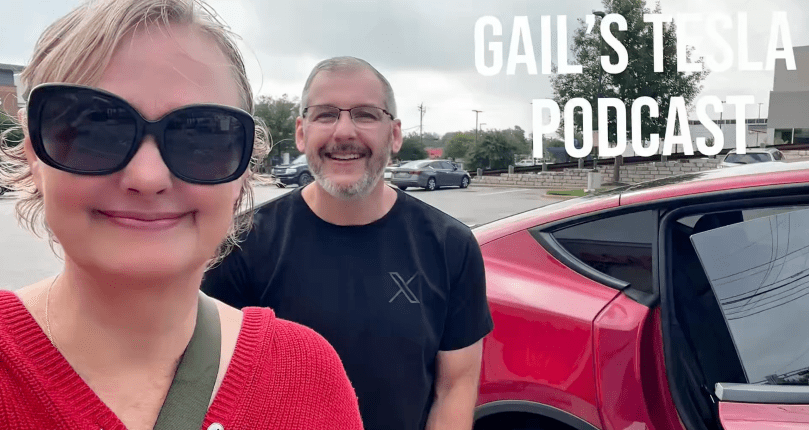
What a treat it was to spend time with the wonderful @TechOperator! I’m thrilled to share our complete conversation across two engaging drives in my Model Y here in Austin. Part 1 dropped as Episode 170 and we continued seamlessly into Part 2 in Episode 171 — it felt so natural and relaxed chatting while the car confidently handled the roads.
The Full Experience
In this inspiring two-part interview, @TechOperator (a passionate Tesla owner, former IT executive, and active voice in the X community) joins me for fast-paced, authentic discussions during real-world FSD rides in my Model Y.
We covered:
His inspiring life transition away from corporate life and the overwhelmingly positive support from the X community.
Building an authentic presence online.
His deep appreciation for Tesla’s performance, handling, acceleration, and how he uses FSD for a significant portion of his driving (~30%).
Highlights from his recent Giga Texas visit, including seeing the Cybercab up close (and getting to test a Robotaxi!).
The rides in my Model Y provided the perfect backdrop — smooth, confident, and freeing. It allowed us to have a real, flowing conversation without any stress about driving.
Episode 171 Podcast is live! Tech Operator rides with me on FSD in Austin, reflecting on leaving the corporate LinkedIn world, and why he loves posting on X. He shares a few of his approaches along the way. Drop a listen when you’re on the road ❤️ @TechOperatorpic.twitter.com/C4yi90KUYy
There’s something truly special about holding a genuine conversation while your own Model Y navigates Austin’s busy streets on FSD. These experiences highlight how far autonomous driving has come and why it feels so capable and natural today.
The car sees the world through its cameras alone — clean, elegant, and remarkably human-like perception without bulky extra sensors. That vision-only approach shines in Austin’s varied conditions: traffic, pedestrians, cyclists, changing light, and all the everyday surprises.
Behind that capability is an enormous amount of real-world learning. Tesla’s fleet has driven billions of miles, training the system on countless variations of the exact scenarios we encountered. You feel that depth in how proactively and smoothly the car handles intersections, merges, and dynamic situations — giving us the freedom to focus entirely on the conversation.
The intelligence comes from end-to-end neural networks that turn raw camera input directly into fluid, context-aware actions. No brittle rule-based layers guessing at every possibility — just holistic, intelligent driving that feels natural and reliable.
None of this scales without massive dedicated compute power turning fleet data into rapid improvements. Purpose-built training infrastructure keeps pushing the models forward at an impressive pace.
It also benefits tremendously from tight vertical integration. Hardware and software evolve together through seamless over-the-air updates on the same platform, delivering consistent, responsive performance that improves ride after ride.
What stands out most is the bold commitment to true FSD operation on public roads — not limited demos, but real confidence in complex city environments. Experiencing that while chatting comfortably turns “someday” into something you can live today in Austin (and soon more places).
And because it’s a living, learning system, every mile driven makes the whole fleet smarter. The Model Y we rode in continues to improve with each update, pulling lessons from millions of other vehicles.
These rides carry that forward-looking “gold Cybercab energy” we felt seeing the purpose-built robotaxis at Giga Texas. They’re the bridge to the exciting autonomous future we’re all watching unfold.
Join the Conversation
If you haven’t watched the full two-part interview yet, grab a drink, settle in, and come along for the rides! These episodes capture personal stories, community, factory insights, and the simple joy of a car that just handles it.
Drop a comment below and let me know:
What stood out most to you from the conversation with @TechOperator?
Have you taken a FSD ride in a Tesla Model Y yet?
What are you most looking forward to with Cybercab and the next chapter of autonomy?
I read every comment — this community makes the journey so much richer.
Stay curious, stay adventurous, and keep enjoying the ride ahead! 🚕✨
Episode 169 of Gail’s Tesla Podcast is live, and I couldn’t be more excited to share it with you!
This time I climbed back into a Tesla Model Y running in full unsupervised Robotaxi mode for my second journey through Austin streets. Camera rolling the whole way, I captured my genuine, moment-by-moment reactions as the car took care of everything on its own. Downtown Austin energy, a stop at Starbucks on Riverside Drive, smooth navigation through real traffic — it felt like another chapter of living history. And the vibe? Straight-up gold Tesla energy all the way.
Watch the full ride and my unfiltered real-time commentary here:
Ep 169 of Gail’s Tesla Podcast is here! 🚕 My second unsupervised Model Y Robotaxi ride through Austin with real-time thoughts on this wild piece of history. Super excited to keep sharing the journey. Loving the gold Cybercab energy today 💛 pic.twitter.com/3RiATQU4jm
In the episode you’ll hear me chatting away as the car handles downtown streets, eases through traffic, and elegantly solves a specific maneuvering situation near the coffee shop. One feeling kept coming up for me: “I just feel really safe and relaxed.” No stress, no hovering over imaginary pedals, only the simple pleasure of being a passenger in a vehicle that clearly understands its world.
What This Ride Revealed About the Technology We’re Actually Living With
There’s a special kind of wonder that comes from experiencing autonomy not in a polished demo video, but on the exact streets you drive every day. What made this second ride feel so capable, so natural, didn’t happen by accident. Several deep, compounding strengths showed up in quiet but powerful ways.
The car perceives everything through its cameras alone. No bulky extra sensors, no spinning LiDAR on the roof, no radar arrays like Waymo, just a clean, elegant vehicle reading the visual world the way humans do. That choice creates a system that feels integrated rather than bolted-on, and it performed beautifully in the mixed lighting, tree cover, and urban clutter of Austin.
That visual intelligence is trained on something no one else has at anywhere near this scale: billions of miles of real driving data collected from Teslas all over the world. The situations I saw today — busy intersections, pedestrians, cyclists, tight spots — aren’t rare edge cases in a simulator. They’re variations the AI has already studied thousands of times in similar real-world conditions. You can feel that collective experience in how confidently and proactively it drives.
Equally important is how it makes decisions. The autonomy stack uses end-to-end neural networks that map raw camera input straight to smooth vehicle controls. There’s no layer of brittle if-then rules trying to anticipate every possibility. The result is driving that feels holistic and context-aware — exactly what you want when the car has to resolve a real parking or departure challenge on the fly, the way it did for me near Riverside Drive.
None of this capability appears without serious computational horsepower dedicated to training on massive video datasets. Purpose-built infrastructure for processing driving data at enormous scale has made it possible to turn raw fleet experience into rapidly improving intelligence. Every unsupervised mile contributes to the next leap forward.
It also matters that this intelligence lives inside a vehicle platform that was designed for deep, continuous integration. The Model Y has evolved alongside the autonomy software through years of over-the-air updates. That tight coupling between hardware and software — refined on the road, not just in the lab — is what lets the car feel responsive and reliable instead of hesitant or overcautious.
What stands out most is the clear destination the work has been pointed toward all along: genuine unsupervised operation on ordinary public roads. Not perpetual supervision, not limited geofenced zones, but the confidence to let the vehicle handle complex, dynamic city driving without a safety driver present. Feeling that trust validated in practice — relaxed in the passenger seat while the car just… handles it — turns “someday” into something you can experience today.
And because the system keeps learning, the car I rode in yesterday is already smarter than the one from last month. Fleet-wide updates roll out regularly, folding lessons from rides just like this one into every vehicle. It’s a living technology that gets better with use rather than one that ships and then slowly ages.
As I finished this ride, that forward-looking excitement was everywhere — the same gold Cybercab energy that has me genuinely counting down to purpose-built robotaxi vehicles designed from the ground up for joyful, efficient, autonomous mobility. The unsupervised rides we’re taking right now in current models are the essential bridge to that next chapter.
These in-car episodes aren’t just tech demos for me. They’re a way of documenting a transformation I get to live inside my own city and sharing the real wonder (and occasional delighted “wait… it just did that?!” moments) with all of you who are following along.
If you haven’t watched yet, pour yourself something nice and take the ride with me. Then come back and tell me in the comments:
What stood out most to you in this episode?
Did any particular moment make the progress feel especially real?
Have you tried an unsupervised Robotaxi ride yourself, or are you as excited as I am about where this is all heading?
I read every single comment and I’m grateful for this community. The journey is so much richer when we share it.
Stay curious. Stay adventurous. And keep watching the road ahead — it’s getting more interesting every single week. 🚕✨
Format: Audio-only webcast (Q&A via Say Technologies platform)
Focus: Strategic outlook on AI, autonomy, Optimus, Robotaxi, and massive future investments (financial details covered separately in Tesla’s Q1 Update deck).
Tesla held its Q1 2026 Financial Results and Q&A webcast on April 22, 2026. As always, the call provided invaluable direct insight into the company’s direction straight from CEO Elon Musk, alongside other executives. These moments are especially precious—capturing Elon’s unfiltered thinking on the ambitious projects that define Tesla’s next chapter.
Participants
Travis Axelrod, Head of Investor Relations (moderator)
Elon Musk, Co-Founder & CEO
Vaibhav Taneja, CFO
A number of other Tesla executives (specific names beyond the above not individually detailed in the public audio/webcast notes)
The session began with opening remarks from Elon, followed by brief comments from Vaibhav, then moved into Q&A drawn from retail investor submissions (via Say) and the queue.
We continued to make meaningful progress on the build out of the infrastructure & AI software that underpins our Robotaxi & future robotics businesses in Q1.
Elon described 2026 as “a very exciting year” defined by substantially higher capital expenditures to fuel growth in AI, manufacturing, vehicles, and especially robotics. He reiterated his long-held conviction that Optimus will be Tesla’s (and the world’s) biggest product ever.
Key emphases included:
Heavy investment in core tech (battery, powertrain, AI software/training, chip design) and supply chain strengthening.
Cautious, safety-first expansion of unsupervised Full Self-Driving and Robotaxi operations (zero incidents/injuries to date).
The classic “stretched-out S-curve” reality for new production ramps (Cybercab, Semi, Optimus).
Major AI hardware progress (AI5 taped out, AI6 and Dojo 3 already in discussion).
Optimus production starting slowly in Fremont later this year (repurposing lines after S/X), with meaningful ramp in 2027; V3 design nearly ready for demonstration.
He stressed that all Tesla vehicles remain autonomy-ready and incredible value, while energy storage demand (Megapack) remains very strong.
Verbatim: Elon Musk’s Opening Remarks
“Thank you. I think we’ve got a very exciting year ahead of us with 2026. We’re going to be substantially increasing our investments in the future, so you should expect to see a very significant increase in capital expenditures. I think it’s well justified for a substantially increased future revenue stream. Obviously, Tesla is not alone in this. I think you’ve seen in most, if not all, certainly the major technology companies substantially increasing their capital investments. We’re going to be doing the same. I think it’s going to pay off in a very big way.
We’re investing in and improving our core technologies, battery powertrain, AI software, AI training, chip design, laying the groundwork for significantly increased manufacturing production. We are also strengthening our supply chain across the board, batteries, energy, AI, silicon, everything.
Laying the groundwork, like I said, for what we expect to be a significant increase in vehicle production in the future. Of course, a very significant increase. Well, actually releasing Optimus, but increasing our internal production for testing, and then probably being able to have Optimus be useful outside of Tesla sometime next year. As you’ve heard me say a few times, I think Optimus will be our biggest product, not just Tesla’s biggest product ever, but probably the biggest product ever. I remain convinced of that conclusion.
On our vehicle side, it’s always, I think, worth noting that a Tesla car is incredible value for money, and they’re all autonomy-ready, depending on what part of the world you’re in. The supervised Full Self-Driving is getting extremely good. We have just started production of Cybercab, and we’ll begin production of our Tesla Semi soon.
Now, I should say, whenever you have a new product with a completely new supply chain, new everything, it’s always a stretched-out S curve, so you should expect that initial production of Cybercab and Semi will be very slow, but then ramping up, and going exponential towards the end of the year and certainly next year. In fact, we’ll be ramping up production of all vehicles, in all factories, to the best of our ability through the balance of this year.
On the energy front, the United States and the whole world will need a lot of energy storage to meet growing electricity demand. Demand for our Megapack is very strong. We’re excited to begin production of Megapack 3 later this year in our new world-class factory outside Houston.
For Full Self-Driving and Robotaxi, version 14.3 was a major architectural update, and we have a whole pipeline of major improvements to Full Self-Driving that we believe will lead to unsupervised Full Self-Driving being available anywhere in the world that it is legal to do so. Then there’s a version 15, hopefully by the end of this year, but certainly by early next year. That will be a complete overhaul of the software architecture, and will run on AI5. At that point, we’re really just increasing the safety level of FSD above human safety level even more, meaning I think even within version 14, we’re significantly safer than human, but V15 will take that to another level. We’ve expanded Robotaxi to Dallas and Houston, using the same software source in the Bay Area.
The limiting factor for expansion is really rigorous validation, making sure things are completely safe. We don’t want to have a single accidental injury with the expansion of Robotaxi, and we have, to the credit of the team, not had a single one to date.
Optimus, we’re preparing Fremont for start of production later this year with Optimus. Again, totally new supply chain, totally new technology, so therefore, the production S curve is always very slow in the beginning. We’ll ramp up to significant numbers next year, and we’re constructing a second Optimus factory at our Giga Texas location, and that will probably start production around summer next year. The V3 Optimus design is almost ready to demonstrate. I think we want to just make sure it’s polished. Like it works functionally, but there’s some aesthetic elements that need to be finalized, and I think probably middle of this year, we should be able to show it off. We’re also a little hesitant to show V3 off because we find our competitors do a frame-by-frame analysis whenever we release something and copy everything they possibly can. I think there’s some value to not showing new technology until it’s close to production.
Congratulations again to the Tesla AI chip team for taping out AI5. That’s going to be a great chip. I think probably the best AI inference chip for edge compute that exists. Certainly, I think unequivocally the best value for money. Team did a great job, and we already have a lot of momentum for designing AI6, and we’ve begun to discuss ideas for Dojo 3. This is all very exciting.
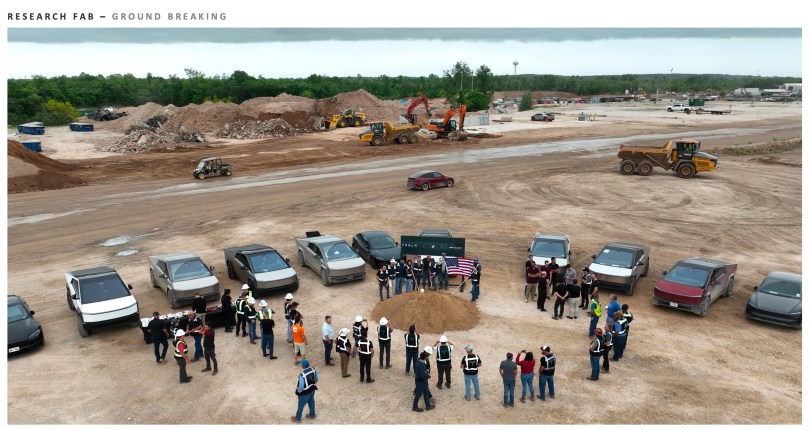
We’ve also finalized plans for the research chip fab on the Giga Texas campus, and we’ll start construction of that this year.
In conclusion, Tesla is working on a lot of large, ambitious projects. They’re all very challenging, but I think they’re going to be revolutionary. This is what the team does best, solve the hardest problems and build amazing products. I’d like to thank the Tesla team for all their hard work and thank you to all of our supporters.”
Selected Verbatim Highlights from Elon’s Q&A Responses
Elon fielded questions on production realities, timelines, safety, and AI architecture. Here are key excerpts (lightly contextualized for flow):
On Optimus V3 reveal, production start (Fremont S/X line transition), and ramp challenges: “Well, as I was saying, what we’ve found is that when we’ve unveiled various Optimus versions, we’ve found out our competitors literally do a frame-by-frame analysis and copy everything we’re doing. I think we want to push the Optimus 3 unveil maybe closer to production. Start of production is, we’re assuming, somewhere around the late July, August timeframe. … Frankly, if we’re able to go from stopping production on one line, dismantling that entire line, reinstalling a whole new line, and turning that on in a matter of 4 months, that is an insanely fast speed. I don’t think any other company on Earth has ever done that before… It is impossible to predict these things. When you have a brand-new product and an entirely new production line, and you have 10,000 unique items, all of which have to go right to ramp production, it’ll move as fast as the least lucky, slowest, dumbest part in the entire 10,000… Initial skills will be, obviously, we’re going to start with simple skills in the factory and then build up from there.”
On unsupervised FSD/Robotaxi expansion and safety: “Well, we certainly hope to have unsupervised FSD or Robotaxi operating in, I don’t know, a dozen or so states by the end of this year. Initially, we’re taking a very cautious approach… [we haven’t had any injuries and certainly no fatalities to date with the unsupervised FSD and Robotaxi expansion, and we want to keep it that way].”
On Optimus AI architecture (local intelligence + orchestration): “Well, we think we can put a lot of intelligence locally in the robot and it certainly needs to be enough intelligence that if the robot gets disconnected, like if it’s a bad cellular signal or there isn’t Wi-Fi, you know, Optimus can’t just get stuck. It needs to have enough local intelligence that it can still do useful things, even if it loses the connection, kind of like the car. The car does not need any cellular or Wi-Fi connection to be able to drive safely. Now, I guess you can think of like Optimus needs kind of a manager to tell it what to do, broadly speaking… so you know i think you need kind of a an orchestration ai which uh you know grok would be good for orchestration um and and then for you know for optimist’s voice you know having um a low latency intelligent voice ai grok is actually very good for that… But I would expect the amount of interaction apart from like the voice stuff and asking complicated questions of the robot that necessarily needs a large AI model to answer the Gronk would probably have about as much interaction with Optimus as a manager would have with the people on their team.”
(Additional topics included HW3 upgrade paths for unsupervised capability, broader AI chip progress, and the new research chip fab at Giga Texas.)
Closing Thoughts
The call reinforced Tesla’s pivot toward AI, autonomy, and humanoid robotics as the dominant long-term drivers, with near-term production ramps following realistic S-curve timelines and an unwavering focus on safety and execution. Elon’s direct words continue to provide the clearest window into that vision.
For the extremely detailed full transcript (including all speakers, operator notes, and every Q&A), check these reliable sources:
In July 2022, podcaster Johnna Crider invited me, Gail Alfar, to join her for a relaxed, wide-ranging conversation with Elon Musk at Tesla’s Giga Texas factory. The chat was recorded for Johnna’s show Getting Stoned.
The three of us talked about some of the biggest ideas facing humanity: why we should make life multi-planetary with real urgency, the declining birth rate and its risks to civilization, poverty and homelessness, the power of internet access and education, Starlink’s role in disaster relief, Tesla Energy (including Megapacks), and the future of AI and Full Self-Driving.
It was a candid, unscripted discussion full of big-picture thinking and personal stories — including a memorable moment when Elon directly addressed the shadowbanning I was experiencing on Twitter (now X).
This cleaned-up transcript captures the full conversation exactly as it happened — easy to read and understand for anyone, no matter their background. (Elon even invited Johnna back for a Part 2 because we didn’t have time to cover every question!)
Full Verbatim Transcript
Elon: This is Getting Stoned. It’s a podcast about gems and minerals and I am not your host.
Johnna: This is Getting Stoned. It’s a podcast about gems and minerals and I am your host, Johnna Crider. On today’s episode we have a very special guest. Thank you, Elon Musk, for joining me.
Elon: All right.
Johnna: So Elon, I always find it inspiring when you talk about the light of consciousness. What does consciousness mean to you?
Elon: To the best of our knowledge, the only conscious life we’re aware of is on Earth. I’m conscious in the sense that I think I have self-awareness. We’ve never found microbial life anywhere else in the solar system, though it’s possible we might find some under the ice of Europa.
According to the geological record, Earth is about 4.5 billion years old and the universe is about 13.8 billion years old. It’s odd that only very recently has life evolved that can talk, write, and communicate sophisticated ideas. And only now has civilization reached the point where we can send life to another planet. A lot of people think Moon landings are fake. They’re not.
Johnna: I don’t think they’re fake.Yeah, they’ve actually brought back some cool minerals from the Moon and I kind of have one in my collection.
Elon: I actually have a slice of a Moon meteor — a chunk of Moon that was hit by a meteor, smashed a bunch of Moon rocks, and some of the Moon rocks landed on Earth. And I’ve got a segment of one of them.
Johnna Crider: The Apollo mission brought back some Tranquilityite. And up until 2011, it’s called that because of the Sea of Tranquility. Yeah, and there was none found on Earth and then in 2011 some deposits were found in Australia.
So I have a friend of mine sent me some deposits and it broke. And so it had big chunks and two little pieces, so I made the other two little pieces into art.
Elon: But I mean it’s crazy how old the rock is. It’s like billions of years old.
Johnna: That shungite I just gave you, that’s over two billion years old.
Elon: That’s a long time, you know. Don’t hold your breath (laughter)
Elon: I mean it’s hard to even wrap your mind around that kind of time scale. A billion years — our lifespans are a flash in the pan. That’s true. Just like that. Shorter than a flash in the pan compared to galactic time scales.
So there are much things that one could say, or at least appear to be likely, which is that it appears that consciousness is rare. And it takes a long time for it to arise. And so, like I said, to the best of our knowledge we are alone. And so we have to accept the possibility that we may be it — at least in this sector of the galaxy or in the Milky Way perhaps. And if we’re it and this is the only little candle in a vast darkness of a little light of consciousness that got us lit, then we should really try to make sure that life does not go out. And we can’t take it for granted that it won’t. So we want to try to make it last as long as possible.
Elon: And I think we also want to try to understand the nature of the universe, meaning of life, where is it going, what does the future hold, just find out what’s going on in the universe. And so that means the more that we can expand the scope and scale of consciousness, the more we’re likely to understand the fundamental questions around the meaning of life and nature of the universe. And so I think that’s a good goal to have. And it’s a goal that I think can unite humanity because it’s a common goal as opposed to sort of infighting and “I want this big field of ice, I want this piece of land.” No, I want this piece of land. Well, you know, there’s a lot of land out there. There’s a lot of planets with nothing on them. How about those ones? Why fight over the little pieces when there’s entire planets out there and solar systems and stuff?
Elon: So I think it is a philosophy that withstands reason. I think there’s a solid reasoning basis for it. It’s really just a philosophy of curiosity, I would call it. And it’s also exciting, you know. If you think like… I mean the happy reasons when you wake up in the morning that you’re excited to be alive and you look forward to the future. And it can’t just be solving one sad problem after another. You know, what the hell’s the point? There’s no point like that.
Johnna: Right.
Elon: This is the first time in history that the window of opportunity has been open for life to become multi-planetary. It may stay open for a long time or a short time, but I think it would be wise to assume it will be open for a short time and take action now.
We don’t need to spend a huge amount of resources on it. Less than one percent of our resources would be enough to make life multi-planetary. We should be life’s steward in that sense, because the other creatures can’t build spaceships but we can.
This isn’t about abandoning Earth. We need to make Earth as good as possible. That’s what Tesla is about, making a good future for Earth. SpaceX is about making life multi-planetary. We need to do both.
Johnna: You would not believe what my cats can do. That’s all I’ve got to say about that! But seriously, I think we have a responsibility to protect the rest of the creatures on Earth too.
Elon: I completely agree. A reasonable approach would be to spend about one percent of our resources on making life multi-planetary and ensuring the long-term survival of consciousness and life as we know it. Tesla’s goal is to help ensure a good future for Earth. SpaceX’s goal is to make life multi-planetary and ensure the long-term survival of consciousness. Those are awesome goals.
Gail: Happiness.
Elon: I’ve mostly talked about the defensive, protective reasons for becoming multi-planetary. But what actually gets me most excited is the sense of adventure and possibility. It would be the greatest adventure ever, exciting and inspiring to see it happen.
Johnna: What you and SpaceX have done in Ukraine with Starlink inspires a lot of deep respect. You also helped Saint Charles Parish in my state after Hurricane Ida, as well as the villages of Tango. What role do you see Starlink playing in disaster relief? We’re going to have a lot of disasters. They’re predicting more hurricanes in my area this year.
Elon: In general, Starlink is not dependent on any ground-based infrastructure, so it can provide internet connectivity to areas hit by floods, fires, or earthquakes where the ground infrastructure has been destroyed. That’s extremely helpful for rescue operations. When people are stranded, they need to be able to say “I need help” or “I need rescue.” Starlink has provided that in a number of situations.
Johnna: When we had Ida, my power was out for a week. Communications in southeast Louisiana were completely wiped out. It just made me think Starlink would definitely help organizations like the Cajun Navy as well as others to communicate better, especially with government.
Elon: Yeah.
Johnna: The Musk Foundation has done a lot of good work. About a month ago I made this really long list of everything you guys are doing. What you did for Lake Charles after Hurricane Laura was phenomenal and saved lives. How do you see the Musk Foundation helping charities, especially toward disaster relief, in the next few years as the effects of climate change continue?
Elon: We try hard with the foundation to give away money in ways that are actually useful. Maximum number of cents on the dollar actually helping people in need. It’s way harder to give away money than you think if you care about it actually doing good. We’re scaling up more personnel in the foundation to go through fewer intermediaries so we can have the shortest path to helping people.
Johnna: Would you consider grants that help organizations that focus on disaster relief?
Elon: Yeah, we do provide grants to organizations that work on disaster relief.
Johnna: Last year you donated 100 million dollars for the XPRIZE competition to fight climate change. Which of the four categories, air, land, ocean, or rocks, do you feel needs the most work?
Elon: The larger problem is getting the parts-per-million level of CO2 in the atmosphere down. We’re going to have to pull it out of the air and store it somewhere. I think storing it in a solid form makes sense. The energy to do that has to come from renewables, solar, wind, geothermal. I’m actually pro-nuclear as well, except in locations prone to natural disasters.
Johnna: There’s a company called Project Vesta that uses peridot to do that, and some diamond companies are making lab-grown diamonds with carbon from the air.
Elon: I don’t think that scales very well, but it is cool to think about.
Johnna: Would you consider doing another XPRIZE when this one closes?
Elon: Yeah, absolutely. We’re constantly looking for highly effective ways to spend money for general social good.
Johnna: What accomplishments of the Musk Foundation are you most proud of?
Elon: We funded a literacy XPRIZE to figure out the best software on a low-cost tablet to teach people to read. If you can improve literacy, you improve everything about a society. That’s probably the best thing we’ve done so far.
Johnna: The declining birth rate. You often talk about this problem. It is a real problem. But there’s another problem I think plays a major role, and that’s poverty. What actions do you think need to be taken toward solving poverty that would help relieve some of that issue with the declining birth rate?
Elon: The declining birth rate is somewhat counter-intuitive, but generally the wealthier someone is, the fewer kids they have. I’m an exception, but it’s quite rare. It’s not really a money thing. In fact, it seems to be the opposite.
Even someone living at what we consider the poverty level in 2022 has access to things the richest person on Earth didn’t have 100 years ago.
Johnna: I’ve been homeless before while working two jobs. The idea of having a kid in that situation would terrify me. You can’t just throw money at it and solve it. There’s a lot of trauma involved. From my own experience, trauma is the number one cause of homelessness. That’s why I was asking what ideas you have that could point toward a real solution.
Elon: Literacy and access to the internet are fundamentally helpful. We have to think beyond just the United States. There are billions of people who have no internet access at all, or it’s very low bandwidth and insanely expensive.
These days you can learn almost anything online. MIT has all their lectures available, and many other universities do the same. You can literally have access to all the world’s information using just a simple phone or an old tablet.
Elon: This fact is really underappreciated. Before the internet, if you wanted to learn a skill you had to go to a specific school, get the exact books, or visit a library that might not even have what you needed. A few hundred years ago books were rare and expensive. The improvement in access to information is truly remarkable.
Johnna: I can’t imagine not having books! Google teaches really well, especially when I go to gem and mineral shows and have to look things up. Do you have any other thoughts on how to reverse population decline?
Elon: The population decline problem is possibly the biggest risk to civilization. A lot of people still think there are too many humans on the planet. That is absolutely not true. We could double the world’s population without any meaningful damage to the environment.
You could fit every single human on Earth inside the city of New York on just one floor. Earth is actually very sparsely populated with humans. There are not enough humans, far from being too many. Last year we had the lowest birth rate in recorded history.
Gail: Wow, yeah. I saw the statistics on your Twitter account.
Johnna: Yeah, so I don’t even see all your tweets half the time, even though I follow you. That’s the crazy part.
Elon: If you have the latest tweets? Because you have to switch because of the algorithm?
Johnna: Yeah, shadow banning is crazy. It’s really bad.
Elon: What the heck’s going on?
Gail: I don’t know. I tweet really nice things but…
Elon: Exactly. You’re not like a hate monger. You’re the furthest thing from it. You’re obviously a super nice person. So what the heck are they doing?
Johnna: She got shadowbanned when she replied to me with a heart. It was you or Kristen. They replied with something really nice and got shadowbanned.
Johnna: Oh, it was you.
Gail: Lots of lots of love.
Johnna: Yeah.
Elon: It really sounds like someone on Twitter is doing something shady. That’s not cool.
Elon: Whoever’s doing that on Twitter, shame on you!
Johnna: Alright, so let’s talk Tesla. There’ve been quite a lot of bills that have been kind of anti-EV or anti-Tesla going through state governments. What are your thoughts on how dealerships are trying to preserve their way of life instead of evolving with the market?
Elon: It’s to be expected that incumbents will oppose a new entrant. If they can’t win a fair fight, they’ll try an unfair fight. But if we have the people on our side and strong customer support, I think we’ll win most of the battles.
Johnna: Tesla Insurance is making a difference for customers who switch, and Louisiana has the highest average cost of car insurance in the nation. When will Tesla Insurance expand to all 50 states and Canada? And when will Louisiana get it?
Elon: Insurance is regulated primarily at the state level, so it’s a state-by-state thing. You have to jump through a lot of hoops in every state, and those hoops take a long time.
Johnna: …and the weakest part of Texas is the grid, and here comes Tesla trying to strengthen that weakest part.
Elon: The batteries are helpful even without sustainable energy because they can load-balance the grid. Power spikes, dips, fluctuations. The batteries can smooth it all out. The Tesla Megapack and Powerwalls can be really helpful for stabilizing the grid.
Gail: Could you talk a little bit about Distributed Energy Resources (DERs) and if Gigafactory Texas could be protected in the event of an emergency?
Elon: In terms of batteries, this is going to be a combination of large utility-scale batteries with very big installations like the one we did with PG&E at Moss Landing, and then at the local level the Powerwalls that collectively can stabilize the grid within a neighborhood. The combination of centralized Megapacks and distributed Powerwalls can have a very positive effect in making sure the power stays on.
Johnna: …and then we also touched upon AI.
Elon: On the AI front, Tesla is doing a lot with AI for Autopilot and Full Self-Driving. We’re making good progress. The goal is to make the car safer than a human driver, and in many situations it’s already safer. There have been cases where the car saved someone’s life because the driver had a seizure or was unconscious and the car pulled over safely.
Autonomy is going to be a huge benefit to society because over a million people die every year in car accidents. I think we can reduce that by at least a factor of 10.
On the broader AI front, we’re working toward artificial general intelligence. AGI. It’s not there yet, but progress is being made. Eventually digital intelligence could exceed human intelligence, and I think we need to be careful because AI could be an existential risk if not handled properly. So some regulatory oversight as a public safety measure makes sense.
But overall, I’m optimistic that we’ll be able to have AI that is beneficial to humanity. Optimus, the humanoid robot, is also powered by the same AI tech. So that’s another big thing.
Johnna: Wow. Well, thank you so much, Elon, for taking the time to talk with me today. I really appreciate it. And thank you to everyone at Giga Texas for making this possible. You’ve inspired so many people. Thank you.
Elon: All right. Thank you.
Johnna: And Elon did invite me to come back since I didn’t get to ask all my questions, so there will eventually be a Part 2. Thank you again.
Gigafactory Texas as seen from the interview conference room. [Credit: Gail Alfar, All Rights Reserved, June 25, 2022]
Tesla continues to impress with its relentless push to expand the Supercharger network across France. The company is delivering fresh convenience and reliability to EV drivers just as vehicle registrations are skyrocketing. New sites and expansions announced via the official @TeslaCharging account on X are popping up near supermarkets, hotels, airports, and major routes. These openings are perfectly timed to support a dramatic comeback in Tesla demand following a tougher 2025. These additions highlight Tesla’s commitment to making long-distance travel seamless in one of Europe’s most promising EV markets.
Latest Superchargers Put Into Service (March–April 2026)
Drawing directly from @TeslaCharging’s recent posts, here’s the latest wave of openings and expansions (listed in reverse chronological order, with nearby landmarks for easy context):
Abbeville (8 stalls) – ~April 12, 2026 Northern commercial hub along the A16, near Hyper U supermarket.
Limoges – Avenue des Casseaux (9 stalls) – ~April 9, 2026 Central France, right beside a Grand Frais supermarket.
Roissy-en-France – Avenue du Bois de la Pie (12 stalls) – ~April 5, 2026 Near Paris Charles de Gaulle Airport and Van der Valk Hotel/Hyatt Place. Ideal for travelers.
Saint-Saturnin (expanded to 48 stalls) – April 3, 2026 Just north of Le Mans at the Brit Hotel. This major upgrade added 28 stalls, complete with solar canopies and restrooms.
Goussainville (9 stalls) and Chilly-Mazarin (10 stalls) – Recent (March/April) Paris suburbs, both anchored near Grand Frais supermarkets.
Le Mans – Rue des Frères Voisin (9 stalls) – March 9, 2026 Urban site in the Le Mans area.
Cholet (8 stalls) – March 6, 2026 Western France retail zone.
Other notable recent additions include Mulhouse (20 stalls), Scionzier (8 stalls), Phalsbourg (8 stalls), and Cosne-Cours-sur-Loire (8 stalls). All are strategically placed for maximum driver convenience.
A clear theme shines through: Tesla is embedding these stations into everyday life by pairing charging with shopping, dining, and rest stops. This approach helps eliminate range anxiety on France’s autoroutes.
Spotlight on the Largest Supercharger Site in France: Saint-Saturnin
Tesla’s network just hit a historic global milestone right here in France, and it is at the country’s current largest Supercharger site. The Saint-Saturnin location just north of Le Mans was expanded to 48 stalls, making it the biggest single-site deployment in France to date.
@TeslaCharging captured the excitement perfectly: “Saint-Saturnin, just north of Le Mans in 🇫🇷, marks our 80,000th Supercharger stall.”
Tesla first began rolling out Superchargers in France more than a decade ago. The company has been steadily building a foundation that is now accelerating rapidly to match surging demand.
Owner Reactions Pour In
French Tesla owners are thrilled with the expansion. One enthusiastic driver shared: “Tesla a le réseau le plus fiable, le moins cher et le plus étendu du monde. d’ailleurs ils ont installés leur 80000eme supercharger à saint saturnin près du mans la semaine dernière 😎.” (Translation: “Tesla has the most reliable, cheapest, and most extensive network in the world. They just installed their 80,000th Supercharger in Saint-Saturnin near Le Mans last week 😎.”)
Tesla a le réseau le plus fiable, le moins cher et le plus étendu du monde. d'ailleurs ils ont installés leur 80000eme supercharger à saint saturnin près du mans la semaine dernière 😎. en heure creuse le prix du kilowatt heure est inférieur au prix EDF pour les particuliers lol.
The timing could not be better. March 2026 saw 9,569 new Tesla registrations, a massive +203 percent year-over-year surge. For Q1 overall (January–March), France recorded a record 13,945 Tesla vehicles, up +108 percent from the same period in 2025.
After a challenging 2025 marked by increased competition, Tesla’s refreshed lineup, competitive pricing, and now-visible charging improvements are clearly paying off.
Projections for the Rest of 2026
With this infrastructure flywheel spinning faster, France looks poised for an outstanding year. If March’s triple-digit growth and Q1 momentum hold, bolstered by dozens more Superchargers expected along key corridors, Tesla could realistically deliver 35,000 to 45,000 registrations in France for full-year 2026. This would be a potential record that significantly boosts its market share in Europe’s second-largest EV nation.
Expect continued focus on high-traffic routes like the A1 and A6, more solar-equipped mega-sites, and even stronger utilization as new Model Y variants and upcoming vehicles hit the roads. The virtuous cycle of better charging plus rising sales is only gaining speed.
Tesla owners in France are living the future today. The network is more robust than ever, and the roads ahead look electric and exciting. Stay tuned as Q2 data rolls in. This story is just getting started!
![View of Giga Texas factory floor from the conference room where the Getting Stoned podcast interview with Elon Musk took place, July 2022 [Photo by Gail Alfar]](https://whatsuptesla.com/wp-content/uploads/2026/04/giga-texas-conference-room-getting-stoned-podcast-elon-musk-2022.webp?w=810)
![View of Giga Texas factory floor from the conference room where the Getting Stoned podcast interview with Elon Musk took place, July 2022 [Photo by Gail Alfar]](https://whatsuptesla.com/wp-content/uploads/2026/04/giga-texas-conference-room-getting-stoned-podcast-elon-musk-2022.webp?w=809)