xAI POWERS COLOSSUS 2 WITH 168 TESLA MEGAPACKS

xAI POWERS COLOSSUS 2 WITH 168 TESLA MEGAPACKS

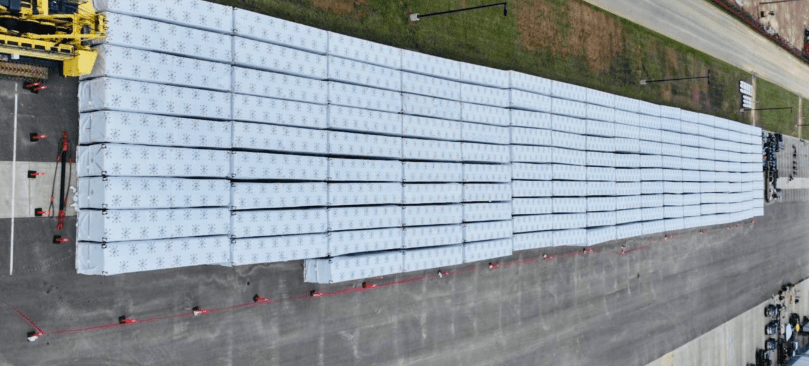
(Memphis, TN) xAI has secured 168 big batteries – Tesla Megapacks – to power up and cool down Colossus 2, a second xAI data center.

Colossus: From 1 to 2

Colossus 1 began construction in early 2024, with planning finalized by March 2024, and started running in September 2024, built in roughly six months. Colossus 2, expanding capacity for complex AI tasks, began development in early 2025, with these 168 powder white Tesla Megapacks delivered by ~ May 19.

Colossus 2 is Massive

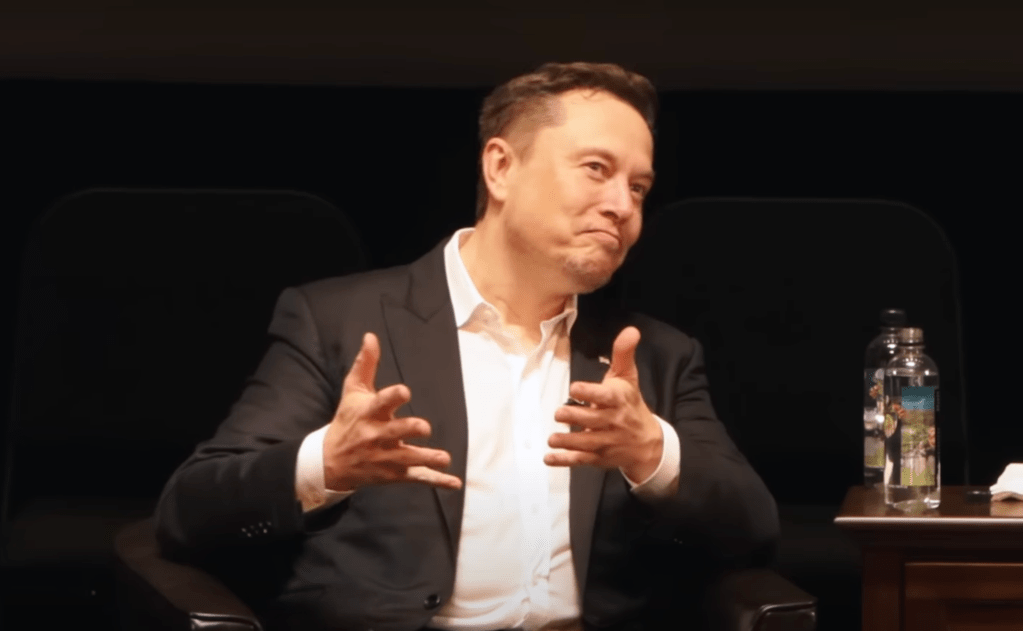
Elon revealed on X that Colossus 2 will be the world’s first gigawatt AI training supercluster, this definitely pushes earth’s computational limits.

A gigawatt is one billion watts, enough to power about 750,000 average U.S. homes for an hour, matching the output of a large nuclear power plant.

“Aiming to make Grok the best tool for developers, from enterprise & government to consumer video games!” Elon posted.

The Tesla Megapacks, verified by xAI’s Brent Mayo as designated for Colossus 2, will also ensure grid resilience for the city.

City of Memphis Benefits from xAI’s Commitment

The Greater Memphis Chamber praised xAI’s sustainable practices. “xAI is committed to Memphis through their environmental practices,” the chamber stated, noting participation in MLGW’s Demand Response program. An additional 150 megawatts of Megapack batteries will support the grid during outages or peak demand, benefiting the community. “Grid resilience and battery backup are key to ensuring a successful future for xAI and the region,” Mayo said, adding, “Grok loves the Megapacks!”

My thoughts: Tesla + xAI

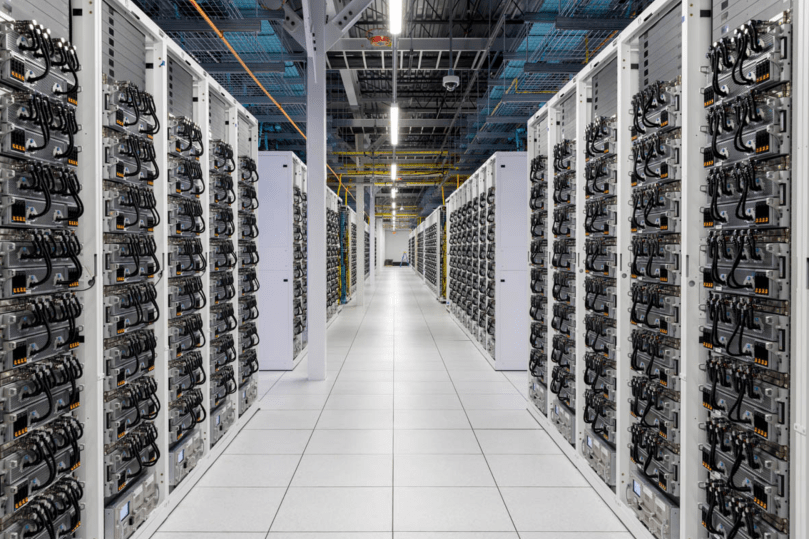
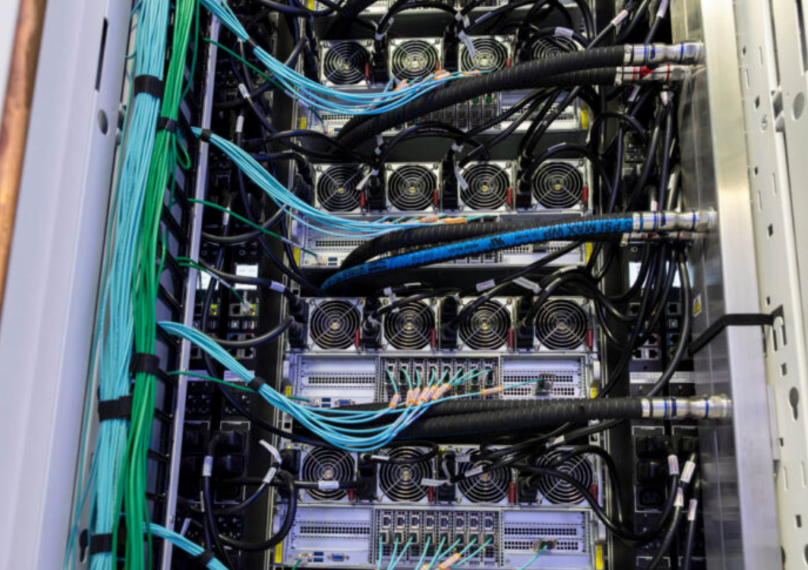
I recently read about the great success of Tesla Megafactory in Lathrop, California. It is beautiful to see manufacturing in the US by Tesla provide the solution to xAI’s power demands. Looking at the data center pics (below) you can tell it is essentially hungry for energy for power and cooling. I’ve seen a small data center up close in Austin, Texas, and noticed the huge effort made to keep it cooled.

With Colossus 2, xAI is not just building AI but also serving to buffer local energy infrastructure in case of a power outage.

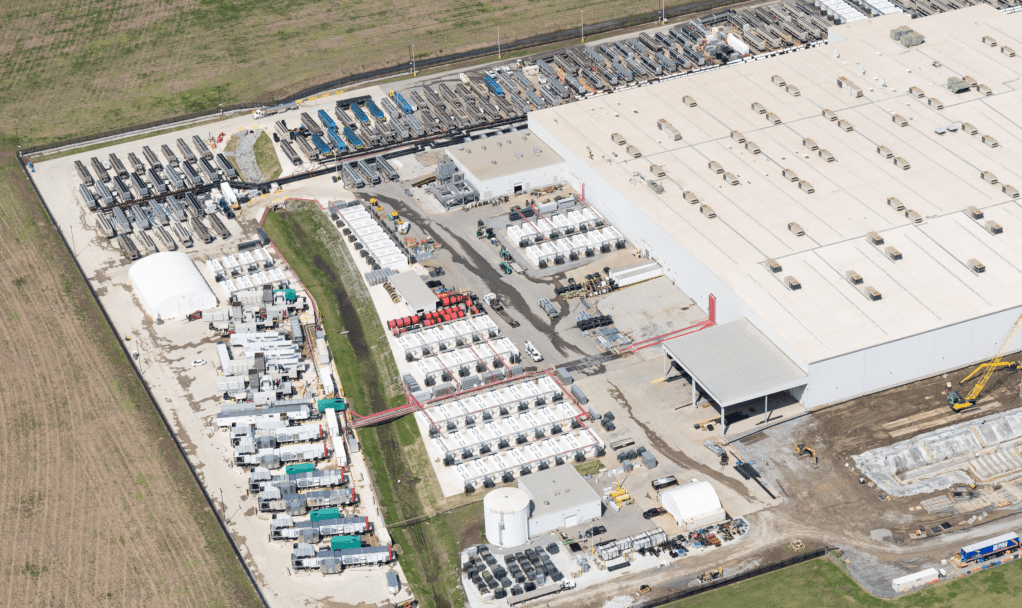
Zoom in to see Colossus I Tesla Megapacks and fossil generators. pic credit unknown

Inside Memphis Colossus I( pic credit unknown)
Zoom in on calling tubes for data center Colossus I (pic credit unknown)

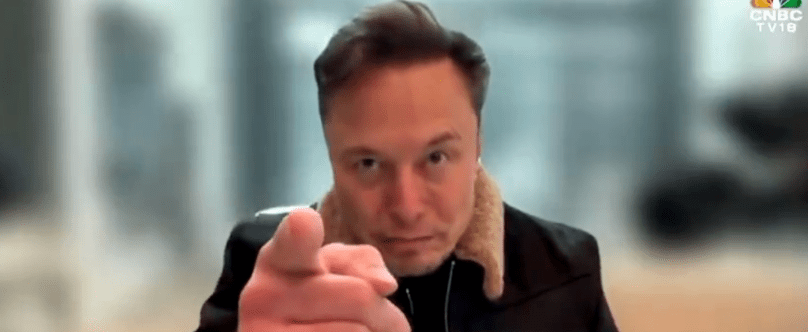
Qatar Economic Forum Interview with Genius Elon Musk (transcript)

“We are coming for those who organized the violence & death threats against Tesla. Remember this statement” – Elon Musk

Bloomberg: Hello, everyone, and Elon. Welcome to Qatar Economic Forum. How are you?

Elon Musk: Thank you for having me. I’m fine. How are you?

Bloomberg: Very well, thank you. Pleased to have you with us. Some in the audience in Doha have backed you financially over the years. Since 2022, much has changed. You’re running multiple companies and have a government role. I’ll move between topics to cover a lot. That’s okay?

Elon: That’s correct.

Bloomberg: You’re a CEO and government advisor. Tell me about your week. How’s your time split?

Elon: I travel a lot. Silicon Valley yesterday morning, LA evening, Austin now, D.C. tomorrow. Dinner with the President tomorrow night, Cabinet meetings, then back to Silicon Valley Thursday.

Bloomberg: Is it still one to two days a week on government work?

Elon: Yeah, that’s correct.

The Best Leadership: Tesla

Bloomberg: What does that mean for your corporate life? Tesla faced blowback recently. What’s your plan to turn around declining sales, and when will it happen?

Elon: It’s already turned around.

Bloomberg: Evidence? April sales in Europe show significant declines.

Elon: Europe’s our weakest market. We’re strong elsewhere, sales are doing well. No anticipated shortfall. Stock market sees it—over a trillion in market cap. It’s turned around.

Bloomberg: Still down in Europe compared to last year.

Elon: True for all manufacturers. No exceptions.

Bloomberg: You face a significant problem in Europe. Tesla’s aspirational, tied to the climate crisis. Now some drive with stickers saying, “I bought this before we knew Elon was crazy.”

Elon: Some buy because of how they view me. Lost some sales on the left, gained on the right. Sales are strong, no demand issue. Stock price near all-time highs shows things are fine.

Dedication to Tesla’s Master Plan

Bloomberg: How committed are you to Tesla? Will you be CEO in five years?

Elon: Short of dying, yes.

Bloomberg: Does your pay package affect your decision?

Elon: Not for this forum. Compensation should match incredible work. I’m confident Delaware activist rulings won’t affect future compensation.

Bloomberg: The judge struck down your $56 billion package, now valued at $100 billion. Are you relaxed about future pay? Is your Tesla commitment independent of pay?

Elon: No.

Bloomberg: So pay is relevant to your commitment?

Elon: Sufficient voting control to avoid being ousted by activists matters most. It’s about reasonable control, not money, especially with humanoid robots. Let’s move on.

Political Challenges

Bloomberg: Did Tesla’s recent challenges feel personal?

Elon: Yes.

Bloomberg: Did it make you regret your political endeavors?

Elon: I did what was needed. The violent reaction—threats, damage to my companies—was wrong. Those responsible will face justice.

Bloomberg: You’re referring to attacks on Tesla showrooms?

Elon: Burning cars, showrooms—unacceptable. Perpetrators and their funders will go to prison.

Bloomberg: Some in Europe turned against Tesla due to your politics, not violence. Wouldn’t you acknowledge that?

Elon: Objecting politically is fine. Violence, death threats, effigies aren’t. Legacy media justifying it is unconscionable.

SpaceX

Bloomberg: SpaceX. You said at West Point the future of warfare is AI and drones. Do you see SpaceX moving into weaponized drones?

Elon: SpaceX builds rockets, satellites, Internet terminals, not drones. We dominate space launch—90% of mass to orbit this year. Starlink’s 80% of active satellites, providing global connectivity. It lifts people out of poverty. We’ve declined weapons programs.

Vision for Starlink’s Growth

Bloomberg: Will SpaceX or Starlink go public soon?

Elon: Starlink may go public in the future.

Bloomberg: Time frame?

Elon: No rush. Public listing adds overhead, lawsuits. Shareholder derivative lawsuits in the U.S. need reform—they’re absurd.

Bloomberg: Will you push Trump to change this before a Starlink IPO?

Elon: Needs 60 Senate votes. Democrats won’t support it due to plaintiff’s bar influence. Texas’s law helps at the state level.

OpenAI, Grok and AI Regulation: Referees

Bloomberg: AI. You’re in this with Grok, co-founded OpenAI, left, and now have a lawsuit against them. Status?

Elon: I named OpenAI for open-source, nonprofit. Funded $50 million. They’re turning it for-profit, closed-source. Like a nonprofit for the Amazon becoming a lumber company. Lawsuit continues.

Bloomberg: They’ve partly walked back restructuring. No difference to you?

Elon: Just media talk. I’ll see them in court.

Bloomberg: You said in 2022 the U.S. needs an AI regulator like the FDA or FAA. Now you lean toward cutting regulation. Changed your mind?

Elon: No. Regulators are like referees. Too many in old fields like automotive, aerospace. AI is under-regulated—needs a few referees for public safety, not an army.

Transformative Government Advisory Role

Bloomberg: Your government role. You have billions in federal contracts, mostly SpaceX, and DOGE insider knowledge. Conflict of interest?

Elon: No. Advisors with economic interests are common. I have no formal power. If any contract was improper, it’d be front-page news. It’s not.

Bloomberg: Your competitors—Boeing, Blue Origin, Rocket Lab. DOGE’s access to their affairs could give insight. Conflict?

Elon: We review for relevance, value for money. Recommendations go to Secretaries, posted transparently on

doge.gov

, X. No accusations of conflict.

Bloomberg: Starlink’s sought globally, critical in Ukraine. Bloomberg reported South Africa bending rules for Starlink before Ramaphosa’s White House visit. Conflict?

Elon: No. South Africa’s racist laws are the issue. Mandela wanted equality. I can’t operate Starlink there because I’m not black. That’s wrong.

Bloomberg: Looks like they’re bending rules for you.

Elon: Does that seem right to you?

Bloomberg Dodges the Question

Bloomberg: Those rules aimed for economic equality. They’ve found a workaround.

Elon: Answer: Does it seem right?

Specifically, after Bloomberg raises the issue of South Africa bending rules for Starlink, Elon responds: “No, of course not. First of all, you should be questioning why are there racist laws in South Africa? That’s the first problem. That’s what you should be attacking. It’s improper for there to be racist laws in South Africa. The whole idea with what Nelson Mandela, who was a great man, proposed, was that all races should be on an equal footing in South Africa. That’s the right thing to do. Not to replace one set of racist laws with another set of racist laws, which is utterly wrong and improper. So that’s the deal, that all races should be treated equally and there should be no preference given to one or the other. Whereas there are now 140 laws in South Africa that give. That basically give strong preference to, if you’re black, South African and not otherwise. And so now I’m in this absurd situation where I was born in South Africa but cannot get a license to operate in Starlink because I’m not black.”

Bloomberg: Not for me to answer. About DOGE savings—pre-election, you said $2 trillion. Now

doge.gov

says $170 billion. What happened?

Elon: Absurd to expect instant $2 trillion. DOGE advises, doesn’t dictate. Progress is incredible.

Bloomberg: Is $2 trillion still the aim?

Elon: Savings depend on Congress, executive support. DOGE’s progress is excellent.

Bloomberg: You said $4 billion/day, but that won’t reach $2 trillion by July. Still the aim?

“The ability of DOGE to operate is a function of whether the government, and this includes the Congress, is willing to take our advice. We are not the dictators of the government. We are the advisors, and so we can, we can advise, and the progress we’ve made thus far, I think, is incredible. DOGE team has done incredible work, but the magnitude of the savings is proportionate to the support we get from Congress and from the executive branch of the government in general. So we’re not the dictators, we are the advisors. But thus far, as advisors, the DOGE team, to their credit, has made incredible progress.” – Elon

Elon: You’re trapped in a journalist’s dialogue tree. DOGE is advisory, not dictatorial. $170 billion saved is historic. More to come.

“There are 140 laws in South Africa that basically give strong preference to you if you are a Black South African and not otherwise.” – Elon Musk

Championing Efficient Governance

Bloomberg: Cutting waste is good. On USAID, Bill Gates said cuts could cost millions of lives. You called him out. Have you checked the data?

Elon: Gates, tied to Epstein, has no credibility. USAID claims lack evidence. Useful parts transferred to State Department. Much is fraud, graft.

Bloomberg: *PEPFAR, credited with saving 26 million lives, was frozen, partially waived. *UNAIDS says discontinuation could cause 4 million AIDS deaths by 2029. Gates might not be wrong.

Elon: AIDS medication program continues. Your premise is wrong. Another example?

Bloomberg: Not in entirety. UNAIDS lists disrupted services, like Lenacapavir rollout. They’d welcome your review.

Elon: If true, I’ll fix it.

Shaping a Bold Political Future

Bloomberg: Midterms spending. You spent heavily last election. Continue at that level?

Elon: Less in the future.

Bloomberg: Why?

Elon: I’ve done enough. Will spend if needed.

Bloomberg: Influence beyond U.S. How often do you speak to Putin?

Elon: Once, five years ago, on a video call.

Bloomberg: Only time? You mentioned challenging Putin to single combat.

Elon: That was an X post, not a call. Wall Street Journal is nonsense.

Bloomberg: I read widely, giving you a chance to respond. Thanks for clarifying.

Elon: Legacy media lies.

Revolutionizing Technology for Humanity

Bloomberg: Grok said your hardest challenge is managing ventures amid crises. Is this a pivotal year?

Elon: Every year’s pivotal. Starship’s full reusability, Neuralink’s telepathy and blindsight implants, AI superintelligence, Tesla’s unsupervised autonomy—all breakthroughs this year. I’m a technologist first.

Bloomberg: Elon, thank you for joining us at Qatar Economic Forum.

My thoughts

My thoughts are in this thread on X.

*Note (these acronyms were referred to in the interview)

  • ITAR: Used once as “ITAR,” referring to International Traffic in Arms Regulations. Not spelled out.
  • USAID: Used as “USAID,” referring to United States Agency for International Development. Not spelled out.
  • PEPFAR: Used as “PEPFAR,” referring to President’s Emergency Plan for AIDS Relief. Not spelled out.
  • UNAIDS: Used as “UNAIDS,” referring to Joint United Nations Programme on HIV/AIDS. Not spelled out.
Elon Musk’s Talk at Saudi Investment Forum: Advancing Robotics, AI, and Infrastructure

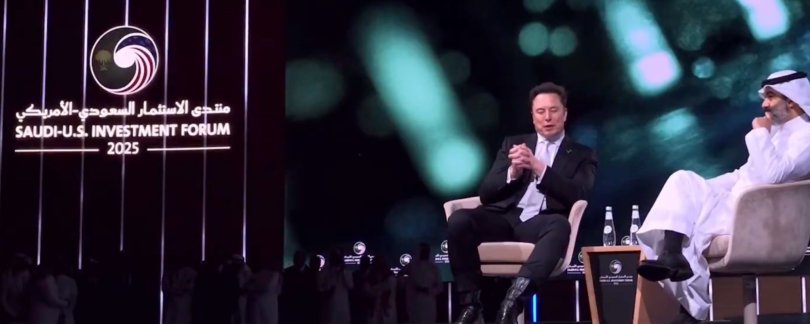
Riyadh, Saudi Arabia. Elon Musk talked to a full audience at the Saudi Investment Forum and millions watched online. This is my transcript of his talk in the King Abdulaziz International Conference Center. My piece honors Elon’s statements for technical clarity and I hope you’ll be inspired!

AI and Robotics: Engineering the Future

When we think about Elon’s work to advance robotics and AI, many of us can see a paradigm shift in automation and intelligence, with implications for building at scale, a new economic model, and the need for a new and abundant meaning for life.

Optimus Robots: Functional Autonomy

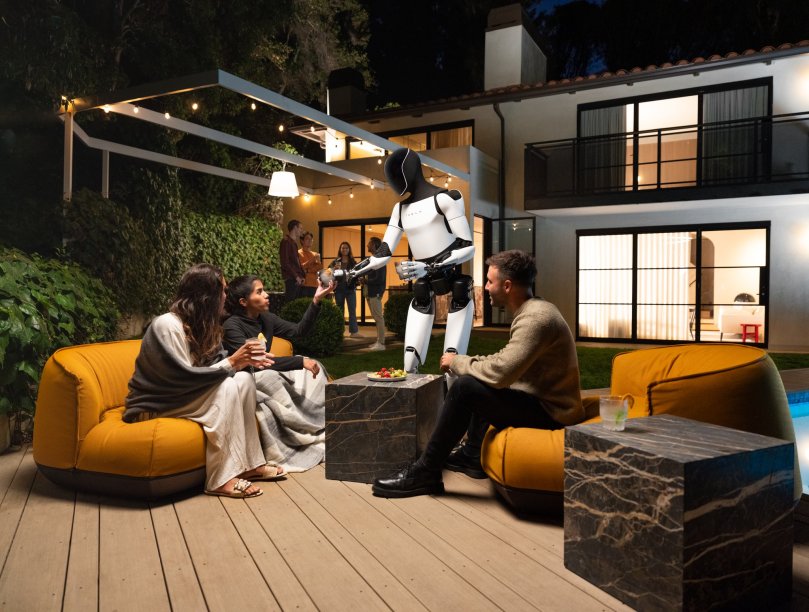
Elon detailed the capabilities of Tesla’s Optimus bot, emphasizing practical applications. “We just showed several of our Tesla Optimus robots to His Highness and President Trump. I think they were very impressed. In fact, one of our robots did the Trump dance, which I think was pretty cool. The YMCA dance. So, yeah, very impressed robots can dance, they can walk around, they can interact,” he said.

Economic Scalability Through Robotics and a Non Dystopian Future

Elon projects a transformative economy from widespread humanoid robot adoption.

“My prediction for humanoid robots is that ultimately there will be tens of billions. I think everyone will want to have their personal robot. You can think of it as if you had your own personal C3PO or R2D2 or even better. Who wouldn’t want to have their own personal C3PO or R2D2, that would be pretty great. I also think it unlocks an immense amount of economic potential because when you think about… what is the output of an economy, it is productivity per capita times the population per capita. Once you have humanoid robots, the actual economic output potential is tremendous. It is really unlimited. Potentially we could have an economy ten times the size of the global economy where no one wants for anything. You know, sometimes in AI they talk about universal basic income, I think it is actually going to be universal high income. It is where anyone can have any goods or services that they want. A science fiction book recommendation that I recommend which I think has probably the best envision of an AI future is the Culture Books by Iain Banks. Very highly recommended for a non dystopian view of the future.”

Elon: A science fiction book recommendation that I recommend which I think has probably the best envision of an AI future is the Culture Books by Iain Banks. Very highly recommended for a non dystopian view of the future.

I think this model will win as it is being created with with manufacturing at scale in mind. This is no fancy one off prototype.

xAI: Truth-Seeking Intelligence

Elon’s xAI plans to target fundamental questions about the universe.

“xAI is just trying to solve general purpose artificial intelligence. The goal with xAI is to have a maximally truth seeking AI, and it is important to be a maximally truth seeking AI in order to understand the universe,” he said. “The goal of xAI is to understand the universe. To understand what is out there? Where is the universe going? Where did it come from? I think maybe the biggest thing is, What questions do we NOT know to ask? Once you know the question, the answer is usually the easy part. And so, the goal of xAI is to help understand the universe and help people answer any questions along the way. That’s my philosophy. My philosophy is one of curiosity, just trying to understand the nature of reality.”

Infrastructure and Mobility: Redefining Systems

Elon’s Boring Company is totally under-represented. So, he does a great job of repping it after talking about Robotaxi!

Autonomous Vehicles: Robotaxi

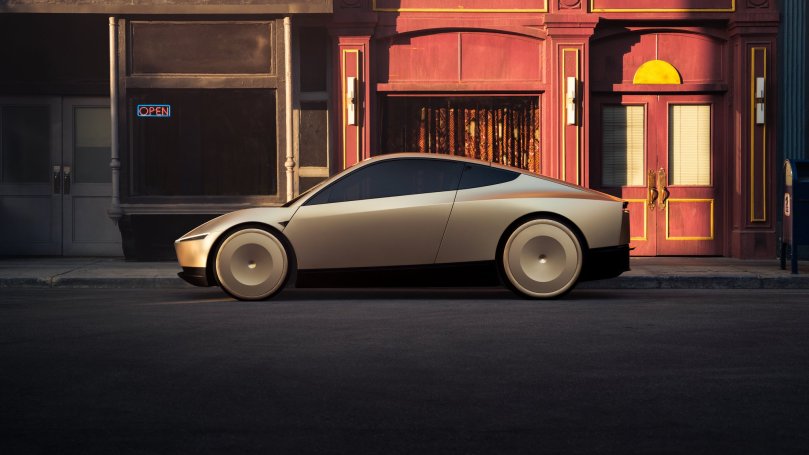
Elon proposed Robotaxi for the Kindom of Saudi Arabia. “You can think of future cars as being robots on four wheels. I think it would be very exciting to have autonomous vehicles here in the Kingdom, if you are amenable,” he said.

Elon: I think it would be very exciting to have autonomous vehicles here in the Kingdom, if you are amenable. Image courtesy of Tesla, Inc.

The Boring Company: 3D Urban Solutions

Elon’s sees a future without brain numbing traffic.

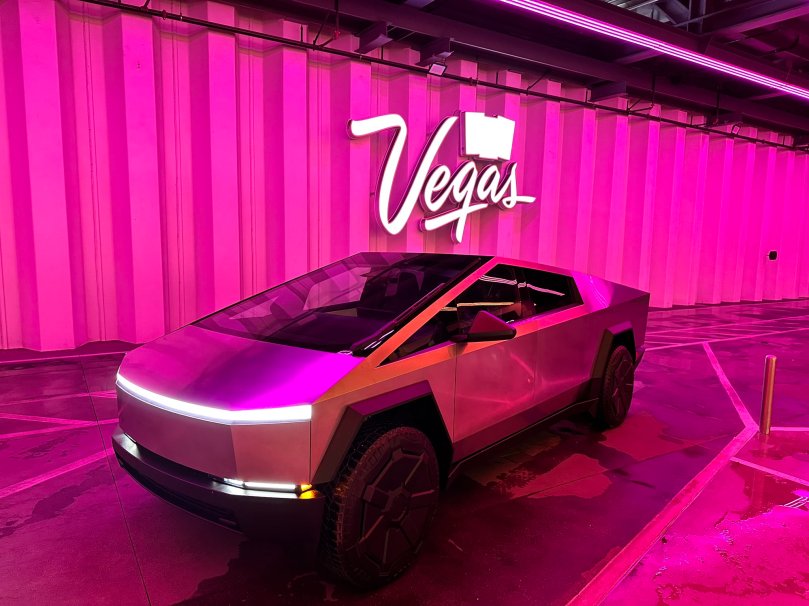
“I have something that may be worth considering, it is tunnels. I have this company called The Boring Company, which sounds kinda boring, but it literally bores tunnels and actually in order to solve traffic, you really need to go 3D with roads and by using tunnels and you essentially create like a wormhole, like a warp tunnel from one part of a city to another and alleviate traffic and we’re actually already done this proof of concept in Las Vegas. There are working tunnels in Vegas that you can use where it feels like teleporting from one part of Vegas to another. My joke is like, tunnels are under-appreciated,” he said.

Cybertruck in Vegas Loop. Image Courtesy of the Boring Company

Starlink and AI Risk Mitigation

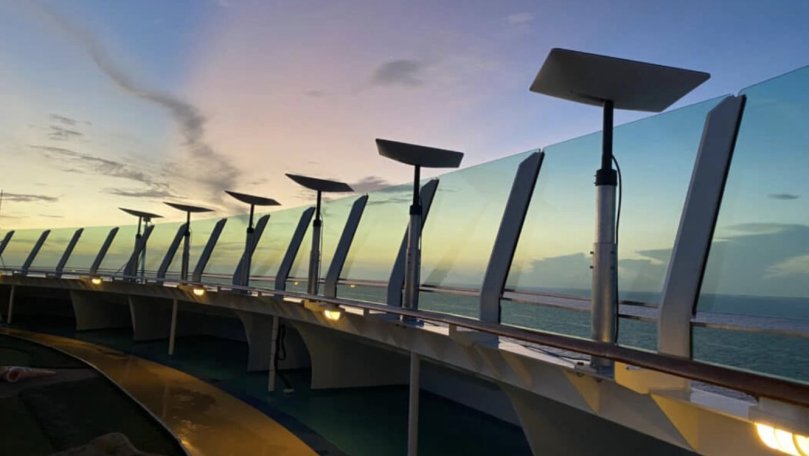
Elon graciously thanked the Kingdom of Saudi Arabia for their support for Starlink and addressed risks of AI. “I’d also like to thank the Kingdom for approving Starlink for maritime and aviation use. Thank you,” he said, highlighting the expansion of satellite-based connectivity for remote applications. On AI risks, Elon noted:

“There obviously are some risks, which illustrate that if you don’t do this right, you could have like a James Cameron sort of movie, Terminator. We don’t want that one, but having sort of a Star Trek future would be great. We’re out there exploring stars, discovering the nature of universe & prosperity and hopefully happiness that we can’t quite imagine yet. So, I am very excited about the future.”

In 2025, Starlink Maritime offers high-speed, low-latency internet access for boats and ships globally, with a shift towards tiered data plans instead of unlimited options, and specialized hardware designed for the marine environment.

My thoughts

My first thought was that Elon’s talk was too short. The brief time he had also gives us a quick look into where he’s at now. He did not discuss DOGE during his talk, but focused on his companies, the heart of the abundant future we all look forward to. In my closing comments on this article, I urge you (again) to support people having kids, and you, if you can. Underpopulation continues to be a threat to humanity, with no real fix in sight, so consider being a parent even against all odds. I have five kids and am neither “wealthy” nor poor. I’m just a regular person, like you probably are. My kids are happy, glad to enjoy life, and a blessing to everyone they meet. Despite people telling me not to have kids, or even a doctor telling me to terminate one of the pregnancies because I was “too old” to have a child at age 46, I had kids anyway. No regrets, only thanks. Bless you. Live your life to the fullest and never give up!

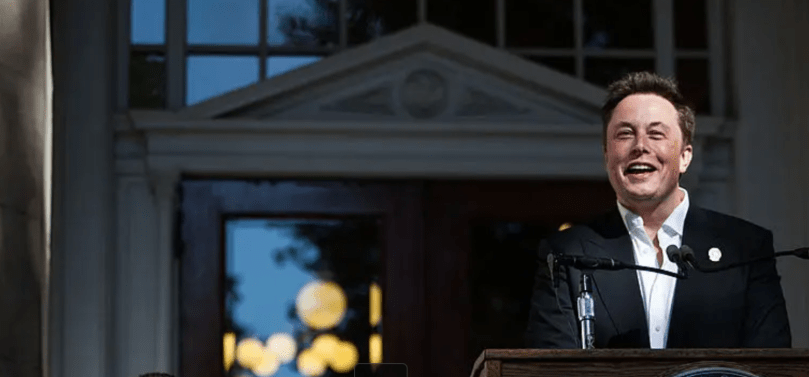
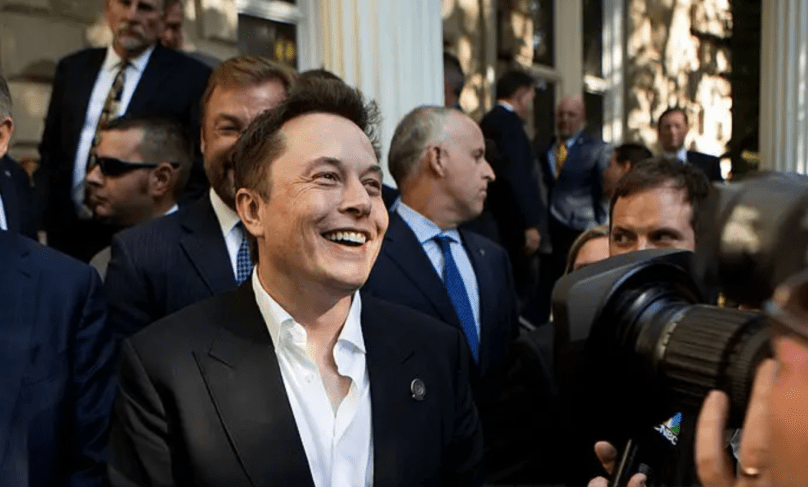
CARSON CITY, NEVADA - SEPTEMBER 4: Elon Musk, CEO of Tesla Motors, addresses an enthusiastic crowd at the Nevada State Capitol on September 4, 2014. Alongside Governor Sandoval, Musk revealed plans for the Tesla Gigafactory, a groundbreaking battery factory in Nevada poised to power electric vehicles and generate 6,500 jobs. (Photo by Max Whittaker/Getty Images)

Tesla Time Capsule Revisiting Elon Musk’s Visionary Talks

Gigafactory Nevada: Elon Musk’s 2014 Triumph!

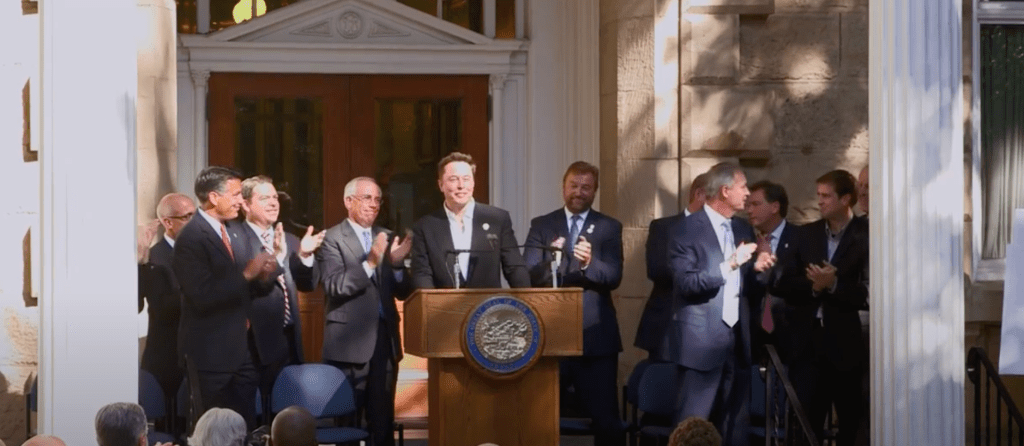
Welcome to Tesla Time Capsule: Revisiting Musk’s Visionary Talks, where we pause for a moment to remember the pivotal moments that shaped Tesla through the lens of Elon Musk’s great talks. Our journey begins in September 2014, when Elon stood outside Nevada’s state capitol in Carson City to announce the Tesla Gigafactory—a daring move that would redefine electric vehicles. With a standing ovation echoing behind him, Elon unveiled a vision for a massive, sustainable battery factory to power affordable EVs. Tesla’s mission to transform the world was palpable. This wasn’t just about building a factory; it was about betting on a future where clean energy wins. In this article, we’ll look at the context, break down Elon’s speech, and explore why the Gigafactory became a cornerstone of Tesla’s rise.

Context: Why Nevada, Why 2014?

In 2014, Tesla was no longer a scrappy startup but a strong player with the Model S gaining traction. Yet, to deliver a mass-market electric vehicle—like the upcoming Model 3—Tesla needed batteries, and lots of them. Lithium-ion battery production was dominated by Asia, and costs were a barrier to affordability. Enter the Nevada Gigafactory: a audacious plan to build the world’s largest battery plant, , and control Tesla’s destiny.

Nevada wasn’t the only contender. At the time, states like Texas, New Mexico. and Arizona offered hefty incentives, but Nevada’s agility, business-friendly environment, and Governor Brian Sandoval’s support tipped the scales. On September 4, 2014, Musk took the stage to explain why Nevada was the perfect home for this game-changing project, captivating a crowd eager for economic and environmental progress.

Elon’s Vision: A “Get-Things-Done” State

Gratitude and Nevada’s Edge Elon opened with heartfelt thanks, setting a collaborative tone:

“Thank you for coming. I’d like to start by thanking Governor Sandoval and the Nevada Legislature for their support. I think people should know that this was not about the biggest incentive package; it wasn’t just about the incentives.”

Elon explained what made Nevada stand out:

“What the people of Nevada have created is a state where you can be very agile, where you can do things quickly and get things done. It is a real ‘get-things-done’ state. That was a fundamental and important part of the decision.”

This wasn’t just flattery. Musk emphasized Nevada’s ability to move fast—crucial for a factory that had to be ready to produce battery packs by the Model 3’s launch. His words resonated with the crowd, framing Nevada as a partner in Tesla’s mission.

The Gigafactory’s Purpose: Powering Tesla’s Mission

A Factory for the Future Elon didn’t mince words about the high stakes:

“This factory is very important to the future of Tesla because, without it, we can’t produce the mass-market car. In order to produce a high-volume, affordable, compelling electric car, which has been the mission of Tesla from the beginning, the Gigafactory is vital.”

This was Tesla’s moonshot: a factory to make EVs accessible to millions, not just the elite. Elon underscored timing and efficiency:

“We had to ask where we would have high confidence that this factory would be ready on time, so that when we are ready to produce the vehicle, the factory is ready to produce the battery packs. That was truly the most important thing.”

By tying the Gigafactory to Tesla’s core mission, Elon made it clear: this wasn’t just a factory—it was the key to a sustainable future.

The Scale: Why “Gigafactory”?

Bigger Than the Rest Elon’s art deco flair for the dramatic shone when he explained the name:

“Perhaps it’s worth highlighting the sheer scale of the Gigafactory and why we even call it the Gigafactory. It will be the biggest lithium-ion battery factory in the world, surpassing the combined production capability of all lithium-ion factories in China, Korea, Japan, and elsewhere.”

This wasn’t hyperbole. The Gigafactory aimed to produce more batteries than the entire global output of 2013, a staggering ambition that left the crowd buzzing. Musk’s vision wasn’t just about meeting demand—it was about rewriting the rules of battery production.

CARSON CITY, NEVADA - SEPTEMBER 4: Elon Musk, CEO of Tesla Motors, addresses an enthusiastic crowd at the Nevada State Capitol on September 4, 2014. Alongside Governor Sandoval, Musk revealed plans for the Tesla Gigafactory, a groundbreaking battery factory in Nevada poised to power electric vehicles and generate 6,500 jobs. (Photo by Max Whittaker/Getty Images)
CARSON CITY, NEVADA – SEPTEMBER 4: Elon Musk, CEO of Tesla Motors, addresses an enthusiastic crowd at the Nevada State Capitol on September 4, 2014. Alongside Governor Sandoval, Musk revealed plans for the Tesla Gigafactory, a groundbreaking battery factory in Nevada poised to power electric vehicles and generate 6,500 jobs. (Photo by Max Whittaker/Getty Images)

A Factory with Flair: Design and Sustainability

Art Deco Diamond in the Desert Elon revealed a surprising detail: the Gigafactory would be as beautiful as it was functional:

“We are taking care to ensure that it looks good and fits in with its surroundings. The factory will be shaped like a diamond. To fit better into the environment, we shaped it like a diamond, and it is aligned to true north so that we can map out where the equipment will be by GPS.”

The diamond shape wasn’t just aesthetic—it minimized environmental disruption. Elon’s nod to “romantic” practicality charmed the audience:

“I think it sounds kind of romantic to say it’s shaped like a diamond and aligned to true north, but there are practical reasons for it as well.”

CARSON CITY, NEVADA – SEPTEMBER 4: Elon Musk, CEO of Tesla Motors, addresses an enthusiastic crowd at the Nevada State Capitol on September 4, 2014. Alongside Governor Sandoval, Musk revealed plans for the Tesla Gigafactory, a groundbreaking battery factory in Nevada poised to power electric vehicles and generate 6,500 jobs. (Photo by Max Whittaker/Getty Images)

Self-Sustaining Power

Sustainability was non-negotiable:

“This factory will produce its own energy through a combination of geothermal, solar, and wind power. It will generate all the energy it needs, making it a self-contained factory.”

This commitment to zero-carbon energy underscored Tesla’s ethos, earning cheers from an environmentally conscious crowd.

An Invitation to Witness History

Open to the Public Elon closed with a promise:

“We’re going to ensure that people can visit it, look at it, and check it out because it will be worth seeing.”

This wasn’t just a factory—it was a symbol of progress, open for the world to see. The crowd’s standing ovation reflected their excitement and he kept his word, with close friend John Stringer visiting the factory just a week ago!

Postscript: The Gigafactory’s Lasting Impact

The 2014 Gigafactory announcement was more than a speech—it was a turning point. By 2025, Gigafactory Nevada has become a powerhouse, producing batteries for millions of Tesla vehicles and energy storage systems like Powerwall. It sparked economic growth in Nevada, creating thousands of jobs and proving Musk’s bet was right. This talk showcased Elon at his best: visionary, practical and brief, and unrelentingly ambitious. As we look back, it’s clear the Gigafactory wasn’t just about batteries—it was about building a future where clean energy is the norm. What part of your life has Tesla made better? Feel free to share your thoughts with others on X, I often discuss these historical pieces with my kids/family over dinner, etc. I’ll be writing more Tesla Time Capsule stories in the future.

More from Tesla Time Capsule

Explore other moments in Tesla’s history through Elon Musk’s visionary talks:

  • The Gigafactory Gamble: Elon Musk’s 2014 Nevada Triumph (You are here)
  • Coming Soon: Tesla’s Next Milestone (Stay tuned for my next historical Elon talk about Tesla!)
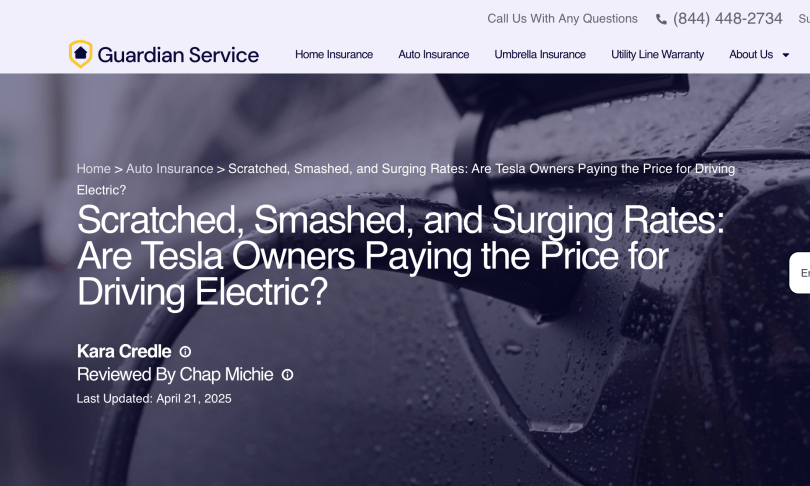
Recently, a mysterious study from Guardian Service Company in Raleigh, North Carolina, claimed to uncover shocking truths about Tesla ownership—including an outrageous claim of a 44% vandalism rate.

Guardian Service Study: Why This Tesla Owner Survey Is Bogus and Kelley Blue Book Should Be Ashamed

Recently, a mysterious study from Guardian Service Company in Raleigh, North Carolina, claimed to uncover shocking truths about Tesla ownership—including an outrageous claim of a 44% vandalism rate.Guardian Service Company published a study on April 21, 2025, claiming to have asked 508 Tesla owners about vandalism, surveillance, and ownership sentiments.

44% Vandalism? Pure Fiction

The claim—that two out of five, or a full 44%, of Tesla owners have experienced intentional damage like keying or tire slashing—is outrageous. Vandalism against Teslas is real, with incidents like arson and graffiti tied to political controversies, but these are sporadic, not epidemic. A 44% rate is absurd without verified insurance data, and Guardian’s failure to share the exact question asked (was it “any damage” or “confirmed vandalism”?) makes this a manipulative scare tactic, likely to push insurance sales.

Sentry Mode

Guardian’s study claims 54% of Tesla owners “enabled video surveillance specifically due to fears of vandalism,” while 25% said no, leaving 21% unaccounted for. This is utterly ridiculous when you consider Tesla vehicles come with Sentry Mode, a built-in surveillance system that records threats automatically. Owners don’t install cameras; they toggle a pre-installed feature. Framing this as owners adding surveillance due to “vandalism anxiety” is a gross misrepresentation, exploiting Tesla’s standard technology to inflate fear. If 25% said no, were they even Tesla owners, or did Guardian botch the question? This sloppy data screams non-scientific nonsense.

Guardian’s Motive: Insurance Sales, Not Truth

Guardian Service Company isn’t a research firm—it’s an insurance agency in Raleigh, NC, where Tesla Insurance isn’t available, forcing owners to use third-party providers like them. A study hyping vandalism fears could drive customers to their auto insurance quotes, but fabricating data to scare Tesla owners is shameful. The lack of transparency—no sample details, no peer review—confirms this isn’t a valid study but a marketing stunt at best, or outright misinformation at worst.

Kelley Blue Book’s Blunder

Guardian’s most egregious claims are that 34% (one in three) Tesla owners plan to sell or trade in their vehicle within a year, one in five (19%) regret their purchase, and 30% wouldn’t choose Tesla again. They frame this as owners second-guessing their purchase, but it’s a blatant distortion. Tesla routinely asks owners about trade-ins to encourage upgrades to newer models, like the refreshed Model 3 or Cybertruck. I experienced this myself during a recent test drive, where Tesla reps asked if I’d consider trading in my car—not because I regret it, but because it’s standard practice. A 19% regret rate and 30% non-repeat purchase claim are dubious without reasons (cost? politics?) and clash with Tesla’s 97% customer satisfaction (Consumer Reports, 2023).It’s not uncommon for a company like Guardian to produce a blog post to promote their business, but the fact that Kelley Blue Book published a full article on these bogus claims is a disgrace. KBB, a once-trusted name in car pricing, should’ve sniffed out the study’s flaws—no primary source, no methodology, and claims that don’t pass the smell test. Scientific studies require random sampling and clear questions, but Guardian provides no evidence of either, rendering their claims unreliable.By amplifying this unverified nonsense, KBB risks its reputation, fueling anti-Tesla narratives at a time when vandalism stories are already exaggerated. KBB must retract this article or issue a correction to restore its credibility as a once-trusted name.

This Guardian study is a textbook case of misinformation, with outrageous claims that crumble under scrutiny. Tesla owners in Texas, where I live, can use Tesla Insurance to counter vandalism fears, but in North Carolina, where Guardian operates, owners deserve better than fearmongering. We should disregard this study and call out KBB for lending it credence.

 What will it take for trusted sources to stop amplifying fake studies and start verifying facts?

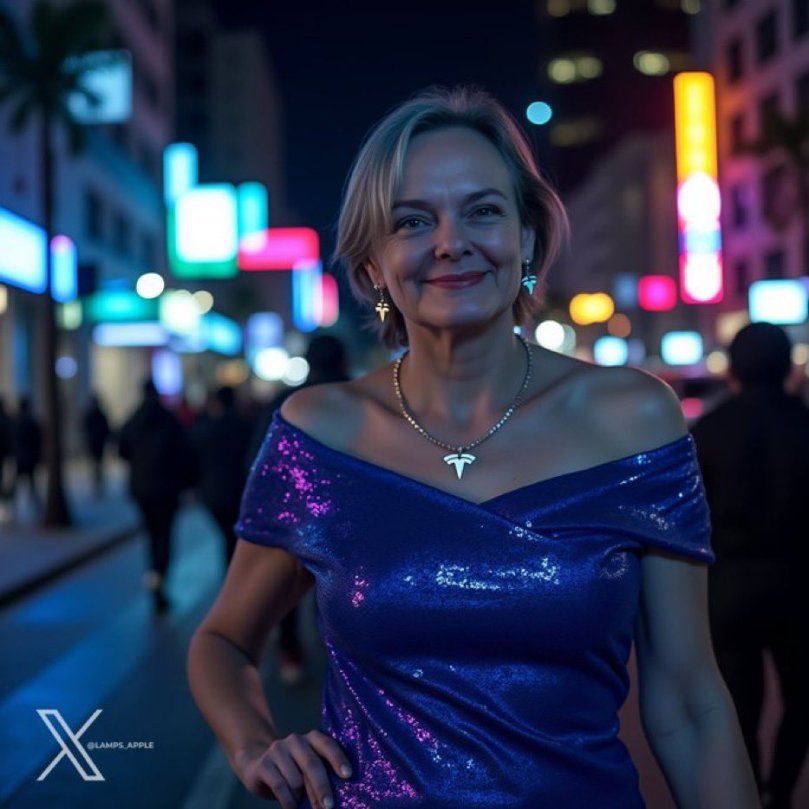
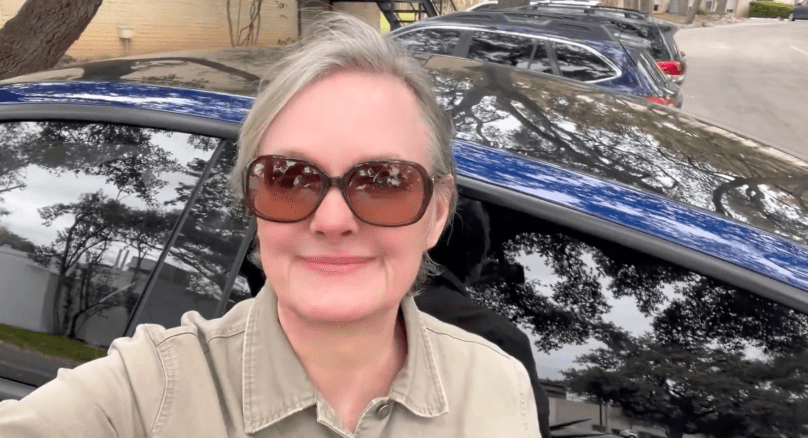
Gail Alfar, Image Credit Apple Lamps on X
Gail Alfar, dedicated Tesla advocate and writer since 2020, continues to champion the resilience and innovation of Tesla owners.

Addendum (April 28, 2025): After publishing this critique of Guardian Service Company’s mysterious study—claiming 44% of Tesla owners faced vandalism, 19% regretted their purchase, and 30% wouldn’t buy a Tesla again—I’ve taken action to uncover the truth. I reached out to Guardian Service at info@guardianservice.com and (844) 448-2734, demanding the full study, its methodology, and data verification. Given the study’s absence from their website and its reliance on unverified X posts, I’m not optimistic about a response, but I’ll keep you updated if they reply. Stay tuned as we continue to call out these bogus claims and demand better from trusted sources!

Elon Musk’s 2024 West Point Talk

Elon Musk’s 2024 West Point Talk: My Transcript of Insights on the Future of Technology in Warfare (Part 1)

This is the first of a multi part series, that allows you to closely study Elon’s words spoken at West Point on August 16, 2024. The full video was released on February 6, 2025. If you love history of civilizations, and like to study battles and war, you’ll find value in Elon’s insight. I know I did.

Featuring Elon Musk interviewed by Shane Reeves

Elon Musk at West Point: AI and Drones Will Define Future Warfare

How do you see warfare transforming in the future? Elon replied with, “the biggest factor I think by far is AI and drones. The current war in Ukraine is very much a drone war already – sort of a contest between Russia and trying to see who can deploy the most number of drones. Now if there’s a major power war, it’s very much going to be a drone war. It’s gonna be drones and AI and … I do worry about the existential risk of AI, which is that if you employ AI and drones, do you Eventually go down this path where you get to terminator? We should try to avoid that! We should minimize the terminator risk. But essentially when you’re making military drones, you are making terminators. And I think you will be somewhat forced into giving the Drone localized AI. Because if the AI is far away, it can’t control as well as localized AI.”

Elon explained that localized AI means it’s an autonomous scaling machine which will be completely autonomous if you give it the OK in a particular arena and then it just goes.

Will our military have the same types of concerns and limitations? To this question Elon replied, “it depends on how much existential risk there is in these wars, if it’s a regional war, I think it will be more tempered, if it goes beyond regional war, then all bets are off. And then you start deploying things that you really would not want to deploy. So hopefully, that does not happen.”

In response to a comment by Reeves, that machines are not just disrupting warfare today they are commonplace, Elon said “drones are going to be overwhelmingly what matters for any powers that have significant technology. Elon added, my personal belief is like, it’ll actually be I think probably too dangerous to have humans at the front. It’s drones at the front. Drones don’t miss.”


Reeves asked, or commented, because of the lethality then, it’s too dangerous to have humans at the front? Elon responded “Yes, I mean, if you have seen some of the computer-controlled sniper rifles, they just don’t miss. So you are finding a machine that is going to aim with micron level accuracy, and it never gets tired.”


Reeves asked Elon how he thinks the United States should be leveraging technology to further our national defense?


Elon paused, and replied, “Well I think we probably need to invest in drones, the United States is strong in terms of technology of the items, but, the production rate is low, so, it is a small number of units, relatively speaking, but I think that basically there is a production rate issue with the rate, like if you say how fast can you make drones, imagine there is a Drone conflict. The outcome of that Drone conflict will be based on: How many drones does each side have in that particular skirmish times the kill ratio… so let’s say that the United States would have a set of drones that have a high kill ratio, but then, the other side has far more drones. If you have got a 2 to 1 kill ratio, and the other side has four times as many drones, you are still going to lose.”


Reeves asked Elon if he thinks that our industrial base can scale to make the number of drones that Elon is talking about?


Elon replied, “I think that’s going to be the biggest challenge. It can scale. But it is not currently scaling.” Reeves asked why. Elon thought about the current state of Drone procurement in the U.S.A, and also mentioned,

“I read a lot of military history and the thing that I go to sleep with is usually an audiobook on military history of one kind or another so I find the subject very interesting and one of the things that tends to happen is that countries are geared up pretty much enough to fight the last war, but not the next war. And it’s hard to change. If you look at the uniforms at the start of World War I and the tactics they use at the start of World War I, they were not significantly different from the Napoleonic era. You know, when the French were marching into war with brightly colored uniforms. It looks great. But that’s not what you want to be, you know when someone is pointing a gun at you you don’t want a great looking uniform you want a uniform that blends in so, there is a tendency to be gearing up to fight the last war in the U.S. So that would be kind of the Cold War I guess. So, it usually takes some kind of shock factor to adjust. I would recommend adjusting now.”

Elon: “And you are seeing some startups like Anduril and a few others that have a different mindset, but it’s really going to be, can you make a lot of drones? And what’s the kill ratio? That’s what it comes down to.”

Anduril Industries, founded in 2017 in Costa Mesa, California, is a defense tech company revolutionizing military capabilities with AI-driven solutions. Named after a mythical sword, Anduril builds autonomous drones (like Ghost), surveillance systems (Sentry), and software (Lattice) to enhance national security. Unlike traditional defense giants, it operates like a nimble tech startup, prioritizing speed and innovation. With $2.3 billion in funding by 2024, Anduril serves the U.S. Department of Defense and allies, competing with legacy contractors by delivering cost-effective, scalable tech for modern warfare, including border security and counter-drone operations.

This is Part 1, of Elon’s talk, and it gets better. You can follow my account, turn on your notifications, for Part 2. Or check back periodically. 

Tesla owners, see FSD in action in episode 116! It handles the toughest drives. Time to activate yours?

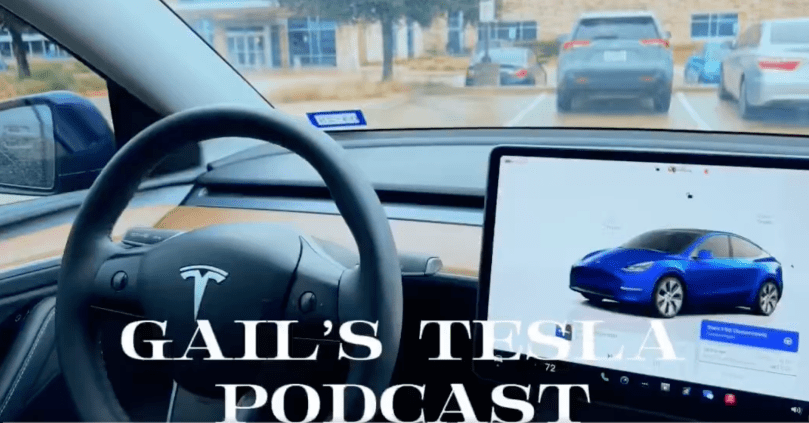
Gail’s Tesla Podcast on 𝕏 Episode No. 116: Tesla FSD Shines in West Austin: Challenging Drives and Smart Safety

Conquering Tough Roads with Tesla FSD

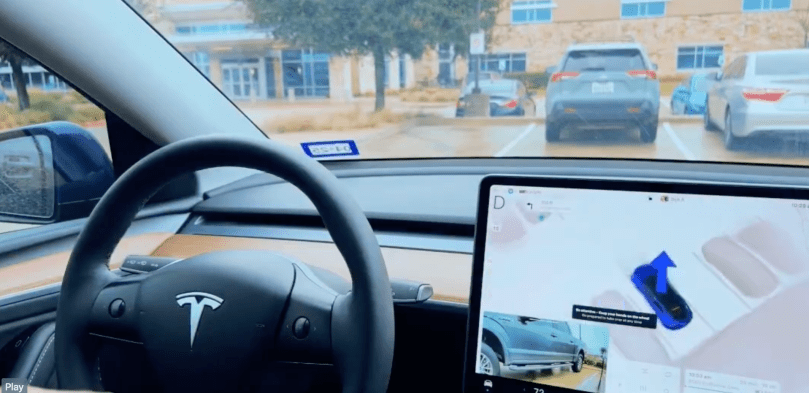
In episode 116 of my podcast, I take Tesla’s Full Self-Driving (FSD) software through some of West Austin’s trickiest roads—and it doesn’t disappoint. Picture this: I’m navigating a busy stretch of traffic, aiming for a tough right-hand turn. The car autonomously shifts over, timing it perfectly, no hesitation. It’s moments like these that show why Tesla owners should give FSD a try. Whether you’ve got it installed and unused or you’re on the fence about adding it, this episode might just convince you. Check out the full video:

Safety First: How FSD Chooses Smarter Routes

One standout moment? I prompted the car to turn left—a risky move suggested by the map. But FSD had other plans. Instead of diving into danger, it swung right, taking a slightly longer route around the block to keep us safe. Sure, we arrived a few seconds later, but the accident risk? Near zero. This is Tesla’s autonomous driving at its best—prioritizing safety over shortcuts. For anyone hesitant about trusting FSD, this episode shows how it’s got your back.

Unexpected Stops and Mind-Blowing Moves

The adventure didn’t stop there. We cruised near a spot called “Gage” (spelled G-A-G-E), a hidden gem in a West Austin shopping center. The car pulled in, and we discovered a treasure trove of yarn supplies and knitting classes—perfect for a spontaneous detour. But the real jaw-dropper came later. Towards the end of the podcast, FSD tackled a closed-off alley—tight, confined, no obvious exit. On its own, it executed a flawless three- or four-point turn, reversing and pivoting like a pro. I couldn’t believe it. This is autonomous driving that’ll make you rethink what your Tesla can do.

Why You Should Activate Your Tesla FSD

Episode 116 isn’t just a drive—it’s proof Tesla FSD can handle West Austin’s challenges while keeping safety first. From mastering tough turns to outsmarting risky prompts, this tech is ready for you. Got a Tesla? Fire up that FSD and see what it can do. Watch the episode [here] and join me on this wild ride!

FOR MEDIA USE ONLY News media is welcome to use my material in connection with a story or article. By downloading any content I create, you understand and hereby agree and represent that: (1) you are a member of the news media; (2) use of the content is in connection with a story or an article appearing in newspapers, periodicals, digital publications or television; (3) all images and rights thereto remain the property Gail Alfar.; and (4) use of the image is not for publication covers, advertising, promotion or otherwise for commercial purposes. Furthermore, use of any and all images and content appearing on this page must each include the notice “Courtesy of Gail Alfar” Use of materials copied from this website is at your own risk. You must obtain prior written consent from Gail Alfar for uses that exceed the above parameters.

Gail Alfar, Image Credit Apple Lamps on X
Tesla FSD Wins Over Doubters

Gail’s Tesla Podcast on 𝕏 Episode No. 114: Tesla FSD, Safe, Fun, and Magical

Experience Tesla Autonomy in Austin – Skeptics, Take Note!

Think Tesla’s Full Self-Driving (FSD) is overhyped or unsafe? Episode 114 of my podcast might change your mind. I took a Sapphire Model Y through Austin, Texas, letting FSD handle everything from freeway merges to tricky exits—and it was a blast! Tesla makes the best cars, and this episode, exclusive to X [watch here], shows why. For skeptics doubting autonomous driving, I’ve got timestamps to prove it’s not just safe—it’s magically fun. Join me on this ride and see why FSD is worth trusting.

From Park to Freeway: FSD’s Seamless Start

At 00:01, I press Start from Park, and the Sapphire Model Y springs to life. By 02:56, we’re smoothly onto the freeway—no fuss, no stress. Skeptics often worry about autonomous tech fumbling basic moves, but FSD nails it with precision.

Tesla FSD in Sapphire Model Y: Safe, Fun, and Magical – Podcast 114 Proves It

Safety? Check—cameras and sensors keep us locked on course. Fun? Absolutely—the car’s confidence feels like a co-pilot who’s always one step ahead. This isn’t sci-fi; it’s real-world Austin driving, and it’s a game-changer.

Mastering Lanes and Exits: Safety Meets Magic

Watch at 06:17 as FSD switches from the fast to slow lane—quick, smooth, and safe, even in freeway flow. Then at 06:49, it exits to a right turn, handling the merge like a pro by 09:37 when we re-enter the freeway. At 10:09, another exit and right merge, all autonomous, all flawless. Skeptics, here’s the kicker: no near misses, no hesitation—just a car that reads the road better than most humans. The Sapphire Model Y’s FSD turns stressful maneuvers into a joyride, proving Tesla’s safety claims aren’t just talk.

Why Tesla FSD Wins Over Doubters

Still unsure about Tesla autonomy? Episode 114 [linked here] is your wake-up call. I’ve driven plenty of cars (BMW, Mazda, Honda, Toyota, Oldsmobile), but nothing matches this Model Y’s blend of safety and fun. FSD’s real-time decisions—like lane switches and merges—show it’s built to protect while delivering a thrill. Austin’s busy roads were no match for it, and that’s no fluke—Tesla’s tech learns from millions of miles. Skeptics, ditch the doubts. Watch this podcast on X and see why I’d trust FSD any day. Tesla’s not just the best—it’s the future, and it’s here now.

Tesla FSD Wins Over Doubters

FOR MEDIA USE ONLY News media is welcome to use my material in connection with a story or article. By downloading any content I create, you understand and hereby agree and represent that: (1) you are a member of the news media; (2) use of the content is in connection with a story or an article appearing in newspapers, periodicals, digital publications or television; (3) all images and rights thereto remain the property Gail Alfar.; and (4) use of the image is not for publication covers, advertising, promotion or otherwise for commercial purposes. Furthermore, use of any and all images and content appearing on this page must each include the notice “Courtesy of Gail Alfar” Use of materials copied from this website is at your own risk. You must obtain prior written consent from Gail Alfar for uses that exceed the above parameters.

"I see a path. I'm not saying it's an easy path but I see a path of Tesla being the most valuable company in the world by far." - Elon Musk

Tesla’s Path Forward: Q4 2024 and FY 2024 Earnings Call (Elon’s Conversation)

Austin, Texas.

“I see a path. I’m not saying it’s an easy path but I see a path of Tesla being the most valuable company in the world by far.” – Elon Musk

In this article we’ll look at how Tesla’s value is immense, as what Tesla is building will improve efficiency in all areas of human life, and do it at scale, making it affordable. Elon Musk outlined much of this is in this Shareholder meeting, so although he did not make mention of Master Plan 3, this was a big progress report on Master Plan 3.

Elon’s conversation focused on manufacturing at scale, AI, and robotics. Note: This is the January 29, 2025, Tesla Annual Shareholder Earnings Call.

Elon is More that Doubling Investments in Tesla

“Doubling is not even enough. We made many critical investments in 2024 in manufacturing, AI and robotics that will bear immense fruit in the future.” – Elon Musk

When discussing Tesla’s Full Self-Driving (FSD) technology, Elon emphasized its market impact, saying, “I think the interest level from other manufacturers to license FSD will be extremely high once it is obvious that unless you have FSD, you’re dead.”

The Misconception of Easy Production vs. the Reality

Elon: “Yeah, prototypes are trivial basically. Prototypes are easy, production is there for many years. The problem is there’s like those who have never been involved in production or manufacturing somehow think that may — once you come up with some eureka design, that you magically can make 1 million units a year, and this is totally false. There needs to be some Hollywood story or where they show actually the problem is manufacturing.”

Hollywood Does Not Make Movies Like This, But They Should

Elon: “I’ve never even heard of one (Hollywood story that shows how to win at manufacturing). It just doesn’t fit the narrative. The Hollywood thing is like some lone inventor in a garage goes EUREKA! And suddenly, it files a patent, and suddenly, there’s millions of units. And like I’m listening to the guys, we’re missing really 99% of the story. One percent is — a product is 1% inspiration, 99% perspiration. Hollywood shows you the 1% inspiration and minus — but forgets about the 99% perspiration of actually figuring out how to make that initial prototype manufacturable and then manufacture at high volume such as reliable, low cost, consistent, and doesn’t break down all the time and that is 100 times more difficult at least than the prototype.”

Austin, Texas Will Experience Unsupervised Full Self-Driving as a Paid Service in June

“In fact, it could drive you. It’s a self-driving wolf.” – Elon Musk

Elon’s timeline was a surprise for many, as he plans to initially launch unsupervised FSD in Austin in June. For me personally, it makes sense. I live in Austin, use FSD everyday, it works astonishingly well!

“We’re going to be launching unsupervised full self-driving as a paid service in Austin in June.” – Elon Musk

Elon: “And I am like — setting up for what I think will be an epic 2026 and a ridiculous ’27 and ’28, ridiculously good. That is my prediction. As you know, very few people understand the value of self-driving and our ability to monetize the fleet. Some of these things I’ve said for quite a long time, and I know people have said, Well, Elon, the boy who cried like a wolf like several times. But I’m telling you, there’s a damn wolf this time and you can drive it. In fact, it could drive you. It’s a self-driving wolf.

For a lot of people, like their experience of Tesla Autonomy is like if it’s even a year old, if it’s even two years old, it’s like meeting someone when they’re like a toddler and thinking that they’re going to be a toddler forever. But obviously not going to be a toddler forever. They grow up. But if their last experience was like, Oh, FSD was a toddler. It’s like, well, it’s grown up now. Have you seen it? It’s like walks and talks. And that’s really what we’ve got.

And it’s difficult for people to understand this because human intuition is linear as opposed to what we’re seeing is exponential progress. So, that’s why my No. 1 recommendation for anyone who doubts is simply try it. Have you tried it? When’s the last time you tried it? And the only people who are skeptical, the only people who are skeptical are those who have not tried it.”

When addressing a question about discussions with other auto companies regarding the licensing of Tesla's FSD, Elon explained there is interest.

When addressing a question about discussions with other auto companies regarding the licensing of Tesla’s FSD, Elon explained there is interest.

Interest in Tesla’s Autonomous Tech

Elon: “Yeah. What we’re seeing is at this point, significant interest from a number of major car companies about licensing Tesla full self-driving technology.”

Analyzing Tesla’s Hardware

Elon: “What we’ve generally said is the best way to know what to do is take one of our cars apart. And then you can see where the placement of the cameras are, what the thermal needs are of the Tesla AI inference computer.”

Optimus Development Timeline

  • Elon: “With regard to Optimus, obviously, I’m making these revenue predictions that sound absolutely insane, I realize that. But they are — I think they will prove to be accurate. Now with Optimus, there’s a lot of uncertainty on the exact timing because it’s not like a train arriving at the station for Optimus. We are designing the train at the station and in real time while also building the tracks.”

Production Goals for Optimus:

  • Elon: “The normal internal plan calls for roughly 10,000 Optimus robots to be built this year. Will we succeed in building 10,000 exactly by the end of December this year? Probably not, but will we succeed in making several thousand? Yes, I think we will. Will those several thousand Optimus robots be doing useful things by the end of the year? Yes, I’m confident they will do useful things.”

Feedback Loop for Optimus Development

Elon: “Those Optimus in use at the Tesla factories for production design 1 will inform how we will change for production design 2, which we expect to launch next year.”

The Immense Scaling of Optimus

Elon: “And our goal is to ramp up Optimus production faster than maybe anything has ever been ramped, meaning like aspirationally in order of magnitude, ramp per year. Now if we aspire to an order of magnitude ramp per year, perhaps, we only end up with a half order of magnitude per year. But that’s the kind of growth that we’re talking about. It doesn’t take very many years before we’re making 100 million of these things a year if you go up by let’s say, a factor by 5x per year.”

How Tesla Solved Challenges in Developing Optimus

Elon: “But we do need to be — this is an entirely new supply chain, it’s entirely new technology. There’s nothing off the shelf to use. We tried desperately with Optimus to use any existing motors or any actuators, sensors. Nothing worked for a humanoid robot at any price.”

Custom Design for Optimus

Elon: “We had to design everything from physics-first principles to work for a humanoid robot and with the most sophisticated hand that has ever been made before by far. Optimus will be also able to play the piano and be able to thread a needle. I mean, this is the level of precision no one has been able to achieve. And so, it’s really something special.”

Future Value of Optimus to Tesla

Elon: “So, yes. And my prediction, long term, is that Optimus will be overwhelmingly the value of the company.”

Additional Statements on Optimus

Elon: “Optimus is not design-locked. So, let’s say like we’re designing the train as it’s going to — we’re redesigning the train as it’s going down the tracks while redesigning the tracks and the train stations.”

Vision for Optimus

  • Elon: “I’d like it to be the beginning of next year but maybe it’s more like the middle of next year,” (referring to the launch of an enhanced version of Optimus)
  • Elon: “The current line that we’re designing is for roughly 1,000 units a month of Optimus robots. The next line would be for 10,000 units a month. The line after that would be for 100,000 units a month.”
  • Elon: “I think probably with Version 2, it is a very rough guess because there’s so much uncertainty here, very rough guess that we start delivering Optimus robots to companies that are outside of Tesla in maybe the second half of next year, something like that.”
  • Elon: “But like I said, this is such an exponential ramp that it will go from no one’s receiving humanoid robots to these things like coming out like crazy. We can’t build enough. We’re always going to be in the — we can’t build enough situation. Demand will not be a problem even at a high price.”
  • Elon: “And then I said like, once we start — once we’re at a steady state of above 1 million units a year, I think the production — I’m confident at 1 million units a year, that the production cost of Optimus will be less than $20,000.”
  • Elon: “If you compare the complexity of Optimus to the complexity of a car, so just the total mass and complexity of Optimus is much less than a car. So, I would expect that at similar volumes to say the Model Y, which is over 1 million units a year, that you’d see Optimus be, I don’t know, half the cost or something like that.”
  • Elon: “What the price of Optimus is a different matter. The price of Optimus will be set by the market demand.”
Utility of Autonomous Cars

Utility of Autonomous Cars

“Once that car is autonomous, my rough estimate is that it is in use for at least a third of the hours per week, so call it, 50, maybe 55 hours of the week.” – Elon Musk

Current Utilization of Passenger Cars

Elon: “So, a car goes — a passenger car typically has only about 10 hours of utility per week out of 168, a very small percentage.”

Projected Increase in Car Utility with Autonomy

Elon: “Once that car is autonomous, my rough estimate is that it is in use for at least a third of the hours per week, so call it, 50, maybe 55 hours of the week. And it can be used for both cargo delivery and people delivery. So, even, let’s say, people are asleep but you can deliver packages in the middle of the night or resupply restaurants or whatever the case may be, whatever people need at all hours of the day or night.”

Economic Impact of Autonomous Vehicles

Elon: “That same asset, the thing that — these things that already exist with no incremental cost change, just a software update, now have five times or more the utility than they currently have. I think this will be the largest asset value increase in human history. Maybe there’s something bigger but I just don’t know what it is. And so, people who would look in the rearview mirror are looking for past precedent, except I don’t think there is one.”

Everyone Should Try Autonomous Driving

Elon: “So, look, the reality of autonomy is upon us. And I repeat my advice, try driving the car or let it drive you. So, now it works very well in the U.S., but of course, it will, over time, work just as well everywhere else.”

Tesla’s Growth Plans: Batteries

Elon: “Yes, so we’re working hard to grow our annual volumes. Our current constraint is battery packs this year but we’re working on addressing that constraint. And I think we will make progress in addressing that constraint. And then things are really going to go ballistic next year and really ballistic in ’27 and ’28.”

Advancement in Full-Self-Driving (FSD) Technology

Elon: “So, a bit more on full-self-driving. Our Q4 vehicle safety report shows continued year-over-year improvement in safety for vehicles. So, the safety numbers, if somebody has supervised full self-driving turned on or not, the safety differences are gigantic. And people have seen the immense improvement with Version 13, and with incremental versions in Version 13 and 14 is going to be yet another step beyond that, that is very significant. We launched the Cortex training cluster at Gigafactory Austin, which was a significant contributor to FSD advancement.”

Training Infrastructure for AI/Optimus Development

Elon: “And we continue to invest in training infrastructure out of Texas headquarters. So, the training needs for Optimus humanoid robot, are probably at least ultimately 10x of what is needed for the car, at least to get to the full range of useful role. You can say like how many different roles are there for a humanoid robot versus a car? A humanoid robot has probably 1,000 times more uses and more complex things than in a car. That doesn’t mean the training scales by 1,000 but it’s probably at 10x.”

Economic Potential of Optimus Robots

Elon: “Now you can do this progressively, so it doesn’t mean like Tesla’s going to spend like $500 billion in training computer because we will obviously train Optimus to do enough tasks to match the output of robots. And obviously, the cost of training is dropping dramatically with time. But it’s one of those things where I think long-term, Optimus has the potential to be north of $10 trillion in revenue, like it’s really bananas. So, that you can obviously afford a lot of training compute in that situation.”

Investment vs. Revenue in AI Training

Elon: “In fact, even $500 billion training compute in that situation will be quite a good deal. Yes, the future is going to be incredibly different from the past, that’s for sure. We live at this unbelievable inflection point in human history.”

Proof of Concept for Unsupervised FSD

Elon: “So, yes, so the proof is in the pudding. So, we’re going to be launching unsupervised full self-driving as a paid service in Austin in June. So, I talked to the team. We feel confident in being able to do an initial launch of unsupervised, no one in the car, full self-driving in Austin in June. We already have Teslas operating autonomously unsupervised full self-driving at our factory in Fremont, and we’ll soon be doing that at our factory in Texas.”

Operational Details of Autonomous Vehicles at Factories

Elon: “So, thousands of cars every day are driving with no one in them at our Fremont factory in California, that we’ll soon be doing that in Austin and then elsewhere in the world, the rest of our factories, which is pretty cool. And the cars aren’t just driving to exactly the same spot because, obviously, they want to collide at the same spot. The cars are actually programmed with where — with what lane they need to park into to be picked up for delivery. So, the drive from the factory end of line to their destination parking spot and to be picked up for delivery to customers and then doing this reliably every day, thousands of times a day.”

Timeline for Unsupervised FSD in Public

Elon: “It’s pretty cool. Like I said, these Teslas will be in the wild with no one in them in June in Austin. So, what I’m saying is this is not some far-off mythical situation. It’s literally five, six months away, five months away kind of thing.

Approach to Safety and Expansion

Elon: “And while we’re stepping — putting our toe in the water gently at first just to make sure everything is cool, our solution, our sort of solution is a generalized AI solution. It does not require high precision maps of locality. So, we just want to be cautious. It’s not that it doesn’t work beyond Austin. In fact, it does. We just want to put our toe in the water, make sure everything is OK, then put a few more toes in the water, then put a foot in the water with safety of the general public as and those in the car as our top priority.”

Energy Storage as a Critical Asset

Elon: “Regarding energy, energy storage is a big deal and will become — really super important, will become incredibly important in the future. And it is something that enables far greater energy output to the grid than is currently possible because the grids are — the vast majority of the grid has no energy storage capability.”

Impact of Energy Storage on Grid Efficiency

Elon: “So, they have to design the power plants for very high peaks and assuming that there’s no energy storage. Once you have grid energy storage and home-based energy storage, the actual total energy output per year of the grid is dramatically greater than people think. Maybe it’s at least double. This will drive the demand of stationary battery packs and especially the grid-scale ones to and saying basically as much demand as we can possibly make.”

Tesla’s Expansion of Big Battery Production: Shanghai and Another 3rd Factory

Elon: “So, we have our second factory, which is in Shanghai, that’s starting operation, and we’re building a third factory. So, we’re trying to ramp output of the stationary battery storage as quickly as possible.”

Balancing Battery Demand Between Sectors

Elon: “Now there is a challenge here where we have to be careful — that were not robbing from 1 pocket to take to another pocket because for a given gigawatt hours per year of the cell output, does it go into stationary applications or mobile applications? It can’t go both into both so we have to make that trade-off, yes. But overall, the demand for total gigawatt hours of batteries, whether mobile or stationary, that will grow in a very, very big way over time.

For context, Tesla navigates between:

  • Stationary Applications: These include batteries for energy storage solutions that support homes, businesses, and the grid, particularly vital for managing renewable energy sources like solar and wind, which produce energy intermittently.
  • Mobile Applications: Here, the focus is on electric vehicles, where batteries are essential for vehicle operation, directly impacting Tesla’s automotive business.

Elon metaphorically described the situation as “robbing from one pocket to take to another,” emphasizing the need for strategy to ensure neither sector suffers from resource scarcity. The decision on where to allocate batteries involves complex trade-offs based on current market demand, potential profitability, and strategic long-term goals.

Significance of 2025 in Tesla’s Timeline

Speaking of the year 2025, Elon said “In fact, I think it probably will be viewed ’25 as maybe the most important year in Tesla’s history.

Tesla’s Dominance in Real-World AI

Elon: “There is no company in the world that is as good in real-world AI as Tesla. I don’t even know who’s in second place. Like you say, like, who’s in the second place for real-world AI? I would need a very big telescope to see them. That’s how far behind they are.”

Tesla’s Q4 and Full Year Earnings Calls from 2021, 2022, 2023 by Gail Alfar

Future is Bright for Humanity: Tesla Q4 2023 Earnings Call

Tesla Q4 and FY2022 Earnings Call and Strength in Uncertain Times (Elon Musk’s talk)

Tesla Q4 2021 Earnings Call and the Long Road Ahead

My passion is Tesla. This is my fourth year writing about Tesla. No stopping in sight!

Gail Alfar, Image Credit Apple Lamps on X

Gail Alfar, Image Credit Apple Lamps on X

Kerri Gray Gail Tesla Podcast Elon Musk

Gail’s Tesla Podcast on 𝕏 Episode No. 110: Kerri Gray, Part Two

Kerri Gray and I continue our discussion on Elon Musk, Tesla, SpaceX, 𝕏, and Turner’s syndrome in Part Two of our conversation.

Experiencing Full Self-Driving in a Tesla as a Passenger

In this episode, Kerri and I explore the world of autonomous vehicles as we discuss her firsthand experience riding in a Tesla with Full Self-Driving (FSD) capabilities.

We cover her initial impressions, the comfort level as a passenger, and moments when safety was at the forefront of her mind.

Kerri shares what aspects of the technology stood out to her and whether this ride matches up with what one might expect from self-driving cars. We also touch on the broader implications for the future of travel, how this experience reflects on Elon Musk’s vision for Tesla, and whether such experiences could sway public trust towards embracing autonomous vehicles.

Kerri Gray Gail Tesla Podcast Elon Musk

Join us in Austin, Texas, for Podcast No. 110, exclusively on 𝕏

FOR MEDIA USE ONLY News media is welcome to use my material in connection with a story or article. By downloading any content I create, you understand and hereby agree and represent that: (1) you are a member of the news media; (2) use of the content is in connection with a story or an article appearing in newspapers, periodicals, digital publications or television; (3) all images and rights thereto remain the property Gail Alfar.; and (4) use of the image is not for publication covers, advertising, promotion or otherwise for commercial purposes. Furthermore, use of any and all images and content appearing on this page must each include the notice “Courtesy of Gail Alfar” Use of materials copied from this website is at your own risk. You must obtain prior written consent from Gail Alfar for uses that exceed the above parameters.