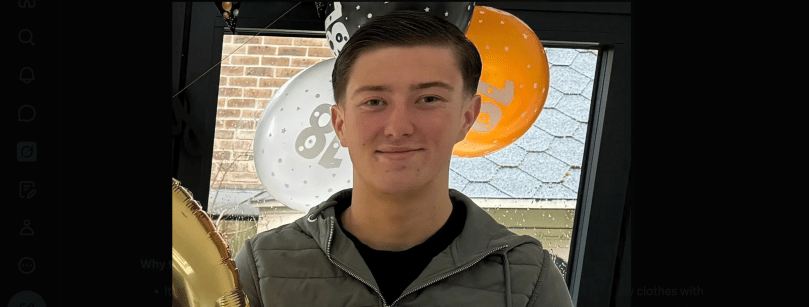
In the quiet streets of Southampton on a cold December night in 2025, 18-year-old Henry Nowak did what thousands of university students do after a night out with friends: he walked home, phone in hand, sending Snapchat videos to his mates, still buzzing from football and camaraderie. What happened next was not just a senseless murder. It was a cascade of failures—by an attacker wielding ideology as a shield, by police whose priorities appeared warped by fear of “racism” accusations, and by a broader system that has normalized two-tier justice. Seven months later, as Vickrum Digwa, 23, stands trial for murder at Southampton Crown Court, the world is only now learning Henry’s name. And it is learning it primarily because Elon Musk’s X platform refused to let the story die in obscurity.
This is the story of a young man whose future was stolen, a family shattered, and a nation forced to confront whether some lives matter more than others in the eyes of the law.
This is the story of a young man whose future was stolen, a family shattered, and a nation forced to confront whether some lives matter more than others in the eyes of the law.
A Son, Brother, Teammate, and Role Model Full of Promise
Henry Nowak grew up in Chafford Hundred, Essex, in a close-knit family that watched him thrive. He attended Harris Academy Chafford Hundred, where staff remembered him as a role model to younger students who made a significant contribution and left with an excellent set of A-level results. At the University of Southampton, he was in his first year studying Accountancy and Finance. He played football for two teams—Villarrealgorithm CF and the university side—worked part-time at Morrisons, and was already building new friendships while keeping old ones close.
His family—father Mark Nowak, mother Lucy Ross, siblings, cousins, grandparents, and teammates—described him as “a loving son, brother, cousin, grandson, nephew, friend and teammate… full of life, kindness and ambition.” A charity football match held in his memory raised more than £40,000 for 2Wish, the bereavement support organization that helped the family in their darkest days. Mark later spoke of the “very very big hole” left in their lives, especially as they faced what would have been Henry’s 19th birthday. Memorial walls and memory books at his old school overflowed with tributes from friends and teachers who called him funny, kind, talented, and the sort of lad who lifted the mood the moment he walked into a room.
Henry’s future should have been ordinary and bright: a career in finance, weekends on the pitch, family holidays, perhaps one day coaching his own kids. Instead, it ended in a puddle of blood on Belmont Road.
The Night of December 3, 2025: A Racist Accusation, a Knife, and a Victim Ignored
Henry had been out celebrating the end of the first semester with his university football teammates. He was under the legal drink-drive limit and in good spirits when he began walking home along Belmont Road, sending those Snapchat videos. Court evidence shows the moment his phone captured Vickrum Digwa approaching, openly carrying a 21cm shastar—a large Sikh ceremonial blade—in a sheath over his clothing. Henry, spotting the weapon, jokingly called him a “bad man.” Digwa replied, “I am a bad man.” Moments later, Digwa pursued him and inflicted four stab wounds, including a fatal 8cm-deep puncture to the chest that nicked the subclavian vein and flooded Henry’s chest cavity with over a litre of blood.
When police arrived, Digwa told them Henry had “racially abused” him. Officers handcuffed the bleeding teenager. Bodycam footage played in court captured Henry protesting he had done no such thing, begging for help, saying he couldn’t breathe. They told him they didn’t think he had been stabbed. First aid began only after he collapsed. He choked on his own blood and was pronounced dead 37 minutes later. Digwa denies murder, claiming self-defence and fear over his own kirpan. His mother, Kiran Kaur, denies assisting an offender by allegedly removing the weapon.
The senselessness is staggering. A young man running for his life, stabbed while fleeing, then treated as the aggressor because the real aggressor invoked the ultimate modern taboo: racism. Henry was white; Digwa is Sikh. The accusation flipped victim and perpetrator in the eyes of officers arriving at a chaotic scene. No urgency. No humanity. Just ideological caution that, in this case, proved fatal.
The Police Failure: Why Aid Was Delayed and a Victim Suffered
The officers’ actions were not born of malice but of a culture drilled into UK policing: accusations of racism trigger instant deference, even when the accuser is the one with the knife. Bodycam evidence and trial testimony paint a picture of hesitation rooted in fear of career-ending complaints. Henry begged for help. They prioritized securing the “racist” suspect—him—over treating obvious stab wounds. Months later, as of May 2026, no officers have been named publicly, suspended, or disciplined. An independent investigation by the IOPC is ongoing, but accountability feels glacial.
This is two-tier policing in stark relief: the same forces that arrest thousands for “offensive” social media posts move with glacial slowness when their own decisions contribute to a death.
Elon Musk, X, and the Exposure That Mainstream Media Nearly Buried
None of this would have reached global attention without X. Under Elon Musk’s ownership, the platform became the town square where citizen journalists, eyewitness accounts, and unfiltered video could spread. Musk quoted a detailed thread laying out the horror—Henry running for his life, handcuffed while bleeding out, no urgency from police—and added his own searing analysis: “There were massive international protests over George Floyd and those police involved were severely punished with long prison sentences, yet the police responsible here did not even lose their jobs! An incredibly unjust double-standard!”
Elon’s engagement was and is not performative. He highlighted the core facts: the attacker’s racism claim, the handcuffs, the choking death, the contrast with 12,000+ arrests for tweets. He amplified the pain without exaggeration. In doing so, he forced a conversation that legacy media had sidelined. Without X’s free-speech ethos post-Musk acquisition, Henry’s story might have remained a local court report, buried under other headlines. Musk even offered to fund a wrongful-death lawsuit against the officers.
George Floyd, Black Lives Matter, and the Mirror No One Wants to Face
Contrast is unavoidable. George Floyd’s death in May 2020 sparked global protests, riots in U.S. cities, corporate virtue-signaling, and policy upheavals. Officers faced long prison sentences; Derek Chauvin received 22.5 years. “Black Lives Matter” became a worldwide rallying cry, with politicians kneeling in solidarity.
Henry Nowak received none of that. No mass vigils in Trafalgar Square. No world leaders issuing statements. No golden-casket funerals broadcast worldwide. Just silence from the same quarters that once demanded “no justice, no peace.” The double standard is glaring. One death fit a dominant narrative of systemic racism against minorities; the other challenged it—white victim, minority attacker, police prioritizing the racism claim. All lives should matter equally, yet institutional and media responses reveal selective empathy. This is not “whataboutism.” It is a demand for consistency: if police failings demand protests when the victim is Black, they demand the same when the victim is white.
Will This Spark a “White Lives Matter” Movement? Or Something Better?
The question hangs heavy: could Henry’s death birth a “White Lives Matter” movement? Unlikely in the organized, protest-heavy form of BLM. “White Lives Matter” has existed as a fringe counter-slogan, often dismissed or demonized. But something deeper may be stirring. Across Britain and beyond, frustration with two-tier policing—harsher on native citizens’ speech than on migrant crime or ideological favoritism—has been building for years. This case crystallizes it: an innocent 18-year-old died in custody of the state’s hesitation.
Public reaction on X and elsewhere shows raw pain, calls for reform, and demands for color-blind justice. It may not spawn marches in Henry’s name, but it could accelerate a broader reckoning: equal protection under the law, not equal deference to accusations based on race. True progress lies not in mirroring BLM’s excesses but in insisting every life—Henry’s included—receives the same urgency, investigation, and outrage.
A Turning Point in History?
Henry Nowak’s death may prove a quiet pivot. In an era of mass migration, knife crime epidemics, and identity politics overriding evidence, it exposes the human cost of prioritizing narrative over truth. A loving family lost their son just before Christmas. A university lost a promising student. A football pitch lost a teammate. Britain lost another young man to a blade and a system that looked away.
The trial will deliver legal justice for the stabbing. But the deeper questions—police accountability, media silence, institutional bias—remain. Thanks to X and voices like Musk’s, Henry will not be forgotten. His name now echoes globally. His story demands we choose: selective outrage that divides us further, or a commitment that every life, regardless of the victim’s skin color or the attacker’s, matters equally.
Rest in peace, Henry. Your bright future was stolen, but your legacy may yet force the change Britain desperately needs. Justice for Henry Nowak is justice for us all.
Sources
- AOL: “Student stabbed with 21cm knife, murder trial told” (May 2026)
- New York Post: “18-year-old student stabbed to death while celebrating end of first semester” (December 2025)
- AFC Totton: “Over £40,000 Raised In Memory Of Henry Nowak At Charity Football Match” (2026)
- University of Southampton student union and family statements via multiple reports (2025–2026)
- Southampton Crown Court trial coverage via ITV News, Sky News affiliates, and independent outlets (May 2026)
- Elon Musk’s X post quoting the detailed thread on the case (May 2026)
- Additional family and memorial details from Hampshire Police tribute, SUSU reports, and 2Wish charity updates (2025–2026)

