(Austin, Texas) Earth Day is a time to think about how rare our planet really is. We are all living on a pale blue dot, circling the sun, and thus far, we have not yet had any conclusive proof there are aliens.
We might be alone, so we should take care of our Earth.
This podcast takes you through a scenic area of Austin. I intentionally drive up the famous “Capitol of Texas Highway” or the “360” in order to show you how beautiful the west side of Austin is. I also share a few of the pictures that people have entered into the Official Tesla Earth Day 2023 Contest. You might also wonder who the winners are. Below, I link you to the amazing winners.
If you would like to know what Elon Musk has said about aliens, I also include his words below from his talk in Dubai.
Gail’s Tesla Podcast #12 Let’s drive together in Austin on FSDbeta & enjoy beautiful pictures people have submitted for “Tesla Earth Day Contest 2023” 🌎🌷🌿 pic.twitter.com/izHSyqaLeK
Elon Musk clarifies if he thinks reports of “sightings” are Aliens.
“I don’t think it’s aliens, no. I do find the whole question of aliens a very interesting one. What is typically called the fermi paradox which is that if the universe is really is as old as science seems to think it is, where are the aliens? Have we really been around for 13.8 billion years? If so, shouldn’t there be aliens all over the place? The crazy thing is I’ve seen no evidence of alien technology or alien life whatsoever and I’d think I’d know. You know, SpaceX, we do a lot. I don’t think anyone knows more about space than me or at least space technology.
But I think it’s actually a troubling thing if there are no aliens as well. What that actually could mean then is that civilization and consciousness is like a tiny candle in a vast darkness and a very vulnerable tiny candle that could easily get blown out. We should therefore take great care with what may very well be this tiny candle in a vast darkness and make sure that it does not go out and that we send the light of consciousness beyond earth and do everything we can to ensure that the light of consciousness does not go out.”
“We should therefore take great care with what may very well be this tiny candle in a vast darkness and make sure that it does not go out and that we send the light of consciousness beyond earth and do everything we can to ensure that the light of consciousness does not go out.” – Elon Musk
Tesla Earth Day Winners
To view the winning Tesla Earth Day photos, click HERE or see them on Tesla Official Instagram HERE.
I love taking time to soak up the genius of Tesla Master Plan 3. I think you’ll also enjoy this article as we look together at the intricate plans Tesla has for a cleaner, happier, sustainable world. For this article, I’ll simplify the Tesla vehicle powertrain talk by Colin Campbell (VP Tesla Powertrain) for your understanding. I also talked with a computer engineer to better understand it myself and hopefully, this article will delight you!
EFFICIENCY MEANS MORE AT TESLA. DEVELOPING. MANUFACTURING. REFINING. SCALING.
When we think of vehicle efficiency, we think of how far a vehicle can drive.
At Tesla Investor Day, Campbell explained to us how Tesla vehicles go 25 – 30% further than other EVs in the same class. Tesla’s are more efficient!
He also showed that while efficiency does mean reducing how much energy the car uses, it also means howTesla “develops, manufactures, refines and scales the powertrain for their cars.”
The Model 3 and Y powertrain is a great example of this broader meaning of efficiency.
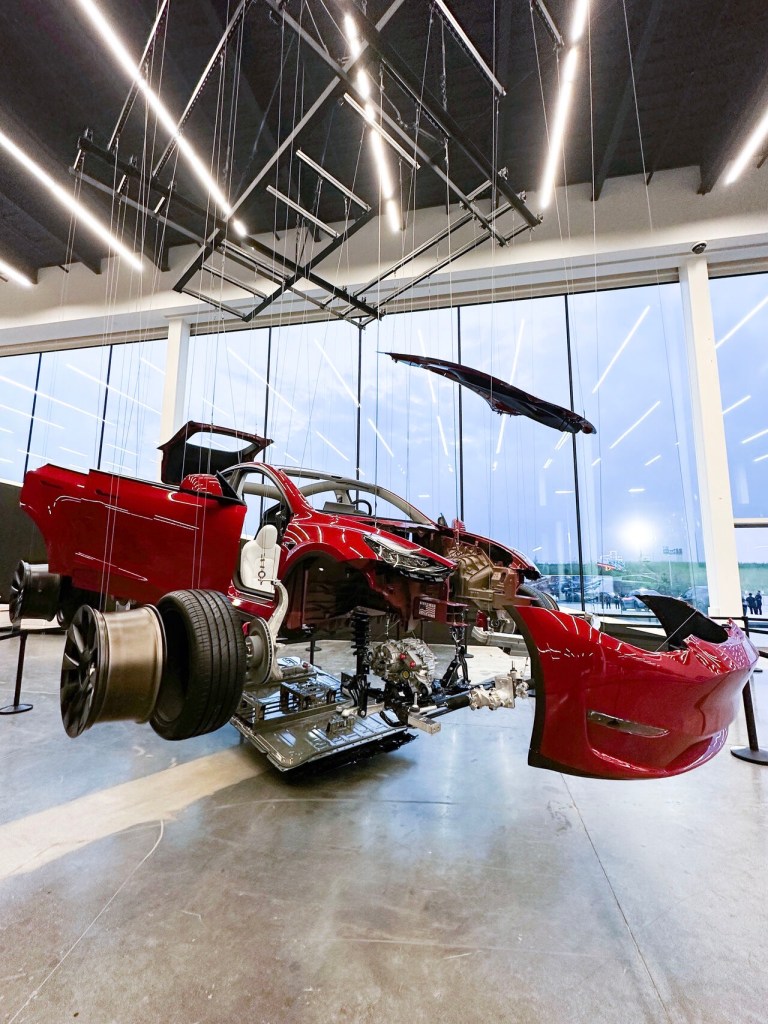
Since Tesla launched the Model 3 in 2017 they have continuously improved the powertrain and the factory that builds it. Today, the drive unit (the engine of the car) is 20% lighter for the same amount of power. Tesla also uses 25% less “heavy rare earths” than when they started. (We’ll learn more about Tesla and their plans for rare earth use later in this article.)
The powertrain factory at Giga Texas is 75% smaller and 65% cheaper than Tesla’s original factory build in California. Tesla achieved this without making compromises in power/efficiency.
THE SCRUM IN RUGBY.
If you’re familiar with American football, the rugby scrum is analogous to a team huddle, where the attacking team regroups to plan their next play. No matter which game you are playing (rugby, football or computer project management), the idea of the scrum is the same.
Tesla has mastered the scrum.
Here’s how Campbell explained how Tesla designs the whole vehicle and entire factory together as one company,
“We have small and highly capable teams and to make a critical decision. We have the battery cell chemists, the mechanical engineers, the manufacturing engineers, the supply chain team, the automation designers, the software programmers, all in one room working together in real time. That allows us to make decisions that are best for the whole car and to make them really fast and that approach is unlike traditional automotive engineering which is really fractured.”
What Campbell described at Investor Day is a highly agile approach. This is in contrast to the legacy way of making cars.
“If you were to go buy a premium German electric car, the engineers who designed the drive inverter in that car, they did not work for that car company, they work for a contractor and at Tesla we design the entire car and the factory that built it.”
TESLA IN-HOUSE DESIGN. TRANSISTOR PACKAGES. MICROPROCESSORS.
Campbell carefully described how the inside of the charger in a Tesla has transistor packages (tiny square semiconductors on the circuit board) and every electron that moves you down the road flows through one of these packages.
Tesla designed their own custom package using a uniquely fast semiconductor: Silicon Carbide. The Silicon Carbide wafer can extract twice as much heat out of that package as what Tesla could buy off the shelf. This means that what’s inside those transistor packages can be much smaller. “Silicon carbide is an amazing semiconductor but it’s also expensive and it’s really hard to scale, so using less of it is a big win for us!”
Campbell described the process of orchestrating all the transistors to switch in the right ways as “computationally extremely intensive.” But Tesla did it, and it was done first with 4 microprocessors. And that was not good enough for Tesla. The team came up with a way to do the same job with just ONE microprocessor.
ONE MICROPROCESSOR DOES THE JOB OF FOUR.
Tesla developed its own custom microprocessor, replacing 4 microprocessors on the circuit board with one. Campbell said, “It is purpose-built for high-power electronics it’s half the cost and it does in just 1, the job of all those 4.” As a result, Tesla was able to cut both the cost and the size of the chargers in half. No other car manufacturer has this level of expertise in high-power electronics.
TESLA BUILDS CUSTOM SOFTWARE TO OPTIMIZE THE DRIVE UNIT.
In addition to the work that Tesla does in-house in hardware, they do work in-house on software.
If you take a cross-section of the Drive Unit for Model 3, there is a stator and a rotor and they’re both responsible for the core function of the drive unit, which is to convert electricity into motion.
Tesla’s custom software creates a simulation with the rotating magnetic field that is responsible for that conversion. Getting that simulation exactly right is central to the cost, weight, size, and even the sound of the drive unit.
“You can buy software that will do all of this, but our tools are faster and they’re more accurate and it was not easy to do and that allows us to quickly iterate through millions of possible driving unit designs to find the best one,” explains Campbell.
Campbell has his audience’s attention as he explains how Tesla excels because they integrate work that is often farmed out. “When you are making a new product, it’s not enough to think about the product itself you have to think about how you will make it at scale.”
At Tesla, their powertrain and powertrain manufacturing equipment are both designed under one roof. The engineers who are designing the motor are in the same room as the engineers who are designing the machine that’s going to put that motor together, and that collaboration pushes them from day 1 to design products that are not only high-performance but that are really easy to assemble.
Looking forward, vehicles made at Giga Mexico will be another big improvement.
FUTURE. HOW TESLA IS CREATING A MORE AFFORDABLE CAR.
How can the next-generation vehicle cost less to build? The next-gen vehicle will contain Silicon Carbide transistors. You might ask, “But aren’t those too expensive?” They are expensive AND Tesla figured out a way to use 75% less without compromising the performance or the efficiency of the car.
People also ask, “What about shortages of battery cell supplies?” Tesla solved this by creating a new powertrain that is compatible with any battery chemistry. This allows Tesla to have flexibility in battery sourcing.
“Aren’t drive units expensive?” They are. And Tesla’s team found a way to reduce the drive unit cost to about $1000. No other automaker is even close to that number!
FUTURE. SCALING PRODUCTION FASTER.
The bigger a factory is, the longer it takes to build. Tesla found a way to build the same number of cars from a smaller factory. Remember Master Plan 3 and the need to scale production faster? Being able to build a smaller factory faster that makes the same number of cars helps move our world towards a sustainable future much faster.
As Campbell talked, you could see Giga Texas’ production line behind him building Model Ys. “Our next powertrain factory is 50% smaller than the one that’s behind me today even though it has the same capacity. All these improvements are going to be transformative for the adoption of EVs and our ability to scale them.”
FUTURE. ELECTRIC MOTOR WITH NO RARE EARTHS.
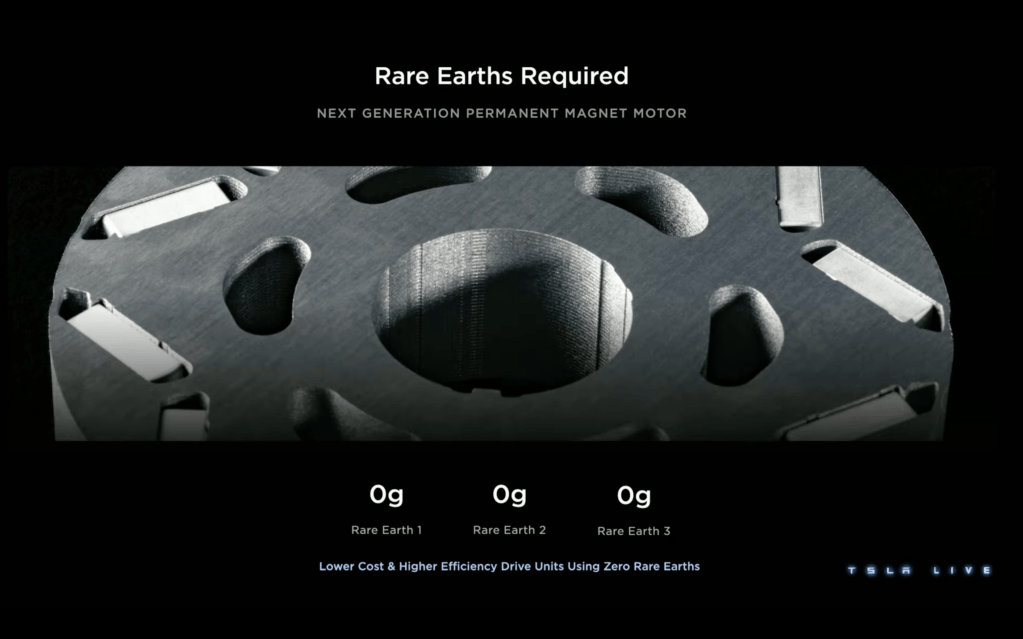
Tesla’s next drive unit will be just as efficient and cost less to build and also will not use any rare earth materials. Campbell explains, “As the world transitions to clean energy, demand for rare earths is really increasing dramatically and not only is it going to be a little hard to meet that demand but mining that rare earth, it has environmental and health risks, so we want to do even better than this, we have designed our next drive unit which uses a permanent magnet motor to not use any rare earth materials at all.”
MASTER PLAN.
So how does all this fit into Master Plan 3? Tesla can build lower-cost products that are still efficient and compelling and they can be built at scale. Tesla will use less constrained commodities, less Silicon Carbide, and less rare earth.
Giga Mexico and other next-gen factories will be built quickly and will be more compact while also being high-output.
Tesla will build easy-to-scale powertrains all the way up to the levels that Elon Musk and Drew Baglino mentioned at the beginning of Investor Day.
Campbell ended with thanking the powertrain team, “This achievement, like all of the achievements that I mentioned today, is only possible because of the incredible people on our powertrain teams. They are absolutely committed to the cause of sustainable energy and that is why we can do with no other company can do.”
For More Information:
I’ve included Links if you want to learn more or watch Colin Campbell, (Tesla’s brilliant VP of Powertrain Engineering) discuss this on Investor’s Day at Giga Texas.
Gail Alfar, author. Exclusive to What’s Up Tesla – April 16, 2023. All Rights Reserved. My goal as an author is to support Tesla and Elon Musk in both making life better on earth for humans and becoming a space-fairing civilization. I write this and all my articles myself without the use of AI/ChatGPT.
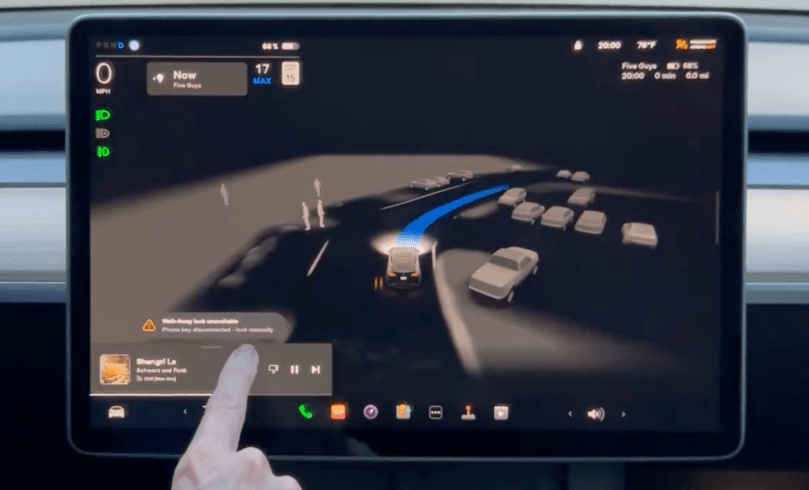
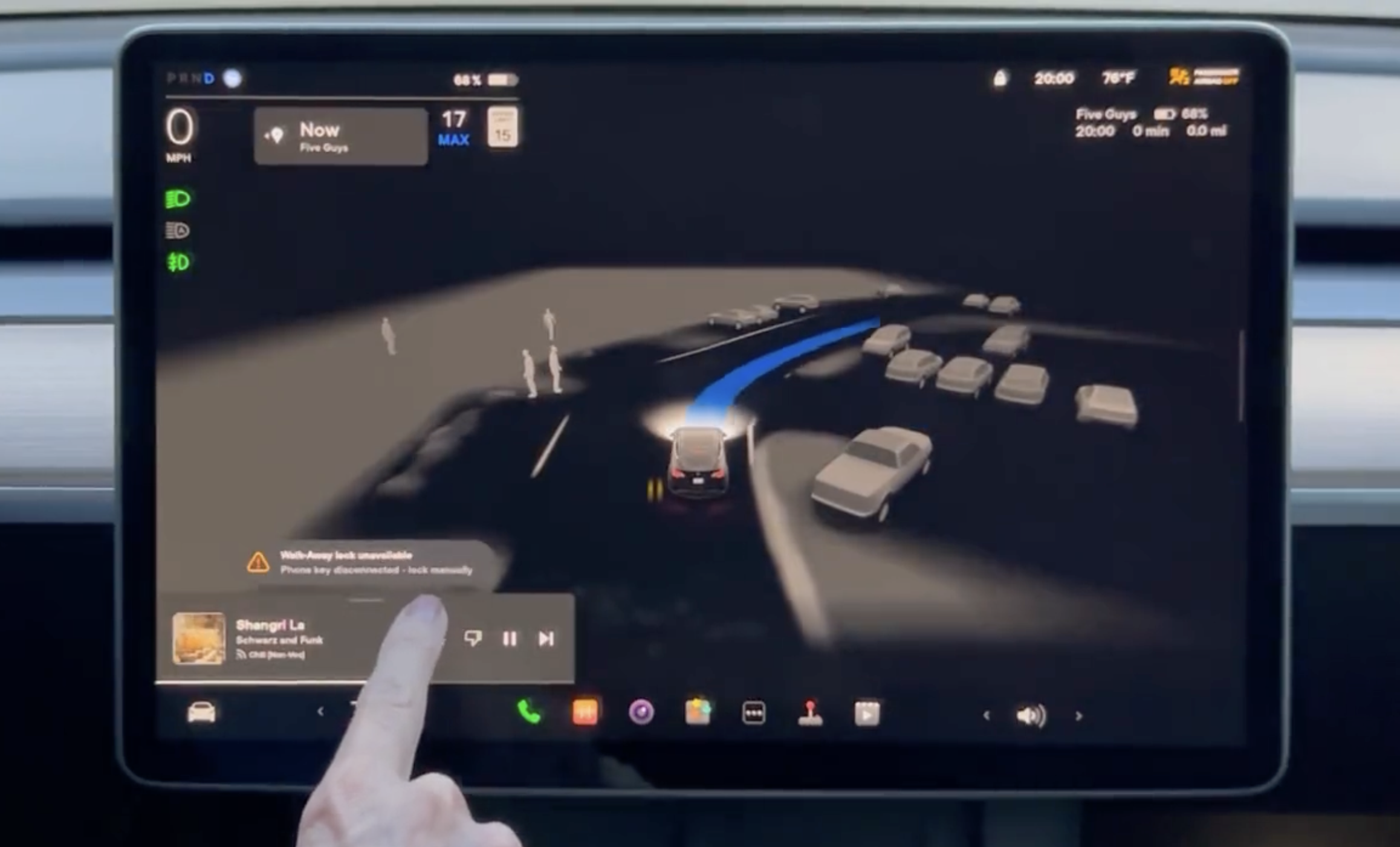
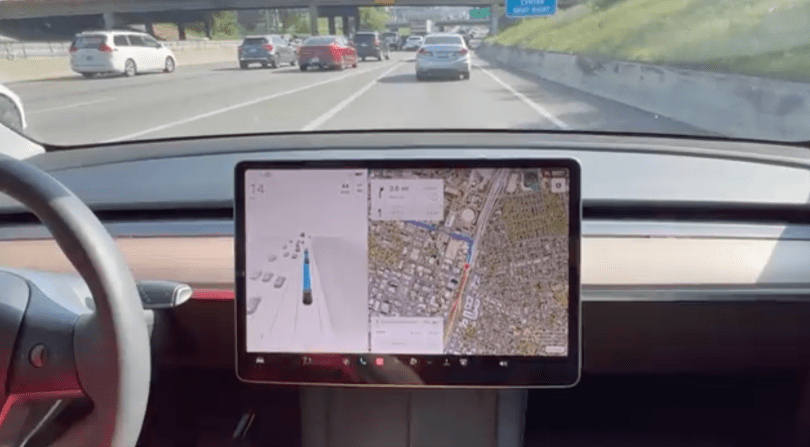
Note the people that Tesla AI has sensed in this image of the screen. Taken April 13, 2023.
Construction Zone Success
(Austin, Texas) This episode shows Model Y running Fsd beta version 11.3.6. Tesla is continuously updating it’s AI software. Here, we begin in a parking lot next to “Honest Mary’s” restaurant. The car is put into FSD beta by pressing down in the right-hand stalk twice rapidly. The car moves through the parking lot and it encounters a lot of unexpected construction. As it turns right, the driver is ready to disengage the software if need be, but it is not needed, as the Tesla navigates around and past the construction successfully.
Gail’s Tesla Podcast #11 Let’s take FSDbeta v11.3.6 on a complex ride in Austin: Construction, 2 unmarked Parking Lots, 2 Restaurants and a busy Store ❤️🔥 pic.twitter.com/wDGZaqw0h5
The vehicle navigates, with zero disengagement from a local church in Austin to a very busy Trader Joe’s parking lot. The next destination is Five Guys Burgers.
This episode is probably best watched when you are not too hungry.
When the vehicle arrives at Five Guys, there are pedestrians crossing the street. Each person is sensed by Tesla’s Ai software, a testament to the high importance of safety in the entire realm of Tesla products.
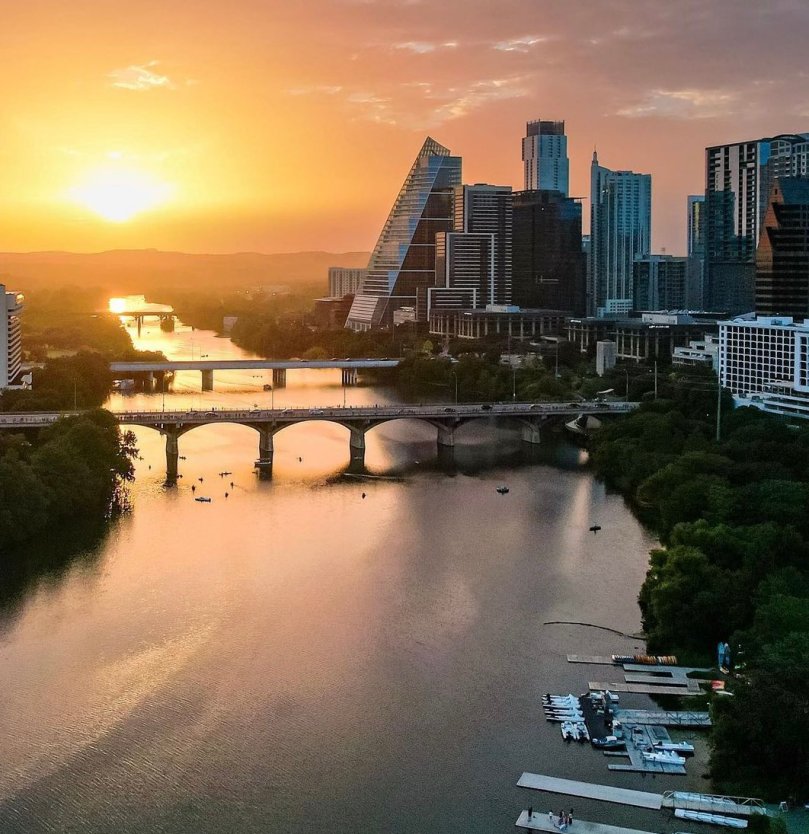
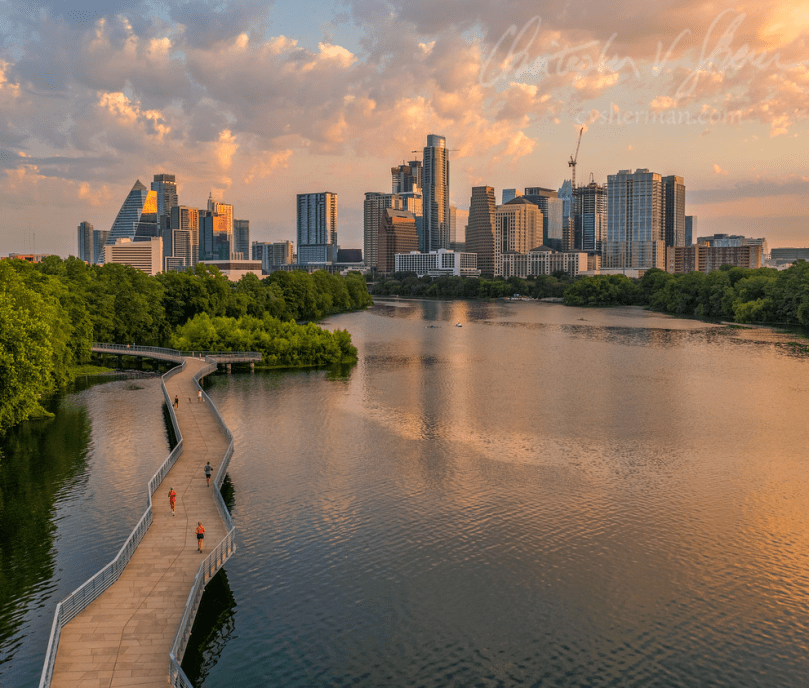
Austin at sunset, image courtesy Aeriel Austin, Instagram
Gail Alfar, author. Exclusive to What’s Up Tesla – All Rights Reserved. My goal as an author and podcaster is to support Tesla (the most American vehicle manufacturer) and Elon Musk in both making life better on Earth for humans and becoming a space-fairing civilization.
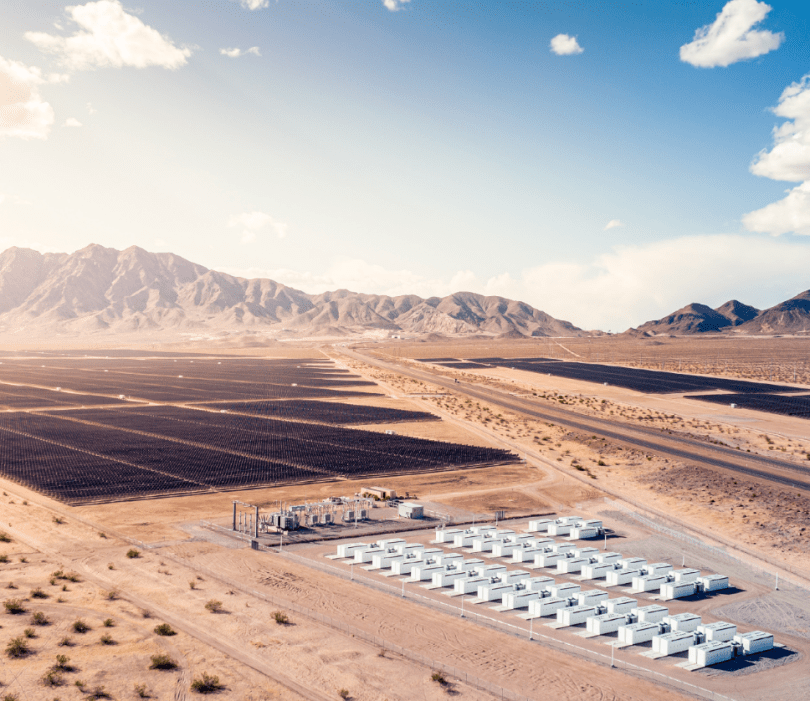
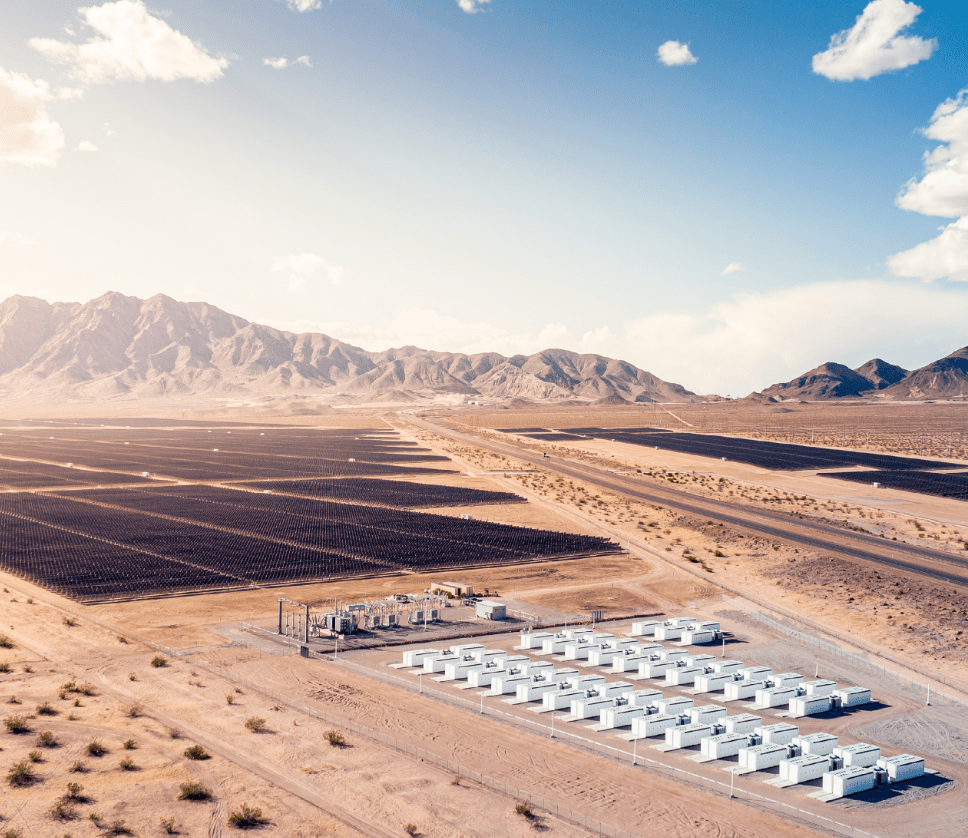
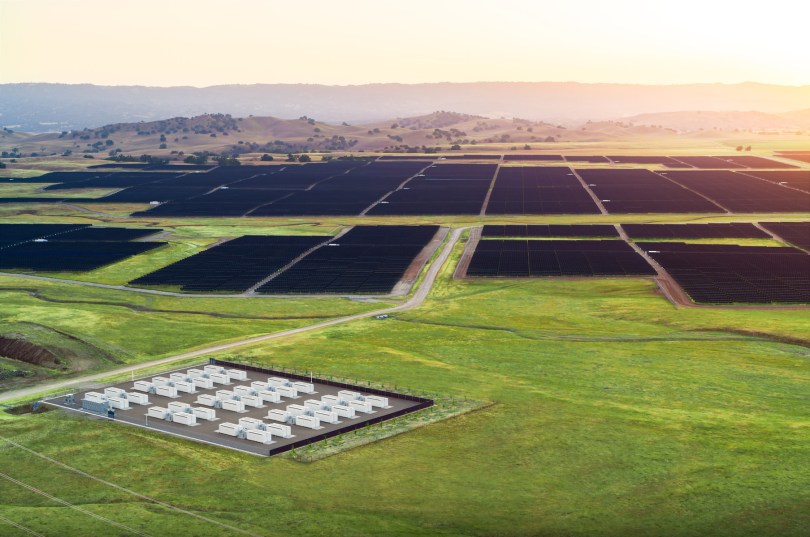
Tesla Solar, Megapacks, image Courtesy Tesla, Inc.
Tesla’s Master Plan Part 3 was published April 5 and I’m excited to share the main points with you. The link for you to read it is here, and it is 41 pages. I’ll simplify it for you and share my thoughts. I also hope you’ll be able to sit, back, relax, make yourself a little snack (how about an Apple Danish?) and enjoy this read!
Introduction: Today’s Dirty Energy Economy
Master Plan Part 3 starts out by raising awareness about our current energy economy. Many of us may not be fully aware of how inefficient and expensive it is to maintain our world’s current energy economy. We are living in a time where MOST energy is supplied by fossil fuels (81%). What causes alarm for me is how much of that energy is wasted! A shocking 64% is wasted. How is this possible? Three reasons:
Extraction and refining oil uses energy
When electricity is generated, there are transformation losses
Internal combustion engine vehicles and natural gas furnaces have losses due to inefficient use
In the end, only 36% of the primary energy supply produces useful work or heat for our world’s economy. This is very wasteful, and Tesla has a fabulous approach to correcting this problem.
“There is a clear path to a sustainable energy Earth.
It doesn’t require destroying natural habitats.
It doesn’t require us to be austere and stop using electricity and be in the cold or anything.
The story, and I think this holds together quite well – it will be actually published in a detailed white paper with all of our assumptions and calculations — is that there is a clear path to a fully sustainable earth with abundance.” – Elon Musk
Quick View of the Plan to Eliminate Fossil Fuels
Master Plan Part 3 is the whitepaper Elon Musk mentioned on March 1. It is Tesla’s brilliant plan to eliminate fossil fuel use in our world. I’ll summarize the 4 areas which are: Transportation, Power for Homes and Businesses, Power for Massive Industrial Processes, and Power needed to build a sustainable energy economy.
Transportation will be powered by batteries that store energy that comes mostly from solar.. If you are reading this you’re already familiar with how Tesla is accelerating passenger car production. We’ll see this happen faster with light-duty trucks and Class 8 semis, Tesla says,
“Electric vehicles are approximately 4x more efficient than internal combustion engine vehicles due to higher powertrain efficiency, regenerative braking capability, and optimized platform design.”
Batteries and Charging for Cargo Ships: Cargo ships and all other bulk carriers will need to be powered by batteries. If shipping were a country, it would be the world’s 8th-biggest emitter of CO2.
“Both continental & intercontinental ocean shipping can be electrified by optimizing design speed & routes to enable smaller batteries w/ more frequent charge stops on long routes” – Tesla Master Plan 3
If shipping were a country, it would be the world’s 8th biggest emitter of CO2.
Synthetic Fuel for Planes: Long-distance airplane flights can be powered by synthetic fuels. Tesla says, “Longer distance flights, estimated as 80% of air travel energy consumption can be powered by synthetic fuels generated from excess renewable electricity leveraging the Fischer-Tropsch process, which uses a mixture of carbon monoxide (CO) and hydrogen (H2) to synthesize a wide variety of liquid hydrocarbons, and has been demonstrated as a viable pathway for synthetic jet fuel synthesis.”
Power for Homes, Businesses and Industry
Two residential air source heat pumps
You may be familiar with heat pumps. Heat pumps are already in use in many homes, apartments and commercial buildings as well as in many industrial processes.
Instead of generating heat, like a gas furnace or boiler does, a heat pump uses electricity to move heat from one place to another. Because they’re not generating heat, heat pumps are highly efficient and use much less energy than a furnace or a boiler!
Heat pumps transfer heat using a system that’s similar to a refrigerator or an air conditioning unit. In the summer, they keep buildings cool by absorbing heat inside and releasing it outdoors. In the winter, the process is reversed and the heat pump is able to absorb heat from the outside and bring it indoors.
I just learned that gas furnace heating systems can be retrofitted with air source heat pumps. Tesla says, “Air source heat pumps are the most suitable technology for retrofitting gas furnaces in existing homes,” and “Gas furnaces create heat by burning natural gas. They have an annual fuel utilization efficiency of ~90%. Therefore, heat pumps use ~3x less energy than gas furnaces.”
Power for Massive Industrial Processes
In everyday life we don’t think about the energy it takes to produce many of the things we use daily. This area of Master Plan Part 3 addresses clean energy for industrial processes.
Tesla explains that “Industrial processes up to ~200C, such as food, paper, textile and wood industries can benefit from the efficiency gains offered by heat pumps.”
Some industrial processes require temperatures above 200C such as steel, chemical, fertilizer and cement production and this is where Tesla explains the power of electric resistance heating, electric arc furnaces and thermal storage.
Most of the steel production industry in the USA today uses electric arc furnaces. Master Plan 3 goes into great detail about thermal storage. I would summarize this by saying there are multiple ways to store thermal energy and Tesla shows them all and specifically details water, molten salt and air.
Tesla also links to a wonderful explanation of thermal energy storage using carbon blocks by Antora Energy and a paper by Sandia National Labs that explains, “sensible thermal storage includes storing heat in liquids such as molten salts and in solids such as concrete blocks, rocks, or sand-like particles.”
Thermal energy stored in carbon blocks. Image courtesy Antora Energy.
Green Hydrogen Production and Storage
Hydrogen is needed for powering steel and fertilizer production. But the catch is that hydrogen is produced from coal, oil and natural gas. Master Plan 3 has a solution for that. Tesla explains, “Green hydrogen can be produced via the electrolysis of water (high energy intensity, no carbon-containing products consumed/produced) or via methane pyrolysis (lower energy intensity, produces a solid carbon-black byproduct that could be converted into useful carbon-based products).”
Storage of Green Hydrogen will be important and I really like the Master Plan 3 solution to this:
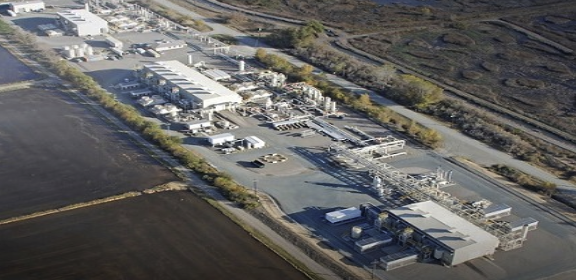
“Underground gas storage facilities used today for natural gas storage can be retrofitted for hydrogen storage; the modeled U.S. hydrogen storage requires ~30% of existing U.S. underground gas storage facilities.” – Master Plan 3
An underground gas storage facility in California
Power Needed To Build The Sustainable Energy Economy
Achieving Master Plan 3 will require about 4 Petawatt-hour/year (PWh/year) of sustainable power to manufacture the batteries, solar panels, and wind turbines which are required. This shows us how comprehensive Master Plan 3 is and that it sets realistic and achievable expectations. I had to look up Petawatt, and it is a unit of power measurement system where 1 Petawatt = 1015 watts. Petawatt-hours are large enough to conveniently express the annual electricity generation for whole countries and the world energy consumption.
What a Fully Sustainable Energy Economy Looks Like
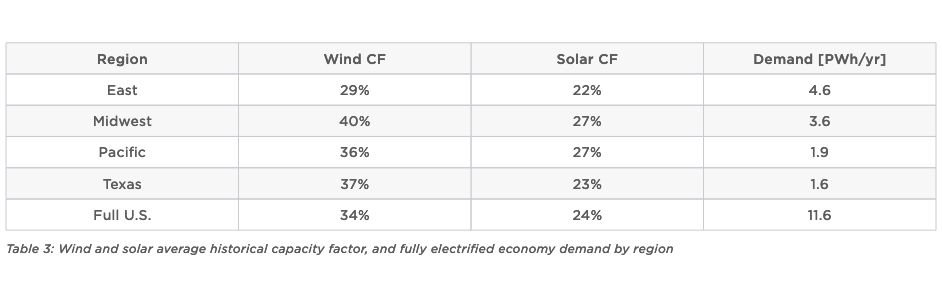
Master Plan 3 pages 13-17 are an in-depth model of a fully sustainable energy economy in the USA. There are 6 graphs/tables that detail things like energy demand, energy capacity, demand in various regions of the USA, solar energy curtailment and seasonal hydrogen storage needs. My favorite graphic in this section is Table 3, it shows wind and solar average historical capacity factor and fully electrified economy demand by region.
Wind and solar average historical capacity factor, and fully electrified economy demand by region, Image courtesy Tesla Master Plan Part 3.
Regarding Investor’s Day, Elon Musk emphasized that it was a message for the people and life of Earth.
“Looking forward to Tesla Investor Day on March 1. By this, we mean the broadest definition of investor, as in the people & life of Earth. It will be a message of good hope & positivity for the future.” – Elon Musk
Electrification Demand In The USA And In The World
Master Plan Part 3 is for the entire world and to estimate the world’s needs for power generation and storage needs, Tesla simplified the process by scaling the USA resource mix 6 times.
“Applying the 6 steps to the world’s energy flow would displace all 125 PWh/year of fossil fuels used for energy use and replace them with 66 PWh/year of sustainably generated electricity.” – Tesla Master Plan Part 3
Cathode Components Needed for Batteries for Vehicles, Ships, and Planes
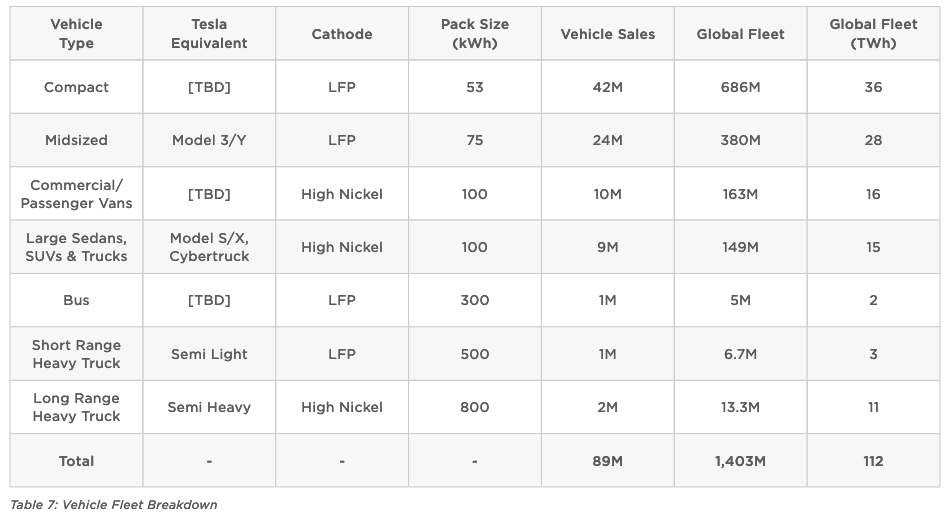
This is a delightful part of Master Plan Part 3 because Tesla revealed some details about three products under development. These are the Compact car, Commercial/Passenger Van, and the Tesla Bus!
For batteries, Tesla says standard-range vehicles can utilize the lower energy density chemistries (LFP), whereas long-range vehicles require higher energy density chemistries (high nickel).
Vehicle Fleet Breakdown. Image courtesy Tesla, Master Plan Part 3
Master Plan 3 shows that long-range ships will need a higher density Nickel and Manganese-based cathode while short-range ships will require a lower energy density LFP cathode.
20% of the Airplane fleet flies short range and that portion can be electrified with 7MWh packs with High Nickle cathodes.
How much Investment is required?
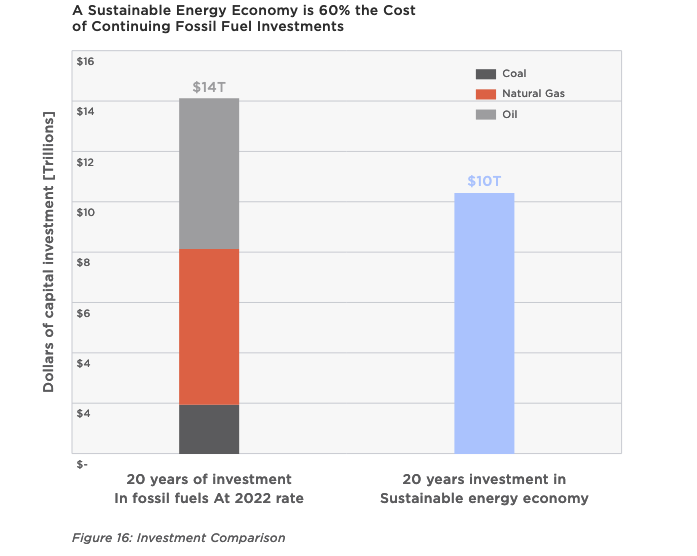
Pages 26-29 of Master Plan 3 on investment needed for manufacturing facilities, mining and refining operations are fascinating to study. If you want details please see Tesla’s tables 12 and 13a,b and c.
The biggest takeaway from this section is that a sustainable energy economy is 60% the cost of continuing fossil fuel investments!
Investment Comparison. Image courtesy Tesla, Master Plan Part 3
Amount of Land Area needed
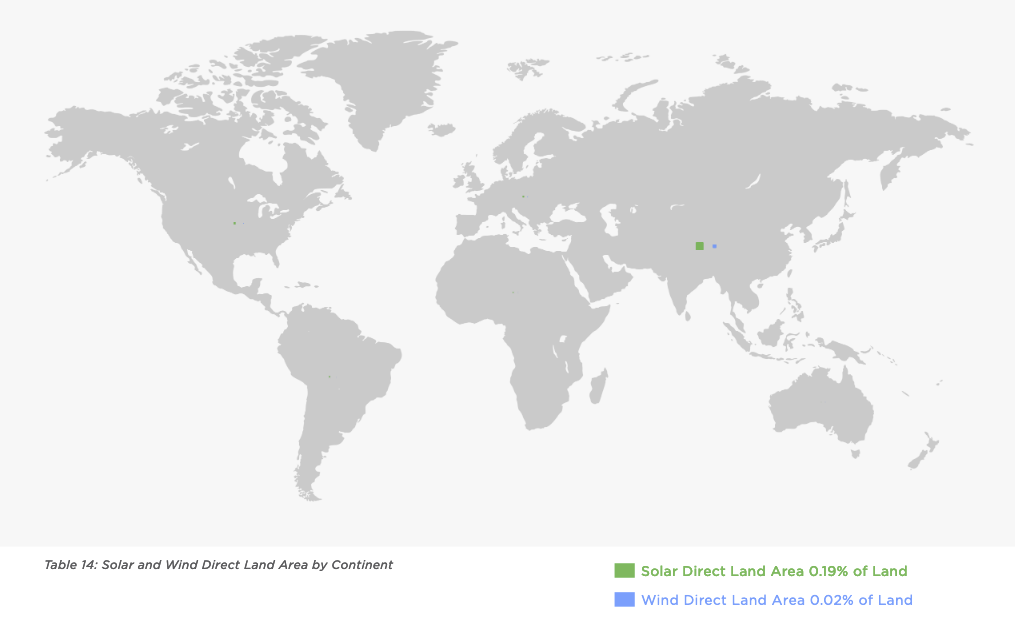
At first, I thought Tesla’s Table 14 on page 30 was missing something! As you can see below, the total land needed to power our world with solar and wind is tiny! Tesla says, “The global solar panel fleet of 18.3TeraWatts will require roughly 71.4 million acres or 0.19% of the total 36.8 billion acres global land area.” For wind, “the global wind turbine fleet of 12.2TW will require an estimated 9.2 million acres or 0.02% of total land area.”
Solar and Wind Direct Land Area. Image courtesy Tesla, Master Plan Part 3
What Materials Are Required to Power and Connect the Grid?
The last section of Master Plan Part 3 contains about 10 tables/figures that list and detail the various materials and tonnage required for solar panels, wind turbines, batteries, transmission and generation as well as what is needed to build the approximately 60 million circuit miles that will need to be added or reconductored globally to achieve a fully sustainable, electrified global economy.
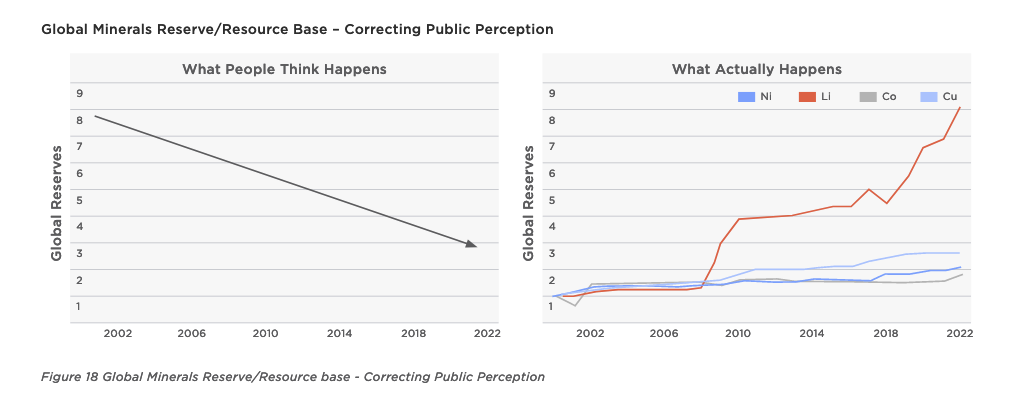
My favorite exhibit in this last section is Figure 18, which shows the global minerals reserve/resource base and how public perception often falsely thinks that the global reserve of minerals will be seriously depleted. In reality, global reserves will increase as the figure demonstrates.
Tesla explains, “Resources and Reserves have historically increased – that is, when a mineral is in demand, there is more incentive to look for it and more is discovered.”
Global Minerals Reserve/Resource base – Correcting Public Perception. Image courtesy Tesla Master Plan Part 3.
CONCLUSION
My experience renting in California in my college days in the 1990’s was always with gas furnaces in old buildings and looking back I think they were never created to be a long-term heating solution. I think they were a fast “track home” solution (70-80 years ago) created to incorporate a limited resource (gas) that will run out. Some sources say natural gas will run out by about the year 2100 and others give it less time. New buildings in California and elsewhere are still being built with gas furnaces, in fact California subsidies that incentivized builders to install gas lines to new buildings were common and are being phased out this year (2023).
The reason I mention my trivial story is that we all have experience with energy. It is part of all our daily lives. I’ll leave you with this statement from Elon Musk about Master Plan 3:
“It’s about scaling. How do we scale? How do we get to that fully sustainable energy economy? And what tonnage do we need of what materials? And what is maybe the best way to get all of those materials and turn them into batteries? But the fundamental governor of the rate at which we can transition to sustainability is the rate at which we can grow the output of lithium-ion batteries.” – Elon Musk discussing Master Plan Part 3 on Johnna Crider’s Podcast
Austin Q2 Stadium. Image courtesy Aerial Austin.
Gail Alfar, author. Exclusive to What’s Up Tesla – April 8, 2023. All Rights Reserved. My goal as an author is to support Tesla and Elon Musk in both making life better on earth for humans and becoming a space-fairing civilization. I write this and all my articles myself without the use of AI/ChatGPT.
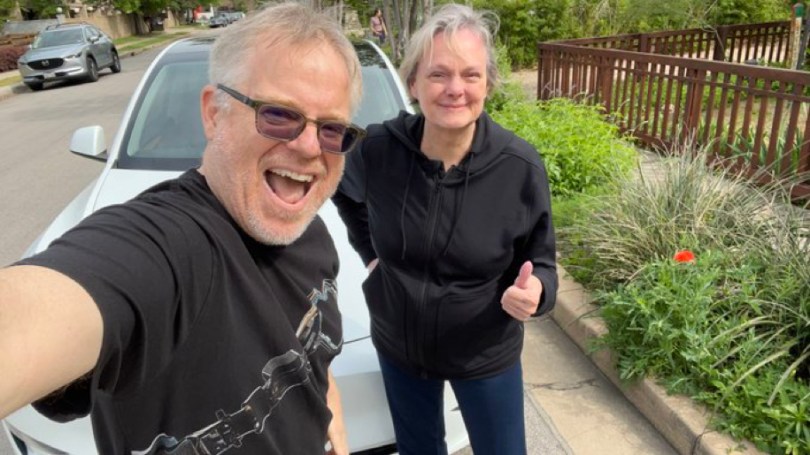
Ellie in Space and Gail Alfar after the Podcast on Tesla V11 FSD beta.
Ellie in Space Joins us on the Podcast
For this Podcast Episode, we are joined by citizen journalist Space reporter Ellie in Space. Ellie is recovering from a broken femur in which she has undergone several hospitalizations. She has shared many details about her journey to physical recovery on her X account and her Youtube channel.
For this ride, we experience the firsthand delight of Ellie on her first-ever ride in a Tesla on FSD beta.
We are running Version 11 in the very hectic area of South Lamar and the video features an unprotected left turn on a road that would make even a grown man cry. The vehicle is able to choose the exact moment when it should smoothly and quickly ease between traffic to get us to the famed Zilker Park.
I think you’ll enjoy watching and hopefully, you will also be inspired that we will one day see a time when all cars are fully autonomous. The human race will one day benefit immensely from the hard work that Tesla Engineers are putting into developing the most advanced real-world AI software known.
Gail's Tesla Podcast #10 Guest: Ellie in Space FSD beta V11 and a wild unprotected Left on busy South Lamar in ATX “ahhHH!” – @esherifftvpic.twitter.com/bPDf6pudfK
Gail Alfar, author. Exclusive to What’s Up Tesla – All Rights Reserved. My goal as an author and podcaster is to support Tesla (the most American vehicle manufacturer) and Elon Musk in both making life better on Earth for humans and becoming a space-fairing civilization.
How did Robert Scoble end up on Gail’s Tesla Podcast?
(Austin, Texas) What started as an idea turned into a reality when Gail contacted Robert Scoble the first time, he let her know his schedule while in Austin was fully booked and that, maybe, he’d be back in October and could come on the podcast then. But Gail is a realist and when things don’t quite make sense she has to press restart. She let Robert know she’d not only come to him, and pick him up, but that the time spent would probably be around 30 minutes max.
He said yes.
Meet Robert: Robert Scoble is a tech luminary and spatial computing visionary. With two influential books under his belt, Robert is known for his pioneering work in AI, AR, and robotics. As a former Microsoft technology evangelist and Fast Company video blogger, he's been at the forefront of tech innovation. Currently curating an AI-focused account on X and affiliated with @InfiniteRetina, Robert continues to shape the tech landscape.
How I do my Podcast
A lot of folks get confused when I invite them to my podcast. My podcast is (for now) in a car instead of a studio. Not only that, but during the time we are talking, the car is driving on Tesla’s FSD beta software!
My podcast with Robert Scoble is a treat, and it takes place in two enjoyable parts!
Part I with Robert Scoble in Austin
In this first part, experience Robert’s insight on Tesla autonomy as we go from a small neighborhood with intricate turns and obstacles to the heart of the UT Campus.
In Part two, we continue along Ausitn’s charming streets on FSD beta, while I ask Robert to talk about some of his favorite artists in the realm of AI. He has great suggestions and is one of the most enthusiastic people I have ever met in the AI space!
If you have not yet created an account on X, you might enjoy doing so. Gail would love to see you there! Find her at @GailAlfarATX on X. Find Robert on X at @Scobleizer
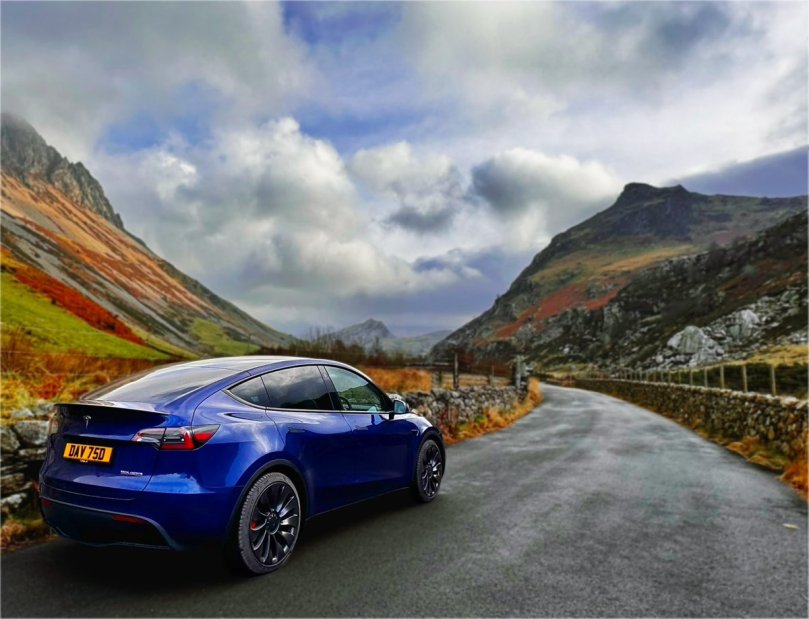
Image courtesy @dsdavies1 on X
Gail Alfar, author. Exclusive to What’s Up Tesla – All Rights Reserved. My goal as an author and podcaster is to support Tesla (the most American vehicle manufacturer) and Elon Musk in both making life better on Earth for humans and becoming a space-fairing civilization.
Robert Scoble has been described as a “one-man media empire for all things cutting-edge consumer tech, especially AI and AR, and one of the most decent and interesting people to come across and a great friend to the AI Art community.”
When I heard Robert was coming to Austin to meet with some of the leading young minds in Artificial Intelligence to hash through the rapid advances in AI, I thought I’d invite him onto my Podcast. When I explained to Robert that my podcast would be about a 10-minute drive where I’d pick him up & bring him back and that we’d discuss FSD beta V11 he was quick to confirm.
We had a great time and the result is two special Podcasts to share with you!
A Ten-Minute Ride Around West Campus on FSD Beta V11
Robert: I love that you picked me up so I could see the latest version! I like the visualization on the screen, it’s more clear what it’s going to do and where it’s going to go and how it sees the world and what are the risks around you. It’s smoother and more fluid going through alleyways like we did at the beginning of the ride. It’s cool!
The road is random, or rather, the road is there but things happen on the road that are random like people in the middle of the road will stop you.
As we move through West Campus the Model Y encounters buses pulled over, people walking in the street, a bicyclist, and some miniature roundabouts. In every instance, the Tesla made perfect maneuvers in traffic and through roundabouts.
Robert Scoble’s Thoughts on Tesla Autonomy
I asked Robert what he thinks is interesting about the development of Tesla’s autonomous software and what stands out to him.
R: To me, it’s science fiction! I had a famous blog back in the 2000s where a lot of companies and a lot of technologies launched on my blog. I wrote about Silicon Valley innovation.
R: Yes! And so I saw the first Stanford autonomous car at Sanford University which won the DARPA (Defense Advanced Research Projects Agency) grand challenge and became the Google car. They bought the Stanford team, which became Waymo company, a competitor to this, but when I first saw it I thought it would never happen in my lifetime.
I thought it was too much science fiction. I thought the problems were too hard. I mean, back then an autonomous car couldn’t even drive on a road in the desert with no people around or bicycles. So, to watch this work, it’s like science fiction, right? It’s like wow, this is the future, that I’ve been talking about for a long time!
I explained to Robert how I notice this same excitement in the Tesla community, where people are so excited over Tesla’s autonomous driving. There’s a moment when the light bulb turns on and you realize, this is so much more than simple lane assist.
R: No, it’s not lane assist, it’s full-on! It’s driving and not making mistakes. I mean it makes a few mistakes here and there but it’s pretty good! And it’s not about how many mistakes it makes right now, you have to watch it work. It’s still not accurate enough to let it drive and (let the driver) go to sleep or not be involved at all or not have the driver be in the car at all or have your car go pick up some laundry or something like that.
G: Unless it’s a tried and true road that you’ve done multiple times?
R: No, the AI will get there but it will get there at a series of steps so it will just keep getting better every update and you have to watch how fast it’s getting better to know when it’s going to be perfect enough not to have a human involved, right? But you can see, it’s a lot closer than it was yesterday!
FSD Beta Begins Understanding Human Intentionality
Robert and I encountered a construction zone where the Tesla AI read a STOP and SLOW sign and obeyed when a worker waved the car ahead. The camera was not on to record this stunning event, so we talk a little about it. Robert explained this, saying how the AI is “understanding human intentionality by reading the gestures that a human has on the road, saying ‘hey – go through this intersection.”
I agree with Robert that V11 is more human-like and feels more flowy through an alley or around a lot of turns. “It’s more competent, more flowy. That’s the best way I can put it. But that’s not even the point. The point is, it’s here and maybe it’s not good enough to go to sleep yet on it but it does help people a lot and it’s really amazing. It’s the ‘how fast from here will it improve.’ My car is 5 years old already and it does this. In 5 more years, what is it going to do? It’s going to be perfect.”
While interviewing Robert during the Podcast in my Model Y the vehicle made a stunning move around a bus.
A Complex Maneuver
On our drive, we passed a city bus that was stopped at a bus stop and the Model Y gently eased over the double yellow lines to follow the flow of traffic safely around the bus. Robert noted, “The bus was a fraction of a lane in our lane (it stopped on the right side), that was a complex maneuver because it had to decide whether to go across a double yellow line or not, which could have horrible consequences (if it does it wrong), and then flow back into the full lane after it got by the bus. Just like a human being would do. It’s cool, it’s amazing!”
What powers this amazing technology is complex but simple!
Tesla’s Small but Powerful Silicon Chip
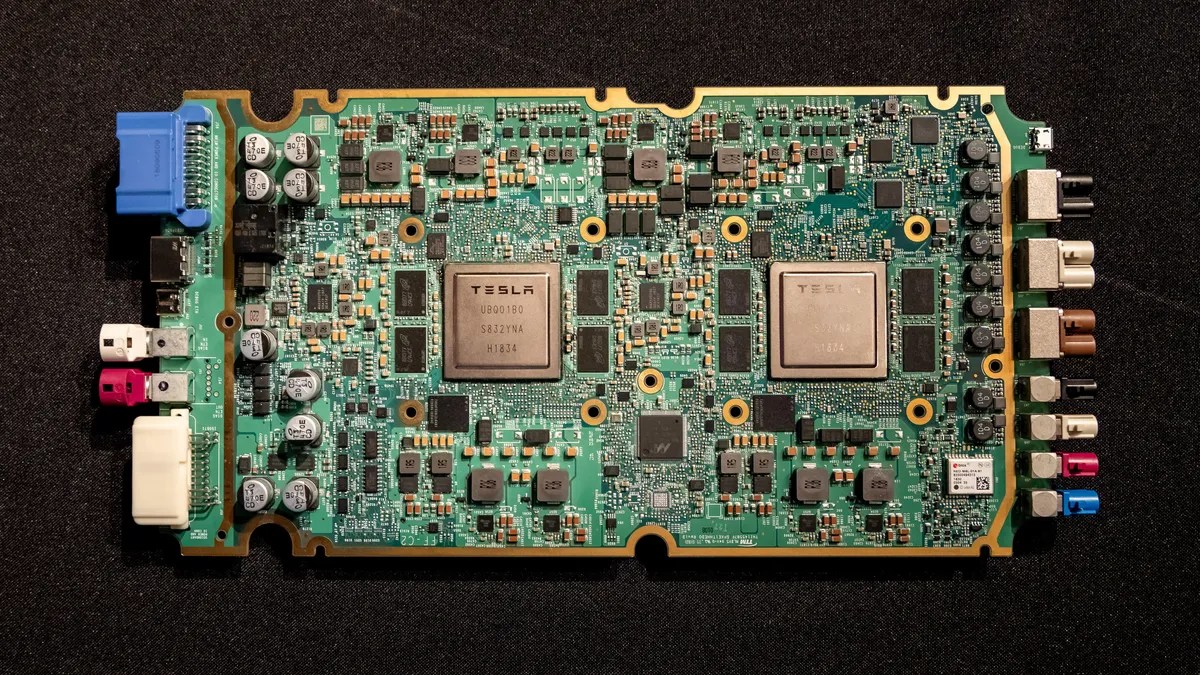
“If you think about it, there’s a little piece of sand driving us around right now. Isn’t it crazy that a little piece of melted sand is driving us around right now?” Robert explained that the Tesla has two chips the size of a thumbnail in the Tesla. I’ll save this discussion for another blog post and it is incredible that such a tiny piece of technology can operate with such precision in complicated city like Austin!
Tesla Full Self-Driving Silicon Chip
About Gail’s Tesla Podcast
For those wondering, I do short interviews with people who are interested in Tesla’s technological advances and their effect on humanity. For now, I do all podcasts from within my vehicle while using FSD beta. My Podcasts are designed to be Twitter-only to support Twitter and produce content that is only on Twitter. You may watch the Podcast here, enjoy!
Bluebonnets under the Milky Way over the Texas Hill Country courtesy Shane Ware.
Gail Alfar, author. Exclusive to What’s Up Tesla – April 2, 2023. All Rights Reserved. My goal as an author is to support Tesla and Elon Musk in both making life better on earth for humans and becoming a space-fairing civilization.
(Austin, Texas) Come along on this March day to the Austin, Texas airport on Tesla FSD beta version 11. We are starting at the congested Guadalupe Street at UT Austin. We’ll make turns, and enter the 35 Freeway, all while supervising the Model Y. This is a successful drive using the software and many people are using this software. Tesla’s fleet is over 1M cars.
Enjoy the drive and my spicey reactions!
Gail's Tesla Podcast #8 FSD beta V11 around UT Austin and to Austin Airport. V11 🥇 AI software. pic.twitter.com/7nccAxLAgp
Gail Alfar, author. Exclusive to What’s Up Tesla – All Rights Reserved. My goal as an author and podcaster is to support Tesla (the most American vehicle manufacturer) and Elon Musk in both making life better on Earth for humans and becoming a space-fairing civilization.
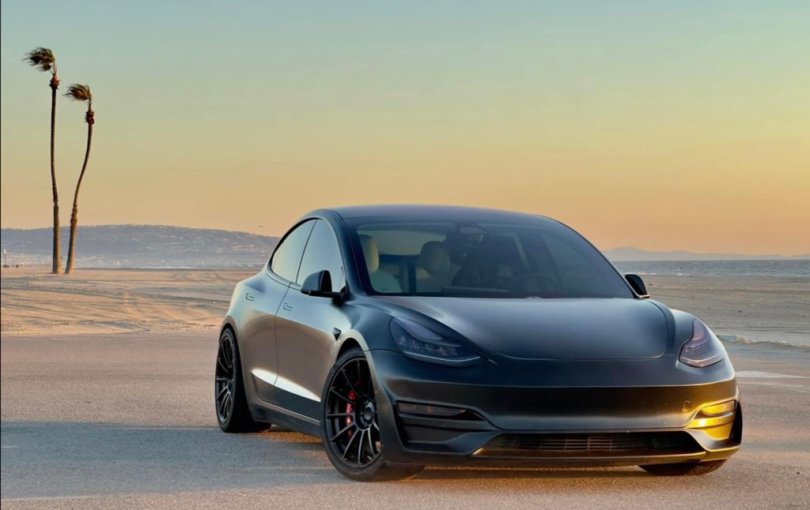
Road Trip to a California Beach. Image Courtesy @BLKMDL3 on Twitter
Welcome back to my blog, I can’t believe I’m going on 15 months of the pleasure of writing this blog for you. It’s springtime and it’s a great time to plan a road trip, long or short. When you have a Tesla, you likely hear people respond a bit surprised when you talk about road-tripping in your beautiful car. There’s never a reason to stress when traveling in your Tesla on long journeys, Tesla makes it easy. Tesla recently tweeted, “You decide where you want to go — your Tesla will automatically include charging stops along the way.”
I’m going to share some inspiration and highlights of the beauty of Tesla road trips, and encourage you to take a road trip this Spring!
You decide where you want to go—your Tesla will automatically include charging stops along the way https://t.co/01nnva59c1
Whether you travel with your family, a friend or alone, finding a good playlist is pretty easy in your Tesla. The difficulty is getting everybody to agree on what they want to listen to. I found a way to make peace with my teen by agreeing to certain times we can both play music, and at other times we would just keep the music off.
My favorite compromise is when my teenager is happy in the back area of the car and I’m in the front with my favorite music playing just on the front speakers for enough for me to hear. I can usually convince my teenager to put some kind of headphones on so he doesn’t have to listen to my music and get a headache.
A Tesla owner takes a road trip to a castle image courtesy @memesofmars on Twitter
Eating & Charging
These are the two most important parts of a road trip because it is your opportunity to refuel yourself and your family and charge up your Tesla.
For this, my favorite hack is to stop at Buc-ee’s for the supercharging, food and great bathrooms. Buc-ee’s is not always an option so here are some other suggestions:
tap the “ I’m Hungry “ button on Tesla maps
grocery stores like H-E-B in Texas have great Takeaway meals like salads, sushi and all kinds of sandwiches
your time with your kid/teenager is precious and rare, sometimes it’s nice to spoil them and let them be in full control of the cuisine
What sites to see? Where should we sleep?
Often you have a reason for traveling like heading down to South Texas to see the first Starship launch. You know exactly what you’re doing. But there’s also a beauty in aimlessly traveling, and wanting to hit the road, like Bob Dylan sang, “On the road again, just can’t wait to get back on the road again. Goin’ places that I’ve never been.”
David Searing took his Tesla to Starbase, Texas to see the Starships. Image courtesy @dsearing on Twitter Bob Walker likes to travel with his dog in his Tesla. Image Courtesy @rwalker1072 on Twitter
I encourage you to get off the beaten path and try visiting some small towns and places you may not have planned to see. Or try the opposite action theory. I figure out what I don’t want to do and then I do the opposite and then I’m always happy that I did it. In my years as a Certified Psych Nurse I learned this is good for all people and my patients.
(Opposite action is a dialectical behavioral therapy (DBT) skill that involves choosing to do exactly the opposite of what your emotions tell you to do)
Inspiration
This may sound counterintuitive because if you are like me, you like to plan out every detail of your trip. I encourage you not to plan every single day. Instead, “nonplan” a trip. Try watching a few movies and reading some books before you go for inspiration. Here’s a list,
Read “On the Road” by Kerouac
Read “The Wangs vs. the World” by Jade Chang
Watch “National Lampoons Vacation” 1983
Watch “Nomadland” 2020
Watch “Green Book” 2018
Diary of a Wimpy kid: The Long Haul, 2017
Set your gorgeous Tesla on autopilot and kick back and enjoy the road!
David loves to take his Tesla to the Mountains. Image courtesy @dsdavies1 on Twitter
Hacks
Here are some of my unorthodox hacks. These hacks and others make me want to be the designated driver in the Tesla,
Stretching out your feet because you don’t really need to be using the Accelerator or Brake pedal when you’re on autopilot
Stretching exercises – being weird is ok
Kicking back in a seat position that is super comfortable… sans shoes!
Just making up my mind to not use my phone at all. I tap into the myriad of thoughts I may not have thought of if I could use my phone. It’s interesting and valuable thinking time, and it’s necessary in a Tesla for this time in history because right now if we don’t look at the road at all times we will get … a dreaded Strike!
Tesla’s Official Website Has Important Summer Driving Tips
Climate Control Features, Accessories, and Tires are all critical factors when traveling in your Tesla in hot weather. Be sure to check out Tesla’s Support page titled “Summer Driving Tips.“
Want more travel information and tips from previous articles?
Tesla Summer Travel Trip Relax, imagine where you might drive to, grab an ice-cold Southern Sweet Tea, and enjoy these tips.
Model Y: Two Big Road Trip Advantages Tesla owner and founder of Scentwedge Arash Malek returned from a road trip in a Model Y. He and his family toured some remote areas in Iceland and here is our conversation.
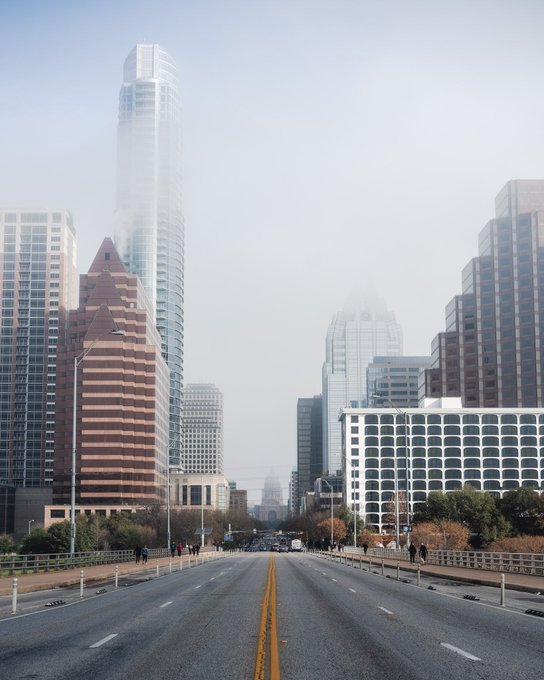
Image Austin Frost Bank building at Sunset, March 2023 courtesy Aerial Austin Drone Photographers
Gail Alfar, author. Exclusive to What’s Up Tesla – March 25, 2023. All Rights Reserved. My goal as an author is to support Tesla and Elon Musk in both making life better on earth for humans and becoming a space-fairing civilization. Header image Courtesy Tesla, Inc.
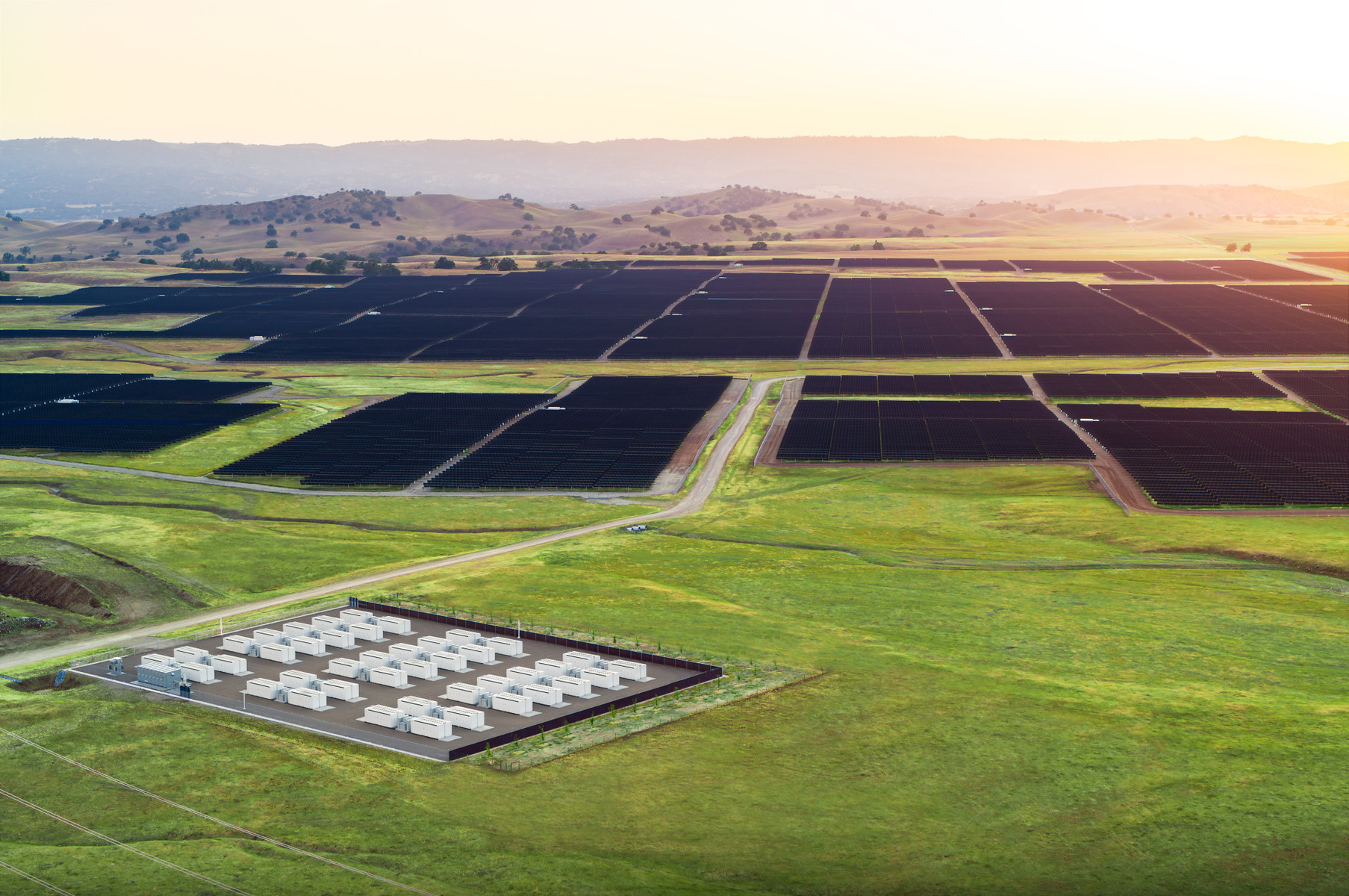
Tesla Solar and Megapacks. Image courtesy Tesla, Inc.
In Part #1 of this series, I wrote about how Master Plan 3 was created for the investor.
The term “investor” was clarified by Elon Musk to mean “the broadest definition of investor, as in the people & life of Earth.” We read about how our current energy economy is dirty and wasteful. This is true because over 80% of global energy still comes from fossil fuels. Shockingly only ⅓ of that energy delivers useful work or heat. A sustainable energy economy is within reach and we can and should accelerate it. A beautiful, clean, and fully sustainable energy economy can be achieved quickly and in this article, you will read about how in the words of Elon Musk. All quotes are from Investor Day on March 1 at Gigafactory Texas in Austin.
Make your next car electric
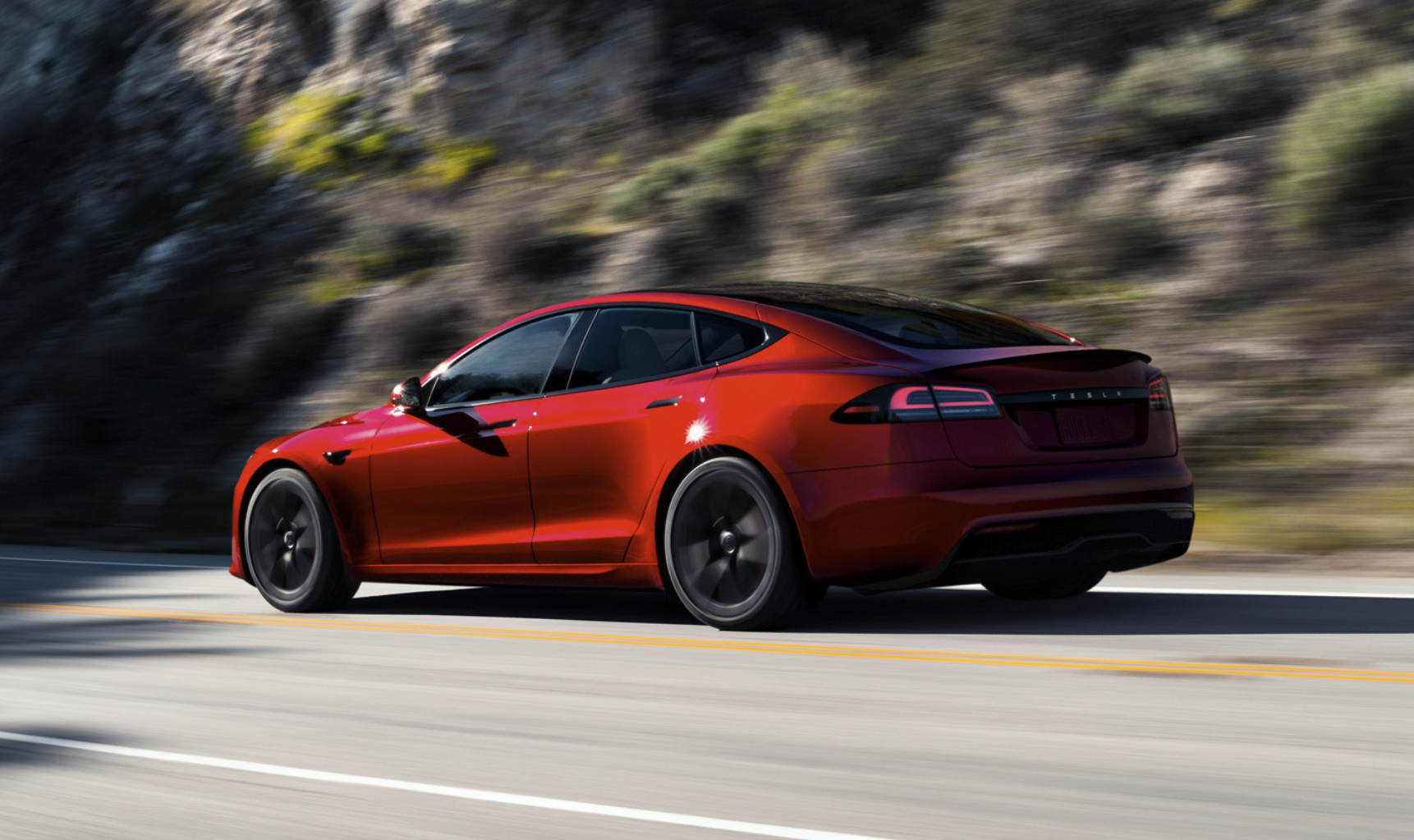
Ultra Red Tesla Model S. Image courtesy Tesla, Inc.
On March 1, 2023, Elon Musk stood onstage next to Drew Baglino [Director Tesla powertrain], with the production floor of Gigafactory Texas in the background. The small audience of approximately 250 people, some of whom traveled from abroad to come to Austin, gave their full attention as Elon Musk explained,
“We are going to walk through the calculations for how to create a sustainable energy civilization.
Sometimes I want to elaborate because there’s a very wide range of technical expertise out there from people who are like, you know, level nine wizards in the subject to people who do not do engineering at all.
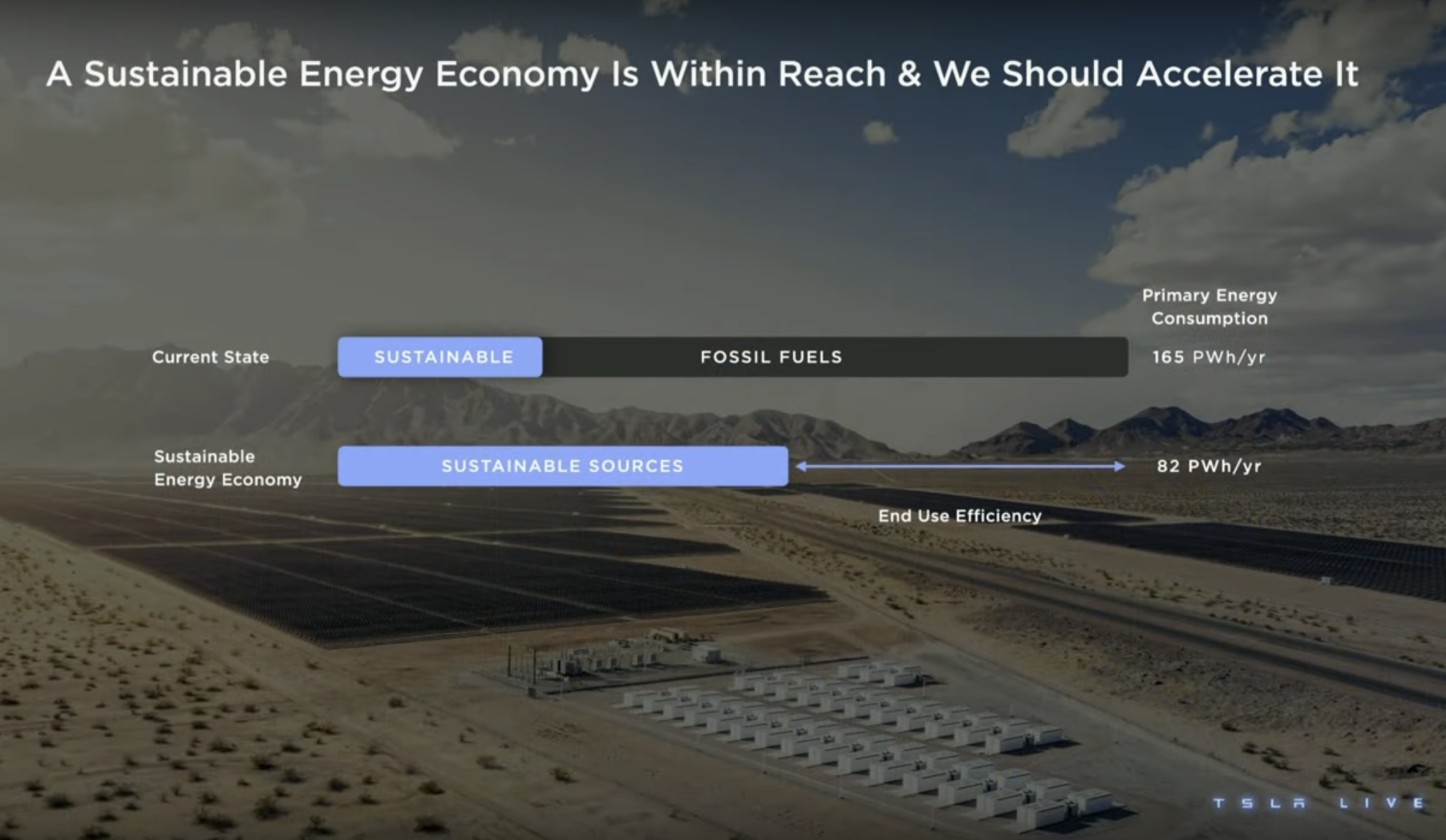
So if you have a gasoline car, you’re converting less than a third, often maybe only 25% of the energy in the gasoline is converted into motion and the rest is turned into wasted heat that doesn’t do any good at all.
There’s a lot of energy required even to get through all of the ground to refine the oil and to transport the gasoline to the gas station. So when you look at all that, a typical gasoline car is actually going to be using less than 20%, fully considered, of the energy from the oil that actually goes into motion.
So when we see people doing calculations for what does it take to create a sustainable energy earth, they assume that the same energy amount is required for an electrified civilization versus a combustion civilization.
This is not true, because most of the energy of combustion is waste heat.”
Image Courtesy Tesla, Inc. Slide: Our Current State versus a Sustainable Energy Economy
Drew Baglino added that a sustainable energy economy is easier to accomplish than a fossil fuel economy, “it’s actually half the problem statement of the fossil fuel economy.” Elon Musk, often making eye contact with his audience via live stream as well as engaging with the people attending in person, carefully explained,
“We’re being conservative here so it could be better than half. We’re trying to have assumptions that are reasonable and not overly optimistic, in fact, slightly pessimistic.
It’s really better than half but it’s easy to make the argument that we need half as much energy with an electric economy versus a combustion economy.”
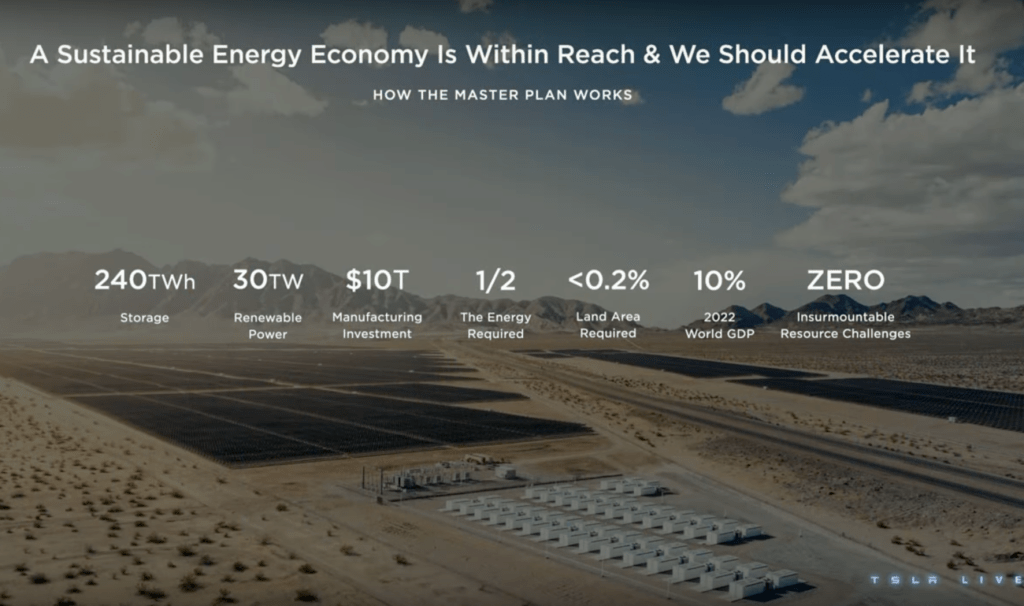
How Master Plan 3 works
Image courtesy Tesla, Inc. Slide: “A Sustainable Energy Economy Is Within Reach & We Should Accelerate It”
Elon Musk is known for his ability to simplify complicated things. Famous for his first principles approach, he explained the need for battery storage,
“So I think that what is needed at a very large scale that’s not currently present is a vast amount of battery energy storage. Our rough calculations are that this is about 240 Terawatt hours or 240,000 Gigawatt hours.
This is a lot of batteries but it is actually a very achievable amount. We will go into details on that. So that’s a combination of electric vehicles and stationary storage. If you’ve got solar or wind, you’ve got to store the energy when the wind is not blowing and the sun is not shining, so we are assuming an 8:1 ratio of stored energy to power. So 30 Terawatt hours of power. Our actual capital expenditure calculation for manufacturing investment is more like 6 trillion but we made it higher to make it 10 trillion.
If you look at the total world economy it’s just under 100 trillion, so if this was spread out say over 10 years it would be 1% of the global economy. Over 20 years, it would be half a percent of the global economy. So this is not a big number relative to the global economy.
As Drew (Baglino) mentioned, you need about ½ as much energy with an electric economy versus a combustion economy. And in terms of wind and solar, how much land would be used? It’s less than .2% of the land area of earth. I think generally people don’t realize how much energy is reaching us from the sun. It’s roughly a Gigawatt per square kilometer. And the sun doesn’t shine all the time but if you multiply that by 4 to get the continuous power, 4 or 5, that gives you the land area of solar. And you can put wind and solar often in the same place so in a lot of places that currently have wind, you could put solar there and you double your energy.
You could put solar [or wind as Drew Baglino mentioned] offshore. Earth is 70% water. The point is that with a remarkably small amount of earth’s land area, we can go fully sustainable.”
Drew Baglino explained that our earth has abundant resources to accomplish a sustainable energy economy. Elon Musk, sharing a hopeful and optimistic message, said, “To emphasize that again, the electrified economy will require less mining than the current economy does. Less. not more.”
“To emphasize that again, the electrified economy will require less mining than the current economy does. Less. not more.” Elon Musk
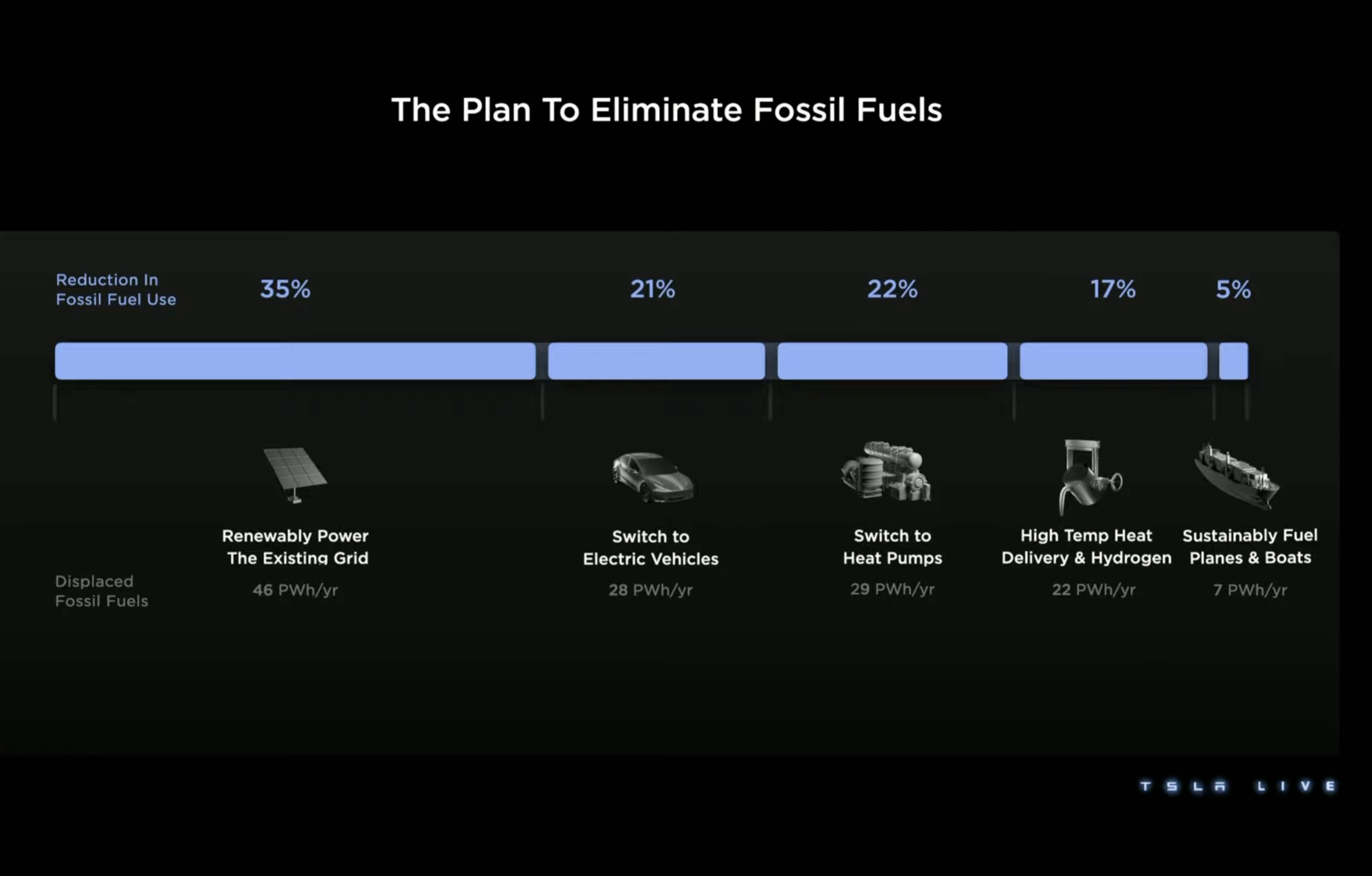
In the next article in this Multi-Part series, we will start to look at the 5 areas that will need work in order to eliminate fossil fuels. Tesla shared a preview in a slide that also showed how much each area will reduce fossil fuel use. With 35%, the largest area is to “renewably power the existing grid.” Switching to heat pumps and to electric vehicles are the 2nd and 3rd largest areas.
Image Courtesy Tesla, Inc. Slide: The Plan To Eliminate Fossil Fuels
A sustainable energy economy on Mars
Elon Musk is in his element when discussing rockets! He enthusiastically shares,
“My personal opinion is that as we improve the energy density of the batteries, you’ll see all transportation go fully electric, with the exception of rockets. That’s awkward, but you can make the fuel with CO₂ and water!
You can make methane with CO₂ and water. In fact, on Mars, if we hopefully get there at some point, the atmosphere is CO₂ and there’s water ice throughout Mars so you can take the CO₂ and H2O and turn that into CH₄ which is Methane and Oxygen.
So ultimately even rockets can be electrified.”
CONCLUSION
Empowering the world to choose sustainable energy options is within reach. With the existing technology, an affordable, reliable electric vehicle movement can take place with battery storage systems that can save and harness energy from sources like solar and wind. It’s an achievable goal – one that allows us to switch from a highly destructive fossil fuel industry to a much cleaner, kinder energy model. The investment will be well worth it, as this shift could create a healthier society with far less harmful pollutants in the air. In short, it’s now or never; let’s make this switch. Investing in clean energy not only aligns with our personal economic goals but builds towards a more balanced and stable relationship between humans and nature. I believe a beautiful, clean, and fully sustainable energy economy can be achieved quickly!
Gail Alfar, Author, Military Veteran. Exclusive to What’s Up Tesla – March 18, 2023. All Rights Reserved. My goal as an author is to support Tesla (the most American vehicle manufacturer) and Elon Musk in both making life better on earth for humans and becoming a space-fairing civilization.
Love this publication? Buy Gail a coffee to show your appreciation!













 whatsuptesla.com