Gail has a bachelor of art in film/radio/tv and a bachelor of science in nursing
She has worked for years caring for all ages of people with many diagnoses in over 5 hospitals and schools around the texas hill country
Originally from north dakota, she is now based in austin and writes about sustainable energy for the website she created ‘What’s up Tesla’ and 'What's up Twitter' and maintains her nursing practice
Riyadh, Saudi Arabia. Elon Musk talked to a full audience at the Saudi Investment Forum and millions watched online. This is my transcript of his talk in the King Abdulaziz International Conference Center. My piece honors Elon’s statements for technical clarity and I hope you’ll be inspired!
AI and Robotics: Engineering the Future
When we think about Elon’s work to advance robotics and AI, many of us can see a paradigm shift in automation and intelligence, with implications for building at scale, a new economic model, and the need for a new and abundant meaning for life.
Optimus Robots: Functional Autonomy
Elon detailed the capabilities of Tesla’s Optimus bot, emphasizing practical applications. “We just showed several of our Tesla Optimus robots to His Highness and President Trump. I think they were very impressed. In fact, one of our robots did the Trump dance, which I think was pretty cool. The YMCA dance. So, yeah, very impressed robots can dance, they can walk around, they can interact,” he said.
Economic Scalability Through Robotics and a Non Dystopian Future
Elon projects a transformative economy from widespread humanoid robot adoption.
“My prediction for humanoid robots is that ultimately there will be tens of billions. I think everyone will want to have their personal robot. You can think of it as if you had your own personal C3PO or R2D2 or even better. Who wouldn’t want to have their own personal C3PO or R2D2, that would be pretty great. I also think it unlocks an immense amount of economic potential because when you think about… what is the output of an economy, it is productivity per capita times the population per capita. Once you have humanoid robots, the actual economic output potential is tremendous. It is really unlimited. Potentially we could have an economy ten times the size of the global economy where no one wants for anything. You know, sometimes in AI they talk about universal basic income, I think it is actually going to be universal high income. It is where anyone can have any goods or services that they want. A science fiction book recommendation that I recommend which I think has probably the best envision of an AI future is the Culture Books by Iain Banks. Very highly recommended for a non dystopian view of the future.”
Elon: A science fiction book recommendation that I recommend which I think has probably the best envision of an AI future is the Culture Books by Iain Banks. Very highly recommended for a non dystopian view of the future.
I think this model will win as it is being created with with manufacturing at scale in mind. This is no fancy one off prototype.
xAI: Truth-Seeking Intelligence
Elon’s xAI plans to target fundamental questions about the universe.
“xAI is just trying to solve general purpose artificial intelligence. The goal with xAI is to have a maximally truth seeking AI, and it is important to be a maximally truth seeking AI in order to understand the universe,” he said. “The goal of xAI is to understand the universe. To understand what is out there? Where is the universe going? Where did it come from? I think maybe the biggest thing is, What questions do we NOT know to ask? Once you know the question, the answer is usually the easy part. And so, the goal of xAI is to help understand the universe and help people answer any questions along the way. That’s my philosophy. My philosophy is one of curiosity, just trying to understand the nature of reality.”
Infrastructure and Mobility: Redefining Systems
Elon’s Boring Company is totally under-represented. So, he does a great job of repping it after talking about Robotaxi!
Autonomous Vehicles: Robotaxi
Elon proposed Robotaxi for the Kindom of Saudi Arabia. “You can think of future cars as being robots on four wheels. I think it would be very exciting to have autonomous vehicles here in the Kingdom, if you are amenable,” he said.
Elon: I think it would be very exciting to have autonomous vehicles here in the Kingdom, if you are amenable. Image courtesy of Tesla, Inc.
The Boring Company: 3D Urban Solutions
Elon’s sees a future without brain numbing traffic.
“I have something that may be worth considering, it is tunnels. I have this company called The Boring Company, which sounds kinda boring, but it literally bores tunnels and actually in order to solve traffic, you really need to go 3D with roads and by using tunnels and you essentially create like a wormhole, like a warp tunnel from one part of a city to another and alleviate traffic and we’re actually already done this proof of concept in Las Vegas. There are working tunnels in Vegas that you can use where it feels like teleporting from one part of Vegas to another. My joke is like, tunnels are under-appreciated,” he said.
Cybertruck in Vegas Loop. Image Courtesy of the Boring Company
Elon graciously thanked the Kingdom of Saudi Arabia for their support for Starlink and addressed risks of AI. “I’d also like to thank the Kingdom for approving Starlink for maritime and aviation use. Thank you,” he said, highlighting the expansion of satellite-based connectivity for remote applications. On AI risks, Elon noted:
“There obviously are some risks, which illustrate that if you don’t do this right, you could have like a James Cameron sort of movie, Terminator. We don’t want that one, but having sort of a Star Trek future would be great. We’re out there exploring stars, discovering the nature of universe & prosperity and hopefully happiness that we can’t quite imagine yet. So, I am very excited about the future.”
In 2025, Starlink Maritime offers high-speed, low-latency internet access for boats and ships globally, with a shift towards tiered data plans instead of unlimited options, and specialized hardware designed for the marine environment.
My thoughts
My first thought was that Elon’s talk was too short. The brief time he had also gives us a quick look into where he’s at now. He did not discuss DOGE during his talk, but focused on his companies, the heart of the abundant future we all look forward to. In my closing comments on this article, I urge you (again) to support people having kids, and you, if you can. Underpopulation continues to be a threat to humanity, with no real fix in sight, so consider being a parent even against all odds. I have five kids and am neither “wealthy” nor poor. I’m just a regular person, like you probably are. My kids are happy, glad to enjoy life, and a blessing to everyone they meet. Despite people telling me not to have kids, or even a doctor telling me to terminate one of the pregnancies because I was “too old” to have a child at age 46, I had kids anyway. No regrets, only thanks. Bless you. Live your life to the fullest and never give up!
🚨 BREAKING: Elon Musk's Full Interview from the Saudi-U.S. Investment Forum today. pic.twitter.com/6Yyt34vBKP
Welcome to Tesla Time Capsule: Revisiting Musk’s Visionary Talks, where we pause for a moment to remember the pivotal moments that shaped Tesla through the lens of Elon Musk’s great talks. Our journey begins in September 2014, when Elon stood outside Nevada’s state capitol in Carson City to announce the Tesla Gigafactory—a daring move that would redefine electric vehicles. With a standing ovation echoing behind him, Elon unveiled a vision for a massive, sustainable battery factory to power affordable EVs. Tesla’s mission to transform the world was palpable. This wasn’t just about building a factory; it was about betting on a future where clean energy wins. In this article, we’ll look at the context, break down Elon’s speech, and explore why the Gigafactory became a cornerstone of Tesla’s rise.
Context: Why Nevada, Why 2014?
In 2014, Tesla was no longer a scrappy startup but a strong player with the Model S gaining traction. Yet, to deliver a mass-market electric vehicle—like the upcoming Model 3—Tesla needed batteries, and lots of them. Lithium-ion battery production was dominated by Asia, and costs were a barrier to affordability. Enter the Nevada Gigafactory: a audacious plan to build the world’s largest battery plant, , and control Tesla’s destiny.
Nevada wasn’t the only contender. At the time, states like Texas, New Mexico. and Arizona offered hefty incentives, but Nevada’s agility, business-friendly environment, and Governor Brian Sandoval’s support tipped the scales. On September 4, 2014, Musk took the stage to explain why Nevada was the perfect home for this game-changing project, captivating a crowd eager for economic and environmental progress.
Elon’s Vision: A “Get-Things-Done” State
Gratitude and Nevada’s Edge Elon opened with heartfelt thanks, setting a collaborative tone:
“Thank you for coming. I’d like to start by thanking Governor Sandoval and the Nevada Legislature for their support. I think people should know that this was not about the biggest incentive package; it wasn’t just about the incentives.”
Elon explained what made Nevada stand out:
“What the people of Nevada have created is a state where you can be very agile, where you can do things quickly and get things done. It is a real ‘get-things-done’ state. That was a fundamental and important part of the decision.”
This wasn’t just flattery. Musk emphasized Nevada’s ability to move fast—crucial for a factory that had to be ready to produce battery packs by the Model 3’s launch. His words resonated with the crowd, framing Nevada as a partner in Tesla’s mission.
The Gigafactory’s Purpose: Powering Tesla’s Mission
A Factory for the Future Elon didn’t mince words about the high stakes:
“This factory is very important to the future of Tesla because, without it, we can’t produce the mass-market car. In order to produce a high-volume, affordable, compelling electric car, which has been the mission of Tesla from the beginning, the Gigafactory is vital.”
This was Tesla’s moonshot: a factory to make EVs accessible to millions, not just the elite. Elon underscored timing and efficiency:
“We had to ask where we would have high confidence that this factory would be ready on time, so that when we are ready to produce the vehicle, the factory is ready to produce the battery packs. That was truly the most important thing.”
By tying the Gigafactory to Tesla’s core mission, Elon made it clear: this wasn’t just a factory—it was the key to a sustainable future.
The Scale: Why “Gigafactory”?
Bigger Than the Rest Elon’s art deco flair for the dramatic shone when he explained the name:
“Perhaps it’s worth highlighting the sheer scale of the Gigafactory and why we even call it the Gigafactory. It will be the biggest lithium-ion battery factory in the world, surpassing the combined production capability of all lithium-ion factories in China, Korea, Japan, and elsewhere.”
This wasn’t hyperbole. The Gigafactory aimed to produce more batteries than the entire global output of 2013, a staggering ambition that left the crowd buzzing. Musk’s vision wasn’t just about meeting demand—it was about rewriting the rules of battery production.
CARSON CITY, NEVADA – SEPTEMBER 4: Elon Musk, CEO of Tesla Motors, addresses an enthusiastic crowd at the Nevada State Capitol on September 4, 2014. Alongside Governor Sandoval, Musk revealed plans for the Tesla Gigafactory, a groundbreaking battery factory in Nevada poised to power electric vehicles and generate 6,500 jobs. (Photo by Max Whittaker/Getty Images)
A Factory with Flair: Design and Sustainability
Art Deco Diamond in the Desert Elon revealed a surprising detail: the Gigafactory would be as beautiful as it was functional:
“We are taking care to ensure that it looks good and fits in with its surroundings. The factory will be shaped like a diamond. To fit better into the environment, we shaped it like a diamond, and it is aligned to true north so that we can map out where the equipment will be by GPS.”
The diamond shape wasn’t just aesthetic—it minimized environmental disruption. Elon’s nod to “romantic” practicality charmed the audience:
“I think it sounds kind of romantic to say it’s shaped like a diamond and aligned to true north, but there are practical reasons for it as well.”
CARSON CITY, NEVADA – SEPTEMBER 4: Elon Musk, CEO of Tesla Motors, addresses an enthusiastic crowd at the Nevada State Capitol on September 4, 2014. Alongside Governor Sandoval, Musk revealed plans for the Tesla Gigafactory, a groundbreaking battery factory in Nevada poised to power electric vehicles and generate 6,500 jobs. (Photo by Max Whittaker/Getty Images)
Self-Sustaining Power
Sustainability was non-negotiable:
“This factory will produce its own energy through a combination of geothermal, solar, and wind power. It will generate all the energy it needs, making it a self-contained factory.”
This commitment to zero-carbon energy underscored Tesla’s ethos, earning cheers from an environmentally conscious crowd.
An Invitation to Witness History
Open to the Public Elon closed with a promise:
“We’re going to ensure that people can visit it, look at it, and check it out because it will be worth seeing.”
This wasn’t just a factory—it was a symbol of progress, open for the world to see. The crowd’s standing ovation reflected their excitement and he kept his word, with close friend John Stringer visiting the factory just a week ago!
Giga Nevada is expanding insanely fast. It’s incredible to see what Tesla accomplishes here.
Can’t wait to see the mass volume Semi factory up and running. The Semi will change trucking forever pic.twitter.com/MPh0FDQTde
— Tesla Owners Silicon Valley (@teslaownersSV) April 25, 2025
Postscript: The Gigafactory’s Lasting Impact
The 2014 Gigafactory announcement was more than a speech—it was a turning point. By 2025, Gigafactory Nevada has become a powerhouse, producing batteries for millions of Tesla vehicles and energy storage systems like Powerwall. It sparked economic growth in Nevada, creating thousands of jobs and proving Musk’s bet was right. This talk showcased Elon at his best: visionary, practical and brief, and unrelentingly ambitious. As we look back, it’s clear the Gigafactory wasn’t just about batteries—it was about building a future where clean energy is the norm. What part of your life has Tesla made better? Feel free to share your thoughts with others on X, I often discuss these historical pieces with my kids/family over dinner, etc. I’ll be writing more Tesla Time Capsule stories in the future.
Welcome to Part 3 of my series on Elon’s August 16, 2024, West Point talk, released on February 6, 2025. If you missed the earlier parts, you can catch up here: Part 1 and Part 2.
In this final installment, Brigadier General Shane Reeves explores in detail the future of warfare, the role of space, and Elon’s approach to leadership and innovation.
Drones and the Battlefield: A New Reality
Reeves asked Elon about integrating technology with human pilots and its implications for warfare. Elon responded:
“At the front of the battle line, it’s just going to be drones. Any humans caught in that crossfire are going to be killed.”
Elon elaborated, painting a vivid picture of drone warfare:
“If you’ve got drones constantly scanning—thousands of them, maybe a million, like Ukraine’s planning—you don’t want to be there trying to take out drones with an assault rifle. It’s not a good situation.”
He proposed an unexpected countermeasure:
“If you go fully analog with mechanical controls and do an electromagnetic pulse (EMP) blast, you could take out all electronics. A fully analog fighter plane could be a role—like a Tom Cruise movie where he flies an analog aircraft, and all the drones fall from the sky.”
Elon Musk inspires West Point graduates, “Try. Just try thinking of interesting ideas. Read about many fields and cross-fertilize ideas. For example, SpaceX used automotive mass-manufacturing techniques, and Tesla applied space industry materials optimization. That’s a superpower.”
Building Trust with Industry
Reeves raised concerns about industry reluctance to develop technology for the Department of Defense, emphasizing the need for trust with the industrial base and society. Elon, a solid supporter of the military, responded:
“I’m very pro-military, to be clear.” (Met with loud applause.)
He drew parallels to historical shifts:
“If there’s a significant conflict, the US industrial base will switch quickly to military production, just as it did in World War II. Will it be quick enough? I don’t know. AI and drones—that’s the future of warfare.”
Space: The Ultimate High Ground
On the role of space in warfare, Elon was emphatic:
“Space is the ultimate high ground. It’s big. Real big. Earth is like a tiny dust mote floating in space.”
He stressed the importance of space-based communications:
“Ground-based communications—fiber optics, cell towers—will be destroyed. All you’ve got are analog radios and space-based data communications. GPS is easily jammed because it’s a weak signal. A next-generation positioning system is critical.”
Elon also touched on space-based weaponry:
“You could have kinetic weapons—like tungsten cannonballs, known as rods from God—or space-based lasers. Starlink technically has lasers, but they’re low-powered… for now.” (Laughter)
Leadership: The Cavalry Captain Must Ride
Reeves connected military history to Elon’s businesses, asking about the traits he seeks in leaders. Elon emphasized technical competence:
“If someone’s leading a complex engineering project, they must be good at engineering. They don’t need to be the best, but they must be competent. It’s like a cavalry captain who can’t ride a horse—great in every way, but falls off in battle. That’s not inspiring.”
Elon critiqued leadership mismatches:
“Take Boeing’s CEO—he’s got a degree in accounting. If you’re running an airplane company, you should know how airplanes work, how they’re designed. That’s vital.”
Fostering Innovation
Reeves asked how Elon cultivates innovative intuition. Elon suggested:
“Try. Just try thinking of interesting ideas. Read about many fields and cross-fertilize ideas. For example, SpaceX used automotive mass-manufacturing techniques, and Tesla applied space industry materials optimization. That’s a superpower.”
On balancing caution and risk, Elon said:
“If you’re not failing sometimes, you’re not trying hard enough. Nobody bats 1000, but you can’t bat zero either.”
Elon’s First-Principles Algorithm
Elon shared a practical framework for problem-solving:
“1. Make the requirements less dumb. Even if they come from the smartest person, they’re still dumb. Military procurement often starts with excessive requirements. 2. Delete parts or process steps. If you’re not adding back 10% of what you deleted, you haven’t deleted enough. 3. Optimize what remains. 4. Go faster. 5. Automate—only after the above steps.”
He cautioned against common pitfalls:
“Smart engineers often optimize things that shouldn’t exist—like perfecting a cloth biplane when we need jet airplanes.”
Elon gives great advice on fostering learning: “Curiosity. Read as much as possible, learn across fields, and apply critical thinking to everything you’re told.”
Curiosity: The Key Attribute
As the interview closed, Reeves asked Elon for the one attribute critical for future officers. Elon’s answer was succinct:
“Curiosity. Read as much as possible, learn across fields, and apply critical thinking to everything you’re told.”
Elon concluded with a powerful metaphor:
“America is like Atlas holding up the free world, and you—the graduating class—are the arms of Atlas.”
Applause erupts.
My Thoughts
Elon’s West Point talk was a masterclass in his visionary thinking, he made sense of the reality of modern warfare and combines it with practical leadership expectations.
IMPORTANT: Elon’s emphasis on drones and space as the future of conflict is a wake-up call for military strategists.
NOTE: Elon’s insistence on curiosity and first-principles problem-solving resonates most. Our world is rapidly changing, and Elon’s call for leaders who are technically competent and relentlessly curious is a blueprint for success—not just in warfare, but in any field.
As you reflect on his words, perhaps you will be struck by the urgency of adapting to this new era while staying grounded in critical thinking and innovation.
This is the second part of my series on Elon Musk’s August 16, 2024, West Point talk, released February 6, 2025.
Geared towards students, the discussion with Brigadier General Shane Reeves explored national defense and technology.
In Part 1, Elon emphasized drone warfare, noting U.S. technological strength but low production rates, stating,
“Well I think we probably need to invest in drones, the United States is strong in terms of technology of the items, but, the production rate is low, so, it is a small number of units, relatively speaking, but I think that basically there is a production rate issue with the rate, like if you say how fast can you make drones, imagine there is a Drone conflict. The outcome of that Drone conflict will be based on: How many drones does each side have in that particular skirmish times the kill ratio… so let’s say that the United States would have a set of drones that have a high kill ratio, but then, the other side has far more drones. If you have got a 2 to 1 kill ratio, and the other side has four times as many drones, you are still going to lose.”
Ukrainian Drone Production and Aging
Reeves explained that a recent report quoted Zelensky saying Ukraine will produce 1 million drones by 2025. He then pivoted to ask Elon if he had solved aging.
Elon stated that he had not solved aging, and then added, “I wonder if we should solve aging?” He added, “How long do you want Putin and Kim Jong-un to live?”
Starlink’s Role in Warfare
Reeves shifted to the importance of communications in warfare, prompting Elon to discuss Starlink: “Communications is essential, it is actually very important to have space-based communications that are or that cannot be intercepted, which is Starlink. It is what Starlink offers. Starlink is the backbone of the Ukrainian military communication system because it can’t be blocked by the Russians. It is the only thing that cannot be blocked. So, on the front lines, all of the fiber connections are cut, all the cell towers are blown up, all of the geostationary satellite links are jammed. The only thing that isn’t jammed is Starlink, so it is the only thing. And then, GPS is also jammed. GPS signal is very faint and Starlink can offer location capability as well so it is a strategic advantage that is very significant. And, when you try to communicate with drones, the drones need to like basically, they need to know where they are, and they need to receive instructions. So if you don’t have communications and positioning, then the drones don’t work. So that’s quite important. That is essential.”
Future of AI and Drones
Reeves asked if there will still need to be communication between people and drones. Elon said, “There’s a difference between right now, versus where things will be in 10 years.” Sighing, Elon says he’s looking at the future with some trepidation. He says he has to have some deliberate suspension of disbelief to sleep sometimes. He thinks we’re headed into a pretty wild future. Elon is a naturally optimistic person, but “AI is going to be so good, including localized AI, but at the current rates, you’ll have something that is sort of Grok-level AI and it can probably be run on a drone and so, you could literally say, this is the equipment that the drone needs to destroy, and then it will go into that thing, and it will recognize what equipment needs to be destroyed, and will take it out.”
Elon says, “Communications is essential, it is actually very important to have space-based communications that are or that cannot be intercepted, which is Starlink. It is what Starlink offers”
AI Surpassing Human Control
Reeves asks Elon if he thinks that AI will quickly surpass the human’s ability to control. Elon answers,
“Yes, I mean, <very long pause> I’d like to say no, but the answer is yes.”
Reeves asks how long before the AI surpasses the ability for the human to influence how it’s working?
Elon explained that he does think humans will be able to influence how it’s working for a long time, “This is an esoteric subject, that really goes into pretty wild speculation, to some degree. I think that the AI will want humans as a source of Will. So, if you think of how the human mind works, there is the limbic system, and the cortex, you have sort of the base instincts, and sort of the thinking, and the planning part of your brain, but you also have a tertiary layer, which is all of the electronics that you use, your phones, your computers, applications, so you already have three layers of intelligence, but all of those, including the cortex and the machine intelligence, which is your sort of cybernetic third layer, is working to try to make the limbic system happy. Because the limbic system is a source of Will so, it might be that the AI just wants to make the humans happy.”
Neuralink and AI Mitigation
Continuing on AI, Elon introduced Neuralink: “And part of what Neuralink is trying to do, is to improve the communication bandwidth between the cortex and the digital tertiary layer because the output bandwidth of a human is less than one bit per second per day and there are 86,400 seconds in one day and you don’t output 86,400 tokens you know it’s like, the number of words that I can say in those forums, if you’re just looking at it from an information theory standpoint, how much information am I able to convey? Not that much. Because I can only say a few number of words, and in order to convey an idea, I have to take a concept in my head, and then I have to compress it down, into a small number of words, try to aspirational model, how you would decompress those words into concepts that are in your own mind, that’s communication. So your brain is doing a lot of compression and decompression, and then has a very small output bandwidth. Neuralink can increase that bandwidth by several orders of magnitude, and also, you don’t have to spend as much time compressing thoughts into a small number of words, you can do conceptual telepathy. That is the idea behind Neuralink. It is intended to be a mitigation against AI existential risk.”
AI Alignment and Humanity
Reeves asked about the concept of AI alignment, prompting Elon to explain: “It’s asking the question, is the AI going to do things that make civilization better? Make people happy? Or will it be contrary to humanity? Will it foster humanity? Or not? Will it be against humanity? So obviously, we want an AI that will foster humanity and I think in developing an AI to foster humanity—because I’ve thought about AI safety for a long time—I think I’ve had probably about 1000 hours of discussion about this and my ultimate conclusion is that the best course for AI safety is to have an AI that is maximally truth-seeking and also curious. And if you have both of those things, I think it will naturally foster humanity because it will want to see how humanity develops. Want to see it because humanity is more interesting than not humanity. You know, I like Mars. I’m a big fan of Mars. And I think we should become a multi-planetary civilization. That’s very important. The purpose of SpaceX is to make life multi-planetary. That’s the reason I created the company, and that’s the reason we have the Starship development in South Texas. The rocket is far too big for just satellites. It’s intended to establish life on Mars not just to send astronauts there briefly, but to build a city on Mars. A city that is ultimately self-sustaining so, but getting back to AI, if you have a truth-seeking AI, that is maximally curious, my neural net, my biological neural net says that that is going to be the safest outcome. People say, why do you like Mars, Mars is not as interesting as Earth, because there’s no human civilization there. Or, thought of another way, if you want to render Mars, rendering Mars is pretty easy as it’s basically red rocks, kind of like some parts of Arizona you know there’s not a lot of people. It’s just very easy to render. But, rendering human civilization is much harder, much more complex, much more interesting so I think a curious and truth-seeking AI would want to foster humanity and want to see where it goes.”
Trusting AI and the End of Fighter Pilots
Reeves asked an interesting question, drawing on a comparison to a movie that he and Elon were both familiar with, Top Gun with Tom Cruise. His question to Elon was, “How do we build trust between the human and the machine, as there are many humans who don’t want to use the technology because they don’t trust it?”
Elon: “Well, I think we shouldn’t just automatically trust these things. I think you want to test it out, and do a lot of testing and see how it actually works and a conflict at a small scale, and then scale it up if it’s effective, but, I have to say, like I’m not sure for example, like I have to say,… Well, fortunately, this is not an Air Force gathering, but I’m not sure there’s a lot of room and opportunity for fighter pilots because I think if you’ve got a drone swarm coming at you, then the pilot is a liability in the fighter plane, to be honest. If you compare a drone versus a fighter plane, how easy is it to make a drone? It’s at least 10, maybe 100 times easier to make the drone, and you can afford to sacrifice the drones whereas, with the pilots, you don’t want to sacrifice the pilots, so my guess is actually that the age of human-piloted fighter aircraft is coming to an end.”
A primarily young audience of students gather to intently listen to Elon Musk at West Point. Elon spoke at on August 16, 2024, during a fireside chat with Brigadier General Shane Reeves, as part of the U.S. Military Academy’s convocation.
I am excited to share Part 3 of this talk with you soon!
My thoughts
Elon does not get credit for how much help he’s giving Ukraine. Without Starlink, Ukraine would have no communications for defense. Sadly, we’ve not heard Zelensky thank him for this in the last few years. Instead, Elon is villainized constantly.
Speaking to the young and excited audience at West Point, Elon showed his deep love for humanity when he urged caution: don’t blindly trust AI, test it carefully first. Drones, far easier to build than fighter planes, can be sacrificed—unlike precious pilots. He believes human-piloted fighters are fading, to protect lives.
Interested in other talks by Elon? I publish many of them.
Recently, a mysterious study from Guardian Service Company in Raleigh, North Carolina, claimed to uncover shocking truths about Tesla ownership—including an outrageous claim of a 44% vandalism rate.Guardian Service Company published a study on April 21, 2025, claiming to have asked 508 Tesla owners about vandalism, surveillance, and ownership sentiments.
44% Vandalism? Pure Fiction
The claim—that two out of five, or a full 44%, of Tesla owners have experienced intentional damage like keying or tire slashing—is outrageous. Vandalism against Teslas is real, with incidents like arson and graffiti tied to political controversies, but these are sporadic, not epidemic. A 44% rate is absurd without verified insurance data, and Guardian’s failure to share the exact question asked (was it “any damage” or “confirmed vandalism”?) makes this a manipulative scare tactic, likely to push insurance sales.
Sentry Mode
Guardian’s study claims 54% of Tesla owners “enabled video surveillance specifically due to fears of vandalism,” while 25% said no, leaving 21% unaccounted for. This is utterly ridiculous when you consider Tesla vehicles come with Sentry Mode, a built-in surveillance system that records threats automatically. Owners don’t install cameras; they toggle a pre-installed feature. Framing this as owners adding surveillance due to “vandalism anxiety” is a gross misrepresentation, exploiting Tesla’s standard technology to inflate fear. If 25% said no, were they even Tesla owners, or did Guardian botch the question? This sloppy data screams non-scientific nonsense.
Guardian’s Motive: Insurance Sales, Not Truth
Guardian Service Company isn’t a research firm—it’s an insurance agency in Raleigh, NC, where Tesla Insurance isn’t available, forcing owners to use third-party providers like them. A study hyping vandalism fears could drive customers to their auto insurance quotes, but fabricating data to scare Tesla owners is shameful. The lack of transparency—no sample details, no peer review—confirms this isn’t a valid study but a marketing stunt at best, or outright misinformation at worst.
Kelley Blue Book’s Blunder
Guardian’s most egregious claims are that 34% (one in three) Tesla owners plan to sell or trade in their vehicle within a year, one in five (19%) regret their purchase, and 30% wouldn’t choose Tesla again. They frame this as owners second-guessing their purchase, but it’s a blatant distortion. Tesla routinely asks owners about trade-ins to encourage upgrades to newer models, like the refreshed Model 3 or Cybertruck. I experienced this myself during a recent test drive, where Tesla reps asked if I’d consider trading in my car—not because I regret it, but because it’s standard practice. A 19% regret rate and 30% non-repeat purchase claim are dubious without reasons (cost? politics?) and clash with Tesla’s 97% customer satisfaction (Consumer Reports, 2023).It’s not uncommon for a company like Guardian to produce a blog post to promote their business, but the fact that Kelley Blue Book published a full article on these bogus claims is a disgrace. KBB, a once-trusted name in car pricing, should’ve sniffed out the study’s flaws—no primary source, no methodology, and claims that don’t pass the smell test. Scientific studies require random sampling and clear questions, but Guardian provides no evidence of either, rendering their claims unreliable.By amplifying this unverified nonsense, KBB risks its reputation, fueling anti-Tesla narratives at a time when vandalism stories are already exaggerated. KBB must retract this article or issue a correction to restore its credibility as a once-trusted name.
This Guardian study is a textbook case of misinformation, with outrageous claims that crumble under scrutiny. Tesla owners in Texas, where I live, can use Tesla Insurance to counter vandalism fears, but in North Carolina, where Guardian operates, owners deserve better than fearmongering. We should disregard this study and call out KBB for lending it credence.
What will it take for trusted sources to stop amplifying fake studies and start verifying facts?
Gail Alfar, dedicated Tesla advocate and writer since 2020, continues to champion the resilience and innovation of Tesla owners.
Addendum (April 28, 2025): After publishing this critique of Guardian Service Company’s mysterious study—claiming 44% of Tesla owners faced vandalism, 19% regretted their purchase, and 30% wouldn’t buy a Tesla again—I’ve taken action to uncover the truth. I reached out to Guardian Service at info@guardianservice.com and (844) 448-2734, demanding the full study, its methodology, and data verification. Given the study’s absence from their website and its reliance on unverified X posts, I’m not optimistic about a response, but I’ll keep you updated if they reply. Stay tuned as we continue to call out these bogus claims and demand better from trusted sources!
This is the first of a multi part series, that allows you to closely study Elon’s words spoken at West Point on August 16, 2024. The full video was released on February 6, 2025. If you love history of civilizations, and like to study battles and war, you’ll find value in Elon’s insight. I know I did.
Featuring Elon Musk interviewed by Shane Reeves
Elon Musk at West Point: AI and Drones Will Define Future Warfare
How do you see warfare transforming in the future? Elon replied with, “the biggest factor I think by far is AI and drones. The current war in Ukraine is very much a drone war already – sort of a contest between Russia and trying to see who can deploy the most number of drones. Now if there’s a major power war, it’s very much going to be a drone war. It’s gonna be drones and AI and … I do worry about the existential risk of AI, which is that if you employ AI and drones, do you Eventually go down this path where you get to terminator? We should try to avoid that! We should minimize the terminator risk. But essentially when you’re making military drones, you are making terminators. And I think you will be somewhat forced into giving the Drone localized AI. Because if the AI is far away, it can’t control as well as localized AI.”
Elon explained that localized AI means it’s an autonomous scaling machine which will be completely autonomous if you give it the OK in a particular arena and then it just goes.
Will our military have the same types of concerns and limitations? To this question Elon replied, “it depends on how much existential risk there is in these wars, if it’s a regional war, I think it will be more tempered, if it goes beyond regional war, then all bets are off. And then you start deploying things that you really would not want to deploy. So hopefully, that does not happen.”
In response to a comment by Reeves, that machines are not just disrupting warfare today they are commonplace, Elon said “drones are going to be overwhelmingly what matters for any powers that have significant technology. Elon added, my personal belief is like, it’ll actually be I think probably too dangerous to have humans at the front. It’s drones at the front. Drones don’t miss.”
Reeves asked, or commented, because of the lethality then, it’s too dangerous to have humans at the front? Elon responded “Yes, I mean, if you have seen some of the computer-controlled sniper rifles, they just don’t miss. So you are finding a machine that is going to aim with micron level accuracy, and it never gets tired.”
Reeves asked Elon how he thinks the United States should be leveraging technology to further our national defense?
Elon paused, and replied, “Well I think we probably need to invest in drones, the United States is strong in terms of technology of the items, but, the production rate is low, so, it is a small number of units, relatively speaking, but I think that basically there is a production rate issue with the rate, like if you say how fast can you make drones, imagine there is a Drone conflict. The outcome of that Drone conflict will be based on: How many drones does each side have in that particular skirmish times the kill ratio… so let’s say that the United States would have a set of drones that have a high kill ratio, but then, the other side has far more drones. If you have got a 2 to 1 kill ratio, and the other side has four times as many drones, you are still going to lose.”
Reeves asked Elon if he thinks that our industrial base can scale to make the number of drones that Elon is talking about?
Elon replied, “I think that’s going to be the biggest challenge. It can scale. But it is not currently scaling.” Reeves asked why. Elon thought about the current state of Drone procurement in the U.S.A, and also mentioned,
“I read a lot of military history and the thing that I go to sleep with is usually an audiobook on military history of one kind or another so I find the subject very interesting and one of the things that tends to happen is that countries are geared up pretty much enough to fight the last war, but not the next war. And it’s hard to change. If you look at the uniforms at the start of World War I and the tactics they use at the start of World War I, they were not significantly different from the Napoleonic era. You know, when the French were marching into war with brightly colored uniforms. It looks great. But that’s not what you want to be, you know when someone is pointing a gun at you you don’t want a great looking uniform you want a uniform that blends in so, there is a tendency to be gearing up to fight the last war in the U.S. So that would be kind of the Cold War I guess. So, it usually takes some kind of shock factor to adjust. I would recommend adjusting now.”
Elon: “And you are seeing some startups like Anduril and a few others that have a different mindset, but it’s really going to be, can you make a lot of drones? And what’s the kill ratio? That’s what it comes down to.”
Anduril Industries, founded in 2017 in Costa Mesa, California, is a defense tech company revolutionizing military capabilities with AI-driven solutions. Named after a mythical sword, Anduril builds autonomous drones (like Ghost), surveillance systems (Sentry), and software (Lattice) to enhance national security. Unlike traditional defense giants, it operates like a nimble tech startup, prioritizing speed and innovation. With $2.3 billion in funding by 2024, Anduril serves the U.S. Department of Defense and allies, competing with legacy contractors by delivering cost-effective, scalable tech for modern warfare, including border security and counter-drone operations.
This is Part 1, of Elon’s talk, and it gets better. You can follow my account, turn on your notifications, for Part 2. Or check back periodically.
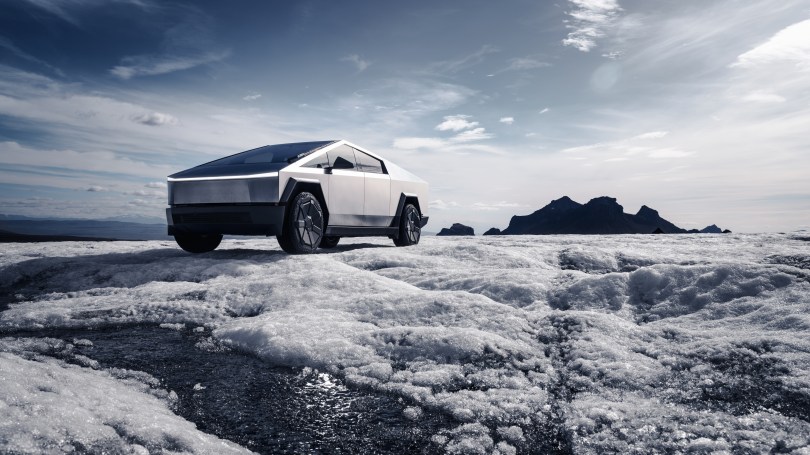
I test drove the Cyberbeast tri-motor on 3/22—insane ride, but there were a ton of obnoxious, bad people, probably paid protesters, so loud it was unreal, prayers to Tesla folks!
Enjoy the podcast!
I test drove the Cyberbeast tri-motor on 3/22—insane ride, but there were a ton of obnoxious, bad people, probably paid protesters, so loud it was unreal, prayers to Tesla folks—Ep 120 pic.twitter.com/QvDDcuDWOH
FOR MEDIA USE ONLY News media is welcome to use my material in connection with a story or article. By downloading any content I create, you understand and hereby agree and represent that: (1) you are a member of the news media; (2) use of the content is in connection with a story or an article appearing in newspapers, periodicals, digital publications or television; (3) all images and rights thereto remain the property Gail Alfar.; and (4) use of the image is not for publication covers, advertising, promotion or otherwise for commercial purposes. Furthermore, use of any and all images and content appearing on this page must each include the notice “Courtesy of Gail Alfar” Use of materials copied from this website is at your own risk. You must obtain prior written consent from Gail Alfar for uses that exceed the above parameters.
Austin, Texas. On Episode 119 of Gail’s TESLA Podcast on 𝕏: FSD tackles a tricky lot (supervised), and we look at some of Elon Musk’s quotes from tonight’s Austin all-hands meeting & I demo FSD basics!
Watch here:
Ep 119 of Gail’s TESLA Podcast on 𝕏: FSD tackles a tricky lot (supervised), Elon Musk’s quotes from tonight’s Austin all-hands, & I demo FSD basics! pic.twitter.com/9RiXeyayAP
FOR MEDIA USE ONLY News media is welcome to use my material in connection with a story or article. By downloading any content I create, you understand and hereby agree and represent that: (1) you are a member of the news media; (2) use of the content is in connection with a story or an article appearing in newspapers, periodicals, digital publications or television; (3) all images and rights thereto remain the property Gail Alfar.; and (4) use of the image is not for publication covers, advertising, promotion or otherwise for commercial purposes. Furthermore, use of any and all images and content appearing on this page must each include the notice “Courtesy of Gail Alfar” Use of materials copied from this website is at your own risk. You must obtain prior written consent from Gail Alfar for uses that exceed the above parameters.
Ride with Larry Goldberg in my Tesla Model Y Saphire—born in South Africa, Larry shares his story on an autonomous Austin drive.
We deliver flowers to a Tesla Service Center amid attacks & protests.
Ep 118 out now! Ride with @TeslaLarry in a Tesla—born in South Africa, he shares his story on an autonomous Austin drive. We deliver flowers to a Tesla Service Center amid attacks & protests. pic.twitter.com/bR3WOrpl6M
FOR MEDIA USE ONLY News media is welcome to use my material in connection with a story or article. By downloading any content I create, you understand and hereby agree and represent that: (1) you are a member of the news media; (2) use of the content is in connection with a story or an article appearing in newspapers, periodicals, digital publications or television; (3) all images and rights thereto remain the property Gail Alfar.; and (4) use of the image is not for publication covers, advertising, promotion or otherwise for commercial purposes. Furthermore, use of any and all images and content appearing on this page must each include the notice “Courtesy of Gail Alfar” Use of materials copied from this website is at your own risk. You must obtain prior written consent from Gail Alfar for uses that exceed the above parameters.
A Shocking Welcome: Tesla Owners Enter the Mardi Gras Maelstrom
Tesla Cybertruck owners, newly introduced as marshal vehicles in the Krewe of Orpheus Mardi Gras parade on March 3, 2025, in New Orleans, faced relentless and deeply disturbing attacks from spectators, exposing systemic failures by parade officials and NOPD. These Tesla owners, invited to escort Krewe of Orpheus marshals, endured unprovoked violence despite city ordinances prohibiting such actions since 1999. To gather their firsthand experiences, I added the participants to a dedicated chat group, providing raw, emotional insights for this article. I’m grateful to Josh ‘Pappy’ for clarifying the truck order, confirming @Chattybird0306 was also in Vehicle 5, ensuring accuracy for our story. The trauma echoes the city’s heightened security concerns following the devastating January 1, 2025, terrorist attack on Bourbon Street, where a truck was used as a weapon, killing 15 and injuring dozens—a tragedy many may not recall but which underscores the urgency of this incident.
Relentless Assault on Tesla Cybertruck Owners
Tesla Cybertruck owners faced relentless and heart-wrenching assaults during the Krewe of Orpheus Mardi Gras parade on March 3, 2025, far beyond mere bead-throwing, targeting invited participants in a new role. Since 2020, Tesla vehicles have served as marshal escorts for the Krewe of Orpheus, but 2025 marked the first use of Cybertrucks, a shift that may have fueled the hostility (CleanTechnica, February 20, 2020). Our hearts go out to CJP the Panda (@mrtimer2022) and his wife @CJPsWIFE, Tesla owners in Vehicle 2, who faced a chilling Nazi salute within the first minute at 6:38–6:39 PM, captured in screenshots from his video showing a man in yellow performing four repeated salutes directed at their Cybertruck.
EVIDENCE: SCREENSHOTS FROM CJP THE PANDA’S VIDEO, CHAT GROUP, MARCH 6, 2025
CJP the Panda, his wife and the Marshall in their vehicle also endured passionate booing and raised fingers around 7:02–7:03 PM, as seen in a side pillar camera screenshot setting a tone of unhinged hate.
EVIDENCE: SCREENSHOT FROM CJP THE PANDA’S SIDE PILLAR CAMERA, CHAT GROUP, MARCH 6, 2025
I Love Tesla, another Tesla Cybertruck owner in Vehicle 3, endured a harrowing 6:42–9:46 PM drive with his wife, calling it ‘the longest 3 hours of my life,’ with their flags broken, a beer can smashing their windshield at ~9:35 PM, and constant fear prompting their exit (chat group, March 5–6, 2025). Josh ‘Pappy’ and @Chattybird0306, Tesla owners in Vehicle 5, shared a gut-wrenching experience, with Josh reporting a video of a man in orange hitting his wife, Amanda, with beads at ~6:07 PM, shattering the B-pillar glass trim, berating passengers, and trying to break windows—yet failing to dent the truck, a testament to its durability that offered some solace amidst the terror.
Mr. Moonbound, a Tesla Cybertruck owner in Vehicle 4, faced ‘full body throws’ and window-bashing in front of House of Broel, suffering $7,000 in damage, including broken glass, leaving him shaken (X, @MrMoonBound, March 5–6, 2025). Winespring, another Tesla owner in Vehicle 4, described booing starting at 6:35 PM, escalating to ‘really bad’ by 7:40 PM, and captured a harrowing video of their Cybertruck under attack, with Marshal #4—a 10-year volunteer—begging over the radio, “WE ARE GETTING BEAT TO SH*T!!” and fearing a medical emergency if not removed.
> WATCH as Cybertrucks are under attack in the NOLA Mardi Gras Krewe of Orpheus Parade: Marshal #4 begs and pleads with NOPD, and Krewe Officials over his radio to get us off the route.
“WE ARE GETTING BEAT TO SH*T!! We are trying to get off the route!! All other cars have been… pic.twitter.com/VWcRVOGBth
Yet, she found fleeting kindness as kids gently added beads, offering a bittersweet contrast to the violence (chat group, March 5–6, 2025). The trauma these Tesla owners endured is unimaginable, and their resilience, alongside Marshal #4’s desperation, deserves our deepest empathy.
Timeline of Terror: From Tchoupitoulas to Gravier
The Tesla Cybertruck owners faced escalating violence along the Krewe of Orpheus Mardi Gras parade route on March 3, 2025, starting from Tchoupitoulas St and traversing Napoleon, St. Charles, and Gravier. Here’s a clear timeline of their harrowing experiences, highlighting their vulnerability as marshal vehicles newly introduced that year:
5:52 PM: Josh ‘Pappy’ and @Chattybird0306, Tesla owners in Vehicle 5, entered the parade route at Tchoupitoulas St, beginning their role as marshal escorts.
6:07 PM: Josh ‘Pappy’ and @Chattybird0306 faced a terrifying assault, with Josh’s video showing a man in orange attacking his wife, Amanda, with beads, shattering the B-pillar glass trim, berating passengers, and trying to break windows, prompting an early exit at Jackson (EVIDENCE: LINK TO X VIDEO ABOVE FROM @JEHAZEL75, MARCH 8, 2025; chat group, March 5, 2025).
6:35 PM: Winespring, a Tesla owner in Vehicle 4, reported attacks starting, with booing and initial hostility from spectators as they progressed along the route (chat group, March 5–6, 2025).
6:38 PM: CJP the Panda (@mrtimer2022) and his wife @CJPsWIFE, Tesla owners in Vehicle 2, entered at Tchoupitoulas St and immediately faced a chilling Nazi salute, captured in screenshots showing four repeated salutes by a man in yellow (EVIDENCE: SCREENSHOTS FROM CJP THE PANDA’S VIDEO, CHAT GROUP, MARCH 6, 2025)
6:39 PM: Winespring raised windows in Vehicle 4 due to escalating threats, marking the onset of severe hostility (chat group, March 5–6, 2025).
6:42 PM: I Love Tesla, a Tesla Cybertruck owner in Vehicle 3, began the route at Tchoupitoulas St with his wife, entering the parade as marshal escorts (chat group, March 5–6, 2025).
7:02–7:03 PM: CJP the Panda and @CJPsWIFE endured passionate booing and raised fingers, captured in a side pillar camera screenshot, approximately 23 minutes after the Nazi salute, further down the route (likely near St. Charles Ave) (EVIDENCE: SCREENSHOT FROM CJP THE PANDA’S SIDE PILLAR CAMERA, CHAT GROUP, MARCH 6, 2025; chat group/X, March 6, 2025).
7:09 PM: I Love Tesla entered St. Charles Ave, facing increasing threats as the parade progressed (chat group, March 5–6, 2025).
7:19 PM: I Love Tesla raised windows in Vehicle 3 due to escalating hostility, signaling heightened danger (chat group, March 5–6, 2025).
7:40 PM: Winespring reported attacks worsening in Vehicle 4, captured in her video of Marshal #4’s desperate radio pleas—“WE ARE GETTING BEAT TO SH*T!!” (chat group, March 5–6, 2025; EVIDENCE: LINK TO X VIDEO FROM @WINESPRINGCAFE, MARCH 8, 2025).
8:51–9:01 PM: Winespring pleaded to exit Vehicle 4, with Marshal #4’s urgent calls for help ignored by NOPD and Krewe officials (chat group, March 6, 2025).
8:52 PM: I Love Tesla requested police assistance in Vehicle 3, but received no support (chat group, March 5–6, 2025).
9:35 PM: I Love Tesla’s Cybertruck windshield was smashed by a beer can, intensifying their fear and prompting their exit (chat group, March 5–6, 2025).
9:39 PM: I Love Tesla exited Gravier St, stopping at Thalia St by 9:46 PM after a harrowing 6:42–9:46 PM drive (chat group, March 5–6, 2025).
9:45 PM: Winespring ended their route on the interstate, concluding a terrifying experience in Vehicle 4 (chat group, March 5–6, 2025).
9:56 PM: CJP the Panda and @CJPsWIFE exited via Calliope to I-10, ending their ordeal in Vehicle 2 after facing relentless hate from 6:38 PM (chat group/X, March 6, 2025).
This 5:52 PM–9:56 PM timeline maps the relentless violence these Tesla owners endured, underscoring their bravery and the systemic failures that left them vulnerable.
Public Hostility and Possible Motives
The hostility directed at these Tesla Cybertruck owners was fueled by anti-Musk sentiment and possibly broader political motives, including recent claims by Elon Musk on March 8, 2025, linking ActBlue-funded groups like Troublemakers, Disruption Project, Rise & Resist, Indivisible Project, and Democratic Socialists of America to Tesla protests, funded by figures like George Soros and Reid Hoffman Elon Musk’s claim on ActBlue. ActBlue, under investigation for illegal donations with seven senior officials resigning, may have indirectly influenced the parade’s hostility, though no direct evidence ties it to March 3, 2025, in New Orleans ActBlue turmoil. However, the groups Musk mentioned (e.g., Indivisible Project, DSA) have local chapters in New Orleans, and their activism could theoretically extend to parade protests, given their history of targeting Tesla Activists target Tesla. CJP the Panda (@mrtimer2022) and his wife @CJPsWIFE faced a Nazi salute at 6:38–6:39 PM, a chilling reminder of the hate these Tesla owners endured, and passionate booing with raised fingers around 7:02–7:03 PM further down the route (likely near St. Charles Ave; chat group/X, March 6, 2025). Winespring noted the crowd’s misconception—“they think Donald Trump is in our car”—and described ‘full body throws’ by 7:45 PM, captured in her earlier video of Marshal #4’s desperate pleas. Josh ‘Pappy’ and @Chattybird0306 reported the man in orange berating passengers with ‘unhinged hate and violence,’ with children encouraged to join, despite the parade’s ‘family friendly’ branding—a painful betrayal for these Tesla owners (chat group, March 5, 2025). A marshal in I Love Tesla’s Vehicle 3 admitted to ‘hiding a smile,’ suggesting ambivalence toward the Tesla owners’ plight (r/NewOrleans, u/jobles95, March 5, 2025). Reddit mocked them as outsiders aiming to ‘pwn the libs,’ reflecting political motives (r/NewOrleans, Othersideofbroad, March 5, 2025). X posts showed spectators pelting Cybertrucks, hinting at Antifa involvement, though unconfirmed (X, March 3–4, 2025). We feel profound empathy for these Tesla owners, who faced such unwarranted aggression simply for participating.
Police Inaction Amid Heightened Risk
Throwing objects at parade participants has been illegal since 1999, with a $250 fine per violation, yet NOPD failed to protect these Tesla Cybertruck owners during the Krewe of Orpheus Mardi Gras parade on March 3, 2025 (X, @3falling_PI, March 6, 2025). CJP the Panda (@mrtimer2022) reported ‘police did nothing,’ leaving him and his wife @CJPsWIFE vulnerable (chat group, March 5, 2025). I Love Tesla requested police help at 8:52 PM, but officers were ‘surprised’ at their 9:39 PM exit, offering no support (chat group, March 5–6, 2025). Josh ‘Pappy’ and @Chattybird0306 described ‘passive’ police despite urgent calls from 6:36–7:21 PM, during which Amanda was assaulted, with no intervention shown in Josh’s video (chat group, March 5, 2025). Winespring pleaded to exit at 8:51–9:01 PM, with Marshal #4’s desperate radio pleas—“WE ARE GETTING BEAT TO SH*T!!” and “WE’VE PUT OUT A CALL TO STATE POLICE!!”—ignored, as NOPD and Krewe officials left their Tesla Cybertruck under attack (chat group, March 6, 2025). An X post confirmed a parade officer standing idly by as violence unfolded (X, @WUTANGKIDS, March 4, 2025). Winespring, ‘traumatized,’ criticized the failure to protect even their 10-year volunteer marshal—a fellow Tesla owner’s ally (chat group, March 6, 2025). This inaction, following the January 1, 2025, Bourbon Street terrorist attack—where a truck killed 15 and injured dozens, a tragedy many may not recall—demands urgent investigation into why these Tesla Cybertruck owners were left so vulnerable.
Call for Change After the Cybertruck Carnage
The targeted violence against these Tesla Cybertruck owners—new marshal vehicles in the Krewe of Orpheus Mardi Gras parade on March 3, 2025—reveals a systemic failure by parade officials and NOPD to enforce ordinances and ensure safety. Winespring’s video of Marshal #4’s anguished pleas—“THEY ARE KILLING US OUT THERE!!!”—and Josh’s footage of Amanda’s assault, alongside CJP’s screenshots of four Nazi salutes at 6:38–6:39 PM and the booing incident around 7:02–7:03 PM, underscore the urgency of accountability (chat group, March 5–6, 2025). We extend our deepest empathy to Josh, Amanda, @Chattybird0306, CJP the Panda (@mrtimer2022) and his wife @CJPsWIFE, I Love Tesla and his wife, Winespring, Mr. Moonbound, and all affected Tesla owners, who bravely endured this trauma. They deserve justice and answers, especially in a city still reeling from the January 1, 2025, Bourbon Street attack. This incident calls for immediate accountability and reform.
Pre-parade Tesla Cybertrucks in the Krewe of Orpheus Mardi Gras parade, March 3, 2025Pre-parade Tesla Cybertruck Owners in the Krewe of Orpheus Mardi Gras parade, March 3, 2025Mr. Moonbound”s Tesla Cybertruck in pristine condition, rolling as a marshal vehicle in the Krewe of Orpheus Mardi Gras parade, March 3, 2025, before the attacks, with Mardi Gras decorations and marshals visible in the background.Gail Alfar, dedicated Tesla advocate and writer since 2020, continues to champion the resilience and innovation of Tesla owners.