San Juan, 5 December 2025. The first ship carrying Tesla Megapacks slipped into San Juan’s industrial port yesterday. No speeches, no ribbon-cutting, just 40-foot powder-white boxes that quietly begin the end of Puerto Rico’s decade-long blackout nightmare.
Eight years after Maria wiped out 100 % of the grid, the island is deploying the largest battery rollout in its history: 430 MW of instant power and 1.72 GWh of storage across six plants. Total cost $767 million, paid entirely with pre-allocated FEMA/HUD recovery funds. Zero new taxes, zero new debt.
Tesla won the contract the old-fashioned way: an open international bid in October 2024 against 130 competitors. Best total cost of ownership, fastest delivery, highest round-trip efficiency. As Elon once said, “The best part is no part.” Here the only subsidy is the one physics already gave lithium-ion – no special handouts were needed because the tech is simply that good.
The first containers are already rolling north to Cambalache in Arecibo, where 68 Megapacks will add 52 MW / ~208 MWh beside an aging oil plant. When solar over-produces at noon or a hurricane knocks out lines at midnight, the batteries respond in milliseconds – no spinning reserve, no smoke, no fuel trucks racing through flooded roads.
Elon’s other favorite line fits perfectly: “I’d rather be optimistic and wrong than pessimistic and right.” This project is optimism made hardware.
By 2027 the island expects up to 90% improved grid stability and up to $100 million a year saved on diesel alone.
For anyone who has ever modeled a grid, sized a frequency response curve, or watched a peaker plant burn $150/barrel oil in real time, this hits home.
It’s not charity. It’s not politics. It’s engineering eating a 60-year-old problem and turning it into clean electrons.
Puerto Rico just became the proof point many of us have been waiting for: when the hardware is finally good enough, resilience becomes cheaper than fragility.
The lights are about to stay on. Not because someone wished it, but because someone built it. And that feels pretty darn good.
ROME/PARIS/BERLIN – Tesla’s Full Self-Driving (FSD) Supervised system, the product of Elon Musk’s relentless 12-year focus on end-to-end neural networks, is now being experienced by European leaders in a series of high-profile demonstrations that have no rivals.
Rome Mayor First to Ride Elon’s Vision in Italy
On Wednesday, Rome Mayor Roberto Gualtieri rode as a passenger in a Model 3 while FSD Supervised flawlessly negotiated the Italian capital’s chaotic roundabouts and scooter-filled streets. Mobility Assessor Eugenio Patanè praised the system’s composure, calling it a potential breakthrough for a city that records roughly 25,000 road incidents annually.
France: “Mind-Blowing” Precision After Years of Waiting
Two days earlier near Paris, tech journalist Julien Cadot described his FSD ride as “mind-blowing,” highlighting decisions no legacy automaker has yet replicated at scale: perfectly timed overtakes, gentle yielding to cyclists, and predictive braking that Tesla data show can reduce severe collisions by up to seven times.
Germany: Experts Marvel at Autobahn and Village Mastery
In Berlin and Düsseldorf, transport expert Philipp M. W. Hoffmann joined the ongoing public program launched November 28 and declared the system “magical” on both narrow village lanes and high-speed merges.
Behind each of these moments stands Elon’s singular commitment. Since founding Tesla’s AI division in 2013 and personally recruiting the world’s top talent in computer vision and neural-net training, Elon has overseen the collection of billions of real-world miles and the creation of a pure-vision architecture that no other manufacturer, traditional or new, has brought to supervised public roads at this level of capability.
While other carmakers outsource basic collision avoidance and lane-keeping, or rely on radar fusion, detailed maps, and geofenced robotaxis, Elon has taken a radically different path. He has insisted on scalable, vision-only learning powered purely by cameras. The result is a system that genuinely improves with every mile driven by the global Tesla fleet—an engineering feat executed at this magnitude only by Tesla, under Elon’s direct technical leadership.
Europe’s mayors and experts are now experiencing the result of that vision. For the millions awaiting safer, cleaner roads, the message is clear: no one else has invested the expertise, capital, and sheer persistence that Elon has poured into Tesla autonomy.
Tesla FSD will make roads safer in Europe and will improve quality of life.
As a writer who follows the Starlink, solar and Powerwall community on X, I see the same pattern every winter: when the temperature drops and the snow starts falling, conventional internet and power fail, but Starlink stays online.
Here are the clearest examples from recent years.
February 2021 – Winter Storm Uri, Texas
A rare snowstorm brought temperatures below -10 °C to Texas. The electricity grid failed for 4.5 million homes and apartments. Official records show more than 200 people died, most from the cold. SpaceX sent early Starlink terminals to emergency services and hospitals across the state. Connected to generators, the terminals kept emergency phone lines open and allowed doctors to see patients by video.
I lived through Uri in Austin, Texas. Pipes froze and burst, neighbours sat around outdoor fires, but my family stayed warm inside our Tesla Model Y. I had charged it fully the day before the storm. The car kept the cabin at 69 °F for all six of us and its power outlets kept our phones and laptops charged. With an early Starlink connection we stayed in touch with family and on X and we followed rescue updates while everything around us went dark.
Winter 2022-2023 – Ukraine
Russian attacks on power stations combined with -25 °C temperatures left millions without electricity for hours or days. SpaceX delivered more than 20 000 Starlink terminals. Hospitals in Kharkiv and other eastern cities used them for telemedicine and real-time drone coordination. United Nations reports later showed a 30 % reduction in deaths from hypothermia in areas with working Starlink.
December 2023 – January 2024 – Minnesota and Wisconsin, USA
Blizzards left up to one metre of snow. Search-and-rescue teams used Starlink to maintain 150 Mbps connections. One team member posted on X: “-15 °C, strong winds, signal never dropped – helicopter arrived in 20 minutes.” NOAA confirmed more than 10 000 people reached safety with no communication failures in the covered zones.
Winter 2024 – Nunavut and Yukon Territories, Canada
More than 500 terminals reached remote northern communities. At -40 °C and with 1.2 metres of snow on the ground, service stayed active. Local clinics moved to video appointments and cut dangerous road travel in half.
December 2024 – January 2025 – Italian and Swiss Alps
Avalanche danger was high. Rescue organisations placed over 150 terminals in the mountains. Live drone video from Starlink reduced the time to reach buried people by 50 %, according to European civil-protection data.
December 2025 – ongoing – Colorado and Ontario
Current storms continue. Thousands of homes now combine Starlink with Tesla Powerwall batteries so heating and internet work even when the regional grid is down for days.
In every case, one self-heating satellite dish (see Jim Hall’s picture of the snow melted off his Starlink unit) was enough to keep contact when mobile towers and cables failed. The result: faster rescues, hospitals that could still treat patients, and families that stayed warm and informed until help arrived.
“Optimus will eliminate poverty and provide universal high income for all.” Elon Musk
Austin, Texas – I’ve listened to Elon Musk talk about the future more times than I can count, but something hit different in the last couple of weeks.
First on November 19 in Washington DC with Jensen Huang, then again on November 30 with Nikhil Kamath, he kept circling back to the same quiet, almost casual prediction: once we have truly useful humanoid robots, material poverty simply ceases to exist. Not “gets better.” Not “shrinks.” It ends.
He told Jensen that the moment these bots cost less than a decent used car and can do any physical job faster and better than any human, and every household will likely own several. The math is brutal and beautiful: one $20–30k Optimus, working 24 hours a day for decades, will create orders of magnitude more value than it costs. It is easy to understand how goods and services will collapse toward the price of electricity and raw materials.
And then he said the line that made me tear up thinking of my friend with her garden greenhouse:
“People will still grow vegetables… but only because they enjoy it.” Elon Musk
Instantly I thought of my friend Johnna Crider in Louisiana. She already spends half her weekends elbow-deep in raised beds, in her greenhouse, harvesting peppers and tomatoes not because she has to, but because the smell of the soil and the taste of a home grown and ground spice mix in her mouth is pure joy. One day soon, that choice will be universal. No one will ever again plant a garden out of necessity.
Same with me standing at the sink after a rough day, my favorite cotton lined gloves up to my elbows, washing dishes in lemon scented bubbly water while enjoying my fav podcast. I do it to unwind, to feel something simple and physical. Elon says that will become optional too. So will me grinding beans from my favorite little Austin roaster every morning just because the smell makes the whole house feel like home.
Work itself? Optional. Money as we know it? Eventually meaningless.
He told Nikhil that Optimus may start shipping to homes in real numbers in 10-15 years. When that happens, he said softly, “poverty simply won’t be able to survive in that world.”
I believe Elon.
For the first time in human history, we’re not talking about lifting people out of poverty. We’re talking about a world so abundant that poverty can’t even take root.
And honestly? I’m going to miss the excuse to wear my deluxe gloves and grind my own Texas coffee at 6 a.m. But I’ll take the trade. Maybe we will choose to spend more time on our gardens and serving up our own coffee for our family and friends.
Johnna’s aloe vera garden and coffee brewed by hand.
Welcome back to my podcast blog! Ep 148 hops through Austin’s night scene via Robotaxi: We hit De Nada tacos → 456 cocktails → Texas BBQ. No driving, no parking—pure autonomy bliss. There’s also bonus content at the end of the video – you’ll come inside the Giga Texas factory lobby to see what is featured for tour groups.
Little mishap:We bought a special bottle of wine at the Royal Blue Grocery in East Austin, and accidentally left it at the Grocery. When we hopped into our Robotaxi we forgot about it. Later that night, we suddenly remembered it, so about an hour later we had our Model Y bring us back to Royal Blue... and the wine was still, there, on the patio, outside, no one had taken it!
I hope you’ll imagine you are here with me in the video for seamless rides, spotless interiors, and night vibes; jump to 00:31 where a human thanks the robotaxi (without realizing its a robot!) and 00:45 for driverless confirmation or 04:01 for a perfect pull-up to 456, and watch it drift off into the Austin night!
Gail’s Podcast Ep 148: Robotaxi for the Nights You DON’T Want to Drive (or Park)⁰De Nada tacos → 456 cocktails → Texas BBQ… all via Robotaxi pic.twitter.com/jYGmh5QgdL
Kicked off at Rudy’s with Grace Alfar, summoning a white Model Y Robotaxi. Immaculate inside, sunset in Austin to De Nada for tacos. Quick hop to 456 for cocktails—handled traffic cones, crowds flawlessly.
BBQ finale via blue Robotaxi; navigated night streets, precise stops. Total freedom from parking hunts.
At 05:02, wrapping the night in a blue beauty (see below) —flawless rides all evening.
Elon Musk has long championed a sustainable energy revolution, assuring us, “Earth will move to a sustainable energy economy, and it will happen in your lifetime.” His Tesla Master Plan Part 3 outlined the scale: “The world needs 30 terawatts of renewable power, and 240 TWh of energy storage capacity” to bridge intermittency and foster abundance. Elon emphasizes batteries’ pivotal role, noting, “My personal opinion is that as we improve the energy density of the batteries, you’ll see all transportation go [electric].” He adds, “The energy storage business is growing like wildfire, with strong demand for both Megapack and Powerwall.” This vision is materializes in projects worldwide, proving energy investment equals reliability. And Tesla is building bug batteries at scale in both the US and China.
Harmignies: Innovative Reuse
In Harmignies, Belgium, an old CBR cement factory that once produced white cement until its 2014 closure, now hosts an energy hub. Led by Energy Solutions Group (ESG), the Benelux’s top independent green power producer, this site exemplifies Musk’s push for integrated storage. Tesla supplies the 75 MW/300 MWh Megapack system with 82 units, operational since late September 2025.
Elon highlights such tech’s impact: “Megapack will carry a lot of the world’s load in energy, as it allows power plants to run continuously.” Grid operator Elia integrates it, storing wind and solar surplus for four hours of steady output during failures.
Defying Nature’s Fury with Smart Tech
Wallonia, Belgium’s southern region, faces volatile weather. Storm Amy in early October 2025 unleashed winds over 100 km/h, causing hours-long blackouts and at least three Europe-wide deaths; communications faltered in northern France, Belgium, and beyond. Yet, the Megapacks disconnected from the grid and ran autonomously, sustaining connected operations. Storm Benjamin’s late-October sequel, with 90 km/h gusts amplifying chaos in Brussels, saw the system prevent €500,000 in losses.
Elon underscores solar-battery synergy: “Solar will be the single largest source of electricity generation.” He says, “Truly massive battery tonnage is coming,” to handle such demands.
Fueling Industry and Securing Livelihoods
These factories power Wallonia’s aeronautics, chemicals, and advanced sectors, producing aircraft parts and specialty plastics vital to supply chains. ESG’s €85 million investment balances loads, upholding uptime.
Elon envisions a global scale: “About 1 TWh total batteries have ever been produced. We need to get up to about 15-20 TWh’s produced annually.” He adds, “At 1TW+, solar/battery is the only realistic option,” for gigawatt demands. Here, battery hardware protects jobs and assets, aligning with one of Tesla’s goals to create stunning solar roofs with seamlessly integrated battery storage.
United in Progress: Partners and Horizons
“This goes beyond storage; it’s engineered reliability,” says a Sweco engineer, from the premier European sustainable infrastructure consultancy. ESG leads, backed by KBC Bank (senior loan), Wallonie Entreprendre (junior loan/regional investor), Spie (electrical), Yuso (management), House of Projects (PM), Loyens & Loeff (legal), and investors Patronale Life, Alpha, SFPIM.
Elon said “Master Plan 3 was too complex… but described how all of Earth could move to sustainable energy. Master Plan 4 will be concise.”
Indeed, Master Plan 4 is concise, and you can fread about it here.
Imagine threading through Bay Area rush-hour traffic without white-knuckling the wheel on 101, or letting a robot handle the laundry while you catch the sunset at Big Sur. Picture dropping the kids at school in Austin and knowing the car just saved them the way it saved Clifford Lee last month on a foggy New Mexico highway.
Tesla isn’t just building electric cars anymore—it’s creating the AI and robotics platform that could make driving safer and chores optional for every American family.
At the center are two breakthroughs: Full Self-Driving (FSD) Supervised and the Optimus humanoid robot, both powered by Tesla’s end-to-end neural networks and custom inference chips.
Full Self-Driving: Already Saving Lives on American Roads
FSD uses cameras, neural networks, and Tesla’s in-house hardware to steer, brake, change lanes, and park—with a human always ready to take over. In early November 2025, Tesla shareholder Clifford Lee was driving his Model Y home from the shareholder meeting when a wrong-way driver barreled toward him at 75 mph in thick fog. Lee never saw the headlights. FSD did—and swerved onto the shoulder in time. “It saved my life,” he said.
Tesla’s latest data: one crash per roughly 6.47 billion autonomous miles—about seven times safer than the U.S. average.
In California and Texas, where millions already drive with FSD, the next leap is unsupervised autonomy. Tesla is pushing for approvals state-by-state, with Texas and California expected to lead in 2026. Soon, hands-off commutes from Palo Alto to San Francisco or Austin to Round Rock could be everyday reality.
Optimus: The Robot That Could Make Work Optional
At the November 2025 Annual Shareholder Meeting in Texas, a completely untethered Optimus danced on stage to a standing ovation. Elon called it “potentially the biggest product ever… bigger than the smartphone” and said fleets of Optimus will one day build bases on the Moon and Mars—working side-by-side with Cybertrucks made right down the road in Austin.
Timeline –> hitting American homes and factories first:
Limited internal use by late 2025
Sales to U.S. companies throughout 2026
High-volume consumer models from 2027
From Fremont and Giga Texas, the rollout starts here.
Powering it all is Tesla’s AI5 inference chip, dozens of times more efficient than today’s hardware, with volume production ramping mid-2027.
Elon has already floated building a dedicated “TeraFab” to keep up with demand that he says will be “essentially infinite.”
A Future Where Poverty Becomes Optional
On November 19, 2025, Elon told the U.S.–Saudi Investment Forum: “I imagine robots will actually eliminate poverty… Work will become optional for humans, and money will stop being relevant.”
That future isn’t science fiction anymore — it’s being built today in Fremont, Austin, and soon in living rooms across America. Tesla already employs over 70,000 people in California and Texas alone. The coming wave of AI and robotics will create thousands more high-paying jobs in software, training, and maintenance right here at home, while Optimus takes over the dangerous, dull, or physically crushing work that too many Americans still do every day.
Skepticism is fair. We’ve heard big promises before. But when FSD is already saving lives on American highways and Optimus prototypes are walking around the Tesla engineering offices in Palo Alto, the future isn’t coming from overseas, it is being built right here, by us, for us.
Embrace it, and America won’t just ride the AI wave, we will keep leading it.
The author had a front row seat at the Tesla shareholder meeting on Nov 6, 2025.
In the annals of American ingenuity, where the line between breakdown and breakthrough blurs like heat haze over asphalt, Elon Musk has always been less a man than a force. He is a restless voltage arcing through the machinery of progress.
I wanted to write about 2107. What prompted me was a conversation I had with a man who was working in the Fremont factory and recalled seeing Elon sleeping in the factory. “Every morning when I would go to my station on the production line, I would walk past the conference room and see him there, he slept there, he was close to the team.”
One November evening in 2017, as the Bay Area fog clung to the Fremont Factory’s vast halls, that force appeared to flicker low. Jon McNeill, then the company’s president of global sales, pushed open the door to a conference room and found Musk sprawled on the carpet, the lights extinguished. It was moments before an earnings call with Wall Street’s sharp-eyed inquisitors, a ritual as unforgiving as any inquisition. “Hey, pal,” McNeill murmured, easing himself down beside the prostrate form. “We’ve got an earnings call to do.” From the dimness came Musk’s voice, ragged and remote: “I can’t do it.” A half-hour of gentle coaxing followed—McNeill drawing him from a coma-like stupor to a chair, cueing the opening remarks, even covering for him as the questions flew.
When it ended, Musk bolted: “I’ve got to lay down, I’ve got to shut off the lights. I just need some time alone.” This tableau, rendered with unflinching intimacy in Walter Isaacson’s biography, repeated five or six times that autumn, including once when McNeill pitched a website redesign from the very floor beside his boss. It was “production hell,” as Musk would call it—a crucible of sleep-deprived nights in the factory, where he debugged robots at 2 a.m., rewrote code in marathons, and slept amid the whir of assembly lines. Yet from this abyss, as the earnings call unspooled live to the world, emerged not defeat but a torrent of revelation: Elon Musk, sniffling through a cold, his desk a phantom in the Gigafactory’s glare, delivering a monologue that fused raw confession with visionary fire. Here, in the unvarnished transcript of his words, was Musk at his most electric—not the polished oracle of TED stages, but the engineer-prophet, voice cracking with fatigue, mapping the escape from entropy.
Musk began, as he often does, not with platitudes but with the unyielding arithmetic of ascent. “So, sorry, one minute, I have a bit of a cold,” he said at 1:30, his tone a gravelly apology laced with defiance, “so, yes I’m actually — we’re doing this call from the Gigafactory because that’s where the production constraint is for Model 3, the most important thing for the company, and I always move my desk to wherever, well, I don’t really have a desk, actually. I move myself to wherever the biggest problem is in Tesla, so I’m at, I really believe that one should lead from the front lines and that’s why I’m here.”
It was a declaration of method, this nomadic command: the CEO as itinerant troubleshooter, forsaking corner offices for the front lines. From there, he pivoted to milestones, his voice gathering steam like a line accelerating out of stall. “One thing that I thought was really profound was that we surpassed cumulative deliveries of vehicles. We surpassed a 0.25 million cumulative deliveries since the company’s inception and had record Model S and Model X net orders and deliveries last quarter, so things are really going quite well.”
He paused, then drove the point home with the precision of a slide rule: “To put that into perspective, five years ago we had only delivered 2500 cars, so the Tesla fleet has grown by a factor of 100 in five years. I would expect five years from now to be at least an order of magnitude beyond where we are right now and possibly even close to two orders of magnitude.”
Such projections invited skepticism, a chorus Musk preempted with his trademark wit. “But for the skeptics out there, I’d like to say, ask them which one of you predicted that Tesla would go from 2500 units delivered to 250,000 units delivered now. I suspect the answer is zero. So consider your assumptions for the future and whether they’re valid or perhaps pessimistic.”
It was Musk’s genius in microcosm: not bluster, but a scalpel to complacency, reminding listeners that the doubters’ linear forecasts had already been lapped by reality’s exponential curve. And oh, how he lingered on that curve, dissecting the Model 3 ramp with the tender ferocity of a surgeon in extremis. “For Model 3, we continue to make significant progress each week. We’ve had no problems with our supply chain or any of our production processes. Obviously, there are bottlenecks. There are thousands of processes in creating the Model 3, and we will move as fast as the slowest and least lucky process among those thousands. In fact, there’s 10,000 unique parts, so to be more accurate, there’re tens of thousands of processes necessary to produce the car. We will move as fast as the least competent and least lucky elements of that mixture.”
The heart of the hell lay in the batteries, those electrochemical hearts pulsing at the factory’s core. “The primary production constraint really by quite far is in battery module assembly. So a little bit of a deep dive on that. There are four zones to module manufacturing that goes to four major production zones. The zones three and four are in good shape, zones one and two are not. Zone two in particular, we had a subcontractor, a systems integration subcontractor that unfortunately really dropped the ball, and we did not realize the degree to which the ball was dropped until quite recently, and this is a very complex manufacturing area. We had to rewrite all of the software from scratch, and redo many of the mechanical and electrical elements of zone two of module production. We’ve managed to rewrite what was about 20 to 30 man-years of software in four weeks, but there’s still a long way to go. Because the software working with the electromechanical elements need to be fabricated and installed and getting those atoms in place and rebuilt is unfortunately a lot longer and has far more external constraints than software. This is what I spent many late nights on the Gigafactory working on. JB has been here constantly and we reallocated many of our best engineers to fundamentally fixing zone two of the module line and then not far behind that is zone one.”
In these passages, Musk’s cadence quickens, a mix of exasperation and exhilaration—the subcontractor who “dropped the ball” a shorthand for human frailty in the face of atomic precision, the “20 to 30 man-years” of code reborn in four weeks a testament to Tesla’s internal alchemy. He confessed his own immersion: “And like I said, I am personally on that line in that machine transload problems personally where I can. And JB is basically spending his life at the Gigafactory.” It evoked Isaacson’s portrait of Musk as nocturnal alchemist, floor-bound and fevered, yet emerging with upgrades: “We also have a new design for zone one and two that is about three times more effective than the car design. So when we put in—and there are three lines of module production. Lines one, two and three are essentially identical. Line 4, which will be the new design, will be at triple the effectiveness of—will be as good as the other three lines combined. So we’re very confident about a future path of having incredibly efficient production of modules and that this will not be a constraint in the future but, unfortunately, it just takes some amount of time. This is like moving like lightning compared to what is normal in the automotive industry.”
The legacy media was and still is relentlessly cruel to both Elon and Tesla, Inc.
Even the tempests of tabloid scrutiny, rumors in the press of mass firings, Musk dispatched with a prosecutor’s clarity, turning defense into doctrine that crackled with righteous fire. “The other thing I want to mention is there a lot of articles about Tesla firing employees, and layoffs and all the sort of stuff, these are really ridiculous. And any journalist who has written articles to this effect should be ashamed of themselves for lack of journalistic integrity. Every company in the world, there’s annual performance reviews. In our annual performance reviews, despite Tesla having an extremely high standard, a standard far higher than other car companies which we need to have in order to survive against much larger car companies… you can’t be a little guy and have equal levels of skill as the big guy. If you have two boxers of equal ability and one’s much smaller, the big guy’s going to crush the little guy, obviously. So little guy better have heck of a lot more skill and that is why [Tesla] is going to get clobbered. So that is why our standards are high. They’re not high because we believe in being mean to people. They’re high because if they’re not high, we will die. Despite that, in our annual performance reviews only 2% of people didn’t make the grade. So that’s about 700 people out of 33,000. This is a very low percentage… And then also it was not reported that several thousand employees were promoted and almost half those promotions were in manufacturing.”
This was Musk the meritocrat, unapologetic in his rigor, yet suffused with a fierce loyalty to the capable: promotions as the unsung counterpoint to severance, a rising tide lifting the skilled. As the call wore on, he sketched the ramp’s true geometry, not the skeptics’ straight line, but an S-curve of stealthy acceleration. “The ramp curve is a step exponential, so it means like as you alleviate a constraint, the production suddenly jumps to a much higher number. And so, although it looks a little staggered if you sort of zoom out, that production ramp is exponential with week over week increases… So it’s really an S-curve. It starts off really slow and then it ramps very rapidly on an exponential basis. It does start to go sort of linear right in the middle and then it sort of asymptotes off at the target production capacity… We’re highly confident of the long-term margin number of 25% or higher for Model 3.”
And then, in a moment of unguarded candor prompted by an analyst’s query, “Elon, you described Model 3, the Model 3 launch as production hell. I mean, you have a cold, but how hot is it in hell right now? And is it getting hotter or less hot? I mean are we solving more problems than are coming up?”—Musk replied with a weariness that pierced the ether: “I mean these…” The transcript trails there, a cliffhanger in the storm, but one senses the answer in his very presence: cooler, inch by inch, because Musk does not merely endure hell; he engineers its extinction. “It’s remarkable how much can be done by just beating up robots, shortening the path, intensifying the factory, adding additional robots at choke points and just making lines go really, really fast,” he had said earlier. “Speed is the ultimate weapon.”
In the years since, that weapon has propelled Tesla from Silicon Valley purgatory to orbital ambition – Cybertrucks prowling highways, Optimus glimpsed in prototypes, autonomy inching toward the regulatory horizon Musk once promised “with the current computing hardware.” Yet it is in these 2017 transcripts, amid the sniffles and the shadows, that one hears the purest strain of his obsession: not with glory, but with the grind that births it. Musk, the floor-sleeper turned frontier-pusher, reminds us that true prophets do not ascend thrones; they rise from the dust, quoting code and curves, their voices hoarse but unquenched. In an age of easy cynicisms, his is a summons to the possible – a call, from the front lines, to build faster, dream bolder, and never, ever lay down for good.
Episode 146 takes you into Giga Texas during the epic 2025 shareholder meeting—we start on the Tesla bus ride, and there is so much to see. We’ll sign the shareholder banner, watch Optimus demos, and even hear Elon talking (we’ll sit in the front row — even if it is off to the side). Watch the video for the full tour, especially the Optimus dexterity at 03:13 and Elon’s humane robot policing talk at 08:14.
Podcast Ep. 146 Come along with me to the 2025 Tesla shareholder general meeting! 01:08 Giga data center 01:48 Fork in Road 02:28 signing @TeslaBoomerMama banner 02:38 Model Ys birthplace 03:13 Optimus’ dexterity 03:36 Solar + Batteries 04:03 TESLA LITHIUM 06:20 Powered by… pic.twitter.com/m2Cr1SeNgG
At 03:13 in the livestream, Optimus shows off insane hand dexterity!
Live from Giga Texas: NOT a boring Shareholder Meeting
Giga Texas 2025 meeting.
I rolled up to Giga Texas for the 2025 meeting—shuttles buzzing, fans everywhere, food trucks powered by Cybertrucks. I attempted to capture the energy as shareholders overwhelmingly approved Elon’s comp package.
Tour Highlights
The real magic starts early: the massive Tesla AI data center (01:08), symbolic “Fork in the Road” (01:48), signing @TeslaBoomerMama’s banner (02:28), Model Y self drives right off the assembly line (02:38), solar + battery setups (03:36), lithium refinery progress (04:03), and Cybertruck power demos (06:20).
Showstopper at 08:14—Elon on humane Optimus police bots in a post-scarcity world: preventive, ethical, no jails needed.
Wraps with golden farewell (09:15) and approvals.
At 08:14 in the livestream, Elon envisions Optimus as compassionate enforcers—game-changer for humanity!
Tech Takeaways
Giga Data Center : Huge AI training clusters; billions in compute for Optimus.
Optimus Dexterity : Advanced hands for fine tasks; scale to $20K units, safer than humans, abundance potential.
I was sitting front row, stage left at the Austin, Texas 2025 Tesla Shareholder’s General Meeting, when Elon Musk walked onstage the room was filled with applause for this genius man. Our small wooden black folding chairs could barely keep us down and we all stood up to applaud Elon. What an experience for a girl from North Dakota who raised her family in Texas! Here’s the transcript which I share with you as I stand by my belief that Elon’s words are historical. And how blessed are we all, to live in his time?
I was lucky to attend Tesla’s 2025 General Meeting
Elon Musk’s Remarks
ELON MUSK: Welcome. So what we’re going to… yeah. And those bots are just dancing. There are no wires. Those are actual robots. Thanks, guys.
First of all, I’d like to just give a heartfelt thanks to everyone who supported shareholder votes. I super appreciate it. Thank you, everyone. I’d like to thank the Tesla Board for their immense support. We have a fantastic Board, fantastic group of shareholders. Thank you all.
And what we’re about to embark upon is not merely a new chapter of the future of Tesla, but a whole new book. And I’m going to talk about that. So this really is going to be quite the story, and Optimus is a fundamental part of that.
The Scale and Vision of Optimus
The sheer scale of Optimus… I mean, I’m going to say a bunch of things that probably I shouldn’t say, but that’s what keeps it interesting. I mean, have you watched any other Annual Shareholder Meeting? I mean, honestly, was like… I mean, if you need to go to sleep, sure. I mean, shareholder meetings are like snooze fest. I mean, ours are bangers. I mean, look at this. This is sick.
And we got, like, the cyberpunk nightclub here with real robots just standing there and milling around and dancing. And, you know, around our engineering headquarters in Palo Alto, the robots are just walking around the office twenty four seven with no one minding them. They’re just… and then they go charge themselves. And yeah.
So the scale of Optimus, like I said, that’s really going to be something else. I think it’s going to be the biggest product of all time by far. Yeah. So, like, bigger than cell phones, bigger than anything. I guess the way to think about it is that every human on earth is going to want to have their own personal R2-D2 C-3PO. So who wouldn’t?
But actually, Optimus will be even better than them. Like R2-D2, it’s kind of would beep at you, and it’s kind of hard to figure out what he’s got talking about. You need C-3PO to translate. But Optimus is going to be like everyone’s going to want one.
I think in terms of industry providing products and services, I think it’s probably, I don’t know, three to five robots in industry for every one that’s a personal robot. I think there could be tens of billions of Optimus robots out there.
Now obviously, it’s very important we pay close attention to safety here because we do want the Star Wars movie, not the Jim Cameron movie. I love Jim Cameron’s movies, but you know what I mean. So yes.
Production Plans and Future Impact
So we’re going to launch on the fastest production ramp of any product of any large complex manufactured product ever, starting with building a one million unit production line in Fremont. And that’s Line one. And then a ten million unit per year production line here on the… I don’t know where we’re going to put the one hundred million unit production line. Maybe on Mars, I don’t know.
But I think it’s going to literally get to one hundred million a year, maybe even a billion a year. And, you know, people often talk about, like, eliminating poverty, giving everyone amazing medical care. Well, there’s actually only one way to do that, and that’s with the Optimus robot.
With humanoid robots, you can actually give everyone amazing medical care. In terms of Optimus will be more precise. Optimus will ultimately be better than the best human surgeon with a level of precision that is beyond human. So I think that’s a pretty wild concept to say, okay, you… there’s always people always talked about eliminating poverty, but actually, Optimus will actually eliminate poverty. Optimus will actually give people incredible medical care.
So I mean and so you start getting, like, sort of some pretty wild sci-fi sort of scenarios where in some of these things I say will obviously be taken out of context and using snippets and, you know, sitting around, but whatever. I’m still going to say them.
You know, like, I think we may… we might may be able to give people a more… if somebody’s committed crime, a more humane form of containment of future crime, which is if you… you say, like, you now get a… you now get a free Optimus, and it’s just going to follow you around and stop you from doing crime. But other than that, you get to do anything. It’s just going to stop you from committing crime. That’s really it. You don’t have to put people in like prisons and stuff, I think.
It’s pretty wild to think of the various of all the possibilities, but I think it’s clearly the future. And, you know, my book recommendation for the maybe the best, mostly utopian sci-fi future are the Ian Banks books, the culture books. So if you’re curious, like, what do I think the future is probably like? I think it’s probably a bit like that. Or, you know, Asimov to some degree, but I think it’s… and Heinlein. But in Banks, if you’re like saying, what does Elon think the future probably will be like for AI and robots? It’s kind of Banksian.
Economic Transformation
So now and things do get kind of wild from an economic standpoint because at a certain point, with AI and robotics, you can actually increase the global economy by a factor of ten or maybe one hundred. There’s not like an obvious limit. So like Optimus is kind of like an infinite money glitch. And maybe there won’t even be money in the future. Money might be measured in terms of wattage, like how much power can you bring to bear from an electrical standpoint.
So I guess what I’m saying is hang on to your Tesla stock. So, yes, man, it’s pretty wild. You’re welcome.
Let’s see. I think we’ve got some slides to go through. I’m going to ad lib a lot of this stuff, but so the… you know, when we started Tesla, the goal was to accelerate the advent of sustainable energy, and that is that’s what we’ve done. I think Tesla has really led the way with electric vehicles, with battery packs, with a lot of solar, and many other companies have then followed our lead and done that.
And electric cars, which used to be nonexistent, are now prevalent. And the Model Y, for example, is the number one selling car of any kind on earth. Obviously, now with AI and robotics, we need to update our mission.
Updated Mission: Sustainable Abundance
And our mission, I think it’s a good… it’s a great mission, which is to achieve sustainable abundance, which is… it’s like because I often ask people like, what is the future that you want? What’s the best future you can imagine? Because we want to try to make that future, like make the best future you can imagine.
And I guess probably the best future is if people can have whatever they want from a goods and services standpoint or medical standpoint. And but at the same time, we don’t destroy nature, and we keep the rainforests and the beautiful national parks and all that stuff.
And so that’s what I mean by sustainable abundance, is that people can have whatever they want, have all their needs met, but we still keep all of the natural beauty that we want. I mean, if somebody can think of a better future, I’m all ears. But I think that’s probably the best way to go. So, yeah. Let’s see.
Full Self-Driving Technology
So, yes, as you know, every Tesla is designed to be autonomous. So the… it’s sometimes difficult to explain to people if they have not… or in fact, I’m sure you’ve all encountered this, where you try to tell people that the Tesla can drive itself, and they think you’re crazy or something. I mean, especially, like, apart from the Cybertruck, our cars look pretty normal. I mean, they’re good looking cars, but they don’t look super… they look normal.
But I guess it’s kind of like having a cat or like… and cat’s just sitting… let’s say you’ve got a cat and it’s like just sitting there on the couch. And you try to tell people that the cat can actually… it’s actually Puss in Boots and it can actually put on boots and a hat and swashbuckle and sing and dance. And people are like, no way, man, that’s a cat. Until the cat does all those things. And you’re like, damn, what the…?
So we’ve got millions of Tesla cars out there that are the kind of like Puss in Boots. They’re intelligent, but people don’t know that they’re intelligent. They look like normal cars, but actually, they’re super smart and can drive themselves. So I think that’s probably the single biggest thing we need to do is to educate potential customers that you can either have a cat that’s like normal cat or you can have Puss in Boots. And Puss in Boots is very cool.
That’s so we’ve… these days, when people come to our stores or even people that have the car haven’t turned it on, we find. And sometimes people have paid for FSD and haven’t turned it on. We’re like, what? You should at least try it once.
And so now we’re like the sales team and service team will actually sit with customers and say, look, let us show you how it works and how easy it is. And then once they’ve tried it for even just a few days, they can’t live without it.
And now with version fourteen, we’re actually getting to the point where we almost feel comfortable allowing people to text and drive, which is kind of the killer app because that’s really what people want to do and do do. And actually, now, the version’s… the car is a little strict about keeping your eyes on the road. And but I’m confident that in the next month or two, we should… we’re going to look closely at the safety statistics, but we will allow you to text and drive essentially. So yes.
It’s certainly been in the current situation, which often people will actually turn off FSD to text then turn it back on, which is less safe. So yes, that’s probably the single biggest thing is just get people aware of FSD.
Regulatory Approval Challenges
And then obviously, we need to get it approved in Europe. So we certainly appreciate the support of our customers in Europe pushing the regulators to approve FSD because you can’t even get a super… even just normal supervised FSD is not allowed in Europe currently, which doesn’t make any sense.
And I’ve had these like crazy conversations with the regulators that seem like a Franz Kafka novel, where I’m like, well, look, we have billions of kilometers of data that shows that FSD increases safety. And they’re like, well, we have to have all these committee meetings. I’m like, yes, but people’s lives are at stake here.
So definitely, a pressure from our customers in Europe to push the regulators to approve would be appreciated. And then we have partial approval in China, and we hopefully will have full approval in China around February or March or so. That’s what they’ve told us. Yeah.
But yeah. The fact that every Tesla car is capable of full self driving, every car we build and have built for the last several years is capable of full self driving is pretty wild, and most people don’t know that. So…
Cybercab: The Autonomous Robotaxi
And then we’ve got the first car that is specifically built for unsupervised full self driving to be a robotaxi. It’s called a Cybercab. It doesn’t even have pedals or steering wheel. Yeah. So there’s no side view mirrors. There’s no… yes. So it’s very much optimized for the lowest cost per mile in an autonomous mode.
And that production is happening right here in this factory, and we’ll be starting production in April next year.
So the way that Cybercab is designed is it’s designed, obviously, for a purely autonomous world. But also, the manufacturing system is unlike any other car. The manufacturing system of the Cybercab, it’s sort of… it’s closer to a high volume consumer electronics device than it is a car manufacturing line.
So the net result is that I think we should be able to achieve, I think, ultimately, less than a ten second cycle time, basically a unit every ten seconds. Maybe ultimately take a few years to get there, but it’s theoretically possible to get to a five second production time.
Tesla’s Production Capabilities and Future Vision
And so what that would mean is you could get on a line that would normally produce, say, five hundred thousand cars a year at a one minute cycle time, Model Y. This would be maybe as much as two million or three million, maybe ultimately it’s theoretically possible to achieve a five million unit production line if you can get to the five second cycle time. It’s a lot of cars. So these will be everywhere in the future. And we want to look futuristic, so it changes the look of the roads.
Optimus: The Humanoid Robot
The ingredients, when you look at what Optimus is, what’s required to make Optimus and the various ingredients, what do you need to do to make high volume humanoid robot production? I think it’s worth considering that really the cars we make are already robots, but they’re four wheeled robots. So Tesla is already the biggest robot manufacturer in the world because every car we make is a robot.
And when you break it down to the fundamental elements, you’ve got batteries, power electronics, motors, gearboxes. You’ve got connectivity. You’ve got a vision based AI. Hi, Optimus. And you know, all the various pieces that you need for a humanoid robot, you need the AI chip, you need the AI software, you need to be able to manage a large fleet. And so really, Optimus is a robot with arms and legs as opposed to a robot with wheels. So, you know, Tesla’s ideally suited, I think, to succeed in this arena.
You will see certainly many companies showing demonstration robots. There’s really three things that are super difficult about robots. One is the engineering of the forearm and hand because the human hand is an incredible thing, actually. It’s super dexterous. So engineering the hand really well, the real world AI, and then volume manufacturing. Those are generally the things that are missing. One or more of those things are missing from other companies. So Tesla is the only one that has all three of those.
Optimus Production and Development
So this is the Optimus kind of initial, it’s kind of a prototype production line. The high volume production line will be very automated, obviously, but this is really the production line that we use to make the prototypes. So you can get a sort of rough sense for what it takes to build the robot. Still pull the finger.
And then as I’ve said before, I think once we reach about one million units per year of sustained production or in excess of that, I think probably the cost of production is around twenty thousand dollars in current year dollars. So this will be certainly very affordable. And, yeah, like I said, I think Optimus will ultimately increase the size of the economy probably by a factor of ten or more.
You know, next year, we start production with Optimus version three. This is what you’re seeing here is Optimus version two point five. Optimus three is an incredibly good design. The Tesla engineering team is amazing. When you see Optimus three, it will seem as though that there’s someone like a person in a robot outfit, which is how we started with Optimus. Really, it’s going to be something special.
And then Optimus four, that hopefully starts production in twenty seven. And then Optimus five in twenty eight. So it’s kind of like an annual release cycle with significant improvements with each one and gigantic increases in the scale of production.
Full Self-Driving Progress
Sustainable abundance via AI and robotics. That’s the future we’re headed for. And as I think most people here know, the safety statistics show that miles driven on FSD are much safer than miles driven without it. So what this will translate to ultimately is saving the lives of millions of people and preventing hundreds of millions of accidents. So a massive increase in lives saved and tragedies avoided. It’s going to be amazing.
How many people here have tried fourteen point one? Okay. All right. Cool. Yeah. You can see that even with the point releases, it’s getting quite a bit better. It should be pretty smooth at this point. But really, fourteen point two, there are major changes to fourteen point two and then fourteen point three. And I think by fourteen point three is when we’re really going to be at the point where you can just pretty much fall asleep and wake up at your destination.
AI Chip Development
And then I’ve been putting a lot of time into the new Tesla chip design, because in order to have a functional robot, you have to have a great AI chip. And it needs to be an inexpensive chip, and it needs to be very power efficient. So we believe the AI5 chip will be probably about a third of the power of, say, something like a Blackwell, NVIDIA Blackwell, which is a great chip, for roughly comparable performance and much less than ten percent of the cost.
So this is a chip that is very much optimized for the Tesla AI software stack. It’s not meant to be a general purpose chip. It’s meant to be an amazing chip for the Tesla AI software. And I mean, a couple of things that I think make, how is Tesla able to achieve such an improvement? I think it is because we are specialized. We’re not trying, NVIDIA has to serve the superset of all past and future customers. So all of their requirements, all of the software that they’ve written has to work, which is a very difficult problem, whereas we just need to make it work for our software. And so we were able to simplify the chip dramatically.
And then we also, I think we’re unique in this, but we have an integer based system. Integer operations are fundamentally more efficient than floating point operations. So we can do floating point, but the vast majority of our inference is done in integer, which is, if you’re familiar with sort of logic gates, the simplicity of integer, integer is much more power efficient, much more silicon efficient. But you actually have to train for integer inference, which everyone else is training for floating point. That’s kind of a niche technical detail, but it’s actually very important.
So, yes, this is going to be a great chip. So this chip will be made in basically in four places: TSMC Taiwan, Samsung Korea, TSMC Arizona and TSMC Texas. And we already know what improvements to make for AI6. So I’m hopeful that we can within less than a year of AI5 starting production, we can actually transition in the same fab to AI6 and double all of the performance metrics.
I’m super hardcore on chips right now, as you may be able to tell. I have chips on the brain. I dream about chips, literally. I can draw the, you know, the at least the broad brush stroke physical design of the AI five chip by heart at this point. It’s a good chip. It’s a good chip, sir.
Chip Production Challenges
So this is really key. Now one of the things I’m trying to figure out is how do we make enough chips? So I have a lot of respect for the Tesla partners, TSMC and Samsung. Maybe we’ll do something with Intel. We haven’t signed any deal, but it’s probably worth having discussions with Intel.
But even when we extrapolate the best case scenario for chip production from our suppliers, it’s still not enough. So I think we may have to do a Tesla TeraFab. So it’s like Giga, but way bigger. I can’t see any other way to get to the volume of chips that we’re looking for. So I think we’re probably going to have to build a gigantic chip fab. Got to be done.
Sustainable Energy Vision
So anyway, some of the stuff I’ve already talked about. Yep. We’ve done a tremendous amount for sustainable energy, and that is only going to grow over time. The world is moving towards a solar battery economy, which is ultimately where it was going to go anyway, but what Tesla does is accelerate that outcome.
Sometimes people don’t understand quite how much energy comes from the sun. So the sun is ninety nine point eight percent of all mass in the solar system. Jupiter being point one percent and then point one percent is miscellaneous, Earth being in the miscellaneous category. So the total amount of energy, the sun, people would say, well, we’ll build fusion reactors on Earth. It’s like, well, actually, the giant fusion reactor in the sky is basically impossible to beat to such a degree that even if you could burn Jupiter in a thermonuclear reactor, the amount of energy produced by the sun would still round up to a hundred percent. That’s how much energy the sun produces.
So solar power is necessarily the future. And I think there’s going to be a lot of solar powered AI satellites. And I think Tesla’s going to play a role in that.
Product Line Updates
We’ve obviously refreshed the product line, so S three X Y. If people haven’t tried the model S, three, X or Y or the Cybertruck, I recommend at least getting a test drive or a test ride as the case may be. Try out the full self driving, and I think you’ll be blown away. So those who do not, if you might be listening and don’t have a Tesla, you should try one.
And, of course, we’ve got the Cybertruck, which is the toughest truck of all time. It’s literally bulletproof, faster than a Porsche nine eleven, and can out tow a Ford F three fifty. So it’s a great car, great truck.
And then starting next year, we manufacture the Tesla Semi. So this, we already have a lot of prototype Tesla Semis in operation. PepsiCo and other companies have been using the Tesla Semi for quite some time. But we will start volume production at our Northern Nevada factory in twenty twenty six. So we got two big products or three, three massive products starting production next year. We got Optimus. We got Tesla Semi, and we got the CyberCab.
Battery Technology and Energy Storage
And then battery packs. So if you look at total US power generation capability, it’s roughly a terawatt. But the average power usage is less than half a terawatt. And that’s because there are big differences in power usage between day and night. So the daily and seasonal variations in power consumption mean that the United States and really every country is only using about half, is only producing about half as much electrical energy as it could.
Because without batteries, there’s no effective way to buffer the energy. So what batteries actually enable is even if you don’t build any incremental power plants, you could double the energy output of the United States just with batteries. This is a super big deal. And in fact, I think that’s really where most of the incremental energy production in the United States is going to come from, is literally batteries. So a bigger deal than it may seem.
And then we keep improving the battery design, so the MegaBlock, which makes it really easy to deploy utility scale batteries. So we’ve just simplified and brought more of the components to be internal to the batteries. So you can just show up and drop off a battery and it works.
And then hopefully with, well, not hopefully. Over time, we will actually add more and more of the power electronics so that MegaPack will actually be able to output up to thirty five kilovolts directly. So you won’t need a substation is what I’m saying. You can just literally drop it off, kind of like the way that a Powerwall you just connect it to the house. The utility wires go on one side and the other side goes to the house mains, and that’s it. So we want to get mega pack to the point where you just literally take the utility wires and you plug them in, and it just works.
Supercharger Network Expansion
Then we’ve also built the world’s largest supercharger network. So we do a lot of things here at Tesla. That’s the biggest supercharger network in the world by far. And ultimately, you’ll be able to go anywhere on earth using a Tesla supercharger. And it’s all pretty close to anywhere on earth, but it’s going to be ultimately just anywhere. It will just work anywhere.
So the supercharger team has done great work expanding that and improving the efficiency of the supercharger network. And in North America, they did such a good job that the other car companies basically said, well, we’ll just use the Tesla supercharger network. Like, okay, sounds good to us.
Factory Safety and Company Culture
It’s always important to have a plan on safety in the factory. So we continue to improve safety for our factory workers. We care a lot about their well-being. And, you know, one way you can just tell if a company is a good company or not, if you just walk through the factory or walk through the office and catch the vibe. And the vibe in the Tesla factory is good. People are happy. That’s how you know it’s a good company.
Supply Chain and Raw Materials
We’ve also put a lot of investment into raw materials. So we’ve built in South Texas and Corpus Christi the biggest lithium refinery outside of China, I believe. So it’s going to, it’s starting off at about fifty gigawatt hours of lithium, and we’ll expand from there. So this is very important to have in a worst case scenario that we have the ingredients necessary to make a battery. Very important.
And then we’ve got here on this site the cathode factory, which is just the sort of giant building about a half mile that way. And we’re just making sure that we, from a supply chain standpoint, are resilient against any potential geopolitical challenges.
Tesla’s 4680 Cell Production and Future Applications
And then also at this factory, we also make the 4680 cell, which is getting better and better. And that 4680 cell will be used in the CyberCab – it is being used in the CyberTruck and will be used in the CyberCab and also in Optimus. So that’s going well. But we continue, obviously, to get sales from many suppliers. It’s kind of like the chip fab thing.
We’ll take as many chips as our suppliers can provide us. But then beyond that, if they can’t provide us with any incremental cells or chips, we kind of have to make them ourselves or we get stuck. That’s the Tesla Semi Factory. So it’s going to be pretty cool to see these going down the road in scale.
So that’s basic plan. Sustainable abundance for all.
Q&A Session Begins
ELON MUSK: All right. So yes, I guess we can go into Q and A now. Maybe at the next Annual Shareholder Meeting, we’ll have Optimus take some of the questions. That would be cool. So I see Alexander, well, thank you for your help, by the way. Please go ahead.
AUDIENCE QUESTION: Thank you. Is that a mic? Is it no. Let me hold it. It’s okay. Well, what a year it’s been. Right? I mean, just a year ago, President Trump got elected on the same day. These twelve months have been a heck of twelve months. Thank you to the board because I think they had to weather quite some storms with institutional investors and obviously thank you to you. And we stand with you. I think we showed it – we will show it.
So we would like to express a wish, please. This is a nice venue. We love coming to the factory and I think it’s actually great we’re doing this at the factory. But there are thousands of retail investors who are crying because they cannot. They come to me. I love playing the mama, but I now give it to you. Please organize a bigger venue. We’re bigger than Berkshire, and we will do better than Berkshire. Okay.
ELON MUSK: Sure. And we can pay.
Yeah. Actually, Tesla will be way, way, way bigger than Berkshire long term. It’s going to be kind of nutty. So, all right. We’ll do the next one. Maybe we’ll do it in the – yeah. Like, yeah. Maybe the downtown arena or the soccer stadium or something like that. And get your security checked. We want to make sure that you’re safe.
AUDIENCE QUESTION: What if I just want all been weaved. But we want to party. And if you can bring the other Elon companies there as well, investors would really appreciate it.
ELON MUSK: All right. Sounds good. Thank you very much for listening to us.
FSD Transfer and Ownership Questions
AUDIENCE QUESTION: All right. Elon, as a father, I just want to first thank you for the everything you’re doing in the world, especially freedom of speech. Thank you. And one question. Will you or Tesla ever consider FSD tied to an owner’s account rather than a vehicle to encourage more frequent upgrades provided the transfer is to only a brand new Tesla vehicle while fostering brand loyalty? If the vehicle is sold or traded without upgrade to another Tesla, FSD ownership would end?
ELON MUSK: Well, we have done that a few times. I guess we could extend it again. I will extend it for at least another quarter and then play it by ear after that.
Bitcoin and Wheelchair Accessible Vehicles
AUDIENCE QUESTION: All right. Howdy, Elon. Congrats on not having to show up to work for free anymore. We now have over a $40 billion war chest. We’re cash flow positive and remain – we know how you feel about fiat already. Is it time to take a look at Bitcoin? What’s your belief on that? Also, you’ve hinted towards that there’s a wheelchair accessible model in the works. Were you referring to the Robovan? And if so, can we please speed up production to help the least fortunate?
ELON MUSK: Sure. Yeah. Obviously, we need a vehicle that’s big enough to fit a wheelchair accessible. So I think is the Robovan or robust or whatever we call it. I mean, it’s not like we’re slowing down because we want to slow down. It’s like we’re spinning like a zillion plates here.
So but I do think it would be very cool because I think aesthetically as well, it just would change the look of the roads and make it feel like the future. So it won’t be long before we make that. But since we do have Optimus, we’ve got CyberCab, Optimus and Semi all next year. It will probably have to be maybe the year – a couple of years from now or something like that. But we certainly will make a wheelchair accessible vehicle.
Dry Cathode Production Update
AUDIENCE QUESTION: It’s Patoshi. I was privileged enough to attend the Investor Day. And you’ve also talked about the factory being a product. I saw the dry cathode method and so forth, and I wanted to know the progress in that. And also would Optimus be working on that in the future production line in the future?
ELON MUSK: Yes. I guess the dry cathode, man, that’s turned out to be a lot harder than we thought. So I mean, it does look like it’s going to be successful, and it will have some cost advantage relative to wet cathode. But if I had to wind the clock back, I would probably have gone with wet cathode instead of dry cathode because it just turned out to be a lot harder to make it high capable of high volume production with super high reliability. So yes.
But we will be scaling up battery cell production at Tesla and looking for cell production from our suppliers as well because we’re going to be ramping up production very dramatically at Tesla.
Production Ramp Plans and Autonomy
Now that we believe we have full self-driving, that we have autonomy solved or at least within a few months of having it unsupervised autonomy solved at a reliability level significantly better than human – that means it’s time to ramp up production because the value proposition is now much greater than a regular car.
The killer app really is for people, can you text and drive? Or can you sleep and drive? Can the car take you to your destination? Or do you need to pay attention and be and have to drive it? And before we allow the car to be driven without paying attention, we need to make sure it’s very safe. Like I said, we’re on the cusp of that. I know I’ve said that a few times, we really are at this point. And you can feel it for yourselves with the 14.1 release.
So we’re going to try to – we’re going to push to expand vehicle production as fast as we possibly can. So aspirationally, we’d aim to increase vehicle production by about 50% by the end of next year. So that’s – it’s very hard to increase production, but that’s roughly – I don’t know, maybe we get to like – I’m just guessing, at exit rate by the end of next year of around 2.6 million, 2.7 million vehicles annualized production and then aim to get to maybe 4 million by the annualized rate by the end of ’27 and then maybe 5 million by the end of ’28.
Those are rough – those are our aspirational goals. So these are – this is a gigantic increase in output, which means that the entire supply chain has to move in unison with that increase in volume. And the nature producing a large complex product is that it moves as fast as the least lucky, dumbest element in the entire system, and there’s 10,000 plus items.
But like I said, this really is a new – it’s not just a new chapter for Tesla, it’s a new book. And that new book is massively increasing vehicle production and ramping up Optimus production faster than anything’s ever been ramped up before in history.
Roadster Unveil and Founder’s Series
AUDIENCE QUESTION: Awesome. Elon, thank you. Thank you from all of us. The retail shareholders really care, and so I echo the sentiment of a larger venue where more can come. As a testament to that, I was here – I was fortunate enough to be here last year. And since then, touring the factory, talking to people that work here, I’m just a retail shareholder, but increased my holdings twelve times. So I know it’s really engaging and gives people confidence. And so thank you for having us. I do echo that I hope it grows.
Last year, I’m the one that asked you about your well-being and safety. Oh, yes. It’s all live. It was a broad general question and it was before some of the uncertainty that’s unfolded since then. So I hope it had a positive impact and we all care. And so my question this year, you’ve talked recently about the most mind-blowing product demo of all time and I shot it being the most memorable product ever. Roadster. Yes, yes.
And I have patiently been waiting on my Founder’s Series Roadster reservation. Yes. So on behalf of the Founder’s Series guys that have stuck in there, can we be invited to this unveil?
ELON MUSK: Oh, yes. Sure. Absolutely. Definitely. Okay. Yes. So all Founder Series can be invited?
Yes, yes. I mean, it’s the least we could do, frankly, for people that have – our long suffering Roadster reservation holders. I feel confident in saying it will be the most exciting product unveil ever. And I hope that – whether it goes well or doesn’t go well.
AUDIENCE QUESTION: Since I’m up here, can I get the first one?
ELON MUSK: Well, I guess it’s according to whoever put down their deposit in that sequence. So that’s the – but you’ll get a very early one. And I mean, the new Roadster is very much sort of like – it’s not even the icing on the cake, it’s the cherry on the icing on the cake. So I mean, it’s really kind of like – it’s not essential for sustainable abundance, let me put it that way.
But I do think there should be very cool technology in the world that is – you know, it’s way beyond anything that’s ever existed. And I think I’d like those – like, even if I could never have access to those things, I’d like to know that they exist and see the future happening. So I think it will be inspiring to a lot of people. And just it’s – it’s like the coolest car, if it even is a car, that has ever – that will probably ever exist.
Chip Production and Tera Factory Plans
AUDIENCE QUESTION: Hi, Elon. Congrats on the proposal plan. That was amazing, the compensation. Question back to chips. So chips, chips, chips. Chips will be the limiting factor to the future. So on that –
ELON MUSK: Yes. Chips and electricity are the two limiting factors.
AUDIENCE QUESTION: Yeah. And we got the energy and power and energy packs ready to roll. So I think on the chips, I think you said TSMC, Samsung, perhaps Intel 14A and several different sites. I heard a couple of U.S. factory sources, which is mean, we’re like everyone.
ELON MUSK: Everyone. It’s like – yeah. Yeah.
AUDIENCE QUESTION: And so I guess – is there an open door in the future of investing directly into some of those boundaries? And second question, how big is a Tera factory? Can you put that in scale?
ELON MUSK: Oh, yes, yes. That’s a point. A semiconductor Tera factory? Yes. Well, I mean, thing is that we actually have agreed to buy all the chips that are made from the fab. So it’s basically a money printing machine for TSMC and Samsung. It’s like literally the faster you make the chips, the faster we send them money. But it’s still not going at just fast enough.
So that’s why I think, as far as I can see, the only option is to go build some like very big chip fab. And then you go to solve memory and packaging too. But otherwise, you just tap out at whatever the chip production rate is. And so I guess, Tera would be – you’d want to say it’s got to be at least 100,000 wafer starts per month size fab. And maybe that would be one of ten in a complex. So it would ultimately be one million wafer starts per month.
Yeah. Exactly. You can tell when it gets the giggle factor, that’s probably a good sign that we’re onto something special. But I wouldn’t be surprised if long term, it’s like a million wafers a month.
Tesla on Mars and Moon
AUDIENCE QUESTION: Hi, Elon. I’m a long-term investor, so I’ve been holding the shares for twelve years. I worked at the autopilot team development for ten years, and brought my dad here from Brazil. We actually won the Tesla Vision contest with the Cybertruck BVL. So I hope you get to see that at some point. So thanks for the free Model Y.
And my question is about, obviously, market expansion, but not only South America, Brazil, but also into Mars, like, with the upcoming rendezvous of Mars and Earth. What’s going to be in the payload? You know? Where are we going to send there?
ELON MUSK: Well, Optimus is going to play a big role. Optimus and, I think, Tesla vehicles will play a big role on the moon and Mars. So for a moon base and a Mars city, Tesla vehicles and Optimus robots are natural fit for building and operating a moon base than a Mars city.
AUDIENCE QUESTION: So sorry? Cybertruck also?
ELON MUSK: Yeah. Yeah. It’s a Cybertruck. We’ll need to drive around in a pressurized vehicle if there’s a person inside. But, yeah, it’ll be something cool, next level moon buggy or Mars buggy.
Autonomy and Deflationary Impact
AUDIENCE QUESTION: So all right. Hi, Mr. Musk, Gorev. Been a fan of yours since 2006. I think I saw a piece in Popular Science Magazine. It was really cool, and I think I was fifteen at the time. Shareholder since ten years now. It’s been really, really rewarding. It’s changed my life. So thank you very much to you and Tesla.
My question is regarding Tesla’s mission for a sustainable future as it pertains to autonomy. I personally fully expect a deflationary period after – well, unlocked by autonomy basically, both in moving humans and goods and whatnot, excluding Optimus even.
Cost Per Mile and Economic Viability
What efforts is Tesla going to focus on to reduce the dollar per mile? Rough math, I think like $0.30 a mile would be really nice. $0.50 is pretty good too, I mean, looking at inflation later on. And then I guess the second part of that, how low does it have to be for people to just stop buying cars like where it doesn’t make economic sense to do that? I expect that to affect economies of scale and then further increase the pricing of vehicles thereon out. So like what is that node at which inflection happens?
ELON MUSK: Well, in terms of cost per mile, I mean, we do see a path with a lot of work to get below $0.20 a mile in current year dollars. And I somewhat agree that things will probably be deflationary, as productivity increases because you can think of money supply as being the ratio of goods and services to like what’s the growth in goods and services versus the growth in the money supply? That ratio is basically inflation. And so if the output of goods and services grows faster than the money supply, then you necessarily have deflation or vice versa.
They try to make it sound complicated, but it’s not. So I’m not sure that even government overspending can actually—I think government overspending will be lower than the increase in productivity of goods and services, which would imply deflation as you expect.
AUDIENCE QUESTION: What about economies of scale and the impact it has to how you respond as an automotive company when people stop potentially buying cars?
ELON MUSK: Economies—sorry, economies of scale? In like auto manufacturing, for instance, it only makes sense if lots of people buy your vehicles. Oh, the total number of vehicles will decrease. The sort of vehicle fleet out there is about two billion cars. Two billion if you add up old cars and trucks that are not at a scrap yard, I think it’s around two billion. But that number would decrease with autonomous vehicles.
So the total fleet size would drop. I actually think miles driven will increase because it is now much less painful to travel somewhere. So if somebody is thinking about traveling across a busy city, then they’ll take into account, well, how much pain do I have to deal with if I have to go through two hours of traffic? I probably won’t do it. But if you’re just, say, sitting in a Cybercab watching a movie or doing some work, then it’s just like sitting in a little lounge.
And so I think you’ll see probably a significant increase in total miles driven, but at the same time, a decrease in the total active fleet of vehicles.
Cybercab Production and Regulatory Approval
AUDIENCE QUESTION: I’d just like to reiterate how grateful we all are to have you onboard and ready to lead us to another seven trillion dollars in market cap, at least. Obviously. Thank you. My question is, how much of a concern is it that when Cybercab starts production in Q2 next year, that regulation won’t be there yet to where you can deploy Cybercabs being produced? Or are you guys confident that every Cybercab you guys make, you’ll be able to deploy?
ELON MUSK: Yeah. I think the rate at which we receive regulatory approval will roughly match the rate of Cybercab production. It will be maybe a little tight, but it’s about right. And I’d like to thank Waymo for paving the path here. It’s very helpful. So, yeah, but I think we’ll be able to deploy all the Cybercabs that we produce.
And the other thing is, like, once it becomes extremely normal in cities, it’s just going to become like, the regulators will have just fewer and fewer reasons to say no. And then you’ve got this—you know, you’ve got the accident statistics at scale and you can show that autonomous miles save lives, then and you’ve got unequivocal, you know, billions of miles to prove it, then I think it’s hard for regulators to say no.
Optimus and Consciousness Transfer
AUDIENCE QUESTION: First of all, Elon, thank you so much for everything you do for the Tesla shareholders. Thank you. Do you see a path for Optimus to have consciousness downloaded to it? You mean human consciousness?
ELON MUSK: Yeah. I mean, it’s not immediate. But if you say that down the road, would you be able to, say, with the Neuralink, have a snapshot of or what is an approximate snapshot of somebody’s mind and then upload that approximate snapshot to an Optimus body, I think that at some point, that technology becomes possible. And it’s probably less than twenty years.
But of course, you won’t quite be the same. You’re a little different because you’ll be in a robot body. And the mental snapshot will not be precise. It’ll be probably pretty close, but not exactly the same. On the other hand, are you the same person that you were five years ago? Nope. I mean, a lot of things have changed. So yeah, but I guess at some point, if you want to be uploaded to a robot body, my guess is that becomes possible.
Space-Based Solar Power
AUDIENCE QUESTION: Hi, Elon. Space-based data center is a great idea, and I agree with that. Yeah. I was curious on your views on space-based solar power, the idea of beaming down microwave energy down to earth so that you can just point it to where it needs to go without transmission, without distribution lines, and it’s more energy dense, so, you know, less land use. Just curious on your views.
ELON MUSK: Well, space solar power—until the advent of something like Starship, where the cost per ton to orbit drops by orders of magnitude, the cost of getting payload to orbit is so high that there was no possibility of space solar power solving anything, really.
Now with Starship, like, I see a path to Starship cost per ton to orbit being lower than air flight. Like, if you were to fly, you know, do a long distance air flight with cargo, like, say, took a 747 from here to Sydney, Australia or something like that, I think, ultimately, Starship will be able to do that trip for less cost per ton than an aircraft. So then you—so now you’ve got that opens up a very wide range of possibilities.
Like, the most obvious one, I think, is actually solar powered AI satellites, sort of to move the AI to orbit and essentially deep space over time. Because you can actually access over a billion times more energy from the sun in deep space than you can on Earth, scaling if you—to scale to Kardashev—to make any progress on a Kardashev Type II scale, which is using some nontrivial amount of energy from the sun, you kind of have to do space solar power.
Now you could only beam a tiny amount of that back to Earth or you would melt Earth. So Earth actually receives a very, very tiny amount of the sun’s energy. We’re—I mean, Earth is a tiny dust mote. We see that Earth to scale with the sun, we look like a little crumb. So to scale civilization, like I said, to be at all relevant on a Kardashev Type II scale, like to even use a millionth of a percent of the sun’s energy, you really have to have use solar power in deep space.
And you could beam some of that back to Earth too, but you can only beam a tiny bit of it back or you’d melt Earth.
SpaceX Investment Opportunities for Tesla Shareholders
AUDIENCE QUESTION: Elon, look around you. This is a very, very small sample of Tesla soldiers. Maybe, actually, I should say, Elon Musk’s soldiers.
ELON MUSK: Well, thank you for your support.
AUDIENCE QUESTION: And thank you, everyone. So I’d just like to say thank you from the bottom of my heart for your support. Thank you. And thank you, everyone out there. So I know for sure a lot of them sold the farm to buy Tesla. And they stuck with Tesla through thick and thin, good days and bad days. Yes. My question to you is, how do you feel about repeating the success but in a safer way where you get qualified Tesla retail investor only to invest in SpaceX, avoiding all these market manipulator, those crooks, and these short sellers.
ELON MUSK: Yeah. It is a tough problem that you highlight. I mean, basically, unfortunately, over time, the parasitic load of being a public company has just grown over time. And so you get all these spurious lawsuits, obviously, and they just make it very difficult to operate effectively as public company. So but I do want to try to figure out some way for Tesla shareholders to participate in SpaceX. That would be very cool.
I’ve been giving a lot of thought to how to give people access to SpaceX stock because I do want supporters to have SpaceX stock. But there’s a sort of 2,500 shareholder threshold before you become a de facto public company. But I don’t know. Maybe at some point Tesla—maybe at some point SpaceX should become a public company despite all the downsides of being public.
Elon’s Strategic Thinking and AI Development
AUDIENCE QUESTION: First of all, thank you very much, Elon. Just an amazing job you’re doing, not only for Tesla shareholders, but the humanity in general. So we’ve got a couple of questions many of us are asking. Like we want to know, many of us think you are one of the most consequential business people on earth ever. And we want to understand how do you think, like, for example, like a couple of—one, how did you know in the Master Plan Part Two, this is like 2018 or something like that, you calculated at that point it takes six billion miles of FSD miles driven before maybe the world, the regulatory, would approve it.
And then the second is like when you were deciding if Tesla is going to have the hardware chips, AI chips, did you know at that time that at some point when you get the AI5, it’s going to be used not only for cars but for bots and for AI data centers? Like was that luck a little bit? Or was it like you kind of knew that that was going to happen?
ELON MUSK: Well, generally, I mean, in terms of the estimates, like for the self-driving stuff, generally try to get things to within an order of magnitude. So it seemed to me like probably—and this was technically in kilometers, but it would be closer to ten billion kilometers, which is roughly six billion miles, than it would be to one billion. But I thought it would not take one hundred billion kilometers. So it’s really just you’re trying to—when you’re trying to guess something where there’s a lot of uncertainty, just try to get the estimate to the nearest order of magnitude, closest factor of ten. And that’s why I said probably around ten billion kilometers or six billion miles.
And then, yeah, chip—the reason Tesla created a chip team, and it’s important to note, like, Tesla is like a dozen startups in one. And, you know, we’ve only really done one major acquisition, which is SolarCity, and then some very small ones. So all of this is almost all of this is organic. So I built the chip team from scratch and the AI team from scratch. It was just because it became a limiting factor.
So for Hardware 2, we used NVIDIA. But NVIDIA was, at that time, focused on making really AI server hardware, which obviously was a smart bet. They’re currently the most valuable company in the world. And Jensen Huang and his team have done an incredible job at NVIDIA. My hats off to them. I’m a huge admirer of Jensen and NVIDIA. They’ve done amazing work.
But they didn’t want to do a low cost, power efficient car computer at the time, AI car computer. So I was like, well, okay, I guess we need to start a chip team to solve that. So then that’s when I hired Jim Keller, and we built the chip team and did AI3, then AI4. And then we—to be honest, we made some mistakes there with AI5, but now AI5 is back on track. And we’ll have a very rapid cadence to AI6 and so forth.
And this is really necessary for the car to—like with AI4, I think we can get to 200 or 300 percent better than human safety, maybe 400 percent better. But with AI5, I think we can do 1,000 percent better or maybe even better than that than human safety. So at a point, actually, it might be too much intelligence for a car.
So, like, I was thinking, what if you get stuck in a car and you have too much intelligence? But then one of the things we could do is when the car is idle is use the car as a massive distributed AI inference fleet. So with the concerned customers, we’re like, do you want your car to earn money for you while it’s sitting in your garage at night? I don’t know. We’ll pay $100 a month or $200 a month or whatever the right number is. If you allow Tesla to do AI inference workloads when you’re not using your car.
So that will also help the AI in the car not get bored. Because, like, I sort of imagined, like, what if I got stuck in a car? You know? And then—well and the highlight of your day was driving. It’s like, you know—but they don’t always want to drive.
Distributed AI Inference and Future Computing Power
So then what do you do the rest of the time? So I think Tesla could actually end up having the largest—Tesla might end up having the most amount of AI inference compute in the world. Like, if you think, maybe if we had one hundred million car fleet, and at some point, we may have more than one hundred million car fleet, and they’ll have AI six, AI seven, you know. And if you’re able to run a kilowatt of inference on a one hundred million car fleet, now you’ve got one hundred gigawatts of distributed inference with built in cooling and power electronics and distributed power.
Probably the market is valuing that as zero point zero right now is my guess. But it seems like an obvious thing to do. If you’ve got distributed inference AI and you’ve got the power and the cooling, which is very difficult to do the power and the cooling, and one hundred gigawatts is a lot. I mean, the average power consumption in the U.S., I think, is around four sixty gigawatts for the—that’s the entire electrical consumption of the U.S.
So if you do it one hundred gigawatts, that would be a pretty big number. But, yeah, it’s basically something as a limiting factor, and then we take actions to address the limiting factor.
AUDIENCE QUESTION: A quick follow-up. Thank you for that very much. A request for you. So you guys just unveiled the Cyber Bear. Looks fabulous.
ELON MUSK: Oh, yeah.
AUDIENCE QUESTION: We’d like to—it’s beautiful. We’d want you guys or maybe do a Cyber Bull here in Giga, Texas. My name is Herbert. I’ve got a Brighter with Herbert channel on YouTube. This is the Cyber Bulls. We are representing the Tesla Bulls, we stand with you, Elon. But wouldn’t it be cool to have a Cyber Bull right here in—
ELON MUSK: Like a Cyber Longhorn?
AUDIENCE QUESTION: Cyber longhorn.
ELON MUSK: All right. We’ll do a cyber longhorn for the factory.
AUDIENCE QUESTION: All right.
Tesla Giveaway and Roadster Updates
AUDIENCE QUESTION: Good afternoon. I’m very excited to ask this question. I’ve dreamed of giving away a Tesla for a very, very long time, and I finally wore EV Jack down enough that they’re willing to foot the bill for it. But it turns out to give away a Tesla, I have to have your permission to say we’re giving away a Tesla.
ELON MUSK: Yep. My permission. Get away. Perfect. You don’t have to do anything. Tesla does energy. We’re going to go through the normal channels. We’ll buy it from a store. All that—sure. If you can give away Tesla, it’s totally cool. Certainly, you don’t need my permission to give away a car.
We’ll take, like, maybe a couple more questions and then call it a night. Okay. All right.
AUDIENCE QUESTION: Hi, Elon. My name is Jonathan. You mentioned that the Roadster will have more tech than all the James Bond vehicles combined. Do you think that any of that tech will make it into the current vehicle lineup?
ELON MUSK: No.
AUDIENCE QUESTION: And to follow-up on that, do you have any estimate of production or delivery time lines for the Roadster?
ELON MUSK: I guess, well, so we’re aiming for the—so the product unveiled will be of the Roadster two, which will be very different from what we’ve shown previously. That demo event will be April one of next year. I have some deniability because, like, I could say I was just kidding. But we are actually tentatively aiming for April first for what I think will be the most exciting, whether it works or not, demo ever of any product.
And then I guess production is probably about twelve to eighteen months after that. I think production is probably a year or so after that. Well, I can’t give away secrets, but you won’t be disappointed.
All right. We’ll take one last question, I guess.
Future of Abundance and AI Governance
AUDIENCE QUESTION: All right. Hi, Elon. I’m really excited about this future of sustainable abundance that we’re talking about. I mean, you’re going to be saving a lot of lives with FSD, but the number of lives that will be saved and improved with this future vision you have is really inspiring and very exciting.
So even today, you’ve mentioned that in a post scarcity world, the role of money could diminish or become obsolete. Given that much of today’s power, including yours, is tied to wealth, do you think achieving this abundance would require powerful people to relinquish their power? And how might we address resistance from those who hold power to make this vision a reality?
ELON MUSK: Well, I mean, I think actually long term, the AI is going to be in charge, to be totally frank, not humans. If artificial intelligence vastly exceeds the sum of human intelligence, it is difficult to imagine that any humans will actually be in charge. So we just need to make sure that AI is friendly.
AUDIENCE QUESTION: Thank you. Is that the question?
ELON MUSK: Go ahead. Sure. Yes. Okay.
Insurance Challenges and Solutions
AUDIENCE QUESTION: Sorry, Elon. Okay. Yes. So I’m CyberKat on X, and I’m doing YouTube and content creators. There’s one thing I always heard about Tesla owners or people who want to buy Tesla complain about that is about a super expensive insurance, right? And the thing is Tesla, I know Tesla also do insurance. However, it’s not cover every place, right? Like based on Boston, I don’t have too much options. It’s super expensive.
And the other point is the FSD is very safe right now. I’ve been using FSD for about four years. Right? It’s getting to a point. It’s like almost unsupervised. However, the insurance still does not take this into consideration. They don’t ask you whether you have FSD or not. And they don’t know how much you travel with FSD. And that is not a part of the risk prediction kind of thing. So I feel like what is—what’s your thought about insurance going forward, especially when we’re getting close to the autonomy? What is—like either using your own or with the external partnership. For example, there is a company called Laminate.
ELON MUSK: Need to not have the questions be super long. I mean, Tesla Insurance is trying to expand as quickly as possible, but the regulatory structure for insurance is extremely complex and works on a state by state basis. So it’s really somewhat of a racket. And the rules for insurance are different with every state. It’s a very, very complicated thing.
So yes, there’s—but I’m aware that insurance often is too expensive and doesn’t take the right things into account. But so all I can say to that is, yes, we’ll keep expanding Tesla Insurance. When the car is operating as the cybercab, Tesla will simply self insure. So that kind of solves that. But insurance is a real pain in the neck for sure.
But okay, I do need to end this at some point. I’ll take one question and one question there.
Optimus Training and XAI Partnership
AUDIENCE QUESTION: All right. Thanks, Elon, for taking my question. I appreciate it. My question has to do with compute and what the build out or how much is necessary to train Optimus and actually get them to a very household, meaningful robot that can do things, and if the partnership with xAI would help accelerate that?
ELON MUSK: Yeah. There’s a lot of training compute needed for Optimus. And because the AI chip in the robot is relatively weak because it’s really limited on power, you can make up with that with a lot of training to have a lot of training result in a very efficient AI that can run on a low power chip in robot. So we will actually have to spend a lot of money on training. Like, ultimately, it will be tens of billions of dollars on training compute. So it’s a big number.
AUDIENCE QUESTION: Would a partnership with xAI help accelerate that?
ELON MUSK: Yeah, I think potentially. Yeah, I think could—yeah, I think there’s potential for accelerating that. So, yeah, did the xAI investment thing get approved? Yes. No? Yes? Okay. Okay. Whatever. You know, whatever, like, it’s like, Tesla and some other company that I have an interest in, and it’s like always quite complicated to do things. It has to go through a lot of hoops to happen.
But I do think there’s a lot of potential for collaboration with xAI in the future and with SpaceX. All right. Okay. This is the last one. Yeah.
App Language Support
AUDIENCE QUESTION: Sorry. Thank you so much. Captain Eli on X, I support you. Thanks so much for everything you do. Very simple question. I’m from Israel. I don’t represent a lot of people, but people do ask me, and I’m going to ask you. Any chance to have the app in other languages like Hebrew, for example? Some people struggle with—
ELON MUSK: You mean the app?
AUDIENCE QUESTION: The app itself. Yeah. Just the app. And a lot of people don’t speak English, so it’s not—
ELON MUSK: Shoot. I thought we had it in all languages. Okay. Well, definitely, the app needs to be in all languages. All right.
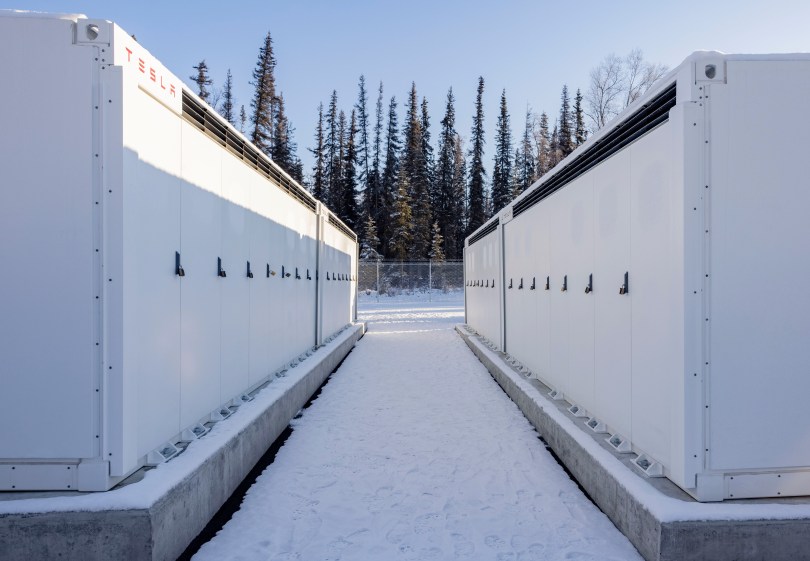
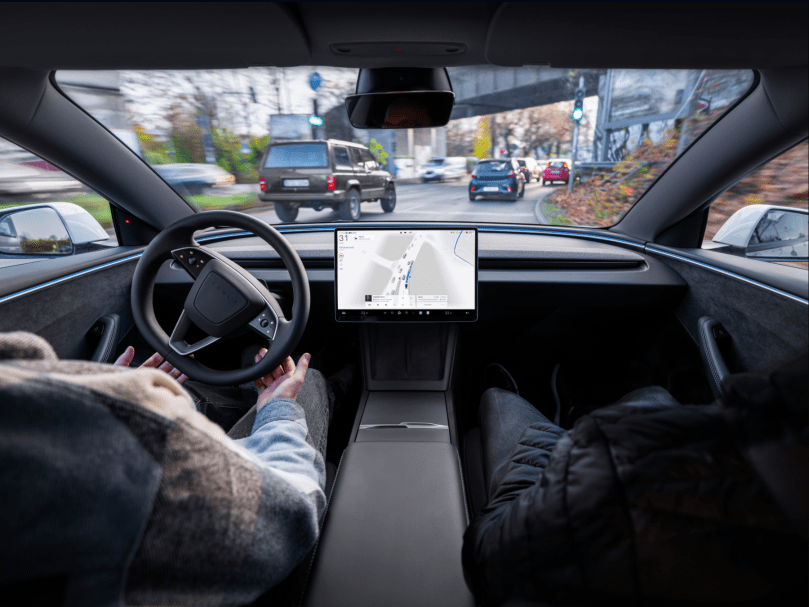
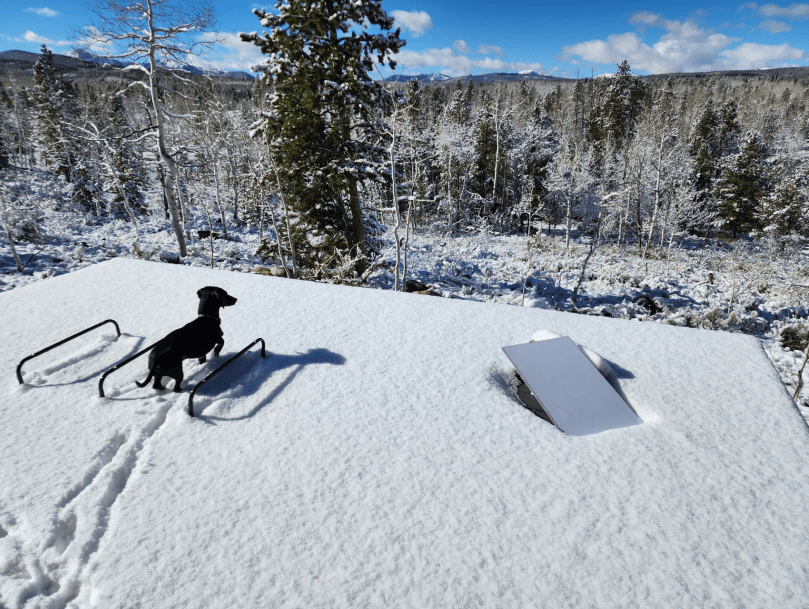
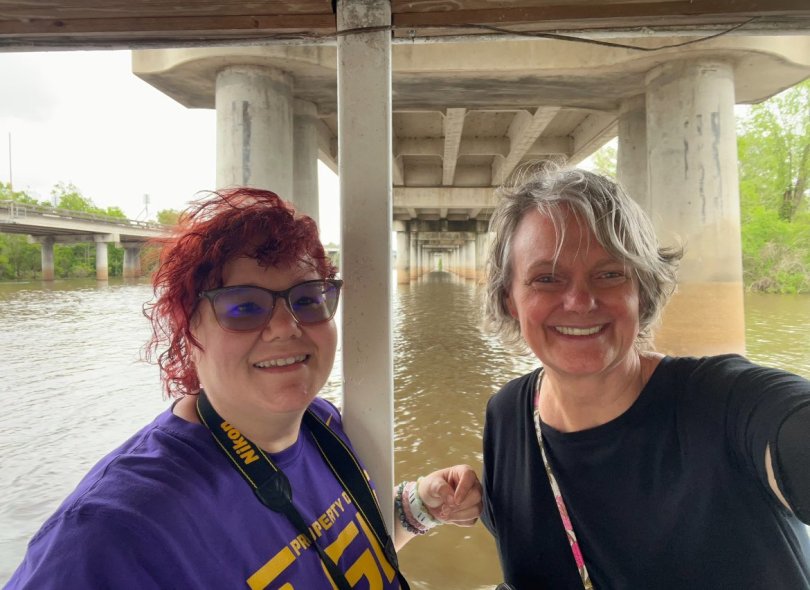
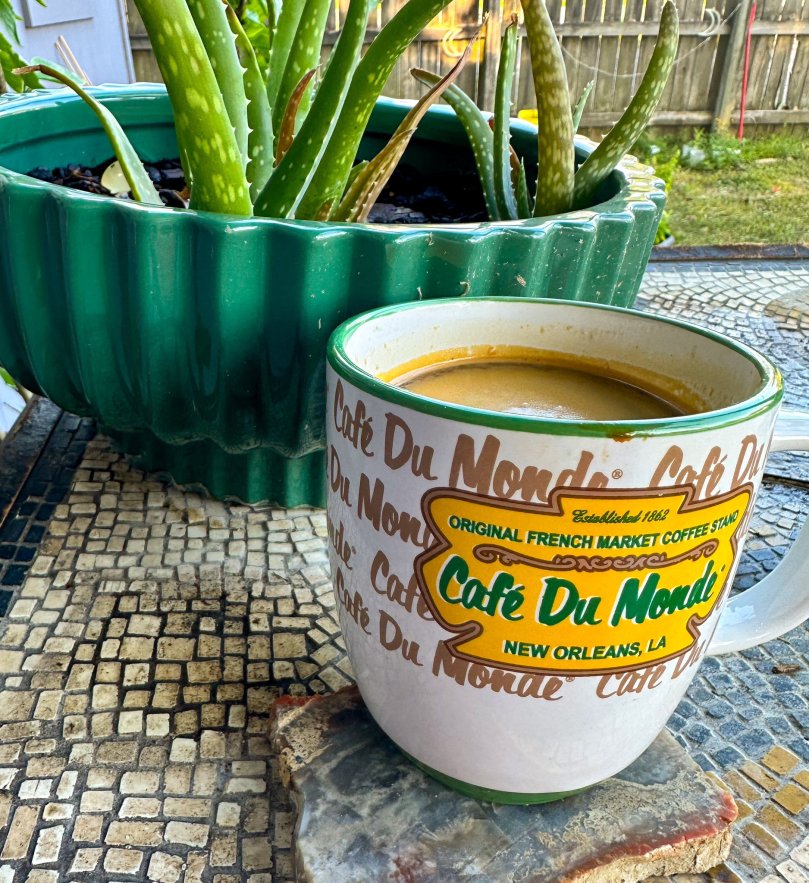

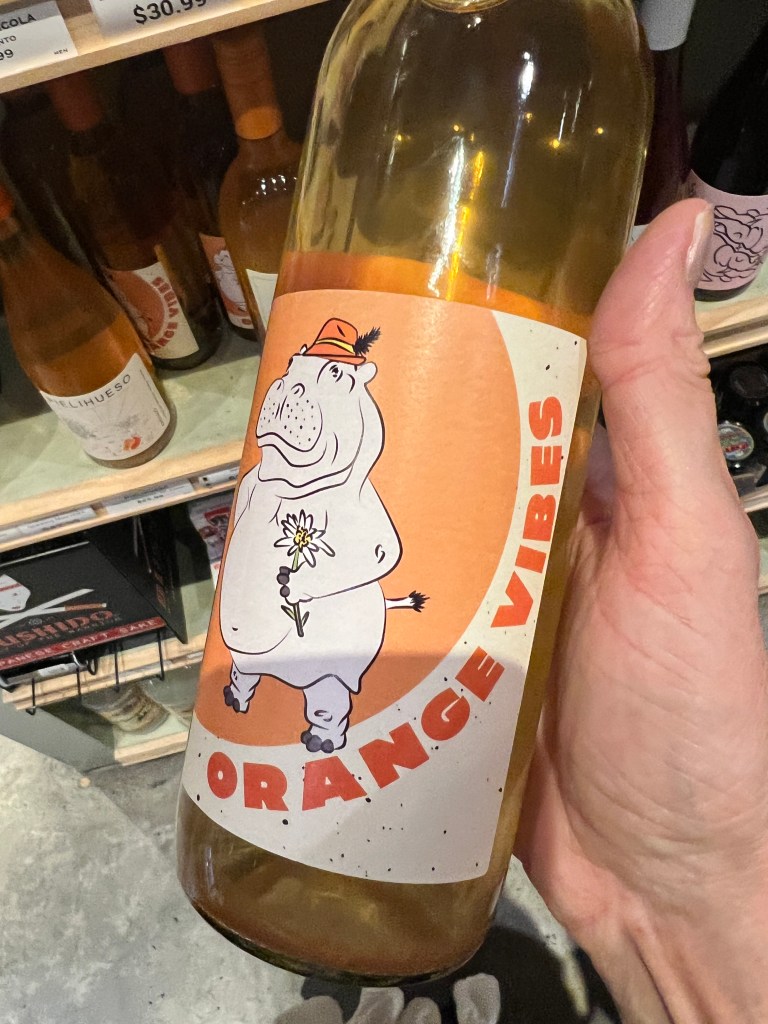
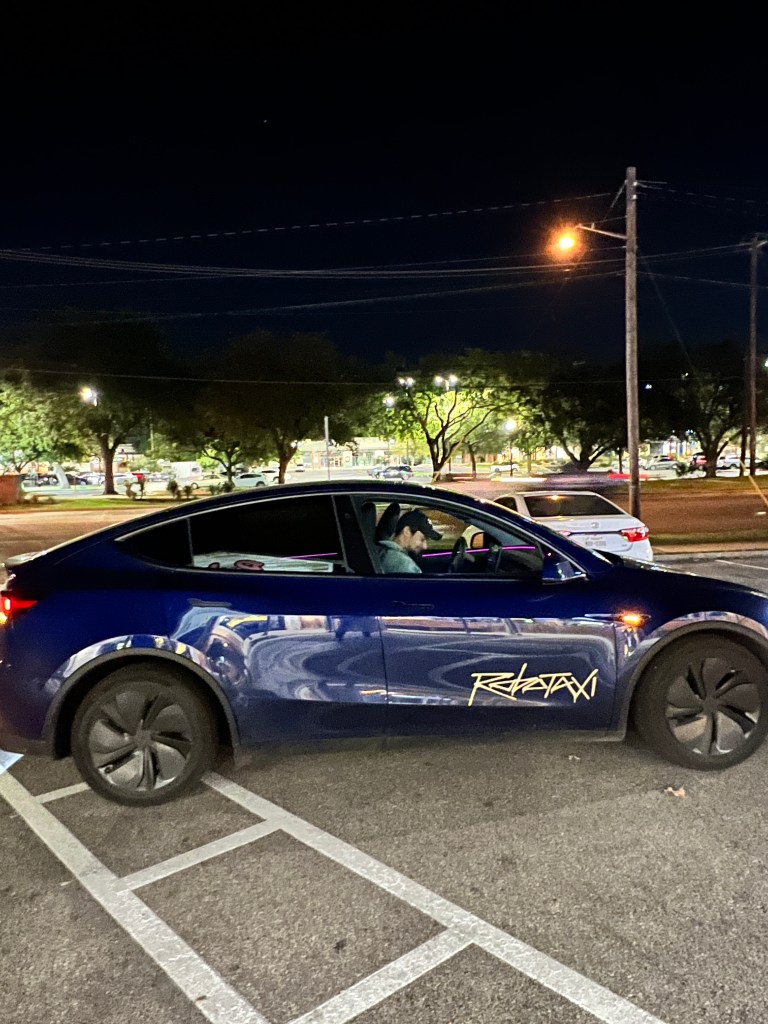
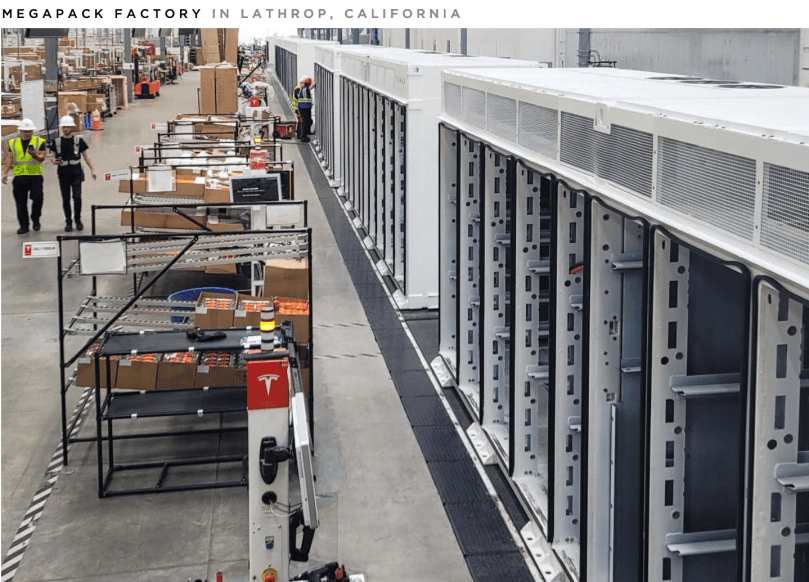
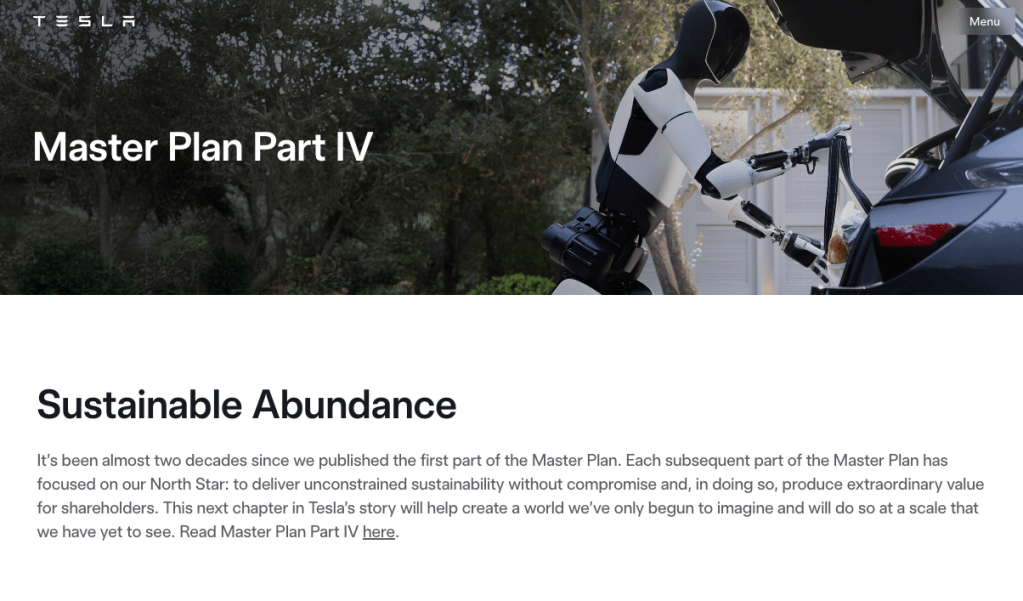
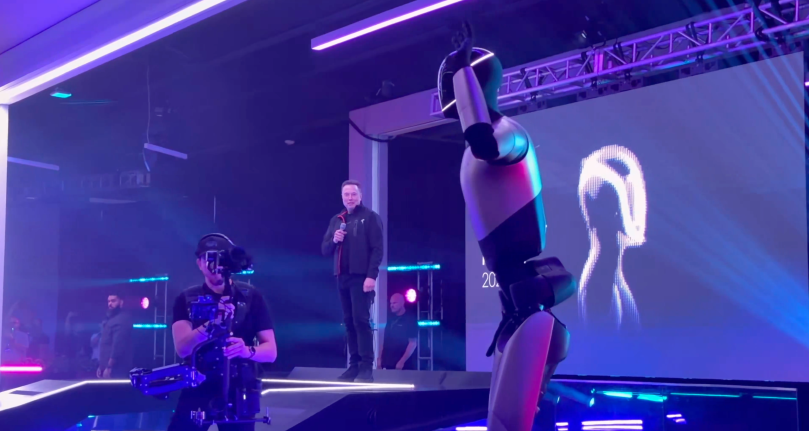
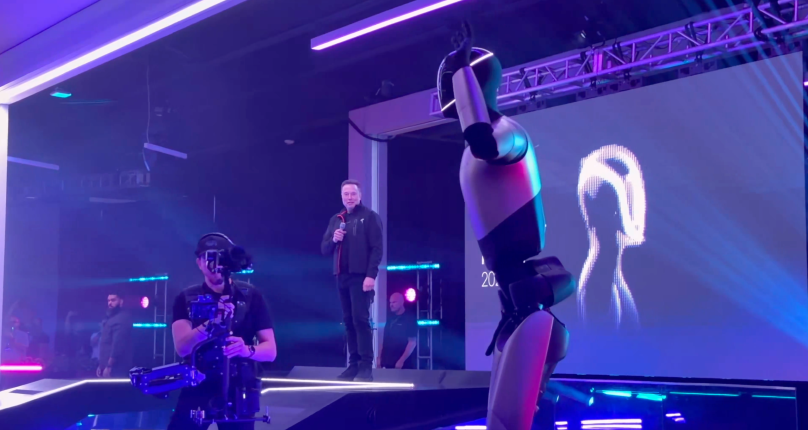
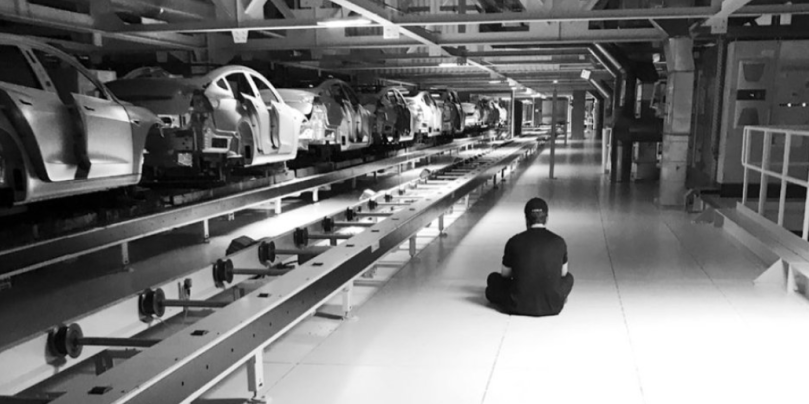
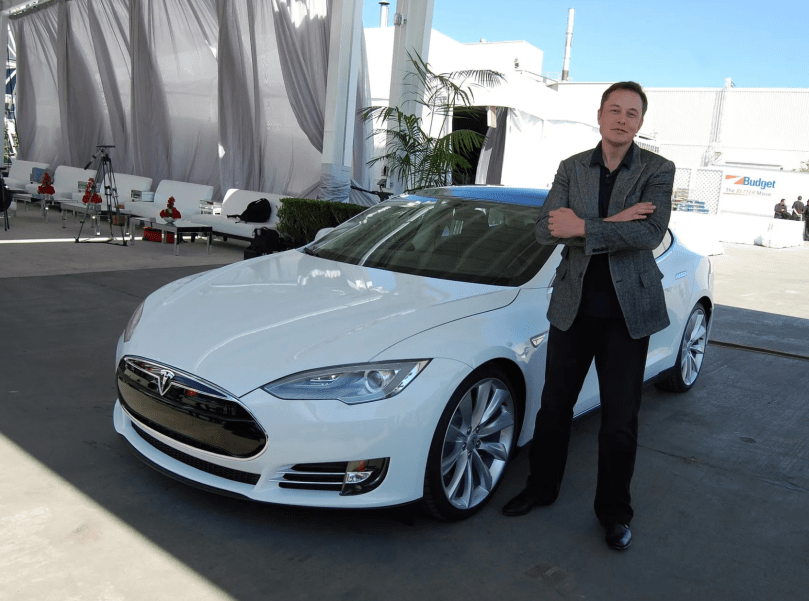
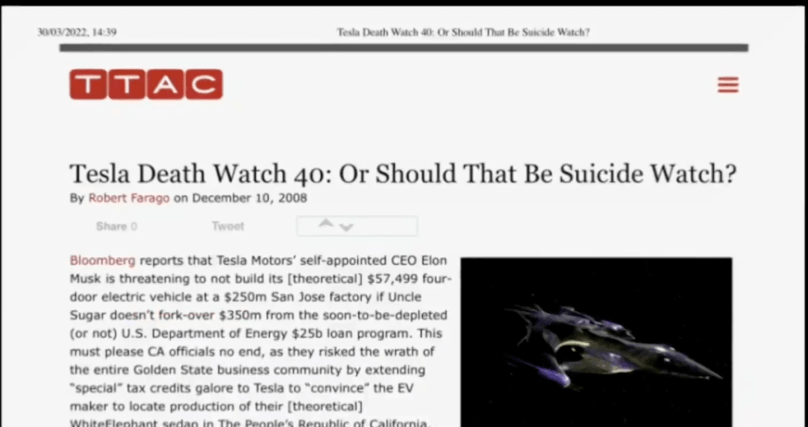
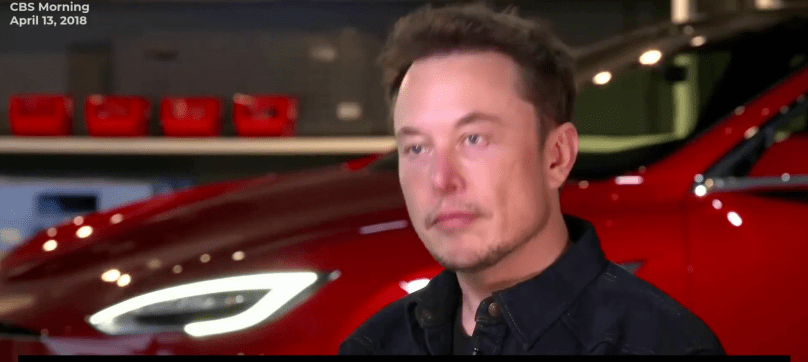


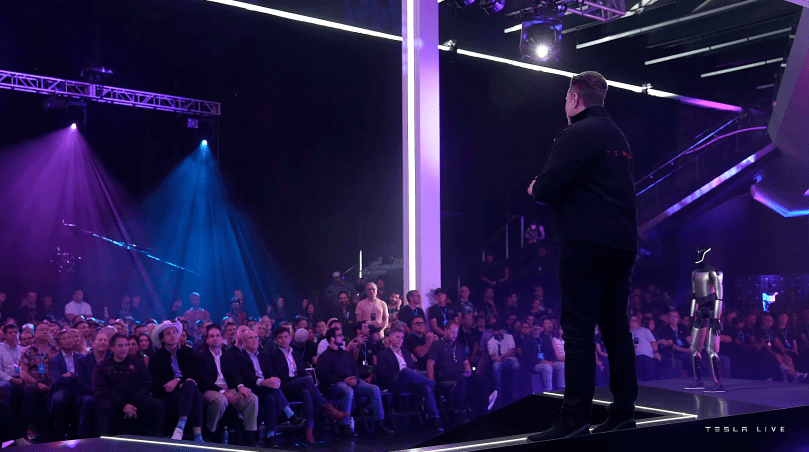
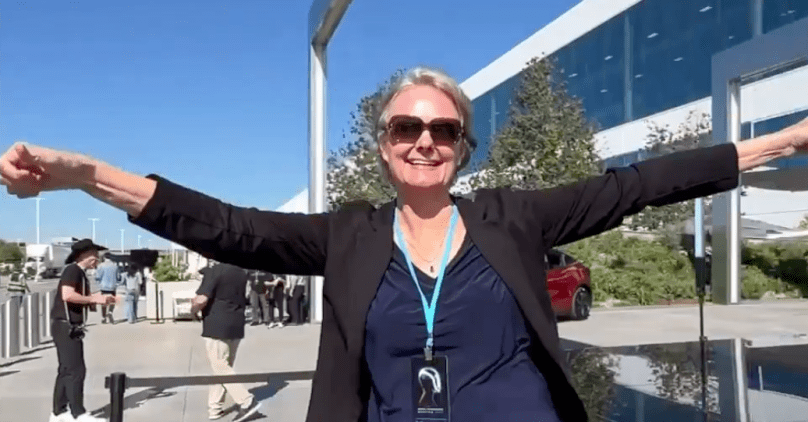
 whatsuptesla.com