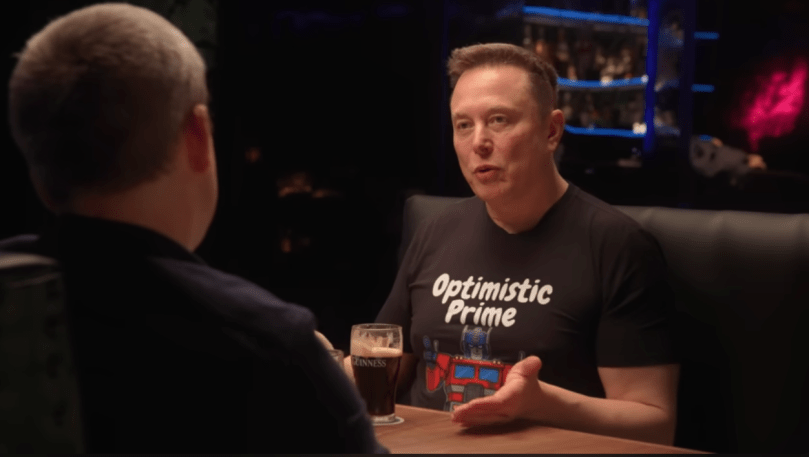
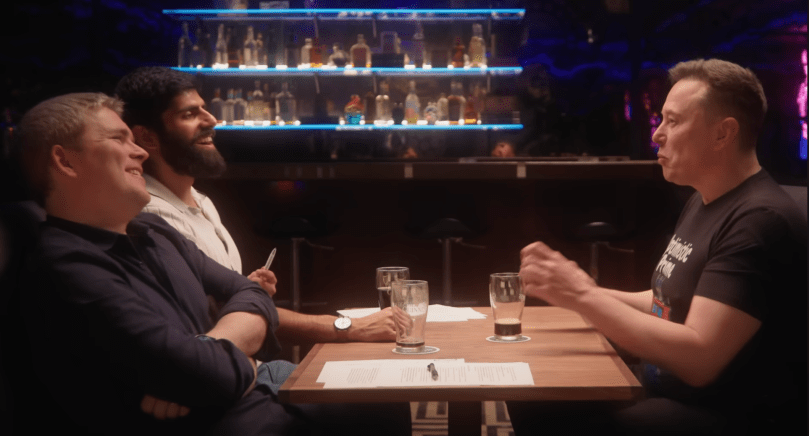
In Part 8, Dwarkesh Patel points out that even with abundant power from space-based solar, the ultimate bottleneck for scaling AI will likely be chip production. The conversation dives into Elon’s plans for building “Terafabs,” the difficulties of scaling semiconductor manufacturing, and why memory may be an even bigger constraint than logic chips. It then shifts to the broader philosophical mission behind xAI and SpaceX — propagating consciousness and intelligence into the universe.
Transcript:
Dwarkesh Patel noted that even with more efficient solar panels in space, the chips themselves would still be the ultimate limiter long before reaching terawatt scale. He asked how the world would produce a terawatt of logic compute by 2030 when today the entire planet only has about 20–25 gigawatts.
Elon Musk: “You need to build a lot more chips and make them much cheaper.”
Elon Musk: “I guess we’re going to need some very big chip fabs.”
Elon Musk: “I’ve mentioned publicly that the idea of doing sort of a terafab, terabytng the new Giga.”
Dwarkesh asked for details on the plan: what level of the stack they would build themselves versus partnering with an existing fab for process technology.
Elon Musk: “Well, you can’t partner with existing fabs because they can’t output enough. The chip volume is too low.”
Elon Musk: “IP (Intellectual Property), the fabs today all basically use machines from like five companies. Yeah, you know, so you’ve got ASML (ASML Holding), Tokyo Electron, KLA, Lam Research, you know, et cetera. So at first I think you’d have to get equipment from them and then modify it or work with them to increase the volume. But I think you’d have to build perhaps in a different way. So I think the logical thing to do is to use conventional equipment in an unconventional way to get to scale and then start modifying the equipment to increase the rate.”
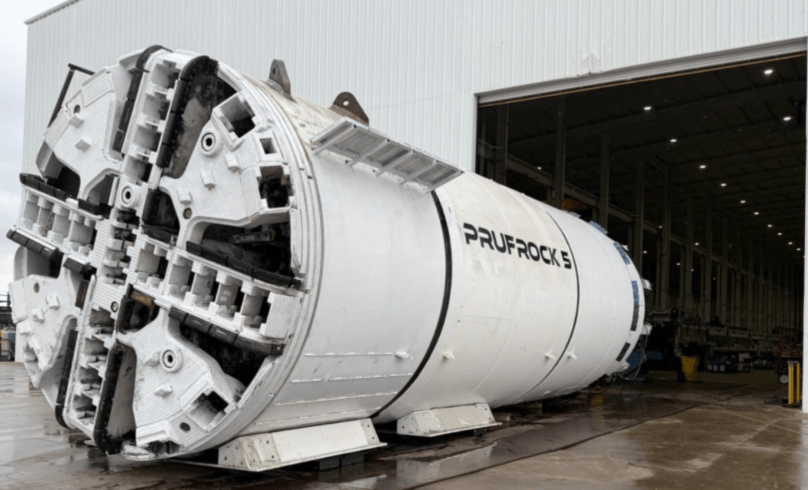
John Collison drew the parallel to how The Boring Company started.
Elon Musk: “Yeah, kind of like. Yeah, you sort of buy an existing boring machine and then figure out how to dig tunnels in the first place and then design a much better machine that’s, I don’t know, some orders of magnitude faster.”
John Collison asked whether the fact that China has not duplicated TSMC gave Elon pause about the difficulty of building advanced chip production.
Elon Musk: “It’s not that they have not replicated TSMC, they have not replicated ASML. That’s the limiting factor.”
John Collison asked if Elon thought it was simply the sanctions preventing China from advancing.
Elon Musk: “Yeah. China would be outputting vast numbers of chips at leading edge if not for the sanctions.”
John Collison followed up, noting that China had been able to buy 2 nm or 3 nm chips until relatively recently.
Elon Musk: “No. The ASML bans have been in place for a while, but I think China’s going to start making pretty compelling chips in three or four years.”
Elon explained the massive manufacturing requirements needed to match orbital AI ambitions, noting that memory was actually his biggest near-term concern.
Elon Musk: “I don’t know yet is the right answer. So it’s just that to produce at high volume and to reach large volume in say 36 months to match the rocket payload to orbit… You need 100 gigawatts worth of chips. You’ve got to match these things. The master orbit, the power generation and the chips. And I’d say my biggest concern actually is memory… That’s why you see DDR prices going ballistic.”
Elon then shared his current plans and constraints around chip production.
Elon Musk: “I don’t know how to build a fab yet. I will figure it out. Obviously I’ve never built a fab.”
Elon Musk: “I don’t think it’s PhDs. It’s mostly people who are not PhDs. Most engineering is done with people who don’t have PhDs.”
Elon Musk: “Right now, like Tesla’s pedal to the metal max production of going as fast as possible to get AI5 chip design into production… That’ll probably happen around the second quarter ish of next year, hopefully. And then AI6 would hopefully follow less than a year later.”
Elon Musk: “Yeah, and we’ll be using TSMC Taiwan, Samsung Korea, TSMC Arizona, Samsung Texas and we still booked out all the capacity we can.”
Elon Musk: “The point is you’ve got to build the fab and you’ve got to start production, then you’ve got to climb the yield curve and reach volume production at high yield. That from start to finish is a five year period. And so the limiting factor is chips. Limiting factor once you can get to space is chips. But the limiting factor before you can get to space will be power.”
Elon explained that while launching at massive scale from Earth would be extremely difficult, the moon offered a much better long-term path using mass drivers.
Elon Musk: “I don’t see any way that you could do 500 to 1,000 terawatts per year launch from Earth. But you could do that from the moon.”
Dwarkesh then zoomed out to the bigger philosophical picture behind SpaceX and xAI.
Dwarkesh Patel asked whether, by the time humans are sending ships to Mars, Grok would be on board with them, and how that relates to the main risks people worry about with AI.
Elon Musk: “Well, I’m not sure AI is the main risk I’m worried about. I mean the important thing is that consciousness, which I think arguably most consciousness or most intelligence, certainly consciousness is more of a debatable thing. The vast majority of intelligence in the future will be AI… So you want to take the set of actions that maximize the probable light cone of consciousness and intelligence.”
Elon Musk: “Yeah, I mean to be clear, I’m very pro human, so I want to make sure we take sort of actions that ensure that humans are along for the ride. We’re at least there. But I’m just saying the total amount of intelligence, I think maybe in five or six years AI will exceed the sum of all human intelligence. And then if that continues, at some point human intelligence will be less than 1% of all intelligence.”
Elon discusses the need to build massive Terafabs, the challenges of scaling chip and memory production, and the deeper mission of propagating consciousness and intelligence into the future. In Part 9, the conversation continues with more on the long-term vision for humanity and AI in space.