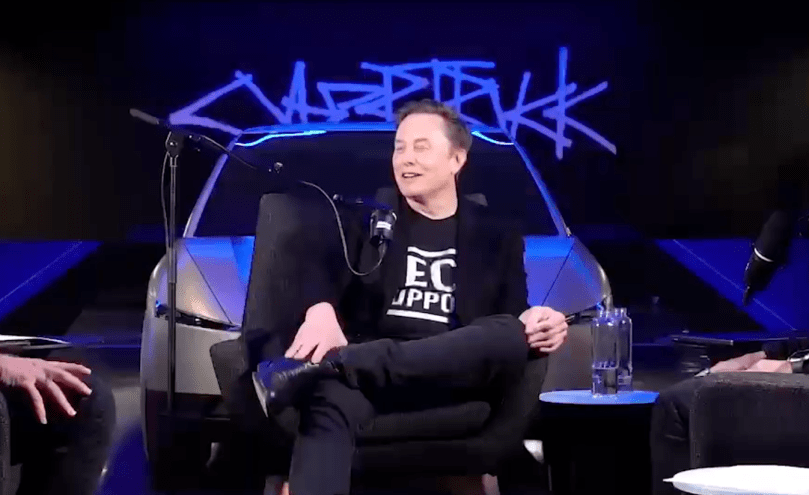
Elon Musk, Peter Diamandis & Dave Blundin: Amazing Abundance – Part 3: Energy Foundation

In Part 2, Elon dropped a bold bet on ultra-clean chip fabs where you could eat a cheeseburger without contaminating wafers. Now the conversation shifts to our future of abundance: energy.

Sitting in the glorious front lobby of Gigafactory Texas in Austin, Peter steers toward the concerns people in America are thinking about today: energy, health and education. Elon doesn’t hesitate because it is right in sync with his Master Plan 4 for Tesla.

Peter D.: I want to talk about energy, health, education, because those are people’s concerns. So on the energy front, the innermost loop of everything that you’re building and…

Elon: Doing right now, energy is the foundation.

Peter D.: What’s your vision for energy abundance? The sun in the next, you know, this decade. The sun. Yeah.

Elon: I mean, so the sun is everything.

Elon drives the point home with scale that rewires your brain

Elon: People just don’t understand how solar is everything. So everything compared to the sun, all other energy sources are like cavemen throwing some twigs into a fire.

The sun is over 99.9% of the solar system’s mass. Burn Jupiter? Still rounds to 100%. Burn four Jupiters? Same story.

Fusion?

Peter D.: Any interest in fusion?

Elon: Yeah, you know, coming— never going to guess how the sun works.

Peter D.: Giant coal plants.

Elon: I mean we have a giant free fusion reactor that shows up every day 93 million miles away. It’s farcical for us to create little fusion reactors. That would be like having a tiny ice cube maker in the Antarctic and saying, “Hey look, we made ice.”

Solar is the only scalable path

Dave narrows to the immediate bottleneck: powering the Memphis supercluster.

Dave B.: If you just narrow the question to the Memphis timeline. Between a gigawatt and 10 gigawatt. You’re not going to pull 10 gigawatts out of Memphis.

Elon: Maybe two or three.

They’re still in “Toyland” at 10 GW scale — yet xAI is already pushing boundaries.

Peter drops a plug for his Metatrends research, then presses on China’s solar dominance.

Peter D.: China has done an incredible job… They put in 500 terawatt hours in the last year, 70% solar. And they’re just scaling.

Elon: China has done an incredible job on solar. Yeah, it’s amazing. Production capacity around 1,500 gigawatts per year of solar.

The US lags. Energy = GDP = quality of life. The group agrees: America must scale solar aggressively. Tesla and SpaceX are already all-in.

The discussion turns to the GPU power crunch — why TSMC worries about overproducing chips.

Elon: If chip output is growing exponentially, but power harnessed is growing in a slow, linear fashion, then chip production can exceed the rate at which the AI chips can be turned on.

You need transformers, cooling, liquid-cooled racks. One burst pipe? A billion dollars gone.

xAI is solving it first

Elon: xAI is going to have the first gigawatt training cluster at Colossus 2 in Memphis… Mid-January will be a gigawatt… then 1.5 gigawatts probably April-ish.

My 2 Cents

It is amazing that xAI brought together natural gas turbines + Tesla Megapacks to smooth massive power swings for the data center ijn Memphis, and soon to be expanded to Southhaven, Mississippi. It is a symphony of engineering miracles! The finest engineers in Austin and Palo Alto, some even from SpaceX, and the future vision to seek only truth, beauty, and stay curious!

Part 4 dives into gaming, Civilization’s tech victory, and simulation theory.
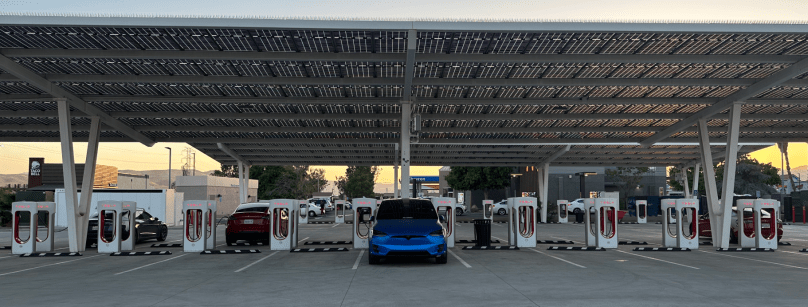
Tesla Plans 304-Stall Supercharger Station in Firebaugh

Tesla plans to build the world’s largest Supercharger station with 304 stalls, including 16 for Tesla Semis, in Firebaugh, California.

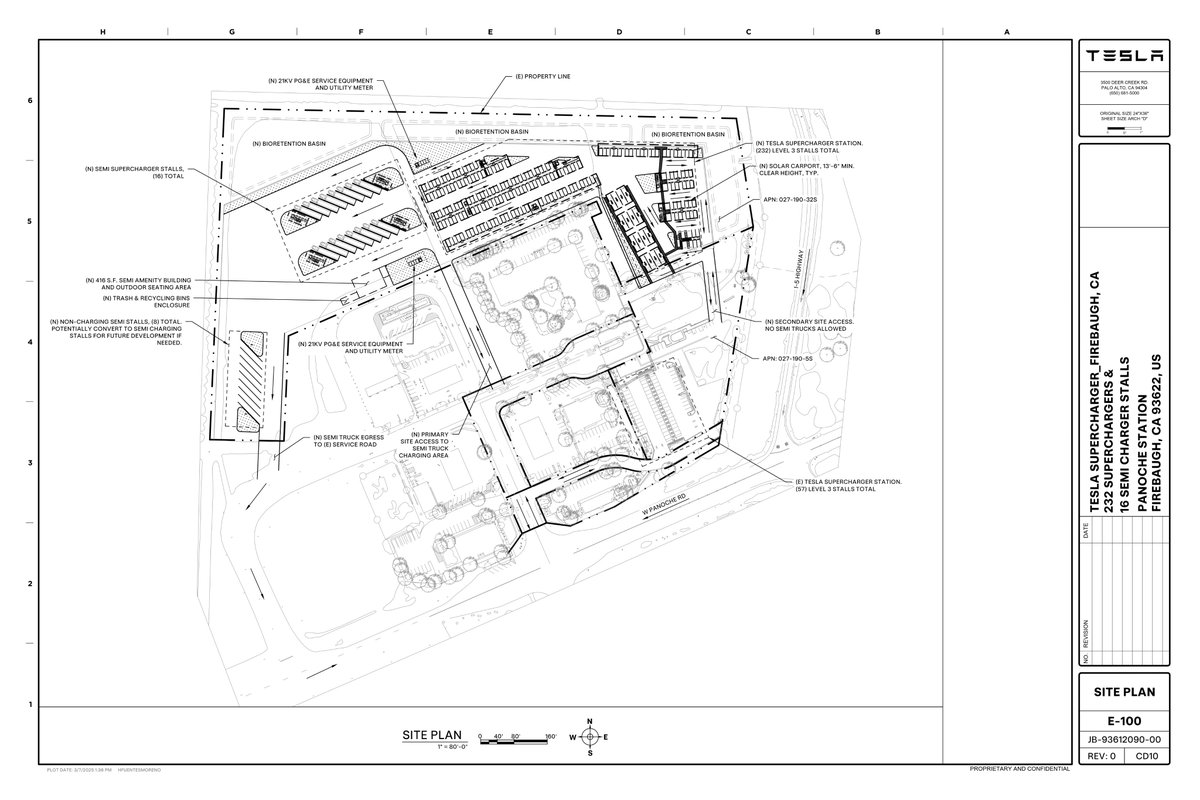
Tesla plans to expand its existing Supercharger site in Firebaugh, California, into the world’s largest with a total of 304 stalls — 288 for passenger vehicles and 16 dedicated for Tesla Semis — once complete.

This represents an 85% increase over Tesla’s current largest site (164 stalls at Oasis in Lost Hills, California). The project, approved via a conditional use permit last month, adds 232 new car stalls to the existing 56 (some sources note the current count as around 72, but the core expansion figure holds). It includes a separate area for Semi operations with its own access routes, plus an amenity building and outdoor seating primarily for truck drivers.

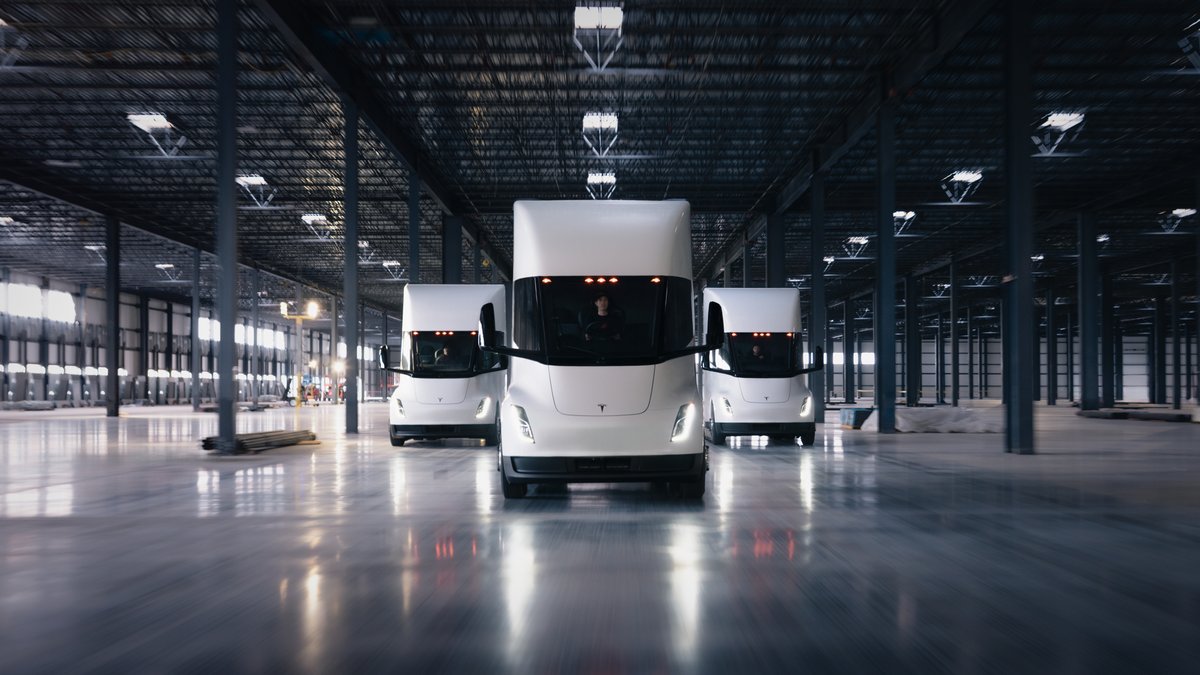
Here are examples of large-scale Tesla Supercharger sites for context:

Tesla: Largest Supercharger in the world: 168 charging spaces, 100 ...
Tesla Opens Its Largest Solar-Powered Supercharger Site in ...

Firebaugh sits along Interstate 5, a key corridor connecting Southern California ports to Central Valley and Bay Area distribution hubs. This strategic spot has made it a priority since the original site opened in 2020 as Tesla’s then-largest in the US with 56 stalls.

Why Firebaugh and why now

The expansion reflects long-term planning by Tesla’s charging team, coordinated with local utilities and jurisdictions. It accounts for forecasted EV adoption growth, with built-in flexibility to adjust pace based on real demand.

A Tesla Charging team member with years of experience emphasized this deliberate approach.

Here is the post from Tesla’s Max DeZegher, who has been building Superchargers since 2014:

The site’s location supports both consumer travel and commercial trucking, especially as Tesla ramps up the Semi program. Dedicated Megachargers for Semis signal confidence in heavy-duty electric transport along this major freight route.

Reactions from Tesla enthusiasts and observers

Enthusiasts and Tesla-focused accounts quickly highlighted the scale as a bold step in infrastructure for EVs and trucking.

Sawyer Merritt broke down the details early, noting the existing 56 stalls.

Here are key posts capturing the excitement:

So what

This move positions Tesla far ahead in high-capacity charging, especially as more non-Tesla EVs gain access to Superchargers and Semi deployments increase. It underscores the company’s commitment to scaling ahead of demand along critical corridors, potentially reducing wait times and supporting broader EV and electric trucking adoption in California and beyond.

Firebaugh’s rural setting along I-5 provides ample space for this growth.

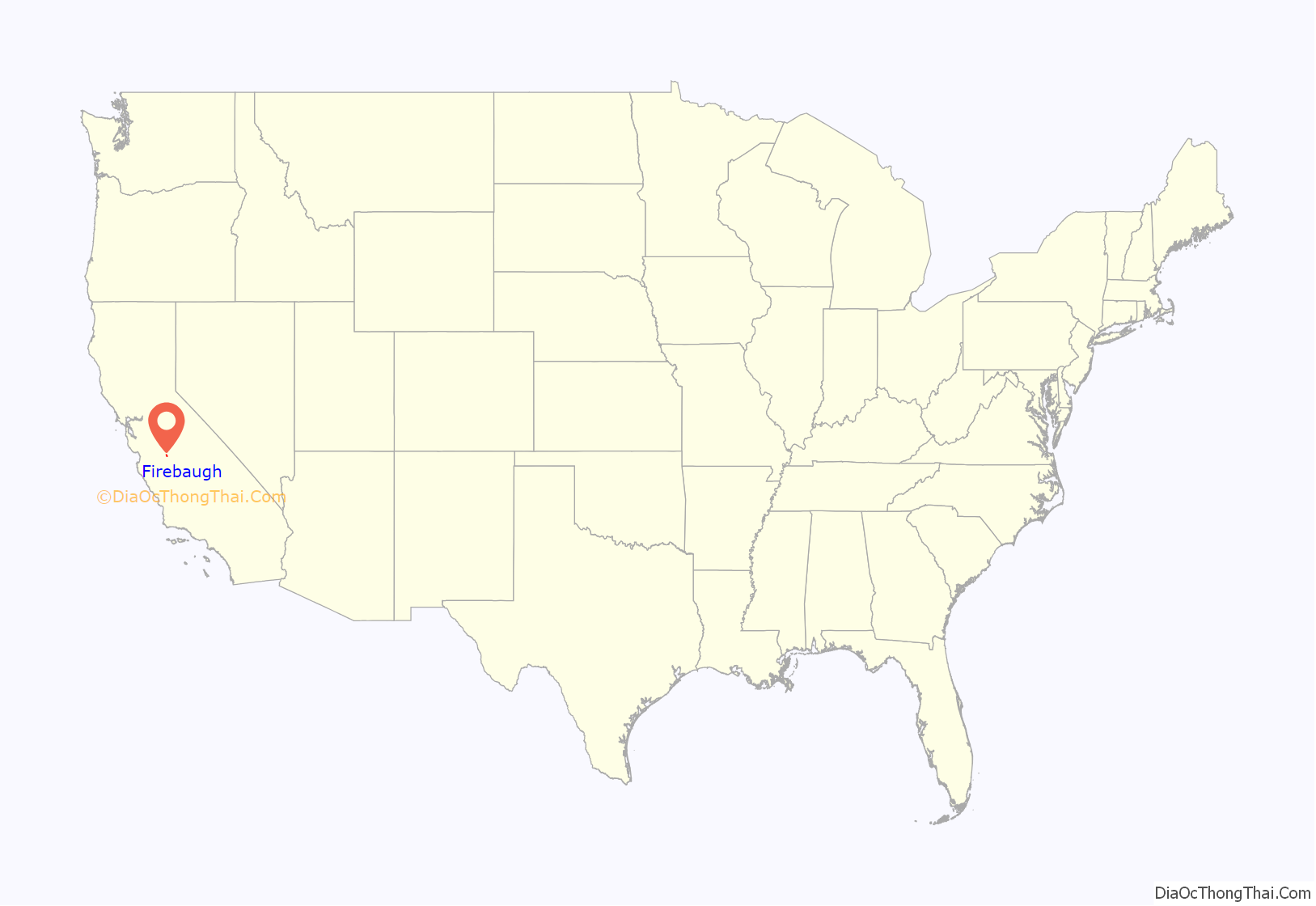
Here is a map view of the Firebaugh area:

Map of Firebaugh city - Thong Thai Real

Tesla Model 3 and Y Receive Euro NCAP Best in Class Awards

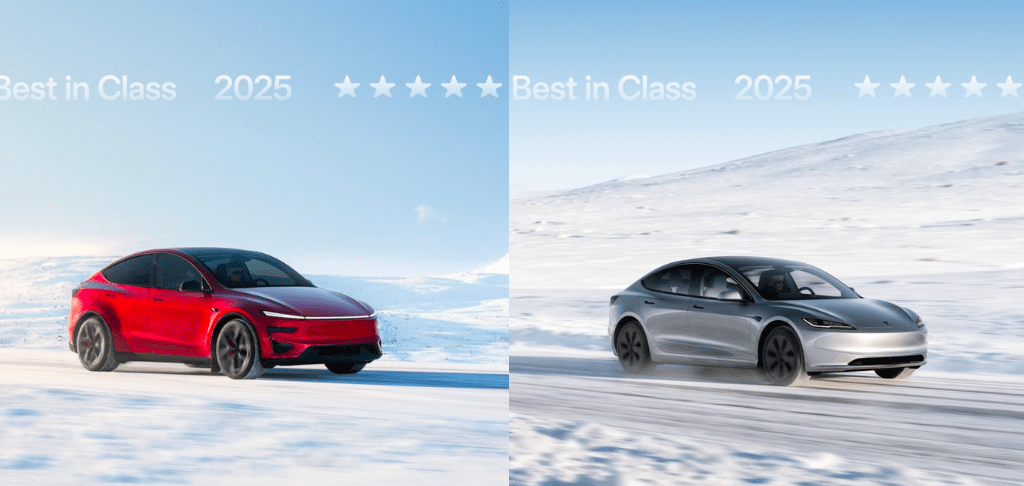
Tesla’s Model 3 and Model Y received Euro NCAP’s Best in Class safety awards, with Model 3 as the safest Large Family Car and Model Y as the safest Small SUV.

Tesla Model 3 and Model Y take top Euro NCAP safety spots for 2025

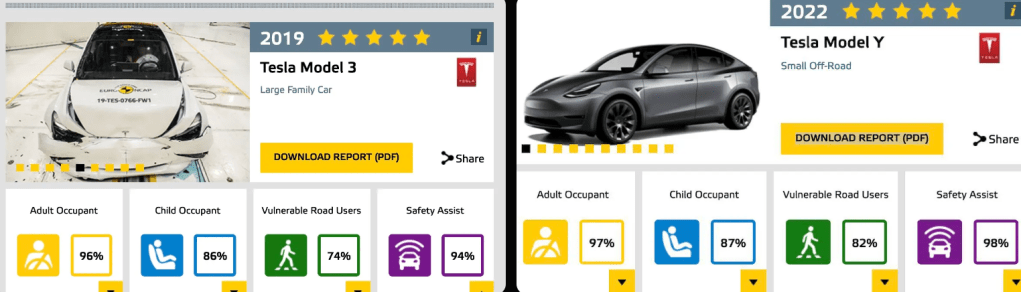
Euro NCAP announced its Best-in-Class awards for vehicles tested in 2025, naming the Tesla Model 3 the safest Large Family Car and the Tesla Model Y the safest Small SUV. Both models earned five-star ratings under the organization’s stricter 2025 protocols, which evaluated more electric vehicles and advanced driver assistance systems than in previous years.

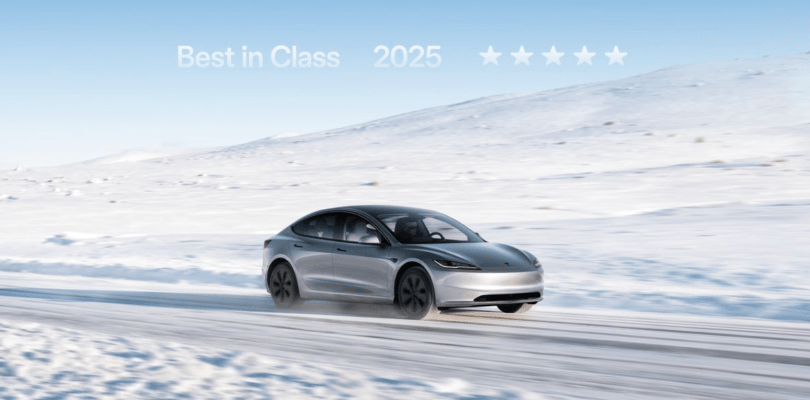
Here are the two Tesla models side by side.

How the awards were determined

Euro NCAP calculates Best-in-Class winners using a weighted sum of scores across four areas: Adult Occupant protection, Child Occupant protection, Vulnerable Road User protection (pedestrians and cyclists), and Safety Assist technologies. Only vehicles with standard safety equipment and five-star overall ratings qualify.

The Model 3 achieved high marks particularly in Child Occupant protection and showed improvements in driver assistance features. The Model Y excelled in Child Occupant protection and Safety Assist, described by Euro NCAP as the “gold standard” for small SUVs.

These results come from tests conducted throughout 2025, Euro NCAP’s busiest year for evaluations.

Examples of crash test visuals and safety awards from Euro NCAP protocols.

Tesla’s announcement and immediate reactions

Tesla Europe & Middle East shared the news directly on X, highlighting the dual wins.

Here is the official post from Tesla Europe & Middle East.

Enthusiasts and Tesla-focused accounts quickly celebrated the results, emphasizing the company’s ongoing safety leadership.

Bullish takes from investors and fans.

Official Euro NCAP accounts also posted separate recognitions for each model.

Euro NCAP’s own highlights.

Broader context and impact

Tesla has a long track record of strong Euro NCAP results, with previous generations of these models also achieving top scores. The 2025 awards reinforce this under updated, more demanding criteria.

While the Mercedes-Benz CLA took the overall Best Performer title for 2025 (with Tesla finishing fractionally behind), the dual category wins for Model 3 and Model Y stand out in a competitive field that included more EVs than ever.

No major negative reactions appeared in recent X discussions around the announcement; coverage stayed focused on the safety achievement.

These awards help consumers identify leading safety options in popular segments, especially as electric vehicles continue to demonstrate strong performance in crash protection and active safety systems. The recognition arrives just before Euro NCAP introduces further protocol changes in 2026.

Nvidia CEO Jensen Huang Praises Elon Musk and Tesla’s Optimus in Resurfaced Interview

2025 Bloomberg Clip Highlights Collaboration on AI, Self-Driving, and Humanoid Robots

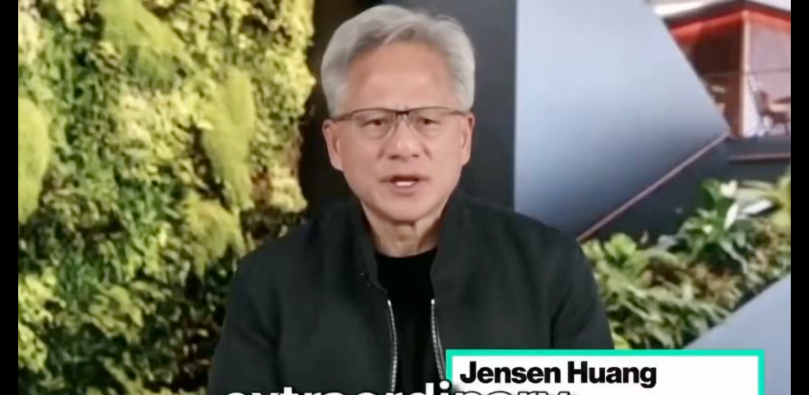
A video clip from Nvidia CEO Jensen Huang’s Bloomberg Technology interview, originally aired on May 28, 2025, has gone viral again on social media, fueling excitement about Tesla’s robotics ambitions and broader partnerships with Elon Musk.In the segment, host Ed Ludlow asked Huang about Nvidia’s deepening ties with Tesla and xAI across AI computing, autonomous driving, and robotics.Huang lavished praise on Musk and his ventures, calling his work across multiple fronts “world class” and “revolutionary.”

Here is the verbatim quote from the clip:

“Elon is just an extraordinary engineer, and I love working with him. We’ve built some amazing computers together. We’re going to build many more computers together. The work that he’s doing in Grok, his self-driving car, his Optimus—these are all, every single one of them, world class. Every single one revolutionary. Every single one of them are going to be gigantic opportunities. And we’re delighted, I’m delighted to be working with him on that. So I think the Optimus opportunity is just right around the corner. It’s very likely that humanoid robots are going to be robots that we can deploy into the world relatively easily, and this is the first robot that really has a chance to achieve the high volume and technology scale necessary to advance technology. And so I think this is likely to be the next multi-trillion dollar industry.”

Huang emphasized Tesla’s unique manufacturing expertise as a key enabler for scaling Optimus to high-volume production, setting it apart from competitors.

The clip was reposted on X on January 1, 2026, by prominent Tesla supporter CB Doge.

When Elon Musk said “The Future Should Look Like the Future,” Bolivia Took It Seriously

Bolivia is a landlocked country – one of the few in the world – nestled in the Andes, where rugged terrain makes delivering healthcare to remote communities a massive challenge. Enter my favorite truck: the Cybertruck!

I’m not alone in my obsession. Friends of mine drive theirs daily, and thanks to Tesla’s generous demo-drive program I’ve been behind the wheel many times myself (still waiting for mine to arrive).

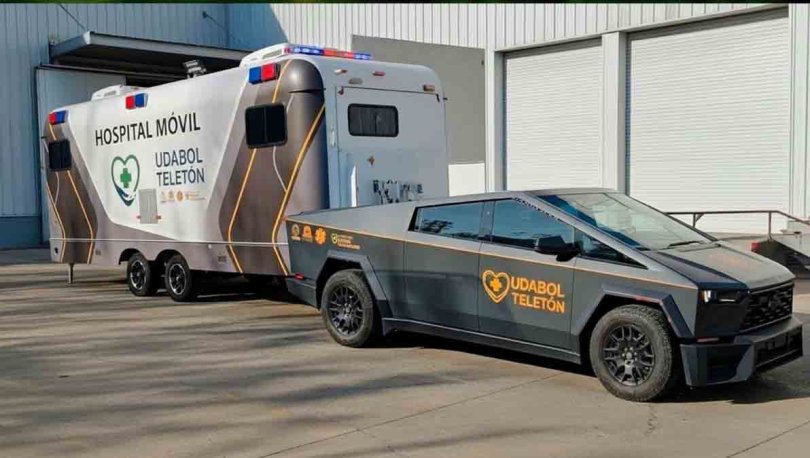
The Cybertruck is a game-changer for towing mobile clinics to underserved villages – literal lifesavers on wheels. On December 5, Universidad de Aquino Bolivia (UDABOL) unveiled a stunning fleet of twelve angular, cold-rolled-steel beasts, and the news exploded across Spanish-language media. I only found out today thanks to a post from @iliketeslas.

These dozen Cybertrucks will tow AI-equipped mobile clinics as part of UDABOL’s pioneering Misión Sanitaria Académica Internacional 2026. Huge credit goes to UDABOL president Martín Dockweiler – an undeniably cool guy – and the Teleton foundation for their long-standing partnership in pediatric and rehabilitative care. The project is fully approved by the Bolivian government and has the backing of consulates from Peru, Chile, Brazil, and Paraguay. It’s a university-led initiative that will deliver surgeries, diagnostics, and consultations to more than 200,000 patients in remote and cross-border areas.

Of course the Cybertruck obliterates traditional combustion trucks here. The electric drivetrain conquers Bolivia’s brutal terrain, the battery can charge from solar arrays or any village grid, and there’s no oil to change, no finicky engine to maintain. Regenerative braking means the brakes last practically forever. Steer-by-wire makes it ridiculously easy to drive – if I can do it, anyone can.

Each Cybertruck can supply at least 11.5 kW of power to the clinics for medical equipment and lighting. The silence is golden (I still remember the eerie quiet at a Tesla fair last Halloween when food trucks and music stages were all powered by Cybertrucks).

Congrats to UDABOL, Teleton, Martín Dockweiler, and the entire team for knowing how to rock while saving lives. Elon Musk’s tools + Bolivian ingenuity = a combo that makes me want to book a flight tomorrow. Who wouldn’t want to see Cybertrucks towing operating rooms into the jaw-dropping Andes, saving lives one stainless-steel triangle at a time?

430 MW of Proof: Puerto Rico’s Battery Revolution Starts Now

San Juan, 5 December 2025. The first ship carrying Tesla Megapacks slipped into San Juan’s industrial port yesterday. No speeches, no ribbon-cutting, just 40-foot powder-white boxes that quietly begin the end of Puerto Rico’s decade-long blackout nightmare.

Eight years after Maria wiped out 100 % of the grid, the island is deploying the largest battery rollout in its history: 430 MW of instant power and 1.72 GWh of storage across six plants. Total cost $767 million, paid entirely with pre-allocated FEMA/HUD recovery funds. Zero new taxes, zero new debt.

Tesla won the contract the old-fashioned way: an open international bid in October 2024 against 130 competitors. Best total cost of ownership, fastest delivery, highest round-trip efficiency. As Elon once said, “The best part is no part.” Here the only subsidy is the one physics already gave lithium-ion – no special handouts were needed because the tech is simply that good.

The first containers are already rolling north to Cambalache in Arecibo, where 68 Megapacks will add 52 MW / ~208 MWh beside an aging oil plant. When solar over-produces at noon or a hurricane knocks out lines at midnight, the batteries respond in milliseconds – no spinning reserve, no smoke, no fuel trucks racing through flooded roads.

Elon’s other favorite line fits perfectly: “I’d rather be optimistic and wrong than pessimistic and right.” This project is optimism made hardware. 

By 2027 the island expects up to 90% improved grid stability and up to $100 million a year saved on diesel alone.

For anyone who has ever modeled a grid, sized a frequency response curve, or watched a peaker plant burn $150/barrel oil in real time, this hits home. 

It’s not charity. It’s not politics. It’s engineering eating a 60-year-old problem and turning it into clean electrons.

Puerto Rico just became the proof point many of us have been waiting for: when the hardware is finally good enough, resilience becomes cheaper than fragility.

The lights are about to stay on. Not because someone wished it, but because someone built it. And that feels pretty darn good.

Tesla Autonomy Making Streets Safer in Europe

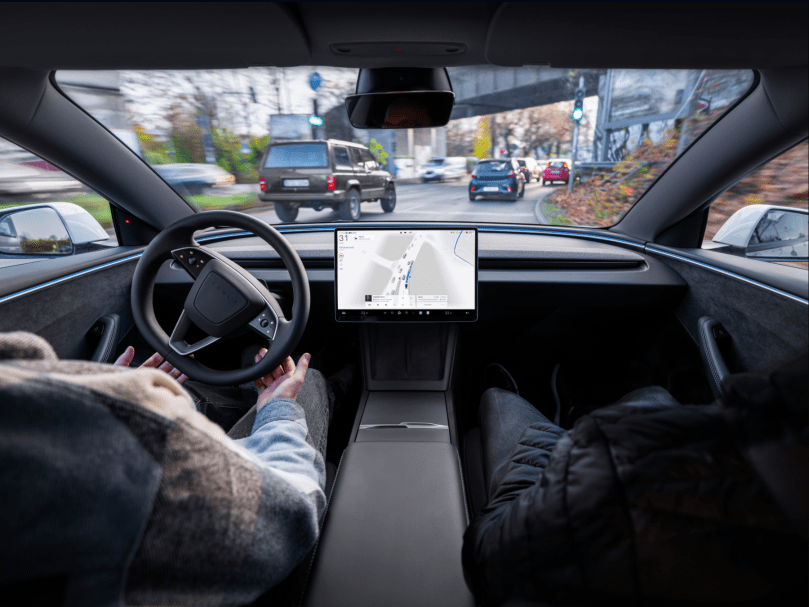
ROME/PARIS/BERLIN – Tesla’s Full Self-Driving (FSD) Supervised system, the product of Elon Musk’s relentless 12-year focus on end-to-end neural networks, is now being experienced by European leaders in a series of high-profile demonstrations that have no rivals.

Rome Mayor First to Ride Elon’s Vision in Italy

On Wednesday, Rome Mayor Roberto Gualtieri rode as a passenger in a Model 3 while FSD Supervised flawlessly negotiated the Italian capital’s chaotic roundabouts and scooter-filled streets. Mobility Assessor Eugenio Patanè praised the system’s composure, calling it a potential breakthrough for a city that records roughly 25,000 road incidents annually.

France: “Mind-Blowing” Precision After Years of Waiting

Two days earlier near Paris, tech journalist Julien Cadot described his FSD ride as “mind-blowing,” highlighting decisions no legacy automaker has yet replicated at scale: perfectly timed overtakes, gentle yielding to cyclists, and predictive braking that Tesla data show can reduce severe collisions by up to seven times.

Germany: Experts Marvel at Autobahn and Village Mastery

In Berlin and Düsseldorf, transport expert Philipp M. W. Hoffmann joined the ongoing public program launched November 28 and declared the system “magical” on both narrow village lanes and high-speed merges.

Behind each of these moments stands Elon’s singular commitment. Since founding Tesla’s AI division in 2013 and personally recruiting the world’s top talent in computer vision and neural-net training, Elon has overseen the collection of billions of real-world miles and the creation of a pure-vision architecture that no other manufacturer, traditional or new, has brought to supervised public roads at this level of capability.

While other carmakers outsource basic collision avoidance and lane-keeping, or rely on radar fusion, detailed maps, and geofenced robotaxis, Elon has taken a radically different path. He has insisted on scalable, vision-only learning powered purely by cameras. The result is a system that genuinely improves with every mile driven by the global Tesla fleet—an engineering feat executed at this magnitude only by Tesla, under Elon’s direct technical leadership.

Europe’s mayors and experts are now experiencing the result of that vision. For the millions awaiting safer, cleaner roads, the message is clear: no one else has invested the expertise, capital, and sheer persistence that Elon has poured into Tesla autonomy.

Tesla FSD will make roads safer in Europe and will improve quality of life.

Tesla Master Plan Part 4: A Simple Path to Sustainable Abundance

In September 2025, Tesla released Master Plan Part 4 as a short, hopeful document (available at tesla.com and as PDF). It updates Tesla’s mission from “sustainable energy” to “accelerating the world’s transition to sustainable abundance.” The plan rests on five clear guiding principles, quoted directly from the official PDF:

  1. “Growth is infinite” – progress does not require trade-offs.
  2. “Innovation removes constraints” – every big leap in history broke a supposed limit.
  3. “Technology solves tangible problems” – in energy (solar + batteries + AI), mobility (autonomous EVs), and labor (Optimus robots).
  4. “Autonomy benefits all humanity” – safety and universal access come first.
  5. “Greater access drives greater growth” – the cheaper and wider the technology spreads, the better life gets for everyone.

The heart of the plan is simple: combine Tesla’s cars, solar roofs, batteries, self-driving software, and Optimus humanoid robots so that energy, transport, and work become effectively unlimited and almost free. When boring or dangerous jobs are done by friendly robots and cars drive themselves safely, people are freed to create, learn, and enjoy life.Elon Musk has said the same in his own words:

  • “The ultimate master plan of Tesla is to create sustainable abundance for all.” (X, March 21, 2025)
  • “There will be universal high income… Sustainable abundance.” (X, August 24, 2025)
  • “Working on the Tesla Master Plan 4. It will be epic.” (X, June 17, 2024)

The super short document ends gently: “The tools we are going to develop will help us build the kind of world that we’ve always dreamed of — a world of sustainable abundance.” That is the whole plan: five principles, three real-world solutions, and one kind promise — abundance for everyone, built step by step with Tesla’s products.

Read Tesla’s 7 page PDF of Master Plan Four

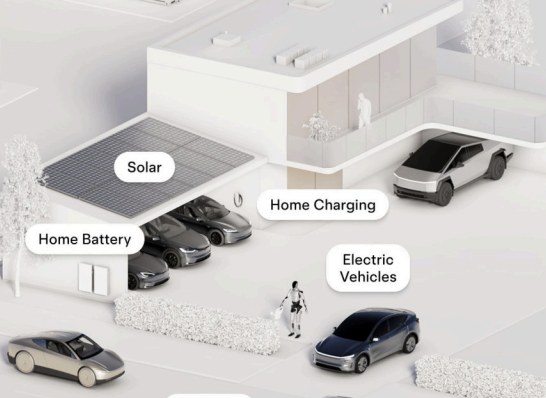
Summary in pictures from Tesla.

Master Plan Part IV: Tesla is accelerating the world’s transition to sustainable abundance.

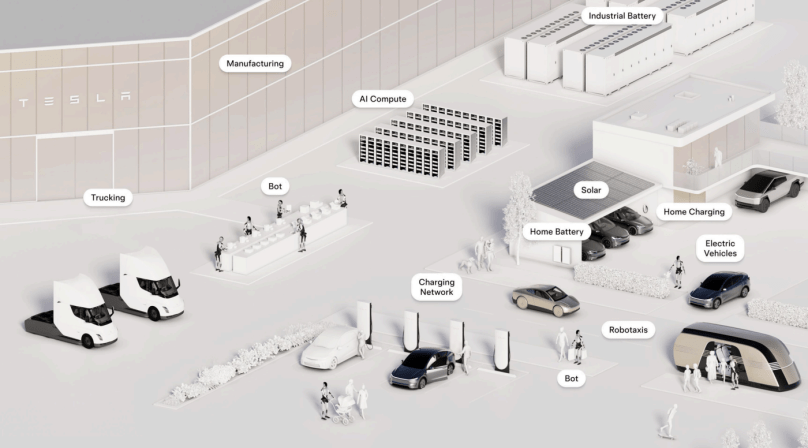
Tesla’s image depicts a shared home with a solar roof, home powerwalls, electric cars and a helpful bot watering plants.

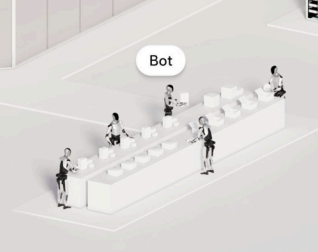
Master Plan Part IV: Tesla is accelerating the world’s transition to sustainable abundance.

Tesla’s image depicts Optimus bots working. The setting could be industrial or food service or other.

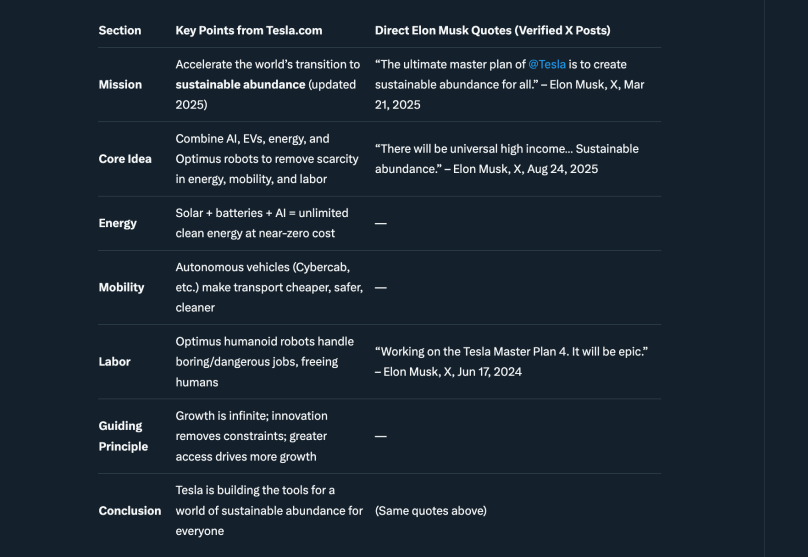
This table summarizes Master Plan Part 4 factually from Tesla’s official website. All details and quotes are verified against the page content and Musk’s X posts.

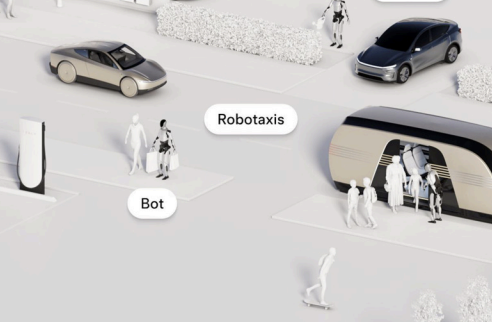
Master Plan Part IV: Tesla is accelerating the world’s transition to sustainable abundance.

Tesla’s image depicts Bots helping with shopping bags, and helping people exit a transport van.

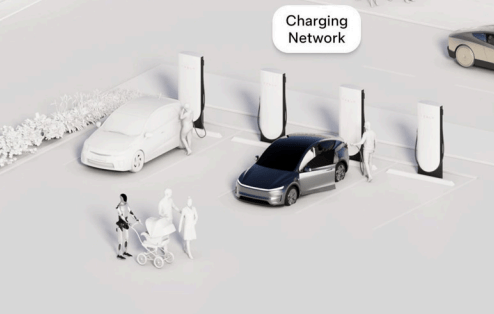
Tesla’s image depicts Supercharging, with electric cars other than Teslas, and it also shows a Bot helping a family by pushing a stroller.

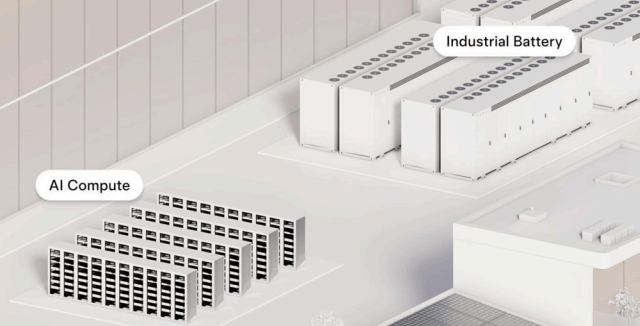
Tesla’s image depicts industrial batteries and AI Compute

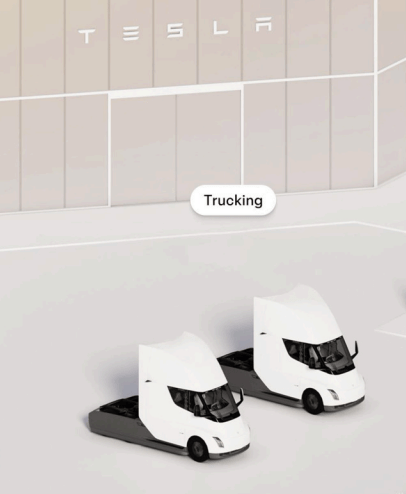
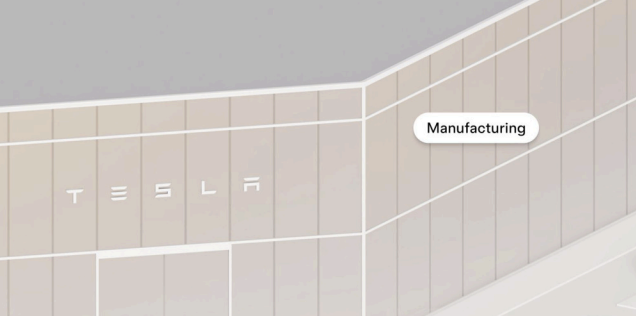
Tesla’s image depicts Semi and manufacturing at scale.

Starlink: A Lifeline When Winter Storms Arrive

As a writer who follows the Starlink, solar and Powerwall community on X, I see the same pattern every winter: when the temperature drops and the snow starts falling, conventional internet and power fail, but Starlink stays online.

Here are the clearest examples from recent years.

February 2021 – Winter Storm Uri, Texas

A rare snowstorm brought temperatures below -10 °C to Texas. The electricity grid failed for 4.5 million homes and apartments. Official records show more than 200 people died, most from the cold. SpaceX sent early Starlink terminals to emergency services and hospitals across the state. Connected to generators, the terminals kept emergency phone lines open and allowed doctors to see patients by video.

I lived through Uri in Austin, Texas. Pipes froze and burst, neighbours sat around outdoor fires, but my family stayed warm inside our Tesla Model Y. I had charged it fully the day before the storm. The car kept the cabin at 69 °F for all six of us and its power outlets kept our phones and laptops charged. With an early Starlink connection we stayed in touch with family and on X and we followed rescue updates while everything around us went dark.

Winter 2022-2023 – Ukraine

Russian attacks on power stations combined with -25 °C temperatures left millions without electricity for hours or days. SpaceX delivered more than 20 000 Starlink terminals. Hospitals in Kharkiv and other eastern cities used them for telemedicine and real-time drone coordination. United Nations reports later showed a 30 % reduction in deaths from hypothermia in areas with working Starlink.

December 2023 – January 2024 – Minnesota and Wisconsin, USA

Blizzards left up to one metre of snow. Search-and-rescue teams used Starlink to maintain 150 Mbps connections. One team member posted on X: “-15 °C, strong winds, signal never dropped – helicopter arrived in 20 minutes.” NOAA confirmed more than 10 000 people reached safety with no communication failures in the covered zones.

Winter 2024 – Nunavut and Yukon Territories, Canada

More than 500 terminals reached remote northern communities. At -40 °C and with 1.2 metres of snow on the ground, service stayed active. Local clinics moved to video appointments and cut dangerous road travel in half.

December 2024 – January 2025 – Italian and Swiss Alps

Avalanche danger was high. Rescue organisations placed over 150 terminals in the mountains. Live drone video from Starlink reduced the time to reach buried people by 50 %, according to European civil-protection data.

December 2025 – ongoing – Colorado and Ontario

Current storms continue. Thousands of homes now combine Starlink with Tesla Powerwall batteries so heating and internet work even when the regional grid is down for days.

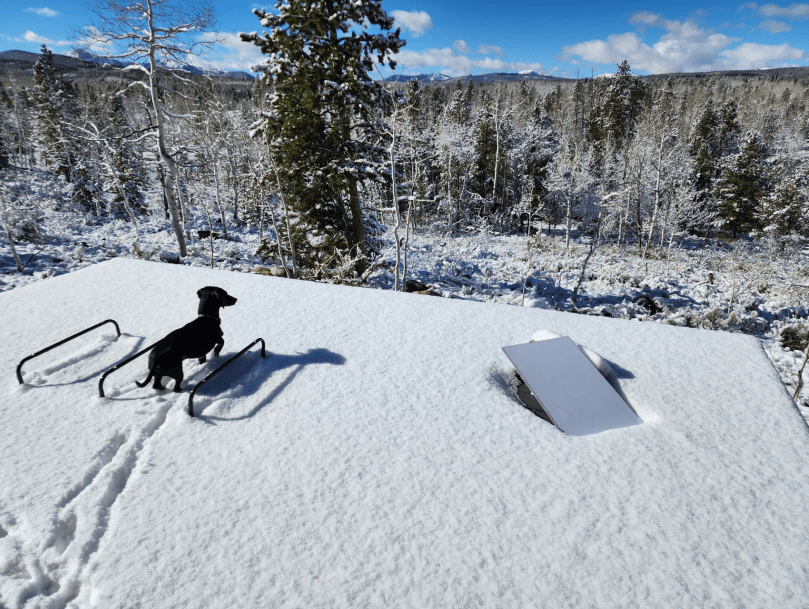
In every case, one self-heating satellite dish (see Jim Hall’s picture of the snow melted off his Starlink unit) was enough to keep contact when mobile towers and cables failed. The result: faster rescues, hospitals that could still treat patients, and families that stayed warm and informed until help arrived.

Starlink and dog. Courtesy Jeff Hall on X

The Day Poverty Dies (and Why I’m Weirdly Emotional About It)

“Optimus will eliminate poverty and provide universal high income for all.” Elon Musk

Austin, Texas – I’ve listened to Elon Musk talk about the future more times than I can count, but something hit different in the last couple of weeks.

First on November 19 in Washington DC with Jensen Huang, then again on November 30 with Nikhil Kamath, he kept circling back to the same quiet, almost casual prediction: once we have truly useful humanoid robots, material poverty simply ceases to exist. Not “gets better.” Not “shrinks.” It ends.

He told Jensen that the moment these bots cost less than a decent used car and can do any physical job faster and better than any human, and every household will likely own several. The math is brutal and beautiful: one $20–30k Optimus, working 24 hours a day for decades, will create orders of magnitude more value than it costs. It is easy to understand how goods and services will collapse toward the price of electricity and raw materials.

And then he said the line that made me tear up thinking of my friend with her garden greenhouse:

“People will still grow vegetables… but only because they enjoy it.” Elon Musk

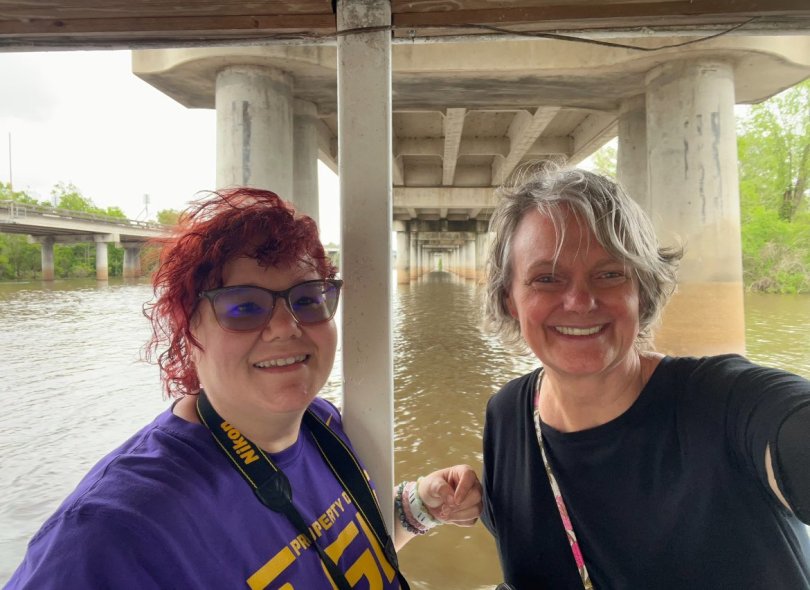
Instantly I thought of my friend Johnna Crider in Louisiana. She already spends half her weekends elbow-deep in raised beds, in her greenhouse, harvesting peppers and tomatoes not because she has to, but because the smell of the soil and the taste of a home grown and ground spice mix in her mouth is pure joy. One day soon, that choice will be universal. No one will ever again plant a garden out of necessity.

Same with me standing at the sink after a rough day, my favorite cotton lined gloves up to my elbows, washing dishes in lemon scented bubbly water while enjoying my fav podcast. I do it to unwind, to feel something simple and physical. Elon says that will become optional too. So will me grinding beans from my favorite little Austin roaster every morning just because the smell makes the whole house feel like home.

Work itself? Optional. Money as we know it? Eventually meaningless.

He told Nikhil that Optimus may start shipping to homes in real numbers in 10-15 years. When that happens, he said softly, “poverty simply won’t be able to survive in that world.”

I believe Elon.

For the first time in human history, we’re not talking about lifting people out of poverty. We’re talking about a world so abundant that poverty can’t even take root.

And honestly? I’m going to miss the excuse to wear my deluxe gloves and grind my own Texas coffee at 6 a.m. But I’ll take the trade. Maybe we will choose to spend more time on our gardens and serving up our own coffee for our family and friends.

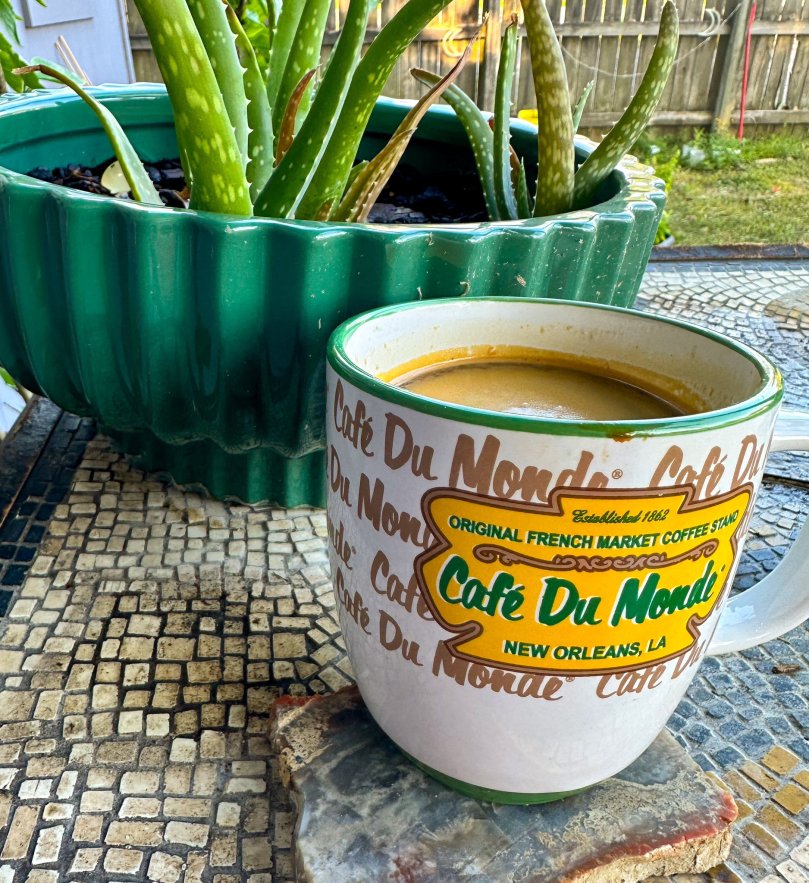
Johnna’s aloe vera garden and coffee brewed by hand.