Imagine threading through Bay Area rush-hour traffic without white-knuckling the wheel on 101, or letting a robot handle the laundry while you catch the sunset at Big Sur. Picture dropping the kids at school in Austin and knowing the car just saved them the way it saved Clifford Lee last month on a foggy New Mexico highway.
Tesla isn’t just building electric cars anymore—it’s creating the AI and robotics platform that could make driving safer and chores optional for every American family.
At the center are two breakthroughs: Full Self-Driving (FSD) Supervised and the Optimus humanoid robot, both powered by Tesla’s end-to-end neural networks and custom inference chips.
Full Self-Driving: Already Saving Lives on American Roads
FSD uses cameras, neural networks, and Tesla’s in-house hardware to steer, brake, change lanes, and park—with a human always ready to take over. In early November 2025, Tesla shareholder Clifford Lee was driving his Model Y home from the shareholder meeting when a wrong-way driver barreled toward him at 75 mph in thick fog. Lee never saw the headlights. FSD did—and swerved onto the shoulder in time. “It saved my life,” he said.
Tesla’s latest data: one crash per roughly 6.47 billion autonomous miles—about seven times safer than the U.S. average.
In California and Texas, where millions already drive with FSD, the next leap is unsupervised autonomy. Tesla is pushing for approvals state-by-state, with Texas and California expected to lead in 2026. Soon, hands-off commutes from Palo Alto to San Francisco or Austin to Round Rock could be everyday reality.
Optimus: The Robot That Could Make Work Optional
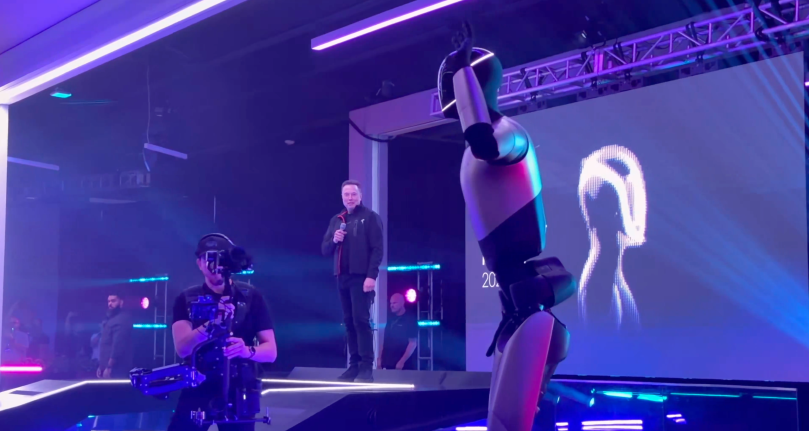
At the November 2025 Annual Shareholder Meeting in Texas, a completely untethered Optimus danced on stage to a standing ovation. Elon called it “potentially the biggest product ever… bigger than the smartphone” and said fleets of Optimus will one day build bases on the Moon and Mars—working side-by-side with Cybertrucks made right down the road in Austin.
Timeline –> hitting American homes and factories first:
- Limited internal use by late 2025
- Sales to U.S. companies throughout 2026
- High-volume consumer models from 2027
From Fremont and Giga Texas, the rollout starts here.
Powering it all is Tesla’s AI5 inference chip, dozens of times more efficient than today’s hardware, with volume production ramping mid-2027.
Elon has already floated building a dedicated “TeraFab” to keep up with demand that he says will be “essentially infinite.”
A Future Where Poverty Becomes Optional
On November 19, 2025, Elon told the U.S.–Saudi Investment Forum: “I imagine robots will actually eliminate poverty… Work will become optional for humans, and money will stop being relevant.”
That future isn’t science fiction anymore — it’s being built today in Fremont, Austin, and soon in living rooms across America. Tesla already employs over 70,000 people in California and Texas alone. The coming wave of AI and robotics will create thousands more high-paying jobs in software, training, and maintenance right here at home, while Optimus takes over the dangerous, dull, or physically crushing work that too many Americans still do every day.
Skepticism is fair. We’ve heard big promises before. But when FSD is already saving lives on American highways and Optimus prototypes are walking around the Tesla engineering offices in Palo Alto, the future isn’t coming from overseas, it is being built right here, by us, for us.
Embrace it, and America won’t just ride the AI wave, we will keep leading it.
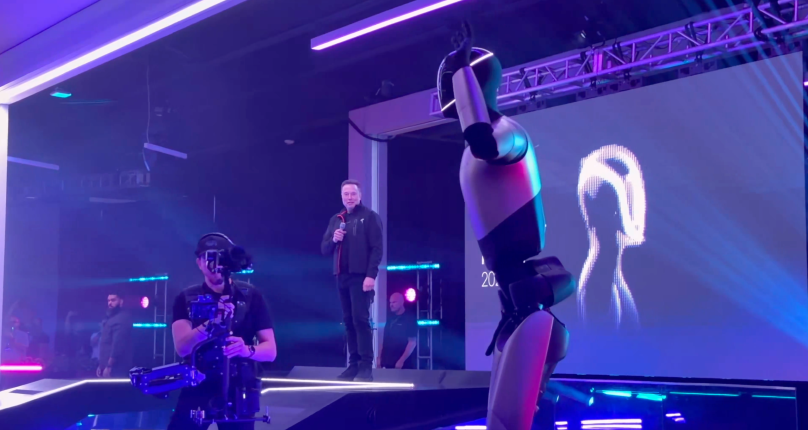
The author had a front row seat at the Tesla shareholder meeting on Nov 6, 2025.
 whatsuptesla.com