
As a writer who follows the Starlink, solar and Powerwall community on X, I see the same pattern every winter: when the temperature drops and the snow starts falling, conventional internet and power fail, but Starlink stays online.
Here are the clearest examples from recent years.
February 2021 – Winter Storm Uri, Texas
A rare snowstorm brought temperatures below -10 °C to Texas. The electricity grid failed for 4.5 million homes and apartments. Official records show more than 200 people died, most from the cold. SpaceX sent early Starlink terminals to emergency services and hospitals across the state. Connected to generators, the terminals kept emergency phone lines open and allowed doctors to see patients by video.
I lived through Uri in Austin, Texas. Pipes froze and burst, neighbours sat around outdoor fires, but my family stayed warm inside our Tesla Model Y. I had charged it fully the day before the storm. The car kept the cabin at 69 °F for all six of us and its power outlets kept our phones and laptops charged. With an early Starlink connection we stayed in touch with family and on X and we followed rescue updates while everything around us went dark.
Winter 2022-2023 – Ukraine
Russian attacks on power stations combined with -25 °C temperatures left millions without electricity for hours or days. SpaceX delivered more than 20 000 Starlink terminals. Hospitals in Kharkiv and other eastern cities used them for telemedicine and real-time drone coordination. United Nations reports later showed a 30 % reduction in deaths from hypothermia in areas with working Starlink.
December 2023 – January 2024 – Minnesota and Wisconsin, USA
Blizzards left up to one metre of snow. Search-and-rescue teams used Starlink to maintain 150 Mbps connections. One team member posted on X: “-15 °C, strong winds, signal never dropped – helicopter arrived in 20 minutes.” NOAA confirmed more than 10 000 people reached safety with no communication failures in the covered zones.
Winter 2024 – Nunavut and Yukon Territories, Canada
More than 500 terminals reached remote northern communities. At -40 °C and with 1.2 metres of snow on the ground, service stayed active. Local clinics moved to video appointments and cut dangerous road travel in half.
December 2024 – January 2025 – Italian and Swiss Alps
Avalanche danger was high. Rescue organisations placed over 150 terminals in the mountains. Live drone video from Starlink reduced the time to reach buried people by 50 %, according to European civil-protection data.
December 2025 – ongoing – Colorado and Ontario
Current storms continue. Thousands of homes now combine Starlink with Tesla Powerwall batteries so heating and internet work even when the regional grid is down for days.
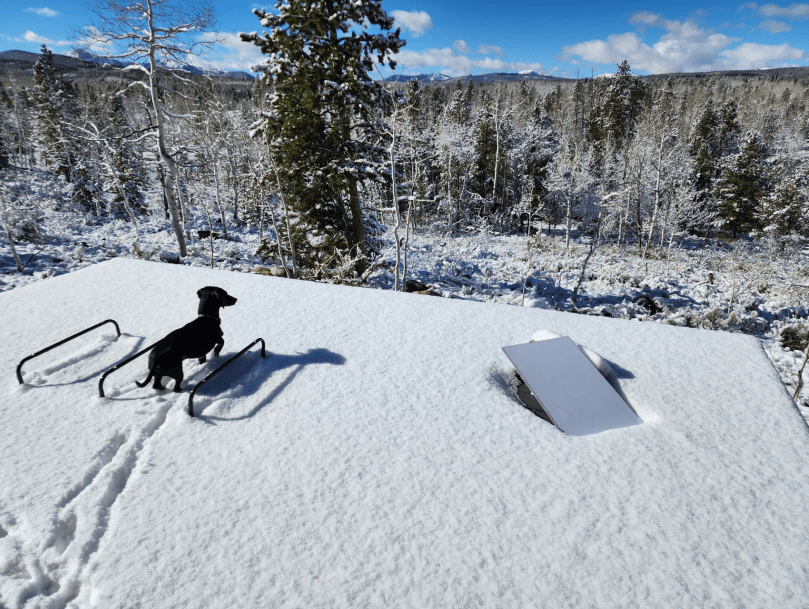
In every case, one self-heating satellite dish (see Jim Hall’s picture of the snow melted off his Starlink unit) was enough to keep contact when mobile towers and cables failed. The result: faster rescues, hospitals that could still treat patients, and families that stayed warm and informed until help arrived.
 whatsuptesla.com