
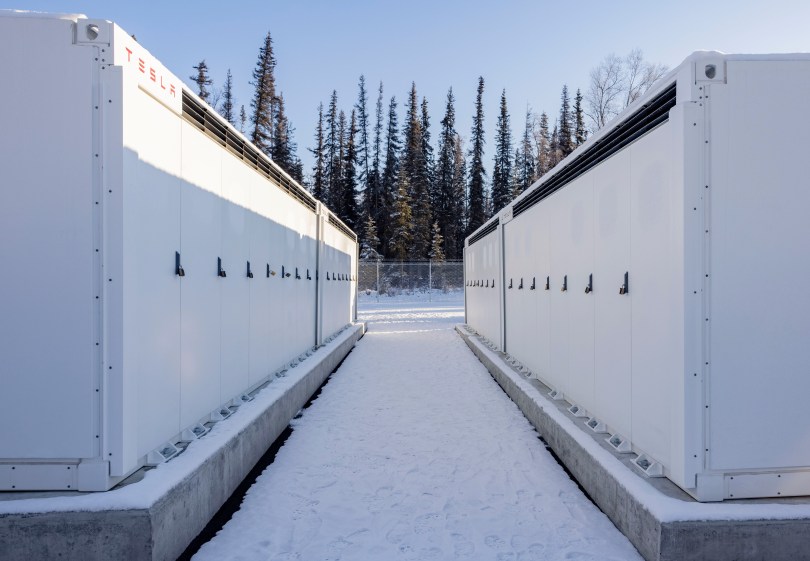
San Juan, 5 December 2025. The first ship carrying Tesla Megapacks slipped into San Juan’s industrial port yesterday. No speeches, no ribbon-cutting, just 40-foot powder-white boxes that quietly begin the end of Puerto Rico’s decade-long blackout nightmare.
Eight years after Maria wiped out 100 % of the grid, the island is deploying the largest battery rollout in its history: 430 MW of instant power and 1.72 GWh of storage across six plants. Total cost $767 million, paid entirely with pre-allocated FEMA/HUD recovery funds. Zero new taxes, zero new debt.
Tesla won the contract the old-fashioned way: an open international bid in October 2024 against 130 competitors. Best total cost of ownership, fastest delivery, highest round-trip efficiency. As Elon once said, “The best part is no part.” Here the only subsidy is the one physics already gave lithium-ion – no special handouts were needed because the tech is simply that good.
The first containers are already rolling north to Cambalache in Arecibo, where 68 Megapacks will add 52 MW / ~208 MWh beside an aging oil plant. When solar over-produces at noon or a hurricane knocks out lines at midnight, the batteries respond in milliseconds – no spinning reserve, no smoke, no fuel trucks racing through flooded roads.
Elon’s other favorite line fits perfectly: “I’d rather be optimistic and wrong than pessimistic and right.” This project is optimism made hardware.
By 2027 the island expects up to 90% improved grid stability and up to $100 million a year saved on diesel alone.
For anyone who has ever modeled a grid, sized a frequency response curve, or watched a peaker plant burn $150/barrel oil in real time, this hits home.
It’s not charity. It’s not politics. It’s engineering eating a 60-year-old problem and turning it into clean electrons.
Puerto Rico just became the proof point many of us have been waiting for: when the hardware is finally good enough, resilience becomes cheaper than fragility.
The lights are about to stay on. Not because someone wished it, but because someone built it. And that feels pretty darn good.
 whatsuptesla.com