
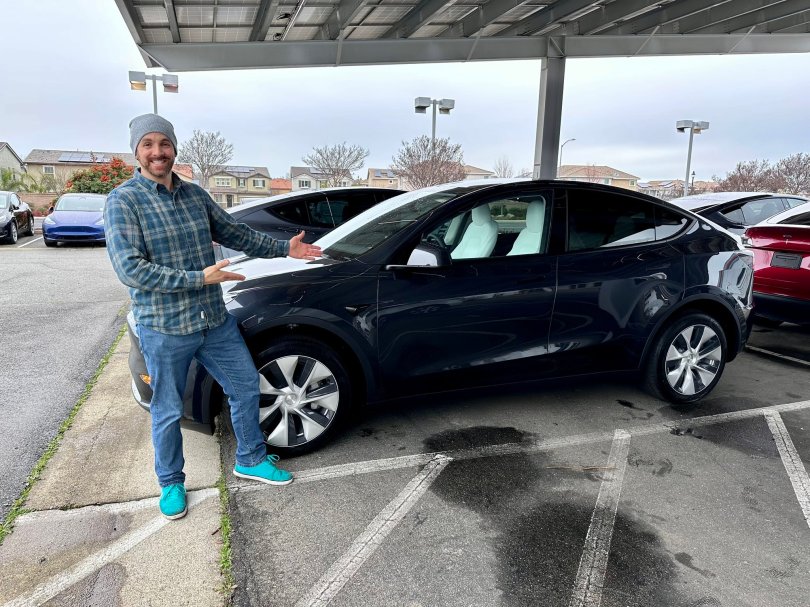
On 23 March 2026, Daniel Geiger posted a 22-second screen-recording that quietly went viral. The California driver, who is deaf, showed his Tesla’s Full Self-Driving feature automatically detecting an approaching ambulance’s lights, pulling over safely and stopping, all before the vehicle reached him. “I’m deaf and can’t hear sirens,” he wrote, “but my Tesla FSD pulled over instantly for an ambulance. … This is why FSD is huge for deaf drivers: it ‘hears’ what I can’t and keeps everyone safer.”
Geiger is an ordinary working professional, not an influencer or company employee. A Long Island native from Moriches, New York, he played college lacrosse at Sacred Heart University (class of 2005) and earned a degree in Information Technology. He now lives in Auburn, California, and works as an IT security specialist for the California Department of Social Services. On social media he talks about sports, state taxes, potholes and, occasionally, how technology intersects with disability.
The incident occurred on 23 March 2026 during a normal drive in the greater Sacramento area. The car’s multimodal sensors (cameras plus the audio-siren detection rolled out in late 2024) handled the situation smoothly. Geiger simply shared the app recording to illustrate one benefit for deaf drivers.
For Americans the context is immediate. Under California Vehicle Code 21806, drivers must yield the right of way to any emergency vehicle using lights and siren: move to the right edge of the road and stop until it passes. Failure to do so is an infraction carrying a base fine of about $490 plus one point on your DMV record. Similar “move-over” or yield laws exist in every state because seconds can mean lives. Deaf drivers follow the same rules but cannot hear the siren that usually alerts everyone else. Geiger’s video shows how one vehicle system can fill that sensory gap while still obeying the same traffic laws everyone else must follow.
He posted the clip because he wanted to highlight a practical safety tool, not to sell cars. The response from other deaf drivers and everyday motorists suggests the story resonated beyond brand loyalty: it showed technology quietly making an existing legal obligation easier to meet for people who otherwise rely on visual cues alone.
 whatsuptesla.com