
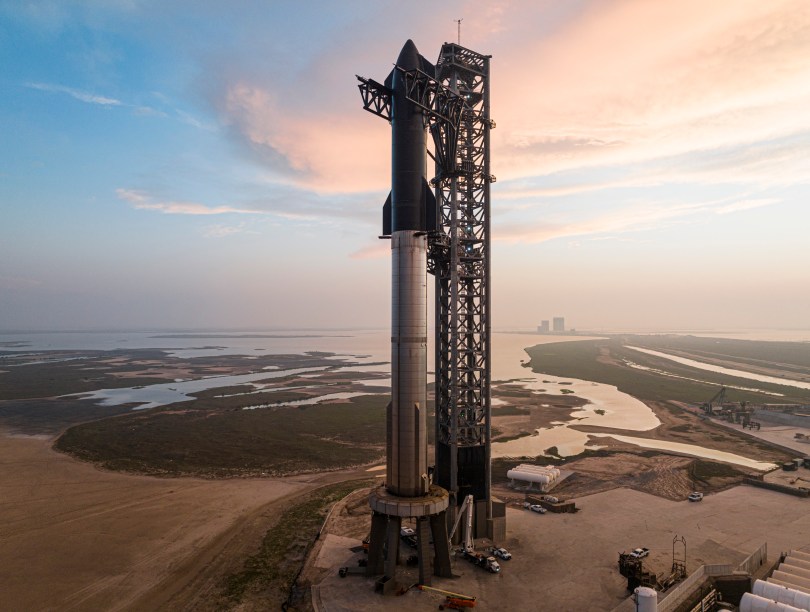
“Space is very big. Space is bigger than people realize.
You can put a lot up in Space.” – Elon Musk
While in Italy, Elon Musk graciously took the time to share an update about Starship and Starlink. I attended the first Starship launch, and I join many other people in being very excited about this update. Elon’s dedication to communicating is notable, as he attempted to host a Twitter Space on two previous days but had to stop due to connection issues. I listened live to this third attempt hosted by Ashlee Vance. I am sharing the highlights of Elon’s talk which includes the late-breaking news that hot staging will be used. Elon explains hot staging in this article.
How Starlink is Helping Small Business: Railroads vs. Horse and Wagon
Amidst clinking dishes, pouring water, and the occasional singing Italian voice, Elon explained how the cost to orbit is much reduced with Falcon 9. He explained how numerous small satellite companies have been greatly helped, by Falcon 9, to create a business through the low cost to get their company satellites into orbit.
To better illustrate the low cost of transport, Elon used the example of early train rails,
“In a way it’s sort of like the Union Pacific railroad across the US where it’s like back when the early businesses were popping up in California, now you’ve got a railroad and previously you had to drag a wagon over the Sierras or the Rockies.
The point is, once you enable world-class transport you also enable a lot of companies to create interesting businesses because it is no longer prohibitively expensive to get to orbit.”
Starship and Falcon 9
Getting to orbit is hard, Elon explains,
“I think it’s worth identifying the difference between space and orbit, most people think of those as synonymous, but getting to Space is easy, and getting to orbit is hard.
Getting to orbit is much harder than getting to Space, which is somewhat arbitrarily defined as a 100 km altitude, but you still have an atmosphere at 100 km, it’s over 60 miles.”
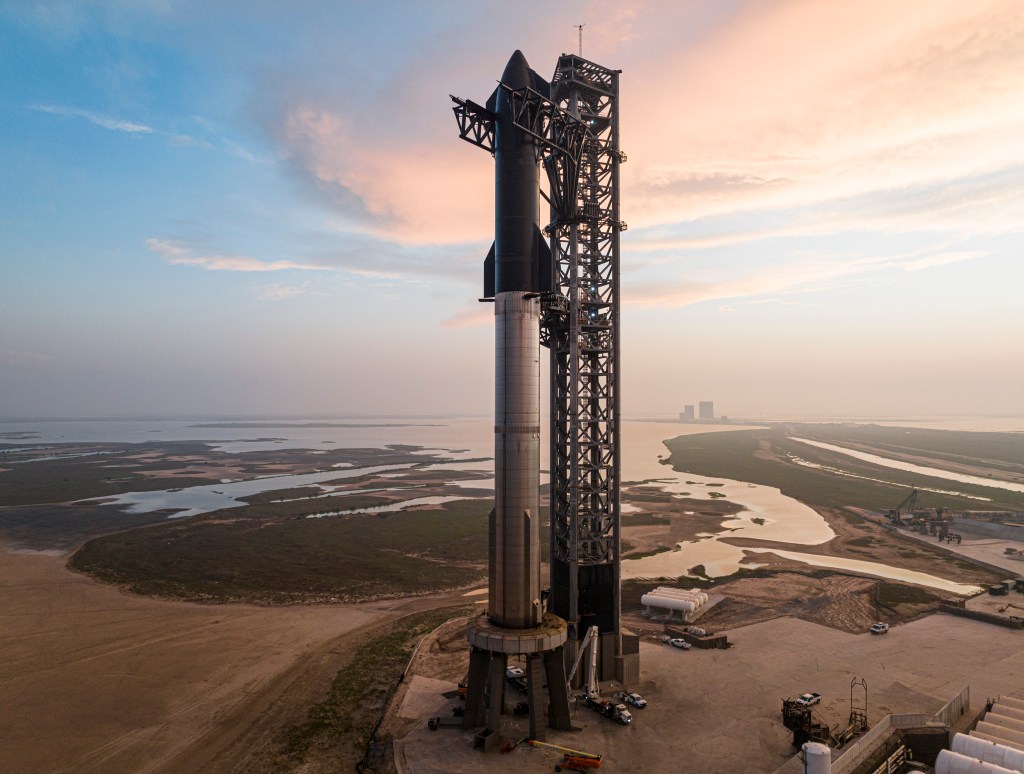
It is extremely hard to get Starship into orbit, with its massive height of about 400 feet and mass of 5000 tons. And yet Elon remains on course to pursue that SpaceX mission of colonizing Mars. In fact, today Starship is humanity’s only hope to become multi-planetary.
The Space Station
Elon continued,
“If you immediately get to Space and you have no velocity you will fall back down just like a cannonball. Going up is all about orbit.
Space Station is somewhat of a misnomer because it is anything but stationary. The Space Station is moving around Earth at 17,000 miles an hour. The Space Station is moving roughly 12X faster than a bullet from an assault rifle, right now. And it goes around the earth every hour and a half, roughly every 90 minutes. So I wouldn’t call that stationery. It’s basically not a Space Station.”
Space is Big
One of my favorite parts of Elon’s talk today was when he brought listeners into the world we know from the Hitchhiker’s Guide to the Galaxy. He said,
“Space is very big. Space is bigger than people realize. You can put a lot up in Space. Think of the Earth as a sphere but being in orbit is basically a vast number of Earth’s surfaces, like a series of concentric spheres, and they’re not filled with debris, they’re filled with nothing.”
Elon explained that with coordination, satellites can be placed at different orbit levels so they will not interfere with other satellites or collide. He explained satellites can be maneuvered to avoid even coming close to anything else. Communication is important to make sure various countries have coordination between various satellite positions. For example, the Starlink satellite orbit is unique, and other satellites will never be put into that same orbit.
SpaceX Does not Worry About the Competition
“Anyone who spends time thinking about the competition is wasting their mental energy.” – Elon Musk
Elon Musk said SpaceX does not think about the “competition.” Instead of worrying about the competition, Elon and his team at SpaceX think about how they can make Starlink better and the Rockets better. He explains this using the example of sports. If you see a runner look back at the other runners right before he crosses the finish line then he’ll lose the race.
SpaceX has launched competitors’ satellites into orbit (since Soyuz stopped) indicating that SpaceX is supportive of competitors.
For example, on May 20, 2023, SpaceX launched a demonstration satellite for OneWeb’s second-generation broadband constellation. OneWeb is considered a competitor to Starlink. COSMO-SkyMed was launched for the Italian Space Agency in January 2021. See Rocket Launch live’s website for an up-to-date list of each SpaceX mission.
SpaceX’s Global Lead
I am amazed that 80% of all payload from Earth going to orbit will likely be brought there by SpaceX. Elon explained that China will put about 10% into orbit, and the rest of the world will put about 8-9% into orbit. “This year, if our luck holds, we’ll do 80% of Earth mass to orbit. That’s the key metric.”
Starship’s Significant Late Breaking Change: Hot Staging
Elon carefully explained that there are well over 1000 changes between the last Starship flight on April 20 (see video attached from SpaceX) and the upcoming launch test. Because of these changes, the next flight has a possible 60% higher probability to get into orbit.
“It depends on how well we do at stage separation.”
Elon revealed that a late-breaking change has been made for the next Starship launch, which is planned for about 6 weeks from now.
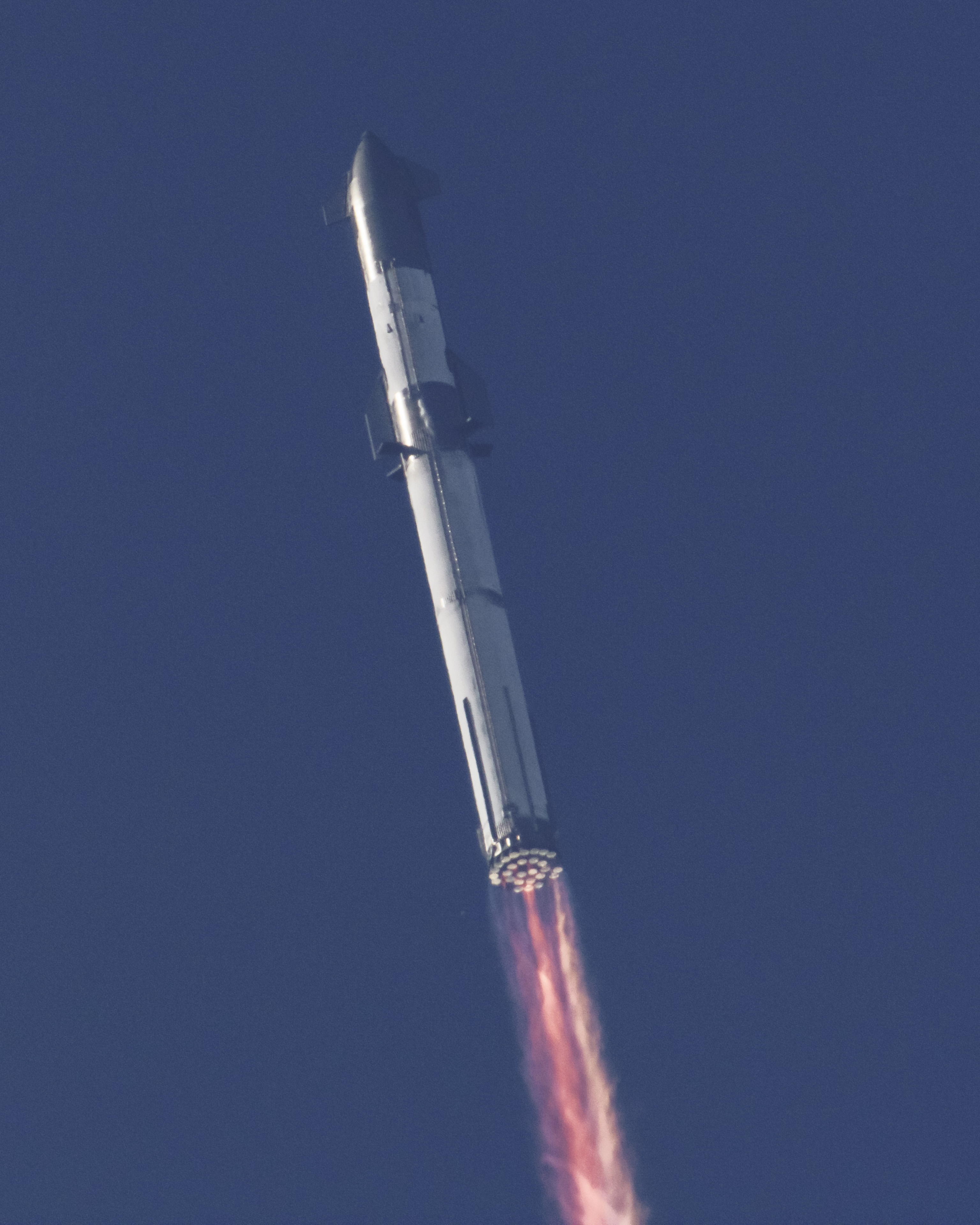
Hot staging will be used. The upper stage engines are lighted while the first stage of booster stage engines are still on. SpaceX will shut down most of the engines on the booster, leaving just a few running, and then at the same time, start the engines on the ship (or upper stage). This obviously results in blasting the boosters then you’ve got to protect the top of the booster from getting incinerated by the upper stage engines.
Never Stop Thrusting
In Soviet rocket history, hot staging has been used. There is a meaningful payload to orbit advantage with hot staging that is, conservatively, about a 10% improvement in payload to orbit.
Elon explains,
“With hot staging, you basically just never stop thrusting! The moment the rocket stops thrusting it’s engine, it starts falling back to earth. You don’t want to be coasting or be in a situation where the engines are not on because you just immediately start falling back to earth, unless you are already in orbit. You want to have a nonstop thrust situation.
Basically, you want to start the ship engines before you completely shut down the booster engines. In order to do this we actually have to have vents or the super hot plasma from the upper stage engines are going to go somewhere so we’re adding an extension to the booster which is almost all vent essentially. So that allows the upper stage engine to go through the vented extension of the booster and not just blow itself up. This is the most risky thing for the next flight, I think.”
This explains why protective shielding will be added to the top of the booster.
I could hear the concern in Elon’s voice when he mentioned to the interviewer (Ashlee Vance) that there are a lot of variables that are outside of his control when it comes to the next Starship launch test. The amount of work needed to prepare for this test is massive. The team at SpaceX must be working around the clock to prepare for this launch. Blood, sweat and tears go into every aspect. Starbase is hot, humid, and the work is very physical.
Elon continued, explaining time is needed to get the launch pad ready with 2 thick plates of steel, welded together with water-cooling layers sandwiched in.
“Think of it like a gigantic upside-down showerhead. It’s going to blast water upwards while the rocket is over the pad to counteract the massive amount of heat from the booster. The booster is the world’s biggest cutting torch, with a massive amount of heat and force. The pad is overkill on the steel sandwich and the concrete, but it should leave the pad in much better shape than last time. We’ll also be doing a higher thrust weight so it will spend less time on the ground.”
If you are interested in Elon’s deep technical dive into more changes to Starship, please see the interview on Vance’s Twitter account, “The Rise of Commercial Space with me and Elon Musk” and go to 43:10 to begin. I won’t add in the technicalities due to most people will glaze over, unless they are that 1 in 1000 rare engineer.
I am thankful that Elon had time to connect with the Space community and others on a Saturday afternoon. I listened from Austin, Texas while he was in Italy. Listeners were there from all over the world. Millions are inspired by Starship. Starship is humanity’s only hope to become a spacefaring civilization. If you are like me, this makes you excited to get up in the morning!
Article by Gail Alfar, first appeared on Gail’s Twitter account as an original article. Please credit Gail Alfar accordingly.


WE ALL LOVE LOVE LOVE SIR ELON REEVE MUSK & YOU ALSO!!!!!!!!!!! THANK YOU FOR THE NEWS UPDATES!!!!!!!!!! 👍 ❤ ❤ 🙏
LikeLiked by 1 person