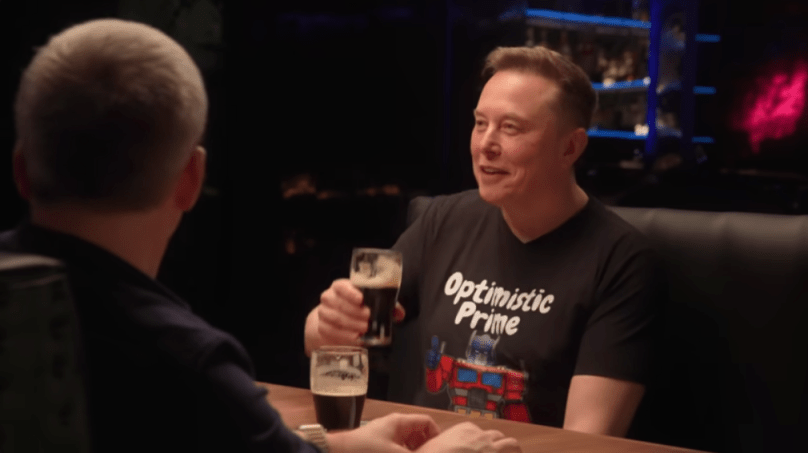
In Part 5, Dwarkesh Patel raises the question of whether the engineering challenges of building large-scale AI infrastructure might actually be easier in space than on Earth. The conversation then turns to the very real bottlenecks on the ground. Particularly the massive shortage of turbines and specialized casting capacity. Elon Musk explains why SpaceX and Tesla may have to start manufacturing turbine components themselves and shares their aggressive plans to scale solar production.
Transcript:
Dwarkesh Patel asked a central question: while Earth-based power challenges are already enormous, wouldn’t building in space introduce entirely new and unprecedented engineering difficulties — such as radiation hardening, orbital lasers, and other issues that haven’t been solved before? He wondered why anyone would choose these novel challenges over simply building more turbines on Earth, where established companies already know how to manufacture them.
Elon Musk: “I invite again, try doing it and then you’ll see. So like, the turbines are sold out through 2030.”
John Collison asked whether they had considered manufacturing their own turbines.
Elon Musk: “I think in order to bring enough power online, I think SpaceX and Tesla will probably have to make the turbine blades, the vanes and blades internally.”
John Collison asked if Elon meant just the blades or the entire turbines.
Elon Musk: “The limiting factor, you can get everything except the blades. They call the blades and vanes. You can get that 12 to 18 months before the vanes and blades. The limiting factor of the vanes and blades, and there are only three casting companies in the world that make these and they’re massively backlogged, it is Siemens.”
John Collison asked whether it was GE and the big names or subcontractors.
Elon Musk: “No, it’s other companies. I mean sometimes they have a little bit of casting capability in house. But I’m just saying you can just call any of the turbine makers and they will tell you it’s not top secret. They’re probably on the, it’s probably on the internet right now.”
Dwarkesh Patel asked whether, if it weren’t for the tariffs, Colossus would be running on solar power.
Elon Musk: “It would be much easier to make it solar powered. Yeah, the tariffs are nuts, so several hundred percent.”
John Collison began to suggest that Elon surely knew some people who could help.
Elon Musk: “We also need speed. Yeah, no, you know, President has his, you know, we don’t agree on everything and this demonstration is not the biggest fan of solar. We also need the land, the permits and everything. So if you’re trying to move very fast, I do think scaling solar on Earth is a good way to go. But you do need some amount of time to find the land, get the permits, get the solar, pair that with batteries.”
John Collison pressed further, asking why not simply stand up their own massive solar production, noting there is plenty of private land in Texas and Nevada.
Elon Musk: “As I said, we are scaling solar production. There’s a rate at which you can scale physical production of solar cells where we’re going as fast as possible.”
John Collison confirmed they were building the solar cells domestically at Tesla.
Elon Musk: “Both Tesla and SpaceX have a mandate to get to 100 gigawatts a year of solar.”
Elon explains the severe turbine and specialized casting bottlenecks and why SpaceX and Tesla are aggressively scaling their own solar production to 100 gigawatts per year. In Part 6, the conversation continues with more on the engineering and infrastructure challenges of building AI at planetary scale.
 whatsuptesla.com